المسيحية · المسيحية الأرثوذكسية
Fyodor Dostoevsky
Фёдор Михайлович Достоевский
1821 – 1881شخصية موثّقة تاريخيًا
روائي روسي (1821–1881)، مؤلف «الجريمة والعقاب» و«الأبله» و«الشياطين» و«الإخوة كارامازوف». حُكم عليه بالإعدام سنة 1849 لانتمائه إلى حلقة بتراشيفسكي، فعُفي عنه أمام فرقة الإعدام، وقضى أربع سنوات من الأشغال الشاقة في أومسك وليس معه من الكتب سوى الإنجيل. كان مصابًا بالصرع، مقامرًا، صحفيًا، ومؤمنًا يخترقه الشك، فجعل من الحرية والألم ومشكلة الشر مادةً للرواية، وترك مسيحُه وشيخُه الروحي زوسيما أثرًا عميقًا في التديّن وفي الفلسفة خلال القرن العشرين.
- مؤلَّفًا
- 52مؤلَّفًا
- طبعة
- 176طبعة
- اقتباسًا
- 13اقتباسًا
- مقطع فيديو
- 13مقطع فيديو
- صورة
- 9صورة
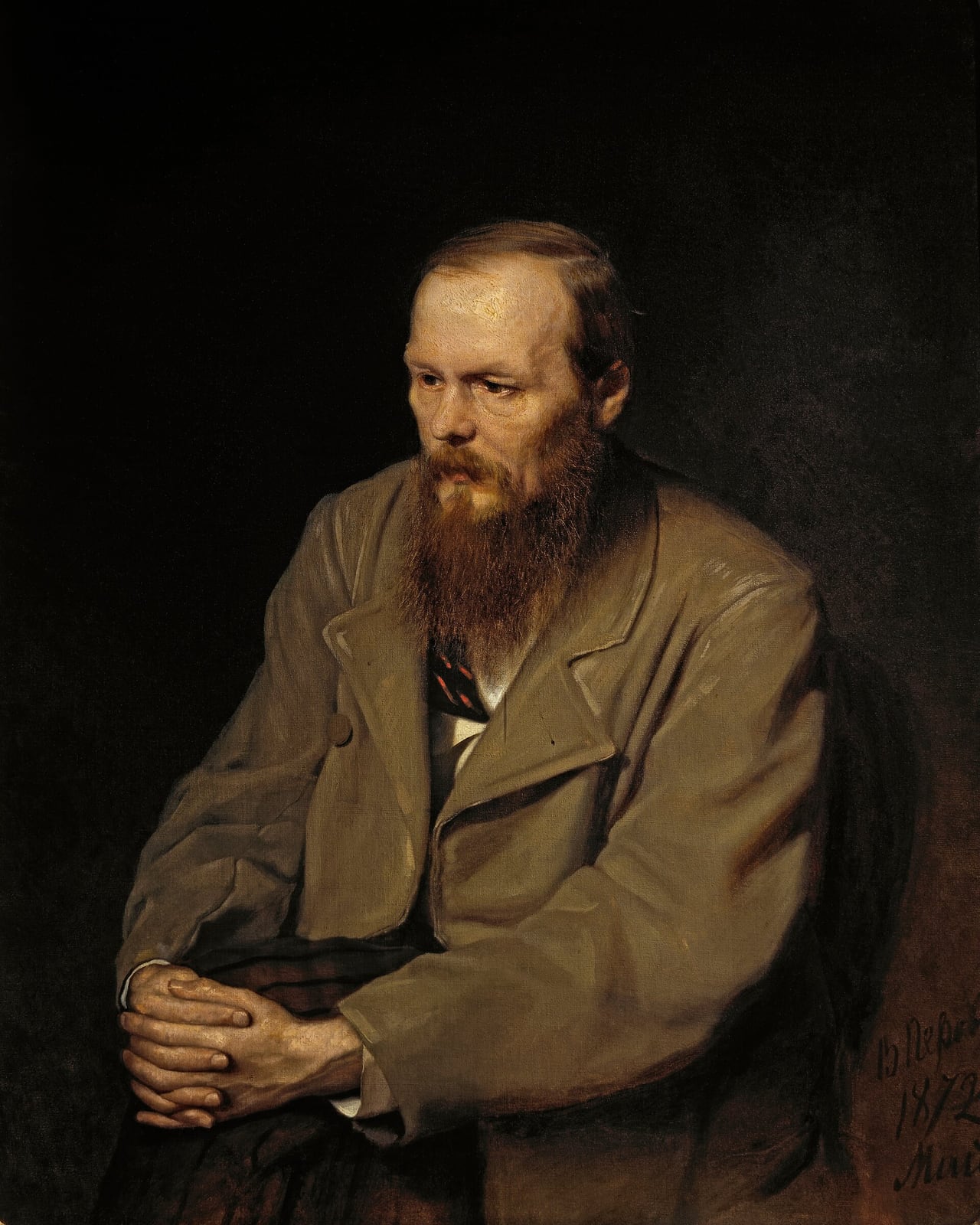
Retrato de Fiódor Dostoievski, por Vasili Perov · Public domain
بكلماته
«Man is a mystery. It must be solved, and if you spend your whole life solving it, do not say you have wasted your time; I occupy myself with this mystery because I want to be a man.»Carta a su hermano Mijaíl, 16 de agosto de 1839 (Собрание сочинений в 15 томах, t. 15, carta n.º 10). Tenía diecisiete años.

فكرته المحورية
Freedom and the Grand Inquisitor: For Dostoevsky freedom is a terrible gift before it is a right.
السيرة
5 دقيقة قراءة
ترجمة مُعانة من الأصل الإسباني، بانتظار مراجعة مترجم من أهل اللغة.
ابن مستشفى الفقراء
وُلد فيودور ميخايلوفيتش دوستويفسكي في 11 نوفمبر/تشرين الثاني 1821 (30 أكتوبر/تشرين الأول بحسب التقويم اليولياني) في جناح من مستشفى ماريينسكي للفقراء في موسكو، حيث كان أبوه ميخائيل أندرييفيتش يعمل طبيبًا. كان الأب رجلًا صارمًا كثير الارتياب ميّالًا إلى الشراب؛ أما الأم، ماريا فيودوروفنا، المنحدرة من أسرة تجّار، فقد علّمت أبناءها القراءة في كتاب من قصص الكتاب المقدس. وقد كوّنت الطفلَ التوراةُ والإنجيل وسيرُ القديسين وكارامزين وبوشكين والروايات القوطية قبل أي مدرسة بزمن طويل. ماتت الأم بالسلّ سنة 1837؛ وبعد عامين مات الأب في ضيعته الصغيرة في داروفويه، وشاعت في الأسرة رواية تقول إن أقنانه أنفسهم قتلوه، وهو ما لم يؤكده التحقيق الرسمي.
وفي سانت بطرسبرغ درس، بلا ميل حقيقي، في مدرسة الهندسة العسكرية. وكان أول نص مطبوع له ترجمة لرواية «أوجيني غرانديه» لبلزاك (1844)؛ وفي العام نفسه ترك الخدمة ليعيش من قلمه. وظهرت «المساكين»، وهي رواية رسائل عن ناسخ فقير وفتاة لا سند لها، في يناير/كانون الثاني 1846، فحيّاها الناقد فيساريون بيلينسكي بوصفها ظهورًا لغوغول جديد. غير أن المجد لم يدم طويلًا: فقد حيّرت «القرين»، المنشورة بعد أسابيع، النقّاد، ولم تستعد القصص التي تلتها، من «الليالي البيضاء» إلى «قلب ضعيف»، الحماسة الأولى.
ساحة سيميونوفسكي
كان آنذاك يتردّد على حلقة ميخائيل بتراشيفسكي، حيث كانت تُناقش اشتراكية فورييه وإلغاء القنانة. وفي 23 أبريل/نيسان 1849 اعتُقل مع رفاقه؛ وكان من بين التهم أنه قرأ بصوت عالٍ رسالة بيلينسكي المحظورة إلى غوغول. وبعد ثمانية أشهر في قلعة بطرس وبولس، اقتيدوا في 22 ديسمبر/كانون الأول إلى ساحة سيميونوفسكي، وتُلي عليهم حكم الإعدام، وأُلبسوا القمصان البيضاء للمحكوم عليهم، ورُبط الثلاثة الأوائل إلى الأعمدة. وحسب دوستويفسكي، وكان السادس في الصف، أنه لم يبقَ له من الحياة سوى دقيقة. عندئذ قُرعت الطبول وتُلي عفو القيصر، الذي كان قد دُبّر سلفًا عبرةً: أربع سنوات من الأشغال الشاقة ثم الخدمة جنديًا بسيطًا. وفي مساء اليوم نفسه كتب إلى أخيه ميخائيل أن الحياة هبة، وأن كل دقيقة كان يمكن أن تكون قرنًا من السعادة.
سيبيريا والإنجيل
وفي الطريق إلى المعتقل، في توبولسك، حصلت زوجات الديسمبريين المنفيين على إذن برؤية السجناء: فباركنهم وأعطين كل واحد منهم نسخة من العهد الجديد، وهو الكتاب الوحيد المسموح به في السجن. ولم يفارق دوستويفسكي تلك النسخة طوال سنواته الأربع في أومسك ولا طوال ما بقي من حياته؛ كانت دائمًا على مكتبه، وكلما ساوره الشك فتحها كيفما اتفق. وبين اللصوص والقتلة اكتشف —كما سيروي في «ذكريات من منزل الأموات»— أن الشعب الروسي الذي أراد المثقفون افتداءه يحمل في داخله إيمانًا وقدرة على الرحمة لم يكن يتوقّعهما.
وفي سنة 1854، وقد صار جنديًا في سيميبالاتينسك، كتب إلى ناتاليا فونفيزينا، إحدى نساء توبولسك تلك، أكثر اعترافات حياته استشهادًا: فقد وصف نفسه بأنه ابن العصر، ابن عدم الإيمان والشك، «حتى غطاء التابوت»، وأضاف أنه لو أثبت له أحدٌ أن المسيح خارج الحقيقة، لآثر أن يبقى مع المسيح على أن يبقى مع الحقيقة. وفي هذا التوتر بين إيمان مختار وعقل لا يكفّ عن الاعتراض يكمن لبّ أعماله كلها.
الداء المقدّس
في المعتقل ظهرت، أو اشتدّت، نوبات الصرع التي لازمته حتى النهاية. وأصلها غير مؤكد. فقد تذكّرت صوفيا كوفاليفسكايا أنه هو نفسه كان يجعل النوبة الأولى في ليلة عيد فصح في سيبيريا، وهو يتجادل في أمر الله مع صديق ملحد: فلمّا قُرعت الأجراس شعر «بأن السماء نزلت إلى الأرض» وابتلعته. غير أن كوفاليفسكايا نفسها نبّهت إلى أنها سمعت رواية مختلفة تمامًا. والمؤكد أن دوستويفسكي وصف بدقة سريرية تلك الهالة من الغبطة التي تسبق النوبة، وأعارها للأمير ميشكين في «الأبله» ولكيريلوف في «الشياطين».
الديون والروليت والروايات الكبرى
عاد إلى سانت بطرسبرغ في ديسمبر/كانون الأول 1859، متزوجًا من الأرملة ماريا دميترييفنا إيسايفا. وأسّس مع أخيه ميخائيل مجلة «فريميا» («الزمن»)، ونشر فيها «مذلّون مهانون» و«ذكريات من منزل الأموات». وكانت السنوات التالية دوّامة: الرحلة الأولى إلى أوروبا، التي سخر منها في «ملاحظات شتوية على انطباعات صيفية»؛ والهيام بأبولليناريا سوسلوفا؛ وموائد الروليت في فيسبادن وبادن بادن؛ ثم في سنة 1864 موت زوجته وأخيه ووراثة ديون المجلة. ومن ذلك العام «في قبوي» (أو «رسائل من تحت الأرض»)، مناجاة رجل ينتصر لنزوته على العقل الحاسب، ومن سنة 1866 «الجريمة والعقاب»، قصة الطالب الذي يقتل ليثبت أنه إنسان استثنائي، فيكتشف أنه لا يستطيع العيش مع ما فعل.
آنا غريغوريفنا
كان عقد مُجحف مع الناشر ستيلوفسكي يُلزمه بتسليم رواية جديدة قبل 1 نوفمبر/تشرين الثاني 1866؛ وكان تأخير شهر واحد سيكلّفه حقوق أعماله إلى الأبد. فاستأجر كاتبة اختزال في العشرين من عمرها، آنا غريغوريفنا سنيتكينا، وأملى عليها «المقامر» في ستة وعشرين يومًا. وتزوّجا في فبراير/شباط 1867، وفي أبريل/نيسان فرّا من الدائنين إلى منفى دام أربع سنوات بين دريسدن وجنيف وفلورنسا. وفي بازل وقف مسمّرًا أمام لوحة «المسيح الميت» لهولباين، التي ستنتقل إلى «الأبله»، محاولته لتصوير «إنسان جميل جمالًا إيجابيًا». وفي ذلك المنفى ماتت ابنتهما الأولى صوفيا وهي في الشهر الثالث. وقد أدخلت آنا النظام إلى حياته: فأدارت الشؤون المالية، ونشرت كتبه، وبعد ترمّلها كتبت المذكرات التي تُعدّ أوثق مصدر عن تلك السنوات.
مشكلة الشر
وبعد العودة جاءت «الشياطين» (1871–1872)، ضد العدمية الثورية؛ و«المراهق» (1875)؛ و«يوميات كاتب»، المجلة الشهرية ذات الكاتب الواحد التي جعلت منه صوتًا عامًا، بحدوسه وكذلك بأحكامه المسبقة القومية والمعادية لليهود. وفي مايو/أيار 1878 مات ابنه أليوشا، ولم يكد يبلغ الثالثة، في نوبة صرع. ولتعزيته أقنعته آنا بالسفر مع الفيلسوف الشاب فلاديمير سولوفيوف إلى دير أوبتينا، حيث تحدّث ثلاث مرات إلى الشيخ الروحي (الستاريتس) أمبروسيوس. ومن ذلك الألم وُلدت «الإخوة كارامازوف». وفيها لا يرفض إيفان الله، بل «يعيد إليه التذكرة»: فهو لا يقبل تناغمًا أخيرًا يُشترى بدمعة طفل واحد معذَّب؛ وتتّهم قصيدته عن «المفتّش الأكبر» المسيحَ بأنه حمّل الإنسان حرية لا تُطاق. وكان دوستويفسكي يعلم أنه لم يدحض إيفان. فكتب إلى بوبيدونوستسيف أن الجواب سيكون الكتاب السادس، كتاب الشيخ زوسيما، وأنه سيكون غير مباشر: لا حجة تُقابَل بحجة، بل صورة فنية للحياة.
الكلمة الأخيرة
في 8 يونيو/حزيران 1880 ألقى في موسكو خطابه عن بوشكين، الذي قدّم فيه الشاعر تجسيدًا للرسالة الكونية للروح الروسية، فاستُقبل بتصفيق محموم. وبعد سبعة أشهر، إثر نوبات متكرّرة من النزيف الرئوي، طلب إنجيل توبولسك، ففتحه كيفما اتفق وأدرك أنه سيموت. ومات في 9 فبراير/شباط 1881 (28 يناير/كانون الثاني بالتقويم اليولياني). وسار عشرات الآلاف خلف نعشه حتى دير ألكسندر نيفسكي. وكتب ليف تولستوي، الذي لم يلتقه قطّ، إلى ستراخوف أنه لم يدرك إلا حين علم بموته أنه كان أقرب الناس إليه.
ويتجاوز تأثيره حدود الأدب. فقد سمّاه نيتشه عالم النفس الوحيد الذي وجد عنده ما يتعلّمه؛ وجعل منه سولوفيوف وبيردياييف نبيًا دينيًا؛ وحلّل فرويد صرعه وجريمة قتل الأب لدى آل كارامازوف؛ ورأى باختين في رواياته تعدّدًا للأصوات لا يُخضعه المؤلف لصوته. وفي التقليد المسيحي الشرقي يظل زوسيما والأمير ميشكين أكثر الوجوه إشراقًا مما قدّمته الرواية الحديثة للقداسة.
المصادر: Frank, Joseph. Dostoevsky: A Writer in His Time. Ed. Mary Petrusewicz. Princeton: Princeton University Press, 2010 (condensación de la biografía en cinco volúmenes, 1976–2002). · Dostoiévskaya, Anna Grigórievna. Воспоминания [Memorias]. Ed. S. V. Belov y V. A. Tunimánov. Moscú: Judózhestvennaya literatura, 1971 (primera edición, 1925). Texto en Wikisource ruso. · Dostoievski, F. M. Собрание сочинений в 15 томах [Obras reunidas en 15 tomos], t. 15: Письма 1834–1881 [Cartas]. Leningrado/San Petersburgo: Naúka, 1996. Edición digital de la Biblioteca Virtual Rusa (RVB). · Lantz, Kenneth A. The Dostoevsky Encyclopedia. Westport (Connecticut): Greenwood Press, 2004. · Kovalévskaya, Sofía V. Воспоминания детства [Recuerdos de infancia] (1890), en Литературные сочинения. Ed. P. Ya. Kóchina. Moscú: Naúka, 1974, cap. «Fiódor Mijáilovich Dostoievski».
الخط الزمني
الحياة عامًا بعد عام
كل نقطة حدث موثّق. انقر لتقرأه مع مصدره ودرجة اليقين فيه.
11 نوفمبر 1821أقل من عامMoscú
Birth
He is born in the wing of the Mariinsky Hospital for the Poor, where his father, Mikhail Andreyevich, was a physician; the second of seven surviving children (30 October, Julian calendar).
موثّقWikidata Q991 (Fiódor Dostoievski): nacimiento 11-11-1821 (gregoriano) / 30-10-1821 (juliano) en Moscú; muerte 09-02-1881 (gregoriano) / 28-01-1881 (juliano) en San Petersburgo.
11 نوفمبر 1821 · أقل من عام
Birth
He is born in the wing of the Mariinsky Hospital for the Poor, where his father, Mikhail Andreyevich, was a physician; the second of seven surviving children (30 October, Julian calendar).
موثّق
فبراير 1837 · 15 عامًا
Mother's death and move to St Petersburg
His mother, Maria Fyodorovna, dies of tuberculosis; his father takes Fyodor and his brother Mikhail to St Petersburg to prepare for the Main Military Engineering School, which he enters in 1838.
موثّق
يونيو 1839 · 17 عامًا
Death of his father
His father dies on his estate. The family story that he was murdered by his serfs is unproven; the official inquiry recorded apoplexy.
مختلَف فيه
1844 · 22 عامًا
Translator of Balzac; resigns from service
He publishes his translation of Eugénie Grandet, his first printed text, and leaves his engineering post to live by writing.
موثّق
يناير 1846 · 24 عامًا
Poor Folk
His first novel appears in Nekrasov's Petersburg Collection; Belinsky hails it as the work of a new Gogol.
موثّق
23 أبريل 1849 · 27 عامًا
Arrest of the Petrashevsky circle
Arrested with other members of the Petrashevsky circle, accused among other things of reading aloud Belinsky's letter to Gogol; eight months in the Peter and Paul Fortress (Julian calendar).
موثّق
22 ديسمبر 1849 · 28 عامًا
The mock execution
After the death sentence is read and the first three men are tied to the posts, the Tsar's pardon is announced: four years of hard labour followed by service as a private. That afternoon he describes it in a letter to his brother Mikhail (Julian calendar).
موثّق
يناير 1850 · 28 عامًا
The Gospel from the Decembrists' wives
On the way to prison, the wives of exiled Decembrists give him a New Testament, the only book allowed in prison; he keeps it until his death.
موثّق
1850 – 1854 · 28 عامًا
Four years of penal servitude
Hard labour in the Omsk prison among common criminals; there his epileptic seizures appear or worsen. The experience feeds The House of the Dead.
موثّق
1854 – 1859 · 32 عامًا
Soldier in Siberia
He serves as a private and later an officer in Semipalatinsk; he writes his 'credo' to Natalya Fonvizina. In 1857 he marries Maria Dmitrievna Isaeva.
موثّق
ديسمبر 1859 · 38 عامًا
Return to St Petersburg
After a period in Tver, he is allowed back to the capital. With his brother Mikhail he founds the journal Vremya (1861), where he publishes Humiliated and Insulted and The House of the Dead.
موثّق
يونيو 1862 · 40 عامًا
First journey to Europe
He travels through Germany, Paris, London, Switzerland and Italy; the trip yields Winter Notes on Summer Impressions (1863). His passion for roulette and his affair with Apollinaria Suslova begin.
موثّق
1864 · 42 عامًا
A year of grief: Notes from Underground
He publishes Notes from Underground in Epoch. His wife Maria (April) and his brother Mikhail (July) die; he takes on the journal's debts.
موثّق
1866 · 44 عامًا
Crime and Punishment and The Gambler
Crime and Punishment is serialised in The Russian Messenger. In October he dictates The Gambler in twenty-six days to the stenographer Anna Grigoryevna Snitkina so as not to lose his rights to the publisher Stellovsky.
موثّق
15 فبراير 1867 · 45 عامًا
Marriage to Anna Grigoryevna
He marries Anna Snitkina (Julian calendar). In April they leave Russia to escape creditors: four years in Dresden, Baden-Baden, Geneva, Florence and Dresden again.
موثّق
أغسطس 1867 · 45 عامًا
Holbein's Dead Christ
In the Basel museum he stands transfixed before Hans Holbein's Body of the Dead Christ in the Tomb; Anna fears a seizure. The image will pass into The Idiot.
موثّق
1868 – 1869 · 46 عامًا
The Idiot and the death of Sonya
He writes The Idiot, an attempt to portray a 'positively beautiful man'. In May 1868 his first daughter, Sofya, dies in Geneva at three months.
موثّق
1871 – 1872 · 49 عامًا
Demons and the return home
He publishes Demons, inspired by the murder of the student Ivanov by Nechayev's group. In July 1871 the family returns to St Petersburg.
موثّق
1873 – 1874 · 51 عامًا
Editor of The Citizen: A Writer's Diary begins
He edits Prince Meshchersky's conservative weekly, where he publishes the first series of A Writer's Diary and the story Bobok.
موثّق
1876 – 1877 · 54 عامًا
The monthly Diary
He self-publishes A Writer's Diary as a one-man monthly, including stories such as A Gentle Creature and The Dream of a Ridiculous Man; its success makes him a public voice.
موثّق
16 مايو 1878 · 56 عامًا
Death of Alyosha
His son Alexei, almost three, dies after an epileptic seizure (Julian calendar). Anna's grief and his own pass into The Brothers Karamazov.
موثّق
يونيو 1878 · 56 عامًا
Optina with Vladimir Solovyov
He travels with the young philosopher Vladimir Solovyov to Optina monastery and speaks three times with the elder Ambrose, a partial model for Zosima.
موثّق
1879 – 1880 · 57 عامًا
The Brothers Karamazov
He serialises his last novel in The Russian Messenger, conceived as the first part of a larger work he never wrote.
موثّق
8 يونيو 1880 · 58 عامًا
The Pushkin speech
At the celebrations for the Pushkin monument he gives a speech to the Society of Lovers of Russian Literature that provokes a frenzied ovation; that night he describes it in a letter to Anna (Julian calendar).
موثّق
9 فبراير 1881 · 59 عامًا
Death
He dies at 8.38 p.m. after several pulmonary haemorrhages, with his wife and children beside him (28 January, Julian calendar). That morning he had opened the Tobolsk Gospel at random.
موثّق
13 فبراير 1881
Mass funeral
Tens of thousands accompany the coffin to the Tikhvin cemetery of the Alexander Nevsky monastery (1 February, Julian calendar).
موثّق
المؤلَّفات
المؤلَّفات الأساسية
المؤلَّفات التي لا يُفهم إرثه من دونها.
مؤلَّف مكتوب · 1864
Notes from Underground
Записки из подполья
The monologue of a retired official who lives shut away in a St Petersburg cellar. In the first part he attacks faith in reason, progress and the utopians' 'crystal palace': man prefers his caprice to his interest, and two times two makes four is the beginning of death. In the second, 'Apropos of the Wet Snow', he recalls his humiliations and his cruelty to the prostitute Liza. It is regarded as the founding text of literary existentialism.
7 طبعات · amazon.com

مؤلَّف مكتوب · 1866
Crime and Punishment
Преступление и наказание
Rodion Raskolnikov, a poor St Petersburg student, kills an old pawnbroker with an axe — and her sister, an unexpected witness — to prove to himself that he belongs to the class of extraordinary men for whom everything is permitted. The novel is not about finding the culprit but about the inner punishment: the fever, the cat-and-mouse with the investigator Porfiry Petrovich and the love of Sonya Marmeladova, a prostitute out of necessity, who reads him the raising of Lazarus and follows him to Siberia. It is the most widely read of his works.
8 طبعات · amazon.com

مؤلَّف مكتوب · 1868
The Idiot
Идиот
Prince Lev Myshkin returns to Russia after years of treatment for epilepsy in Switzerland: a man without guile, compassionate to the point of absurdity, Dostoevsky's attempt to portray 'a positively beautiful man'. In St Petersburg he is caught between two women, the proud Aglaya and the humiliated Nastasya Filippovna, and the passion of the merchant Rogozhin. His goodness saves no one: the novel ends in murder and in the prince's madness. Written abroad between 1867 and 1869.
7 طبعات · amazon.com

مؤلَّف مكتوب · 1879
The Brothers Karamazov
Братья Карамазовы
His last novel and his summa. Old Fyodor Karamazov, a lecherous buffoon, is murdered, and suspicion falls on his son Dmitri, his rival for Grushenka. The other sons embody the forces of the soul: Ivan, the intellectual who 'returns the ticket' and writes the poem of the Grand Inquisitor; Alyosha, novice of the elder Zosima; and the bastard Smerdyakov, the real murderer. With the trial, the miscarriage of justice and the final scene of the boys at Ilyusha's stone, it confronts the problem of evil, freedom and each person's responsibility for all.
8 طبعات · amazon.com
جميع مؤلَّفاته (52)

Poor Folk
1846
The Double
1846

The Landlady
1847

Netochka Nezvanova
1849

Uncle's Dream
1859

The Village of Stepanchikovo
1859

Humiliated and Insulted
1861

The House of the Dead
1860

The Gambler
1866

The Eternal Husband
1870

Demons
1871

The Adolescent
1875
Fyodor Dostoevsky
Mr. Prokharchin
The Conscious LibraryMr. Prokharchin
1846
Fyodor Dostoevsky
How Dangerous It Is to Indulge in Ambitious Dreams
The Conscious LibraryHow Dangerous It Is to Indulge in Ambitious Dreams
1846
Fyodor Dostoevsky
A Novel in Nine Letters
The Conscious LibraryA Novel in Nine Letters
1847
Fyodor Dostoevsky
A Weak Heart
The Conscious LibraryA Weak Heart
1848
Fyodor Dostoevsky
Polzunkov
The Conscious LibraryPolzunkov
1848
Fyodor Dostoevsky
An Honest Thief
The Conscious LibraryAn Honest Thief
1848
Fyodor Dostoevsky
A Christmas Tree and a Wedding
The Conscious LibraryA Christmas Tree and a Wedding
1848

White Nights
1848
Fyodor Dostoevsky
Another Man's Wife and a Husband Under the Bed
The Conscious LibraryAnother Man's Wife and a Husband Under the Bed
1860
Fyodor Dostoevsky
A Little Hero
The Conscious LibraryA Little Hero
1857
Fyodor Dostoevsky
A Nasty Story
The Conscious LibraryA Nasty Story
1862

The Crocodile
1865
الأقوال
أقوال محدَّدة الموضع في مؤلَّف بعينه. كل منها يحمل مصدره ودرجة الثقة به.
Man is a mystery. It must be solved, and if you spend your whole life solving it, do not say you have wasted your time; I occupy myself with this mystery because I want to be a man.Человек есть тайна. Ее надо разгадать, и ежели будешь ее разгадывать всю жизнь, то не говори, что потерял время; я занимаюсь этой тайной, ибо хочу быть человеком.
متحقَّق منهCarta a su hermano Mijaíl, 16 de agosto de 1839 (Собрание сочинений в 15 томах, t. 15, carta n.º 10). Tenía diecisiete años.
أقوال منحولة أو مختلَف في نسبتها (2)
«"If God does not exist, everything is permitted."»
The formula does not appear in this form in The Brothers Karamazov. In Book II, ch. VI, Miusov summarises an idea of Ivan's: if faith in immortality were destroyed in mankind, 'everything would be permitted', even cannibalism; later Rakitin, Dmitri and Smerdyakov return to 'everything is permitted'. The condensed sentence spread in the twentieth century, above all after Sartre used it in Existentialism Is a Humanism (1946).
«"The degree of civilisation in a society can be judged by entering its prisons."»
It is constantly attributed to Dostoevsky and to The House of the Dead, but the sentence is not found in that book or elsewhere in his published writings; its exact origin has not been established.
الكلمات الأخيرة
رواية لاحقة عن شهود
«"Remember, Anya, I have always loved you passionately and never been unfaithful to you, not even in thought."»Помни, Аня, я тебя всегда горячо любил и не изменял тебе никогда, даже мысленно!
His widow, Anna Grigoryevna, records it in her Reminiscences (part XI, 'Death. Funeral'). On the morning of 28 January 1881 (Julian calendar), convinced he would die that day, he asked for a candle and the New Testament he had been given in Tobolsk; he opened it at random, as was his habit, and asked her to read: it fell on Matthew 3, 'Suffer it to be so now: for thus it becometh us to fulfil all righteousness' ('Do not hold me back', in the Russian of his edition). 'Do you hear? “Do not hold me back” — that means I shall die,' he said, and closed the book. He then thanked her for their life together, entrusted the children to her and spoke the words quoted, which tradition remembers as his farewell. During the day he still whispered 'Poor dear… what am I leaving you with', asked several times for the children, and about two hours before the end had the Gospel given to his son Fyodor. He lost consciousness after a final haemorrhage around seven in the evening and died at 8.38 p.m. No other witness contradicts this account; it is that of a wife writing decades later and with veneration, but her memoirs are regarded as the most reliable source on those years.
المصدر: Dostoiévskaya, Anna Grigórievna. Воспоминания [Memorias]. Ed. S. V. Belov y V. A. Tunimánov. Moscú: Judózhestvennaya literatura, 1971 (primera edición, 1925). Texto en Wikisource ruso.
اسأل
بماذا يجيب أثره
اثنا عشر سؤالًا كبيرًا من أسئلة الإنسانية، وما تتيح نصوصه الإجابة به عنها، مع المراجع. ولا نقوّله ما لم يقل أبدًا.
ما المطلق؟ هل الله موجود؟
Faith in God runs through Christ and passes through the crucible of doubt
إله شخصييقوله صراحةً
In his own voice, Dostoevsky offers no proofs of God: he offers a personal attachment to Christ. In the letter to Natalia Fonvizina of 1854, written after prison, he calls himself a child of the age, of unbelief and doubt, and states that if someone proved to him that Christ was outside the truth, he would rather remain with Christ than with the truth. In 1868 he writes that there is only one positively beautiful figure in the world, Christ. The great objections to God he places in the mouths of his characters, above all Ivan Karamazov, who does not deny God but returns him the ticket because of the suffering of children; that revolt is not the author's position, and in a letter to Pobedonostsev he presents book six, the life of the elder Zosima, as his answer, albeit an indirect one. His God is personal, incarnate and crucified.
قارن هذا السؤال مع معلّمين آخرينمن أنا؟ هل توجد ذات حقيقية؟
Man is a free mystery whose dignity depends on the immortality of the soul
روح مخلوقة خالدةيقوله صراحةً
At seventeen Dostoevsky wrote to his brother that man is a mystery and that he was devoting his life to deciphering it because he wanted to be a man. His work explores that mystery from within: the overgrown consciousness of the underground man, Raskolnikov's split, Golyadkin's double. But in his own voice, in A Writer's Diary for December 1876, he states that the idea of the immortality of the soul is the supreme idea of human existence and that without it love for humanity becomes impossible. The self, for him, is neither an illusion nor a construction: it is a free person, capable of the worst and the best, whose ultimate meaning is decided before God. The characters who deny the soul, like Ivan or Kirillov, show where that denial leads.
قارن هذا السؤال مع معلّمين آخرينلماذا نتألّم؟
Suffering springs from misused freedom and can become a path of redemption
الانفصال عن اللهيُستنتج من تعاليمه
The problem of evil runs through all of Dostoevsky's work, but the voices must be kept apart. The harshest charge against a world in which children suffer belongs to Ivan Karamazov, who returns the ticket; Dostoevsky wrote it with full force and, in a letter to Pobedonostsev, announced that book six, the teachings of the elder Zosima, was his answer, albeit an indirect one. In those pages hell is defined as the suffering of being no longer able to love, and Zosima's dying brother discovers that each is guilty before all for all. In Crime and Punishment suffering accepted in prison opens a new life to Raskolnikov. His own experience, the mock execution and the Omsk prison, confirmed to him that suffering can purify, though he never presents it as a justification of evil.
قارن هذا السؤال مع معلّمين آخرينماذا يحدث بعد الموت؟
Without the soul's immortality nothing makes sense; resurrection is a real hope
الحياة الأبدية والقيامةيقوله صراحةً
Dostoevsky knew death at close range: in December 1849 he was led before the firing squad and only at the last moment was the reprieve read. Hours later he wrote to his brother that life is a gift and that every minute might have been an age of happiness; Prince Myshkin recounts a similar scene in The Idiot. In his own voice, in A Writer's Diary of 1876, he holds that faith in the immortality of the soul is the supreme idea of human existence, and that whoever loses it ends in logical suicide, like the one in his article on a suicide's verdict. At the end of The Brothers Karamazov, by Ilyusha's stone, Alyosha promises the boys that they will rise again and see one another, an answer the author leaves as the close of his last novel.
قارن هذا السؤال مع معلّمين آخرينكيف يُبلَغ التحرّر أو الخلاص؟
One is saved through active love and by owning oneself guilty before all
بالنعمة والمحبةيُستنتج من تعاليمه
Dostoevsky sets out no doctrine of salvation in treatises, but in destinies. Raskolnikov is saved neither by his theory nor by his legal punishment, but by Sonya's love and the Gospel she gives him in prison; the epilogue of Crime and Punishment leaves open a renewal which, the narrator says, will be another story. In The Brothers Karamazov, the elder Zosima, whose discourses the author presented as his answer, recommends active love to a lady who doubts immortality, a love that proves nothing yet convinces, and teaches that each is responsible before all for all. Salvation is the gift of Christ and a work of love received and passed on, not a conquest of will or reason; Ivan's Grand Inquisitor represents precisely its negation, happiness imposed without freedom.
قارن هذا السؤال مع معلّمين آخرينهل نحتاج إلى معلّم؟
Christ is the ideal; the living tradition of the elders and believing people hands it on
الجماعة والتقليديُستنتج من تعاليمه
For Dostoevsky the only absolute teacher is Christ, the one positively beautiful figure, and his transmission runs through the lived Orthodoxy of the Russian people. In 1878, after the death of his son Alyosha, he visited the Optina monastery with Soloviev and spoke with the elder Ambrose; The Brothers Karamazov devotes a chapter to explaining the institution of the elders, to whom the disciple surrenders his will, and its central figure is Zosima. At the same time, the novel contains the most radical critique of religious authority: Ivan's Grand Inquisitor accuses Christ of having burdened men with freedom and boasts of having corrected it with miracle, mystery and authority. Dostoevsky does not endorse the Inquisitor; his ideal is an authority that does not cancel freedom but awakens it through love.
قارن هذا السؤال مع معلّمين آخرينهل العالم حقيقي؟
Love the earth and every leaf: the world is a creation to be loved
خلقٌ صالح وحقيقييُستنتج من تعاليمه
Ivan Karamazov declares that he accepts God but not the world he has created, because of the suffering of the innocent; that is the character's position. The answer Dostoevsky proposed lies in Zosima's teachings, which urge love of all creation, every grain of sand, every leaf, every ray of light, animals and plants, because whoever loves all things will perceive in them the mystery of God. After the elder's death, Alyosha falls to the ground and kisses the earth weeping, in an ecstasy in which he feels the threads of all God's worlds meeting in his soul. In The Dream of a Ridiculous Man, the narrator sees in a dream an earth without sin and returns resolved to love this one. The world is real, good and wounded.
قارن هذا السؤال مع معلّمين آخرينما الحب؟
To love as Christ did is the ideal; hell is no longer being able to love
محبة الله والقريبيقوله صراحةً
In April 1864, beside the body of his first wife, Dostoevsky noted in his notebook that to love one's neighbour as oneself, according to Christ's commandment, is impossible on earth, because the self prevents it; only Christ could do it, and he is the ideal towards which humanity strives. That note, written in his own voice, illuminates the novels. In The Brothers Karamazov, the elder Zosima, whose discourses he presented as his answer, distinguishes dreamy love, which wants quick feats and applause, from active love, hard and patient, and defines hell as the suffering of being no longer able to love. Prince Myshkin in The Idiot was his attempt to portray a positively good man, and his failure in the world shows the price of that love.
قارن هذا السؤال مع معلّمين آخرينهل نحن أحرار أم أن كل شيء مقدَّر؟
Freedom is man's dignity and burden; no one can take it without destroying him
إرادة حرة حقيقيةيُستنتج من تعاليمه
Freedom is perhaps Dostoevsky's central theme, and its most vehement defenders are ambiguous characters. The underground man rebels against those who believe reason and science will end up predicting conduct like a table of logarithms: the human being will always prefer his whim to two times two making four. In Ivan's poem, the Grand Inquisitor reproaches Christ for giving men a freedom they cannot bear. Neither speaks for the author, but both show what he defended in his own voice: that the human being is responsible, that evil is not explained solely by the social environment, as he argued against determinist theories in A Writer's Diary, and that faith in Christ must be free to be worth anything. Freedom can lead to crime; without it there is no love.
قارن هذا السؤال مع معلّمين آخرينلماذا نتأمّل أو نصلّي؟
Prayer is the education of the heart and a bond with other worlds
صداقة مع اللهيُستنتج من تعاليمه
Dostoevsky hardly speaks of prayer in his own voice, but he places it at the centre of book six of The Brothers Karamazov, which he presented as his answer to Ivan. Among the discourses of the elder Zosima is one devoted to prayer, love and contact with other worlds: it counsels praying every day, remembering that prayer is education, praying for those who die alone with no one to pray for them, and perceiving in prayer the mysterious bond linking this life with God's worlds. The novels also show the prayer of the simple: the mother praying for her dead child, the Gospel of Lazarus read by Sonya to Raskolnikov. It is a prayer of intimacy with a God who listens, but without techniques or methods.
قارن هذا السؤال مع معلّمين آخرينهل يستطيع العقل أن يعرف الحقيقة القصوى؟
He prefers Christ to a truth demonstrated against him
الحقيقة القصوى وراء العقليُستنتج من تعاليمه
Dostoevsky distrusts reason's claim to settle ultimate questions. In his own voice, in the letter to Fonvizina of 1854, he writes that if someone proved to him that Christ is outside the truth, he would rather remain with Christ than with the truth. His characters carry this distrust to extremes that are not his: the underground man rebels against two times two making four, Ivan confesses to a Euclidean mind unable to grasp the final harmony, Raskolnikov and Kirillov die or kill for ideas. What the novels show is that reason severed from heart and faith ends in crime, despair or tyranny, like that of the Grand Inquisitor. Faith is reached through love and experience, and passes through doubt rather than avoiding it.
قارن هذا السؤال مع معلّمين آخرينالانسحاب من العالم أم تغييره؟
The monk returns to the world: Zosima sends Alyosha to live among men
التأمّل في الفعليُستنتج من تعاليمه
In The Brothers Karamazov, the elder Zosima tells Alyosha to leave the monastery after his death and live in the world, beside his brothers, because there he will have to fulfil his service. The novelist thus presents an ideal of holiness that does not flee ordinary life but passes through it with active love; at the end, Alyosha gathers a group of boys around Ilyusha's grave and speaks to them of memory and resurrection. Dostoevsky himself did not withdraw: he was a journalist and polemicist, took part in the public questions of his day in A Writer's Diary and defended an idea of Russia and Orthodoxy with political implications that are debatable today. But he always distrusted revolutionary utopias, which Demons portrays as a path to crime.
قارن هذا السؤال مع معلّمين آخرين
التقارب والتوتّر
التقارب والتوتّر
محسوبة سؤالًا سؤالًا انطلاقًا من مواقفه. وسبب كل اتفاق أو اختلاف يظهر بالنقر.
يقترب في تفكيره من

Francis of Assisi
يتّفقان في: ما المطلق؟ هل الله موجود؟ · من أنا؟ هل توجد ذات حقيقية؟ · لماذا نتألّم؟
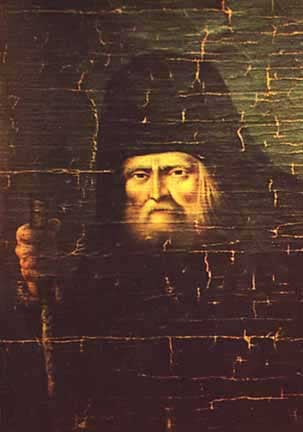
Seraphim of Sarov
يتّفقان في: ما المطلق؟ هل الله موجود؟ · من أنا؟ هل توجد ذات حقيقية؟ · لماذا نتألّم؟

Theophan the Recluse
يتّفقان في: ما المطلق؟ هل الله موجود؟ · من أنا؟ هل توجد ذات حقيقية؟ · لماذا نتألّم؟
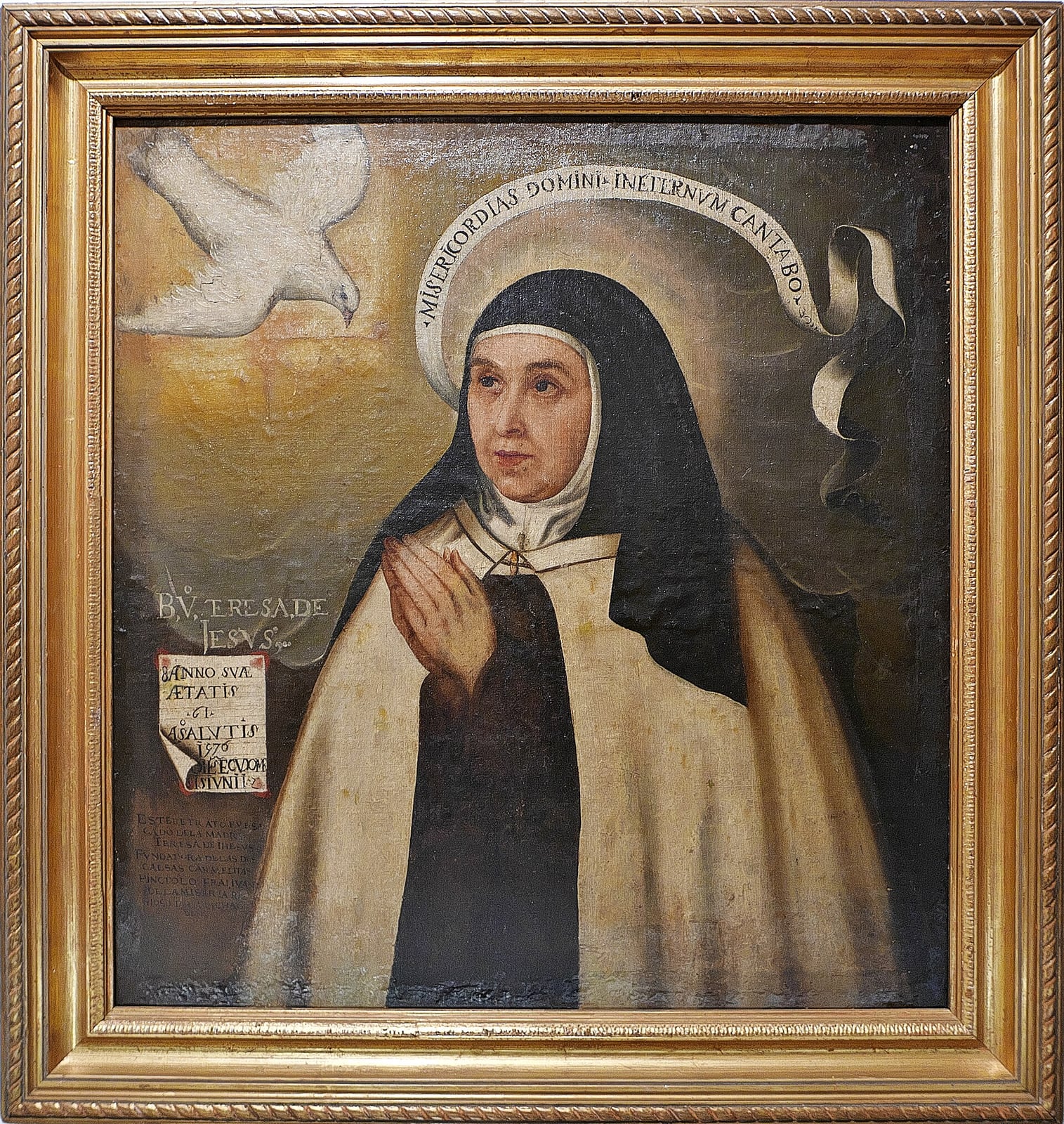
Teresa of Ávila
يتّفقان في: ما المطلق؟ هل الله موجود؟ · من أنا؟ هل توجد ذات حقيقية؟ · لماذا نتألّم؟
يبتعد في تفكيره عن

Pema Chödrön
يختلفان في: ما المطلق؟ هل الله موجود؟ · من أنا؟ هل توجد ذات حقيقية؟ · ماذا يحدث بعد الموت؟

Tsongkhapa
يختلفان في: ما المطلق؟ هل الله موجود؟ · من أنا؟ هل توجد ذات حقيقية؟ · ماذا يحدث بعد الموت؟

The 14th Dalai Lama (Tenzin Gyatso)
يختلفان في: ما المطلق؟ هل الله موجود؟ · من أنا؟ هل توجد ذات حقيقية؟ · ماذا يحدث بعد الموت؟
Gaudapada
يختلفان في: من أنا؟ هل توجد ذات حقيقية؟ · هل العالم حقيقي؟
حكايات وروايات
حكايات وروايات
موثّق22 de diciembre de 1849
One minute before the firing squad
أصل الرواية: The main source is Dostoevsky's own letter to his brother written that same day (vol. 15, letter no. 37), describing the reading of the sentence, the cross, the swords, the shirts and his place in line. Grigoryev's madness and the advance planning of the pardon come from the trial records used by biographers (Frank). The parallel with Myshkin's story is in The Idiot, part I, ch. V.
موثّقenero de 1850 – 1881
The Tobolsk Gospel
أصل الرواية: Dostoevsky told it in A Writer's Diary for 1873 ('Old People'), and Anna Grigoryevna repeats it in her Reminiscences quoting that text. The copy, with many pencil marks, is kept in the Russian State Library and was published in facsimile in 2010.
شهادةagosto de 1831 (recuerdo) y Pascua de 1850-1853 (presidio)
The peasant Marey
أصل الرواية: Autobiographical account by Dostoevsky himself in A Writer's Diary, February 1876, ch. I, 3, written a quarter of a century later; there is no other witness. He himself notes that in The House of the Dead he had spoken of prison through a fictional narrator.
شهادة1865 (relato); hacia 1854–1857 (suceso)
The night heaven came down to earth
أصل الرواية: Sofya Kovalevskaya tells it in her Memories of Childhood (1890), some twenty-five years after hearing it. She herself warns that she knew a 'completely different' version — that the illness followed a corporal punishment in prison — and that, according to doctors, epileptics often forget how their illness began and fantasise about it. The friend is unidentified. The description of the ecstatic aura matches the one Dostoevsky gives Myshkin in The Idiot (part II, ch. V).
موثّقoctubre de 1866
Twenty-six days
أصل الرواية: Told in detail by Anna Grigoryevna in her Reminiscences (part II), including the contract terms and the delivery at the police station; confirmed by the writer's letters and by biographers. The episode inspired the Soviet film Twenty-Six Days in the Life of Dostoevsky (Alexander Zarkhi, 1981).
شهادةagosto de 1867
Before Holbein's Dead Christ
أصل الرواية: Anna Grigoryevna's testimony in her Reminiscences (part IV), where she herself notes that the impression passed into The Idiot; she also recorded it in her shorthand diary of 1867. Myshkin's remark is in The Idiot, part II, ch. IV.
شهادةmayo – junio de 1878
Optina, after Alyosha's death
أصل الرواية: It comes from Anna Grigoryevna's Reminiscences (part IX), based on what her husband told her and on his letter of 29 June 1878; precisely where she was to reproduce the elder's words there is a gap in the manuscript. That the scene of the 'women who have faith' records Anna's own doubts and even words is her own claim.
موثّق8 de junio de 1880
The Pushkin speech
أصل الرواية: Dostoevsky's letter to Anna of 8 June 1880 (vol. 15, letter no. 235), written that same night, and press reports of the time. The text of the speech was published in the single issue of A Writer's Diary for August 1880.
التعاليم
التعاليم
المفاهيم التي ينتظم بها فكره، مشروحة في سياقها.
Freedom and the Grand Inquisitorlibertad-y-gran-inquisidor
A response to Chernyshevsky's rationalist utopia (What Is to Be Done?, 1863) and to the Slavophile critique of Roman Catholicism; the poem occupies Book V, ch. V of the novel.
Ivan's rebellion and the problem of evilrebelion-de-ivan
It argues with the tradition of theodicy (Leibniz) and with the Book of Job; Camus (The Rebel, 1951) read it as the founding of modern metaphysical rebellion.
Each is guilty before all for allculpa-de-todos-ante-todos
Inspired by the spirituality of the startsy (Tikhon of Zadonsk, Ambrose of Optina) and by the Orthodox idea of sobornost; Book VI of The Brothers Karamazov.
The positively beautiful manhombre-positivamente-bello
Letter to Sofya Ivanova of 1 (13) January 1868; The Idiot, parts I–IV.
The polyphonic novelpolifonia
A twentieth-century interpretation, not Dostoevsky's own doctrine: Problems of Dostoevsky's Art (1929) and Problems of Dostoevsky's Poetics (1963).
المصدر: Bajtín, Mijaíl. Проблемы творчества Достоевского (1929); 2.ª ed. ampliada: Проблемы поэтики Достоевского (1963) [Problemas de la poética de Dostoievski].
The 'return to the soil' (pochvennichestvo)pochvennichestvo
Journalistic movement of the 1860s; the basis of A Writer's Diary and the Pushkin speech (1880).
مقاطع الفيديو
مقاطع الفيديو
تسجيلات ومقابلات وأفلام وثائقية. تُشغَّل مقاطع الفيديو من YouTube؛ ولا تُستضاف هنا.
Twenty six days in the life of Dostoevsky (Двадцать шесть дней из жизни Достоевского)
فيلم وثائقي· RU· 1981· 82 min
Mosfilmالقناة الرسمية
Лекция протоиерея Геннадия Беловолова «Достоевский и Оптина пустынь»
محاضرة· RU· 115 min
Музей Достоевского (San Petersburgo)القناة الرسمية
Лекция Сергея Кибальника «Тайна князя Мышкина»
محاضرة· RU· 78 min
Музей Достоевского (San Petersburgo)القناة الرسمية
Жизнь и смерть Достоевского. Родиться в России. Фильм 1-й
المشاهدة على YouTube
لا يسمح هذا الفيديو بالتضمين؛ وسيُفتح على YouTube.
Жизнь и смерть Достоевского. Родиться в России. Фильм 1-й
فيلم وثائقي· RU· 2021· 26 min
Телеканал Культураالقناة الرسمية
Жизнь и смерть Достоевского. Страна святых чудес. Фильм 5-й
المشاهدة على YouTube
لا يسمح هذا الفيديو بالتضمين؛ وسيُفتح على YouTube.
Жизнь и смерть Достоевского. Страна святых чудес. Фильм 5-й
فيلم وثائقي· RU· 2021· 26 min
Телеканал Культураالقناة الرسمية
LITERATURE - Fyodor Dostoyevsky
تحليل· EN· 14 min
The School of Lifeالقناة الرسمية
Russian Atheism and Russian Faith | Dr. Gary Saul Morson (Northwestern)
محاضرة· EN· 90 min
Anselm House
Dostoevsky & The Brothers Karamazov with Dr. Thomas Pfau (Duke)
محاضرة· EN· 80 min
North Carolina Study Center
La metafísica de Dostoyevski | Tamara Djermanović | #1 Dostoyevski, pensador
محاضرة· ES· 89 min
Institut d'Humanitats de Barcelonaالقناة الرسمية
Dostoyevski en el espejo del pensamiento español
محاضرة· ES· 59 min
Centro de Culturas Eslavas UGRالقناة الرسمية
El universo de Dostoyevski, entre Rusia y España / Мир Достоевского от России до Испании
محاضرة· ES· 88 min
Instituto Cervantes Moscúالقناة الرسمية
Dostoyevski: El mejor novelista de todos los tiempos, con Eloy Urroz | Sesión 1
محاضرة· ES· 109 min
Cultura en Directo. UNAMالقناة الرسمية
Dostoievski por Ángel Barahona
محاضرة· ES· 33 min
UFV Madridالقناة الرسمية
المعرض
المعرض
صور بترخيص متحقَّق منه. كل منها تحتفظ بمؤلّفها ونسبتها.
المخطوطات
المخطوطات
شواهد مخطوطة ونصوص قديمة، مع جهة حفظها وشروط الاطّلاع عليها.
RU · Cyrillic · Edición impresa de la primera mitad del siglo XIX; anotaciones de 1850–1881
Новый Завет (экземпляр Ф. М. Достоевского, «Евангелие Достоевского»)
- الشاهد المحفوظ
- Ejemplar único anotado
- جهة الحفظ
- Biblioteca Estatal de Rusia (RGB), Departamento de Manuscritos, fondo 93 (Dostoievski)
العلاقات
العلاقات
تأثيرات وتلمذة وتقارب في الأفكار. تُميَّز العلاقة الموثّقة عن التشابه المستخلَص بالتحليل.
معاصر لـ
The two great Russian novelists of their time never met, though they read each other closely: Dostoevsky devoted pages of A Writer's Diary (1877) to Anna Karenina and Tolstoy admired The House of the Dead. On learning of his death, Tolstoy wrote to their mutual friend Nikolai Strakhov that he had never seen the man and only then understood that he had been the closest, dearest and most necessary person to him.
علاقة موثّقة
التقى بـ
Friends from 1873 despite a thirty-year age gap. In 1878 Dostoevsky attended his Lectures on Godmanhood and in June they travelled together to Optina monastery, where they spoke with the elder Ambrose, a partial model for Zosima. Solovyov devoted Three Speeches in Memory of Dostoevsky (1881–1883) to him, and critics have seen traits of his in both Alyosha and Ivan Karamazov.
علاقة موثّقة
أثّر في
In his Three Speeches Solovyov presented Dostoevsky as the religious prophet of a universal Church and of the ideal of 'Godmanhood', a reading that shaped all subsequent Russian religious philosophy.
علاقة موثّقة
أثّر في
Berdyaev acknowledged Dostoevsky as his spiritual master and devoted to him Dostoevsky's Worldview (1923), reading him as a philosopher of freedom and spirit; 'irrational' freedom and the legend of the Grand Inquisitor are central to his thought.
علاقة موثّقة
تأثّر بـ
Christ is the centre of his faith and work: the Tobolsk Gospel stayed with him from 1850 until his death; in 1854 he wrote that he would rather remain with Christ than with the truth, and in 1868 that Christ is the only 'positively beautiful' figure, the idea that gave rise to Prince Myshkin. The silent Christ before the Grand Inquisitor and the Gospel epigraph of The Brothers Karamazov (John 12:24), also carved on his tomb, complete that path.
علاقة موثّقة
أفكار قريبة من
There is no record that Dostoevsky wrote about Seraphim of Sarov, and the documented models for the elder Zosima are Tikhon of Zadonsk and Ambrose of Optina. Nonetheless Zosima's joyful spirituality — life as a paradise we fail to see, love for all creation, paschal joy — is very close to that of Seraphim, the great Russian elder of the early nineteenth century, and both embody the same tradition of the startsy.
تشابه مستخلَص بالتحليل
المصادر
المصادر
المراجع والفهارس التي رُوجعت لهذه الصفحة.
- Frank, Joseph. Dostoevsky: A Writer in His Time. Ed. Mary Petrusewicz. Princeton: Princeton University Press, 2010 (condensación de la biografía en cinco volúmenes, 1976–2002).
- Dostoiévskaya, Anna Grigórievna. Воспоминания [Memorias]. Ed. S. V. Belov y V. A. Tunimánov. Moscú: Judózhestvennaya literatura, 1971 (primera edición, 1925). Texto en Wikisource ruso.
- Dostoievski, F. M. Собрание сочинений в 15 томах [Obras reunidas en 15 tomos], t. 15: Письма 1834–1881 [Cartas]. Leningrado/San Petersburgo: Naúka, 1996. Edición digital de la Biblioteca Virtual Rusa (RVB).
- «Fyodor Dostoevsky bibliography», Wikipedia en inglés (lista destacada, con primeras ediciones, revistas y primeros traductores) y «Библиография Фёдора Достоевского», Wikipedia en ruso.
- Wikidata Q991 (Fiódor Dostoievski): nacimiento 11-11-1821 (gregoriano) / 30-10-1821 (juliano) en Moscú; muerte 09-02-1881 (gregoriano) / 28-01-1881 (juliano) en San Petersburgo.
- «Fyodor Dostoevsky», Wikipedia en inglés (artículo destacado; consultado para hechos verificables, texto propio).
- Encyclopaedia Britannica, «Fyodor Dostoyevsky».
- Lantz, Kenneth A. The Dostoevsky Encyclopedia. Westport (Connecticut): Greenwood Press, 2004.
- Kovalévskaya, Sofía V. Воспоминания детства [Recuerdos de infancia] (1890), en Литературные сочинения. Ed. P. Ya. Kóchina. Moscú: Naúka, 1974, cap. «Fiódor Mijáilovich Dostoievski».
- Dostoievski, F. M. Дневник писателя [Diario de un escritor], 1873–1881: «Старые люди» (1873), «Мужик Марей» (febrero de 1876), «Пушкин» (agosto de 1880). En Собрание сочинений в 15 томах, t. 12–14. Leningrado: Naúka, 1994–1995 (RVB).
- Open Library, autor OL22242A (Fyodor Dostoyevsky): obras y ediciones con ISBN.
- Project Gutenberg: obras de Fyodor Dostoyevsky (autor 314) e «Index of the Project Gutenberg Works of Fyodor Dostoevsky» (eBook #59196).
- Dostoievski, F. M. Братья Карамазовы [Los hermanos Karamázov] (1879–1880), texto en Wikisource ruso; trad. inglesa de Constance Garnett, The Brothers Karamazov (Londres: Heinemann, 1912), Project Gutenberg #28054.
- Soloviov, Vladímir S. Три речи в память Достоевского [Tres discursos en memoria de Dostoievski], 1881–1883. Moscú, 1884.
- Berdiáev, Nikolái. Миросозерцание Достоевского [La concepción del mundo de Dostoievski]. Praga: YMCA-Press, 1923 (trad. esp. «El credo de Dostoievski»).
- Bajtín, Mijaíl. Проблемы творчества Достоевского (1929); 2.ª ed. ampliada: Проблемы поэтики Достоевского (1963) [Problemas de la poética de Dostoievski].
- «130 лет назад ушел из жизни Федор Михайлович Достоевский», Rossíiskaya Gazeta, 9 de febrero de 2011 (cita la carta de Lev Tolstói a Nikolái Strájov de comienzos de febrero de 1881).
- Biblioteca Estatal de Rusia (RGB), Departamento de Manuscritos: presentación de la edición «Евангелие Ф. М. Достоевского» (2010), ejemplar personal del Nuevo Testamento conservado en el fondo 93.
- Museo Literario-Memorial F. M. Dostoievski de San Petersburgo (casa del callejón Kuznechni 5), biografía y colecciones.
- صاحب الحقوق
- Dominio público (Dostoievski murió en 1881). Las traducciones modernas pertenecen a sus traductores y editoriales.
- الموقع الرسمي
- www.md.spb.ru/
في انتظار التأكيد
ما لم تتمكّن هذه الصفحة من حسمه بعد. نفضّل أن نقول ذلك على أن نملأ الفراغ.
- Ediciones en español con ISBN de «La aldea de Stepánchikovo», «El sueño del tío», «Nétochka Nezvánova», «La patrona» (salvo Losada), la correspondencia y los relatos breves de 1846–1849 por separado: no localizadas en Open Library; el volumen de Alba «Noches blancas y otros relatos (1846-1849)» no detalla en su ficha los once relatos que contiene.
- Ediciones en inglés con ISBN de «La patrona», «Un corazón débil», «Polzunkov», «El señor Projarchin» y de los artículos de 1847 y 1861: sólo se han registrado las traducciones antiguas (Garnett, 1900) sin ISBN.
- Contenido exacto de «Cuentos» (Siruela, 2007, ISBN 9788498410860) y «Cuentos» (Penguin Clásicos, 2015, ISBN 9788491050087), ambos traducidos por Bela Martinova según catálogos de librería: no se han asignado a relatos concretos.
- Confirmar la vía de primera publicación de las tres odas siberianas (1854–1856) y de «De los paseos veraniegos de Kozmá Prutkov» (1878).
- Sala de lectura en español: sólo «El crimen y el castigo» (Pedraza y Páez) está en Gutenberg. Wikisource en español aloja «El jugador» (trad. Alfonso Nadal, Góngora, 1928) y una «Crimen y castigo» de traducción anónima sin edición fuente identificada: no se han incluido hasta verificar la fecha de muerte de Nadal y el origen de la traducción anónima.
- Signatura exacta del Evangelio de Dostoievski en el Departamento de Manuscritos de la Biblioteca Estatal de Rusia (fondo 93) y enlace a su digitalización, si existe.
- Fecha exacta de la carta de Tolstói a Strájov (comienzos de febrero de 1881) y su referencia en las Obras completas de Tolstói (ed. del Jubileo): sólo se ha visto citada en prensa.
- Año de publicación de los vídeos de los canales del Museo Dostoievski y de las conferencias universitarias: no figura en oEmbed; se ha dejado null o el año aproximado indicado por YouTube.
بُحث بتاريخ 2026-10-25