Christianisme · Mystique chrétienne · Catholicisme · Néoplatonisme
Augustine of Hippo
354 – 430Personne historiquement documentée
Rhéteur, philosophe et évêque nord-africain (354-430). Après des années de manichéisme et de scepticisme, la lecture des platoniciens et la prédication d'Ambroise le conduisirent à Milan à la conversion de 386. Évêque d'Hippone pendant trente-quatre ans, il écrivit plus de quatre-vingt-dix ouvrages — les Confessions, La Cité de Dieu, De la Trinité —, ainsi que des centaines de lettres et de sermons, et polémiqua contre manichéens, donatistes et pélagiens. Sa doctrine de la grâce, du temps, de l'intériorité et des deux cités a façonné la théologie et la philosophie occidentales.
- œuvres
- 139œuvres
- éditions
- 28éditions
- citations
- 14citations
- vidéos
- 15vidéos
- images
- 7images
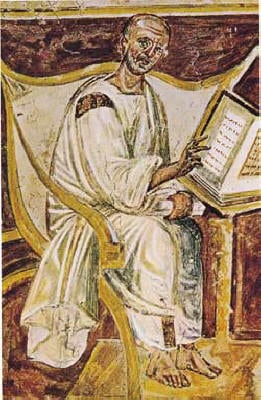
El retrato más antiguo de Agustín (fresco de Letrán, s. VI) · Public domain
Dans ses propres mots
«You have made us for yourself, and our heart is restless until it rests in you.»Confesiones I,1,1

Son idée centrale
Inwardness (redi in te ipsum): The Augustinian road to truth runs through the interior: 'do not go outside, return into yourself; truth dwells in the inner man' (De vera religione 39.72).
Le voir en contexte
Biographie
6 min de lecture
Traduction assistée à partir de l'original espagnol, en attente de relecture par un traducteur natif.
Un Africain de Thagaste
Aurelius Augustinus naquit le 13 novembre 354 à Thagaste, municipe de la province romaine de Numidie qui correspond aujourd'hui à Souk Ahras, en Algérie. Son père, Patrice, siégeait à la curie locale sans être riche et resta païen jusqu'à peu avant sa mort ; sa mère, Monique, chrétienne d'une foi ardente, domine de sa présence les Confessions. La famille se sacrifia pour que ce fils doué étudie la grammaire à Madaure et la rhétorique à Carthage, avec l'aide de Romanianus, un riche concitoyen. Presque tout ce que nous savons de ces années vient d'Augustin lui-même, qui les raconta deux décennies plus tard dans une intention confessionnelle et théologique qui invite à les lire avec prudence.
À Carthage, vers 371, il noua une union stable avec une femme dont il n'écrivit jamais le nom ; de cette union naquit vers 372 son fils Adéodat. À dix-neuf ans, la lecture de l'Hortensius de Cicéron, aujourd'hui perdu, alluma en lui l'amour de la sagesse ; la Bible latine, en revanche, lui parut fruste. Pendant neuf ans, il fut auditeur des manichéens, une religion dualiste qui promettait une explication rationnelle du mal sans exiger la foi.
Carthage, Rome, Milan
Il enseigna la rhétorique à Thagaste puis à Carthage, où il écrivit son premier livre, De pulchro et apto, déjà perdu de son temps. La déception que lui causa Fauste de Milev, l'évêque manichéen incapable de répondre à ses questions, refroidit son adhésion. En 383, il partit pour Rome et, en 384, avec l'appui du préfet Symmaque, obtint la chaire officielle de rhétorique de Milan, alors résidence de la cour impériale.
À Milan, il entendit l'évêque Ambroise, dont l'exégèse allégorique lui montra que l'Ancien Testament pouvait se lire sans tomber sous les objections manichéennes, et il lut, dans la traduction de Marius Victorinus, les « livres des platoniciens » : des traités de Plotin et, probablement, de Porphyre. Cette lecture lui donna ce qu'il cherchait depuis des années, l'idée d'une réalité spirituelle et immuable, et celle du mal comme privation du bien, non comme substance. Sa mère, qui l'avait suivi, arrangea un mariage avantageux, et la compagne de quinze années fut renvoyée en Afrique ; Augustin en parle comme d'une blessure qui ne se referma jamais.
La conversion et Cassiciacum
En août 386, dans un jardin de Milan, il entendit, selon son récit, une voix d'enfant qui répétait « prends et lis » ; il ouvrit les épîtres de Paul et lut Romains 13, 13-14. Pierre Courcelle a montré que la scène relève d'une élaboration littéraire délibérée ; qu'il y ait eu une crise décisive, suivie du renoncement à la carrière et au mariage, nul ne le conteste. Augustin se retira avec sa mère, son fils, son frère Navigius et quelques disciples dans le domaine de Cassiciacum, en Brianza, au nord de Milan, où il composa des dialogues philosophiques — Contre les Académiciens, De la vie heureuse, De l'ordre, les Soliloques — qui révèlent un néoplatonicien chrétien encore très confiant dans le pouvoir de la raison.
Ambroise le baptisa, avec Adéodat et son ami Alypius, lors de la vigile pascale de 387. Sur le chemin du retour vers l'Afrique, Monique mourut à Ostie, quelques jours après un entretien avec son fils, à une fenêtre, dont les Confessions font l'une des plus hautes pages de la mystique occidentale.
Hippone
Revenu à Thagaste en 388, il fonda avec ses amis une communauté de vie ascétique. Adéodat mourut peu après. En 391, de passage à Hippone, port actif de la côte numide, il fut retenu par les fidèles, et le vieil évêque Valère l'ordonna prêtre presque de force. En 395 ou 396, il fut sacré évêque coadjuteur et succéda peu après à Valère. Trente-quatre ans durant, il fut le pasteur d'une ville moyenne : il prêchait plusieurs fois par semaine, jugeait des litiges à l'audience épiscopale, administrait les biens de l'Église, rachetait des esclaves et se rendait aux conciles de Carthage. Vers 397, il entreprit les Confessions, où un évêque fraîchement sacré expose devant Dieu et devant ses lecteurs ce qu'il avait été et ce qu'il était.
Trois controverses
Son œuvre est, pour une bonne part, polémique. Contre les manichéens, qu'il avait connus de l'intérieur, il défendit la bonté de la création et le libre arbitre. Contre les donatistes — l'Église majoritaire dans de vastes régions d'Afrique, qui se voulait celle des martyrs purs —, il soutint que la validité des sacrements ne dépend pas de la sainteté du ministre et, après la conférence de Carthage de 411, il admit, par des arguments que la postérité a discutés, que le pouvoir impérial contraigne les dissidents. Contre Pélage, puis contre Julien d'Éclane, il défendit que l'être humain, blessé par le péché originel, ne peut vouloir le bien sans la grâce, et il poussa cette thèse jusqu'à une doctrine de la prédestination qui, de son vivant déjà, inquiéta les moines d'Hadrumète et de Provence.
La Cité de Dieu et la Trinité
Le sac de Rome par les Goths d'Alaric, en 410, ébranla l'Empire et raviva l'accusation païenne selon laquelle l'abandon des dieux avait causé la ruine. Augustin répondit entre 413 et 426 par les vingt-deux livres de La Cité de Dieu : une critique de la religion et de l'histoire romaines, et une théologie de l'histoire conçue comme la coexistence de deux cités fondées sur deux amours. Parallèlement, il écrivit les quinze livres De la Trinité, où il cherche dans l'esprit humain — mémoire, intelligence et volonté — une image du Dieu trinitaire, ainsi que les douze livres du commentaire littéral de la Genèse.
Réviser sa propre œuvre
Vers 426-427, à soixante-douze ans, il désigna pour successeur le prêtre Héraclius et entreprit une tâche sans précédent : relire et corriger ses livres dans l'ordre chronologique. Les Rétractations passent en revue quatre-vingt-treize ouvrages en deux cent trente-deux livres ; les lettres et les sermons en restèrent exclus. Possidius de Calama, son disciple et premier biographe, ajouta à la Vie un Indiculum qui recense aussi les traités, lettres et sermons conservés dans la bibliothèque d'Hippone. Aucun auteur antique ne nous a laissé un catalogue aussi complet de lui-même.
Le siège
En 429, les Vandales de Genséric passèrent d'Hispanie en Afrique et, au printemps 430, ils assiégèrent Hippone. Augustin fut pris de fièvre au troisième mois du siège. Selon Possidius, il fit copier les psaumes de la pénitence, les fit afficher au mur face à son lit et les lisait en pleurant ; dix jours avant sa mort, il demanda que personne n'entre hormis les médecins et celui qui lui apportait sa nourriture. Il mourut le 28 août 430. Il ne fit pas de testament car, pauvre de Dieu, il ne possédait rien ; il demanda seulement que l'on veille sur la bibliothèque de l'Église et sur tous ses manuscrits.
L'héritage
Peu d'auteurs ont façonné à ce point une civilisation. La théologie latine médiévale, la Réforme protestante et le jansénisme se sont reconnus augustiniens ; les lecteurs de Descartes ont vu dans le « si je me trompe, je suis » un précédent du cogito ; Pétrarque gravit le mont Ventoux avec les Confessions en poche ; Wittgenstein ouvrit les Recherches philosophiques sur un passage de lui et Hannah Arendt lui consacra sa thèse de doctorat. Sa Règle régit encore des ordres religieux. Qu'il ait été aussi le théoricien de la contrainte religieuse et d'une anthropologie sombre de la sexualité appartient au même héritage, et explique pourquoi il demeure un interlocuteur et non une statue.
Sources: Brown, Peter. Augustine of Hippo: A Biography. Londres: Faber & Faber, 1967; nueva edición con epílogo, Berkeley: University of California Press, 2000. Trad. esp.: Agustín de Hipona. Madrid: Acento, 2001. · Agustín de Hipona. Confessionum libri XIII. Ed. Lucas Verheijen. Corpus Christianorum Series Latina 27. Turnhout: Brepols, 1981. Trad. inglesa de Henry Chadwick, Oxford: Oxford University Press, 1991. · Posidio de Calama. Vita Augustini y Operum S. Augustini elenchus (Indiculum). Ed. A. Wilmart, «Operum S. Augustini Elenchus a Possidio eiusdem discipulo Calamensi episcopo digestus», en Miscellanea Agostiniana II. Roma: Tipografia Poliglotta Vaticana, 1931, pp. 149–233; Vita ed. A. A. R. Bastiaensen, Vita di Cipriano, Vita di Ambrogio, Vita di Agostino. Milán: Fondazione Lorenzo Valla / Mondadori, 1975. · Agustín de Hipona. Retractationum libri II. Ed. Almut Mutzenbecher. Corpus Christianorum Series Latina 57. Turnhout: Brepols, 1984. · Fitzgerald, Allan D. (dir.). Augustine through the Ages: An Encyclopedia. Grand Rapids: William B. Eerdmans, 1999 (trad. esp.: Diccionario de San Agustín. Burgos: Monte Carmelo, 2001).
Chronologie
La vie, année après année
Chaque point est un événement documenté. Cliquez pour le lire, avec sa source et son degré de certitude.
13 novembre 3540 ansTagaste (Numidia)
Birth
Aurelius Augustinus is born, son of Patricius, a member of the local curia, and of Monica, a Christian. He gives the date himself in De beata vita 1.6.
DocumentéPosidio de Calama. Vita Augustini y Operum S. Augustini elenchus (Indiculum). Ed. A. Wilmart, «Operum S. Augustini Elenchus a Possidio eiusdem discipulo Calamensi episcopo digestus», en Miscellanea Agostiniana II. Roma: Tipografia Poliglotta Vaticana, 1931, pp. 149–233; Vita ed. A. A. R. Bastiaensen, Vita di Cipriano, Vita di Ambrogio, Vita di Agostino. Milán: Fondazione Lorenzo Valla / Mondadori, 1975.
Après sa mort
- 1298Doctor of the Church
- 1981The Divjak letters
- v. 1990 – 1996The Dolbeau sermons
13 novembre 354 · 0 ans
Birth
Aurelius Augustinus is born, son of Patricius, a member of the local curia, and of Monica, a Christian. He gives the date himself in De beata vita 1.6.
Documenté
v. 370 – 371 · 16 ans
Studies of rhetoric at Carthage
After an idle year at Thagaste, he goes to Carthage with Romanianus's support. There he begins his union with the mother of his son.
Documenté
v. 372 · 18 ans
Adeodatus is born
His only son, Adeodatus, is born of a companion whose name Augustine never wrote.
Probable
v. 373 · 19 ans
The Hortensius and the Manichaeans
Reading Cicero's Hortensius awakens his philosophical vocation; soon after he becomes a Manichaean hearer, which he will remain for nine years (Conf. 3.4.7; 4.1.1).
Documenté
383 · 29 ans
Faustus of Milevis and the journey to Rome
His conversation with the Manichaean bishop Faustus disappoints him. He sails for Rome without his mother's knowledge.
Documenté
384 · 30 ans
Chair of rhetoric at Milan
On the recommendation of the prefect Symmachus he obtains the official chair of rhetoric at Milan. He hears Ambrose preach.
Documenté
386 · 31 ans
The books of the Platonists
He reads Neoplatonic treatises (Plotinus, probably Porphyry) in Marius Victorinus's translation, which transform his idea of God and of evil (Conf. 7.9.13).
Documenté
août 386 · 31 ans
The garden scene: 'take up and read'
Conversion crisis narrated in Confessions 8.12.29. He gives up his chair and the planned marriage.
Documenté
v. 386 – 387 · 32 ans
Retreat at Cassiciacum
Philosophical retreat with his mother, son and pupils; he writes Contra Academicos, De beata vita, De ordine and the Soliloquia.
Documenté
avril 387 · 32 ans
Baptised by Ambrose
He is baptised at the Easter vigil, together with Adeodatus and Alypius.
Documenté
387 · 33 ans
The vision at Ostia and Monica's death
Contemplative conversation with his mother at a window (Conf. 9.10) and Monica's death a few days later.
Documenté
388 · 34 ans
Community at Thagaste
After a stay in Rome he returns to Africa and organises with his friends an ascetic common life in his family home.
Documenté
391 · 37 ans
Ordained priest
The faithful of Hippo present him to Bishop Valerius, who ordains him priest against his will (Possidius, Life 4).
Documenté
v. 395 – 396 · 41 ans
Bishop of Hippo
Consecrated coadjutor bishop to Valerius, whom he soon succeeds.
Documenté
v. 397 – 401 · 43 ans
The Confessions
Writing of the thirteen books of the Confessions (date debated between 397 and 401).
Probable
juin 411 · 56 ans
Conference of Carthage against the Donatists
Great debate between Catholic and Donatist bishops presided over by the tribune Marcellinus; Augustine is the main Catholic spokesman and summarises its acts in the Breviculus collationis.
Documenté
v. 413 – 426 · 59 ans
The City of God
After the sack of Rome in 410 he begins the twenty-two books of The City of God, completed around 426.
Documenté
mai 418 · 63 ans
Condemnation of Pelagius
The general council of Carthage condemns Pelagian theses, which Augustine had been refuting since 411–412.
Documenté
26 septembre 426 · 71 ans
Names his successor and begins the Retractationes
Before the people he designates the priest Eraclius as successor (Letter 213) and devotes himself to revising his works: the Retractationes record ninety-three works in two hundred and thirty-two books.
Documenté
28 août 430 · 75 ans
Death during the Vandal siege
He dies in the third month of the Vandal siege of Hippo, according to Possidius's testimony (Life 28–31).
Documenté
1298
Doctor of the Church
Boniface VIII recognises Ambrose, Jerome, Augustine and Gregory the Great as Doctors of the Church.
Documenté
1981
The Divjak letters
Johannes Divjak publishes in CSEL 88 twenty-nine unknown letters found in manuscripts at Marseille and Paris.
Documenté
v. 1990 – 1996
The Dolbeau sermons
François Dolbeau identifies in a codex of the Mainz city library twenty-six sermons unknown or complete for the first time, edited between 1991 and 1996.
Documenté
Œuvres
Œuvres essentielles
Les œuvres sans lesquelles on ne comprend pas son héritage.
Œuvre écrite · v. 397
Confessions
Confessionum libri XIII
Thirteen books addressed to God in the second person. The first nine narrate Augustine's life from infancy to his conversion in 386, his baptism and Monica's death at Ostia: the theft of the pears, the death of his friend, Manichaeism, Ambrose, the books of the Platonists, the garden in Milan. Book X examines memory and the temptations of the bishop who is writing; book XI is a meditation on time as the distension of the soul; books XII and XIII interpret the first chapter of Genesis. Confessio means both acknowledgement of guilt and praise; the unity of the book, much debated by critics, lies in that double confession. It is the first great introspective autobiography of the West and one of the most read books of late antiquity.
11 éditions · amazon.com

Œuvre écrite · v. 413
The City of God
De civitate Dei contra paganos libri XXII
A monumental answer, in twenty-two books written between 413 and 426, to the pagans who blamed Christianity for the sack of Rome in 410. The first ten books dismantle Roman civic religion, Varro's theology and the Platonists' cult of demons; the remaining twelve narrate the origin, course and ends of two cities (the earthly, founded on love of self to the contempt of God, and the heavenly, founded on love of God to the contempt of self) which are intermingled in history until the judgement. Book XIX, on peace and order, founded medieval Christian political theory. It is the West's first great philosophy of history.
5 éditions · amazon.com

Œuvre écrite · v. 400
On the Trinity
De Trinitate libri XV
Fifteen books composed over some twenty years (c. 399–c. 420), published after an unfinished copy had circulated without permission. The first seven expound Trinitarian doctrine from Scripture and discuss the missions of the Son and the Spirit and the language of relations; the last eight seek in the human being, God's image, analogies of the Trinity: lover, beloved and love; mind, knowledge and love; and above all memory, understanding and will. The work is at once a dogmatic treatise and an exercise in inward ascent, and its so-called psychological analogy dominated Latin Trinitarian theology up to Thomas Aquinas and beyond.
4 éditions · amazon.com

Œuvre écrite · v. 396
On Christian Teaching
De doctrina christiana libri IV
A manual for interpreting and preaching Scripture. Begun around 396–397 and left off at book III, 25.35, it was completed by Augustine in 426–427 while writing the Retractationes. Book I distinguishes between things to be enjoyed (frui) and things to be used (uti) and makes charity the key to all reading; books II and III set out a theory of signs and rules for resolving ambiguities, with the appropriation of pagan learning as 'the gold of Egypt'; book IV adapts Ciceronian rhetoric to Christian preaching. It was the programme of Christian school culture throughout the Middle Ages.
2 éditions · amazon.com

Œuvre écrite · v. 421
Enchiridion on Faith, Hope and Charity
Enchiridion ad Laurentium de fide et spe et caritate
A short compendium of the Christian faith written around 421–422 at the request of one Laurentius, who wanted a handbook. Organised according to the three theological virtues, it comments on the Creed (faith), the Lord's Prayer (hope) and charity as the end of the commandment. It summarises concisely Augustine's mature positions on creation, evil as privation, original sin, grace, predestination, purgation and resurrection, and was for centuries the most read synthesis of his theology.
0 éditions · amazon.com

Compilation postérieure · v. 392
Expositions of the Psalms
Enarrationes in Psalmos
The largest of his biblical commentaries: expositions of the hundred and fifty psalms composed between c. 392 and c. 422, some dictated and others preached before the people and taken down by stenographers, including thirty-two sermons on Psalm 118. Augustine reads the psalms as the voice of the whole Christ, head and body, singing and groaning in the pilgrim Church. It is the work in which the preacher is best heard and his spirituality of desire and praise is expressed most freely. The title Enarrationes is Erasmus's.
1 édition · amazon.es

Compilation postérieure · v. 406
Tractates on the Gospel of John
In Iohannis evangelium tractatus CXXIV
One hundred and twenty-four homilies on the fourth Gospel, the first preached at Hippo around 406–407 and the later ones dictated for reading at subsequent dates, perhaps until 419–420. They combine verse-by-verse exegesis with anti-Donatist and anti-Arian polemic and with a theology of the Word and of inwardness that has shaped the Latin reading of John. They contain famous formulas on the sacrament as 'visible word' and on the Church as Christ's body.
0 éditions · amazon.com

Correspondance · v. 386
Letters
Epistulae
A corpus of about three hundred surviving letters (the Maurist series numbers 270, including letters from his correspondents), to which were added in 1981 the twenty-nine letters discovered by Johannes Divjak. Written between 386 and 430, they include the correspondence with Jerome on biblical translation and the useful lie, with Paulinus of Nola, with imperial officials such as Marcellinus, Macedonius or Boniface, letter-treatises such as Letter 147 on seeing God or 187 on God's presence, and pastoral matters: slaves sold by traffickers, unruly bishops, widows and virgins. They are the most direct source for the bishop's daily life.
1 édition · amazon.es

Compilation postérieure · v. 391
Sermons
Sermones ad populum
About five hundred authentic sermons preached between 391 and 430 at Hippo, Carthage and other African cities and taken down by stenographers (Possidius reckons he preached several thousand). The Maurist series (1683) numbers 396, to which have been added the finds of Morin, Lambot, Étaix, the twenty-six Dolbeau sermons from Mainz (1990) and the six from Erfurt (2008). Arranged by tradition into sermons on the Old and New Testaments, for the liturgical seasons, on saints and on various topics, they show the oral Augustine: dialogical, playful with words and attentive to his audience's reactions.
1 édition · amazon.es
Toute son œuvre (139)

Homilies on the First Epistle of John
407
Augustine of Hippo
Retractations
The Conscious LibraryRetractations
426
Augustine of Hippo
On the Beautiful and the Fitting
The Conscious LibraryOn the Beautiful and the Fitting
380

Against the Academics
386
On the Happy Life
386

On Order
386
Augustine of Hippo
Soliloquies
The Conscious LibrarySoliloquies
387

On the Immortality of the Soul
387
Augustine of Hippo
On Grammar
The Conscious LibraryOn Grammar
387

On Dialectic
387
Augustine of Hippo
On Music
The Conscious LibraryOn Music
388
Augustine of Hippo
On the Morals of the Catholic Church and of the Manichaeans
The Conscious LibraryOn the Morals of the Catholic Church and of the Manichaeans
388
Augustine of Hippo
On the Greatness of the Soul
The Conscious LibraryOn the Greatness of the Soul
388

On Free Choice of the Will
388
Augustine of Hippo
On Genesis against the Manichaeans
The Conscious LibraryOn Genesis against the Manichaeans
388
Augustine of Hippo
On the Teacher
The Conscious LibraryOn the Teacher
389

On True Religion
390
On the Advantage of Believing
391
Augustine of Hippo
On the Two Souls
The Conscious LibraryOn the Two Souls
391
Augustine of Hippo
Debate with Fortunatus the Manichaean
The Conscious LibraryDebate with Fortunatus the Manichaean
392

On Faith and the Creed
393
Augustine of Hippo
Unfinished Literal Commentary on Genesis
The Conscious LibraryUnfinished Literal Commentary on Genesis
393

On the Lord's Sermon on the Mount
394
Augustine of Hippo
Psalm against the Party of Donatus
The Conscious LibraryPsalm against the Party of Donatus
393
Citations
Citations localisées dans une œuvre précise. Chacune porte sa provenance et son degré de fiabilité.
You have made us for yourself, and our heart is restless until it rests in you.Fecisti nos ad te et inquietum est cor nostrum, donec requiescat in te.
VérifiéeConfesiones I,1,1
Citations apocryphes ou d'attribution contestée (3)
«In essentials, unity; in doubtful things, liberty; in all things, charity.»
It appears in no work of Augustine. The formula 'in necessariis unitas, in non necessariis libertas, in utrisque caritas' comes from the irenic treatise Paraenesis votiva pro pace ecclesiae (1626) by the Lutheran theologian Peter Meiderlin (Rupertus Meldenius), and has been attributed to Augustine since the nineteenth century.
«He who sings prays twice.»
The proverbial form ('qui cantat, bis orat') is not found in his works. It is usually linked to Enarrationes in Psalmos 72.1, where Augustine says that whoever sings praise not only praises but praises joyfully, and to his reflection on singing in Confessions X.33.49–50; the abbreviated formula is later.
«The world is a book, and those who do not travel read only one page.»
A modern attribution with no basis in the Augustinian corpus or the manuscript tradition; it circulates in quotation anthologies and travel advertising without reference to any work.
Dernières paroles
Il n'existe aucun témoignage vérifiable de ses dernières paroles.
No last words survive. Possidius of Calama, witness of his last illness during the Vandal siege of Hippo, relates that Augustine had the four penitential psalms 'of David' copied, had them fixed to the wall facing his bed and read them weeping; that during the ten days before his death he asked not to be visited except by the doctors and whoever brought his food, so as to devote himself to prayer; and that he died on 28 August 430 with his limbs sound and his sight and hearing intact, in the presence of his own, who were praying (Life 31). He transmits no final sentence.
Source: Posidio de Calama. Vita Augustini y Operum S. Augustini elenchus (Indiculum). Ed. A. Wilmart, «Operum S. Augustini Elenchus a Possidio eiusdem discipulo Calamensi episcopo digestus», en Miscellanea Agostiniana II. Roma: Tipografia Poliglotta Vaticana, 1931, pp. 149–233; Vita ed. A. A. R. Bastiaensen, Vita di Cipriano, Vita di Ambrogio, Vita di Agostino. Milán: Fondazione Lorenzo Valla / Mondadori, 1975.
Interroger
Ce que répond son œuvre
Douze grandes questions de l'humanité et ce que ses textes permettent d'y répondre, références à l'appui. Nous ne lui prêtons jamais de paroles.
Qu'est-ce que l'Absolu ? Dieu existe-t-il ?
God is immutable, triune Being, more inward than one's inmost self
Un Dieu personnelIl le dit expressément
Augustine reaches God by a double path: that of Platonist philosophy, which teaches him to think of God as immutable, incorporeal being and eternal truth (Confessions VII), and that of Scripture, which reveals him as creator, Father and Trinity. This Being is also someone: the Confessions are written entirely in the second person and open by declaring that the heart is restless until it rests in him. God is more inward than the soul's inmost part and higher than its highest. In On the Trinity he seeks in the human mind —memory, understanding and will— an image of the three Persons. And he warns that a God who is comprehended is no longer God: the Absolute is personal, yet exceeds every concept.
Comparer cette question avec d'autres maîtresQui suis-je ? Existe-t-il un vrai soi ?
I am a riddle to myself; I know myself by turning inward
Une âme créée et immortelleIl le dit expressément
Augustine made the self a philosophical problem: in the Confessions he says he had become a great question to himself. His answer is the soul: a spiritual substance, created, distinct from the body and destined for immortality, to which he devoted early works such as On the Immortality of the Soul. Against the sceptics he formulates a certainty prior to Descartes: if I am mistaken, I exist. In On the Trinity he analyses the mind that remembers, understands and loves itself, an image of the three Persons. But the self is not self-sufficient: the God it seeks is more inward than its inmost part. To know oneself is to discover a creature made for God and restless without him.
Comparer cette question avec d'autres maîtresPourquoi souffrons-nous ?
Evil is privation of good; we suffer from disordered love
La séparation d'avec DieuIl le dit expressément
Augustine spent nine years among the Manichaeans, who explained evil as a substance opposed to good. His mature answer, in the Confessions and On the Nature of the Good, is that everything that exists is good and that evil is not a thing, but a privation of good. Moral evil arises from the will that turns away from the immutable Good toward lesser goods: it is disordered love. Human suffering —mortality, ignorance, concupiscence— is for him a consequence of original sin, which humanity inherits from Adam. But the restless heart is also a sign of its origin: it suffers because it is made for God.
Comparer cette question avec d'autres maîtresQue se passe-t-il après la mort ?
The end without end: we shall see, love and praise
Vie éternelle et résurrectionIl le dit expressément
Augustine awaits the resurrection of the flesh and eternal life. The City of God ends, in its book XXII, by describing that rest: there we shall rest and see, see and love, love and praise, in the end that has no end. He upholds the resurrection of bodies against the Platonists who despised the flesh, and also the eternal damnation of those not saved, which he defends harshly in book XXI. Book IX of the Confessions recounts the vision shared with his mother at Ostia, days before her death, as a foretaste of that life. On the Care of the Dead justifies prayer for the departed.
Comparer cette question avec d'autres maîtresComment atteint-on la libération ou le salut ?
Give what you command and command what you will
Par la grâce et l'amourIl le dit expressément
Augustine is the doctor of grace. His own conversion, narrated in book VIII of the Confessions, shows a divided will that cannot wholly will what it wills until a reading of Paul in the garden at Milan sets it free. Hence the prayer of book X: give what you command and command what you will, which scandalised Pelagius. In the Pelagian controversy he maintains that, after original sin, the human will cannot do the saving good without the grace of Christ, which precedes it, heals it and sustains it to the end; in his last works he speaks of predestination and of the gift of perseverance. The human being cooperates, but because he has first been moved.
Comparer cette question avec d'autres maîtresFaut-il un maître ?
The only Teacher is Christ, who teaches in the inner man
Le maître est à l'intérieurIl le dit expressément
In On the Teacher, a dialogue with his son Adeodatus, Augustine reaches a radical conclusion: human words teach nothing by themselves; at most they prompt and refer. The one who truly teaches is the Truth that dwells in the inner man, Christ, whom each person consults within. Hence, in On True Religion, the watchword is not to go outside, but to return to oneself, for truth dwells in the inner man. Yet Augustine is no individualist: he himself was a teacher and bishop, and upheld the Church's authority, to the point of writing that he would not believe the Gospel unless the authority of the Catholic Church moved him to do so.
Comparer cette question avec d'autres maîtresLe monde est-il réel ?
Everything that exists is good, because God made it from nothing
Une création bonne et réelleIl le dit expressément
Against the Manichaeans, who saw matter as the work of an evil principle, Augustine defends the goodness of all creation: in the Confessions he concludes that all things that exist are good, and On the Nature of the Good develops the view that every nature, as nature, is good. God created the world from nothing, not from his own substance: hence the world is real, distinct from God and changeable. Augustine also meditates on time, created with the world, in book XI of the Confessions. Creatures, when questioned, answer that they are not God, but that he made them; their beauty is a voice pointing to their author.
Comparer cette question avec d'autres maîtresQu'est-ce que l'amour ?
My weight is my love: it carries me wherever I go
Le désir ardent et l'unionIl le dit expressément
Augustine thinks of love as a force that moves the soul toward its place, as weight moves bodies: my weight is my love, he writes in the Confessions. Every human being loves; the question is what one loves and in what order. Charity is ordered love, which loves God for his own sake and everything else in God; cupidity is love that stops at creatures. Hence two loves found two cities: love of self to the contempt of God and love of God to the contempt of self. And hence too his boldest formula: love and do what you will, because from the root of love nothing but good can come.
Comparer cette question avec d'autres maîtresSommes-nous libres ou tout est-il déterminé ?
The will is free, but only grace frees it for the good
Un libre arbitre réelIl le dit expressément
Augustine wrote On Free Choice of the Will against the Manichaeans, to show that evil comes from free will and not from an evil substance: God gave the human being free will as a good, and sin is its misuse. Years later, in the controversy with Pelagius, he stressed that after the fall that will, though it still chooses, cannot effectively will the saving good without grace, which sets it free. In On Grace and Free Will he holds that both exist and do not cancel each other out. In his last works he radicalises the doctrine of predestination. Freedom is real, but full freedom is that of one who can no longer sin.
Comparer cette question avec d'autres maîtresPourquoi méditer ou prier ?
Return to yourself, and then transcend yourself
Revenir à la source du jeIl le dit expressément
Augustine describes the path to God as a movement inward. In On True Religion he puts it thus: do not go outside, return to yourself, truth dwells in the inner man; and if you find your nature changeable, transcend yourself as well. Book X of the Confessions roams the «vast palaces of memory» looking for where God is, and discovers that he was within while Augustine sought him outside. Prayer, moreover, is desire: in the Expositions of the Psalms he writes that desire itself is prayer, and that if desire is continuous, prayer is continuous. In the letter to Proba he teaches above all to ask for the happy life.
Comparer cette question avec d'autres maîtresLa raison peut-elle connaître l'ultime ?
Believe in order to understand, understand in order to believe
La foi et la raison s'entraidentIl le dit expressément
Augustine came to faith after passing through academic scepticism and Neoplatonism, and never stopped thinking. His formula, in sermon 43, unites the two movements: understand in order to believe, my word; believe in order to understand, the word of God. Reason prepares faith, showing that it is reasonable to believe; faith, in turn, purifies the mind and enables it to understand what it previously only accepted. Against the Academics he refutes the claim that nothing can be known with certainty. But Augustine also knows there is a limit: if you comprehend it, it is not God. On the Trinity ends by acknowledging that he has said much without reaching what he seeks.
Comparer cette question avec d'autres maîtresSe retirer du monde ou le transformer ?
Never so idle as to neglect others, nor so busy as to forget God
La contemplation dans l'actionIl le dit expressément
Augustine dreamed of a retired life of study and prayer —he lived it at Cassiciacum and Thagaste— but was ordained priest against his will and spent more than thirty years as bishop of Hippo, preaching, judging lawsuits and engaging in controversy. In book XIX of the City of God he formulates the balance: no one should be so idle that in his leisure he does not think of his neighbour's benefit, nor so busy that he does not seek the contemplation of God; love of truth seeks holy leisure, and the necessity of charity accepts righteous work. The city of God coexists with the earthly city and makes use of its peace, though it is a pilgrim toward another homeland.
Comparer cette question avec d'autres maîtres
Affinités et tensions
Affinités et tensions
Calculées question par question à partir de ses positions. La raison de chaque accord ou de chaque désaccord s'affiche d'un clic.
Pense comme
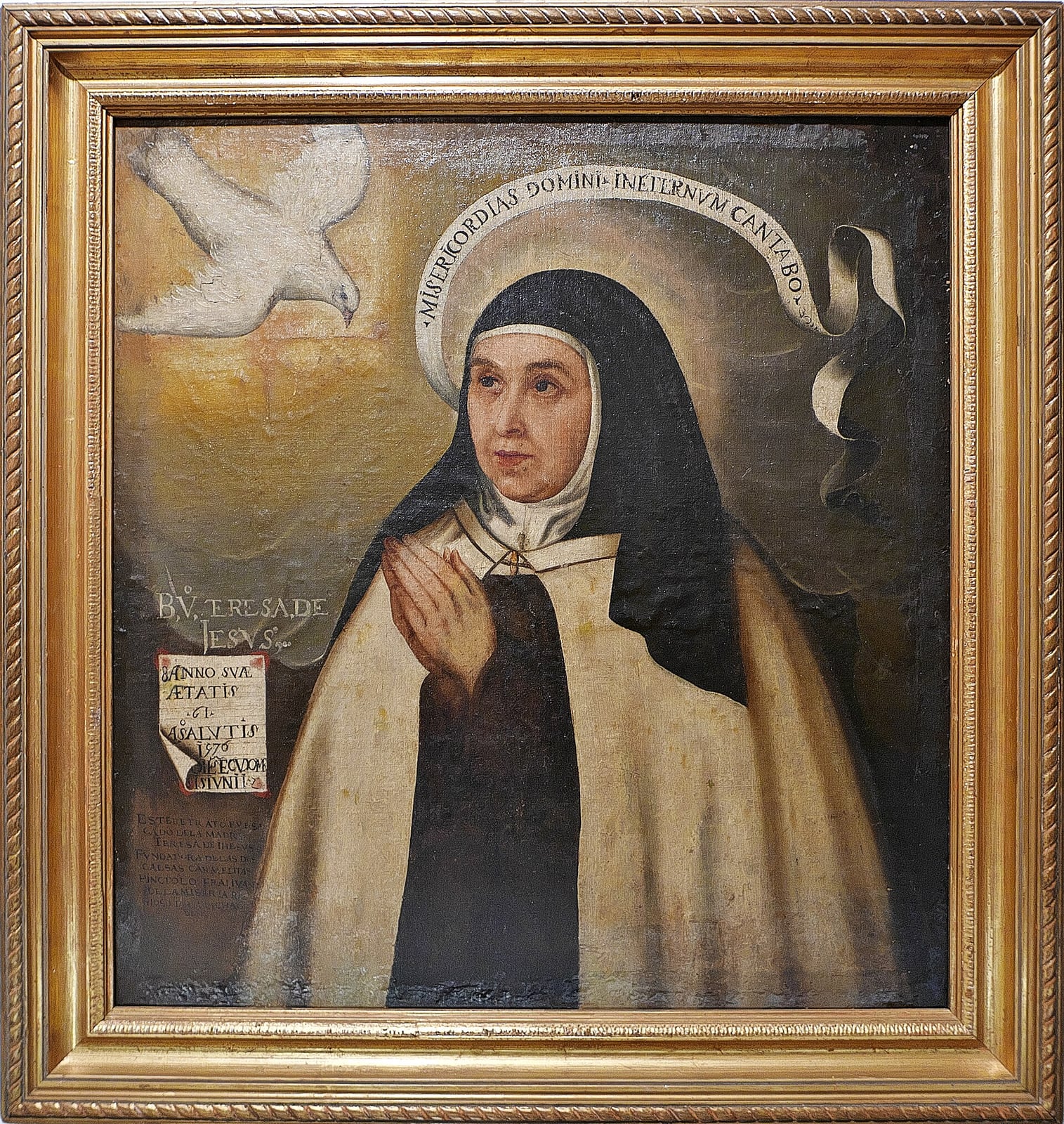
Teresa of Ávila
Ils concordent sur: Qu'est-ce que l'Absolu ? Dieu existe-t-il ? · Qui suis-je ? Existe-t-il un vrai soi ? · Pourquoi souffrons-nous ?

Francis of Assisi
Ils concordent sur: Qu'est-ce que l'Absolu ? Dieu existe-t-il ? · Qui suis-je ? Existe-t-il un vrai soi ? · Pourquoi souffrons-nous ?

Theophan the Recluse
Ils concordent sur: Pourquoi souffrons-nous ? · Qu'est-ce que l'Absolu ? Dieu existe-t-il ? · Qui suis-je ? Existe-t-il un vrai soi ?
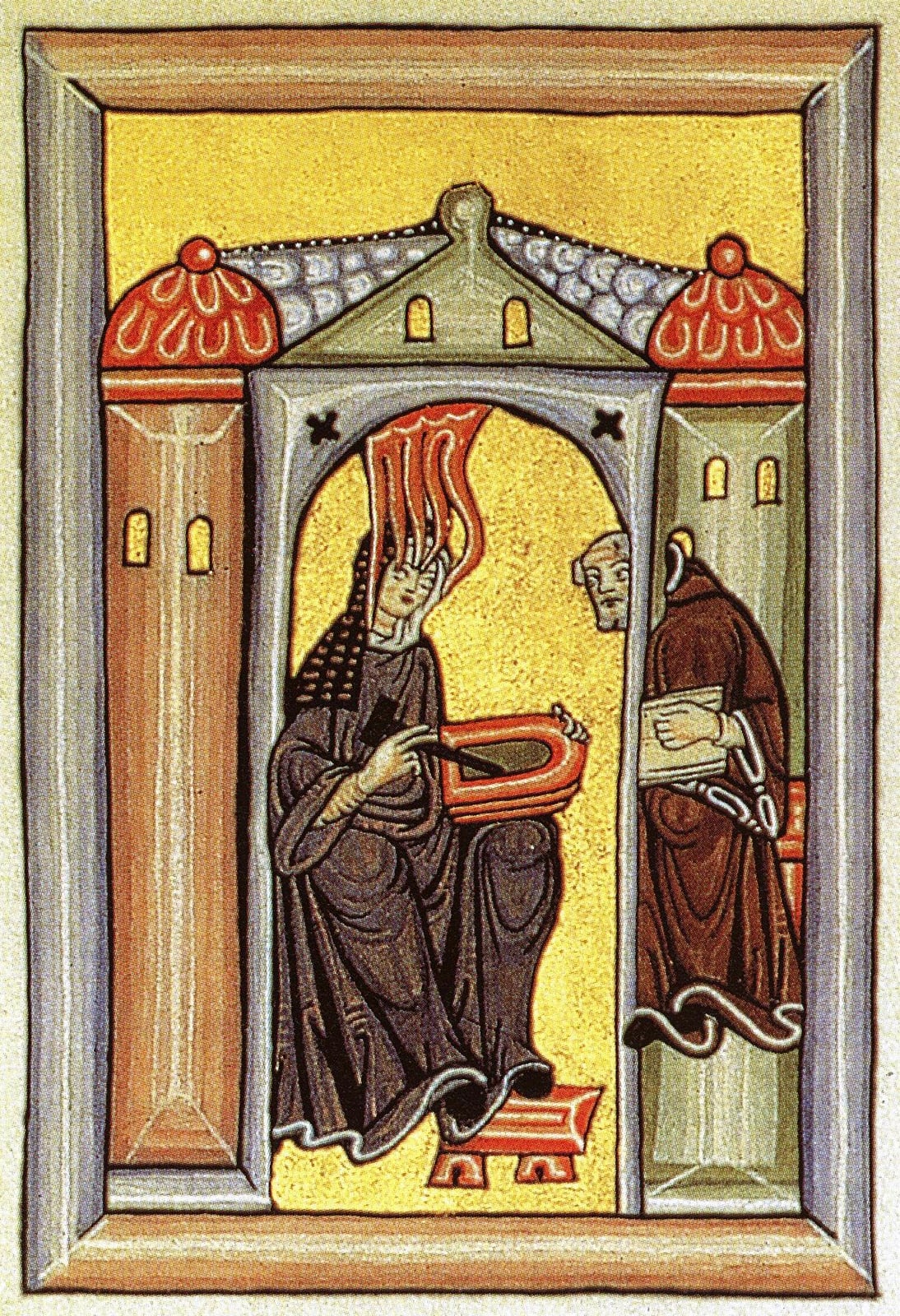
Hildegard of Bingen
Ils concordent sur: Sommes-nous libres ou tout est-il déterminé ? · Qu'est-ce que l'Absolu ? Dieu existe-t-il ? · Qui suis-je ? Existe-t-il un vrai soi ?
Pense autrement que

Pema Chödrön
Ils s'opposent sur: Qu'est-ce que l'Absolu ? Dieu existe-t-il ? · Qui suis-je ? Existe-t-il un vrai soi ? · Que se passe-t-il après la mort ?
Patañjali
Ils s'opposent sur: Qu'est-ce que l'Absolu ? Dieu existe-t-il ? · Qui suis-je ? Existe-t-il un vrai soi ? · Que se passe-t-il après la mort ?

Nāgārjuna
Ils s'opposent sur: Qu'est-ce que l'Absolu ? Dieu existe-t-il ? · Qui suis-je ? Existe-t-il un vrai soi ? · Que se passe-t-il après la mort ?
Dōgen
Ils s'opposent sur: Qu'est-ce que l'Absolu ? Dieu existe-t-il ? · Qui suis-je ? Existe-t-il un vrai soi ? · Que se passe-t-il après la mort ?
Anecdotes et récits
Anecdotes et récits
Documentéc. 370
The stolen pears
Origine du récit: Told by Augustine himself in Confessions II.4.9–10.18. It is the only testimony of the event.
Source: Agustín de Hipona. Confessionum libri XIII. Ed. Lucas Verheijen. Corpus Christianorum Series Latina 27. Turnhout: Brepols, 1981. Trad. inglesa de Henry Chadwick, Oxford: Oxford University Press, 1991.
Documenté384–386
Ambrose reads in silence
Origine du récit: Confessions VI.3.3. The reading of the passage as evidence of the rarity of silent reading has been disputed, among others by B. M. W. Knox (1968).
Source: Agustín de Hipona. Confessionum libri XIII. Ed. Lucas Verheijen. Corpus Christianorum Series Latina 27. Turnhout: Brepols, 1981. Trad. inglesa de Henry Chadwick, Oxford: Oxford University Press, 1991.
Témoignageagosto de 386
'Take up and read'
Origine du récit: Autobiographical account in Confessions VIII.8.19–12.30, written about eleven years later. Pierre Courcelle (1950) emphasised its literary construction (Nathanael's fig tree, the model of the Life of Antony); later scholarship accepts the real crisis and debates the degree of stylisation.
Source: Agustín de Hipona. Confessionum libri XIII. Ed. Lucas Verheijen. Corpus Christianorum Series Latina 27. Turnhout: Brepols, 1981. Trad. inglesa de Henry Chadwick, Oxford: Oxford University Press, 1991.
Témoignage387
The window at Ostia
Origine du récit: Confessions IX.10.23–11.28. Scholars (Courcelle, O'Donnell) have pointed out its Plotinian vocabulary; the account is the only testimony of the conversation.
Source: Agustín de Hipona. Confessionum libri XIII. Ed. Lucas Verheijen. Corpus Christianorum Series Latina 27. Turnhout: Brepols, 1981. Trad. inglesa de Henry Chadwick, Oxford: Oxford University Press, 1991.
Documenté391
Ordained by force
Origine du récit: Possidius, Life 4, and Augustine himself in Sermon 355.2 (preached in 425), where he recalls avoiding vacant sees.
Source: Posidio de Calama. Vita Augustini y Operum S. Augustini elenchus (Indiculum). Ed. A. Wilmart, «Operum S. Augustini Elenchus a Possidio eiusdem discipulo Calamensi episcopo digestus», en Miscellanea Agostiniana II. Roma: Tipografia Poliglotta Vaticana, 1931, pp. 149–233; Vita ed. A. A. R. Bastiaensen, Vita di Cipriano, Vita di Ambrogio, Vita di Agostino. Milán: Fondazione Lorenzo Valla / Mondadori, 1975.
Invérifiablesin fecha
The child and the shell
Origine du récit: A medieval legend with no basis in the ancient sources. Scholars place it in late medieval preaching and exempla, where the protagonist was not always Augustine; its first written appearance could not be fixed here.
Source: Fitzgerald, Allan D. (dir.). Augustine through the Ages: An Encyclopedia. Grand Rapids: William B. Eerdmans, 1999 (trad. esp.: Diccionario de San Agustín. Burgos: Monte Carmelo, 2001).
Témoignageagosto de 430
The psalms on the wall
Origine du récit: Possidius, Life 28–31, the eyewitness account of a disciple who lived through the siege inside Hippo.
Source: Posidio de Calama. Vita Augustini y Operum S. Augustini elenchus (Indiculum). Ed. A. Wilmart, «Operum S. Augustini Elenchus a Possidio eiusdem discipulo Calamensi episcopo digestus», en Miscellanea Agostiniana II. Roma: Tipografia Poliglotta Vaticana, 1931, pp. 149–233; Vita ed. A. A. R. Bastiaensen, Vita di Cipriano, Vita di Ambrogio, Vita di Agostino. Milán: Fondazione Lorenzo Valla / Mondadori, 1975.
Enseignements
Enseignements
Les notions qui structurent sa pensée, expliquées dans leur contexte.
Inwardness (redi in te ipsum)interioridad
Christian reception of the Plotinian ascent (Enneads I.6; V.1), filtered through the reading of the 'books of the Platonists' in Milan.
Source: Agustín de Hipona. Confessionum libri XIII. Ed. Lucas Verheijen. Corpus Christianorum Series Latina 27. Turnhout: Brepols, 1981. Trad. inglesa de Henry Chadwick, Oxford: Oxford University Press, 1991.
Grace and original singracia-y-pecado-original
The Pelagian controversy (411–430) and the reading of Paul (Romans, Galatians) from 394.
Source: Bonner, Gerald. St Augustine of Hippo: Life and Controversies. Londres: SCM Press, 1963; 3.ª ed., Norwich: Canterbury Press, 2002.
The two citiesdos-ciudades
An answer to the crisis of 410 and to the Christian imperial theology of Eusebius of Caesarea and Orosius.
Source: Agustín de Hipona. De civitate Dei libri XXII. Ed. Bernhard Dombart y Alfons Kalb. Corpus Christianorum Series Latina 47–48. Turnhout: Brepols, 1955.
Divine illuminationiluminacion
Platonic inheritance (the Form of the Good as sun in the Republic) and an answer to Academic scepticism.
The psychological analogy of the Trinityanalogia-psicologica
Latin Trinitarian theology after Nicaea and Constantinople, in dialogue with Marius Victorinus and Plotinus.
Time as distension of the soultiempo-distensio-animi
An answer to Aristotle's physics of time as the number of motion and to Plotinus (Enneads III.7).
Evil as privation of goodmal-como-privacion
Anti-Manichaean polemic and reception of Plotinus (Enneads I.8).
Source: Lancel, Serge. Saint Augustin. París: Fayard, 1999. Trad. inglesa de Antonia Nevill, Saint Augustine. Londres: SCM Press, 2002.
Vidéos
Vidéos
Enregistrements, entretiens et documentaires. Les vidéos sont lues depuis YouTube ; elles ne sont pas hébergées ici.
05. St. Augustine's Confessions
Conférence· EN· 2012· 46 min
YaleCoursesChaîne officielle
Why Study St Augustine of Hippo with John Milbank
Conférence· EN· 2016· 11 min
University of NottinghamChaîne officielle
Augustine's Confessions and Language
Conférence· EN· 2017· 40 min
Villanova UniversityChaîne officielle
St Augustine Lecture 2012 | 'A Tangle of Two Cities' Dr. James Wetzel
Conférence· EN· 2012· 94 min
Villanova UniversityChaîne officielle
St. Augustine Lecture 2016 | Fr. Allan Fitzgerald, OSA 'Engaging the Gospel of John'
Conférence· EN· 2016· 70 min
Villanova UniversityChaîne officielle
The City of God: The Philosophical Vision of St. Augustine of Hippo with Dr. Chad Pecknold
Conférence· EN· 2026· 79 min
Institute of Catholic CultureChaîne officielle
Christians in Times of Catastrophe: Augustine's 'City of God'
Conférence· EN· 2020· 99 min
Lumen Christi InstituteChaîne officielle
The Confessions (Pusey translation) by Saint AUGUSTINE OF HIPPO Part 1/2 | Full Audio Book
Enregistrement de tiers· EN· 2018· 624 min
LibriVox Audiobooks
Agustín de Hipona | Un Documental por Agustín Remesal | Completo
Documentaire· ES· 2022· 61 min
Centro de Espiritualidad AgustinosChaîne officielle
Conferencia - Conociendo más a San Agustín por Fray Enrique Eguiarte
Conférence· ES· 2018· 54 min
Recoletos TVChaîne officielle
Conferencia 'La Espiritualidad de San Agustín', Fray Enrique Eguiarte
Conférence· ES· 2017· 65 min
Recoletos TVChaîne officielle
7ª.-8ª.- San Agustín de Hipona
Conférence· ES· 2023· 161 min
Fundación Universitaria EspañolaChaîne officielle
La Ciudad de Dios y la Ciudad de los Hombres en San Agustín
Conférence· ES· 2020· 52 min
Instituto de Ciencias Teológicas
Augustinus | Josef Schmidt
Conférence· DE· 2016· 10 min
uni auditorium – wissen online
Saint Augustin
Documentaire· FR· 2012· 52 min
KTO TVChaîne officielle
Galerie
Galerie
Images dont la licence a été vérifiée. Chacune conserve son auteur et son attribution.
Manuscrits
Manuscrits
Témoins manuscrits et textes anciens, avec leur dépositaire et leurs conditions de consultation.
LA · Semiuncial · 397–401
Confessiones (códice Sessoriano)
- Témoin conservé
- Testimonio más antiguo conocido de las Confesiones (s. VI), base de las ediciones críticas modernas
- Dépositaire
- Biblioteca Nazionale Centrale Vittorio Emanuele II, Roma · Sessor. 55
LA · Minúscula · 386–430
Epistulae (cartas Divjak)
- Témoin conservé
- Dos manuscritos medievales que transmiten, junto a cartas conocidas, veintinueve cartas inéditas identificadas por Johannes Divjak en 1975
- Dépositaire
- Bibliothèque municipale de Marseille; Bibliothèque nationale de France, París · Marseille, BM 209; Paris, BnF lat. 16861
LA · Minúscula gótica · 391–430
Sermones (códice de Maguncia, sermones Dolbeau)
- Témoin conservé
- Códice del s. XV procedente de la cartuja de Maguncia que conserva una colección africana de sermones, entre ellos veintiséis desconocidos o incompletos, identificados por François Dolbeau en 1990
- Dépositaire
- Stadtbibliothek Mainz · I 9
LA · Minúscula · s. V (sermones)
Sermones (códice de Erfurt)
- Témoin conservé
- Manuscrito medieval en el que Isabella Schiller, Dorothea Weber y Clemens Weidmann identificaron en 2007–2008 seis sermones desconocidos
- Dépositaire
- Universitätsbibliothek Erfurt
Relations
Relations
Influences, filiations et affinités. On distingue la relation documentée de la similitude identifiée par analyse.
A reçu l'influence de
The 'books of the Platonists' Augustine read in Milan in 386 were, at least in part, treatises of Plotinus in Marius Victorinus's Latin translation (Confessions VII.9.13). He names him in The City of God (IX.10; X.14), and his inward ascent, his theory of evil as privation and his conception of time respond to the Enneads.
Relation documentée
A reçu l'influence de
Augustine did not read Greek fluently and knew Plato mainly through Cicero and the Neoplatonists; even so, in The City of God VIII he considers the Platonists the philosophers closest to Christianity and discusses the Timaeus. His theory of ideas as divine thoughts (De diversis quaestionibus 83, q. 46) Christianises Platonic doctrine.
Relation documentée
A reçu l'influence de
All Augustine's work is an interpretation of the figure of Christ, whom he calls the 'inner teacher' and the 'way'; his commentaries on the Gospels (the Sermon on the Mount, the Tractates on John, the harmony of the evangelists) form the largest part of his exegesis.
Relation documentée
A influencé
Teresa read the Confessions in the Castilian translation just published, at the time of her conversion in 1554, and relates in the Book of Her Life (9.7–8) that on reaching the garden scene she felt herself addressed: 'it seemed to me the Lord said it to me'.
Relation documentée
A influencé
Augustine is, with Dionysius, the authority Eckhart cites most, taking up his theme of the inner man, God's image in the soul and the Trinity of the mind; the trials of Cologne and Avignon debated precisely whether his readings of Augustine were orthodox.
Relation documentée
Idées proches de
Catherine's Dialogue organises the soul's life according to the Augustinian triad of memory, understanding and will, mediated by Dominican preaching; there is no evidence she read Augustine directly, since she did not know scholarly Latin.
Similitude identifiée par analyse
Idées proches de
Julian reflects on sin, the fall and grace within an Augustinian horizon, but her vision of sin as 'behovely' and of a God who does not blame departs from the late Augustine's rigour. There is no documented reading.
Similitude identifiée par analyse
Idées proches de
Both embody a radical conversion transforming a worldly life, but Francis is a preacher of poverty without theological pretension, and his spirituality of creation contrasts with Augustinian inwardness. No documented relation.
Similitude identifiée par analyse
Idées proches de
Hildegard was formed in monastic theology of Augustinian tradition and, like Augustine, wrote a theology of salvation history; but her visionary and cosmological mode is foreign to Augustinian introspection. No specific documented reading.
Similitude identifiée par analyse
Idées proches de
The Socratic 'know thyself', which Augustine knew through Cicero, reappears transformed in his search for God through self-knowledge.
Similitude identifiée par analyse
Idées proches de
Al-Ghazali's spiritual memoir (The Deliverer from Error) narrates, like the Confessions, a sceptical crisis overcome by illumination and a conversion to the contemplative life. There is no historical relation.
Similitude identifiée par analyse
Lié depuis d'autres fiches
Sources
Sources
Bibliographie et catalogues consultés pour cette fiche.
- Wikidata, Q8018 «Agustín de Hipona / Augustine of Hippo» (P31=Q5; 228 enlaces entre wikis; P569 354-11-13, P570 430-08-28).
- Brown, Peter. Augustine of Hippo: A Biography. Londres: Faber & Faber, 1967; nueva edición con epílogo, Berkeley: University of California Press, 2000. Trad. esp.: Agustín de Hipona. Madrid: Acento, 2001.
- Agustín de Hipona. Confessionum libri XIII. Ed. Lucas Verheijen. Corpus Christianorum Series Latina 27. Turnhout: Brepols, 1981. Trad. inglesa de Henry Chadwick, Oxford: Oxford University Press, 1991.
- Posidio de Calama. Vita Augustini y Operum S. Augustini elenchus (Indiculum). Ed. A. Wilmart, «Operum S. Augustini Elenchus a Possidio eiusdem discipulo Calamensi episcopo digestus», en Miscellanea Agostiniana II. Roma: Tipografia Poliglotta Vaticana, 1931, pp. 149–233; Vita ed. A. A. R. Bastiaensen, Vita di Cipriano, Vita di Ambrogio, Vita di Agostino. Milán: Fondazione Lorenzo Valla / Mondadori, 1975.
- Agustín de Hipona. Retractationum libri II. Ed. Almut Mutzenbecher. Corpus Christianorum Series Latina 57. Turnhout: Brepols, 1984.
- Fitzgerald, Allan D. (dir.). Augustine through the Ages: An Encyclopedia. Grand Rapids: William B. Eerdmans, 1999 (trad. esp.: Diccionario de San Agustín. Burgos: Monte Carmelo, 2001).
- Mendelson, Michael. «Saint Augustine». Stanford Encyclopedia of Philosophy, ed. Edward N. Zalta (primera publicación 2000; revisiones posteriores).
- Lancel, Serge. Saint Augustin. París: Fayard, 1999. Trad. inglesa de Antonia Nevill, Saint Augustine. Londres: SCM Press, 2002.
- Agustín de Hipona. De civitate Dei libri XXII. Ed. Bernhard Dombart y Alfons Kalb. Corpus Christianorum Series Latina 47–48. Turnhout: Brepols, 1955.
- Dekkers, Eligius, y Aemilius Gaar. Clavis Patrum Latinorum. 3.ª ed. Turnhout: Brepols / Steenbrugge: Abbatia Sancti Petri, 1995, núms. 250–386 (Agustín).
- Divjak, Johannes (ed.). Sancti Aureli Augustini Opera: Epistolae ex duobus codicibus nuper in lucem prolatae. Corpus Scriptorum Ecclesiasticorum Latinorum 88. Viena: Hoelder-Pichler-Tempsky, 1981.
- Dolbeau, François. Augustin d'Hippone, Vingt-six sermons au peuple d'Afrique. París: Institut d'Études Augustiniennes, 1996 (2.ª ed., 2009).
- Sant'Agostino – Augustinus Hipponensis. Opera omnia (texto latino de la Nuova Biblioteca Agostiniana y traducción italiana, Città Nuova Editrice).
- New Advent, Fathers of the Church: textos de Agustín según Nicene and Post-Nicene Fathers, First Series, vols. 1–8, ed. Philip Schaff. Buffalo: Christian Literature Publishing Co., 1886–1888; transcripción de Kevin Knight.
- Wikipedia en inglés, «Bibliography of Augustine of Hippo» (consultada para el cotejo de la lista de obras).
- O'Donnell, James J. Augustine: Confessions. Introduction, Text and Commentary. 3 vols. Oxford: Clarendon Press, 1992 (versión electrónica en stoa.org).
- Courcelle, Pierre. Recherches sur les Confessions de saint Augustin. París: De Boccard, 1950 (2.ª ed. ampliada, 1968).
- Bonner, Gerald. St Augustine of Hippo: Life and Controversies. Londres: SCM Press, 1963; 3.ª ed., Norwich: Canterbury Press, 2002.
- Machielsen, John. Clavis Patristica Pseudepigraphorum Medii Aevi. Vol. I A–B: Opera homiletica; vol. II A–B: Theologica, exegetica… Turnhout: Brepols, 1990–1994 (pseudoagustinianos).
- Schiller, Isabella, Dorothea Weber y Clemens Weidmann. «Sechs neue Augustinuspredigten. Teil 1 mit Edition dreier Sermones». Wiener Studien 121 (2008), pp. 227–284; Teil 2, Wiener Studien 122 (2009), pp. 171–213.
- Verheijen, Luc. La Règle de saint Augustin. 2 vols. París: Études Augustiniennes, 1967.
- Project Gutenberg: The Confessions of St. Augustine (trad. E. B. Pusey, n.º 3296); The City of God, vols. I–II (trad. Marcus Dods, n.º 45304–45305); Confessiones (latín, n.º 33849); Writings in Connection with the Donatist Controversy (trad. J. R. King, n.º 45843).
- The Latin Library: Augustinus (Confessiones, De civitate Dei, De Trinitate y otros textos latinos).
- Open Library (Internet Archive), registros de edición consultados por ISBN para las ediciones listadas.
- Wikisource en español: Agustín de Hipona, La ciudad de Dios, trad. José Cayetano Díaz de Beyral (Madrid: Viuda de Hernando, Biblioteca Clásica, 1893).
- Ayant droit
- Dominio público (obra del siglo V). Las ediciones críticas (Brepols/Corpus Christianorum, CSEL de la Academia de Viena), traducciones y aparatos modernos (BAC, New City Press, Oxford, Penguin, Cambridge, Città Nuova) están sujetos a los derechos de sus editores.
En attente de confirmation
Ce que cette fiche n'a pas encore pu établir. Nous préférons le dire plutôt que de combler.
- Verificar en catálogo los ISBN de las ediciones del Corpus Christianorum y del CSEL (se citan sin ISBN) y localizar ISBN de ediciones españolas de De doctrina christiana, Enchiridion, De libero arbitrio y los diálogos de Casiciaco (BAC, Obras completas I–III): Open Library no los devuelve con título fiable.
- Confirmar el contenido exacto de los volúmenes de las Obras completas de la BAC registrados por ISBN (V: Trinidad; XIX: Enarraciones; XIb: Cartas; VII: Sermones): los títulos de Open Library mezclan el título de la serie («Escritos apologéticos») con el del volumen.
- Los ISBN 9788479144593 (La ciudad de Dios, BAC, 2000) y 9788430946495 (Tecnos, 2007) aparecen en Open Library sin traductor: completar traductor y colección.
- Localizar una traducción española de dominio público de las Confesiones con texto completo (Wikisource no la tiene transcrita; Gutenberg tampoco): candidata, la de Eugenio de Zeballos (1781) en escaneos de bibliotecas digitales; no se ha registrado porque los escaneos sin OCR no sirven a la sala de lectura.
- Verificar el tipo de escritura y la datación exacta del códice Sessoriano 55 de las Confesiones y la signatura del códice de Erfurt de los sermones nuevos (Universitätsbibliothek Erfurt, Dep. Erf. CA 2° 12, según la bibliografía consultada de memoria; se ha dejado sin signatura).
- Añadir el códice de Verona (Biblioteca Capitolare, XXVIII [26]), testimonio uncial del s. V de La ciudad de Dios, tras confirmar en CLA (Lowe) qué libros contiene.
- Los traductores de NPNF registrados en reading_texts son del siglo XIX; conviene comprobar uno a uno las fechas de muerte (en especial R. E. Wallis, C. C. Starbuck y R. G. MacMullen) para la regla española de ochenta años.
- New Advent agrupa en la página 1401 las dos partes del De moribus; la segunda (De moribus Manichaeorum) está en https://www.newadvent.org/fathers/1402.htm: el importador debe tratarlas como una sola obra.
- Primera aparición escrita de la leyenda del niño y la concha: no se ha podido fijar con una fuente concreta (se marca como «unverifiable»).
- Las descripciones de obras perdidas (Contra Hilarum, Ad Emeritum, Probationum et testimoniorum, etc.) son breves porque solo las conocemos por una frase de las Retractationes; no se han alargado artificialmente.
- Programas de afiliación: ninguno verificado para las editoriales listadas; lista vacía.
- Vídeos: no se encontró una clase universitaria en italiano de canal institucional verificable; se dejan quince vídeos en inglés, español, alemán y francés.
Recherche effectuée le 2026-10-25