Platonisme
Plato
Πλάτων
v. 428 av. J.-C. – v. 348 av. J.-C.Personne historiquement documentée
Philosophe athénien du IVe siècle av. J.-C., disciple de Socrate et maître d'Aristote, fondateur de l'Académie. Son œuvre, conservée intégralement, se compose de dialogues où Socrate tient le plus souvent la parole : il y expose la théorie des Formes, l'immortalité de l'âme, l'ascension par l'amour vers le beau et l'idée d'une cité gouvernée par ceux qui connaissent le Bien. Presque toute la philosophie occidentale, et une bonne part de la mystique chrétienne, juive et islamique, s'est pensée en dialogue avec lui.
- œuvres
- 57œuvres
- éditions
- 358éditions
- citations
- 19citations
- vidéos
- 15vidéos
- images
- 11images
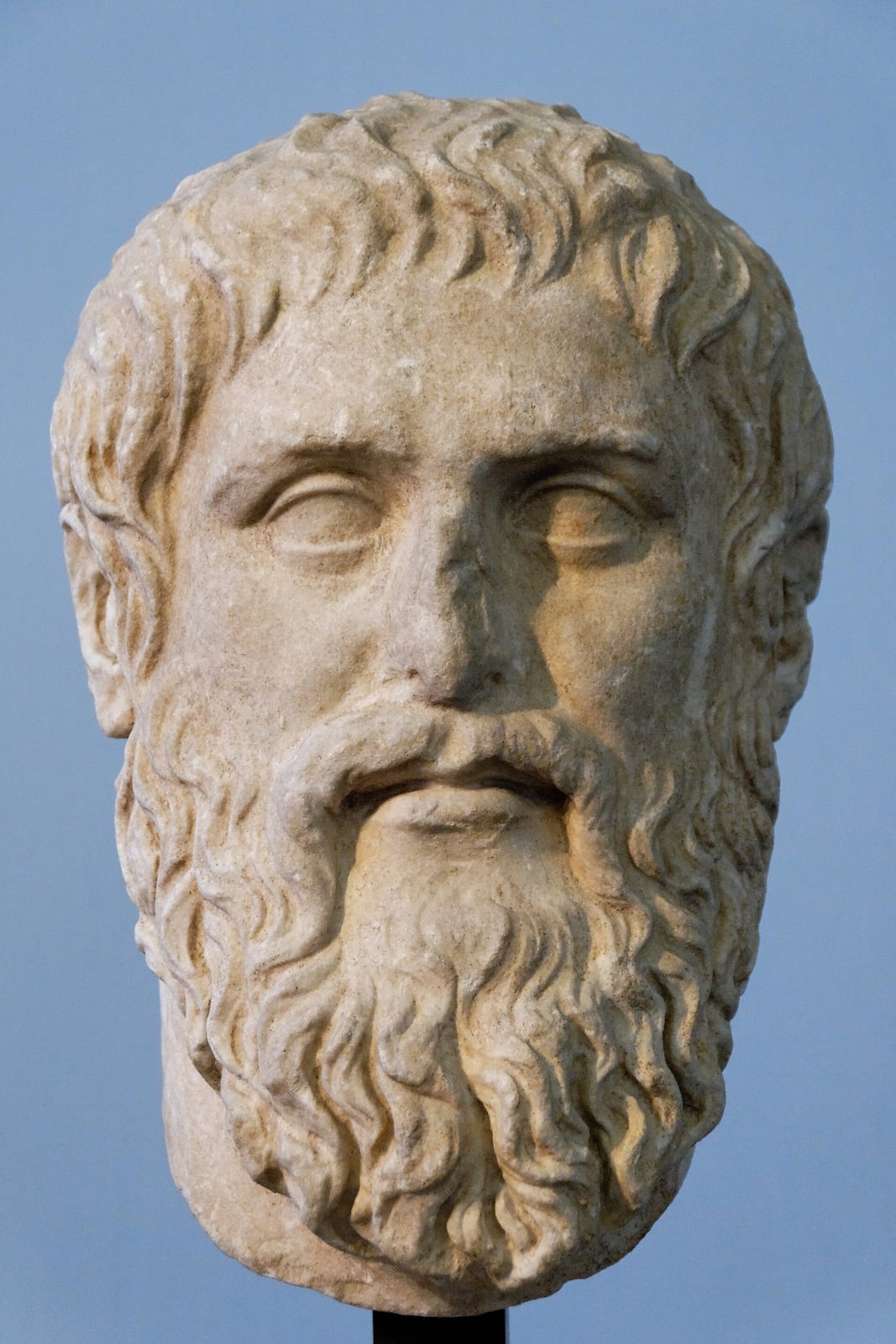
Busto de Platón (Museos Capitolinos, MC 1377) · CC BY 2.5
Dans ses propres mots
«He knows nothing, and thinks that he knows; I neither know nor think that I know.»Apología de Sócrates 21d (habla Sócrates). Español: traducción literal propia desde el griego (ed. Burnet). Inglés: Jowett, 1892 (dominio público).

Son idée centrale
Theory of Forms (Ideas): Plato holds that, besides sensible things, which are many and changing, there exist intelligible realities, eternal and unchanging — the Forms or Ideas (eidos, idea) — such as the Beautiful itself, the Just itself or the Equal itself.
Le voir en contexte
Biographie
6 min de lecture
Traduction assistée à partir de l'original espagnol, en attente de relecture par un traducteur natif.
Un aristocrate dans l'Athènes en guerre
Platon naquit à Athènes vers 428 ou 427 av. J.-C., dans les premières années de la guerre du Péloponnèse, au sein de l'une des plus anciennes familles de la cité. Son père, Ariston, se disait descendant du roi Codros ; sa mère, Périctioné, était apparentée à Solon. Il eut deux frères aînés, Adimante et Glaucon, auxquels il donnerait la parole dans la République, et une sœur, Potoné, mère de son successeur Speusippe. Ariston mort, Périctioné épousa son oncle Pyrilampe, ami de Périclès. L'enfant grandit donc parmi des gens habitués à commander : Critias, cousin de sa mère, et Charmide, son oncle, allaient être des figures centrales du régime oligarchique des Trente.
De sa formation, on sait peu de chose avec certitude. Diogène Laërce, qui écrit six siècles plus tard, rapporte que son vrai nom était Aristoclès et que « Platon » était un surnom dû à la largeur de ses épaules ou de son front ; qu'il pratiqua la lutte, la peinture et la poésie ; et qu'il brûla ses tragédies après avoir entendu Socrate. Ce sont là des informations de biographes hellénistiques qui mêlaient tradition, déductions tirées des dialogues et pure invention, et la critique moderne les accueille avec prudence.
La blessure de 399
Ce qui paraît assuré, c'est que Platon fit partie, dans sa jeunesse, du cercle de Socrate, et que cette relation décida de sa vie. La Lettre VII, dont l'authenticité est discutée mais que beaucoup de spécialistes acceptent, raconte que, jeune homme, il pensait se consacrer à la politique, que les Trente l'invitèrent à se joindre à eux et que leur violence — y compris la tentative d'impliquer Socrate dans l'arrestation d'un citoyen destiné à être exécuté — l'éloigna d'eux. La démocratie restaurée, en 399 av. J.-C., les nouveaux dirigeants traduisirent Socrate en justice pour impiété et corruption de la jeunesse, et il fut condamné à boire la ciguë.
Platon assista au procès, comme il le signale lui-même dans l'Apologie, bien que le Phédon le dise absent, malade, le jour de la mort. Selon la lettre, ce dénouement le conduisit à la conclusion qui traverse toute son œuvre : les cités ne cesseront de souffrir de leurs maux que lorsque les philosophes gouverneront ou que les gouvernants philosopheront véritablement. Après l'exécution, il se réfugia quelque temps à Mégare, auprès du socratique Euclide.
Voyages et Académie
Les sources anciennes lui prêtent ensuite des voyages à Cyrène, dans l'Italie des pythagoriciens et en Égypte. Seul le contact avec les pythagoriciens est bien attesté : vers quarante ans, il visita l'Italie du Sud, se lia d'amitié avec Archytas de Tarente et passa à Syracuse, où il rencontra Dion, beau-frère du tyran Denys Ier. L'histoire selon laquelle le tyran l'aurait fait vendre comme esclave à Égine, et qu'un Cyrénaïque l'aurait racheté, provient de biographes tardifs et ne figure pas dans la Lettre VII.
De retour à Athènes, vers 387 av. J.-C., il établit son école près du gymnase de l'Académie, un enclos boisé consacré au héros Académos, au nord-ouest de la ville. Ce n'était pas une université au sens moderne, mais une communauté d'étude et de vie commune où l'on étudiait les mathématiques, l'astronomie, la dialectique et la théorie politique, et où travaillèrent des mathématiciens comme Théétète et Eudoxe. Aristote y arriva en 367 av. J.-C., à dix-sept ans, et y resta une vingtaine d'années. Diogène Laërce mentionne même deux femmes, Axiothéa de Phlionte et Lasthénie de Mantinée, parmi ses disciples.
La tentation de la Sicile
La philosophie politique de Platon connut une épreuve réelle. En 367 av. J.-C., Denys Ier étant mort, Dion lui demanda de venir éduquer le nouveau tyran, Denys II, dans l'espoir d'en faire le gouvernant philosophe de la République. L'expérience se solda par l'exil de Dion et le retour de Platon à Athènes. Vers 361, il retourna à Syracuse pour tenter de les réconcilier, y fut retenu contre son gré et ne put repartir que grâce à Archytas. En 357, Dion renversa Denys avec l'appui de membres de l'Académie, et en 354 il fut assassiné par Callippe, un Athénien de son propre entourage. Les Lettres VII et VIII se présentent comme le bilan de cet échec.
Les dialogues
À la différence de presque tous les philosophes antérieurs, dont nous ne connaissons l'œuvre que par fragments, Platon nous est parvenu tout entier, du moins tel que l'Antiquité le lui attribuait : trente-cinq dialogues et un recueil de treize lettres, ordonnés au Ier siècle apr. J.-C. par Thrasylle en neuf tétralogies, auxquels s'ajoute une poignée d'œuvres déjà reconnues comme apocryphes. Platon n'y parle jamais à la première personne ; Socrate mène d'ordinaire la conversation, et dans les dialogues tardifs il cède ce rôle à un Étranger d'Élée, à Timée ou à un Étranger d'Athènes.
La chronologie fait débat, mais on s'accorde sur un schéma général. Les dialogues brefs, comme le Lachès ou l'Euthyphron, examinent une vertu et s'achèvent sans réponse. Le Phédon, le Banquet, la République et le Phèdre exposent la théorie des Formes, l'immortalité de l'âme et l'ascension de l'amour vers la Beauté. Le Parménide, le Théétète, le Sophiste, le Timée, le Philèbe et les Lois, ouvrage qu'il laissa sans l'avoir mis au net à sa mort, soumettent ces idées à la critique et les étendent à la cosmologie et à la législation.
Le Phèdre et la Lettre VII ajoutent une mise en garde sur l'écriture elle-même : l'essentiel ne se transmet pas dans les livres, il s'allume dans l'âme au terme d'une longue fréquentation. Aristote fait allusion à des « doctrines non écrites » de son maître, et la célèbre leçon publique « Sur le Bien », où Platon parla de mathématiques et conclut que le Bien est l'Un, laissa son auditoire perplexe. La part de sa pensée restée hors des dialogues demeure l'une des grandes controverses des études platoniciennes.
Mort et héritage
Platon mourut à Athènes en 348 ou 347 av. J.-C., âgé d'environ quatre-vingts ans, et fut enseveli à l'Académie. Les sources divergent sur les circonstances : un banquet de noces, le travail d'écriture, une nuit de fièvre à écouter une flûte. Son neveu Speusippe lui succéda, et l'école, au prix de profondes transformations, se maintint pendant des siècles.
Le texte parvint jusqu'à l'imprimerie grâce aux manuscrits byzantins — le plus ancien à conserver complètes les six premières tétralogies, le Clarkianus de la Bibliothèque bodléienne, fut copié en 895 — et en 1578 Henri Estienne publia à Genève l'édition dont la pagination sert encore à le citer : « République 514a » renvoie à la page 514, section a, de ce volume. En castillan, Patricio de Azcárate donna entre 1871 et 1872 la première traduction des œuvres complètes.
Son influence est sans équivalent. Plotin se considéra comme son interprète et fonda le néoplatonisme ; Augustin d'Hippone reconnut que les livres platoniciens lui avaient ouvert le chemin du Dieu chrétien ; le Timée, en latin, fut pendant des siècles presque tout ce que l'Occident lut de lui, et la falsafa islamique comme la théologie juive médiévale le reçurent par leurs propres voies. La traduction latine intégrale de Marsile Ficin, en 1484, le replaça au centre de la culture européenne. Alfred North Whitehead résuma la dette en écrivant que la tradition philosophique européenne consiste en une série de notes de bas de page à Platon.
Sources: Nails, Debra, The People of Plato: A Prosopography of Plato and Other Socratics, Indianápolis, Hackett, 2002 (entrada «Plato» y apéndices cronológicos). · Diógenes Laercio, Vidas y opiniones de los filósofos ilustres, libro III (Platón), s. III d. C. Trad. inglesa de R. D. Hicks, Loeb Classical Library, Harvard University Press, 1925 (texto en Wikisource). · Platón (atribuida), Carta VII, 324a–352a, en Platonis Opera, ed. John Burnet, vol. V, Oxford Classical Texts, 1907; trad. española de Juan Zaragoza y Pilar Gómez Cardó en Platón, Diálogos VII, Madrid, Gredos (Biblioteca Clásica Gredos 162), 1992. · Cooper, John M. (ed.) y Hutchinson, D. S. (ed. asociado), Plato: Complete Works, Indianápolis, Hackett, 1997 (introducción del editor sobre el corpus, las tetralogías de Trasilo y la autenticidad de cada obra). · Riginos, Alice Swift, Platonica: The Anecdotes Concerning the Life and Writings of Plato, Leiden, Brill (Columbia Studies in the Classical Tradition 3), 1976.
Chronologie
La vie, année après année
Chaque point est un événement documenté. Cliquez pour le lire, avec sa source et son degré de certitude.
v. 428 av. J.-C.0 ansAtenas (o Egina, según otra tradición)
Birth
Born into an aristocratic Athenian family: his father, Ariston, claimed descent from King Codrus; his mother, Perictione, from Solon's family. Diogenes Laertius dates the birth to the 88th Olympiad (428/427 BC), and Apollodorus has it coincide with Apollo's birthday. He had two brothers, Adeimantus and Glaucon, and a sister, Potone.
ProbableDiógenes Laercio, Vidas y opiniones de los filósofos ilustres, libro III (Platón), s. III d. C. Trad. inglesa de R. D. Hicks, Loeb Classical Library, Harvard University Press, 1925 (texto en Wikisource).
Après sa mort
- v. 347 av. J.-C.Speusippus heads the Academy
- v. 14 av. J.-C.Thrasyllus' tetralogies
- 895The Codex Clarkianus
- 1484Ficino's Latin translation
- 1578The Stephanus edition
- 1871 – 1872Complete works in Spanish
v. 428 av. J.-C. · 0 ans
Birth
Born into an aristocratic Athenian family: his father, Ariston, claimed descent from King Codrus; his mother, Perictione, from Solon's family. Diogenes Laertius dates the birth to the 88th Olympiad (428/427 BC), and Apollodorus has it coincide with Apollo's birthday. He had two brothers, Adeimantus and Glaucon, and a sister, Potone.
Probable
v. 423 av. J.-C. · 5 ans
His mother marries Pyrilampes
After Ariston's death, Perictione marries her uncle Pyrilampes, a friend of Pericles; from this marriage is born Antiphon, Plato's half-brother, who appears in the Parmenides.
Probable
v. 408 av. J.-C. · 20 ans
With Socrates
According to Diogenes Laertius, at twenty he began to frequent Socrates; tradition adds that he then burned his tragedies. The date and the burning episode are traditional.
Tradition
404 av. J.-C. · 24 ans
The Thirty Tyrants
After Athens' defeat, an oligarchic government including Critias, his mother's cousin, and Charmides, his uncle, invites the young Plato to collaborate. According to the Seventh Letter, its violence — and its attempt to involve Socrates in an unjust arrest — turned him away.
Probable
399 av. J.-C. · 29 ans
Trial and death of Socrates
Socrates is condemned to death for impiety and corrupting the young. Plato attends the trial, as he states in the Apology (34a, 38b), but according to the Phaedo (59b) he was not present at the death because he was ill.
Documenté
v. 399 av. J.-C. · 29 ans
Withdrawal to Megara
After the execution, with other Socratics, he takes refuge for a while in Megara with Euclides, according to Hermodorus as cited by Diogenes Laertius.
Probable
v. 395 av. J.-C. · 33 ans
Journeys of study
Ancient tradition credits him with journeys to Cyrene, to the mathematician Theodorus, to the Pythagoreans of Italy and to Egypt. Only the contact with the Pythagoreans is well attested; the Egyptian journey is doubtful.
Tradition
v. 388 av. J.-C. · 40 ans
First journey to Sicily
Around the age of forty (Seventh Letter, 324a) he visits Italy, where he befriends Archytas of Tarentum, and the court of Dionysius I in Syracuse, where he meets the young Dion. Later tradition relates that the tyrant had him sold as a slave in Aegina.
Probable
v. 387 av. J.-C. · 41 ans
Founding of the Academy
He acquires land near the gymnasium of the Academy, north-west of Athens, and founds the community of study that will take its name. Mathematics, astronomy, dialectic and politics are studied there; it will survive, with transformations, for several centuries.
Probable
367 av. J.-C. · 61 ans
Aristotle enters the Academy
Aristotle, aged seventeen, arrives from Stagira and remains in the Academy for some twenty years, until Plato's death.
Documenté
v. 367 av. J.-C. – 365 av. J.-C. · 61 ans
Second journey to Sicily
After Dionysius I's death, Dion calls him to educate the new tyrant, Dionysius II. The experiment fails: Dion is exiled and Plato returns to Athens.
Probable
v. 361 av. J.-C. – 360 av. J.-C. · 67 ans
Third journey to Sicily
He returns to Syracuse at Dionysius II's request, hoping to reconcile him with Dion. Held against his will, he manages to leave thanks to the intervention of Archytas of Tarentum.
Probable
357 av. J.-C. · 71 ans
Dion's expedition
Dion, with support from members of the Academy, overthrows Dionysius II. In 354 BC he is murdered by Callippus, an Athenian of his circle. Letters VII and VIII present themselves as written after his death.
Probable
v. 348 av. J.-C. · 80 ans
Death
He dies in Athens in the first year of the 108th Olympiad (348/347 BC), aged about eighty or eighty-one, according to Hermippus as cited by Diogenes Laertius. He is buried in the Academy. He leaves the Laws not yet fair-copied.
Probable
v. 347 av. J.-C.
Speusippus heads the Academy
He is succeeded by his nephew Speusippus, son of his sister Potone. Aristotle leaves Athens.
Documenté
v. 14 av. J.-C.
Thrasyllus' tetralogies
In the first century AD, the astrologer Thrasyllus, close to Tiberius, arranges the works in nine tetralogies, the order in which the corpus has come down to us.
Probable
895
The Codex Clarkianus
John the Calligrapher copies for Arethas of Caesarea the codex now preserved in the Bodleian Library, the main witness for the first six tetralogies.
Documenté
1484
Ficino's Latin translation
Marsilio Ficino publishes the first complete Latin translation of the dialogues, commissioned by Cosimo de' Medici, which restores Plato to the centre of European thought.
Documenté
1578
The Stephanus edition
Henri Estienne publishes the Greek text in three volumes with Jean de Serres' Latin translation; its pagination becomes the universal system of reference.
Documenté
1871 – 1872
Complete works in Spanish
Patricio de Azcárate publishes the first Spanish translation of the complete works (11 volumes, 1871–1872).
Documenté
Œuvres
Œuvres essentielles
Les œuvres sans lesquelles on ne comprend pas son héritage.
Œuvre écrite · v. 395 av. J.-C.
Apology of Socrates
Ἀπολογία Σωκράτους
A recreation of the defence speech Socrates delivered in 399 BC before the Athenian popular jury, accused of not recognising the city's gods and of corrupting the young. Socrates explains the Delphic oracle, his mission of examining those who think they know, and his conscious ignorance; after the verdict he ironically proposes to be maintained in the Prytaneum, and accepts death declaring that the unexamined life is not worth living. Plato was present at the trial (34a, 38b). It is the classic doorway into philosophy.
8 éditions

Œuvre écrite · v. 380 av. J.-C.
Phaedo
Φαίδων
Phaedo of Elis tells Echecrates of Socrates' last hours in prison: the conversation on why the philosopher does not fear death, the arguments for the immortality of the soul (from opposites, recollection, affinity with the invisible, participation in Forms), the closing myth on the fate of souls, and the calm death by hemlock. Here the theory of Forms appears explicitly, as does the definition of philosophy as practice for dying. Plato is said to have been absent through illness (59b).
9 éditions

Œuvre écrite · v. 380 av. J.-C.
Symposium
Συμπόσιον
At the house of the poet Agathon, celebrating his victory in the tragic contest of 416 BC, the guests deliver speeches in honour of Eros: Phaedrus, Pausanias, the physician Eryximachus, Aristophanes with the myth of spherical beings cut in two, Agathon, and Socrates, who relays the teaching of the priestess Diotima on the ladder of love, from one beautiful body to Beauty itself. It closes with the entry of a drunken Alcibiades, who delivers a eulogy of Socrates. A literary masterpiece and source of the whole Western mysticism of love.
9 éditions

Œuvre écrite · v. 375 av. J.-C.
Republic
Πολιτεία
In the Piraeus, after a festival, Socrates discusses what justice is. To see it writ large he imagines an ideal city with three classes, ruled by philosophers whose education culminates in knowledge of the Form of the Good. Its ten books contain the critique of poetry, the equal education of women guardians, the images of the sun, the line and the cave, the typology of degenerate regimes and the myth of Er on the choice of lives. Plato's central work and that of political philosophy.
13 éditions
Toute son œuvre (57)
Euthyphro
395
Crito
395

Cratylus
385

Theaetetus
368

Sophist
360

Statesman
360

Parmenides
370

Philebus
355
Phaedrus
370
Alcibiades I
Alcibiades II
Hipparchus
Rival Lovers (Lovers)
Theages

Charmides
390
Laches
390

Lysis
390
Euthydemus
385

Protagoras
390

Gorgias
387
Meno
385
Hippias Major
390
Hippias Minor
395
Ion
395
Citations
Citations localisées dans une œuvre précise. Chacune porte sa provenance et son degré de fiabilité.
He knows nothing, and thinks that he knows; I neither know nor think that I know.οὗτος μὲν οἴεταί τι εἰδέναι οὐκ εἰδώς, ἐγὼ δέ, ὥσπερ οὖν οὐκ οἶδα, οὐδὲ οἴομαι.
VérifiéeApología de Sócrates 21d (habla Sócrates). Español: traducción literal propia desde el griego (ed. Burnet). Inglés: Jowett, 1892 (dominio público).
Citations apocryphes ou d'attribution contestée (2)
«'Let no one ignorant of geometry enter.'»
An inscription attributed to the Academy's door that appears only in sixth-century AD commentators; it is not found in any work of Plato or in sources of his time.
«'Only the dead have seen the end of war.'»
A widespread false attribution: it appears in no work of Plato. It comes from George Santayana, Soliloquies in England (1922), the soliloquy 'Tipperary'; General Douglas MacArthur popularised it as Platonic in an address at West Point (1962).
Dernières paroles
Il n'existe aucun témoignage vérifiable de ses dernières paroles.
No final words of Plato survive. The ancient sources disagree even on the circumstances of his death: Hermippus, cited by Diogenes Laertius (III 2), says he died at a wedding feast; Cicero (On Old Age 13) that he died while writing, at eighty-one; and the Herculaneum papyrus of Philodemus' Index Academicorum, which goes back through Neanthes to Philip of Opus, relates that on his last night, feverish, he received a Chaldean visitor and that a Thracian girl played the flute while he marked the rhythm for her with a gesture. None of these versions records a sentence.
Source: Riginos, Alice Swift, Platonica: The Anecdotes Concerning the Life and Writings of Plato, Leiden, Brill (Columbia Studies in the Classical Tradition 3), 1976.
Interroger
Ce que répond son œuvre
Douze grandes questions de l'humanité et ce que ses textes permettent d'y répondre, références à l'appui. Nous ne lui prêtons jamais de paroles.
Qu'est-ce que l'Absolu ? Dieu existe-t-il ?
A Good beyond being and a good craftsman who willed the world
À la fois personnel et impersonnelCela se déduit de sa doctrine
In Plato two faces of the ultimate coexist. In the Republic the Good is the source from which things receive being and knowability, and it is not essence but still beyond essence: an impersonal principle named only by analogy with the sun. In the Timaeus, by contrast, a good demiurge, free of envy, wills that everything become as like him as possible and orders the cosmos looking to an eternal model. The Laws add gods who care for small things as much as great and punish impiety. Plato does not explicitly unify the two levels; the later tradition read them as degrees of a single divine reality.
Comparer cette question avec d'autres maîtresQui suis-je ? Existe-t-il un vrai soi ?
The immortal soul, akin to the Forms, imprisoned in the body
Une âme créée et immortelleIl le dit expressément
Plato identifies the human being with the soul and devotes his most famous proofs to it. In the Phaedo the soul is like the divine, immortal, intelligible and always the same as itself, while the body resembles the mortal and changing; to philosophise is to separate it from the body. The Phaedrus defines it as a self-moving principle of motion that therefore is neither born nor dies. In the Timaeus the demiurge fashions the immortal part of the human soul from the same mixture as the world soul and entrusts it to the lesser gods. Its destiny is to become like God as far as possible. Yet Plato also ascribes successive reincarnations to this soul.
Comparer cette question avec d'autres maîtresPourquoi souffrons-nous ?
Injustice is a civil war in the soul, and the body feeds it
Le désordre social et moralIl le dit expressément
Plato gives two complementary explanations. In the Phaedo the body fills the soul with loves, desires, fears and images, and from its needs arise wars, revolts and fights over money. In the Republic evil is thought of as disorder: the soul has three parts, reason, spirit and appetite, and justice consists in each doing its own work under reason's rule; injustice is an inner uprising, a sickness of the soul. The same holds for the city, whose degenerate forms correspond to disordered souls. We suffer when order is inverted and appetite rules, in the soul and in the city.
Comparer cette question avec d'autres maîtresQue se passe-t-il après la mort ?
The immortal soul is judged and reborn until philosophy frees it
Renaissance selon le karmaIl le dit expressément
Plato upholds the immortality of the soul with arguments and describes it with myths. In the Phaedo philosophy is a practice of dying, because it prepares the soul to separate from the body; souls attached to it are reincarnated according to their habits, as asses, wolves or bees, while those purified by philosophy live with the gods. The Phaedrus tells of a ten-thousand-year cycle in which only the philosopher's soul regains its wings sooner. In the myth of Er, at the end of the Republic, judged souls choose their next life and drink from the river of forgetfulness. Plato warns that the form of the tale is approximate but that the risk of believing it is worth taking.
Comparer cette question avec d'autres maîtresComment atteint-on la libération ou le salut ?
Turning the whole soul towards what is and becoming like God
Par la connaissance directeIl le dit expressément
For Plato liberation is a conversion of knowledge. The allegory of the cave presents humans chained before shadows; education does not consist in putting knowledge into the soul but in turning it whole, away from what becomes, until it can bear the contemplation of what is and of the Good. The way passes through mathematics and culminates in dialectic. The Phaedo calls philosophy purification and a practice of dying; the Symposium describes an ascent of love from beautiful bodies to Beauty itself; the Theaetetus sums up the goal as flight from here to there, which is becoming like God by becoming just and holy with understanding.
Comparer cette question avec d'autres maîtresFaut-il un maître ?
Truth catches after long companionship, like a spark that leaps
La communauté et la traditionIl le dit expressément
Plato founded the Academy, a community of study and life, and in his dialogues learning always happens between persons. The Seventh Letter, of disputed authenticity but very old, states the idea precisely: the essential cannot be put into words like other studies, but after long companionship with the matter itself and a shared life, it is suddenly born in the soul like a light kindled from a leaping spark. The Phaedrus criticises writing because it cannot answer the questioner and prefers the living word sown in a suitable soul. In the cave, someone has to unchain the prisoner and force him upward. Knowledge is passed on in a prolonged relationship, not in a book.
Comparer cette question avec d'autres maîtresLe monde est-il réel ?
The sensible always becomes and never fully is: an image of what is
Apparence sur l'unique réalitéIl le dit expressément
Plato distinguishes what always is and never becomes, grasped by thought, from what always becomes and never fully is, the object of opinion and the senses. In the allegory of the cave the prisoners take projected shadows for reality; the divided line grades the levels of reality from images up to the Forms. But the sensible world is not nothing: in the Timaeus it is the work of a good craftsman, the most beautiful of generated things, an image of the intelligible which the dialogue's last sentence calls a perceptible god. The world is real as an image; the fully real are the Forms and, above them, the Good.
Comparer cette question avec d'autres maîtresQu'est-ce que l'amour ?
Eros ascends from beautiful bodies to Beauty itself
Le désir ardent et l'unionIl le dit expressément
Plato makes love a force of ascent. In the Symposium, Diotima explains that Eros is not a god but an intermediary, child of Resource and Poverty, always lacking and always seeking; he desires the beautiful because he desires the good and immortality. Rightly guided, he climbs by degrees: from one beautiful body to all, from bodies to souls, to laws, to sciences, until suddenly beholding Beauty itself, the moment when, if ever, life is worth living. The Phaedrus describes love as divine madness: the sight of the beloved reminds the soul of the beauty it beheld before birth and makes its wings grow. To love is to remember the origin and return to it.
Comparer cette question avec d'autres maîtresSommes-nous libres ou tout est-il déterminé ?
The responsibility is the chooser's; the god is not responsible
Le karma et le choixIl le dit expressément
The myth of Er, at the end of the Republic, is Plato's great image on this question. Souls, before being reborn, choose their next life from many patterns; a prophet proclaims that virtue has no master, that each will have more or less of it as he honours or scorns it, and that the responsibility is the chooser's, not the god's. But the choice is not neutral: most choose according to the habits of their former life, and once made, the Fates render it irrevocable. The Laws likewise hold that God left to our wills the causes of our being one way or another. The past conditions choice but does not replace it.
Comparer cette question avec d'autres maîtresPourquoi méditer ou prier ?
Turning the soul towards what is until it contemplates the Good
Voir la réalité telle qu'elle estIl le dit expressément
Plato proposes no meditation techniques, but contemplation is the centre of his philosophy. True education consists in turning the whole soul from what becomes until it can bear the sight of what is; the ascent of the Symposium culminates in the sudden contemplation of Beauty itself; the Phaedo describes philosophy as the soul's gathering into itself, away from the senses, to see the truth. Nor does Plato neglect prayer: the Timaeus opens with the remark that everyone with a little sense invokes the divine at the start of any undertaking. But the goal is to see: to know reality as it is.
Comparer cette question avec d'autres maîtresLa raison peut-elle connaître l'ultime ?
After dialectic, the ultimate is born in the soul like a leaping spark
L'ultime est au-delà du mentalIl le dit expressément
Plato trusts reason as few have: dialectic is the only method that ascends to the unhypothetical principle. But at the summit language falls short. The Good is beyond essence, and Socrates in the Republic declines to say what it is and offers only an image, the sun. In the Symposium Beauty itself is beheld suddenly at the end of the ascent. And the Seventh Letter states that the most serious matters cannot be put into words like other studies, but after long companionship with the subject, are born suddenly in the soul, like light kindled from a spark. Reason prepares the way; the ultimate is seen, not proved.
Comparer cette question avec d'autres maîtresSe retirer du monde ou le transformer ?
Until philosophers rule, there will be no respite from evils for cities
Ordonner la sociétéIl le dit expressément
Plato sought to transform the world through government. The Republic holds that there will be no respite from evils for cities until philosophers rule or kings truly philosophise; the philosopher who has left the cave and beheld the Good is obliged to go back down to govern, though he would prefer contemplation. The Seventh Letter relates how the young Plato, disillusioned with Athenian politics after Socrates' death, reached that conviction, and his journeys to Syracuse attempted to put it into practice. The Laws, his last work, design a possible city in detail. Wisdom is realised in the good order of the city and the soul.
Comparer cette question avec d'autres maîtres
Affinités et tensions
Affinités et tensions
Calculées question par question à partir de ses positions. La raison de chaque accord ou de chaque désaccord s'affiche d'un clic.
Pense comme
Meher Baba
Ils concordent sur: Qu'est-ce que l'Absolu ? Dieu existe-t-il ? · Que se passe-t-il après la mort ? · Le monde est-il réel ?
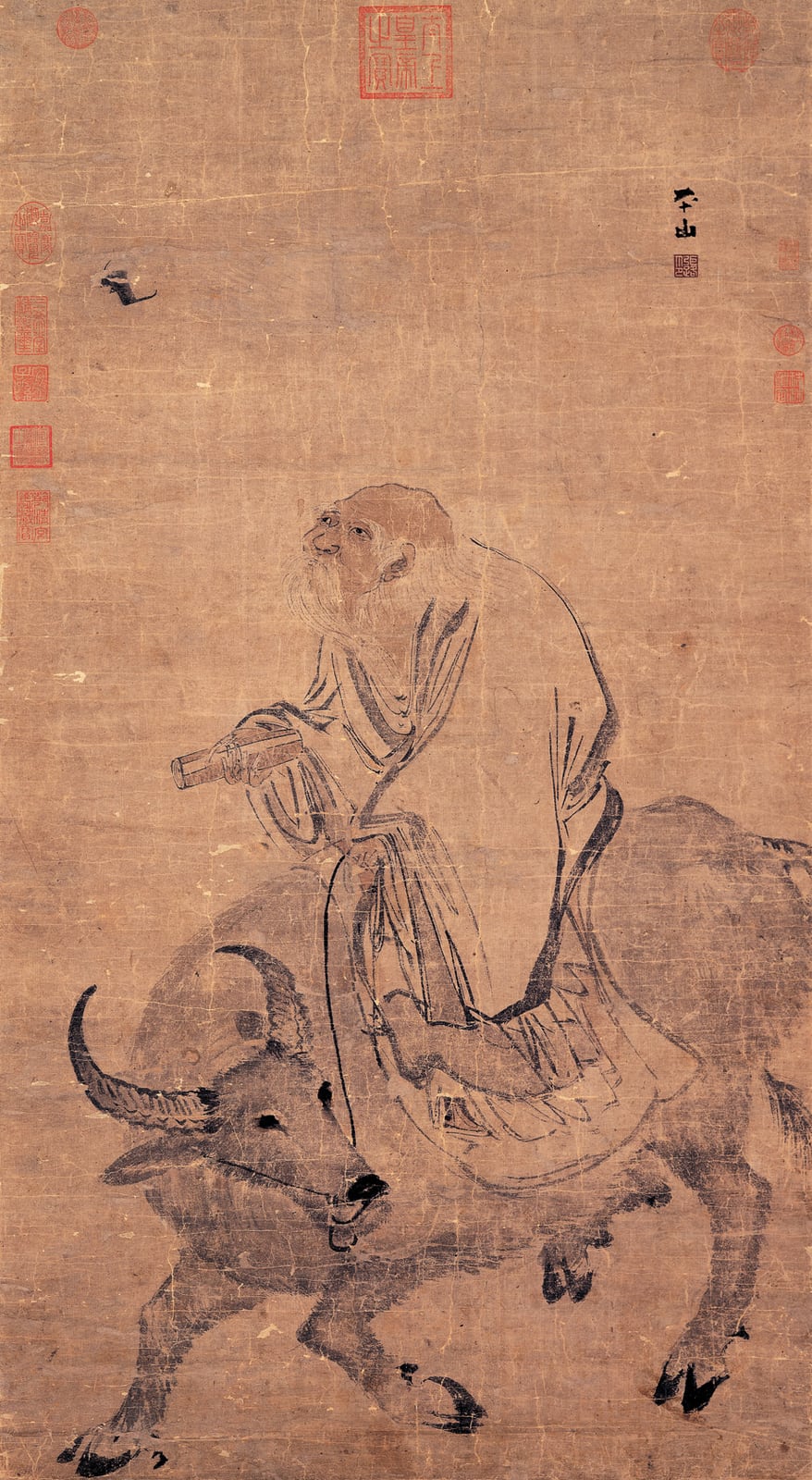
Laozi
Ils concordent sur: Pourquoi souffrons-nous ? · Pourquoi méditer ou prier ? · La raison peut-elle connaître l'ultime ?

Parmenides
Ils concordent sur: Comment atteint-on la libération ou le salut ? · Le monde est-il réel ?

Nāgārjuna
Ils concordent sur: Comment atteint-on la libération ou le salut ? · Que se passe-t-il après la mort ? · Pourquoi méditer ou prier ?
Pense autrement que
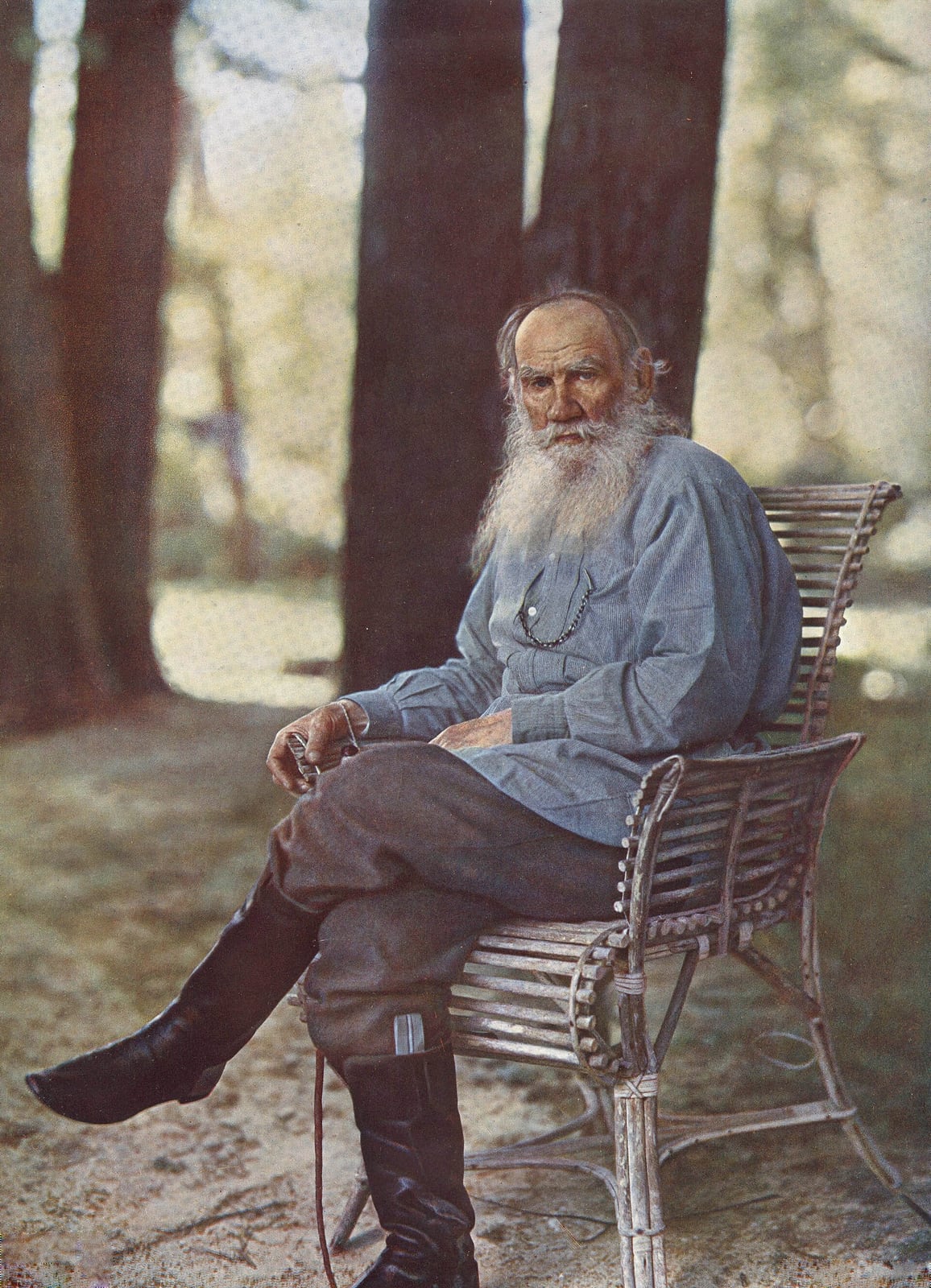
Leo Tolstoy
Ils s'opposent sur: Qui suis-je ? Existe-t-il un vrai soi ?
Epictetus
Ils s'opposent sur: Qui suis-je ? Existe-t-il un vrai soi ? · Le monde est-il réel ?

Epicurus
Ils s'opposent sur: Qui suis-je ? Existe-t-il un vrai soi ? · Que se passe-t-il après la mort ?
Thomas Merton
Ils s'opposent sur: Que se passe-t-il après la mort ? · Le monde est-il réel ?
Anecdotes et récits
Anecdotes et récits
Contestéc. 410 a. C.
The name Plato
Origine du récit: Diogenes Laertius III 4, citing Alexander's Successions and Neanthes. Riginos (Platonica, 1976) and Nails (2002) treat it as a probable biographical invention.
Tradition oralec. 408 a. C.
The tragedies in the fire
Origine du récit: Diogenes Laertius III 5; Aelian, Varia Historia II 30. The line parodies Iliad XVIII 392. Riginos classes it among the literary conversion anecdotes.
Source: Riginos, Alice Swift, Platonica: The Anecdotes Concerning the Life and Writings of Plato, Leiden, Brill (Columbia Studies in the Classical Tradition 3), 1976.
Récit hagiographiquec. 408 a. C.
The dream of the swan
Origine du récit: Diogenes Laertius III 5; also Pausanias I 30.3, Apuleius (On Plato I 1) and Olympiodorus. Riginos (1976) places it in the Apollonian cycle of Plato's biography.
Contestéc. 387 a. C.
Sold as a slave in Aegina
Origine du récit: Diogenes Laertius III 18–21; Diodorus Siculus XV 7; Plutarch, Dion 5. Absent from the Seventh Letter. Riginos and Nails discuss its plausibility.
Témoignages. IV a. C.
The lecture 'On the Good'
Origine du récit: Aristoxenus, Elementa harmonica II 30–31, who transmits it as a story Aristotle often told. It is second-hand but close testimony: Aristoxenus was Aristotle's direct pupil.
Invérifiables. IV a. C. (atribuido)
'Let no one ignorant of geometry enter'
Origine du récit: First mentions in sixth-century AD Alexandrian Neoplatonic commentaries (John Philoponus, In De anima; Elias, In Categorias), and in a scholion on Aelius Aristides. Riginos (1976) considers it a late invention.
Source: Riginos, Alice Swift, Platonica: The Anecdotes Concerning the Life and Writings of Plato, Leiden, Brill (Columbia Studies in the Classical Tradition 3), 1976.
Tradition orales. IV a. C.
Plato's man
Origine du récit: Diogenes Laertius VI 40. The definition 'featherless biped' also appears in the pseudo-Platonic Definitions (415a). The anecdote circulated as a Cynic chreia, not as testimony.
Enseignements
Enseignements
Les notions qui structurent sa pensée, expliquées dans leur contexte.
Theory of Forms (Ideas)teoria-de-las-formas
It answers Heraclitus (the flux of the sensible) and Parmenides (only what is can be known), and Socrates' search for definitions.
The Form of the Goodidea-del-bien
It crowns the central images of the Republic (sun, line, cave).
The allegory of the cavealegoria-de-la-caverna
It completes the images of the sun and the divided line; it is the most commented page of Western philosophy.
Recollection (anamnesis)anamnesis
It has Pythagorean roots (immortality and transmigration of the soul).
Immortality and parts of the soulinmortalidad-del-alma
It takes up Orphic and Pythagorean inheritances and subjects them to philosophical argument.
Eros and the ladder of beautyeros
Expressed as the teaching of a priestess, at a banquet, among speeches; the later 'Platonic love' greatly simplifies the doctrine.
The philosopher-ruler and justicefilosofo-rey
It arises from the experience of Socrates' condemnation by the democracy and of the tyranny of the Thirty; it has been read as utopia, as critique and, in the twentieth century (Popper), as the seed of totalitarianism.
Becoming like God (homoiosis theoi)homoiosis-theo
It is the bridge between Plato's philosophy and the spirituality of later Platonisms.
Vidéos
Vidéos
Enregistrements, entretiens et documentaires. Les vidéos sont lues depuis YouTube ; elles ne sont pas hébergées ici.
2. Socratic Citizenship: Plato's Apology
Conférence· EN· 2006· 46 min
YaleCoursesChaîne officielle
3. Socratic Citizenship: Plato's Crito
Conférence· EN· 2006· 47 min
YaleCoursesChaîne officielle
4. Philosophers and Kings: Plato's Republic, I-II
Conférence· EN· 2006· 47 min
YaleCoursesChaîne officielle
5. Philosophers and Kings: Plato's Republic, III-IV
Conférence· EN· 2006· 47 min
YaleCoursesChaîne officielle
6. Philosophers and Kings: Plato's Republic, V
Conférence· EN· 2006· 45 min
YaleCoursesChaîne officielle
Great Minds - Part 1 - Plato's Republic I: Justice, Power, and Knowledge
Conférence· EN· 46 min
Michael SugrueChaîne officielle
Plato's Symposium: The Dialectic of Reason, Love, and Wisdom
Conférence· EN· 49 min
Michael SugrueChaîne officielle
Socrates & Plato's Philosophy - Myles Burnyeat & Bryan Magee (1987)
Entretien· EN· 1987· 44 min
Philosophy Overdose
Plato and Aristotle: Crash Course History of Science #3
Analyse· EN· 2018· 12 min
CrashCourseChaîne officielle
PHILOSOPHY - The Good Life: Plato [HD]
Analyse· EN· 6 min
Wireless PhilosophyChaîne officielle
Who did Plato (not) Love? Oxford Abridged Short Talks
Conférence· EN· 12 min
University of OxfordChaîne officielle
Mentira la verdad IV: Platón, Apología de Sócrates - Canal Encuentro
Analyse· ES· 27 min
Canal EncuentroChaîne officielle
01-03-2013. Timeo: El mito de Platón y la creación científica del mundo.
Documentaire· ES· 2013· 27 min
UNEDChaîne officielle
La alegoría de la caverna de Platón - Alex Gendler
Analyse· ES· 5 min
Sé Curioso — TED-EdChaîne officielle
La filosofía helenística (IV): El neoplatonismo · La March
Conférence· ES· 59 min
Fundación Juan MarchChaîne officielle
Galerie
Galerie
Images dont la licence a été vérifiée. Chacune conserve son auteur et son attribution.
Manuscrits
Manuscrits
Témoins manuscrits et textes anciens, avec leur dépositaire et leurs conditions de consultation.
GRC · Greek minuscule · s. IV a. C.
Πλάτωνος διάλογοι (tetralogías I–VI)
- Témoin conservé
- Codex Clarkianus (sigla B), pergamino, año 895
- Dépositaire
- Bodleian Library, Oxford · MS. E. D. Clarke 39
- Numérisation
- digital.bodleian.ox.ac.uk/…
GRC · Greek minuscule · s. IV a. C. (espurios, ss. IV–I a. C.)
Πλάτωνος διάλογοι (tetralogías VIII–IX y espurios)
- Témoin conservé
- Codex Parisinus graecus 1807 (sigla A), pergamino, s. IX
- Dépositaire
- Bibliothèque nationale de France, París · Grec 1807
- Numérisation
- gallica.bnf.fr/…
GRC · Greek majuscule (bookhand) · s. IV a. C.
Πολιτεία (fragmentos)
- Témoin conservé
- P. Oxy. LII 3679, papiro, s. III d. C.
- Dépositaire
- Sackler Library / Egypt Exploration Society, Oxford · P. Oxy. 3679
- Numérisation
- commons.wikimedia.org/wiki/File:POxy3679_Parts_P…
Relations
Relations
Influences, filiations et affinités. On distingue la relation documentée de la similitude identifiée par analyse.
Disciple de
He was his companion for about ten years, attended his trial and made him the protagonist of almost all his dialogues. Distinguishing the historical Socrates from the Platonic one is one of the classic problems of ancient philosophy.
Relation documentée
Maître de
Aristotle studied and taught in the Academy for some twenty years (367–347 BC) and developed his own philosophy in critical discussion with the Platonic theory of Forms.
Relation documentée
A reçu l'influence de
Aristotle (Metaphysics I 6) states that Plato followed the Pythagoreans in many things; his friendship with Archytas of Tarentum, the role of mathematics and the doctrine of the immortal soul confirm it.
Relation documentée
A reçu l'influence de
According to Aristotle (Metaphysics I 6), Plato became familiar in his youth with Cratylus and the Heraclitean doctrines of flux, and concluded from them that there is no knowledge of sensible things.
Relation documentée
A reçu l'influence de
The distinction between unchanging being and becoming, and the requirement that what is known must be, come from Parmenides, to whom Plato devotes a dialogue and with whom he breaks in the Sophist ('parricide').
Relation documentée
A influencé
Plotinus (3rd century AD) regarded himself as a mere interpreter of Plato; Neoplatonism arose from his reading of the Parmenides, the Timaeus, the Republic and the Symposium.
Relation documentée
A influencé
In the Confessions (VII 9) and the City of God (VIII) Augustine acknowledges that the 'books of the Platonists' opened his way to the Christian God; through him Platonism passed into Latin theology.
Relation documentée
A reçu l'influence de
The theory of the four elements that the Timaeus reworks geometrically comes from Empedocles.
Similitude identifiée par analyse
En désaccord avec
Diogenes Laertius (VI 40, 53–54) transmits several gibes by the Cynic against Plato, such as the plucked chicken presented as 'Plato's man'; they are anecdotes of late tradition.
Relation documentée
Idées proches de
The ascent of the soul towards a principle beyond being and conceptual knowledge has Platonic and Neoplatonic echoes in Rhineland mysticism.
Similitude identifiée par analyse
A influencé
Simone Weil read Plato as a mystic and devoted studies to him in Intimations of Christianity among the Ancient Greeks.
Similitude identifiée par analyse
Idées proches de
The distinction between unchanging reality and the changing world of appearances invites comparison with Advaita, though without historical contact.
Similitude identifiée par analyse
Lié depuis d'autres fiches
- Aristotle · Disciple de
- Heraclitus · A influencé
- Marcus Aurelius · A reçu l'influence de
- Simone Weil · A reçu l'influence de
- Parmenides · A influencé
- Zeno of Citium · En désaccord avec
- Epicurus · En désaccord avec
- Nikolai Berdyaev · En désaccord avec
- Socrates · Maître de
- Diogenes of Sinope · En désaccord avec
- Empedocles · A influencé
- Epictetus · A reçu l'influence de
- Pavel Florensky · A reçu l'influence de
- Pythagoras · A influencé
- Plotinus · A reçu l'influence de
- Vladimir Solovyov · A reçu l'influence de
- Augustine of Hippo · A reçu l'influence de
Sources
Sources
Bibliographie et catalogues consultés pour cette fiche.
- Nails, Debra, The People of Plato: A Prosopography of Plato and Other Socratics, Indianápolis, Hackett, 2002 (entrada «Plato» y apéndices cronológicos).
- Wikidata, «Plato» (Q859): identidad, fechas y nombre en griego (Πλάτων).
- Diógenes Laercio, Vidas y opiniones de los filósofos ilustres, libro III (Platón), s. III d. C. Trad. inglesa de R. D. Hicks, Loeb Classical Library, Harvard University Press, 1925 (texto en Wikisource).
- Platón (atribuida), Carta VII, 324a–352a, en Platonis Opera, ed. John Burnet, vol. V, Oxford Classical Texts, 1907; trad. española de Juan Zaragoza y Pilar Gómez Cardó en Platón, Diálogos VII, Madrid, Gredos (Biblioteca Clásica Gredos 162), 1992.
- Kraut, Richard, «Plato», Stanford Encyclopedia of Philosophy (primera versión 2004; revisión sustantiva 2022), ed. Edward N. Zalta.
- Cooper, John M. (ed.) y Hutchinson, D. S. (ed. asociado), Plato: Complete Works, Indianápolis, Hackett, 1997 (introducción del editor sobre el corpus, las tetralogías de Trasilo y la autenticidad de cada obra).
- Riginos, Alice Swift, Platonica: The Anecdotes Concerning the Life and Writings of Plato, Leiden, Brill (Columbia Studies in the Classical Tradition 3), 1976.
- Guthrie, W. K. C., A History of Greek Philosophy, vol. IV: Plato, the Man and his Dialogues: Earlier Period (1975) y vol. V: The Later Plato and the Academy (1978), Cambridge University Press.
- Burnet, John (ed.), Platonis Opera, 5 vols., Oxford Classical Texts, Oxford, Clarendon Press, 1900–1907 (texto griego citado por la paginación de Stephanus; edición digital en Perseus).
- Open Library: obras y ediciones de Platón (búsqueda por autor, título e ISBN).
- Lledó Íñigo, Emilio, «Introducción general», en Platón, Diálogos I, Madrid, Gredos (Biblioteca Clásica Gredos 37), 1981; y plan de la serie de Diálogos I–IX de la Biblioteca Clásica Gredos (1981–1999).
- Jowett, Benjamin (trad.), The Dialogues of Plato, 3.ª ed., 5 vols., Oxford, Clarendon Press, 1892 (textos en Project Gutenberg).
- Azcárate, Patricio de (trad.), Obras completas de Platón, 11 vols., Madrid, Medina y Navarro, 1871–1872 (edición digital en el Proyecto Filosofía en español y en Wikisource).
- Burnyeat, Myles y Frede, Michael, The Pseudo-Platonic Seventh Letter, ed. Dominic Scott, Oxford University Press, 2015.
- Kahn, Charles H., Plato and the Socratic Dialogue: The Philosophical Use of a Literary Form, Cambridge University Press, 1996.
- Dorandi, Tiziano (ed.), Filodemo. Storia dei filosofi: Platone e l'Academia (PHerc. 1021 e 164), Nápoles, Bibliopolis, 1991.
- Bodleian Library, Oxford, MS. E. D. Clarke 39 (Codex Clarkianus, año 895): ficha y reproducción digital en Digital Bodleian.
- Aristóxeno, Elementa harmonica II 30–31 (testimonio de la lección «Sobre el Bien»), citado y comentado en Kraut, «Plato», SEP, y en Guthrie, HGP V.
- Bibliothèque nationale de France, Département des Manuscrits, Grec 1807 (Codex Parisinus graecus 1807, s. IX), en Gallica.
- Suzanne, Bernard, «Did Plato write “Only the dead have seen the end of war”?», Plato and his dialogues (FAQ), 2002; cf. Santayana, George, Soliloquies in England and Later Soliloquies, 1922, n.º 25 «Tipperary».
- Whitehead, Alfred North, Process and Reality: An Essay in Cosmology, Nueva York, Macmillan, 1929, parte II, cap. 1, sección 1 («a series of footnotes to Plato»).
- Ayant droit
- Los textos griegos de Platón (s. IV a. C.) son de dominio público, como las traducciones antiguas (Jowett, 1892; Burges, 1854–1855; Azcárate, 1871–1872). Las traducciones, introducciones y notas modernas pertenecen a sus traductores y editoriales (Gredos/RBA, Alianza, Akal, Cátedra, Hackett, Harvard University Press, Penguin, Oxford University Press, Cambridge University Press, entre otras).
En attente de confirmation
Ce que cette fiche n'a pas encore pu établir. Nous préférons le dire plutôt que de combler.
- Confirmar el índice exacto de Gredos, Diálogos VII (BCG 162, 1992): se ha asumido que contiene Alcibíades I y II, Hiparco, Amantes, Teages, Clitofonte, Minos, Epínomis, los apócrifos (Definiciones, Sobre la justicia, Sobre la virtud, Demódoco, Sísifo, Erixias, Axíoco) y las Cartas; no se ha visto el índice en un catálogo. Alción no se ha asignado a ese volumen.
- Traductores de cada diálogo en los volúmenes I–III, V y VI de Gredos: no consignados por no haberlos verificado en catálogo (solo República, Eggers Lan; vol. VII, Zaragoza y Gómez Cardó).
- Ediciones con ISBN en español e inglés de varios dudosos y espurios fuera de los volúmenes generales (Hiparco, Teages, Minos, Demódoco, Sísifo, Alción): solo figuran en Gredos VII y Hackett Complete Works. Localizar el volumen Loeb XII (Charmides, Alcibiades I–II, Hipparchus, Lovers, Theages, Minos, Epinomis, LCL 201) y el X (Laws I–VI, LCL 187), cuyos ISBN no aparecieron en Open Library.
- Alción y Demódoco/Sísifo no tienen texto castellano de dominio público localizado; Alción tampoco en inglés (está en el corpus de Luciano: buscar traducción antigua de dominio público).
- Ediciones en francés (Belles Lettres/Budé, GF Flammarion), alemán (Schleiermacher, de dominio público) e italiano: no registradas en esta versión.
- Fechas de composición: se dan años aproximados de la cronología convencional (Kahn, Kraut); no son datos documentados. Los dudosos y espurios quedan sin año salvo Epínomis y las Cartas IV, VII y VIII.
- Contenido de las páginas «Primer Alcibíades», «Ion», «Lisis» y demás de Wikisource en español: comprobado que existen; la de Protágoras figura «en desarrollo».
- Traductor «Mr. Knight» de Alcibíades II y Erixias en la edición de Jowett: identificar nombre completo y fecha de muerte (Jowett solo le llama «my friend and secretary, Mr. Knight»).
- Imagen del Codex Clarkianus: la reproducción procede de la Bodleiana vía Commons; enlazar la ficha exacta de Digital Bodleian del MS. E. D. Clarke 39 en manuscripts[].digitization_url (ahora apunta a la portada del portal). Ídem Gallica para el Parisinus graecus 1807.
- Vídeos: año exacto de los de Michael Sugrue, Wireless Philosophy, Oxford, Canal Encuentro, TED-Ed y Fundación Juan March (no consignado). Solo tres vídeos en español de canales institucionales; buscar más (RTVE, Fundación Juan March, universidades).
- Sin programas de afiliación verificados para ninguna de las editoriales registradas.
Recherche effectuée le 2026-10-25