Stoïcisme
Epictetus
Ἐπίκτητος
années 50 – v. 135Personne historiquement documentée
Philosophe stoïcien grec (v. 50-v. 135), né esclave à Hiérapolis de Phrygie. Il servit à Rome Épaphrodite, affranchi de Néron, suivit l'enseignement de Musonius Rufus et, une fois libre, enseigna la philosophie jusqu'à ce que Domitien chasse les philosophes d'Italie. Il fonda alors une école à Nicopolis d'Épire. Il n'écrivit rien : ses leçons furent recueillies par son disciple Arrien dans les Entretiens et le Manuel, qui placèrent au centre de l'éthique la liberté intérieure et la distinction entre ce qui dépend de nous et ce qui n'en dépend pas.
- œuvres
- 13œuvres
- éditions
- 31éditions
- citations
- 10citations
- vidéos
- 11vidéos
- images
- 8images
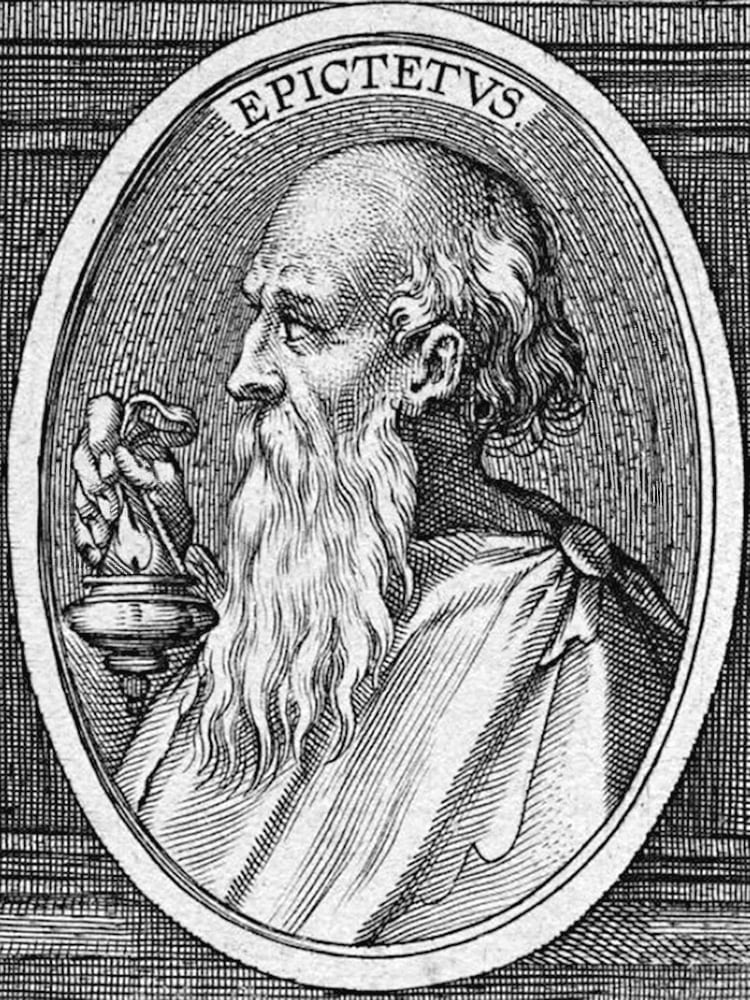
Epicteto en la portada de las obras de Séneca (Amberes, 1605) · Public domain
Dans ses propres mots
«Of things some are in our power, and others are not.»Manual 1, 1. Griego: Wikisource; inglés: George Long (1877); español: traducción propia.

Son idée centrale
What is up to us (ta eph' hēmin): It is the starting point of all Epictetus' teaching, with which both the Handbook and the Discourses open.
Le voir en contexte
Biographie
5 min de lecture
Traduction assistée à partir de l'original espagnol, en attente de relecture par un traducteur natif.
Un esclave qui enseignait la liberté
Aucun philosophe antique n'a autant parlé de la liberté qu'Épictète, et aucun n'avait plus de raisons d'en connaître le prix. Il était né esclave, il boitait et il n'écrivit pas une seule ligne. Ce que nous savons de son enseignement, nous le devons à un élève, Flavius Arrien, qui prit des notes de ses leçons dans l'école de Nicopolis et les publia sous le titre d'Entretiens, et à un abrégé de ces notes, le Manuel, qui allait devenir l'un des livres de morale les plus lus de l'Occident. De sa vie, en revanche, on ne conserve que peu de données sûres, éparses chez lui-même, chez Aulu-Gelle, dans la Souda byzantine et dans le commentaire que Simplicius consacra au Manuel quatre siècles plus tard.
Hiérapolis et Rome
Il naquit vers l'an 50 à Hiérapolis, cité grecque de Phrygie, en Asie Mineure, connue pour ses eaux thermales. Son nom, Epíktētos, signifie « acquis » et était un nom d'esclave courant ; nous ignorons celui qu'il portait auparavant, s'il en eut un autre, et comment il arriva à Rome. Il y appartint à Épaphrodite, un affranchi qui avait été le secrétaire aux requêtes de Néron et qui, selon la Souda, faisait partie de sa garde ; Épictète l'évoque dans les Entretiens comme un maître vaniteux qui se montrait servile envers un cordonnier pour la seule raison que celui-ci était entré au service de l'empereur. Aulu-Gelle, au IIe siècle, jugeait sa condition d'esclave un fait trop récent et trop connu pour qu'il fût besoin de le prouver.
Il était boiteux. La Souda l'attribue à une affection rhumatismale ; le polémiste païen Celse, cité par Origène, racontait que son maître lui tordait la jambe et qu'Épictète, souriant, l'avertit qu'il allait la lui casser, puis, quand elle se brisa, lui dit : « Ne te l'avais-je pas dit ? » Il est impossible de trancher entre les deux versions, mais la boiterie apparaît dans ses propres exemples : la maladie est une entrave pour le corps, non pour la volonté, dit le Manuel ; la boiterie, pour la jambe, non pour la volonté.
Musonius Rufus
Son maître lui permit de suivre les leçons du stoïcien romain Caius Musonius Rufus, le philosophe le plus respecté de la Rome de Néron et des Flaviens, exilé à plusieurs reprises. Épictète le mentionne avec vénération : Rufus parlait de telle sorte que chaque auditeur croyait qu'on était allé lui rapporter ses défauts ; à qui le louait, il répondait que, si l'on avait le loisir de l'applaudir, c'est qu'il avait parlé en vain. De Musonius il hérita une philosophie conçue comme exercice pratique et un modèle, Socrate, qu'il cite plus qu'aucun autre auteur. On ignore quand il obtint la liberté ; à la fin du Ier siècle, il enseignait déjà à Rome.
L'exil et l'école de Nicopolis
Domitien chassa les philosophes de Rome et d'Italie, probablement en 89 ou vers 93-95 ; Aulu-Gelle dit expressément qu'Épictète fut au nombre des bannis. Il s'établit à Nicopolis, la « ville de la victoire » qu'Auguste avait fondée en Épire pour commémorer Actium, cité prospère sur la route maritime entre l'Italie et la Grèce. Il y ouvrit une école que fréquentaient des jeunes gens de familles aisées, beaucoup de Romains, venus s'y préparer avant d'entreprendre une carrière publique. L'Histoire Auguste affirme qu'Hadrien le traita avec une grande amitié, nouvelle que la critique accueille avec prudence.
À l'école, on lisait et commentait les textes de Chrysippe et l'on pratiquait la logique, mais les Entretiens conservent autre chose : les causeries informelles qui suivaient la leçon technique, où le maître interpelle, ironise, invente des dialogues avec un tyran ou avec un élève qui se plaint, et répète inlassablement la même question : cela dépend-il de toi, ou non ? « L'école du philosophe est un cabinet médical », prévient-il ; on ne doit pas en sortir content, mais endolori.
La vie d'un maître pauvre
Il vécut très simplement et ne se maria pas. Simplicius raconte qu'il vécut longtemps seul et que, dans sa vieillesse, il adopta un enfant qu'un ami s'apprêtait à abandonner par pauvreté, et prit chez lui une femme pour l'élever. Lucien de Samosate se moque d'un collectionneur qui paya trois mille drachmes la lampe de terre cuite du philosophe, dans l'espoir d'acquérir sa sagesse en lisant la nuit à sa lumière. Il mourut à Nicopolis vers 135 ; la Souda prolonge sa vie jusqu'au règne de Marc Aurèle, ce que les spécialistes tiennent pour improbable.
Arrien et les livres
Flavius Arrien de Nicomédie, qui serait plus tard consul, gouverneur de Cappadoce et historien d'Alexandre le Grand, fréquenta l'école vers l'an 108. Dans une lettre à Lucius Gellius placée en tête des Entretiens, il explique qu'il ne les a pas composés comme une œuvre littéraire, mais qu'il s'est efforcé de noter mot pour mot ce qu'il entendait afin de garder le souvenir de la pensée et de la franchise du maître, et qu'ils ont été publiés sans son accord. Photius, au IXe siècle, connaissait huit livres d'Entretiens et douze d'Homélies ; seuls quatre des premiers nous sont parvenus, par un manuscrit du XIe ou du XIIe siècle conservé à la Bibliothèque bodléienne, dont dépendent toutes les autres copies. Le Manuel ou Enchiridion, choix de maximes tiré des Entretiens, s'est mieux conservé grâce aux moines, qui l'adaptèrent en versions chrétiennes.
Ce qui dépend de nous
La pensée d'Épictète part d'une division : « Parmi les choses, les unes dépendent de nous, les autres non. » Dépendent de nous le jugement, la tendance, le désir et l'aversion ; ne dépendent pas de nous le corps, les biens, la réputation ni les charges. La seule chose vraiment nôtre est la proairesis, la faculté de choix, que Zeus lui-même ne peut vaincre. Ce qui nous trouble, ce ne sont pas les choses, mais les jugements que nous portons sur elles. D'où un programme d'entraînement en trois domaines — le désir, l'action et l'assentiment — dont Pierre Hadot a montré qu'il est la clé des Pensées de Marc Aurèle, le plus illustre de ses lecteurs, qui connut ses leçons par Junius Rusticus.
La postérité
Le Manuel fut commenté par Simplicius au VIe siècle, traduit en latin par Ange Politien en 1479 et lu par Montaigne, par Pascal — qui l'opposa à Montaigne dans l'Entretien avec M. de Sacy — et par les néostoïciens des XVIe et XVIIe siècles. En castillan, il fut traduit par le Brocense en 1600 et, en vers, par Francisco de Quevedo en 1635. Au XXe siècle, le psychologue Albert Ellis cita sa phrase sur les jugements comme un précédent de la thérapie cognitive, et le pilote américain James Stockdale raconta que ce qu'il se rappelait d'Épictète l'avait aidé à endurer plus de sept ans de captivité au Vietnam.
Sources: Epicteto. Disertaciones (por Arriano) y Manual. Texto griego en Wikisource en griego; trad. inglesa de George Long, The Discourses of Epictetus; with the Encheiridion and Fragments (Londres: George Bell, 1877), en Wikisource en inglés. · Long, A. A. Epictetus: A Stoic and Socratic Guide to Life. Oxford: Clarendon Press, 2002. · Aulo Gelio. Noches áticas, I 2; II 18; XV 11; XVII 19; XIX 1. Trad. inglesa de John C. Rolfe, The Attic Nights, Loeb Classical Library 195, 200, 212. Londres: Heinemann, 1927 (libros I–II en LacusCurtius). · Simplicio. Comentario al Manual de Epicteto. Trad. inglesa de Tad Brennan y Charles Brittain, Simplicius: On Epictetus' Handbook, 2 vols. Londres: Duckworth / Ithaca: Cornell University Press, 2002. · Orígenes. Contra Celso, VII 53. Trad. inglesa de Frederick Crombie, Ante-Nicene Fathers, vol. IV. Buffalo: Christian Literature Publishing, 1885.
Chronologie
La vie, année après année
Chaque point est un événement documenté. Cliquez pour le lire, avec sa source et son degré de certitude.
années 500 ansHierápolis (Frigia)
Birth
Born a slave around the year 50 (the date is inferred from his life; there is no direct evidence) in Hierapolis in Phrygia, according to the Suda.
ProbableSuda, s. v. «Epiktetos» (épsilon 2424). Suda On Line, trad. inglesa revisada.
Après sa mort
- v. 140Publication of the Discourses
- v. 146Marcus Aurelius reads Epictetus
- v. 530Simplicius' commentary
- 1479Poliziano's Latin translation
- 1600El Brocense translates it into Spanish
- 1635Quevedo in verse
- 1758Elizabeth Carter
années 50 · 0 ans
Birth
Born a slave around the year 50 (the date is inferred from his life; there is no direct evidence) in Hierapolis in Phrygia, according to the Suda.
Probable
v. 65 · 15 ans
Slave of Epaphroditus
In Rome he belongs to Epaphroditus, a freedman and Nero's secretary for petitions (a libellis), who helped the emperor kill himself in 68 and was executed by Domitian around 95.
Probable
v. 70 · 20 ans
Pupil of Musonius Rufus
Attends the lectures of the Stoic Gaius Musonius Rufus, whom he quotes in the Discourses (I.1.27; I.9.29; III.23.29).
Documenté
v. 85 · 35 ans
Freedman and teacher in Rome
He obtains his freedom at an unknown date and begins teaching philosophy in Rome.
Probable
v. 89 · 39 ans
Expulsion of the philosophers
Domitian expels the philosophers from Italy (in 89 or around 93–95). Aulus Gellius (XV.11.5) counts Epictetus among the exiles. He settles in Nicopolis in Epirus and founds his school.
Probable
v. 108 · 58 ans
Arrian at the school
The young Flavius Arrian of Nicomedia attends the lectures and takes the notes that will become the Discourses (date proposed by Fergus Millar).
Probable
v. 125 · 75 ans
Friendship with Hadrian
The Historia Augusta (Hadrian 16.10) states that the emperor treated the philosophers Epictetus and Heliodorus "with the greatest friendship". The report is isolated.
Contesté
v. 130 · 80 ans
Adoption of a child
According to Simplicius, in old age he adopts a child whom a friend was going to abandon out of poverty and takes a woman into his house to raise it.
Tradition
v. 135 · 85 ans
Death
Dies in Nicopolis around 135. The Suda extends his life into the reign of Marcus Aurelius, which is considered unlikely.
Probable
v. 140
Publication of the Discourses
Arrian's notes circulate with a letter to Lucius Gellius explaining that they were made public without his consent. Photius (cod. 58) will know eight books of Discourses and twelve of Conversations; four survive.
Probable
v. 146
Marcus Aurelius reads Epictetus
Junius Rusticus lends the young Marcus Aurelius the notes of Epictetus (Meditations I.7); the emperor will quote him often.
Documenté
v. 530
Simplicius' commentary
The Neoplatonist Simplicius writes an extensive commentary on the Handbook, the source of several biographical reports.
Probable
1479
Poliziano's Latin translation
Angelo Poliziano translates the Handbook into Latin and dedicates it to Lorenzo de' Medici.
Documenté
1600
El Brocense translates it into Spanish
Francisco Sánchez de las Brozas publishes "Doctrina del estoico filósofo Epicteto, que se llama comúnmente Enchiridion".
Documenté
1635
Quevedo in verse
Francisco de Quevedo publishes "Epicteto y Phocílides en español con consonantes", a verse paraphrase of the Handbook.
Documenté
1758
Elizabeth Carter
Elizabeth Carter publishes the first complete English translation of Epictetus' works.
Documenté
Œuvres
Œuvres essentielles
Les œuvres sans lesquelles on ne comprend pas son héritage.
Enseignement oral recueilli · v. 108
Discourses (as reported by Arrian)
Ἀρριανοῦ τῶν Ἐπικτήτου διατριβῶν βιβλία
Four surviving books (of the eight Photius knew) containing ninety-five talks given by Epictetus at his school in Nicopolis, preceded by Arrian's letter to Lucius Gellius. They are not treatises but lively conversations in which the master challenges pupils and visitors, invents dialogues, draws on examples from daily life—the bath, the sea voyage, the dinner, the gymnasium—and offers Socrates, Diogenes and Zeno as models. The theme running through them all is the distinction between what is up to us (our judgements, desires, impulses: prohairesis) and what is not (body, goods, reputation, office), and the freedom that comes from applying it. They deal with providence and man's kinship with God, friendship and family, illness, exile and death, the true Cynic and the false philosopher. They are preserved by an eleventh- or twelfth-century Bodleian manuscript on which all other copies depend.
9 éditions · amazon.com

Compilation postérieure · v. 130
Handbook (Enchiridion)
Ἐγχειρίδιον Ἐπικτήτου
Fifty-three short chapters condensing Epictetus' ethics as rules of conduct. It opens with the division "of things, some are up to us and others are not", goes on to the maxim that we are disturbed not by things but by our judgements about them (5), life as a role in a play written by another (17), the banquet at which one takes moderately what comes (15), piety (31) and the signs of one who is making progress (48), and ends with lines of Cleanthes and Euripides and words of Socrates. It has been the most read text of Epictetus since late antiquity: Simplicius commented on it, Byzantine monks adapted it, Poliziano translated it into Latin (1479) and el Brocense (1600) and Quevedo (1635) into Spanish.
10 éditions · amazon.com
Toute son œuvre (13)
Discourses, Book I
108
Discourses, Book II
108
Discourses, Book III
108
Discourses, Book IV
108
Fragments
Epictetus
Discourses, Books V–VIII (lost)
The Conscious LibraryDiscourses, Books V–VIII (lost)
108
Epictetus
Conversations (lost)
The Conscious LibraryConversations (lost)
Epictetus
Life and Death of Epictetus (by Arrian, lost)
The Conscious LibraryLife and Death of Epictetus (by Arrian, lost)
Epictetus
Debate of the Emperor Hadrian and the Philosopher Epictetus
The Conscious LibraryDebate of the Emperor Hadrian and the Philosopher Epictetus
Epictetus
Christian paraphrases of the Handbook
The Conscious LibraryChristian paraphrases of the Handbook
Epictetus
Simplicius' Commentary on the Handbook
The Conscious LibrarySimplicius' Commentary on the Handbook
530
Citations
Citations localisées dans une œuvre précise. Chacune porte sa provenance et son degré de fiabilité.
Of things some are in our power, and others are not.Τῶν ὄντων τὰ μέν ἐστιν ἐφ’ ἡμῖν, τὰ δὲ οὐκ ἐφ’ ἡμῖν.
VérifiéeManual 1, 1. Griego: Wikisource; inglés: George Long (1877); español: traducción propia.
Citations apocryphes ou d'attribution contestée (3)
«We have two ears and one mouth so that we can listen twice as much as we speak.»
Often attributed to Epictetus, but Diogenes Laertius (VII.23) gives it to Zeno of Citium, founder of Stoicism, addressing a young man who would not stop talking.
«It's not what happens to you, but how you react to it that matters.»
A modern paraphrase, not a literal quotation, of Handbook 5. The original speaks not of "reactions" but of the judgements (dogmata) we form about things.
«I was Epictetus, a slave, maimed in body, poor as Irus, and dear to the immortals.»
An anonymous epigram in the Palatine Anthology (VII.676), sometimes presented as an epitaph Epictetus composed for himself. There is no basis for attributing it to him; it is a eulogy written by someone else.
Dernières paroles
Il n'existe aucun témoignage vérifiable de ses dernières paroles.
No account of his death or of his last words survives. The biography Arrian wrote, according to Simplicius, the Life and Death of Epictetus, is lost.
Interroger
Ce que répond son œuvre
Douze grandes questions de l'humanité et ce que ses textes permettent d'y répondre, références à l'appui. Nous ne lui prêtons jamais de paroles.
Qu'est-ce que l'Absolu ? Dieu existe-t-il ?
God is a father: he gave us reason, sees us, assigns our role
Un Dieu personnelIl le dit expressément
Epictetus, whose lectures Arrian transcribed, is the Stoic who speaks most of God in a personal tone. In the Discourses he calls him father of gods and men, holds that being a son of Zeus should be enough never to think meanly of oneself, and asserts that God sees each of our movements because souls are joined to him as parts. God has given us the faculty that uses impressions and has brought us into the world as spectators and interpreters of his works; hence the fitting response is gratitude and hymn. The background remains the Stoic physics of an immanent god, but the language is relational: filial obedience, trust and thanksgiving.
Comparer cette question avec d'autres maîtresQui suis-je ? Existe-t-il un vrai soi ?
You are not your body: you are your choice, a fragment of God
Le Soi est l'AbsoluIl le dit expressément
The first line of the Handbook divides things into those that depend on us and those that do not, and all of Epictetus rests on that border. Body, property, reputation or office are not ours; the only thing truly our own is the faculty of choice (prohairesis), which uses impressions and decides about them, and which not even Zeus can overcome. In the Discourses he goes further: each person is a fragment of God and carries a part of him within, and should therefore be ashamed to defile with impure thoughts the god he carries inside. The true self is not the one that can be imprisoned or fall ill, but that free reason akin to the divine.
Comparer cette question avec d'autres maîtresPourquoi souffrons-nous ?
Things do not disturb us, but our judgements about what is not ours
L'ignorance de ce que nous sommesIl le dit expressément
Epictetus' most quoted sentence sums up his diagnosis: it is not things that disturb people but the judgements they form about them. Death is not terrible; terrible is the opinion that it is. The underlying error concerns identity: we take as ours what does not depend on us — body, possessions, reputation, the lives of those we love — and invest it with desire and aversion. Whoever desires what belongs to another will be hindered and will lament. The Handbook proposes correcting that judgement from the start, examining each impression and asking whether it concerns what depends on us; if not, it is nothing to us.
Comparer cette question avec d'autres maîtresQue se passe-t-il après la mort ?
There is no Hades: we return to the elements we came from
Silence ou réserveIl le dit expressément
Epictetus treats death as the prime example of what does not depend on us. It is not terrible; terrible is the judgement that it is. In the Discourses he describes dying as a return to what is friendly and akin, to the elements we are made of, and specifies that there is no Hades or Acheron or Pyriphlegethon, but everything is full of gods and daimons. He recommends remembering, when kissing a child, that it is mortal, and regards death as an act of obedience to the one who gave us life: I must die, but I need not do so lamenting. There is no personal reward beyond death in his work.
Comparer cette question avec d'autres maîtresComment atteint-on la libération ou le salut ?
Watching oneself like an enemy in ambush: the school is a hospital
Par un travail intérieur conscientIl le dit expressément
Epictetus organises moral progress into three fields of exercise: desire and aversion, so as not to desire what does not depend on us; impulses and duties, so as to act in keeping with one's relationships; and assent, so as not to accept impressions without examination. None of this is done by reading: whoever boasts of understanding Chrysippus has not progressed, and the philosopher's school is a hospital one should leave in pain, not pleased. He demands constant attention, because a moment's carelessness loses what was gained, and asks the one who progresses to watch himself like an enemy lying in wait. Freedom is the fruit of conscious, daily work on oneself.
Comparer cette question avec d'autres maîtresFaut-il un maître ?
The teacher heals like a physician, but progress is each person's own
Utile mais pas indispensableIl le dit expressément
Epictetus was a pupil of Musonius Rufus and ran a school in Nicopolis, and he conceives the teacher as a physician: the school is a hospital and the philosopher should discomfort, not please. He holds up Socrates and Diogenes as models to keep in mind. Yet he insists that no one can progress for another: the teacher cannot will in the disciple's place, and whoever seeks applause for his lectures has confused philosophy with oratory. Moreover, God has placed beside each person a guardian daimon who never sleeps and cannot be deceived, so that we are never alone. Outer guidance orients; the task belongs to each one's faculty of choice.
Comparer cette question avec d'autres maîtresLe monde est-il réel ?
Everything that happens praises providence, for those who know how to look
Une création bonne et réelleIl le dit expressément
Epictetus hardly deals with physics, but he treats the world in a language of creation and providence. In the Discourses he holds that, for anyone with two qualities — the ability to see the whole and gratitude —, every single thing in the world is enough to praise providence: the sheep's wool, milk, the harmony between the sexes. God has made man a spectator and interpreter of his works, and it would be shameful to die without having contemplated them. Even what seems adverse has its place in the government of the whole. The world is real, good and ordered, and the fitting response to it is gratitude and song to God.
Comparer cette question avec d'autres maîtresQu'est-ce que l'amour ?
Only one who does not place his good in externals truly loves
Une bienveillance ordonnéeIl le dit expressément
Epictetus gives great importance to natural affection for one's own — children, parents, siblings, fellow citizens —, but wants to order it by reason. In the Discourses he criticises a father who abandoned his sick daughter because he could not bear to see her suffer: what he called love was inability to bear his own distress. In the discourse on friendship he holds that only the wise can love, because whoever places his good in money, fame or pleasure will end up in conflict with his friend, brother or father when interests collide. He advises remembering, when kissing a child, that it is mortal. It is affection without attachment, ordered by the duties of each relationship.
Comparer cette question avec d'autres maîtresSommes-nous libres ou tout est-il déterminé ?
You will chain my leg, but not even Zeus can overcome my will
Un libre arbitre réelIl le dit expressément
For Epictetus freedom is the centre of philosophy. Free is the one who lives as he wills, who cannot be compelled, hindered or forced, and only the one who places his desire in what depends on him achieves this. What depends on us is judgement, impulse, desire and aversion: in a word, our faculty of choice (prohairesis), which not even Zeus can overcome. Body, property and life can be chained; the will cannot. Epictetus at the same time accepts that the role we play in the drama is decided by another, like an actor receiving his part: ours is to play it well.
Comparer cette question avec d'autres maîtresPourquoi méditer ou prier ?
Before each impression: “You are an appearance, not what you seem”
Voir la réalité telle qu'elle estIl le dit expressément
Epictetus' central practice is to examine impressions before assenting to them. The Handbook advises saying to each harsh impression that it is an appearance and not the thing it represents, and testing it by the rule of whether it concerns what depends on us. That vigilance must be constant: a moment's carelessness is enough to lose what was gained. To this are added the morning and evening review, for which he quotes the Golden Verses, and gratitude: if we were nightingales we would do what nightingales do; being rational, we must sing hymns to God. To meditate is to see things as they are and not as hasty judgement paints them.
Comparer cette question avec d'autres maîtresLa raison peut-elle connaître l'ultime ?
Reason examines itself, but reading Chrysippus is not enough
L'étude et le savoirIl le dit expressément
For Epictetus reason is the only faculty that examines itself and all the others, and it is the gift by which God made us spectators and interpreters of his work. It can know what is necessary: what depends on us, what our nature is, how the whole is governed. Hence it demands study, beginning with logic, which teaches how to examine impressions. But study is not an end in itself: whoever boasts of being able to interpret Chrysippus' books should remember that had Chrysippus written clearly, he would have nothing to boast of. What matters is living according to what has been learned; knowledge that does not transform conduct has not truly been learned.
Comparer cette question avec d'autres maîtresSe retirer du monde ou le transformer ?
Play well the role assigned to you: son, brother, citizen
La contemplation dans l'actionIl le dit expressément
Epictetus advises neither withdrawing from the world nor reforming it, but rightly occupying the place that belongs to each. In the Handbook he compares life to a play: the author decides whether the part is long or short, a beggar's or a king's; ours is to play it well. Duties are measured by relationships — father, brother, neighbour, citizen —, and in the Discourses he lists what being a human, a son, a brother or a councillor requires. All this without setting one's heart on what does not depend on oneself: acting in the world with attention turned to one's own faculty of choice. Only for the ideal Cynic, God's messenger, does he reserve a life without family or city.
Comparer cette question avec d'autres maîtres
Affinités et tensions
Affinités et tensions
Calculées question par question à partir de ses positions. La raison de chaque accord ou de chaque désaccord s'affiche d'un clic.
Pense comme
Aristotle
Ils concordent sur: Que se passe-t-il après la mort ? · Faut-il un maître ? · Qu'est-ce que l'amour ?

Thomas Merton
Ils concordent sur: Qu'est-ce que l'Absolu ? Dieu existe-t-il ? · Pourquoi souffrons-nous ? · Faut-il un maître ?
Diogenes of Sinope
Ils concordent sur: Que se passe-t-il après la mort ? · Faut-il un maître ? · Sommes-nous libres ou tout est-il déterminé ?
Heraclitus
Ils concordent sur: Qui suis-je ? Existe-t-il un vrai soi ? · Pourquoi souffrons-nous ? · Que se passe-t-il après la mort ?
Pense autrement que
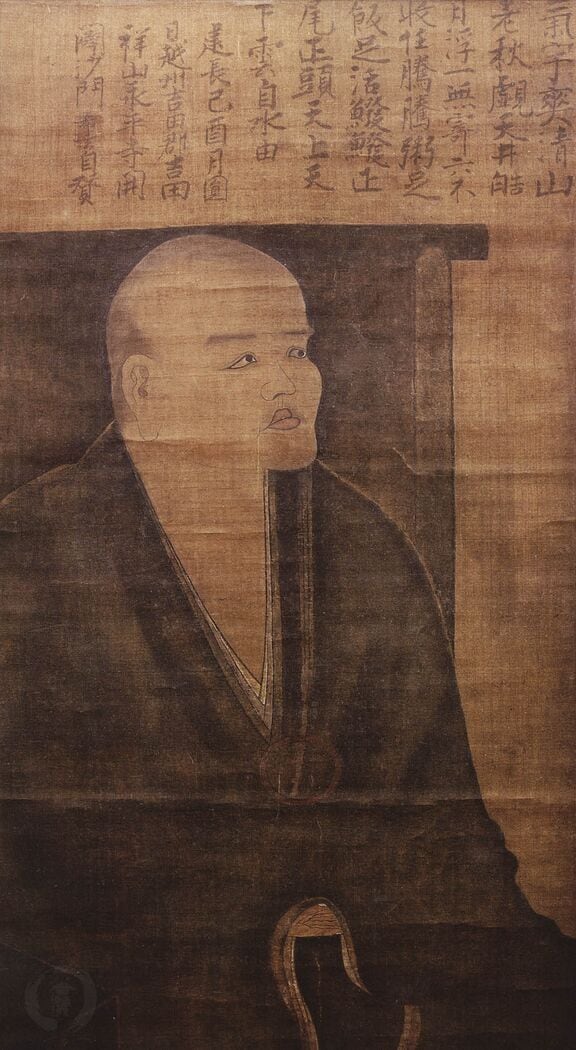
Dōgen
Ils s'opposent sur: Qu'est-ce que l'Absolu ? Dieu existe-t-il ? · Qui suis-je ? Existe-t-il un vrai soi ?

Nikolai Berdyaev
Ils s'opposent sur: Qui suis-je ? Existe-t-il un vrai soi ? · Le monde est-il réel ?

Nāgārjuna
Ils s'opposent sur: Qu'est-ce que l'Absolu ? Dieu existe-t-il ? · Qui suis-je ? Existe-t-il un vrai soi ?
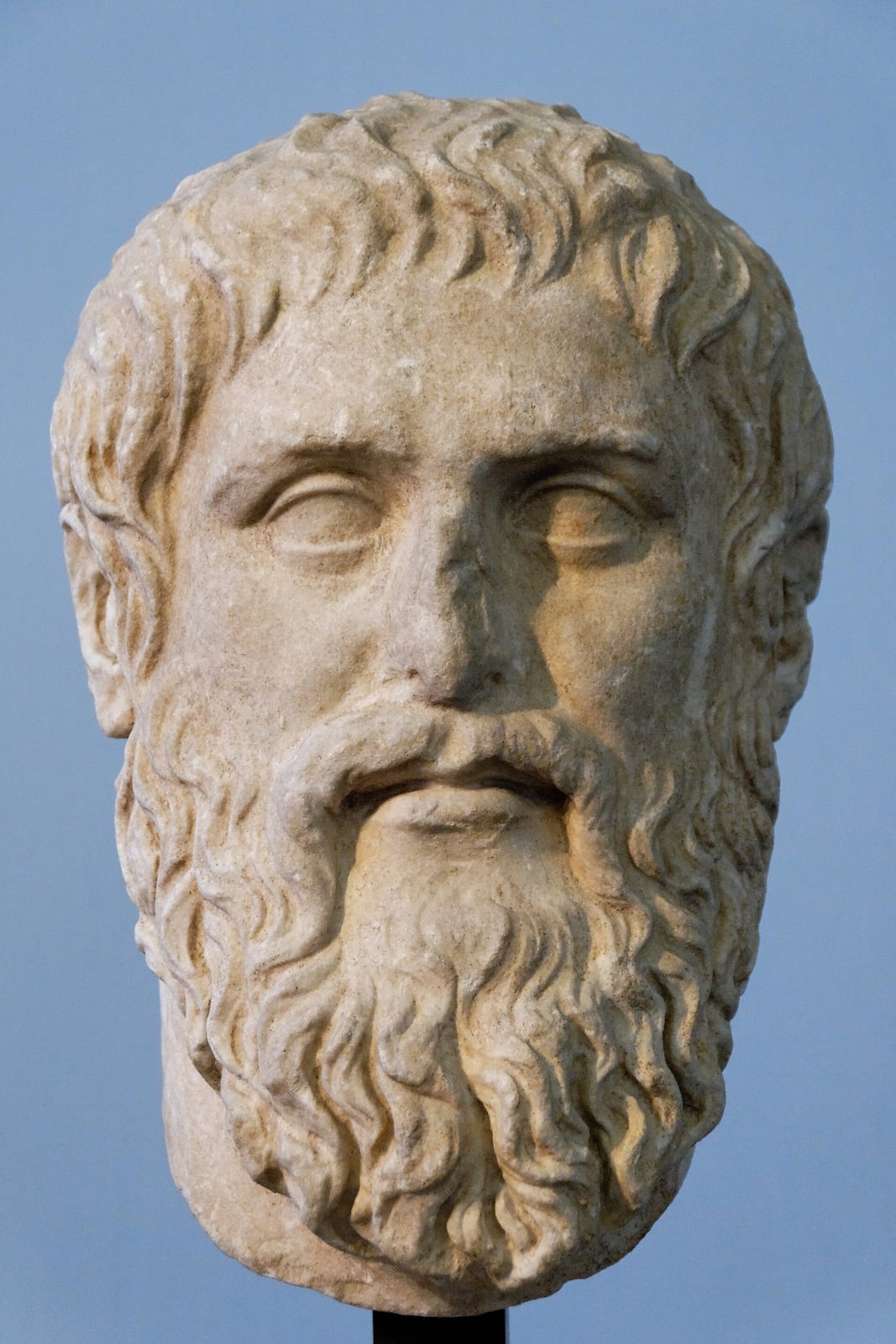
Plato
Ils s'opposent sur: Qui suis-je ? Existe-t-il un vrai soi ? · Le monde est-il réel ?
Anecdotes et récits
Anecdotes et récits
Contestésegunda mitad del s. I
The broken leg
Origine du récit: Origen, Against Celsus VII.53, quoting Celsus' True Doctrine (c. 178). It is a polemical account, written a century later with an apologetic purpose; the Suda (epsilon 2424) gives another cause. It cannot be verified.
Source: Orígenes. Contra Celso, VII 53. Trad. inglesa de Frederick Crombie, Ante-Nicene Fathers, vol. IV. Buffalo: Christian Literature Publishing, 1885.
Documentéc. 100–170
The iron lamp and the clay lamp
Origine du récit: The theft is told by Epictetus himself in Discourses I.18.15. The purchase of the lamp comes from Lucian, The Ignorant Book-Collector 13, a satire: the price may be exaggerated.
Documentéc. 65–68
The master and the shoemaker
Origine du récit: Discourses I.19.19–22, in Epictetus' own words as transmitted by Arrian.
Témoignagemediados del s. II
The philosopher in the storm
Origine du récit: Aulus Gellius, Attic Nights XIX.1, in the first person; Augustine summarises it in The City of God IX.4. It is fragment 9 in Schenkl's edition.
Témoignagec. 125–135
The adopted child
Origine du récit: Simplicius, Commentary on the Handbook (on the chapter about marriage), four centuries later; there is no other source. Discourses I.11 and III.22.67–82 for the doctrinal context.
Source: Simplicio. Comentario al Manual de Epicteto. Trad. inglesa de Tad Brennan y Charles Brittain, Simplicius: On Epictetus' Handbook, 2 vols. Londres: Duckworth / Ithaca: Cornell University Press, 2002.
Contestéc. 117–135; leyenda medieval
The emperor and the philosopher
Origine du récit: Historia Augusta, Life of Hadrian 16.10 (a late source, end of the fourth century). The Altercatio Hadriani Augusti et Epicteti philosophi is a late, spurious anonymous work.
Enseignements
Enseignements
Les notions qui structurent sa pensée, expliquées dans leur contexte.
What is up to us (ta eph' hēmin)lo-que-depende-de-nosotros
Already formulated by the early Stoics in the debate on fate and responsibility, Epictetus makes it the practical axis of ethics and a daily exercise: before each impression, ask whether it is up to oneself or not.
Prohairesis (the faculty of choice)proairesis
Margaret Graver and A. A. Long stress that it is Epictetus' most original contribution to Stoic vocabulary; it influenced Marcus Aurelius and, through the Christian versions, the idea of free will.
Source: Long, A. A. Epictetus: A Stoic and Socratic Guide to Life. Oxford: Clarendon Press, 2002.
The use of impressionsuso-de-las-representaciones
Part of Stoic epistemology, which distinguished impression from assent; Epictetus turns it into moral practice. Modern cognitive psychotherapy (Albert Ellis, Aaron Beck) has claimed it as a precedent.
The three fields of trainingtres-campos
Pierre Hadot related these three fields to the three parts of Stoic philosophy (physics, ethics, logic) and showed that they structure Marcus Aurelius' Meditations as disciplines of desire, action and assent.
Source: Hadot, Pierre. La Citadelle intérieure. Introduction aux Pensées de Marc Aurèle. París: Fayard, 1992 (cap. sobre las tres disciplinas de Epicteto).
The role in the playpapel-en-el-drama
The theory of roles derives from Panaetius (via Cicero, On Duties I), but Epictetus gives it a religious accent: the author of the play is God.
Kinship with Godparentesco-con-dios
The personal tone of his theology made Christians read him sympathetically and adapt the Handbook for monasteries; some moderns have looked, without success, for direct Christian influence.
Source: Long, A. A. Epictetus: A Stoic and Socratic Guide to Life. Oxford: Clarendon Press, 2002.
Vidéos
Vidéos
Enregistrements, entretiens et documentaires. Les vidéos sont lues depuis YouTube ; elles ne sont pas hébergées ici.
Estoicismo romano (II): Epicteto | La March
Conférence· ES· 2023· 60 min
Fundación Juan MarchChaîne officielle
La filosofía helenística (III): El estoicismo · La March
Conférence· ES· 2022· 59 min
Fundación Juan MarchChaîne officielle
Cynics, Stoics, Epicureans
Conférence· EN· 2021· 45 min
Gresham CollegeChaîne officielle
The Slave Who Was Free | Berkeley's AA Long on Epictetus
Entretien· EN· 2025· 65 min
Johnathan Bi
Stoicon 2018: Tony Long "Stoicism Ancient and Modern"
Conférence· EN· 2018· 49 min
Modern StoicismChaîne officielle
The philosophy of Stoicism - Massimo Pigliucci
Analyse· EN· 2017· 5 min
TED-EdChaîne officielle
A History of Philosophy | 16 Stoicism
Conférence· EN· 2015· 63 min
wheatoncollegeChaîne officielle
Epictetus, the Enchiridion - Introduction to Philosophy
Conférence· EN· 2011· 56 min
Gregory B. Sadler - That Philosophy Guy
Epictetus, Discourses | Habits and Practice | Philosophy Core Concepts
Conférence· EN· 2015· 14 min
Gregory B. Sadler - That Philosophy Guy
Geschichte der Philosophie (5): Stoa, Epikureer und pyrrhonische Skepsis, Prof. Dr. Torsten Wilholt
Conférence· DE· 2013· 76 min
InstPhilChaîne officielle
Monografia su EPITTETO
Analyse· IT· 2021· 97 min
Rick DuFer
Galerie
Galerie
Images dont la licence a été vérifiée. Chacune conserve son auteur et son attribution.
Manuscrits
Manuscrits
Témoins manuscrits et textes anciens, avec leur dépositaire et leurs conditions de consultation.
GRC · Minúscula griega · Lecciones de c. 108; copia de los ss. XI–XII
Ἀρριανοῦ τῶν Ἐπικτήτου διατριβῶν
- Témoin conservé
- Arquetipo del que dependen todos los demás manuscritos de las Disertaciones
- Dépositaire
- Bodleian Library, Oxford · MS. Auct. T. 4. 13 (Misc. gr. 251)
Relations
Relations
Influences, filiations et affinités. On distingue la relation documentée de la similitude identifiée par analyse.
A reçu l'influence de
Socrates is his constant model: he quotes him more than any other author, takes from the Apology and the Crito the idea that "Anytus and Meletus can kill me, but they cannot harm me" (Handbook 53) and proposes imitating his answer "I am a citizen of the world" (Discourses I.9).
Relation documentée
A reçu l'influence de
He belongs to the school Zeno founded, and names him among his models alongside Socrates and Diogenes (Discourses III.23.32).
Relation documentée
A reçu l'influence de
Diogenes is for him the example of the true Cynic and the free man; he devotes much of the discourse "About Cynism" (III.22) to him.
Relation documentée
A reçu l'influence de
He frequently quotes Plato's Socratic dialogues (Apology, Crito, Gorgias) as the source for the figure of Socrates.
Relation documentée
En désaccord avec
He argues against Epicurus and the Epicureans in several discourses (I.23 "Against Epicurus"; II.20; III.7), reproaching them for denying man's natural sociability.
Relation documentée
A influencé
Marcus Aurelius came to know the notes of his lectures through Junius Rusticus (Meditations I.7), quotes him repeatedly and organises his Meditations according to his three fields of training.
Relation documentée
Idées proches de
There is no evidence he read Aristotle, but his key term, prohairesis, comes from Aristotle's vocabulary of deliberate decision, which Epictetus turns into the name of the moral self.
Similitude identifiée par analyse
A influencé
Augustine summarises in The City of God (IX.4) Aulus Gellius' story of the Stoic philosopher who, in a storm, justified his fear with a book of Epictetus, and uses it to discuss the Stoic doctrine of the passions.
Relation documentée
Idées proches de
There is no evidence that Plotinus read him. His fullest commentator, Simplicius, was a sixth-century Neoplatonist who read the Handbook as ethical preparation for Platonic philosophy.
Similitude identifiée par analyse
Sources
Sources
Bibliographie et catalogues consultés pour cette fiche.
- Wikidata, entidad Q183144 «Epictetus» (117 enlaces entre wikis; P31=Q5). Registra nacimiento hacia el 50 en Hierápolis y muerte en el 135 o el 138 en Nicópolis.
- Graver, Margaret. «Epictetus». Stanford Encyclopedia of Philosophy, ed. Edward N. Zalta (publicada en 2008, revisión sustancial de 2025).
- Epicteto. Disertaciones (por Arriano) y Manual. Texto griego en Wikisource en griego; trad. inglesa de George Long, The Discourses of Epictetus; with the Encheiridion and Fragments (Londres: George Bell, 1877), en Wikisource en inglés.
- Long, A. A. Epictetus: A Stoic and Socratic Guide to Life. Oxford: Clarendon Press, 2002.
- Aulo Gelio. Noches áticas, I 2; II 18; XV 11; XVII 19; XIX 1. Trad. inglesa de John C. Rolfe, The Attic Nights, Loeb Classical Library 195, 200, 212. Londres: Heinemann, 1927 (libros I–II en LacusCurtius).
- Simplicio. Comentario al Manual de Epicteto. Trad. inglesa de Tad Brennan y Charles Brittain, Simplicius: On Epictetus' Handbook, 2 vols. Londres: Duckworth / Ithaca: Cornell University Press, 2002.
- Orígenes. Contra Celso, VII 53. Trad. inglesa de Frederick Crombie, Ante-Nicene Fathers, vol. IV. Buffalo: Christian Literature Publishing, 1885.
- Luciano de Samósata. Contra un ignorante que compraba muchos libros, 13. Trad. inglesa de A. M. Harmon, Lucian, vol. III, Loeb Classical Library 130. Londres: Heinemann, 1921.
- Historia Augusta, «Vida de Adriano» 16, 10. Trad. inglesa de David Magie, Loeb Classical Library 139, 1921 (texto en LacusCurtius).
- Millar, Fergus. «Epictetus and the Imperial Court». Journal of Roman Studies 55 (1965): 141–148.
- Oldfather, W. A. «Introduction», en Epictetus: The Discourses as Reported by Arrian, the Manual, and Fragments, vol. I. Loeb Classical Library 131. Londres: Heinemann / Nueva York: Putnam, 1925.
- Seddon, Keith H. «Epictetus (55–135 C.E.)». Internet Encyclopedia of Philosophy.
- «Epictetus», Wikipedia en inglés, y «Epicteto», Wikipedia en español (consultadas para hechos verificables y bibliografía; texto propio).
- Focio. Biblioteca, códice 58 (sobre Arriano). Trad. inglesa de J. H. Freese, The Library of Photius, vol. I. Londres: SPCK, 1920.
- Marco Aurelio. Meditaciones, I 7. Trad. inglesa de George Long (1862), Wikisource.
- Suda, s. v. «Epiktetos» (épsilon 2424). Suda On Line, trad. inglesa revisada.
- Hadot, Pierre. La Citadelle intérieure. Introduction aux Pensées de Marc Aurèle. París: Fayard, 1992 (cap. sobre las tres disciplinas de Epicteto).
- Antología Palatina, VII 676 (epigrama anónimo sobre Epicteto). Texto griego en Wikisource en griego.
- Bodleian Library, MS. Auct. T. 4. 13 (Arriano, Disertaciones de Epicteto; s. XI–XII). Ficha del catálogo de manuscritos medievales.
- Dobbin, Robert F. Epictetus: Discourses, Book I. Clarendon Later Ancient Philosophers. Oxford: Clarendon Press, 1998.
- Open Library: registros de las traducciones españolas antiguas del Manual — Francisco Sánchez de las Brozas, «Dotrina del estoico filosofo Epicteto, que se llama comunmente Enchiridion» (1600), y Francisco de Quevedo, «Epicteto y Phocilides en español con consonantes» (Madrid, 1635).
- Diógenes Laercio. Vidas de los filósofos ilustres, VII 23 («Zenón»). Trad. inglesa de R. D. Hicks, Lives of Eminent Philosophers, vol. II, Loeb Classical Library 185. Londres: Heinemann, 1925 (texto en Wikisource).
- Agustín de Hipona. La ciudad de Dios, IX 4. Trad. inglesa de Marcus Dods, Nicene and Post-Nicene Fathers, serie I, vol. II. Buffalo: Christian Literature Publishing, 1887 (texto en New Advent).
- Ayant droit
- Textos antiguos en dominio público; cada traducción y edición moderna pertenece a su traductor o editorial
En attente de confirmation
Ce que cette fiche n'a pas encore pu établir. Nous préférons le dire plutôt que de combler.
- Antonio Brum (o Brun), traductor del Enquiridión en «Obras de los moralistas griegos» (1888): identificar y fechar su muerte para confirmar el dominio público.
- Loeb de Oldfather: el ISBN 9780674992405 figura en Open Library sin número de volumen; confirmar que corresponde al vol. II (LCL 218).
- Pláticas por Arriano (trad. Pablo Jordán de Urríes, 1957–1973): confirmar volúmenes y editorial de cada tomo.
- Simplicio, On Epictetus' Handbook (Brennan y Brittain, 2002): falta ISBN verificado.
- Ediciones con ISBN en francés (Les Belles Lettres, Souilhé), alemán e italiano no registradas en esta pasada.
- Fragmentos: no se han inventariado uno a uno los fragmentos de la edición de Schenkl.
- Fecha de nacimiento: solo «hacia el 50»; la de muerte, hacia el 135 (Wikidata da también 125 y 138).
- Sin programa de afiliación verificado ni titular de derechos: autor antiguo; las editoriales citadas no se han comprobado como programas de afiliados.
Recherche effectuée le 2026-10-25