Philosophie socratique
Socrates
Σωκράτης
v. 469 av. J.-C. – 399 av. J.-C.Personne historiquement documentée
Philosophe athénien (v. 469-399 av. J.-C.) qui n'écrivit rien et changea le cours de la philosophie en faisant de la question de savoir comment il faut vivre son objet central. Il conversait sur l'agora, examinant ceux qui croyaient savoir, sans se faire payer. Accusé d'impiété et de corrompre la jeunesse, il fut condamné à mort et but la ciguë. Nous le connaissons par Platon, Xénophon, Aristophane et Aristote, dont les portraits divergent : c'est le « problème socratique ».
- œuvres
- 31œuvres
- éditions
- 104éditions
- citations
- 9citations
- vidéos
- 13vidéos
- images
- 9images
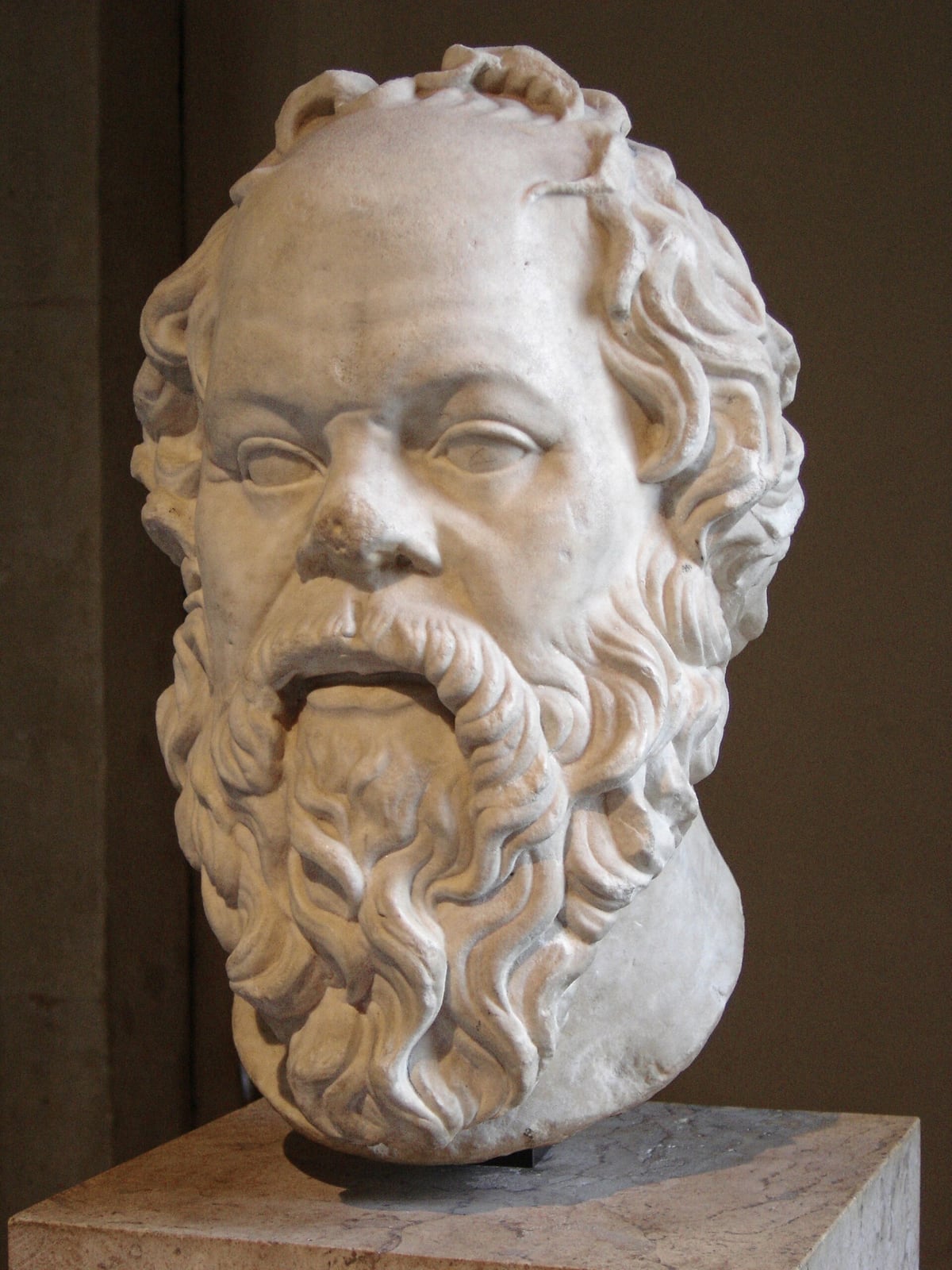
Busto de Sócrates (Louvre) · Public domain
Dans ses propres mots
«The unexamined life is not worth living.»Platón, Apología 38a. Griego: ed. Burnet (OCT); inglés: Benjamin Jowett (1892); español: traducción propia. Son palabras que Platón atribuye a Sócrates.

Son idée centrale
Elenchus (Socratic refutation): The *elenchus*—"test", "refutation"—is the procedure Plato's early dialogues attribute to Socrates.
Le voir en contexte
Biographie
6 min de lecture
Traduction assistée à partir de l'original espagnol, en attente de relecture par un traducteur natif.
L'homme qui n'écrivit rien
Socrate n'a pas laissé une seule ligne écrite. Tout ce que nous savons de lui nous vient d'autres que lui : des dialogues de son disciple Platon, des écrits socratiques de Xénophon, de la comédie d'Aristophane qui le tourna en ridicule de son vivant, des informations qu'Aristote — né quinze ans après sa mort — recueillit à l'Académie, et de la compilation tardive de Diogène Laërce, au IIIe siècle de notre ère. Ces témoignages ne concordent pas. Le Socrate d'Aristophane est un charlatan qui spécule sur les nuées et enseigne à gagner des procès injustes ; celui de Xénophon, un moraliste plein de bon sens qui prodigue de sages conseils à ses amis ; celui de Platon, un penseur d'une profondeur sans égale qui, dans les derniers dialogues, devient le porte-parole de doctrines qu'il n'a sans doute jamais soutenues.
Cet écart entre les sources porte un nom : le « problème socratique ». Friedrich Schleiermacher le formula en 1818 en se demandant ce que Socrate avait pu être pour que Platon et Xénophon le peignent comme ils l'ont peint. Depuis, les uns se sont fiés à Xénophon pour son apparente sobriété ; d'autres, comme Gregory Vlastos, ont reconstruit un Socrate historique à partir des premiers dialogues de Platon ; d'autres encore, comme Olof Gigon ou Charles Kahn, ont souligné que les « discours socratiques » formaient un genre littéraire pratiqué par plusieurs disciples, dont aucun ne prétendait dresser un procès-verbal. Ce qui suit distingue, autant que possible, ce que les sources ont en commun de ce que chacune apporte en propre.
Alopèce
Il naquit à Athènes vers 469 av. J.-C. — Diogène Laërce, suivant la chronologie d'Apollodore, place sa naissance la quatrième année de la 77e olympiade —, dans le dème d'Alopèce, de la tribu Antiochide. Son père, Sophronisque, était tailleur de pierre ou sculpteur ; sa mère, Phénarète, sage-femme, métier dont Socrate lui-même ferait, dans le Théétète, l'image de sa méthode. Il épousa sur le tard Xanthippe, dont il eut trois fils — Lamproclès, Sophronisque et Ménexène ; Aristote, cité par Diogène, lui prête aussi une seconde épouse, Myrto, information que la critique tient pour douteuse.
Il grandit dans l'Athènes de Périclès, au sein de la génération qui vit s'élever le Parthénon et s'épanouir la tragédie, la sophistique et l'enquête sur la nature. Platon le fait converser dans sa jeunesse avec Parménide et Zénon, rencontre sans doute littéraire, et le montre attiré, jeune homme, par la physique d'Anaxagore, à laquelle il aurait renoncé faute d'y trouver une réponse à la question du bien.
Le soldat et le citoyen
Il servit comme hoplite, ce qui suppose une certaine aisance dans sa jeunesse. Il combattit à Potidée (432-430 av. J.-C.), où, selon le récit que Platon place dans la bouche d'Alcibiade dans le Banquet, il lui sauva la vie et endura l'hiver pieds nus ; lors de la retraite de Délion (424 av. J.-C.), où son sang-froid impressionna les stratèges ; et à Amphipolis (422 av. J.-C.). L'Apologie rappelle ces trois campagnes comme la preuve qu'il n'abandonna jamais le poste qui lui avait été assigné.
Il n'exerça qu'une seule charge publique, et par tirage au sort. En 406 av. J.-C., membre du Conseil pendant la prytanie de sa tribu, il s'opposa à ce que l'on jugeât en bloc, contre la loi, les stratèges vainqueurs aux Arginuses, accusés de ne pas avoir recueilli les naufragés. Deux ans plus tard, sous l'oligarchie des Trente, il reçut avec quatre autres l'ordre d'arrêter Léon de Salamine pour qu'on l'exécute, et rentra chez lui. Platon et Xénophon s'accordent sur ces deux épisodes.
L'interrogation pour métier
Son métier fut de converser. Il le faisait sur l'agora, dans les gymnases et chez ses amis, sans se faire payer — à la différence des sophistes, avec qui beaucoup le confondaient — et dans une pauvreté que l'Apologie dit extrême. Sa laideur était célèbre : nez camus, yeux à fleur de tête, air de silène. Selon l'Apologie, son ami Chéréphon demanda à Delphes s'il existait un homme plus sage que lui, et la Pythie répondit que non ; Socrate, déconcerté, examina hommes politiques, poètes et artisans, et conclut que son seul avantage tenait à ne pas croire savoir ce qu'il ne savait pas. Dès lors, il comprit son examen d'autrui comme un service rendu au dieu.
Cet examen — l'elenchos — consistait à demander une définition du courage, de la piété ou de la justice, à obtenir l'assentiment de l'interlocuteur à d'autres propositions et à lui montrer que la définition initiale était incompatible avec elles. Aristote lui attribue deux apports : les raisonnements inductifs et la recherche de définitions universelles, appliqués aux questions morales, sans séparer ces universels des choses, comme le ferait Platon avec les Idées. Socrate parlait aussi d'un signe divin, son daimonion, une voix qui depuis l'enfance le détournait de certains actes et ne le poussait jamais à rien faire.
Les Nuées
En 423 av. J.-C., Aristophane fit jouer Les Nuées, où un Socrate suspendu dans un panier dirige un « pensoir » dans lequel on étudie les phénomènes célestes, on remplace Zeus par les tourbillons et l'on enseigne le raisonnement injuste. La comédie ne fut classée que troisième, mais la caricature survécut : dans l'Apologie, Socrate range parmi ses « premiers accusateurs » ceux qui ont répandu cette image et nomme expressément le poète comique. Ses liens avec Alcibiade, qui trahit Athènes, et avec Critias, le plus radical des Trente, pesèrent également contre lui.
Le procès
Au printemps de 399 av. J.-C., Mélétos, soutenu par Anytos et Lycon, l'accusa de ne pas reconnaître les dieux de la cité, d'introduire des divinités nouvelles et de corrompre la jeunesse ; il requit la peine de mort. Comme l'amnistie de 403 interdisait de poursuivre les délits politiques antérieurs, l'accusation fut formulée en termes religieux. Devant un jury d'environ cinq cents citoyens, Socrate se défendit sans supplications ni larmes. Il fut condamné à une soixantaine de voix près, comme on le déduit de l'Apologie de Platon ; invité à proposer une autre peine, il suggéra d'abord d'être nourri aux frais de l'État au Prytanée, puis une amende de trente mines garantie par Platon, Criton, Critobule et Apollodore. Le jury vota la mort.
L'exécution fut différée d'une trentaine de jours, car le navire sacré envoyé à Délos n'était pas revenu et la cité ne pouvait mettre personne à mort en son absence. Criton lui proposa de s'évader, et Socrate refusa : dans le dialogue qui porte le nom de son ami, les Lois d'Athènes lui rappellent qu'il a vécu soixante-dix ans sous leur protection et qu'il ne saurait répondre à une injustice par une autre.
La mort
Le Phédon raconte le dernier jour. Platon n'était pas présent — « Platon, je crois, était malade », dit le narrateur —, et le dialogue, centré sur les preuves de l'immortalité de l'âme, est une œuvre d'art et de doctrine plus qu'un procès-verbal. À la tombée du jour, Socrate se lava, fit ses adieux à sa femme et à ses enfants, but le poison — la ciguë, selon l'identification traditionnelle — et marcha jusqu'à sentir ses jambes s'alourdir. Comme le froid lui montait vers le cœur, il se découvrit le visage et dit à Criton qu'ils devaient un coq à Asclépios et qu'il ne fallait pas oublier de s'en acquitter. Ce furent, selon Phédon, ses dernières paroles.
Ce qui demeura
De son cercle naquirent des écoles rivales : l'Académie de Platon, les cyniques qui se réclamaient d'Antisthène, les cyrénaïques d'Aristippe, les mégariques d'Euclide. Les stoïciens le tinrent pour le modèle du sage, et Épictète le cite sans cesse. À l'époque moderne, Kierkegaard consacra sa thèse à l'ironie socratique (1841), Nietzsche fit de lui le symptôme d'une décadence (1889) et Jacques-Louis David fixa en 1787 l'image de sa mort sereine. Il demeure, pour la tradition occidentale, la figure du philosophe qui préféra mourir plutôt que de cesser d'examiner la vie.
Sources: Platón. Platonis Opera, ed. John Burnet, 5 vols. Oxford University Press (Oxford Classical Texts), 1900–1907; tomo I (Eutifrón, Apología, Critón, Fedón) consultado en la edición digital del Perseus Digital Library (Tufts University). · Plato. The Dialogues of Plato, trad. Benjamin Jowett, 3.ª ed., 5 vols. Clarendon Press, Oxford, 1892 (Project Gutenberg, n.º 1656 Apology, 1657 Crito, 1658 Phaedo y otros). · Platón. Obras completas, trad. Patricio de Azcárate, 11 vols. Medina y Navarro, Madrid, 1871–1872 (edición digital en Filosofía en español). · Jenofonte. Memorables (Recuerdos de Sócrates), Apología de Sócrates, Banquete y Económico. Texto griego: Xenophontis opera omnia, ed. E. C. Marchant, vol. 2, 2.ª ed., Clarendon Press, Oxford, 1921 (Perseus); trad. inglesa de H. G. Dakyns, The Works of Xenophon, Macmillan, Londres, 1890–1897 (Project Gutenberg). · Aristófanes. Las nubes (Νεφέλαι), representada en 423 a. C.; trad. inglesa de W. J. Hickie, The Comedies of Aristophanes, Bohn's Classical Library, Londres, 1853 (Project Gutenberg n.º 2562).
Chronologie
La vie, année après année
Chaque point est un événement documenté. Cliquez pour le lire, avec sa source et son degré de certitude.
v. 469 av. J.-C.0 ansAlopece (Atenas)
Birth
Born in the deme of Alopece, son of the stonemason Sophroniscus and the midwife Phaenarete. Diogenes Laertius (II 44), following Apollodorus, gives the fourth year of the 77th Olympiad (469/468 BCE); Wikidata records 470. Years BCE are expressed as negative numbers.
ProbableDiógenes Laercio. Vidas y opiniones de los filósofos ilustres, libro II, 18–47 (Sócrates), s. III d. C. Trad. inglesa de C. D. Yonge, Bohn, Londres, 1853 (Project Gutenberg n.º 57342); trad. española de José Ortiz y Sanz, Madrid, 1792 (Wikisource).
Après sa mort
- v. 395 av. J.-C.The "Socratic discourses"
- v. 387 av. J.-C.Founding of the Academy
- 1787David's Death of Socrates
- 1818Schleiermacher poses the "Socratic problem"
- 1841Kierkegaard on irony
v. 469 av. J.-C. · 0 ans
Birth
Born in the deme of Alopece, son of the stonemason Sophroniscus and the midwife Phaenarete. Diogenes Laertius (II 44), following Apollodorus, gives the fourth year of the 77th Olympiad (469/468 BCE); Wikidata records 470. Years BCE are expressed as negative numbers.
Probable
v. 432 av. J.-C. · 37 ans
The Potidaea campaign
Serves as a hoplite at the siege of Potidaea (432–430 BCE). In the Symposium (219e–220e) Alcibiades says Socrates saved his life and endured the winter barefoot.
Probable
424 av. J.-C. · 45 ans
The retreat from Delium
Takes part in the Athenian defeat at Delium; the Laches (181b) and the Symposium (221a–b) praise his composure during the retreat.
Probable
423 av. J.-C. · 46 ans
Aristophanes' Clouds
Aristophanes stages the Clouds at the City Dionysia, caricaturing Socrates as a teacher of speculative physics and unscrupulous rhetoric. It comes third; the surviving text is a later revision that was never staged.
Documenté
422 av. J.-C. · 47 ans
Amphipolis
Last military campaign attributed to him in the Apology (28e).
Probable
406 av. J.-C. · 63 ans
The Arginusae trial
As a member of the Council, during the prytany of the tribe Antiochis, he opposes trying the generals of Arginusae en bloc, against the law (Apology 32b; Xenophon, Hellenica I 7.15).
Documenté
404 av. J.-C. · 65 ans
Leon of Salamis
Under the Thirty Tyrants he refuses the order to arrest Leon of Salamis for execution (Apology 32c–d; Xenophon, Memorabilia IV 4.3).
Documenté
403 av. J.-C. · 66 ans
Democratic restoration and amnesty
Fall of the Thirty. The amnesty forbids prosecution for earlier political offences, which partly explains the religious framing of the 399 charge.
Documenté
399 av. J.-C. · 70 ans
Trial
Meletus, Anytus and Lycon accuse him of impiety and of corrupting the youth. He is convicted by about sixty votes before a jury of some five hundred citizens and sentenced to death.
Documenté
399 av. J.-C. · 70 ans
Death
After some thirty days' wait for the return of the Delian ship, he drinks the poison in prison, surrounded by his friends (Phaedo 116a–118a; Xenophon, Memorabilia IV 8.2).
Documenté
v. 395 av. J.-C.
The "Socratic discourses"
Plato, Xenophon, Aeschines of Sphettus, Antisthenes, Phaedo and others write dialogues with Socrates as protagonist; Aristotle (Poetics 1447b) treats them as a genre of their own. Except for Plato's and Xenophon's, almost all survive only in fragments.
Documenté
v. 387 av. J.-C.
Founding of the Academy
Plato founds his school in the grove of Academus; the dialogues read there will fix the image of Socrates for posterity.
Probable
1787
David's Death of Socrates
Jacques-Louis David shows at the Salon the painting that fixes the modern image of Socrates' death, now in the Metropolitan Museum, New York.
Documenté
1818
Schleiermacher poses the "Socratic problem"
In "Über den Werth des Sokrates als Philosophen" Schleiermacher asks how to reconcile Plato's and Xenophon's portraits: the critical question of the historical Socrates is born.
Documenté
1841
Kierkegaard on irony
Søren Kierkegaard defends his dissertation On the Concept of Irony with Continual Reference to Socrates.
Documenté
Œuvres
Œuvres essentielles
Les œuvres sans lesquelles on ne comprend pas son héritage.
Enseignement oral recueilli · v. 395 av. J.-C.
Apology of Socrates
Ἀπολογία Σωκράτους
Socrates' defence speech before the Athenian court in 399 BCE, in three parts: the defence against the "first accusers" and against Meletus; the counter-proposal of a penalty after the verdict; and closing words to the jurors. It contains the account of the Delphic oracle, the image of the gadfly that rouses the city, the statement that he will obey the god rather than the Athenians and the dictum that the unexamined life is not worth living. It is the main source for reconstructing the trial and Socrates' understanding of himself.
6 éditions
Enseignement oral recueilli · v. 395 av. J.-C.
Crito
Κρίτων
In prison, at dawn, his old friend Crito tells Socrates that the ship from Delos is about to arrive and offers him an escape, already arranged and paid for. Socrates examines whether it is just to flee: one must not answer an injustice with another, and the personified Laws of Athens remind him that for seventy years he has accepted living under them. It is the classic text on the obligation to obey the law and one of the first arguments about the compact between citizen and city.
6 éditions

Enseignement oral recueilli · v. 385 av. J.-C.
Phaedo
Φαίδων
Account of Socrates' last day, told by Phaedo of Elis to Echecrates at Phlius. Socrates talks with the Thebans Simmias and Cebes, who had frequented Pythagoreans, about why the philosopher does not fear death, and sets out four arguments for the immortality of the soul and a myth about the fate of souls. The dialogue closes with the death scene: the bath, the farewell to his family, the cup of poison and the last words to Crito about the cock owed to Asclepius (118a).
6 éditions

Compilation postérieure · v. 371 av. J.-C.
Memorabilia (Memoirs of Socrates)
Ἀπομνημονεύματα
Four books that begin by refuting one by one the charges of impiety and corruption of the young, and go on to dozens of short conversations: Socrates advises his son Lamprocles to be patient with Xanthippe, talks with the sophist Antiphon about poverty, with Aristippus about self-mastery, with craftsmen and generals about their trades. It is the portrait of a practical and pious teacher and the second great source on Socrates alongside Plato.
4 éditions
Toute son œuvre (31)
Euthyphro
395
Symposium
380
Socrates
Laches
The Conscious LibraryLaches
390
Socrates
Charmides
The Conscious LibraryCharmides
390
Socrates
Lysis
The Conscious LibraryLysis
390

Protagoras
385

Gorgias
385

Meno
385
Socrates
Ion
The Conscious LibraryIon
395
Socrates
Lesser Hippias
The Conscious LibraryLesser Hippias
395
Socrates
Euthydemus
The Conscious LibraryEuthydemus
385

Theaetetus
369
Phaedrus
370

Republic
375
Socrates
Greater Hippias
The Conscious LibraryGreater Hippias
390
Socrates
First Alcibiades
The Conscious LibraryFirst Alcibiades
360
Socrates
Parmenides
The Conscious LibraryParmenides
365
Socrates
Other dialogues of the Platonic corpus featuring Socrates
The Conscious LibraryOther dialogues of the Platonic corpus featuring Socrates
360
Apology of Socrates (Xenophon)
380
Symposium (Xenophon)
380
Oeconomicus (The Estate Manager)
362

The Clouds (Aristophanes)
423
Socrates
Aristotle's testimonies on Socrates
The Conscious LibraryAristotle's testimonies on Socrates
340

Life of Socrates (Diogenes Laertius, Lives II 18–47)
230
Citations
Citations localisées dans une œuvre précise. Chacune porte sa provenance et son degré de fiabilité.
The unexamined life is not worth living.ὁ δὲ ἀνεξέταστος βίος οὐ βιωτὸς ἀνθρώπῳ
VérifiéePlatón, Apología 38a. Griego: ed. Burnet (OCT); inglés: Benjamin Jowett (1892); español: traducción propia. Son palabras que Platón atribuye a Sócrates.
Citations apocryphes ou d'attribution contestée (5)
«I know that I know nothing.»
The formula appears in no ancient text about Socrates. It is a later simplification of Apology 21d, where Socrates says something more precise: that he does not think he knows what he does not know. In Plato Socrates claims to know some things (for instance, that doing wrong is bad, Apology 29b).
«Know thyself.»
It is one of the maxims inscribed at the temple of Apollo at Delphi, older than Socrates and ascribed in antiquity to several of the Seven Sages. Socrates quotes and discusses it (Phaedrus 229e, Charmides 164d), but it is not his.
«There is only one good, knowledge, and one evil, ignorance.»
Only Diogenes Laertius (II 31) transmits it, more than six centuries later and without naming a source. It sums up Socratic intellectualism as a slogan, but it is not found in Plato or Xenophon.
«Education is the kindling of a flame, not the filling of a vessel.»
Attributed to Socrates online, it comes from Plutarch, On Listening (Moralia 48c), who says the mind is not a vessel to be filled but kindling to be set alight. Plutarch lived five centuries later.
«The "triple filter test": before you tell me something, is it true, is it good, is it useful?»
A moralising anecdote circulating in self-help books and chain emails since the late twentieth century. It has no ancient source.
Dernières paroles
Récit postérieur de témoins
«"Crito, we owe a cock to Asclepius. Pay it and do not neglect it."»ὦ Κρίτων, ἔφη, τῷ Ἀσκληπιῷ ὀφείλομεν ἀλεκτρυόνα· ἀλλὰ ἀπόδοτε καὶ μὴ ἀμελήσητε.
Plato, Phaedo 118a. According to the narrator, Phaedo of Elis, he spoke them when the chill of the poison had reached his abdomen: he uncovered his face and said these words, "which were his last". Crito answered that it would be done and asked whether he had anything else to say; Socrates no longer replied. The testimony is literary and second-hand—Plato states in the same dialogue (59b) that he was ill and absent—hence its classification as a witness account transmitted by another. The Greek verb is plural, "we owe": Jowett translates "I owe", Azcárate "debemos un gallo a Esculapio". Asclepius was the god of healing, to whom a cock was offered after recovery. The sentence has been interpreted in many ways: Nietzsche saw in it the confession that life is a disease; Georges Dumézil (1984), thanks for the cure of a false opinion; others, an outstanding vow for Plato's illness or a simple act of piety. Xenophon transmits no last words.
Source: Platón. Platonis Opera, ed. John Burnet, 5 vols. Oxford University Press (Oxford Classical Texts), 1900–1907; tomo I (Eutifrón, Apología, Critón, Fedón) consultado en la edición digital del Perseus Digital Library (Tufts University).
Interroger
Ce que répond son œuvre
Douze grandes questions de l'humanité et ce que ses textes permettent d'y répondre, références à l'appui. Nous ne lui prêtons jamais de paroles.
Qu'est-ce que l'Absolu ? Dieu existe-t-il ?
A god who entrusts him with a mission and warns him by a sign
Un Dieu personnelIl le dit expressément
Socrates wrote nothing; his relation to the divine is known through Plato and Xenophon, who agree on the essentials. In Plato's Apology he speaks of “the god” of Delphi as someone who has assigned him a post in the city and whom he will obey rather than the Athenians, and he describes a divine sign, a voice that since childhood turns him away from what he should not do. Xenophon, in the Memorabilia, attributes to him an argument from design: eyes, eyelids or affection for offspring show the work of a wise craftsman who loves living beings, and the gods care for humans and see everything. It is a personal dealing with the divine, though Socrates avoids speculating about its nature.
Comparer cette question avec d'autres maîtresQui suis-je ? Existe-t-il un vrai soi ?
What we are is the soul, and caring for it matters above all
Une âme créée et immortelleCela se déduit de sa doctrine
In Plato's Apology Socrates sums up his life in an exhortation: not to care for the body or for wealth before the soul, so that it may become as good as possible. The Alcibiades I, of disputed authenticity, draws the conclusion that the human being is his soul, and the Delphic command to know oneself becomes a lifelong task. On immortality, the Socrates of the Apology is cautious and leaves two possibilities open; the arguments of the Phaedo are already Plato's elaboration. Xenophon, for his part, attributes to him the idea that the soul is what in the human shares in the divine. The core attributable to Socrates is that the true self is the soul.
Comparer cette question avec d'autres maîtresPourquoi souffrons-nous ?
Nobody does wrong knowingly: evil is ignorance and harms the soul
L'ignorance de ce que nous sommesCela se déduit de sa doctrine
Plato's dialogues attribute to Socrates two theses that together answer the question. First: no one errs willingly; whoever does wrong does so because he takes for good what is not, so that evil is a form of ignorance. Second: the greatest harm is not to suffer injustice but to commit it, because it spoils the only thing that matters, the soul; hence he would rather suffer it than commit it. Thus his reproach to the Athenians in the Apology: they care for wealth, fame and honours and not for the soul or for truth. The suffering that truly counts arises from not knowing oneself and confusing the goods of the body with one's own good.
Comparer cette question avec d'autres maîtresQue se passe-t-il après la mort ?
Either a dreamless sleep or a journey: in either case, not an evil
Silence ou réserveIl le dit expressément
In Plato's Apology, already condemned, Socrates reasons that fearing death is thinking one knows what one does not know. He proposes two possibilities: either death is being nothing and feeling nothing, like a dreamless sleep, which would be a gain; or it is a migration of the soul to another place, where he could converse with poets and heroes of the past, which would be an immense good. To the good man, he concludes, no evil befalls in life or after death. His last words to the court leave the question open: who goes to the better lot, nobody knows but the god. The proofs of immortality in the Phaedo are already Plato's.
Comparer cette question avec d'autres maîtresComment atteint-on la libération ou le salut ?
Examining oneself and others: an unexamined life is not worth living
Par la connaissance directeIl le dit expressément
Socrates promises no salvation, but his whole life is a method for making the soul better. In Plato's Apology he says that the greatest good for a man is to converse every day about virtue and to examine himself and others, and that an unexamined life is not worth living. The instrument is refutation: questioning until the interlocutor discovers that he does not know what he thought he knew, the first step to truly seeking it. If virtue is knowledge, as Aristotle attributes to him, knowing oneself — in the Delphic sense — is the way to become good. His own death, accepted without committing injustice, appears in the dialogues as proof of that freedom.
Comparer cette question avec d'autres maîtresFaut-il un maître ?
He does not teach: like a midwife, he delivers what the other carries
Le maître est à l'intérieurIl le dit expressément
Plato's Socrates rejects the title of teacher: in the Apology he states that he has never been anyone's teacher nor charged for conversation. In the Theaetetus he describes himself as a midwife: barren of wisdom himself, he helps others give birth to what they carried within and to tell whether it is true or false offspring; what they find they learn not from him but from themselves. His own guidance was inner: a divine sign that turned him away from certain actions. The Meno adds the Platonic theory of recollection, by which seeking and learning are remembering. The outer teacher only asks; truth lies in the soul of the seeker.
Comparer cette question avec d'autres maîtresLe monde est-il réel ?
A world arranged by provident gods, though physics does not occupy him
Une création bonne et réelleCela se déduit de sa doctrine
The sources agree that Socrates turned away from the investigation of nature. Aristotle states that he dealt with moral questions and not with nature as a whole; Xenophon says he did not discuss how the cosmos came about and considered those who did so foolish. In Plato's Apology he denies knowing anything of what lies beneath the earth or in the sky. But when he speaks of the world he does so in terms of providence: in the Memorabilia he argues that the arrangement of the organs and the beauty of the universe reveal a wise craftsman who cares for living beings, and that the gods have ordered the cosmos for the benefit of humans.
Comparer cette question avec d'autres maîtresQu'est-ce que l'amour ?
He claims to know only love: the desire that improves the beloved
Le désir ardent et l'unionCela se déduit de sa doctrine
The man who claimed to know nothing declared himself expert in one thing alone: love. So Plato has him say in the Symposium and the Lysis. In the Symposium Socrates sets out what, he says, Diotima taught him: Eros is the desire to possess the good for ever and to beget in beauty, and it leads by degrees from beautiful bodies to Beauty itself. The Alcibiades of Aeschines of Sphettus, another Socratic, presents his love for the young man as a force that, by divine gift, could make him better without teaching him anything. Xenophon adds conversations on friendship. Socratic love is longing for the good that raises both lover and beloved.
Comparer cette question avec d'autres maîtresSommes-nous libres ou tout est-il déterminé ?
The god assigned him a post, and he answers for how he holds it
Le destin et la responsabilitéCela se déduit de sa doctrine
Socrates does not discuss the theoretical problem of freedom, but his life, as Plato and Xenophon tell it, is ordered by a charge. In the Apology he interprets the Delphic oracle as a mission: the god has set him beside the city like a gadfly, and abandoning that post for fear of death would be like deserting in battle. The divine sign turns him away from certain actions and, significantly, did not stop him on the day of the trial. At the same time, responsibility is fully his: in the Crito he chooses not to flee because committing injustice is never permitted. The thesis that nobody errs willingly, however, complicates any reading in terms of free will.
Comparer cette question avec d'autres maîtresPourquoi méditer ou prier ?
Asking the gods for the good, unspecified, and to be beautiful within
Le rite et la culture de soiIl le dit expressément
The sources show a Socrates pious in the ways of his city. Xenophon relates that he sacrificed at home and at the public altars, consulted divination and asked the gods simply for good things, since they know best what is fitting; modest sacrifices from someone with little please them no less than great ones. In Plato's Phaedrus, at the end of the conversation, he prays to Pan and the gods of the place to grant him to be beautiful within and that what is outside be in friendship with what is within. Plato also relates that at Potidaea he stood absorbed in thought from dawn to the following dawn.
Comparer cette question avec d'autres maîtresLa raison peut-elle connaître l'ultime ?
He knows he does not know: he tests the god's word by reason
La foi et la raison s'entraidentIl le dit expressément
Plato's Apology relates how Socrates received the reply of the Delphic oracle — no one was wiser than he — and, instead of simply accepting it, set out to examine it by questioning politicians, poets and craftsmen. He concluded that his wisdom lay in not thinking he knew what he did not know, and that human wisdom is worth little or nothing: the truly wise one is the god. Reason, exercised in dialogue, does not reach a final science of the ultimate, but it purges false opinions and guides life; divine signs and dreams complete that limited knowledge. Aristotle credits him with the search for universal definitions and inductive arguments.
Comparer cette question avec d'autres maîtresSe retirer du monde ou le transformer ?
True politics is making the citizens' souls better
La révolution est intérieureIl le dit expressément
Socrates did not withdraw from Athens: he spent his life in the agora, served as a hoplite and fulfilled his public offices, opposing the majority and the Thirty when justice required it. But, according to Plato's Apology, he abstained from active politics because his divine sign prevented him and because whoever truly fights for justice does not survive long in it. His task was another: to urge each citizen, in private, to care for the soul before wealth. In the Gorgias he claims to be one of the few Athenians practising the true political art, because he seeks his fellow citizens' good and not their pleasure. Changing the city begins with changing souls.
Comparer cette question avec d'autres maîtres
Affinités et tensions
Affinités et tensions
Calculées question par question à partir de ses positions. La raison de chaque accord ou de chaque désaccord s'affiche d'un clic.
Pense comme
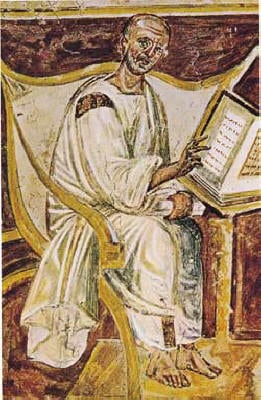
Augustine of Hippo
Ils concordent sur: Qu'est-ce que l'Absolu ? Dieu existe-t-il ? · Qui suis-je ? Existe-t-il un vrai soi ? · Faut-il un maître ?
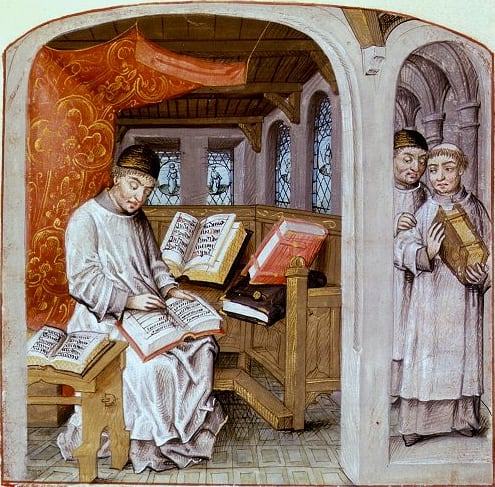
Thomas à Kempis
Ils concordent sur: Qu'est-ce que l'Absolu ? Dieu existe-t-il ? · Qui suis-je ? Existe-t-il un vrai soi ? · Faut-il un maître ?
Carl Gustav Jung
Ils concordent sur: Pourquoi souffrons-nous ? · Que se passe-t-il après la mort ? · Faut-il un maître ?
Al-Ghazali
Ils concordent sur: Qu'est-ce que l'Absolu ? Dieu existe-t-il ? · Qui suis-je ? Existe-t-il un vrai soi ? · Le monde est-il réel ?
Pense autrement que

Dōgen
Ils s'opposent sur: Qu'est-ce que l'Absolu ? Dieu existe-t-il ? · Qui suis-je ? Existe-t-il un vrai soi ?

Siddhartha Gautama, the Buddha
Ils s'opposent sur: Qu'est-ce que l'Absolu ? Dieu existe-t-il ? · Qui suis-je ? Existe-t-il un vrai soi ?

Tsongkhapa
Ils s'opposent sur: Qu'est-ce que l'Absolu ? Dieu existe-t-il ? · Qui suis-je ? Existe-t-il un vrai soi ?

Śāntideva
Ils s'opposent sur: Qu'est-ce que l'Absolu ? Dieu existe-t-il ? · Qui suis-je ? Existe-t-il un vrai soi ?
Anecdotes et récits
Anecdotes et récits
Témoignageantes del 431 a. C. (incierto)
The Delphic oracle
Origine du récit: Plato, Apology 20e–23b, where Socrates calls Chaerephon's brother as witness, Chaerephon being dead. Xenophon (Apology 14) gives a different version: the oracle supposedly said no one was more free, just or sensible than Socrates. Some scholars doubt the consultation took place; others accept it because it appears in a speech delivered before hundreds of Athenians.
Témoignage432–424 a. C.
Potidaea and Delium
Origine du récit: Plato, Symposium 219e–221c; the Laches (181b) confirms the conduct at Delium through the general Laches. It is a literary testimony in a character's mouth, but it agrees with the Apology (28e) on the three campaigns. The Aristophanes quotation comes from the Clouds (362).
Documenté406–404 a. C.
The Arginusae generals and Leon of Salamis
Origine du récit: Plato, Apology 32b–e; Xenophon, Hellenica I 7.14–15 and Memorabilia I 1.18 and IV 4.2–3. It is one of the few episodes in Socrates' life attested by two independent authors and by a historian narrating the events apart from Socrates.
Contesté423 a. C.
Socrates stands up in the theatre
Origine du récit: Aelian, Varia Historia II 13 (2nd–3rd century CE). There is no contemporary testimony. Plutarch (On the Education of Children 14) attributes a similar reaction to Socrates when mocked by comedy. The story of a bribe to Aristophanes is incompatible with the chronology.
Source: Eliano, Claudio. Historias curiosas (Varia historia) II 13, s. II–III d. C. Trad. esp. de Juan Manuel Cortés Copete, Gredos, Madrid, 2006.
Invérifiables. V a. C. (tradicional)
Xanthippe and the water
Origine du récit: Diogenes Laertius II 36–37 (3rd century CE); the image of the difficult wife is already in Xenophon, Symposium 2.10, where Antisthenes calls her "the most intolerable of women", and Memorabilia II 2. The bucket scene appears only in late sources and belongs to a repertoire of jokes about philosophers; it inspired many Baroque paintings.
Témoignage401 a. C.
Xenophon asks for advice
Origine du récit: Xenophon, Anabasis III 1.4–7, in which the author himself narrates the episode. It is the only surviving autobiographical testimony of a private conversation with Socrates.
Enseignements
Enseignements
Les notions qui structurent sa pensée, expliquées dans leur contexte.
Elenchus (Socratic refutation)elenchos
The method of Plato's "aporetic" dialogues (Euthyphro, Laches, Charmides, Lysis); Aristotle links it to the search for universal definitions.
Source: Vlastos, Gregory. Socrates, Ironist and Moral Philosopher. Cambridge University Press / Cornell University Press, Cambridge e Ithaca, 1991.
Socratic ironyironia-socratica
A character trait attributed to Socrates by Plato, Xenophon and Aristotle; a central category of later rhetoric and philosophy.
Source: Vlastos, Gregory. Socrates, Ironist and Moral Philosopher. Cambridge University Press / Cornell University Press, Cambridge e Ithaca, 1991.
The daimonion (the divine sign)daimonion
The religious element in Socrates' figure, central to the impiety charge of 399 BCE.
No one does wrong willingly (moral intellectualism)nadie-obra-mal-voluntariamente
The core of Socratic ethics in the Protagoras, the Gorgias and the Meno.
Care of the soulcuidado-del-alma
The ethical programme of the Apology and the First Alcibiades; the basis of the ancient idea of philosophy as spiritual exercise.
Maieuticsmayeutica
An image from the Theaetetus, associated with the Meno and Platonic recollection.
Vidéos
Vidéos
Enregistrements, entretiens et documentaires. Les vidéos sont lues depuis YouTube ; elles ne sont pas hébergées ici.
2. Socratic Citizenship: Plato's Apology
Conférence· EN· 2008· 46 min
YaleCoursesChaîne officielle
3. Socratic Citizenship: Plato's Crito
Conférence· EN· 2008· 47 min
YaleCoursesChaîne officielle
Ancient Philosophies as a Way of Life: Socrates
Conférence· EN· 2012· 61 min
StanfordChaîne officielle
Bettany Hughes | Socrates and his Athens
Conférence· EN· 2021· 61 min
The Ramsay Centre for Western CivilisationChaîne officielle
PBS Broadcast - The Trial of Socrates
Documentaire· EN· 2025· 58 min
National Hellenic MuseumChaîne officielle
Paul Woodruff, "In Socrates' Footsteps: A Better Model for Virtue Ethics."
Conférence· EN· 2020· 85 min
International Society for Socratic StudiesChaîne officielle
Socrates & Plato's Philosophy - Myles Burnyeat & Bryan Magee (1987)
Entretien· EN· 1987· 44 min
Philosophy Overdose
Conferencia de Francesc Casadesús: 'Sócrates y sus enemigos'
Conférence· ES· 2022· 63 min
Fundación BBVAChaîne officielle
Carlos Fernández Liria "Sócrates y el problema de la democracia"
Conférence· ES· 2021· 55 min
G.I. UCM: Metafísica, Crítica y PolíticaChaîne officielle
«Apología de Sócrates» | Notas a Platón (3/27)
Analyse· ES· 2020· 107 min
Ernesto CastroChaîne officielle
El juicio a Sócrates: ¿Por qué Atenas mató a su hombre más sabio? - H. Grecia #48
Conférence· ES· 2024· 40 min
Darío Sánchez VendraminiChaîne officielle
Portrait de Socrate | Cours méthodiques et populaires de philosophie
Conférence· FR· 2014· 98 min
Bibliothèque nationale de France BnFChaîne officielle
Geschichte der Philosophie (2): Von Sokrates zu Platon, Prof. Dr. Torsten Wilholt
Conférence· DE· 2013· 88 min
InstPhilChaîne officielle
Galerie
Galerie
Images dont la licence a été vérifiée. Chacune conserve son auteur et son attribution.
Manuscrits
Manuscrits
Témoins manuscrits et textes anciens, avec leur dépositaire et leurs conditions de consultation.
GRC · Minúscula griega · Diálogos compuestos c. 399–347 a. C.; copia de 895
Codex Oxoniensis Clarkianus 39 («Clarke Plato», B)
- Témoin conservé
- Códice de pergamino de 418 folios, copiado por Juan el Calígrafo para Aretas de Patras
- Dépositaire
- Bodleian Library, Oxford · MS. E. D. Clarke 39
- Numérisation
- medieval.bodleian.ox.ac.uk/catalog/manuscript_40…
Relations
Relations
Influences, filiations et affinités. On distingue la relation documentée de la similitude identifiée par analyse.
Maître de
Plato frequented Socrates in his youth, attended the trial (Apology 34a, 38b) and made him the protagonist of almost all his dialogues.
Relation documentée
Maître de
Jenofonte
A pupil in his youth; he wrote the Memorabilia, the Apology, the Symposium and the Oeconomicus, and recounts in the Anabasis how he asked him for advice.
Relation documentée
Maître de
Antístenes
A follower of Socrates present at his death (Phaedo 59b); founder of the tradition that would lead to Cynicism.
Relation documentée
Contemporain de
Aristófanes
He caricatured him in the Clouds (423 BCE); Plato seats them together in the Symposium.
Relation documentée
A influencé
He never knew him, but in the Metaphysics credits him with induction and universal definition and discusses his moral intellectualism in the Nicomachean Ethics.
Relation documentée
A influencé
A pupil of Antisthenes according to Diogenes Laertius (VI 21); Plato allegedly called him "a Socrates gone mad" (VI 54).
Relation documentée
A influencé
According to Diogenes Laertius (VII 2–3), he became a philosopher after reading the second book of Xenophon's Memorabilia in Athens.
Relation documentée
A influencé
The Discourses recorded by Arrian hold up Socrates as the constant model of the philosophical life.
Relation documentée
A rencontré
Plato narrates a meeting between a very young Socrates and the aged Parmenides in the dialogue Parmenides; it is almost certainly a literary fiction.
Similitude identifiée par analyse
Idées proches de
The speakers of the Phaedo, Simmias and Cebes, had frequented the Pythagorean Philolaus; the immortality of the soul and the philosophical life as purification bring Plato's Socrates close to the Pythagorean tradition.
Similitude identifiée par analyse
Idées proches de
Oral teachers known through their disciples, centred on virtue and self-examination; Karl Jaspers grouped them among the "paradigmatic individuals".
Similitude identifiée par analyse
Idées proches de
Neither wrote anything, both were executed by the authority of their city and their figure reaches us through disciples who disagree; the comparison has been a commonplace since the Christian apologists.
Similitude identifiée par analyse
Lié depuis d'autres fiches
- Aristotle · A reçu l'influence de
- Heraclitus · A influencé
- Marcus Aurelius · A reçu l'influence de
- Parmenides · A rencontré
- Zeno of Citium · A reçu l'influence de
- Epicurus · En désaccord avec
- Diogenes of Sinope · A reçu l'influence de
- Epictetus · A reçu l'influence de
- Pythagoras · Idées proches de
- Plotinus · A reçu l'influence de
- Augustine of Hippo · Idées proches de
- Plato · Disciple de
Sources
Sources
Bibliographie et catalogues consultés pour cette fiche.
- Wikidata, entidad Q913 «Socrates» (276 enlaces entre wikis; P31=Q5). Registra nacimiento en 470 a. C. (precisión: año) y muerte en 399 a. C. (15 de febrero o mayo, fechas sin base antigua); lugar de nacimiento Alopece y Atenas.
- Platón. Platonis Opera, ed. John Burnet, 5 vols. Oxford University Press (Oxford Classical Texts), 1900–1907; tomo I (Eutifrón, Apología, Critón, Fedón) consultado en la edición digital del Perseus Digital Library (Tufts University).
- Plato. The Dialogues of Plato, trad. Benjamin Jowett, 3.ª ed., 5 vols. Clarendon Press, Oxford, 1892 (Project Gutenberg, n.º 1656 Apology, 1657 Crito, 1658 Phaedo y otros).
- Platón. Obras completas, trad. Patricio de Azcárate, 11 vols. Medina y Navarro, Madrid, 1871–1872 (edición digital en Filosofía en español).
- Jenofonte. Memorables (Recuerdos de Sócrates), Apología de Sócrates, Banquete y Económico. Texto griego: Xenophontis opera omnia, ed. E. C. Marchant, vol. 2, 2.ª ed., Clarendon Press, Oxford, 1921 (Perseus); trad. inglesa de H. G. Dakyns, The Works of Xenophon, Macmillan, Londres, 1890–1897 (Project Gutenberg).
- Aristófanes. Las nubes (Νεφέλαι), representada en 423 a. C.; trad. inglesa de W. J. Hickie, The Comedies of Aristophanes, Bohn's Classical Library, Londres, 1853 (Project Gutenberg n.º 2562).
- Aristóteles. Metafísica A 6, 987b1–4, y M 4, 1078b17–32; Poética 1, 1447b11. Trad. inglesa de W. D. Ross (Oxford, 1908; Internet Classics Archive, MIT); trad. española de Patricio de Azcárate, Obras de Aristóteles, vol. 10, Madrid, 1875.
- Diógenes Laercio. Vidas y opiniones de los filósofos ilustres, libro II, 18–47 (Sócrates), s. III d. C. Trad. inglesa de C. D. Yonge, Bohn, Londres, 1853 (Project Gutenberg n.º 57342); trad. española de José Ortiz y Sanz, Madrid, 1792 (Wikisource).
- Guthrie, W. K. C. A History of Greek Philosophy, vol. III: The Fifth-Century Enlightenment, parte 2: Socrates. Cambridge University Press, Cambridge, 1969 (publicado aparte como Socrates, 1971; trad. esp. Historia de la filosofía griega, vol. III, Gredos).
- Vlastos, Gregory. Socrates, Ironist and Moral Philosopher. Cambridge University Press / Cornell University Press, Cambridge e Ithaca, 1991.
- Nails, Debra y Monoson, S. Sara. «Socrates». The Stanford Encyclopedia of Philosophy, ed. Edward N. Zalta; primera publicación 2005, revisión sustancial del 26 de mayo de 2022.
- Kahn, Charles H. Plato and the Socratic Dialogue: The Philosophical Use of a Literary Form. Cambridge University Press, Cambridge, 1996.
- Brickhouse, Thomas C. y Smith, Nicholas D. (eds.). The Trial and Execution of Socrates: Sources and Controversies. Oxford University Press, Nueva York, 2002.
- Waterfield, Robin. Why Socrates Died: Dispelling the Myths. Faber and Faber / W. W. Norton, Londres y Nueva York, 2009.
- «Socrates», Wikipedia en inglés, y «Sócrates», Wikipedia en español (consultadas para contrastar datos y bibliografía; texto propio).
- Giannantoni, Gabriele (ed.). Socratis et Socraticorum Reliquiae, 4 vols. Bibliopolis, Nápoles, 1990 (fragmentos de Esquines de Esfeto, Antístenes y demás socráticos).
- Eliano, Claudio. Historias curiosas (Varia historia) II 13, s. II–III d. C. Trad. esp. de Juan Manuel Cortés Copete, Gredos, Madrid, 2006.
- The Metropolitan Museum of Art. Jacques-Louis David, «The Death of Socrates» (1787), n.º de inventario 31.45.
- Bodleian Libraries, Universidad de Oxford. MS. E. D. Clarke 39 («Clarke Plato»), códice de las tetralogías I–VI de Platón copiado en 895 por Juan el Calígrafo para Aretas. A Catalogue of Western Manuscripts at the Bodleian Libraries.
- Open Library (Internet Archive): ediciones de Platón, Jenofonte, Aristófanes y Diógenes Laercio verificadas por ISBN.
- Ayant droit
- Textos antiguos en dominio público; cada traducción y edición crítica pertenece a su traductor o editorial
En attente de confirmation
Ce que cette fiche n'a pas encore pu établir. Nous préférons le dire plutôt que de combler.
- Fecha de nacimiento: se adopta 469 a. C. (Apolodoro en Diógenes Laercio II 44; Nails y Monoson); Wikidata da 470. Las fechas de muerte de Wikidata (15 de febrero o 1 de mayo de 399) no tienen base antigua: solo se sabe que fue en primavera, unos treinta días después del juicio.
- Ediciones españolas con ISBN verificado de Gorgias, Menón, Eutidemo, Teeteto, Parménides y Alcibíades I (Gredos, Diálogos II y V; Alianza): no localizadas en Open Library en esta sesión.
- «Las nubes» en español: solo se ha verificado la edición de Ediciones Clásicas (1999) sin traductor identificado; falta la de Gredos (Comedias I) con ISBN y contenido comprobados.
- Traducción española de dominio público de las Memorables y el Banquete de Jenofonte (p. ej., Diego Gracián, s. XVI): no localizada en línea con URL estable.
- Programas de afiliación: ninguno verificado (Gredos, Alianza, Penguin, Hackett). Lista vacía.
- Año de los vídeos: es el de la grabación cuando la descripción lo indica y, si no, el de publicación en YouTube.
Recherche effectuée le 2026-10-25