Platonisme · Néoplatonisme
Plotinus
Πλωτῖνος
v. 205 – 270Personne historiquement documentée
Philosophe grec né en Égypte (v. 205-270), considéré comme le fondateur du néoplatonisme. Disciple d'Ammonios Saccas à Alexandrie, il enseigna à Rome à partir de 244 et ne commença à écrire qu'à cinquante ans. Ses cinquante-quatre traités, classés par son disciple Porphyre en six groupes de neuf, les Ennéades, exposent un univers qui procède de l'Un, par l'Intellect et l'Âme, et vers lequel l'âme peut remonter par la contemplation. Son influence sur la mystique païenne, chrétienne et islamique fut immense.
- œuvres
- 59œuvres
- éditions
- 184éditions
- citations
- 9citations
- vidéos
- 11vidéos
- images
- 8images
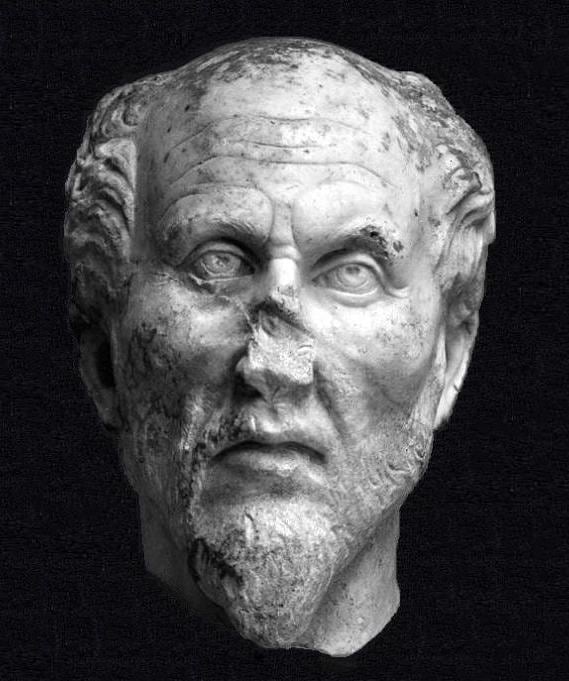
Cabeza de mármol identificada con Plotino (Ostia, inv. 436) · Public domain
Dans ses propres mots
«Let us flee then to the beloved Fatherland.»Enéadas I 6 [1], 8 (citando la Ilíada). Griego: Wikisource; inglés: Stephen MacKenna; español: traducción propia.

Son idée centrale
The One (the Good): Plotinus' first principle is the One, which he also calls the Good.
Le voir en contexte
Biographie
5 min de lecture
Traduction assistée à partir de l'original espagnol, en attente de relecture par un traducteur natif.
Un philosophe qui avait honte d'avoir un corps
« Plotin, le philosophe de notre temps, semblait avoir honte d'être dans un corps. » C'est par cette phrase que Porphyre ouvre la Vie de Plotin, écrite trente ans après la mort de son maître en guise de préface à l'édition de ses œuvres. Presque tout ce que nous savons de l'homme en provient : Porphyre le fréquenta pendant six ans à Rome et compléta ses souvenirs par ceux d'autres disciples, en particulier le médecin Eustochius. C'est un portrait admiratif, par moments hagiographique, mais riche en données précises, d'autant plus précieux que Plotin ne parlait jamais de sa famille, de sa patrie ni de sa date de naissance. Il refusa de poser pour aucun peintre : « Ne suffit-il pas de porter cette image dont la nature nous a revêtus, faut-il encore consentir à laisser une image de l'image ? »
Alexandrie
Porphyre calcule qu'il naquit vers 205, puisqu'il mourut en 270 à soixante-six ans ; l'historien Eunape, un siècle plus tard, le dit né à Lycopolis, en Haute-Égypte, donnée invérifiable. Sa langue et sa formation étaient grecques. À vingt-huit ans, il se tourna vers la philosophie à Alexandrie, mais il sortait des cours des maîtres les plus réputés triste et découragé, jusqu'à ce qu'un ami le conduise écouter Ammonios Saccas, un penseur platonicien qui n'écrivit rien. « Voilà celui que je cherchais », dit-il en sortant. Il resta onze ans auprès de lui.
Poussé par le désir de connaître la philosophie des Perses et des Indiens, il se joignit en 242 à l'expédition de l'empereur Gordien III contre la Perse. Gordien mourut en Mésopotamie en 244, et Plotin parvint à grand-peine à se réfugier à Antioche. Cette même année, sous l'empereur Philippe l'Arabe, à quarante ans, il s'établit à Rome, où il devait passer le reste de sa vie.
L'école de Rome
Pendant dix ans, il n'enseigna que de vive voix, fidèle à un pacte conclu avec deux autres disciples d'Ammonios, Hérennius et Origène, de ne pas divulguer les doctrines du maître ; quand les autres le rompirent, il se sentit libre à son tour. Ses cours étaient des conversations ouvertes : on y lisait des commentaires de platoniciens et d'aristotéliciens — Sévère, Cronius, Numénius, Alexandre d'Aphrodise — et Plotin prenait la parole pour développer sa propre pensée, admettant les questions jusqu'au désordre. Venaient l'entendre des sénateurs comme Rogatianus, qui renonça à la préture et à ses biens ; des médecins comme Eustochius ; des femmes comme Gémina, chez qui il logeait, et sa fille. Bien des familles lui confiaient la tutelle de leurs enfants orphelins, et il en vérifiait les comptes avec scrupule. L'empereur Gallien et son épouse Salonine l'honorèrent, et Plotin leur demanda de relever une ville en ruine de Campanie pour y fonder Platonopolis, gouvernée selon les lois de Platon ; les intrigues de la cour firent échouer le projet.
Cinquante-quatre traités
Il commença à écrire vers 253, à cinquante ans, la première année de Gallien. Lorsque Porphyre arriva à Rome, en 263, il avait rédigé vingt et un traités ; au cours des six années suivantes, stimulé par les questions de Porphyre et d'Amélius, il en écrivit vingt-quatre autres, parmi lesquels le grand cycle contre les gnostiques ; puis, déjà malade et alors que Porphyre se trouvait en Sicile, neuf derniers. Il écrivait d'un seul jet, comme on recopie dans un livre ce que l'on a déjà pensé, sans se relire à cause de sa mauvaise vue et sans souci de l'orthographe ; c'est pourquoi il confia la révision à Porphyre. Vers 301, Porphyre publia les cinquante-quatre traités classés non par date mais par thèmes, en six groupes de neuf — les Ennéades —, de l'éthique jusqu'à l'Un ; il conserva en outre, dans la Vie, la liste chronologique, grâce à laquelle on peut suivre l'évolution de la pensée de Plotin.
Un univers qui procède de l'Un
Plotin se tenait pour un interprète de Platon, mais sa lecture donna naissance à quelque chose de neuf. Au sommet de la réalité, il place l'Un ou le Bien, absolument simple, au-delà de l'être et de la pensée, dont rien ne peut être dit avec propriété. De sa surabondance procède, sans que l'Un perde rien ni le veuille, l'Intellect, qui contient toutes les Formes et se pense lui-même ; de l'Intellect procède l'Âme, qui donne vie et ordre au monde sensible. La matière, à l'extrémité inférieure, est pure indétermination, et Plotin l'identifie au mal. Toute réalité procède de son principe et tend à y retourner en le contemplant : le retour est possible pour l'âme humaine parce qu'une partie d'elle, soutient Plotin, n'est jamais tout à fait descendue et demeure dans l'intelligible.
L'expérience de l'union
Le traité sur la descente de l'âme s'ouvre sur une confession exceptionnelle dans la philosophie grecque : « Souvent, m'éveillant à moi-même hors de mon corps… », l'auteur dit avoir vu une beauté prodigieuse et s'être identifié au divin. Porphyre affirme que, durant les six années qu'il passa auprès de lui, Plotin atteignit quatre fois l'union avec le dieu qui est au-dessus de l'Intellect. Pierre Hadot a vu dans cette expérience le centre de son œuvre : la philosophie comme conversion du regard, simplification intérieure qui culmine dans la « fuite du seul vers le Seul » par laquelle s'achève le traité Du Bien ou de l'Un.
La mort en Campanie
Dans ses dernières années, il souffrit d'une grave maladie qui lui enroua la voix, lui troubla la vue et lui couvrit d'ulcères les mains et les pieds ; Porphyre la décrit en détail, et Stephen MacKenna en rendit le nom par « diphtérie maligne ». Ses amis cessèrent de le visiter, et il se retira dans le domaine de son défunt ami Zéthos, en Campanie. Eustochius, arrivé tard de Pouzzoles, raconta à Porphyre que Plotin lui dit qu'il l'attendait encore et qu'il s'efforçait de faire remonter ce qu'il y a de divin en nous vers ce qu'il y a de divin dans le tout ; à cet instant, un serpent se glissa sous le lit et disparut par un trou du mur, et Plotin expira. C'était en 270.
La postérité
Ses disciples et les disciples de ses disciples — Porphyre, Jamblique, Proclus, Damascius — firent du néoplatonisme la dernière grande école philosophique païenne. Augustin d'Hippone lut à Milan des « livres des platoniciens », traduits en latin par Marius Victorinus, qu'il reconnut décisifs dans sa conversion et qui étaient très probablement des traités de Plotin et de Porphyre. Une paraphrase arabe des Ennéades IV à VI, attribuée à Aristote sous le titre de Théologie, transmit sa pensée à la philosophie islamique. En 1492, Marsile Ficin publia à Florence la traduction latine intégrale, qui ouvrit sa lecture à l'Europe moderne.
Sources: Porfirio. Vida de Plotino y orden de sus libros (Περὶ τοῦ Πλωτίνου βίου καὶ τῆς τάξεως τῶν βιβλίων αὐτοῦ). Texto griego en la ed. de R. Volkmann (Teubner, 1883), en Wikisource en griego; trad. inglesa de Stephen MacKenna (1917), en Wikisource en inglés. · Plotino. Enéadas. Texto griego en Wikisource en griego; trad. inglesa de Stephen MacKenna (vols. 1–4, 1917–1926) y de MacKenna y B. S. Page (vol. 5, 1930), en Wikisource en inglés. · Hadot, Pierre. Plotin ou la simplicité du regard. París: Plon, 1963. Trad. inglesa: Plotinus or the Simplicity of Vision, University of Chicago Press, 1993. · Igal, Jesús. «Introducción general», en Porfirio, Vida de Plotino; Plotino, Enéadas I–II. Biblioteca Clásica Gredos, 57. Madrid: Gredos, 1982. · Gerson, Lloyd P. (ed.). The Cambridge Companion to Plotinus. Cambridge: Cambridge University Press, 1996.
Chronologie
La vie, année après année
Chaque point est un événement documenté. Cliquez pour le lire, avec sa source et son degré de certitude.
v. 2050 ans¿Licópolis (Egipto)?
Birth
Porphyry infers the year (the thirteenth of Septimius Severus) from his age at death; Plotinus never revealed the day or month. Eunapius gives Lycopolis as his homeland.
ProbablePorfirio. Vida de Plotino y orden de sus libros (Περὶ τοῦ Πλωτίνου βίου καὶ τῆς τάξεως τῶν βιβλίων αὐτοῦ). Texto griego en la ed. de R. Volkmann (Teubner, 1883), en Wikisource en griego; trad. inglesa de Stephen MacKenna (1917), en Wikisource en inglés.
Après sa mort
- v. 301Porphyry publishes the Enneads
- 386Augustine reads the Platonists
- v. 840The "Theology of Aristotle"
- 1492Ficino's Latin translation
- 1580Greek editio princeps
- 1917 – 1930First complete English translation
v. 205 · 0 ans
Birth
Porphyry infers the year (the thirteenth of Septimius Severus) from his age at death; Plotinus never revealed the day or month. Eunapius gives Lycopolis as his homeland.
Probable
v. 232 · 28 ans
Meeting Ammonius Saccas
At twenty-eight, dissatisfied with the teachers of Alexandria, he hears Ammonius and exclaims: "This is the man I was looking for." He studies with him for eleven years.
Documenté
v. 242 – 244 · 38 ans
Gordian III's expedition
He joins Gordian III's army against Persia to learn the philosophy of the Persians and Indians. After the emperor's death (244) he flees to Antioch.
Documenté
v. 244 · 40 ans
Arrival in Rome
Under Philip the Arab he settles in Rome, where he teaches orally for ten years without writing, because of a pact with Herennius and Origen.
Documenté
v. 246 · 42 ans
Amelius arrives
Amelius Gentilianus joins the school, where he will remain for twenty-four years; he compiles nearly a hundred books of notes from the lectures.
Documenté
v. 253 · 49 ans
He begins writing
In the first year of Gallienus' reign he begins writing treatises; the first, according to Porphyry, is "On Beauty" (I.6).
Documenté
263 – 268 · 59 ans
Porphyry arrives
Porphyry of Tyre joins the school in the tenth year of Gallienus, when Plotinus has written twenty-one treatises. In the following six years he will write twenty-four more (22–45), including the cycle against the Gnostics (30–33).
Documenté
v. 265 · 61 ans
The Platonopolis project
He asks Gallienus and Salonina to restore a ruined city in Campania to found Platonopolis, governed by Plato's Laws. Opposition at court prevents it.
Documenté
v. 268 · 64 ans
Porphyry to Sicily
Plotinus notices that Porphyry is tempted by suicide and advises him to travel; Porphyry leaves for Sicily. Plotinus sends him there the last nine treatises (46–54).
Documenté
270 · 66 ans
Death
Dies on Zethus' estate in Campania at the end of the second year of Claudius II, attended by Eustochius.
Documenté
v. 301
Porphyry publishes the Enneads
Porphyry edits the fifty-four treatises in six Enneads, prefaced by the Life of Plotinus and the chronological list.
Probable
386
Augustine reads the Platonists
Augustine reads in Milan the "books of the Platonists" translated by Marius Victorinus, decisive for his conversion (Confessions VII.9).
Probable
v. 840
The "Theology of Aristotle"
In al-Kindi's circle an Arabic paraphrase of Enneads IV–VI attributed to Aristotle is produced, transmitting Neoplatonism to Islamic philosophy.
Probable
1492
Ficino's Latin translation
Marsilio Ficino publishes the complete Latin translation of the Enneads, dedicated to Lorenzo de' Medici.
Documenté
1580
Greek editio princeps
Pietro Perna prints in Basel the first Greek text of the Enneads, together with Ficino's version.
Documenté
1917 – 1930
First complete English translation
Stephen MacKenna publishes the first volume of his translation, completed in 1930 with the collaboration of B. S. Page.
Documenté
Œuvres
Œuvres essentielles
Les œuvres sans lesquelles on ne comprend pas son héritage.
Compilation postérieure · v. 301
Enneads
Ἐννεάδες
The complete works of Plotinus. Porphyry arranged them from the simplest subject to the most exalted: Ennead I deals with ethics and man; II with the physical world; III with providence, fate, time and love; IV with the soul; V with Intellect; VI with the kinds of being and the One. Each treatise carries in brackets its number in the chronological order that Porphyry himself preserved in the Life (4–6), which allows three periods to be distinguished: treatises 1–21 (up to 263), 22–45 (263–268) and 46–54 (268–270). It is the source of ancient Neoplatonism and one of the foundational texts of Western mysticism.
16 éditions

Étude académique · v. 301
Life of Plotinus (by Porphyry)
Περὶ τοῦ Πλωτίνου βίου καὶ τῆς τάξεως τῶν βιβλίων αὐτοῦ
"On the life of Plotinus and the arrangement of his books", written around 301, when Porphyry was sixty-eight. It narrates the Alexandrian youth, the Persian expedition, the school in Rome, the circle of pupils, the Platonopolis project, the mystical unions and the death in Campania; it transcribes Apollo's oracle on Plotinus' soul and gives the chronological list of the treatises with their distribution into enneads. It is one of the richest biographies of philosophers from antiquity.
5 éditions
Œuvre écrite · v. 253
Ennead I.6 [1]: On beauty
Περὶ τοῦ καλοῦ
The first treatise he wrote and one of the most widely read. It refutes the view that beauty consists in symmetry: the beautiful is the presence of form in matter. It rises from beautiful bodies to beautiful pursuits, to the beauty of the soul and to intelligible Beauty, and invites the reader to "chisel his own statue", since no eye ever saw the sun without becoming sunlike. It contains the exhortation "let us flee to the beloved fatherland".
3 éditions

Œuvre écrite · v. 253
Ennead IV.8 [6]: On the descent of the soul into bodies
Περὶ τῆς εἰς τὰ σώματα καθόδου τῆς ψυχῆς
It opens with the famous autobiographical confession: "Many times, waking up to myself out of the body…". It reconciles Plato's apparently contradictory texts on the soul's descent—a fault in the Phaedo and the Phaedrus, a cosmic mission in the Timaeus—and argues that a part of our soul does not descend but remains in the intelligible.
3 éditions

Œuvre écrite · v. 253
Ennead V.1 [10]: On the three primary hypostases
Περὶ τῶν τριῶν ἀρχικῶν ὑποστάσεων
A programmatic exposition of his system. It opens with the question why souls have forgotten their father, God, and answers with their audacity (tolma) and their desire to belong to themselves. It invites the reader to recall the soul's dignity and presents the One, Intellect and Soul, relying on Plato's Parmenides and Second Letter and on earlier philosophers.
3 éditions
Œuvre écrite · v. 253
Ennead VI.9 [9]: On the Good or the One
Περὶ τἀγαθοῦ ἢ τοῦ ἑνός
Every being is what it is by being one. After ascending through soul and Intellect, Plotinus shows that the One is none of the things and is reached only by a presence superior to knowledge, when the soul strips itself of all form. He describes union as the meeting of centre with centre and ends with the formula that sums up Plotinian mysticism: the flight of the alone to the Alone. Porphyry placed it at the end of the Enneads.
3 éditions
Toute son œuvre (59)
Ennead I.1 [53]: What is the living being, and what is man?
268
Ennead I.2 [19]: On virtues
253
Ennead I.3 [20]: On dialectic
253
Ennead I.4 [46]: On happiness (well-being)
268
Ennead I.5 [36]: Whether happiness increases with time
263
Ennead I.7 [54]: On the primal good and the other goods
268
Ennead I.8 [51]: On what are and whence come evils
268
Ennead I.9 [16]: On going out of the body
253
Ennead II.1 [40]: On the cosmos (or on heaven)
263
Ennead II.2 [14]: On the movement of heaven
253
Ennead II.3 [52]: Whether the stars are causes
268
Ennead II.4 [12]: On matter (or on the two matters)
253
Ennead II.5 [25]: On what exists potentially and what actually
263
Ennead II.6 [17]: On quality and form (or on substance and quality)
253
Ennead II.7 [37]: On complete transfusion
263
Ennead II.8 [35]: On sight, or how distant objects appear small
263
Ennead II.9 [33]: Against the Gnostics
263
Ennead III.1 [3]: On fate
253
Ennead III.2 [47]: On providence, I
268
Ennead III.3 [48]: On providence, II
268
Ennead III.4 [15]: On our allotted guardian spirit
253
Ennead III.5 [50]: On love
268
Ennead III.6 [26]: On the impassibility of the bodiless
263
Ennead III.7 [45]: On eternity and time
263
Citations
Citations localisées dans une œuvre précise. Chacune porte sa provenance et son degré de fiabilité.
Let us flee then to the beloved Fatherland.Φεύγωμεν δὴ φίλην ἐς πατρίδα.
VérifiéeEnéadas I 6 [1], 8 (citando la Ilíada). Griego: Wikisource; inglés: Stephen MacKenna; español: traducción propia.
Citations apocryphes ou d'attribution contestée (1)
«Beauty is the light that plays over the symmetry of things, rather than the symmetry itself.»
A free and widely circulated paraphrase of Enneads VI.7 [38].22, where Plotinus says that beauty is rather what shines upon the symmetry than the symmetry itself. It circulates as a literal quotation, but it is not one; the original passage should be quoted.
Dernières paroles
Récit postérieur de témoins
«"I have still been waiting for you." And he said he was striving to bring back the divine in us to the divine in the All.»σὲ ἔτι περιμένω […] πειρᾶσθαι τὸ ἐν ἡμῖν θεῖον ἀνάγειν πρὸς τὸ ἐν τῷ παντὶ θεῖον.
Porphyry, Life of Plotinus 2. Porphyry was not present—he was at Lilybaeum in Sicily—; he tells it from the account of the physician Eustochius, who arrived late from Puteoli and was the only pupil present at the death. The second sentence is in indirect speech, so it is not certain that it reproduces literal words. Some editors read "the divine in you" (hymin) instead of "in us" (hēmin), in which case the sentence would be an exhortation to the disciples; MacKenna's translation reads "the Divine in myself". Porphyry adds that at that moment a snake passed under the bed and hid in a hole in the wall, and Plotinus breathed his last.
Source: Porfirio. Vida de Plotino y orden de sus libros (Περὶ τοῦ Πλωτίνου βίου καὶ τῆς τάξεως τῶν βιβλίων αὐτοῦ). Texto griego en la ed. de R. Volkmann (Teubner, 1883), en Wikisource en griego; trad. inglesa de Stephen MacKenna (1917), en Wikisource en inglés.
Interroger
Ce que répond son œuvre
Douze grandes questions de l'humanité et ce que ses textes permettent d'y répondre, références à l'appui. Nous ne lui prêtons jamais de paroles.
Qu'est-ce que l'Absolu ? Dieu existe-t-il ?
The One, beyond being and thought, can only be spoken of by negation
L'innommableIl le dit expressément
For Plotinus the principle of all is the One, or the Good, from which Intellect and Soul proceed without it being diminished. Precisely because it is the principle of all things it is none of them: it is beyond being, form and thought, and does not even think itself. Hence the name “One” describes nothing: it is a negation of multiplicity, and Plotinus warns that we do not say what it is but what it is not. We speak of it from what comes after it, and only union, when the soul is alone with it, reaches it. The last sentence of treatise V 3 sums up the method: take away everything.
Comparer cette question avec d'autres maîtresQui suis-je ? Existe-t-il un vrai soi ?
A part of the soul never descended: we remain above, in Intellect
Le Soi est l'AbsoluIl le dit expressément
For Plotinus what we call “we” is stretched between two levels. The compound of body and lower soul feels, suffers and desires; but the true human being is the reasoning soul and, higher, the Intellect in which it shares. In the treatise on the soul's descent he holds, against the common Platonist view, that not all of our soul has come down: a part always remains in the intelligible. He himself recounts that he often woke to himself out of the body and saw a marvellous beauty. To know oneself is to climb back from the scattered self to that undescended part and, from there, to union with the One.
Comparer cette question avec d'autres maîtresPourquoi souffrons-nous ?
Souls forgot their father through the audacity of wanting to belong to themselves
La séparation d'avec DieuIl le dit expressément
Treatise V 1 opens by asking what has made souls forget their father, God, and be ignorant of themselves and of him. The answer is audacity: the wish to belong to themselves, the pleasure in moving on their own account, which took them so far from their origin that they ended up admiring things here and despising themselves. Elsewhere Plotinus places the origin of evil in matter, the absolute privation of good, towards which the soul inclines in descending. Suffering is thus distance: that of a soul that has turned outward and forgotten itself. The remedy is return, and the image summing it up is Odysseus going back to his beloved homeland.
Comparer cette question avec d'autres maîtresQue se passe-t-il après la mort ?
The soul is immortal, and what we truly are never left the intelligible
Ce que je suis ne naît ni ne meurtIl le dit expressément
One of Plotinus' earliest treatises argues against Stoics and Epicureans that the soul is neither a body nor the harmony of a body, and therefore cannot perish: it belongs to the nature of the divine and eternal. What dies is the compound, the living being that feels and suffers. Since a part of the soul has never descended, death does not affect what we truly are. Plotinus also admits, following Plato, that souls that have identified with the lower are reborn in human or animal bodies according to their life. Porphyry relates that his last words were an effort to raise the divine in us to the divine in the all.
Comparer cette question avec d'autres maîtresComment atteint-on la libération ou le salut ?
Return to oneself, be purified and ascend to union with the One
Par la connaissance directeIl le dit expressément
Plotinus describes an ascent in several stages. The civic virtues order life; the purificatory virtues separate the soul from the body's passions; dialectic raises it to Intellect, where it knows itself as part of the intelligible. In the treatise on beauty, the watchword is to turn inward and carve one's own statue until the radiance of virtue shines, because the eye does not see the sun without becoming like it. But the final step exceeds knowledge: union with the One is not seeing an object but coinciding with it, and Plotinus compares it to two centres touching. Porphyry states that he attained it four times while Porphyry was with him.
Comparer cette question avec d'autres maîtresFaut-il un maître ?
Teaching only shows the road; the vision belongs to whoever wants to see
Le maître est à l'intérieurIl le dit expressément
Porphyry relates that Plotinus, at twenty-eight, searched in vain among the schools of Alexandria until, on hearing Ammonius Saccas, he exclaimed that this was the man he was looking for, and stayed with him eleven years. The teacher was thus decisive in his life. But in the Enneads teaching has a precise limit: we speak and write to point towards the One and to wake from reasonings to vision, like someone showing the road to one who wishes to travel; the contemplation itself is the task of whoever wishes to see. What is sought is not outside: the One is present to all, and whoever turns inward finds it. The teacher points; the true guide is the divine in the soul.
Comparer cette question avec d'autres maîtresLe monde est-il réel ?
The visible world is the last level of a procession from the One
Des plans d'existenceIl le dit expressément
Plotinus conceives reality as a hierarchy. From the One proceeds Intellect, where the intelligible forms are; from Intellect, Soul, which animates the cosmos; and at the extreme, matter, which in itself is nothing and receives forms like a mirror. The sensible world is real as image and work of Soul: in the treatise against the Gnostics he defends its beauty and order against those who despise it, and calls it the best possible image of the intelligible. But authentic being lies above, and each lower level is a weaker contemplation of the higher. The visible is one plane of a graded reality, upheld in its entirety by the One.
Comparer cette question avec d'autres maîtresQu'est-ce que l'amour ?
The soul loves the Good as a lover; in union, two become one
Le désir ardent et l'unionIl le dit expressément
For Plotinus everything that proceeds from the One keeps the desire to return to it, and in the soul that desire is love. The treatise on love interprets Plato's Eros as the activity of the soul tending towards the good. In the treatise on the Good or the One he compares the soul to a maiden who, separated from her father by earthly marriages, returns to him and knows true love; when she reaches him, nothing stands between them, and they are no longer two but one. Treatise VI 7 describes the soul receiving an outflow from the Good and seized by burning love. Love is the movement of return to the origin.
Comparer cette question avec d'autres maîtresSommes-nous libres ou tout est-il déterminé ?
We are free when we act from intellect, not from passions
Un libre arbitre réelIl le dit expressément
Plotinus rejects astrological and Stoic determinism in his treatise on fate: if everything were fixed by external causes, it would not be we who act. But his notion of freedom is demanding. In treatise VI 8 he asks what depends on us and answers that it is not enough to do what we want: whoever acts carried away by passions or ignorance is not free. Only the soul acting from intellect and towards the good is, because it then acts according to its own nature. And freedom in the full sense belongs to the One, which is what it wills to be. In the treatises on providence he also admits a justice fulfilled across several lives.
Comparer cette question avec d'autres maîtresPourquoi méditer ou prier ?
Return to yourself and look: prayer is reaching out alone to the Alone
Revenir à la source du jeIl le dit expressément
For Plotinus the way to the divine is a return inward. In the treatise on beauty the watchword is to return to oneself and look, and to keep carving one's own statue until it shines. In V 1 he explains that the soul must gather itself, turn its gaze from the external and listen to the voices from above, like someone awaiting a beloved voice. Before speaking of the supreme principle he invokes God, not with spoken words, but stretching the soul in prayer towards him, alone to the Alone. The goal is to find the source: the centre of the soul coincides with the centre of all, and whoever sees himself in his purity meets the One.
Comparer cette question avec d'autres maîtresLa raison peut-elle connaître l'ultime ?
The One is beyond thought: it is reached by presence, not by science
L'ultime est au-delà du mentalIl le dit expressément
Plotinus grants reason enormous reach: Intellect knows all that is intelligible, and the reasoning soul can rise to it. But the supreme principle lies beyond: the One is not an object of thought, because all thinking implies a duality between the thinker and the thought. Hence, he says in VI 9, the apprehension of the One comes not through science or intellection, like that of other intelligibles, but through a presence superior to science. We speak of it to orient, but we do not state it; dialectic and virtue prepare, and the last step is to leave even thought behind. The watchword closing V 3 sums it up: take away everything.
Comparer cette question avec d'autres maîtresSe retirer du monde ou le transformer ?
Present at once to himself and to others, without slackening contemplation
La contemplation dans l'actionIl le dit expressément
Plotinus' doctrine places contemplation above everything: action is a weakened contemplation, a detour for those unable to contemplate directly. But his life, as Porphyry tells it, was that of a man in the world. He taught in Rome, acted as arbiter in disputes, was guardian to orphans whose property he managed scrupulously, and even asked the emperor Gallienus for a city in Campania to govern by Plato's laws. Porphyry stresses that, while attending to others, he never interrupted his inner attention: he was present at once to himself and to others. The heart turned to the essential does not exclude service.
Comparer cette question avec d'autres maîtres
Affinités et tensions
Affinités et tensions
Calculées question par question à partir de ses positions. La raison de chaque accord ou de chaque désaccord s'affiche d'un clic.
Pense comme
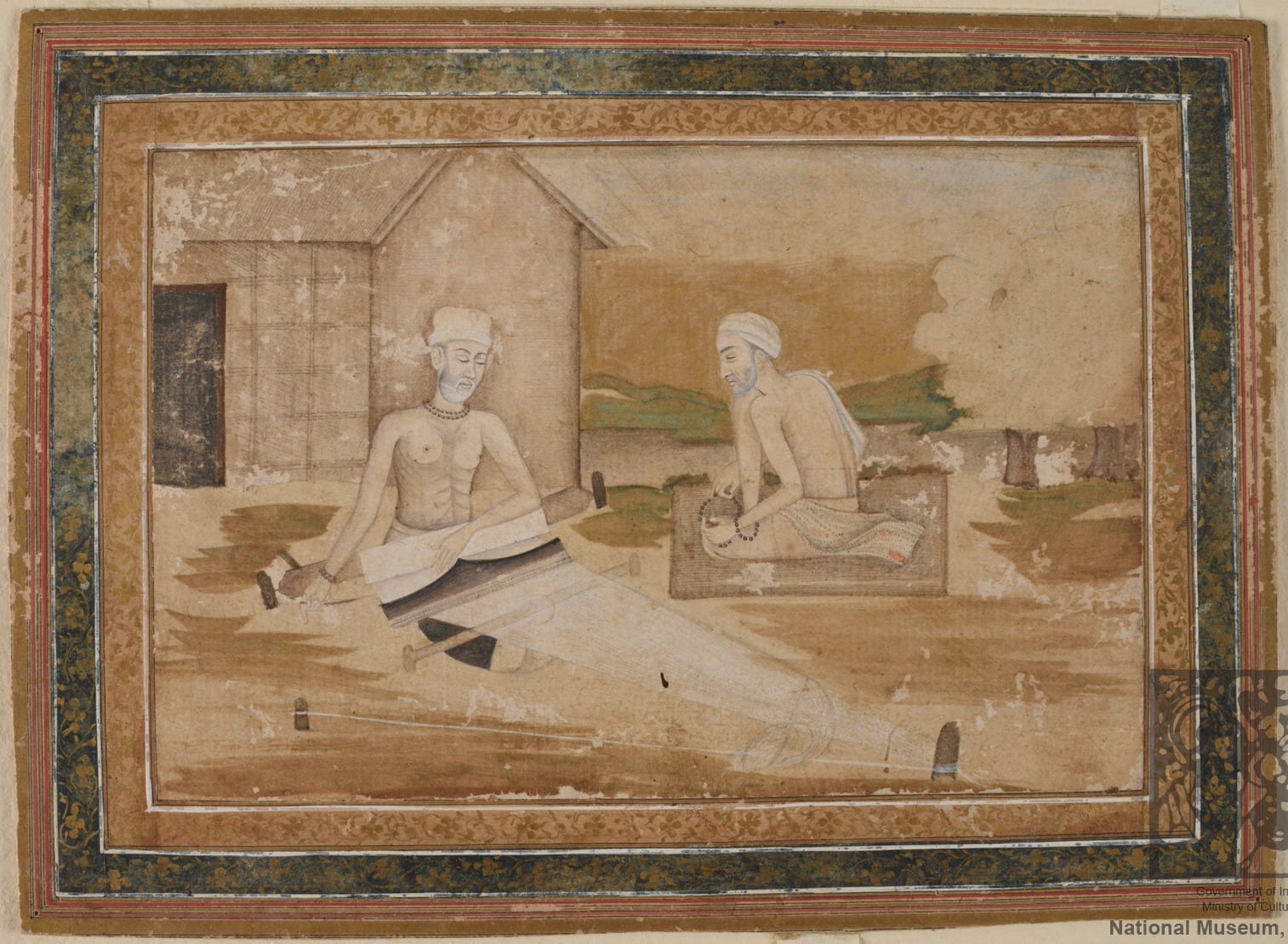
Kabir
Ils concordent sur: Pourquoi méditer ou prier ? · Qu'est-ce que l'Absolu ? Dieu existe-t-il ? · Qui suis-je ? Existe-t-il un vrai soi ?
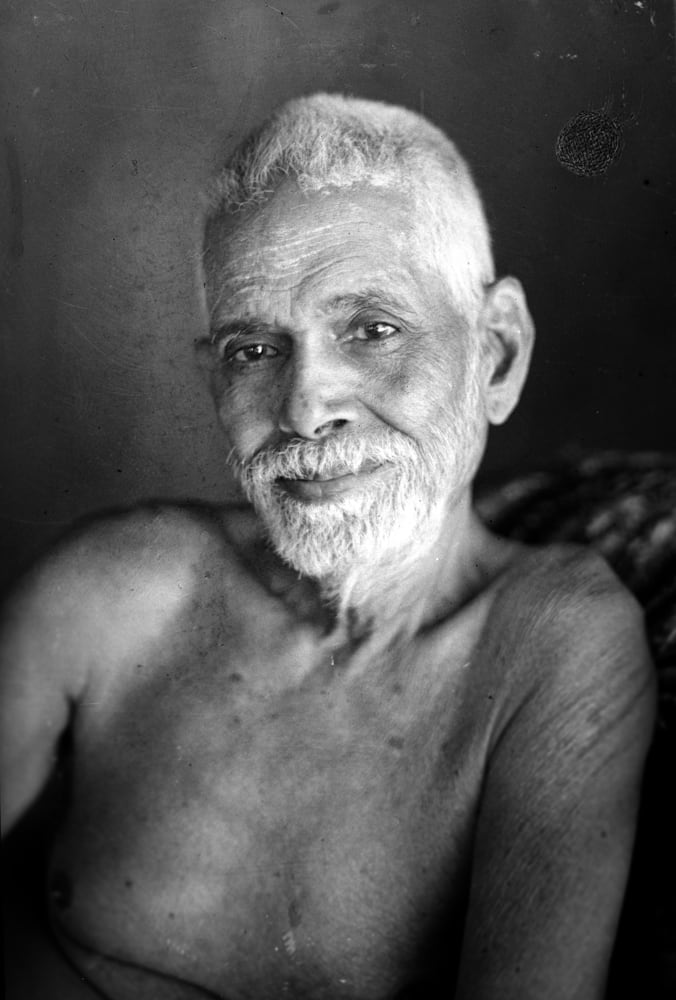
Ramana Maharshi
Ils concordent sur: Qui suis-je ? Existe-t-il un vrai soi ? · Que se passe-t-il après la mort ? · Comment atteint-on la libération ou le salut ?
Nisargadatta Maharaj
Ils concordent sur: Qu'est-ce que l'Absolu ? Dieu existe-t-il ? · Qui suis-je ? Existe-t-il un vrai soi ? · Que se passe-t-il après la mort ?
Huineng
Ils concordent sur: Qui suis-je ? Existe-t-il un vrai soi ? · Que se passe-t-il après la mort ? · Comment atteint-on la libération ou le salut ?
Pense autrement que




Anecdotes et récits
Anecdotes et récits
Témoignagec. 232
"This is the man I was looking for"
Origine du récit: Porphyry, Life of Plotinus 3, who says he heard it from Plotinus himself in conversation.
Témoignagec. 250–265
The image of the image
Origine du récit: Porphyry, Life of Plotinus 1. The heads from Ostia sometimes identified as Plotinus have no proven connection with this portrait.
Témoignagec. 260–268
Platonopolis
Origine du récit: Porphyry, Life of Plotinus 12. There is no other source; the ruined "city of philosophers" has not been identified.
Récit hagiographiquec. 255–268
The god in the Iseum
Origine du récit: Porphyry, Life of Plotinus 10, in the same section in which he tells how the spells of Olympius of Alexandria rebounded on their caster. It is a marvellous tale that Porphyry transmits as proof of his master's superiority.
Témoignagec. 268
The advice to Porphyry
Origine du récit: Porphyry, Life of Plotinus 11, in the first person.
Témoignage263–268
Union four times
Origine du récit: Porphyry, Life of Plotinus 22–23. It is the direct testimony of a pupil, but about an experience that by definition only Plotinus himself knew.
Enseignements
Enseignements
Les notions qui structurent sa pensée, expliquées dans leur contexte.
The One (the Good)el-uno
It unites the Good of the Republic, beyond essence, with the One of the first hypothesis of the Parmenides. It is the root of the negative theology of Pseudo-Dionysius and of medieval mysticism.
Source: Kalligas, Paul. «Plotinus». Stanford Encyclopedia of Philosophy, ed. Edward N. Zalta (2024).
The three hypostasestres-hipostasis
The term "hypostasis" for the three principles comes from the title Porphyry gave to V.1; the doctrine influenced Greek Trinitarian theology, though with essential differences (in Plotinus there is hierarchy).
Source: Kalligas, Paul. «Plotinus». Stanford Encyclopedia of Philosophy, ed. Edward N. Zalta (2024).
Procession and reversionprocesion-y-conversion
The scheme of remaining, procession and reversion was systematised by Proclus and transmitted to the Middle Ages by Pseudo-Dionysius and the Book of Causes.
Source: Kalligas, Paul. «Plotinus». Stanford Encyclopedia of Philosophy, ed. Edward N. Zalta (2024).
All things are contemplationcontemplacion
It opens the great treatise against the Gnostics (III.8, V.8, V.5, II.9): against the idea of an evil demiurge, Plotinus presents a cosmos produced by contemplation.
The undescended soulalma-no-descendida
It contrasts with the Phaedo and the Phaedrus, which speak of a fall, and reconciles those texts with the Timaeus; it is central in IV.8 and IV.3–4.
Source: Kalligas, Paul. «Plotinus». Stanford Encyclopedia of Philosophy, ed. Edward N. Zalta (2024).
Beautybelleza
It develops the ladder of Plato's Symposium; through Ficino, I.6 and V.8 decisively influenced Renaissance art theory.
Union with the Oneunion-mistica
Pierre Hadot considered it the centre of his thought; it shaped Christian (Pseudo-Dionysius, Eckhart) and Sufi mysticism, although in Plotinus no grace or revelation intervenes.
Source: Hadot, Pierre. Plotin ou la simplicité du regard. París: Plon, 1963. Trad. inglesa: Plotinus or the Simplicity of Vision, University of Chicago Press, 1993.
Vidéos
Vidéos
Enregistrements, entretiens et documentaires. Les vidéos sont lues depuis YouTube ; elles ne sont pas hébergées ici.
La filosofía helenística (IV): El neoplatonismo · La March
Conférence· ES· 2022· 59 min
Fundación Juan MarchChaîne officielle
9. Plotino y el Neoplatonismo
Conférence· ES· 2022· 203 min
Fundación Universitaria EspañolaChaîne officielle
John Cooper: Platonist Philosophy as a Way of Life: Plotinus
Conférence· EN· 2013· 61 min
McCoy Family Center for Ethics in SocietyChaîne officielle
Ep. 18 - Awakening from the Meaning Crisis - Plotinus and Neoplatonism
Conférence· EN· 2019· 54 min
John Vervaeke’s Lectern
What is Neoplatonism?
Analyse· EN· 2022· 56 min
Let's Talk Religion
Antonio Gargano - Plotino
Conférence· IT· 2020· 83 min
IISF • Istituto Italiano per gli Studi FilosoficiChaîne officielle
Giovanni Reale | Enneadi di Plotino | festivalfilosofia 2011
Conférence· IT· 2011· 50 min
FestivalfilosofiaChaîne officielle
Fuga dal mondo ed estasi nel pensiero di Plotino - Franco Ferrari
Conférence· IT· 2023· 58 min
Fondazione Collegio San CarloChaîne officielle
Relire Plotin avec Michel Cazenave, Luc Brisson et Jean-François Pradeau
Entretien· FR· 2013· 60 min
Résonance[s]
Plotin - Begründer des Neoplatinismus
Conférence· DE· 2023· 48 min
Akademisches Forum Albertus MagnusChaîne officielle
Fabian Völker - Einführung in den Neuplatonismus - Plotin - I/II
Conférence· DE· 2022· 90 min
Fabian Völker
Galerie
Galerie
Images dont la licence a été vérifiée. Chacune conserve son auteur et son attribution.
Manuscrits
Manuscrits
Témoins manuscrits et textes anciens, avec leur dépositaire et leurs conditions de consultation.
GRC · Minúscula griega · Tratados de 253–270; copia de c. 1460
Πλωτίνου Ἐννεάδες
- Témoin conservé
- Ejemplar de trabajo de Marsilio Ficino para su traducción latina, con sus anotaciones marginales
- Dépositaire
- Bibliothèque nationale de France · Grec 1816
LA · Humanística · Traducción terminada en 1486; copia de finales del s. XV
Plotini Enneades, interprete Marsilio Ficino
- Témoin conservé
- Manuscrito iluminado por Attavante degli Attavanti para Lorenzo de Médici
- Dépositaire
- Biblioteca Medicea Laurenziana, Florencia · Plut. 82.10
Relations
Relations
Influences, filiations et affinités. On distingue la relation documentée de la similitude identifiée par analyse.
A reçu l'influence de
He regarded himself as an interpreter of Plato, whom he calls "the divine Plato" (IV.8.1); nearly all his treatises start from a Platonic passage (Republic, Parmenides, Timaeus, Symposium, Phaedrus). He celebrated Plato's traditional birthday with a sacrifice (Life 2).
Relation documentée
A reçu l'influence de
Porphyry says Aristotle's Metaphysics is condensed in his writings and that the Peripatetic commentators were read in class (Life 14). Plotinus adopts the Aristotelian noetics of the intellect thinking itself and criticises his categories (VI.1–3).
Relation documentée
A reçu l'influence de
He celebrated Socrates' traditional birthday, like Plato's, with a sacrifice and a banquet (Life 2).
Relation documentée
A reçu l'influence de
In V.1.8 he presents Parmenides as a forerunner for identifying being and thinking, and reads the first hypothesis of Plato's Parmenides as a doctrine of the One.
Relation documentée
En désaccord avec
He criticises the theses of the school Zeno founded: the corporeal soul (IV.7), total blending (II.7) and the Stoic categories (VI.1). Porphyry notes, however, that his writings are full of latent Stoic doctrines (Life 14).
Relation documentée
En désaccord avec
He rejects atomism and the denial of providence: in II.9.15 he reproaches Epicurus for abolishing providence and the Gnostics for being even worse.
Relation documentée
A influencé
Augustine read in Milan "books of the Platonists" in Marius Victorinus' translation (Confessions VII.9; VIII.2) and expressly quotes Plotinus in The City of God (IX.17; X.14).
Relation documentée
Idées proches de
He does not mention him. Both conceive philosophy as an exercise of inner conversion: Marcus' "retire into yourself" and Plotinus' "withdraw into yourself and look" (I.6.9).
Similitude identifiée par analyse
Idées proches de
He does not mention him. They agree in locating freedom in what is up to us, a theme Plotinus carries up to the One in VI.8; Simplicius, a Neoplatonist, later commented on Epictetus' Handbook.
Similitude identifiée par analyse
Sources
Sources
Bibliographie et catalogues consultés pour cette fiche.
- Wikidata, entidad Q134189 «Plotinus» (103 enlaces entre wikis; P31=Q5). Registra nacimiento hacia el 205 (Licópolis o Asiut) y muerte en el 270 en Campania.
- Porfirio. Vida de Plotino y orden de sus libros (Περὶ τοῦ Πλωτίνου βίου καὶ τῆς τάξεως τῶν βιβλίων αὐτοῦ). Texto griego en la ed. de R. Volkmann (Teubner, 1883), en Wikisource en griego; trad. inglesa de Stephen MacKenna (1917), en Wikisource en inglés.
- Plotino. Enéadas. Texto griego en Wikisource en griego; trad. inglesa de Stephen MacKenna (vols. 1–4, 1917–1926) y de MacKenna y B. S. Page (vol. 5, 1930), en Wikisource en inglés.
- Kalligas, Paul. «Plotinus». Stanford Encyclopedia of Philosophy, ed. Edward N. Zalta (2024).
- Hadot, Pierre. Plotin ou la simplicité du regard. París: Plon, 1963. Trad. inglesa: Plotinus or the Simplicity of Vision, University of Chicago Press, 1993.
- Igal, Jesús. «Introducción general», en Porfirio, Vida de Plotino; Plotino, Enéadas I–II. Biblioteca Clásica Gredos, 57. Madrid: Gredos, 1982.
- Gerson, Lloyd P. (ed.). The Cambridge Companion to Plotinus. Cambridge: Cambridge University Press, 1996.
- Armstrong, A. H. (trad.). Plotinus, 7 vols. Loeb Classical Library 440–445 y 468. Cambridge (Mass.): Harvard University Press, 1966–1988.
- Eunapio. Vidas de los filósofos y sofistas, «Plotino». Trad. inglesa de W. C. Wright, Loeb Classical Library 134. Londres: Heinemann, 1921.
- «Plotinus» y «Enneads», Wikipedia en inglés; «Plotino», Wikipedia en español (consultadas para hechos verificables, la tabla cronológica y bibliografía; texto propio).
- Edwards, Mark (trad.). Neoplatonic Saints: The Lives of Plotinus and Proclus by their Students. Liverpool: Liverpool University Press, 2000.
- Agustín de Hipona. Confesiones, VII 9 y VIII 2; La ciudad de Dios, IX–X. Trad. inglesa de J. G. Pilkington y Marcus Dods, Nicene and Post-Nicene Fathers, serie I, vols. I–II, 1886–1887.
- Adamson, Peter. The Arabic Plotinus: A Philosophical Study of the «Theology of Aristotle». Londres: Duckworth, 2002.
- Ficino, Marsilio (trad.). Plotini Platonicorum facile coryphaei Opera. Florencia: Antonio Miscomini, 1492.
- Moore, Edward. «Plotinus (204/5–270 C.E.)». Internet Encyclopedia of Philosophy.
- Henry, Paul, y Hans-Rudolf Schwyzer (eds.). Plotini Opera, 3 vols. Oxford Classical Texts. Oxford: Clarendon Press, 1964–1982.
- Guthrie, Kenneth Sylvan (trad.). Plotinos: Complete Works, in Chronological Order, Grouped in Four Periods, 4 vols. Alpine (Nueva Jersey): Platonist Press, 1918 (texto en Project Gutenberg).
- Bibliothèque nationale de France, ms. Grec 1816 (Enéadas, copiado en Florencia hacia 1460 por Juan Escutariotes, con notas de Marsilio Ficino); reproducción en Wikimedia Commons.
- Biblioteca Medicea Laurenziana, Plut. 82.10 (traducción latina de Ficino, ejemplar de dedicatoria a Lorenzo de Médici, iluminado por Attavante); reproducción en Wikimedia Commons.
- Ayant droit
- Textos antiguos en dominio público; cada traducción y edición moderna pertenece a su traductor o editorial
En attente de confirmation
Ce que cette fiche n'a pas encore pu établir. Nous préférons le dire plutôt que de combler.
- MacKenna, vol. 5 (Enéada VI, 1930, con B. S. Page, m. 1993): dominio público solo en EE. UU.; para la UE se ofrece Guthrie (1918). Antes de publicar el texto de la Enéada VI en la sala de lectura, decidir según la jurisdicción de la plataforma.
- Títulos griegos de los tratados: se siguen las cabeceras de Wikisource (edición transcrita); los títulos varían entre la lista de Porfirio y los manuscritos. Cotejar con Henry–Schwyzer.
- Loeb vol. IV (ISBN 9780674994881): Open Library no indica el número de volumen; confirmar LCL 443. Años de primera edición de los vols. Loeb tomados de la bibliografía general.
- Losada, «Enéadas» (2006, ISBN 9789500393911): falta el nombre del traductor.
- Edwards, «Neoplatonic Saints» (2000) y Adamson, «The Arabic Plotinus» (2002): ISBN no verificados.
- Manuscritos: falta registrar los principales testimonios griegos (familias de los códices Laurentianus 87, 3, Parisinus gr. 1976, Marcianus gr. 209, etc.) y verificar las digitalizaciones de BnF Grec 1816 (Gallica) y Laurenziana Plut. 82.10.
- Ediciones en alemán (Harder, Meiner) e italiano (Faggin, Bompiani; Reale) con ISBN no registradas.
- Últimas palabras: confirmar en Henry–Schwyzer la lectura ἡμῖν/ὑμῖν de Vida 2, 26.
- Sin programa de afiliación verificado ni titular de derechos: autor antiguo; las editoriales citadas no se han comprobado como programas de afiliados.
Recherche effectuée le 2026-10-25