Bouddhisme · Mahāyāna · Bouddhisme tibétain
Pema Chödrön
པདྨ་ཆོས་སྒྲོན།
1936 –En viePersonne historiquement documentée
Moniale bouddhiste américaine de la tradition tibétaine (née en 1936), disciple de Chögyam Trungpa et première Américaine de la tradition vajrayana à recevoir l'ordination complète de bhikshuni (1981). Enseignante principale de Gampo Abbey, en Nouvelle-Écosse, pendant quatre décennies, et abbesse depuis 2025, elle est l'autrice de livres très lus comme Quand tout s'effondre, Commencer là où l'on est (Start Where You Are) et Les lieux qui nous effraient (The Places That Scare You).
- œuvres
- 40œuvres
- éditions
- 64éditions
- citations
- 7citations
- vidéos
- 13vidéos
- images
- 4images

Pema Chödrön en 2007 · CC BY-SA 2.0
Dans ses propres mots
«a big groundless moment»Entrevista con Bill Moyers (PBS), sobre el anuncio de su segundo marido; citada en Lion's Roar (2014)
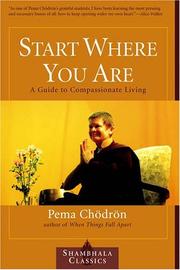
Pour commencer, une œuvre
Start Where You AreSon idée centrale
Insecurity and groundlessness are not a fault to be corrected but the real condition of life; learning to stay with them without running away is the heart of the spiritual path.
Le voir en contexte
Biographie
4 min de lecture
Traduction assistée à partir de l'original espagnol, en attente de relecture par un traducteur natif.
Une enfance catholique dans le New Jersey
Deirdre Blomfield-Brown naît le 14 juillet 1936 à New York, dans une famille catholique, et grandit dans une ferme du New Jersey avec un frère et une sœur aînés. Elle étudie au pensionnat de Miss Porter's, à Farmington (Connecticut), où, à l'en croire, s'éveille sa curiosité spirituelle. Diplômée en littérature anglaise du Sarah Lawrence College, titulaire d'une maîtrise en enseignement primaire de l'université de Californie à Berkeley, elle est pendant de longues années institutrice au Nouveau-Mexique et en Californie.
Un instant sans sol
Mariée à vingt et un ans, elle a deux enfants, Arlyn et Edward ; cette union prend fin alors qu'elle a environ vingt-cinq ans. Elle se remarie et, quelque huit ans plus tard, son second mari lui annonce qu'il a une liaison avec une autre femme et veut divorcer. Elle a décrit cet instant, dans un entretien avec Bill Moyers, comme un grand moment où le sol se dérobait sous ses pieds : le début d'une quête qui la mène à travers des thérapies et des traditions diverses sans lui apporter de soulagement, jusqu'à ce qu'elle lise un article de Chögyam Trungpa — sans savoir que son auteur était bouddhiste — qui proposait de travailler avec les émotions au lieu de chercher à s'en délivrer.
Maîtres et ordination
Peu après, elle rencontre le lama Chime Rinpoché, en qui elle éprouve une forte reconnaissance ; il accepte de l'enseigner à Londres et, pendant des années, elle partage son temps entre l'Angleterre et les États-Unis. Sur son conseil, elle se tourne vers Trungpa à San Francisco : elle le rencontre en 1972, et il demeure son maître racine jusqu'à sa mort, en 1987. En 1974, elle reçoit l'ordination de novice des mains du seizième Karmapa, Rangjung Rigpe Dorje, qui l'encourage en 1977 à rechercher l'ordination complète, jamais transmise aux femmes dans la lignée tibétaine. Cette quête la conduit à Hong Kong, où, en juillet 1981, au sein d'une lignée chinoise, elle devient la première Américaine de la tradition vajrayana ordonnée bhikshuni, moniale de plein droit. Son nom de religion, Pema Chödrön, signifie « lampe du Dharma du lotus ».
De Boulder au Cap-Breton
Au début des années 1980, Trungpa la nomme directrice de Karma Dzong, le centre de sa communauté à Boulder (Colorado). En 1984, elle s'installe sur l'île du Cap-Breton, en Nouvelle-Écosse, pour lancer Gampo Abbey, premier monastère bouddhiste tibétain d'Amérique du Nord destiné aux Occidentaux, hommes et femmes. Elle en est la directrice à partir de 1986 et, pendant quatre décennies, l'enseignante principale, sous l'autorité de l'abbé Khenchen Thrangu Rinpoché.
Les livres
Son premier livre, The Wisdom of No Escape (1991), réunit des causeries données lors d'une retraite à l'abbaye. Suivent Start Where You Are (1994), consacré à l'entraînement de l'esprit, ou lojong tibétain, et Quand tout s'effondre (When Things Fall Apart, 1997), qui fait d'elle l'une des enseignantes bouddhistes les plus lues du monde anglophone. En 1993, lorsque le fils de Trungpa, Sakyong Mipham Rinpoché, prend la direction de Shambhala, elle reçoit le titre d'acharya, enseignante principale. En 1994, on lui diagnostique un syndrome de fatigue chronique ; c'est à cette époque qu'elle rencontre Dzigar Kongtrul Rinpoché, qui devient son maître. Paraissent ensuite The Places That Scare You (2001), No Time to Lose (2005), commentaire du Bodhicaryāvatāra de Shāntideva, Practicing Peace in Times of War (2006), Living Beautifully with Uncertainty and Change (2012), Welcoming the Unwelcome (2019) et How We Live Is How We Die (2022), ainsi que des dizaines d'enregistrements.
Une voix pour l'incertitude
Son enseignement transpose dans une langue simple des pratiques du bouddhisme mahayana et vajrayana : le tonglen, méditation qui consiste à prendre la souffrance et à donner le soulagement ; les maximes du lojong ; la bodhicitta ; et la notion de shenpa, l'instant où l'on reste « accroché » à une réaction habituelle. À la quête de sécurité, elle oppose l'art de s'établir dans l'incertitude, de s'approcher de ce qui fait mal et de faire des difficultés le chemin lui-même. En 2006 est créée la Pema Chödrön Foundation, qui perçoit les droits de ses livres et enregistrements et soutient la vie contemplative ; en 2016, elle reçoit le Global Bhikkhuni Award, décerné par l'Association des bhikkhunis bouddhistes chinoises de Taïwan.
L'abbaye et l'héritage de Trungpa
À Gampo Abbey, elle dirige chaque hiver le yarne, la retraite monastique traditionnelle de la saison des pluies transposée à l'hiver canadien, et pendant des années elle enseigne chaque été à Berkeley La Marche vers l'Éveil de Shāntideva. En 2005, elle rejoint le Comité des bhikshunis occidentales, qui rassemble des moniales occidentales pleinement ordonnées. Sa fidélité à Trungpa, dont la conduite — la consommation d'alcool, les relations sexuelles avec des élèves, le style autoritaire de sa communauté — a été sévèrement critiquée, lui vaut de fréquentes questions, et elle s'est exprimée publiquement sur cet héritage controversé.
Retrait et retour à l'abbaye
En janvier 2020, elle renonce à son rôle d'acharya de Shambhala International, en partie en raison de la manière dont l'organisation a traité les accusations d'inconduite sexuelle visant son chef, Sakyong Mipham, et écrit qu'elle ne peut continuer à la représenter compte tenu de l'orientation peu sage qu'elle prend selon elle. Elle se retire alors de l'enseignement public régulier. Après la mort de Thrangu Rinpoché en 2023, elle accepte en mai 2025 de devenir abbesse de Gampo Abbey, et en 2026 paraît Another Kind of Freedom, son commentaire de deux œuvres de Trungpa. Elle a deux enfants et trois petits-enfants.
Sources: Boucher, Sandy. Turning the Wheel: American Women Creating the New Buddhism. Boston: Beacon Press, 1993, pp. 93–97. · Chödrön, Pema. When Things Fall Apart: Heart Advice for Difficult Times. Boston: Shambhala Publications, 1997. · Chödrön, Pema. Start Where You Are: A Guide to Compassionate Living. Boston: Shambhala Publications, 1994. · Chödrön, Pema. The Places That Scare You: A Guide to Fearlessness in Difficult Times. Boston: Shambhala Publications, 2001. · Coleman, James William. The New Buddhism: The Western Transformation of an Ancient Tradition. Nueva York: Oxford University Press, 2001, p. 150.
Chronologie
La vie, année après année
Chaque point est un événement documenté. Cliquez pour le lire, avec sa source et son degré de certitude.
14 juillet 19360 ansNueva York / New York City
Birth
Deirdre Blomfield-Brown is born on 14 July in New York City into a Catholic family.
DocumentéWikidata, «Pema Chödrön» (Q442384).
14 juillet 1936 · 0 ans
Birth
Deirdre Blomfield-Brown is born on 14 July in New York City into a Catholic family.
Documenté
1957 · 21 ans
First marriage
Marries at twenty-one; she will have two children, Arlyn and Edward.
Probable
1972 · 36 ans
Meets Chögyam Trungpa
Meets Chögyam Trungpa, who will be her root teacher until 1987.
Documenté
1974 · 38 ans
Novice ordination
Receives novice ordination from the Sixteenth Karmapa, Rangjung Rigpe Dorje.
Documenté
juillet 1981 · 45 ans
Full ordination in Hong Kong
In July she becomes the first American in the Vajrayana tradition to be ordained a bhikshuni.
Documenté
1984 · 48 ans
Move to Nova Scotia
Settles on Cape Breton to help establish Gampo Abbey.
Documenté
1986 · 50 ans
Director of Gampo Abbey
Becomes director of Gampo Abbey.
Documenté
1987 · 50 ans
Death of Trungpa
Chögyam Trungpa, her root teacher, dies.
Documenté
1991 · 55 ans
The Wisdom of No Escape
Publishes her first book.
Documenté
1993 · 57 ans
Shambhala acharya
Receives the title of acharya when Sakyong Mipham takes over the leadership of Shambhala.
Probable
1994 · 58 ans
Illness and a new teacher
She is diagnosed with chronic fatigue syndrome; meets Dzigar Kongtrul Rinpoche. Publishes Start Where You Are.
Documenté
1997 · 61 ans
When Things Fall Apart
Publishes When Things Fall Apart, her best-known book.
Documenté
2006 · 70 ans
Pema Chödrön Foundation
The foundation that receives the royalties from her books and recordings is created.
Documenté
2016 · 80 ans
Global Bhikkhuni Award
Receives the Global Bhikkhuni Award from the Chinese Buddhist Bhikkhuni Association of Taiwan.
Documenté
16 janvier 2020 · 83 ans
Resigns as acharya
In January she resigns her role in Shambhala International over the handling of allegations against its leader.
Documenté
mai 2025 · 88 ans
Abbess of Gampo Abbey
In May she agrees to become abbess of Gampo Abbey, following Thrangu Rinpoche's death (2023).
Documenté
Œuvres
Œuvres essentielles
Les œuvres sans lesquelles on ne comprend pas son héritage.
Œuvre écrite · 1994
Start Where You Are
Start Where You Are: A Guide to Compassionate Living
Commentary on the 59 slogans of lojong, the Tibetan Buddhist mind training attributed to Atisha and systematised by Chekawa Yeshe Dorje, and on the practice of tonglen. It shows how difficult situations in daily life can become occasions to awaken compassion, starting with oneself.
3 éditions

Œuvre écrite · 1997
When Things Fall Apart
When Things Fall Apart: Heart Advice for Difficult Times
Her most widely read book. Drawing on talks given at Gampo Abbey, it proposes moving towards pain, fear and loss instead of fleeing them, and presents groundlessness as the very condition of awakening. It explains the practices of tonglen and maitri, the eight worldly concerns and the bodhisattva path in accessible language, and has become a reference book for people in grief or crisis, translated into many languages.
11 éditions
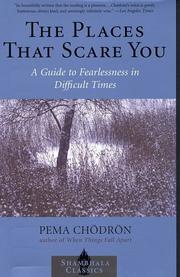
Œuvre écrite · 2001
The Places That Scare You
The Places That Scare You: A Guide to Fearlessness in Difficult Times
Guide to fear and courage grounded in bodhichitta, the awakened heart. It sets out the four limitless qualities — love, compassion, joy and equanimity — and the practices for cultivating them, and describes how the ego's protective habits distance us from others. With When Things Fall Apart, it is her most widely read work.
5 éditions
Toute son œuvre (40)

The Wisdom of No Escape
1991

Awakening Loving-Kindness
1996

Tonglen
2001

Comfortable with Uncertainty
2002

Hooked!
2005

No Time to Lose
2005

Practicing Peace in Times of War
2006

Always Maintain a Joyful Mind
2007

The Pocket Pema Chödrön
2008

Taking the Leap
2009

Living Beautifully with Uncertainty and Change
2012

Fail, Fail Again, Fail Better
2015

The Compassion Book
2017

Welcoming the Unwelcome
2019
Pema Chödrön
How We Live Is How We Die
The Conscious LibraryHow We Live Is How We Die
2022
Pema Chödrön
Another Kind of Freedom
The Conscious LibraryAnother Kind of Freedom
2026

How to Meditate
2007

Awakening Compassion
1995

Noble Heart
1998

Good Medicine
2001

From Fear to Fearlessness
2003

Pure Meditation
2004

Getting Unstuck
2004

In Conversation with Alice Walker
2005
Citations
Citations localisées dans une œuvre précise. Chacune porte sa provenance et son degré de fiabilité.
a big groundless momentVérifiéeEntrevista con Bill Moyers (PBS), sobre el anuncio de su segundo marido; citada en Lion's Roar (2014)
Idées essentielles (résumé éditorial)
Par respect du droit d'auteur, ces idées sont résumées avec nos propres mots et ne sont pas présentées comme des citations littérales.
- Insecurity and groundlessness are not a fault to be corrected but the real condition of life; learning to stay with them without running away is the heart of the spiritual path.
- Before reacting with anger or flight there is a moment of being 'hooked' that can be recognised; learning to see it and not bite the hook interrupts the cycle of habit.
- Compassion for others begins with unconditional friendship with oneself, which consists not in improving oneself but in knowing oneself with honesty and tenderness.
- Instead of rejecting pain, the practitioner can take it in with the breath and wish relief for all who suffer the same; one's own pain thus becomes a bridge to others.
- The difficult situations of daily life are the material of awakening: one starts where one is, not where one would like to be.
- World peace depends on each person learning not to feed their own aggression.
Interroger
Ce que répond son œuvre
Douze grandes questions de l'humanité et ce que ses textes permettent d'y répondre, références à l'appui. Nous ne lui prêtons jamais de paroles.
Qu'est-ce que l'Absolu ? Dieu existe-t-il ?
There is no one outside to save us: nontheism is relaxing into uncertainty
Pas de Dieu créateurIl le dit expressément
Pema Chödrön, a nun of the Tibetan tradition trained by Chögyam Trungpa, addresses the question explicitly in When Things Fall Apart. There she presents Buddhism as nontheistic, but not in the sense of a thesis about the existence of God: nontheism consists in no longer seeking an outside figure, belief or babysitter to protect us from the ambiguity of the present moment. What she calls theism is the hope that someone will resolve our groundlessness for us; growing up means ceasing to wait for that. Instead of an absolute to be addressed, her teaching points to the openness of mind and to bodhichitta, the awakened heart, which are not held as beliefs but discovered by staying with experience as it is.
Comparer cette question avec d'autres maîtresQui suis-je ? Existe-t-il un vrai soi ?
The self is an attempt at solid ground; egolessness is openness, not loss
Il n'y a pas de soi permanentCela se déduit de sa doctrine
Pema Chödrön sets out the Buddhist teaching of the absence of a permanent self through the teaching of her teacher Chögyam Trungpa, whose work on ego she comments on in Another Kind of Freedom. Ego appears in her work less as a substance than as a strategy: the continual effort to manufacture a solid identity and firm ground in the face of a life that has none. In her teachings on the three marks of existence she presents egolessness as one of them, alongside impermanence and suffering. But she insists that discovering it is no threat: it is the condition of openness and of tenderness towards others, and what is found on letting go of identity is not a bleak void but an open mind that had never gone away.
Comparer cette question avec d'autres maîtresPourquoi souffrons-nous ?
We suffer from seeking firm ground and biting the hook of reaction
Le désir et l'attachementIl le dit expressément
Pema Chödrön describes suffering as the result of fleeing groundlessness, which is the real condition of life. In When Things Fall Apart she holds that crisis is not a fault to be corrected but a kind of testing and also a kind of healing, and that nothing ever goes away until it has taught us what we need to know. Her best-known contribution is the Tibetan notion of shenpa, developed in Taking the Leap: the hook, the instant in which something catches us and drags us into the habitual reaction of anger, desire or flight. Pain is inevitable; what turns it into repeated suffering is biting the hook again and again. Recognising the hook and staying with the discomfort without acting it out interrupts the cycle.
Comparer cette question avec d'autres maîtresQue se passe-t-il après la mort ?
The bardos teach how to die and to live: every ending is a transition
Renaissance selon le karmaIl le dit expressément
Pema Chödrön devoted a whole book to the question, How We Live Is How We Die, based on the Tibetan teachings on the bardos, the intermediate states between death and rebirth. She sets out her tradition's view: after death consciousness passes through states in which its mental habits carry it away or in which it may recognise the open nature of mind, and rebirth depends on this. But she presents these teachings above all as a guide for living: every ending in daily life, every loss and every change is a bardo in miniature, and the way we meet them now is the way we will meet death. Already in When Things Fall Apart she linked death with giving up the hope of firm ground.
Comparer cette question avec d'autres maîtresComment atteint-on la libération ou le salut ?
Start where you are: meditation, tonglen and mind training
Par une pratique disciplinéeIl le dit expressément
Pema Chödrön proposes a path of gradual practice taken from Tibetan Buddhism. Its basis is sitting meditation, which she understands as unconditional friendship with oneself (maitri): seeing what arises with honesty and tenderness, without trying to improve oneself. On this are built lojong, the mind-training slogans she comments on in Start Where You Are, and tonglen, the practice of breathing in one's own and others' pain and breathing out relief. Her principle is that the difficult situations of daily life are the material of awakening: there is no need to wait for ideal conditions. The goal is to awaken bodhichitta, the open heart, and to live the three commitments she sets out in Living Beautifully.
Comparer cette question avec d'autres maîtresFaut-il un maître ?
She always sought a teacher, yet teaches a practice that starts where you are
Utile mais pas indispensableCela se déduit de sa doctrine
Pema Chödrön's path is bound up with her teachers. She trained for years with Chögyam Trungpa, whose teachings she still comments on, and after his death, as she has recounted, she felt a longing for someone to put her questions to, until she found Dzigar Kongtrul Rinpoche, on whose instruction she bases her commentary on Shantideva in No Time to Lose. In her tradition the teacher has a central role. But her books are addressed to any reader and offer practices that can be done alone, from one's own situation. Her relationship to the institution has not been uncritical: in 2020 she stepped down as senior teacher of Shambhala, in a public letter, because she disagreed with the direction the community was taking.
Comparer cette question avec d'autres maîtresLe monde est-il réel ?
Nothing is solid or permanent: embracing the world as it is
Un réseau de causes sans substanceCela se déduit de sa doctrine
Pema Chödrön is not concerned with the reality of the world as a metaphysical problem; what interests her is how to live in it. Her view is the Buddhist one: everything is impermanent, nothing has a solid core, and life lacks firm ground. In Living Beautifully with Uncertainty and Change she organises her teaching around three commitments, the last of which consists in embracing the world as it is, with its chaos and unpredictability, without withdrawing into a refuge of certainties. The world is not a deception to escape from, but the only place where compassion can awaken; its instability, which frightens, is also what makes it alive and open.
Comparer cette question avec d'autres maîtresQu'est-ce que l'amour ?
Compassion begins with unconditional friendship with oneself
Une compassion sans limitesIl le dit expressément
Compassion is the centre of Pema Chödrön's work. Her starting point is maitri, unconditional friendship with oneself, which consists not in improving oneself but in knowing oneself with honesty and tenderness; without it, she holds, compassion for others becomes idealistic or condescending. In The Places That Scare You she sets out her tradition's four limitless qualities, love, compassion, joy and equanimity, and warns against their near counterfeits. Tonglen turns one's own pain into a bridge to others: when suffering something, one thinks of all who suffer the same and wishes them relief. The goal is bodhichitta, a heart that does not close to anyone, not even to those who harm us.
Comparer cette question avec d'autres maîtresSommes-nous libres ou tout est-il déterminé ?
Karma is habit, and habit can be interrupted in this very moment
Le karma et le choixIl le dit expressément
Pema Chödrön presents karma less as destiny than as a pattern of habits. Each repeated reaction, anger, flight, attachment, strengthens the tendency to repeat it, and so the past conditions the present. But in that same mechanism lies freedom: in the instant when something hooks us, the shenpa she describes in Taking the Leap, there is a space in which one can recognise the impulse and not bite the hook. Each time the habit is interrupted the chain is weakened and another seed is sown. Her recorded teachings on karma develop this idea: we are not condemned to repeat ourselves, though change demands patience and the willingness to stay with discomfort.
Comparer cette question avec d'autres maîtresPourquoi méditer ou prier ?
Meditating is befriending oneself and seeing clearly what arises
Voir la réalité telle qu'elle estIl le dit expressément
Pema Chödrön teaches the shamatha-vipashyana meditation of Trungpa's tradition: one attends lightly to the out-breath, recognises thoughts, labelling them «thinking» if need be, and returns to the breath without self-judgement. In The Wisdom of No Escape she presents this practice as a form of unconditional friendship with oneself: one does not meditate to become someone else, but to know with precision and tenderness the person one already is. From this comes the capacity to see clearly what is happening, the impermanence of states and the hook of reactions, and to stay with discomfort without running away. Meditation is thus training of attention and of the heart at once.
Comparer cette question avec d'autres maîtresLa raison peut-elle connaître l'ultime ?
She leaves the question aside: drop the storyline and touch experience
Ne s'est pas prononcé
Pema Chödrön is not concerned with reason's capacity to know the ultimate; her work is practical, not epistemological. The closest thing is her advice, repeated in her books, to drop the storyline the mind tells itself, the story of why something offends or frightens us, and stay with the raw energy of experience without interpreting it. At the same time she values study: she has commented for years on Shantideva's Bodhicharyavatara and on the lojong slogans, and in Another Kind of Freedom she rereads Trungpa's work. The attitude she recommends is neither the sceptic's nor the believer's, but an open curiosity, interest in what is happening without needing to close the question.
Comparer cette question avec d'autres maîtresSe retirer du monde ou le transformer ?
Peace in the world begins with not feeding one's own aggression
La révolution est intérieureIl le dit expressément
Pema Chödrön, who lives as a nun at Gampo Abbey, preaches neither withdrawal nor activism, but a transformation that begins in each person. In Practicing Peace in Times of War she locates the origin of war in everyone's aggressive reactions: each time someone bites the hook of anger and clings to their position against another, they sow the same seed that on a large scale produces conflicts. Practising peace consists in recognising that impulse and not acting it out. In Welcoming the Unwelcome she applies this idea to contemporary polarisation, asking us to respond without closing down or attacking. She does not deny the value of action in the world, but holds that without that inner work the cycle repeats itself.
Comparer cette question avec d'autres maîtres
Affinités et tensions
Affinités et tensions
Calculées question par question à partir de ses positions. La raison de chaque accord ou de chaque désaccord s'affiche d'un clic.
Pense comme

Siddhartha Gautama, the Buddha
Ils concordent sur: Qu'est-ce que l'Absolu ? Dieu existe-t-il ? · Qui suis-je ? Existe-t-il un vrai soi ? · Pourquoi souffrons-nous ?
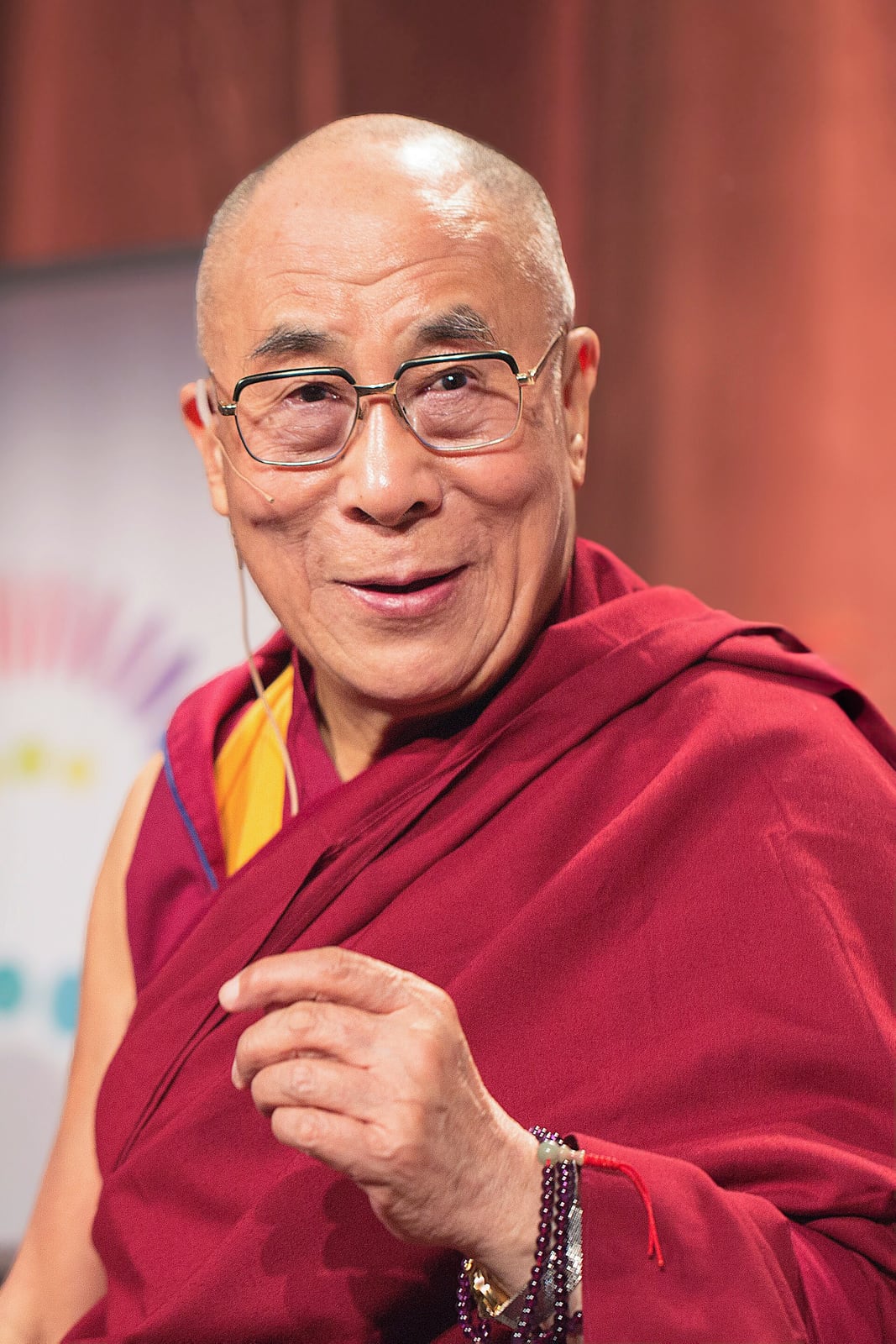
The 14th Dalai Lama (Tenzin Gyatso)
Ils concordent sur: Qu'est-ce que l'Absolu ? Dieu existe-t-il ? · Qui suis-je ? Existe-t-il un vrai soi ? · Pourquoi souffrons-nous ?
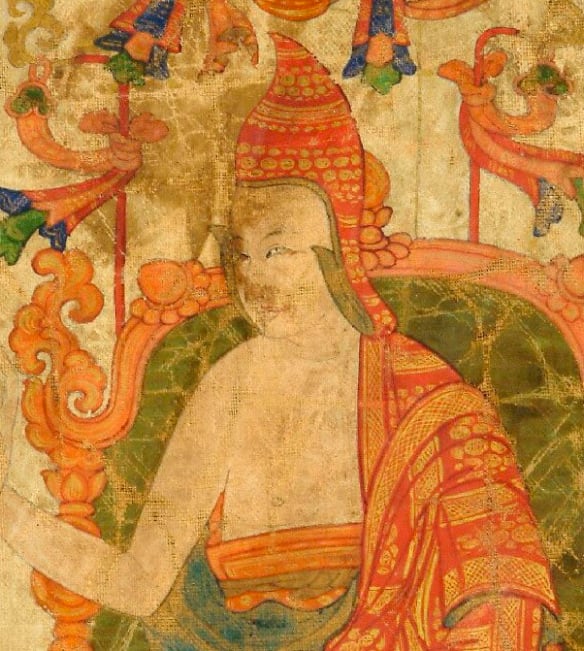
Śāntideva
Ils concordent sur: Qu'est-ce que l'Absolu ? Dieu existe-t-il ? · Qui suis-je ? Existe-t-il un vrai soi ? · Pourquoi souffrons-nous ?

Tsongkhapa
Ils concordent sur: Qu'est-ce que l'Absolu ? Dieu existe-t-il ? · Qui suis-je ? Existe-t-il un vrai soi ? · Pourquoi souffrons-nous ?
Pense autrement que

Al-Hallaj
Ils s'opposent sur: Qu'est-ce que l'Absolu ? Dieu existe-t-il ? · Qui suis-je ? Existe-t-il un vrai soi ? · Que se passe-t-il après la mort ?

Chaitanya Mahaprabhu
Ils s'opposent sur: Qu'est-ce que l'Absolu ? Dieu existe-t-il ? · Qui suis-je ? Existe-t-il un vrai soi ? · Que se passe-t-il après la mort ?

Emanuel Swedenborg
Ils s'opposent sur: Qu'est-ce que l'Absolu ? Dieu existe-t-il ? · Qui suis-je ? Existe-t-il un vrai soi ? · Que se passe-t-il après la mort ?
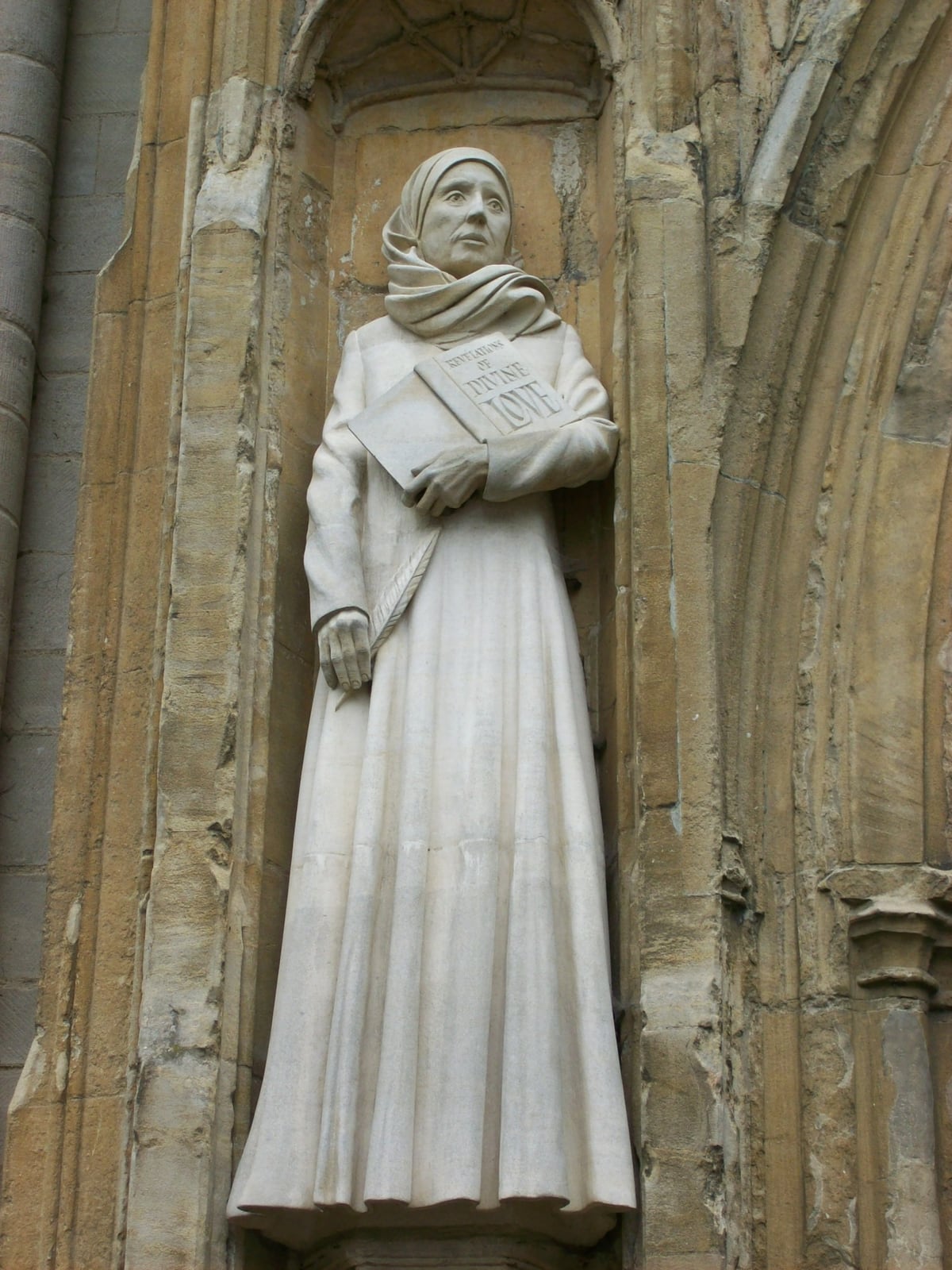
Julian of Norwich
Ils s'opposent sur: Qu'est-ce que l'Absolu ? Dieu existe-t-il ? · Qui suis-je ? Existe-t-il un vrai soi ? · Que se passe-t-il après la mort ?
Anecdotes et récits
Anecdotes et récits
Témoignageaños sesenta y setenta
A groundless moment
Origine du récit: Pema Chödrön's own account in the interview with Bill Moyers (PBS), recorded by Andrea Miller in 'Becoming Pema' (Lion's Roar, 2014).
Source: Miller, Andrea. «Becoming Pema». Lion's Roar, 20 de octubre de 2014.
Témoignagecomienzos de los años setenta
An article with no Buddhist label
Origine du récit: Lion's Roar, 'Becoming Pema' (2014); the date of the meeting with Trungpa comes from the Pema Chödrön Foundation biography.
Source: Miller, Andrea. «Becoming Pema». Lion's Roar, 20 de octubre de 2014.
Documenté1974–1981
The Hong Kong ordination
Origine du récit: Lion's Roar (2014), Pema Chödrön Foundation and Sandy Boucher, Turning the Wheel (1993), pp. 93–97.
Source: Miller, Andrea. «Becoming Pema». Lion's Roar, 20 de octubre de 2014.
Documenté1984–
A monastery facing the Atlantic
Origine du récit: Pema Chödrön Foundation, Lion's Roar (2014) and the Gampo Abbey website; the stupa and its relics, according to the description of the photographs on Wikimedia Commons.
Source: Pema Chödrön Foundation, «Pema Chödrön» (biografía oficial y fines de la fundación).
Témoignage1994–
Someone to ask
Origine du récit: Lion's Roar, 'Becoming Pema' (2014), with Pema Chödrön's own words.
Source: Miller, Andrea. «Becoming Pema». Lion's Roar, 20 de octubre de 2014.
Documenté2018–2025
The January 2020 letter
Origine du récit: Letter published in the Shambhala Times (16 January 2020) and The Washington Post report (17 January 2020); the appointment as abbess, in the Shambhala Times (13 May 2025).
Source: Chödrön, Pema. «Letter from Ani Pema Chödrön». Shambhala Times, 16 de enero de 2020.
Enseignements
Enseignements
Les notions qui structurent sa pensée, expliquées dans leur contexte.
Shenpa (getting hooked)shenpa
Taking the Leap (2009), Don't Bite the Hook (2007) and Practicing Peace in Times of War (2006).
Tonglen (taking and sending)tonglen
Start Where You Are (1994), When Things Fall Apart (1997) and Tonglen: The Path of Transformation (2001); it derives from Atisha's lojong.
Source: Chödrön, Pema. Start Where You Are: A Guide to Compassionate Living. Boston: Shambhala Publications, 1994.
Maitri (unconditional friendliness towards oneself)maitri
The Wisdom of No Escape (1991); Chögyam Trungpa's teaching.
Source: Open Library: obras y ediciones de Pema Chödrön (comprobación de ISBN por catálogo).
Bodhichitta (the awakened heart)bodhichitta
The Places That Scare You (2001) and No Time to Lose (2005); Shantideva's tradition.
Source: Chödrön, Pema. The Places That Scare You: A Guide to Fearlessness in Difficult Times. Boston: Shambhala Publications, 2001.
Groundlessnessfalta-de-suelo
When Things Fall Apart (1997); Comfortable with Uncertainty (2002); Living Beautifully with Uncertainty and Change (2012).
Source: Chödrön, Pema. When Things Fall Apart: Heart Advice for Difficult Times. Boston: Shambhala Publications, 1997.
Lojong (mind training)lojong
Start Where You Are (1994), Always Maintain a Joyful Mind (2007), The Compassion Book (2017).
Source: Chödrön, Pema. Start Where You Are: A Guide to Compassionate Living. Boston: Shambhala Publications, 1994.
Vidéos
Vidéos
Enregistrements, entretiens et documentaires. Les vidéos sont lues depuis YouTube ; elles ne sont pas hébergées ici.
New Abbess - Pema Chödrön
Enregistrement original· EN· 2025· 3 min
Gampo AbbeyChaîne officielle
Pema Chödrön reflections on Gampo Abbey
Enregistrement original· EN· 4 min
Gampo AbbeyChaîne officielle
Anam Thubten & Abbess Pema Chödrön in Conversation
Entretien· EN· 16 min
Gampo AbbeyChaîne officielle
Pema Chödrön – What Is Bodhicitta?
Enregistrement original· EN· 10 min
Pema Chödrön FoundationChaîne officielle
Pema Chödrön - Welcoming the Unwelcome | Super Soul Sunday S9E18 | Full Episode
Entretien· EN· 2019· 42 min
OWN
Breathing Space: Where Pema Chödrön Met Her True Self | SuperSoul Sunday
Entretien· EN· 2 min
OWN
Bill Moyers' interview of Pema Chödrön (PBS special)
Entretien· EN· 52 min
Palouse Mindfulness
Pema Chödrön on Chögyam Trungpa's controversial legacy
Entretien· EN· 2026· 8 min
Shambhala PublicationsChaîne officielle
Another Kind of Freedom with Pema Chödrön: This Very Moment Episode 10
Entretien· EN· 2026· 37 min
Shambhala PublicationsChaîne officielle
Smile at Fear with Pema Chödrön
Conférence· EN· 2011· 5 min
Shambhala PublicationsChaîne officielle
What If Uncertainty Is the Practice: Pema Chödrön on Groundlessness
Conférence· EN· 9 min
Sounds TrueChaîne officielle
Relajarse con la impermanencia y la muerte - Pema Chödrön (con subtítulos en español)
Conférence· ES· 8 min
Sakyadhita Spain
Pema Chödrön - Cambiar tu corazón ante el dolor
Conférence· ES· 19 min
Sakyadhita Spain
Galerie
Galerie
Images dont la licence a été vérifiée. Chacune conserve son auteur et son attribution.
Relations
Relations
Influences, filiations et affinités. On distingue la relation documentée de la similitude identifiée par analyse.
Disciple de
Chögyam Trungpa
Her root teacher from 1972 until his death in 1987; he appointed her director in Boulder and entrusted Gampo Abbey to her.
Relation documentée
Disciple de
Chime Rinpoche
Her first teacher, with whom she studied in London in the early 1970s.
Relation documentée
Disciple de
Rangjung Rigpe Dorje, XVI Karmapa
Conferred novice ordination on her in 1974 and encouraged her to seek full ordination.
Relation documentée
Disciple de
Dzigar Kongtrul Rinpoche
Her teacher since the mid-1990s.
Relation documentée
A rencontré
Khenchen Thrangu Rinpoche
Abbot of Gampo Abbey during the years she was principal teacher; he died in 2023.
Relation documentée
En désaccord avec
Sakyong Mipham Rinpoche
He gave her the title of acharya in 1993; she resigned in 2020 over the handling of the allegations against him.
Relation documentée
A reçu l'influence de
She commented on his Bodhicharyavatara in No Time to Lose and has taught it for decades.
Relation documentée
A rencontré
Alice Walker
Recorded dialogue published by Sounds True in 2005.
Relation documentée
Idées proches de
Both rendered Buddhist practice in an everyday, compassion-centred language for Western readers.
Similitude identifiée par analyse
Contemporain de
Contemporary teachers with large English-speaking audiences who propose meeting distress rather than fleeing it, from different frameworks.
Similitude identifiée par analyse
Idées proches de
The 14th Dalai Lama (Tenzin Gyatso)
They share the tradition of Tibetan mind training and the teaching of bodhichitta to Western audiences.
Similitude identifiée par analyse
Sources
Sources
Bibliographie et catalogues consultés pour cette fiche.
- Wikidata, «Pema Chödrön» (Q442384).
- «Pema Chödrön» y «Pema Chödrön bibliography», Wikipedia en inglés (consultadas para cotejar hechos y bibliografía; texto propio).
- Miller, Andrea. «Becoming Pema». Lion's Roar, 20 de octubre de 2014.
- Pema Chödrön Foundation, «Pema Chödrön» (biografía oficial y fines de la fundación).
- Boucher, Sandy. Turning the Wheel: American Women Creating the New Buddhism. Boston: Beacon Press, 1993, pp. 93–97.
- Gampo Abbey, web oficial (historia del monasterio y de sus maestros).
- Open Library: obras y ediciones de Pema Chödrön (comprobación de ISBN por catálogo).
- Chödrön, Pema. When Things Fall Apart: Heart Advice for Difficult Times. Boston: Shambhala Publications, 1997.
- «Famed Buddhist nun Pema Chödrön retires, cites handling of sexual misconduct allegations against her group's leader». The Washington Post, 17 de enero de 2020.
- Chödrön, Pema. «Letter from Ani Pema Chödrön». Shambhala Times, 16 de enero de 2020.
- «Bhikshuni Pema Chödrön appointed Abbess of Gampo Abbey». Shambhala Times, 13 de mayo de 2025 (reproduce el boletín de Gampo Abbey).
- Chödrön, Pema. Start Where You Are: A Guide to Compassionate Living. Boston: Shambhala Publications, 1994.
- Chödrön, Pema. The Places That Scare You: A Guide to Fearlessness in Difficult Times. Boston: Shambhala Publications, 2001.
- «8 North American Buddhist nuns, including Pema Chödrön and Thubten Chodron, receive “Global Bhikkhuni Award”». Lion's Roar, 2016.
- Coleman, James William. The New Buddhism: The Western Transformation of an Ancient Tradition. Nueva York: Oxford University Press, 2001, p. 150.
- Bill Moyers, entrevista con Pema Chödrön (PBS); recogida en Lion's Roar (2014).
- Shambhala Publications, «Pema Chödrön on Chögyam Trungpa's controversial legacy» (vídeo, 2026).
- The Committee of Western Bhikshunis, «Ven. Bhiksuni Pema Chödrön» (2006).
- Chödrön, Pema. No Time to Lose: A Timely Guide to the Way of the Bodhisattva. Boston: Shambhala Publications, 2005.
- Ayant droit
- Pema Chödrön Foundation (recibe los derechos de todos sus libros y grabaciones); edición a cargo de Shambhala Publications y Sounds True
- Site officiel
- pemachodronfoundation.org
En attente de confirmation
Ce que cette fiche n'a pas encore pu établir. Nous préférons le dire plutôt que de combler.
- Comprobar la página exacta de las dos citas marcadas como «probable» de When Things Fall Apart en la edición impresa.
- ISBN sin verificar en catálogo: Tonglen: The Path of Transformation (edición inglesa), The Three Commitments, Natural Awareness, When Pain Is the Doorway, Walking the Walk y Giving Our Best (agrupados como «otros retiros grabados»); Becoming Bodhisattvas (2018, reedición de No Time to Lose).
- Traducciones españolas de Comienza donde estás, Vivir bellamente (Gaia/Oniro), Cómoda con la incertidumbre y otras: localizar ISBN en catálogo.
- Año exacto del primer matrimonio (deducido de «a los veintiún años»: hacia 1957) y nombres de sus maridos.
- Confirmar en la web de Gampo Abbey el alcance de su papel de abadesa (2025) y su actividad docente actual.
- Persona viva: revisar periódicamente su actividad y nuevas publicaciones.
Recherche effectuée le 2026-10-25