Non-dualité contemporaine · Contemplation séculière
Byron Katie
1942 –En viePersonne historiquement documentée
Autrice et conférencière américaine (née en 1942), créatrice de « The Work », méthode d'auto-investigation fondée sur quatre questions et sur le retournement des pensées qui engendrent la souffrance. Après une décennie de dépression, elle vit en 1986 une transformation qu'elle situe un matin, dans un centre de soins de Los Angeles. Elle a écrit avec Stephen Mitchell Aimer ce qui est et A Mind at Home with Itself (« Un esprit en paix avec lui-même »).
- œuvres
- 12œuvres
- éditions
- 27éditions
- citations
- 7citations
- vidéos
- 11vidéos
- images
- 0images
Dans ses propres mots
«I discovered that when I believed my thoughts, I suffered, but that when I didn't believe them, I didn't suffer»Relato de su experiencia de 1986 en la web oficial y en Loving What Is (2002)

Pour commencer, une œuvre
Loving What IsSon idée centrale
Suffering does not come from events but from believing the thoughts we have about them; when a stressful thought is examined and no longer believed, the distress it produced fades.
Le voir en contexte
Biographie
5 min de lecture
Traduction assistée à partir de l'original espagnol, en attente de relecture par un traducteur natif.
Une enfance dans le désert des Mojaves
Byron Kathleen Reid naît le 6 décembre 1942 à Breckenridge, au Texas, et grandit à Barstow, petite ville du désert des Mojaves, en Californie. Son père, Rodney Reid, est conducteur de locomotive, et sa mère, Marion Campbell, femme au foyer. En 1963, à dix-neuf ans, elle épouse Robert Robinson à San Bernardino ; elle a trois enfants — Bob, Ross et Roxann — et gagne sa vie dans l'immobilier, en louant des logements. Sa fille décrira plus tard ce milieu comme entièrement étranger à la thérapie comme à la spiritualité.
Dix années d'obscurité
Au milieu des années 1980, remariée, Katie s'enfonce depuis une décennie dans la dépression, l'agoraphobie, l'hyperphagie compulsive et la dépendance à la codéine et à l'alcool. Ses enfants gardent d'elle, à cette époque, le souvenir d'une femme colérique, imprévisible et presque toujours alitée. En février 1986, à quarante-trois ans, son assurance maladie l'oriente vers Hope House, un centre résidentiel de Los Angeles, aujourd'hui disparu, qui accueillait des femmes souffrant de troubles du comportement alimentaire.
Le matin du cafard
Selon son récit, moins de deux semaines après son admission, elle s'éveille un matin en sentant un cafard lui courir sur le pied. Lorsqu'elle ouvre les yeux, raconte-t-elle dans Aimer ce qui est, c'est comme si quelque chose d'autre s'était éveillé et regardait par ses yeux, ivre de joie ; la colère et la peur ont disparu. Elle découvre, dit-elle, que lorsqu'elle croyait ses pensées elle souffrait, et que lorsqu'elle ne les croyait pas elle ne souffrait pas. C'est à cet instant qu'elle fait remonter les questions qu'elle formulera ensuite sous le nom de « The Work ». Ses enfants et l'une des thérapeutes du centre ont confirmé au Los Angeles Times un changement radical de personnalité ; d'autres détails de l'épisode ne sont connus que par son propre témoignage.
De Barstow au monde
De retour à Barstow, elle perd du poids, renonce à l'alcool et reste des heures immobile, dans un silence qui déconcerte sa famille. Des inconnus qu'elle croise se mettent à lui rendre visite pour voir comment elle vit ; elle leur apprend à mettre par écrit ce qui les angoisse et à le soumettre à l'examen. Son second mariage prend fin. L'invitation d'un groupe de psychologues et de thérapeutes de la région de Berkeley donne forme à ses premiers ateliers et, à partir de 1992, elle parcourt les États-Unis et l'Europe pour des rencontres publiques au cours desquelles elle travaille sur scène avec des volontaires. Naissent alors la Work Foundation, association à but non lucratif, et la société Byron Katie International. En 1999, le Conseil de psychologie de Californie examine si son activité relève de la psychothérapie et classe l'enquête sans rien retenir contre elle.
La méthode
The Work consiste à noter les pensées qui causent un malaise — « mon mari devrait m'écouter » — et à soumettre chacune à quatre questions : est-ce vrai ? pouvez-vous absolument savoir que c'est vrai ? comment réagissez-vous, que se passe-t-il, quand vous croyez cette pensée ? qui seriez-vous sans elle ? Vient ensuite le « retournement » : on inverse la phrase — « je devrais m'écouter », « je devrais écouter mon mari » — et l'on cherche des exemples concrets montrant en quoi elle pourrait être aussi vraie que l'originale. Katie soutient qu'elle n'enseigne pas une doctrine, mais une démarche que chacun peut pratiquer seul, et refuse de se présenter en maître éveillé. Certains psychologues ont souligné la parenté de la méthode avec la thérapie cognitive.
Entre spiritualité et développement personnel
Le reportage qu'Allison Adato publie dans le Los Angeles Times en 2002 brosse un portrait nuancé du phénomène. La méthode est déjà agréée au titre de la formation continue des travailleurs sociaux, des infirmières et des conseillers conjugaux ; les rencontres publiques sont gratuites, mais la School for The Work, stage intensif d'un peu plus d'une semaine, coûte entre 1 800 et 3 000 dollars, et l'entreprise vend des enregistrements et des objets frappés de son emblème. Une psychologue interrogée relève que les deux premières questions sont celles de la thérapie cognitivo-comportementale et que travailler avec des personnes bien réelles devant un public place la démarche à une frontière floue avec la psychothérapie ; certains participants reprochent à la méthode une forme de passivité devant ce qui arrive. Katie, pour sa part, affirme n'aller que là où on l'appelle — une prison du Texas en 1996, des groupes en Allemagne — et n'avoir aucune ambition : « Je suis une femme sans avenir », confie-t-elle à la journaliste.
Livres et rayonnement
En 2000, le magazine Time lui consacre un article. En 2002, elle publie avec son mari, le traducteur et écrivain Stephen Mitchell, qu'elle a épousé peu auparavant, Aimer ce qui est (Loving What Is), exposé systématique de la méthode traduit dans de nombreuses langues. Suivent I Need Your Love—Is That True? (2005, avec Michael Katz), A Thousand Names for Joy (2007), qui commente des passages du Tao Te King dans la version de Mitchell, Who Would You Be Without Your Story? (2008), deux contes pour enfants illustrés par Hans Wilhelm et A Mind at Home with Itself (2017), construit autour du Sûtra du Diamant. Son fils Ross Robinson est un producteur de musique réputé.
Une pratique à l'étude
Depuis les années 2010, la méthode fait l'objet de recherches universitaires sous le nom d'inquiry-based stress reduction (IBSR), menées surtout par des équipes israéliennes. Une revue systématique publiée en 2021 a réuni dix-sept études — plusieurs faisant état d'une baisse du stress et de l'anxiété et d'un mieux-être —, mais seulement trois essais randomisés, et a conclu à la nécessité de travaux de meilleure qualité ; la même année, un essai clinique mené auprès de femmes porteuses de variants BRCA a publié des résultats favorables. Byron Katie International, dont le siège est à Ojai (Californie), fait vivre la School for The Work et un réseau international de facilitateurs certifiés, et sa fondatrice continue d'enseigner lors de rencontres en présentiel et en ligne.
Sources: Katie, Byron y Mitchell, Stephen. Loving What Is: Four Questions That Can Change Your Life. Nueva York: Harmony Books, 2002 (prólogo de Stephen Mitchell). · Katie, Byron y Mitchell, Stephen. A Thousand Names for Joy: Living in Harmony with the Way Things Are. Nueva York: Harmony Books, 2007. · Katie, Byron y Mitchell, Stephen. A Mind at Home with Itself: How Asking Four Questions Can Free Your Mind, Open Your Heart, and Turn Your World Around. Nueva York: HarperOne, 2017. · Mitchell, Stephen (ed.). Question Your Thinking, Change the World: Quotations from Byron Katie. Carlsbad: Hay House, 2007.
Chronologie
La vie, année après année
Chaque point est un événement documenté. Cliquez pour le lire, avec sa source et son degré de certitude.
6 décembre 19420 ansBreckenridge, Texas
Birth
Byron Kathleen Reid is born on 6 December in Breckenridge, Texas; she will grow up in Barstow, California.
DocumentéWikidata, «Byron Katie» (Q437339).
6 décembre 1942 · 0 ans
Birth
Byron Kathleen Reid is born on 6 December in Breckenridge, Texas; she will grow up in Barstow, California.
Documenté
1963
First marriage
Marries Robert Robinson in San Bernardino; they will have three children.
Documenté
février 1986 · 43 ans
The Hope House transformation
In February, while staying at Hope House (Los Angeles), she undergoes by her account the awakening from which The Work arises.
Documenté
1992 · 49 ans
First travelling workshops
Begins travelling across the United States and Europe with public events on The Work.
Documenté
1996 · 53 ans
The Work in a Texas prison
Takes her method to a Texas prison at the institution's request.
Documenté
1998 · 55 ans
Losing the Moon
The Work Foundation publishes Losing the Moon, the first collection of her dialogues.
Documenté
1999 · 56 ans
Board of Psychology inquiry
The California Board of Psychology examines her activity and closes the inquiry.
Documenté
2001 · 58 ans
Marriage to Stephen Mitchell
Marries the translator and writer Stephen Mitchell (date inferred from 2002 press coverage).
Probable
2002 · 59 ans
Loving What Is
Publishes Loving What Is with Stephen Mitchell (Harmony Books).
Documenté
2007 · 64 ans
A Thousand Names for Joy
Publishes A Thousand Names for Joy, based on the Tao Te Ching.
Documenté
2010 · 67 ans
Peace in the Present Moment
Peace in the Present Moment, a book shared with Eckhart Tolle, appears.
Documenté
2017 · 74 ans
A Mind at Home with Itself
Publishes A Mind at Home with Itself with Stephen Mitchell (HarperOne).
Documenté
2021 · 78 ans
Scientific review of the method
A systematic review in the Journal of Clinical Psychology assesses seventeen studies on IBSR; the revised edition of Loving What Is is also published.
Documenté
Œuvres
Œuvres essentielles
Les œuvres sans lesquelles on ne comprend pas son héritage.
Œuvre écrite · 2002
Loving What Is
Loving What Is: Four Questions That Can Change Your Life
Systematic account of The Work, written with Stephen Mitchell, who signs the foreword and narrates the 1986 awakening. It explains the Judge-Your-Neighbor Worksheet, the four questions and the turnaround, illustrating them with many transcripts of real dialogues about couples, family, work, money, illness or fear of death. It is the method's reference book, translated into many languages; a revised edition appeared in 2021.
6 éditions

Œuvre écrite · 2007
A Thousand Names for Joy
A Thousand Names for Joy: Living in Harmony with the Way Things Are
Book structured on the 81 chapters of the Tao Te Ching: Stephen Mitchell selected passages from his version of the Taoist classic and Katie responds to each by describing her experience of living in harmony with what is, with no mind opposing reality. It is her most personal work and the closest to contemplative literature.
4 éditions

Œuvre écrite · 2017
A Mind at Home with Itself
A Mind at Home with Itself: How Asking Four Questions Can Free Your Mind, Open Your Heart, and Turn Your World Around
Written with Stephen Mitchell on his version of the Diamond Sutra: Katie comments on passages of the Buddhist text from her own experience, alternating them with dialogues of The Work and autobiographical episodes. It is her most extensive book on the nature of mind and self.
4 éditions
Toute son œuvre (12)
Byron Katie
Losing the Moon
The Conscious LibraryLosing the Moon
1998

The Work of Byron Katie: An Introduction
2002

I Need Your Love—Is That True?
2005

Your Inner Awakening
2005

Question Your Thinking, Change the World
2007

Who Would You Be Without Your Story?
2008

Tiger-Tiger, Is It True?
2009
Byron Katie
Peace in the Present Moment
The Conscious LibraryPeace in the Present Moment
2010

The Four Questions
2016
Citations
Citations localisées dans une œuvre précise. Chacune porte sa provenance et son degré de fiabilité.
I discovered that when I believed my thoughts, I suffered, but that when I didn't believe them, I didn't sufferVérifiéeRelato de su experiencia de 1986 en la web oficial y en Loving What Is (2002)
Idées essentielles (résumé éditorial)
Par respect du droit d'auteur, ces idées sont résumées avec nos propres mots et ne sont pas présentées comme des citations littérales.
- Suffering does not come from events but from believing the thoughts we have about them; when a stressful thought is examined and no longer believed, the distress it produced fades.
- Arguing with reality — thinking that what happens should not happen — is a battle lost in advance; accepting what is does not mean resignation but seeing clearly before acting.
- Much anguish comes from mentally minding other people's business, or reality's, instead of one's own.
- The judgements we make about others usually describe ourselves; turning them around reveals what truth they hold about the person making them.
- Inquiry does not seek positive thoughts to replace negative ones, but to understand the thought until it loses its power.
- Anyone can practise the method alone, with pen and paper, without believing in anything or depending on a teacher.
Interroger
Ce que répond son œuvre
Douze grandes questions de l'humanité et ce que ses textes permettent d'y répondre, références à l'appui. Nous ne lui prêtons jamais de paroles.
Qu'est-ce que l'Absolu ? Dieu existe-t-il ?
She calls reality as it is God, because it is reality that rules
Un Absolu impersonnelCela se déduit de sa doctrine
Byron Katie does not develop a theology. In Loving What Is she uses the word God in a deliberately bare way: she calls reality, what is, God, for the simple reason that it always prevails. Hence her maxim that arguing with reality is a battle lost one hundred per cent of the time. Her work contains no God who listens or intervenes, nor any doctrine of a hidden principle: the ultimate is the present fact, and what separates us from it are the thoughts we believe about it. In A Thousand Names for Joy, built on the Tao Te Ching, she describes that living in accord with what is as her experience, not as a thesis.
Comparer cette question avec d'autres maîtresQui suis-je ? Existe-t-il un vrai soi ?
The self is a story believed; without it, someone remains who cannot be described
L'ego est une construction de la penséeIl le dit expressément
Byron Katie's question is the fourth in her method: who would you be without that thought. Her whole work applies it to identity. What we call self, in her account, is made of stories we believe about ourselves and about others: I am someone who was abandoned, someone who needs approval, someone who ought to be different. Who Would You Be Without Your Story?, a collection of dialogues with participants, shows how those identities loosen when examined. Katie proposes no alternative true self and no doctrine about one; she describes what remains when thought is no longer believed as something free, open and hard to name. In the account of her 1986 experience she puts it this way: it was as if something else had woken up.
Comparer cette question avec d'autres maîtresPourquoi souffrons-nous ?
We suffer not from what happens but from believing what we think about it
La pensée et le temps psychologiqueIl le dit expressément
Byron Katie's diagnosis comes from her 1986 experience, which she sums up as follows: she discovered that when she believed her thoughts she suffered, and that when she did not believe them she did not suffer. Suffering is caused not by events but by the stressful thoughts we believe about them, especially those that argue with reality: he should not have left, I should be different. Since what has already happened cannot not have happened, that argument is always lost. In Loving What Is she adds that much anguish comes from mentally minding other people's business, or reality's, instead of one's own. The remedy is not positive thinking but examining each thought with the four questions until it loses its power.
Comparer cette question avec d'autres maîtresQue se passe-t-il après la mort ?
No speculation about the hereafter: she examines the thoughts that make death fearsome
Silence ou réserveCela se déduit de sa doctrine
Byron Katie offers no doctrine about what happens after death. What she does is apply her method to death as to any other stressful situation: fear, in her account, comes not from death, which no one has experienced, but from the thoughts one has about it. In Who Would You Be Without Your Story? she collects dialogues with people facing the death of a child or a serious illness, and shows how beliefs such as «he shouldn't have died» or «I won't be able to bear it» produce the suffering attributed to the event. In A Thousand Names for Joy she describes her own serenity before death as the result of not arguing with what is. What matters is how one looks at what is happening now.
Comparer cette question avec d'autres maîtresComment atteint-on la libération ou le salut ?
Four questions and a turnaround: inquiry undoes what was believed
Par la connaissance directeIl le dit expressément
What Byron Katie offers is neither years of practice nor a grace, but a method of inquiry anyone can apply with pen and paper. One writes down the stressful thought and asks it four questions: is it true?, can you absolutely know that it's true?, how do you react when you believe that thought?, who would you be without that thought? Then the statement is turned around, to oneself, to the other or to its opposite, and one looks for examples of how the turnaround is as true or truer. The aim is not to replace negative thoughts with positive ones but to understand them until they lose their power. Freedom, in Loving What Is, is that clarity: seeing what is without the story that covered it.
Comparer cette question avec d'autres maîtresFaut-il un maître ?
The answers lie with the one asking; the method needs no teacher
Le maître est à l'intérieurCela se déduit de sa doctrine
Byron Katie does not present herself as a guru or ask for adherence. Her method was designed so that anyone could practise it alone, with pen and paper, without believing anything or depending on anyone: one asks the questions oneself, and the answers can come only from the one who answers them. In her public sessions, collected in Loving What Is and in Who Would You Be Without Your Story?, she simply asks the questions and waits; she describes her role in a terse sentence: she clears people's minds. At the same time she suggests that those who irritate us can act as teachers, because they show the judgements we still believe. Authority lies in one's own inquiry, not in her.
Comparer cette question avec d'autres maîtresLe monde est-il réel ?
The world we suffer is the story we tell; what is, is kind
Apparence sur l'unique réalitéCela se déduit de sa doctrine
Byron Katie distinguishes two things we usually confuse: what is and the story we tell about it. The first is not to be argued with; the second is projection. Much of what we call the world, the hostility of others, the injustice of what happens to us, is for her the image of our own thoughts projected outwards, which is why turning judgements around returns to the one judging what was attributed to the world. In A Mind at Home with Itself, her commentary on Stephen Mitchell's version of the Diamond Sutra, she relates this experience to the Buddhist teaching that things are not what the mind fixes in them. Without the story, what is always seems to her kinder than what was imagined.
Comparer cette question avec d'autres maîtresQu'est-ce que l'amour ?
Seeking love and approval drives it away; without the search, love is already there
Ce qui apparaît quand le moi cesseIl le dit expressément
Byron Katie devoted a book to the question, I Need Your Love: Is That True?, written with Michael Katz. Her thesis is that the search for love, approval and recognition arises from thoughts we believe without examining them: I need her to love me, I cannot be happy without him. Those thoughts produce dependence, manipulation and fear, and drive away precisely what they seek. When they are examined and no longer believed, what remains is not a lack but a way of loving that needs nothing in return. In her account love is neither obtained from others nor cultivated as a technique: it is what appears when one is not busy defending one's own story.
Comparer cette question avec d'autres maîtresSommes-nous libres ou tout est-il déterminé ?
Things do themselves; the problem is believing they should be otherwise
Il n'y a pas d'agentCela se déduit de sa doctrine
Byron Katie does not frame the problem philosophically, but her descriptions come close to the idea that there is no separate doer. In A Thousand Names for Joy, commenting on the Tao Te Ching, she describes her own life as something that happens, rather than as a series of decisions taken by someone in control of it. Hence her maxim that arguing with what is is always lost: what happened could not have been otherwise, because it is what happened. This does not lead to passivity; she holds that without the argument with reality action is clearer and kinder. The responsibility she proposes is to mind one's own business.
Comparer cette question avec d'autres maîtresPourquoi méditer ou prier ?
Inquiry is her meditation: questioning until the thought lets go
Revenir à la source du jeIl le dit expressément
Byron Katie teaches no techniques of concentration or prayer. What she proposes instead is inquiry, which she describes as a form of meditation: after writing down a stressful thought, one asks it the four questions and waits in silence for the answer to arise, instead of reasoning it out. The decisive question is the fourth, who would you be without that thought?, which leads one to observe what the present moment would be like without the story that covers it. The aim is not to reach a special state, but to see clearly what the mind believed, until it lets go of itself. In A Mind at Home with Itself she alternates this work with commentary on the Diamond Sutra.
Comparer cette question avec d'autres maîtresLa raison peut-elle connaître l'ultime ?
You cannot absolutely know that a thought is true
La pensée est limitéeCela se déduit de sa doctrine
The second of Byron Katie's four questions, can you absolutely know that it's true?, contains her epistemology. The thoughts that cause suffering present themselves as facts, but when examined turn out to be interpretations that cannot be proved. Katie does not despise the mind; in A Mind at Home with Itself she speaks of a mind that, by questioning itself, stops fighting with itself. But thought gives no access to an ultimate truth: the only incontestable thing is what is, before the story. Her method uses questions that look like reasoning, but the answers it seeks are not arguments but what is seen in silence while contemplating the question.
Comparer cette question avec d'autres maîtresSe retirer du monde ou le transformer ?
Question your thinking, change the world
La révolution est intérieureIl le dit expressément
The title of the anthology Stephen Mitchell compiled from her sayings sums up Byron Katie's position: Question Your Thinking, Change the World. She proposes neither withdrawal nor activism, but examining the thoughts through which one looks at what happens. She holds that action born of anger or fear, of the belief that the world should not be as it is, tends to reproduce what it fights, while action born of clarity is more effective and kinder. Loving what is, she insists, does not mean resignation or approving of injustice: it is seeing clearly before acting. Changing the world passes through changing the one who looks at it, one person at a time.
Comparer cette question avec d'autres maîtres
Affinités et tensions
Affinités et tensions
Calculées question par question à partir de ses positions. La raison de chaque accord ou de chaque désaccord s'affiche d'un clic.
Pense comme

Parmenides
Ils concordent sur: Qu'est-ce que l'Absolu ? Dieu existe-t-il ? · Comment atteint-on la libération ou le salut ? · Le monde est-il réel ?
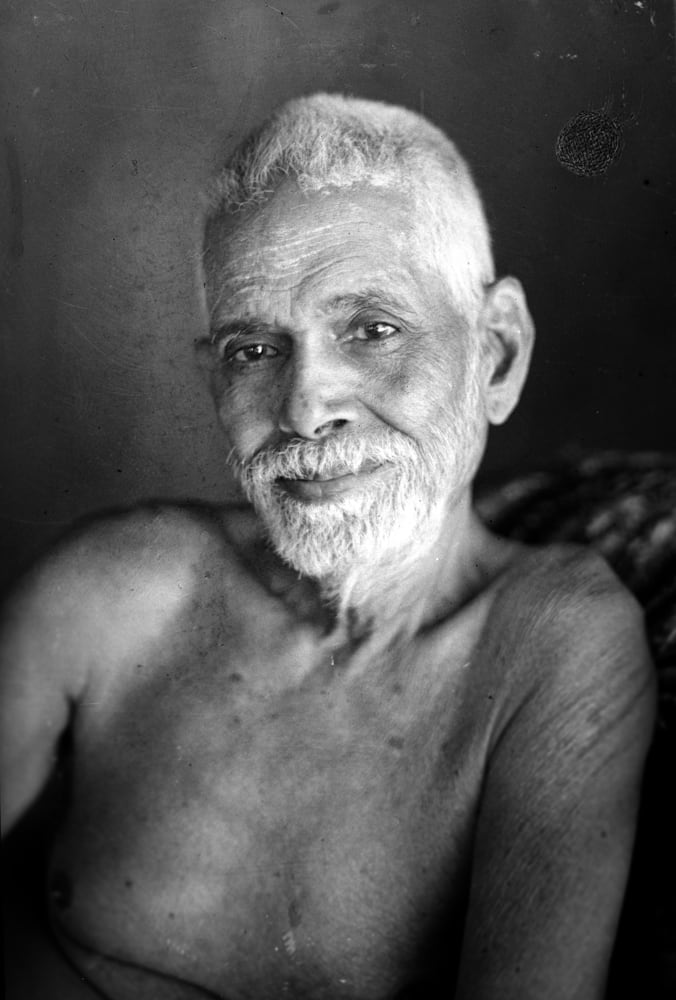
Ramana Maharshi
Ils concordent sur: Qu'est-ce que l'Absolu ? Dieu existe-t-il ? · Comment atteint-on la libération ou le salut ? · Faut-il un maître ?

Nisargadatta Maharaj
Ils concordent sur: Comment atteint-on la libération ou le salut ? · Faut-il un maître ? · Le monde est-il réel ?
Osho
Ils concordent sur: Qu'est-ce que l'Absolu ? Dieu existe-t-il ? · Qui suis-je ? Existe-t-il un vrai soi ? · Pourquoi souffrons-nous ?



Anecdotes et récits
Anecdotes et récits
Témoignagefebrero de 1986
A cockroach on her foot
Origine du récit: Katie's own account in the foreword of Loving What Is (2002) and in interviews. Allison Adato (Los Angeles Times, 2002) noted that the episode had been left out of the method's early literature and that several details cannot be corroborated; the detail of the mattress on the floor comes from her own account.
Source: Katie, Byron y Mitchell, Stephen. Loving What Is: Four Questions That Can Change Your Life. Nueva York: Harmony Books, 2002 (prólogo de Stephen Mitchell).
Témoignage1986
'As if they had dropped off a different person'
Origine du récit: Testimonies gathered by Allison Adato for the Los Angeles Times Magazine (24 November 2002).
Témoignage1986–1992
The Barstow living room
Origine du récit: Katie's account and testimony from her son Bob Robinson and Judith Avalon in the Los Angeles Times Magazine (2002).
Documenté1999
A tape before the Board of Psychology
Origine du récit: Los Angeles Times Magazine (2002), based on Katie's account; the Board declined to comment and did not release the file.
Documenté1992–
Only for those who ask
Origine du récit: Los Angeles Times Magazine (2002) and the official website, which offers the method in more than thirty languages.
Enseignements
Enseignements
Les notions qui structurent sa pensée, expliquées dans leur contexte.
The Workel-trabajo
Formulated from 1986; systematic account in Loving What Is (2002). In academic research it is called inquiry-based stress reduction (IBSR).
Source: Katie, Byron y Mitchell, Stephen. Loving What Is: Four Questions That Can Change Your Life. Nueva York: Harmony Books, 2002 (prólogo de Stephen Mitchell).
The turnaroundla-inversion
Loving What Is (2002) and the official worksheet.
Source: Katie, Byron y Mitchell, Stephen. Loving What Is: Four Questions That Can Change Your Life. Nueva York: Harmony Books, 2002 (prólogo de Stephen Mitchell).
The three kinds of businesstres-asuntos
Loving What Is (2002), ch. 1.
Source: Katie, Byron y Mitchell, Stephen. Loving What Is: Four Questions That Can Change Your Life. Nueva York: Harmony Books, 2002 (prólogo de Stephen Mitchell).
Loving what isamar-lo-que-es
Loving What Is (2002); A Thousand Names for Joy (2007).
Inquiry-based stress reduction (IBSR)ibsr
Hook et al., Journal of Clinical Psychology (2021); Landau et al., JAMA Network Open (2021).
Vidéos
Vidéos
Enregistrements, entretiens et documentaires. Les vidéos sont lues depuis YouTube ; elles ne sont pas hébergées ici.
No One Can Wrong Me—The Work of Byron Katie
Enregistrement original· EN· 18 min
Byron KatieChaîne officielle
I Want Mom to Be Happy—The Work of Byron Katie
Enregistrement original· EN· 41 min
Byron KatieChaîne officielle
How to be Successful—The Work of Byron Katie
Enregistrement original· EN· 57 min
Byron KatieChaîne officielle
I'm Afraid of Trump—The Work of Byron Katie
Enregistrement original· EN· 2016· 37 min
Byron KatieChaîne officielle
The Work: A Two Hour Intensive | Byron Katie | Wisdom 2.0
Conférence· EN· 119 min
Wisdom 2.0 with Soren Gordhamer
The four questions that can help your mind heal | Byron Katie
Entretien· EN· 7 min
Big Think
Why You Shouldn't Look for Mr. Right | SuperSoul Sunday
Entretien· EN· 2 min
OWN
The Question to Ask Yourself Every Day | SuperSoul Sunday
Entretien· EN· 3 min
OWN
Cómo encontrar la iluminación con el poder de la auto indagación | Byron Katie & Lewis Howes
Entretien· ES· 87 min
Lewis Howes Español
El cáncer frente a la indagación - El Trabajo de Byron Katie (subtítulos en español)
Enregistrement original· ES· 49 min
Sofía Torre
Le Travail de Byron Katie : Qui es tu sans ton histoire ?
Enregistrement original· FR· 23 min
Le Travail en Francophonie
Relations
Relations
Influences, filiations et affinités. On distingue la relation documentée de la similitude identifiée par analyse.
Famille de
Stephen Mitchell
Her husband since the early 2000s, translator and writer; co-author of Loving What Is, A Thousand Names for Joy and A Mind at Home with Itself.
Relation documentée
Famille de
Ross Robinson
Her son, a music producer who credits The Work with improving his life.
Relation documentée
Contemporain de
The two share the book of texts and photographs Peace in the Present Moment (2010).
Relation documentée
A correspondu avec
Michael Katz
Co-author of I Need Your Love—Is That True? (2005).
Relation documentée
Idées proches de
A Thousand Names for Joy (2007) comments on the 81 chapters of the Tao Te Ching in Stephen Mitchell's version.
Relation documentée
Idées proches de
Ramana's self-enquiry ('who am I?') and Katie's fourth question ('who would you be without the thought?') share the same movement back to the subject, though she comes from no tradition.
Similitude identifiée par analyse
Idées proches de
Both teach non-identification with thoughts and put direct experience above doctrine.
Similitude identifiée par analyse
Contemporain de
Contemporary teachers with large English-speaking audiences who propose meeting distress rather than fleeing it, from different frameworks.
Similitude identifiée par analyse
Lié depuis d'autres fiches
Sources
Sources
Bibliographie et catalogues consultés pour cette fiche.
- Wikidata, «Byron Katie» (Q437339).
- «Byron Katie», Wikipedia en inglés y en español (consultadas para cotejar hechos y bibliografía; texto propio).
- Adato, Allison. «How a Self-Help Guru Is Born». Los Angeles Times Magazine, 24 de noviembre de 2002 (entrevistas con Byron Katie, Stephen Mitchell, sus hijos Roxann Burroughs, Bob y Ross Robinson y la terapeuta Pat Scales).
- Katie, Byron y Mitchell, Stephen. Loving What Is: Four Questions That Can Change Your Life. Nueva York: Harmony Books, 2002 (prólogo de Stephen Mitchell).
- The Work of Byron Katie, web oficial de Byron Katie International (método, hoja de trabajo, libros y actividades).
- «New Age: Four Questions to Inner Peace». Time, 11 de diciembre de 2000.
- Katie, Byron y Mitchell, Stephen. A Thousand Names for Joy: Living in Harmony with the Way Things Are. Nueva York: Harmony Books, 2007.
- Katie, Byron y Mitchell, Stephen. A Mind at Home with Itself: How Asking Four Questions Can Free Your Mind, Open Your Heart, and Turn Your World Around. Nueva York: HarperOne, 2017.
- Hook, Joshua N.; Penberthy, J. Kim; Davis, Don E.; Van Tongeren, Daryl R. «Inquiry-based stress reduction: A systematic review of the empirical literature». Journal of Clinical Psychology 77, n.º 6 (2021): 1280–1295.
- Landau, C. et al. «Effect of Inquiry-Based Stress Reduction on Well-being and Views on Risk-Reducing Surgery Among Women With BRCA Variants in Israel: A Randomized Clinical Trial». JAMA Network Open 4, n.º 12 (2021): e2139670.
- Open Library: obras y ediciones de Byron Katie (búsqueda por autor y por título).
- Matousek, Mark. «Quit Your Pain». AARP The Magazine, mayo-junio de 2006.
- Mitchell, Stephen (ed.). Question Your Thinking, Change the World: Quotations from Byron Katie. Carlsbad: Hay House, 2007.
- Registro bibliográfico de Mil nombres para el gozo (Barcelona: La Liebre de Marzo, 2009, trad. de Brianda Domecq), catálogo de bibliotecas públicas de Extremadura.
- Ayant droit
- Byron Katie International, Inc. (marca «The Work of Byron Katie»); derechos de los libros según cada editorial
- Site officiel
- thework.com
En attente de confirmation
Ce que cette fiche n'a pas encore pu établir. Nous préférons le dire plutôt que de combler.
- Imágenes: no hay en Wikimedia Commons ningún retrato de Byron Katie con licencia libre verificada; no se incluye ninguna.
- ISBN sin verificar en catálogo: Losing the Moon (1998), Peace in the Present Moment (2010), las ediciones españolas de Faro (Cuestiona tu pensamiento, cambia el mundo, 2011; Necesito que me quieran, ¿es eso verdad?, 2012) y otras traducciones (francés, italiano, portugués).
- Año exacto del matrimonio con Stephen Mitchell (la prensa de noviembre de 2002 lo sitúa unos dieciocho meses antes).
- Localizar la página de la cita «When I argue with reality, I lose…» en la edición impresa de Loving What Is.
- Vídeos: no hay en el canal oficial versiones en español; los dos vídeos en castellano son de terceros (doblaje y subtítulos).
- Persona viva: revisar periódicamente su actividad y nuevas publicaciones.
Recherche effectuée le 2026-10-25