Christianisme · Mystique chrétienne · Christianisme orthodoxe
Seraphim of Sarov
Серафим Саровский · Прохор Исидорович Мошнин
1754 – 1833Personne historiquement documentée
Moine et starets russe (1754-1833) du monastère de Sarov, fondateur spirituel du couvent de Diveïevo et l'un des saints les plus vénérés de l'orthodoxie russe. Ermite en forêt, reclus pendant quinze ans puis directeur spirituel des foules, qu'il saluait d'un « Ma joie, le Christ est ressuscité ! », il n'écrivit rien : sa doctrine de l'acquisition de l'Esprit Saint est parvenue par les « Instructions » de 1839, la Chronique de Diveïevo et l'« Entretien avec Motovilov », publié en 1903 et de littéralité discutée. Il fut canonisé en 1903.
- œuvres
- 11œuvres
- éditions
- 27éditions
- citations
- 11citations
- vidéos
- 12vidéos
- images
- 9images
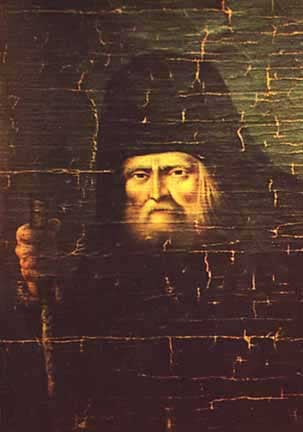
Retrato de Serafín de Sarov pintado en vida · Public domain
Dans ses propres mots
«Nothing so helps to acquire inner peace as silence and, as far as possible, constant converse with oneself and rare converse with others.»Instrucciones espirituales, cap. «О мире душевном» (De la paz del alma).

Pour commencer, une œuvre
Conversation with Motovilov on the Aim of the Christian LifeSon idée centrale
The acquisition of the Holy Spirit: The Russian term stiazhanie means to acquire, gain, accumulate: it is the word of trade and saving.
Le voir en contexte
Biographie
6 min de lecture
Traduction assistée à partir de l'original espagnol, en attente de relecture par un traducteur natif.
Un garçon de Koursk
Prokhor Isidorovitch Mochnine naquit à Koursk le 19 juillet 1754 selon le calendrier julien (30 juillet du grégorien), dans une famille de marchands aisés. L'année n'est pas certaine : les vies antérieures à la Révolution donnaient 1759, déduit de l'âge gravé sur sa pierre tombale de Sarov, et ce n'est qu'en 2004, après les travaux de l'historien local Vladimir Stepachkine dans les registres paroissiaux de Koursk et dans les archives du monastère, que l'Église russe adopta 1754. Son père, Isidore, construisait à forfait une église de la ville et mourut quand l'enfant était petit ; la mère, Agafia, acheva l'ouvrage. Les hagiographies racontent qu'à sept ans il tomba du haut de l'église en construction sans se faire de mal et que, malade vers dix ans, il guérit en baisant l'icône de la Mère de Dieu du Signe qui passait en procession devant sa maison. Ce sont des récits de la tradition familiale recueillis des décennies plus tard : le détail du clocher, par exemple, n'apparaît qu'avec la vie publiée en 1863, et en 1761 ce clocher n'existait pas encore.
Sarov
Après un pèlerinage à Kiev, où, selon la tradition, le reclus Dosithée lui indiqua le chemin de Sarov, il entra comme novice dans ce monastère des forêts de Tambov le 20 novembre 1778. Il fut boulanger, menuisier et sacristain ; il traversa une maladie, une hydropisie qui le tint alité près de trois ans ; il reçut l'habit monastique le 13 août 1786 sous le nom de Séraphin, fut ordonné diacre peu après et prêtre le 2 septembre 1793. Sarov suivait une règle sévère, héritière du renouveau monastique que Païssi Vélitchkovski avait suscité avec la traduction slavonne de la Philocalie, et le jeune moine se forma à ces textes : les « Instructions spirituelles » qu'on lui attribue citent sans cesse Isaac le Syrien, Jean Climaque, Barsanuphe ou Grégoire le Sinaïte.
Le désert
En 1794, il se retira dans une cabane en forêt, à quelque cinq kilomètres du monastère, ce qu'on appelait le « désert lointain ». Il cultivait un potager, lisait les Évangiles et les Pères, jeûnait au point de ne plus se nourrir que de légumes et d'une herbe sauvage, la snyt (l'égopode), et revenait à Sarov le dimanche pour communier. En 1804, selon les vies, des brigands qui cherchaient l'argent des visiteurs le rouèrent de coups avec le manche de sa propre hache ; il en resta courbé pour toujours et demanda qu'on ne les punisse pas. À cette période appartient l'épisode le plus célèbre de son ascèse, les mille jours et mille nuits de prière sur une pierre. La source la plus ancienne est plus sobre : en 1848, l'higoumène Isaïe écrivit qu'au début de sa vie érémitique Séraphin avait confié à un compagnon qu'il priait debout, immobile, dix-sept heures par jour, et qu'il l'avait fait pendant plus de trois ans ; les « mille journées sur la pierre » se fixèrent dans les hagiographies postérieures, surtout dans celle de Tchitchagov.
Il en va de même pour l'ours. En 1849, le hiéromoine Ioasaf publia le témoignage d'une moniale de Diveïevo, Matrona Plechtcheïeva, qui disait avoir vu le vieillard donner du pain à un ours. Parmi les papiers du métropolite Philarète de Moscou, aujourd'hui au département des manuscrits de la Bibliothèque d'État de Russie, se trouve un dossier selon lequel Matrona elle-même avoua avant de mourir que Ioasaf lui avait appris à le raconter si la famille impériale visitait le couvent. L'image de l'ermite à l'ours, que l'iconographie a popularisée, est donc une légende d'origine identifiable.
Réclusion et portes ouvertes
Le 8 mai 1810, il revint au monastère et s'enferma dans sa cellule : cinq ans sans recevoir personne et dix autres la porte ouverte à quiconque venait, mais sans en sortir, jusqu'au 25 novembre 1825. Dès lors, et surtout au cours de ses huit dernières années, Sarov devint un lieu de pèlerinage. Il recevait des centaines de personnes, paysans et nobles, saluant chacune d'un « Ma joie, le Christ est ressuscité ! » en toute saison, s'inclinait devant elles et répondait souvent avant qu'on ne l'interroge. Il prit en charge la petite communauté féminine de Diveïevo, à douze kilomètres, et fonda à côté une seconde, dite communauté du moulin, réservée aux jeunes filles. Parmi ses visiteurs figurèrent Mikhaïl Mantourov, qui vendit son domaine pour servir Diveïevo, et un jeune propriétaire terrien de Simbirsk, Nikolaï Motovilov, qui attribua à ses prières la guérison d'une paralysie en septembre 1831.
Ce qu'il a laissé
Séraphin n'écrivit pas de livres. Sa doctrine est parvenue par trois voies, toutes étrangères à sa main. La première est celle des « Instructions spirituelles », réunies par le moine Serge de Sarov et publiées en 1839 dans une vie de l'ermite Marc, après que le métropolite Philarète eut corrigé des expressions « pour que la langue fût plus correcte » et pour protéger certaines idées « d'une interprétation erronée », comme il l'écrivit lui-même en 1838. La deuxième, ce sont les paroles et les récits conservés à Diveïevo, que l'archimandrite Séraphin Tchitchagov ordonna dans la « Chronique du monastère Séraphin-Diveïevo » (1896, augmentée en 1903). La troisième est l'« Entretien sur le but de la vie chrétienne », que Motovilov laissa manuscrit.
On y voit, un jour de novembre 1831, dans une clairière enneigée au bord de la rivière Sarovka, le starets expliquer que la prière, le jeûne, la veille et l'aumône ne sont que des moyens, et que le but véritable de la vie chrétienne est l'acquisition de l'Esprit Saint ; puis, prenant le jeune homme par les épaules, il lui fait voir son visage « plus lumineux que le soleil ». Le texte parut en 1903, à la veille de la canonisation, dans « Le Grand dans le petit » de Sergueï Nilus, qui raconta l'avoir trouvé parmi plus de soixante-dix kilos de papiers couverts de plumes et de fientes d'oiseaux que lui remit la veuve de Motovilov. Sa littéralité est discutée : l'archiprêtre Vsévolod Rochko, qui ne doute pas du noyau de l'épisode, relève une densité de citations théologiques peu vraisemblable chez un jeune homme de vingt-deux ans, des idées sur l'âme des animaux étrangères aux Pères et la main de Nilus, qu'il qualifie de « forgeur de mythes, mais non de faussaire conscient » ; c'est le même éditeur qui, en 1905, inséra dans son livre les « Protocoles des Sages de Sion ».
La mort et la canonisation
Il mourut seul dans sa cellule le 2 janvier 1833 (14 du calendrier grégorien). Les moines, alertés par une odeur de brûlé, le trouvèrent agenouillé devant l'icône de la Mère de Dieu de Tendresse, qu'il appelait « Joie de toutes les joies ». Son culte grandit au cours des décennies suivantes avec des vies successives, chacune plus riche en miracles que la précédente. La canonisation fut en outre une affaire politique : l'archimandrite Tchitchagov la promut auprès de Nicolas II, avec l'appui de l'impératrice, qui espérait un héritier, et contre les réserves du procureur du Synode, Pobiedonostsev. La commission qui examina les restes en janvier 1903 ne trouva pas un corps incorrompu, comme l'attendait la piété populaire, et le métropolite Antoine dut expliquer dans la presse que ce n'était pas nécessaire. Le 19 juillet 1903, devant le tsar et plus de cent mille pèlerins, Séraphin fut proclamé saint.
Les reliques furent confisquées par les bolcheviks en 1920-1922, disparurent dans les réserves d'un musée antireligieux et réapparurent à Léningrad en 1990 ; le 1er août 1991, elles revinrent en procession à Diveïevo. Séraphin est aujourd'hui l'un des saints les plus vénérés de Russie, commémoré aussi par la Communion anglicane et appelé saint par Jean-Paul II. La figure que dessinent les sources les plus anciennes — un moine austère, d'une joie désarmante, passé du silence absolu à la direction spirituelle des foules — est moins spectaculaire que celle de la légende, et probablement plus rare.
Sources: Roshko, Vsévolod, prot. [Rochcau, Vsévolod]. Преподобный Серафим: Саров и Дивеево. Исследования и материалы. Moscú: Sampo, 2001 (ed. francesa: Saint Séraphim, Sarov et Divéyevo. Bégrolles-en-Mauges: Abbaye de Bellefontaine, 1987). Primera parte, «Historia y crítica histórica». · Nilus, Serguéi A. «Цель жизни христианской» [El fin de la vida cristiana], en Великое в малом, 1.ª ed., 1903; epílogo del editor fechado el 19 de mayo de 1903. Texto en Azbuka very. · Serafín de Sarov (atrib.). Духовные наставления мирянам и инокам [Instrucciones espirituales a laicos y monjes]. Recogidas por el monje Sergio (Vasíliev) de Sarov, revisadas por el metropolita Filaret (Drozdov) y publicadas en Краткое начертание жизни старца Саровской пустыни, схимонаха и пустынника Марка. Troitse-Sérguieva Lavra, 1839. Texto cotejado (ediciones de 1839, 1856, 1863 y 1903–1904) en Azbuka very. · Serafín (Chichagov), archimandrita. Летопись Серафимо-Дивеевского монастыря Нижегородской губ. Ардатовского уезда. Moscú: Pechatnia A. I. Snegirevoi, 1896; 2.ª ed. ampliada, San Petersburgo, 1903. Reed. Diveyevo: Izd-vo Bratstva sv. Aleksandra Nevskogo, 2004 (ISBN 9785882130649). · Stepashkin, Vladímir A. Преподобный Серафим Саровский: предания и факты. 3.ª ed. corregida y aumentada. Sarov: ZAO «INFO», 2009. ISBN 978-5-89269-010-2; y Серафим Саровский. Moscú: Molodaya gvardiya (ЖЗЛ), 2018.
Chronologie
La vie, année après année
Chaque point est un événement documenté. Cliquez pour le lire, avec sa source et son degré de certitude.
30 juillet 17540 ansKursk
Birth of Prokhor Moshnin
Born into a merchant family of Kursk (19 July, Julian calendar). Nineteenth-century lives gave 1759; the Russian Church adopted 1754 in 2004 on the basis of parish registers and the Sarov archive.
Probable«Серафим Саровский», Wikipedia en ruso (biografía, fuentes hagiográficas, expediente de Matrona Plescheeva en el fondo del metropolita Filaret, carta del abad Isaías II de 1848, canonización y reliquias). Consultada el 25-10-2026.
Après sa mort
- 1839First edition of the Instructions
- 19 juillet 1903Canonisation
- 1 août 1991Return of the relics
30 juillet 1754 · 0 ans
Birth of Prokhor Moshnin
Born into a merchant family of Kursk (19 July, Julian calendar). Nineteenth-century lives gave 1759; the Russian Church adopted 1754 in 2004 on the basis of parish registers and the Sarov archive.
Probable
v. 1761 · 7 ans
The fall from the church under construction
According to the lives, he falls from the top of the church his family was building and is unhurt. Hieromonk Sergius (1841) speaks of 'the building'; the bell tower appears in 1863.
Tradition
1776 · 22 ans
Pilgrimage to Kiev
He visits the Kiev Caves Lavra; tradition says the recluse Dositheus directed him to Sarov monastery.
Tradition
20 novembre 1778 · 24 ans
Novice at Sarov
He enters Sarov monastery, in the forests of Tambov province, as a novice under the elder Joseph.
Documenté
13 août 1786 · 32 ans
Monastic profession as Seraphim
He is tonsured a monk with the name Seraphim; shortly afterwards he is ordained hierodeacon.
Documenté
2 septembre 1793 · 39 ans
Priestly ordination
He is ordained hieromonk (priest-monk).
Documenté
1794 · 40 ans
Hermit in the forest
He withdraws to a hut some five kilometres from the monastery, with a garden and beehives; he returns on Sundays for communion.
Documenté
1804 · 50 ans
The robbers' attack
Robbers beat him; he is left bent for life and asks that they go unpunished. He convalesces for five months in the monastery.
Probable
v. 1807 – 1810 · 53 ans
Prayer on the stone
A period of standing prayer that the hagiographies fixed as 'a thousand days on a stone'. Abbot Isaiah II's letter (1848) speaks of seventeen hours a day standing for more than three years.
Contesté
8 mai 1810 · 55 ans
Return to the monastery and seclusion
He returns to Sarov at the decision of the council of elders and shuts himself in his cell: five years without receiving anyone.
Documenté
1815 · 61 ans
He opens the door of his cell
He begins to receive visitors without leaving his cell; sources differ on whether this was 1815 or, regularly, around 1823.
Probable
25 novembre 1825 · 71 ans
End of the seclusion
He ends his seclusion and again visits his forest hermitage; he begins his spiritual direction of the Diveyevo community.
Documenté
v. 1827 – 1829 · 73 ans
The Mill community
Next to the Kazan community at Diveyevo he founds a second community, for unmarried girls only; its Nativity church is built in 1828–1829.
Documenté
1828 · 74 ans
A portrait from life
The painter Serebryakov (later the monk Joseph of Sarov) makes the only portrait from life, the basis of later iconography.
Probable
novembre 1831 · 77 ans
Conversation with Motovilov
Date of the conversation on the acquisition of the Holy Spirit that Nikolai Motovilov left in writing; the text was published in 1903.
Contesté
14 janvier 1833 · 78 ans
Death
He is found dead, kneeling before the icon of the Virgin of Tenderness (2 January, Julian calendar).
Documenté
1839
First edition of the Instructions
The Spiritual Instructions, revised by Metropolitan Philaret, are published within the life of the hermit Mark; the first life of Seraphim, by the monk Sergius, appears in 1841.
Documenté
19 juillet 1903
Canonisation
Following the Synod's decree of 29 January, his glorification is celebrated at Sarov in the presence of Nicholas II and over a hundred thousand pilgrims (19 July, Julian calendar). That same year Nilus publishes the Conversation with Motovilov.
Documenté
1 août 1991
Return of the relics
The relics, seized in 1920–1922 and found in 1990 in the Museum of the History of Religion in Leningrad, arrive in procession at Diveyevo.
Documenté
Œuvres
Œuvres essentielles
Les œuvres sans lesquelles on ne comprend pas son héritage.
Attribution traditionnelle · 1831
Conversation with Motovilov on the Aim of the Christian Life
О цели христианской жизни. Беседа преподобного Серафима Саровского с Н. А. Мотовиловым
In a snowy clearing by his hermitage, the elder answers the question Motovilov had asked since childhood: the aim of the Christian life is not prayer, fasting, vigil or almsgiving, which are means, but the acquisition of the Holy Spirit, likened to the accumulation of a capital 'of grace and eternal'; prayer is the means most to hand. When the young man asks how to know whether he is in the Spirit, Seraphim takes him by the shoulders and his face becomes 'brighter than the sun': Motovilov describes the light, peace, sweetness, warmth and fragrance he feels in the depth of winter. It is the most widely read text of modern Russian spirituality, the basis of Seraphim's iconography and of the interest of theologians such as Florensky and Lossky.
8 éditions

Compilation postérieure · 1839
Spiritual Instructions to Laypeople and Monks
Духовные наставления мирянам и инокам
Short chapters on God, faith, hope, prayer, tears, sorrow and despondency, peace of soul and its preservation, guarding the heart, the light of Christ, attention to oneself, silence, fasting and the active and contemplative life, with advice for the novice and for the superior. Woven from quotations of Isaac the Syrian, John Climacus, Barsanuphius, Gregory of Sinai, Ephrem and John Chrysostom, they convey a sober hesychast teaching: the Jesus Prayer repeated in the mind, inner peace as the condition of all light, and caution towards contemplation without a guide. It is the earliest and least manipulated source of his teaching.
7 éditions
Seraphim of Sarov
Chronicle of the Seraphim-Diveyevo Monastery (sayings and accounts)
Compilation postérieure · 1896
Chronicle of the Seraphim-Diveyevo Monastery (sayings and accounts)
Летопись Серафимо-Дивеевского монастыря
A history of the Diveyevo communities from their founder, Mother Alexandra, to the end of the nineteenth century, which is also the main collection of Seraphim's oral teaching to the sisters: advice on prayer, work, obedience and joy, prophecies about the convent, the ditch he had dug around the Mill community, his farewell words and the lives of his disciples. The second edition (1903) includes a new life of Seraphim and was the documentary basis for the canonisation.
3 éditions
Toute son œuvre (11)
Seraphim of Sarov
The Short Prayer Rule for Laypeople
The Conscious LibraryThe Short Prayer Rule for Laypeople
Seraphim of Sarov
The Rule of the Theotokos
The Conscious LibraryThe Rule of the Theotokos
Seraphim of Sarov
Notes of Nikolai Motovilov, Servant of the Mother of God and of St Seraphim
The Conscious LibraryNotes of Nikolai Motovilov, Servant of the Mother of God and of St Seraphim
Seraphim of Sarov
The Great Mystery of Diveyevo and other prophecies
The Conscious LibraryThe Great Mystery of Diveyevo and other prophecies
Seraphim of Sarov
Account of the Life and Labours of Father Seraphim (Hieromonk Sergius, 1841)
The Conscious LibraryAccount of the Life and Labours of Father Seraphim (Hieromonk Sergius, 1841)
1841
Seraphim of Sarov
Accounts of the Life of the Elder Seraphim (Hieromonk Georgy, 1844)
The Conscious LibraryAccounts of the Life of the Elder Seraphim (Hieromonk Georgy, 1844)
1844
Seraphim of Sarov
Accounts of the Labours of the Elder Seraphim (Hieromonk Joasaph, 1849)
The Conscious LibraryAccounts of the Labours of the Elder Seraphim (Hieromonk Joasaph, 1849)
1849
Seraphim of Sarov
Life of the Elder Seraphim (Nikolai Elagin, 1863)
The Conscious LibraryLife of the Elder Seraphim (Nikolai Elagin, 1863)
1863
Citations
Citations localisées dans une œuvre précise. Chacune porte sa provenance et son degré de fiabilité.
The true aim of our Christian life consists in the acquisition of the Holy Spirit of God.Истинная же цель жизни нашей христианской состоит в стяжании Духа Святого Божьего.
ProbableConversación con Motovílov (noviembre de 1831), en Nilus, Великое в малом (1903). Atribución sujeta a las dudas sobre la literalidad del manuscrito.
Citations apocryphes ou d'attribution contestée (3)
«"Acquire the spirit of peace, and thousands around you will be saved."»
It is his most quoted saying, but it is not found in this form either in the Instructions of 1839 or in the Conversation with Motovilov as published by Nilus. The idea is in the chapter 'On peace of soul' of the Instructions ('when a man comes to a peaceful state, he can pour out on others the light…'); the short formula circulates in twentieth- and twenty-first-century devotional collections without reference to a primary source.
«Prophecies about the Antichrist, the fall of the dynasty and Seraphim's resurrection ('The Great Mystery of Diveyevo').»
They come from Motovilov manuscripts published by Nilus, who presented them as the elder's exact words; no independent source confirms them and church authority banned them.
«"This is the Christian way of crossing oneself! […] Crossing oneself with two fingers is contrary to the holy statutes."»
A condemnation of the Old Believer rite that first appears in the 1863 life (Elagin), written by a censor; the episode of the four Old Believers had been expanded in the 1844 life. Mikhail Novoselov held that Seraphim's polemic with the priestless Old Believers of Nizhny Novgorod became anti-ritual under the pen of synodal censors; the question remains open.
Dernières paroles
Il n'existe aucun témoignage vérifiable de ses dernières paroles.
He died alone in his cell on the night of 1–2 January 1833 (Julian) and no one heard his last words: the monks, alerted by the smell of a candle that had set some books smouldering, found him dead, kneeling before the icon of the Virgin of Tenderness. The Diveyevo tradition recorded by Chichagov preserves as his farewell the charge he had earlier given the sisters: to come to his grave and tell him their sorrows 'as to a living man', for to them he would always be alive; these are not, however, words spoken at his death.
Source: Serafín (Chichagov), archimandrita. Летопись Серафимо-Дивеевского монастыря Нижегородской губ. Ардатовского уезда. Moscú: Pechatnia A. I. Snegirevoi, 1896; 2.ª ed. ampliada, San Petersburgo, 1903. Reed. Diveyevo: Izd-vo Bratstva sv. Aleksandra Nevskogo, 2004 (ISBN 9785882130649).
Interroger
Ce que répond son œuvre
Douze grandes questions de l'humanité et ce que ses textes permettent d'y répondre, références à l'appui. Nous ne lui prêtons jamais de paroles.
Qu'est-ce que l'Absolu ? Dieu existe-t-il ?
God is the Trinity giving itself as the Holy Spirit to be acquired
Un Dieu personnelIl le dit expressément
Seraphim of Sarov did not write; his teaching comes through testimonies. In them God is not an object of speculation but a presence to be received. The Spiritual Instructions of 1839 open with a chapter on God: where God is there is no evil, and everything that comes from him is peaceful and leads to humility. The Conversation with Motovilov, published in 1903, defines the aim of Christian life as the acquisition of the Holy Spirit of God, and recounts how Motovilov saw the elder's face illumined while both were, in his words, in the Spirit of God. The God of this testimony is that of the Orthodox faith: Father, Son and Spirit, who seeks the human heart as his throne and allows himself to be experienced as light, peace, sweetness and joy.
Comparer cette question avec d'autres maîtresQui suis-je ? Existe-t-il un vrai soi ?
The human being is body, soul and spirit, made to receive the Holy Spirit
Une âme créée et immortelleIl le dit expressément
In the Conversation with Motovilov, a testimony published in 1903, Seraphim explains the creation of the human being on the basis of Genesis: Adam was formed from dust and received from God the breath of life, so that the complete man is body, soul and spirit, and was made to live in the Spirit of God. The fall made him lose that fullness, and the meaning of Christian life is to recover it by acquiring the Holy Spirit. The true self is not, in this testimony, an impersonal consciousness nor a flow of elements, but a created and immortal person whose heart is the place where God wishes to dwell. The Spiritual Instructions add that without humility there is nothing in man but darkness: the self is illumined by receiving, not by asserting itself.
Comparer cette question avec d'autres maîtresPourquoi souffrons-nous ?
Losing the Spirit of God darkened man; patience brings him back
La séparation d'avec DieuCela se déduit de sa doctrine
In the testimony of the Conversation with Motovilov, the root of human evil lies in Adam's fall, which lost the fullness of the Spirit of God with which he had been created; since then man has lived in darkness, and Christian life consists in recovering that grace. The Spiritual Instructions draw the practical consequences: where God is there is no evil, and what comes from him brings peace and humility, while agitation reveals another source. In the face of sorrows they recommend patience and humility, without which there is nothing in man but darkness. Seraphim, who according to the lives was beaten by robbers and remained bent for ever, does not speculate on the why of pain: he treats it as an occasion for acquiring inner peace, whose fruit reaches others as well.
Comparer cette question avec d'autres maîtresQue se passe-t-il après la mort ?
Christ is risen: the joy of the Kingdom can already be tasted in this life
Vie éternelle et résurrectionIl le dit expressément
Seraphim greeted everyone, at any time of year, with the words of Easter: my joy, Christ is risen. In the testimonies that preserve his teaching, death is viewed from the resurrection and eternal life of Orthodox faith, and what is distinctive is that this life is not postponed: in the Conversation with Motovilov, when his companion sees his face illumined, Seraphim asks him what he feels, and describes peace, sweetness, warmth and joy as a foretaste, a very small one, of what God prepares for those who love him. The Diveyevo chronicles also record his predictions of his own death and his promise to go on speaking with those who came to his grave. He died on his knees, at prayer, in 1833.
Comparer cette question avec d'autres maîtresComment atteint-on la libération ou le salut ?
The aim of Christian life is to acquire the Holy Spirit; all else is means
Par la grâce et l'amourIl le dit expressément
Seraphim of Sarov's best-known formula, handed down by the Conversation with Motovilov, answers this question directly: the true aim of Christian life consists in the acquisition of the Holy Spirit of God. Fasting, vigil, prayer, almsgiving and every good deed done for Christ's sake are not the end, but means of acquiring it; and the acquisition of the Spirit is also a capital, but one of grace and eternal. Among the means, prayer is the most accessible, because it is always in anyone's hands. Salvation is thus God's gift, received and accumulated, not merit; and its sign is peace: according to the Instructions, whoever attains inner peace can pour out on others the light he has received. Motovilov claims to have seen it in the elder's luminous face.
Comparer cette question avec d'autres maîtresFaut-il un maître ?
An elder within the Church, guiding towards the Spirit and not towards himself
La communauté et la traditionCela se déduit de sa doctrine
Seraphim embodied the figure of the starets, the elder who, after years of solitude, receives those who come seeking counsel; in his last years crowds visited him, and he was spiritual director of the nuns of Diveyevo. He himself was formed in obedience to the superiors and confessors of Sarov, and his teaching, handed down by the Spiritual Instructions and testimonies, constantly relies on the Scriptures and the Fathers, whose reading he recommended. But the elder does not occupy the centre: in the Conversation with Motovilov, the true teacher is the Holy Spirit, acquired through prayer and good works within the life of the Church and its sacraments. His prayer rules for lay people show, moreover, that he did not require monastic life or constant direction of everyone.
Comparer cette question avec d'autres maîtresLe monde est-il réel ?
Creation is good; the hermit lived in the forest at peace with the animals
Une création bonne et réelleCela se déduit de sa doctrine
Seraphim left no reflections on the nature of the world, but his teaching and life presuppose the Orthodox vision of a good creation, God's work, wounded by the fall and called to transfiguration. In the Conversation with Motovilov the Genesis account serves as the starting point: Adam lived in a world created for him, in which nothing could harm him while he possessed the Spirit. During his years as a hermit in the forest near Sarov, according to the lives compiled after his death, he shared his bread with a bear and other animals, an image tradition read as a sign of paradisal harmony recovered through holiness. The world is neither illusion nor evil: it is the place where grace can become visible, like the light Motovilov claims to have seen.
Comparer cette question avec d'autres maîtresQu'est-ce que l'amour ?
God seeks a heart full of love for him and for neighbour: that is his throne
L'amour de Dieu et du prochainIl le dit expressément
At the end of the Conversation with Motovilov, according to the testimony published in 1903, Seraphim sums up his teaching in an image: the Lord seeks a heart full of love for God and neighbour, and that is the throne on which he likes to sit and on which he appears in the fullness of his glory. Love is for him not an isolated moral effort, but the fruit and dwelling place of the acquired Spirit. His way of treating others expressed it: he called each visitor my joy, received everyone without distinction and, according to the lives, forgave the robbers who left him badly injured and asked that they not be punished. The Spiritual Instructions add that one must judge no one and that the inner peace of the one who loves is communicated to those around him.
Comparer cette question avec d'autres maîtresSommes-nous libres ou tout est-il déterminé ?
Grace does not force: each person decides whether to acquire the Spirit
Un libre arbitre réelCela se déduit de sa doctrine
Seraphim did not address the theoretical question of freedom and determinism, but the testimonies of his teaching presuppose the Orthodox doctrine of cooperation between grace and human freedom. In the Conversation with Motovilov, acquiring the Holy Spirit is compared to acquiring capital: each person chooses the good works that bear him most fruit and practises them, and what he receives depends on how he uses the means. God compels no one; he calls and awaits the answer. The Spiritual Instructions insist on vigilance over one's own thoughts and on repentance, which only make sense if the person can choose. God's providence governs all, but does not cancel each person's responsibility for his heart.
Comparer cette question avec d'autres maîtresPourquoi méditer ou prier ?
Prayer is the most readily available means of acquiring the Holy Spirit
L'amitié avec DieuIl le dit expressément
In the Conversation with Motovilov, Seraphim explains that among all the good works that serve to acquire the Spirit, prayer is the one most easily within anyone's reach, rich or poor, learned or simple, and that when God himself comes to visit the one who prays, one must fall silent and let him act. The Spiritual Instructions advise those who wish to serve God to practise remembrance of God and unceasing prayer to Jesus Christ, saying with the mind: Lord Jesus Christ, Son of God, have mercy on me, a sinner; and a counsel handed down by Ignatius Brianchaninov warns that merely outward prayer is not enough. For lay people he left a small rule of prayer that could be said even while walking. To pray is to live before God until he himself speaks.
Comparer cette question avec d'autres maîtresLa raison peut-elle connaître l'ultime ?
The ultimate is known by the light of grace, which illumines the pacified mind
L'ultime est au-delà du mentalCela se déduit de sa doctrine
Seraphim did not discuss the scope of reason, but the testimonies of his teaching place the knowledge of God on another plane. In the Conversation with Motovilov, his companion wants to understand how the presence of the Spirit is recognised, and Seraphim gives him not an explanation but an experience: he lets him see his illumined face and feel peace, warmth and joy. The Spiritual Instructions speak of the enlightenment of the mind attained by one who reaches inner peace and who can pour it out on others, and they recommend silence and recollection as its condition. Reason is not despised, and Seraphim read Scripture and the Fathers assiduously; but knowledge of the ultimate is a gift of grace, received in a humble heart, not the fruit of reasoning.
Comparer cette question avec d'autres maîtresSe retirer du monde ou le transformer ?
Acquire peace in silence, and then you will be able to enlighten others
Se retirer pour trouverIl le dit expressément
Seraphim's life has two halves. For decades he withdrew: he lived as a hermit in the forest near Sarov, spent, according to the lives, a thousand nights praying on a stone, kept silence for years and remained enclosed in his cell for another fifteen. Only then did he open his door and receive crowds. The Spiritual Instructions state the logic of that itinerary: nothing helps so much to acquire inner peace as silence and rare conversation with others; and when a man reaches a state of peace, he can pour out on others the light of the enlightenment of the mind. Withdrawal is not flight from one's neighbour, but preparation to serve him. Of lay people, however, he did not demand monastic life, but a small rule of prayer compatible with work.
Comparer cette question avec d'autres maîtres
Affinités et tensions
Affinités et tensions
Calculées question par question à partir de ses positions. La raison de chaque accord ou de chaque désaccord s'affiche d'un clic.
Pense comme

Fyodor Dostoevsky
Ils concordent sur: Qu'est-ce que l'Absolu ? Dieu existe-t-il ? · Qui suis-je ? Existe-t-il un vrai soi ? · Pourquoi souffrons-nous ?

Julian of Norwich
Ils concordent sur: Qu'est-ce que l'Absolu ? Dieu existe-t-il ? · Qui suis-je ? Existe-t-il un vrai soi ? · Pourquoi souffrons-nous ?

Francis of Assisi
Ils concordent sur: Qu'est-ce que l'Absolu ? Dieu existe-t-il ? · Qui suis-je ? Existe-t-il un vrai soi ? · Pourquoi souffrons-nous ?
John of the Cross
Ils concordent sur: Qu'est-ce que l'Absolu ? Dieu existe-t-il ? · Qui suis-je ? Existe-t-il un vrai soi ? · Pourquoi souffrons-nous ?
Pense autrement que

Pema Chödrön
Ils s'opposent sur: Qu'est-ce que l'Absolu ? Dieu existe-t-il ? · Qui suis-je ? Existe-t-il un vrai soi ? · Que se passe-t-il après la mort ?

The 14th Dalai Lama (Tenzin Gyatso)
Ils s'opposent sur: Qu'est-ce que l'Absolu ? Dieu existe-t-il ? · Qui suis-je ? Existe-t-il un vrai soi ? · Que se passe-t-il après la mort ?

Parmenides
Ils s'opposent sur: Le monde est-il réel ?

Nāgārjuna
Ils s'opposent sur: Qu'est-ce que l'Absolu ? Dieu existe-t-il ? · Qui suis-je ? Existe-t-il un vrai soi ? · Que se passe-t-il après la mort ?
Anecdotes et récits
Anecdotes et récits
Témoignage1804
The robbers in the forest
Origine du récit: The lives tell it from Sergius's (1841) onwards, written from the testimony of Sarov monks; the bent back is confirmed by the 1828 portrait. The apparition during convalescence is a hagiographic element of monastic transmission.
Contestéc. 1807–1810
A thousand days on the stone
Origine du récit: Letter of Abbot Isaiah II (Putilov) to Hieromonk Abel (Vanyukov), December 1848, cited in Russian scholarship; the figure of a thousand days comes from the later lives, above all Chichagov's Chronicle (1903). The core—a long period of standing prayer—is plausible; the canonical form is undocumented.
Contestépublicado en 1849
The bear
Origine du récit: Published by Joasaph in 1849; the retraction is in the Manuscripts Department of the Russian State Library, papers of Metropolitan Philaret (Drozdov), according to recent Russian scholarship (Stepashkin). The 1844 life already mentioned animals coming to him; the bear as an episode with witnesses is a documented invention.
Témoignage1815–1833
"My joy, Christ is risen!"
Origine du récit: The greeting and the form of address are attested by many visitors, gathered in the Diveyevo Chronicle and the lives; the advice to keep a joyful spirit appears in the Instructions ('On preserving peace of soul').
Témoignagenoviembre de 1831
The light on his face
Origine du récit: A single witness: Motovilov's manuscript published by Nilus in 1903. Rochcau accepts the historicity of the episode; the literal wording is doubtful, and Sanidopoulos notes that another Motovilov manuscript claims he saw the illumined face many times, which weakens the uniqueness of the account. Florensky reproduced it in 1914 as an example of the light of grace.
Récit hagiographiquec. 1761
The fall from the church
Origine du récit: Hieromonk Sergius, Account… (1841) for the original version; Elagin (1863) introduces the bell tower. A family tradition with no independent witnesses.
Témoignage1–2 de enero de 1833
Kneeling before the Tenderness icon
Origine du récit: The Sarov monks' account handed down by the first life (1841) and its successors; the icon's fate, in the literature on the canonisation and relics.
Enseignements
Enseignements
Les notions qui structurent sa pensée, expliquées dans leur contexte.
The acquisition of the Holy Spiritadquisicion-del-espiritu-santo
It gathers the patristic doctrine of deification (theosis) and the emphasis of Symeon the New Theologian and of hesychasm on the conscious experience of grace. Twentieth-century theologians such as Vladimir Lossky made it a summary of Orthodox spirituality.
Peace of soulpaz-del-alma
It develops the hesychast notion of hesychia (stillness) from Isaac the Syrian, Barsanuphius and John Climacus, whom the Instructions cite explicitly.
The Jesus Prayer and the short ruleoracion-de-jesus
It continues the hesychast practice spread in Russia by Paisius Velichkovsky's Slavonic Philokalia (1793), which half a century later Theophan the Recluse would expand in Russian.
The light of graceluz-de-la-gracia
Related to Gregory Palamas's fourteenth-century doctrine of the uncreated light of Tabor and to the Desert Fathers' accounts of faces illumined in prayer.
The starets and spiritual directionstarchestvo
The revival of Russian eldership goes back to Paisius Velichkovsky (1722–1794); Florensky cites Seraphim alongside the Optina elders as those who 'gather as in a burning focus' popular holiness.
Vidéos
Vidéos
Enregistrements, entretiens et documentaires. Les vidéos sont lues depuis YouTube ; elles ne sont pas hébergées ici.
Великое чудо преподобного Серафима Саровского
Documentaire· RU· 2016· 43 min
Свято-Троицкий Серафимо-Дивеевский монастырьChaîne officielle
«Дивное Дивеево» — фильм о Серафимо-Дивеевском монастыре (2016)
Documentaire· RU· 2016· 53 min
Дивное ДивеевоChaîne officielle
Серафим Саровский. Рожденный пламенным
Documentaire· RU· 2008· 10 min
SpasTVChaîne officielle
Серафим Саровский и современность — А. И. Осипов
Conférence· RU· 2023· 148 min
Алексей Ильич ОсиповChaîne officielle
Преп. Серафим Саровский (святость и миф) — Вячеслав Рубский
Conférence· RU· 2017· 89 min
Вячеслав РубскийChaîne officielle
Преподобный Серафим Саровский. Священник Валерий Духанин
Conférence· RU· 2026· 19 min
БИБЛИЯ и толкования — Экзегет.руChaîne officielle
Серафим Саровский. Фрагмент лекции К. В. Корепанова в Храме на Крови (23.12.2013)
Conférence· RU· 2013· 48 min
Официальный лекторий свящ. Константина КорепановаChaîne officielle
Особая книга. В. Степашкин «Серафим Саровский»
Analyse· RU· 2023· 3 min
Библиотека Маяковского СаровChaîne officielle
Metropolitan Kallistos Ware on Saint Seraphim of Sarov (Part 1/6)
Conférence· EN· 2017· 56 min
OLTelevisionChaîne officielle
AE40: Saint Seraphim of Sarov: Part 2/6
Conférence· EN· 2025· 42 min
OLTelevisionChaîne officielle
Saint Séraphim de Sarov 1/4 — Un moine russe
Documentaire· FR· 2023· 26 min
RCF Hauts de FranceChaîne officielle
Saint Séraphim de Sarov 4/4 — Sa spiritualité
Analyse· FR· 2023· 25 min
RCF Hauts de FranceChaîne officielle
Galerie
Galerie
Images dont la licence a été vérifiée. Chacune conserve son auteur et son attribution.
Manuscrits
Manuscrits
Témoins manuscrits et textes anciens, avec leur dépositaire et leurs conditions de consultation.
RU · Cyrillic · Fecha de redacción desconocida (entre 1831 y 1879)
Рукопись Н. А. Мотовилова «Дух Божий, явно почивший на отце Серафиме Саровском, в беседе его о цели христианской жизни…» (гл. VI)
- Témoin conservé
- Manuscrito único, conocido sólo por la edición de Nilus (1903)
Relations
Relations
Influences, filiations et affinités. On distingue la relation documentée de la similitude identifiée par analyse.
Maître de
Nikolái Motovílov
A Simbirsk landowner (1809–1879), healed by his own account through Seraphim's prayers in September 1831 and from then on a disciple, 'servant of the Mother of God and of Seraphim' and benefactor of Diveyevo. His manuscripts are the source of the Conversation and of many accounts, and of the doubtful prophecies as well.
Relation documentée
A reçu l'influence de
Isaac el Sirio
The author most quoted in the Spiritual Instructions (homilies on humility, despondency and stillness), together with John Climacus, Barsanuphius and Gregory of Sinai.
Relation documentée
A reçu l'influence de
Padres del desierto
The Instructions quote Barsanuphius, Antiochus, Ephrem and the apophthegms; his life of forest, fasting and silence was consciously modelled on that of the ancient hermits.
Relation documentée
A reçu l'influence de
Paisi Velichkovski
Sarov's spirituality belongs to the hesychast revival Paisius launched with the Slavonic Philokalia (1793); no personal link has been documented.
Similitude identifiée par analyse
Idées proches de
Gregorio Palamas
The light of the face in the Conversation has been read as a manifestation of the light of Tabor defended by Palamas in the fourteenth century.
Similitude identifiée par analyse
A influencé
Florensky cites Seraphim in several letters of The Pillar and Ground of the Truth (1914) and reproduces in the fourth, 'The Light of Truth', the passage of the luminous face from the Conversation, following Nilus's 1905 edition; he places him alongside the Optina elders as a focus of Russian popular holiness.
Relation documentée
A influencé
Dmitri Merezhkovski
His essay 'The Last Saint' (in Not Peace but a Sword, 1908) examines Seraphim and his canonisation as a cipher of Russian religiosity; Florensky cites it.
Relation documentée
Idées proches de
The Easter joy, the bowing before each visitor and the spiritual direction of laypeople of the elder Zosima in The Brothers Karamazov have been compared with Seraphim, though Dostoevsky's declared models were Tikhon of Zadonsk and the elder Ambrose of Optina.
Similitude identifiée par analyse
Idées proches de
Theophan carried into Russian, for laypeople, the hesychast teaching on the prayer of the heart and the acquisition of grace that Seraphim transmitted orally; they never met. As Bishop of Tambov he was for a few months in 1861 in charge of the Diveyevo convent founded by Seraphim, to end its disorders.
Similitude identifiée par analyse
A influencé
In On the Jesus Prayer (Ascetic Experiences, vol. I) Ignatius relates, on the word of 'old monks', that at Sarov the Jesus Prayer was taught to everyone who entered and that 'the blessed elder Seraphim' advised monks to lead an attentive life and practise that prayer, and he quotes a saying of his on the insufficiency of merely outward prayer. There is no record that they met.
Relation documentée
Sources
Sources
Bibliographie et catalogues consultés pour cette fiche.
- Wikidata, «Seraphim of Sarov» (Q44717): P31=Q5, nacimiento 1754/1759, muerte 1833, 48 enlaces entre wikis.
- Roshko, Vsévolod, prot. [Rochcau, Vsévolod]. Преподобный Серафим: Саров и Дивеево. Исследования и материалы. Moscú: Sampo, 2001 (ed. francesa: Saint Séraphim, Sarov et Divéyevo. Bégrolles-en-Mauges: Abbaye de Bellefontaine, 1987). Primera parte, «Historia y crítica histórica».
- Nilus, Serguéi A. «Цель жизни христианской» [El fin de la vida cristiana], en Великое в малом, 1.ª ed., 1903; epílogo del editor fechado el 19 de mayo de 1903. Texto en Azbuka very.
- Serafín de Sarov (atrib.). Духовные наставления мирянам и инокам [Instrucciones espirituales a laicos y monjes]. Recogidas por el monje Sergio (Vasíliev) de Sarov, revisadas por el metropolita Filaret (Drozdov) y publicadas en Краткое начертание жизни старца Саровской пустыни, схимонаха и пустынника Марка. Troitse-Sérguieva Lavra, 1839. Texto cotejado (ediciones de 1839, 1856, 1863 y 1903–1904) en Azbuka very.
- Serafín (Chichagov), archimandrita. Летопись Серафимо-Дивеевского монастыря Нижегородской губ. Ардатовского уезда. Moscú: Pechatnia A. I. Snegirevoi, 1896; 2.ª ed. ampliada, San Petersburgo, 1903. Reed. Diveyevo: Izd-vo Bratstva sv. Aleksandra Nevskogo, 2004 (ISBN 9785882130649).
- Stepashkin, Vladímir A. Преподобный Серафим Саровский: предания и факты. 3.ª ed. corregida y aumentada. Sarov: ZAO «INFO», 2009. ISBN 978-5-89269-010-2; y Серафим Саровский. Moscú: Molodaya gvardiya (ЖЗЛ), 2018.
- «Серафим Саровский», Wikipedia en ruso (biografía, fuentes hagiográficas, expediente de Matrona Plescheeva en el fondo del metropolita Filaret, carta del abad Isaías II de 1848, canonización y reliquias). Consultada el 25-10-2026.
- Polovtsov, A. A. (dir.). «Серафим (Мошнин)», en Русский биографический словарь, t. 18 (Sabanéiev–Smyslov). San Petersburgo, 1904, pp. 343–344. Texto en Wikisource.
- Sanidopoulos, John. «The Authenticity of the Conversation of St. Seraphim of Sarov with Nicholas Motovilov», Mystagogy Resource Center, 2 de enero de 2020.
- Zander, Valentine. St. Seraphim of Sarov. Trad. de la hermana Gabriel Anne; introducción de Boris Bobrinskoy. Crestwood (NY): St Vladimir's Seminary Press, 1975. ISBN 9780913836286.
- «Seraphim of Sarov», Wikipedia en inglés (reliquias, conmemoración anglicana, Juan Pablo II, bibliografía). Consultada el 25-10-2026.
- Motovílov, Nikolái A. Записки Николая Александровича Мотовилова, служки Божией Матери и преподобного Серафима. Ed. de Gueorgui Pávlovich. Moscú: Otchi dom, 2005. ISBN 9785873011278.
- Freeze, Gregory L. «Subversive Piety: Religion and the Political Crisis in Late Imperial Russia», The Journal of Modern History 68, n.º 2 (1996), pp. 308–350 (sobre la canonización de 1903).
- «Нилус, Сергей Александрович», Wikipedia en ruso (recepción del archivo de Motovílov en 1902, ediciones de Великое в малом de 1903, 1905 y 1911, inclusión de los «Protocolos» en la 2.ª ed.). Consultada el 25-10-2026.
- Azbuka very, página de autor «Серафим Саровский» (textos de la Conversación, las Instrucciones, el pequeño Правило y traducciones).
- Florenski, Pável. Столп и утверждение истины. Опыт православной теодицеи в двенадцати письмах. Moscú: Put', 1914. Carta cuarta, «Свет Истины» (cita la Conversación según Nilus, Великое в малом, 2.ª ed., Tsárskoie Seló, 1905, pp. 197–199) y cartas novena a duodécima. Texto en Azbuka very.
- Ignati (Brianchanínov). «О молитве Иисусовой. Отдел I», en Аскетические опыты, t. I (1865), cap. 26. Texto en Azbuka very.
- Merezhkovski, Dmitri S. «Последний святой» [El último santo], en Не мир, но меч. San Petersburgo, 1908. Texto en Wikisource.
- Ayant droit
- Dominio público: Serafín no escribió; las fuentes rusas (Motovílov †1879, Nilus †1929, Sergio, Elaguin, Chichagov) están publicadas antes de 1917. Las traducciones modernas pertenecen a sus traductores y editoriales.
En attente de confirmation
Ce que cette fiche n'a pas encore pu établir. Nous préférons le dire plutôt que de combler.
- Primera publicación de la Conversación: confirmar editorial y lugar de la 1.ª ed. de «Великое в малом» (1903) y si hubo publicación previa en prensa (se cita a veces «Московские ведомости», julio de 1903, sin verificar).
- Paradero actual del manuscrito de Motovílov de la Conversación y de los cuadernos 40–60 del archivo de Diveyevo.
- Fuente primaria exacta de la fórmula «Стяжи дух мирен…» (no está en las Instrucciones de 1839 ni en la Conversación según el texto de Nilus): revisar la Crónica de Chichagov y la vida de Elaguin.
- Texto completo de la carta del abad Isaías II al hieromonje Abel (1848) y signatura del expediente de Matrona Plescheeva en el fondo del metropolita Filaret (Biblioteca Estatal de Rusia).
- Traductor de la versión inglesa de la Conversación (SPCK, 1936) y de las traducciones del portal Azbuka very: sin identificar, por lo que no se han incluido en la sala de lectura en inglés.
- Ediciones inglesa e italiana de la Crónica de Diveyevo con ISBN verificado; edición española de la Crónica: no localizada.
- Web oficial del convento de Diveyevo (diveevo.ru): no respondió desde fuera de Rusia el 2026-10-25; no se ha consignado como official_site.
- Relación con León Tolstói y Vladímir Soloviov: no se ha encontrado ningún vínculo documentado; no se registran.
Recherche effectuée le 2026-10-25