Christianisme · Mystique chrétienne · Catholicisme
Julian of Norwich
v. 1342 – v. 1416Personne historiquement documentée
Anachorète et écrivaine anglaise (vers 1342 – après 1416). En mai 1373, gravement malade, elle reçut seize visions de la passion du Christ et de l'amour de Dieu, qu'elle relata en deux versions : un Texte court et, après des décennies de méditation, un Texte long, les Révélations de l'amour divin, le plus ancien livre conservé écrit en anglais par une femme. Elle vécut emmurée contre l'église Saint-Julien de Norwich. Sa théologie de la confiance — « tout sera bien » —, d'un Dieu sans colère et de la maternité du Christ en a fait une autrice classique.
- œuvres
- 3œuvres
- éditions
- 14éditions
- citations
- 8citations
- vidéos
- 13vidéos
- images
- 5images

Estatua de Juliana en la fachada oeste de la catedral de Norwich (David Holgate) · CC0
Dans ses propres mots
«It behoved that there should be sin; but all shall be well, and all shall be well, and all manner of thing shall be well.»Texto largo según la versión modernizada del Sloane 2499 de Grace Warrack (1901), cap. 27 (decimotercera mostración)
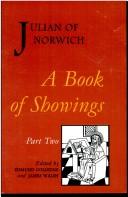
Pour commencer, une œuvre
The Short Text: A Vision Showed to a Devout WomanSon idée centrale
'All shall be well': behovely sin: In the thirteenth showing Julian asks why God in his wisdom did not prevent sin, which, she thinks, would have left everything well.
Le voir en contexte
Biographie
6 min de lecture
Traduction assistée à partir de l'original espagnol, en attente de relecture par un traducteur natif.
Une femme sans nom à elle
De l'autrice du plus ancien livre écrit en anglais par une femme qui nous soit parvenu, nous ignorons le prénom, celui de ses parents et le lieu exact de sa naissance. Nous l'appelons Julienne parce que c'est ainsi que la désignent les testaments et les copistes, et parce qu'elle vécut emmurée contre l'église Saint-Julien de Conisford, à Norwich ; il se peut qu'elle ait pris le nom du saint patron, comme le firent d'autres reclus. Ce que nous savons avec certitude, elle le raconte elle-même : en mai 1373, alors qu'elle avait « trente hivers et demi », elle reçut une série de visions au cours d'une maladie qui la conduisit au seuil de la mort. On en déduit qu'elle naquit vers la fin de 1342.
Norwich était alors l'une des villes les plus peuplées d'Angleterre, un centre du commerce de la laine qui comptait des dizaines d'églises paroissiales, des couvents des quatre ordres mendiants et un prieuré bénédictin cathédral. La jeunesse de Julienne coïncida avec la peste noire, qui frappa la ville en 1349 et revint au cours des décennies suivantes, avec la guerre de Cent Ans et, en 1381, avec la révolte des paysans, durement réprimée dans le Norfolk par l'évêque Henry Despenser. Rien de tout cela n'apparaît explicitement dans son livre, mais nombre de lecteurs ont entendu dans son insistance sur le fait que « tout sera bien » la réponse à un monde blessé.
Les trois dons et la maladie
Julienne raconte que, jeune, elle avait demandé à Dieu trois grâces : un souvenir vivant de la passion du Christ, comme si elle s'était tenue au pied de la croix avec Marie Madeleine ; une grave maladie corporelle à trente ans ; et trois « blessures » : la vraie contrition, la compassion et le désir de Dieu. Elle oublia les deux premières demandes ; la troisième, elle la garda toujours. À trente ans et demi, elle tomba malade. Pendant trois jours et trois nuits son état s'aggrava ; elle reçut les derniers sacrements et sa mère, entre autres, la veillait. Le curé plaça devant elle un crucifix et lui dit de regarder l'image de son Créateur et Sauveur et d'y trouver réconfort. Sa vue s'obscurcit, sauf autour de la croix.
Seize monstrations
Alors, le 8 ou le 13 mai 1373 — les manuscrits divergent —, elle vit saigner la couronne d'épines, et avec cette vision commença une série de seize « monstrations » (shewings) : quinze entre quatre heures du matin et le milieu de l'après-midi, et la dernière la nuit suivante. Elles mêlent des images de la passion d'un réalisme physique extraordinaire — le sang qui tombe comme les gouttes de pluie d'un avant-toit, le visage qui se dessèche et change de couleur —, des paroles intérieures et des « visions spirituelles » sans image. Dans l'une d'elles, elle voit dans la paume de sa main une chose de la taille d'une noisette : « c'est tout ce qui est créé », et cela dure parce que Dieu l'aime. Une fois rétablie, elle dit à un religieux qu'elle avait « déliré », et se repentit aussitôt d'avoir renié ce qu'elle avait vu ; cette nuit-là, elle subit l'assaut d'une vision diabolique et reçut la dernière monstration, qui confirmait les précédentes.
Deux livres
Peu après, elle écrivit un premier récit, appelé aujourd'hui le Texte court, où elle relate les visions et leur sens le plus immédiat. Pendant des décennies, elle continua de les méditer. Elle raconte que « quinze ans après et davantage » elle reçut la réponse à sa question sur le sens de tout cela : « L'amour était son intention ». Vingt ans après les visions, moins trois mois, elle comprit l'exemple du seigneur et du serviteur, une parabole qu'elle avait omise dans le premier récit. Il en résulta le Texte long, quatre-vingt-six chapitres qui font de l'expérience une théologie : le péché, qui est « convenable » et pourtant n'a pas de substance ; un Dieu en qui elle ne voit pas de colère ; la maternité du Christ ; la prière qui « unit l'âme à Dieu ». Nicholas Watson a proposé de retarder la rédaction du Texte court jusqu'aux années 1380 et de prolonger celle du Texte long jusqu'en plein XVe siècle.
L'anachorète de Saint-Julien
Nous ignorons quand elle s'enferma dans la cellule adossée à l'église Saint-Julien, qui dépendait du prieuré de moniales bénédictines de Carrow. La première mention documentaire date de 1394 : le testament de Roger Reed, recteur de Saint-Michel-Coslany, lui lègue deux shillings. Suivent d'autres legs en 1404, 1415 et 1416, le dernier d'Isabel Ufford, comtesse de Suffolk. Une anachorète vivait à vie dans une ou deux pièces, avec une fenêtre donnant sur l'église pour suivre la messe et une autre sur la rue pour conseiller ceux qui venaient la trouver, tandis qu'une ou deux servantes pourvoyaient à sa subsistance. On a supposé qu'elle avait d'abord été moniale à Carrow, ou bien veuve et mère, vu la précision avec laquelle elle parle de l'éducation des enfants ; ce sont deux conjectures.
Margery Kempe à la fenêtre
Vers 1413, Margery Kempe, la turbulente mystique de King's Lynn, vint la consulter pour savoir si ses larmes et ses révélations venaient de Dieu. Le Livre de Margery Kempe, dicté une vingtaine d'années plus tard, rapporte que « Dame Julienne » l'écouta pendant plusieurs jours et lui conseilla d'obéir à Dieu, de se fier à sa bonté et de ne pas s'inquiéter de l'incrédulité d'autrui, car celui qui doute toujours est semblable au flot de la mer. C'est le seul portrait de Julienne dû à quelqu'un qui l'a connue. Cette même année 1413, selon la rubrique du manuscrit du Texte court, son autrice était encore en vie ; sa mort, postérieure à 1416, n'a laissé aucune trace documentaire.
Une transmission fragile
Le Texte court survit dans un seul manuscrit copié au milieu du XVe siècle, le manuscrit dit Amherst (British Library, Add. MS 37790). Le Texte long nous est parvenu grâce aux bénédictines anglaises exilées à Cambrai et à Paris au XVIIe siècle, qui le copièrent et le conservèrent : de ce milieu proviennent le manuscrit de Paris (Bibliothèque nationale de France, Fonds anglais 40) et les Sloane 2499 et 3705 de la British Library. Le bénédictin Serenus Cressy l'imprima en 1670. L'édition de Grace Warrack, en 1901, le rendit aux lecteurs, et l'édition critique d'Edmund Colledge et James Walsh (1978) établit le texte des deux versions.
La théologienne de la confiance
Le XXe siècle en fit une autrice classique. T. S. Eliot clôt « Little Gidding », le dernier de ses Quatre Quatuors, sur ses paroles à propos du péché « convenable » et de ce que tout sera bien ; l'Église d'Angleterre la commémore le 8 mai et Benoît XVI lui consacra une audience générale en 2010. L'église Saint-Julien, détruite par les bombardements allemands de 1942, fut reconstruite avec une cellule qui accueille aujourd'hui des pèlerins. Par-delà les étiquettes qu'on lui a attribuées — féministe, universaliste, écologique —, demeure une voix qui se présentait comme une « simple créature illettrée » et qui écrivit avec une précision théologique rare en son siècle, tenant ensemble l'enseignement de l'Église et une vision de Dieu où elle ne trouva pas de colère.
Sources: Colledge, Edmund, y James Walsh (eds.). A Book of Showings to the Anchoress Julian of Norwich. 2 vols. Studies and Texts 35. Toronto: Pontifical Institute of Mediaeval Studies, 1978. · Watson, Nicholas, y Jacqueline Jenkins (eds.). The Writings of Julian of Norwich: A Vision Showed to a Devout Woman and A Revelation of Love. University Park: Pennsylvania State University Press / Turnhout: Brepols, 2006. · Warrack, Grace (ed.). Revelations of Divine Love Recorded by Julian, Anchoress at Norwich, Anno Domini 1373. Londres: Methuen, 1901 (Project Gutenberg n.º 52958). · Windeatt, Barry (trad. e intr.). Julian of Norwich: Revelations of Divine Love. Oxford World's Classics. Oxford: Oxford University Press, 2015. · The Book of Margery Kempe. Ed. Sanford Brown Meech y Hope Emily Allen. Early English Text Society, o.s. 212. Londres: Oxford University Press, 1940, cap. 18.
Chronologie
La vie, année après année
Chaque point est un événement documenté. Cliquez pour le lire, avec sa source et son degré de certitude.
v. 13420 ansProbablemente Norwich o Norfolk
Birth
Date inferred from her own statement that she was 'thirty winters and a half' old in May 1373 (Long Text, ch. 3). Her baptismal name and family are unknown.
ProbableColledge, Edmund, y James Walsh (eds.). A Book of Showings to the Anchoress Julian of Norwich. 2 vols. Studies and Texts 35. Toronto: Pontifical Institute of Mediaeval Studies, 1978.
Après sa mort
- v. 1450The Amherst manuscript is copied
- 1670First printed edition
- 1901Grace Warrack's edition
- juin 1942St Julian's church destroyed
- 1978Critical edition
- 1 décembre 2010Benedict XVI's audience
v. 1342 · 0 ans
Birth
Date inferred from her own statement that she was 'thirty winters and a half' old in May 1373 (Long Text, ch. 3). Her baptismal name and family are unknown.
Probable
1349 · 7 ans
The Black Death in Norwich
The epidemic decimates the city; new waves in 1361–1362 and 1369. The context of her childhood.
Documenté
mai 1373 · 30 ans
The sixteen showings
Gravely ill, she receives fifteen visions between early morning and afternoon and the sixteenth the following night. The manuscripts give 8 or 13 May.
Documenté
v. 1380 – 1388 · 38 ans
The Short Text
Writing of the first account of the visions; the traditional date (soon after 1373) was challenged by Nicholas Watson, who places it in the 1380s.
Contesté
v. 1388 · 45 ans
'Love was his meaning'
'Fifteen years after and more' she receives the understanding that closes the book: love is the meaning of all the showings (Long Text, ch. 86).
Documenté
v. 1393 · 50 ans
The example of the lord and the servant
'Twenty years after the time of the showing, save three months' she understands the parable of the lord and the servant (Long Text, ch. 51), the core of the Long Text.
Documenté
mars 1394 · 51 ans
First mention as an anchoress
The will of Roger Reed, rector of St Michael Coslany, leaves two shillings to 'Julian anakorite'.
Documenté
1404 · 61 ans
Bequest of Thomas Emund
A chantry priest of Aylsham leaves a bequest to the anchoress of St Julian's and to her servant Sara.
Documenté
v. 1413 · 70 ans
Margery Kempe's visit
Margery Kempe consults her over several days about her experiences (Book of Margery Kempe, ch. 18). The rubric of the Amherst manuscript states she was alive in 1413.
Documenté
1416 · 73 ans
Last mention: the will of Isabel Ufford
The Countess of Suffolk leaves twenty shillings to 'Julian recluse a Norwich'. It is the last document mentioning her alive; the date of her death is unknown.
Documenté
v. 1450
The Amherst manuscript is copied
A scribe copies the Short Text into an anthology of contemplative texts (British Library, Add. MS 37790), the only witness to that version.
Probable
1670
First printed edition
The Benedictine Serenus Cressy publishes XVI Revelations of Divine Love from a Long Text manuscript related to the Paris one.
Documenté
1901
Grace Warrack's edition
Methuen publishes Grace Warrack's modernised version of Sloane 2499, which popularises the work.
Documenté
juin 1942
St Julian's church destroyed
German bombing destroys the church; it is rebuilt in 1953 with a chapel on the site of the cell.
Documenté
1978
Critical edition
Edmund Colledge and James Walsh publish the critical edition of both versions (Pontifical Institute of Mediaeval Studies).
Documenté
1 décembre 2010
Benedict XVI's audience
Benedict XVI devotes his general audience catechesis to Julian.
Documenté
Œuvres
Œuvres essentielles
Les œuvres sans lesquelles on ne comprend pas son héritage.
Manuscrit · v. 1385
The Short Text: A Vision Showed to a Devout Woman
A Vision Showed to a Devout Woman
The first version of the account of the visions of May 1373, in twenty-five chapters. It narrates the three gifts requested, the illness, the crucifix and the sixteen showings in a more personal and immediate tone than the long version: Julian presents herself as a woman and apologises for teaching ('Should I believe, because I am a woman, that I ought not to tell you of the goodness of God?'). It does not yet contain the example of the lord and the servant or the theology of Christ's motherhood. It is the earliest surviving English text known to be by a woman.
5 éditions

Manuscrit · v. 1393
The Long Text: Revelations of Divine Love
A Revelation of Love (Revelations of Divine Love)
A reworking of the same visions in eighty-six chapters, the fruit of twenty years or more of meditation. Besides expanding each showing, it adds theological chapters: the example of the lord and the servant (ch. 51), in which Adam and Christ are both the servant who falls in serving; the teaching that there is no wrath in God and that sin is 'behovely' but has no substance; the 'substance' and 'sensuality' of the soul; and the motherhood of Christ and of the Trinity (chs. 58–63). It closes with the answer received 'fifteen years after and more': 'Love was his meaning'. It is the major work of medieval English mysticism.
9 éditions
Citations
Citations localisées dans une œuvre précise. Chacune porte sa provenance et son degré de fiabilité.
It behoved that there should be sin; but all shall be well, and all shall be well, and all manner of thing shall be well.VérifiéeTexto largo según la versión modernizada del Sloane 2499 de Grace Warrack (1901), cap. 27 (decimotercera mostración)
Citations apocryphes ou d'attribution contestée (1)
«Be a gardener. Dig a ditch, toil and sweat, and turn the earth upside down…»
It circulates online and on devotional cards as a quotation from Julian. It does not appear in that form in either version: it is a free reworking of the image of the servant labouring as a gardener in the example of the lord and the servant (Long Text, ch. 51).
Dernières paroles
Il n'existe aucun témoignage vérifiable de ses dernières paroles.
Neither the date nor the circumstances of her death are known. The last document mentioning her alive is the will of Isabel Ufford, Countess of Suffolk (1416); no source transmits final words.
Source: Tanner, Norman P. The Church in Late Medieval Norwich, 1370–1532. Studies and Texts 66. Toronto: Pontifical Institute of Mediaeval Studies, 1984 (testamentos de Norwich con legados a anacoretas).
Interroger
Ce que répond son œuvre
Douze grandes questions de l'humanité et ce que ses textes permettent d'y répondre, références à l'appui. Nous ne lui prêtons jamais de paroles.
Qu'est-ce que l'Absolu ? Dieu existe-t-il ?
God is Trinitarian love, Father and also Mother
Un Dieu personnelIl le dit expressément
Julian of Norwich does not argue for God's existence: she describes what was «shown» to her in sixteen revelations during an illness in 1373. In them God is Trinity and is love: in the final chapter of the Long Text she sums up that the meaning of everything shown was love. This God is courteous, homely, rejoices in creatures and holds them in being, like the hazelnut that lasts because God loves it. Her most original contribution is to call God Mother with the same truth with which he is called Father, and to ascribe that motherhood especially to Christ, the second Person. The Absolute is for her a Thou who loves without wrath, whose love precedes creation and never lessens.
Comparer cette question avec d'autres maîtresQui suis-je ? Existe-t-il un vrai soi ?
Our substance is in God; our sensuality awaits union with it
Une âme créée et immortelleIl le dit expressément
Julian of Norwich distinguishes in the human being the «substance», the highest part, which was never separated from God, and the «sensuality», the embodied, temporal life where sin and pain occur. In chapter 54 of the Long Text she states that she saw no difference between God and our substance, as if it were all God, and yet understood that our substance is a creature in God. In the parable of the lord and the servant (ch. 51), the soul's fall arises not from malice but from haste to serve. The true self is a created soul, loved forever and kept in God, which is reconciled with itself when substance and sensuality are united through Christ.
Comparer cette question avec d'autres maîtresPourquoi souffrons-nous ?
Sin was behovely, but all shall be well
La séparation d'avec DieuIl le dit expressément
Julian of Norwich asked why, if God is love, he did not prevent sin, which is the cause of all pain. The answer shown to her is one of the most famous sentences of English mysticism: sin was behovely, but all shall be well, and all manner of thing shall be well. She did not see sin, because she believes it has no substance, and knew it only by the pain it causes. In the parable of the lord and the servant, the fall appears as the stumbling of a servant running to do his lord's will. Suffering arises from separation, but God does not look on it with wrath, and every pain will be turned to honour.
Comparer cette question avec d'autres maîtresQue se passe-t-il après la mort ?
A great deed at the end will make all things well
Vie éternelle et résurrectionIl le dit expressément
Julian of Norwich's revelations were born at the edge of death: she was thirty and a half, received the last rites, and the priest held a crucifix before her, before which the visions began. Her hope is the Church's: eternal life in God, joy and bliss. But she adds something of her own: in chapter 32 she is shown that there is a great deed that the Trinity will do on the last day, hidden from every creature, by which all shall be well. Julian acknowledges the tension with the Church's teaching on damnation and does not resolve it: she holds it in faith and in the promise that what is impossible for her is not so for God.
Comparer cette question avec d'autres maîtresComment atteint-on la libération ou le salut ?
God is the ground of our beseeching
Par la grâce et l'amourIl le dit expressément
Julian of Norwich sees salvation as the work of God's love that precedes everything: in chapter 41 of the Long Text she is shown that God is the ground of our beseeching, that it is he who makes us desire and ask for what he wishes to give us. The human role is real but humble: to pray, to trust, not to despair of one's own sin, and to remain in the faith of the Church. In chapter 68 she receives the promise that the soul will not be overcome, though it be tossed and afflicted. Liberation consists in Christ, our Mother, restoring us to the union of substance and sensuality, and keeping us in a love that never withdraws.
Comparer cette question avec d'autres maîtresFaut-il un maître ?
What was shown is received within the Church's common faith
La communauté et la traditionCela se déduit de sa doctrine
Julian of Norwich does not raise the question of the spiritual teacher; she received her revelations directly and spent some twenty years meditating on them. But she refuses to make them a separate authority. In chapter 9 of the Long Text she declares that she is not good because of the visions, but only if she loves God more, and that what she saw she believes according to the teaching of Holy Church. In chapter 80 she sums up the three things by which a human being stands in this life: the use of natural reason, the common teaching of the Church and the inward working of the Holy Spirit. Her text, moreover, is addressed to all her «fellow Christians», not to disciples.
Comparer cette question avec d'autres maîtresLe monde est-il réel ?
All creation fits in a hazelnut and lasts because God loves it
Une création bonne et réelleIl le dit expressément
Julian of Norwich's best-known image answers this question. In the first revelation, God shows her in the palm of her hand a little thing, the size of a hazelnut, round as a ball, and she is told that it is all that is made. Julian marvels that it can last, for it seems that, in its littleness, it might suddenly fall into nothing; and she is answered that it lasts and ever shall because God loves it. In that vision she understands three things: that God made it, that God loves it and that God keeps it. The world is real, fragile and small before its Creator, and good because it is loved.
Comparer cette question avec d'autres maîtresQu'est-ce que l'amour ?
Love was the meaning of everything shown
L'amour de Dieu et du prochainIl le dit expressément
Julian of Norwich's Long Text ends with the answer to the question she had asked herself for fifteen years: what the Lord's meaning was in what he showed her. She was answered that it was love: who showed it to her, love; what he showed her, love; why he showed it, for love. Julian adds that she saw with certainty that God loved us before he made us and that this love has never diminished nor ever shall. Love is God's essence, and from it proceeds the love creatures have for one another: her text is addressed to all her fellow Christians, because what was shown was for all, and in loving them she sees the concrete form of loving God.
Comparer cette question avec d'autres maîtresSommes-nous libres ou tout est-il déterminé ?
God does all that is done; the how remains a secret
Ne s'est pas prononcé
Julian of Norwich does not treat human freedom as a problem. What is shown to her points elsewhere: in the third revelation she sees God in a point and understands that he is in all things and does all that is done; nothing happens by chance, but by God's foreseeing wisdom. That raises for her the question of sin, which is no deed, and she resolves it by trusting that all that is done is well done. She neither denies human responsibility —she speaks of repentance, prayer and the fall— nor theorises about predestination: she leaves the how in God's secret, who in his time will make all things well.
Comparer cette question avec d'autres maîtresPourquoi méditer ou prier ?
Prayer unites the soul to God, who is its ground
L'amitié avec DieuIl le dit expressément
Julian of Norwich devotes several chapters of the Long Text to prayer. There she is told that God is the ground of beseeching: it is he who makes us desire what he wants to give, and so prayer is never in vain, even when it seems dry or fruitless. Prayer unites the soul to God: although the soul is always like God in nature, it is often unlike him through sin, and prayer makes it like him in will. She distinguishes beseeching, which asks, from contemplation, in which the soul can no longer ask but only behold and give thanks. The tone is one of homely trust: God is courteous and wants to be spoken to with the simplicity of a child with its mother.
Comparer cette question avec d'autres maîtresLa raison peut-elle connaître l'ultime ?
Natural reason, the Church's teaching and the Spirit's work
La foi et la raison s'entraidentIl le dit expressément
Julian of Norwich presents herself as an «unlettered creature», but her work shows great theological intelligence, and she gives reason an explicit place. In chapter 80 of the Long Text she lists the three things by which the human being stands in this life and by which God is honoured: the use of natural reason, the common teaching of Holy Church and the inward gracious working of the Holy Spirit, and adds that all three come from one God. The revelations do not replace reason: Julian spent twenty years meditating on them in order to understand them, and the Long Text is the fruit of that reflection. Reason helps; faith and grace complete.
Comparer cette question avec d'autres maîtresSe retirer du monde ou le transformer ?
An anchoress who writes for all her fellow Christians
Se retirer pour trouverCela se déduit de sa doctrine
Julian of Norwich lived as an anchoress, enclosed in a cell attached to the church of Saint Julian in Norwich, from which she probably takes her name; wills of the period mention her as an anchorite in the early fifteenth century. Her form of life was thus the strictest withdrawal known to the medieval Church. But her work does not argue for enclosure or despise those who live in the world: she declares that what was shown is not only for her but for all her fellow Christians, and her theology of God's love addresses ordinary life, the falling and falling again of anyone. From the cell, the window opened onto the street.
Comparer cette question avec d'autres maîtres
Affinités et tensions
Affinités et tensions
Calculées question par question à partir de ses positions. La raison de chaque accord ou de chaque désaccord s'affiche d'un clic.
Pense comme
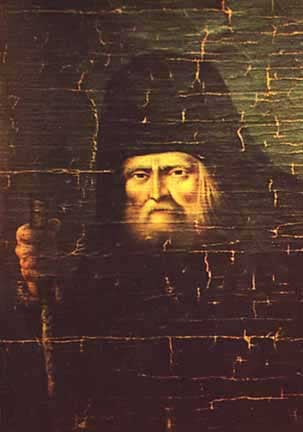
Seraphim of Sarov
Ils concordent sur: Qu'est-ce que l'Absolu ? Dieu existe-t-il ? · Qui suis-je ? Existe-t-il un vrai soi ? · Pourquoi souffrons-nous ?

Francis of Assisi
Ils concordent sur: Qu'est-ce que l'Absolu ? Dieu existe-t-il ? · Qui suis-je ? Existe-t-il un vrai soi ? · Pourquoi souffrons-nous ?

Theophan the Recluse
Ils concordent sur: Pourquoi souffrons-nous ? · Qu'est-ce que l'Absolu ? Dieu existe-t-il ? · Qui suis-je ? Existe-t-il un vrai soi ?
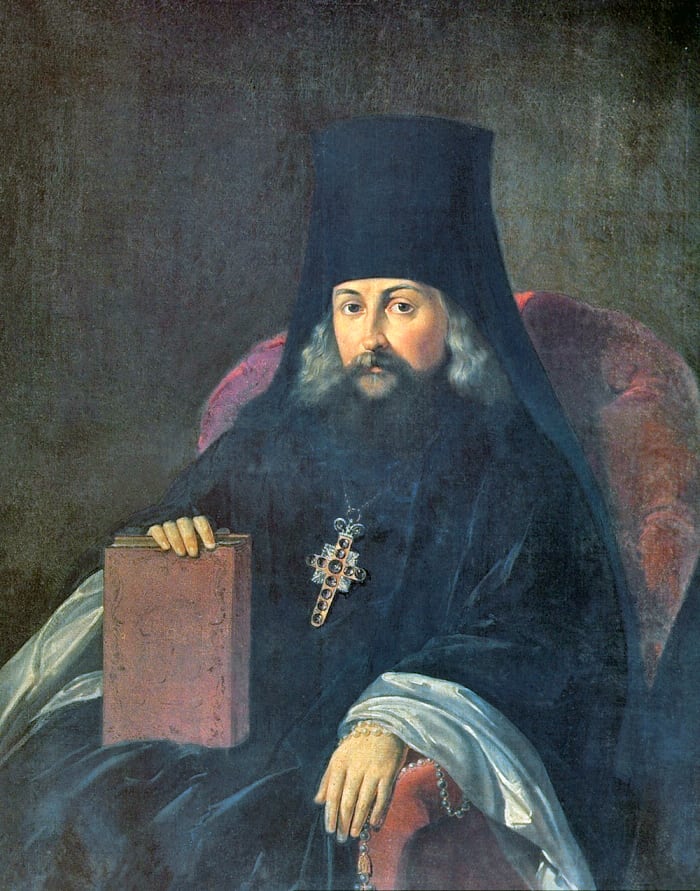
Ignatius Brianchaninov
Ils concordent sur: Pourquoi souffrons-nous ? · Qu'est-ce que l'Absolu ? Dieu existe-t-il ? · Qui suis-je ? Existe-t-il un vrai soi ?
Pense autrement que

Pema Chödrön
Ils s'opposent sur: Qu'est-ce que l'Absolu ? Dieu existe-t-il ? · Qui suis-je ? Existe-t-il un vrai soi ? · Que se passe-t-il après la mort ?

Nāgārjuna
Ils s'opposent sur: Qu'est-ce que l'Absolu ? Dieu existe-t-il ? · Qui suis-je ? Existe-t-il un vrai soi ? · Que se passe-t-il après la mort ?
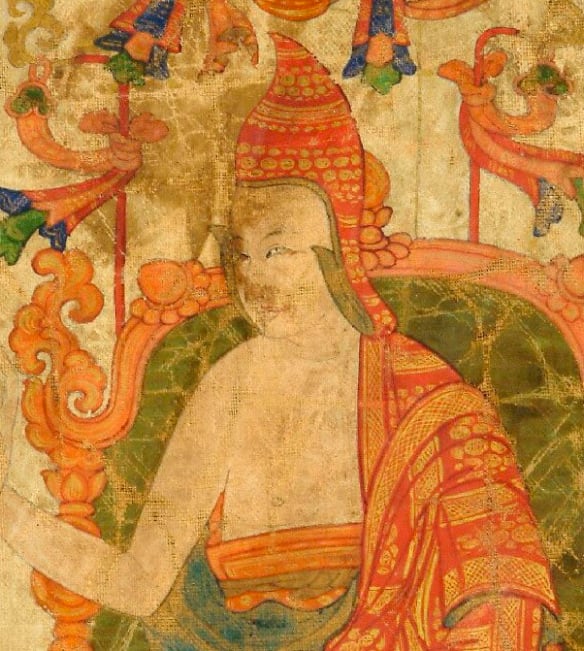
Śāntideva
Ils s'opposent sur: Qu'est-ce que l'Absolu ? Dieu existe-t-il ? · Qui suis-je ? Existe-t-il un vrai soi ? · Que se passe-t-il après la mort ?

Sadhguru
Ils s'opposent sur: Qui suis-je ? Existe-t-il un vrai soi ? · Que se passe-t-il après la mort ? · Le monde est-il réel ?
Anecdotes et récits
Anecdotes et récits
Témoignagemayo de 1373
The parish priest's crucifix
Origine du récit: Julian's own account in the Short Text (chs. 2–3) and the Long Text (chs. 3–4).
Témoignagemayo de 1373
'I said I had raved'
Origine du récit: Long Text, chs. 66–67; the episode also appears in the Short Text (chs. 21–22).
Documentéc. 1413
Margery Kempe at the cell window
Origine du récit: The Book of Margery Kempe, book I, ch. 18, dictated c. 1436–1438. The meeting is known only from this account.
Source: The Book of Margery Kempe. Ed. Sanford Brown Meech y Hope Emily Allen. Early English Text Society, o.s. 212. Londres: Oxford University Press, 1940, cap. 18.
Invérifiables. XX (tradición)
The anchoress's cat
Origine du récit: The rule comes from the Ancrene Wisse (part VIII). The attribution of a cat to Julian has no medieval source and spread with modern iconography.
Source: Jantzen, Grace M. Julian of Norwich: Mystic and Theologian. Londres: SPCK, 1987 (nueva ed. 2000).
Documentés. XVII
The nuns of Cambrai
Origine du récit: Watson and Jenkins (2006) and Colledge and Walsh (1978) study the provenance of the Long Text manuscripts in the milieu of the Cambrai and Paris communities.
Source: Watson, Nicholas, y Jacqueline Jenkins (eds.). The Writings of Julian of Norwich: A Vision Showed to a Devout Woman and A Revelation of Love. University Park: Pennsylvania State University Press / Turnhout: Brepols, 2006.
Enseignements
Enseignements
Les notions qui structurent sa pensée, expliquées dans leur contexte.
'All shall be well': behovely sintodo-ira-bien
Late medieval debate on predestination and salvation, in the England of Wyclif and Langland.
Source: Colledge, Edmund, y James Walsh (eds.). A Book of Showings to the Anchoress Julian of Norwich. 2 vols. Studies and Texts 35. Toronto: Pontifical Institute of Mediaeval Studies, 1978.
A God without wrathdios-sin-ira
Contrast with fourteenth-century penitential preaching and with the image of judgement in scholastic theology.
Source: Jantzen, Grace M. Julian of Norwich: Mystic and Theologian. Londres: SPCK, 1987 (nueva ed. 2000).
The example of the lord and the servantsenor-y-siervo
Medieval multi-layered exegesis and the tradition of parable as a form of theological teaching.
Source: Watson, Nicholas, y Jacqueline Jenkins (eds.). The Writings of Julian of Norwich: A Vision Showed to a Devout Woman and A Revelation of Love. University Park: Pennsylvania State University Press / Turnhout: Brepols, 2006.
The motherhood of Christ and of Godmaternidad-de-cristo
Medieval tradition of Jesus as mother (Anselm, Bernard of Clairvaux, William of Saint-Thierry).
Source: Jantzen, Grace M. Julian of Norwich: Mystic and Theologian. Londres: SPCK, 1987 (nueva ed. 2000).
Substance and sensualitysustancia-y-sensualidad
Augustinian anthropology of the image and the English contemplative tradition (Hilton, The Cloud of Unknowing).
Source: Watson, Nicholas, y Jacqueline Jenkins (eds.). The Writings of Julian of Norwich: A Vision Showed to a Devout Woman and A Revelation of Love. University Park: Pennsylvania State University Press / Turnhout: Brepols, 2006.
The courtesy and homeliness of Godcortesia-de-dios
The courtly language of fourteenth-century England applied to theology.
Source: Windeatt, Barry (trad. e intr.). Julian of Norwich: Revelations of Divine Love. Oxford World's Classics. Oxford: Oxford University Press, 2015.
Vidéos
Vidéos
Enregistrements, entretiens et documentaires. Les vidéos sont lues depuis YouTube ; elles ne sont pas hébergées ici.
2024 Julian Festival Lecture, Julian and the Trinity, Archbishop Rowan Williams
Conférence· EN· 2024· 89 min
Julian of NorwichChaîne officielle
Julian of Norwich: mother, mystic, radical
Conférence· EN· 2023· 81 min
Jesus College, CambridgeChaîne officielle
Julian of Norwich: Revelations of Divine Love - Robert Fruehwirth
Conférence· EN· 2016· 61 min
St Paul's CathedralChaîne officielle
Prayer in the Teachings of Julian of Norwich: A Journey of Desire | Philip Sheldrake
Conférence· EN· 2019· 84 min
Oblate School of TheologyChaîne officielle
How to Read Julian of Norwich / Ryan McAnnally-Linz
Conférence· EN· 2024· 54 min
Yale Center for Faith & CultureChaîne officielle
Julian of Norwich and the English Mystics: A Lecture by Fr. Groeschel
Conférence· EN· 2019· 73 min
International Institute for Culture
Cecilia Twinch: Julian of Norwich: All manner of things shall be well
Conférence· EN· 2023· 42 min
Ibn 'Arabi SocietyChaîne officielle
Revelations of Divine Love by Julian of NORWICH read by David Barnes | Full Audio Book
Enregistrement de tiers· EN· 2018· 441 min
LibriVox Audiobooks
3º clase - Javier Melloni sj expone sobre Juliana de Norwich, teóloga de su propia experiencia
Conférence· ES· 2022· 113 min
Fraternidad del Santo Nombre
Juliana de Norwich, Mística de la cortesía de Dios - El primer documental español
Documentaire· ES· 2026· 15 min
Radio Monastero Interiore
El Papa dedica la audiencia general a Juliana de Norwich, mística inglesa
Enregistrement de tiers· ES· 2010· 3 min
ROME REPORTS en EspañolChaîne officielle
Juliana de Norwich
Conférence· ES· 2026· 104 min
Cruzando Fronteras con Fernando Cordero sscc
Giuliana di Norwich, Mistica della cortesia di Dio - il primo documentario italiano
Documentaire· IT· 2025· 16 min
Radio Monastero Interiore
Galerie
Galerie
Images dont la licence a été vérifiée. Chacune conserve son auteur et son attribution.
Manuscrits
Manuscrits
Témoins manuscrits et textes anciens, avec leur dépositaire et leurs conditions de consultation.
ENM · Gótica cursiva inglesa (tipo no verificado) · Texto: c. 1373–1390; copia: c. 1435–1450
A Vision Showed to a Devout Woman (Texto breve), en antología contemplativa
- Témoin conservé
- Único testimonio del Texto breve, dentro de una antología de textos contemplativos (Rolle, Ruusbroec, Suso, entre otros). La rúbrica afirma que la autora seguía viva en 1413.
- Dépositaire
- British Library, Londres · Add. MS 37790 (manuscrito Amherst)
ENM · Cursiva (tipo no verificado) · Copia de finales del s. XVI
Revelations of Divine Love (Texto largo), copia de París
- Témoin conservé
- Texto largo completo con el explicit «Explicit liber revelationum Julyane anatorite Norwyche»; texto próximo al de la edición de Cressy (1670).
- Dépositaire
- Bibliothèque nationale de France, París · Fonds anglais 40
ENM · Cursiva del s. XVII · Mediados del s. XVII
Revelations of Divine Love (Texto largo), Sloane 2499
- Témoin conservé
- Texto largo completo con ortografía arcaizante; base de las ediciones de Warrack (1901), Glasscoe (1976) y Crampton (1993).
- Dépositaire
- British Library, Londres · Sloane MS 2499
ENM · Cursiva del s. XVIII · S. XVIII
Revelations of Divine Love (Texto largo), Sloane 3705
- Témoin conservé
- Copia tardía del Texto largo, con ortografía modernizada.
- Dépositaire
- British Library, Londres · Sloane MS 3705
ENM · Gótica cursiva inglesa (tipo no verificado) · c. 1500
Extractos del Texto largo (manuscrito de Westminster)
- Témoin conservé
- Antología de pasajes del Texto largo junto a comentarios a los salmos; el testimonio más antiguo de esa versión.
- Dépositaire
- Westminster Cathedral Treasury, Londres · MS 4
Relations
Relations
Influences, filiations et affinités. On distingue la relation documentée de la similitude identifiée par analyse.
A reçu l'influence de
The sixteen showings centre on Christ's passion, which Julian had asked to behold 'as if she had been there', and her whole theology is built around him as servant, mother and saviour.
Relation documentée
Idées proches de
Julian works within the Augustinian horizon (fall, original sin, grace, God's image in the soul), but her vision of a God who does not blame departs from the rigour of the late Augustine. No direct reading is documented.
Similitude identifiée par analyse
Contemporain de
Exact contemporaries (Catherine was born in 1347 and Julian had her visions in 1373), both laywomen without Latin learning who dictated or wrote theology in the vernacular. There was no contact.
Similitude identifiée par analyse
Idées proches de
Two women who wrote of their experience of God in domestic language and with a theological sharpness that exceeded their 'unlettered' status. Teresa did not know Julian's work.
Similitude identifiée par analyse
Idées proches de
Both visionaries received visions in sickness and interpreted them over years; but Hildegard was an abbess, prophetic and cosmological, and Julian a recluse and introspective. No documented relation.
Similitude identifiée par analyse
Idées proches de
Affective devotion to the suffering humanity of Christ, spread in fourteenth-century England by Franciscan spirituality, forms the background of her visions of the passion. No direct relation.
Similitude identifiée par analyse
Idées proches de
Julian's 'substance' of the soul ever united to God recalls Eckhart's 'ground' of the soul, but her language is narrative and concrete, not speculative. There is no sign that she knew Rhineland mysticism.
Similitude identifiée par analyse
Lié depuis d'autres fiches
Sources
Sources
Bibliographie et catalogues consultés pour cette fiche.
- Wikidata, Q236699 «Juliana de Norwich / Julian of Norwich» (P31=Q5; 45 enlaces entre wikis).
- Colledge, Edmund, y James Walsh (eds.). A Book of Showings to the Anchoress Julian of Norwich. 2 vols. Studies and Texts 35. Toronto: Pontifical Institute of Mediaeval Studies, 1978.
- Watson, Nicholas, y Jacqueline Jenkins (eds.). The Writings of Julian of Norwich: A Vision Showed to a Devout Woman and A Revelation of Love. University Park: Pennsylvania State University Press / Turnhout: Brepols, 2006.
- Warrack, Grace (ed.). Revelations of Divine Love Recorded by Julian, Anchoress at Norwich, Anno Domini 1373. Londres: Methuen, 1901 (Project Gutenberg n.º 52958).
- Windeatt, Barry (trad. e intr.). Julian of Norwich: Revelations of Divine Love. Oxford World's Classics. Oxford: Oxford University Press, 2015.
- The Book of Margery Kempe. Ed. Sanford Brown Meech y Hope Emily Allen. Early English Text Society, o.s. 212. Londres: Oxford University Press, 1940, cap. 18.
- Jantzen, Grace M. Julian of Norwich: Mystic and Theologian. Londres: SPCK, 1987 (nueva ed. 2000).
- Benedicto XVI. Audiencia general del 1 de diciembre de 2010: Juliana de Norwich. Libreria Editrice Vaticana.
- Spearing, Elizabeth (trad.), y A. C. Spearing (intr. y notas). Julian of Norwich: Revelations of Divine Love (Short Text and Long Text). Londres: Penguin Books, 1998.
- Watson, Nicholas. «The Composition of Julian of Norwich's Revelation of Love». Speculum 68, n.º 3 (1993), pp. 637–683.
- Ward, Benedicta. «Julian the Solitary». En Kenneth Leech y Benedicta Ward, Julian Reconsidered. Oxford: SLG Press, 1988.
- Glasscoe, Marion (ed.). Julian of Norwich: A Revelation of Love. Exeter Medieval English Texts. Exeter: University of Exeter, 1976 (ed. del Sloane 2499).
- Beer, Frances (ed.). Julian of Norwich's Revelations of Divine Love: The Shorter Version Ed. from B. L. Add. MS 37790. Heidelberg: Carl Winter, 1978.
- Open Library (Internet Archive), registros de edición consultados por ISBN para las ediciones listadas.
- Eliot, T. S. «Little Gidding» (1942), en Four Quartets. Londres: Faber & Faber, 1944, sección V.
- Tanner, Norman P. The Church in Late Medieval Norwich, 1370–1532. Studies and Texts 66. Toronto: Pontifical Institute of Mediaeval Studies, 1984 (testamentos de Norwich con legados a anacoretas).
- The Julian Shrine, St Julian's Church, Norwich: historia de la iglesia y de la celda reconstruida.
- Friends of Julian of Norwich (asociación que mantiene el Julian Centre y promueve su lectura).
- Holloway, Julia Bolton, Anna Maria Reynolds et al. (eds.). Julian of Norwich, Showing of Love: Extant Texts and Translation. Florencia: SISMEL – Edizioni del Galluzzo, 2001.
- Wikisource en inglés: Revelations of Divine Love (Grace Warrack, ed. de 1907), transcripción con subpáginas por capítulo.
- Ayant droit
- Dominio público (obra del siglo XIV). Las ediciones críticas, traducciones y modernizaciones posteriores a 1955 (PIMS, Penn State, Penguin, Oxford, Paulist Press, Trotta…) están sujetas a los derechos de sus editores.
- Site officiel
- www.julianshrine.org/
En attente de confirmation
Ce que cette fiche n'a pas encore pu établir. Nous préférons le dire plutôt que de combler.
- Confirmar la fecha de muerte de Dundas Harford (n. 1858) para liberar su edición del Texto breve (1911) en la sala de lectura; hasta entonces queda con caution.
- Comprobar la calidad del OCR de la reimpresión de 1843 de la edición de Cressy en Internet Archive.
- Localizar el traductor de la edición española de Trotta (Libro de visiones y revelaciones, 2002; ISBN 9788481645590), que Open Library no registra, y buscar otras ediciones españolas con ISBN (Revelaciones del amor divino).
- Localizar ISBN de ediciones francesa, alemana e italiana: Open Library no devuelve registros fiables.
- Verificar si el manuscrito de París (BnF, Fonds anglais 40) y los Sloane 2499 y 3705 están digitalizados (Gallica; British Library Digitised Manuscripts, afectado por la caída del servicio de la BL desde 2023).
- Fijar con Colledge–Walsh y con Tanner (1984) las cuantías y fechas exactas de cada legado testamentario (Reed 1394, Emund 1404, Plumpton 1415, Ufford 1416).
- No hay traducción española de dominio público conocida; la sala de lectura queda solo en inglés.
- Programas de afiliación: ninguno verificado.
Recherche effectuée le 2026-10-25