Hindouisme · Yoga
Sadhguru
ಸದ್ಗುರು ಜಗ್ಗಿ ವಾಸುದೇವ್ · सद्गुरु
1957 –En viePersonne historiquement documentée
Jagadish « Jaggi » Vasudev (Mysore, 1957), dit Sadhguru, est un maître de yoga indien, fondateur de la Fondation Isha (1992), établie à Coimbatore. Après une expérience sur la colline de Chamundi en 1982, il quitta les affaires pour enseigner ; son programme Inner Engineering et des livres comme Inner Engineering, Karma et Death ont fait de lui l'un des gourous les plus médiatisés du monde. Il mène des campagnes écologiques comme Rally for Rivers et Save Soil. Il a reçu la Padma Vibhushan (2017), mais aussi des critiques pour des affirmations pseudo-scientifiques et des controverses autour d'Isha.
- œuvres
- 30œuvres
- éditions
- 40éditions
- citations
- 6citations
- vidéos
- 14vidéos
- images
- 2images
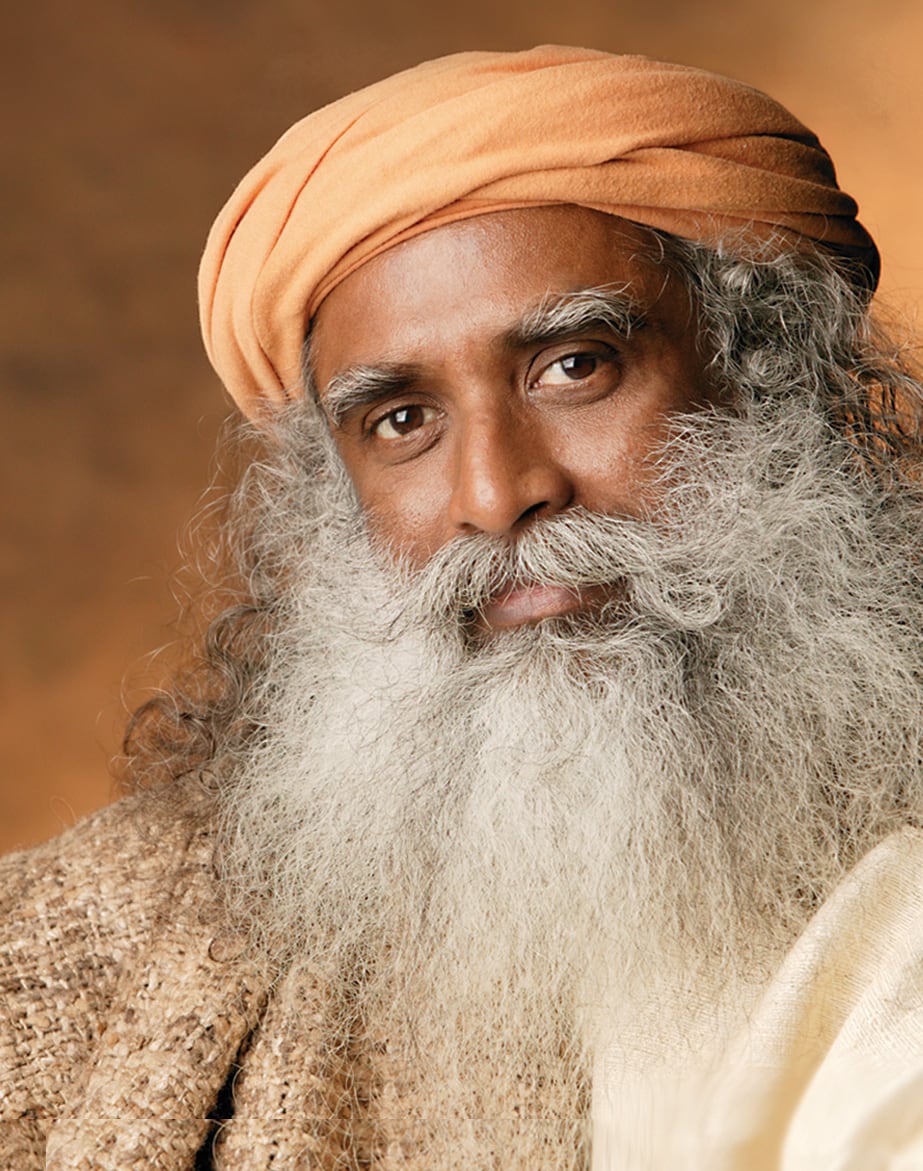
Sadhguru Jaggi Vasudev · CC BY-SA 3.0
Dans ses propres mots
«Opinions are like cataracts. They will not allow you to see clearly.»Cita diaria oficial publicada por la Fundación Isha (23 de octubre de 2026), https://isha.sadhguru.org/en/wisdom/quotes/date/october-23-2026

Son idée centrale
Responsibility, understood as the ability to respond to everything that happens rather than as blame, is for Sadhguru the starting point of wellbeing: whoever assumes it stops being a victim of circumstances.
Le voir en contexte
Biographie
4 min de lecture
Traduction assistée à partir de l'original espagnol, en attente de relecture par un traducteur natif.
Un jeune homme de Mysore
Jagadish Vasudev naquit le 3 septembre 1957 à Mysore, dans une famille télougoue. Il était le cadet des cinq enfants de B. V. Vasudev, ophtalmologiste à l'hôpital des chemins de fer de la ville, et de Susheela Vasudev. Selon son propre récit et celui de sa biographe, Arundhathi Subramaniam, il ne grandit pas dans un foyer particulièrement religieux : ce fut un garçon remuant, amateur de motos, d'excursions dans les forêts des Ghâts et de questions auxquelles l'école ne répondait pas. À douze ans, il commença à pratiquer auprès d'un maître local, Malladihalli Raghavendra Swami, une série simple de postures de yoga qu'il n'aurait, dit-il, jamais abandonnée.
Après une année sans études, il obtint une licence de littérature anglaise à l'université de Mysore et, contre le souhait de ses parents, qui le voulaient en troisième cycle, se lança dans les affaires : d'abord un élevage de volailles, qui lui laissait le temps d'écrire de la poésie, puis une entreprise de construction, Buildaids, fondée avec un ami ingénieur.
La colline de Chamundi
Le 23 septembre 1982, à vingt-cinq ans, il monta à moto sur la colline de Chamundi, aux portes de Mysore, et s'assit sur un rocher. Ce qui se produisit alors est l'axe de tout son enseignement et ne nous est connu que par son témoignage : pendant des heures, il cessa de distinguer entre lui-même et ce qui l'entourait — l'air, le rocher, l'atmosphère — et, lorsqu'il revint à lui, il avait les larmes aux yeux et une euphorie qui ne s'éteignait pas. L'expérience se répéta les jours suivants. Six semaines plus tard, il ferma ses affaires et voyagea pendant près d'un an pour comprendre ce qui lui était arrivé.
En 1983, il donna son premier cours de yoga à Mysore. Pendant des années, il parcourut à moto le Karnataka et Hyderabad pour transmettre une méthode personnelle, sans se faire payer pour enseigner et en vivant du revenu de son ancien élevage. En 1984, il épousa Vijayakumari, dont il eut en 1990 une fille, Radhe, qui deviendrait danseuse de bharata natyam.
Isha
En 1992, il créa la Fondation Isha et, en 1994, acquit des terrains au pied des monts Velliangiri, près de Coimbatore (Tamil Nadu), où il édifia le Centre de yoga Isha. Il y consacra en 1999 le Dhyanalinga, un espace de méditation ouvert aux personnes de toutes confessions, et en 2017 la gigantesque effigie d'Adiyogi, représentation de Shiva comme premier yogi, reconnue par le Livre Guinness comme le plus grand buste du monde. La fondation, qui fonctionne en grande partie grâce à des bénévoles, s'est étendue sur plusieurs continents — son centre américain se trouve à McMinnville (Tennessee) — et propose des programmes de méditation, de hatha yoga et des retraites, dont le plus connu est Inner Engineering, présenté comme une « technologie » du bien-être fondée sur le yoga classique.
En janvier 1997 mourut son épouse, Vijayakumari. Sadhguru et la fondation affirmèrent qu'elle avait quitté son corps volontairement en méditation ; le père de la défunte porta plainte contre lui, plainte que la police classa sans suite.
Le gourou mondial
À partir des années 2000, Sadhguru devint un orateur habituel des forums internationaux — le Sommet mondial du millénaire pour la paix des chefs religieux et spirituels à l'ONU, le Forum économique mondial de Davos, des universités comme Oxford ou le MIT — et surtout un phénomène des réseaux sociaux, avec des millions d'abonnés et des vidéos en anglais, hindi, tamoul, télougou, kannada et d'autres langues. Son style mêle humour, anecdotes et affirmations tranchées, et touche avec succès un public urbain et jeune étranger à la religion. Il a publié plus de trente livres, pour la plupart des transcriptions remaniées de conférences ; Inner Engineering (2016), Karma (2021) et Death (2020 ; édition américaine, 2025) ont été des succès de librairie.
Dans le même temps, il a engagé la fondation dans l'activisme environnemental : Project GreenHands (plantation d'arbres au Tamil Nadu), Rally for Rivers (2017), Cauvery Calling (2019) et Save Soil (2022), campagne pour laquelle il parcourut à moto quelque 30 000 kilomètres de Londres jusqu'en Inde et prit la parole devant la conférence des parties de la Convention des Nations unies sur la lutte contre la désertification. En 2017, il reçut la Padma Vibhushan, deuxième distinction civile de l'Inde.
Critiques et controverses
Sa figure fait aussi l'objet de critiques documentées qu'il convient d'exposer avec précision. Des scientifiques et des vulgarisateurs lui ont reproché des affirmations contraires au consensus scientifique, comme ses opinions sur le mercure dans la médecine traditionnelle ou sur les effets des éclipses. Des analystes et des journalistes ont souligné sa proximité avec le gouvernement du BJP et avec des positions du nationalisme hindou, ce qu'il dément en se déclarant étranger à tout parti ; en 2019, il présenta des excuses pour avoir traité un étudiant musulman de « taliban ». Des écologistes et le Contrôleur et vérificateur général de l'Inde ont mis en cause des constructions du centre de Coimbatore situées dans une zone protégée et dans un corridor à éléphants. En 2016 et en 2024, des parents ont porté plainte en affirmant que leurs filles adultes étaient retenues à l'ashram ; en octobre 2024, la Cour suprême de l'Inde a clos la dernière affaire après que les deux femmes eurent déclaré y vivre de leur plein gré. Depuis 2024, des accusations d'abus ont été publiées au sujet de l'école de la fondation, et en 2025 une procédure pénale a été ouverte contre plusieurs membres de son personnel ; la fondation rejette ces accusations et a engagé des poursuites en diffamation contre certains médias. Aucune de ces procédures n'a établi la responsabilité pénale de Sadhguru.
En mars 2024, il fut opéré en urgence à Delhi d'un hématome sous-dural ; il se rétablit en quelques semaines. Il reste à la tête de la Fondation Isha et continue d'enseigner et de publier.
Sources: Subramaniam, Arundhathi. Sadhguru: More Than a Life. Nueva Delhi: Penguin Ananda, 2010. · Sadhguru. Inner Engineering: A Yogi's Guide to Joy. Nueva York: Spiegel & Grau / Harmony, 2016. · Waghorne, Joanne Punzo. «Engineering an Artful Practice: On Jaggi Vasudev's Isha Yoga and Sri Sri Ravi Shankar's Art of Living». En Mark Singleton y Ellen Goldberg (eds.), Gurus of Modern Yoga. Nueva York: Oxford University Press, 2013, pp. 283–307. · Chopra, Shaili. When I Was 25: The Leaders Look Back. Nueva Delhi: Random House India, 2014. · Simone, Cheryl, con Sadhguru Jaggi Vasudev. Midnights with the Mystic: A Little Guide to Freedom and Bliss. Charlottesville: Hampton Roads, 2008.
Chronologie
La vie, année après année
Chaque point est un événement documenté. Cliquez pour le lire, avec sa source et son degré de certitude.
3 septembre 19570 ansMysore
Born in Mysore
Jagadish Vasudev is born, the youngest of five children of the ophthalmologist B. V. Vasudev and Susheela Vasudev, in a Telugu family.
DocumentéWikidata, «Sadhguru» (Q793985): fecha y lugar de nacimiento.
3 septembre 1957 · 0 ans
Born in Mysore
Jagadish Vasudev is born, the youngest of five children of the ophthalmologist B. V. Vasudev and Susheela Vasudev, in a Telugu family.
Documenté
v. 1970 · 12 ans
First yoga practice
At about twelve he learns a simple set of postures from Malladihalli Raghavendra Swami, which he will practise daily from then on.
Probable
23 septembre 1982 · 25 ans
The Chamundi experience
Sitting on a rock on Chamundi Hill he has, by his own testimony, an experience of the boundaries between himself and the world dissolving. Six weeks later he closes his businesses.
Probable
1983 · 26 ans
First yoga class
He teaches his first class in Mysore and begins riding around Karnataka and Hyderabad teaching without charge.
Documenté
1984 · 27 ans
Marriage to Vijayakumari
He marries Vijayakumari; their only child, Radhe, is born in 1990.
Documenté
1992 · 35 ans
Isha Foundation
He founds the Isha Foundation as a platform for his spiritual, educational and environmental activities.
Documenté
1994 · 37 ans
Isha Yoga Center
He acquires land at the foot of the Velliangiri hills and opens the Isha Yoga Center.
Documenté
23 janvier 1997 · 39 ans
Death of Vijayakumari
His wife dies. The foundation maintains she left her body in meditation; a complaint by her father against Sadhguru was closed by the police.
Documenté
1999 · 41 ans
Consecration of the Dhyanalinga
He consecrates the Dhyanalinga, a meditation space open to anyone, without ritual or worship.
Documenté
2000 · 42 ans
Millennium World Peace Summit
He speaks at the Millennium World Peace Summit of Religious and Spiritual Leaders at the United Nations.
Documenté
2016 · 59 ans
Inner Engineering, a bestseller
He publishes Inner Engineering: A Yogi's Guide to Joy, which enters The New York Times bestseller list.
Documenté
2017 · 59 ans
Adiyogi, Rally for Rivers and Padma Vibhushan
He unveils the Adiyogi figure (34 m), launches the Rally for Rivers campaign and receives the Padma Vibhushan from President Pranab Mukherjee (13 April).
Documenté
juillet 2019 · 61 ans
Cauvery Calling
He launches Cauvery Calling, a tree-planting campaign in the Kaveri river basin.
Documenté
mars 2022 – 2022 · 64 ans
Journey to Save Soil
He rides a motorcycle for a hundred days from London to India for the Save Soil campaign and in May addresses COP15 of the UN Convention to Combat Desertification.
Documenté
17 mars 2024 · 66 ans
Emergency brain surgery
He undergoes surgery at Indraprastha Apollo Hospital for a subdural haematoma after weeks of headaches; he recovers within weeks.
Documenté
18 octobre 2024 · 67 ans
Supreme Court closes a habeas corpus case
India's Supreme Court closes a father's petition alleging his two daughters were held at the ashram, after they stated they lived there voluntarily.
Documenté
Œuvres
Œuvres essentielles
Les œuvres sans lesquelles on ne comprend pas son héritage.
Conférences publiées · 2003
Mystic's Musings
Extracts from talks on life, death, rebirth, karma, suffering and the nature of the self, arranged in thematic chapters. The Isha Foundation itself presents it as a book that 'works like a yantra', to be read slowly.
1 édition · amazon.com

Œuvre écrite · 2016
Inner Engineering: A Yogi's Guide to Joy
His most widely read book: it recounts his Chamundi experience and proposes classical yoga as an 'inner engineering' for wellbeing, in two parts — a reflection on responsibility and perception, and practices for body, mind, energy and emotions.
5 éditions · amazon.com

Œuvre écrite · 2020
Death: An Inside Story
A systematic account of what the yogic tradition, according to Sadhguru, teaches about death: what happens in the body and energy, how to prepare for dying, how to accompany the dying and what comes after; it includes practices and rituals.
3 éditions · amazon.com

Œuvre écrite · 2021
Karma: A Yogi's Guide to Crafting Your Destiny
Reinterprets karma not as fate or punishment but as the memory of one's own actions that conditions life, and proposes ways of taking responsibility and freeing oneself from that conditioning through awareness and practice.
3 éditions · amazon.com
Toute son œuvre (30)

Dhyanalinga: The Silent Revolution
2000

Encounter the Enlightened
2001

Eternal Echoes
2002

Flowers on the Path
2007

Midnights with the Mystic
2008

Essential Wisdom from a Spiritual Master
2008

The Mystic Eye
2008
Sadhguru
Circus of the Mind
The Conscious LibraryCircus of the Mind
2008

Good and Bad Divides the World
2008
Sadhguru
Unleashing the Mind
The Conscious LibraryUnleashing the Mind
2008
Sadhguru
Culture of Peace
The Conscious LibraryCulture of Peace
2008

Himalayan Lust
2009

Don't Polish Your Ignorance
2011

Life and Death in One Breath
2011

Of Mystics and Mistakes
2012

Inner Management
2008

Inspire Your Child, Inspire the World
2012
Sadhguru
A Guru Always Takes You for a Ride
The Conscious LibraryA Guru Always Takes You for a Ride
2012
Sadhguru
Three Truths of Well-Being
The Conscious LibraryThree Truths of Well-Being
2013
Sadhguru
A Tree Can Save the World
The Conscious LibraryA Tree Can Save the World
2013
Sadhguru
Enlightenment: An Inside Story
The Conscious LibraryEnlightenment: An Inside Story
2013

Shiva: Ultimate Outlaw
2014

Mind Is Your Business / Body the Greatest Gadget
2015
Sadhguru
Adiyogi: The Source of Yoga
The Conscious LibraryAdiyogi: The Source of Yoga
2017
Citations
Citations localisées dans une œuvre précise. Chacune porte sa provenance et son degré de fiabilité.
The air I was breathing, the rock on which I was sitting, the atmosphere around me — everything had become me.ProbableSobre su experiencia en la colina de Chamundi (1982); recogida en Chopra, When I Was 25 (2014), y en Simone, Midnights with the Mystic. No se ha visto la página exacta.
Idées essentielles (résumé éditorial)
Par respect du droit d'auteur, ces idées sont résumées avec nos propres mots et ne sont pas présentées comme des citations littérales.
- Responsibility, understood as the ability to respond to everything that happens rather than as blame, is for Sadhguru the starting point of wellbeing: whoever assumes it stops being a victim of circumstances.
- Joy, peace or anguish are inner chemistry; the technology of yoga would let each person govern that chemistry instead of depending on outer events.
- Karma is not an imposed fate or a system of rewards and punishments but the accumulated memory of one's own actions, thoughts and emotions, which conditions life and from which one can be freed.
- Death deserves conscious preparation as much as life; the way of dying and of accompanying the dying is part of spiritual practice.
- Yoga is neither a physical exercise nor a religion but a science of union with the whole of existence, whose origin he attributes to Adiyogi, the first yogi.
- Soil health is the basis of human health; agricultural policy should guarantee a minimum of organic matter in farmland, the central idea of the Save Soil campaign.
Interroger
Ce que répond son œuvre
Douze grandes questions de l'humanité et ce que ses textes permettent d'y répondre, références à l'appui. Nous ne lui prêtons jamais de paroles.
Qu'est-ce que l'Absolu ? Dieu existe-t-il ?
The source of creation is not a man in the sky: it is within
Un Absolu impersonnelCela se déduit de sa doctrine
Sadhguru Jaggi Vasudev, founder of the Isha Foundation, sidesteps in his books and talks the question of believing or not believing in God: he proposes being a seeker rather than a believer, and says that not knowing is the honest starting point. When he describes the ultimate, he does so in impersonal terms: a source of creation operating within every being and a boundless emptiness from which all arises, which the yogic tradition calls Shiva, «that which is not». In Inner Engineering (2016) he presents yoga as a technology for experiencing that dimension, not as adherence to a doctrine. In Adiyogi (2017) he presents Shiva as the first yogi, a figure he uses in a mythic and pedagogical register. The divine is for him not someone who judges but a dimension of life accessed through experience.
Comparer cette question avec d'autres maîtresQui suis-je ? Existe-t-il un vrai soi ?
You are not the body or the mind: what you are has no boundaries
Le Soi est l'AbsoluCela se déduit de sa doctrine
Sadhguru Jaggi Vasudev teaches, in line with classical yoga, that body and mind are accumulations: the body is accumulated food and the mind accumulated impressions. What one accumulates may be one's own, but it cannot be oneself. In Inner Engineering (2016) he presents the scheme of the five sheaths (koshas), from the physical to the blissful, and the experience of one who stops identifying with them. He recounts that in 1982, seated on a rock on Chamundi Hill, in Mysore, he no longer knew where he ended and the rest began. The aim of yoga, in his language, is to dissolve the boundaries of individual identity until unity with everything is experienced. The true self is not the person but the boundlessness the person encloses.
Comparer cette question avec d'autres maîtresPourquoi souffrons-nous ?
We suffer what has passed and what has not yet happened: memory and imagination
La pensée et le temps psychologiqueCela se déduit de sa doctrine
Sadhguru Jaggi Vasudev repeats in his books and talks a central idea: almost all human suffering is manufactured by one's own mind. We suffer less from what happens than from what we remember, what happened years ago, and what we imagine, what might happen tomorrow; memory and imagination, two valuable faculties, turn against us when we do not govern them. In Inner Engineering (2016) he holds that every human experience, joy or misery, is produced within, and can therefore be managed from within, with yogic tools that bring order to body, mind and energy. He also distinguishes physical pain, which is inevitable, from suffering, which he considers optional. His approach is practical rather than metaphysical: taking responsibility for one's own experience.
Comparer cette question avec d'autres maîtresQue se passe-t-il après la mort ?
At death the body is lost; karmic information seeks another
Renaissance selon le karmaIl le dit expressément
Sadhguru speaks of death often and devoted a book to it, Death: An Inside Story (2020). He describes the human being as layers: the physical, mental and energy bodies and subtler dimensions, held together by karmic memory. At death the physical body is lost, but the subtle structure, laden with tendencies, persists for a time and seeks a new womb according to its karma. He insists that the way one dies matters: a conscious death, prepared through practice, makes it possible to pass through the process lucidly, and in the yogic tradition he cites the realised master leaves the body at will (mahasamadhi). What he proposes is not a belief about the beyond but an exploration: whoever knows the non-physical dimension of themselves in life stops fearing the end of the body, and liberation (mukti) is the dissolution of the karmic accumulation that compels rebirth.
Comparer cette question avec d'autres maîtresComment atteint-on la libération ou le salut ?
Yoga as inner technology: with method and practice, liberation is possible for everyone
Par une pratique disciplinéeIl le dit expressément
In Inner Engineering, Sadhguru (Jaggi Vasudev) presents yoga not as belief but as a technology for wellbeing and, ultimately, for liberation (mukti), which he defines as freedom from the limits of body and mind. His approach is that human experience is determined from within and that, with the right tools, anyone can reorganise their body, mind, emotions and energy. Those tools are concrete practices, such as Shambhavi Mahamudra, which the Isha Foundation transmits by initiation, along with postures, breathing and meditation. Sadhguru combines this technical language with a strong emphasis on the guru's grace, which he regards as the factor that makes practice bear fruit.
Comparer cette question avec d'autres maîtresFaut-il un maître ?
The guru does not teach information: he is a presence opening a new dimension
IndispensableCela se déduit de sa doctrine
Sadhguru (Jaggi Vasudev) presents himself as a guru and his teaching revolves around that figure. In his talks and books he holds that the guru is not a teacher transmitting information but someone who dispels darkness, according to the traditional etymology he often invokes, and who opens in the disciple a dimension of experience he could not reach alone. That is why the Isha Foundation's central practices are transmitted by initiation, and Sadhguru attributes a decisive role to the guru's grace. At the same time, in Inner Engineering he insists on personal responsibility and on each person being the source of their own experience, which qualifies any passive dependence.
Comparer cette question avec d'autres maîtresLe monde est-il réel ?
Sense perception is limited: the world is real, but not the ultimate truth
Apparence sur l'unique réalitéCela se déduit de sa doctrine
Sadhguru (Jaggi Vasudev) approaches the question from the yogic tradition rather than from a written metaphysics. In his talks and in Inner Engineering he holds that what a person calls the world is their experience of it, and that this experience is determined by the senses and the mind, which perceive only the physical and in a limited way. The term maya, as he explains it, does not mean that the world does not exist but that ordinary perception takes a part for the whole. Beyond the physical there is a formless dimension, which he often names with the yogic term Shiva, «that which is not», from which creation arises.
Comparer cette question avec d'autres maîtresQu'est-ce que l'amour ?
Love is the longing to include the other until becoming one with all
Le désir ardent et l'unionCela se déduit de sa doctrine
Sadhguru describes love not as something given or received but as an inner quality. He often defines it as a longing to include the other as part of oneself: in a love relationship that impulse is limited to one person, whereas in devotion and in yoga, which for him means union, it extends until it embraces the whole of existence. In Inner Engineering he holds that love, like joy, is a form of inner chemistry that each person can generate, and that making it depend on others leads to need and conflict. He values devotion (bhakti) as the fastest way to dissolve the limits of the individual, because the devotee ceases to be the centre. Mature love does not demand reciprocity: it is a way of being offered without conditions.
Comparer cette question avec d'autres maîtresSommes-nous libres ou tout est-il déterminé ?
Karma is not fate: it is memory, and each person can write their own
Le karma et le choixIl le dit expressément
Sadhguru devotes a whole book to the question: *Karma: A Yogi's Guide to Crafting Your Destiny* (2021). His argument is that karma is not a system of rewards and punishments but memory accumulated in body, mind and energy, which conditions how one responds to life. As long as one acts compulsively, that memory decides; but a human being can establish a distance from it and respond consciously, and then becomes the author of his destiny. In *Inner Engineering* (2016) he formulates the same idea as responsibility: the ability to respond to everything that happens. He does not deny conditioning, but turns it into material for work through yogic practices.
Comparer cette question avec d'autres maîtresPourquoi méditer ou prier ?
Creating distance from body and mind: I am not what I accumulate
Revenir à la source du jeIl le dit expressément
Sadhguru insists that meditation is not an act one performs but a quality one becomes: one cannot «do» meditation, but one can cultivate body, energy and mind so that this quality flowers. To that end he teaches concrete practices, such as the *Shambhavi Mahamudra* of his *Inner Engineering* programme or the *Isha Kriya*, which he offers freely and publicly. The latter includes the affirmation of being neither the body nor even the mind. Its declared aim is to establish a distance between oneself and what one has accumulated —body, thoughts, emotions—, so that one's own nature beyond them is perceived.
Comparer cette question avec d'autres maîtresLa raison peut-elle connaître l'ultime ?
The intellect cuts and divides: the ultimate is perceived, not thought
L'ultime est au-delà du mentalCela se déduit de sa doctrine
Sadhguru often compares the intellect to a knife: useful for dissecting and handling the world, but unable to grasp the whole, because its nature is to divide. In *Inner Engineering* (2016) he holds that the intellect works with information accumulated in memory and, however sharpened, cannot go beyond it. He is equally wary of belief: he invites people neither to believe nor to disbelieve, but to seek and test in their own experience. The ultimate is not an object of thought but of perception, and perception is widened through yogic work on body, energy and mind. Reason is indispensable in practical life, but it is not the door to what lies beyond the senses.
Comparer cette question avec d'autres maîtresSe retirer du monde ou le transformer ?
From inner well-being to campaigns for rivers and soil
S'engager dans le mondeIl le dit expressément
Sadhguru does not frame spiritual life as withdrawal. The Isha Foundation, which he created in 1992 near Coimbatore, combines yoga and meditation programmes with social and environmental projects: Project GreenHands, for mass tree planting; Rally for Rivers (2017), for the restoration of India's rivers; Save Soil (2022), an international campaign for the health of agricultural soils; as well as rural schools and health programmes. His argument is that inner transformation and action in the world are not opposed: a person who has attained inner well-being acts with greater clarity and less compulsion, and responsibility, which he defines as the ability to respond, has no limits. In Inner Engineering he presents practice as a tool for living effectively in any sphere, including business and politics, whose leaders he frequently addresses.
Comparer cette question avec d'autres maîtres
Affinités et tensions
Affinités et tensions
Calculées question par question à partir de ses positions. La raison de chaque accord ou de chaque désaccord s'affiche d'un clic.
Pense comme
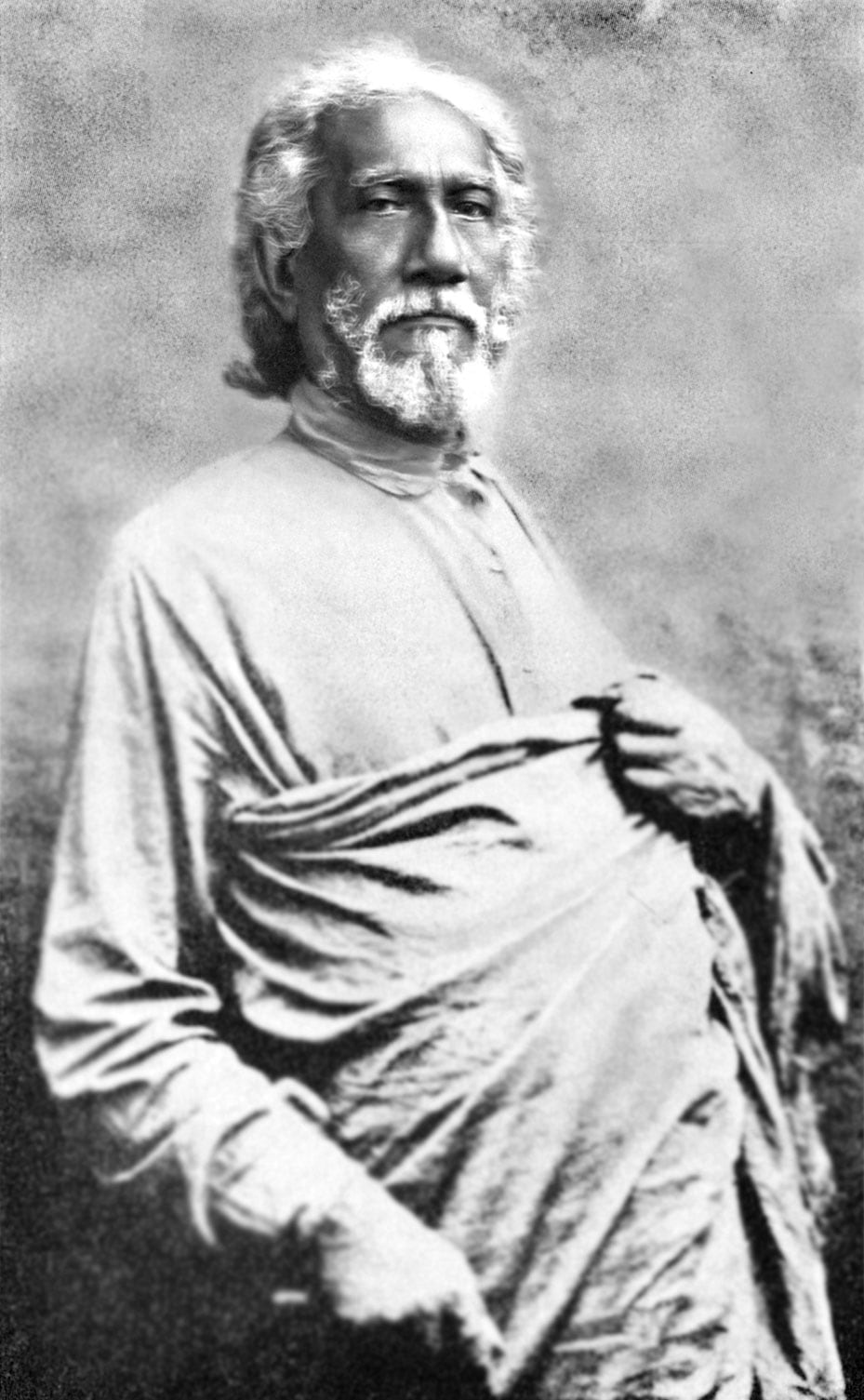
Sri Yukteswar
Ils concordent sur: Pourquoi méditer ou prier ? · Qu'est-ce que l'Absolu ? Dieu existe-t-il ? · Qui suis-je ? Existe-t-il un vrai soi ?
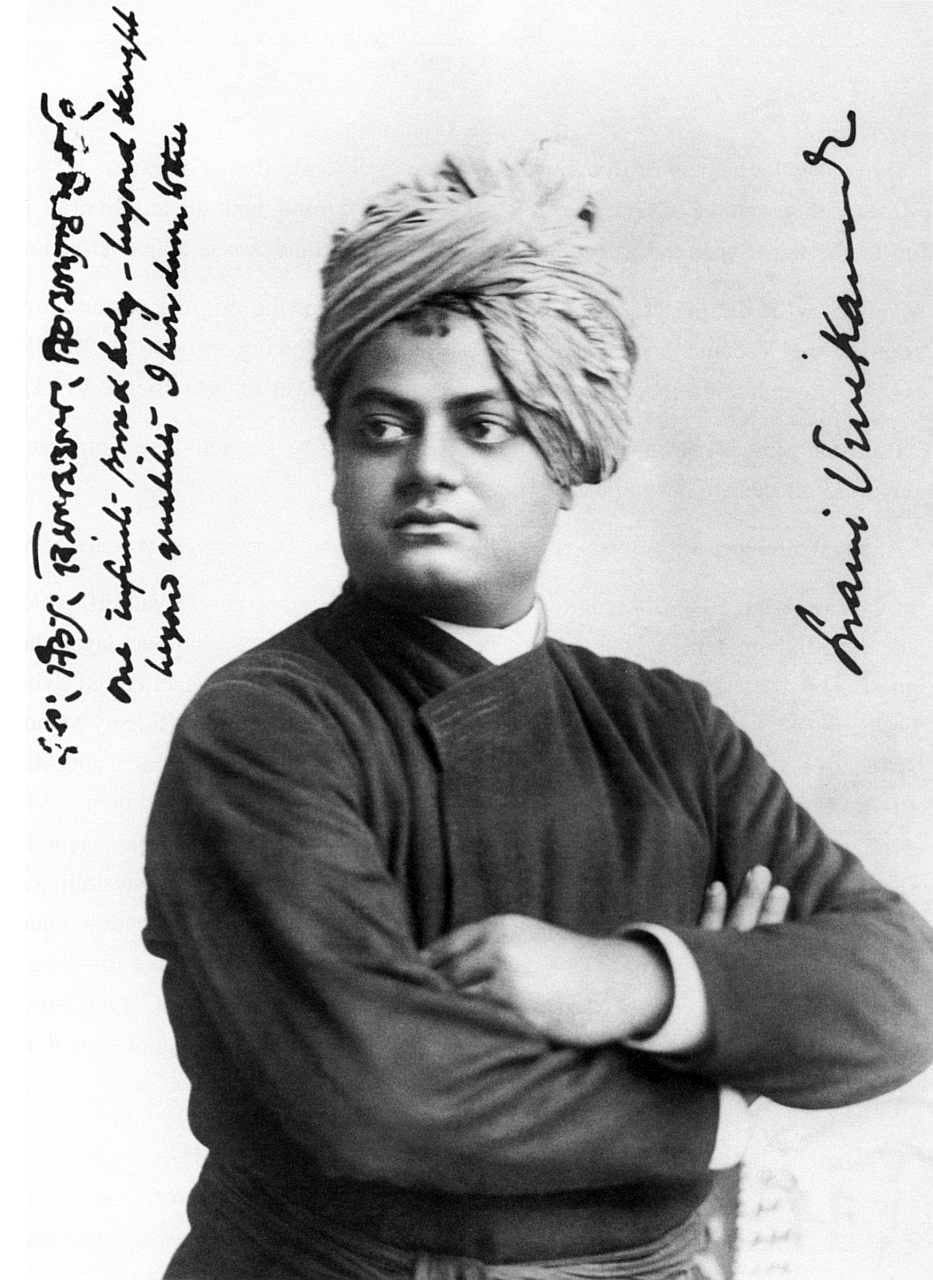
Swami Vivekananda
Ils concordent sur: Qui suis-je ? Existe-t-il un vrai soi ? · Comment atteint-on la libération ou le salut ? · Faut-il un maître ?
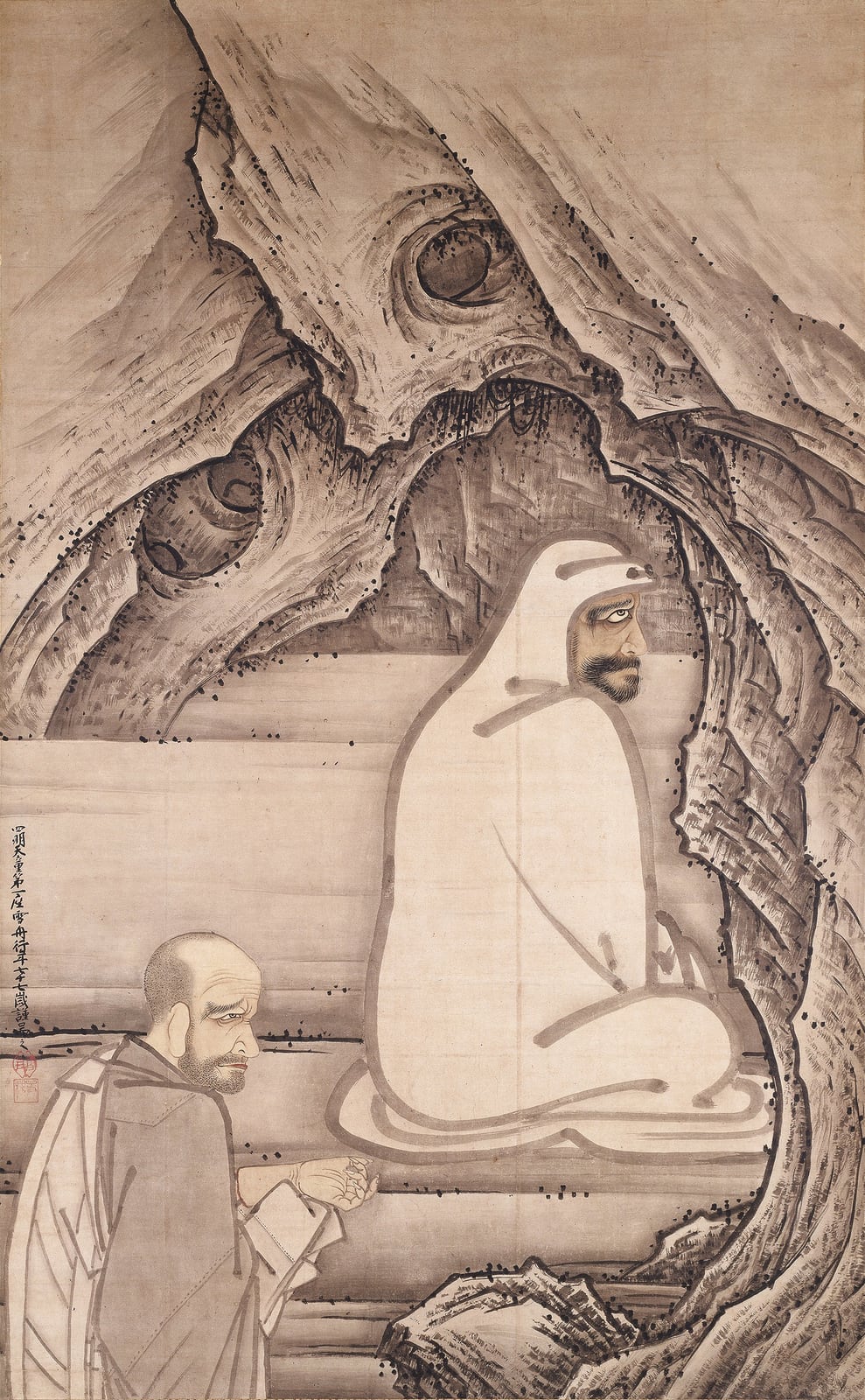
Bodhidharma
Ils concordent sur: Qu'est-ce que l'Absolu ? Dieu existe-t-il ? · Qui suis-je ? Existe-t-il un vrai soi ? · Que se passe-t-il après la mort ?

Helena Blavatsky
Ils concordent sur: Sommes-nous libres ou tout est-il déterminé ? · Qu'est-ce que l'Absolu ? Dieu existe-t-il ? · Que se passe-t-il après la mort ?
Pense autrement que

Francis of Assisi
Ils s'opposent sur: Qui suis-je ? Existe-t-il un vrai soi ? · Que se passe-t-il après la mort ? · Le monde est-il réel ?

Julian of Norwich
Ils s'opposent sur: Qui suis-je ? Existe-t-il un vrai soi ? · Que se passe-t-il après la mort ? · Le monde est-il réel ?

Teresa of Ávila
Ils s'opposent sur: Qui suis-je ? Existe-t-il un vrai soi ? · Que se passe-t-il après la mort ? · Le monde est-il réel ?

Hildegard of Bingen
Ils s'opposent sur: Qui suis-je ? Existe-t-il un vrai soi ? · Que se passe-t-il après la mort ? · Le monde est-il réel ?
Ils concordent sur
Sadhguru · Paramahansa Yogananda
Yoga as a testable science: from kriya to inner engineering
Pourquoi: They converge because they share a strategy for presenting yoga to global audiences, inaugurated at the end of the nineteenth century: translating an initiatory tradition into the language of science and efficacy, for readers who distrust dogma. There is no relation between them and their lineages are different. They differ in theology: Yogananda is intensely devotional, speaks to God as Divine Mother and comments on the Gospels; Sadhguru prefers an impersonal language, in which the ultimate is a dimension of life accessed through experience. The claims of both about the effects of their techniques are doctrinal: the library sets them out, it does not verify them.
Ils s'opposent surDésaccord de fond
Sadhguru · Jiddu Krishnamurti
Inner technology with initiation versus an attention without method or guru
Pourquoi: The contradiction is real and reflects two ideas of tradition. Sadhguru belongs to the yogic line that trusts body, energy and breath as vehicles of transformation, and the relationship with the guru as what makes it possible; hence his organisation transmits techniques by initiation. Krishnamurti, formed in an organisation with masters and disciplines, concluded that every practice aimed at a result arises from the very thought it claims to overcome. Sadhguru would say that cultivating body and mind is not pursuing meditation but creating the conditions for it to flower; Krishnamurti would see in those conditions another form of time and seeking.
Anecdotes et récits
Anecdotes et récits
Témoignage1982
An afternoon on Chamundi Hill
Origine du récit: Sadhguru's own testimony, told in talks and in Inner Engineering and recorded by Simone (2008), Subramaniam (2010) and Chopra (2014). There are no outside witnesses.
Source: Chopra, Shaili. When I Was 25: The Leaders Look Back. Nueva Delhi: Random House India, 2014.
Documenté1983–1992
The teacher who would not take money
Origine du récit: Recorded in Subramaniam's biography (2010) and in the press; summarised in Wikipedia.
Récit hagiographique1996–1999
The consecration of the Dhyanalinga
Origine du récit: Account of the Isha Foundation and Sadhguru himself; the consecration and its date are documented, the previous lives are a belief of the community.
Documenté2022
A hundred days on a motorcycle for the soil
Origine du récit: Widely documented by the press and the UN; summarised in Wikipedia (Sadhguru and Isha Foundation).
Documenté2024
The empty skull
Origine du récit: Indraprastha Apollo Hospital statement reported by Business Standard and other outlets (20–21 March 2024); video released by the Isha Foundation.
Enseignements
Enseignements
Les notions qui structurent sa pensée, expliquées dans leur contexte.
Inner Engineeringinner-engineering
The name sums up Sadhguru's strategy of presenting yoga in technical and scientific vocabulary to an urban, secular audience; Joanne Waghorne has analysed it as a case of translating yoga into Indian and global corporate culture.
Source: Sadhguru. Inner Engineering: A Yogi's Guide to Joy. Nueva York: Spiegel & Grau / Harmony, 2016.
Shambhavi Mahamudra Kriyashambhavi-mahamudra
The name refers to Shambhavi, an epithet of the goddess as Shiva's consort, and to the mudra of the same name in the hatha yoga tradition; the specific sequence Isha teaches is the foundation's own and is not published.
Isha Kriyaisha-kriya
The formula of disidentification from body and mind comes from the Vedantic and yogic tradition; Isha presents it as a self-sufficient practice, distinct from those requiring initiation.
Yoga as inner technologyyoga-as-inner-technology
The language of yoga as science has precedents in Vivekananda and in twentieth-century modern yoga; Sadhguru carries it into the vocabulary of technology and management.
Source: Waghorne, Joanne Punzo. «Engineering an Artful Practice: On Jaggi Vasudev's Isha Yoga and Sri Sri Ravi Shankar's Art of Living». En Mark Singleton y Ellen Goldberg (eds.), Gurus of Modern Yoga. Nueva York: Oxford University Press, 2013, pp. 283–307.
Adiyogi and the origin of yogaadiyogi
Shiva as lord of yoga (Yogeshvara) is ancient in Shaivism; the construction of Adiyogi as founder and non-confessional figure is characteristic of Isha. Historians of yoga place its documented origins in Indian texts of the last centuries before the Common Era.
Source: Sadhguru. Adiyogi: The Source of Yoga. Noida: Harper Element / HarperCollins India, 2017.
Dhyanalingadhyanalinga
The consecration of forms (pratishtha) is a classic practice of Hindu temples; the novelty Isha claims is a linga devoted solely to meditation and open to any creed.
Karma as memory and responsibilitykarma
The notion comes from the Indic traditions, which understand it in very different ways; Sadhguru's reading, centred on memory and responsibility, addresses a modern reader and moves away from fatalism.
Source: Sadhguru. Karma: A Yogi's Guide to Crafting Your Destiny. Nueva York: Harmony Books, 2021.
Retraites
Retraites et centres
Lieux et rencontres liés à son enseignement. Nous vous mettons en relation avec ceux qui les organisent.
Velliangiri, cerca de Coimbatore, Tamil Nadu · India
Isha Yoga Center, Coimbatore
Isha Foundation
The Isha Yoga Center is the headquarters of the Isha Foundation, established by Sadhguru at the foot of the Velliangiri mountains, some thirty kilometres from Coimbatore. It brings together the spaces that define his work: the Dhyanalinga, a consecrated space for silent meditation; the Linga Bhairavi temple; the 112-foot Adiyogi statue; and halls for hatha yoga practice. It offers beginner and advanced programmes, yoga teacher training and volunteering, as well as cottage accommodation. It is the main place to experience Sadhguru's work at first hand, and the setting for large gatherings such as Mahashivratri.
En línea y en centros Isha · Internacional
Inner Engineering
Isha Foundation
Inner Engineering is Sadhguru's foundational programme, presenting tools for the body, mind, emotions and energy. It culminates in the transmission of Shambhavi Mahamudra Kriya, a daily practice of about twenty minutes, and also teaches Upa-Yoga. The conceptual part is followed online at one's own pace and the kriya is transmitted live over a weekend; there is also a four-day residential retreat format and instructor-led sessions at centres around the world. It is offered in around ten languages, Spanish included, and is the prerequisite for Isha's advanced programmes and residential retreats.
McMinnville, Tennessee · Estados Unidos
Isha Institute of Inner-sciences (Tennessee)
Isha Foundation
The Isha Institute of Inner-sciences is the Isha Foundation's retreat centre in North America, a 1,400-acre mountain campus on Tennessee's Cumberland Plateau. Its heart is Mahima, a large domed meditation hall that hosts many of the programmes, together with the Adiyogi space, which is open to visitors. It offers beginner and advanced classical yoga and meditation programmes, individual wellness retreats, overnight stays with early-morning practice and special events with Sadhguru. The centre itself stresses that it is not a place of worship, religion, philosophy or belief system, but a space for inner wellbeing.
Vidéos
Vidéos
Enregistrements, entretiens et documentaires. Les vidéos sont lues depuis YouTube ; elles ne sont pas hébergées ici.
The Importance of Silence | Sadhguru
Conférence· EN· 15 min
SadhguruChaîne officielle
The Power of Being Alone | Sadhguru Jaggi Vasudev
Conférence· EN· 12 min
SadhguruChaîne officielle
One Thing You Must Do to Overcome Anxiety | Sadhguru
Conférence· EN· 11 min
SadhguruChaîne officielle
Unplug from the Mental Matrix | Sadhguru
Conférence· EN· 61 min
SadhguruChaîne officielle
Sadhguru's Enlightenment - In His Own Words
Enregistrement original· EN· 2017· 5 min
SadhguruChaîne officielle
Sadhguru Jaggi Vasudev | Full Address & Q&A | Oxford Union
Conférence· EN· 2017· 65 min
OxfordUnion
Sadhguru | Developing an Inclusive Consciousness | Talks at Google
Conférence· EN· 2016· 66 min
Talks at Google
Sadhguru: Your Mind Will Follow Your Emotions | India Economic Summit 2017
Entretien· EN· 2017· 64 min
World Economic Forum
At UNCCD COP15, Sadhguru Presents a Practical 3-Pronged Strategy to #SaveSoil | Sadhguru
Enregistrement original· EN· 2022· 5 min
SadhguruChaîne officielle
Isha Kriya: A Guided Meditation For Health And Wellbeing | 15-Minutes
Enregistrement original· EN· 2019· 19 min
SadhguruChaîne officielle
Adiyogi Shiva: The First & Ultimate Zen Master | Sadhguru
Conférence· EN· 2015· 14 min
SadhguruChaîne officielle
¿Qué es la ingeniería interior? | Sadhguru
Conférence· ES· 2019· 30 min
Sadhguru EspañolChaîne officielle
ईशा क्रिया - 12 मिनट में पाएं मानसिक स्थिरता और ख़ुशी | Isha Kriya Guided Meditation | Sadhguru Hindi
Enregistrement original· HI· 2020· 19 min
Sadhguru HindiChaîne officielle
L'Importance du Silence | Sadhguru
Conférence· FR· 2026· 15 min
Sadhguru FrançaisChaîne officielle
Galerie
Galerie
Images dont la licence a été vérifiée. Chacune conserve son auteur et son attribution.
Relations
Relations
Influences, filiations et affinités. On distingue la relation documentée de la similitude identifiée par analyse.
Idées proches de
Both present yoga to the West as an inner science rather than a religion; Sadhguru often cites him in his talks.
Similitude identifiée par analyse
Sources
Sources
Bibliographie et catalogues consultés pour cette fiche.
- Subramaniam, Arundhathi. Sadhguru: More Than a Life. Nueva Delhi: Penguin Ananda, 2010.
- Wikidata, «Sadhguru» (Q793985): fecha y lugar de nacimiento.
- Sadhguru. Inner Engineering: A Yogi's Guide to Joy. Nueva York: Spiegel & Grau / Harmony, 2016.
- Open Library, autores OL3248457A y OL3290802A (Sadhguru / Sadhguru Jaggi Vasudev): obras y ediciones con ISBN.
- Waghorne, Joanne Punzo. «Engineering an Artful Practice: On Jaggi Vasudev's Isha Yoga and Sri Sri Ravi Shankar's Art of Living». En Mark Singleton y Ellen Goldberg (eds.), Gurus of Modern Yoga. Nueva York: Oxford University Press, 2013, pp. 283–307.
- Isha Foundation. «The Big List of Books by Sadhguru» (catálogo oficial de libros y libros electrónicos).
- Isha Foundation. «Sadhguru Quotes» (citas diarias oficiales, octubre de 2026).
- Chopra, Shaili. When I Was 25: The Leaders Look Back. Nueva Delhi: Random House India, 2014.
- Wikipedia (en), «Sadhguru» (biografía, recepción científica y opiniones políticas, con sus referencias de prensa).
- Wikipedia (en), «Isha Foundation» (iniciativas y sección «Controversies and reception»: denuncias de retención, corredor de elefantes e informe de la CAG, acusaciones de abusos, caso POCSO y litigios por difamación).
- Business Standard, «Sadhguru undergoes brain surgery after month-long headache: What we know», 21 de marzo de 2024 (comunicado del Indraprastha Apollo Hospital).
- Simone, Cheryl, con Sadhguru Jaggi Vasudev. Midnights with the Mystic: A Little Guide to Freedom and Bliss. Charlottesville: Hampton Roads, 2008.
- Guinness World Records, «Largest bust (sculpture)»: Adiyogi Shiva, Isha Foundation, Coimbatore; 34,24 m de altura; récord verificado el 11 de marzo de 2017.
- Peterson, Christine Tara; Sarah M. Bauer; Deepak Chopra; Paul J. Mills; Raj K. Maturi. «Effects of Shambhavi Mahamudra Kriya, a Multicomponent Breath-Based Yogic Practice (Pranayama), on Perceived Stress and General Well-Being». Journal of Evidence-Based Complementary & Alternative Medicine 22, n.º 4 (2017): 788–797. doi:10.1177/2156587217730934 (PMID 29228793).
- Isha Foundation. «Isha Kriya Meditation» (instrucciones oficiales: duración, postura, frecuencia recomendada).
- Isha Foundation, Inner Engineering. «Shambhavi Mahamudra Kriya» (descripción oficial de la práctica y de su relación con el programa Inner Engineering).
- Wikipedia (en), «Adiyogi Shiva bust» (inauguración del 24 de febrero de 2017, dimensiones, simbolismo de los 112 pies y libro Adiyogi: The Source of Yoga).
- Sadhguru. Adiyogi: The Source of Yoga. Noida: Harper Element / HarperCollins India, 2017.
- Isha Foundation. «Dhyanalinga Consecration Anniversary» (consagración por Sadhguru en 1999, tras tres años de prana pratishtha; aniversario el 24 de junio).
- Sadhguru. Karma: A Yogi's Guide to Crafting Your Destiny. Nueva York: Harmony Books, 2021.
- Ayant droit
- Isha Foundation
- Site officiel
- isha.sadhguru.org
En attente de confirmation
Ce que cette fiche n'a pas encore pu établir. Nous préférons le dire plutôt que de combler.
- Obras: están los 30 libros publicados por Isha Foundation y sus editoriales (Penguin, Harmony, Jaico). Open Library registra además títulos autoeditados en 2018–2020 («Life Mysterious», «Greed Is God», «Ancient Mysteries», «Ease and Disease», «Cancer», «Universal Wisdom», «Diálogos de Sadhguru») sin editorial vinculada a Isha: no se listan como obra suya mientras no se confirme la autorización. Por confirmar también «Enlightenment: What It Is» (BookBaby, 2013) y «El cuerpo. La mente.» (La Vanguardia, 2021), y el centenar de cuadernillos de Isha en lenguas indias (comprobado contra Open Library el 2026-10-25).
- Relaciones documentadas con otros maestros de la biblioteca: no hay; la afinidad con Vivekananda es temática, no histórica.
- Sala de lectura (2026-10-25): no se registra ningún texto; autor vivo, toda su obra tiene derechos vigentes.
- Conceptos (2026-10-25): la secuencia de la Shambhavi Mahamudra no es pública y no se describe; la eficacia que Isha atribuye a esta práctica, a Isha Kriya y al Dhyanalinga se presenta como afirmación de la fundación, con el único estudio revisado por pares localizado (s14) y sus límites.
- Vídeos (2026-10-25): el campo year de los vídeos añadidos es el año de publicación en YouTube, no el de la grabación (la charla de la Oxford Union, p. ej., se publicó el 2 de enero de 2017).
Recherche effectuée le 2026-10-25