Bouddhisme · Mahāyāna · Zen / Chan
Bodhidharma
菩提達摩 · 菩提達磨 · 達磨 · 달마
Historicité débattue
Moine indien ou centrasiatique de la fin du Ve et du début du VIe siècle, que les traditions chan, zen et seon vénèrent comme leur fondateur et premier patriarche chinois. Deux sources anciennes attestent qu'un maître de méditation de ce nom vécut dans le nord de la Chine et enseigna la « contemplation du mur » à Huike et Daoyu ; presque tout le reste — l'empereur Wu, les neuf ans face au mur de Shaolin, le bras de Huike, le kung-fu — est une légende formée entre le VIIIe et le XVIIe siècle.
- œuvres
- 10œuvres
- éditions
- 9éditions
- citations
- 5citations
- vidéos
- 12vidéos
- images
- 7images
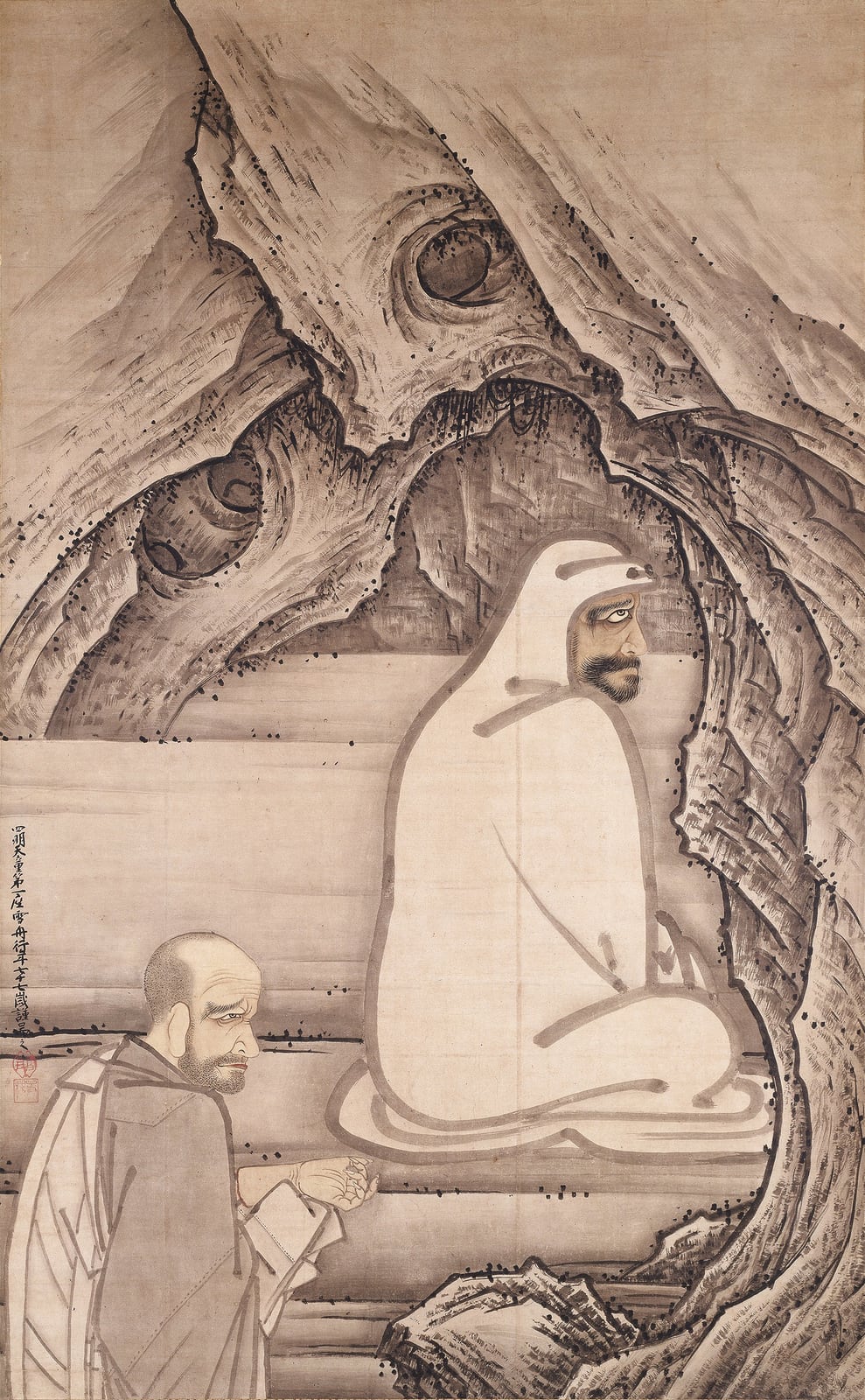
Huike ofrece su brazo a Bodhidharma, de Sesshū Tōyō (1496) · Public domain
Dans ses propres mots
«There are many paths for entering the Way, but in essence they are no more than two: entrance by principle and entrance by practice.»Tratado de las dos entradas y las cuatro prácticas, inicio (texto del Xinzuan Xu zangjing en Wikisource; traducción del investigador)

Pour commencer, une œuvre
Treatise on the Two Entrances and the Four PracticesSon idée centrale
Wall contemplation (biguan): Biguan (壁觀) is the name Tanlin and Daoxuan give to the 'method of pacifying the mind' that Bodhidharma taught, and it is the oldest term associated with his meditation.
Le voir en contexte
Biographie
5 min de lecture
Traduction assistée à partir de l'original espagnol, en attente de relecture par un traducteur natif.
Un étranger devant la pagode
La première fois que le nom de Bodhidharma apparaît par écrit, ce n'est pas dans un texte zen, mais dans un guide nostalgique des monastères de Luoyang, la capitale des Wei du Nord, que le fonctionnaire Yang Xuanzhi composa en 547, alors que la ville était déjà en ruine. En décrivant la grande pagode du monastère de Yongning, élevée en 516 et détruite par un incendie en 534, Yang note qu'un moine des régions occidentales nommé Bodhidharma, « un barbare de Perse », resta émerveillé devant ses clochettes d'or et déclara qu'à cent cinquante ans, après avoir parcouru tous les pays, il n'avait jamais rien vu de pareil ; des jours durant, il demeura devant elle, les paumes jointes, en récitant « namo ». C'est un témoignage presque contemporain, mais il ne dit rien de méditation ni de disciples.
Le maître de la contemplation du mur
La seconde source émane de son cercle. Un disciple nommé Tanlin écrivit une courte préface au Traité des deux entrées et des quatre pratiques, et en 645 le moine historien Daoxuan l'incorpora, presque mot pour mot, à sa biographie de Bodhidharma dans la Suite des biographies des moines éminents. Selon ces textes, Bodhidharma était un brahmane de l'Inde du Sud — troisième fils d'un roi, précise Tanlin — qui, après avoir « franchi monts et mers », gagna le territoire de la dynastie Song, dans le sud de la Chine, puis passa au nord, dans le royaume des Wei, où il enseigna la méditation. Les maîtres de doctrine, alors dominants, le critiquèrent ; seuls deux jeunes moines, Daoyu et Huike, le suivirent pendant quatre ou cinq ans.
Ce qu'il leur enseigna, selon Daoxuan, fut une « méthode pour pacifier l'esprit » : la « contemplation du mur » (biguan), dont le sens exact est discuté — un esprit ferme comme une paroi, ou une méditation face au mur —, et les deux entrées, celle du principe et celle de la pratique. Il leur aurait aussi confié le Laṅkāvatāra-sūtra dans sa version en quatre rouleaux, avec ces mots : « J'ai observé la terre des Han, et il n'y a que ce sūtra ; si vous le pratiquez, vous serez sauvés. » Daoxuan ajoute que Bodhidharma disait avoir plus de cent cinquante ans et que nul ne sut comment il finit ; dans la biographie de Huike, pourtant, il indique qu'il mourut sur les rives de la Luo.
L'invention d'un patriarche
Pendant plus d'un siècle, personne n'accorda à ce maître un rôle particulier. C'est entre la fin du VIIe et le début du VIIIe siècle que les disciples de Hongren et de Shenxiu, désireux de donner à leur école de méditation une généalogie aussi noble que celle des écoles de doctrine, tracèrent une ligne de transmission qui partait de Bodhidharma et passait par Huike, Sengcan, Daoxin et Hongren. Les chroniques de cette époque, comme les Annales de la transmission du joyau de la Loi, font de lui le « premier patriarche » ; les Annales des maîtres et disciples du Laṅkā placent toutefois avant lui Guṇabhadra, le traducteur du sūtra. Puis la polémique de Shenhui contre l'École du Nord et le Sūtra de l'estrade du sixième patriarche, Huineng, ajustèrent la ligne à leurs propres intérêts, et le Baolin zhuan (801) la prolongea en amont jusqu'à faire de Bodhidharma le vingt-huitième patriarche indien depuis le Bouddha.
Avec la ligne vinrent les épisodes. À partir du VIIIe siècle apparaît l'entretien avec l'empereur Wu des Liang, qui lui demande quel mérite il a acquis en construisant des temples et reçoit pour réponse « aucun », puis, demandant qui se tient devant lui, entend « je ne sais pas ». Le Recueil de la transmission de la lampe de l'ère Jingde (1004) fixa la version canonique : la traversée du Yangzi sur un roseau, les neuf ans de méditation face à la paroi d'une grotte voisine de Shaolin, Huike attendant dans la neige et se tranchant le bras pour prouver sa sincérité, le dialogue où le maître lui « pacifie l'esprit », la transmission du manteau et du bol, les six tentatives d'empoisonnement, la tombe sur le mont Xiong'er et le voyageur Song Yun qui le rencontre dans le Pamir, une seule sandale à la main, alors qu'on le croyait enterré.
Aucun de ces récits n'a de fondement dans les sources anciennes, et certains les contredisent : selon Daoxuan, Huike perdit le bras sous les coups de brigands et supporta sa blessure sans se plaindre. Comme l'a montré Bernard Faure, la figure de Bodhidharma a fonctionné comme un « paradigme textuel » : un lieu vide où chaque génération de l'école inscrivit ce qu'elle avait besoin de dire d'elle-même.
Les textes
De l'œuvre qui lui est attribuée, seul le Traité des deux entrées et des quatre pratiques a une transmission qui remonte à son cercle. Les manuscrits de Dunhuang le placent en tête d'une compilation plus vaste, le « Long rouleau », qui recueille des paroles de maîtres du VIIe siècle. Les sermons qui circulent aujourd'hui sous son nom — celui de la lignée du sang, celui de l'éveil, celui de la rupture des formes — sont des œuvres chan postérieures ; le dernier est en réalité le Traité de la contemplation de l'esprit de Shenxiu. La compilation qui les réunit, les Six Portes de Shaoshi, date de l'époque Song ou d'après. Plus tardive encore est sa réputation de fondateur du kung-fu : le Classique de la transformation des tendons, qui le présente comme un maître d'exercices physiques, fut écrit par un taoïste au début du XVIIe siècle.
Du moine à l'icône
Il en résulte l'une des figures les plus reproduites de l'art asiatique. Au Japon, où on l'appelle Daruma, les peintres zen, de Sesshū à Hakuin, l'ont représenté les yeux exorbités et la barbe de barbare ; les poupées de papier mâché sans bras ni jambes, qui évoquent ses années de méditation immobile, sont devenues des porte-bonheur de la persévérance. Les écoles chan, zen, seon et thiền l'invoquent comme l'origine de la « transmission spéciale hors des Écritures » qui, selon une formule de l'époque Song, « ne s'appuie pas sur les mots, désigne directement l'esprit et fait voir sa propre nature pour devenir bouddha ». Ce que l'histoire permet d'affirmer est bien moindre : vers l'an 500, un moine étranger enseigna dans le nord de la Chine une méditation austère, appuyée sur le Laṅkāvatāra, à une poignée de disciples, et de cette poignée sortit, par des chemins qu'il n'aurait pu imaginer, la tradition du zen.
Sources: Yang Xuanzhi. Luoyang qielan ji (Memoria de los monasterios budistas de Luoyang), 547, cap. 1, «Monasterio de Yongning». Texto chino en Wikisource; trad. inglesa: Yi-t'ung Wang, A Record of Buddhist Monasteries in Lo-yang, Princeton University Press, 1984 (ISBN 9780691054032). · Daoxuan. Xu gaoseng zhuan (Continuación de las biografías de monjes eminentes), 645 (ampliada hasta 667), cap. 16: biografías de Bodhidharma y de Huike (Taishō 2060). Texto chino en Wikisource. · Tanlin (atrib.). Prefacio al «Tratado de las dos entradas y las cuatro prácticas» (菩提達磨大師略辨大乘入道四行觀), según el Xinzuan Xu zangjing. Texto chino en Wikisource. · Broughton, Jeffrey L. The Bodhidharma Anthology: The Earliest Records of Zen. Berkeley: University of California Press, 1999. ISBN 9780520219724. · McRae, John R. Seeing Through Zen: Encounter, Transformation, and Genealogy in Chinese Chan Buddhism. Berkeley: University of California Press, 2003. ISBN 9780520237988.
Chronologie
La vie, année après année
Chaque point est un événement documenté. Cliquez pour le lire, avec sa source et son degré de certitude.
années 470China meridional (territorio de los Song)
Arrival in China
According to Daoxuan he first reached the territory of the Song dynasty (420–479) in the south and later went north. Late tradition places it in 527, in Canton.
TraditionDaoxuan. Xu gaoseng zhuan (Continuación de las biografías de monjes eminentes), 645 (ampliada hasta 667), cap. 16: biografías de Bodhidharma y de Huike (Taishō 2060). Texto chino en Wikisource.
années 470
Arrival in China
According to Daoxuan he first reached the territory of the Song dynasty (420–479) in the south and later went north. Late tradition places it in 527, in Canton.
Tradition
v. 520
Before the Yongning pagoda
Yang Xuanzhi describes him admiring the Yongning pagoda (built 516, burned 534) and claiming to be a hundred and fifty years old.
Documenté
v. 520
Teaching Daoyu and Huike
He teaches wall contemplation and the two entrances to his two disciples for four or five years and gives Huike the Laṅkāvatāra.
Probable
527
Interview with Emperor Wu (legend)
The date tradition gives for the dialogue on merit with Emperor Wu of the Liang; the episode appears in the eighth century.
Tradition
v. 528
Nine years facing the wall (legend)
Late tradition places him meditating for nine years facing the wall of a cave near Shaolin.
Tradition
536
Death (traditional date)
Daoxuan only says that he died by the Luo river and that no one knew how he ended; 536 is the most widespread traditional date.
Tradition
547
First written mention
Yang Xuanzhi completes the Record of the Buddhist Monasteries of Luoyang, with the notice on Bodhidharma.
Documenté
645
Daoxuan's biography
Daoxuan includes his biography and Huike's in the Continued Biographies of Eminent Monks.
Documenté
v. 716
First patriarch
The chronicles of the meditation school (Chuan fabao ji, Lengqie shizi ji) make him the first patriarch of a line of transmission.
Documenté
801
Twenty-eighth Indian patriarch
The Baolin zhuan extends the genealogy back to the Buddha and makes him the twenty-eighth Indian patriarch.
Documenté
1004
The Transmission of the Lamp
The Jingde chuandeng lu fixes the canonical version of his legend.
Documenté
1496
Sesshū paints Huike and Bodhidharma
Sesshū Tōyō paints the scene of Huike offering his arm.
Documenté
1624
The Yijin jing
Date of the preface of the Sinew-Changing Classic, falsely attributed to Bodhidharma, the origin of his fame as founder of Shaolin kung fu.
Documenté
Œuvres
Œuvres essentielles
Les œuvres sans lesquelles on ne comprend pas son héritage.
Enseignement oral recueilli
Treatise on the Two Entrances and the Four Practices
二入四行論 (菩提達磨大師略辨大乘入道四行觀)
A short teaching that sums up the path in two 'entrances': entrance by principle (理入), which consists in deep faith that all beings share one true nature, hidden by the dust of thoughts, and in 'abiding firmly in wall contemplation'; and entrance by practice (行入), unfolded in four practices: accepting suffering as the fruit of past deeds, adapting to circumstances, seeking nothing, and acting in accord with the Dharma. It is the core of what can be attributed to Bodhidharma with any plausibility.
3 éditions
Attribution traditionnelle · XIe siècle
The Bloodstream Sermon (Xuemai lun)
達磨大師血脈論
A question-and-answer dialogue that opens by stating that buddhas are transmitted 'from mind to mind, without relying on written words' and holds that seeking the buddha outside one's own nature is useless: 'whoever wishes to see the buddha must see his nature'. It already sets out the mature Chan doctrine of sudden awakening and the critique of external practices.
1 édition
Attribution traditionnelle · XIe siècle
The Wake-up Sermon (Wuxing lun)
達磨大師悟性論
A short treatise on awakening to one's own nature: enlightenment is reached not by accumulating merit or by study but by seeing that the mind itself is empty and free. Included in the Shaoshi liumen, it is among the texts most widely read in the West as 'words of Bodhidharma', thanks to Red Pine's translation.
1 édition
Toute son œuvre (10)
The 'Long Scroll': Dunhuang Compilation around the Two Entrances
700
The Breakthrough Sermon (Poxiang lun)
700
Bodhidharma
The Dharma Gate of Pacifying the Mind (Anxin famen)
The Conscious LibraryThe Dharma Gate of Pacifying the Mind (Anxin famen)
Bodhidharma
Verses on the Heart Sūtra (Xinjing song)
The Conscious LibraryVerses on the Heart Sūtra (Xinjing song)
Bodhidharma
The Six Gates of Shaoshi (Shaoshi liumen)
The Conscious LibraryThe Six Gates of Shaoshi (Shaoshi liumen)
Bodhidharma
Sinew-Changing Classic (Yijin jing)
The Conscious LibrarySinew-Changing Classic (Yijin jing)
1624
Bodhidharma
Marrow-Washing Classic (Xisui jing)
The Conscious LibraryMarrow-Washing Classic (Xisui jing)
1650
Citations
Citations localisées dans une œuvre précise. Chacune porte sa provenance et son degré de fiabilité.
There are many paths for entering the Way, but in essence they are no more than two: entrance by principle and entrance by practice.夫入道多途,要而言之,不出二種:一是理入、二是行入。
ProbableTratado de las dos entradas y las cuatro prácticas, inicio (texto del Xinzuan Xu zangjing en Wikisource; traducción del investigador)
Citations apocryphes ou d'attribution contestée (3)
«A special transmission outside the scriptures, not relying on words and letters, pointing directly to the human mind, seeing one's nature and becoming a buddha.»
A four-line formula (教外別傳,不立文字,直指人心,見性成佛) that tradition attributes to Bodhidharma. Its elements appear in Chan texts of the ninth and tenth centuries and the complete formula took shape in the Song period (eleventh–twelfth centuries); it is found in no sixth- or seventh-century source.
«The three realms arise together and return to a single mind. Buddhas before and after transmit from mind to mind, without relying on writing.»
Opening of the 'Bloodstream Sermon' (三界混起,同歸一心,前佛後佛,以心傳心,不立文字), a late-attributed text with ninth- and tenth-century Chan vocabulary; it was circulating by 1153.
«Vast emptiness, nothing holy.»
The reply (廓然無聖) legend puts in his mouth before Emperor Wu when the latter asks about the highest meaning of the holy truth. The dialogue appears in the eighth century and is fixed in the Jingde chuandeng lu (1004) and the Biyan lu (case 1); it has no support in the early sources.
Dernières paroles
Attribution traditionnelle
«I came to this land originally to transmit the Dharma and save the deluded. One flower will open five petals, and the fruit will ripen of itself.»吾本來茲土,傳法救迷情。一華開五葉,結果自然成。
A transmission verse that the Jingde chuandeng lu (1004) attributes to Bodhidharma on taking leave of his disciples: after asking them what they had understood and telling them they had obtained his skin, his flesh, his bones and, in Huike's case, his marrow, he gives Huike the robe and the Laṅkāvatāra and recites these lines. The 'five petals' were read as a prophecy of the following five patriarchs or of the five houses of Chan. It is a composition of the late tradition; the early sources (Daoxuan) say no one knew how he ended.
Source: Daoyuan. Jingde chuandeng lu (Registro de la transmisión de la lámpara de la era Jingde), 1004, cap. 3 (Taishō 2076). CBETA.
Interroger
Ce que répond son œuvre
Douze grandes questions de l'humanité et ce que ses textes permettent d'y répondre, références à l'appui. Nous ne lui prêtons jamais de paroles.
Qu'est-ce que l'Absolu ? Dieu existe-t-il ?
One and the same true nature in all beings, hidden by dust
Un Absolu impersonnelCela se déduit de sa doctrine
The only work with any chance of being his, the Treatise on the Two Entrances and Four Practices, does not speak of God. It speaks of a «principle» (li) and of a «true nature» that all living beings share and that is hidden only by the adventitious dust of deluded thoughts. Entering by principle means returning from the false to the true through wall contemplation, until silently according with it, without self or other, the ordinary person and the sage being equal. That nature is not someone: it does not know, will or relate to the creature. It is the common, formless ground that Chinese Buddhism called buddha-nature. The closest key is that of an impersonal Absolute, with the proviso that the text never calls it so.
Comparer cette question avec d'autres maîtresQui suis-je ? Existe-t-il un vrai soi ?
Beneath deluded thoughts, a shared true nature, without self or other
Le Soi est l'AbsoluCela se déduit de sa doctrine
The Treatise on the Two Entrances, the only work that can be traced to Bodhidharma's circle, does not speak of the self as a soul or a person. It speaks of a true nature that all living beings share and that the adventitious dust of deluded thoughts covers. Whoever abandons the false and returns to the true, steadfast in wall contemplation, is left «without self or other»: the ordinary person and the sage are equal. The text thus joins two statements that seem opposed. The particular self, with its gains and losses, is not what we are; what we are is that common nature, which belongs to no one. The fourth practice, in accord with the Dharma, adds that in the Dharma there is no self, because it is free of the stain of self.
Comparer cette question avec d'autres maîtresPourquoi souffrons-nous ?
To seek is to suffer; to seek nothing is peace
Le désir et l'attachementIl le dit expressément
The Treatise on the Two Entrances and Four Practices answers soberly. The third practice, «seeking nothing», starts from the fact that dwelling long in the three worlds is like living in a burning house: all that has a body suffers. Worldly people, deluded, attach themselves to one thing after another and call this seeking; the sage understands that all seeking brings suffering and that ceasing to seek brings joy. The first practice adds a karmic reading: present pain is the fruit of past deeds, committed over countless lives, and must be accepted without resentment. The second asks one to adapt to circumstances: gain and loss depend on them, and the mind that is not moved by the wind of joy silently accords with the Way.
Comparer cette question avec d'autres maîtresQue se passe-t-il après la mort ?
Present pain comes from past lives: it is accepted without resentment
Renaissance selon le karmaCela se déduit de sa doctrine
The Treatise on the Two Entrances and Four Practices does not speak of what happens at death, but it takes rebirth for granted. The first practice, that of «requiting injury», asks the sufferer to consider that, over countless aeons, he has abandoned the essential for the incidental and wandered through all forms of existence, causing hatred and harm; what he suffers now is the ripened fruit of those deeds, not something imposed by heaven or men. This awareness of previous lives serves to accept pain without resentment. The third practice presents the three worlds as a burning house from which only ceasing to seek frees one. The framework is the common Buddhist one; the text adds no doctrine of its own about death.
Comparer cette question avec d'autres maîtresComment atteint-on la libération ou le salut ?
Two entrances: by principle, contemplating the wall, and by four practices
Par une pratique disciplinéeIl le dit expressément
The Treatise on the Two Entrances and Four Practices sums up the path in its first sentence: many are the ways, but in essence they are two, entrance by principle and entrance by practice. The first consists in trusting deeply that all beings share a true nature and remaining steadfast in wall contemplation until silently according with it. The second unfolds in four practices: accepting suffering as the fruit of past deeds, adapting to circumstances without letting gain or loss move the mind, seeking nothing, and acting in accord with the Dharma, practising the perfections without attachment. It is a sober programme, joining a vision and a daily discipline of the mind.
Comparer cette question avec d'autres maîtresFaut-il un maître ?
He hands over a sūtra and a practice: «you yourselves will be saved»
Utile mais pas indispensableCela se déduit de sa doctrine
The oldest sources present Bodhidharma as a master with few disciples, Huike and Daoyu among them, according to Tanlin's preface. But what they transmit of him is not the idea of dependence on the master. According to Daoxuan's biography of Huike, when he handed him the four-fascicle Laṅkāvatāra he told him that in the land of the Han there was only this sūtra and that, if they practised it, they themselves would be saved. The Treatise on the Two Entrances adds that, steadfast in wall contemplation, one no longer follows the letter of the teachings: access is inward. The master guides and hands over a text and a method; the work belongs to the disciple. The image of the patriarch transmitting awakening from mind to mind is later.
Comparer cette question avec d'autres maîtresLe monde est-il réel ?
Gain and loss depend on circumstances; forms are empty
Un réseau de causes sans substanceCela se déduit de sa doctrine
The Treatise on the Two Entrances sets out no cosmology, but it shows how it looks at the world. The second practice states that beings have no self and that all that happens to them, gain or loss, honour or disgrace, depends on circumstances: when these are exhausted, it disappears, and there is no reason to rejoice or grieve. The fourth practice calls Dharma the principle of the purity of nature, and says that in it all forms are empty, without stain or attachment, without this or that. The third adds the existential side: the three worlds are a burning house. The world thus appears as a web of conditions without substance, before which the practitioner remains unmoved, neither rejecting nor pursuing it.
Comparer cette question avec d'autres maîtresQu'est-ce que l'amour ?
He does not define love; he practises the perfections for his own and others' benefit
Ne s'est pas prononcé
The Treatise on the Two Entrances and Four Practices contains no reflection on love. The closest thing is in the fourth practice, acting in accord with the Dharma: whoever understands that in pure nature there is neither self nor other practises generosity without avarice towards one's body, life or goods, and offers it without attachment, to eliminate delusion, benefiting oneself and others. The other perfections are practised in the same way. The text presupposes the bodhisattva ideal of Chinese Buddhism, in which compassion is central, but its emphasis lies on purifying one's own mind and on equanimity in circumstances, not on the affective bond. Attributing a doctrine of love to it would be forcing it.
Comparer cette question avec d'autres maîtresSommes-nous libres ou tout est-il déterminé ?
What one suffers is the fruit of the past; how one receives it, a present decision
Le karma et le choixIl le dit expressément
The first two practices of the Treatise on the Two Entrances formulate a very concrete ethics of karma. The first asks that, in the face of suffering, one consider it the ripened fruit of deeds committed in past lives, not something imposed by heaven or men, and accept it without complaint or resentment. The second adds that beings have no self and that everything, gain or loss, honour or disgrace, depends on circumstances, so that when these are exhausted it disappears. The past determines what comes; what remains in the practitioner's hands is not to be moved: the mind neither grows nor wanes, the wind of joy does not move it, and so it silently accords with the Way. Freedom lies in the response, not in the event.
Comparer cette question avec d'autres maîtresPourquoi méditer ou prier ?
Contemplating the wall: returning from the false to the true nature
Revenir à la source du jeCela se déduit de sa doctrine
The meditation associated with Bodhidharma in the oldest sources is wall contemplation (biguan), which Tanlin and Daoxuan present as his method for pacifying the mind. The Treatise on the Two Entrances places it within entrance by principle: whoever trusts that all beings share a true nature, hidden by deluded thoughts, abandons the false, returns to the true and remains steadfast, unmoving, without self or other, until silently according with the principle. The exact meaning of «wall» is debated: it may be the mind firm as a wall or literally sitting before one. What is clear is the direction: not observing phenomena one by one, but returning to the source that thoughts cover.
Comparer cette question avec d'autres maîtresLa raison peut-elle connaître l'ultime ?
Steadfast before the wall, one no longer follows the letter of the teachings
L'ultime est au-delà du mentalIl le dit expressément
The Treatise on the Two Entrances does not belittle the scriptures: entrance by principle begins by relying on them to trust in the true nature common to all beings. But the decisive step goes beyond them. Whoever remains steadfast in wall contemplation, without self or other, no longer follows the letter of the teachings, and silently accords with the principle. Ultimate understanding is neither conceptual nor discursive: it is a silent conformity. According to Daoxuan, Bodhidharma handed Huike a sūtra, the Laṅkāvatāra, as sufficient guidance for China, which shows that the written word had its place. Reason and text prepare; the ultimate is realised directly, in the silence of a mind that has stopped moving.
Comparer cette question avec d'autres maîtresSe retirer du monde ou le transformer ?
Seek nothing in a burning house; steadfast before the wall
Se retirer pour trouverCela se déduit de sa doctrine
The Treatise on the Two Entrances proposes an attitude of distance towards the world. The third practice, seeking nothing, starts from the fact that the three worlds are a burning house in which all that has a body suffers; the sage, unlike deluded people, stops pursuing and clings to nothing. Wall contemplation requires remaining steadfast and unmoving. But the second practice qualifies this: it is not a matter of fleeing circumstances but of adapting to them without letting gain or loss move the mind, and the fourth asks one to practise generosity for one's own and others' benefit. Withdrawal is inward before it is geographical: detachment in the midst of what happens, rather than abandonment of the world.
Comparer cette question avec d'autres maîtres
Affinités et tensions
Affinités et tensions
Calculées question par question à partir de ses positions. La raison de chaque accord ou de chaque désaccord s'affiche d'un clic.
Pense comme
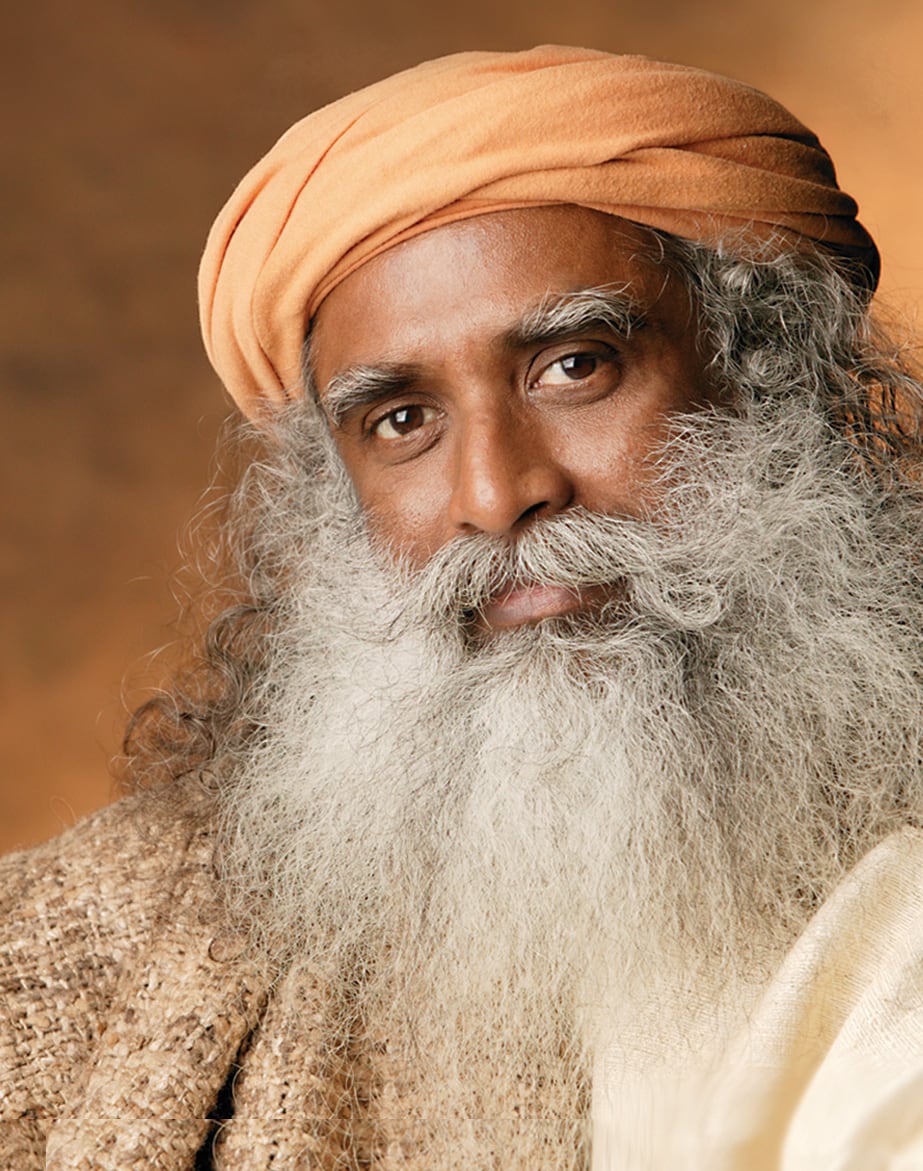
Sadhguru
Ils concordent sur: Comment atteint-on la libération ou le salut ? · Qu'est-ce que l'Absolu ? Dieu existe-t-il ? · Qui suis-je ? Existe-t-il un vrai soi ?
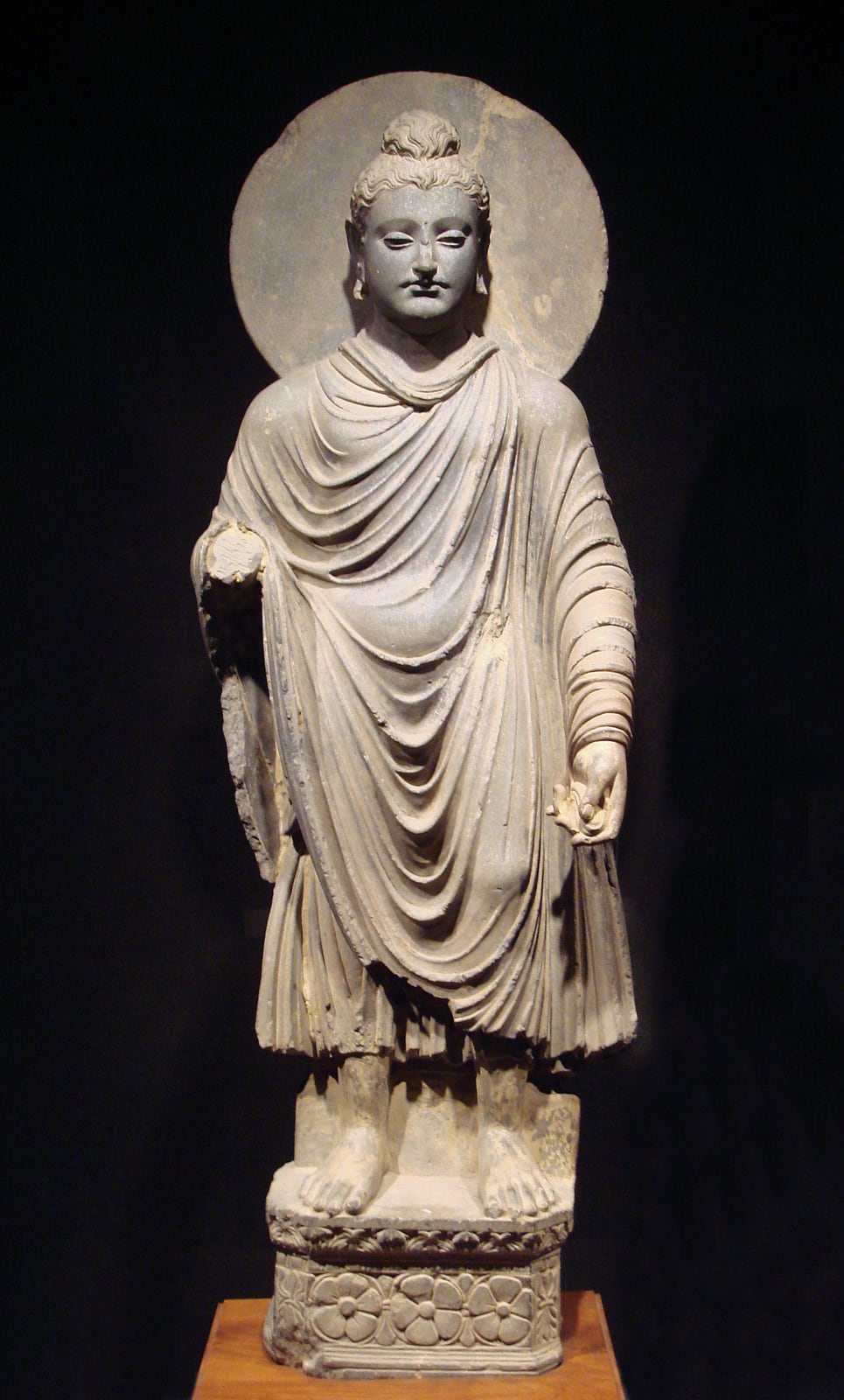
Siddhartha Gautama, the Buddha
Ils concordent sur: Pourquoi souffrons-nous ? · Que se passe-t-il après la mort ? · Comment atteint-on la libération ou le salut ?

Patañjali
Ils concordent sur: Qui suis-je ? Existe-t-il un vrai soi ? · Que se passe-t-il après la mort ? · Comment atteint-on la libération ou le salut ?
Mahāvīra
Ils concordent sur: Que se passe-t-il après la mort ? · Comment atteint-on la libération ou le salut ? · Faut-il un maître ?
Pense autrement que

Francis of Assisi
Ils s'opposent sur: Qui suis-je ? Existe-t-il un vrai soi ? · Que se passe-t-il après la mort ?

Chaitanya Mahaprabhu
Ils s'opposent sur: Qui suis-je ? Existe-t-il un vrai soi ? · Que se passe-t-il après la mort ?
Emanuel Swedenborg
Ils s'opposent sur: Qui suis-je ? Existe-t-il un vrai soi ? · Que se passe-t-il après la mort ?
Vladimir Solovyov
Ils s'opposent sur: Qui suis-je ? Existe-t-il un vrai soi ? · Que se passe-t-il après la mort ?
Anecdotes et récits
Anecdotes et récits
Documentéc. 516–534
The monk who admired the pagoda
Origine du récit: Yang Xuanzhi, Luoyang qielan ji (547), ch. 1, entry on Yongning monastery (Chinese text on Wikisource). Some scholars doubt that the 'Persian' monk is the same Bodhidharma as Daoxuan's; most accept it.
Récit hagiographique527 (fecha tradicional)
'I do not know'
Origine du récit: Earliest versions in texts from Shenhui's circle and in the Platform Sūtra (eighth century); canonical form in the Jingde chuandeng lu (1004), ch. 3, and the Biyan lu (1125), case 1. McRae and Faure analyse it as a creation of the school.
Contestés. VI (narrado en el s. VIII y fijado en 1004)
Huike's arm
Origine du récit: Daoxuan, Xu gaoseng zhuan (645), ch. 16, biography of Huike: '遭賊斫臂' (bandits cut off his arm). The self-sacrifice version: eighth-century Chan texts and the Jingde chuandeng lu (1004), ch. 3.
Récit hagiographiques. VI (narrado desde el s. VIII)
Pacifying the mind
Origine du récit: Jingde chuandeng lu (1004), ch. 3; Wumen guan (1228), case 41. The term 安心 comes from Tanlin and Daoxuan.
Récit hagiographiques. VI (narrado desde el s. VIII)
The sandal of the Pamirs
Origine du récit: Jingde chuandeng lu (1004), ch. 3, and earlier Chan sources; the account of Song Yun's journey survives in the Luoyang qielan ji itself (ch. 5), with no mention of Bodhidharma. Faure (1986) analyses the borrowing of the Daoist motif.
Invérifiableleyenda formada desde 1624
The founder of kung fu
Origine du récit: Shahar, The Shaolin Monastery (2008), chapter on the Yijin jing. The attribution to Bodhidharma has no basis before the seventeenth century; today it circulates mostly through martial-arts cinema.
Source: Shahar, Meir. The Shaolin Monastery: History, Religion, and the Chinese Martial Arts. Honolulu: University of Hawai'i Press, 2008.
Enseignements
Enseignements
Les notions qui structurent sa pensée, expliquées dans leur contexte.
Wall contemplation (biguan)biguan
Early Chan meditation; reinterpreted in the Sōtō tradition (Dōgen).
The two entrances and the four practicesdos-entradas
Sixth-century Chinese Mahāyāna; buddha-nature (tathāgatagarbha) doctrine.
The Laṅkāvatāra Sūtralankavatara
Yogācāra and tathāgatagarbha; the earliest Chan school.
The lineage of patriarchslinaje-patriarcal
Chan historiography (Chuan fabao ji, Lengqie shizi ji, Baolin zhuan, Jingde chuandeng lu).
Source: McRae, John R. Seeing Through Zen: Encounter, Transformation, and Genealogy in Chinese Chan Buddhism. Berkeley: University of California Press, 2003. ISBN 9780520237988.
Transmission outside the scripturestransmision-fuera-escrituras
Song-period Chan; Japanese Zen.
Source: McRae, John R. Seeing Through Zen: Encounter, Transformation, and Genealogy in Chinese Chan Buddhism. Berkeley: University of California Press, 2003. ISBN 9780520237988.
Vidéos
Vidéos
Enregistrements, entretiens et documentaires. Les vidéos sont lues depuis YouTube ; elles ne sont pas hébergées ici.
[Prof. Mario Poceski - Lecture 1] "The Story of Chan: History, Literature, Teachings and Practices"
Conférence· EN· 121 min
HKUCBSChaîne officielle
CHAN BUDDHISM IN THE TANG DYNASTY / Dr. Alan Cole
Conférence· EN· 51 min
UArizona Center for Buddhist StudiesChaîne officielle
Bodhidharma by Prof Charles Willemen
Conférence· EN· 60 min
Boon Litsavanh
A Monk I Bodhidharma I Documentary
Documentaire· EN· 62 min
Doordarshan NationalChaîne officielle
Bodhidharma: Founder of Zen, from India to Shaolin
Documentaire· EN· 21 min
Biographics
What is Zen Buddhism?
Analyse· EN· 45 min
Let's Talk Religion
Red Pine: Travels, Hermits and Zen (Full Version)
Documentaire· EN· 77 min
John Blofeld Documentary Project
Bodhidharma and the Two Entrances
Conférence· EN· 20 min
Thousand Harbours Zen
La Historia de Bodhidharma ~Sommer
Enregistrement de tiers· ES· 21 min
·SOMMER·
El Sermón del Despertar del Primer Patriarca Zen - Bodhidharma | Budismo Zen
Enregistrement de tiers· ES· 56 min
KarunaPura
Bodhidharma Sermones sobre el Zen
Enregistrement de tiers· ES· 87 min
Cosas del Zen
高僧傳奇 達摩祖師 第001集
Enregistrement de tiers· ZH· 23 min
十方法界基金會
Galerie
Galerie
Images dont la licence a été vérifiée. Chacune conserve son auteur et son attribution.
Manuscrits
Manuscrits
Témoins manuscrits et textes anciens, avec leur dépositaire et leurs conditions de consultation.
ZH · Chino · Siglos VII–VIII
二入四行論長卷子 (manuscritos de Dunhuang)
- Témoin conservé
- Varios manuscritos de Dunhuang, entre ellos copias de la colección Stein (British Library) y Pelliot (BnF), editados por Yanagida Seizan y traducidos por Broughton
- Dépositaire
- British Library (colección Stein) y Bibliothèque nationale de France (colección Pelliot)
Relations
Relations
Influences, filiations et affinités. On distingue la relation documentée de la similitude identifiée par analyse.
A reçu l'influence de
Siddhartha Gautama, the Buddha
According to the Chan genealogy fixed in the Baolin zhuan (801), twenty-eighth patriarch in the 'mind-to-mind' transmission begun by the Buddha; a legendary filiation.
Relation documentée
A reçu l'influence de
In the Chan list of twenty-eight Indian patriarchs Nāgārjuna is the fourteenth; the filiation is a genealogical construction of the eighth and ninth centuries, not a historical relationship.
Relation documentée
A influencé
The Platform Sūtra presents Huineng as sixth patriarch of the line beginning with Bodhidharma and attributes to him the dialogue with Emperor Wu on merit.
Relation documentée
A influencé
Dōgen (1200–1253), founder of Japanese Sōtō Zen, placed himself in the line of transmission going back to Bodhidharma and wrote about him in the Shōbōgenzō; the Sōtō practice of sitting facing the wall recalls the legend of the nine years before the wall.
Relation documentée
Idées proches de
A parallel identified by the researcher: two masters of Indian origin, recognised founders of foreign traditions (Chan and Nyingma), whose biography is mostly later legend. In eighth-century Tibet Chan and Great Perfection teachings coexisted, as the Dunhuang manuscripts show.
Similitude identifiée par analyse
Maître de
Dazu Huike (487–593)
His principal disciple according to Tanlin and Daoxuan, to whom he is said to have given the Laṅkāvatāra; second patriarch of Chan.
Relation documentée
Maître de
Daoyu
The other disciple mentioned by Tanlin and Daoxuan.
Relation documentée
Maître de
Tanlin
Author of the preface to the Treatise on the Two Entrances, in which he presents himself as a disciple.
Relation documentée
A rencontré
Emperador Wu de los Liang (r. 502–549)
A legendary meeting, attested only from the eighth century.
Similitude identifiée par analyse
Idées proches de
Shenxiu (m. 706)
The Breakthrough Sermon attributed to Bodhidharma is in fact Shenxiu's Guanxin lun.
Similitude identifiée par analyse
Lié depuis d'autres fiches
Sources
Sources
Bibliographie et catalogues consultés pour cette fiche.
- Wikidata, «Bodhidharma», QID Q187172 (VIAF 29565694; LCCN n79095450).
- Yang Xuanzhi. Luoyang qielan ji (Memoria de los monasterios budistas de Luoyang), 547, cap. 1, «Monasterio de Yongning». Texto chino en Wikisource; trad. inglesa: Yi-t'ung Wang, A Record of Buddhist Monasteries in Lo-yang, Princeton University Press, 1984 (ISBN 9780691054032).
- Daoxuan. Xu gaoseng zhuan (Continuación de las biografías de monjes eminentes), 645 (ampliada hasta 667), cap. 16: biografías de Bodhidharma y de Huike (Taishō 2060). Texto chino en Wikisource.
- Tanlin (atrib.). Prefacio al «Tratado de las dos entradas y las cuatro prácticas» (菩提達磨大師略辨大乘入道四行觀), según el Xinzuan Xu zangjing. Texto chino en Wikisource.
- Broughton, Jeffrey L. The Bodhidharma Anthology: The Earliest Records of Zen. Berkeley: University of California Press, 1999. ISBN 9780520219724.
- McRae, John R. Seeing Through Zen: Encounter, Transformation, and Genealogy in Chinese Chan Buddhism. Berkeley: University of California Press, 2003. ISBN 9780520237988.
- Faure, Bernard. «Bodhidharma as Textual and Religious Paradigm». History of Religions 25.3 (1986): 187–198.
- Red Pine (Bill Porter), trad. The Zen Teaching of Bodhidharma. San Francisco: North Point Press, 1989 (1.ª ed. Empty Bowl, 1987). ISBN 9780865473997.
- Wikipedia (en). «Bodhidharma». Usada como índice de fuentes y bibliografía secundaria; contrastada con b2–b7.
- Dumoulin, Heinrich. Zen Buddhism: A History. Vol. 1: India and China. Nueva York: Macmillan, 1988; reed. Bloomington: World Wisdom, 2005.
- Daoyuan. Jingde chuandeng lu (Registro de la transmisión de la lámpara de la era Jingde), 1004, cap. 3 (Taishō 2076). CBETA.
- Yampolsky, Philip B. (trad.). The Platform Sutra of the Sixth Patriarch. Nueva York: Columbia University Press, 1967.
- Shahar, Meir. The Shaolin Monastery: History, Religion, and the Chinese Martial Arts. Honolulu: University of Hawai'i Press, 2008.
- CBETA. Shaoshi liumen (少室六門), Taishō vol. 48, n.º 2009.
- Wikimedia Commons, API imageinfo (licencia, autor, fecha y descripción de cada fichero de images[]).
- Open Library (Internet Archive). Registros de ISBN de cada edición citada en works[].
- YouTube: conferencias y documentales verificados por oEmbed el 2026-10-25 (detalle en videos[]).
- Ren Zhe. Prefacio al «Sermón de la línea de sangre» (達磨血脈論序), fechado en 1153 (紹興癸酉). Texto chino en Wikisource.
- Ayant droit
- Los textos chinos (siglos VI–XVII) son de dominio público. Las traducciones tienen derechos propios: Red Pine / Farrar, Straus & Giroux (North Point Press), University of California Press (Broughton; McRae), Kier (versión española de Broughton), Princeton University Press (Yang Xuanzhi, trad. Wang).
En attente de confirmation
Ce que cette fiche n'a pas encore pu établir. Nous préférons le dire plutôt que de combler.
- Sala de lectura: los textos chinos están en Wikisource (cuatro registrados). No se ha encontrado una traducción inglesa o española de dominio público en los tres territorios: la de D. T. Suzuki (Manual of Zen Buddhism, 1935; m. 1966) y las posteriores tienen derechos. El Sermón del despertar (悟性論) no tiene página propia en Wikisource; solo está dentro del Shaoshi liumen.
- Ediciones españolas: solo se ha verificado con ISBN la Antología del Bodhidharma (Kier, 2003). Existen otras versiones españolas de los sermones (a partir de Red Pine) que no se han podido confirmar en catálogo.
- Fechas: ni el nacimiento ni la muerte tienen base documental; 536 es la fecha tradicional. Wikidata da 483 o 440 para el nacimiento y 540 para la muerte, sin fundamento en las fuentes antiguas.
- Las fuentes del siglo VIII (Chuan fabao ji, Lengqie shizi ji, textos de Shenhui) se citan a través de McRae (b6) y Faure (b7), no por lectura directa.
- Identidad del «monje persa» de Yang Xuanzhi con el Bodhidharma de Daoxuan: aceptada por la mayoría de los estudiosos, discutida por algunos.
- Manuscritos: no se han identificado las signaturas concretas de los manuscritos de Dunhuang del «Rollo largo» (Broughton las da en su introducción).
- Relación con Tsongkhapa: solo indirecta (crítica tibetana del «chan súbito» de Heshang Moheyan); se registra en la ficha de Tsongkhapa, no aquí.
Recherche effectuée le 2026-10-25