Tantra · Bouddhisme · Mahāyāna · Bouddhisme tibétain
Padmasambhava
पद्मसम्भव · པདྨ་འབྱུང་གནས། · padma 'byung gnas · གུ་རུ་རིན་པོ་ཆེ། · 蓮花生
VIIe siècle – ?Historicité débattue
Maître tantrique indien du VIIIe siècle que le Tibet vénère sous le nom de Guru Rinpoché, « second Bouddha » et fondateur de l'école Nyingma. Les sources anciennes le présentent comme un exorciste invité par le roi Trisong Detsen pour soumettre les esprits qui entravaient la fondation de Samyé ; la tradition ultérieure en a fait le héros de la naissance dans un lotus, de la conquête spirituelle du Tibet et des « trésors » cachés (terma), parmi lesquels le Bardo Thödol, le Livre des morts tibétain.
- œuvres
- 14œuvres
- éditions
- 22éditions
- citations
- 0citations
- vidéos
- 11vidéos
- images
- 8images
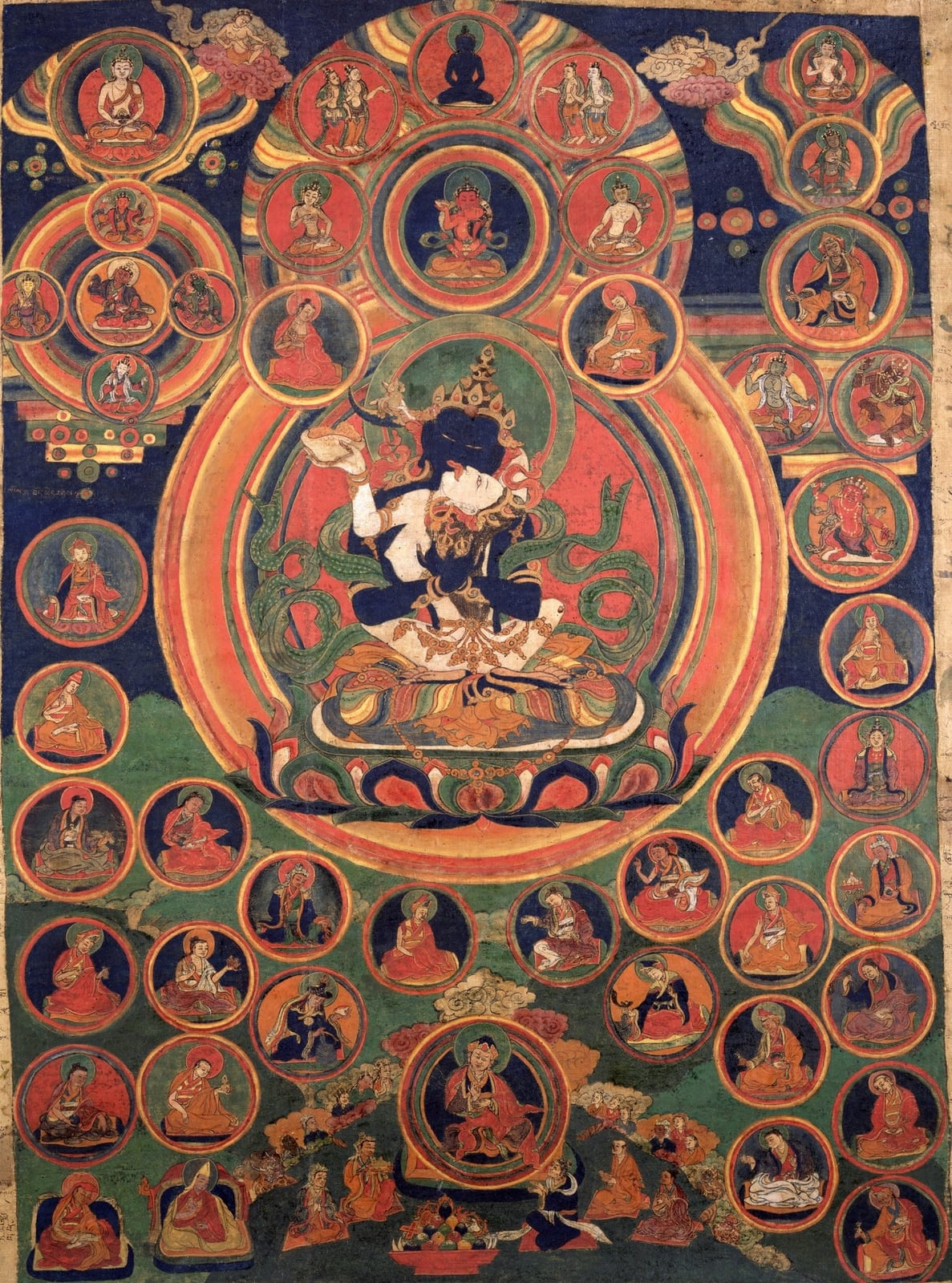
Padmasambhava (Orgyen Dorje Chang) con Yeshe Tsogyal, tangka tibetano del siglo XVII · Public domain

Pour commencer, une œuvre
The Great Liberation by Hearing in the Intermediate State (Bardo Thödol, 'Tibetan Book of the Dead')Son idée centrale
Treasures (gter ma): A terma is a text or object that, according to tradition, Padmasambhava or one of his contemporaries hid in the eighth century to be discovered later by a predestined revealer (gter ston).
Le voir en contexte
Biographie
5 min de lecture
Traduction assistée à partir de l'original espagnol, en attente de relecture par un traducteur natif.
Deux figures sous un même nom
Il y a deux Padmasambhava. L'un est un maître tantrique indien du VIIIe siècle dont il ne reste que quelques lignes dans des sources anciennes ; l'autre est Guru Rinpoché, le « Maître précieux », né d'un lotus, conquérant spirituel du Tibet et auteur des trésors que ses fidèles ne cessent de découvrir depuis neuf cents ans. Pendant une bonne partie du XXe siècle, l'érudition occidentale a douté que le premier eût existé. Aujourd'hui, comme le résume Lewis Doney, son historicité est admise avec prudence : il a bien existé un Padmasambhava, mais presque tout ce que l'on raconte de lui appartient au second.
Ce que disent les sources anciennes
Le plus ancien témoignage narratif est le Testament de Ba (dBa' bzhed), chronique de l'introduction du bouddhisme au Tibet dont la rédaction se situe entre le IXe et le XIIe siècle. Selon ce texte, le roi Trisong Detsen (qui régna de 755 à la fin du VIIIe siècle) avait invité le grand érudit indien Śāntarakṣita, mais inondations, foudre et épidémies furent imputées à la colère des dieux locaux, et le sage conseilla de faire venir un spécialiste capable de les soumettre : Padmasambhava, venu de l'Oḍḍiyāna. Le maître dompta les esprits, proposa des travaux pour amener l'eau dans les déserts et suscita à la cour de tels soupçons que le roi, craignant pour son pouvoir, le pria de partir après un bref séjour.
Ce portrait — celui d'un exorciste tantrique, efficace et dérangeant — concorde avec celui des manuscrits de Dunhuang. Le Pelliot tibétain 44, copié vers la fin du Xe siècle, raconte comment Padmasambhava rapporta de Nālandā les textes de Vajrakīla pour vaincre les obstacles qui l'empêchaient de pratiquer à Yanglesho, dans la vallée de Katmandou. Deux autres manuscrits, étudiés par Jacob Dalton, le montrent déjà en dompteur des esprits hostiles du Tibet. Aucune de ces sources ne parle d'une naissance miraculeuse ; toutes le présentent comme un ritualiste au service de la fondation du bouddhisme tibétain, dont le premier monastère, Samyé, fut consacré vers 779.
Le Né du lotus
La biographie que connaissent les Tibétains fut fixée bien plus tard, dans les textes révélés à partir du XIIe siècle. Selon elle, huit ans après la mort du Bouddha, comme celui-ci l'avait prophétisé, un enfant de huit ans apparut assis sur un lotus dans le lac Dhanakośa, en Oḍḍiyāna, le pays que la plupart des spécialistes identifient à la vallée du Swat. Le roi Indrabhūti, qui n'avait pas d'enfant, l'adopta et en fit un prince ; mais le jeune homme tua un ministre, fut banni et vécut en yogi dans les charniers de l'Inde, où il reçut les enseignements des ḍākinī et des grands maîtres tantriques.
Viennent ensuite les épisodes que l'iconographie ne cesse de reprendre : la princesse Mandāravā de Zahor, que le roi son père voulut brûler avec son maître sur un bûcher qui se changea en lac ; la retraite dans la grotte de Māratika, où tous deux obtinrent la maîtrise de la vie ; la réalisation à Yanglesho par les pratiques de Yangdak et de Vajrakīla. Chaque étape correspond à l'une de ses huit manifestations (le prince Padma Gyalpo, le yogi Nyima Özer, l'érudit Loden Chokse, le courroucé Dorje Drolö…), qui sont moins des épisodes biographiques que les formes sous lesquelles le maître s'offre à la dévotion.
La conquête du Tibet
Dans la version traditionnelle, le voyage au Tibet est une campagne. Padmasambhava soumet les dieux de chaque montagne et de chaque lac, les oblige à jurer de protéger le bouddhisme et, une fois ceux-ci domptés, Samyé s'élève. Il initie le roi et vingt-cinq disciples principaux, prend pour parèdre Yeshé Tsogyal, qui transcrira ses enseignements, et médite dans des grottes devenues lieux de pèlerinage, de Chimphu, près de Samyé, à Taktsang, le « Nid du Tigre » du Bhoutan, où il arriva en volant sur une tigresse. Avant de partir, il cache à travers tout le Tibet des textes et des objets afin que ses disciples réincarnés les découvrent au moment opportun. Puis il quitte le pays par le col de Gungthang vers le sud-ouest, au pays des rākṣasa, et ne meurt pas : il demeure sur la Montagne couleur de cuivre.
Les trésors
Ce dernier geste explique la figure. À partir du XIe siècle apparurent au Tibet les « découvreurs de trésors » (gter ston), qui présentaient des textes trouvés dans des grottes, dans des colonnes ou dans leur propre esprit comme des enseignements de Padmasambhava cachés quatre siècles plus tôt. Nyangral Nyima Özer (1124-1192) révéla le Zangs gling ma, la première biographie complète ; Orgyen Lingpa, en 1352, le Dict de Padma, qui fixa la légende ; Karma Lingpa, au XIVe siècle, le cycle auquel appartient le Bardo Thödol. Comme l'a montré Janet Gyatso, la théorie du trésor permettait à l'école ancienne, la Nyingma, de renouveler son canon sans rompre avec le passé : chaque révélation renvoyait à l'autorité du Maître d'Oḍḍiyāna.
Il en résulte une œuvre immense qu'il n'a pas écrite. Du XIXe siècle date le Grand Trésor des termas précieux, la compilation en plus de soixante volumes de Jamgön Kongtrul ; du XXe, la renommée mondiale du Bardo Thödol, que la version d'Evans-Wentz (1927), avec son titre inventé de Livre des morts tibétain et le commentaire psychologique de Carl Gustav Jung, transforma en classique de la spiritualité occidentale. Parmi les œuvres qui portent son nom, seule la Guirlande des vues, bref traité sur les neuf véhicules inclus dans le canon, semble remonter à la période impériale.
Ce que l'on peut affirmer
En somme : il y eut dans le Tibet du VIIIe siècle un maître tantrique d'origine indienne, spécialiste des rituels de soumission, lié à la fondation de Samyé et à la tradition de Vajrakīla, dont le séjour fut probablement bref et conflictuel. Tout le reste — le lotus, les charniers, les parèdres, le vol sur la tigresse, les trésors — est l'œuvre de siècles de mémoire religieuse, et n'en est pas moins réel en tant que fait historique : Guru Rinpoché est la figure la plus vénérée du bouddhisme tibétain, le « second Bouddha » auquel sont consacrées les fêtes du dixième jour lunaire au Bhoutan et dans l'Himalaya, et le cœur de l'identité de l'école Nyingma.
Sources: Pasang Wangdu y Hildegard Diemberger (trad. y ed.). dBa' bzhed: The Royal Narrative concerning the Bringing of the Buddha's Doctrine to Tibet. Viena: Verlag der Österreichischen Akademie der Wissenschaften, 2000. ISBN 9783700129561. · Doney, Lewis. The Zangs gling ma: The First Padma bKa' thang Revelation. Andiast: International Institute for Tibetan and Buddhist Studies, 2014. · Hirshberg, Daniel A. Remembering the Lotus-Born: Padmasambhava in the History of Tibet's Golden Age. Somerville (MA): Wisdom Publications, 2016. · Cantwell, Cathy, y Robert Mayer. Early Tibetan Documents on Phur pa from Dunhuang. Viena: Verlag der Österreichischen Akademie der Wissenschaften, 2008 (cap. «Pelliot tibétain 44», pp. 41–56). · Kapstein, Matthew T. The Tibetan Assimilation of Buddhism: Conversion, Contestation, and Memory. Nueva York: Oxford University Press, 2000.
Chronologie
La vie, année après année
Chaque point est un événement documenté. Cliquez pour le lire, avec sa source et son degré de certitude.
VIIe siècleOḍḍiyāna (valle de Swat)
Birth (traditional)
Tradition has him born from a lotus in Lake Dhanakośa in Oḍḍiyāna; the early sources only say he came from that land. The date is conventional: eighth century.
TraditionYeshe Tsogyal (atrib.); Nyangral Nyima Özer (revelador). The Lotus-Born: The Life Story of Padmasambhava. Trad. Erik Pema Kunsang. Boston: Shambhala, 1993. ISBN 9780877738695.
VIIe siècle
Birth (traditional)
Tradition has him born from a lotus in Lake Dhanakośa in Oḍḍiyāna; the early sources only say he came from that land. The date is conventional: eighth century.
Tradition
755
Trisong Detsen accedes to the throne
The reign begins of the emperor who, according to the chronicles, invited Śāntarakṣita and Padmasambhava.
Documenté
années 770
Invitation to Tibet
On Śāntarakṣita's advice the king invites him to subdue the spirits obstructing the founding of Samye; according to the Testament of Ba his stay was brief and ended with his departure at the king's request.
Probable
v. 779
Consecration of Samye
Samye, Tibet's first Buddhist monastery, is consecrated; the sources place Padmasambhava at its founding.
Probable
v. 1000
Earliest written witnesses
Dunhuang manuscripts (Pelliot tibétain 44 and 307, IOL Tib J 644), from the late tenth century, present him as a Vajrakīla master and tamer of spirits.
Documenté
v. 1150
First revealed biography
Nyangral Nyima Özer (1124–1192) reveals the Zangs gling ma, the first complete life of Padmasambhava.
Documenté
1352
The Chronicle of Padma
Orgyen Lingpa reveals the Padma bka' thang, which fixes the canonical form of the legend.
Documenté
v. 1360
Karma Lingpa and the Bardo Thödol
Karma Lingpa (1326–1386) reveals the cycle of the peaceful and wrathful deities, to which the Bardo Thödol belongs.
Documenté
1692
Founding of Taktsang
The 'Tiger's Nest' monastery is built beside the cave tradition associates with Padmasambhava.
Documenté
v. 1880
The Great Treasury of Termas
Jamgön Kongtrul gathers in more than sixty volumes the treasure cycles attributed to Padmasambhava (Rinchen Terdzö).
Documenté
1927
The 'Tibetan Book of the Dead'
W. Y. Evans-Wentz publishes Kazi Dawa-Samdup's version of the Bardo Thödol, which will make a text attributed to Padmasambhava famous in the West.
Documenté
Œuvres
Œuvres essentielles
Les œuvres sans lesquelles on ne comprend pas son héritage.
Attribution traditionnelle · v. 1350
The Great Liberation by Hearing in the Intermediate State (Bardo Thödol, 'Tibetan Book of the Dead')
ཟབ་ཆོས་ཞི་ཁྲོ་དགོངས་པ་རང་གྲོལ་ལས་བར་དོ་ཐོས་གྲོལ་ཆེན་མོ། (zab chos zhi khro dgongs pa rang grol las bar do thos grol chen mo)
A set of ritual texts read aloud beside the dying and the dead to guide them through the intermediate states (bar do) between death and rebirth: the clear light at the moment of dying, the visions of the peaceful and wrathful deities and the search for a new birth. It belongs to the cycle 'The Self-Liberation of the Intention of the Peaceful and Wrathful Deities', revealed in the fourteenth century by Karma Lingpa. Since the 1927 English version it has been the most widely read Tibetan text in the West.
9 éditions

Attribution traditionnelle · 1352
The Chronicle of Padma (Padma Kathang)
པདམ་བཀའི་ཐང་ཡིག། (padma bka'i thang yig)
A verse biography of Padmasambhava's whole life: birth from a lotus in Lake Dhanakośa, youth as prince of Oḍḍiyāna, exile, years as a yogi in the charnel grounds, the stay in Tibet and the departure for the land of the rākṣasas. It fixed the 'eleven deeds' and the canonical form of the legend, and was for centuries the most widely circulated book about him. It presents itself as dictated by the master himself to Yeshe Tsogyal.
2 éditions

Attribution traditionnelle · v. 1150
The Copper Island (Zangling ma): Life of Padmasambhava
པདམ་བཀའ་ཐང་ཟངས་གླིང་མ། (padma bka' thang zangs gling ma)
The first complete biography of Padmasambhava, in prose, narrating his birth from a lotus, arrival in Tibet, the founding of Samye, the initiation of the twenty-five disciples and his departure. It is the source of nearly all later versions of the legend and evidence of how the figure was constructed in the twelfth century. Its colophons attribute the writing to Yeshe Tsogyal.
2 éditions
Padmasambhava
Garland of Views: An Essential Instruction
Attribution traditionnelle · VIIIe siècle
Garland of Views: An Essential Instruction
མན་ངག་ལྟ་བའི་ཕྲེང་བ། (man ngag lta ba'i phreng ba)
A short treatise that arranges all Buddhist and non-Buddhist paths in a hierarchy of views culminating in atiyoga or the Great Perfection; it presents itself as a commentary on chapter XIII of the Guhyagarbhatantra. It is the only work ascribed to Padmasambhava included in the Tengyur, the canon of treatises, and the one scholarship considers closest to a plausible attribution or at least to the imperial period; Nubchen Sangye Yeshe already cites it.
1 édition
Toute son œuvre (14)

The Self-Liberation of the Intention of the Peaceful and Wrathful Deities (Karma Lingpa's cycle)
1350
Padmasambhava
Self-Liberation through Seeing with Naked Awareness
The Conscious LibrarySelf-Liberation through Seeing with Naked Awareness
1350

Dakini Teachings: Padmasambhava's Advice to Yeshe Tsogyal
1150

Advice from the Lotus-Born (Zhal gdams)
Padmasambhava
The Gradual Path of the Wisdom Essence (Lamrim Yeshe Nyingpo)
The Conscious LibraryThe Gradual Path of the Wisdom Essence (Lamrim Yeshe Nyingpo)
1856
Padmasambhava
The Prayer in Seven Chapters (Le'u Dünma)
The Conscious LibraryThe Prayer in Seven Chapters (Le'u Dünma)
1350
Padmasambhava
The Seven-Line Prayer
The Conscious LibraryThe Seven-Line Prayer
Padmasambhava
The Fivefold Chronicles (Kathang Denga)
The Conscious LibraryThe Fivefold Chronicles (Kathang Denga)
1350
Padmasambhava
Gathering of the Sugatas of the Eight Commands (Kagye Deshek Düpa)
The Conscious LibraryGathering of the Sugatas of the Eight Commands (Kagye Deshek Düpa)
1150
Padmasambhava
The Great Treasury of Precious Termas (Rinchen Terdzö)
The Conscious LibraryThe Great Treasury of Precious Termas (Rinchen Terdzö)
1880
Dernières paroles
Il n'existe aucun témoignage vérifiable de ses dernières paroles.
Tradition ascribes to him not death but departure: the revealed biographies have him leave Tibet by the Gungthang pass towards the south-west, giving farewell advice to the king and Yeshe Tsogyal, to dwell on the Copper-Coloured Mountain. These farewells are hagiographic compositions of the twelfth to fourteenth centuries; there is no historical record of his death or of last words.
Source: Yeshe Tsogyal (atrib.); Orgyen Lingpa (revelador). The Life and Liberation of Padmasambhava (Padma bKa'i Thang). Trad. Kenneth Douglas y Gwendolyn Bays a partir de la versión francesa de Gustave-Charles Toussaint (Le Dict de Padma, París: Leroux, 1933). 2 vols. Emeryville (CA): Dharma Publishing, 1978. ISBN 9780913546192.
Interroger
Ce que répond son œuvre
Douze grandes questions de l'humanité et ce que ses textes permettent d'y répondre, références à l'appui. Nous ne lui prêtons jamais de paroles.
Qu'est-ce que l'Absolu ? Dieu existe-t-il ?
The ultimate is the luminous nature of mind; the deities are its display
Un Absolu impersonnelCela se déduit de sa doctrine
Almost everything read under Padmasambhava's name consists of «treasure» texts (terma) revealed centuries after his life. The best known, the so-called Tibetan Book of the Dead, brought to light by Karma Lingpa in the fourteenth century, describes how at the moment of death the clear light of the dharmakāya appears and asks that it be recognised as the very nature of one's mind. The peaceful and wrathful deities that arise afterwards are not external gods but projections of that same mind. The ultimate is thus an empty and luminous awareness, without creator and without face, of which the divine figures are expressions. The Introduction to Pure Awareness, from the same cycle, insists that one should not look outside for what is one's own awakened presence.
Comparer cette question avec d'autres maîtresQui suis-je ? Existe-t-il un vrai soi ?
Sought for, the mind is not found: empty and yet aware
Il n'y a pas de soi permanentCela se déduit de sa doctrine
The texts the Nyingma tradition attributes to Padmasambhava are mostly terma revealed between the twelfth and nineteenth centuries. In the Introduction to Pure Awareness, from Karma Lingpa's cycle, the enquiry is directed at the mind itself: examined, it has no shape, colour or location, and is found neither inside nor outside. What follows is not nothingness but a naked presence, empty and clear at once, which the Great Perfection calls rigpa. The self that defends itself and clings is what does not withstand this examination; what remains is not a subject but the capacity to know. The Tibetan Book of the Dead applies the same teaching: whoever recognises the visions as their own mind is freed; whoever identifies with a fleeing self goes on wandering.
Comparer cette question avec d'autres maîtresPourquoi souffrons-nous ?
One wanders through not recognising as one's own the light that appears
L'ignorance de ce que nous sommesCela se déduit de sa doctrine
In the Tibetan Book of the Dead, a terma revealed by Karma Lingpa in the fourteenth century and attributed to Padmasambhava's teaching, suffering has one recurring cause: not recognising. At each stage of the intermediate state the clear light appears, and then the deities and the coloured lights; whoever recognises them as manifestations of their own mind is liberated, and whoever fears or desires them, through failing to recognise them, is dragged by karma towards a new birth. The five passions (ignorance, attachment, aversion, pride and envy) are presented as confused versions of the five wisdoms. We suffer, then, because we take ourselves for what we are not and fail to know the empty, luminous nature of mind; not because of a punishment or an external fate.
Comparer cette question avec d'autres maîtresQue se passe-t-il après la mort ?
After death, an intermediate state: recognition liberates, non-recognition brings rebirth
Renaissance selon le karmaIl le dit expressément
The answer associated with Padmasambhava is the most detailed in all Buddhist literature, but it comes from a terma: the so-called Tibetan Book of the Dead, which Karma Lingpa brought to light in the fourteenth century and which the tradition ascribes to a teaching of the master. The text is read beside the dying and the deceased for forty-nine days. At the instant of death the clear light appears; whoever recognises it as their own nature is liberated. If not, the visions of the peaceful and wrathful deities follow and, lastly, the intermediate state of becoming, where karma pushes towards one of the six destinies. Even then, hearing can guide the choice of a favourable birth. Death is an opportunity for liberation, not merely a transit.
Comparer cette question avec d'autres maîtresComment atteint-on la libération ou le salut ?
Liberation through recognition: seeing one's own mind naked as it is
Par la connaissance directeCela se déduit de sa doctrine
The treasure texts attributed to Padmasambhava propose many paths, arranged in nine vehicles culminating in the Great Perfection, but their core is recognition. The Introduction to Pure Awareness, from Karma Lingpa's cycle, presents itself as an instruction for liberation by seeing one's own mind naked: nothing is built, what is already present is recognised. The Tibetan Book of the Dead carries the same principle to the moment of death: whoever recognises the clear light as their own nature is liberated in that instant, and the titles say so, liberation through hearing, self-liberation through seeing. Preliminary practices, deities, mantras and devotion to the master prepare and sustain that recognition, but do not replace it.
Comparer cette question avec d'autres maîtresFaut-il un maître ?
The master introduces the nature of mind; without him there is no recognition
IndispensableCela se déduit de sa doctrine
In the tradition centred on Padmasambhava, the master is not an adviser but the door. The Great Perfection is transmitted through «direct introduction»: the master points out to the disciple their own pure awareness, and the text of Karma Lingpa's cycle bearing that name presents itself as such a pointing-out. Padmasambhava himself is the master par excellence, Guru Rinpoche, and many of the texts associated with him are supplications addressed to him, such as the Seven-Line Prayer or the Supplication in Seven Chapters. The Teachings to the Ḍākinīs, advice tradition says he gave Yeshe Tsogyal, insist on examining the master before following him and on not separating from him afterwards. Without transmission there is no initiation, and without initiation there is no tantric path.
Comparer cette question avec d'autres maîtresLe monde est-il réel ?
All that appears is the display of one's own mind, empty and luminous
Manifestation du divinCela se déduit de sa doctrine
In the terma associated with Padmasambhava, the world is neither a creation nor a deception to be rejected: it is the spontaneous manifestation of the nature of mind. The Tibetan Book of the Dead teaches this dramatically: the lights, sounds and deities of the intermediate state are the very radiance of the deceased's mind, and recognising them is enough for them to dissolve into it. The Introduction to Pure Awareness applies the same to ordinary life: all that appears arises from the mind and is liberated in it, like waves in water. The Great Perfection speaks of primordial purity and spontaneous presence: the ground is empty from the beginning and, at the same time, unfolds ceaselessly into appearances.
Comparer cette question avec d'autres maîtresQu'est-ce que l'amour ?
The mind of awakening, inseparable from emptiness, for the good of all beings
Une compassion sans limitesCela se déduit de sa doctrine
The texts attributed to Padmasambhava devote no treatise to love, but they integrate it into the framework of the Great Vehicle: every practice begins by taking refuge and awakening the mind of awakening for the good of all beings, and ends by dedicating the merit to them. The Essence of Wisdom of the Stages of the Path, a terma revealed in the nineteenth century by Chokgyur Lingpa, develops this compassion as part of the gradual path towards the Great Perfection. In the hagiographies, the figure of Padmasambhava embodies a compassion that takes wrathful forms: taming Tibet's hostile spirits is, in that logic, an act of care. True compassion is described as inseparable from emptiness, free of the idea of someone who helps and someone who receives.
Comparer cette question avec d'autres maîtresSommes-nous libres ou tout est-il déterminé ?
Karma drives, yet in every instant one can recognise and choose
Le karma et le choixCela se déduit de sa doctrine
The Tibetan Book of the Dead, a fourteenth-century terma associated with Padmasambhava's teaching, describes a process dominated by karma: in the intermediate state of becoming, the deceased is swept along by karmic winds, sees visions according to past deeds and feels drawn towards a destiny. Yet the text is read aloud precisely because at every stage a possibility of liberation remains or, at least, of choosing: recognising the clear light, not being carried off by fear, closing the door of an unfavourable womb, turning towards a propitious human birth. The past conditions strongly, but it does not close everything off: present attention, sustained by the master's instruction, can divert the course.
Comparer cette question avec d'autres maîtresPourquoi méditer ou prier ?
Look into one's own mind until its naked nature is recognised
Revenir à la source du jeCela se déduit de sa doctrine
In the tradition that claims Padmasambhava as its source, two registers coexist. One is ritual and devotional: supplications such as the Seven-Line Prayer or the Supplication in Seven Chapters, the Vajra Guru mantra and the deity cycles revealed as treasures. The other, which the tradition regards as the summit, is the Great Perfection. The Introduction to Pure Awareness, from Karma Lingpa's cycle, describes this second register as an enquiry directed at the mind itself: searching for it, asking where it is, what colour or shape it has, until discovering that it is not found as a thing and that what searches is one's own empty, awake awareness. No state is manufactured: what is already there is recognised and rested in. Prayer prepares and sustains that recognition.
Comparer cette question avec d'autres maîtresLa raison peut-elle connaître l'ultime ?
A wisdom hidden as treasure and recognised in one's own experience
Une connaissance ésotériqueCela se déduit de sa doctrine
The tradition associated with Padmasambhava answers this question through its mode of transmission. According to the doctrine of treasures (terma), the master and his disciples hid teachings in the eighth century that predestined revealers would discover centuries later, when they were needed. Ultimate knowledge is therefore not reached by reasoning but by transmission and initiation, and it is verified in the practitioner's experience. The Garland of Views, the most plausible attribution, arranges doctrines in a hierarchy culminating in the Great Perfection, above paths that rely on analysis. The Introduction to Pure Awareness insists that the nature of mind is not an object of thought: it is recognised directly when the master points it out.
Comparer cette question avec d'autres maîtresSe retirer du monde ou le transformer ?
Retreat caves and hidden valleys; but also taming a country
Se retirer pour trouverCela se déduit de sa doctrine
The hagiographies revealed as treasures, such as The Copper Island (twelfth century) and the Chronicle of Padma (fourteenth century), present Padmasambhava practising in caves and charnel grounds in India, Nepal and Tibet, and the sacred geography of the Himalaya is full of grottoes associated with him. The advice tradition says he gave Yeshe Tsogyal insists on abandoning worldly concerns and practising in solitude. Treasure literature also developed the idea of hidden valleys, refuges for times of crisis. But the same chronicles show him acting in the world: invited by King Trisong Detsen, he subdues the hostile spirits so that the monastery of Samye can be founded. Retreat is the condition of attainment; action, its fruit.
Comparer cette question avec d'autres maîtres
Affinités et tensions
Affinités et tensions
Calculées question par question à partir de ses positions. La raison de chaque accord ou de chaque désaccord s'affiche d'un clic.
Pense comme
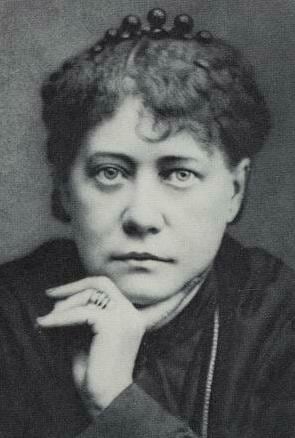
Helena Blavatsky
Ils concordent sur: Sommes-nous libres ou tout est-il déterminé ? · Qu'est-ce que l'Absolu ? Dieu existe-t-il ? · Que se passe-t-il après la mort ?

Dōgen
Ils concordent sur: Qui suis-je ? Existe-t-il un vrai soi ? · Que se passe-t-il après la mort ? · Faut-il un maître ?
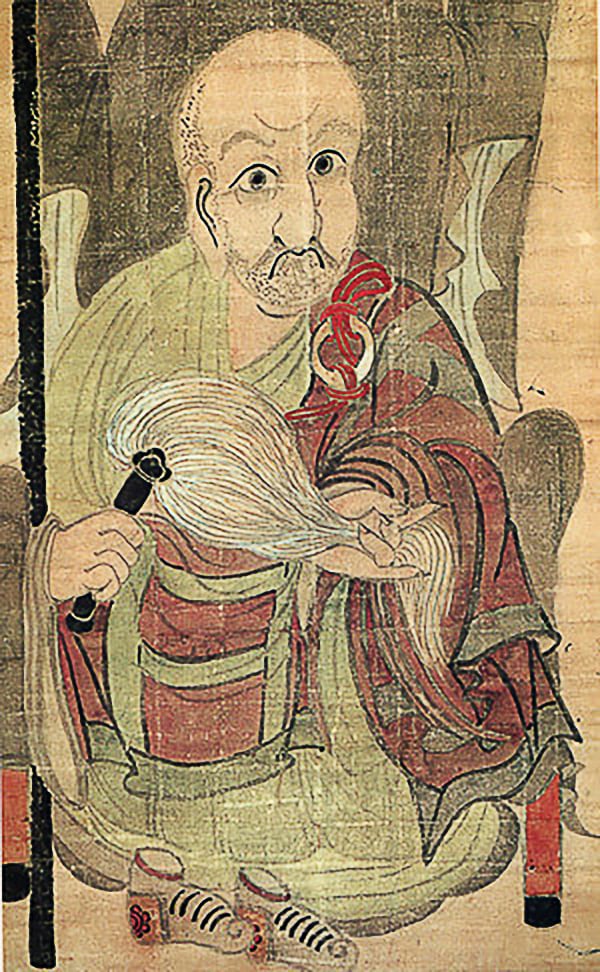
Hakuin Ekaku
Ils concordent sur: Qui suis-je ? Existe-t-il un vrai soi ? · Pourquoi souffrons-nous ? · Faut-il un maître ?
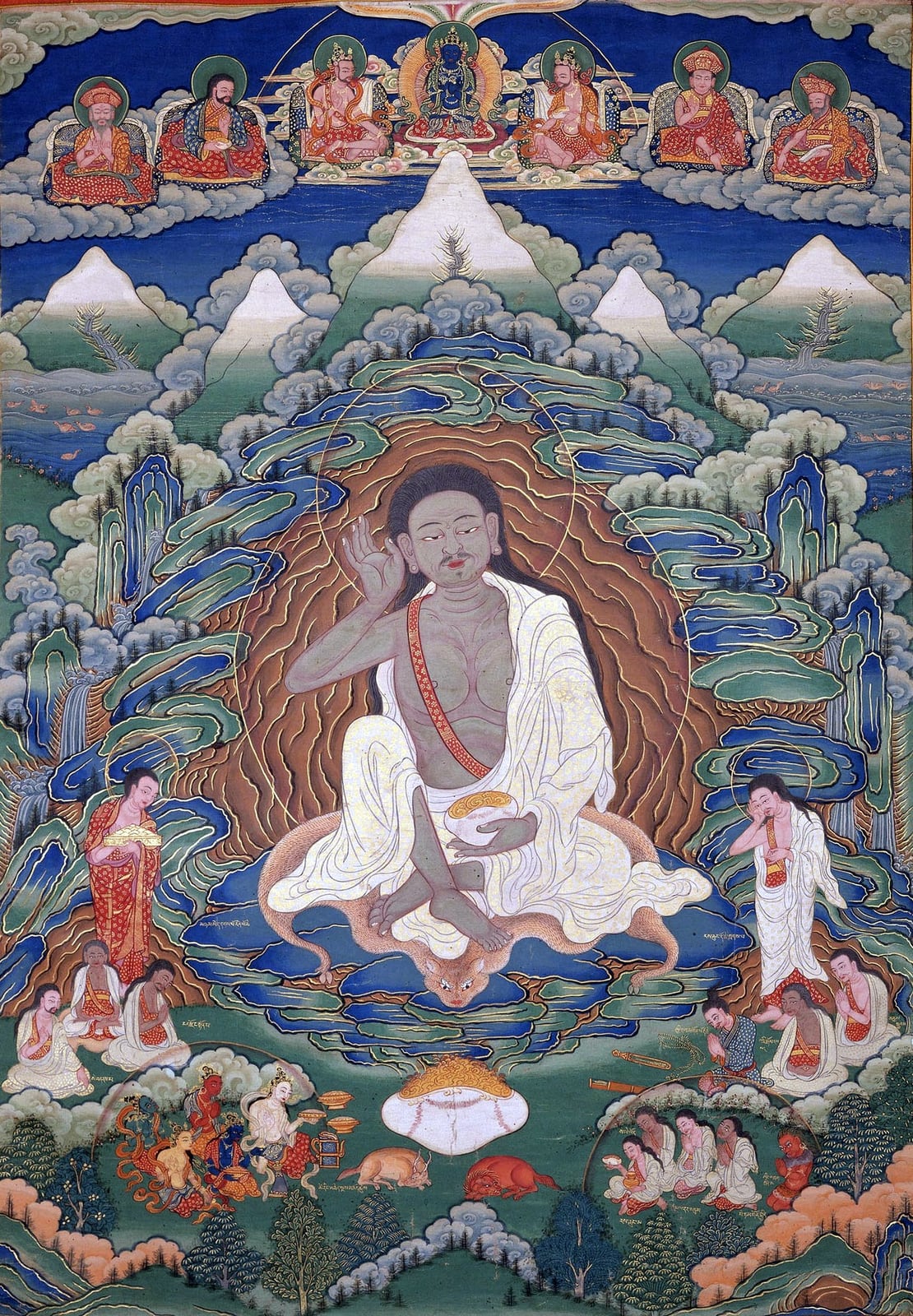
Milarepa
Ils concordent sur: Sommes-nous libres ou tout est-il déterminé ? · Qui suis-je ? Existe-t-il un vrai soi ? · Que se passe-t-il après la mort ?
Pense autrement que

Nikolai Berdyaev
Ils s'opposent sur: Qui suis-je ? Existe-t-il un vrai soi ? · Que se passe-t-il après la mort ? · Faut-il un maître ?

Francis of Assisi
Ils s'opposent sur: Qui suis-je ? Existe-t-il un vrai soi ? · Que se passe-t-il après la mort ?
Al-Hallaj
Ils s'opposent sur: Qui suis-je ? Existe-t-il un vrai soi ? · Que se passe-t-il après la mort ?

Emanuel Swedenborg
Ils s'opposent sur: Qui suis-je ? Existe-t-il un vrai soi ? · Que se passe-t-il après la mort ?
Anecdotes et récits
Anecdotes et récits
Contestésegunda mitad del s. VIII
The dismissed exorcist
Origine du récit: Dba' bzhed (Testament of Ba), ed. and trans. Pasang Wangdu and Hildegard Diemberger (2000), and related versions of the Sba bzhed. The text's date of composition is disputed (ninth to twelfth centuries); the details of the assassins vary between recensions.
Source: Pasang Wangdu y Hildegard Diemberger (trad. y ed.). dBa' bzhed: The Royal Narrative concerning the Bringing of the Buddha's Doctrine to Tibet. Viena: Verlag der Österreichischen Akademie der Wissenschaften, 2000. ISBN 9783700129561.
Récit hagiographiques. VIII (narrado c. 1000)
The dagger of Yanglesho
Origine du récit: Pelliot tibétain 44 (Bibliothèque nationale de France), studied by Bischoff and Hartman (1971) and by Cantwell and Mayer (2008); Takeuchi dates it between 978 and 1010 according to the reference recorded in the BDRC dictionary. The episode is later expanded in the Zangs gling ma and the Chronicle of Padma.
Source: Bischoff, F. A., y Charles Hartman. «Padmasambhava's Invention of the Phur-bu: Ms. Pelliot tibétain 44». En Études tibétaines dédiées à la mémoire de Marcelle Lalou. París: Adrien Maisonneuve, 1971, 11–28.
Récit hagiographiques. VIII (narrado desde el s. XII)
The child of the lake
Origine du récit: Zangs gling ma (Nyangral Nyima Özer, twelfth century), chapter on the birth; Padma bka' thang (Orgyen Lingpa, 1352). Some versions prefer a birth from a queen's womb; Wikipedia records both.
Source: Yeshe Tsogyal (atrib.); Nyangral Nyima Özer (revelador). The Lotus-Born: The Life Story of Padmasambhava. Trad. Erik Pema Kunsang. Boston: Shambhala, 1993. ISBN 9780877738695.
Récit hagiographiques. VIII (narrado desde el s. XII)
Mandāravā and the lake of fire
Origine du récit: Padma bka' thang and Zangs gling ma; biography of Mandāravā revealed by Samten Lingpa (nineteenth century). The identification with Rewalsar is traditional.
Source: Yeshe Tsogyal (atrib.); Orgyen Lingpa (revelador). The Life and Liberation of Padmasambhava (Padma bKa'i Thang). Trad. Kenneth Douglas y Gwendolyn Bays a partir de la versión francesa de Gustave-Charles Toussaint (Le Dict de Padma, París: Leroux, 1933). 2 vols. Emeryville (CA): Dharma Publishing, 1978. ISBN 9780913546192.
Récit hagiographiques. VIII (tradicional); monasterio de 1692
The flight to Taktsang
Origine du récit: Bhutanese oral tradition and revealed biographies; monastery data (1692, 1998 fire) according to Wikipedia. The length of the retreat is a ritual formula applied to many masters.
Tradition orales. VIII (tradicional); teoría desarrollada desde el s. XI
The hidden treasures
Origine du récit: The gter ma theory set out in the revealed biographies and in Nyingma treatises (e.g. Jigme Lingpa; Tulku Thondup, The Hidden Teachings of Tibet, 1986); academic analysis in Gyatso (1986) and Doney (2014).
Source: Gyatso, Janet. «Signs, Memory and History: A Tantric Buddhist Theory of Scriptural Transmission». Journal of the International Association of Buddhist Studies 9.2 (1986): 7–35.
Enseignements
Enseignements
Les notions qui structurent sa pensée, expliquées dans leur contexte.
Treasures (gter ma)terma
The Nyingma school; also in Bön and, to a lesser extent, in the Kagyu schools.
Source: Gyatso, Janet. «Signs, Memory and History: A Tantric Buddhist Theory of Scriptural Transmission». Journal of the International Association of Buddhist Studies 9.2 (1986): 7–35.
Intermediate state (bardo)bardo
Karma Lingpa's cycle (fourteenth century); antecedents in the Abhidharma and the Guhyagarbha tantras.
Source: The Tibetan Book of the Dead: First Complete Translation. Trad. Gyurme Dorje; ed. Graham Coleman y Thupten Jinpa; introd. del XIV Dalái Lama. Londres: Penguin Classics, 2006. ISBN 9780140455298.
The nine vehicles and the Great Perfectionnueve-vehiculos
Nyingma doxography; the Guhyagarbhatantra.
Source: Padmasambhava (atrib.) y Jamgön Mipham. A Garland of Views: A Guide to View, Meditation, and Result in the Nine Vehicles. Trad. Padmakara Translation Group. Boulder: Shambhala, 2016. ISBN 9781611802962.
The taming of spirits ('dul ba)sometimiento
Tantric ritual (Vajrakīla); history of the conversion of Tibet.
Source: Dalton, Jacob P. The Taming of the Demons: Violence and Liberation in Tibetan Buddhism. New Haven: Yale University Press, 2011. ISBN 9780300153927.
The Vajra Guru mantra and the eight manifestationsvajra-guru
Nyingma and popular devotional practice.
Vidéos
Vidéos
Enregistrements, entretiens et documentaires. Les vidéos sont lues depuis YouTube ; elles ne sont pas hébergées ici.
Session 1: Padmasambhava and History
Conférence· EN· 55 min
Rubin Museum of Himalayan ArtChaîne officielle
Session 3: Padmasambhava and the Treasure Tradition
Conférence· EN· 69 min
Rubin Museum of Himalayan ArtChaîne officielle
Padmasambhava and His Eight Manifestations
Analyse· EN· 6 min
SmarthistoryChaîne officielle
Light of Kailash 29: On the Image of Padmasambhava in Zanglingma | Dr. Lucian Maidanuc
Conférence· EN· 64 min
Shang Shung Institute UKChaîne officielle
Prof. Jacob Dalton - "An Early Presentation of the Great Perfection"
Conférence· EN· 107 min
Rangjung Yeshe InstituteChaîne officielle
What is the Tibetan Book of the Dead?
Analyse· EN· 17 min
ReligionForBreakfast
Francesca Freemantle on the Tibetan Book of the Dead
Entretien· EN· 71 min
Shambhala PublicationsChaîne officielle
Art of Dying & Living: Tibetan Book of the Dead with Bob Thurman
Conférence· EN· 68 min
Tibet House US NYC | Menla Resort OnlineChaîne officielle
The Death of Death: Bringing The Tibetan Book of the Dead to Life | Dr. Andrew Holecek
Conférence· EN· 72 min
Theosophical Society
El Bardo Todol, La Gran Liberación - Libro tibetano de la vida y la muerte, subtitulado al español
Documentaire· ES· 45 min
culturapractica
Nacido de un Loto - Padmasambhava - Guru Rinpoche - Introducción a su Biografía Milagrosa - Namthar
Enregistrement de tiers· ES· 27 min
Daniel Rajunov
Galerie
Galerie
Images dont la licence a été vérifiée. Chacune conserve son auteur et son attribution.
Manuscrits
Manuscrits
Témoins manuscrits et textes anciens, avec leur dépositaire et leurs conditions de consultation.
BO · Tibetano (dbu can) · Finales del siglo X (Takeuchi: 978–1010)
Pelliot tibétain 44 (texto sobre Vajrakīla / phur pa)
- Témoin conservé
- Manuscrito de Dunhuang
- Dépositaire
- Bibliothèque nationale de France, París · Pelliot tibétain 44
BO · Tibetano · Siglo X
Pelliot tibétain 307
- Témoin conservé
- Manuscrito de Dunhuang
- Dépositaire
- Bibliothèque nationale de France, París · Pelliot tibétain 307
BO · Tibetano · Siglo X
IOL Tib J 644
- Témoin conservé
- Manuscrito de Dunhuang
- Dépositaire
- British Library, Londres · IOL Tib J 644
Relations
Relations
Influences, filiations et affinités. On distingue la relation documentée de la similitude identifiée par analyse.
A reçu l'influence de
Siddhartha Gautama, the Buddha
A Buddhist tantric master; the revealed biographies present him as the 'second Buddha' prophesied by Śākyamuni himself.
Relation documentée
A influencé
The 14th Dalai Lama (Tenzin Gyatso)
The 14th Dalai Lama, though Geluk, has taught the Great Perfection of the Nyingma tradition that claims descent from Padmasambhava (Dzogchen: The Heart Essence of the Great Perfection, 2000) and introduced the complete translation of the Bardo Thödol (Penguin, 2006).
Relation documentée
Idées proches de
A parallel identified by the researcher: the two great yogis of the Himalayan caves whose image was fixed by much later hagiographies (the Chronicle of Padma, 1352; Tsangnyön Heruka's Namthar, 1488), and whose retreat places organise Tibetan sacred geography. There is no historical relationship.
Similitude identifiée par analyse
Idées proches de
A parallel identified by the researcher: two Indian masters who founded foreign traditions (Nyingma and Chan) and whose biography is mostly later legend. In imperial Tibet both currents coexisted: the Dunhuang manuscripts and the ministers' chronicle of the Bka' thang sde lnga preserve Chan texts alongside Great Perfection ones.
Similitude identifiée par analyse
A rencontré
Trisong Detsen (r. 755–c. 797)
Emperor of Tibet who, according to the Testament of Ba, invited him to court and later asked him to leave.
Relation documentée
Contemporain de
Śāntarakṣita (725–788)
Indian scholar who, according to the Testament of Ba, advised inviting him to subdue the spirits; together with the king they are regarded as the three founders of Tibetan Buddhism.
Relation documentée
Maître de
Yeshe Tsogyal
His consort and chief disciple according to tradition; the revealed biographies present themselves as transcribed by her.
Relation documentée
A influencé
Karma Lingpa (1326–1386)
Discoverer of the cycle of the peaceful and wrathful deities, which includes the Bardo Thödol attributed to Padmasambhava.
Relation documentée
A influencé
Nyangral Nyima Özer (1124–1192)
Revealer of the Zangs gling ma, the first complete biography, and one of the principal architects of his image.
Relation documentée
Sources
Sources
Bibliographie et catalogues consultés pour cette fiche.
- Wikidata, «Padmasambhava», QID Q231582 (VIAF 5724290; LCCN n82039306; BDRC bdr:P4956; Treasury of Lives 7442).
- Dalton, Jacob P. «The Early Development of the Padmasambhava Legend in Tibet: A Study of IOL Tib J 644 and Pelliot tibétain 307». Journal of the American Oriental Society 124.4 (2004): 759–772.
- Pasang Wangdu y Hildegard Diemberger (trad. y ed.). dBa' bzhed: The Royal Narrative concerning the Bringing of the Buddha's Doctrine to Tibet. Viena: Verlag der Österreichischen Akademie der Wissenschaften, 2000. ISBN 9783700129561.
- Doney, Lewis. The Zangs gling ma: The First Padma bKa' thang Revelation. Andiast: International Institute for Tibetan and Buddhist Studies, 2014.
- Hirshberg, Daniel A. Remembering the Lotus-Born: Padmasambhava in the History of Tibet's Golden Age. Somerville (MA): Wisdom Publications, 2016.
- Cantwell, Cathy, y Robert Mayer. Early Tibetan Documents on Phur pa from Dunhuang. Viena: Verlag der Österreichischen Akademie der Wissenschaften, 2008 (cap. «Pelliot tibétain 44», pp. 41–56).
- Bischoff, F. A., y Charles Hartman. «Padmasambhava's Invention of the Phur-bu: Ms. Pelliot tibétain 44». En Études tibétaines dédiées à la mémoire de Marcelle Lalou. París: Adrien Maisonneuve, 1971, 11–28.
- Kapstein, Matthew T. The Tibetan Assimilation of Buddhism: Conversion, Contestation, and Memory. Nueva York: Oxford University Press, 2000.
- Yeshe Tsogyal (atrib.); Nyangral Nyima Özer (revelador). The Lotus-Born: The Life Story of Padmasambhava. Trad. Erik Pema Kunsang. Boston: Shambhala, 1993. ISBN 9780877738695.
- Yeshe Tsogyal (atrib.); Orgyen Lingpa (revelador). The Life and Liberation of Padmasambhava (Padma bKa'i Thang). Trad. Kenneth Douglas y Gwendolyn Bays a partir de la versión francesa de Gustave-Charles Toussaint (Le Dict de Padma, París: Leroux, 1933). 2 vols. Emeryville (CA): Dharma Publishing, 1978. ISBN 9780913546192.
- The Tibetan Book of the Dead: First Complete Translation. Trad. Gyurme Dorje; ed. Graham Coleman y Thupten Jinpa; introd. del XIV Dalái Lama. Londres: Penguin Classics, 2006. ISBN 9780140455298.
- Padmasambhava (atrib.) y Jamgön Mipham. A Garland of Views: A Guide to View, Meditation, and Result in the Nine Vehicles. Trad. Padmakara Translation Group. Boulder: Shambhala, 2016. ISBN 9781611802962.
- Wikipedia (en). «Padmasambhava». Usada como índice de fuentes y bibliografía secundaria (Doney 2014, 2015; Dalton 2004; Hirshberg 2016); contrastada con p2–p5.
- Dalton, Jacob P. The Taming of the Demons: Violence and Liberation in Tibetan Buddhism. New Haven: Yale University Press, 2011. ISBN 9780300153927.
- Cuevas, Bryan J. The Hidden History of the Tibetan Book of the Dead. Nueva York: Oxford University Press, 2003.
- Lopez, Donald S., Jr. The Tibetan Book of the Dead: A Biography. Princeton: Princeton University Press, 2011.
- Gyatso, Janet. «Signs, Memory and History: A Tantric Buddhist Theory of Scriptural Transmission». Journal of the International Association of Buddhist Studies 9.2 (1986): 7–35.
- The Treasury of Lives. «Padmasambhava» (biografía académica en línea, P4956). No se pudo leer directamente (403 a clientes automáticos); citada como referencia.
- Wikimedia Commons, API imageinfo (licencia, autor, fecha y descripción de cada fichero de images[]).
- Open Library (Internet Archive). Registros de ISBN de cada edición citada en works[].
- YouTube: conferencias y documentales verificados por oEmbed el 2026-10-25 (detalle en videos[]).
- Dalai Lama (Tenzin Gyatso). Dzogchen: The Heart Essence of the Great Perfection. Ed. Patrick Gaffney; trad. Thupten Jinpa y Richard Barron. Ithaca (NY): Snow Lion, 2000.
- Laufer, Berthold. Der Roman einer tibetischen Königin (bTsun-mo bka'-thang). Leipzig: Otto Harrassowitz, 1911.
- Ayant droit
- Los textos atribuidos y revelados (siglos XII–XIX) son de dominio público en su lengua original. Las traducciones tienen derechos propios: Penguin Random House (Dorje/Coleman/Jinpa 2006), Shambhala Publications (Fremantle y Trungpa; The Lotus-Born; Garland of Views; Dakini Teachings), Bantam/Random House (Thurman), Rangjung Yeshe Publications, Dharma Publishing, Wisdom Publications, Oxford University Press (Evans-Wentz), Kairós, Olañeta, Kier, Edaf.
En attente de confirmation
Ce que cette fiche n'a pas encore pu établir. Nous préférons le dire plutôt que de combler.
- Sala de lectura: no se ha encontrado ningún texto de la tradición de Padmasambhava que sea de dominio público en EE. UU., la UE y España con texto completo. Candidatos por comprobar: Berthold Laufer, «Der Roman einer tibetischen Königin» (Leipzig, 1911; Laufer m. 1934), libre en los tres territorios si existe un escaneo con OCR limpio; Emil Schlagintweit, «Die Lebensbeschreibung von Padma Sambhava» (Abhandlungen der k. bayerischen Akademie, 1899–1903; m. 1904). G.-C. Toussaint, «Le Dict de Padma» (1933): libre en la UE y España, pero protegido en EE. UU. hasta 2029; no localizado en línea.
- «Consejos de Zhang zhung»: el encargo menciona esta obra, pero no se ha identificado ningún texto atribuido a Padmasambhava con ese título. Zhang zhung designa el antiguo reino del Tíbet occidental y da nombre a la principal tradición oral del bön (Zhang zhung snyan rgyud), que no se atribuye a Padmasambhava. Se ha registrado en su lugar el género de los consejos (zhal gdams). Confirmar qué obra se buscaba.
- Citas: no se registran citas literales. Los textos atribuidos son tesoros revelados siglos después y no se ha podido cotejar en el original tibetano ningún pasaje con la exactitud exigida; el dicho más famoso se recoge en apocryphal_quotes.
- Wikidata da para Padmasambhava 717–762 como fechas de nacimiento y muerte; no tienen fundamento en las fuentes consultadas y no se usan.
- Manuscritos: las URL de digitalización de Pelliot tibétain 44 y 307 (Gallica/IDP) e IOL Tib J 644 (IDP) no se han podido obtener (Gallica bloquea las consultas automáticas).
- Treasury of Lives (P4956) devolvió 403; su contenido no se ha usado directamente.
- Ediciones españolas: solo se han verificado en catálogo las del Bardo Thödol (Kairós, Olañeta, Kier, Edaf) y la antología de Kairós (2006). No se ha localizado con ISBN una versión española del Zangs gling ma, de la Crónica de Padma ni de la Guirnalda de visiones.
- Vídeos: hay pocos materiales académicos en español; el documental de la NFB (1994) solo está en subidas no oficiales y se incluye una con subtítulos en español, marcada como no oficial.
Recherche effectuée le 2026-10-25