Bouddhisme · Mahāyāna · Zen / Chan
Hakuin Ekaku
白隠慧鶴 · はくいん えかく
1686 – 1769Personne historiquement documentée
Moine zen japonais de l'époque d'Edo, considéré comme le restaurateur de l'école rinzai : toutes ses lignées actuelles remontent à lui. Il systématisa la pratique des kōan, créa celui du « son d'une seule main », insista sur la pratique après l'éveil et sur le vœu d'œuvrer pour autrui, écrivit en chinois pour les moines et en japonais simple pour les paysans, et laissa des milliers de peintures et de calligraphies qui le placent parmi les grands artistes de son temps.
- œuvres
- 31œuvres
- éditions
- 45éditions
- citations
- 5citations
- vidéos
- 11vidéos
- images
- 5images
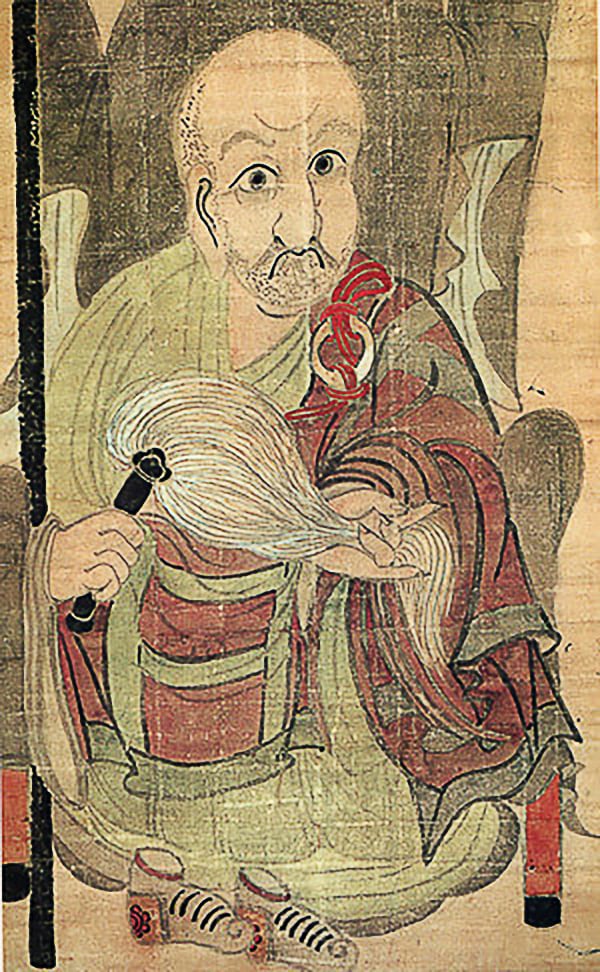
Autorretrato de Hakuin (1767) · Public domain
Dans ses propres mots
«Beings are buddha from the beginning, like water and ice: without water there is no ice, and outside beings there is no buddha.»Zazen wasan, versos iniciales. Traducción propia del japonés.
Hakuin Ekaku
The Embossed Tea Kettle (Orategama)
Pour commencer, une œuvre
The Embossed Tea Kettle (Orategama)Son idée centrale
Initial awakening (kenshō) is not the end but the beginning: what is decisive is the practice that follows, which consists in working for the good of others with the bodhisattva's four great vows.
Le voir en contexte
Biographie
5 min de lecture
Traduction assistée à partir de l'original espagnol, en attente de relecture par un traducteur natif.
Le moine de Hara
« Il y a à Suruga deux choses trop grandes pour elle : le mont Fuji et le Hakuin de Hara. » Le dicton, que l'on répète encore au Japon, résume le paradoxe de Hakuin Ekaku : le réformateur du zen rinzai, l'homme auquel remontent aujourd'hui toutes les lignées de cette école, passa presque toute sa vie dans un temple pauvre d'un village-relais de la route du Tōkaidō, au pied du Fuji. À la différence de Śāntideva ou de Huineng, nous savons beaucoup de choses sur lui, et beaucoup nous viennent de lui-même : il écrivit sans relâche, surtout pendant ses quinze dernières années, et laissa une autobiographie, Itsumadegusa, que son disciple Tōrei compléta par une chronologie. Mais lui aussi raconta sa vie comme une leçon, et la critique a appris à la lire avec la même prudence que les hagiographies.
La peur de l'enfer
Il naquit le 19 janvier 1686 à Hara, dans la province de Suruga, troisième fils des Nagasawa, une famille de marchands du village-relais ; enfant, il s'appelait Iwajirō. Sa mère était une fidèle de l'école de Nichiren, et Hakuin racontait lui-même qu'enfant, un sermon sur les enfers brûlants l'avait rempli d'une terreur qui ne le quitta plus : le bain chaud lui rappelait les flammes. À quinze ans, ses parents lui permirent de se faire moine au Shōin-ji, le temple zen du village, où l'abbé Tanrei lui donna le nom d'Ekaku. La lecture du Sûtra du Lotus, que ses maîtres nichiren vénéraient, le déçut : il n'y vit qu'un recueil de paraboles sur les causes et les effets.
Années de pérégrination
Les années suivantes furent des années de crise et de voyages. Au Zensō-ji, à dix-neuf ans, il lut que le grand maître chinois Yantou était mort en hurlant sous les coups de brigands, et il perdit l'espoir que le zen pût le sauver de l'enfer ; il se consacra alors à la poésie et à la calligraphie. Ce qui le ramena à la pratique fut un livre tiré au hasard d'une pile de volumes mis à aérer dans une cour : une anthologie chinoise de l'époque Ming sur l'effort des anciens maîtres, où un moine s'enfonçait un poinçon dans la cuisse pour ne pas s'endormir. En 1708, à l'Eigan-ji de Takada, dans l'Echigo, après des jours passés sur le kōan mu de Zhaozhou, le son lointain d'une cloche provoqua en lui un éveil si intense qu'il crut que personne n'en avait connu de pareil depuis trois cents ans. Son orgueil fut de courte durée : l'ermite Dōkyō Etan, le « vieux de Shōju », le traita de « moine zen terré dans son trou », le jeta en bas de la galerie de son ermitage d'Iiyama et lui donna des kōan difficiles. Hakuin ne passa que huit mois auprès de lui, mais finit par le tenir pour son véritable maître.
La maladie du zen
L'effort démesuré le rendit malade. Dans Yasenkanna, publié en 1757, il décrivit une « maladie du zen » — brûlure à la tête, froid dans les jambes, angoisse, insomnie — dont l'aurait guéri un ermite taoïste des collines de Kyoto, Hakuyū, au moyen de deux techniques : la contemplation intérieure (naikan), qui conduit l'énergie vitale dans le bas-ventre, et la visualisation d'un œuf de beurre qui fond depuis le sommet du crâne. Le livre connut un immense succès auprès des laïcs et n'a jamais cessé d'être réimprimé. Les spécialistes, cependant, le lisent comme une composition littéraire dans laquelle Hakuin rassembla les savoirs médicaux et les pratiques méditatives de son temps sous la figure d'un sage de la montagne.
Le temple et le grillon
En 1716, il revint au Shōin-ji, un temple presque en ruine, et en 1718 il s'enregistra comme abbé avec le rang minimal de « premier moine » du Myōshin-ji ; c'est alors qu'il adopta le nom de Hakuin, « caché dans le blanc ». Il ne le quitterait plus. L'éveil qu'il considéra comme définitif survint en 1726, dans sa quarante-deuxième année selon le compte japonais : lisant de nuit le chapitre des paraboles du Sûtra du Lotus, le texte qu'il avait méprisé dans sa jeunesse, il entendit un grillon et comprit d'un coup ce que Shōju avait voulu lui dire. L'éveil personnel ne suffit pas : ce qui importe, c'est la « pratique après le satori », l'esprit d'éveil qui œuvre pour le bien d'autrui. Dès lors, le vœu du bodhisattva fut au centre de son enseignement.
Maître de moines et de paysans
Au Shōin-ji se mirent à affluer des moines de tout le Japon, qui logeaient dans les maisons et les temples des environs. En 1740, ses lectures commentées des propos du maître chinois Xutang réunirent plusieurs centaines d'auditeurs et donnèrent naissance au Sokkōroku kaien-fusetsu. Hakuin combattit le « zen du rien-faire », la quiétude vide qu'il attribuait à bien des maîtres de son temps, et systématisa la pratique des kōan ; dans ses dernières années, il inventa le sien : « Écoute le son d'une seule main », qu'il jugeait plus efficace que le mu pour provoquer le grand doute. En même temps, il s'adressa aux gens ordinaires dans un japonais simple : lettres à des seigneurs féodaux sur le bon gouvernement, comme Hebiichigo ; sermons pour les femmes et les paysans ; chansons de meunerie et berceuses ; et le Zazen wasan, l'hymne de la méditation assise que les temples rinzai récitent encore chaque jour.
Le peintre de soixante ans
Vers soixante ans, il se mit à peindre sérieusement, et il le fit avec une liberté sans précédent dans la peinture zen. On lui attribue des milliers d'œuvres : des portraits de Bodhidharma aux yeux exorbités, des Hotei avec leur sac, des Kannon, des scènes populaires, des caricatures de lui-même, et de grands caractères calligraphiés comme « mort » ou « vertu ». Ce n'étaient pas des objets de collection, mais des sermons visuels qu'il offrait à ses visiteurs, pour la plupart illettrés. Son trait délibérément maladroit, que Yoshizawa Katsuhiro a étudié et déchiffré inscription par inscription, a influencé des peintres excentriques ultérieurs et fait de Hakuin, pour les musées du XXIe siècle, l'un des grands artistes de l'époque d'Edo.
L'héritage
Il mourut au Shōin-ji le onzième jour du douzième mois de la cinquième année de l'ère Meiwa, soit le 18 janvier 1769, à quatre-vingt-quatre ans selon le compte japonais. L'empereur lui conféra la même année le titre de Shinki Dokumyō Zenji et, en 1884, celui de Shōshū Kokushi. Il ne reçut jamais de transmission formelle du Dharma, ce qui, dans une école si attentive aux lignées, confine à l'hérésie ; mais ses disciples, surtout Tōrei Enji et, à travers lui, Gasan Jitō et ses héritiers Inzan et Takuju, organisèrent le cursus de kōan que suivent aujourd'hui toutes les branches du rinzai. Par D. T. Suzuki et par Yasutani Hakuun, son insistance sur le kenshō parvint jusqu'au zen occidental du XXe siècle.
Sources: Hakuin Ekaku. Wild Ivy: The Spiritual Autobiography of Zen Master Hakuin (Itsumadegusa). Trad. Norman Waddell. Boston: Shambhala, 1999. ISBN 1570624356. · Yampolsky, Philip B. (trad.). The Zen Master Hakuin: Selected Writings. Nueva York: Columbia University Press, 1971. ISBN 0231034636. · Waddell, Norman (trad.). The Essential Teachings of Zen Master Hakuin: A Translation of the Sokkō-roku Kaien-fusetsu. Boston: Shambhala, 1994. ISBN 0877739722. · Seo, Audrey Yoshiko y Stephen Addiss. The Sound of One Hand: Paintings and Calligraphy by Zen Master Hakuin. Boston: Shambhala, 2010. ISBN 1590305787. · Yoshizawa Katsuhiro. The Religious Art of Zen Master Hakuin. Ed. y trad. Norman Waddell. Berkeley: Counterpoint, 2009. ISBN 9781582434544.
Chronologie
La vie, année après année
Chaque point est un événement documenté. Cliquez pour le lire, avec sa source et son degré de certitude.
19 janvier 16860 ansHara (Numazu, Shizuoka)
Birth at Hara
Born on 19 January (25th day of the 12th month of Jōkyō 2) at Hara, Suruga province, into the Nagasawa family; his childhood name is Iwajirō.
DocumentéKotobank, «白隠» (artículos de Nihon daihyakka zensho, Sekai daihyakka jiten y Britannica Kokusai daihyakka jiten).
Après sa mort
- 1884Title Shōshū Kokushi
- 2010 – 2011“The Sound of One Hand” exhibition
19 janvier 1686 · 0 ans
Birth at Hara
Born on 19 January (25th day of the 12th month of Jōkyō 2) at Hara, Suruga province, into the Nagasawa family; his childhood name is Iwajirō.
Documenté
1700 · 14 ans
Ordination at the Shōin-ji
At fifteen (Japanese count) he becomes a monk under abbot Tanrei Soden, who gives him the name Ekaku.
Documenté
v. 1704
Crisis at the Zensō-ji and return to practice
The story of Yantou's violent death makes him lose faith; reading a Ming anthology on the masters' efforts brings him back to practice.
Documenté
1708
Awakening at the Eigan-ji and meeting with Shōju
The sound of a bell brings his first great awakening with the kōan mu; he then spends eight months with Dōkyō Etan at Iiyama.
Documenté
1710
Hakuyū and the Zen sickness
According to Yasenkanna, he visits the hermit Hakuyū at Shirakawa (Kyoto) to be cured; the account is partly literary.
Contesté
1716
Return to the Shōin-ji
He returns to his village temple, almost in ruins, from which he will never again part.
Documenté
1718
Abbot and new name: Hakuin
He registers as abbot with the rank of “first monk” of the Myōshin-ji and adopts the name Hakuin, “hidden in white”.
Documenté
1726
The cricket and the Lotus Sūtra
Definitive awakening reading the third chapter of the Lotus Sūtra: post-satori practice and bodhicitta move to the centre of his teaching.
Documenté
1740
Lectures on Xutang's record
Several hundred monks attend his talks at the Shōin-ji, published as Sokkōroku kaien-fusetsu.
Documenté
1749
Orategama
He publishes the letters of Orategama; his most prolific period as a writer in Japanese for lay people begins.
Documenté
v. 1753
The sound of one hand
He presents his own kōan in writing, which he prefers to mu for beginners.
Probable
1757
Publication of Yasenkanna
Yasenkanna, his most widely circulated book, appears in Kyoto.
Documenté
v. 1758
Founding of the Ryūtaku-ji
He restores as founder the Ryūtaku-ji temple near Mishima, to be headed by Tōrei; sources give 1758 or 1763.
Contesté
1766
Itsumadegusa
At eighty he writes his spiritual autobiography.
Documenté
18 janvier 1769 · 83 ans
Death at the Shōin-ji
He dies on 18 January (11th day of the 12th month of Meiwa 5) aged eighty-four (Japanese count). That year he receives the posthumous title Shinki Dokumyō Zenji.
Documenté
1884
Title Shōshū Kokushi
Emperor Meiji grants him the title Shōshū Kokushi, “national master of the true school”.
Documenté
2010 – 2011
“The Sound of One Hand” exhibition
The Japan Society in New York (2010) and LACMA (2011) present the first major Western show of his painting and calligraphy.
Documenté
Œuvres
Œuvres essentielles
Les œuvres sans lesquelles on ne comprend pas son héritage.
Hakuin Ekaku
The Embossed Tea Kettle (Orategama)
Correspondance · 1749
The Embossed Tea Kettle (Orategama)
遠羅天釜 (Orategama) y 遠羅天釜続集 (Orategama zokushū)
Letter-treatises on practice in the midst of activity, meditation on the kōan, the naikan remedy for Zen sickness and the relation between Zen and invoking Amida's name. The title, “embossed tea kettle”, alludes to a rough, useful object. It is the classic gateway to his teaching for lay people.
4 éditions
Hakuin Ekaku
Idle Talk on a Night Boat (Yasenkanna)
Œuvre écrite · 1757
Idle Talk on a Night Boat (Yasenkanna)
夜船閑話 (Yasenkanna)
An account of the young Hakuin's “Zen sickness” and its cure through inner contemplation (naikan), which brings the vital energy down to the lower belly, and the butter-egg method. It blends Chinese medicine, Daoism and Zen; it was his most widely read book among lay people and still circulates as a health manual.
4 éditions

Œuvre écrite · 1766
Wild Ivy (Itsumadegusa)
壁生草 (Itsumadegusa)
A first-person account of his childhood fear of hell, the Zensō-ji crisis, the awakening of 1708, the months with Shōju, the Zen sickness and the definitive awakening. It is the main source for his biography and at the same time a teaching piece: every episode is chosen to exhort the reader.
3 éditions
Hakuin Ekaku
Song in Praise of Zazen (Zazen wasan)
Œuvre écrite
Song in Praise of Zazen (Zazen wasan)
白隠禅師坐禅和讃 (Hakuin Zenji zazen wasan)
It begins “all beings are buddha from the beginning, like water and ice” and ends “this very place is the lotus land, this very body is the buddha”. It sums up Hakuin's doctrine in some forty lines and is the text recited daily in Rinzai temples in Japan and in many Western Zen centres.
2 éditions

Compilation postérieure · v. 1719
Painting and calligraphy
白隠禅画墨蹟 (Hakuin zenga bokuseki)
Portraits of Bodhidharma, Hotei, Kannon and ancient masters, self-portraits, popular scenes and caricatures, and large characters—“death”, “virtue”, “the sound of one hand”—with inscriptions that are themselves sermons. Given to visitors and patrons, they are now kept in temples (Ryūtaku-ji, Shōin-ji, Eisei Bunko) and in museums worldwide.
4 éditions
Toute son œuvre (31)
Hakuin Ekaku
The Sound of One Hand (Sekishu onjō)
The Conscious LibraryThe Sound of One Hand (Sekishu onjō)
1753

Introductory Talks on the Record of Sokkō (Sokkōroku kaien-fusetsu)
1743
Hakuin Ekaku
Poison Blossoms from a Thicket of Thorn (Keisō dokuzui)
The Conscious LibraryPoison Blossoms from a Thicket of Thorn (Keisō dokuzui)
1758
Hakuin Ekaku
Words from the Land of Kaian (Kaiankokugo)
The Conscious LibraryWords from the Land of Kaian (Kaiankokugo)
1750

Poison Words on the Heart Sūtra (Dokugo shingyō)
Hakuin Ekaku
An Icchantika's Notes on the Poems of Hanshan
The Conscious LibraryAn Icchantika's Notes on the Poems of Hanshan
1746
Hakuin Ekaku
Treasure Left to the Cold Forest (Kanrin ihō)
The Conscious LibraryTreasure Left to the Cold Forest (Kanrin ihō)
Hakuin Ekaku
Reflections Left by the Precious Mirror (Hōkan ishō)
The Conscious LibraryReflections Left by the Precious Mirror (Hōkan ishō)
Hakuin Ekaku
Spear Flower (Yabukōji)
The Conscious LibrarySpear Flower (Yabukōji)
1753
Hakuin Ekaku
Snake Strawberries (Hebiichigo)
The Conscious LibrarySnake Strawberries (Hebiichigo)
1754
Hakuin Ekaku
Thistle (Oniazami)
The Conscious LibraryThistle (Oniazami)
1751
Hakuin Ekaku
Goosegrass (Yaemugura)
The Conscious LibraryGoosegrass (Yaemugura)
1759
Hakuin Ekaku
Sashimogusa
The Conscious LibrarySashimogusa
Hakuin Ekaku
Miraculous Tales of the Ten-Phrase Kannon Sūtra
The Conscious LibraryMiraculous Tales of the Ten-Phrase Kannon Sūtra
Hakuin Ekaku
Kana Sermons on Causes and Conditions
The Conscious LibraryKana Sermons on Causes and Conditions
Hakuin Ekaku
Kana Goosegrass (Kanamugura)
The Conscious LibraryKana Goosegrass (Kanamugura)
Hakuin Ekaku
Tales of Spurring On for Beginners
The Conscious LibraryTales of Spurring On for Beginners
Hakuin Ekaku
Record of the Filial Piety of Takatsuka's Fourth Daughter
The Conscious LibraryRecord of the Filial Piety of Takatsuka's Fourth Daughter
Hakuin Ekaku
The Tale of Heishirō of Ihara and Other Tales
The Conscious LibraryThe Tale of Heishirō of Ihara and Other Tales

Record of the Precious Mirror Cave
Hakuin Ekaku
Grinding songs, lullabies, weeding songs and riddles
The Conscious LibraryGrinding songs, lullabies, weeding songs and riddles
Hakuin Ekaku
Letters
The Conscious LibraryLetters
Hakuin Ekaku
Rōhatsu Exhortations
The Conscious LibraryRōhatsu Exhortations
Hakuin Ekaku
Secret Notes on the Blue Cliff Record
The Conscious LibrarySecret Notes on the Blue Cliff Record
1916
Citations
Citations localisées dans une œuvre précise. Chacune porte sa provenance et son degré de fiabilité.
Beings are buddha from the beginning, like water and ice: without water there is no ice, and outside beings there is no buddha.衆生本来仏なり 水と氷の如くにて 水を離れて氷なく 衆生の外に仏なし
VérifiéeZazen wasan, versos iniciales. Traducción propia del japonés.
Idées essentielles (résumé éditorial)
Par respect du droit d'auteur, ces idées sont résumées avec nos propres mots et ne sont pas présentées comme des citations littérales.
- Initial awakening (kenshō) is not the end but the beginning: what is decisive is the practice that follows, which consists in working for the good of others with the bodhisattva's four great vows.
- The great doubt is the engine of Zen: the kōan serves to accumulate it until it bursts; the greater the doubt, the greater the awakening.
- Empty quietude is not Zen: sitting without doing anything, without doubt or effort, is dozing; true practice is sustained in the midst of activity.
- Body and mind are not separate: whoever forces meditation falls ill, and the vital energy must settle in the lower belly for practice to be sustainable.
- All beings are buddha from the beginning: the problem is not arriving but ceasing to seek far away what is near.
Citations apocryphes ou d'attribution contestée (1)
«“Is that so?” (the story of the pregnant girl and the child)»
The reply “Is that so?” Hakuin supposedly gave when falsely accused of fathering a child is his best-known saying in the West, but it comes from 101 Zen Stories (Senzaki and Reps, 1939) and has not been found in his writings or in Tōrei's chronology.
Dernières paroles
Il n'existe aucun témoignage vérifiable de ses dernières paroles.
No reliable record of his last words was found in the sources consulted. He died at the Shōin-ji on the eleventh day of the twelfth month of Meiwa 5 (18 January 1769). A large calligraphy of the character 死 (“death”) with an inscription circulates as his “death poem”, but it is a teaching work whose connection with his deathbed is undocumented; a New Year verse from his last months, thanking the sound-of-one-hand kōan for his longevity, is also quoted.
Source: Kotobank, «白隠» (artículos de Nihon daihyakka zensho, Sekai daihyakka jiten y Britannica Kokusai daihyakka jiten).
Interroger
Ce que répond son œuvre
Douze grandes questions de l'humanité et ce que ses textes permettent d'y répondre, références à l'appui. Nous ne lui prêtons jamais de paroles.
Qu'est-ce que l'Absolu ? Dieu existe-t-il ?
Beings are buddha from the beginning; there is nothing to seek outside
Pas de Dieu créateurIl le dit expressément
Hakuin does not speculate about a creator. His hymn in praise of seated meditation, the Zazen wasan, opens with the formula that sums up his position: beings are buddha from the beginning, like water and ice, and apart from beings there is no buddha. The ultimate is not a separate being to be addressed, but one's own nature, which is to be seen (kenshō); the hymn compares whoever seeks it far away to someone standing in water and crying out with thirst. Hakuin also preached to lay devotees of Kannon and Amida and did not despise those devotions, but in the letters gathered in Orategama he places them within the same path: invocation is worthwhile if it leads to seeing one's own nature.
Comparer cette question avec d'autres maîtresQui suis-je ? Existe-t-il un vrai soi ?
To see one's own nature is to see that this nature is no nature
Il n'y a pas de soi permanentIl le dit expressément
Hakuin speaks constantly of seeing one's own nature (kenshō) and of the original face, which might suggest a hidden true self. But his Zazen wasan specifies that when one turns inwards and bears witness to one's own nature, that nature turns out to be no nature at all: the gate then opens in which cause and effect are one. What is found is not a substantial subject but the identity of beings with the buddha, like water and ice. In the Yasenkanna he gives that expression a bodily sense: the lower belly, the waist, the legs and the soles of the feet are the original face. The self to be broken through is the one that clings; what remains is not another self.
Comparer cette question avec d'autres maîtresPourquoi souffrons-nous ?
We wander through the six realms through the darkness of our own ignorance
L'ignorance de ce que nous sommesIl le dit expressément
Hakuin's Zazen wasan puts it in an image: beings, not knowing that the buddha is near, seek it far away, like someone in water crying out with thirst, or like the son of a rich man lost among the poor. The cause of circling through the six realms of rebirth is the darkness of one's own ignorance, and from darkness into darkness the path goes on. We suffer, then, because we do not see what we already are. Hakuin also knew another suffering, which he recounts in the Yasenkanna and in Itsumadegusa: the «Zen sickness», physical and nervous exhaustion caused by forced practice, which he cured with the inward contemplation that brought energy down to the lower belly.
Comparer cette question avec d'autres maîtresQue se passe-t-il après la mort ?
One must die the great death on the cushion to stop fearing the other
Mourir chaque jour au connuCela se déduit de sa doctrine
Death shaped Hakuin's vocation. In Itsumadegusa he tells how as a child, on hearing a sermon about the hells, he was terrified and sought in religious life a way to escape them. His mature answer is not a description of the hereafter but kōan practice, which leads to great doubt until the practitioner, as the traditional formula he makes his own says, finds under great doubt the great awakening. The Zen tradition calls that breakthrough the «great death»: the end of the clinging self, here and now. Hakuin, who painted and brushed the character «death», presented the urgency of death as the driving force of practice, without abandoning the framework of the six realms that the Zazen wasan takes for granted.
Comparer cette question avec d'autres maîtresComment atteint-on la libération ou le salut ?
Under great doubt lies great awakening, and practice continues after it
Par une pratique disciplinéeIl le dit expressément
Hakuin teaches a path of intense effort centred on the kōan. The practitioner must concentrate on a case, Zhaozhou's mu or the one he himself devised, the sound of one hand, until great doubt forms, a mass of perplexity that absorbs the whole mind; under great doubt lies great awakening, he repeats, with a formula he makes his own. In Sekishu onjō he explains why he prefers his kōan for arousing that doubt in beginners. But kenshō is not the end: Hakuin insists on the practice that follows awakening, which deepens understanding and turns it into compassion, and he fiercely attacks the Zen of quietude that settles for a state of calm.
Comparer cette question avec d'autres maîtresFaut-il un maître ?
He thought he had awakened until his teacher showed him otherwise
IndispensableIl le dit expressément
Hakuin learned the need for a teacher at first hand. In Itsumadegusa he tells how after his first awakening, in 1708, he thought himself the greatest practitioner in three hundred years, until old Shōju, with whom he spent a few months, dismantled his pride with mockery, blows and kōans he could not resolve. From then on he considered it indispensable for awakening to be tested by an authentic teacher, and criticised those who considered themselves realised without that verification. In Kaiankokugo he champions the line of transmission of Daiō, Daitō and Kanzan as authentic Japanese Zen, to which he tied his own teaching. He trained many disciples, and his kōan system, transmitted from teacher to disciple, is still in use in Rinzai.
Comparer cette question avec d'autres maîtresLe monde est-il réel ?
This very place is the lotus land; this very body is the buddha
Manifestation du divinIl le dit expressément
Hakuin does not deny the world in order to seek another. His Zazen wasan ends with the formula that condenses his vision: this very place is the lotus land and this very body is the buddha. The Pure Land is not elsewhere, and the world of confusion, seen from awakening, turns out to be the same one in which the way is realised. The hymn prepares this by affirming that when one bears witness to one's own nature, which is no-nature, the gate opens in which cause and effect are one, and the form of no-form is taken as form. Hakuin made that affirmation of the everyday world part of his teaching to lay people, with popular songs, paintings and stories that carry the doctrine into daily life.
Comparer cette question avec d'autres maîtresQu'est-ce que l'amour ?
Awakening is proved in compassion: practice continues to save others
Une compassion sans limitesCela se déduit de sa doctrine
For Hakuin, kenshō that stays within oneself is incomplete. He insists on post-awakening practice, whose meaning is the bodhisattva mind: working tirelessly for the good of all beings. His own life shows it. He devoted his last decades to teaching monks and lay people with means within anyone's reach: paintings, calligraphy, songs for grinding grain and lullabies. In Hebiichigo he addresses rulers to warn them about greed, luxury and the suffering of peasants, and in Yabukōji he defends meditation for those who govern. Compassion is for him not a feeling but the necessary consequence of having seen one's own nature.
Comparer cette question avec d'autres maîtresSommes-nous libres ou tout est-il déterminé ?
Karma is real, but awakening opens the gate where cause and effect are one
Le karma et le choixCela se déduit de sa doctrine
Hakuin wrote no treatise on freedom, but his teaching takes the framework of karma for granted and uses it for moral ends. His childhood terror of hell, which he recounts in Itsumadegusa, arose from a sermon on the consequences of actions, and in his stories for lay people, such as that of the filial piety of the Takatsuka daughter, he extols virtue and warns against evil. At the same time, the Zazen wasan presents awakening as the moment when the gate opens in which cause and effect are one, and the path of karma ceases to bind. Freedom does not consist in escaping causality but in realising it awake; and getting there requires the determined effort of practice.
Comparer cette question avec d'autres maîtresPourquoi méditer ou prier ?
Concentrate on the kōan until great doubt bursts open
Revenir à la source du jeIl le dit expressément
For Hakuin, meditation is not stillness but intense inquiry. The practitioner takes a kōan, Zhaozhou's mu or the sound of one hand, and holds it at the centre of attention, seated or in the midst of any activity, until great doubt forms: a total perplexity in which the questioner and the question fuse. When that mass breaks apart, one sees one's own nature. Hakuin fiercely attacked the Zen of quietude that is content with a state of calm, and in Orategama he holds that practice in the midst of activity is worth far more than practice in repose. For the practitioner's health he also prescribed naikan, a contemplation that brings energy down to the lower belly.
Comparer cette question avec d'autres maîtresLa raison peut-elle connaître l'ultime ?
Intellect does not reach it: it must be broken in great doubt
L'ultime est au-delà du mentalIl le dit expressément
Hakuin knew the texts well: he read and commented on the Chinese masters, wrote in classical Chinese and glossed the Heart Sutra and the Blue Cliff Record. But his method starts from the premise that discursive understanding does not reach one's own nature. The kōan, especially the sound of one hand, is built so that reason cannot solve it: the practitioner must exhaust his resources until great doubt forms and, when it breaks, a direct knowing appears. In Dokugo shingyō he comments on the Heart Sutra with biting remarks that do not explain but shake the reader. Study has its place, but subordinate to the experience of awakening and to its testing by the teacher.
Comparer cette question avec d'autres maîtresSe retirer du monde ou le transformer ?
Practice amid activity far surpasses practice in repose
La contemplation dans l'actionIl le dit expressément
Hakuin, who spent most of his life in a small rural temple at Hara, did not preach flight from the world. In Orategama, written as letters to a feudal lord, to a sick monk and to other correspondents, he holds that practice in the midst of activity is worth far more than practice done in repose, and that the kōan must be sustained while working, governing or looking after the household. He addressed rulers in Hebiichigo to warn them about the suffering of peasants, and ordinary people with work songs and paintings. He trained monks rigorously, but his ideal was not the closed monastery, but awakening lived out in any occupation.
Comparer cette question avec d'autres maîtres
Affinités et tensions
Affinités et tensions
Calculées question par question à partir de ses positions. La raison de chaque accord ou de chaque désaccord s'affiche d'un clic.
Pense comme

Dōgen
Ils concordent sur: Qu'est-ce que l'Absolu ? Dieu existe-t-il ? · Qui suis-je ? Existe-t-il un vrai soi ? · Comment atteint-on la libération ou le salut ?
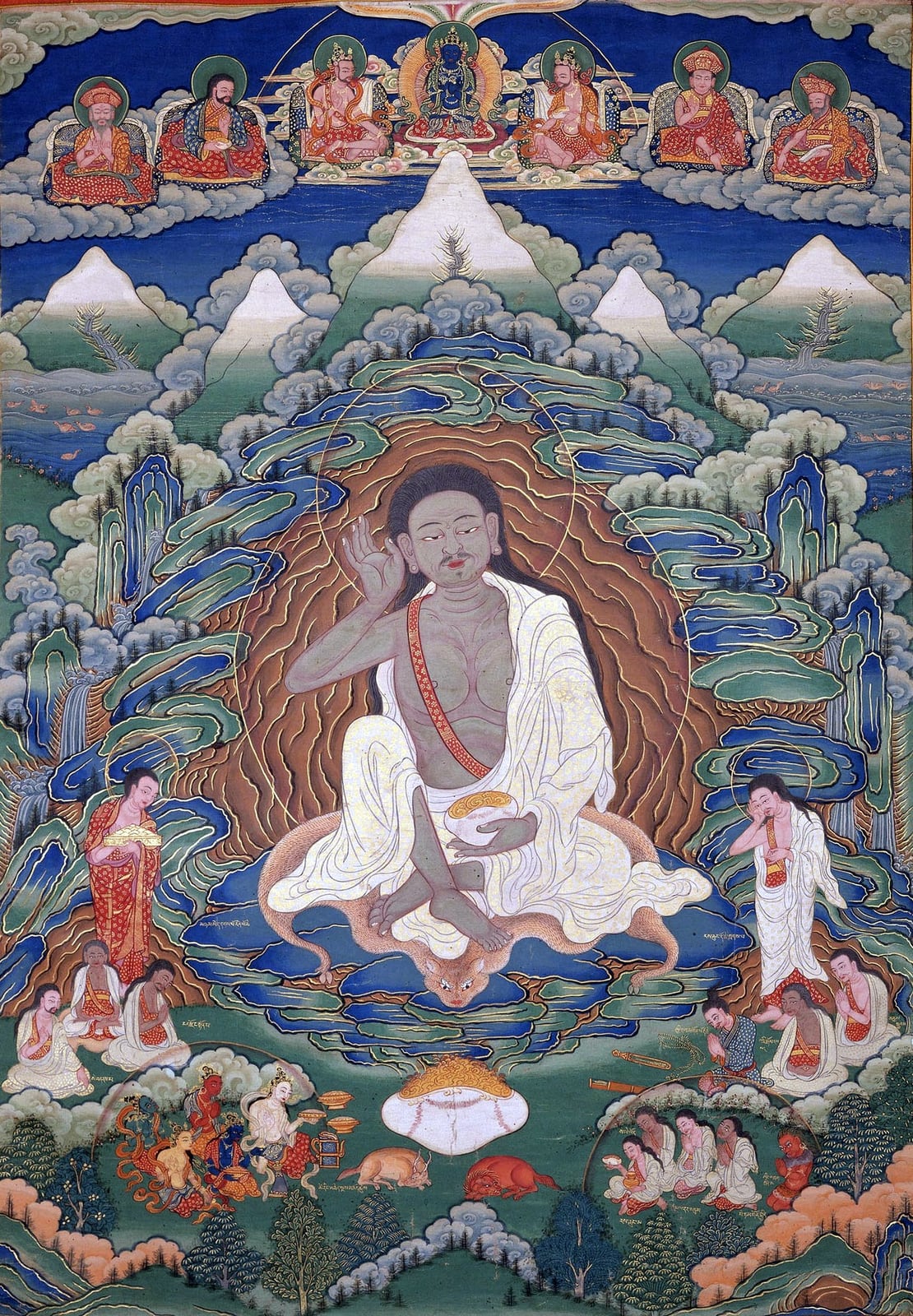
Milarepa
Ils concordent sur: Sommes-nous libres ou tout est-il déterminé ? · Qu'est-ce que l'Absolu ? Dieu existe-t-il ? · Qui suis-je ? Existe-t-il un vrai soi ?

Śāntideva
Ils concordent sur: Comment atteint-on la libération ou le salut ? · Qu'est-ce que l'Absolu ? Dieu existe-t-il ? · Qui suis-je ? Existe-t-il un vrai soi ?
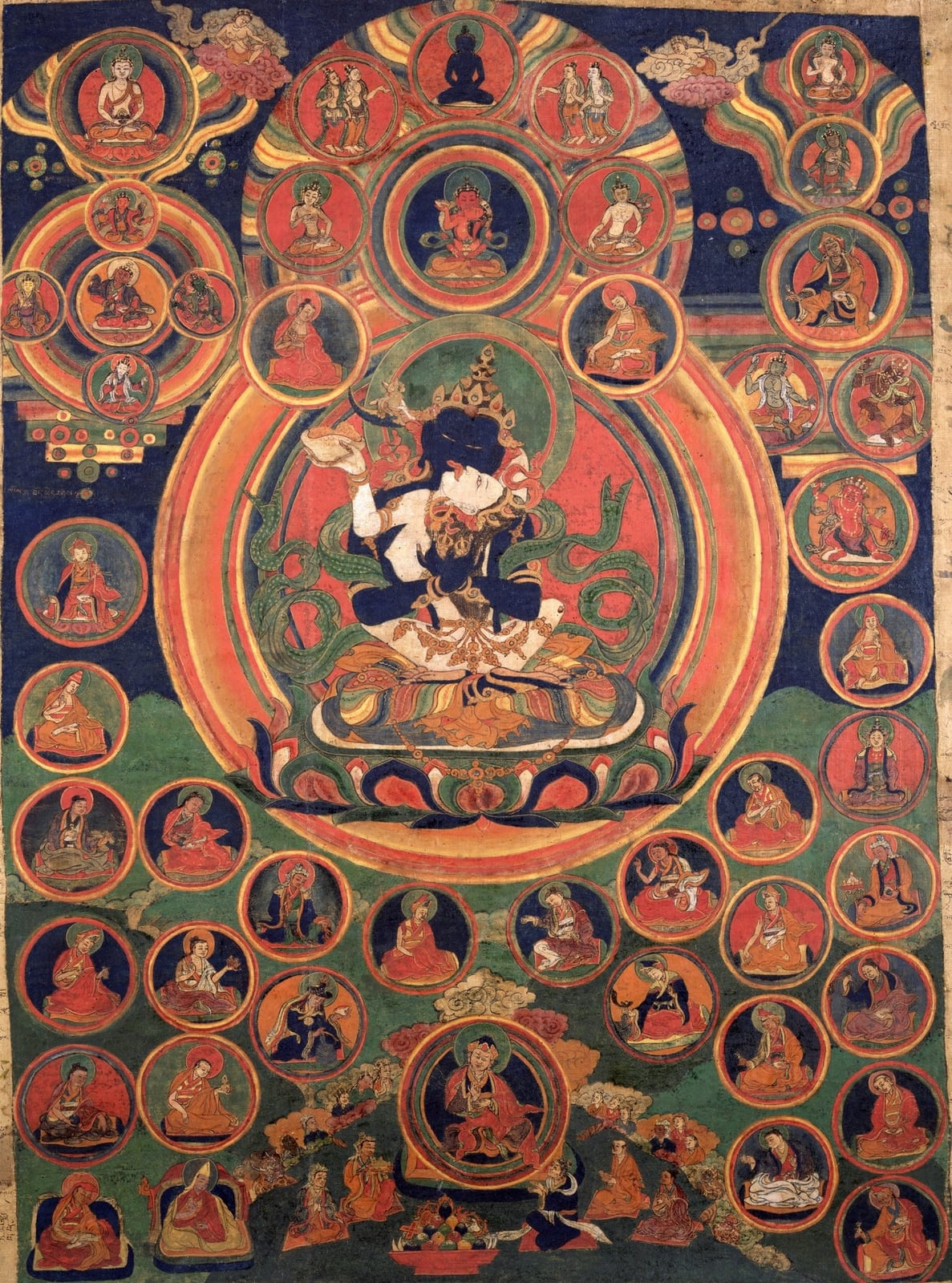
Padmasambhava
Ils concordent sur: Qui suis-je ? Existe-t-il un vrai soi ? · Pourquoi souffrons-nous ? · Faut-il un maître ?
Pense autrement que

Emanuel Swedenborg
Ils s'opposent sur: Qu'est-ce que l'Absolu ? Dieu existe-t-il ? · Qui suis-je ? Existe-t-il un vrai soi ?

Julian of Norwich
Ils s'opposent sur: Qu'est-ce que l'Absolu ? Dieu existe-t-il ? · Qui suis-je ? Existe-t-il un vrai soi ?
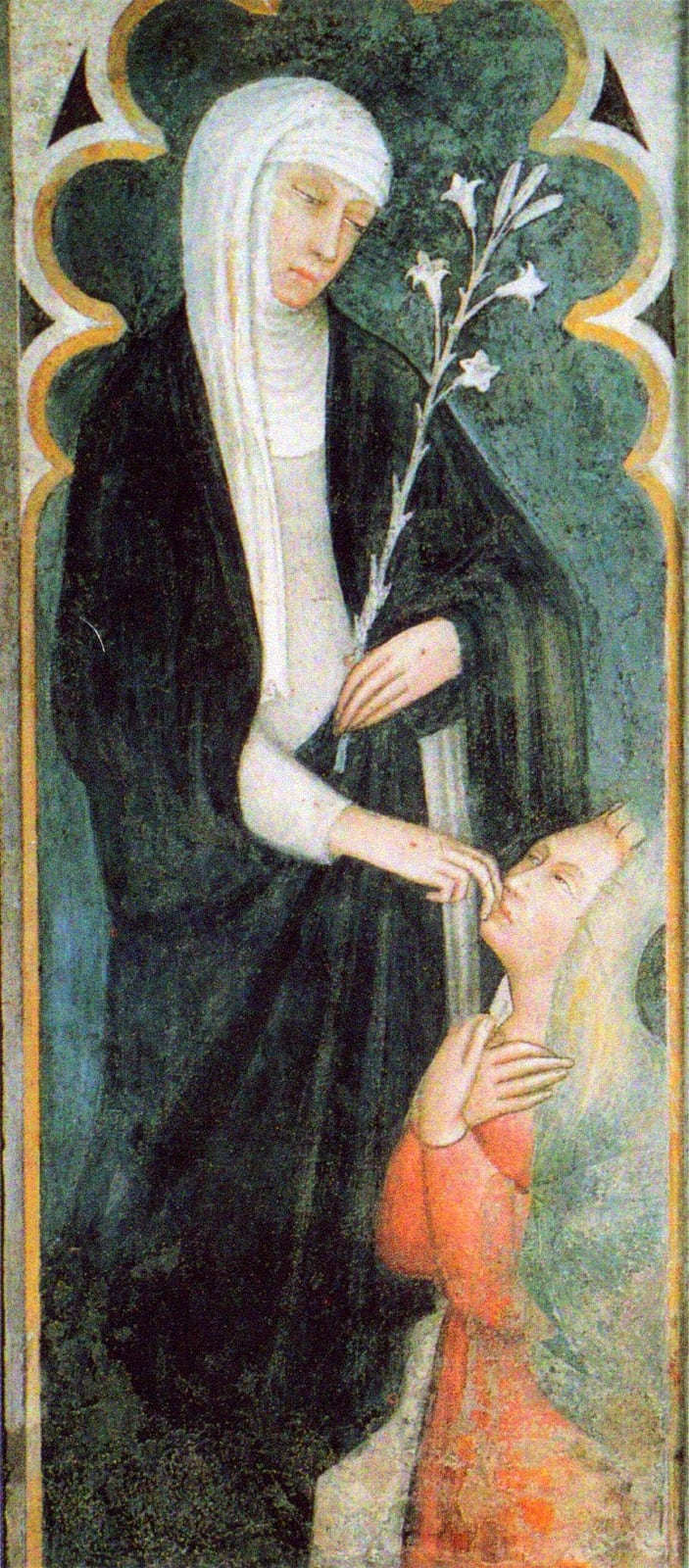
Catherine of Siena
Ils s'opposent sur: Qu'est-ce que l'Absolu ? Dieu existe-t-il ? · Qui suis-je ? Existe-t-il un vrai soi ?

Ignatius Brianchaninov
Ils s'opposent sur: Qu'est-ce que l'Absolu ? Dieu existe-t-il ? · Qui suis-je ? Existe-t-il un vrai soi ?
Anecdotes et récits
Anecdotes et récits
Témoignagedécada de 1690
The boy who feared hell
Origine du récit: Autobiographical account in Itsumadegusa (1766), written by Hakuin at eighty with exemplary intent; also recorded in Tōrei's chronology.
Source: Hakuin Ekaku. Wild Ivy: The Spiritual Autobiography of Zen Master Hakuin (Itsumadegusa). Trad. Norman Waddell. Boston: Shambhala, 1999. ISBN 1570624356.
Témoignage1708
The bell of Eigan-ji and the old man of Shōju
Origine du récit: Autobiographical account in Itsumadegusa (1766), written by Hakuin at eighty with exemplary intent; also recorded in Tōrei's chronology.
Source: Hakuin Ekaku. Wild Ivy: The Spiritual Autobiography of Zen Master Hakuin (Itsumadegusa). Trad. Norman Waddell. Boston: Shambhala, 1999. ISBN 1570624356.
Témoignage1708
The old woman's broom
Origine du récit: Autobiographical account in Itsumadegusa (1766), written by Hakuin at eighty with exemplary intent; also recorded in Tōrei's chronology.
Source: Hakuin Ekaku. Wild Ivy: The Spiritual Autobiography of Zen Master Hakuin (Itsumadegusa). Trad. Norman Waddell. Boston: Shambhala, 1999. ISBN 1570624356.
Contesté1710
The hermit Hakuyū and the butter egg
Origine du récit: Yasenkanna (preface dated 1757), with the date of the visit (Hōei 7, 1710) in the text itself; critical assessment by Katō Shōshun as cited by Waddell.
Source: Waddell, Norman (trad.). «Hakuin's Yasenkanna». The Eastern Buddhist, nueva serie, 34, n.º 1 (2002).
Témoignage1726
The cricket and the Lotus Sūtra
Origine du récit: Autobiographical account in Itsumadegusa (1766), written by Hakuin at eighty with exemplary intent; also recorded in Tōrei's chronology.
Source: Hakuin Ekaku. Wild Ivy: The Spiritual Autobiography of Zen Master Hakuin (Itsumadegusa). Trad. Norman Waddell. Boston: Shambhala, 1999. ISBN 1570624356.
Invérifiablesiglo XVIII (sin fecha)
“Is that so?”
Origine du récit: 101 Zen Stories (Senzaki and Reps, 1939), included in Zen Flesh, Zen Bones (1957). Not found in Itsumadegusa or in Tōrei's chronology.
Source: Senzaki, Nyogen y Paul Reps (comps.). 101 Zen Stories. Filadelfia: David McKay, 1939; incluido en Reps, Zen Flesh, Zen Bones, 1957.
Enseignements
Enseignements
Les notions qui structurent sa pensée, expliquées dans leur contexte.
The sound of one hand (sekishu onjō)sekishu-onjo
Rinzai kōan system (Hakuin school).
Source: Yoshizawa Katsuhiro 芳澤勝弘 (ed. y anot.). Hakuin Zenji hōgo zenshū 白隠禅師法語全集. Kioto: Zen Bunka Kenkyūsho, 1999–2003, 14 vols. e índice. ISBN del primer volumen 4881821318.
The great doubt (daigi)daigi
Kōan practice (kanna Zen).
Source: Waddell, Norman (trad.). The Essential Teachings of Zen Master Hakuin: A Translation of the Sokkō-roku Kaien-fusetsu. Boston: Shambhala, 1994. ISBN 0877739722.
Post-satori practice (gogo no shugyō)gogo-no-shugyo
Bodhisattva ethics in Rinzai Zen.
Source: Hakuin Ekaku. Wild Ivy: The Spiritual Autobiography of Zen Master Hakuin (Itsumadegusa). Trad. Norman Waddell. Boston: Shambhala, 1999. ISBN 1570624356.
Inner contemplation and Zen sickness (naikan, zenbyō)naikan
Chinese medicine and inner alchemy in Edo-period Zen.
Source: Waddell, Norman (trad.). «Hakuin's Yasenkanna». The Eastern Buddhist, nueva serie, 34, n.º 1 (2002).
Seeing one's nature (kenshō)kensho
Doctrine of buddha-nature; Rinzai kōan curriculum.
Source: Yampolsky, Philip B. (trad.). The Zen Master Hakuin: Selected Writings. Nueva York: Columbia University Press, 1971. ISBN 0231034636.
Painting as sermon (zenga)zenga
Edo-period Zen painting.
Source: Yoshizawa Katsuhiro. The Religious Art of Zen Master Hakuin. Ed. y trad. Norman Waddell. Berkeley: Counterpoint, 2009. ISBN 9781582434544.
Vidéos
Vidéos
Enregistrements, entretiens et documentaires. Les vidéos sont lues depuis YouTube ; elles ne sont pas hébergées ici.
Lecture by Masaki Matsubara: Revisiting Japanese Zen Master Hakuin
Conférence· EN· 2017
Brown UniversityChaîne officielle
The Sound of One Hand: Paintings and Calligraphy by Zen Master Hakuin
Documentaire· EN· 2010
JapanSocietyNYCChaîne officielle
The Sound of One Hand: Paintings and Calligraphy by Zen Master Hakuin
Documentaire· EN· 2011
Los Angeles County Museum of ArtChaîne officielle
Zenga: A New History
Conférence· EN· 2024
JapanSocietyNYCChaîne officielle
白隠禅画「観音三幅対」 解説:芳澤勝弘
Analyse· JA
臨済宗 建仁寺派 神勝禅寺Chaîne officielle
Bunkamura「白隠展 HAKUIN 禅画に込めたメッセージ」紹介 ロングver
Documentaire· JA· 2013
BunkamurachannelChaîne officielle
正宗国師白隠禅師坐禅和讃
Enregistrement original· JA
建長寺Chaîne officielle
Zen Master Hakuin #1
Conférence· EN
Rochester Zen CenterChaîne officielle
Hakuin Ekaku - Zen's Japanese Ancestors
Conférence· EN
Great Mountain Zen CenterChaîne officielle
Hakuin's Sound of One Hand
Conférence· EN
Great Mountain Zen CenterChaîne officielle
Zazen Wasan de Hakuin Zenji
Enregistrement de tiers· ES· 2007
semillas de bambu
Galerie
Galerie
Images dont la licence a été vérifiée. Chacune conserve son auteur et son attribution.
Manuscrits
Manuscrits
Témoins manuscrits et textes anciens, avec leur dépositaire et leurs conditions de consultation.
JA · Japonés (inscripción en chino) · 1767
白隠自画像 (autorretrato)
- Témoin conservé
- Pintura con tinta y color sobre papel, 133,3 × 57 cm
- Dépositaire
- Ryūtaku-ji (Mishima, Shizuoka)
- Numérisation
- commons.wikimedia.org/wiki/File:Zen-Master-Hakui…
JA · Japonés · 1751
達磨図 (Daruma-zu), Shōshū-ji
- Témoin conservé
- Gran retrato de Daruma de más de 220 cm de altura
- Dépositaire
- Shōshū-ji, Toyohashi (Aichi)
Relations
Relations
Influences, filiations et affinités. On distingue la relation documentée de la similitude identifiée par analyse.
Maître de
Tōrei Enji (1721–1792)
His closest disciple, author of his chronology and first abbot of the Ryūtaku-ji.
Relation documentée
A reçu l'influence de
A central figure of his painting: he painted Daruma hundreds of times as an emblem of Zen determination.
Relation documentée
Disciple de
Dōkyō Etan (Shōju Rōjin, 1642–1721)
Eight months of training in 1708; Hakuin regarded him as his true teacher, though he received no formal transmission from him.
Relation documentée
A reçu l'influence de
His Rinzai lineage goes back to the sixth patriarch through Linji, and the kenshō he demands is the Platform Sūtra's “seeing the nature”.
Similitude identifiée par analyse
Idées proches de
They represent the two poles of Japanese Zen: the kōan and sudden awakening versus Dōgen's practice-realisation of zazen; Hakuin belongs to the Rinzai school and Dōgen to the Sōtō.
Similitude identifiée par analyse
En désaccord avec
Bankei Yōtaku (1622–1693)
Hakuin criticised “do-nothing Zen” and the Zen of the Unborn associated with Bankei's followers.
Similitude identifiée par analyse
Idées proches de
Both place bodhicitta—the vow to work for all beings—above any personal attainment.
Similitude identifiée par analyse
Idées proches de
His Sōtō “beginner's mind” contrasts with Hakuin's great doubt, but both place everyday practice above extraordinary experiences.
Similitude identifiée par analyse
Idées proches de
Both heirs of the Linji lineage, they share the idea that awakening is proven in service to others.
Similitude identifiée par analyse
A influencé
D. T. Suzuki
His writings spread Hakuin's idea of kenshō and the kōan in the West.
Similitude identifiée par analyse
Lié depuis d'autres fiches
Sources
Sources
Bibliographie et catalogues consultés pour cette fiche.
- Wikidata, «Hakuin Ekaku», QID Q177059 (VIAF 32794627; LCCN n80037860).
- Hakuin Ekaku. Wild Ivy: The Spiritual Autobiography of Zen Master Hakuin (Itsumadegusa). Trad. Norman Waddell. Boston: Shambhala, 1999. ISBN 1570624356.
- Yampolsky, Philip B. (trad.). The Zen Master Hakuin: Selected Writings. Nueva York: Columbia University Press, 1971. ISBN 0231034636.
- Waddell, Norman (trad.). The Essential Teachings of Zen Master Hakuin: A Translation of the Sokkō-roku Kaien-fusetsu. Boston: Shambhala, 1994. ISBN 0877739722.
- Seo, Audrey Yoshiko y Stephen Addiss. The Sound of One Hand: Paintings and Calligraphy by Zen Master Hakuin. Boston: Shambhala, 2010. ISBN 1590305787.
- Yoshizawa Katsuhiro. The Religious Art of Zen Master Hakuin. Ed. y trad. Norman Waddell. Berkeley: Counterpoint, 2009. ISBN 9781582434544.
- Katō Shōshun 加藤正俊. Hakuin Oshō nenpu 白隠和尚年譜 (edición anotada de la cronología de Tōrei Enji). Kioto, 1985.
- Yoshizawa Katsuhiro 芳澤勝弘 (ed. y anot.). Hakuin Zenji hōgo zenshū 白隠禅師法語全集. Kioto: Zen Bunka Kenkyūsho, 1999–2003, 14 vols. e índice. ISBN del primer volumen 4881821318.
- Gotō Kōson 後藤光村 (ed.). Hakuin Oshō zenshū 白隠和尚全集. Tokio: Ryūginsha, 1934–1935, 8 vols.
- Hakuin Ekaku. Poison Blossoms from a Thicket of Thorn (Keisō dokuzui). Trad. Norman Waddell. Berkeley: Counterpoint, 2014. ISBN 1619023121.
- Waddell, Norman (trad.). Hakuin's Precious Mirror Cave: A Zen Miscellany. Berkeley: Counterpoint, 2009. ISBN 9781582434759.
- Waddell, Norman (trad.). Beating the Cloth Drum: Letters of Zen Master Hakuin. Boston: Shambhala, 2012. ISBN 1590309480.
- Waddell, Norman (trad.). Zen Words for the Heart: Hakuin's Commentary on the Heart Sutra (Dokugo shingyō). Boston: Shambhala, 1996. ISBN 1570621659.
- Shaw, R. D. M. (trad.). The Embossed Tea Kettle: Orate Gama and Other Works of Hakuin Zenji. Londres: George Allen & Unwin, 1963.
- Senzaki, Nyogen y Paul Reps (comps.). 101 Zen Stories. Filadelfia: David McKay, 1939; incluido en Reps, Zen Flesh, Zen Bones, 1957.
- Kotobank, «白隠» (artículos de Nihon daihyakka zensho, Sekai daihyakka jiten y Britannica Kokusai daihyakka jiten).
- Waddell, Norman (trad.). «Hakuin's Yasenkanna». The Eastern Buddhist, nueva serie, 34, n.º 1 (2002).
- Tanahashi, Kazuaki. Penetrating Laughter: Hakuin's Zen and Art. Woodstock (NY): Overlook Press, 1984. ISBN 0879519525.
- Wikisource en japonés: 夜船閑話 (texto de Hakuin según Shaku Dokutan, Hakuin Zenji hōgoroku, Ōshima Seishindō, 1916).
- Wikipedia en japonés, «白隠慧鶴» (consultada para la lista de obras, los discípulos y las obras pictóricas fechadas).
- Shaw, R. D. M. y Wilhelm Schiffer (trads.). «Yasen Kanna: A Chat on a Boat in the Evening». Monumenta Nipponica 13 (1956).
- Ayant droit
- Textos originales de Hakuin (m. 1769) en dominio público. Traducciones y ediciones modernas con derechos: Shambhala (Waddell; Seo y Addiss; Low), Counterpoint (Waddell; Yoshizawa), Columbia University Press (Yampolsky), Zen Bunka Kenkyūsho (Yoshizawa). Las pinturas son propiedad de templos, museos y coleccionistas.
En attente de confirmation
Ce que cette fiche n'a pas encore pu établir. Nous préférons le dire plutôt que de combler.
- No se ha encontrado ninguna edición española de las obras de Hakuin con ISBN verificable (ni Orategama, ni Yasenkanna, ni Itsumadegusa, ni el Zazen wasan); buscar en el ISBN de España y en editoriales como Kairós, Siruela, Olañeta o Miraguano.
- Fechas de varias obras (Dokugo shingyō, Zazen wasan, Kanrin ihō, Hōkan ishō, Sashimogusa, Kana innen hōgo, Kanamugura, Enmei jikku Kannon-gyō reigenki) no verificadas; las demás son aproximadas según la bibliografía secundaria. Cotejar con la cronología de Katō Shōshun (1985) y con Yoshizawa.
- Contenido de Kanrin ihō, Hōkan ishō, Sashimogusa, Oniazami y Yaemugura: no se ha podido consultar; las descripciones son deliberadamente neutras.
- Fundación del Ryūtaku-ji: 1758 (Kotobank, MyPedia) o 1763 (Wikipedia en japonés).
- Sala de lectura: solo Yasenkanna está transcrito en Wikisource. Las traducciones inglesas (Shaw 1963, Yampolsky 1971, Waddell) tienen derechos; la versión de D. T. Suzuki del Zazen wasan (Manual of Zen Buddhism, 1935) está protegida en la UE hasta 2037. El texto japonés de las demás obras existe en la Biblioteca Nacional de la Dieta (escaneos), que el importador no lee.
- Texto exacto de la caligrafía «死» que circula como poema de despedida y del verso de Año Nuevo de 1769: no localizados en una fuente primaria verificable.
- Relaciones con dokyo-etan, torei-enji, bankei y dt-suzuki: no son slugs del catálogo; se han usado como identificadores provisionales.
Recherche effectuée le 2026-10-25