Bouddhisme · Mahāyāna · Zen / Chan
Shunryu Suzuki
鈴木俊隆 · 祥岳俊隆
1904 – 1971Personne historiquement documentée
Moine et maître japonais de l'école zen sōtō, fils d'un abbé de village, arrivé à San Francisco en 1959, à cinquante-cinq ans, pour desservir la communauté japonaise du temple Sokoji, et qui finit par former la première génération de pratiquants zen américains. Il fonda le San Francisco Zen Center et Tassajara, le premier monastère zen hors d'Asie. Ses causeries informelles, éditées par Trudy Dixon sous le titre Esprit zen, esprit neuf (1970), sont devenues l'un des livres sur le zen les plus lus en Occident.
- œuvres
- 8œuvres
- éditions
- 27éditions
- citations
- 8citations
- vidéos
- 13vidéos
- images
- 7images
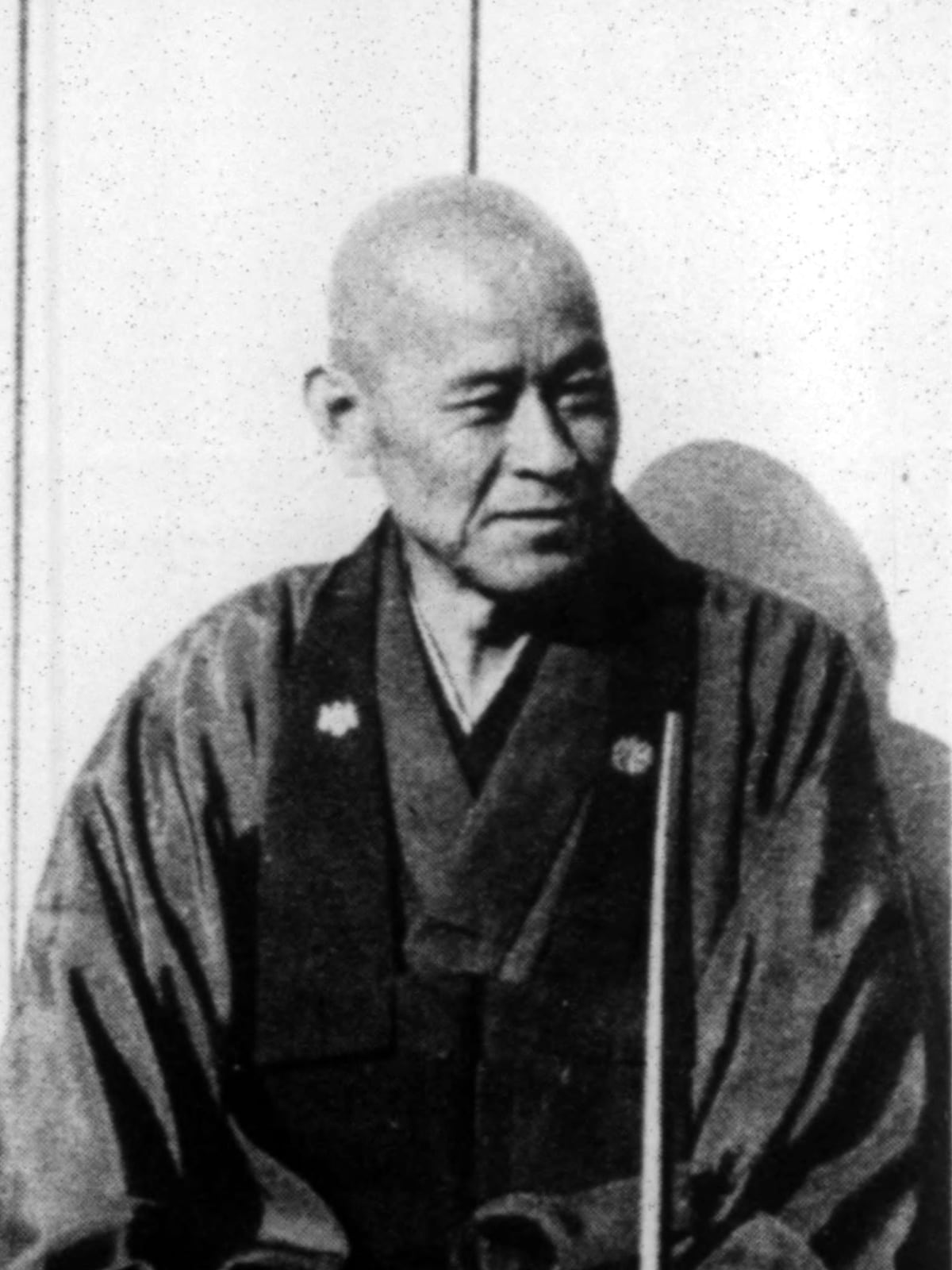
Shunryu Suzuki en el Zen Mountain Center (1969) · Public domain
Dans ses propres mots
«In the beginner's mind there are many possibilities, but in the expert's there are few.»Zen Mind, Beginner's Mind (Weatherhill, 1970), prólogo «Beginner's Mind», primera frase (charla oral editada por Trudy Dixon)

Pour commencer, une œuvre
Zen Mind, Beginner's MindSon idée centrale
Beginner's mind—shoshin—is an empty and ready mind, open to every possibility; the aim of practice is not to accumulate experience or knowledge but to keep that freshness, which the expert loses when he thinks he knows what Zen is.
Le voir en contexte
Biographie
5 min de lecture
Traduction assistée à partir de l'original espagnol, en attente de relecture par un traducteur natif.
Le fils de l'abbé
Shunryu Suzuki naquit le 18 mai 1904 à Hiratsuka, sur la baie de Sagami, au sud-ouest de Tokyo, fils de Butsumon Sogaku Suzuki, abbé du petit temple zen sōtō de Shōgan-ji, et de Yone, fille d'un prêtre. Le temple était pauvre et la famille vivait chichement ; l'enfant, sensible et studieux, subissait les moqueries de ses camarades à cause de son crâne rasé. À douze ans, contre l'avis premier de ses parents, il partit pour le temple de Zōun-in, à Mori, se former auprès de Gyokujun So-on, disciple de son père et maître d'une sévérité légendaire. Le 18 mai 1917, So-on l'ordonna novice sous le nom de Shōgaku Shunryū et lui donna un surnom que le disciple garda avec humour toute sa vie : « concombre tordu », parce qu'il était distrait et imprévisible.
So-on resta son maître jusqu'à sa mort, en 1934. Suzuki étudia à l'école préparatoire sōtō et à l'université Komazawa, dont il sortit diplômé en 1930, et reçut de So-on la transmission du Dharma en août 1926. De 1927 à 1929, il fut l'interprète et l'assistant de Nona Ransom, une enseignante anglaise qui avait été la préceptrice du dernier empereur de Chine ; ses conversations avec elle, d'abord sceptique, lui firent penser pour la première fois que les Occidentaux pouvaient comprendre le zen. Il pratiqua ensuite à Eihei-ji et à Sōji-ji, les deux grands monastères de l'école, et à partir de 1932 étudia pendant vingt ans auprès de Kishizawa Ian, grand commentateur de Dōgen.
Rinsō-in
En 1936, il devint abbé de Rinsō-in, un temple de Yaizu, dans la préfecture de Shizuoka, où il vécut avec sa famille pendant plus de deux décennies. Il avait épousé en 1935 Chie Muramatsu, dont il eut quatre enfants. Les années de guerre et d'après-guerre le trouvèrent occupé à reconstruire le temple, à organiser des groupes de méditation pour les laïcs et à fonder un jardin d'enfants. Son attitude pendant la guerre, que son biographe David Chadwick reconstitue à partir de témoignages, a fait l'objet de débats parmi les spécialistes ; au printemps 1945, il se rendit en Mandchourie. Le 25 mars 1952, sa femme fut assassinée dans le temple même par un moine mentalement dérangé que Suzuki avait autorisé à rester malgré les réticences de la famille. Chadwick voit dans ce crime la blessure la plus profonde de sa vie.
San Francisco
En 1958, Suzuki accepta un poste que beaucoup de prêtres fuyaient : le temple Sokoji de San Francisco, centre religieux de la communauté japonaise de la ville. Il épousa en décembre de la même année Mitsu Matsuno, qui le rejoindrait plus tard, et arriva en Californie le 23 mai 1959, à cinquante-cinq ans. En quelques semaines, de jeunes Américains attirés par la vogue du zen qu'avaient répandue D. T. Suzuki, Alan Watts et les écrivains de la Beat Generation commencèrent à s'asseoir avec lui sur les bancs du temple. Il ne leur proposait ni théories ni expériences extraordinaires, mais le zazen de chaque matin : s'asseoir dans la posture juste, respirer, revenir. Quand on le confondait avec le célèbre érudit, il répondait volontiers, selon ses élèves, que celui-là était le grand Suzuki et lui le petit.
Le groupe grandit vite. En 1962, il fut enregistré légalement sous le nom de Zen Center et tint sa première sesshin de six jours ; Suzuki ordonna ses premiers disciples américains et ouvrit des groupes satellites dans la baie, parmi lesquels celui de Los Altos, où son élève Marian Derby enregistrait ses causeries. En décembre 1966, le Zen Center acheta une ancienne station thermale dans les montagnes de Los Padres, et en 1967 y fut inauguré Zenshin-ji, le Tassajara Zen Mountain Center : le premier monastère zen de formation hors d'Asie. En novembre 1969, la communauté quitta Sokoji pour s'installer dans un immeuble résidentiel de Page Street, au centre de San Francisco.
Esprit zen, esprit neuf
Suzuki écrivit peu. Son enseignement était oral, dans un anglais appris sur le tard, plein de tournures personnelles que ses élèves en vinrent à aimer. À partir des transcriptions de Marian Derby, sa disciple Trudy Dixon prépara pendant des mois, avec le maître lui-même, le livre que Weatherhill publia en 1970 sous le titre Zen Mind, Beginner's Mind (en français Esprit zen, esprit neuf) : elle répartit les causeries en trois parties, leur donna des titres et choisit les exergues. Dixon mourut d'un cancer à trente ans, peu après avoir achevé le travail ; Richard Baker termina l'édition et en écrivit l'introduction. Le livre, qui s'ouvre sur la phrase évoquant les multiples possibilités de l'esprit du débutant, est le seul que Suzuki vit publié, et il est devenu l'un des textes sur le zen les plus lus en Occident. Les autres ouvrages parus sous son nom sont des éditions posthumes de ses causeries : Branching Streams Flow in the Darkness (1999), consacré au Sandōkai, et Not Always So (2002).
Son zen était celui de Dōgen et de l'école sōtō : le shikantaza, « seulement s'asseoir », sans chercher l'éveil comme un objet, car la pratique elle-même est l'expression de la nature de Bouddha. Aux Américains qui arrivaient en quête d'expériences intenses, il parlait du grand esprit, de ne laisser aucune trace dans ce que l'on fait, de remercier les mauvaises herbes de l'esprit, qui finissent par enrichir la pratique. Il insistait sur la forme — la posture, les prosternations, le rituel — comme sur quelque chose qui n'est le moyen de rien, mais la pratique même.
La fin
En 1971, on lui diagnostiqua un cancer. Le 21 novembre, il parut pour la dernière fois en public, lors de la cérémonie par laquelle il installa Richard Baker comme son successeur à la tête du Zen Center. Il mourut au petit matin du 4 décembre 1971, juste après que la cloche eut ouvert la sesshin de Rohatsu, celle qui commémore l'éveil du Bouddha, entouré de sa femme, de son fils Otohiro et de Baker. Aux funérailles, Baker raconta que quelques jours plus tôt, alors que le maître ne pouvait presque plus parler, il lui avait demandé où ils le retrouveraient, et que Suzuki avait sorti une main de sous les couvertures, esquissé une petite révérence et dessiné un cercle dans l'air.
Le San Francisco Zen Center, avec Tassajara, le temple urbain et la ferme de Green Gulch, ouverte peu après sa mort, est aujourd'hui l'une des organisations bouddhistes les plus influentes des États-Unis, et de ses disciples descendent des dizaines de centres zen à travers le pays. Son fils Hoitsu lui succéda à Rinsō-in. La biographie de Chadwick, Crooked Cucumber (1999), et les archives de ses causeries enregistrées ont permis de connaître, au-delà du livre célèbre, l'homme : petit, rieur, exigeant et parfois déconcertant.
Sources: Chadwick, David. Crooked Cucumber: The Life and Zen Teaching of Shunryu Suzuki. Nueva York: Broadway Books, 1999. · Suzuki, Shunryu. Zen Mind, Beginner's Mind: Informal Talks on Zen Meditation and Practice. Ed. Trudy Dixon; introducción de Richard Baker; prefacio de Huston Smith. Nueva York y Tokio: Weatherhill, 1970. · Suzuki, Shunryu. Branching Streams Flow in the Darkness: Zen Talks on the Sandokai. Ed. Mel Weitsman y Michael Wenger. Berkeley: University of California Press, 1999. · Suzuki, Shunryu. Not Always So: Practicing the True Spirit of Zen. Ed. Edward Espe Brown. Nueva York: HarperCollins, 2002. · Chadwick, David (ed.). Zen Is Right Here: Teaching Stories and Anecdotes of Shunryu Suzuki. Boston: Shambhala, 2007 (versión revisada de To Shine One Corner of the World, Broadway, 2001).
Chronologie
La vie, année après année
Chaque point est un événement documenté. Cliquez pour le lire, avec sa source et son degré de certitude.
18 mai 19040 ansHiratsuka (Kanagawa)
Born in a village temple
Born to Butsumon Sogaku Suzuki, abbot of the small Sōtō temple of Shōgan-ji, and to Yone; the family lives frugally.
DocumentéChadwick, David (comp.). «Shunryu Suzuki Roshi – Dates», cronología de trabajo del Cucumber Project (cuke.com).
Après sa mort
- 1999Crooked Cucumber
18 mai 1904 · 0 ans
Born in a village temple
Born to Butsumon Sogaku Suzuki, abbot of the small Sōtō temple of Shōgan-ji, and to Yone; the family lives frugally.
Documenté
1916 · 12 ans
Disciple of Gyokujun So-on
Aged twelve he goes to live at Zōun-in temple with So-on Suzuki, his father's disciple and a strict teacher, who will be his master for life.
Documenté
18 mai 1917 · 13 ans
Novice ordination: the 'crooked cucumber'
So-on ordains him a novice with the name Shōgaku Shunryū and nicknames him 'crooked cucumber' for being forgetful and unpredictable.
Documenté
août 1926 · 22 ans
Dharma transmission
While a student at Komazawa University, he receives Dharma transmission (shihō) from So-on; sources differ between 21 and 26 August.
Documenté
1 août 1927 – 1929 · 23 ans
Interpreter for Nona Ransom
He lives as interpreter and assistant to the English teacher Nona Ransom; his conversations with her about Buddhism convince him that Westerners can understand Zen.
Documenté
10 avril 1930 · 25 ans
Komazawa and the great monasteries
He graduates from Komazawa University and trains at the head monasteries of the Sōtō school, Eihei-ji (1930–1931) and Sōji-ji (1931–1932); from 1932 he studies with Kishizawa Ian.
Documenté
23 avril 1936 – 1959 · 31 ans
Abbot of Rinsō-in
After So-on's death (1934) he takes over the temple of Rinsō-in, where he will live with his family until he leaves for America.
Documenté
25 mars 1952 · 47 ans
Murder of his wife Chie
His wife Chie is killed at the temple by a disturbed monk whom Suzuki had allowed to stay; she leaves four children. His biographer regards it as the great wound of his life.
Documenté
23 mai 1959 · 55 ans
Arrival in San Francisco
He arrives to serve as head priest of Sokoji, the Japanese community's temple; within weeks young Americans begin to sit zazen with him.
Documenté
1962 · 58 ans
The San Francisco Zen Center is born
The practice group is legally registered as Zen Center; that year the first six-day sesshin is held.
Documenté
1967 · 63 ans
Tassajara, a monastery in the mountains
Having bought an old hot-springs resort in 1966, he founds Zenshin-ji, the Tassajara Zen Mountain Center, the first Zen training monastery outside Asia.
Documenté
novembre 1969 · 65 ans
The Page Street city center
He leaves Sokoji and moves Zen Center to a residential building on Page Street, where practice is organised as a community.
Documenté
1970 · 66 ans
Zen Mind, Beginner's Mind
Weatherhill publishes the talks to the Los Altos group edited by Trudy Dixon, who had died of cancer in 1969; the book is his only work published in his lifetime.
Documenté
21 novembre 1971 · 67 ans
Richard Baker's succession
Already ill with cancer, he makes his last public appearance at the ceremony installing Richard Baker as his successor at the head of Zen Center.
Documenté
4 décembre 1971 · 67 ans
Death at the start of the Rohatsu sesshin
He dies early in the morning, just after the bell opening the sesshin commemorating the Buddha's enlightenment, with his wife Mitsu, his son Otohiro and Richard Baker at his side.
Documenté
1999
Crooked Cucumber
David Chadwick, a former student, publishes the standard biography, based on interviews in Japan and the United States; his talks on the Sandōkai also appear that year.
Documenté
Œuvres
Œuvres essentielles
Les œuvres sans lesquelles on ne comprend pas son héritage.
Compilation postérieure · 1970
Zen Mind, Beginner's Mind
Zen Mind, Beginner's Mind: Informal Talks on Zen Meditation and Practice
Informal talks Suzuki gave over several years in the late 1960s to the meditation group in Los Altos (California), recorded and transcribed by Marian Derby and edited over many months by Trudy Dixon with the teacher himself; Richard Baker completed the editing after Dixon's death. The book, divided into 'Right Practice', 'Right Attitude' and 'Right Understanding', explains Sōtō zazen in plain language: posture as the expression of Buddha nature, breathing, big mind, leaving no trace, beginner's mind. It is the only book Suzuki saw published and one of the most widely read texts on Zen in the West; its prologue opens with the sentence on the many possibilities of the beginner's mind.
11 éditions

Conférences publiées · 1999
Branching Streams Flow in the Darkness
Branching Streams Flow in the Darkness: Zen Talks on the Sandokai
A series of talks Suzuki gave at Tassajara in 1970 commenting on the Sandōkai, the Chinese poem by master Shitou Xiqian (8th century) on the identity of the absolute and the relative, chanted daily in Sōtō temples. Edited by Mel Weitsman and Michael Wenger, they show him as a commentator on texts and his way of grounding the doctrine of non-duality in everyday practice.
4 éditions

Conférences publiées · 2002
Not Always So
Not Always So: Practicing the True Spirit of Zen
The second major anthology of talks, prepared by Edward Espe Brown—Tassajara's cook and Suzuki's disciple—from transcriptions not used in Zen Mind. The title echoes one of his favourite formulas: the truth of a moment is not always so. It deals with goalless practice, acceptance of impermanence and the everyday ethics of Zen.
5 éditions
Toute son œuvre (8)
Shunryu Suzuki
Talks published in Wind Bell
The Conscious LibraryTalks published in Wind Bell
1961
Shunryu Suzuki
Shunryu Suzuki Lectures (archive)
The Conscious LibraryShunryu Suzuki Lectures (archive)
1959

To Shine One Corner of the World
2001
Shunryu Suzuki
Dogen's Genjo Koan: Three Commentaries
The Conscious LibraryDogen's Genjo Koan: Three Commentaries
2011

Zen Is Right Now
2021
Citations
Citations localisées dans une œuvre précise. Chacune porte sa provenance et son degré de fiabilité.
In the beginner's mind there are many possibilities, but in the expert's there are few.VérifiéeZen Mind, Beginner's Mind (Weatherhill, 1970), prólogo «Beginner's Mind», primera frase (charla oral editada por Trudy Dixon)
Idées essentielles (résumé éditorial)
Par respect du droit d'auteur, ces idées sont résumées avec nos propres mots et ne sont pas présentées comme des citations littérales.
- Beginner's mind—shoshin—is an empty and ready mind, open to every possibility; the aim of practice is not to accumulate experience or knowledge but to keep that freshness, which the expert loses when he thinks he knows what Zen is.
- Zazen is not a method for attaining enlightenment: sitting in the right posture is already the expression of Buddha nature. Practising in pursuit of a result turns practice into a transaction and estranges it from itself.
- The thoughts that arise in meditation are not to be fought; like waves, they settle when given room, and like weeds pulled up and buried beside the plant, they end up nourishing practice.
- Doing something fully, burning oneself up in it, leaves no residue of oneself; what leaves a trace and breeds attachment is activity done by halves, with the mind divided between what one is doing and what one expects.
- Forms—posture, bowing, ritual—are neither mere means nor empty conventions: in the Sōtō school the right form is practice itself, and in it the person is freed from his small self.
- Everything changes: the truth of a moment is not always so. Accepting impermanence rather than resisting it is the condition of serenity, and practice consists in living each moment without clinging to it.
Citations apocryphes ou d'attribution contestée (1)
«'Each of you is perfect the way you are, and you can use a little improvement.'»
Widely circulated and attributed to Suzuki by his students, but it does not appear in Zen Mind and has not been located in a dated transcript; it is handed down as an oral recollection.
Dernières paroles
Récit postérieur de témoins
«(No words.) Asked by his disciple Richard Baker 'Where will we meet you?', he brought a hand out from under the covers, made a small bow and drew a circle in the air.»No last words are recorded. The gesture was related by Richard Baker in his statement at the funeral of 12 December 1971—'a few days before he died, when it was difficult for him to speak'—published by Zen Center in Wind Bell. The letter of Yvonne Rand, Zen Center's president, specifies that he died early on 4 December, just after the bell opening the Rohatsu sesshin, with his wife Mitsu, his son Otohiro and Baker present. The circle (ensō) is a classic Zen symbol.
Source: Zen Center. «Suzuki-roshi's Funeral» / memorial de diciembre de 1971 (carta de Yvonne Rand y declaración de Richard Baker en el funeral del 12 de diciembre de 1971), Wind Bell, 1972; reproducido en cuke.com.
Interroger
Ce que répond son œuvre
Douze grandes questions de l'humanité et ce que ses textes permettent d'y répondre, références à l'appui. Nous ne lui prêtons jamais de paroles.
Qu'est-ce que l'Absolu ? Dieu existe-t-il ?
The absolute is the darkness where nothing is distinguished, inseparable from the relative
L'innommableCela se déduit de sa doctrine
Shunryu Suzuki does not speak of a creator God. When he refers to the ultimate he does so in the language of his school: big mind as opposed to small mind, the emptiness from which things arise and to which they return. His most explicit treatment is in the 1970 Tassajara talks on the Sandōkai, Shitou's poem recited daily in Sōtō temples, collected in Branching Streams Flow in the Darkness. There he reads light as the relative world of distinguishable things and darkness as the absolute, where there are no distinctions to name. But he insists that these are not two realities: the absolute is found only in the relative, and practice consists in living that identity, not in describing it.
Comparer cette question avec d'autres maîtresQui suis-je ? Existe-t-il un vrai soi ?
In breathing there is no self: only a swinging door
Il n'y a pas de soi permanentIl le dit expressément
Shunryu Suzuki approaches the question through practice. In Zen Mind, Beginner's Mind he describes zazen in terms of breathing: air comes in and goes out, and if one follows it attentively there is no self that breathes and no world outside, but something like a swinging door that moves. He distinguishes small mind, which clings to itself and measures everything against its own interest, from big mind, which includes everything. He does not present that big mind as a higher self to be possessed, but as what is expressed when practice is done without leaving a trace, burning oneself up completely like a good bonfire. The small self is not fought: it is given room until it loses importance.
Comparer cette question avec d'autres maîtresPourquoi souffrons-nous ?
Without accepting that everything changes, no composure is possible
Le désir et l'attachementIl le dit expressément
For Shunryu Suzuki, suffering arises from not accepting impermanence. In Zen Mind, Beginner's Mind he holds that the basic teaching of Buddhism is that everything changes, and that without accepting this fact composure cannot be found; we suffer when we want something to remain as it is. His favourite formula for this would give its title to the second anthology of his talks, Not Always So: the truth of a moment is not always so. Practice eliminates neither change nor pain, but the resistance to them. That is why he advises not fighting the thoughts that trouble meditation, but being grateful for them as weeds which, buried beside the plant, end up nourishing practice.
Comparer cette question avec d'autres maîtresQue se passe-t-il après la mort ?
The drop returns to the river: separate, we fear death; united, nothing to fear
Ce que je suis ne naît ni ne meurtIl le dit expressément
Shunryu Suzuki left a celebrated image in a talk collected in Zen Mind, Beginner's Mind: that of a great waterfall. The water comes down from the river as a single body, but in falling it separates into drops, and each drop has difficulties as it falls; on reaching the bottom it becomes river again. Life, he says, is like water separated into drops, and death like the return to the river of which it never ceased to be part. If we understand that we are one with the river, there is nothing to fear; fear arises from feeling ourselves isolated drops. Suzuki does not present this image as a doctrine of what survives, but as a way of living life without a trace and accepting death with composure.
Comparer cette question avec d'autres maîtresComment atteint-on la libération ou le salut ?
One does not practise to obtain something: the posture is already the purpose
Par une pratique disciplinéeIl le dit expressément
Shunryu Suzuki conveys Dōgen's teaching to American listeners in simple words. Zazen practice, he says in Zen Mind, Beginner's Mind, is the direct expression of our true nature, and the forms of the posture are not a means of obtaining the right state of mind: to take them is itself the purpose of practice. Practising with the idea of obtaining enlightenment turns practice into a transaction. That is why enlightenment, once attained, is nothing special. What is cultivated is not an achievement but an attitude: beginner's mind, open and unpretentious, which accumulated experience tends to close and which daily practice must preserve.
Comparer cette question avec d'autres maîtresFaut-il un maître ?
One practises with others and with forms, not by following a person
La communauté et la traditionCela se déduit de sa doctrine
Shunryu Suzuki, a Sōtō priest who arrived in San Francisco in 1959, became the teacher of a large community and founded with it the San Francisco Zen Center and Tassajara monastery. His way of teaching, as his students remember it in the anecdotes collected by David Chadwick in To Shine One Corner of the World, was not that of a guru: he practised with them, corrected posture, cleaned and worked in the temple. He gave great importance to shared forms, posture, bowing, the schedule, and to practising together; in Zen Mind, Beginner's Mind he presents the practice of the group as what sustains that of each person. As a priest of his lineage he transmitted the Dharma to disciples, but without making himself the centre.
Comparer cette question avec d'autres maîtresLe monde est-il réel ?
Everything changes and everything depends on everything: the absolute lives in the relative
Un réseau de causes sans substanceCela se déduit de sa doctrine
Shunryu Suzuki does not regard the world as an illusion to be left behind: it is the place of practice. His talks insist that everything changes, that nothing has a fixed and separate existence, and that each thing exists in relation to the others. In the commentaries on the Sandōkai collected in Branching Streams Flow in the Darkness he develops the poem's teaching on the identity of absolute and relative: each thing has its own place and function, distinct from the others, and yet is not separate from the whole, like a box and the lid that fits it. His formula for being in that world is big mind, which does not divide it into what it wants and what it rejects.
Comparer cette question avec d'autres maîtresQu'est-ce que l'amour ?
He barely thematised love; he speaks of big mind and welcoming what arises
Ne s'est pas prononcé
In Shunryu Suzuki's published talks love is not a topic of its own; he offers no definition or doctrine of it. The closest thing is his description of big mind, which does not separate what it likes from what it dislikes and welcomes everything, and his insistence on treating each thing, each person and each object, with the same attention. In Zen Mind, Beginner's Mind he even asks us to be grateful for the weeds in our own mind instead of fighting them. The anecdotes his students collected show him kind, patient and attentive to each person. But that attitude appears as the fruit of practice, not as an explicit teaching on love or compassion.
Comparer cette question avec d'autres maîtresSommes-nous libres ou tout est-il déterminé ?
He did not address the dilemma; he speaks of freedom within form
Ne s'est pas prononcé
Shunryu Suzuki did not concern himself with the philosophical problem of free will and determinism. The closest thing in his teaching is an idea of freedom that is not opposed to limitation: the fixed posture, the schedule and the forms of the temple are for him not obstacles but the place where the person is freed from his small self. In Zen Mind, Beginner's Mind he illustrates it with an image about control: the way to control a sheep or a cow is to give it a large, spacious meadow; likewise the mind is not mastered by repressing it but by giving it room. The freedom that interests him is not that of choosing between options, but that of acting completely, without leaving a trace.
Comparer cette question avec d'autres maîtresPourquoi méditer ou prier ?
The posture is not a means to a state: taking it is the purpose
La méditation n'est pas une techniqueIl le dit expressément
Shunryu Suzuki teaches his school's shikantaza, «just sitting», with the same thesis as Dōgen. In Zen Mind, Beginner's Mind he describes the posture in detail, but warns that these forms are not a means of obtaining the right state of mind: to take them is itself the purpose of practice. Meditating in search of enlightenment, calm or any other result turns practice into something other than itself. Thoughts are not fought: they are allowed to come and go, like waves that settle by themselves, and are even welcomed as weeds that enrich practice. What is sought, if one can put it that way, is to keep beginner's mind, without the pretension of already knowing what Zen is.
Comparer cette question avec d'autres maîtresLa raison peut-elle connaître l'ultime ?
In the beginner's mind there are many possibilities; in the expert's, few
La pensée est limitéeIl le dit expressément
The sentence with which Shunryu Suzuki opens Zen Mind, Beginner's Mind sums up his position: in the beginner's mind there are many possibilities; in the expert's, few. Accumulated knowledge is not useless, but it tends to close the mind: whoever believes he knows what Zen is can no longer receive it. That is why the real secret of the arts is always to be a beginner. Suzuki does not despise study, and devoted whole series of talks to the Sandōkai or Dōgen's Genjōkōan; but he warns that intellectual understanding does not replace practice, and that the truth of a moment is not always so. The ultimate is not possessed as knowledge, but expressed in practice.
Comparer cette question avec d'autres maîtresSe retirer du monde ou le transformer ?
Doing each thing completely, like a good bonfire, leaving no trace
La contemplation dans l'actionIl le dit expressément
Shunryu Suzuki founded the first Zen monastery in the West, Tassajara, but most of his students were lay people who worked, had families and practised in the city. His teaching does not separate practice from daily life: in Zen Mind, Beginner's Mind he asks that, when one does something, one burn oneself completely, like a good bonfire, leaving no trace of oneself. What leaves a trace and breeds attachment is activity done by halves, with a divided mind. Cooking, cleaning or talking with someone are as much practice as zazen if done in this way. He preached neither social engagement nor withdrawal, but a way of being anywhere with full attention.
Comparer cette question avec d'autres maîtres
Affinités et tensions
Affinités et tensions
Calculées question par question à partir de ses positions. La raison de chaque accord ou de chaque désaccord s'affiche d'un clic.
Pense comme
Thich Nhat Hanh
Ils concordent sur: Qu'est-ce que l'Absolu ? Dieu existe-t-il ? · Qui suis-je ? Existe-t-il un vrai soi ? · Pourquoi souffrons-nous ?
Zhuangzi
Ils concordent sur: Qu'est-ce que l'Absolu ? Dieu existe-t-il ? · Qui suis-je ? Existe-t-il un vrai soi ? · Pourquoi souffrons-nous ?
Ajahn Chah
Ils concordent sur: Qui suis-je ? Existe-t-il un vrai soi ? · Pourquoi souffrons-nous ? · Comment atteint-on la libération ou le salut ?

Pema Chödrön
Ils concordent sur: Qui suis-je ? Existe-t-il un vrai soi ? · Pourquoi souffrons-nous ? · Comment atteint-on la libération ou le salut ?
Pense autrement que


Anecdotes et récits
Anecdotes et récits
Témoignage1916–1918
The crooked cucumber
Origine du récit: Told by Suzuki himself in his talks and recorded by David Chadwick in Crooked Cucumber (1999) and in the Cucumber Project chronology.
Source: Chadwick, David. Crooked Cucumber: The Life and Zen Teaching of Shunryu Suzuki. Nueva York: Broadway Books, 1999.
Témoignage1927–1929
The English teacher
Origine du récit: Dates from the Cucumber Project chronology; the story comes from Suzuki's recollections as recorded by Chadwick in Crooked Cucumber.
Source: Chadwick, David. Crooked Cucumber: The Life and Zen Teaching of Shunryu Suzuki. Nueva York: Broadway Books, 1999.
Documenté1952
The crime at Rinsō-in
Origine du récit: Date from the Cucumber Project chronology (25 March 1952); circumstances according to David Chadwick's Crooked Cucumber and reviews of the book. The insanity verdict comes from a letter by a Japanese witness published on cuke.com, who reports it at second hand.
Source: Chadwick, David. Crooked Cucumber: The Life and Zen Teaching of Shunryu Suzuki. Nueva York: Broadway Books, 1999.
Tradition oralec. 1959–1966
'I am the little Suzuki'
Origine du récit: Handed down by his students and repeated in the Spanish Wikipedia and popular literature; it has not been located in a dated transcript.
Documenté1966–1967
A spa in the mountains
Origine du récit: Dates from the Cucumber Project chronology and the Wikipedia article on the San Francisco Zen Center; the talks of the first sesshin in August 1967 are preserved in the Zen Center archive.
Témoignage1971
The circle in the air
Origine du récit: Richard Baker's statement at the funeral of 12 December 1971 and Yvonne Rand's letter, published by Zen Center (Wind Bell) and reproduced on cuke.com.
Enseignements
Enseignements
Les notions qui structurent sa pensée, expliquées dans leur contexte.
Beginner's mind (shoshin)shoshin
A common Japanese term, traditionally applied to the resolve of one beginning a path; Suzuki reinterpreted it as the permanent attitude of practice.
Source: Suzuki, Shunryu. Zen Mind, Beginner's Mind: Informal Talks on Zen Meditation and Practice. Ed. Trudy Dixon; introducción de Richard Baker; prefacio de Huston Smith. Nueva York y Tokio: Weatherhill, 1970.
Just sitting (shikantaza)shikantaza
Dōgen's (13th-century) doctrine of the oneness of practice and realisation (shushō ittō), transmitted in the Sōtō school and commented on by Kishizawa Ian, Suzuki's teacher.
Source: Suzuki, Shunryu. Zen Mind, Beginner's Mind: Informal Talks on Zen Meditation and Practice. Ed. Trudy Dixon; introducción de Richard Baker; prefacio de Huston Smith. Nueva York y Tokio: Weatherhill, 1970.
Big mindmente-grande
A colloquial reformulation of the Mahayana doctrine of one mind and Buddha nature; the scheme of the three minds comes from Dōgen's Instructions for the Cook (Tenzo kyōkun).
Source: Suzuki, Shunryu. Zen Mind, Beginner's Mind: Informal Talks on Zen Meditation and Practice. Ed. Trudy Dixon; introducción de Richard Baker; prefacio de Huston Smith. Nueva York y Tokio: Weatherhill, 1970.
Leaving no tracesin-rastro
An everyday application of emptiness and non-self (anātman) in the monastic ethic of the Sōtō school.
Source: Suzuki, Shunryu. Zen Mind, Beginner's Mind: Informal Talks on Zen Meditation and Practice. Ed. Trudy Dixon; introducción de Richard Baker; prefacio de Huston Smith. Nueva York y Tokio: Weatherhill, 1970.
'Not always so'no-siempre-es-asi
An expression of anitya (impermanence) and of the two-truths doctrine in the Mahayana tradition.
Source: Suzuki, Shunryu. Not Always So: Practicing the True Spirit of Zen. Ed. Edward Espe Brown. Nueva York: HarperCollins, 2002.
Vidéos
Vidéos
Enregistrements, entretiens et documentaires. Les vidéos sont lues depuis YouTube ; elles ne sont pas hébergées ici.
Beginner's Mind – Shunryu Suzuki Roshi – Archived Dharma Talk – Nov. 11, 1965
Enregistrement original· EN· 1965
San Francisco Zen CenterChaîne officielle
Most Of You Are Beginners — Shunryu Suzuki Roshi — Archived Dharma Talk — Dec. 11, 1965
Enregistrement original· EN· 1965
San Francisco Zen CenterChaîne officielle
Genjo Koan — Shunryu Suzuki Roshi — Archived Dharma Talk — Aug. 20, 1967
Enregistrement original· EN· 1967
San Francisco Zen CenterChaîne officielle
Buddhism Is Not a Special Teaching — Shunryu Suzuki Roshi — Archived Dharma Talk — Aug. 23, 1967
Enregistrement original· EN· 1967
San Francisco Zen CenterChaîne officielle
To Polish a Tile — Shunryu Suzuki Roshi — Archived Dharma Talk — Aug. 23, 1967 — Tassajara Sesshin
Enregistrement original· EN· 1967
San Francisco Zen CenterChaîne officielle
Think the Unthinkable — Shunryu Suzuki Roshi — Archived Dharma Talk — Dec. 4, 1967
Enregistrement original· EN· 1967
San Francisco Zen CenterChaîne officielle
Bodhidharma — Shunryu Suzuki Roshi — Archived Dharma Talk — July 23, 1968
Enregistrement original· EN· 1968
San Francisco Zen CenterChaîne officielle
On the way to Zen Mt. Center - Tassajara - Shunryu Suzuki
Documentaire· EN· 1968
cuke video
Introduction to Zen Mt. Center film - Richard Baker
Documentaire· EN· 1968
cuke video
Suzuki, Baker, Katagiri at Sokoji
Enregistrement original· EN
cuke video
Rinso Ed Sattizahn on the death of Shunryu Suzuki Roshi
Entretien· EN
Zen in America
Shunryu Suzuki: Aprovecha tu Mente de Principiante (Audio Podcast)
Analyse· ES
Almas de la Historia
Mente Zen, mente da principiante. Parte Prima: Retta Pratica, Discorsi di Suzuki Roshi
Enregistrement original· IT
La voce di Doeia
Galerie
Galerie
Images dont la licence a été vérifiée. Chacune conserve son auteur et son attribution.
Relations
Relations
Influences, filiations et affinités. On distingue la relation documentée de la similitude identifiée par analyse.
Contemporain de
Contemporaries in the dialogue between Zen and the West; Merton dealt with D. T. Suzuki, not with Shunryu Suzuki.
Similitude identifiée par analyse
A reçu l'influence de
Founder of the Japanese Sōtō school; his goalless zazen (shikantaza) and texts such as the Genjōkōan are the basis of Suzuki's teaching.
Relation documentée
A reçu l'influence de
Siddhartha Gautama, the Buddha
He died during the sesshin commemorating the Buddha's enlightenment; his teaching presents itself as transmission of the Buddha's Dharma.
Relation documentée
Contemporain de
Watts, a populariser of Zen in California, knew Suzuki and moved in Zen Center circles; he was one of the influences that brought young Americans to Sokoji.
Relation documentée
A reçu l'influence de
Founding patriarch of Chan in tradition; Suzuki devoted talks to him, such as the one of 23 July 1968 preserved by Zen Center.
Similitude identifiée par analyse
Idées proches de
Suzuki's insistence on the original, empty mind recalls the Sixth Patriarch's teaching on original nature; an affinity of tradition, not concrete documented influence.
Similitude identifiée par analyse
Idées proches de
Both offered the West a simple, everyday practice in plain language; no meeting between them is recorded.
Similitude identifiée par analyse
Idées proches de
They shared a distrust of the pursuit of special states and both formed Western communities in the 1960s and 1970s; no contact is documented.
Similitude identifiée par analyse
Sources
Sources
Bibliographie et catalogues consultés pour cette fiche.
- Wikidata, «Shunryu Suzuki» (Q572599).
- Chadwick, David. Crooked Cucumber: The Life and Zen Teaching of Shunryu Suzuki. Nueva York: Broadway Books, 1999.
- Chadwick, David (comp.). «Shunryu Suzuki Roshi – Dates», cronología de trabajo del Cucumber Project (cuke.com).
- Suzuki, Shunryu. Zen Mind, Beginner's Mind: Informal Talks on Zen Meditation and Practice. Ed. Trudy Dixon; introducción de Richard Baker; prefacio de Huston Smith. Nueva York y Tokio: Weatherhill, 1970.
- Zen Center. «Suzuki-roshi's Funeral» / memorial de diciembre de 1971 (carta de Yvonne Rand y declaración de Richard Baker en el funeral del 12 de diciembre de 1971), Wind Bell, 1972; reproducido en cuke.com.
- Wikipedia (en), «Shunryū Suzuki».
- Wikipedia (es), «Shunryu Suzuki».
- Open Library, autor «Shunryū Suzuki» (OL27128A): obras y ediciones con ISBN.
- Suzuki, Shunryu. Branching Streams Flow in the Darkness: Zen Talks on the Sandokai. Ed. Mel Weitsman y Michael Wenger. Berkeley: University of California Press, 1999.
- Suzuki, Shunryu. Not Always So: Practicing the True Spirit of Zen. Ed. Edward Espe Brown. Nueva York: HarperCollins, 2002.
- San Francisco Zen Center, sitio oficial («About»).
- shunryusuzuki.com — archivo de transcripciones, audio, fotografías y vídeo de Shunryu Suzuki (Cucumber Project / San Francisco Zen Center).
- Wikipedia (en), «San Francisco Zen Center».
- Chadwick, David (ed.). Zen Is Right Here: Teaching Stories and Anecdotes of Shunryu Suzuki. Boston: Shambhala, 2007 (versión revisada de To Shine One Corner of the World, Broadway, 2001).
- Wind Bell (Zen Center, San Francisco), vol. 8, n.º 3–4, primavera de 1969, p. 4 (fotografía de Suzuki en el Zen Mountain Center). Internet Archive.
- Ayant droit
- San Francisco Zen Center y herederos de Shunryu Suzuki (Mitsu Suzuki y familia) para las charlas y transcripciones; las ediciones pertenecen a sus editoriales (Weatherhill/Shambhala, University of California Press, HarperCollins)
- Site officiel
- www.sfzc.org
En attente de confirmation
Ce que cette fiche n'a pas encore pu établir. Nous préférons le dire plutôt que de combler.
- La foto principal de 1969 es de dominio público en EE. UU. por publicarse sin aviso de copyright (PD-US-no notice); su situación en la UE y en España no está verificada (autoría dudosa entre tres fotógrafos).
- Confirmar que «Libre de soi, libre de tout» (Points, 2013) y «Seid wie reine Seide und scharfer Stahl» (Integral, 2003) son traducciones de Not Always So, y localizar traductores de las ediciones españolas.
- Fecha exacta de la transmisión del Dharma: 21 de agosto de 1926 (cronología de Chadwick) o 26 de agosto (Wikipedia).
- Posibles escritos o folletos de Suzuki en japonés anteriores a 1959 (Rinsō-in, guardería Tokiwa): no localizados en catálogo.
- El dato «el pequeño Suzuki» y la frase «Cada uno de vosotros es perfecto…» no se han localizado en transcripciones fechadas.
- Edición china de Zen Mind (禪者的初心): editorial e ISBN sin confirmar.
- Sin textos para la sala de lectura: derechos vigentes (Suzuki murió en 1971; editores vivos o fallecidos recientemente).
Recherche effectuée le 2026-10-25