Islam · Soufisme
Al-Hallaj
الحسين بن منصور الحلاج · أبو المغيث الحسين بن منصور الحلاج البيضاوي · منصور حلاج
v. 858 – 922Personne historiquement documentée
Mystique et prédicateur né dans le Fars (v. 858) et exécuté à Bagdad en 922, le soufi le plus controversé de sa génération. Disciple de Sahl al-Tustari et des fidèles d'al-Junayd, il rompit avec eux en prêchant ouvertement l'expérience de Dieu. Sa parole « Je suis la Vérité » et son procès pour hérésie, après neuf ans de prison, firent de lui le martyr de l'amour de la tradition persane. Il laissa le Kitab al-Tawasin, un bref Diwan et les sentences réunies dans les Akhbar al-Hallaj, édités par Louis Massignon.
- œuvres
- 6œuvres
- éditions
- 14éditions
- citations
- 5citations
- vidéos
- 13vidéos
- images
- 3images
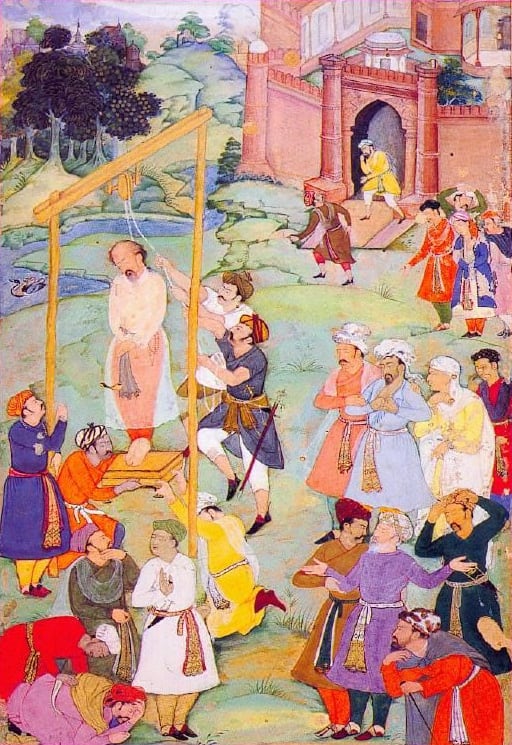
La ejecución de al-Hallaj (1602) · Public domain
Dans ses propres mots
«I am the Truth (that is, I am God).»Šaṭḥ transmitido en relatos sobre él: la versión más antigua lo sitúa en el círculo de al-Shibli; otras, ante al-Junayd. No figura en ningún manuscrito fiable de sus obras (Mojaddedi, Encyclopædia Iranica, siguiendo a Massignon).

Pour commencer, une œuvre
The Book of the TawasinSon idée centrale
"I am the Truth" and ecstatic utterance (shath): *Ana l-Haqq* is the most famous of the *shathiyyat*, the ecstatic utterances in which a mystic seems to speak in God's name.
Le voir en contexte
Biographie
5 min de lecture
Traduction assistée à partir de l'original espagnol, en attente de relecture par un traducteur natif.
Un petit-fils de zoroastriens en terre arabe
Abu l-Mughith al-Husayn ibn Mansur naquit vers l'an 244 de l'hégire (857-858) à al-Tur, aux environs d'al-Bayda, dans la province persane du Fars. Son grand-père, selon la tradition, avait été zoroastrien. Encore enfant, il suivit sa famille à Wasit, sur les bords du Tigre, car son père, cardeur de coton — hallaj, le métier qui lui donna son nom —, cherchait la proximité des centres textiles de l'Irak. Il y apprit le Coran par cœur à douze ans et adopta l'arabe comme unique langue d'écriture. Ce que l'on sait de sa vie provient des notices réunies dans les Akhbar al-Hallaj vers l'an 360 (971), des chroniqueurs de Bagdad et surtout de la reconstruction de Louis Massignon, qui consacra sa vie à l'étudier ; l'Encyclopædia Iranica avertit que cette œuvre monumentale est en partie interprétative.
Disciple de trois maîtres
Vers seize ans, il devint le disciple du soufi Sahl al-Tustari ; quatre ans plus tard, il reçut à Bassora le froc soufi des mains d'Amr ibn 'Uthman al-Makki et épousa la fille d'Abu Ya'qub al-Aqta', dont il eut trois fils. L'un et l'autre étaient des disciples d'al-Junayd, le grand maître de Bagdad, qu'al-Hallaj aurait rencontré et dont les anecdotes postérieures opposent la voie « sobre » à son « ivresse ». Son séjour à Bassora coïncida avec la révolte des esclaves zanj, à laquelle son beau-frère était lié ; d'où, peut-être, le soupçon précoce d'en faire un agitateur chiite.
La prédication et les voyages
Après la défaite des Zanj, il fit le pèlerinage de La Mecque et passa un an dans l'enceinte de la Kaaba, dans le silence et le jeûne. À son retour, il commença à parler ouvertement de son expérience ; son beau-père le renia et son maître al-Makki l'attaqua par écrit. Il prêcha alors devant des auditoires populaires à Tustar, sans habit soufi, invitant à chercher Dieu dans son propre cœur — on le surnomma « le cardeur des consciences » —, puis pendant cinq ans au Khorassan et en Transoxiane. Il revint à La Mecque avec des centaines de disciples, fut accusé de sorcellerie et entreprit un long voyage en Inde et au Turkestan. Vers 290 (903), il fit son troisième pèlerinage : à Arafat, il demanda à Dieu d'être méprisé comme un infidèle. De retour à Bagdad, il construisit chez lui une maquette de la Kaaba et parcourait les rues en proclamant son amour et son désir de mourir pour la communauté.
« Je suis la Vérité »
Selon le récit le plus ancien, c'est dans le cercle du soufi al-Shibli qu'il prononça la phrase qui allait le rendre célèbre : ana l-Haqq, « Je suis la Vérité », c'est-à-dire « Je suis Dieu », puisque al-Haqq est l'un des noms divins. Des versions postérieures situent la scène devant al-Junayd. La phrase ne figure dans aucun manuscrit fiable de ses œuvres et ses circonstances historiques sont incertaines ; mais son sens concorde avec ses écrits, où il se compare au buisson ardent qui parlait à Moïse. Les soufis postérieurs l'ont lue de trois manières : comme un secret qu'il ne fallait pas divulguer, comme la parole d'un homme ivre d'amour, ou comme la voix de Dieu parlant par un homme éteint en Lui. Al-Shibli dira plus tard : « Husayn et moi étions une seule et même chose, sauf qu'il l'a montré et que je l'ai caché. »
Le procès
Bagdad traversait des années de crise : en 296 (908) échoua le coup d'État qui avait installé pour un jour Ibn al-Mu'tazz sur le trône, et l'année suivante éclata un autre soulèvement sunnite auquel al-Hallaj prit part. Il s'enfuit à Ahwaz ; en 301 (913), il fut arrêté à Sus, conduit à Bagdad et exposé au pilori comme agent des Qarmates. Il passa quelque neuf ans en prison, surtout à la cour, où il avait des protecteurs, et y écrivit une bonne part de son œuvre. Le vizir Hamid ibn al-'Abbas rouvrit le procès et obtint une sentence de mort ; selon une version très répandue, le prétexte fut un texte où il proposait d'accomplir le pèlerinage sans se rendre à La Mecque. D'après Massignon, le mardi 24 dhu l-qa'da 309 — 26 mars 922 —, il reçut mille coups de fouet, on lui coupa les mains et les pieds, on l'exposa au gibet et le lendemain on le décapita ; son corps fut brûlé et ses cendres jetées dans le Tigre. Ibn Kathir donne une date légèrement différente.
Une doctrine de l'amour
Ce qui scandalisa ne fut pas seulement une phrase, mais un enseignement. Al-Hallaj distingue en Dieu la divinité (lahut) et l'humanité (nasut), et chante un esprit divin qui se mêle à celui de l'amant « comme le vin se mêle à l'eau limpide » ; Massignon y vit une doctrine de la déification du saint par l'Esprit, et Nicholson la compara à celle des mystiques rhénans qui parlent de la naissance de Dieu dans l'âme. Ses adversaires l'appelèrent hulul, incarnation. À la différence de ses maîtres, qui réservaient l'expérience à un cercle d'initiés, al-Hallaj la prêcha dans la rue et dans une langue accessible à tous, et ce geste — plus que la doctrine elle-même — explique l'hostilité d'une bonne partie des soufis de Bagdad.
Une œuvre brève
Des quarante-six titres que lui attribue le Fihrist d'Ibn al-Nadim (987), seule une partie a été conservée. Son œuvre principale, le Kitab al-Tawasin, réunit onze brefs traités en prose rimée, avec diagrammes et signes, sur le Prophète, l'unicité divine et l'expérience mystique ; on y trouve pour la première fois en arabe l'image du papillon qui tournoie autour de la lampe jusqu'à s'y consumer, et l'éloge d'Iblis comme le plus sincère des monothéistes, qui préféra la malédiction à se prosterner devant un autre que Dieu. Massignon édita les Tawasin en 1913, le Diwan de poèmes en 1931 et les Akhbar avec Paul Kraus en 1936.
Le martyr de l'amour
Pendant un siècle et demi, les soufis le traitèrent avec prudence : al-Sulami reconnaît que la plupart des maîtres le rejetaient, et al-Qushayri l'omet de sa galerie de biographies tout en citant ses sentences. Al-Ghazali l'excusa comme un amant ivre. Hujwiri entreprit sa réhabilitation et 'Attar fit de lui le sommet de son Mémorial des saints, avec une mort joyeuse que la poésie persane ne cesserait de reprendre. Rumi distingue le « Je suis la Vérité » de Mansur, qui était lumière, du « Je suis Dieu » de Pharaon, et Hafez écrivit que son seul crime avait été de révéler les secrets. Au XXe siècle, Massignon le présenta comme le martyr mystique de l'islam, et le poète égyptien Salah 'Abd al-Sabur porta sa tragédie au théâtre (1965). D'autres continuent de voir en lui un agitateur ou un hérétique : sa figure divise toujours.
Sources: Massignon, Louis. La Passion de Husayn Ibn Mansûr Hallâj, martyr mystique de l'Islam, exécuté à Bagdad le 26 mars 922. 2.ª ed., 4 vols., París: Gallimard, 1975 (1.ª ed., Geuthner, 1922); trad. Herbert Mason, The Passion of al-Hallaj, Princeton University Press, 1982. · Nicholson, Reynold A. The Mystics of Islam. Londres: G. Bell & Sons, 1914, cap. VI (Project Gutenberg 67388); y al-Ghazali, Mishkat al-anwar, trad. W. H. T. Gairdner, 1924, pp. 106–107. · Ernst, Carl W. Words of Ecstasy in Sufism. Albany: State University of New York Press, 1985; y Hallaj: Poems of a Sufi Martyr, Evanston: Northwestern University Press, 2018. · Ibn Kathir. al-Bidaya wa-l-nihaya, vol. XI, año 309 H, noticia sobre al-Husayn ibn Mansur al-Hallaj (texto árabe en Wikisource). · Ibn al-Nadim. Kitab al-Fihrist (987), maqala V, noticia «al-Hallaj» y lista de sus libros (texto árabe en Wikisource).
Chronologie
La vie, année après année
Chaque point est un événement documenté. Cliquez pour le lire, avec sa source et son degré de certitude.
v. 8580 ansal-Tur, Fars
Birth in Fars
Born around 244 AH (857–858) at al-Tur near al-Bayda (Fars), grandson of a Zoroastrian according to tradition.
ProbableMojaddedi, Jawid. «Ḥallāj, Abu'l-Moḡiṯ Ḥosayn». Encyclopædia Iranica, vol. XI, fasc. 6, pp. 589–592, 2003 (ed. en línea, act. 2016).
Après sa mort
- v. 971The Akhbar al-Hallaj
- v. 1072Hujwiri begins the rehabilitation
- v. 1221Attar makes him a martyr of love
- 1913Massignon edits the Kitab al-Tawasin
- 1965The Tragedy of al-Hallaj
v. 858 · 0 ans
Birth in Fars
Born around 244 AH (857–858) at al-Tur near al-Bayda (Fars), grandson of a Zoroastrian according to tradition.
Probable
v. 865
Childhood in Wasit
The family moves to Wasit; he learns the Qur'an by heart by about twelve.
Tradition
v. 874
Disciple of Sahl al-Tustari
At about sixteen he follows the Sufi master Sahl al-Tustari.
Tradition
v. 878
Sufi robe and marriage in Basra
Receives the robe (*khirqa*) from Amr al-Makki and marries the daughter of Abu Ya'qub al-Aqta, a disciple of al-Junayd.
Tradition
v. 884
A year of silence by the Kaaba
After the defeat of the Zanj (883), he goes to Mecca and stays a year in the sanctuary in silence and fasting.
Probable
v. 890
Preaching in Tustar, Khorasan and India
Preaches to popular audiences in Tustar and for five years in Khorasan and Transoxiana; after the second pilgrimage he travels to India and Turkestan.
Probable
v. 903
Third pilgrimage and the prayer at Arafat
Around 290 AH at Arafat he asks to be despised like an infidel; he settles in Baghdad.
Probable
908
The coup of Ibn al-Mu'tazz
The Hanbali coup fails in 296 AH; the following year al-Hallaj takes part in another uprising and flees to Ahvaz.
Probable
913
Arrest in Sus and pillory in Baghdad
In 301 AH he is arrested in Sus, paraded on a camel through Baghdad and exposed as "a missionary of the Qarmatians"; nine years of imprisonment begin.
Documenté
26 mars 922 · 64 ans
Execution in Baghdad
Condemned in the trial promoted by the vizier Hamid ibn al-Abbas; flogged, mutilated, exposed on the gibbet, beheaded and burned (24 Dhu l-Qa'da 309 / 26 March 922 according to Massignon).
Documenté
v. 971
The Akhbar al-Hallaj
Around 360 AH the reports and prayers that form the Akhbar al-Hallaj are gathered in the circle of al-Nasrabadhi.
Probable
v. 1072
Hujwiri begins the rehabilitation
The Kashf al-mahjub devotes a long defence to al-Hallaj.
Documenté
v. 1221
Attar makes him a martyr of love
His biography closes the Tadhkirat al-awliya with a joyful death that Persian poetry would repeat.
Documenté
1913
Massignon edits the Kitab al-Tawasin
First edition of the Arabic text with French translation; in 1922 he publishes La Passion d'al-Hallaj.
Documenté
1965
The Tragedy of al-Hallaj
The Egyptian poet Salah Abd al-Sabur publishes the verse drama Ma'sat al-Hallaj.
Documenté
Œuvres
Œuvres essentielles
Les œuvres sans lesquelles on ne comprend pas son héritage.
Œuvre écrite · v. 915
The Book of the Tawasin
كتاب الطواسين (Kitab al-Tawasin)
Al-Hallaj's main work: eleven meditations in rhymed prose, sometimes with diagrams of circles and dots, on the Prophet's pre-existent light, God's unity and the impossibility of expressing it. The chapter on "understanding" introduces the moth approaching the lamp: it sees its light, feels its heat and truly knows it only by burning in it. The longest, on pre-eternity, defends Iblis as the absolute monotheist who refused to bow before Adam out of fidelity to God, and compares his case with Pharaoh's and the author's own. It is a difficult, allusive and intensely charged text that influenced Ahmad al-Ghazali, Ayn al-Qudat and Ruzbihan.
3 éditions

Œuvre écrite · v. 922
Diwan
ديوان الحلاج (Diwan al-Hallaj)
Some seventy short poems, often of only a few lines, in which love of God is spoken in the language of union: "I am He whom I love, and He whom I love is I", "Your spirit is mingled with mine as wine with pure water". The famous "Kill me, my trusted friends, for in my killing is my life" turns execution into a passage to true life. They are verses of great economy, with paradoxes and plays on pronouns that show the dissolution of the self, and they formed the core of al-Hallaj's image as a martyr of love.
6 éditions
Al-Hallaj
Reports of al-Hallaj
Compilation postérieure · v. 971
Reports of al-Hallaj
أخبار الحلاج (Akhbar al-Hallaj)
About fifty pieces: prayers spoken in public, short sermons, dialogues with disciples and the account of his last days, with the prayer in which he asks God to forgive those about to kill him "out of zeal for Your religion". It is the main source for his preaching and the basis of later hagiographical versions of his death.
2 éditions
Toute son œuvre (6)
Al-Hallaj
Fragments of Qur'anic exegesis (in al-Sulami's Haqa'iq al-tafsir)
The Conscious LibraryFragments of Qur'anic exegesis (in al-Sulami's Haqa'iq al-tafsir)
1000
Al-Hallaj
Lost works recorded in the Fihrist
The Conscious LibraryLost works recorded in the Fihrist
922

La Passion d'al-Hosayn-ibn-Mansour al-Hallaj, martyr mystique de l'Islam (Louis Massignon)
1922
Citations
Citations localisées dans une œuvre précise. Chacune porte sa provenance et son degré de fiabilité.
I am the Truth (that is, I am God).أنا الحق
ContestéeŠaṭḥ transmitido en relatos sobre él: la versión más antigua lo sitúa en el círculo de al-Shibli; otras, ante al-Junayd. No figura en ningún manuscrito fiable de sus obras (Mojaddedi, Encyclopædia Iranica, siguiendo a Massignon).
Dernières paroles
Versions contradictoires
«For the ecstatic it is enough that the One should make him one [with Him].»حسب الواجد إفراد الواحد له
The sources preserve several versions. According to al-Sulami, cited by Ibn Khallikan, his last words were "It is enough for the ecstatic that the One should single him out" (with the variant "for the one", *al-wahid*, instead of "for the ecstatic", *al-wajid*). The *Akhbar al-Hallaj* also record a prayer spoken before the gibbet in which he asks God to forgive those about to kill him out of zeal for His religion, and words addressed to al-Shibli. Attar adds a hagiographical scene in which he smears his face with his blood. There is no single reliable testimony.
Source: Tarajm.com, ficha «al-Hallaj» con el texto de Ibn Khallikan, Wafayat al-a'yan, que cita a al-Sulami sobre sus últimas palabras.
Interroger
Ce que répond son œuvre
Douze grandes questions de l'humanité et ce que ses textes permettent d'y répondre, références à l'appui. Nous ne lui prêtons jamais de paroles.
Qu'est-ce que l'Absolu ? Dieu existe-t-il ?
The transcendent Beloved who speaks through the lover's mouth
Un Dieu personnelIl le dit expressément
Al-Hallaj speaks of God as the Beloved with whom the lover comes to be merged, but his starting point is absolute transcendence. In the Book of the Tawasin he devotes a meditation to tanzih, divine incomparability: God cannot be reached by the concepts, places or times of creatures. That distance is what gives its scandal to the cry «I am the Truth»: al-Haqq, the Truth, is one of the names of God, and whoever utters it does not claim a divinity of his own but lets the Other speak in him. The verses of the Diwan express union as wine mingling with water or as two spirits dwelling in one body: it is the language of love between two, not dissolution into an impersonal principle.
Comparer cette question avec d'autres maîtresQui suis-je ? Existe-t-il un vrai soi ?
«I am the Truth»: when the lover is effaced, God speaks
Le Soi est l'AbsoluIl le dit expressément
Al-Hallaj is the Sufi who pushed the question of the self furthest. His formula «I am the Truth» is not spoken by the ordinary self but by the one annihilated in the Beloved, so that the one who says «I» is God. The verses of the Diwan say it plainly: he is the One he loves, and the One he loves is he; they are two spirits dwelling in one body, and whoever sees one sees the other. In the Book of the Tawasin, the moth circling the lamp truly knows the flame only when it throws itself into it and burns: the self that knows disappears into what is known. For al-Hallaj the separate self is a veil; the true self is the one God makes one with Himself, and that union may be paid for with one's life.
Comparer cette question avec d'autres maîtresPourquoi souffrons-nous ?
The pain of separation is consummated in the lover's death
La séparation d'avec DieuIl le dit expressément
For al-Hallaj, suffering is born of the separation between lover and Beloved, and it is not evaded: it is passed through to the end. His verses ask his faithful friends to kill him, because in his death lies his life; the execution of 922 was read by the tradition as the fulfilment of that wish. In the Book of the Tawasin, the figure of Iblis embodies the pain of one who loves and has been set apart: cursed for not bowing to Adam, he remains faithful to his Lord in separation itself. Al-Hallaj does not see pain as a punishment to be avoided but as the form love takes while union has not been consummated. The remedy is not to stop suffering but to stop being the one who suffers.
Comparer cette question avec d'autres maîtresQue se passe-t-il après la mort ?
In my death is my life: martyrdom as the consummation of love
Vie éternelle et résurrectionIl le dit expressément
Al-Hallaj thought about his own death before it came. In famous verses he asks his faithful friends to kill him, for in his death is his life and in his life his death: to die is to pass from separate existence to life in the Beloved. Executed in Baghdad in 922 after a long trial, the tradition recorded in the Akhbar al-Hallaj attributes to him on the scaffold a prayer asking God to forgive his executioners, who kill him out of zeal for their religion. His last words are transmitted in several versions; the best known says that for the ecstatic it is enough that the One should make him one with Him. Within the Islamic faith in resurrection, al-Hallaj lives death as union, not as an end.
Comparer cette question avec d'autres maîtresComment atteint-on la libération ou le salut ?
Love that surrenders unto death: the pilgrimage is inward
Par la dévotion et l'abandonIl le dit expressément
For al-Hallaj, liberation is the union of love with God, and it is reached through a surrender that holds nothing back. The lover must let the Beloved take his place, like the moth that throws itself into the flame; his verses express that union with images of mingling and fusion. This surrender is not confined to the circle of initiates: al-Hallaj preached in the markets of Baghdad and spoke to everyone of the love of God, for which his Sufi masters reproached him. The records of his trial attribute to him the idea that a pilgrim who cannot go to Mecca may perform the pilgrimage in his own house, with an inner rite; his judges took it as an attack on the law. His death was read as the consummation of that love.
Comparer cette question avec d'autres maîtresFaut-il un maître ?
He had masters and broke with them; his guide is the Prophet's lamp
Ne s'est pas prononcé
Al-Hallaj left no doctrine on the need for a master, and his biography is ambivalent. He was trained by Sahl al-Tustari, by Amr ibn Uthman al-Makki and in al-Junayd's circle in Baghdad, and he broke with all of them: they reproached him for divulging in public what should be kept among initiates, and he chose to preach in the markets to anyone who would listen. The nearest thing to an answer is in the Book of the Tawasin, which opens with a meditation on the Prophet as a lamp sprung from the light of the unseen: the only guide who never fails is Muhammad. His life suggests that the human master helps one begin, but that the Beloved's call may require going beyond what the master approves.
Comparer cette question avec d'autres maîtresLe monde est-il réel ?
No doctrine of the world: God is incomparable with what is created
Ne s'est pas prononcé
Al-Hallaj left no cosmology and no doctrine on the reality of the world. What can be reconstructed from his writings concerns the relation between God and creature, not the status of things. He insists on transcendence: the eternal does not mingle with the temporal, and the concepts of creatures do not reach God. At the same time, his language of divinity (lahut) manifesting in humanity (nasut), based on the tradition that God created Adam in His image, makes the human being, rather than the cosmos, the place where the divine lets itself be seen. His judges read incarnation into it; his defenders, a theology of the image. About the world as such he is silent.
Comparer cette question avec d'autres maîtresQu'est-ce que l'amour ?
Love unites until lover and Beloved are a single body
Le désir ardent et l'unionIl le dit expressément
Love is the centre of al-Hallaj's experience and of his language. His verses describe it as a mingling: the Beloved's spirit has mingled with his own as wine with pure water, so that what touches one touches the other; they are two spirits dwelling in a single body. In the Book of the Tawasin the moth circling the lamp is not content with its light or its warmth: it knows the flame only by throwing itself into it. Massignon credits al-Hallaj with the boldness of presenting passionate love (ishq) as a reality rooted in the very essence of God. Love is not a feeling towards God but the movement by which God unites with the one who loves.
Comparer cette question avec d'autres maîtresSommes-nous libres ou tout est-il déterminé ?
Iblis between command and decree: no one escapes what God wills
Il n'y a pas d'agentCela se déduit de sa doctrine
Al-Hallaj wrote no treatise on freedom, but the Book of the Tawasin devotes a meditation on pre-eternity and ambiguity to Iblis, the angel who refused to bow before Adam, in dialogue with Moses and with God. Al-Hallaj turns him into an extreme monotheist: Iblis received the command to bow, but God's eternal decree was otherwise, and he obeyed what God willed rather than what He ordered, accepting the curse for it. The scene lays bare the abyss between the divine will and the law, and the creature's powerlessness before the decree. In his experience of union, moreover, the lover no longer acts by himself: what he does and says, Another does and says in him.
Comparer cette question avec d'autres maîtresPourquoi méditer ou prier ?
Speaking to God in public and in private as one speaks to the Beloved
L'amitié avec DieuCela se déduit de sa doctrine
Al-Hallaj was a man of prayer and rigorous asceticism, and the Akhbar al-Hallaj preserve several of his prayers, some spoken in public, in the market or the mosque, others in prison and before the scaffold. Their tone is that of intimate dialogue with the Beloved: he addresses Him as thou, reproaches Him, thanks Him, offers Him his life. That intimacy culminates in the experience of union, in which the distance between the one who prays and the One prayed to seems to vanish. Unlike other Sufis of his time, he did not reserve that conversation for initiates: he wanted everyone to know that God can be spoken to in this way. It was precisely this prayer aloud, with its ecstatic formulas, that caused scandal.
Comparer cette question avec d'autres maîtresLa raison peut-elle connaître l'ultime ?
The moth knows the flame not by its light but by burning in it
L'ultime est au-delà du mentalIl le dit expressément
The meditation in the Book of the Tawasin devoted to understanding offers al-Hallaj's central image of knowledge. The moth flutters around the lamp until dawn and returns to the others to tell them what it has seen; then it approaches the warmth; finally it throws itself into the flame and burns. Only then does it truly know, and it can no longer come back to tell it. The light is knowledge by hearsay, the warmth knowledge by experience, the flame reality itself. Al-Hallaj, who was trained in the religious sciences and wrote with rigour, holds that reason and concepts remain at the edge: God is known only by losing oneself in Him, and what is reached in this way does not fit into discourse.
Comparer cette question avec d'autres maîtresSe retirer du monde ou le transformer ?
He took the secret to the markets and paid with his life
S'engager dans le mondeCela se déduit de sa doctrine
Al-Hallaj broke with the discretion of the Baghdad Sufis, who reserved their teaching for small circles. He travelled through Khurasan, India and Turkestan, preached in markets and mosques, spoke of the love of God to ordinary people and attracted followers from every class. That public life had political consequences: he was accused of ties with seditious movements and of claims that threatened the caliphal order, and his trial, which lasted years, mixed theology and politics. Massignon saw in him a mystic who sought to bring his experience to the whole community and accepted death for it. He chose not retreat but the public square, and his death became a public event that tradition never forgot.
Comparer cette question avec d'autres maîtres
Affinités et tensions
Affinités et tensions
Calculées question par question à partir de ses positions. La raison de chaque accord ou de chaque désaccord s'affiche d'un clic.
Pense comme

Rabia al-Adawiyya
Ils concordent sur: Pourquoi souffrons-nous ? · Qu'est-ce que l'Absolu ? Dieu existe-t-il ? · Que se passe-t-il après la mort ?
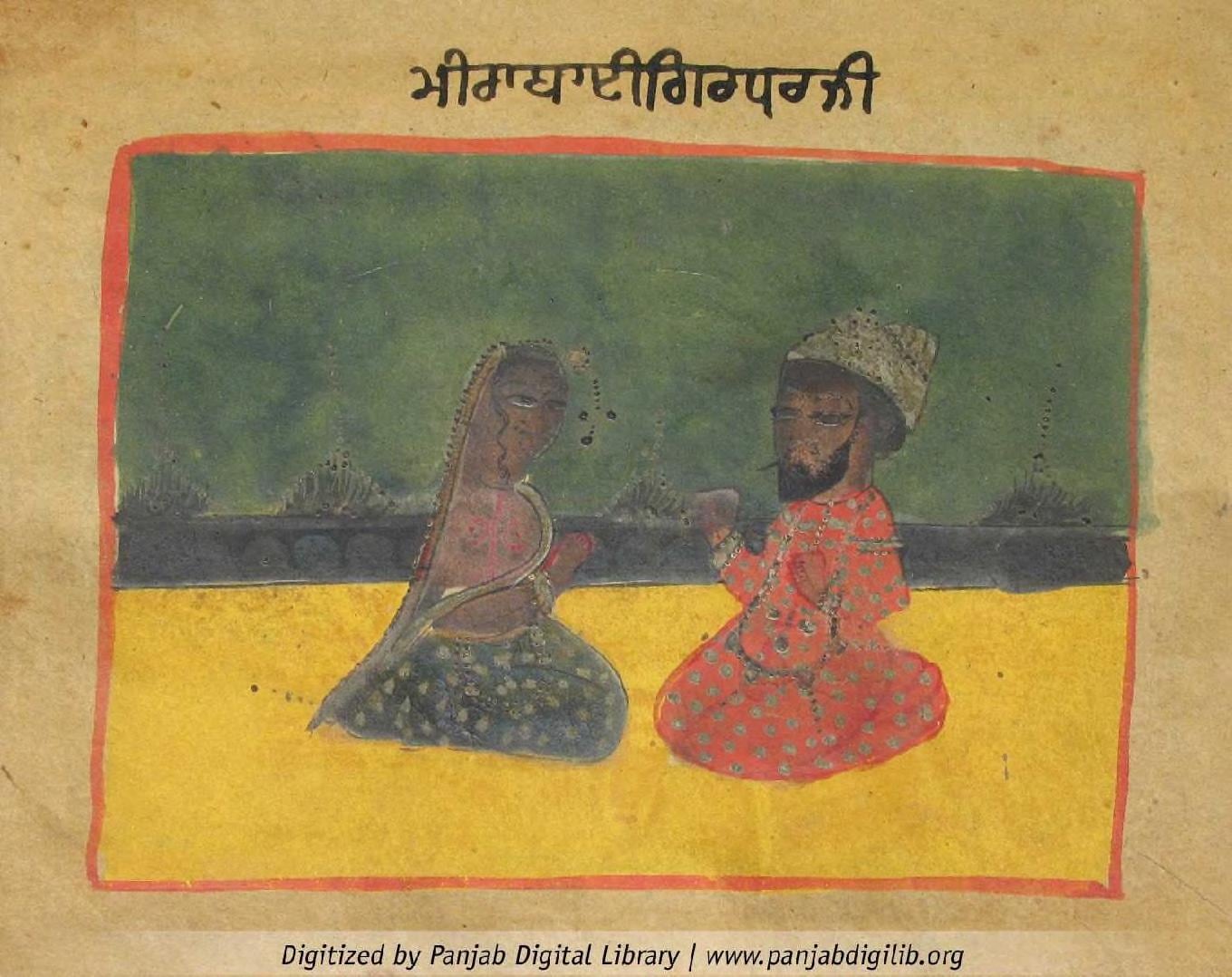
Mirabai
Ils concordent sur: Qu'est-ce que l'Absolu ? Dieu existe-t-il ? · Pourquoi souffrons-nous ? · Comment atteint-on la libération ou le salut ?
Ibn Arabi
Ils concordent sur: Qui suis-je ? Existe-t-il un vrai soi ? · Pourquoi souffrons-nous ? · Que se passe-t-il après la mort ?
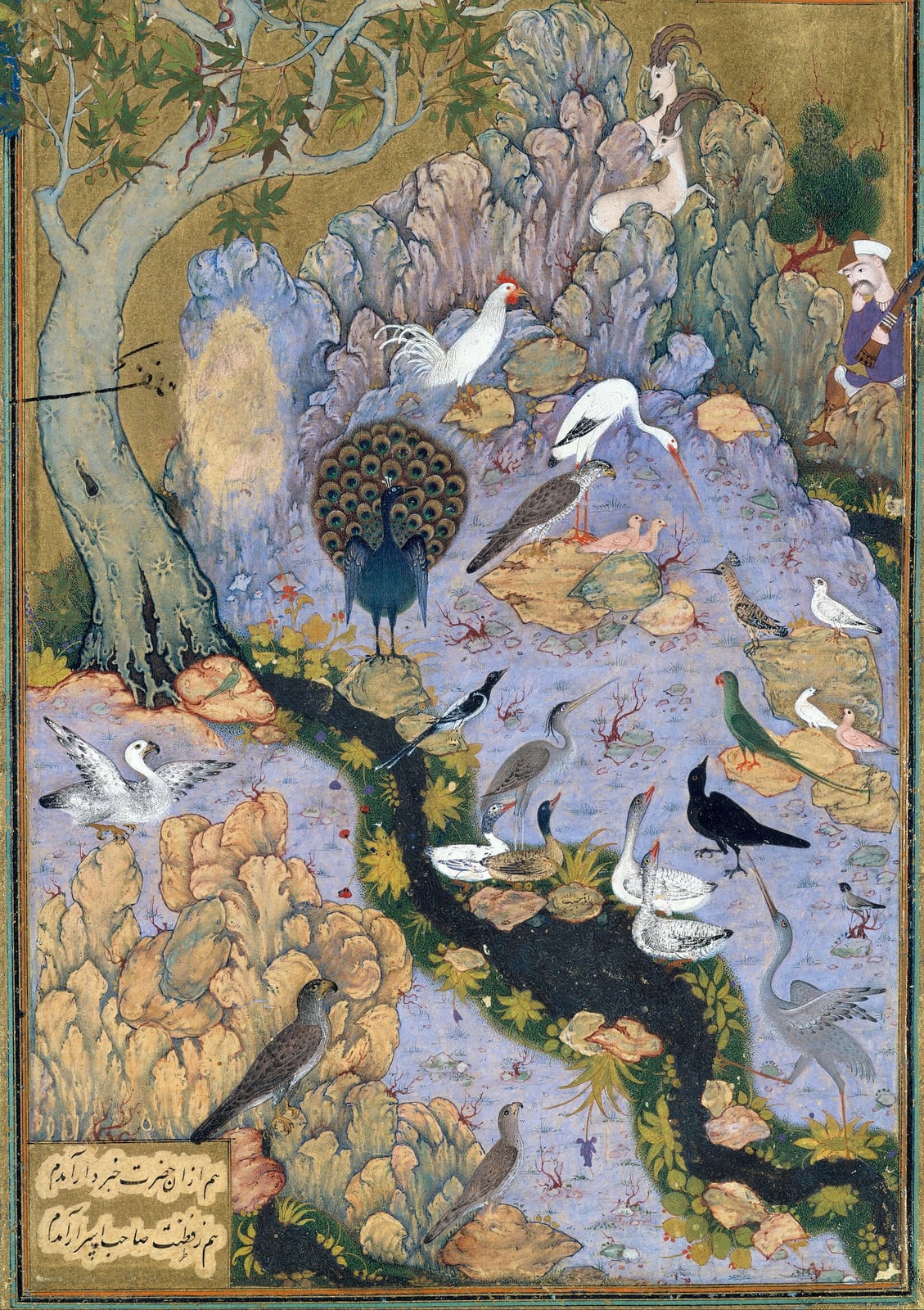
Attar
Ils concordent sur: Qui suis-je ? Existe-t-il un vrai soi ? · Pourquoi souffrons-nous ? · Que se passe-t-il après la mort ?
Pense autrement que

Pema Chödrön
Ils s'opposent sur: Qu'est-ce que l'Absolu ? Dieu existe-t-il ? · Qui suis-je ? Existe-t-il un vrai soi ? · Que se passe-t-il après la mort ?

Epicurus
Ils s'opposent sur: Qu'est-ce que l'Absolu ? Dieu existe-t-il ? · Qui suis-je ? Existe-t-il un vrai soi ? · Que se passe-t-il après la mort ?

Tsongkhapa
Ils s'opposent sur: Qu'est-ce que l'Absolu ? Dieu existe-t-il ? · Qui suis-je ? Existe-t-il un vrai soi ? · Que se passe-t-il après la mort ?

Dōgen
Ils s'opposent sur: Qu'est-ce que l'Absolu ? Dieu existe-t-il ? · Qui suis-je ? Existe-t-il un vrai soi ? · Que se passe-t-il après la mort ?
Anecdotes et récits
Anecdotes et récits
Contestéc. 900–913
"I am the Truth" in al-Shibli's circle
Origine du récit: Massignon, La Passion, I, pp. 168–172 (tr. Mason, I, pp. 126–129), summarised by Mojaddedi in the Encyclopædia Iranica. The al-Junayd version appears in Hujwiri and Attar.
Témoignagec. 903
The prayer at Arafat
Origine du récit: Akhbar al-Hallaj; Massignon, La Passion, I, pp. 67 and 265–267 (tr. Mason, I, pp. 26–27 and 219–223).
Tradition oralec. 884
A year motionless by the Kaaba
Origine du récit: Akhbar al-Hallaj and later Sufi biographies; summary in the Encyclopædia Iranica.
Contesté922
The Kaaba at home and the pretext for the sentence
Origine du récit: Massignon, La Passion, I, pp. 592–594 (tr. Mason, I, pp. 546–547); Ernst, Words of Ecstasy in Sufism (1985), pp. 106–110; summary in the Encyclopædia Iranica.
Récit hagiographique922
The execution: chronicle and legend
Origine du récit: Chronicle: Ibn Kathir, al-Bidaya wa-l-nihaya, year 309 AH (Arabic Wikisource). Legend: Attar, Tadhkirat al-awliya and Mantiq al-tayr (vv. 2287–2298), according to the Encyclopædia Iranica.
Enseignements
Enseignements
Les notions qui structurent sa pensée, expliquées dans leur contexte.
"I am the Truth" and ecstatic utterance (shath)ana-l-haqq
Shath of Abu Yazid al-Bistami ("Glory be to me!"); al-Ghazali's commentary in the Mishkat; Ruzbihan Baqli, Sharh-i shathiyyat.
Lahut and nasut: the charge of incarnation (hulul)hulul
Sunni polemic against the Hululis (Abu Nu'aym, Ibn Taymiyya); interpretation by Massignon and Nicholson.
The moth and the lampfarash-y-lampara
Degrees of certainty (*'ilm*, *'ayn*, *haqq al-yaqin*); fortune of the motif in Persian poetry.
Iblis, the faithful monotheistiblis-monoteista
Qur'an 2:34, 7:11–18; P. J. Awn, Satan's Tragedy and Redemption (1983).
The inner pilgrimagehajj-interior
Legal debate on the substitution of rites; Massignon and Ernst on the trial.
Vidéos
Vidéos
Enregistrements, entretiens et documentaires. Les vidéos sont lues depuis YouTube ; elles ne sont pas hébergées ici.
al-Hallaj: Mystic Martyr of Sufism
Analyse· EN· 59 min
Let's Talk Religion
Dr. Carl Ernst On Mansur Al-Hallaj
Conférence· EN· 87 min
Hast o Neest
#ZeeJLF2018 | Sufi Martyrs of Love
Conférence· EN· 61 min
Jaipur Literature FestivalChaîne officielle
Episode 2: al-Hallaj | Logic of the Birds Podcast
Analyse· EN· 44 min
Logic of the Birds
Mansur al-Hallaj - Louis Massignon - Des Idées et des Hommes
Conférence· FR· 49 min
Traits d'Union
Ma rencontre avec al-Hallâj, par Louis Massignon
Entretien· FR· 22 min
Conscience Soufie
La poésie d'al-Hallâj, par Louis Massignon
Conférence· FR· 27 min
Conscience Soufie
Mansûr al-Hallâj par Joël-Claude Meffre
Conférence· FR· 86 min
Conscience Soufie
Mansur Al HALLAJ – Une Vie, une Œuvre : le christ de l'Islam (France Culture, 1988)
Documentaire· FR· 1988· 84 min
ÉCLAIR BRUT
Dolors Bramon - Los sufíes Al-Khallaj y la ex esclava Rabia Al-Adawiyya
Conférence· ES· 49 min
Espacio Ronda Barcelona
MANSUR HALLAJ ➤ ¿EL MÍSTICO QUE VIVIÓ COMO JESÚS? | con HALIL BÁRCENA
Entretien· ES· 47 min
Psicología y Espiritualidad
يوسف زيدان يتحدث عن الصوفي الحلاج al-Hallaj
Conférence· AR· 21 min
gruenten
Hallac-ı Mansur Kimdir? Enel Hakk Ne Demek?
Analyse· TR· 37 min
Mustafa B. Bozkurt [Lex Historiae]
Galerie
Galerie
Images dont la licence a été vérifiée. Chacune conserve son auteur et son attribution.
Relations
Relations
Influences, filiations et affinités. On distingue la relation documentée de la similitude identifiée par analyse.
A influencé
Attar placed al-Hallaj's biography as the climax of the Tadhkirat al-awliya and evokes him in the Mantiq al-tayr and the Ilahinama.
Relation documentée
A influencé
A ghazal by Hafez alludes to him: "That friend for whom the gallows was raised: his crime was revealing the secrets."
Relation documentée
A influencé
Al-Ghazali quotes in the Mishkat al-anwar his "I am the Truth" and the verse "I am He whom I love", explaining them as the words of a drunken lover that should have been concealed.
Relation documentée
Idées proches de
Ibn Arabi's school reread "I am the Truth" in terms of the oneness of being; no specific passage of Ibn Arabi is cited here.
Similitude identifiée par analyse
Idées proches de
Both embody love mysticism in the tradition and appear together in anthologies and studies; there was no contact.
Similitude identifiée par analyse
Idées proches de
Massignon called him "the Christ of Islam" and Nicholson compared his doctrine of deification with Christology; al-Hallaj mentions Jesus in his verses. An interpretive parallel, not documented influence.
Similitude identifiée par analyse
Idées proches de
Nicholson compares al-Hallaj's doctrine with the Rhineland mystics' birth of God in the soul. No contact.
Similitude identifiée par analyse
A influencé
The Masnavi mentions al-Hallaj many times; Rumi distinguishes his "I am the Truth", which was light, from Pharaoh's "I am God" (Masnavi II, v. 307).
Relation documentée
Lié depuis d'autres fiches
Sources
Sources
Bibliographie et catalogues consultés pour cette fiche.
- Wikidata, Q172862 «Mansur Al-Hallaj» (P31=Q5; 64 enlaces entre wikis; P569 858; P570 922-03-26).
- Mojaddedi, Jawid. «Ḥallāj, Abu'l-Moḡiṯ Ḥosayn». Encyclopædia Iranica, vol. XI, fasc. 6, pp. 589–592, 2003 (ed. en línea, act. 2016).
- Massignon, Louis. La Passion de Husayn Ibn Mansûr Hallâj, martyr mystique de l'Islam, exécuté à Bagdad le 26 mars 922. 2.ª ed., 4 vols., París: Gallimard, 1975 (1.ª ed., Geuthner, 1922); trad. Herbert Mason, The Passion of al-Hallaj, Princeton University Press, 1982.
- Nicholson, Reynold A. The Mystics of Islam. Londres: G. Bell & Sons, 1914, cap. VI (Project Gutenberg 67388); y al-Ghazali, Mishkat al-anwar, trad. W. H. T. Gairdner, 1924, pp. 106–107.
- Ernst, Carl W. Words of Ecstasy in Sufism. Albany: State University of New York Press, 1985; y Hallaj: Poems of a Sufi Martyr, Evanston: Northwestern University Press, 2018.
- Ibn Kathir. al-Bidaya wa-l-nihaya, vol. XI, año 309 H, noticia sobre al-Husayn ibn Mansur al-Hallaj (texto árabe en Wikisource).
- Ibn al-Nadim. Kitab al-Fihrist (987), maqala V, noticia «al-Hallaj» y lista de sus libros (texto árabe en Wikisource).
- Wikisource árabe, categoría «al-Hallaj»: poemas del Diwan (Uqtuluni ya thiqati y sesenta y nueve «Mukhtarat»).
- Tarajm.com, ficha «al-Hallaj» con el texto de Ibn Khallikan, Wafayat al-a'yan, que cita a al-Sulami sobre sus últimas palabras.
- Open Library, registros de ediciones de al-Hallaj y de Massignon (Tawasin 1913, Diwan, Akhbar, Passion, Ernst, Sami-Ali).
- Ayant droit
- Dominio público (obra del siglo X). Las ediciones y traducciones modernas (Massignon/Gallimard, Princeton University Press, Northwestern University Press, Albin Michel, Ediciones del Oriente y del Mediterráneo…) están sujetas a los derechos de sus editores; los trabajos de Massignon (m. 1962) no son de dominio público en la UE ni en España.
En attente de confirmation
Ce que cette fiche n'a pas encore pu établir. Nous préférons le dire plutôt que de combler.
- Fechas: nacimiento c. 244 H (857–858, Iranica). Muerte el martes 24 de dhu l-qada de 309 = 26-3-922 según Massignon (coincide el día de la semana); Ibn Kathir dice «nueve días antes del fin de dhu l-qada», que daría el 21 o el 22. Conservado el dato de Massignon.
- Obra: registrados los Tawasin (con sus once capítulos), el Diwan, los Akhbar, los fragmentos de tafsir conservados por al-Sulami y los 46 títulos perdidos del Fihrist en una sola entrada. Faltan las «Riwayat» (dichos en forma de hadiz editados por Massignon) y la verificación de los fragmentos en la edición de los Haqa'iq al-tafsir.
- Ediciones: confirmar el traductor del Diván en castellano (Ediciones del Oriente y del Mediterráneo, 2002, ISBN 9788487198847) y localizar una traducción castellana de los Tawasin con ISBN; la de Aisha Abd ar-Rahman (Diwan Press, 1974) no tiene ISBN en el catálogo.
- Última palabra: verificar en la edición de los Akhbar (Massignon y Kraus, 1957) el texto árabe de la oración por sus verdugos y la forma exacta (al-wajid / al-wahid) del dicho final.
- Citas: no se ha podido cotejar con una edición árabe impresa el pasaje de la mariposa de los Tawasin ni la plegaria de Arafat; se describen sin cita literal.
- Imágenes: la ficha de File:Hallaj.jpg no indica el manuscrito de procedencia; buscar en la Walters la miniatura del Diwan de Amir Khusraw (W.650) citada por la Iranica.
Recherche effectuée le 2026-10-25