Bouddhisme · Zen / Chan · Taoïsme · Mystique chrétienne · Advaita Vedanta
Alan Watts
1915 – 1973Personne historiquement documentée
Philosophe et vulgarisateur britannique naturalisé américain (1915-1973), qui rendit accessibles à l'Occident le bouddhisme zen, le taoïsme et le vedanta. Prêtre épiscopalien pendant quelques années, enseignant à San Francisco, voix de la radio KPFA et de la télévision publique, il a écrit des ouvrages comme Le Bouddhisme zen, Éloge de l'insécurité, Psychothérapie orientale et occidentale et The Book. Ses conférences enregistrées continuent d'être diffusées massivement.
- œuvres
- 59œuvres
- éditions
- 150éditions
- citations
- 8citations
- vidéos
- 13vidéos
- images
- 5images
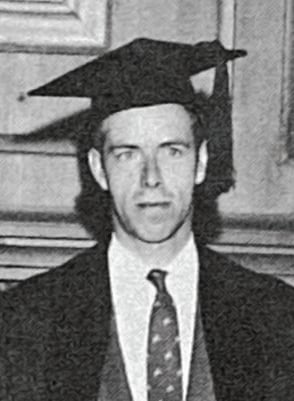
Alan Watts en la Universidad de Vermont (1958) · Public domain
Dans ses propres mots
«If you get the message, hang up the phone.»The Joyous Cosmology, ed. Vintage 1970, p. 26 (sobre los psicodélicos como instrumentos)

Pour commencer, une œuvre
The Wisdom of InsecuritySon idée centrale
The feeling of being an isolated self inside the body, facing an alien world, is not a datum of experience but a learned social convention; organism and environment form a single field.
Le voir en contexte
Biographie
5 min de lecture
Traduction assistée à partir de l'original espagnol, en attente de relecture par un traducteur natif.
Un garçon du Kent fasciné par l'Orient
Alan Wilson Watts naît le 6 janvier 1915 à Chislehurst, dans le comté de Kent. Il est le fils unique de Laurence Wilson Watts, représentant de la maison Michelin à Londres, et d'Emily Mary Buchan, fille de missionnaire. Il grandit dans une modeste maison de campagne, apprend le nom des fleurs et des papillons, et vit entouré des broderies et des peintures que des missionnaires revenus de Chine avaient offertes à sa mère. De ces images, il gardera à l'âge adulte la fascination pour « une certaine clarté, une transparence et une ampleur » qu'il ne trouvait pas dans l'art anglais.
Pensionnaire dès l'âge de sept ans, d'abord à l'école préparatoire de St Hugh's, puis à la King's School de Canterbury, il reçoit une éducation anglicane qu'il jugera morose. Pendant les vacances, il voyage en France avec Francis Croshaw, un épicurien lettré qui s'intéresse au bouddhisme, et découvre dans sa bibliothèque les textes qui décideront de son orientation. À seize ans, il est secrétaire de la Loge bouddhiste de Londres, que dirige l'avocat Christmas Humphreys. Une épreuve d'examen traitée avec plus d'audace que de prudence lui ferme la bourse d'Oxford, et le jeune homme se forme seul : à la Loge, dans les bibliothèques et au contact de l'excentrique penseur serbe Dimitrije Mitrinović. Sa biographe Monica Furlong voit en lui, avant tout, un autodidacte.
Le jeune interprète du zen
En 1936, à vingt et un ans, il assiste au Congrès mondial des religions réuni à Londres et y rencontre D. T. Suzuki, dont il avait vulgarisé l'œuvre la même année dans The Spirit of Zen. Suit The Legacy of Asia and Western Man (1937). Vingt ans plus tard, il jugera lui-même ce premier livre peu rigoureux et, à bien des égards, trompeur ; mais la vocation était fixée : rendre intelligibles à l'Occident le bouddhisme zen, le taoïsme et le vedanta.
À la Loge, il fait la connaissance d'Eleanor Everett, fille de Ruth Fuller Everett, l'Américaine qui, sous le nom de Ruth Fuller Sasaki, occupera des années plus tard une place singulière dans le zen de Kyoto. Ils se marient en avril 1938 et s'installent à New York, où Watts fréquente le maître Sokei-an Sasaki sans jamais s'engager auprès de lui dans une formation régulière. En 1940, il publie The Meaning of Happiness, et en 1943 il obtient la nationalité américaine.
Prêtre épiscopalien
Cherchant un cadre professionnel à sa vocation, il entre au séminaire épiscopalien Seabury-Western d'Evanston (Illinois) et il est ordonné prêtre au milieu des années 1940 : son autobiographie donne 1945, tandis que les lettres réunies par ses filles indiquent 1944. Aumônier épiscopalien à l'université Northwestern, il traduit la Théologie mystique du Pseudo-Denys (1944) et cherche à concilier le christianisme mystique et la philosophie asiatique dans Behold the Spirit (1947). Le mariage ne résiste pas à un tempérament peu porté à la monogamie : Eleanor obtient l'annulation et, en 1950, Watts renonce au sacerdoce. La même année, il épouse Dorothy DeWitt.
San Francisco : l'enseignement, la radio et la télévision
En 1951, il s'installe en Californie pour enseigner à l'American Academy of Asian Studies de San Francisco, dont il est aussi l'administrateur, aux côtés de Frederic Spiegelberg, de Haridas Chaudhuri et du peintre Saburo Hasegawa, avec qui il pratique la calligraphie chinoise. À partir de 1953, il anime une émission hebdomadaire bénévole sur la station KPFA de Berkeley, qui lui vaut un auditoire fidèle. Il avait publié en 1951 The Wisdom of Insecurity (Éloge de l'insécurité), méditation sur l'angoisse moderne ; en 1957 paraît The Way of Zen (Le Bouddhisme zen), l'exposé historique et philosophique qui le consacre et n'a jamais cessé d'être réédité.
En 1958, l'université du Vermont lui décerne un doctorat honoris causa en théologie ; cet été-là, il parcourt l'Europe avec son père et rend visite à Carl Gustav Jung et à Karlfried Graf Dürckheim. En 1959 et 1960, il enregistre pour la télévision publique KQED de San Francisco la série Eastern Wisdom and Modern Life. Psychotherapy East and West (1961) propose de lire le bouddhisme, le taoïsme et le vedanta comme des « voies de libération » apparentées à la psychothérapie, plutôt que comme des religions ou des philosophies au sens occidental.
Psychédélisme, contre-culture et critiques
Dès la fin des années 1950, il prend part à des expériences de mescaline et de LSD menées par des chercheurs californiens ; il en tire The Joyous Cosmology (1962), où il avertit que les substances sont des instruments, comme un microscope ou un téléphone, et qu'une fois le message reçu il convient de raccrocher. Titulaire d'une bourse de Harvard de 1962 à 1964, il se sépare de Dorothy et épouse Mary Jane Yates King. Avec elle, il partage sa vie entre le ferry échoué Vallejo, à Sausalito, et une cabane à Druid Heights, la communauté bohème fondée par la poétesse Elsa Gidlow sur les pentes du mont Tamalpais.
De ces années datent Beyond Theology (1964) et The Book: On the Taboo Against Knowing Who You Are (1966), sa synthèse la plus personnelle : l'univers y apparaît comme une partie cosmique de cache-cache où le moi séparé, enfermé dans un sac de peau, n'est qu'une hallucination. Watts ne se tenait pas pour un universitaire. Les objections lui vinrent aussi du zen : Philip Kapleau lui reprocha de dédaigner la pratique assise, et Robert Aitken rapporta le jugement de D. T. Suzuki selon lequel Watts n'avait pas compris un certain récit classique. Shunryu Suzuki, fondateur du San Francisco Zen Center, le défendit en revanche comme « un grand bodhisattva ».
Les dernières années
En 1971, il enregistre à Druid Heights l'émission A Conversation with Myself pour la télévision éducative et, en 1972, publie son autobiographie, In My Own Way, dédiée à Elsa Gidlow. Ces années sont aussi celles d'un alcoolisme croissant qui inquiète ses amis et sa famille. En octobre 1973, il rentre d'une tournée de conférences en Europe et, le 16 novembre, meurt dans son sommeil dans sa maison de Druid Heights, à cinquante-huit ans. Ses cendres sont partagées entre Druid Heights et le centre zen de Green Gulch. Le livre qu'il préparait avec le maître de taï-chi Al Chung-liang Huang, Tao: The Watercourse Way, paraît en 1975 avec une postface de Huang sur ses derniers mois.
Un héritage de voix
Watts laisse plus de vingt-cinq livres et des centaines d'heures de conférences que son fils Mark Watts a conservées et transformées en livres posthumes à partir de transcriptions. Cette voix à la diction britannique et à l'humour narquois a touché des générations qui n'ont jamais lu ses livres : séries, films, chansons et vidéos la reprennent sans relâche, souvent hors de son contexte. La critique s'accorde à dire qu'il ne fut ni un érudit du bouddhisme ni un maître de lignée, mais un vulgarisateur d'exception dont le mérite fut de jeter des ponts entre l'Orient et l'Occident, entre la religion et la psychologie, entre la culture et la nature.
Sources: Watts, Alan. In My Own Way: An Autobiography, 1915–1965. Nueva York: Pantheon Books, 1972 (reed. New World Library, 2007, ISBN 9781577315841). · Furlong, Monica. Zen Effects: The Life of Alan Watts. Boston: Houghton Mifflin, 1986 (publicado en Reino Unido como Genuine Fake, Heinemann, 1986; reed. SkyLight Paths, 2001, ISBN 9781893361324). · Columbus, Peter J. y Rice, Donadrian L. (eds.). Alan Watts—Here and Now: Contributions to Psychology, Philosophy, and Religion. Albany: State University of New York Press, 2012 (ISBN 9781438441993). · Watts, Joan y Watts, Anne (eds.). The Collected Letters of Alan Watts. Novato: New World Library, 2017 (ISBN 9781608684151). · Chadwick, David. Crooked Cucumber: The Life and Zen Teaching of Shunryu Suzuki. Nueva York: Broadway Books, 1999.
Chronologie
La vie, année après année
Chaque point est un événement documenté. Cliquez pour le lire, avec sa source et son degré de certitude.
6 janvier 19150 ansChislehurst, Kent
Born in Chislehurst
Born on 6 January in Chislehurst, Kent, the only child of Laurence Wilson Watts and Emily Mary Buchan.
DocumentéWatts, Alan. In My Own Way: An Autobiography, 1915–1965. Nueva York: Pantheon Books, 1972 (reed. New World Library, 2007, ISBN 9781577315841).
Après sa mort
- 1975Tao: The Watercourse Way
6 janvier 1915 · 0 ans
Born in Chislehurst
Born on 6 January in Chislehurst, Kent, the only child of Laurence Wilson Watts and Emily Mary Buchan.
Documenté
1922 · 7 ans
Boarder at St Hugh's
Aged seven he is sent as a boarder to St Hugh's preparatory school; he will later attend The King's School, Canterbury.
Documenté
1931 · 16 ans
Secretary of the Buddhist Lodge
At sixteen he becomes secretary of the Buddhist Lodge in London, run by Christmas Humphreys.
Documenté
1936 · 21 ans
The Spirit of Zen and D. T. Suzuki
Publishes The Spirit of Zen and meets D. T. Suzuki at the World Congress of Faiths in London.
Documenté
avril 1938 · 23 ans
Marriage and emigration
In April he marries Eleanor Everett and the couple settle in New York.
Documenté
1943 · 28 ans
US citizenship
Becomes a United States citizen.
Documenté
1945 · 30 ans
Ordination
Ordained an Episcopal priest after studying at Seabury-Western seminary. His autobiography gives 1945; his published letters suggest 1944.
Contesté
1947 · 32 ans
Behold the Spirit
Publishes Behold the Spirit, an attempt to unite mystical Christianity and Eastern philosophy.
Documenté
août 1950 · 35 ans
Leaves the priesthood
After the annulment of his marriage he resigns from the priesthood in August; he marries Dorothy DeWitt.
Documenté
1951 · 36 ans
American Academy of Asian Studies
Moves to San Francisco to teach at the American Academy of Asian Studies; publishes The Wisdom of Insecurity.
Documenté
1953 – 1962 · 38 ans
KPFA programme
Begins a weekly programme on KPFA radio in Berkeley, which he will keep until 1962.
Documenté
1957 · 42 ans
The Way of Zen
Publishes The Way of Zen, his most influential book on Zen Buddhism.
Documenté
15 juin 1958 · 43 ans
Honorary doctorate and visit to Jung
On 15 June he receives an honorary Doctor of Divinity from the University of Vermont; that summer he visits Carl Jung in Switzerland.
Documenté
1959 – 1960 · 44 ans
Eastern Wisdom and Modern Life
Records the television series Eastern Wisdom and Modern Life for KQED (two seasons, 1959–1960).
Documenté
1961 · 46 ans
Psychotherapy East and West
Publishes Psychotherapy East and West.
Documenté
1962 – 1964 · 47 ans
The Joyous Cosmology and Harvard
Publishes The Joyous Cosmology; holds a Harvard fellowship until 1964.
Documenté
1966 · 51 ans
The Book
Publishes The Book: On the Taboo Against Knowing Who You Are.
Documenté
1971 · 56 ans
A Conversation with Myself
Films A Conversation with Myself at Druid Heights for educational television.
Documenté
1972 · 57 ans
In My Own Way
Publishes his autobiography, In My Own Way, dedicated to Elsa Gidlow.
Documenté
16 novembre 1973 · 58 ans
Death at Druid Heights
Dies in his sleep on 16 November at his home in Druid Heights, after returning from a European tour.
Documenté
1975
Tao: The Watercourse Way
Tao: The Watercourse Way appears posthumously, completed by Al Chung-liang Huang.
Documenté
Œuvres
Œuvres essentielles
Les œuvres sans lesquelles on ne comprend pas son héritage.
Œuvre écrite · 1951
The Wisdom of Insecurity
The Wisdom of Insecurity: A Message for an Age of Anxiety
Short treatise written after he left the priesthood and one of his most widely read books. It argues that modern anxiety springs from seeking security in a future that does not exist and from splitting the observing 'I' off from experience; the way out is not another belief but full attention to the present and acceptance of change. Without technical vocabulary it distils what Watts had learned from Zen, Taoism and Christian mysticism.
11 éditions

Œuvre écrite · 1957
The Way of Zen
His standard work and the book that made him internationally known. Part one reconstructs Zen's background — Indian thought, Taoism and Mahayana Buddhism — and its formation in China; part two sets out its principles and practice: zazen, koans and Zen's expression in the arts. Watts draws on general semantics and cybernetics to explain non-dual experience. In print continuously since 1957 and translated into many languages.
9 éditions

Œuvre écrite · 1961
Psychotherapy East and West
Proposes that Buddhism, Vedanta, Taoism and Zen are better understood as 'ways of liberation' — disciplines for undoing the social conditioning that produces the feeling of an isolated self — than as religions or philosophies. From there he engages Freud, Jung, existential psychology and Gregory Bateson's double-bind theory, suggesting that the Western therapist and the Eastern teacher perform similar functions. It is one of his most cited books in psychology.
7 éditions

Œuvre écrite · 1966
The Book
The Book: On the Taboo Against Knowing Who You Are
His most personal and accessible statement. Written as the book a parent might give a child on entering adult life, it argues that the sense of being an ego enclosed in a bag of skin is a social hallucination and that the universe is a single process playing hide-and-seek with itself. It blends Vedanta, Taoism, ecology and cybernetics in a lively, humorous style and became an emblematic book of the counterculture.
6 éditions
Toute son œuvre (59)
Alan Watts
An Outline of Zen Buddhism
The Conscious LibraryAn Outline of Zen Buddhism
1932

The Spirit of Zen
1936
Alan Watts
The Legacy of Asia and Western Man
The Conscious LibraryThe Legacy of Asia and Western Man
1937
Alan Watts
The Meaning of Happiness
The Conscious LibraryThe Meaning of Happiness
1940
Alan Watts
Theologia Mystica (translation of Pseudo-Dionysius)
The Conscious LibraryTheologia Mystica (translation of Pseudo-Dionysius)
1944

Behold the Spirit
1947
Alan Watts
Easter: Its Story and Meaning
The Conscious LibraryEaster: Its Story and Meaning
1950

The Supreme Identity
1950

Myth and Ritual in Christianity
1953

Nature, Man and Woman
1958

Beat Zen, Square Zen, and Zen
1959

This Is It
1960

The Joyous Cosmology
1962

The Two Hands of God
1963

Beyond Theology
1964
Alan Watts
Nonsense
The Conscious LibraryNonsense
1967
Alan Watts
Psychedelics and Religious Experience
The Conscious LibraryPsychedelics and Religious Experience
1968

Does It Matter?
1970
Alan Watts
Erotic Spirituality
The Conscious LibraryErotic Spirituality
1971
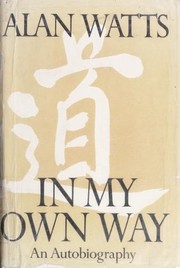
In My Own Way
1972

The Art of Contemplation
1972

Cloud-Hidden, Whereabouts Unknown
1973

Tao: The Watercourse Way
1975

The Essence of Alan Watts
1974
Citations
Citations localisées dans une œuvre précise. Chacune porte sa provenance et son degré de fiabilité.
If you get the message, hang up the phone.VérifiéeThe Joyous Cosmology, ed. Vintage 1970, p. 26 (sobre los psicodélicos como instrumentos)
Idées essentielles (résumé éditorial)
Par respect du droit d'auteur, ces idées sont résumées avec nos propres mots et ne sont pas présentées comme des citations littérales.
- The feeling of being an isolated self inside the body, facing an alien world, is not a datum of experience but a learned social convention; organism and environment form a single field.
- Seeking psychological security in the future produces the very anxiety one wishes to escape; only acceptance of change and attention to the present dissolve it.
- Asian traditions such as Buddhism, Vedanta and Taoism resemble psychotherapy more than religion: their aim is to free one from conditioning, not to impose beliefs.
- The universe can be understood as a game in which a single reality hides from itself by taking every form, and enlightenment is the moment the player recognises itself.
- The West is not too materialistic but not materialistic enough: it confuses money and symbols with real things and therefore mistreats matter, the body and nature.
- Meditation is not a means of reaching a future state but a purposeless game, like music or dance, whose meaning lies in the act itself.
- Opposites — pleasure and pain, life and death, good and evil — are inseparable poles of one process, and wanting to keep only one of them is the root of frustration.
Citations apocryphes ou d'attribution contestée (2)
«Trying to define yourself is like trying to bite your own teeth.»
Widely circulated online under Watts's name. It expresses an image he used in lectures (the eye that cannot see itself, teeth that cannot bite themselves), but it has not been located in this wording in any of his published books; it may paraphrase a talk.
«You are an aperture through which the universe is looking at and exploring itself.»
Spread as a Watts quotation on posters and videos with no indication of work. The idea is consistent with his thought, but the sentence has not been found in his books; if it comes from a recorded lecture, the exact source remains to be identified.
Dernières paroles
Il n'existe aucun témoignage vérifiable de ses dernières paroles.
There is no reliable record of any last words. He died in his sleep at Druid Heights on the night of 15–16 November 1973. The phrase 'the secret of life is knowing when to stop', which his widow Mary Jane Watts attributed to him and Monica Furlong records, is presented not as his last words but as something he had told her.
Source: Furlong, Monica. Zen Effects: The Life of Alan Watts. Boston: Houghton Mifflin, 1986 (publicado en Reino Unido como Genuine Fake, Heinemann, 1986; reed. SkyLight Paths, 2001, ISBN 9781893361324).
Interroger
Ce que répond son œuvre
Douze grandes questions de l'humanité et ce que ses textes permettent d'y répondre, références à l'appui. Nous ne lui prêtons jamais de paroles.
Qu'est-ce que l'Absolu ? Dieu existe-t-il ?
God is no separate monarch: he is the whole playing at being each one
Un Absolu impersonnelIl le dit expressément
Alan Watts, an Episcopal priest until 1950 and afterwards a popular expositor of Asian traditions, rejected the image of God as a monarch separate from his work. In The Book he contrasts the ceramic model of the world, made by an outside craftsman, and the mechanical model with a dramatic model drawn from his reading of Vedānta: the ultimate hides from and finds itself in all beings, as in a game of hide-and-seek. Beyond Theology carries the idea into Christianity and reproaches it for having made God a jealous king. Already in The Supreme Identity, under the influence of Coomaraswamy and Guénon, he had presented the identity of the human ground with the Absolute as the common core of the great traditions.
Comparer cette question avec d'autres maîtresQui suis-je ? Existe-t-il un vrai soi ?
The skin-encapsulated ego is a hallucination: what you are is the whole
Le Soi est l'AbsoluIl le dit expressément
The Book, Watts's most personal work, is subtitled on the taboo against knowing who you are, and answers bluntly: the prevalent sensation of oneself as a separate ego enclosed in a bag of skin is a hallucination. For him that ego is a social convention, reinforced by language and upbringing. What one really is, is the whole process of the universe, which manifests as this person just as a wave is the ocean at one point. Watts takes this thesis from his reading of Vedānta, the identity of ātman and brahman, which he had already set out in The Supreme Identity, and combines it with Buddhism and Western psychology; in Psychotherapy East and West he presents those traditions as ways of undoing the feeling of an isolated self.
Comparer cette question avec d'autres maîtresPourquoi souffrons-nous ?
Anxiety comes from seeking security in a future that does not exist
La pensée et le temps psychologiqueIl le dit expressément
The Wisdom of Insecurity, one of Watts's most widely read books, states the problem clearly: modern man suffers because he seeks security in a world that is essentially changing, and seeks it in a future that exists only as an idea. Living for a tomorrow that never comes, he misses the only real moment. To this is added an inner split: the self that observes and tries to control experience separates itself from experience itself, and the harder it strives to secure itself the more anxious it becomes; Watts calls this the law of reversed effort. The only way to make sense out of change, he writes, is to plunge into it, move with it and join the dance. It is his own synthesis of Buddhism, Taoism and psychology.
Comparer cette question avec d'autres maîtresQue se passe-t-il après la mort ?
The ego dies, not what we are: the universe wakes up again as others
Ce que je suis ne naît ni ne meurtCela se déduit de sa doctrine
Watts did not uphold personal survival or a judgement after death. But, consistently with his reading of Vedānta, he held that what we really are is not the ego that dies. In The Book and in his lectures he proposes imagining death as the end of one waking and the beginning of another: if the ego is a function of the universe, when one dies the universe goes on waking up as every new being that is born, and each of them says «I» as we did. Death for him is the other side of life, as the valley is of the mountain. In Cloud-Hidden, Whereabouts Unknown, his last book, written shortly before he died, he meditates on it with the same serenity.
Comparer cette question avec d'autres maîtresComment atteint-on la libération ou le salut ?
Wanting liberation is the trap: there is nothing to get, only something to see
Sans méthode : l'attention totaleCela se déduit de sa doctrine
Watts held that seeking liberation as an achievement prevents it. In The Wisdom of Insecurity he calls this the law of reversed effort: the more one tries to secure oneself or to stop thinking, the more the striving self is reinforced. In Psychotherapy East and West he presents Buddhism, Vedānta and Taoism not as religions but as ways of liberation that undo the double binds by which society convinces us we are a separate self, and notes that Zen masters often use tricks to show the disciple there is nothing to attain. On psychedelics he wrote: if you get the message, hang up the phone. Liberation is sudden understanding, not the accumulation of merit.
Comparer cette question avec d'autres maîtresFaut-il un maître ?
A philosophical entertainer, not a guru: there is nothing to transmit
Aucune autorité spirituelleCela se déduit de sa doctrine
Watts declined to present himself as a spiritual teacher; he preferred to describe himself as a philosopher and popular expositor, and in his memoir, In My Own Way, he portrays himself ironically as an intellectual, a mystic and a disreputable epicurean. He was not a formal disciple of any lineage, though he acknowledged his debt to D. T. Suzuki and to the texts. On the teacher's role, his thesis, set out in Psychotherapy East and West and in many lectures, is that the authentic teacher transmits nothing: with paradoxes and tricks he leads the disciple to discover that what he sought was not lacking, and then the disciple no longer needs him. He distrusted dependence on gurus and on religious organisations as a substitute for understanding.
Comparer cette question avec d'autres maîtresLe monde est-il réel ?
The world is a game in which the One hides and finds itself
Manifestation du divinIl le dit expressément
For Watts, the world is not a machine nor a work made from outside, but a game. From his reading of Hinduism he takes the idea of līlā, divine play, and develops it in The Book and in his lectures: the ultimate hides from itself in the multitude of beings and finds itself again in them, with no purpose but play, just as music does not exist to reach the end of the piece. With the Buddhist image of Indra's net, which he sets out in The Diamond Web, he adds that each thing reflects all the others. Hence his critique of the Western contempt for matter in Does It Matter?: the concrete world is not something to overcome, but the place where the game is played.
Comparer cette question avec d'autres maîtresQu'est-ce que l'amour ?
Love cannot be commanded: it springs up when the self stops watching itself
Ce qui apparaît quand le moi cesseCela se déduit de sa doctrine
Watts applied his analysis of the double bind to love: the command to love, whether religious or social, demands something that cannot be produced at will, and generates a feigned and guilty love. Authentic love is spontaneous, like everything alive, and appears when the person stops seeing himself as a separate ego that calculates and watches itself. In Nature, Man and Woman he carries this idea into love between the sexes: against the Christian distrust of the body he proposes, drawing on Taoism and tantra, a relationship in which sexual love is a form of contemplation and neither a conquest nor an obligation. For Watts, love is not a virtue to be acquired but what flows when it is not forced.
Comparer cette question avec d'autres maîtresSommes-nous libres ou tout est-il déterminé ?
Neither free will nor determinism: both assume a separate self that does not exist
Il n'y a pas d'agentIl le dit expressément
Watts considered the dilemma badly framed. Both free will and determinism assume a self separate from the world: one that controls it or one the world pushes around. If, as he holds in The Book, that skin-encapsulated self is a hallucination, the question loses its basis: what one is is not an agent facing the universe, but the universe acting here. That is why the distinction between voluntary and involuntary, as between the heart beating and the hand moving, is for him conventional. In his expositions of Taoism, from The Way of Zen to Tao: The Watercourse Way, he finds the same idea in wu wei, action that does not force and springs up spontaneously.
Comparer cette question avec d'autres maîtresPourquoi méditer ou prier ?
Meditating is attending to what is without purpose, like listening to music
Être présentIl le dit expressément
Watts understood meditation as purposeless attention to the present. In The Art of Contemplation, published in facsimile of his own handwriting, and in the lectures collected in Still the Mind, he describes it as ceasing to talk inwardly and listening to what is happening, the sounds, the breath, thoughts themselves as if they were noises, without trying to control anything. Meditating to obtain something, enlightenment or calm, would repeat the trap of goal-directed effort; true meditation has no goal, just as music is not played to reach the end. In The Wisdom of Insecurity he had already put it: the only real moment is this one, and full awareness of it dissolves anxiety.
Comparer cette question avec d'autres maîtresLa raison peut-elle connaître l'ultime ?
The word is not the thing: reality slips through the net of concepts
L'ultime est au-delà du mentalIl le dit expressément
Watts was a brilliant intellectual who devoted much of his work to explaining that what is essential is not grasped by the intellect. In The Way of Zen he shows how conventional thought divides the world into useful things and categories, but confuses that net of concepts with the reality it tries to catch; Zen, in his reading, seeks to return to direct experience, prior to words. In The Wisdom of Insecurity he insists that thinking about life is not living it, and in his lectures he repeated the image that the menu is not the meal. He does not reject reason, which he uses with relish, but its claim to encompass everything.
Comparer cette question avec d'autres maîtresSe retirer du monde ou le transformer ?
Neither flee nor reform from the ego: live the everyday without standing apart
La contemplation dans l'actionCela se déduit de sa doctrine
Watts distrusted both ascetic flight and the reformism that springs from a separate self. He was drawn to the Zen and Taoist ideal of one who returns to the marketplace after awakening and lives the everyday without pose: in Beat Zen, Square Zen, and Zen he criticised both the use of Zen as an alibi for rebellion and its conversion into a rigid discipline. At the same time he took an interest in the problems of his time: in Does It Matter? he argued that the West is not too materialistic but not materialistic enough, because it despises the matter it consumes, and he wrote about money, technology and ecology. His proposal is not to withdraw, but to live in the world without feeling a stranger in it, and to care for it from there.
Comparer cette question avec d'autres maîtres
Affinités et tensions
Affinités et tensions
Calculées question par question à partir de ses positions. La raison de chaque accord ou de chaque désaccord s'affiche d'un clic.
Pense comme
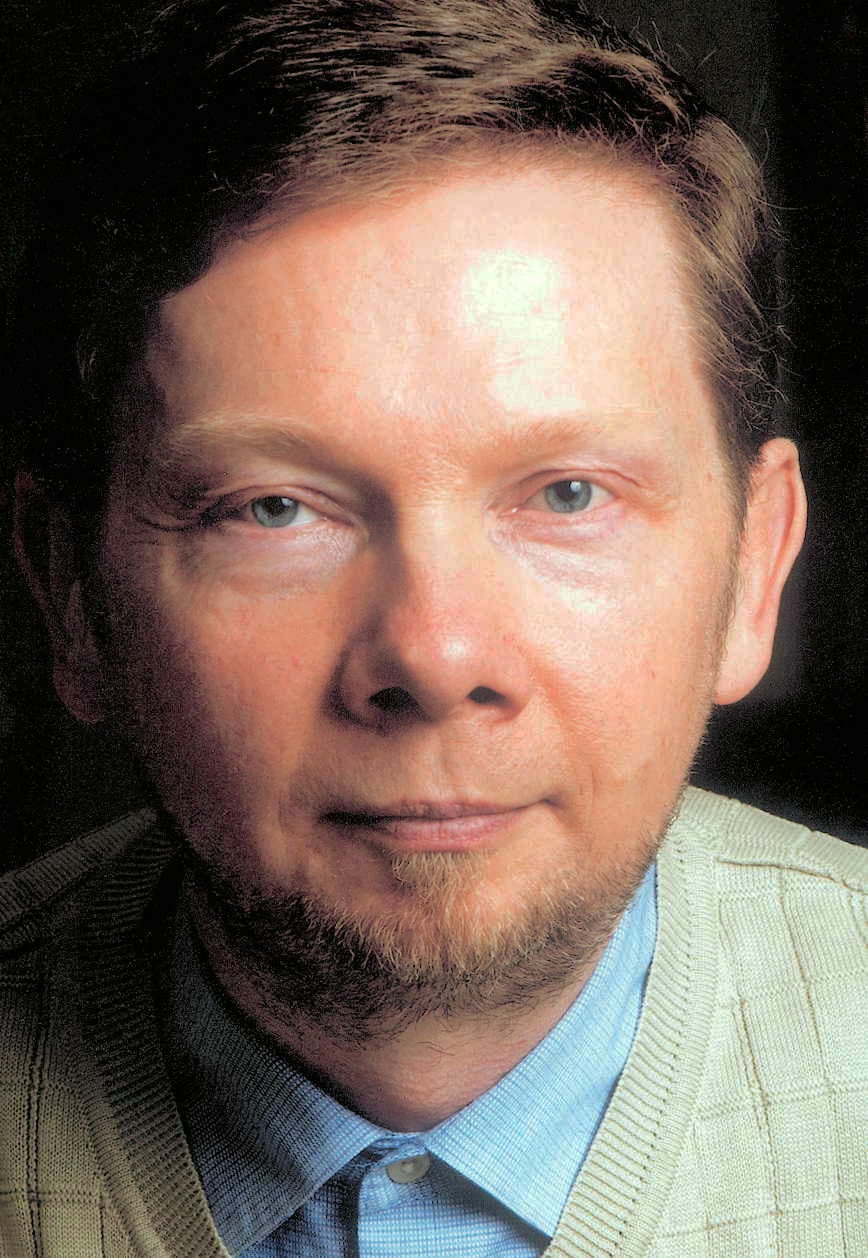
Eckhart Tolle
Ils concordent sur: Qu'est-ce que l'Absolu ? Dieu existe-t-il ? · Pourquoi souffrons-nous ? · Que se passe-t-il après la mort ?
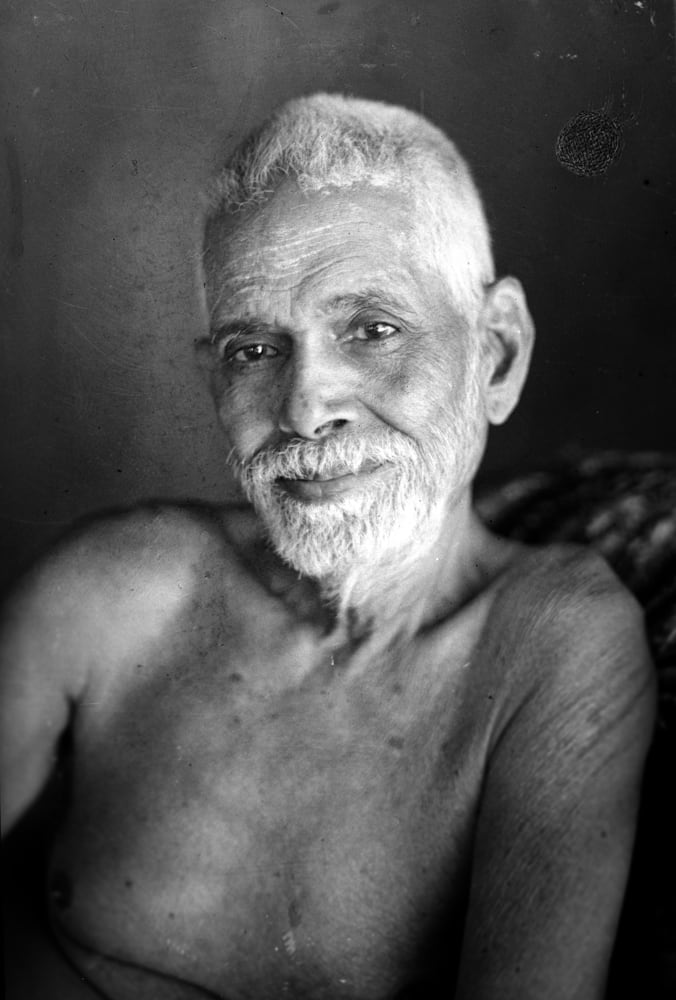
Ramana Maharshi
Ils concordent sur: Qu'est-ce que l'Absolu ? Dieu existe-t-il ? · Qui suis-je ? Existe-t-il un vrai soi ? · Que se passe-t-il après la mort ?
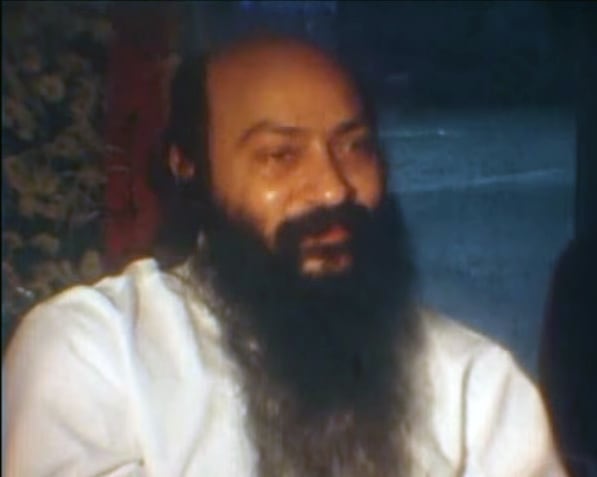
Osho
Ils concordent sur: Qu'est-ce que l'Absolu ? Dieu existe-t-il ? · Pourquoi souffrons-nous ? · Que se passe-t-il après la mort ?
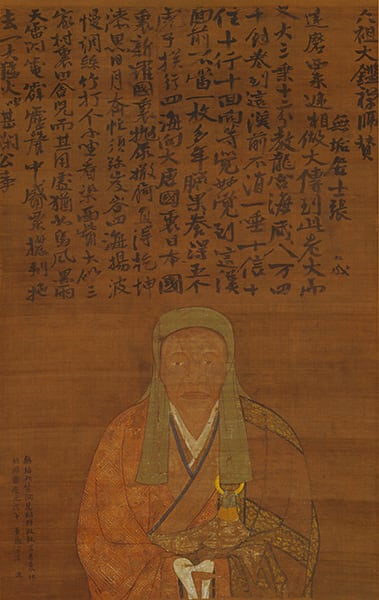
Huineng
Ils concordent sur: Qu'est-ce que l'Absolu ? Dieu existe-t-il ? · Qui suis-je ? Existe-t-il un vrai soi ? · Que se passe-t-il après la mort ?
Pense autrement que
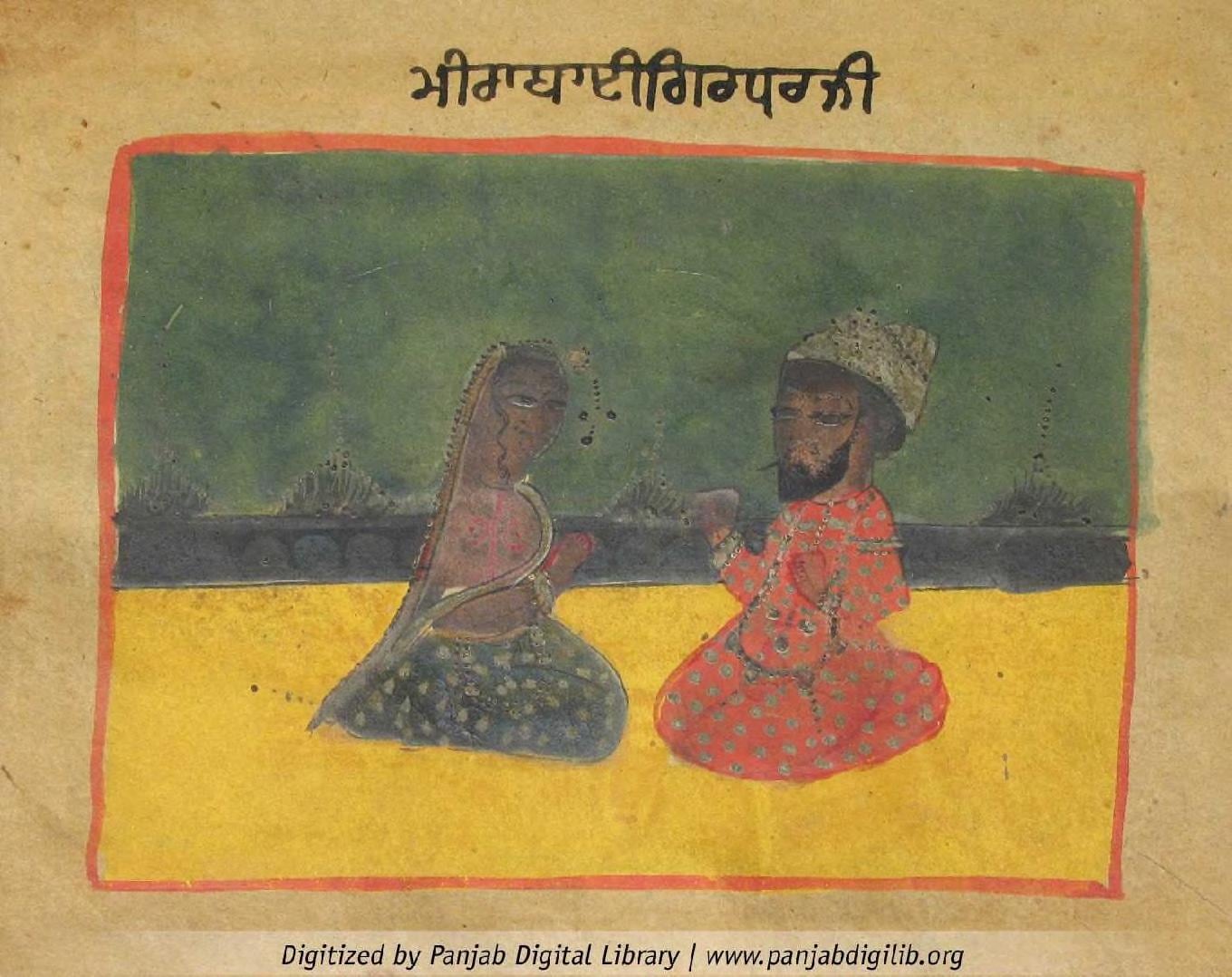
Mirabai
Ils s'opposent sur: Comment atteint-on la libération ou le salut ? · Faut-il un maître ?

Tsongkhapa
Ils s'opposent sur: Comment atteint-on la libération ou le salut ? · Qui suis-je ? Existe-t-il un vrai soi ? · Faut-il un maître ?
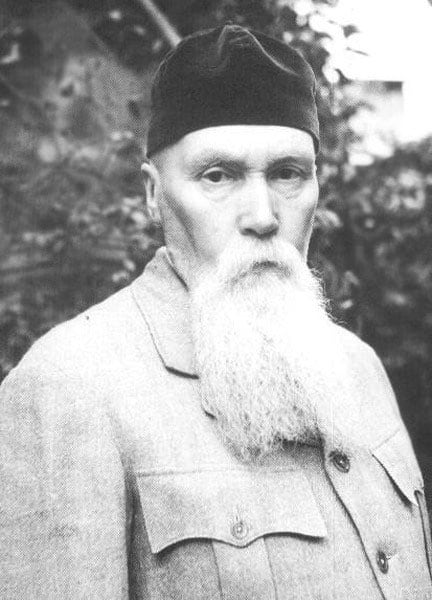
Nicholas Roerich
Ils s'opposent sur: Faut-il un maître ?

Pema Chödrön
Ils s'opposent sur: Qui suis-je ? Existe-t-il un vrai soi ? · Comment atteint-on la libération ou le salut ?
Anecdotes et récits
Anecdotes et récits
Témoignage1936
The lecture in a diving suit
Origine du récit: It comes from Watts's own account in In My Own Way (1972) and is recorded by Monica Furlong in her biography. Later versions differ in details — who helped him remove the helmet and at exactly which event it occurred; it is usually placed in the context of the 1936 World Congress of Faiths.
Source: Watts, Alan. In My Own Way: An Autobiography, 1915–1965. Nueva York: Pantheon Books, 1972 (reed. New World Library, 2007, ISBN 9781577315841).
Témoignagedécada de 1960
'He is a great bodhisattva'
Origine du récit: Recorded by David Chadwick in Crooked Cucumber (1999), from testimony by students of the San Francisco Zen Center.
Source: Chadwick, David. Crooked Cucumber: The Life and Zen Teaching of Shunryu Suzuki. Nueva York: Broadway Books, 1999.
Témoignage1960s–1990s
Half a koan
Origine du récit: Kapleau, The Three Pillars of Zen (1967 ed.), pp. 21–22; D. T. Suzuki's remark is reported by Robert Aitken in Original Dwelling Place (1997). The Zen story in question is the dialogue of Mazu and Nanyue about the polished tile.
Source: Kapleau, Philip. The Three Pillars of Zen. Boston: Beacon Press, 1967 (ed. citada), pp. 21–22.
Témoignage1958
A visit to Küsnacht
Origine du récit: Watts's own account in In My Own Way (1972), p. 321.
Source: Watts, Alan. In My Own Way: An Autobiography, 1915–1965. Nueva York: Pantheon Books, 1972 (reed. New World Library, 2007, ISBN 9781577315841).
Documenté1958–1970
Hanging up the phone
Origine du récit: The phrase comes from the Vintage edition of The Joyous Cosmology (1970), p. 26; the researchers' identities are recorded in the biographical literature drawing on In My Own Way.
Source: Watts, Alan. The Joyous Cosmology: Adventures in the Chemistry of Consciousness. Nueva York: Vintage Books, 1970 (1.ª ed. Pantheon, 1962).
Documenté1960s–1973
Between a beached ferry and a cabin in the woods
Origine du récit: In My Own Way (1972), pp. 300–304, and the dedications of The Joyous Cosmology and the autobiography; Elsa Gidlow's memoir, Elsa: I Come with My Songs (1986), completes the picture of Druid Heights.
Source: Watts, Alan. In My Own Way: An Autobiography, 1915–1965. Nueva York: Pantheon Books, 1972 (reed. New World Library, 2007, ISBN 9781577315841).
Enseignements
Enseignements
Les notions qui structurent sa pensée, expliquées dans leur contexte.
The skin-encapsulated egoego-encerrado-en-la-piel
Developed above all in The Book (1966) and his 1960s lectures, under the influence of Vedanta, cybernetics and general semantics.
Source: Watts, Alan. The Book: On the Taboo Against Knowing Who You Are. Nueva York: Pantheon Books, 1966.
The cosmic game of hide-and-seekjuego-cosmico
The Book (1966) and Beyond Theology (1964); drawn from Vedanta and devotional Hinduism, freely reinterpreted.
Source: Watts, Alan. The Book: On the Taboo Against Knowing Who You Are. Nueva York: Pantheon Books, 1966.
The law of reversed effortley-del-esfuerzo-invertido
The Wisdom of Insecurity (1951) and later lectures; connected with the Taoism of Laozi and Zhuangzi.
Source: Watts, Alan. The Wisdom of Insecurity: A Message for an Age of Anxiety. Nueva York: Pantheon Books, 1951.
Ways of liberationvias-de-liberacion
Psychotherapy East and West (1961); a forerunner of transpersonal psychology.
Source: Watts, Alan. Psychotherapy East and West. Nueva York: Pantheon Books, 1961.
The social double binddoble-vinculo
Psychotherapy East and West (1961) and The Book (1966).
Source: Watts, Alan. Psychotherapy East and West. Nueva York: Pantheon Books, 1961.
Beat Zen and square Zenzen-beat-y-zen-cuadrado
Essay published in Chicago Review (1958) and as a City Lights pamphlet (1959).
Vidéos
Vidéos
Enregistrements, entretiens et documentaires. Les vidéos sont lues depuis YouTube ; elles ne sont pas hébergées ici.
Alan Watts: A Conversation with Myself - Part 1
Enregistrement original· EN· 1971· 28 min
Mark WattsChaîne officielle
Alan Watts: A Conversation with Myself - Part 2
Enregistrement original· EN· 1971· 28 min
Mark WattsChaîne officielle
Eastern Wisdom & Modern Life (1959) with Alan Watts - Program 1: Man & Nature (Recolored)
Enregistrement original· EN· 1959· 29 min
HermesTrismegistus
Eastern Wisdom and Modern Life - Alan Watts: The Silent Mind, program five (1959)
Enregistrement original· EN· 1959· 28 min
Torridstream12
Eastern Wisdom and Modern Life - Alan Watts: Death, program six (1959)
Enregistrement original· EN· 1959· 27 min
Torridstream12
Alan Watts - Myth of Myself Full Lecture Part 1
Conférence· EN· 37 min
Official Alan Watts OrgChaîne officielle
Alan Watts - Individual and the World Pt 1 Full Lecture
Conférence· EN· 47 min
Official Alan Watts OrgChaîne officielle
Alan Watts - Taoist Way Full Lecture
Conférence· EN· 27 min
Official Alan Watts OrgChaîne officielle
Alan Watts - What Is Reality?
Conférence· EN· 53 min
Official Alan Watts OrgChaîne officielle
Alan Watts In Conversation With Elliot Mintz
Entretien· EN· 1972· 48 min
Elliot MintzChaîne officielle
Alan Watts Interview in Dallas - March 1970
Entretien· EN· 1970· 2 min
SMU Jones FilmChaîne officielle
First Wednesday: Following Alan Watts with Mark Watts
Conférence· EN· 106 min
MillValleyLibraryChaîne officielle
Alan Watts en español - Conferencia - El mito del yo
Conférence· ES· 35 min
fer.de.erratas
Galerie
Galerie
Images dont la licence a été vérifiée. Chacune conserve son auteur et son attribution.
Relations
Relations
Influences, filiations et affinités. On distingue la relation documentée de la similitude identifiée par analyse.
A reçu l'influence de
His last book expounds the Taoism of Laozi and Zhuangzi.
Relation documentée
A reçu l'influence de
A constant source of his lectures on Taoism and wu wei.
Relation documentée
Idées proches de
The identity of self and ultimate ground, central to Watts, comes from the Advaita Vedanta systematised by Shankara.
Similitude identifiée par analyse
Idées proches de
Both popularise attention to the present and the critique of identification with thought for a wide audience.
Similitude identifiée par analyse
Contemporain de
Contemporaries who spread Zen, Tantra and Taoism in the West in a free and provocative style; there is no record that they met.
Similitude identifiée par analyse
Idées proches de
Both explored the dialogue between contemplative Christianity and Zen in the 1950s and 1960s.
Similitude identifiée par analyse
A reçu l'influence de
D. T. Suzuki
Watts met him in 1936 and his first book popularised Suzuki's work.
Relation documentée
A rencontré
Founder of the San Francisco Zen Center; defended Watts as 'a great bodhisattva'.
Relation documentée
A rencontré
Watts visited him in Switzerland in 1958; his psychology influenced The Meaning of Happiness.
Relation documentée
Idées proches de
Both question the separate self and spiritual authority; Watts discussed Krishnamurti in his 1968 radio interview with Laura Huxley.
Similitude identifiée par analyse
Disciple de
Christmas Humphreys
Watts was secretary of the London Buddhist Lodge, which Humphreys led, and was formed there.
Relation documentée
Famille de
Ruth Fuller Sasaki
His mother-in-law during his first marriage and a key figure of American Zen.
Relation documentée
A rencontré
Sokei-an Sasaki
New York Zen teacher with whom Watts kept in contact without entering formal training.
Relation documentée
A correspondu avec
Al Chung-liang Huang
Collaborator on Tao: The Watercourse Way, which he completed after Watts's death.
Relation documentée
A rencontré
Elsa Gidlow
Poet who founded Druid Heights, neighbour and friend; Watts dedicated his autobiography to her.
Relation documentée
Lié depuis d'autres fiches
Sources
Sources
Bibliographie et catalogues consultés pour cette fiche.
- Wikidata, «Alan Watts» (Q354867).
- Watts, Alan. In My Own Way: An Autobiography, 1915–1965. Nueva York: Pantheon Books, 1972 (reed. New World Library, 2007, ISBN 9781577315841).
- Furlong, Monica. Zen Effects: The Life of Alan Watts. Boston: Houghton Mifflin, 1986 (publicado en Reino Unido como Genuine Fake, Heinemann, 1986; reed. SkyLight Paths, 2001, ISBN 9781893361324).
- Columbus, Peter J. y Rice, Donadrian L. (eds.). Alan Watts—Here and Now: Contributions to Psychology, Philosophy, and Religion. Albany: State University of New York Press, 2012 (ISBN 9781438441993).
- Watts, Joan y Watts, Anne (eds.). The Collected Letters of Alan Watts. Novato: New World Library, 2017 (ISBN 9781608684151).
- «Alan Watts» y «Alan Watts bibliography», Wikipedia en inglés (consultadas para cotejar hechos y bibliografía; texto propio).
- Open Library: obras y ediciones de Alan Watts (autor OL…; búsqueda por autor y por título, ediciones con ISBN).
- Chadwick, David. Crooked Cucumber: The Life and Zen Teaching of Shunryu Suzuki. Nueva York: Broadway Books, 1999.
- Aitken, Robert. Original Dwelling Place: Zen Buddhist Essays. Washington D. C.: Counterpoint, 1997 (ISBN 1887178414).
- Kapleau, Philip. The Three Pillars of Zen. Boston: Beacon Press, 1967 (ed. citada), pp. 21–22.
- Alan Watts Organization (archivo de grabaciones gestionado por la familia Watts) y Alan Watts Official Store.
- Watts, Alan. The Joyous Cosmology: Adventures in the Chemistry of Consciousness. Nueva York: Vintage Books, 1970 (1.ª ed. Pantheon, 1962).
- Watts, Alan. The Book: On the Taboo Against Knowing Who You Are. Nueva York: Pantheon Books, 1966.
- Watts, Alan. The Wisdom of Insecurity: A Message for an Age of Anxiety. Nueva York: Pantheon Books, 1951.
- Watts, Alan. The Way of Zen. Nueva York: Pantheon Books, 1957.
- Stirling, Isabel. Zen Pioneer: The Life and Works of Ruth Fuller Sasaki. Emeryville: Shoemaker & Hoard, 2006 (ISBN 9781593761103).
- University of Vermont, programa de la 154.ª ceremonia de graduación (15 de junio de 1958) y UVM Alumni Magazine, vol. 39, n.º 1, p. 22 (UVM Digital Collections; reproducido en Wikimedia Commons).
- Indiana University Libraries Moving Image Archive, exposición «Eastern Wisdom and Modern Life» (KQED, San Francisco, 1959–1960).
- Watts, Alan. Psychotherapy East and West. Nueva York: Pantheon Books, 1961.
- Gidlow, Elsa. Elsa: I Come with My Songs. San Francisco: Bootlegger Press y Druid Heights Books, 1986.
- Watts, Alan y Huang, Al Chung-liang. Tao: The Watercourse Way. Nueva York: Pantheon Books, 1975 (prólogo y epílogo de Al Chung-liang Huang).
- Open Culture, «Alan Watts Brings Eastern Wisdom to American TV Viewers in 1959» (2012).
- Ayant droit
- Herederos de Alan Watts (gestión de grabaciones: Alan Watts Organization / Electronic University, Mark Watts); derechos de los libros según cada editorial
- Site officiel
- alanwatts.org
En attente de confirmation
Ce que cette fiche n'a pas encore pu établir. Nous préférons le dire plutôt que de combler.
- Localizar página exacta de las citas marcadas como «probable» (The Book, cap. 1; The Wisdom of Insecurity, cap. 3) en una edición impresa.
- Ediciones con ISBN no verificadas en catálogo: The Book (Vintage, 1989), Tao for Now (2023), Taoism: Way Beyond Seeking (Tuttle, 1997), The Way of Liberation (Weatherhill, 1983), Om: Creative Meditations (1979) y The Essential Alan Watts (1976).
- Identificar la obra inglesa de la que procede «Qué es la realidad» (Kairós, 1995, ISBN 9788472453630), registrada en Open Library sin correspondencia clara.
- Ediciones en español sin ISBN verificado de In My Own Way, The Joyous Cosmology, Does It Matter?, Cloud-Hidden y Tao: The Watercourse Way (Kairós).
- Fecha exacta de la ordenación (1944 según las cartas, 1945 según la autobiografía) y del matrimonio con Mary Jane Yates King.
- Detalles del episodio de la escafandra (acto exacto y quién le ayudó) en la edición impresa de In My Own Way.
- Catálogo de grabaciones: la obra oral (cientos de conferencias en alanwatts.org y alanwatts.com) no se registra pieza a pieza; se incluyen las series de televisión y la antología Out of Your Mind.
- Vídeos: no hay en YouTube conferencias oficiales de Watts en español; el único vídeo en castellano registrado es una versión preparada por un tercero.
Recherche effectuée le 2026-10-25