Hindouisme · Bhakti
Chaitanya Mahaprabhu
শ্রীচৈতন্য মহাপ্রভু · चैतन्य महाप्रभु
1486 – v. 1533Personne historiquement documentée
Réformateur religieux bengali (1486-1533/34), tenu par ses fidèles pour l'incarnation conjointe de Radha et de Krishna et considéré comme le fondateur du vishnouisme gaudiya. Grammairien devenu extatique après son initiation à Gaya, il popularisa le chant collectif des noms divins, passa ses dix-huit dernières années à Puri et ne laissa par écrit, selon la critique, que les huit strophes du Shikshashtaka. Sa vie n'est connue que par des hagiographies postérieures, en particulier le Chaitanya Bhagavata et le Chaitanya Charitamrita.
- œuvres
- 13œuvres
- éditions
- 21éditions
- citations
- 7citations
- vidéos
- 11vidéos
- images
- 7images

Chaitanya danza entre sus seguidores · Public domain
Dans ses propres mots
«Victory to the congregational chanting of Krishna, which cleanses the mirror of the mind and puts out the great forest fire of existence; which sheds moonlight on the white lotus of the good and is the life of the bride that is knowledge; which swells the ocean of bliss, gives at every step a taste of the full nectar and bathes the whole self.»Shikshashtaka, estrofa 1 (Chaitanya Charitamrita, Antya-lila 20.12). Traducción propia.

Pour commencer, une œuvre
Shikshashtaka (Eight Stanzas of Instruction)Son idée centrale
Congregational chanting of the name (nama-sankirtana): For Chaitanya and his school, Krishna's name is not a sign pointing to God but God himself present in sound, endowed with all his power, as the second stanza of the Shikshashtaka states.
Le voir en contexte
Biographie
5 min de lecture
Traduction assistée à partir de l'original espagnol, en attente de relecture par un traducteur natif.
L'enfant de Navadvip
Vishvambhara Mishra naquit à Navadvip, la ville des pandits, sur les rives de la Bhagirathi, dans un Bengale alors gouverné par des sultans. La tradition fixe sa naissance à la pleine lune du mois de Phalguna de l'an 1486 — le 18 février, selon la conversion la plus souvent reprise —, une nuit d'éclipse où, rapportent les biographes, la ville entière chantait les noms divins. Son père, Jagannatha Mishra, était un brahmane venu de Sylhet ; sa mère, Shachi, la fille du lettré Nilambara Chakravarti. Des enfants du couple, deux seulement survécurent : Vishvarupa, qui quitta la maison pour embrasser la vie de renonçant, et le cadet, que l'on appela Nimai et, en raison de son teint clair, Gaura. Autant le dire d'emblée : tout ce que nous savons de lui provient d'hagiographies écrites par des dévots qui le tenaient pour Krishna lui-même, et aucune source étrangère à sa communauté ne le mentionne de son vivant.
Un grammairien orgueilleux
Les biographies des années 1540 et 1550 dépeignent un jeune homme d'une intelligence fulgurante et d'une langue acérée. Il étudia la grammaire sanskrite et la nouvelle logique (navya-nyaya) qui faisait la renommée de Navadvip, ouvrit sa propre école et acquit la réputation d'un redoutable polémiste : Vrindavana Dasa lui prête une victoire sur le savant cachemiri Keshava. À la mort de son père, il prit la tête de la maisonnée. Il épousa Lakshmipriya, qui mourut d'une morsure de serpent tandis qu'il enseignait au Bengale oriental, puis, selon le vœu de sa mère, Vishnupriya, fille d'un pandit de la cour. Rien dans ce portrait n'annonce encore le saint ; c'est précisément sur ce contraste qu'insistent les hagiographes.
Gaya : le tournant
Vers 1508, il se rendit à Gaya pour y célébrer les rites funéraires de son père. Il y rencontra Ishvara Puri, disciple de l'ascète vishnouite Madhavendra Puri, qui l'initia à un mantra de Krishna. Il en revint transformé : il pleurait en entendant le nom de Krishna, tombait en transe, perdait toute conscience de ce qui l'entourait. Il ferma son école. Dans la cour de son voisin Shrivasa, il se mit à réunir la nuit un cercle toujours plus nombreux pour chanter les noms divins au son des tambours et des cymbales. Le rejoignirent Nityananda, un avadhuta errant qui deviendrait son inséparable compagnon ; Advaita Acharya, un vieux brahmane de Shantipur ; Haridasa, un converti d'origine musulmane ; et le médecin Murari Gupta, dont les notes en sanskrit passent pour le plus ancien témoignage sur ces années, bien qu'une partie de la critique estime que leur forme actuelle est postérieure à la mort du maître.
Le chant descend dans la rue
Le kirtan déborda bientôt les maisons. Vrindavana Dasa raconte que le cadi de Navadvip interdit le chant et que Vishvambhara répliqua en conduisant une procession nocturne de plusieurs milliers de personnes jusqu'à la porte du magistrat, qui finit par céder ; il rapporte aussi la conversion de Jagai et Madhai, deux frères violents. Ce sont là des épisodes hagiographiques, mais ils disent quelque chose de vrai du mouvement : un chant ouvert à toutes les castes, pratiqué en public et non dans le temple. Au début de 1510, à vingt-quatre ans, il prononça les vœux de renonçant à Katwa des mains de Keshava Bharati, qui lui donna le nom de Krishna Chaitanya. Sa mère l'ayant prié de ne pas trop s'éloigner, il choisit Puri, la ville de Jagannath, en Orissa.
Puri et les routes du Sud
À Puri, il gagna à sa cause Vasudeva Sarvabhauma, le grand maître de logique et de vedanta de la cour. De 1510 à 1512, il parcourut le sud de l'Inde ; sur les rives de la Godavari, il eut avec Ramananda Raya, gouverneur au service du roi d'Orissa, le dialogue dont Krishnadasa Kaviraja ferait l'exposé le plus ambitieux de la théologie de l'amour, et il rapporta de ce voyage des copies de la Brahma-samhita et du Krishnakarnamrita. En 1514, il passa par Ramakeli, non loin de la capitale du sultan du Bengale, où il fit la connaissance de deux frères, hauts fonctionnaires au service de Husain Shah : Rupa et Sanatana. L'année suivante, il atteignit enfin Vrindavan ; au retour, il instruisit Rupa à Prayag et Sanatana à Bénarès, et les chargea de redécouvrir les lieux saints de Krishna et d'écrire. De cette mission naîtrait la théologie des Gosvamin.
La Gambhira
Il passa ses dix-huit dernières années à Puri. Le roi Prataparudra, qu'il avait d'abord refusé de recevoir parce qu'il était un homme du monde, finit par gagner sa faveur lorsqu'il le vit balayer, tel un serviteur, la route du char de Jagannath. Chaque été, il dansait devant ce char avec les pèlerins venus du Bengale. Mais les hagiographies décrivent surtout une intériorité de plus en plus brûlante : enfermé dans une pièce étroite de la maison de Kashi Mishra, la Gambhira, en compagnie de son secrétaire Svarupa Damodara et de Ramananda Raya, qui lui lisaient Jayadeva et Chandidasa, il traversait des états de séparation d'avec Krishna que Krishnadasa nomme « folie divine ». Il se frappait le visage contre les murs, perdait connaissance, disparaissait la nuit. Selon Krishnadasa, c'est au cours de ces nuits qu'il récitait les huit strophes que la tradition connaît sous le nom de Shikshashtaka.
Une fin sans témoins
Il mourut à Puri en 1533 ou 1534, âgé d'environ quarante-huit ans, mais nul ne sait comment. Krishnadasa Kaviraja, le biographe canonique, se tait. Jayananda raconte qu'il se blessa le pied sur une brique en dansant lors de la fête du char et qu'il mourut de fièvre quelques jours plus tard ; Lochana Dasa, qu'il entra dans le temple et se fondit dans l'image de Jagannath ; des traditions oriyas le font disparaître dans l'image de Tota Gopinatha. Les hypothèses modernes d'un assassinat par des prêtres du temple circulent beaucoup et ne reposent sur aucun document. Ce silence fait partie de sa figure : la tradition a préféré la disparition au cadavre.
Huit strophes et une école
Chaitanya n'écrivit pas de traités. La critique ne lui attribue avec certitude que le Shikshashtaka, dont Rupa Gosvamin recueillit d'abord les strophes dans son anthologie, la Padyavali, et que Krishnadasa rassembla à la fin de son ouvrage. La doctrine qui porte son nom fut formulée par d'autres : Rupa dans le Bhaktirasamritasindhu, Sanatana et surtout Jiva Gosvamin, qui élabora la formule de la « différence et non-différence inconcevables » (achintya-bhedabheda). Les grandes biographies vinrent plus tard : le Chaitanya Bhagavata de Vrindavana Dasa, vers 1540-1550, et le Chaitanya Charitamrita de Krishnadasa, achevé selon la datation la plus admise vers 1612-1615, que Tony K. Stewart appelle « le dernier mot » de la tradition. Au XIXe siècle, Bhaktivinoda Thakura renouvela le mouvement ; son fils Bhaktisiddhanta fonda la Gaudiya Math, et un disciple de ce dernier, A. C. Bhaktivedanta Swami, créa à New York en 1966 l'Association internationale pour la conscience de Krishna, qui porta le chant du mantra Hare Krishna dans les rues du monde entier.
Sources: Kṛṣṇadāsa Kavirāja. Caitanya Caritāmṛta of Kṛṣṇadāsa Kavirāja: A Translation and Commentary. Trad. de Edward C. Dimock Jr.; introd. de Edward C. Dimock Jr. y Tony K. Stewart; ed. de Tony K. Stewart. Harvard Oriental Series 56. Cambridge (Mass.): Dept. of Sanskrit and Indian Studies, Harvard University, 1999. ISBN 9780674002852. · Vṛndāvana Dāsa. Śrī Caitanya-bhāgavata (bengalí, c. 1540-1550). Trad. inglesa de Bhūmipati Dāsa, ed. de Puṇḍarīka Vidyānidhi Dāsa. Vṛndāvana: Vrajraj Press, 2000-2005 (varios volúmenes). · Stewart, Tony K. The Final Word: The Caitanya Caritāmṛta and the Grammar of Religious Tradition. Nueva York: Oxford University Press, 2010. ISBN 9780195392722. · Kennedy, Melville T. The Chaitanya Movement: A Study of the Vaishnavism of Bengal. Calcuta: Association Press; Londres: Oxford University Press, 1925. · Sen, Dinesh Chandra. Chaitanya and His Age. Calcuta: University of Calcutta, 1922.
Chronologie
La vie, année après année
Chaque point est un événement documenté. Cliquez pour le lire, avec sa source et son degré de certitude.
18 février 14860 ansNavadvipa (Nadia), Bengala
Birth of Vishvambhara
Born on the full moon of Phalguna, during a lunar eclipse, according to the hagiographies. 18 February is the most repeated conversion; some sources give the 27th.
TraditionStewart, Tony K. «Chaitanya, Sri». En Banglapedia: The National Encyclopedia of Bangladesh, ed. en línea. Dhaka: Asiatic Society of Bangladesh, 2012.
Après sa mort
- années 1540The Chaitanya Bhagavata
- v. 1612The Chaitanya Charitamrita
- juillet 1966Founding of ISKCON
18 février 1486 · 0 ans
Birth of Vishvambhara
Born on the full moon of Phalguna, during a lunar eclipse, according to the hagiographies. 18 February is the most repeated conversion; some sources give the 27th.
Tradition
v. 1500
Grammar teacher and first marriage
After studying grammar and logic he opens his own school and marries Lakshmipriya, who will die of a snakebite; he then marries Vishnupriya.
Tradition
v. 1508 · 22 ans
Initiation by Ishvara Puri
On the journey for his father's funeral rites he is initiated by Ishvara Puri and returns to Navadvipa in a state of ecstatic devotion.
Probable
v. 1509 · 23 ans
The kirtan at Shrivasa's house
He closes his school and leads nightly congregational chanting with Nityananda, Advaita, Haridasa and Murari Gupta. The hagiographies place the challenge to the qadi here.
Tradition
v. 1510 · 24 ans
Vows of renunciation
Receives sannyasa from Keshava Bharati and the name Krishna Chaitanya; at his mother's wish he settles in Puri.
Probable
1510 · 24 ans
Vasudeva Sarvabhauma
Wins over to devotion the Vedanta master of the Orissan court, a central episode of the Chaitanya Charitamrita.
Tradition
v. 1510 – 1512 · 24 ans
Southern pilgrimage and dialogue with Ramananda Raya
Two years of travel in the south; conversation with Ramananda Raya on the degrees of love for Krishna, and discovery of the Brahma-samhita and the Krishnakarnamrita.
Probable
v. 1514 · 28 ans
Meeting with Rupa and Sanatana
Meets two high officials of Sultan Husain Shah who, renouncing their posts, will become the first Gosvamis of Vrindavan.
Probable
v. 1515 · 29 ans
Vrindavan and the teachings to Rupa and Sanatana
Visits Krishna's land and, on the way back, instructs Rupa at Prayag and Sanatana at Benares: the seed of Gaudiya theology.
Probable
v. 1516 – 1533 · 30 ans
The Gambhira years
Lives in Puri until his death; dances before Jagannatha's chariot and, according to Krishnadasa, passes through states of 'divine madness' in separation from Krishna.
Probable
v. 1533 · 47 ans
Death or disappearance
Dies in 1533 or 1534; the sources disagree on the circumstances (injury and fever, merging with Jagannatha or with Tota Gopinatha) and the canonical biographer is silent.
Contesté
années 1540
The Chaitanya Bhagavata
Vrindavana Dasa composes in Bengali the first great biography, centred on the Navadvipa years.
Probable
v. 1612
The Chaitanya Charitamrita
Krishnadasa Kaviraja completes the theological biography that will become the canonical version; the date is debated (others propose 1581).
Contesté
juillet 1966
Founding of ISKCON
A. C. Bhaktivedanta Swami, of Bhaktisiddhanta Sarasvati's line, founds the International Society for Krishna Consciousness.
Documenté
Œuvres
Œuvres essentielles
Les œuvres sans lesquelles on ne comprend pas son héritage.
Œuvre écrite
Shikshashtaka (Eight Stanzas of Instruction)
शिक्षाष्टकम्
Eight Sanskrit stanzas summing up Chaitanya's path. The first celebrates the congregational chanting of Krishna's name as the cleansing of the mirror of the mind; the second laments one's own lack of attachment despite the grace of the name; the third sets the singer's attitude, humbler than grass and more patient than a tree; the fourth asks for motiveless devotion; the last four shift to the voice of the separated lover, up to the final stanza, in which Radha accepts whatever the beloved chooses to do with her. It is the most recited prayer of Gaudiya Vaishnavism.
5 éditions

Compilation postérieure · v. 1612
Chaitanya Charitamrita (Krishnadasa Kaviraja)
শ্রীচৈতন্যচরিতামৃত
In three parts —Adi, Madhya and Antya— it narrates childhood and the Navadvipa years summarily and dwells on the Puri period, the journeys and the final "divine madness". It integrates the theology of the Gosvamis: Chaitanya as Radha and Krishna in one body, the doctrine of divine energy, the degrees of love. Tony K. Stewart has shown how it fixed a canonical version that absorbed and displaced earlier biographies. It is the work any reader looks for when approaching Chaitanya.
4 éditions
Chaitanya Mahaprabhu
Chaitanya Bhagavata (Vrindavana Dasa)
Compilation postérieure · années 1540
Chaitanya Bhagavata (Vrindavana Dasa)
শ্রীচৈতন্যভাগবত
It vividly narrates childhood, studies, the Gaya conversion, the kirtan at Shrivasa's house, the challenge to the qadi, the conversion of Jagai and Madhai and the first period after renunciation. It presents Chaitanya as Krishna descended with his companions to teach the chanting of the name, and gives great prominence to Nityananda. It remained incomplete regarding the Puri years, which Krishnadasa would cover.
2 éditions
Toute son œuvre (13)
Chaitanya Mahaprabhu
Stanzas attributed to Chaitanya in the Padyavali
The Conscious LibraryStanzas attributed to Chaitanya in the Padyavali

Murari Gupta's notes (Śrīkṛṣṇacaitanyacaritāmṛtam)
Chaitanya Mahaprabhu
Chaitanya Charitamrita Mahakavya (Kavi Karnapura)
The Conscious LibraryChaitanya Charitamrita Mahakavya (Kavi Karnapura)
1542
Chaitanya Mahaprabhu
Chaitanya Chandrodaya (Kavi Karnapura)
The Conscious LibraryChaitanya Chandrodaya (Kavi Karnapura)
1572
Chaitanya Mahaprabhu
Chaitanya Mangala (Lochana Dasa)
The Conscious LibraryChaitanya Mangala (Lochana Dasa)
1560
Chaitanya Mahaprabhu
Chaitanya Mangala (Jayananda)
The Conscious LibraryChaitanya Mangala (Jayananda)
1560

Teachings of Lord Chaitanya (A. C. Bhaktivedanta Swami)
1968
Chaitanya Mahaprabhu
Chaitanya and His Age (Dinesh Chandra Sen)
The Conscious LibraryChaitanya and His Age (Dinesh Chandra Sen)
1922
Chaitanya Mahaprabhu
The Chaitanya Movement (Melville T. Kennedy)
The Conscious LibraryThe Chaitanya Movement (Melville T. Kennedy)
1925

The Final Word (Tony K. Stewart)
2010
Citations
Citations localisées dans une œuvre précise. Chacune porte sa provenance et son degré de fiabilité.
Victory to the congregational chanting of Krishna, which cleanses the mirror of the mind and puts out the great forest fire of existence; which sheds moonlight on the white lotus of the good and is the life of the bride that is knowledge; which swells the ocean of bliss, gives at every step a taste of the full nectar and bathes the whole self.चेतोदर्पणमार्जनं भवमहादावाग्निनिर्वापणम् श्रेयः कैरवचन्द्रिकावितरणं विद्यावधू जीवनम् । आनंदाम्बुधिवर्धनं प्रतिपदं पूर्णामृतास्वादनम् सर्वात्मस्नपनं परं विजयते श्रीकृष्ण संकीर्तनम् ॥१॥
ProbableShikshashtaka, estrofa 1 (Chaitanya Charitamrita, Antya-lila 20.12). Traducción propia.
Citations apocryphes ou d'attribution contestée (1)
«"The moment you say you love God, all human beings will be your brethren: there will be no Brahmin, no Sudra."»
It circulates in English as a quotation from Chaitanya on the basis of Dinesh Chandra Sen's synthesis (Chaitanya and His Age, 1922). It is a modern paraphrase of the tradition's spirit; it has not been located in that form in the Chaitanya Bhagavata or the Chaitanya Charitamrita.
Dernières paroles
Il n'existe aucun témoignage vérifiable de ses dernières paroles.
No last words are recorded. The Chaitanya Charitamrita ends with the master reciting the Shikshashtaka stanzas at night but does not narrate his death; Jayananda (injury and fever), Lochana Dasa (merging with Jagannatha) and Oriya traditions (disappearance into Tota Gopinatha) give incompatible versions and none records a final utterance.
Source: Kennedy, Melville T. The Chaitanya Movement: A Study of the Vaishnavism of Bengal. Calcuta: Association Press; Londres: Oxford University Press, 1925.
Interroger
Ce que répond son œuvre
Douze grandes questions de l'humanité et ce que ses textes permettent d'y répondre, références à l'appui. Nous ne lui prêtons jamais de paroles.
Qu'est-ce que l'Absolu ? Dieu existe-t-il ?
Krishna is God in person; formless Brahman is his radiance
Un Dieu personnelIl le dit expressément
Chaitanya wrote almost nothing; his theology reaches us through his biographers, above all Krishnadasa Kaviraja’s Chaitanya Charitamrita, which puts long teachings to Rupa and Sanatana Gosvami in his mouth. According to that text the Absolute Truth is known in three ways: as impersonal Brahman, as Paramatma in the heart and as Bhagavan, the personal Lord, its fullest aspect. That Lord is Krishna, and formless Brahman is only the radiance of his body. The relation between God, his energies and souls is formulated as inconceivable oneness and difference (achintya-bhedabheda). Chaitanya argues with Shankara’s followers and rejects the idea that the personal is an appearance: the ultimate is someone to be loved and served.
Comparer cette question avec d'autres maîtresQui suis-je ? Existe-t-il un vrai soi ?
The soul is Krishna’s eternal servant, one with and distinct from Him
Une âme créée et immortelleIl le dit expressément
According to the Chaitanya Charitamrita, Chaitanya taught Sanatana Gosvami that the constitutional nature of the living being is to be Krishna’s eternal servant. The soul (jiva) is a minute part of God’s energy, the so-called marginal energy, situated between the spiritual and the material: it can turn towards Krishna or towards illusion. It is eternal and was not created in time, but it never becomes identical with God: the relation between them is one of inconceivable oneness and difference. The ego that thinks itself lord of the world is an identity lent by maya; the true self is discovered in the relation of love and service. His own self-description as servant of the servant of Krishna’s servants sums up this idea of the self.
Comparer cette question avec d'autres maîtresPourquoi souffrons-nous ?
The soul forgot Krishna, and maya gives it the world’s pain
La séparation d'avec DieuIl le dit expressément
According to the Chaitanya Charitamrita, Chaitanya explained to Sanatana Gosvami that the soul, having turned away from Krishna since beginningless time, falls under the sway of maya, which imposes on it the suffering of material existence. Pain therefore comes not from a specific sin but from forgetting one’s own relation to God. Yet Chaitanya’s tradition also knows another pain, that of loving separation (vipralambha), which it considers the highest form of love: in the Shikshashtaka a blink of the eye becomes an age and the whole world is empty in Govinda’s absence. The first suffering takes one away from God; the second is the most intense way of being united with Him.
Comparer cette question avec d'autres maîtresQue se passe-t-il après la mort ?
The devotee does not merge into God: he serves Him forever in His abode
Vie éternelle et résurrectionIl le dit expressément
Chaitanya’s tradition accepts rebirth for the soul still forgetful of Krishna, but its attention is on another goal. According to the Chaitanya Charitamrita, liberation understood as impersonal merging with Brahman is undesirable for the devotee, who regards it as inferior to love. The ultimate end (prayojana) is prema, pure love of Krishna, and the soul that attains it lives eternally in the spiritual world, in the transcendent Vrindavan, serving Radha and Krishna in a personal relationship. In the Shikshashtaka Chaitanya asks not for liberation but for unmotivated devotion in every one of his lives. Eternal life here is not bodily resurrection but endless loving service.
Comparer cette question avec d'autres maîtresComment atteint-on la libération ou le salut ?
Chanting Krishna’s Name, with the humility of grass
Par la dévotion et l'abandonIl le dit expressément
Chaitanya’s central teaching, condensed in the Shikshashtaka, is the collective chanting of Krishna’s Name (nama-sankirtana): it cleans the mirror of the mind and puts out the fire of existence, as the first stanza says. The third stanza sets the attitude: humbler than grass, more patient than a tree, seeking no honour and honouring others. The goal is not liberation in the Advaita sense but prema, pure love of Krishna, which the devotee prefers to any other reward. The Chaitanya Charitamrita presents this path as the one suited to the present age (kali yuga), open to all regardless of caste. The grace of Krishna and his devotees accompanies every step.
Comparer cette question avec d'autres maîtresFaut-il un maître ?
The guru is Krishna’s mercy in person
IndispensableIl le dit expressément
Chaitanya received initiation from Ishvara Puri in Gaya, and his life changed after that meeting, as his biographers recount. The Chaitanya Charitamrita teaches that the soul wandering in the cycle of births receives the seed of devotion through the grace of Krishna and the guru; the guru is a manifestation of Krishna’s mercy and must be honoured as such. To that figure is added the company of devotees (sadhu-sanga), which the text regards as the root of bhakti. Chaitanya, however, presented himself as servant of the servants, and the Shikshashtaka’s demand for humility reaches the teacher too: no one owns devotion; it is received.
Comparer cette question avec d'autres maîtresLe monde est-il réel ?
The world is Krishna’s real energy, not an appearance
Manifestation du divinIl le dit expressément
In the debate with the Advaita scholar Sarvabhauma Bhattacharya, narrated in the Chaitanya Charitamrita, Chaitanya rejects Shankara’s reading whereby the world is an appearance superimposed on Brahman. For him the world is a real transformation of Krishna’s energy: not false, though temporary. Material energy (maya) is one of God’s potencies, distinct from the spiritual energy and from souls, and with all of them it holds a relation of inconceivable oneness and difference. What deceives is not the world’s existence but the belief that it exists by itself or for one’s own enjoyment. Seen as Krishna’s energy, the world can be used in his service.
Comparer cette question avec d'autres maîtresQu'est-ce que l'amour ?
Prema: pure love of Krishna, whose summit is separation
Le désir ardent et l'unionIl le dit expressément
Chaitanya’s tradition makes love of Krishna (prema) the supreme goal of life, above even liberation. In the Shikshashtaka he asks for unmotivated devotion seeking neither wealth, followers nor beauty, and in the last stanza the lover declares that whether he embraces her or tramples her, Krishna will remain the lord of her life. The Gosvamis classified that love into relationships or flavours (rasas): servitude, friendship, parental affection and conjugal love, the last the highest, embodied in Radha. For his devotees Chaitanya was Radha and Krishna in one body, and his life in Puri, consumed by the pain of separation, showed the summit of that love.
Comparer cette question avec d'autres maîtresSommes-nous libres ou tout est-il déterminé ?
He does not theorise freedom: the soul turned to maya and can return
Ne s'est pas prononcé
The teachings the Chaitanya Charitamrita attributes to Chaitanya do not expressly address the problem of freedom and fate. They explain that the soul, forgetful of Krishna since beginningless time, is subject to maya and karma, and that through Krishna’s grace and a meeting with a devotee it may receive the seed of devotion. This narrative presupposes that the soul turns away and can return, but does not clarify how the soul’s initiative and divine grace are shared out. The doctrine of the soul’s ‘minute independence’, which answers this, is an elaboration of later, largely modern, Gaudiya theology. Attributing it to Chaitanya would be anachronistic.
Comparer cette question avec d'autres maîtresPourquoi méditer ou prier ?
Chanting the Name cleans the mirror of the mind
L'amitié avec DieuIl le dit expressément
The prayer Chaitanya made popular is not silent: it is the collective chanting of Krishna’s Name, with drums and cymbals, through the streets of Navadvip and Puri. The first stanza of the Shikshashtaka sums up its effects: it cleans the mirror of the mind, puts out the fire of existence and swells the ocean of bliss. The second adds that Krishna has placed all his powers in his names and set no rules of time for remembering them. To pray this way is not to ask for favours but to cultivate a personal relationship with Krishna, which tradition describes in flavours: servant, friend, parent or lover. The aim of chanting is love, not liberation.
Comparer cette question avec d'autres maîtresLa raison peut-elle connaître l'ultime ?
The Bhagavata is the authority; reason interprets it, but God is inconceivable
L'Écriture et le raisonnementIl le dit expressément
According to the Chaitanya Charitamrita, Chaitanya was a brilliant scholar in his youth, a teacher of grammar in Navadvip, and never gave up reasoned argument: the text narrates his debates with the Vedantin Sarvabhauma Bhattacharya in Puri and with Prakashananda Sarasvati in Benares. In them he holds that revealed scripture, and in particular the Bhagavata Purana, which he considers the natural commentary on the Vedanta Sutras, is the source of knowledge about God, and that reason must interpret it without forcing it. But the central principle of his theology, inconceivable (achintya) oneness and difference, marks the limit: there are truths about God that reason cannot reconcile, accepted only through scripture and lived in love.
Comparer cette question avec d'autres maîtresSe retirer du monde ou le transformer ?
He renounced, but asked others for inner devotion without display
La contemplation dans l'actionIl le dit expressément
Chaitanya took renunciant vows at twenty-four and spent the rest of his life in Puri, devoted to chanting and devotional ecstasy. Yet the Chaitanya Charitamrita relates that when the young Raghunatha Dasa wished to leave his wealthy family to follow him, he advised him to go home, make no show of renunciation and keep devotion within while living as an ordinary man. His movement of collective chanting, open to all castes, was moreover a public phenomenon that filled the streets of Bengal. The Gaudiya tradition has since combined renunciants and householders, and holds that love of Krishna can be lived in any state of life.
Comparer cette question avec d'autres maîtres
Affinités et tensions
Affinités et tensions
Calculées question par question à partir de ses positions. La raison de chaque accord ou de chaque désaccord s'affiche d'un clic.
Pense comme
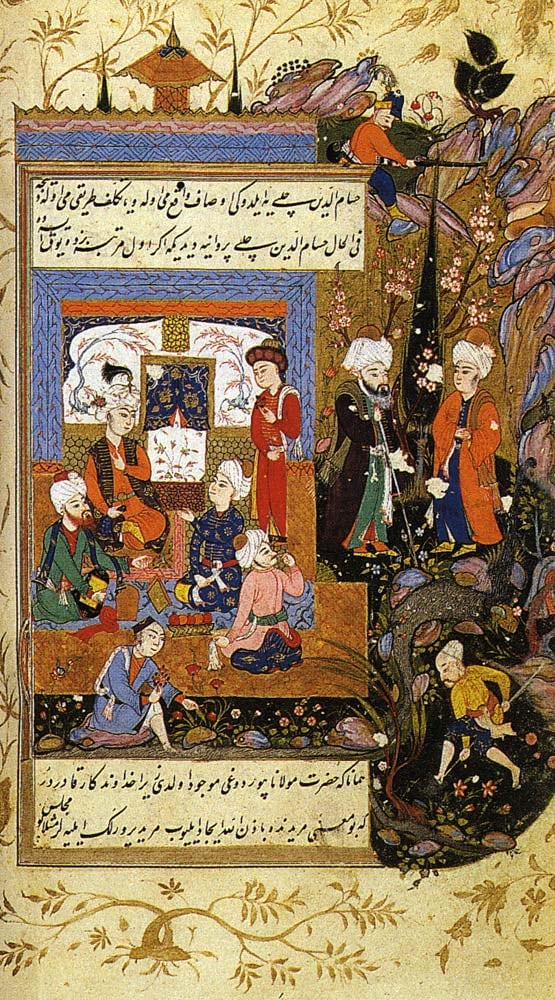
Rumi
Ils concordent sur: Qu'est-ce que l'Absolu ? Dieu existe-t-il ? · Qui suis-je ? Existe-t-il un vrai soi ? · Pourquoi souffrons-nous ?

Rabia al-Adawiyya
Ils concordent sur: Pourquoi souffrons-nous ? · Qu'est-ce que l'Absolu ? Dieu existe-t-il ? · Que se passe-t-il après la mort ?

Mirabai
Ils concordent sur: Qu'est-ce que l'Absolu ? Dieu existe-t-il ? · Pourquoi souffrons-nous ? · Comment atteint-on la libération ou le salut ?
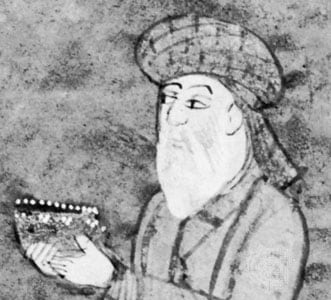
Hafez
Ils concordent sur: Qu'est-ce que l'Absolu ? Dieu existe-t-il ? · Qui suis-je ? Existe-t-il un vrai soi ? · Pourquoi souffrons-nous ?
Pense autrement que

Pema Chödrön
Ils s'opposent sur: Qu'est-ce que l'Absolu ? Dieu existe-t-il ? · Qui suis-je ? Existe-t-il un vrai soi ? · Que se passe-t-il après la mort ?

Patañjali
Ils s'opposent sur: Qu'est-ce que l'Absolu ? Dieu existe-t-il ? · Qui suis-je ? Existe-t-il un vrai soi ? · Que se passe-t-il après la mort ?

Nāgārjuna
Ils s'opposent sur: Qu'est-ce que l'Absolu ? Dieu existe-t-il ? · Qui suis-je ? Existe-t-il un vrai soi ? · Que se passe-t-il après la mort ?

Epicurus
Ils s'opposent sur: Qu'est-ce que l'Absolu ? Dieu existe-t-il ? · Qui suis-je ? Existe-t-il un vrai soi ? · Que se passe-t-il après la mort ?
Anecdotes et récits
Anecdotes et récits
Récit hagiographiquec. 1509
Jagai and Madhai
Origine du récit: Narrated by Vrindavana Dasa in the Chaitanya Bhagavata (Madhya-khanda) and taken up by Krishnadasa; no external source.
Source: Vṛndāvana Dāsa. Śrī Caitanya-bhāgavata (bengalí, c. 1540-1550). Trad. inglesa de Bhūmipati Dāsa, ed. de Puṇḍarīka Vidyānidhi Dāsa. Vṛndāvana: Vrajraj Press, 2000-2005 (varios volúmenes).
Récit hagiographiquec. 1509
The procession against the qadi
Origine du récit: Chaitanya Bhagavata, Madhya-khanda 23, and Chaitanya Charitamrita, Adi-lila 17. Local tradition identifies his tomb in Mayapur.
Source: Vṛndāvana Dāsa. Śrī Caitanya-bhāgavata (bengalí, c. 1540-1550). Trad. inglesa de Bhūmipati Dāsa, ed. de Puṇḍarīka Vidyānidhi Dāsa. Vṛndāvana: Vrajraj Press, 2000-2005 (varios volúmenes).
Récit hagiographique1510
Vasudeva Sarvabhauma
Origine du récit: Chaitanya Charitamrita, Madhya-lila 6; also in Kavi Karnapura. Sarvabhauma's existence as a scholar at Prataparudra's court is plausible; the details of the debate are a theological construction.
Source: Kṛṣṇadāsa Kavirāja. Caitanya Caritāmṛta of Kṛṣṇadāsa Kavirāja: A Translation and Commentary. Trad. de Edward C. Dimock Jr.; introd. de Edward C. Dimock Jr. y Tony K. Stewart; ed. de Tony K. Stewart. Harvard Oriental Series 56. Cambridge (Mass.): Dept. of Sanskrit and Indian Studies, Harvard University, 1999. ISBN 9780674002852.
Récit hagiographiquec. 1511
"That is external; go further"
Origine du récit: Chaitanya Charitamrita, Madhya-lila 8 (the "Ramananda-samvada"). Kavi Karnapura mentions the meeting; the doctrinal development is Krishnadasa's.
Source: Kṛṣṇadāsa Kavirāja. Caitanya Caritāmṛta of Kṛṣṇadāsa Kavirāja: A Translation and Commentary. Trad. de Edward C. Dimock Jr.; introd. de Edward C. Dimock Jr. y Tony K. Stewart; ed. de Tony K. Stewart. Harvard Oriental Series 56. Cambridge (Mass.): Dept. of Sanskrit and Indian Studies, Harvard University, 1999. ISBN 9780674002852.
Récit hagiographiquec. 1512-1513
The king who swept the road
Origine du récit: Chaitanya Charitamrita, Madhya-lila 11-14. The king's ritual sweeping of the road (chhera pahanra) is a documented practice of the Puri festival that is still performed.
Source: Kṛṣṇadāsa Kavirāja. Caitanya Caritāmṛta of Kṛṣṇadāsa Kavirāja: A Translation and Commentary. Trad. de Edward C. Dimock Jr.; introd. de Edward C. Dimock Jr. y Tony K. Stewart; ed. de Tony K. Stewart. Harvard Oriental Series 56. Cambridge (Mass.): Dept. of Sanskrit and Indian Studies, Harvard University, 1999. ISBN 9780674002852.
Invérifiablec. 1500
The commentary thrown into the river
Origine du récit: It is repeated in modern devotional and popular biographies without citing an early source; it has not been located in the sixteenth-century hagiographies.
Source: Sen, Dinesh Chandra. Chaitanya and His Age. Calcuta: University of Calcutta, 1922.
Enseignements
Enseignements
Les notions qui structurent sa pensée, expliquées dans leur contexte.
Congregational chanting of the name (nama-sankirtana)nama-sankirtana
It inherits the theology of the name from the Bhagavata tradition and earlier Vaishnavas; Jiva and Rupa Gosvamin systematised it.
Source: Bryant, Edwin F. (ed.). Krishna: A Sourcebook. Nueva York: Oxford University Press, 2007. ISBN 9780195148916 (en especial N. Delmonico, «Chaitanya Vaishnavism and the Holy Names», y S. Dasa, «The Six Sandarbhas of Jiva Gosvami»).
Divine love (prema) as the supreme goalprema-bhakti
Developed by Rupa Gosvamin in the Bhaktirasamrtasindhu and the Ujjvalanilamani.
Source: Kṛṣṇadāsa Kavirāja. Caitanya Caritāmṛta of Kṛṣṇadāsa Kavirāja: A Translation and Commentary. Trad. de Edward C. Dimock Jr.; introd. de Edward C. Dimock Jr. y Tony K. Stewart; ed. de Tony K. Stewart. Harvard Oriental Series 56. Cambridge (Mass.): Dept. of Sanskrit and Indian Studies, Harvard University, 1999. ISBN 9780674002852.
Inconceivable difference and non-difference (achintya-bhedabheda)achintya-bhedabheda
Gaudiya Vedanta school; Jiva Gosvamin (sixteenth century); Baladeva Vidyabhushana wrote the Gaudiya commentary on the Brahma-sutras in the eighteenth century.
Source: Bryant, Edwin F. (ed.). Krishna: A Sourcebook. Nueva York: Oxford University Press, 2007. ISBN 9780195148916 (en especial N. Delmonico, «Chaitanya Vaishnavism and the Holy Names», y S. Dasa, «The Six Sandarbhas of Jiva Gosvami»).
Radha and Krishna in one bodyradha-krishna-en-un-cuerpo
Chaitanya Charitamrita, Adi-lila 1 and 4; theology of the Gosvamis and the Navadvipa devotees.
Source: Stewart, Tony K. The Final Word: The Caitanya Caritāmṛta and the Grammar of Religious Tradition. Nueva York: Oxford University Press, 2010. ISBN 9780195392722.
Love in separation (vipralambha)vipralambha
Rasa poetics; Bengali Vaishnava lyric (padavali); Rupa Gosvamin, Ujjvalanilamani.
Source: Kṛṣṇadāsa Kavirāja. Caitanya Caritāmṛta of Kṛṣṇadāsa Kavirāja: A Translation and Commentary. Trad. de Edward C. Dimock Jr.; introd. de Edward C. Dimock Jr. y Tony K. Stewart; ed. de Tony K. Stewart. Harvard Oriental Series 56. Cambridge (Mass.): Dept. of Sanskrit and Indian Studies, Harvard University, 1999. ISBN 9780674002852.
Vidéos
Vidéos
Enregistrements, entretiens et documentaires. Les vidéos sont lues depuis YouTube ; elles ne sont pas hébergées ici.
Sri Chaitanya - In Love with God | Swami Sarvapriyananda
Conférence· EN· 78 min
Vedanta Society of New YorkChaîne officielle
Śikṣāṣṭakam and Q&A Session - Edwin Bryant
Conférence· EN· 122 min
Edwin Bryant OfficialChaîne officielle
Lord Chaitanya Mahaprabhu the Golden Avatar - (ENGLISH)
Documentaire· EN· 1986· 29 min
Hare Krishna Film Classics
The Gift of Śrī Caitanya Mahāprabhu – Full Feature Film
Documentaire· EN· 2022· 109 min
The Gift of Śrī Caitanya MahāprabhuChaîne officielle
Sri Chaitanya Mahaprabhu | CC Adi Lila 1.4 | Mayapur, India | Srila Prabhupada
Enregistrement original· EN· 18 min
The Acharya
Nilachaley Mahprabhu, 1957, Full Length Film, With English Subtitles
Enregistrement de tiers· BN· 1957· 133 min
Krishna Chandra Dasa
চৈতন্যদের এবং প্রেম সংকীর্তন || নৃসিংহপ্রসাদ ভাদুড়ী
Conférence· BN· 68 min
Nrisingha Prasad BhaduriChaîne officielle
Chaitanyer Jagannath || History of Rathayatra || Nrisingha Prasad Bhaduri
Conférence· BN· 12 min
Nrisingha Prasad BhaduriChaîne officielle
Chaitanya Mahaprabhu Biography - चैतन्य महाप्रभु का जीवन
Analyse· HI· 19 min
StudyIQ IAS
Sri Shikshashtakam - written by Chaitanya Mahaprabhu
Enregistrement de tiers· SA· 5 min
Vedic Vigyan
Breve biografía de Sri Caitanya Mahaprabhu, el avatar dorado (1)
Conférence· ES· 57 min
Gastón Castro 108
Galerie
Galerie
Images dont la licence a été vérifiée. Chacune conserve son auteur et son attribution.
Relations
Relations
Influences, filiations et affinités. On distingue la relation documentée de la similitude identifiée par analyse.
A influencé
Ramakrishna venerated Chaitanya as a divine incarnation and practised Vaishnava devotion; his biographer Saradananda reports a vision of Gauranga's kirtan.
Relation documentée
Idées proches de
Contemporaries and devotees of Krishna; both embody the bhakti of the separated lover. No meeting is recorded; the legend of Mira in Vrindavan links her with Jiva Gosvamin, not with Chaitanya.
Similitude identifiée par analyse
Contemporain de
Contemporaries (Nanak, 1469-1539). The janamsakhis take Nanak to Puri, but no meeting with Chaitanya is recorded.
Similitude identifiée par analyse
Idées proches de
Both placed the divine name at the centre of practice and relativised caste, although Kabir rejected the images and the personal Krishna Chaitanya worshipped.
Similitude identifiée par analyse
Idées proches de
A frequent analogy: a mysticism of love, music and ecstatic dance as a way to God. No historical connection.
Similitude identifiée par analyse
Idées proches de
Both traditions read the relationship with God in the language of lovers and value the night of absence. No historical connection.
Similitude identifiée par analyse
Sources
Sources
Bibliographie et catalogues consultés pour cette fiche.
- Kṛṣṇadāsa Kavirāja. Caitanya Caritāmṛta of Kṛṣṇadāsa Kavirāja: A Translation and Commentary. Trad. de Edward C. Dimock Jr.; introd. de Edward C. Dimock Jr. y Tony K. Stewart; ed. de Tony K. Stewart. Harvard Oriental Series 56. Cambridge (Mass.): Dept. of Sanskrit and Indian Studies, Harvard University, 1999. ISBN 9780674002852.
- Vṛndāvana Dāsa. Śrī Caitanya-bhāgavata (bengalí, c. 1540-1550). Trad. inglesa de Bhūmipati Dāsa, ed. de Puṇḍarīka Vidyānidhi Dāsa. Vṛndāvana: Vrajraj Press, 2000-2005 (varios volúmenes).
- Stewart, Tony K. The Final Word: The Caitanya Caritāmṛta and the Grammar of Religious Tradition. Nueva York: Oxford University Press, 2010. ISBN 9780195392722.
- Stewart, Tony K. «Chaitanya, Sri». En Banglapedia: The National Encyclopedia of Bangladesh, ed. en línea. Dhaka: Asiatic Society of Bangladesh, 2012.
- Kennedy, Melville T. The Chaitanya Movement: A Study of the Vaishnavism of Bengal. Calcuta: Association Press; Londres: Oxford University Press, 1925.
- Sen, Dinesh Chandra. Chaitanya and His Age. Calcuta: University of Calcutta, 1922.
- De, Sushil Kumar. Early History of the Vaishnava Faith and Movement in Bengal, from Sanskrit and Bengali Sources. Calcuta: General Printers and Publishers, 1942 (2.ª ed., Calcuta: Firma K. L. Mukhopadhyay, 1961).
- Sarkar, Jadunath (trad.). Chaitanya's Life and Teachings, from His Contemporary Bengali Biography the Chaitanya-charit-amrita. 2.ª ed. Calcuta: M. C. Sarkar & Sons, 1922 (1.ª ed. con el título Chaitanya's Pilgrimages and Teachings, 1913). Edición digital: Project Gutenberg, n.º 38016.
- Wikidata, «Chaitanya Mahaprabhu» (Q870262).
- Rūpa Gosvāmin. The Padyāvalī: An Anthology of Vaiṣṇava Verses in Sanskrit. Ed. crítica de Sushil Kumar De. Dacca: University of Dacca, 1934.
- Valpey, Kenneth. «Caitanya». En Knut A. Jacobsen et al. (eds.), Brill's Encyclopedia of Hinduism Online. Leiden: Brill, 2018.
- Murāri Gupta. Śrī Caitanya-carita-mahākāvya (Śrīkṛṣṇacaitanyacaritāmṛtam). Trad. de Swami Bhakti Vedanta Bhagavata Maharaja, ed. de Pūrṇaprajña Dāsa. Vṛndāvana: Rasbihari Lal & Sons, 2006. ISBN 9788184030068.
- Majumdar, A. K. Caitanya: His Life and Doctrine. A Study in Vaiṣṇavism. Bombay: Bharatiya Vidya Bhavan, 1969.
- Bhaktivedanta Swami, A. C. (trad. y coment.). Śrī Caitanya-caritāmṛta of Kṛṣṇadāsa Kavirāja Gosvāmī. 17 vols. Nueva York / Los Ángeles: Bhaktivedanta Book Trust, 1973-1975. ISBN del primer volumen 9780912776507.
- Bryant, Edwin F. (ed.). Krishna: A Sourcebook. Nueva York: Oxford University Press, 2007. ISBN 9780195148916 (en especial N. Delmonico, «Chaitanya Vaishnavism and the Holy Names», y S. Dasa, «The Six Sandarbhas of Jiva Gosvami»).
- «शिक्षाष्टकम्» (Śikṣāṣṭakam), texto sánscrito. Wikisource en sánscrito.
- Saradananda, Swami. Sri Ramakrishna, the Great Master. Trad. de Swami Jagadananda. Madrás: Sri Ramakrishna Math, 1952 (orig. bengalí Śrīśrīrāmakṛṣṇalīlāprasaṅga, 1909-1919).
- Ayant droit
- Las estrofas de Chaitanya y las hagiografías de los siglos XVI-XVII son de dominio público. Las traducciones modernas tienen titulares propios: la de Dimock y Stewart, la Harvard Oriental Series; la de A. C. Bhaktivedanta Swami, el Bhaktivedanta Book Trust.
En attente de confirmation
Ce que cette fiche n'a pas encore pu établir. Nous préférons le dire plutôt que de combler.
- No se localizó una edición española independiente del Shikshashtaka con ISBN; solo dentro de la edición española del Chaitanya Charitamrita (BBT).
- Faltan ediciones bengalíes críticas con ISBN del Chaitanya Charitamrita y del Chaitanya Bhagavata (p. ej., la de Radhagovinda Nath) y traducciones de Lochana Dasa, Jayananda y Kavi Karnapura.
- Confirmar la editorial y el año de la edición del Chaitanya Bhagavata con ISBN 9788187216117 (la ficha de Open Library no los consigna) y el año de las ediciones españolas del BBT Argentina.
- La fecha de muerte (1533 o 1534) y sus circunstancias no pueden cerrarse con las fuentes disponibles.
- La traducción de Sarkar queda con cautela hasta 2039 (derechos en España).
Recherche effectuée le 2026-10-25