Hindouisme · Tantra · Bhakti · Advaita Vedanta
Ramakrishna
শ্রীরামকৃষ্ণ পরমহংস · গদাধর চট্টোপাধ্যায় · रामकृष्ण परमहंस
1836 – 1886Personne historiquement documentée
Mystique bengali, prêtre du temple de Kali à Dakshineswar, près de Calcutta. Presque illettré, il parcourut les voies du tantra, de la dévotion vishnouite et de l'advaita védanta, et pratiqua brièvement l'islam et le christianisme, d'où il tira son célèbre enseignement : autant de croyances, autant de chemins. Il n'écrivit rien : sa parole nous parvient par les journaux de Mahendranath Gupta (le Kathamrita) et par ses disciples, parmi lesquels Vivekananda, qui fonda en son nom l'Ordre et la Mission Ramakrishna.
- œuvres
- 18œuvres
- éditions
- 48éditions
- citations
- 9citations
- vidéos
- 13vidéos
- images
- 7images
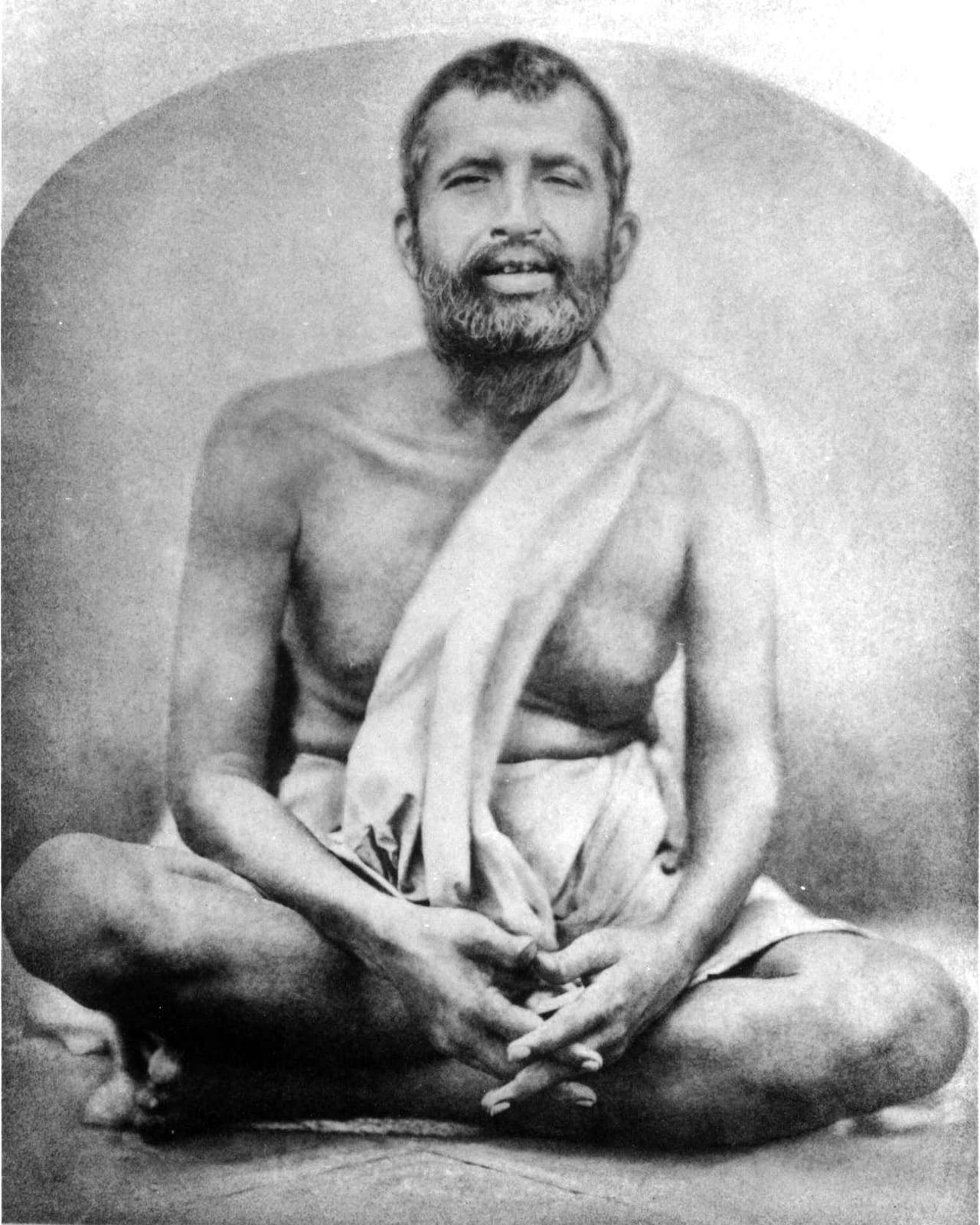
Ramakrishna sentado, la fotografía más difundida · Public domain
Dans ses propres mots
«Thou seest many stars at night in the sky, but findest them not when the sun rises. Canst thou say that there are no stars, then, in the heaven of day? So, O man, because thou beholdest not the Almighty in the days of thy ignorance, say not that there is no God.»Müller, Râmakrishna: His Life and Sayings (1898), dicho n.º 1 (versión inglesa de los discípulos)

Pour commencer, une œuvre
Sri Sri Ramakrishna Kathamrita (The Gospel of Sri Ramakrishna)Son idée centrale
As many faiths, so many paths: The Bengali formula yato mat, tato path—as many views, so many paths—sums up Ramakrishna’s most quoted teaching.
Le voir en contexte
Biographie
6 min de lecture
Traduction assistée à partir de l'original espagnol, en attente de relecture par un traducteur natif.
Un brahmane pauvre de Kamarpukur
Gadadhar Chattopadhyay naquit le 18 février 1836 à Kamarpukur, un village du district de Hooghly, au Bengale, quatrième enfant d'un brahmane appauvri, Khudiram Chattopadhyay, et de Chandramani Devi. Presque tout ce que nous savons de son enfance provient de récits tardifs de disciples, avant tout du Sri Sri Ramakrishna Lilaprasanga de Swami Saradananda, rédigé entre 1909 et 1919. On y raconte les songes annonciateurs des parents — Vishnou promettant, à Gaya, de naître comme leur fils ; une lumière issue du lingam du temple villageois qui pénètre dans la mère —, qui relèvent du genre hagiographique et doivent être lus comme tels. Plus vraisemblable, parce qu'il le racontait lui-même, est l'épisode de l'enfant de six ou sept ans qui, voyant un vol de grues blanches se détacher sur un nuage d'orage, tomba sans connaissance : sa première extase. Il fréquenta peu l'école du village, apprit à lire et à écrire le bengali et prit l'arithmétique en horreur ; les Purana, le Ramayana et le Mahabharata, il les apprit des récitants et des moines qui traversaient Kamarpukur en route vers Puri.
Le prêtre de Kali
Son père mourut en 1843 et, en 1852, son frère aîné Ramkumar l'emmena à Calcutta pour le seconder dans ses fonctions de prêtre ; Gadadhar refusa l'école sanskrite au motif, que la tradition lui prête, qu'il ne voulait pas d'une instruction faite pour gagner son pain. En mai 1855, Rani Rasmani, riche veuve d'une caste que les brahmanes orthodoxes tenaient pour inférieure, consacra à Dakshineswar, sur les rives de la Hooghly, un grand temple à Kali ; Ramkumar accepta d'y officier et, à sa mort en 1856, Gadadhar resta prêtre du sanctuaire sous la protection de Mathur Babu, gendre de la fondatrice. Il y vécut près de trente ans. Ce qui suivit forme le cœur de sa légende et de son autobiographie orale : un désir si violent de voir la déesse qu'il cessa de manger et de dormir, et une vision de Kali comme un océan de lumière au moment où, désespéré, il saisit l'épée du sanctuaire. Au temple, on le crut fou ; pour l'apaiser, sa famille le maria en 1859 à Saradamani Mukhopadhyay, une fillette de cinq ans du village voisin de Jayrambati. Toutes les sources s'accordent à dire que le mariage ne fut jamais consommé.
Tous les chemins
Entre 1861 et le début des années 1870, il parcourut, sous la conduite de guides divers, presque tout l'éventail de la religiosité indienne. Une ascète errante, celle qu'on appelait la Bhairavi Brahmani, l'initia aux pratiques tantriques et fut la première à proclamer devant une assemblée de lettrés qu'il était une incarnation divine. Un moine vishnouite, Jatadhari, lui apprit à adorer Rama enfant, et lui-même vécut des mois dans l'attitude amoureuse de Radha devant Krishna. Vers 1864 ou 1865, un moine errant de l'ordre de Shankara, Totapuri, lui conféra l'initiation de renonçant et l'introduisit à l'advaita védanta ; la tradition affirme qu'il atteignit le samadhi sans forme en trois jours et que le maître, stupéfait, resta onze mois. Vers 1866, il pratiqua l'islam sous la direction d'un hindou converti au soufisme, Govinda Ray, et vers 1874, après avoir entendu lire la Bible, il eut une vision du Christ qui se fondait en lui. De cette suite d'expériences, que nous connaissons par son propre récit aux disciples, naît l'enseignement qui devait le rendre célèbre : autant de croyances, autant de chemins. Walter Neevel et Jeffrey Kripal ont souligné, contre la lecture védantique qui s'imposa ensuite, le poids du tantra dans cette formation.
Sarada et les brahmos
En 1872, sa jeune épouse arriva à Dakshineswar. Ramakrishna l'accueillit, l'instruisit et, la même année, la vénéra rituellement comme une manifestation de la Déesse ; Sarada Devi vécut auprès de lui, dans une minuscule chambre de l'enceinte, jusqu'à la fin, et deviendrait plus tard la Sainte Mère de l'ordre. En 1875, il rencontra Keshab Chandra Sen, chef charismatique d'une branche du Brahmo Samaj, le mouvement réformateur qui avait rejeté les images. Keshab, fasciné, publia dans la presse brahmo une brève esquisse de son enseignement et quelques-unes de ses paroles ; Protap Chandra Mozoomdar lui consacra en 1879 un article, « The Hindu Saint », que Max Müller reproduirait des années plus tard. Ainsi commença d'affluer à Dakshineswar la classe moyenne cultivée de Calcutta — étudiants, instituteurs, médecins, le dramaturge Girish Chandra Ghosh — et, à la fin de 1881, un jeune sceptique nommé Narendranath Datta, le futur Vivekananda, qui lui demanda s'il avait vu Dieu et reçut un oui sans hésitation.
Le témoin au carnet
En février 1882 parut un maître d'école, Mahendranath Gupta. Il tenait un journal depuis l'âge de treize ans et se mit à noter, de retour chez lui, ce qu'il avait vu et entendu : la date, l'heure, le lieu, les personnes présentes, les chants entonnés. De ces notes sortirait le Sri Sri Ramakrishna Kathamrita, cinq volumes publiés sous la signature « M. » entre 1902 et 1932. C'est la source principale sur son enseignement et un classique de la prose bengalie, mais non un procès-verbal : l'historien Sumit Sarkar a fait observer qu'il ne couvre qu'environ cent quatre-vingt-six jours des quatre dernières années, qu'il fut publié de quinze à cinquante ans après les faits et qu'il s'agit d'un texte construit, avec ses stratégies d'auteur. Dans ces pages, Ramakrishna parle un bengali paysan plein de paraboles, de plaisanteries et de scènes domestiques ; il se moque des érudits, se méfie de l'argent et du désir — « la femme et l'or », kamini-kanchana — et tombe en extase au milieu de la conversation.
Cossipore
Au début de 1885, une affection de la gorge se révéla être un cancer. Ses disciples le transportèrent à l'automne dans une maison de Shyampukur, à Calcutta, puis en décembre dans une maison à jardin de Cossipore, où le soignèrent des médecins comme Mahendralal Sarkar tandis qu'il continuait de parler contre l'avis de tous. C'est là que, le 1er janvier 1886, il bénit un groupe de fidèles dans le jardin — le jour que la tradition nomme Kalpataru, d'après l'arbre qui exauce les vœux —, et là que se forma, autour de Narendra, le noyau de jeunes gens qui seraient les premiers moines. Il mourut peu après une heure du matin, le 16 août 1886. Ses disciples parlèrent de mahasamadhi ; les témoignages divergent sur ses dernières paroles.
Un saint lu par d'autres
Ramakrishna n'a rien écrit. Tout ce que nous savons de lui nous parvient par d'autres : les journaux de M., la biographie dévotionnelle de Saradananda, le poème narratif d'Akshay Kumar Sen, les souvenirs de ses disciples et la lecture de Vivekananda, qui fonda en 1897 la Mission Ramakrishna et présenta le maître à l'Occident comme la synthèse vivante du védanta. Max Müller publia en 1898 sa vie et ses paroles, après avoir demandé à Vivekananda un récit qu'il jugea lui-même non exempt d'éléments traditionnels ; Romain Rolland lui consacra un autre livre en 1929. La traduction anglaise du Kathamrita par Swami Nikhilananda (1942), préfacée par Aldous Huxley, en fit un classique spirituel. Depuis les années 1990, sa figure est aussi l'objet d'une controverse savante : Kali's Child (1995), de Jeffrey Kripal, proposa de ses extases une lecture psychanalytique et tantrique que l'ordre rejeta avec vigueur et à laquelle répondirent Swami Tyagananda et Pravrajika Vrajaprana en 2010. Entre l'avatar des dévots et le mystique soumis à l'analyse demeure un homme de village dont la parole, filtrée par ceux qui l'écoutaient, reste l'une des plus lues de l'Inde moderne.
Sources: Chetanananda, Swami (ed. y trad.). Ramakrishna as We Saw Him. St. Louis: Vedanta Society of St. Louis, 1990. · Isherwood, Christopher. Ramakrishna and His Disciples. Nueva York: Simon & Schuster, 1965. · Gupta, Mahendranath («M.»). Sri Sri Ramakrishna Kathamrita (শ্রীশ্রীরামকৃষ্ণকথামৃত). 5 vols. Calcuta, 1902, 1904, 1908, 1910 y 1932. Trad. inglesa: The Gospel of Sri Ramakrishna, trad. e introd. de Swami Nikhilananda, prólogo de Aldous Huxley. Nueva York: Ramakrishna-Vivekananda Center, 1942. · Saradananda, Swami. Sri Sri Ramakrishna Lilaprasanga. 5 partes. Calcuta: Udbodhan, escrita entre 1909 y 1919. Trad. inglesa: Sri Ramakrishna, the Great Master, trad. de Swami Jagadananda. Madrás: Sri Ramakrishna Math, 1952; y Sri Ramakrishna and His Divine Play, trad. de Swami Chetanananda. St. Louis: Vedanta Society of St. Louis, 2003. · Müller, F. Max. Râmakrishna: His Life and Sayings. Londres / Nueva York: Longmans, Green and Co., 1898 (reimpr. 1899).
Chronologie
La vie, année après année
Chaque point est un événement documenté. Cliquez pour le lire, avec sa source et son degré de certitude.
18 février 18360 ansKamarpukur
Birth of Gadadhar
Born in Kamarpukur, fourth child of Khudiram Chattopadhyay and Chandramani Devi, poor Brahmins.
DocumentéWikidata, «Ramakrishna» (Q183126): fechas y lugares de nacimiento y muerte, 114 enlaces entre wikis.
Après sa mort
- août 1896Max Müller’s “A Real Mahatman”
- 1 mai 1897Founding of the Ramakrishna Mission
- 1902First volume of the Kathamrita
- 1942The Gospel of Sri Ramakrishna
- 1995The Kali’s Child controversy
18 février 1836 · 0 ans
Birth of Gadadhar
Born in Kamarpukur, fourth child of Khudiram Chattopadhyay and Chandramani Devi, poor Brahmins.
Documenté
1843 · 7 ans
Father’s death and first ecstasy
Khudiram dies. Tradition places in these years the boy’s ecstasy at the sight of white cranes against a dark cloud.
Tradition
1852 · 16 ans
To Calcutta with his brother
His brother Ramkumar takes him to Calcutta to assist him as a priest; he refuses the Sanskrit school.
Probable
31 mai 1855 · 19 ans
Consecration of the Kali temple
Rani Rasmani consecrates the Dakshineswar temple; Ramkumar is its first priest and Gadadhar accompanies him.
Documenté
1856 · 20 ans
Priest of Kali
Ramkumar dies and Gadadhar becomes priest of the temple. The years of longing follow, and the vision of Kali he would later recount.
Probable
mai 1859 · 23 ans
Marriage to Saradamani
His family marries him to the five-year-old Saradamani Mukhopadhyay. The marriage is never consummated.
Documenté
1861 · 25 ans
The Bhairavi Brahmani and Tantra
A wandering ascetic initiates him into Tantric practice, which tradition says he completed around 1863.
Probable
v. 1864 · 28 ans
Initiation by Totapuri
The Advaita monk Totapuri gives him monastic initiation (sannyasa) and teaches him non-dual Vedanta; sources waver between late 1864 and 1865.
Probable
v. 1866 · 30 ans
Practice of Islam
Guided by Govinda Ray, a Hindu convert to Sufism, he lives for some days according to Muslim practice.
Tradition
1872 · 36 ans
Sarada Devi arrives; the shodashi puja
His wife settles at Dakshineswar. Ramakrishna ritually worships her as the Goddess.
Documenté
v. 1874 · 38 ans
Vision of Christ
After hearing Shambhu Charan Mallick read the Bible, he recounts a vision of Jesus merging into him.
Tradition
1875 · 39 ans
Meeting with Keshab Chandra Sen
He meets the Brahmo leader, who spreads his fame in Calcutta’s reformist press.
Documenté
21 septembre 1879 · 43 ans
First photograph and Mozoomdar’s article
At Keshab’s house he is photographed in ecstasy; that year Mozoomdar publishes “The Hindu Saint”.
Documenté
novembre 1881 · 45 ans
Narendranath Datta arrives
He meets the future Vivekananda, who asks him whether he has seen God.
Probable
février 1882 · 45 ans
M.’s first visit
Mahendranath Gupta begins noting down the conversations that will become the Kathamrita.
Documenté
11 décembre 1885 · 49 ans
Move to Cossipore
Ill with throat cancer, after some months at Shyampukur, he moves to the garden house at Cossipore.
Probable
1 janvier 1886 · 49 ans
Kalpataru day
He blesses a group of lay devotees in the garden; the order celebrates the date every year.
Documenté
16 août 1886 · 50 ans
Death
He dies shortly after one in the morning. His disciples call it mahasamadhi.
Documenté
août 1896
Max Müller’s “A Real Mahatman”
The Indologist introduces Ramakrishna to the British public in The Nineteenth Century; in 1898 he publishes his life and sayings.
Documenté
1 mai 1897
Founding of the Ramakrishna Mission
Vivekananda founds the association that bears his name.
Documenté
1902
First volume of the Kathamrita
M. publishes the first of the five volumes (the last in 1932).
Documenté
1942
The Gospel of Sri Ramakrishna
Swami Nikhilananda publishes the English translation of the Kathamrita, with a foreword by Aldous Huxley.
Documenté
1995
The Kali’s Child controversy
Jeffrey Kripal publishes his psychoanalytic and Tantric reading; Tyagananda and Vrajaprana reply in 2010.
Documenté
Œuvres
Œuvres essentielles
Les œuvres sans lesquelles on ne comprend pas son héritage.
Compilation postérieure · 1902
Sri Sri Ramakrishna Kathamrita (The Gospel of Sri Ramakrishna)
শ্রীশ্রীরামকৃষ্ণকথামৃত (Sri Sri Ramakrishna Kathamrita)
The principal source for Ramakrishna’s teaching and a classic of Bengali prose. Every scene is dated and placed: the master’s room at Dakshineswar, visits to devotees’ houses in Calcutta, the last illness at Shyampukur and Cossipore. Brahmos, pandits, actors, schoolboys and widows pass through its pages, and Ramakrishna answers with rustic parables, songs of Ramprasad and sudden ecstasies. Its themes are all there: God-realisation as life’s only goal, the harmony of religions, the divine Mother as identical with Brahman, the danger of “woman and gold”, service and devotion for those who live in the world. Aldous Huxley compared it with Boswell’s Johnson; the historian Sumit Sarkar reads it as a constructed text covering only 186 days.
10 éditions

Compilation postérieure · v. 1909
Sri Ramakrishna, the Great Master (Lilaprasanga)
শ্রীশ্রীরামকৃষ্ণলীলাপ্রসঙ্গ (Sri Sri Ramakrishna Lilaprasanga)
The tradition’s great biography: childhood in Kamarpukur, the years of longing at Dakshineswar, the successive disciplines—Tantra with the Bhairavi Brahmani, Vaishnava devotion, Advaita with Totapuri, Islam and Christianity—, the relationship with Sarada Devi and the arrival of the disciples. Saradananda writes as theologian as well as witness and devotes chapters to explaining the master as a divine incarnation, but his information on the years before 1879, which he did not witness, comes from what Ramakrishna and others told him. Translated into English by Swami Jagadananda (1952) and again by Swami Chetanananda (2003).
5 éditions
Ramakrishna
Râmakrishna: His Life and Sayings
Compilation postérieure · 1898
Râmakrishna: His Life and Sayings
Müller expands his article “A Real Mahatman” (The Nineteenth Century, August 1896) with a biography, a critical assessment—he warns that Vivekananda’s account is not free of traditional elements and discusses Mozoomdar’s judgement—and a long series of sayings and parables: the water called by many names, the chameleon, the blind men and the elephant, the salt doll, the lamp without oil. It is the channel through which many of Ramakrishna’s images entered European culture.
3 éditions
Toute son œuvre (18)
Ramakrishna
The Gospel of Sri Ramakrishna according to M. (M.’s own English version)
The Conscious LibraryThe Gospel of Sri Ramakrishna according to M. (M.’s own English version)
1897

The Gospel of Râmakrishna (Abhedananda edition, 1907)
1907

Sayings of Sri Ramakrishna
1903
Ramakrishna
Tales and Parables of Sri Ramakrishna
The Conscious LibraryTales and Parables of Sri Ramakrishna

Teachings of Sri Ramakrishna
1934
Ramakrishna
Words of the Master
The Conscious LibraryWords of the Master
Ramakrishna
Sri Sri Ramakrishna Punthi (A Portrait of Sri Ramakrishna)
The Conscious LibrarySri Sri Ramakrishna Punthi (A Portrait of Sri Ramakrishna)
1901
Ramakrishna
Life of Sri Ramakrishna Paramahamsa (Ramchandra Datta)
The Conscious LibraryLife of Sri Ramakrishna Paramahamsa (Ramchandra Datta)
1890

Ramakrishna as We Saw Him
1990

La Vie de Ramakrishna
1929

Ramakrishna and His Disciples (Christopher Isherwood)
1965

Kali’s Child (Jeffrey J. Kripal)
1995
Ramakrishna
Interpreting Ramakrishna (Tyagananda and Vrajaprana)
The Conscious LibraryInterpreting Ramakrishna (Tyagananda and Vrajaprana)
2010
Ramakrishna
Ramakrishna Paramahamsa: Sadhaka of Dakshineswar (Amiya P. Sen)
The Conscious LibraryRamakrishna Paramahamsa: Sadhaka of Dakshineswar (Amiya P. Sen)
2010

Great Swan (Lex Hixon)
1992
Citations
Citations localisées dans une œuvre précise. Chacune porte sa provenance et son degré de fiabilité.
Thou seest many stars at night in the sky, but findest them not when the sun rises. Canst thou say that there are no stars, then, in the heaven of day? So, O man, because thou beholdest not the Almighty in the days of thy ignorance, say not that there is no God.VérifiéeMüller, Râmakrishna: His Life and Sayings (1898), dicho n.º 1 (versión inglesa de los discípulos)
Dernières paroles
Versions contradictoires
«“Kali!” (three times), according to one account; “Ma” (“Mother”), according to another.»কালী
There is no final sentence recorded by M., whose Kathamrita ends on 24 April 1886. The versions come from disciples present at Cossipore on the night of 15–16 August 1886 and were written down years later: according to one, he uttered the name of Kali three times in a clear voice and entered samadhi; according to another, his last word was “Ma”, mother. Swami Chetanananda brings both together in Ramakrishna as We Saw Him (1990, pp. 56 and 408). Both fit his devotion to the divine Mother, but neither can be taken as literal.
Source: Chetanananda, Swami (ed. y trad.). Ramakrishna as We Saw Him. St. Louis: Vedanta Society of St. Louis, 1990.
Interroger
Ce que répond son œuvre
Douze grandes questions de l'humanité et ce que ses textes permettent d'y répondre, références à l'appui. Nous ne lui prêtons jamais de paroles.
Qu'est-ce que l'Absolu ? Dieu existe-t-il ?
Brahman and Shakti are one: the divine with form and without form
À la fois personnel et impersonnelIl le dit expressément
According to the conversations recorded by Mahendranath Gupta (M.) in the Kathamrita, Ramakrishna holds that the motionless Brahman and the active Shakti, the divine Mother he worshipped as Kali, are one and the same reality, like fire and its power to burn. When the divine is inactive it is called Brahman; when it creates, preserves and destroys, Shakti. So he need not choose between a personal God and an impersonal Absolute: the same Sat-chit-ananda appears with form to the devotee and without form to one who follows the path of knowledge. His image of the single substance that some call water and others aqua or pani, recorded among his sayings, also serves to argue that the different names of God point to the same thing. To one who denies God he replies that the stars are still in the sky even though they cannot be seen by day.
Comparer cette question avec d'autres maîtresQui suis-je ? Existe-t-il un vrai soi ?
The salt doll dissolves in the ocean; the servant’s ‘I’ remains
Le Soi est l'AbsoluIl le dit expressément
According to the Kathamrita, Ramakrishna teaches that the true self is not the ego that says ‘mine’: in samadhi the individual dissolves into Brahman like the salt doll that went to measure the depth of the ocean and never came back to tell. A human being is like a pillowcase: they come in different colours, but all contain the same cotton. Yet he distinguishes the ‘unripe I’, which thinks itself doer and owner, from the devotee’s ‘ripe I’, which knows itself child or servant of God; this second, harmless self may be kept in order to love and to teach. His ideal of vijnana is to have known the unity and to return to live the relationship with the divine without losing it.
Comparer cette question avec d'autres maîtresPourquoi souffrons-nous ?
God is in all, but not all are in God: hence suffering
La séparation d'avec DieuIl le dit expressément
One of Ramakrishna’s sayings gathered by his disciples sums it up: God is in all men, but not all men are in God, and that is why they suffer. Pain does not come from God’s absence but from the human being living turned towards something else. In the Kathamrita that something else has a name: ‘woman and gold’ (kamini-kanchana), that is, lust and greed, which bind the mind to the world and draw it away from the divine. Ramakrishna compares the attached mind to a damp match that will not light. The remedy is not resignation but longing: to cry for God as a child cries for its mother, until the Mother answers.
Comparer cette question avec d'autres maîtresQue se passe-t-il après la mort ?
One is reborn while desire remains; boiled paddy no longer sprouts
Renaissance selon le karmaIl le dit expressément
In the conversations of the Kathamrita Ramakrishna takes the doctrine of rebirth for granted: as long as desires and attachment to the world remain, the soul is born again. His best-known image is agricultural: paddy in its husk, if sown, will sprout; paddy that has been boiled will not. So whoever has realised God is not reborn, for knowledge has cooked the seed of desire. Ramakrishna does not dwell on describing intermediate worlds or the soul’s fate after death; what matters to him is the urgency of seeking God in this life. His biographers relate that in his last months, ill with throat cancer, he kept speaking of God and entering samadhi.
Comparer cette question avec d'autres maîtresComment atteint-on la libération ou le salut ?
Cry for God as a child cries for its mother
Par la dévotion et l'abandonIl le dit expressément
According to his biographers, Ramakrishna practised the disciplines of Tantra, Vedanta, Vaishnava devotion and even Islam and Christianity, and concluded that every sincere path leads to the same goal: as many faiths, so many paths. But for his age he chiefly recommended bhakti. One of his recorded sayings asks where the aspirant’s strength lies and answers: in his tears; just as a mother finally grants the child who cries insistently what it asks for, so God gives himself to one who truly longs for him. In the Kathamrita he advises chanting the Name, the company of holy people and periodic retreat into solitude. What is decisive is not technique but the intensity of longing.
Comparer cette question avec d'autres maîtresFaut-il un maître ?
Sachchidananda alone is the guru; the human is its instrument
Le maître est à l'intérieurIl le dit expressément
Ramakrishna had several human teachers, among them the Bhairavi Brahmani, who guided him in Tantra, and the monk Totapuri, who initiated him into Advaita. Yet according to the Kathamrita he resisted being called guru and repeated that Sachchidananda, the Absolute, alone is the guru: if someone in human form awakens another’s spiritual consciousness, it is God who has taken that form. He compared one who thinks himself a teacher of others to a water snake trying to swallow a frog too big for it. For most people a guide is necessary, as on an unknown road; but whoever truly longs will receive teaching from God himself, who speaks from within.
Comparer cette question avec d'autres maîtresLe monde est-il réel ?
The Mother has become all this: the world is her play (lila)
Manifestation du divinIl le dit expressément
Ramakrishna knew in Advaita the experience in which the world vanishes, but he did not stop there. According to the Kathamrita, one who has attained full knowledge (vijnana) sees that the same Brahman which is motionless has become the universe and living beings: the world is the manifestation and play (lila) of the divine Mother. Hence he can say that God is in everything, and also, with humour, that if God is in the elephant he is also in its driver, who warns people to stand aside: seeing the divine in all does not exempt one from discernment. Against those who call the world illusory, Ramakrishna sometimes describes it as a mansion of mirth for one who has seen God.
Comparer cette question avec d'autres maîtresQu'est-ce que l'amour ?
Love God with the miser’s craving for his gold
Le désir ardent et l'unionIl le dit expressément
In the Kathamrita Ramakrishna describes love of God as a longing that must combine three attractions at once: the miser’s for his money, the faithful wife’s for her husband and the mother’s for her child. When the desire for God reaches that intensity, God reveals himself. He distinguishes formal devotion, governed by rules, from ecstatic love (prema), in which the devotee forgets the world and even his own body, like the gopis of Vrindavan. But that love does not close in on itself: the formula he passed on to Vivekananda, serving beings as forms of Shiva, turns love of God into service of others, not out of condescending pity but out of reverence.
Comparer cette question avec d'autres maîtresSommes-nous libres ou tout est-il déterminé ?
Thou art the operator and I the machine
Il n'y a pas d'agentIl le dit expressément
In the Kathamrita Ramakrishna repeats a formula of surrender in which he addresses the Mother as the operator and calls himself the machine, or the house of which She is the indweller. Whoever has seen God understands that it is He who acts through all, and that the sense of being the author of one’s acts comes from the unripe ego. But he does not preach passivity to one who still feels he chooses: as long as one thinks oneself the doer, one is responsible for what one does and must strive, pray and discern. With realisation that sense of authorship falls away of itself, like the husk of a ripe fruit. True freedom, for him, belongs to one who no longer claims anything.
Comparer cette question avec d'autres maîtresPourquoi méditer ou prier ?
Pray like a child calling its mother, sincerely and with tears
L'amitié avec DieuIl le dit expressément
Ramakrishna’s prayer, as the Kathamrita and his biographers describe it, was a filial conversation with the divine Mother: he spoke to her, reproached her, begged her to reveal herself and wept when she did not. He advised his visitors to pray sincerely, in solitude, and above all with longing; the aspirant’s strength lies in his tears. Meditation, he said, should be done in the mind, in a corner and in the forest, and should be as continuous as oil flowing without a break. For him praying and meditating serve the same end: to make God cease to be an idea and become someone present.
Comparer cette question avec d'autres maîtresLa raison peut-elle connaître l'ultime ?
The salt doll never returns to tell how deep the sea is
L'ultime est au-delà du mentalIl le dit expressément
Ramakrishna, who could barely read and write, distrusted the bookish learning of scholars (pandits), whom he compared to vultures that soar high but keep their eyes on carrion. According to the Kathamrita, Brahman is the only thing the human tongue has not defiled, because no one has been able to say what it is. His parable of the salt doll that wanted to measure the depth of the ocean and dissolved in it expresses the limit of all conceptual knowledge: whoever arrives does not come back to describe it. Yet he did not despise reflection: he considered it useful for discriminating between the real and the unreal. Reason prepares the ground; knowledge of God comes through direct experience.
Comparer cette question avec d'autres maîtresSe retirer du monde ou le transformer ?
Live in the world like a maidservant in another’s house
La contemplation dans l'actionIl le dit expressément
Ramakrishna trained young men who would become monks, but most of his visitors were householders, and he did not ask them to abandon the world. According to the Kathamrita he proposed that they live like the maidservant of a rich house: she looks after the master’s children and calls them ‘my children’, but knows her real home is elsewhere. Or like the mudfish, which lives in the mud without being soiled. He advised withdrawing into solitude from time to time to pray, and then returning to one’s duties with the heart set on God. His formula of serving beings as forms of Shiva inspired Vivekananda’s Ramakrishna Mission, which joined monasticism with social service.
Comparer cette question avec d'autres maîtres
Affinités et tensions
Affinités et tensions
Calculées question par question à partir de ses positions. La raison de chaque accord ou de chaque désaccord s'affiche d'un clic.
Pense comme
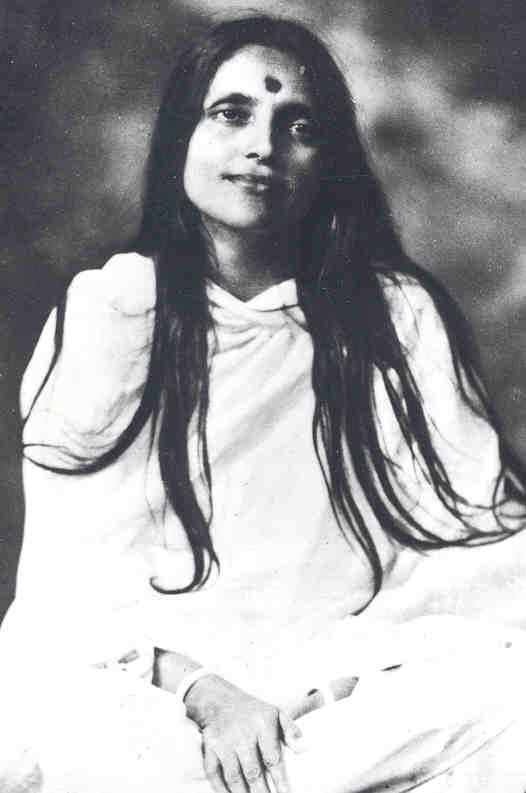
Anandamayi Ma
Ils concordent sur: Pourquoi méditer ou prier ? · Qu'est-ce que l'Absolu ? Dieu existe-t-il ? · Qui suis-je ? Existe-t-il un vrai soi ?
Meher Baba
Ils concordent sur: Pourquoi méditer ou prier ? · Qu'est-ce que l'Absolu ? Dieu existe-t-il ? · Qui suis-je ? Existe-t-il un vrai soi ?
Ibn Arabi
Ils concordent sur: Qu'est-ce que l'Absolu ? Dieu existe-t-il ? · Qui suis-je ? Existe-t-il un vrai soi ? · Pourquoi souffrons-nous ?
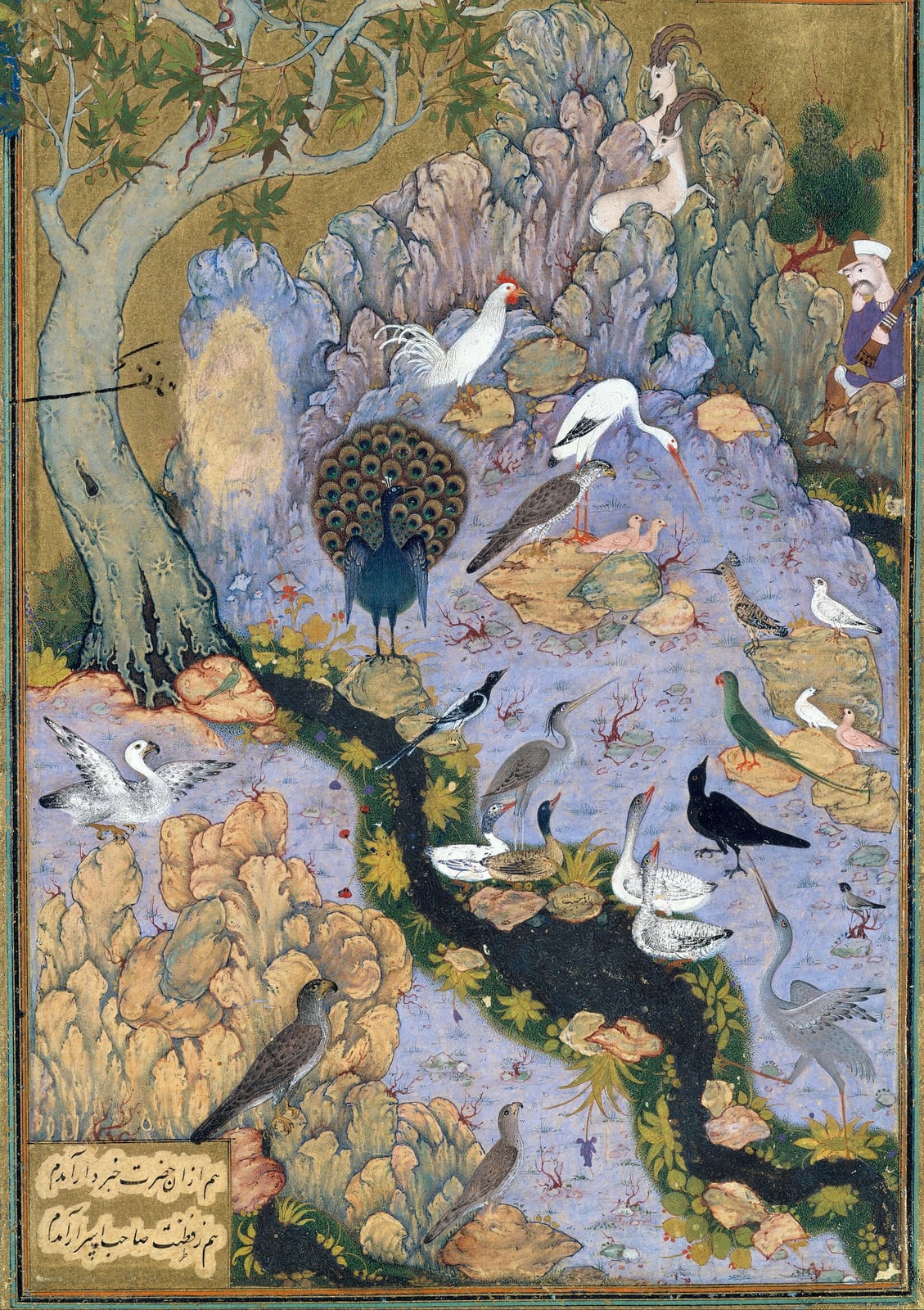
Attar
Ils concordent sur: Qu'est-ce que l'Absolu ? Dieu existe-t-il ? · Qui suis-je ? Existe-t-il un vrai soi ? · Pourquoi souffrons-nous ?
Pense autrement que

Epicurus
Ils s'opposent sur: Qui suis-je ? Existe-t-il un vrai soi ? · Que se passe-t-il après la mort ?

Emanuel Swedenborg
Ils s'opposent sur: Qui suis-je ? Existe-t-il un vrai soi ? · Que se passe-t-il après la mort ?
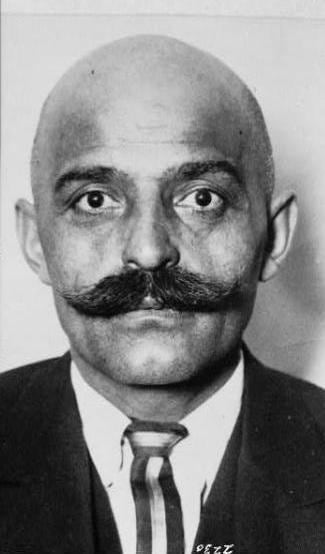
G. I. Gurdjieff
Ils s'opposent sur: Qui suis-je ? Existe-t-il un vrai soi ?
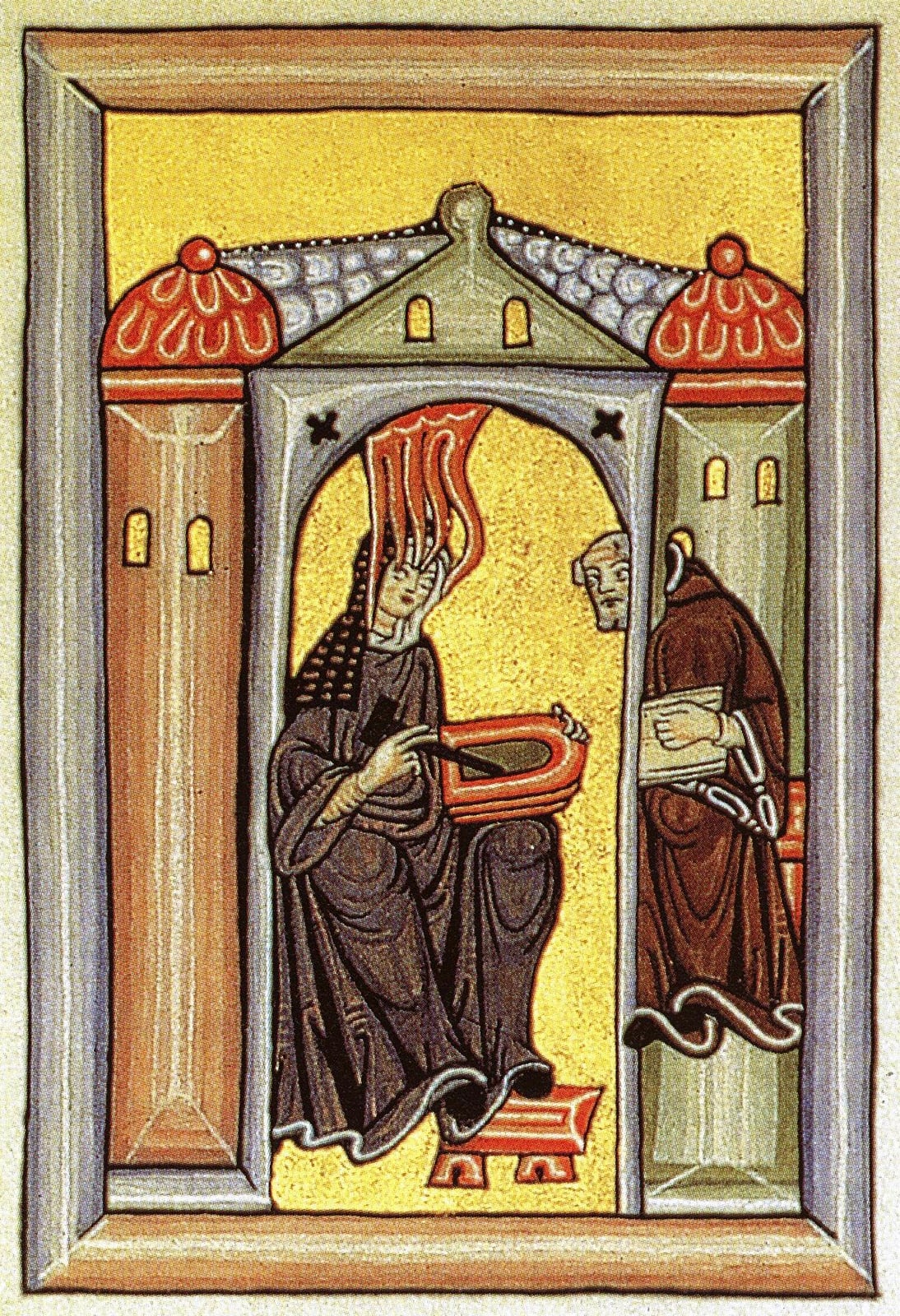
Hildegard of Bingen
Ils s'opposent sur: Qui suis-je ? Existe-t-il un vrai soi ? · Que se passe-t-il après la mort ?
Anecdotes et récits
Anecdotes et récits
Témoignagec. 1842-1843
The white cranes
Origine du récit: An autobiographical account Ramakrishna gave his disciples decades later; recorded by Saradananda in the Lilaprasanga and, in short form, by other lives from the Order. There are no independent witnesses.
Source: Saradananda, Swami. Sri Sri Ramakrishna Lilaprasanga. 5 partes. Calcuta: Udbodhan, escrita entre 1909 y 1919. Trad. inglesa: Sri Ramakrishna, the Great Master, trad. de Swami Jagadananda. Madrás: Sri Ramakrishna Math, 1952; y Sri Ramakrishna and His Divine Play, trad. de Swami Chetanananda. St. Louis: Vedanta Society of St. Louis, 2003.
Témoignagec. 1856
The sword of the shrine
Origine du récit: It comes from what Ramakrishna told his disciples; Saradananda fixes it in the Lilaprasanga and it reappears in the Kathamrita in Ramakrishna’s own words. It is testimony of a visionary experience, not a verifiable fact.
Source: Saradananda, Swami. Sri Sri Ramakrishna Lilaprasanga. 5 partes. Calcuta: Udbodhan, escrita entre 1909 y 1919. Trad. inglesa: Sri Ramakrishna, the Great Master, trad. de Swami Jagadananda. Madrás: Sri Ramakrishna Math, 1952; y Sri Ramakrishna and His Divine Play, trad. de Swami Chetanananda. St. Louis: Vedanta Society of St. Louis, 2003.
Témoignage1864-1865
The shard of glass
Origine du récit: Ramakrishna’s own account recorded by Saradananda in the Lilaprasanga; the three days and Totapuri’s reaction belong to the Order’s tradition. There is no independent testimony from Totapuri.
Source: Saradananda, Swami. Sri Sri Ramakrishna Lilaprasanga. 5 partes. Calcuta: Udbodhan, escrita entre 1909 y 1919. Trad. inglesa: Sri Ramakrishna, the Great Master, trad. de Swami Jagadananda. Madrás: Sri Ramakrishna Math, 1952; y Sri Ramakrishna and His Divine Play, trad. de Swami Chetanananda. St. Louis: Vedanta Society of St. Louis, 2003.
Témoignage1872
The worship of Sarada
Origine du récit: Known from what Ramakrishna and Sarada Devi herself later told; Saradananda narrates it in the Lilaprasanga and Rolland repeats it. The exact date within 1872 varies between sources.
Source: Saradananda, Swami. Sri Sri Ramakrishna Lilaprasanga. 5 partes. Calcuta: Udbodhan, escrita entre 1909 y 1919. Trad. inglesa: Sri Ramakrishna, the Great Master, trad. de Swami Jagadananda. Madrás: Sri Ramakrishna Math, 1952; y Sri Ramakrishna and His Divine Play, trad. de Swami Chetanananda. St. Louis: Vedanta Society of St. Louis, 2003.
Témoignage1881-1882
“Have you seen God?”
Origine du récit: It comes from Vivekananda’s own recollection, told on several occasions and recorded by Saradananda (Lilaprasanga) and by the biography of Vivekananda by his disciples. The exact words vary from version to version.
Source: Saradananda, Swami. Sri Sri Ramakrishna Lilaprasanga. 5 partes. Calcuta: Udbodhan, escrita entre 1909 y 1919. Trad. inglesa: Sri Ramakrishna, the Great Master, trad. de Swami Jagadananda. Madrás: Sri Ramakrishna Math, 1952; y Sri Ramakrishna and His Divine Play, trad. de Swami Chetanananda. St. Louis: Vedanta Society of St. Louis, 2003.
Témoignage1 de enero de 1886
Kalpataru day
Origine du récit: Testimonies from several of those present, gathered in Saradananda’s Lilaprasanga and in Ramakrishna as We Saw Him (Chetanananda, 1990). The young monks were not in the garden; the name Kalpataru is later.
Source: Chetanananda, Swami (ed. y trad.). Ramakrishna as We Saw Him. St. Louis: Vedanta Society of St. Louis, 1990.
Témoignagefebrero-marzo de 1882
The schoolmaster and the rebuke
Origine du récit: M.’s own narrative at the opening of the Kathamrita (vol. 1), written from his diary and published twenty years later; it is the only testimony of the meeting.
Source: Gupta, Mahendranath («M.»). Sri Sri Ramakrishna Kathamrita (শ্রীশ্রীরামকৃষ্ণকথামৃত). 5 vols. Calcuta, 1902, 1904, 1908, 1910 y 1932. Trad. inglesa: The Gospel of Sri Ramakrishna, trad. e introd. de Swami Nikhilananda, prólogo de Aldous Huxley. Nueva York: Ramakrishna-Vivekananda Center, 1942.
Enseignements
Enseignements
Les notions qui structurent sa pensée, expliquées dans leur contexte.
As many faiths, so many pathsjato-mat-tato-path
Recorded in the Kathamrita in many conversations; historians debate whether it is full pluralism or an inclusion of other religions within a Vedantic frame, as part of the academic critique holds.
Source: Gupta, Mahendranath («M.»). Sri Sri Ramakrishna Kathamrita (শ্রীশ্রীরামকৃষ্ণকথামৃত). 5 vols. Calcuta, 1902, 1904, 1908, 1910 y 1932. Trad. inglesa: The Gospel of Sri Ramakrishna, trad. e introd. de Swami Nikhilananda, prólogo de Aldous Huxley. Nueva York: Ramakrishna-Vivekananda Center, 1942.
Brahman and Shakti: the Motherbrahman-y-shakti
It derives from the Bengali Shakta tradition, from Ramprasad Sen and from the Tantra the Bhairavi Brahmani taught him; Neevel and Kripal see here the Tantric matrix of his thought.
Source: Neevel, Walter G. «The Transformation of Śrī Rāmakrishna». En Bardwell L. Smith (ed.), Hinduism: New Essays in the History of Religions. Leiden: E. J. Brill, 1976, pp. 53–97.
“Woman and gold” (kamini-kanchana)kamini-kanchana
Sumit Sarkar relates the insistence on gold to the experience of the Bengali middle class subject to office work (chakri) in colonial Calcutta; Kripal and Tyagananda debate the scope of the sexual part.
Source: Sarkar, Sumit. «“Kaliyuga”, “Chakri” and “Bhakti”: Ramakrishna and His Times». Economic and Political Weekly 27, n.º 29 (1992): 1543–1566. Ampliado en An Exploration of the Ramakrishna Vivekananda Tradition. Shimla: Indian Institute of Advanced Study, 1993.
Vijnana: knowing God in everythingvijnana
Recent studies from within the Order (Swami Medhananda) propose reading vijnana as a philosophy in its own right, distinct from Shankara’s Advaita; the classic reading subordinates it to non-dual Vedanta.
Source: Gupta, Mahendranath («M.»). Sri Sri Ramakrishna Kathamrita (শ্রীশ্রীরামকৃষ্ণকথামৃত). 5 vols. Calcuta, 1902, 1904, 1908, 1910 y 1932. Trad. inglesa: The Gospel of Sri Ramakrishna, trad. e introd. de Swami Nikhilananda, prólogo de Aldous Huxley. Nueva York: Ramakrishna-Vivekananda Center, 1942.
Samadhi and bhavasamadhi
The vocabulary combines classical yoga, Tantric kundalini and Vaishnava devotion; the debate on the nature of these states is central to Kripal (1995) and to Tyagananda and Vrajaprana’s reply (2010).
Source: Saradananda, Swami. Sri Sri Ramakrishna Lilaprasanga. 5 partes. Calcuta: Udbodhan, escrita entre 1909 y 1919. Trad. inglesa: Sri Ramakrishna, the Great Master, trad. de Swami Jagadananda. Madrás: Sri Ramakrishna Math, 1952; y Sri Ramakrishna and His Divine Play, trad. de Swami Chetanananda. St. Louis: Vedanta Society of St. Louis, 2003.
Serving beings as Shivashiva-jnane-jiva-seva
It comes from the Lilaprasanga, not the Kathamrita; historians stress that the social orientation is chiefly Vivekananda’s work, though the Order traces it back to this episode.
Source: Saradananda, Swami. Sri Sri Ramakrishna Lilaprasanga. 5 partes. Calcuta: Udbodhan, escrita entre 1909 y 1919. Trad. inglesa: Sri Ramakrishna, the Great Master, trad. de Swami Jagadananda. Madrás: Sri Ramakrishna Math, 1952; y Sri Ramakrishna and His Divine Play, trad. de Swami Chetanananda. St. Louis: Vedanta Society of St. Louis, 2003.
Vidéos
Vidéos
Enregistrements, entretiens et documentaires. Les vidéos sont lues depuis YouTube ; elles ne sont pas hébergées ici.
Ramakrishna | A documentary
Documentaire· EN· 1990· 78 min
Vedanta Brasília
মানবতার প্রস্ফুটিত শতদল: Documentary on Ramakrishna Mission
Documentaire· BN· 47 min
Ramakrishna Math & Ramakrishna Mission, Belur MathChaîne officielle
BELUR MATH | The heart of Ramakrishna Movement: A Documentary on Belur Math (Full)
Documentaire· EN· 54 min
Ramakrishna Mission Ashrama, NarendrapurChaîne officielle
Hindi Version: BELUR MATH | The heart of Ramakrishna Movement
Documentaire· HI· 54 min
Ramakrishna Mission Ashrama, NarendrapurChaîne officielle
The Living Photographs of Sri Ramakrishna | Swami Harinamananda
Conférence· EN· 2018· 76 min
Vedanta Society of New YorkChaîne officielle
Teachings of Sri Ramakrishna | Swami Sarvapriyananda
Conférence· EN· 77 min
Vedanta Society of New YorkChaîne officielle
Glimpses of Sri Ramakrishna | Swami Sarvapriyananda
Conférence· EN· 90 min
Vedanta Society of New YorkChaîne officielle
Gospel | Chapter 1: Feb 1882 (Part 1) | Swami Sarvapriyananda
Conférence· EN· 70 min
Vedanta Society of New YorkChaîne officielle
Sri Ramakrishna: The Synthesis of Vedanta | Prof. Jeffery Long
Conférence· EN· 89 min
Vedanta Society of New YorkChaîne officielle
Kali's Child - Jeffrey Kripal and Host Michael Lerner
Entretien· EN· 2025· 78 min
CommonwealNewSchool
Sri Ramakrishna & Universal Hinduism
Analyse· EN· 2025· 46 min
Let's Talk Religion
কথামৃত পাঠ ও ব্যাখ্যা (20): স্বামী ঈশাত্মানন্দ
Conférence· BN· 60 min
RAMAKRISHNA ORDER
Una Trinidad Vedántica | Sri Ramakrishna, Vivekananda y la Santa Madre
Conférence· ES· 32 min
Ramakrishna Ashrama ArgentinaChaîne officielle
Galerie
Galerie
Images dont la licence a été vérifiée. Chacune conserve son auteur et son attribution.
Relations
Relations
Influences, filiations et affinités. On distingue la relation documentée de la similitude identifiée par analyse.
Maître de
Narendranath Datta met him at the end of 1881 and was his disciple until 1886; as Vivekananda he founded the Ramakrishna Order and Mission and spread his message in the West.
Relation documentée
Famille de
Sarada Devi
His wife from 1859, in a marriage never consummated; he worshipped her as the Goddess in 1872 and she later became the Holy Mother of the Order.
Relation documentée
Maître de
Mahendranath Gupta («M.»)
Schoolmaster who visited him from 1882 and recorded his conversations in the Kathamrita.
Relation documentée
Disciple de
Totapuri
Advaita monk who gave him monastic initiation and taught him non-dual Vedanta around 1864–65.
Relation documentée
Disciple de
Bhairavi Brahmani
Wandering ascetic who initiated him into Tantric practice from 1861.
Relation documentée
A rencontré
Keshab Chandra Sen
Brahmo leader he met in 1875; Keshab made him known in the Calcutta press, and his New Dispensation shows Ramakrishna’s influence.
Relation documentée
A reçu l'influence de
He revered Chaitanya as an incarnation of devotion and often cites him in the Kathamrita; he lived the devotional attitudes of the Bengali Vaishnavism Chaitanya founded.
Relation documentée
A reçu l'influence de
Around 1874, after hearing the Bible read, he recounted a vision of Christ merging into him; he kept a picture of Jesus in his room.
Relation documentée
A influencé
Aurobindo cites Ramakrishna’s life in the introduction to The Synthesis of Yoga as an example of a spiritual capacity that runs through all the disciplines in a short time and unites them. They never met.
Relation documentée
A influencé
Indirect influence: as a boy Yogananda frequented Mahendranath Gupta, author of the Kathamrita, to whom he devoted a chapter of his Autobiography of a Yogi; he never met Ramakrishna, who died more than six years before his birth.
Relation documentée
Idées proches de
Similarity identified by the editors: two mystics with almost no schooling whose teaching reaches us through dialogues recorded by disciples, and whom tradition links to Advaita. No personal relationship (Ramana was six when Ramakrishna died).
Similitude identifiée par analyse
Idées proches de
Similarity identified by the editors: Bengali mystics of frequent ecstasies who did not write and whose words were recorded by devotees; both associated with devotion to the divine Mother. No personal relationship.
Similitude identifiée par analyse
Idées proches de
He received Advaita through Totapuri, a monk of the order founded by Shankara, but integrated it into a vision that does not deny the reality of the world as the Mother’s play.
Similitude identifiée par analyse
Lié depuis d'autres fiches
Sources
Sources
Bibliographie et catalogues consultés pour cette fiche.
- Chetanananda, Swami (ed. y trad.). Ramakrishna as We Saw Him. St. Louis: Vedanta Society of St. Louis, 1990.
- Isherwood, Christopher. Ramakrishna and His Disciples. Nueva York: Simon & Schuster, 1965.
- Gupta, Mahendranath («M.»). Sri Sri Ramakrishna Kathamrita (শ্রীশ্রীরামকৃষ্ণকথামৃত). 5 vols. Calcuta, 1902, 1904, 1908, 1910 y 1932. Trad. inglesa: The Gospel of Sri Ramakrishna, trad. e introd. de Swami Nikhilananda, prólogo de Aldous Huxley. Nueva York: Ramakrishna-Vivekananda Center, 1942.
- Saradananda, Swami. Sri Sri Ramakrishna Lilaprasanga. 5 partes. Calcuta: Udbodhan, escrita entre 1909 y 1919. Trad. inglesa: Sri Ramakrishna, the Great Master, trad. de Swami Jagadananda. Madrás: Sri Ramakrishna Math, 1952; y Sri Ramakrishna and His Divine Play, trad. de Swami Chetanananda. St. Louis: Vedanta Society of St. Louis, 2003.
- Müller, F. Max. Râmakrishna: His Life and Sayings. Londres / Nueva York: Longmans, Green and Co., 1898 (reimpr. 1899).
- Rolland, Romain. La Vie de Ramakrishna (Essai sur la mystique et l’action de l’Inde vivante, I). París: Stock, 1929. Trad. inglesa de E. F. Malcolm-Smith: The Life of Ramakrishna. Almora / Calcuta: Advaita Ashrama, 1930.
- Sarkar, Sumit. «“Kaliyuga”, “Chakri” and “Bhakti”: Ramakrishna and His Times». Economic and Political Weekly 27, n.º 29 (1992): 1543–1566. Ampliado en An Exploration of the Ramakrishna Vivekananda Tradition. Shimla: Indian Institute of Advanced Study, 1993.
- Kripal, Jeffrey J. Kālī’s Child: The Mystical and the Erotic in the Life and Teachings of Ramakrishna. Chicago: University of Chicago Press, 1995 (2.ª ed., 1998).
- Tyagananda, Swami, y Pravrajika Vrajaprana. Interpreting Ramakrishna: Kali’s Child Revisited. Delhi: Motilal Banarsidass, 2010.
- Sen, Amiya P. Ramakrishna Paramahamsa: Sadhaka of Dakshineswar. Nueva Delhi: Viking / Penguin Books India, 2010.
- Neevel, Walter G. «The Transformation of Śrī Rāmakrishna». En Bardwell L. Smith (ed.), Hinduism: New Essays in the History of Religions. Leiden: E. J. Brill, 1976, pp. 53–97.
- Abhedananda, Swami (ed.). The Gospel of Râmakrishna. Nueva York: The Vedanta Society, 1907 (edición autorizada para América de los diarios de M.).
- Wikidata, «Ramakrishna» (Q183126): fechas y lugares de nacimiento y muerte, 114 enlaces entre wikis.
- Wikipedia en inglés, «Sri Sri Ramakrishna Kathamrita»: historia de la publicación (1897–1932), método de M. y juicio de Sumit Sarkar sobre los 186 días que cubre el texto.
- Wikimedia Commons, «Category:Ramakrishna» y fotografías de 1879, 1881 y 1885 (metadatos y licencias consultados por API).
- Mozoomdar, Protap Chunder. «The Hindu Saint». Theistic Quarterly Review (Calcuta), 1879; reproducido en Müller 1898.
- Sen, Akshay Kumar. Sri Sri Ramakrishna Punthi (poema narrativo en bengalí, escrito entre 1887 y 1901). Trad. inglesa en prosa: A Portrait of Sri Ramakrishna. Calcuta: Ramakrishna Mission Institute of Culture, 1999.
- Wikipedia en inglés, «Ramakrishna» (cronología de las sadhanas, últimos días y versiones de sus últimas palabras, con remisión a Chetanananda 1990, pp. 56 y 408).
- Sri Aurobindo. The Synthesis of Yoga, «Introduction: The Conditions of the Synthesis» (Arya, 1914–1921). Complete Works of Sri Aurobindo, vols. 23–24. Pondicherry: Sri Aurobindo Ashram, 1999.
- Yogananda, Paramahansa. Autobiography of a Yogi. Nueva York: The Philosophical Library, 1946, cap. 9 («The Blissful Devotee and His Cosmic Romance»), sobre Mahendranath Gupta.
- Ayant droit
- Las palabras de Ramakrishna (m. 1886) y el texto bengalí del Kathamrita (M., m. 1932) son de dominio público. Las traducciones modernas tienen titulares propios: The Gospel of Sri Ramakrishna de Nikhilananda, el Ramakrishna-Vivekananda Center of New York; Sri Ramakrishna, the Great Master, el Sri Ramakrishna Math de Chennai; la traducción de Dharm Pal Gupta, el Sri Ma Trust.
- Site officiel
- belurmath.org/
En attente de confirmation
Ce que cette fiche n'a pas encore pu établir. Nous préférons le dire plutôt que de combler.
- Traducción española completa del Kathamrita o del Gospel con ISBN: solo se localizó la edición de 144 pp. (Luis Cárcamo, 2020), que es abreviada. Comprobar si existe una traducción íntegra (Kier, Ramakrishna Ashrama Argentina).
- Fecha y datos de la primera edición inglesa del propio M. (Madrás, 1907) y del folleto A Leaf from the Gospel of Sri Ramakrishna (1897).
- Año de las primeras ediciones de Tales and Parables, Teachings of Sri Ramakrishna y Words of the Master (Open Library solo da reimpresiones).
- Datación de la fotografía sentada más difundida: Commons dice octubre de 1885; la Orden, 1883 en Dakshineswar. Confirmar con el estudio de Swami Vidyatmananda o con los archivos de Belur Math.
- Rolland, La Vie de Ramakrishna: dominio público en EE. UU. (1929, desde 2025), la UE y España (Rolland m. 1944). Wikisource francés tiene el índice pero no las páginas transcritas; buscar un texto completo legible para la sala de lectura.
- Kathamrita bengalí: localizar una transcripción completa (no escaneo) para la sala de lectura; los escaneos de Internet Archive no tienen OCR fiable.
- Ramchandra Datta, Jivanvrittanta: confirmar el año (se da 1890) y editorial de la primera edición.
- Cotejar con el texto bengalí la cita exacta de las últimas palabras («Kali» tres veces / «Ma») en el Lilaprasanga y en Ramakrishna as We Saw Him.
- Suresh Chandra Datta publicó en vida de Ramakrishna (c. 1884) una colección de sus enseñanzas (Sri Sri Ramakrishnadever Upadesh); verificar título, año y si debe registrarse como obra aparte.
Recherche effectuée le 2026-10-25