Judaïsme · Kabbale
Baal Shem Tov
ישראל בן אליעזר · הבעל שם טוב (הבעש״ט) · דער בעל־שם־טובֿ
v. 1700 – 1760Personne historiquement documentée
Israël ben Eliezer (v. 1700-1760), dit le Baal Shem Tov ou le Besht, guérisseur et mystique de Podolie, est tenu par le hassidisme pour son fondateur. Il n'écrivit aucun livre : hormis une lettre, ses enseignements sur l'attachement à Dieu dans chaque acte, la prière joyeuse et la présence divine en toute chose créée nous parviennent par ses disciples. Les registres fiscaux de Międzybóż attestent son existence ; l'hagiographie de 1815 a bâti sa légende.
- œuvres
- 16œuvres
- éditions
- 29éditions
- citations
- 8citations
- vidéos
- 12vidéos
- images
- 8images
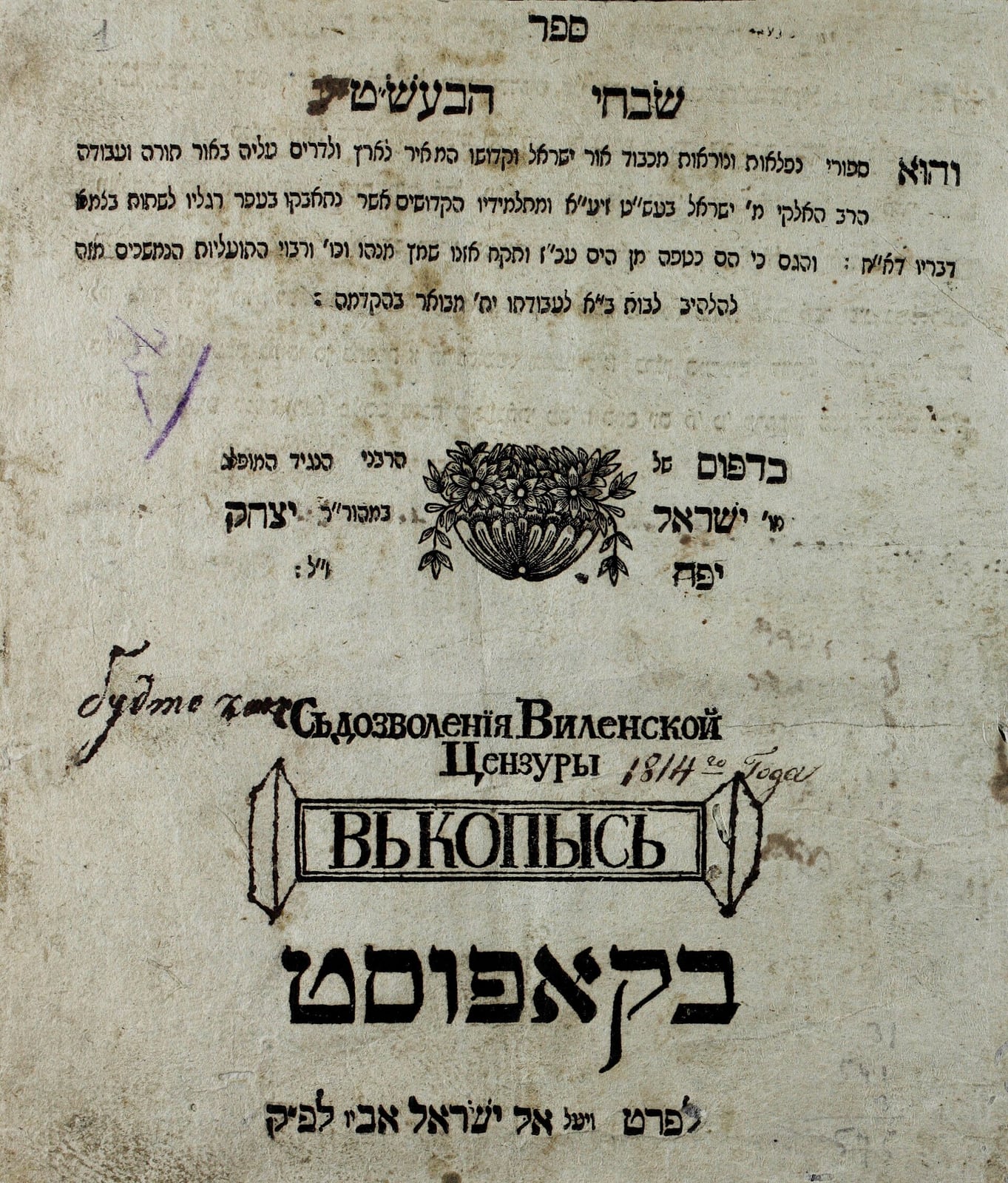
Portada de la primera edición de Shivhei ha-Besht (Kopys, 1814–1815) · Public domain
Dans ses propres mots
«When your teaching is publicised and revealed in the world, and your springs overflow outward.»Igeret ha-Kodesh, respuesta del Mesías al Besht (Ben Porat Yosef, Korets, 1781)
Son idée centrale
Devekut (cleaving to God): *Devekut*, from the Hebrew root "to cleave", designates in the kabbalistic tradition the union of thought with God, which earlier authors reserved for a few and for exceptional moments.
Le voir en contexte
Biographie
5 min de lecture
Traduction assistée à partir de l'original espagnol, en attente de relecture par un traducteur natif.
Un fondateur sans livre
Peu de figures ont autant transformé la vie religieuse juive en laissant si peu de traces écrites. Israël ben Eliezer, que ses disciples appelèrent Baal Shem Tov — « maître du Bon Nom » — ou, d'après ses initiales, le Besht, ne composa aucun traité. Ce que nous savons de lui provient de trois strates de valeur très inégale : une poignée de registres administratifs polonais et de témoignages de contemporains étrangers à son cercle ; une lettre écrite de sa main et imprimée deux décennies après sa mort ; enfin la masse d'enseignements et de récits que ses disciples, puis les disciples de ceux-ci, mirent par écrit à partir de 1780. La recherche des dernières décennies, notamment celle de Moshe Rosman et d'Immanuel Etkes, a appris à distinguer ces strates : l'homme attesté par les documents, le maître dont se souviennent ses élèves et le saint de la légende.
Les années obscures
Il naquit vers 1700 dans la zone frontalière entre la République des Deux Nations et la Moldavie. Le Shivhei ha-Besht, recueil hagiographique imprimé à Kopys en 1814-1815, situe son père, Eliezer, « au pays de Valachie, près de la frontière » ; la tradition hassidique ultérieure, qui fixe la naissance en 1698, privilégie le village podolien d'Okopy, dont aucun document ne témoigne. Le même livre rapporte que ses parents l'eurent dans leur vieillesse, qu'il devint orphelin enfant et que la communauté l'éleva ; qu'il fut aide-maître d'école et bedeau de synagogue, qu'il vécut avec son épouse Hannah, sœur du lettré Abraham Gershon de Kuty, en extrayant de l'argile dans les Carpates, et qu'il tint une auberge.
Ces détails sont invérifiables, et certains obéissent à un schéma hagiographique reconnaissable : le juste caché qui vit parmi les humbles jusqu'à l'heure de se révéler, ou les écrits secrets d'un mystérieux Adam Baal Shem qui parviennent entre ses mains. Ils dessinent pourtant un trait que les documents confirment : le Besht n'est pas issu des grandes académies rabbiniques, mais du monde des métiers modestes, des prédicateurs itinérants et des guérisseurs populaires de la frontière podolienne.
Le baal shem de Międzybóż
Un baal shem était, dans l'Europe orientale du XVIIIe siècle, un spécialiste reconnu : il rédigeait des amulettes, pratiquait des exorcismes, prescrivait des remèdes et protégeait les parturientes et les enfants par l'usage des noms divins. Israël exerça ce métier, et son surnom le proclame. Les premières mentions fiables le montrent déjà connu avant 1738 : Salomon Isaac Halpern se souvenait que son père, rabbin de Jvanets, avait fréquenté le « renommé Israël Baal Shem ». Vers 1740, il s'établit à Międzybóż (aujourd'hui Medjybij, en Ukraine), ville privée des magnats Czartoryski. Les registres fiscaux que Rosman a retrouvés dans les archives de la famille le logent dans une maison appartenant à la communauté et exemptée d'impôts, d'abord comme « kabbaliste », puis, en 1758, comme « Baal Shem doktor ». Loin d'être un rebelle à l'autorité communautaire, c'était un spécialiste religieux que la communauté elle-même entretenait.
L'ascension de l'âme
Le seul texte qui provienne très probablement de sa main est une lettre à son beau-frère Abraham Gershon de Kuty, émigré en Terre d'Israël. Il y raconte qu'au Nouvel An juif de 1746 il accomplit, « comme tu le sais », une conjuration d'ascension de l'âme, traversa les palais célestes et parvint à celui du Messie, à qui il demanda quand il viendrait. La réponse — lorsque ton enseignement sera connu et révélé dans le monde et que tes sources se répandront au-dehors — deviendrait la devise missionnaire du hassidisme. La lettre relate aussi une autre ascension, au Nouvel An de 1749, l'intercession lors d'une épidémie, les accusations de meurtre rituel à Zasław et dans d'autres communautés, et se clôt sur un conseil de prière : chaque lettre renferme des mondes, des âmes et de la divinité, et celui qui prie doit y unir son âme. Confiée à Jacob Joseph de Polonne pour qu'il la porte en Palestine, elle n'atteignit jamais sa destination et fut imprimée en 1781 à la fin du Ben Porat Yosef.
La sainte compagnie
Etkes a montré que le Besht fut à la fois magicien, mystique et guide. Autour de lui se réunit une petite « sainte compagnie » d'hommes de savoir, dont certains rabbins et prédicateurs reconnus, qui acceptèrent son autorité charismatique : Jacob Joseph ha-Kohen, rabbin de Chargorod puis de Polonne ; Dov Ber, le prédicateur de Mezeritch ; Pinhas de Korets ; Nahman de Horodenka. Il ne fonda aucune organisation : le hassidisme en tant que mouvement, avec ses cours, ses dynasties et ses réseaux de fidèles, ne se cristallisa qu'après sa mort, surtout sous Dov Ber et ses disciples. Mais c'est autour de sa figure que se forgea la conviction qu'un saint homme peut intercéder pour la communauté, élever les âmes et attirer la bénédiction — ce qui deviendrait la doctrine du tsaddik.
Ce qu'il enseignait
Ses enseignements ne nous parviennent jamais que cités. Jacob Joseph en introduit des centaines par la formule « j'ai entendu de mon maître » dans le Toledot Yaakov Yosef (1780), le premier livre hassidique imprimé, et des anthologies comme le Tsavaat ha-Rivash (1793) et le Keter Shem Tov (1794-1795) les rassemblèrent en les mêlant à celles du prédicateur de Mezeritch. À travers ce filtre se dessine un noyau cohérent. Le but de la vie religieuse est la devekout, l'attachement de la pensée à Dieu en tout temps, et pas seulement dans la prière ou l'étude ; puisque « toute la terre est pleine de Sa gloire », on peut servir Dieu aussi en mangeant, en travaillant ou en conversant, et jusqu'aux pensées étrangères qui assaillent celui qui prie peuvent être élevées à leur racine. La joie est la condition du service divin et la tristesse son principal obstacle ; l'ascèse des jeûnes et des mortifications, répandue parmi les dévots de son temps, apparaît dans ces sources comme une voie dangereuse. Une sentence recueillie dans le Keter Shem Tov résume cette psychologie spirituelle : là où l'homme pense, là il est tout entier.
Mort et postérité
Il mourut à Międzybóż le premier jour de Chavouot 1760, le 6 sivan 5520 (21 mai selon le comput grégorien). Le Shivhei ha-Besht contient un récit minutieux de ses dernières heures, attribué à des témoins de son cercle. Ses disciples portèrent son nom à travers la Podolie, la Volhynie et la Galicie ; en 1772, les autorités rabbiniques de Vilna excommunièrent les hassidim, et la querelle entre hassidim et mitnagdim marqua pendant un demi-siècle la vie juive d'Europe orientale. Le Shivhei ha-Besht fixa en 1815 l'image du saint thaumaturge ; au XXe siècle, Martin Buber réécrivit ses légendes pour le public européen et Gershom Scholem le situa dans l'histoire de la mystique juive comme l'initiateur de sa « dernière phase ». Sa tombe de Medjybij est aujourd'hui un lieu de pèlerinage, et le débat sur le Besht historique reste ouvert.
Sources: Rosman, Moshe. Founder of Hasidism: A Quest for the Historical Ba'al Shem Tov. Berkeley: University of California Press, 1996; 2.ª ed. Oxford/Portland: Littman Library of Jewish Civilization, 2013. · Etkes, Immanuel. The Besht: Magician, Mystic, and Leader. Trad. Saadya Sternberg. Waltham (Mass.): Brandeis University Press, 2005 (original hebreo: Ba'al ha-Shem, Jerusalén, Merkaz Zalman Shazar, 2000). · Ben-Amos, Dan, y Jerome R. Mintz (trads. y eds.). In Praise of the Baal Shem Tov [Shivhei ha-Besht]: The Earliest Collection of Legends about the Founder of Hasidism. Bloomington: Indiana University Press, 1970 (reed. Northvale: Jason Aronson, 1993). · Biale, David; Assaf, David; Brown, Benjamin; Gellman, Uriel; Heilman, Samuel C.; Rosman, Moshe; Sagiv, Gadi; Wodziński, Marcin. Hasidism: A New History. Princeton: Princeton University Press, 2018. · Scholem, Gershom. Major Trends in Jewish Mysticism. Jerusalén: Schocken, 1941 (reed. Nueva York: Schocken, 1946 y ss.), «Ninth Lecture: Hasidism, the Latest Phase». Trad. esp.: Las grandes tendencias de la mística judía, Madrid, Siruela.
Chronologie
La vie, année après année
Chaque point est un événement documenté. Cliquez pour le lire, avec sa source et son degré de certitude.
v. 17000 ansFrontera podolio-moldava
Birth
Israel, son of Eliezer, is born on the border between Poland and Moldavia. Hasidic tradition gives 18 Elul 5458 (1698) and the village of Okopy; neither is attested in documents.
TraditionRosman, Moshe. Founder of Hasidism: A Quest for the Historical Ba'al Shem Tov. Berkeley: University of California Press, 1996; 2.ª ed. Oxford/Portland: Littman Library of Jewish Civilization, 2013.
Après sa mort
- 1772First bans on the Hasidim
- 1780First Hasidic book
- 1793 – 1795Tsava'at ha-Rivash and Keter Shem Tov
- 1815Shivhei ha-Besht
- 1908The legend according to Buber
- 1996The historical Besht
v. 1700 · 0 ans
Birth
Israel, son of Eliezer, is born on the border between Poland and Moldavia. Hasidic tradition gives 18 Elul 5458 (1698) and the village of Okopy; neither is attested in documents.
Tradition
années 1730 · 30 ans
Years of humble trades
According to Shivhei ha-Besht he works as a teacher's assistant, beadle, clay-digger with his wife Hannah and tavern-keeper, living as a hidden saint until his "revelation". Hagiographic account, unverifiable.
Tradition
v. 1738 · 38 ans
First outside testimony
Before 1738, the year of his death, Rabbi Jacob Halpern of Zhvanets has dealings with "the renowned Israel Baal Shem", as his son Solomon Isaac Halpern, no Hasid, would recall.
Probable
v. 1740 · 40 ans
Settles in Międzybóż
The records of this Czartoryski private town place him from 1740 in a tax-exempt community house, first described as a "kabbalist".
Documenté
septembre 1746 · 46 ans
The Rosh Hashanah ascent
On the New Year of 5507 he performs an "ascent of the soul" in which, according to his own letter, he reaches the palace of the Messiah and asks him when he will come.
Documenté
v. 1747 · 47 ans
His brother-in-law emigrates to Palestine
Abraham Gershon of Kuty, his wife's brother and a student of Kabbalah, settles in the Land of Israel; he will be the addressee of the Besht's letter.
Probable
v. 1750 · 50 ans
The letter to Gershon of Kuty
Having received a letter from his brother-in-law at the Luka fair of 5510, he replies with the account of his ascents of 1746 and 1749. He entrusts it to Jacob Joseph of Polonne, who never makes the journey.
Documenté
1758 · 58 ans
"Baal Shem doktor"
The Międzybóż tax inventory lists the "Baal Shem doktor" in a tax-exempt house.
Documenté
21 mai 1760 · 60 ans
Death on Shavuot
He dies on the first day of Shavuot 5520. Shivhei ha-Besht narrates his last hours according to witnesses from his circle.
Documenté
1772
First bans on the Hasidim
The rabbinic authorities of Vilna and Brody excommunicate the Hasidim: the quarrel with the mitnagdim begins.
Documenté
1780
First Hasidic book
Jacob Joseph of Polonne publishes Toledot Ya'akov Yosef, with hundreds of teachings introduced by "I heard from my master". In 1781, Ben Porat Yosef prints the Besht's letter.
Documenté
1793 – 1795
Tsava'at ha-Rivash and Keter Shem Tov
The anthologies Tsava'at ha-Rivash (1793) and Keter Shem Tov (Zolkiew, 1794–1795) are printed, mixing teachings of the Besht and the Maggid of Mezeritch.
Documenté
1815
Shivhei ha-Besht
Israel Jaffe prints in Kopys the tales collected by Dov Ber of Linits: the Besht's hagiography is born. Yiddish editions appear the same year.
Documenté
1908
The legend according to Buber
Martin Buber publishes Die Legende des Baalschem, which introduces the Besht to a non-Jewish European readership.
Documenté
1996
The historical Besht
Moshe Rosman publishes Founder of Hasidism, based on the Czartoryski archives: the Besht appears as a religious specialist integrated into the community.
Documenté
Œuvres
Œuvres essentielles
Les œuvres sans lesquelles on ne comprend pas son héritage.
Baal Shem Tov
Igeret ha-Kodesh (Letter to Abraham Gershon of Kuty)
Correspondance · v. 1750
Igeret ha-Kodesh (Letter to Abraham Gershon of Kuty)
אגרת הקודש (אגרת הבעש״ט לר׳ גרשון מקוטוב)
Letter to his brother-in-law, who had emigrated to the Land of Israel, written shortly after 1750. It recounts the ascent of the soul on the New Year of 1746, in which the Besht reaches the palace of the Messiah and asks him when he will come ("when your teaching is publicised and your springs overflow outward"), a second ascent in 1749, his intercession during an epidemic and against ritual-murder accusations in Zasław and two other communities, and closes with instruction on prayer through the letters. It is the key document for his self-understanding as mystic and intercessor, and the origin of Hasidism's missionary drive.
3 éditions · amazon.com

Compilation postérieure · 1793
Tsava'at ha-Rivash (The Testament of Rabbi Israel Baal Shem)
צוואת הריב״ש
Some hundred and forty short paragraphs on the inner life: equanimity before praise and contempt (*hishtavut*), constant cleaving to God (*devekut*), prayer in joy rather than in tears, the raising of stray thoughts, distrust of sadness and scruples, and moderate asceticism. It was one of the books the *mitnagdim* cited as proof of Hasidic heterodoxy, and at the same time one of the movement's most read manuals of piety. Jacob Immanuel Schochet's annotated edition (Kehot) traces the sources of each paragraph.
3 éditions · amazon.com

Compilation postérieure · 1794
Keter Shem Tov (Crown of the Good Name)
כתר שם טוב
It is the first anthology devoted explicitly to the Besht's teachings. In two parts, it gathers comments on biblical verses and sayings on prayer, humility, the divine presence in all things and the relation between the righteous man and the people. Some of the most quoted maxims come from here, such as that a man is wholly where his thought is. The Kehot edition (*Keter Shem Tov ha-Shalem*), prepared by J. I. Schochet, corrects the text and adds sources and commentary.
3 éditions · amazon.com

Compilation postérieure · 1815
Shivhei ha-Besht (In Praise of the Baal Shem Tov)
שבחי הבעש״ט
Some two hundred and fifty narratives that follow the Besht's life from the legend of his father, captive in a distant land, to his death on Shavuot 1760: the orphaned childhood, the years as a hidden saint, the revelation, the healings and exorcisms, the ascents of the soul, the encounters with disciples and opponents, the thwarted journey to the Land of Israel. Each tale usually states from whom the compiler heard it, which allows historians to reconstruct chains of transmission. The annotated English translation by Dan Ben-Amos and Jerome R. Mintz (1970) is the reference in that language.
5 éditions · amazon.com
Toute son œuvre (16)
Baal Shem Tov
Toledot Ya'akov Yosef
The Conscious LibraryToledot Ya'akov Yosef
1780
Baal Shem Tov
Ben Porat Yosef
The Conscious LibraryBen Porat Yosef
1781
Baal Shem Tov
Tsafnat Pa'neah
The Conscious LibraryTsafnat Pa'neah
1782
Baal Shem Tov
Ketonet Passim
The Conscious LibraryKetonet Passim
1866
Baal Shem Tov
Likkutim Yekarim (Precious Gleanings)
The Conscious LibraryLikkutim Yekarim (Precious Gleanings)
1792
Baal Shem Tov
Degel Mahaneh Efrayim
The Conscious LibraryDegel Mahaneh Efrayim
1810
Baal Shem Tov
Sefer Baal Shem Tov (The Book of the Baal Shem Tov)
The Conscious LibrarySefer Baal Shem Tov (The Book of the Baal Shem Tov)
1938
Baal Shem Tov
Kabbalistic commentary on Psalm 107 (attributed)
The Conscious LibraryKabbalistic commentary on Psalm 107 (attributed)
1804
Baal Shem Tov
Letters of the "Kherson genizah" (spurious)
The Conscious LibraryLetters of the "Kherson genizah" (spurious)
1918

Founder of Hasidism (Moshe Rosman)
1996
Baal Shem Tov
The Besht: Magician, Mystic, and Leader (Immanuel Etkes)
The Conscious LibraryThe Besht: Magician, Mystic, and Leader (Immanuel Etkes)
2000

The Circle of the Baal Shem Tov (Abraham J. Heschel)
1985
Citations
Citations localisées dans une œuvre précise. Chacune porte sa provenance et son degré de fiabilité.
When your teaching is publicised and revealed in the world, and your springs overflow outward.בעת שיתפרסם למודך ויתגלה בעולם ויפוצו מעינותיך חוצה
VérifiéeIgeret ha-Kodesh, respuesta del Mesías al Besht (Ben Porat Yosef, Korets, 1781)
Dernières paroles
Attribution traditionnelle
«I know that the clock has stopped, and I do not worry about myself, for I know for certain that I shall go out by this door and at once enter by another.»ידעתי שעמד הזייגר ואין אני דואג על עצמי כי יודע אני בבירור שאצא מפתח זה ותיכף אכנס בפתח אחר
Shivhei ha-Besht (Kopys, 1815), in the account of his death on Shavuot 1760, which the compiler says he heard from Rabbi Jacob of Międzybóż. After these words he is said to have asked those present to recite the psalm "May the pleasantness of the Lord" (Ps 90:17), to have taught his disciples about the upper worlds and to have expired covered with a sheet. It is second-hand testimony written down half a century later, within a hagiographic work.
Source: Dov Ber ben Shmuel de Linits, Shivhei ha-Besht, Kopys, 1814–1815; texto hebreo de la edición de Kopys en Sefaria (dominio público).
Interroger
Ce que répond son œuvre
Douze grandes questions de l'humanité et ce que ses textes permettent d'y répondre, références à l'appui. Nous ne lui prêtons jamais de paroles.
Qu'est-ce que l'Absolu ? Dieu existe-t-il ?
The King one serves fills everything: in every letter there is divinity
À la fois personnel et impersonnelIl le dit expressément
The Baal Shem Tov wrote no books: apart from one letter, his teachings come to us through the homilies of his disciples, above all Jacob Joseph of Polonne, and through later anthologies. In those sources the God of Israel to whom one prays and to whom one cleaves (devekut) is at the same time the presence that fills everything, so that no place is empty of Him. In his own letter to his brother-in-law, instructing him on prayer, he states that in every letter there are worlds, souls and divinity. From Lurianic Kabbalah he takes the idea of divine sparks scattered in things, which man raises when he eats, works or prays with intention. God is thus the King served with joy and the vitality hidden in each thing: concealment exists only for one who cannot see Him.
Comparer cette question avec d'autres maîtresQui suis-je ? Existe-t-il un vrai soi ?
A soul that ascends, and a man is where his thought is
Une âme créée et immortelleCela se déduit de sa doctrine
The Baal Shem Tov wrote no treatise on the soul; what we know of his view of the self comes through his letter and the sayings his disciples transmitted. In the letter to his brother-in-law he tells how his soul ascended, at the New Year of 1746, to the palace of the Messiah: the soul can leave the body and travel through the upper worlds. The anthologies record a maxim that shifts the centre of the person: wherever a man thinks with his thought, there he is entirely. The true self is the soul cleaving to God; the ego that compares itself and grows vain is a hindrance, which is why he warns that whoever serves with devotion must not think himself greater than his fellow, for he is a creature like the others, made to serve.
Comparer cette question avec d'autres maîtresPourquoi souffrons-nous ?
Sadness distances from God; behind every concealment He is there
La séparation d'avec DieuCela se déduit de sa doctrine
The teachings his disciples attribute to the Baal Shem Tov place the greatest evil not in outward misfortune but in the sadness that separates from God. Weeping, says the Testament of Rabbi Israel, is very bad, because the Creator is served with joy; only weeping for joy is good. Melancholy and scruples are traps that draw one away from cleaving to God (devekut). Suffering itself is not foreign to God: according to a teaching his disciples transmit, God hides behind the walls of misfortune like a king behind illusory walls, and whoever knows He is there dissolves the concealment. In his letter the Besht also appears as an intercessor in epidemics and persecutions: the community's pain calls for prayer, not resignation.
Comparer cette question avec d'autres maîtresQue se passe-t-il après la mort ?
To go out by one door and at once enter by another
Vie éternelle et résurrectionCela se déduit de sa doctrine
The Baal Shem Tov left no written teaching on death; what is known comes through his letter and through tradition. In the letter to his brother-in-law he describes how, in his ascents of the soul, he saw souls of the living and the dead rising from world to world, and how he himself interceded for them: the life of the soul continues and can be helped. Hasidic tales, gathered in In Praise of the Baal Shem Tov, speak of souls returning in another body to repair what they left undone, according to the kabbalistic doctrine of transmigration. The same book narrates his death at Shavuot in 1760: he is said to have declared that he did not fear for himself, because he knew he would go out by one door and at once enter by another.
Comparer cette question avec d'autres maîtresComment atteint-on la libération ou le salut ?
Cleaving to God with joy in every act, the bodily included
Par la dévotion et l'abandonIl le dit expressément
The teachings his disciples attribute to the Baal Shem Tov place at the centre cleaving to God (devekut), not as a state reserved for ascetics but as a constant orientation of the heart. It is reached through prayer made with joy, which is more acceptable than prayer made with weeping, through equanimity before praise and contempt, and through serving God in bodily things: eating, working, conversing with the intention of raising the divine sparks present in everything. The Besht discouraged excessive fasting and mortification, common in the pious circles of his time. Personal and collective redemption are linked: in his letter, the Messiah answers him that he will come when his teaching is spread abroad and his springs overflow outward.
Comparer cette question avec d'autres maîtresFaut-il un maître ?
The righteous man raises his generation; the people reach God through him
IndispensableCela se déduit de sa doctrine
The Baal Shem Tov was master of a circle of disciples who ascribed singular authority to him, and later Hasidism made the righteous man (tsaddik) the centre of religious life. The teachings transmitted by Jacob Joseph of Polonne describe the relationship between «men of form», the sages who cleave to God, and «men of matter», the simple people, who are raised through them; the righteous man is responsible for his generation. According to the tradition recorded in Hasidic tales, the Besht himself had a heavenly master, the prophet Ahijah the Shilonite. His letter shows him interceding for entire communities. For the simple people, the way to God passed through closeness to a righteous man.
Comparer cette question avec d'autres maîtresLe monde est-il réel ?
No place is empty of God: divine sparks in all things
Manifestation du divinIl le dit expressément
The teachings transmitted by the Baal Shem Tov's disciples make the world the stage of divine presence: the whole earth is full of His glory, and no place is empty of Him. From Lurianic Kabbalah they take the idea that at creation sparks of holiness were scattered in things, and that man raises them when he uses the world with intention: when eating, trading, working or conversing. Hence the service of God in bodily things that marked nascent Hasidism. In his letter the Besht himself states that in every letter there are worlds, souls and divinity. The world is neither illusion nor obstacle but a garment of the divine: what conceals is the same as what reveals, for one who knows how to look.
Comparer cette question avec d'autres maîtresQu'est-ce que l'amour ?
To love God with joy and one's fellow without thinking oneself above him
L'amour de Dieu et du prochainCela se déduit de sa doctrine
In the transmitted teachings of the Baal Shem Tov, love of God takes the form of joyful cleaving (devekut): serving Him with joy, in prayer and in every act. That love does not set the devout apart from others. The Testament of Rabbi Israel warns that whoever serves with devotion should not say in his heart that he is greater than his fellow, for he is one more creature, made for service. Hasidic tales present the Besht as someone who sought out the simple, the unlettered and sinners, and who valued the prayer of the unlearned man above learning without heart. Love for every Jew, which Hasidism made one of its marks, goes back in tradition to his figure.
Comparer cette question avec d'autres maîtresSommes-nous libres ou tout est-il déterminé ?
Nothing happens by chance: what one encounters is a task for him
Le destin et la responsabilitéCela se déduit de sa doctrine
The teachings attributed to the Baal Shem Tov extend divine providence to everything: nothing a man sees or hears reaches him by chance, but so that he may learn something with which to serve God. That providence does not cancel choice: every encounter, every place one comes to and every object one touches contains sparks that only he can raise, and whether he does so depends on his intention. The Testament of Rabbi Israel teaches equanimity: to accept praise and contempt alike, because everything comes from God. Freedom does not consist in escaping destiny but in responding well to what it brings. Later tradition developed this idea as individual providence reaching even the leaf the wind stirs.
Comparer cette question avec d'autres maîtresPourquoi méditer ou prier ?
Praying with joy, with the whole body, cleaving to every letter
L'amitié avec DieuIl le dit expressément
Prayer is at the centre of the teachings the disciples attribute to the Baal Shem Tov. It must be done with joy, which makes it more acceptable than prayer with weeping, and with the whole body and all one's strength, so that the one who prays cleaves to God in every word. The Testament of Rabbi Israel describes it with a bold image taken from Kabbalah: prayer is union with the divine Presence (Shekhinah). The strange thoughts that assail the one praying are not simply rejected but raised to their root. In his letter the Besht himself advises his brother-in-law to concentrate his intention on the letters of each word, because in every letter there are worlds, souls and divinity.
Comparer cette question avec d'autres maîtresLa raison peut-elle connaître l'ultime ?
The simple man's sincere prayer outweighs learning without fear of God
L'ultime est au-delà du mentalCela se déduit de sa doctrine
The Baal Shem Tov was not a first-rank Talmudic scholar nor did he claim to be, and the teachings his disciples transmit shift the centre of religious life from study to cleaving to God. Jacob Joseph of Polonne, in the books where he quotes his master, harshly criticises scholars who study out of pride or profession, without fear of God, and Hasidic tales present the Besht valuing the prayer of the simple man above casuistry. Torah study keeps its value, but it must be done with devotion, attending to the light of the letters more than to sharpness of reasoning. What unites with God is not the intellect that argues but the soul that cleaves.
Comparer cette question avec d'autres maîtresSe retirer du monde ou le transformer ?
Serving God in bodily things: eating, trading and speaking with intention
La contemplation dans l'actionIl le dit expressément
The Baal Shem Tov lived in the world: he was a healer, a writer of amulets and a religious specialist in the community of Międzybóż, and his life was spent among people, not in isolation. The teachings his disciples attribute to him make that presence a doctrine: God is served also in bodily things, in food, trade, conversation and work, because in everything there are divine sparks to raise. That is why he discouraged the excessive fasting and mortification common among the pious of his time. His letter also shows him occupied with his people's troubles, interceding in epidemics and against blood-libel accusations. Cleaving to God does not require leaving the world but inhabiting it with another intention.
Comparer cette question avec d'autres maîtres
Affinités et tensions
Affinités et tensions
Calculées question par question à partir de ses positions. La raison de chaque accord ou de chaque désaccord s'affiche d'un clic.
Pense comme
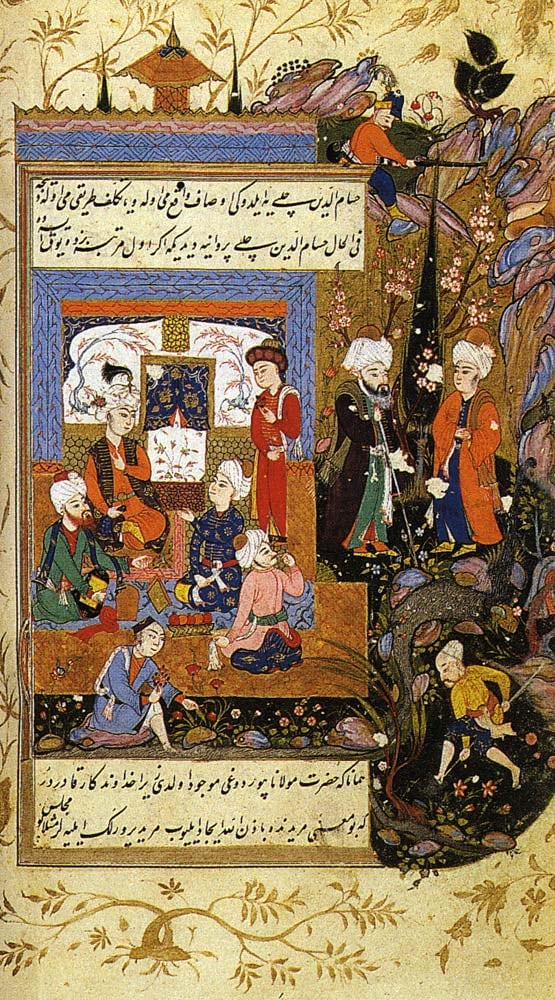
Rumi
Ils concordent sur: Qui suis-je ? Existe-t-il un vrai soi ? · Pourquoi souffrons-nous ? · Que se passe-t-il après la mort ?

Chaitanya Mahaprabhu
Ils concordent sur: Qui suis-je ? Existe-t-il un vrai soi ? · Pourquoi souffrons-nous ? · Que se passe-t-il après la mort ?
Hafez
Ils concordent sur: Qui suis-je ? Existe-t-il un vrai soi ? · Pourquoi souffrons-nous ? · Que se passe-t-il après la mort ?
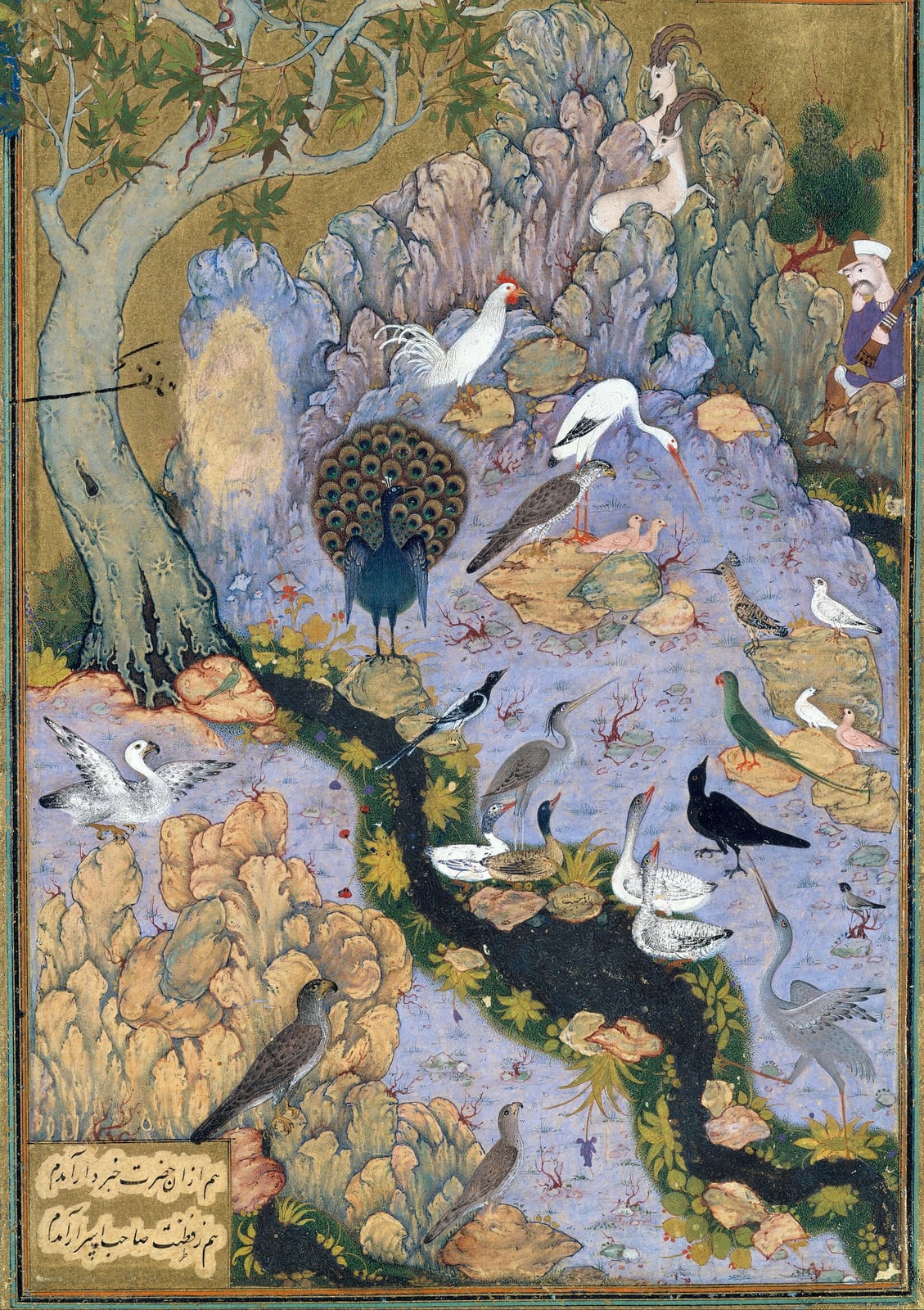
Attar
Ils concordent sur: Qu'est-ce que l'Absolu ? Dieu existe-t-il ? · Pourquoi souffrons-nous ? · Que se passe-t-il après la mort ?
Pense autrement que

Pema Chödrön
Ils s'opposent sur: Qui suis-je ? Existe-t-il un vrai soi ? · Que se passe-t-il après la mort ?

Epicurus
Ils s'opposent sur: Qui suis-je ? Existe-t-il un vrai soi ? · Que se passe-t-il après la mort ?

The 14th Dalai Lama (Tenzin Gyatso)
Ils s'opposent sur: Qui suis-je ? Existe-t-il un vrai soi ? · Que se passe-t-il après la mort ?
Jiddu Krishnamurti
Ils s'opposent sur: Comment atteint-on la libération ou le salut ? · Faut-il un maître ?
Anecdotes et récits
Anecdotes et récits
Témoignage1746
The question to the Messiah
Origine du récit: First-person account by the Besht himself in his letter to Abraham Gershon of Kuty, printed in 1781 in Ben Porat Yosef. What is documented is that the Besht wrote that he had this experience, not the experience itself; Etkes and Rosman read it as evidence of his self-understanding as a mystical intercessor.
Récit hagiographiquedécada de 1740–1750
The pipe and the weeping
Origine du récit: Shivhei ha-Besht (Kopys, 1815), a tale the compiler Dov Ber of Linits says he heard from Jacob Joseph of Polonne himself and from Rabbi Gedaliah. Jacob Joseph's forced departure from Shargorod is accepted by historians; the details of the conversion are tradition.
Récit hagiographiquec. 1750
The shoes of Simhat Torah
Origine du récit: Shivhei ha-Besht (Kopys, 1815). The chain of transmission is not stated. Baruch of Międzybóż (1753–1811), the Besht's grandson, is a historical figure.
Récit hagiographique1760
The last lesson
Origine du récit: Shivhei ha-Besht (Kopys, 1815), section on his death; the compiler says he heard it from Rabbi Jacob of Międzybóż, who later died in the Land of Israel, and cites Leib Kessler as witness to the soul's departure.
Documenté1740–1760
The "Baal Shem doktor" in the account books
Origine du récit: Rosman, "Miedzyboz and Rabbi Israel Baal Shem Tov", Zion 52 (1987), and Founder of Hasidism (1996), based on the Czartoryski holdings in Kraków.
Invérifiablesin fecha
The boy's whistle on Yom Kippur
Origine du récit: It does not appear in the Kopys edition of Shivhei ha-Besht nor in the eighteenth-century anthologies consulted. It circulates in twentieth-century collections of Hasidic tales and in popular teaching, with variants (flute, whistle, the recited alphabet); we have not been able to trace its first printed appearance.
Source: Ben-Amos, Dan, y Jerome R. Mintz (trads. y eds.). In Praise of the Baal Shem Tov [Shivhei ha-Besht]: The Earliest Collection of Legends about the Founder of Hasidism. Bloomington: Indiana University Press, 1970 (reed. Northvale: Jason Aronson, 1993).
Enseignements
Enseignements
Les notions qui structurent sa pensée, expliquées dans leur contexte.
Devekut (cleaving to God)devekut
It takes up kabbalistic mysticism (Nahmanides, the Zohar, Safed Kabbalah) and redirects it toward everyday life.
Source: Scholem, Gershom. Major Trends in Jewish Mysticism. Jerusalén: Schocken, 1941 (reed. Nueva York: Schocken, 1946 y ss.), «Ninth Lecture: Hasidism, the Latest Phase». Trad. esp.: Las grandes tendencias de la mística judía, Madrid, Siruela.
Worship through corporeality (avodah be-gashmiyut)avodah-be-gashmiyut
It develops the Lurianic doctrine of raising the sparks in an ethical and everyday direction.
Hishtavut (equanimity)hishtavut
It has precedents in the ethics of Bahya ibn Paquda and in Safed Kabbalah; in Hasidism it becomes a central virtue.
Raising of stray thoughtshaalat-mahshavot-zarot
Application of the Lurianic doctrine of sparks to the psychology of prayer.
Ascent of the soul (aliyat ha-neshamah)aliyat-ha-neshamah
It goes back to the mysticism of the palaces (hekhalot) and to practical Kabbalah; in the Besht it joins the figure of the intercessor.
Source: Etkes, Immanuel. The Besht: Magician, Mystic, and Leader. Trad. Saadya Sternberg. Waltham (Mass.): Brandeis University Press, 2005 (original hebreo: Ba'al ha-Shem, Jerusalén, Merkaz Zalman Shazar, 2000).
Joy (simhah)simha
A reaction against the penitential and ascetic piety widespread after the Sabbatean crisis; it has roots in the Talmud ("the Presence does not rest amid sadness").
Vidéos
Vidéos
Enregistrements, entretiens et documentaires. Les vidéos sont lues depuis YouTube ; elles ne sont pas hébergées ici.
ר' ישראל בעל שם טוב (הבעש"ט) וראשית החסידות
Conférence· HE· 73 min
Hebrew University of Jerusalem
Prof. Moshe Rosman on "Yisrael Ba'al Shem Tov and the Beginnings of Hasidism"
Conférence· EN· 78 min
Brooklyn College Judaic Studies Department
The Baal Shem Tov | An Introduction to Hasidism | Rabbi Dr. Nehemia Polen
Conférence· EN· 60 min
Beit Avi Chai
בעקבות הבעש"ט | שיעור 1 - דמותו המיתולוגית | פרופ' יונתן מאיר
Conférence· HE· 40 min
בית אבי חי (Beit Avi Chai)
בעקבות הבעש"ט | שיעור 2 - היסטוריה ותיאולוגיה | פרופ' יונתן מאיר
Conférence· HE· 44 min
בית אבי חי (Beit Avi Chai)
Who Was The Ba'al Shem Tov? Founder of Hasidism | Jewish History Lecture | Dr. Henry Abramson
Conférence· EN· 60 min
Henry Abramson
Prof. Marcin Wodziński | Understanding Hasidism: Theology, Tales, Charisma | 2026 Buber Lecture
Conférence· EN· 71 min
The Israel Academy of Sciences and HumanitiesChaîne officielle
Historical Atlas of Hasidism by Marcin Wodziński
Conférence· EN· 73 min
YIVO Institute for Jewish ResearchChaîne officielle
The Origins of Hasidic Judaism: The Ba'al Shem Tov | The Jewish Story | Unpacked
Documentaire· EN· 6 min
Unpacked
Fernando Carbonell - Baal Shem Tov, un precursor de nuestro tiempo
Conférence· ES· 56 min
EspacioRonda
JaZ"L: Las Vidas de los Sabios Asquenazi; 14 El Baal Shem Tov y el Jasidismo
Conférence· ES· 100 min
Rabino Rigoberto Manny Viñas
HEBRAICA - Cycle Histoire Juive - Roger Attali : Le Baal Shem Tov
Voir sur YouTube
Cette vidéo ne peut pas être intégrée ; elle s'ouvre sur YouTube.
HEBRAICA - Cycle Histoire Juive - Roger Attali : Le Baal Shem Tov
Conférence· FR· 92 min
Association Hebraica
Galerie
Galerie
Images dont la licence a été vérifiée. Chacune conserve son auteur et son attribution.
Relations
Relations
Influences, filiations et affinités. On distingue la relation documentée de la similitude identifiée par analyse.
A influencé
Buber retold the Besht's legends in German (*Die Legende des Baalschem*, 1908) and saw in Hasidism a model of dialogical religious life; his reading spread the figure of the Besht in Europe and was criticised by Scholem for its selectivity.
Relation documentée
Idées proches de
Opposite poles of Jewish spirituality according to a frequent reading: the Aristotelian rationalism of the *Guide of the Perplexed* versus the Besht's affective mysticism. Both share, however, the pursuit of an intellectual or cleaving love of God as the end of religious life.
Similitude identifiée par analyse
Idées proches de
The *hishtavut* (equanimity) of *Tsava'at ha-Rivash* and Eckhartian detachment (*Abgeschiedenheit*) propose an evenness of mind founded on union with God; there is no historical connection.
Similitude identifiée par analyse
Idées proches de
Both embody a religiosity of joy, simplicity and closeness to the humble as opposed to learned or penitential piety, and both are known above all through collections of tales by their disciples.
Similitude identifiée par analyse
Idées proches de
Song, dance and joyful ecstasy as forms of prayer link nascent Hasidism and the Mevlevi tradition; no contact between them is documented.
Similitude identifiée par analyse
Idées proches de
Charismatic mystics without written works, known through the accounts of their circles, who valued the devotion of the heart above learning.
Similitude identifiée par analyse
Idées proches de
The claim that "there is no place empty of Him" has led to talk of Hasidic panentheism; the comparison with Spinozan immanence is frequent in historiography, though the premises are very different.
Similitude identifiée par analyse
Lié depuis d'autres fiches
Sources
Sources
Bibliographie et catalogues consultés pour cette fiche.
- Rosman, Moshe. Founder of Hasidism: A Quest for the Historical Ba'al Shem Tov. Berkeley: University of California Press, 1996; 2.ª ed. Oxford/Portland: Littman Library of Jewish Civilization, 2013.
- Etkes, Immanuel. The Besht: Magician, Mystic, and Leader. Trad. Saadya Sternberg. Waltham (Mass.): Brandeis University Press, 2005 (original hebreo: Ba'al ha-Shem, Jerusalén, Merkaz Zalman Shazar, 2000).
- Ben-Amos, Dan, y Jerome R. Mintz (trads. y eds.). In Praise of the Baal Shem Tov [Shivhei ha-Besht]: The Earliest Collection of Legends about the Founder of Hasidism. Bloomington: Indiana University Press, 1970 (reed. Northvale: Jason Aronson, 1993).
- Biale, David; Assaf, David; Brown, Benjamin; Gellman, Uriel; Heilman, Samuel C.; Rosman, Moshe; Sagiv, Gadi; Wodziński, Marcin. Hasidism: A New History. Princeton: Princeton University Press, 2018.
- Scholem, Gershom. Major Trends in Jewish Mysticism. Jerusalén: Schocken, 1941 (reed. Nueva York: Schocken, 1946 y ss.), «Ninth Lecture: Hasidism, the Latest Phase». Trad. esp.: Las grandes tendencias de la mística judía, Madrid, Siruela.
- Wikidata, Q319062: «Baal Shem Tov» (Israel ben Eliezer), 47 enlaces entre wikis.
- Israel Baal Shem Tov, Igeret ha-Kodesh (carta a Abraham Gershon de Kuty), impresa en Jacob Joseph de Polonne, Ben Porat Yosef, Korets, 1781; texto hebreo en Sefaria (ed. Eichen, Jerusalén, 2011).
- Tsava'at ha-Rivash (primera impresión 1793); texto hebreo de la edición de Varsovia, 1913, en Sefaria (dominio público).
- Keter Shem Tov, compilado por Aharon ha-Kohen de Apta, Zolkiew, 1794–1795; texto hebreo en Sefaria.
- Dov Ber ben Shmuel de Linits, Shivhei ha-Besht, Kopys, 1814–1815; texto hebreo de la edición de Kopys en Sefaria (dominio público).
- Kohler, Kaufmann, y Louis Ginzberg. «Ba'al Shem-Ṭob, Israel b. Eliezer». The Jewish Encyclopedia, vol. 2. Nueva York: Funk & Wagnalls, 1902.
- Idel, Moshe. Hasidism: Between Ecstasy and Magic. Albany: State University of New York Press, 1995.
- Schochet, Jacob Immanuel (trad. y notas). Tzava'at Harivash: The Testament of Rabbi Israel Baal Shem Tov. Brooklyn: Kehot Publication Society, 1998.
- Wikimedia Commons, categoría «Baal Shem Tov» y subcategorías (licencias leídas por la API imageinfo).
- Jacob Joseph ha-Kohen de Polonne, Toledot Ya'akov Yosef, Korets, 1780; texto hebreo en Sefaria.
- Buber, Martin. Die Legende des Baalschem. Fráncfort del Meno: Rütten & Loening, 1908 (trad. ingl. de Maurice Friedman, The Legend of the Baal-Shem, Nueva York, Harper, 1955).
- Sefaria, «Ba'al Shem Tov» (Sefer Baal Shem Tov, antología de Shimon Menahem Mendel Wodnik de Gowarczów, Łódź, 1938).
- Ayant droit
- Dominio público: la carta del Besht y las antologías de los siglos XVIII–XIX. Las traducciones y ediciones anotadas modernas (Kehot, Indiana University Press, Jason Aronson, BST Publishing) tienen derechos de sus editores y traductores.
En attente de confirmation
Ce que cette fiche n'a pas encore pu établir. Nous préférons le dire plutôt que de combler.
- Localizar ediciones españolas con ISBN de Tsava'at ha-Rivash, Keter Shem Tov y Shivhei ha-Besht (Open Library no registra ninguna; consultar el catálogo de Kehot Lubavitch Sudamericana y de la Biblioteca Nacional de España).
- Identificar al conferenciante del vídeo de la Universidad Hebrea (2qMI8RKtHgs): el título no lo indica.
- Verificar en Etkes (2005, cap. 2) la fecha exacta de redacción de la carta (la recepción de la carta de Gershon en la feria de Luka de 5510 da un término post quem de 1750) y la procedencia de la versión larga.
- Confirmar en catálogo la primera edición de Tsava'at ha-Rivash (1793): lugar de impresión (Zolkiew u Ostroh, según fuentes).
- Rastrear la primera aparición impresa del relato del muchacho que silba en Yom Kipur.
- Comprobar si el importador de la sala de lectura admite Sefaria (formato «other»); si no, sustituir por Wikisource hebreo o por los escaneos de la Biblioteca Nacional de Israel.
- Buscar vídeos de televisiones públicas (Kan, Arte) o del Museo ANU sobre el Besht y el jasidismo.
Recherche effectuée le 2026-10-25