Judaïsme
Baruch Spinoza
ברוך שפינוזה
1632 – 1677Personne historiquement documentée
Baruch Spinoza (1632-1677), philosophe néerlandais d'origine juive portugaise, fut exclu de la communauté juive d'Amsterdam en 1656 et vécut du polissage de lentilles. Son Tractatus theologico-politicus (1670) fonda la critique biblique moderne et défendit la liberté de penser ; son Éthique, publiée à titre posthume en 1677, identifie Dieu à la Nature et propose un chemin de liberté par la connaissance. Tenu pour athée pendant un siècle, il est l'une des figures centrales du rationalisme et des Lumières radicales.
- œuvres
- 22œuvres
- éditions
- 74éditions
- citations
- 12citations
- vidéos
- 15vidéos
- images
- 10images
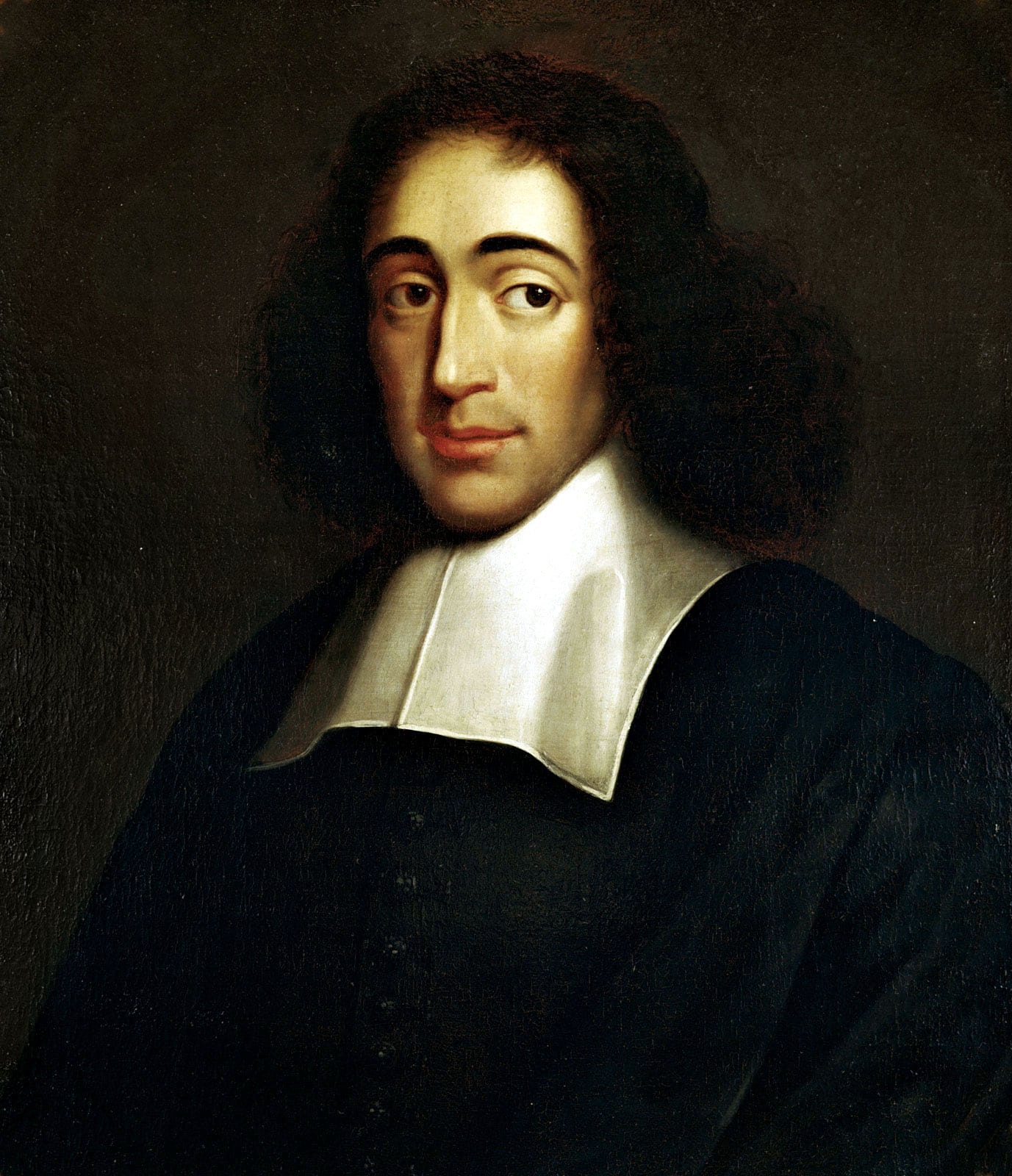
Retrato anónimo de Spinoza (Wolfenbüttel) · Public domain
Dans ses propres mots
«By God, I mean a being absolutely infinite—that is, a substance consisting in infinite attributes, of which each expresses eternal and infinite essentiality.»Ética, I, definición 6 (trad. inglesa de Elwes)

Son idée centrale
Deus sive Natura: God or Nature: The core of the Ethics is that there exists only one substance, absolutely infinite, which is cause of itself and of which everything else is a mode or affection: that substance is God, and it is also Nature.
Le voir en contexte
Biographie
5 min de lecture
Traduction assistée à partir de l'original espagnol, en attente de relecture par un traducteur natif.
La nation portugaise d'Amsterdam
Baruch Espinosa naquit à Amsterdam le 24 novembre 1632, au sein de la communauté juive portugaise, formée de descendants de conversos qui avaient fui l'Inquisition ibérique et qui, dans la république des Provinces-Unies, pouvaient revenir ouvertement au judaïsme. Son père, Miguel, négociant importateur estimé, devint l'un des administrateurs de la congrégation Talmud Torah ; sa mère, Hanna Débora, mourut quelques semaines avant que l'enfant n'eût six ans. Baruch fréquenta l'école de la communauté, où il apprit l'hébreu, lut la Torah et ses commentaires, et reçut un enseignement donné en espagnol et en portugais, ses langues familiales. Vers dix-sept ans, il interrompit ses études pour travailler dans l'affaire familiale, que les guerres anglo-néerlandaises allaient ruiner. À la mort de son père, en 1654, il en prit la direction avec son frère Gabriel.
Le herem de 1656
Le 27 juillet 1656, les dirigeants de la congrégation prononcèrent contre lui, alors âgé de vingt-trois ans, un herem, une sentence d'exclusion d'une dureté sans précédent dans la communauté : elle le maudissait le jour et la nuit, à son coucher et à son lever, et interdisait à quiconque de lui parler, de lire ses écrits ou de l'approcher à moins de quatre coudées. Le texte ne précise pas les « horribles hérésies » qu'on lui reprochait ; des témoignages postérieurs laissent entendre qu'il niait déjà l'immortalité de l'âme, l'attribution du Pentateuque à Moïse et l'élection d'Israël. Il ne se rétracta jamais, et la sentence ne fut jamais levée. Selon son premier biographe, le pasteur luthérien Johannes Colerus, il répondit par une apologie en espagnol qui ne nous est pas parvenue. Il ne se convertit pas au christianisme et n'entra dans aucune Église ; dès lors, il signa Benedictus, la forme latine de son prénom.
Le latin, Descartes et le cercle des amis
À l'école de Franciscus van den Enden, ancien jésuite aux idées radicales, il apprit le latin et découvrit la philosophie de Descartes, qui serait à la fois son point de départ et son principal adversaire. Il fréquenta des collégiants et des mennonites dissidents, chrétiens sans Église qui discutaient l'Écriture sans clergé, et s'entoura d'un groupe d'amis — Jarig Jelles, Pieter Balling, Lodewijk Meyer, Simon de Vries, Johannes Bouwmeester, l'éditeur Jan Rieuwertsz — qui lisaient en réunion les ébauches de sa philosophie. Vers 1658, il suivit des cours à l'université de Leyde.
Rijnsburg et Voorburg : le polisseur de lentilles
En 1661, il s'établit à Rijnsburg, près de Leyde, où il gagna sa vie en polissant des lentilles pour microscopes et télescopes, un savoir-faire dont Christiaan Huygens loua la qualité. Il y rédigea le Traité de la réforme de l'entendement, resté inachevé, et le Court Traité de Dieu, de l'homme et de la santé de son âme, qui ne fut connu qu'au XIXe siècle grâce à deux copies néerlandaises. En 1663, il publia sous son nom les Principes de la philosophie de Descartes, augmentés en appendice des Pensées métaphysiques : ce fut le seul ouvrage qu'il signa de son vivant. La même année, il s'installa à Voorburg, près de La Haye, où il poursuivit l'Éthique et entretint une correspondance avec Henry Oldenburg, secrétaire de la Royal Society.
Le Traité théologico-politique
En 1665, il interrompit l'Éthique pour écrire un livre de combat. Le Tractatus theologico-politicus parut en 1670, anonyme, sous une fausse adresse d'imprimeur qui le situait à Hambourg. Il soutenait que la Bible doit se lire comme n'importe quel autre texte historique, à partir de sa langue et de son contexte ; que Moïse n'a pas écrit le Pentateuque ; que les miracles, entendus comme des violations des lois de la nature, sont impossibles ; et que la vraie religion se réduit à la justice et à la charité. Sa conclusion politique était que la fin de l'État est la liberté, et que la liberté de philosopher non seulement peut être accordée sans dommage pour la paix et la piété, mais ne peut être supprimée sans les détruire. Des théologiens de toutes confessions le dénoncèrent comme l'œuvre d'un athée, et en 1674 la Cour de Hollande l'interdit. Le sort de son ami Adriaan Koerbagh, mort en prison en 1669 pour des idées voisines écrites en néerlandais, explique la prudence de l'auteur, qui demanda que le livre ne fût pas traduit.
La Haye : l'Éthique et la prudence
À partir de 1670, il vécut à La Haye, d'abord dans une pension, puis chez le peintre Hendrik van der Spyck, sur le Paviljoensgracht. Il menait une vie frugale : selon Colerus, il refusa d'être l'héritier de son ami Simon de Vries et réduisit de cinq cents à trois cents florins la pension que lui servait la famille de celui-ci ; en 1673, il déclina également la chaire de philosophie que lui offrait l'Électeur palatin à Heidelberg, craignant que la condition de ne pas troubler la religion établie ne bridât sa liberté. Il recevait des visiteurs — Leibniz passa plusieurs jours auprès de lui en novembre 1676 — et scellait ses lettres d'un anneau portant le mot Caute, « avec prudence ». Vers 1675, il acheva l'Éthique, démontrée selon l'ordre géométrique, et renonça à la publier devant les rumeurs selon lesquelles il préparait un livre sur Dieu qui en niait l'existence. Il travailla ensuite à un Traité politique et à une grammaire hébraïque, tous deux restés inachevés.
Mort et œuvres posthumes
Il mourut à La Haye le 21 février 1677, à quarante-quatre ans, d'une affection pulmonaire, probablement la tuberculose, que la poussière de verre avait pu aggraver. Selon Colerus, qui reconstitua sa dernière journée d'après les souvenirs de Van der Spyck, il descendit ce matin-là converser avec la famille et mourut vers trois heures de l'après-midi, sans autre compagnie que celle d'un médecin d'Amsterdam. Il fut inhumé le 25 février dans la Nieuwe Kerk. Ses amis mirent ses manuscrits à l'abri et, à la fin de la même année, publièrent sans nom d'auteur ni d'imprimeur les Opera posthuma en latin et leur traduction néerlandaise, De nagelate schriften : l'Éthique, le Traité politique, la Réforme de l'entendement, la grammaire et un choix de lettres. En 1678, les États de Hollande les interdirent. En 2010, on identifia à la Bibliothèque vaticane la seule copie manuscrite complète connue de l'Éthique, remise au Saint-Office en 1677.
Fortune
Pendant un siècle, son nom fut synonyme d'athéisme. La querelle du panthéisme, déclenchée en Allemagne en 1785, en fit une référence pour Lessing, Herder, Goethe, Schelling et Hegel ; Novalis l'appela « l'homme ivre de Dieu », et Einstein déclara croire en son Dieu. On le lit aujourd'hui à la fois comme le grand systématicien du rationalisme, le fondateur de la critique biblique moderne et l'un des premiers théoriciens de la démocratie et de la tolérance, et l'on discute encore si son Deus sive Natura relève du panthéisme, du naturalisme ou d'une forme d'athéisme.
Sources: Nadler, Steven. Spinoza: A Life. Cambridge: Cambridge University Press, 1999 (2.ª ed. 2018). ISBN 9780521552103. · Colerus, Johannes. Korte, dog waaragtige levens-beschryving van Benedictus de Spinosa. Ámsterdam, 1705; trad. francesa «La Vie de B. de Spinosa» (1706), en Œuvres de Spinoza, trad. Émile Saisset, t. II, París, Charpentier, 1861 (Wikisource). · B. d. S. Opera posthuma. [Ámsterdam: Jan Rieuwertsz], 1677; y De nagelate schriften van B. d. S., trad. Jan Hendriksz Glazemaker, 1677. · Spinoza, Benedictus de. Ethica ordine geometrico demonstrata (texto latino en Wikisource, a partir de la ed. bilingüe de Appuhn, Garnier, 1913); The Ethics, trad. R. H. M. Elwes (Londres, 1883), Project Gutenberg #3800. · Spinoza, Benedictus de. Tractatus theologico-politicus. «Hamburgi» [Ámsterdam], 1670 (texto latino en Wikisource, ed. Gebhardt); A Theologico-Political Treatise, trad. R. H. M. Elwes (1883), Project Gutenberg #989-992.
Chronologie
La vie, année après année
Chaque point est un événement documenté. Cliquez pour le lire, avec sa source et son degré de certitude.
24 novembre 16320 ansÁmsterdam (Vlooienburg)
Birth of Baruch Espinosa
Born in the Jewish quarter of Vlooienburg, son of the merchant Michael de Espinosa and Hannah Deborah.
DocumentéWikipedia (en), «Baruch Spinoza»; y (es), «Baruch Spinoza».
Après sa mort
- juin 1678Ban of the posthumous works
- 1785The pantheism controversy
- 2010Discovery of the Vatican manuscript of the Ethics
24 novembre 1632 · 0 ans
Birth of Baruch Espinosa
Born in the Jewish quarter of Vlooienburg, son of the merchant Michael de Espinosa and Hannah Deborah.
Documenté
1638 · 5 ans
Death of his mother
Hannah Deborah dies, a few days before the boy turns six.
Documenté
1649 · 16 ans
Leaves his studies for the family business
After the death of his brother Isaac he leaves the community school to work with his father.
Documenté
mars 1654 · 21 ans
Death of his father
He takes charge of the family firm, ruined by the Anglo-Dutch war, with his brother Gabriel.
Documenté
27 juillet 1656 · 23 ans
Herem of the Talmud Torah congregation
The leaders of the Portuguese community expel him with a sentence of exceptional harshness that was never lifted.
Documenté
v. 1657 · 24 ans
Latin with Van den Enden
Studies Latin and Cartesian philosophy at Franciscus van den Enden's school; frequents Collegiants and Mennonites.
Probable
v. 1658 · 25 ans
Classes at Leiden University
Attends courses in Cartesian philosophy.
Probable
1661 · 28 ans
Settles in Rijnsburg
Lives by grinding lenses; his surviving correspondence and the writing of the Short Treatise and the Ethics begin.
Documenté
1663 · 30 ans
Principles of Descartes' Philosophy; move to Voorburg
Publishes under his name the geometrical exposition of Descartes and the Metaphysical Thoughts, and moves to Voorburg.
Documenté
1665 · 32 ans
Begins the Theological-Political Treatise
Interrupts the Ethics to write a defence of the freedom to philosophise.
Documenté
1670 · 37 ans
Anonymous publication of the TTP; move to The Hague
The book appears with a false imprint and provokes condemnations from theologians of every confession.
Documenté
20 août 1672 · 39 ans
Murder of the De Witt brothers
According to Leibniz, Spinoza wished to post a placard with the words 'ultimi barbarorum' and his landlord prevented him by locking him in.
Probable
30 mars 1673 · 40 ans
Declines the Heidelberg chair
Replies to Johann Ludwig Fabritius declining the chair of philosophy offered by the Elector Palatine.
Documenté
juillet 1673 · 40 ans
Journey to the French camp at Utrecht
Visits the headquarters of the invading French army; on his return, according to Colerus, the family fears a riot and he replies 'I am a good republican'.
Probable
juillet 1674 · 41 ans
Ban of the Theological-Political Treatise
The Court of Holland bans the book together with Hobbes' Leviathan and other heterodox writings.
Documenté
1675 · 42 ans
Gives up publishing the Ethics
Finishes the work and abandons printing it amid rumours that he is preparing a book denying God.
Documenté
novembre 1676 · 43 ans
Leibniz's visit
Leibniz spends several days in conversation with him.
Documenté
21 février 1677 · 44 ans
Death
Dies at about three in the afternoon of a lung disease; buried on 25 February in the Nieuwe Kerk.
Documenté
décembre 1677
Opera posthuma
His friends publish the Ethics and the unpublished works in Latin and Dutch.
Probable
juin 1678
Ban of the posthumous works
The States of Holland ban the Opera posthuma.
Probable
1785
The pantheism controversy
The dispute between Jacobi and Mendelssohn over Lessing's alleged Spinozism revives his reading in German idealism.
Documenté
2010
Discovery of the Vatican manuscript of the Ethics
Leen Spruit and Pina Totaro identify codex Vat. lat. 12838, handed to the Holy Office by Niels Stensen in 1677.
Documenté
Œuvres
Œuvres essentielles
Les œuvres sans lesquelles on ne comprend pas son héritage.
Œuvre posthume · 1677
Ethics, Demonstrated in Geometrical Order
Ethica ordine geometrico demonstrata
His major work, set out like Euclid's geometry, with definitions, axioms, propositions, demonstrations and scholia, in five parts: God; the nature and origin of the mind; the origin and nature of the affects; human bondage, or the strength of the affects; the power of the intellect, or human freedom. It starts from a single infinite substance, God or Nature, of which all things are modes; denies free will and final causes; analyses the passions as natural phenomena arising from the striving to persevere in being; and proposes an ethics of joy and knowledge culminating in the intellectual love of God and the experience of the eternity of the intellect.
17 éditions · amazon.fr

Œuvre écrite · 1670
Theological-Political Treatise
Tractatus theologico-politicus
A defence of the freedom to philosophise in twenty chapters. The first fifteen subject the Bible to historical and philological examination: prophecy as imagination, the election of the Hebrews as political prosperity, miracles as ignorance of causes, the authorship of the Pentateuch and the historical books, the method of interpreting Scripture by Scripture itself. The last five ground the state in natural right, identified with power, analyse the Hebrew theocracy and conclude that the end of the state is freedom and that everyone must be able to think what he wishes and say what he thinks. It is one of the founding works of modern biblical criticism and of liberal and democratic political thought.
9 éditions · amazon.com

Œuvre posthume · 1677
Political Treatise
Tractatus politicus
A treatise of political theory which, unlike the Theological-Political Treatise, leaves biblical exegesis aside and studies how monarchy, aristocracy and democracy must be organised so that peace and freedom do not depend on the virtue of rulers. It starts from the idea that human actions are to be understood, not laughed at, lamented or detested, and that each one's right extends as far as his power. It remained unfinished just as it was to deal with democracy, the form of government he considered most absolute.
5 éditions · amazon.es

Œuvre posthume · 1677
Treatise on the Emendation of the Intellect
Tractatus de intellectus emendatione
An essay on method that opens with one of the most famous autobiographical pages in philosophy: the experience that the goods men pursue—wealth, honour, pleasure—are vain, and the resolve to seek a true good that would give continuous and supreme joy. It distinguishes four modes of perception, analyses the true idea, fiction, falsity and doubt, and seeks the way to direct the intellect towards knowledge of nature. It is the most accessible way into his thought.
7 éditions · amazon.fr
Toute son œuvre (22)

Short Treatise on God, Man and His Well-Being
1660
Principles of Cartesian Philosophy
1663

Metaphysical Thoughts
1663

Compendium of Hebrew Grammar
1677

Letters
1677
Baruch Spinoza
Posthumous Works
The Conscious LibraryPosthumous Works
1677
Baruch Spinoza
Apology for leaving the synagogue (lost)
The Conscious LibraryApology for leaving the synagogue (lost)
1656
Baruch Spinoza
Treatise on the Rainbow (lost)
The Conscious LibraryTreatise on the Rainbow (lost)
1676
Baruch Spinoza
Dutch translation of the Old Testament (lost)
The Conscious LibraryDutch translation of the Old Testament (lost)
1677
Baruch Spinoza
Algebraic Calculation of the Rainbow (doubtful attribution)
The Conscious LibraryAlgebraic Calculation of the Rainbow (doubtful attribution)
1687
Baruch Spinoza
Calculation of Chances (doubtful attribution)
The Conscious LibraryCalculation of Chances (doubtful attribution)
1687
Baruch Spinoza
Traité des trois imposteurs / L'Esprit de Spinosa
The Conscious LibraryTraité des trois imposteurs / L'Esprit de Spinosa
1719
Baruch Spinoza
Johannes Colerus' Life of Spinoza
The Conscious LibraryJohannes Colerus' Life of Spinoza
1705
Spinoza: A Life (biography by Steven Nadler)
1999

The Collected Works of Spinoza (ed. Edwin Curley)
1985
Spinoza: Complete Works (trans. Samuel Shirley)
2002

Spinoza Opera (ed. Carl Gebhardt)
1925
Baruch Spinoza
Opere (ed. Filippo Mignini)
The Conscious LibraryOpere (ed. Filippo Mignini)
2007
Citations
Citations localisées dans une œuvre précise. Chacune porte sa provenance et son degré de fiabilité.
By God, I mean a being absolutely infinite—that is, a substance consisting in infinite attributes, of which each expresses eternal and infinite essentiality.Per Deum intelligo ens absolute infinitum, hoc est, substantiam constantem infinitis attributis, quorum unumquodque aeternam et infinitam essentiam exprimit.
VérifiéeÉtica, I, definición 6 (trad. inglesa de Elwes)
Citations apocryphes ou d'attribution contestée (2)
«'Even if I knew that tomorrow the world would end, I would still plant an apple tree today.'»
Attributed to Spinoza and, more often, to Luther; it appears in no work or letter of Spinoza's, and for Luther too there is no source before the twentieth century.
«'God would say: stop praying and beating your breast; what I want you to do is go out into the world and enjoy your life…' (the so-called 'God of Spinoza')»
A text spread on social media since the 2010s under the title 'If God Spoke' or 'The God of Spinoza'. It belongs to no work of Spinoza's: its style and personal theology (a God who speaks, loves and advises) contradict the Ethics, which denies that God has will or human affects. It is usually linked to Einstein's remark 'I believe in Spinoza's God'.
Dernières paroles
Il n'existe aucun témoignage vérifiable de ses dernières paroles.
No reliable last words survive. Colerus, who questioned his landlords, relates that that morning he came down to talk with the family, took chicken broth at midday and died at about three in the afternoon, alone with a physician from Amsterdam whom he designates as 'L. M.' (later research usually identifies him with Georg Hermann Schuller). Colerus expressly denies that he said 'O God, have mercy on me, a miserable sinner' or asked for pastors to be kept away: no one in the house heard any such thing, and those repentance stories died out in the eighteenth century.
Source: Colerus, Johannes. Korte, dog waaragtige levens-beschryving van Benedictus de Spinosa. Ámsterdam, 1705; trad. francesa «La Vie de B. de Spinosa» (1706), en Œuvres de Spinoza, trad. Émile Saisset, t. II, París, Charpentier, 1861 (Wikisource).
Interroger
Ce que répond son œuvre
Douze grandes questions de l'humanité et ce que ses textes permettent d'y répondre, références à l'appui. Nous ne lui prêtons jamais de paroles.
Qu'est-ce que l'Absolu ? Dieu existe-t-il ?
God, or Nature: an infinite substance without will or ends
Un Absolu impersonnelIl le dit expressément
Spinoza understands by God an absolutely infinite being, a substance consisting of infinite attributes, and demonstrates that apart from it no other can exist or be conceived: whatever is, is in God. This God is not a person. He does not act for ends or by a free decree of the will, but from the necessity of His nature, as its properties follow from the nature of a triangle. The appendix to the first part of the Ethics dismantles the image of a God who arranges the world for man and rewards or punishes, and the preface to the fourth states that the reason why God, or Nature, acts and exists is one and the same. The Absolute is the whole of reality understood in its necessity, accessible to the intellect and the object of an intellectual love that does not expect to be returned.
Comparer cette question avec d'autres maîtresQui suis-je ? Existe-t-il un vrai soi ?
The mind is part of the infinite intellect of God
Le Soi est l'AbsoluCela se déduit de sa doctrine
Spinoza denies that the soul is a substance: the human mind is the idea of an actually existing body and, as such, a finite mode of God's thought. From this he draws a consequence he states plainly: the human mind is part of the infinite intellect of God. Its actual essence is the striving (conatus) to persevere in its being. While it knows itself confusedly, it takes itself for a dominion within a dominion, free and independent; when it knows itself adequately, it knows that it is in God and is conceived through God. The fifth part of the Ethics adds that something of the mind is eternal, and that the intellectual love with which the mind loves God is part of the love with which God loves Himself. The true self is the one that understands itself from the Absolute.
Comparer cette question avec d'autres maîtresPourquoi souffrons-nous ?
We suffer because we know the causes of our affects badly
L'ignorance de ce que nous sommesIl le dit expressément
Spinoza calls bondage human powerlessness to moderate and restrain the affects: a man subject to them is not his own master but at the mercy of fortune. Sadness is the passage to a lesser perfection, and the sad passions — hatred, fear, envy, anxious hope — arise from inadequate ideas, that is, from knowing in a mutilated and confused way what affects us and what we are. That is why the remedy is cognitive: an affect that is a passion ceases to be one as soon as we form a clear and distinct idea of it. Understanding that everything happens necessarily gives the mind greater power over the affects and makes it suffer less from them. His maxim of method sums up the attitude: not to laugh at human actions, nor weep over them, nor detest them, but to understand them.
Comparer cette question avec d'autres maîtresQue se passe-t-il après la mort ?
Something of the mind is eternal: not lasting afterwards, but outside time
Ce que je suis ne naît ni ne meurtIl le dit expressément
Spinoza denies personal immortality as it is usually understood: the mind can imagine or remember nothing except while the body endures, so no memory or personality survives. But he affirms that the mind cannot be entirely destroyed with the body: something of it remains that is eternal, the idea that expresses the essence of this body under the aspect of eternity. That eternity is not an endless duration that would begin after death, but a way of being outside time, and it is experienced even now: we feel and know by experience that we are eternal. The more the mind understands by the third kind of knowledge, the greater the part that does not perish and the less it fears death. That is why the free man thinks of nothing less than of death.
Comparer cette question avec d'autres maîtresComment atteint-on la libération ou le salut ?
Freedom is born of understanding: happiness is virtue itself
Par la connaissance directeIl le dit expressément
Spinoza calls by the same name freedom, blessedness or salvation: the constant and eternal love of God that is born of knowledge. The fifth part of the Ethics traces the way. First, reason orders the affects and weakens them by understanding their causes; then the third kind of knowledge, intuitive science, sees each singular thing in God and produces the greatest contentment of mind. From it arises the intellectual love of God, which does not expect to be returned and in which salvation consists. Happiness is not the reward of virtue but virtue itself: we do not enjoy it because we restrain our passions; we restrain them because we enjoy it. The way is hard, he admits, but all things excellent are as difficult as they are rare.
Comparer cette question avec d'autres maîtresFaut-il un maître ?
Neither prophets nor theologians: in speculative matters, reason alone judges
Aucune autorité spirituelleIl le dit expressément
The Theological-Political Treatise is largely a plea against spiritual authority in matters of truth. Spinoza shows that the prophets excelled in imagination and moral uprightness, not in philosophical knowledge, and that their opinions about nature bind no one. Scripture teaches only obedience, justice and charity; its interpretation belongs to each person by the natural light, without need of a caste of interpreters. That is why philosophy must not be the handmaid of theology, nor theology of philosophy, and the State must guarantee freedom to philosophise. Spinoza had teachers and correspondents, but in the Ethics the only guide is the order of the demonstrations, which anyone can follow and check.
Comparer cette question avec d'autres maîtresLe monde est-il réel ?
Everything follows necessarily from God: nothing is contingent, nothing is a miracle
Un ordre naturel en transformationIl le dit expressément
For Spinoza the world is real and governed by a seamless necessity. In nature there is nothing contingent: everything is determined by the necessity of the divine nature to exist and to act in a certain way, and things could not have been produced in any other manner or order. He distinguishes natura naturans, God as free cause, from natura naturata, the totality of modes that follow from it. The Theological-Political Treatise draws the consequence: a miracle understood as a violation of natural laws is impossible, because those laws are eternal decrees of God; what we call a miracle is an event whose cause we do not know. The world is neither appearance nor a stage for man: it is the very order of the real.
Comparer cette question avec d'autres maîtresQu'est-ce que l'amour ?
Intellectual love of God and desire of the good for all men
L'amour de Dieu et du prochainIl le dit expressément
Spinoza defines love as joy accompanied by the idea of an external cause, and from there builds an ethics of love without sentimentality. Whoever loves God cannot strive for God to love him in return: the intellectual love of God, born of the third kind of knowledge, expects nothing back, and is part of the love with which God loves Himself. That love does not isolate: the good that whoever follows virtue desires for himself he also desires for others, and all the more the greater his knowledge of God. Towards others, reason counsels answering hatred with love and generosity, because hatred conquered by love turns into love, and that love is greater than if hatred had not preceded it.
Comparer cette question avec d'autres maîtresSommes-nous libres ou tout est-il déterminé ?
We think ourselves free because we ignore the causes; freedom is understanding
Nous sommes des machines jusqu'à l'éveilIl le dit expressément
Spinoza denies free will: in the mind there is no absolute will; it is determined to will this or that by a cause, which is determined by another, and so on to infinity. Men believe themselves free because they are conscious of their desires and ignorant of the causes that determine them; in a letter he illustrates this with a thrown stone that, if it could think, would believe it moved by its own will. While man lives under the passions he is driven by external causes like the sea by contrary winds. But there is a true freedom: to act from the necessity of one's own nature alone, guided by reason. One is free not by escaping necessity but by understanding it.
Comparer cette question avec d'autres maîtresPourquoi méditer ou prier ?
Not praying to change the order of nature, but understanding it
Voir la réalité telle qu'elle estCela se déduit de sa doctrine
Spinoza does not pray in the usual sense: if God does not act for ends or change His decrees, asking Him to alter the course of nature makes no sense, and the Theological-Political Treatise analyses superstition as the child of fear and hope. What takes the place of prayer is meditation on life, not on death, and the exercise of understanding. In the Treatise on the Emendation of the Intellect he tells how he resolved to seek a true good which, once found, would give continuous and supreme joy, and the Ethics identifies it with knowledge of the union of the mind with the whole of Nature. His practice is to see each thing in God, under the aspect of eternity, and in this he finds contentment.
Comparer cette question avec d'autres maîtresLa raison peut-elle connaître l'ultime ?
The human mind has adequate knowledge of the essence of God
L'étude et le savoirIl le dit expressément
Spinoza is the most confident in this group in the power of reason. In the Ethics he demonstrates that the human mind has adequate knowledge of the eternal and infinite essence of God, and he distinguishes three kinds of knowledge: imagination, source of error; reason, which forms common notions; and intuitive science, which sees each singular thing in God. The ultimate is not beyond the mind: it is its supreme object. At the same time he separates philosophy from faith: in the Theological-Political Treatise he holds that Scripture teaches not speculative truths but obedience and charity, and that neither must theology be the handmaid of reason nor reason of theology. Knowing is a long road, requiring method and the emendation of the intellect.
Comparer cette question avec d'autres maîtresSe retirer du monde ou le transformer ?
The end of the State is freedom: a political order that lets people think
Ordonner la sociétéIl le dit expressément
Spinoza led a retired life: he ground lenses, declined a chair at Heidelberg to preserve his freedom and lived soberly in lodgings in Rijnsburg, Voorburg and The Hague. But his philosophy does not counsel flight from the world. The free man sketched in the Ethics is freer in the State, where he lives by common laws, than in solitude, and nothing is more useful to man than another man guided by reason. His two political treatises seek the conditions of a just and stable order: the Theological-Political Treatise concludes that the end of the State is in truth freedom, and defends tolerance and freedom of expression. For Spinoza the philosophical life needs a well-ordered society, and thinking about it is part of his task.
Comparer cette question avec d'autres maîtres
Affinités et tensions
Affinités et tensions
Calculées question par question à partir de ses positions. La raison de chaque accord ou de chaque désaccord s'affiche d'un clic.
Pense comme
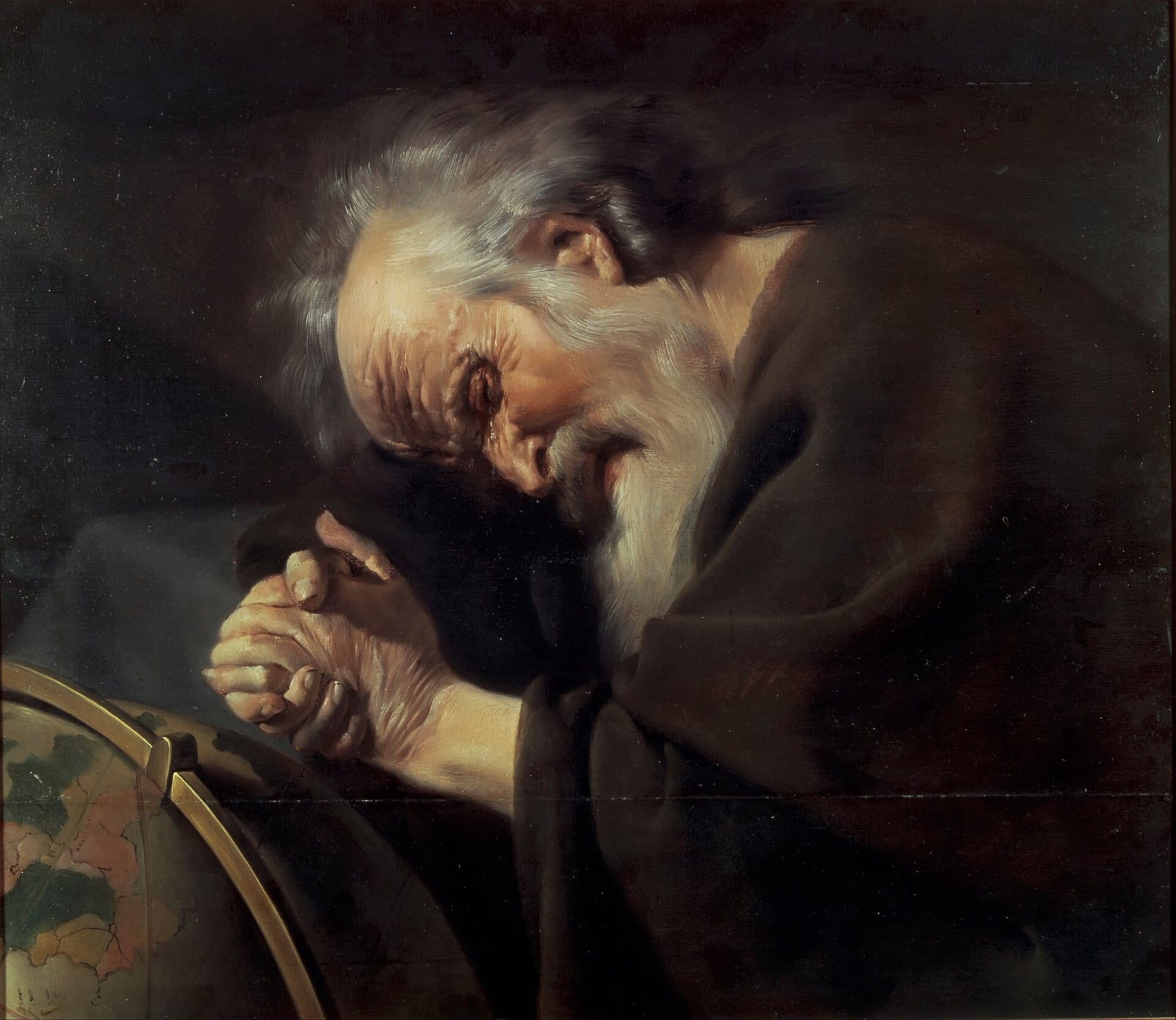
Heraclitus
Ils concordent sur: Qu'est-ce que l'Absolu ? Dieu existe-t-il ? · Qui suis-je ? Existe-t-il un vrai soi ? · Pourquoi souffrons-nous ?
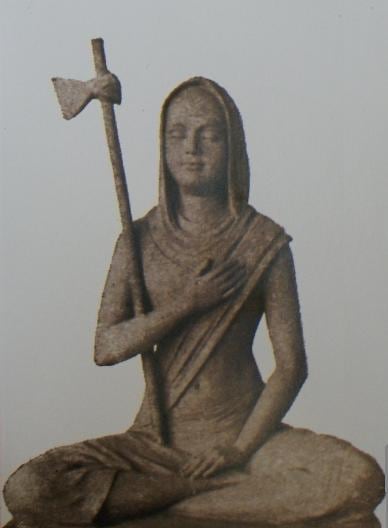
Gaudapada
Ils concordent sur: Qu'est-ce que l'Absolu ? Dieu existe-t-il ? · Qui suis-je ? Existe-t-il un vrai soi ? · Pourquoi souffrons-nous ?
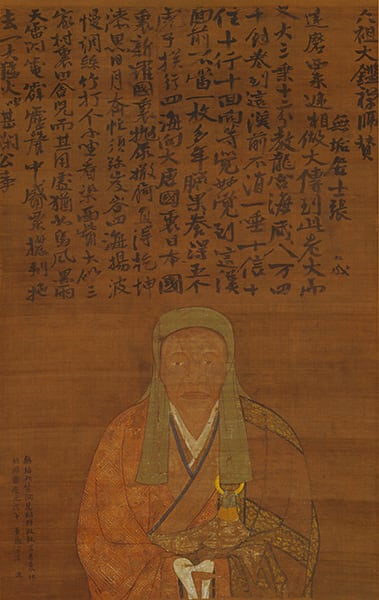
Huineng
Ils concordent sur: Qu'est-ce que l'Absolu ? Dieu existe-t-il ? · Qui suis-je ? Existe-t-il un vrai soi ? · Pourquoi souffrons-nous ?
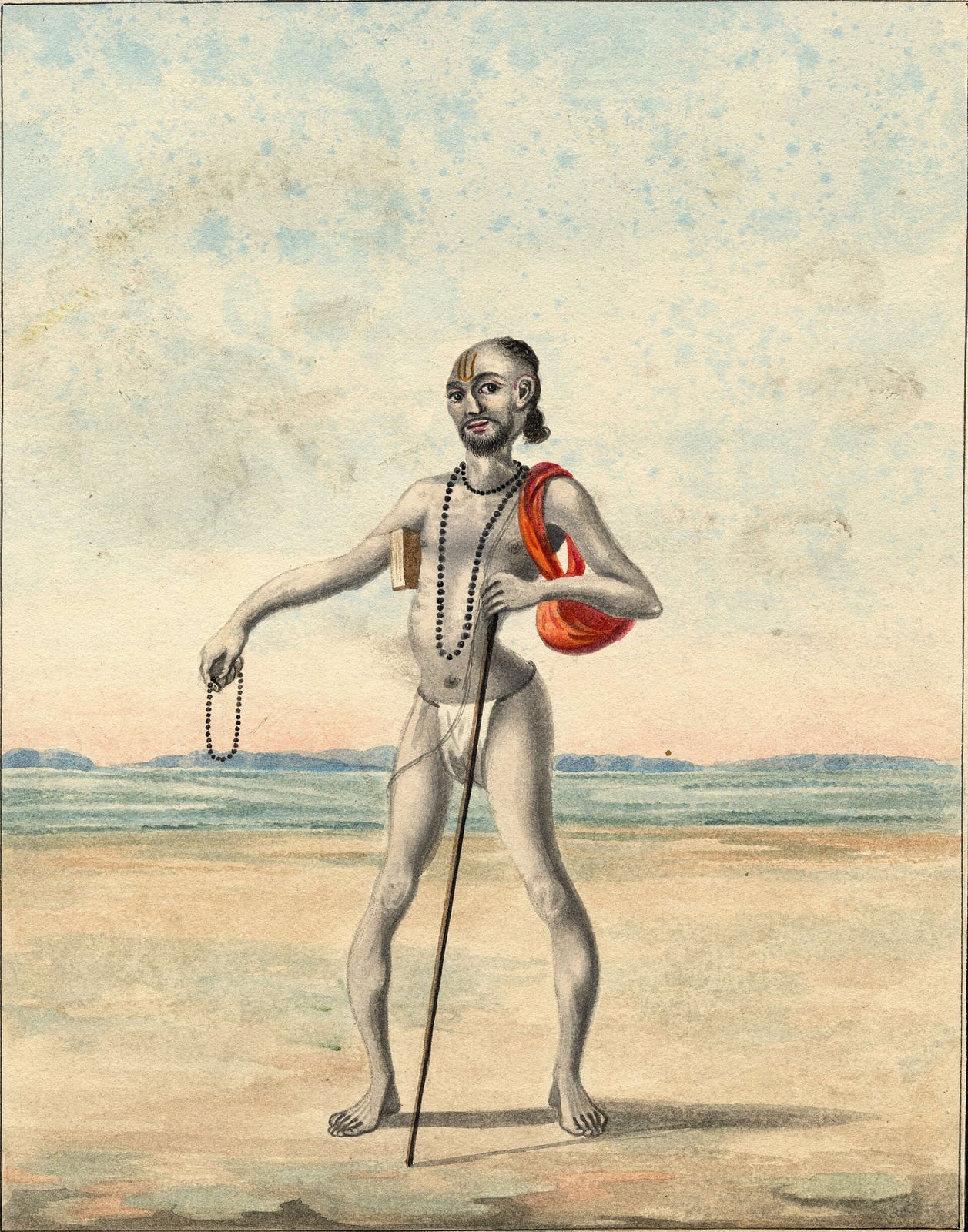
Ashtavakra
Ils concordent sur: Qu'est-ce que l'Absolu ? Dieu existe-t-il ? · Qui suis-je ? Existe-t-il un vrai soi ? · Pourquoi souffrons-nous ?
Pense autrement que
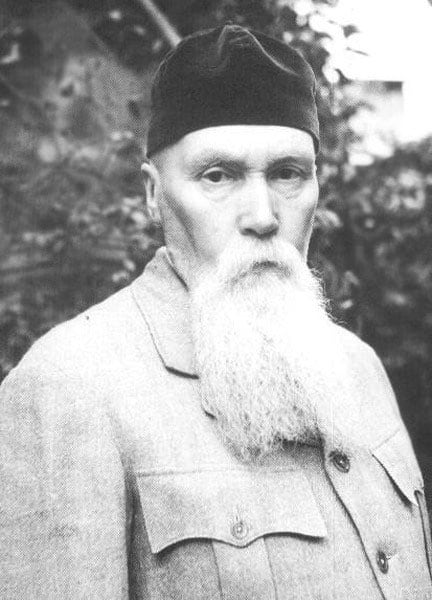
Nicholas Roerich
Ils s'opposent sur: Faut-il un maître ?
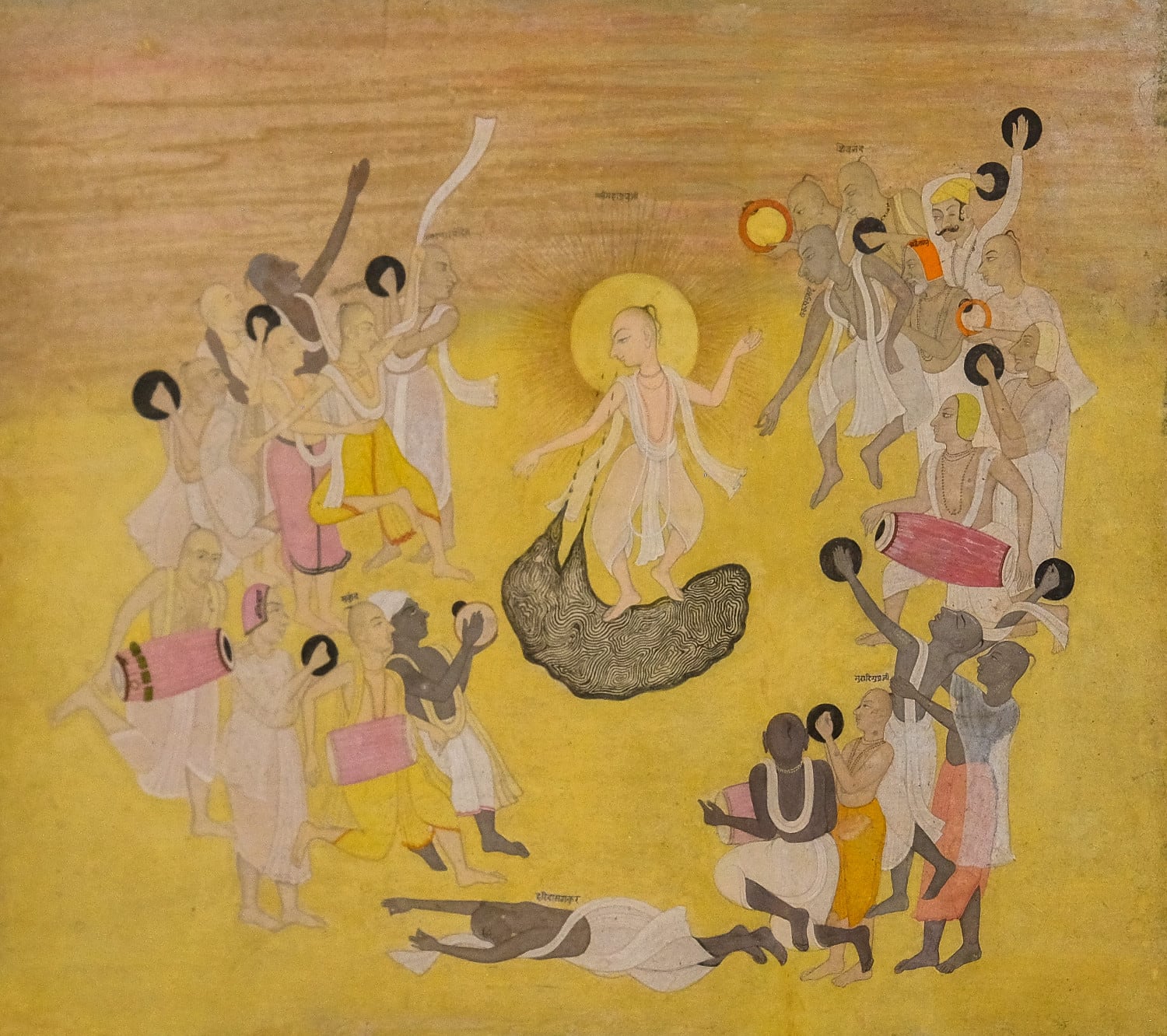
Chaitanya Mahaprabhu
Ils s'opposent sur: Qui suis-je ? Existe-t-il un vrai soi ? · Faut-il un maître ?
Hafez
Ils s'opposent sur: Qui suis-je ? Existe-t-il un vrai soi ? · Faut-il un maître ?
Al-Ghazali
Ils s'opposent sur: Qui suis-je ? Existe-t-il un vrai soi ? · Faut-il un maître ?
Anecdotes et récits
Anecdotes et récits
Documenté1656
The herem
Origine du récit: The text is preserved in the community's book of ordinances (Stadsarchief Amsterdam) and is edited and analysed by Nadler and Wikipedia; the reasons are a matter of conjecture.
Source: Nadler, Steven. Spinoza: A Life. Cambridge: Cambridge University Press, 1999 (2.ª ed. 2018). ISBN 9780521552103.
Contestéc. 1656
The knife at the exit
Origine du récit: Bayle, Dictionnaire historique et critique (1697), art. 'Spinoza'; Colerus, Life (1705), correcting Bayle from the Van der Spycks' testimony. The detail of the coat comes from later traditions.
Témoignage1672
Ultimi barbarorum
Origine du récit: Leibniz records it in a note as something Spinoza himself told him during the 1676 visit; Nadler and the biographical tradition report it.
Source: Nadler, Steven. Spinoza: A Life. Cambridge: Cambridge University Press, 1999 (2.ª ed. 2018). ISBN 9780521552103.
Témoignage1673
'I am a good republican'
Origine du récit: Colerus, Life (1705), from Van der Spyck's testimony. Stouppe's role and Condé's absence are recorded in Colerus and Lucas.
Documenté1673
The chair he did not want
Origine du récit: Letters 47 (Fabritius, 16 February 1673) and 48 (Spinoza, 30 March 1673), published in the Opera posthuma.
Témoignage1671-1677
Spiders, a pipe and a single bed
Origine du récit: Colerus, Life (1705); the detail of the inheritance and the bed also in Colerus. Indirect testimony of the landlords, gathered almost thirty years later.
Documenté1676
Three days with Leibniz
Origine du récit: Documented by Leibniz's notes and correspondence and by Leibniz's 1671 letter to Spinoza published in the Opera posthuma.
Source: Wikipedia (en), «Baruch Spinoza»; y (es), «Baruch Spinoza».
Enseignements
Enseignements
Les notions qui structurent sa pensée, expliquées dans leur contexte.
Deus sive Natura: God or Naturedeus-sive-natura
A radical reworking of the Cartesian notion of substance; it has disputed antecedents in Jewish mysticism and Giordano Bruno.
Substance, attributes and modesatributos-y-modos
Ethics, Parts I and II.
Conatus and the affectsconatus
Ethics, Part III; antecedents in Hobbes and the Stoics.
The three kinds of knowledgetres-generos-de-conocimiento
Ethics, II, proposition 40, scholium 2; antecedent in the four modes of perception of the Treatise on the Emendation of the Intellect.
Necessity, bondage and freedomlibertad-y-servidumbre
Ethics, Parts IV and V; Letter 58 to Schuller (the stone that believes itself free).
Intellectual love of God and eternity of the mindamor-intellectualis-dei
Ethics, V, propositions 21-42; the expression sub specie aeternitatis.
Freedom to philosophise and critique of Scripturelibertas-philosophandi
Theological-Political Treatise; antecedents in Hobbes, Ibn Ezra and Uriel da Costa.
Vidéos
Vidéos
Enregistrements, entretiens et documentaires. Les vidéos sont lues depuis YouTube ; elles ne sont pas hébergées ici.
Steven Nadler on Spinoza and the Herem
Conférence· EN· 68 min
Institute for Tolerance StudiesChaîne officielle
Spinoza on the Divinity of Scripture | Prof. Steven Nadler
Conférence· EN· 73 min
The Van Leer Jerusalem InstituteChaîne officielle
Spinozarede 2025 Steven Nadler
Conférence· EN· 2025· 58 min
Stichting Spinoza Den HaagChaîne officielle
Steven Nadler, Spinoza and Menasseh..., Spinoza's Ethics... - 20-21 maggio 2019
Conférence· EN· 2019· 171 min
SNS Humanities (Scuola Normale Superiore)Chaîne officielle
The Philosophy of Spinoza & Leibniz - Bryan Magee & Anthony Quinton (1987)
Entretien· EN· 1987· 44 min
Philosophy Overdose
Why Study Baruch Spinoza with Agata Bielik-Robson
Conférence· EN· 12 min
University of NottinghamChaîne officielle
Spinoza, religio, and the re-conceiving of religion, God and Nature w/ Clare Carlisle
Entretien· EN· 82 min
John Vervaeke's Lectern
Spinoza | Por Darío Sztajnszrajber
Conférence· ES· 142 min
Facultad Libre
Spinoza materialista. Gabriel Albiac
Conférence· ES· 61 min
Cima & Holzenthal
El papel del Tractatus Politicus en la estructura de la Ética de Spinoza. Gabriel Albiac
Conférence· ES· 2024· 112 min
Sociedad Filosofía Alicante
Diego Tatián: Spinoza y la filosofía de la liberación
Entretien· ES· 39 min
Canal Abierto
Grandes documentales: Baruch Spinoza y Gottfried Leibniz
Documentaire· ES· 53 min
ABC TV Paraguay
Gilles Deleuze : cours sur Spinoza n°1/14 (remasterisé en 2023)
Conférence· FR· 1980· 124 min
Louis Simon
Pourquoi il faut relire Spinoza aujourd'hui
Entretien· FR· 39 min
France CultureChaîne officielle
Spinoza | The Apostle of Reason, 1994
Voir sur YouTube
Cette vidéo ne peut pas être intégrée ; elle s'ouvre sur YouTube.
Spinoza | The Apostle of Reason, 1994
Documentaire· EN· 1994· 51 min
STEFAN CLASSIC FILMS
Galerie
Galerie
Images dont la licence a été vérifiée. Chacune conserve son auteur et son attribution.
Manuscrits
Manuscrits
Témoins manuscrits et textes anciens, avec leur dépositaire et leurs conditions de consultation.
LA · Latin · c. 1675
Ethica ordine geometrico demonstrata
- Témoin conservé
- Copia manuscrita completa anterior a la edición de 1677
- Dépositaire
- Biblioteca Apostolica Vaticana · Vat. lat. 12838
NL · Latin · c. 1660-1662
Korte verhandeling van God, de mensch en deszelvs welstand (códice A)
- Témoin conservé
- Copia de finales del siglo XVII
- Dépositaire
- Koninklijke Bibliotheek, La Haya · 75 G 15
NL · Latin · c. 1660-1662
Korte verhandeling van God, de mensch en deszelvs welstand (códice B)
- Témoin conservé
- Copia de mediados del siglo XVIII, revisión de A
- Dépositaire
- Koninklijke Bibliotheek, La Haya
Relations
Relations
Influences, filiations et affinités. On distingue la relation documentée de la similitude identifiée par analyse.
A reçu l'influence de
Thomas Hobbes
His theory of natural right as power and his biblical criticism engage with Leviathan.
Relation documentée
En désaccord avec
The Theological-Political Treatise expressly criticises his method of accommodating Scripture to philosophy.
Relation documentée
A reçu l'influence de
René Descartes
His starting point: he expounded his Principles in 1663 and built his system in critical dialogue with him.
Relation documentée
A reçu l'influence de
Uriel da Costa
A relative on his mother's side; his heterodoxy and excommunication marked the community in which Spinoza grew up.
Relation documentée
A rencontré
Gottfried Wilhelm Leibniz
Correspondence from 1671 and a visit of several days in The Hague in November 1676.
Relation documentée
A correspondu avec
Henry Oldenburg
Secretary of the Royal Society; his most frequent correspondent (1661-1676).
Relation documentée
A rencontré
Christiaan Huygens
A neighbour at Voorburg; he praised his lenses and they discussed optics.
Relation documentée
Disciple de
Franciscus van den Enden
His teacher of Latin and modern philosophy in Amsterdam.
Relation documentée
Contemporain de
Johan de Witt
Republican Grand Pensionary whose murder in 1672 outraged him; some biographers credit him with a pension from De Witt, which is unproven.
Relation documentée
Idées proches de
Estoicos
An ethics of understanding necessity and of serenity before the passions.
Similitude identifiée par analyse
Idées proches de
Identification of God with the rational nature of the cosmos and life according to reason.
Similitude identifiée par analyse
Idées proches de
A mysticism of union with God through knowledge, in another theological frame.
Similitude identifiée par analyse
A influencé
Critically discussed Spinoza's impersonal God from his philosophy of dialogue.
Similitude identifiée par analyse
A influencé
Albert Einstein
Declared in 1929 that he believed in Spinoza's God, who reveals himself in the harmony of what exists.
Relation documentée
A influencé
G. W. F. Hegel
Declared that one is either a Spinozist or no philosopher at all; the pantheism controversy made Spinoza an interlocutor of German idealism.
Relation documentée
Lié depuis d'autres fiches
Sources
Sources
Bibliographie et catalogues consultés pour cette fiche.
- Nadler, Steven. Spinoza: A Life. Cambridge: Cambridge University Press, 1999 (2.ª ed. 2018). ISBN 9780521552103.
- Nadler, Steven. «Baruch Spinoza». The Stanford Encyclopedia of Philosophy, publicado el 29-6-2001, revisión sustantiva del 8-11-2023.
- Wikidata, «Benedictus de Spinoza» (Q35802).
- Wikipedia (en), «Baruch Spinoza»; y (es), «Baruch Spinoza».
- Colerus, Johannes. Korte, dog waaragtige levens-beschryving van Benedictus de Spinosa. Ámsterdam, 1705; trad. francesa «La Vie de B. de Spinosa» (1706), en Œuvres de Spinoza, trad. Émile Saisset, t. II, París, Charpentier, 1861 (Wikisource).
- B. d. S. Opera posthuma. [Ámsterdam: Jan Rieuwertsz], 1677; y De nagelate schriften van B. d. S., trad. Jan Hendriksz Glazemaker, 1677.
- Spinoza, Benedictus de. Ethica ordine geometrico demonstrata (texto latino en Wikisource, a partir de la ed. bilingüe de Appuhn, Garnier, 1913); The Ethics, trad. R. H. M. Elwes (Londres, 1883), Project Gutenberg #3800.
- Spinoza, Benedictus de. Tractatus theologico-politicus. «Hamburgi» [Ámsterdam], 1670 (texto latino en Wikisource, ed. Gebhardt); A Theologico-Political Treatise, trad. R. H. M. Elwes (1883), Project Gutenberg #989-992.
- Spinoza, Benedictus de. Tractatus politicus, en Opera posthuma, 1677 (texto latino en Wikisource).
- Wikipedia (en), «Epistolae (Spinoza)» y «List of Epistolae (Letters) of Spinoza» (88 cartas: 50 de Spinoza, 38 de sus corresponsales).
- Spruit, Leen, y Pina Totaro (eds.). The Vatican Manuscript of Spinoza's Ethica. Leiden: Brill, 2011. ISBN 9789004209268.
- Koninklijke Bibliotheek (La Haya), «Korte verhandeling van God, de mensch, en deszelvs welstand by Baruch Spinoza» (KB 75 G 15) y colección especial «Benedictus de Spinoza»; Cambridge Spinoza Lexicon, «Short Treatise on God, Man and His Wellbeing».
- Bayle, Pierre. Dictionnaire historique et critique, art. «Spinoza». Rotterdam: Reinier Leers, 1697.
- Lucas, Jean-Maximilien. La Vie de feu Monsieur de Spinosa (1719), en Œuvres de Spinoza, trad. Saisset, t. II, 1861 (Wikisource).
- Open Library, ediciones de Spinoza (Ethica, Tratado teológico-político, Tratado político, Correspondencia, Collected Works de Curley, Complete Works de Shirley, Opere de Mignini, etc.).
- Wikisource: «Scriptor:Benedictus de Spinoza» (la), «Auteur:Baruch Spinoza» (fr), «Author:Benedictus de Spinoza» (en) y «Autore:Baruch Spinoza» (it).
- Ayant droit
- Dominio público (el autor murió en 1677). Las traducciones modernas pertenecen a sus traductores y editoriales.
En attente de confirmation
Ce que cette fiche n'a pas encore pu établir. Nous préférons le dire plutôt que de combler.
- Sala de lectura en español: no se ha localizado ninguna traducción española en dominio público con texto en línea. La Ética de Manuel Machado (Garnier, 1913) quedará libre en España el 1-1-2028 (murió en 1947); conviene buscar un texto digitalizado limpio para entonces.
- Correspondencia completa en inglés (Elwes, 1883-1884) solo está en escaneos de Internet Archive y en sacred-texts.com, que bloqueó la consulta; verificar una fuente de texto limpio.
- Principios de la filosofía de Descartes, Pensamientos metafísicos y Compendio de gramática hebrea: las páginas latinas enlazadas desde Wikisource no existen aún; buscar texto latino limpio (p. ej., ed. Van Vloten-Land o Bruder en Internet Archive, OCR por revisar).
- Confirmar el año de muerte de R. H. M. Elwes (Project Gutenberg indica 1892) y la signatura del códice B del Tratado breve en la Koninklijke Bibliotheek.
- Precisar el editor de la Hebrew Grammar de M. J. Bloom (Londres, 1963) y añadir ediciones con ISBN en ruso, hebreo y árabe (p. ej., el Tratado teológico-político traducido por Hasan Hanafi).
- Relaciones con slugs fuera del catálogo (rene-descartes, thomas-hobbes, uriel-da-costa, gottfried-wilhelm-leibniz, henry-oldenburg, christiaan-huygens, franciscus-van-den-enden, johan-de-witt, estoicismo, albert-einstein, g-w-f-hegel).
- Vídeos: no hay grabaciones de universidades o televisiones públicas españolas sobre Spinoza localizadas por la búsqueda; los documentales en español son divulgativos.
Recherche effectuée le 2026-10-25