Judaïsme · Contemplation séculière
Martin Buber
מרטין בובר · מארטין בובער
1878 – 1965Personne historiquement documentée
Martin Buber (1878-1965), philosophe et penseur religieux juif né à Vienne, a formulé dans Je et Tu (1923) la distinction entre la relation Je-Tu, rencontre de tout l'être, et l'expérience Je-Cela, qui fait de l'autre un objet. Il réécrivit les légendes hassidiques pour le public européen, traduisit la Bible en allemand avec Franz Rosenzweig et défendit à Jérusalem un État binational judéo-arabe.
- œuvres
- 65œuvres
- éditions
- 127éditions
- citations
- 8citations
- vidéos
- 13vidéos
- images
- 9images
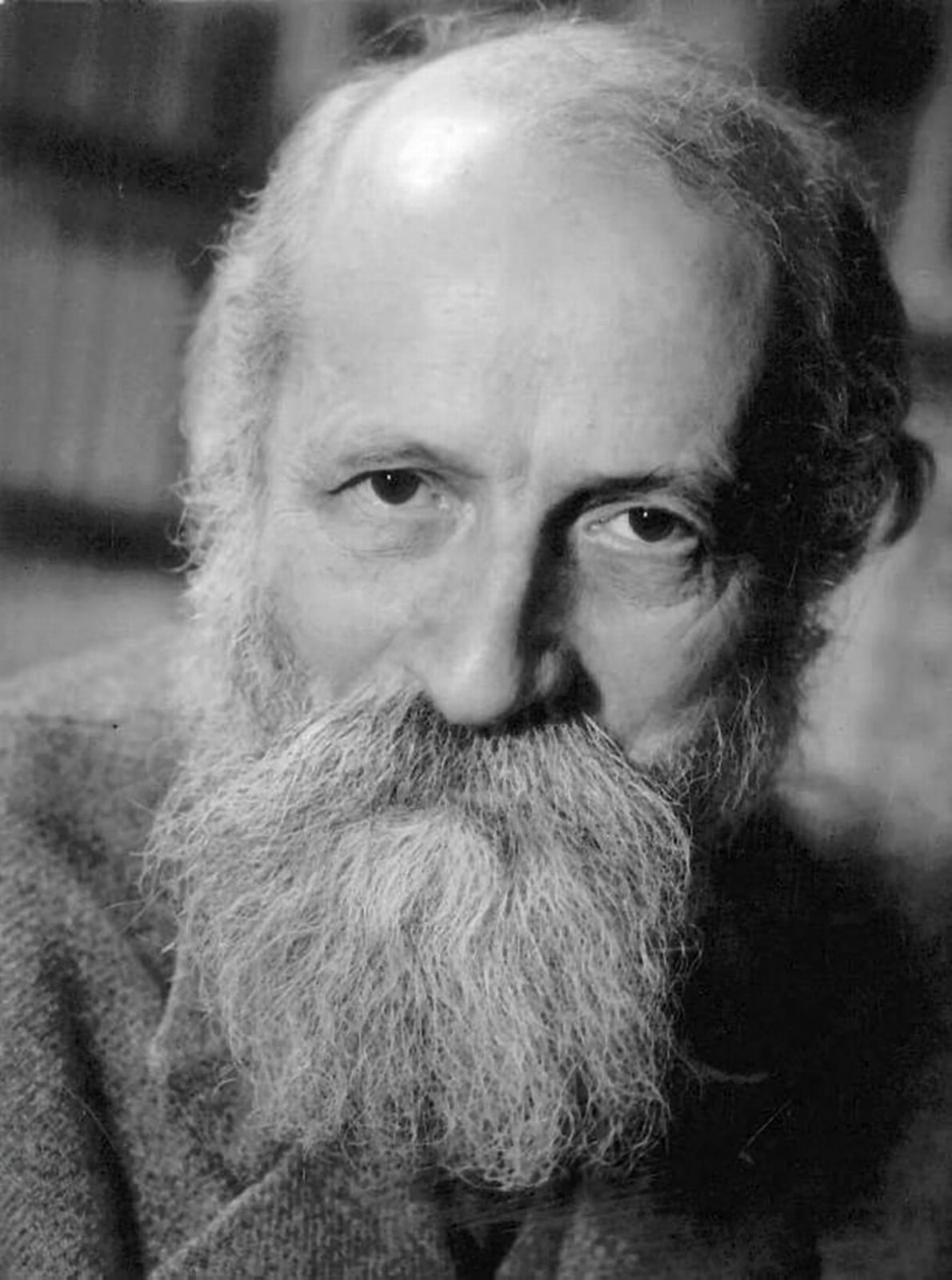
Retrato de Martin Buber · Public domain
Dans ses propres mots
«All real living is meeting.»Ich und Du (1923), primera parte

Pour commencer, une œuvre
I and ThouSon idée centrale
The primary word I-It is not an evil: without it there would be no science, technology or social order. The danger is that the world of It grows until it stifles the capacity for relation, and that we treat persons too merely as objects of experience and use.
Le voir en contexte
Biographie
5 min de lecture
Traduction assistée à partir de l'original espagnol, en attente de relecture par un traducteur natif.
Un enfant sans adieu
Martin Buber naquit à Vienne le 8 février 1878, dans une famille juive aisée de la monarchie des Habsbourg. Il n'avait pas encore quatre ans lorsque ses parents se séparèrent et que sa mère disparut de sa vie sans un mot ; l'enfant fut envoyé à Lemberg (aujourd'hui Lviv), dans la Galicie autrichienne, chez ses grands-parents paternels. Salomon Buber était un spécialiste du Midrash, éditeur de textes rabbiniques et homme d'affaires ; Adele, sa grand-mère, une lectrice passionnée de littérature allemande. Martin grandit entre le yiddish, l'allemand, le polonais du lycée et l'hébreu de la synagogue, et cette pluralité de langues, comme il le raconterait lui-même, le marqua pour toujours. L'expérience de la mère absente lui inspira plus tard un mot, Vergegnung, « mésentente » ou « rencontre manquée », pour nommer l'échec de la rencontre véritable entre deux personnes.
Du sionisme culturel au hassidisme
Il étudia la philosophie, l'histoire de l'art, la germanistique et la psychologie à Vienne, Leipzig, Zurich et Berlin, où il suivit les cours de Wilhelm Dilthey et de Georg Simmel, et soutint à Vienne en 1904 une thèse sur le problème de l'individuation chez Nicolas de Cues et Jakob Böhme. Dès 1898, il milita dans le mouvement sioniste : il dirigea brièvement Die Welt, l'organe de Herzl, et appartint à la « fraction démocratique », qui réclamait une renaissance culturelle juive plutôt qu'une simple solution diplomatique. À Zurich, il rencontra en 1899 Paula Winkler, écrivain d'origine catholique qui se convertirait au judaïsme et serait la compagne de toute sa vie. Vers 1904, il se retira de la politique active et se plongea dans les textes hassidiques qu'il avait entrevus enfant en Galicie : Les Contes de Rabbi Nachman (1906) et La Légende du Baal-Shem (1908) réécrivaient ces récits dans une prose allemande d'un grand raffinement et les présentaient au public européen comme l'expression d'une religiosité vivante.
De la mystique au dialogue
Les années qui précédèrent la Première Guerre mondiale furent celles de sa phase mystique : il compila une anthologie de Confessions extatiques (1909) de mystiques de toutes les traditions, traduisit Tchouang-tseu et publia Daniel (1913), dialogues sur la « réalisation ». Lorsque la guerre éclata, il la salua, comme tant d'intellectuels allemands, avec un enthousiasme que son ami l'anarchiste Gustav Landauer lui reprocha durement. Buber lui-même situa son tournant dans un épisode infime : après une matinée d'exaltation religieuse, il reçut un jeune homme venu le consulter ; il l'accueillit avec amabilité, mais sans être tout à fait présent, et apprit ensuite que ce visiteur, mort depuis, était venu avec une question de vie ou de mort. Dès lors, écrivit-il, il renonça au « religieux » comme exception et comme extase, et ne posséda « plus rien que le quotidien ».
Je et Tu
En 1916, il s'installa avec sa famille à Heppenheim, au pied de la Bergstrasse, et fonda la revue Der Jude, qu'il dirigea jusqu'en 1924. C'est là qu'il écrivit Je et Tu (Ich und Du, 1923), l'un des livres de philosophie les plus influents du siècle. Sa thèse tient en quelques lignes : l'homme a deux attitudes envers le monde, exprimées par deux « mots-principes ». Par le Je-Cela (Ich-Es), il fait l'expérience des choses et des personnes et les utilise comme des objets ; par le Je-Tu (Ich-Du), il entre en relation avec elles de tout son être, sans médiation ni finalité. Sans le Cela, l'homme ne peut vivre, mais celui qui ne vit qu'avec lui n'est pas un homme. Toute relation véritable avec un Tu laisse entrevoir le « Tu éternel », Dieu, que l'on ne peut décrire mais seulement interpeller.
L'Écriture en allemand
De 1923 à 1933, il enseigna la philosophie et l'éthique juives à l'université de Francfort et collabora avec Franz Rosenzweig au Freies Jüdisches Lehrhaus. En 1925, tous deux entreprirent une nouvelle traduction allemande de la Bible hébraïque, qui s'efforçait de préserver le rythme, les racines et l'oralité de l'original ; Rosenzweig mourut en 1929 et Buber l'acheva seul, à Jérusalem, en 1961. Après l'arrivée de Hitler au pouvoir, il renonça à sa chaire et dirigea l'office d'éducation des adultes des Juifs allemands, qui s'efforçait de leur donner des ressources spirituelles pour tenir ; en 1935, la Gestapo lui interdit de parler en public. En mars 1938, il accepta une chaire de philosophie sociale à l'Université hébraïque de Jérusalem ; quelques mois plus tard, sa maison de Heppenheim fut saccagée lors du pogrom de novembre.
Un sionisme inconfortable
En Palestine, il défendit, avec Judah Magnes et le groupe Ihoud, un État binational où Juifs et Arabes partageraient le pouvoir, et critiqua le nationalisme qu'il voyait grandir au sein du mouvement sioniste. En 1939, il répondit à Gandhi — qui avait conseillé aux Juifs allemands la résistance non violente et leur avait dénié tout droit sur la Palestine — par une lettre ouverte qui défendait à la fois la cause juive et la nécessité d'un accord juste avec les Arabes. Après 1948, il continua de réclamer le retour des réfugiés et une fédération régionale, ce qui lui valut, dans le nouvel État, un mélange de vénération et d'isolement. En 1953, il accepta à Francfort le prix de la Paix des libraires allemands, geste très controversé en Israël, et en 1962 il demanda qu'Adolf Eichmann ne soit pas exécuté.
Dernières années et héritage
Les livres de sa maturité étendirent le principe dialogique à la Bible (Moïse, La Foi des prophètes), à la critique de la religion moderne (Éclipse de Dieu, avec sa polémique contre C. G. Jung), à l'éducation, à la psychothérapie — il dialogua publiquement avec Carl Rogers en 1957 — et à la philosophie sociale (Utopie et socialisme). Il reçut le prix Israël en 1958 et le prix Érasme en 1963. Paula mourut à Venise en 1958 ; lui, dans sa maison du quartier de Talbiyeh, à Jérusalem, le 13 juin 1965. Gershom Scholem lui reprocha d'avoir fait du hassidisme une philosophie existentielle, en choisissant les légendes et en ignorant la doctrine ; Emmanuel Levinas contesta la réciprocité du Je-Tu. Son influence sur la théologie, la pédagogie et la psychologie de la rencontre reste vivante, et l'édition critique de ses œuvres en vingt et un volumes s'est achevée en 2019.
Sources: Mendes-Flohr, Paul. Martin Buber: A Life of Faith and Dissent. New Haven/Londres: Yale University Press (Jewish Lives), 2019. · Friedman, Maurice. Martin Buber's Life and Work. 3 vols. (The Early Years 1878–1923; The Middle Years 1923–1945; The Later Years 1945–1965). Nueva York: E. P. Dutton, 1981–1983; reed. Detroit: Wayne State University Press, 1988. · Buber, Martin. Ich und Du. Leipzig: Insel-Verlag, 1923 (ejemplar digitalizado en Internet Archive, «ich-und-du»). · Buber, Martin. Begegnung. Autobiographische Fragmente. Stuttgart: W. Kohlhammer, 1960 (trad. ingl.: Meetings, ed. Maurice Friedman, La Salle, Open Court, 1973). · Martin Buber Werkausgabe (MBW), ed. Paul Mendes-Flohr, Peter Schäfer y Bernd Witte, por encargo de la Academia de Ciencias de Berlín-Brandeburgo, la Israel Academy of Sciences and Humanities y la Universidad Heinrich Heine de Düsseldorf. 21 vols. Gütersloh: Gütersloher Verlagshaus, 2001–2019.
Chronologie
La vie, année après année
Chaque point est un événement documenté. Cliquez pour le lire, avec sa source et son degré de certitude.
8 février 18780 ansViena
Birth
Born in Vienna, son of Carl Buber and Elise Wurhaft.
DocumentéWikidata, Q84423: «Martin Buber» (8 de febrero de 1878 – 13 de junio de 1965), 79 enlaces entre wikis.
Après sa mort
- 2019Werkausgabe completed
8 février 1878 · 0 ans
Birth
Born in Vienna, son of Carl Buber and Elise Wurhaft.
Documenté
v. 1882 · 4 ans
With his grandparents in Lemberg
After his parents' separation he grows up in the home of his grandparents Solomon and Adele Buber, in Austrian Galicia.
Documenté
1896 – 1899 · 18 ans
Student years
Studies philosophy, art history, German literature and psychology; hears Dilthey and Simmel in Berlin.
Documenté
1898 · 20 ans
Joins the Zionist movement
Joins Zionism and takes part in its congresses; in 1901 he briefly edits Die Welt and joins the "democratic faction".
Documenté
1899 · 21 ans
Meets Paula Winkler
Meets the writer Paula Winkler; Rafael (1900) and Eva (1901) are born. They marry in 1907, after Paula's conversion to Judaism.
Documenté
1904 · 26 ans
Doctorate and retreat into Hasidism
Takes his doctorate with a thesis on individuation in Nicholas of Cusa and Jakob Böhme and withdraws from politics to study Hasidic texts.
Documenté
1906 · 28 ans
The tales of Rabbi Nachman
Publishes Die Geschichten des Rabbi Nachman; in 1908, Die Legende des Baalschem.
Documenté
1909 – 1911 · 31 ans
Addresses on Judaism
Delivers before the Bar Kochba student association in Prague the addresses collected in Drei Reden über das Judentum (1911).
Documenté
1916 · 38 ans
Heppenheim and Der Jude
Settles in Heppenheim and founds the journal Der Jude, which he edits until 1924.
Documenté
1923 · 45 ans
Ich und Du
Publishes Ich und Du with Insel, the statement of his philosophy of dialogue. Begins teaching at the University of Frankfurt (until 1933).
Documenté
1925 · 47 ans
Bible translation begins with Rosenzweig
With Franz Rosenzweig he undertakes Die Schrift, a new German version of the Hebrew Bible; after Rosenzweig's death (1929) he continues alone.
Documenté
1933 · 55 ans
Resigns his chair
After Hitler comes to power he leaves the university and directs the Mittelstelle für jüdische Erwachsenenbildung; in 1935 he is banned from speaking in public.
Documenté
mars 1938 · 60 ans
Emigration to Jerusalem
Accepts a chair of social philosophy at the Hebrew University; in November his Heppenheim house is ransacked.
Documenté
février 1939 · 61 ans
Open letter to Gandhi
Answers Gandhi's article "The Jews" (1938) with a letter defending the Jewish claim to Palestine and the need for a just agreement with the Arabs.
Documenté
1942 · 64 ans
Founding of Ihud
With Judah Magnes and others he founds Ihud, advocating a binational Jewish-Arab state.
Documenté
1949 · 71 ans
The Hasidic tales
Publishes Die Erzählungen der Chassidim (Manesse), his great collection of Hasidic tales.
Documenté
1952 · 74 ans
Controversy with Jung
Criticises C. G. Jung's psychology of religion in Merkur; Jung replies, and the debate is collected in Gottesfinsternis (1953).
Documenté
27 septembre 1953 · 75 ans
Peace Prize of the German Book Trade
Receives the prize in the Paulskirche and delivers "Das echte Gespräch und die Möglichkeit des Friedens"; his acceptance is much disputed in Israel.
Documenté
avril 1957 · 79 ans
Public dialogue with Carl Rogers
Holds a public conversation with the psychologist Carl Rogers at the University of Michigan on the therapeutic relationship and encounter.
Documenté
1958 · 80 ans
Paula's death and the Israel Prize
Paula Buber dies in Venice on the way back from a journey; Buber receives the Israel Prize for the humanities.
Documenté
1961 · 83 ans
Die Schrift completed
Completes the German Bible translation begun with Rosenzweig thirty-six years earlier.
Documenté
mai 1962 · 84 ans
Plea for clemency for Eichmann
With Hugo Bergmann, Gershom Scholem and others he asks President Ben-Zvi to commute Adolf Eichmann's death sentence.
Documenté
3 juillet 1963 · 85 ans
Erasmus Prize
Prince Bernhard presents him with the Erasmus Prize at the Tropenmuseum in Amsterdam.
Documenté
13 juin 1965 · 87 ans
Death
Dies at his home in Talbiyeh, Jerusalem.
Documenté
2019
Werkausgabe completed
The 21-volume critical edition of his works (Martin Buber Werkausgabe) is completed.
Documenté
Œuvres
Œuvres essentielles
Les œuvres sans lesquelles on ne comprend pas son héritage.
Œuvre écrite · 1923
I and Thou
Ich und Du
His principal philosophical work, written in Heppenheim and published by Insel in 1923. In three parts of aphoristic prose it distinguishes two human attitudes, expressed in the "primary words" I-Thou and I-It: relation, which occurs with the whole being and in the present, and experience, which objectifies and uses. It then examines how modern civilisation has hypertrophied the world of It and concludes with the relation to the "eternal Thou", God, who can only be addressed, not described. In 1957 he added an afterword. Translated into dozens of languages, it influenced twentieth-century theology, pedagogy, psychotherapy and philosophy.
11 éditions
Martin Buber
Die Schrift (German Bible translation, with Franz Rosenzweig)
Œuvre écrite · 1926
Die Schrift (German Bible translation, with Franz Rosenzweig)
Die Schrift (verdeutscht von Martin Buber gemeinsam mit Franz Rosenzweig)
Translation of the Hebrew Bible into German undertaken in 1925 with Franz Rosenzweig and completed by Buber in 1961. It renounces Luther's literary language in order to reproduce the structure of Hebrew: its recurrent roots (*Leitwörter*), its breathing rhythm and its character as a text to be spoken aloud. Fifteen volumes appeared up to 1938; the complete version, in four volumes, between 1954 and 1962. It is, with Moses Mendelssohn's Torah, the great Jewish Bible in German.
3 éditions

Conférences publiées · 1948
The Way of Man according to the Teaching of Hasidism
Der Weg des Menschen nach der chassidischen Lehre
Short book born of a lecture at Bentveld (Netherlands) in 1947. In six chapters (heart-searching, the particular way, resolution, beginning with oneself, not to be preoccupied with oneself, here where one stands) it condenses into Hasidic tales an ethic of personal responsibility; it includes the story of Rabbi Zusya, who in the world to come will not be asked why he was not Moses, but why he was not Zusya. It is his most widely read work outside academia.
5 éditions

Œuvre écrite · 1949
Tales of the Hasidim
Die Erzählungen der Chassidim (Or ha-ganuz)
His great collection of Hasidic tales, published by Manesse in 1949 (in Hebrew, *Or ha-ganuz*, 1946–1947). Organised by masters, from the Baal Shem Tov to the rabbis of the nineteenth century, it presents hundreds of short anecdotes and sayings rewritten with a sobriety very different from the ornamental style of his first books. It is the way most Western readers have come to know Hasidism, and the main target of Scholem's critique.
7 éditions
Toute son œuvre (65)
Martin Buber
On the History of the Problem of Individuation (Nicholas of Cusa and Jakob Böhme)
The Conscious LibraryOn the History of the Problem of Individuation (Nicholas of Cusa and Jakob Böhme)
1904

A Jewish University
1902
Martin Buber
Jewish Artists
The Conscious LibraryJewish Artists
1903

The Tales of Rabbi Nachman
1906

The Legend of the Baal-Shem
1908

Ecstatic Confessions
1909
Martin Buber
Sayings and Parables of Zhuangzi
The Conscious LibrarySayings and Parables of Zhuangzi
1910

Chinese Ghost and Love Stories
1911

Three Addresses on Judaism
1911

Daniel: Dialogues on Realization
1913

The Four Branches of the Mabinogi
1914

On the Spirit of Judaism
1916

The Jewish Movement: Collected Essays and Addresses
1916

Events and Meetings
1917
Martin Buber
The Discourse, the Teaching and the Song
The Conscious LibraryThe Discourse, the Teaching and the Song
1917
Martin Buber
My Way to Hasidism
The Conscious LibraryMy Way to Hasidism
1918
Martin Buber
The Holy Way
The Conscious LibraryThe Holy Way
1919

Words to the Time
1919
Martin Buber
The Great Maggid and His Succession
The Conscious LibraryThe Great Maggid and His Succession
1922

The Hidden Light
1924
Martin Buber
The Baal Shem Tov's Instruction in Intercourse with God
The Conscious LibraryThe Baal Shem Tov's Instruction in Intercourse with God
1927
Martin Buber
The Hasidic Books
The Conscious LibraryThe Hasidic Books
1928
Dialogue
1932

Kingship of God
1932
Citations
Citations localisées dans une œuvre précise. Chacune porte sa provenance et son degré de fiabilité.
All real living is meeting.Alles wirkliche Leben ist Begegnung.
VérifiéeIch und Du (1923), primera parte
Idées essentielles (résumé éditorial)
Par respect du droit d'auteur, ces idées sont résumées avec nos propres mots et ne sont pas présentées comme des citations littérales.
- The primary word I-It is not an evil: without it there would be no science, technology or social order. The danger is that the world of It grows until it stifles the capacity for relation, and that we treat persons too merely as objects of experience and use.
- God is not an object that can be spoken about in the third person, but the eternal Thou who can only be spoken to. Every genuine relation with a human being, an animal, a tree or a work of art affords a glimpse of that Thou, who never becomes an It.
- True dialogue does not consist in exchanging opinions but in turning toward the other and accepting him in his uniqueness, even in disagreement. Buber distinguishes genuine dialogue, technical dialogue, which seeks only understanding about something, and monologue disguised as dialogue.
- Buber described his position as that of someone walking a narrow ridge between two abysses: without doctrinal certainties to support him, but with the certainty of meeting what remains inexpressible.
- The modern age has not witnessed the death of God but his eclipse: something has come between man and the divine light, above all the tendency to turn God into an idea, a psychic function or a cultural product.
- Zionism, for Buber, made sense only as Hebrew humanism: the task of building in the land of Israel a just community, which could not be raised on injustice toward the Arabs. Hence his advocacy of a binational state and, after 1948, of a regional federation.
- Education consists neither in imposing nor in letting grow without guidance, but in a relation in which the teacher, while remaining himself, selects the world for the pupil and wins his trust; only thus can character be formed.
- Redemption is not forced through politics or magic: it is prepared in the turning of the heart and the hallowing of everyday life. That is the thesis of his novel Gog and Magog and of his reading of Hasidism.
Dernières paroles
Il n'existe aucun témoignage vérifiable de ses dernières paroles.
No reliable record of his last words is known. He died at his home in Jerusalem on 13 June 1965 after some weeks of illness; the biographies by Friedman and Mendes-Flohr describe his last days without attributing a final sentence to him.
Source: Mendes-Flohr, Paul. Martin Buber: A Life of Faith and Dissent. New Haven/Londres: Yale University Press (Jewish Lives), 2019.
Interroger
Ce que répond son œuvre
Douze grandes questions de l'humanité et ce que ses textes permettent d'y répondre, références à l'appui. Nous ne lui prêtons jamais de paroles.
Qu'est-ce que l'Absolu ? Dieu existe-t-il ?
God is the eternal Thou: not spoken about, but spoken to
Un Dieu personnelIl le dit expressément
For Buber, God is the eternal Thou: the one who by essence cannot become an It and in whom the lines of all relations with beings are extended. God cannot be spoken about as an object; He can only be addressed. That is why Buber distrusts both the metaphysics that defines Him and the mysticism that dissolves Him into a unity with no one to address. In the afterword he added to I and Thou in 1957 he admits that calling God a person is indispensable for whoever meets Him, though the word does not exhaust Him: He is the absolute Person, the one without limits who nevertheless enters into direct relation with man. Eclipse of God describes the modern age as a time when the Thou is hidden behind the It that man interposes, not as proof that He does not exist.
Comparer cette question avec d'autres maîtresQui suis-je ? Existe-t-il un vrai soi ?
There is no I as such: man becomes an I through the Thou
Un soi cultivé dans la relationIl le dit expressément
For Buber there is no I as such, prior to relations. There are two primary words, I-Thou and I-It, and the I of one is not the I of the other: when a man says Thou with his whole being he is a person; when he says It he is a subject who uses and knows things. In the beginning is the relation, and man becomes an I through the Thou: the child discovers his I after having lived the encounter. That is why Buber shifts the question what is man? towards the sphere of the interhuman, the between: human reality lies neither in the isolated individual nor in the collective, but in what happens between one and another. The true self is not discovered by looking inward but by responding.
Comparer cette question avec d'autres maîtresPourquoi souffrons-nous ?
We suffer when the It invades everything and God is eclipsed
La séparation d'avec DieuCela se déduit de sa doctrine
Buber answers not with a theory of evil but with a reading of the texts in which the righteous man suffers. In his commentary on the Psalms he dwells on Psalm 73: the psalmist sees the wicked prosper and nearly stumbles, until he enters the sanctuary and understands that his good is nearness to God; suffering is not explained, but relation passes through it. From Job he retains that God gives him not reasons but presence. On the scale of the age, the diagnosis of I and Thou is that the world of It grows without measure and modern man no longer knows how to say Thou; Eclipse of God describes this time in which something interposes itself between heaven and earth. The deepest suffering is broken relation, with God and with others.
Comparer cette question avec d'autres maîtresQue se passe-t-il après la mort ?
Of death we know nothing; the life entrusted to us is enough
Silence ou réserveIl le dit expressément
Buber keeps a deliberate reserve before the hereafter. In a short reply written for a survey on life after death, collected in his last book, he acknowledges that of death we know nothing except that we shall die, and that the fitting thing is to accept it as the limit of what we can imagine, without claiming to picture what lies beyond. This sobriety is consistent with his reading of the Hebrew Bible, which centres faith on the relationship with God in this world, and with all his thought: eternity is touched in the present encounter with the Thou, not in speculation about an afterwards. He does not deny Jewish hope or trust in God in the face of death; he refuses to turn them into knowledge.
Comparer cette question avec d'autres maîtresComment atteint-on la libération ou le salut ?
The Thou comes by grace, but answering is an act of one's whole being
Par la grâce et l'amourIl le dit expressément
Buber distrusts the word salvation understood as flight from the world or as a technique. In I and Thou he puts it precisely: the Thou meets one through grace, it is not found by seeking; but speaking the primary word to it is an act of one's own being. Relation is at once choosing and being chosen, suffering and action. In The Way of Man according to the Teaching of Hasidism he translates this into a practice without method: to examine oneself, to discover the unique way that belongs to each person, to begin with oneself without ending with oneself, and to do things with one's whole being, in the place where one stands. Redemption is not elsewhere: the world is hallowed in dealings with beings and things, and God answers to that.
Comparer cette question avec d'autres maîtresFaut-il un maître ?
The master gives no doctrine: he shows something and helps one find one's way
Utile mais pas indispensableIl le dit expressément
Buber said of himself that he had no doctrine: he only showed something. That is also his idea of the master. In his Hasidic books he admires the tsaddik as a helper: someone who, through his presence and whole life, helps each person find his unique way without exempting him from travelling it. In The Way of Man he recalls Rabbi Zusya's saying: in the world to come he will not be asked why he was not Moses, but why he was not Zusya. Buber criticised the degeneration of Hasidism into dynasties of righteous men before whom the faithful abdicate their responsibility. In his addresses on education, the good educator influences by what he is, not by what he imposes, and respects the other side of the relation.
Comparer cette question avec d'autres maîtresLe monde est-il réel ?
The world is not divine play but divine destiny: it is hallowed, not abandoned
Une création bonne et réelleIl le dit expressément
Buber affirms the world as real creation, addressed to man like a word. In I and Thou he writes that the world is not divine play but divine destiny, and that God is found neither by abandoning the world nor by staying in it as a possession, but by saying Thou to beings. Things can become It, objects of use and knowledge, and that is not bad in itself; what is grave is that the It should invade everything. Against mysticisms that declare reality illusory, Buber defends the concreteness of this world and this moment. His reading of Hasidism insists on the same thing: meaning is not sought elsewhere but realised by hallowing the everyday, here.
Comparer cette question avec d'autres maîtresQu'est-ce que l'amour ?
Love is not a feeling: it is an I's responsibility for a Thou
L'amour de Dieu et du prochainIl le dit expressément
Buber carefully distinguishes love from the feelings that accompany it. Feelings are had; love happens: it is not in the I as its content but between the I and the Thou. That is why, he writes in I and Thou, love is the responsibility of an I for a Thou, and in this lies the equality of all who love, from the least to the greatest. Whoever loves in this way can love even someone he does not find agreeable, because he loves not a quality but the whole person. In his Bible translation with Rosenzweig, the commandment in Leviticus asks one to love one's neighbour as one like oneself. Love of God and love of the other are not two loves: the eternal Thou is met in every Thou.
Comparer cette question avec d'autres maîtresSommes-nous libres ou tout est-il déterminé ?
Freedom and destiny embrace: destiny needs the free man
Le destin et la responsabilitéIl le dit expressément
In the second part of I and Thou, Buber writes that freedom and destiny belong to each other. The free man is not the one who does what he likes, but the one who wills without arbitrariness: he believes in reality, in the real bond between I and Thou, and he believes in destiny and that destiny needs him. It does not lead him; it waits for him; he must go out to meet it without knowing where it is, but knowing that he must go with his whole being. The opposite is not determinism but the arbitrariness of one who knows only the world of It, for whom everything is causality or whim. For Buber decision is real, and in it man answers a call he has not chosen.
Comparer cette question avec d'autres maîtresPourquoi méditer ou prier ?
To pray is to say Thou, not to sink into oneself
L'amitié avec DieuIl le dit expressément
For Buber, prayer is the purest form of the I-Thou relation: speaking to God instead of speaking about Him. In the third part of I and Thou he criticises the doctrines of absorption, which propose sinking into oneself or dissolving the I into the One, because they abolish precisely the two who speak to each other; he himself, in his youth, had sought ecstatic states and abandoned them after an episode he recounts in his autobiographical fragments. From Hasidism he retains prayer with one's whole being, without reserve, and the idea that there is no profane place or hour for turning to God. Eclipse of God laments that modern man no longer knows how to say Thou and merely thinks of God in the third person.
Comparer cette question avec d'autres maîtresLa raison peut-elle connaître l'ultime ?
God is not thought as an object: He is met in relation
L'ultime est au-delà du mentalIl le dit expressément
Buber was a philosopher and a university professor, and he did not despise reason; but he held that the ultimate is not an object of knowledge. In Eclipse of God he analyses how philosophy, by turning God into an idea, concept or postulate, transforms Him into an It and loses precisely what religion affirms: a Thou who can be addressed. Faith is not accepting propositions but trust in Someone within a relationship; in Two Types of Faith he thus distinguishes it from faith as assent to statements. That is why knowledge of God is not the culmination of reasoning but an encounter that cannot be proved or reduced to doctrine. Reason orders the world of It; the Thou is given in another sphere.
Comparer cette question avec d'autres maîtresSe retirer du monde ou le transformer ?
The individual is not saved by withdrawing: he answers the world and his people
S'engager dans le mondeIl le dit expressément
Buber explicitly rejected salvation through withdrawal. In The Question to the Single One he argues with Kierkegaard: the Single One does not meet God by turning his back on the crowd but by taking on his responsibility in the world, politics included. His life was consistent with this: he took part in cultural Zionism from 1900, directed Jewish adult education in Nazi Germany, defended in Palestine a binational state and understanding with the Arabs, and in Paths in Utopia proposed a communal socialism of small living communities against centralised socialism. For Buber religion that takes refuge in inwardness is suspect: the holy is realised in common life, in relation to the other.
Comparer cette question avec d'autres maîtres
Affinités et tensions
Affinités et tensions
Calculées question par question à partir de ses positions. La raison de chaque accord ou de chaque désaccord s'affiche d'un clic.
Pense comme
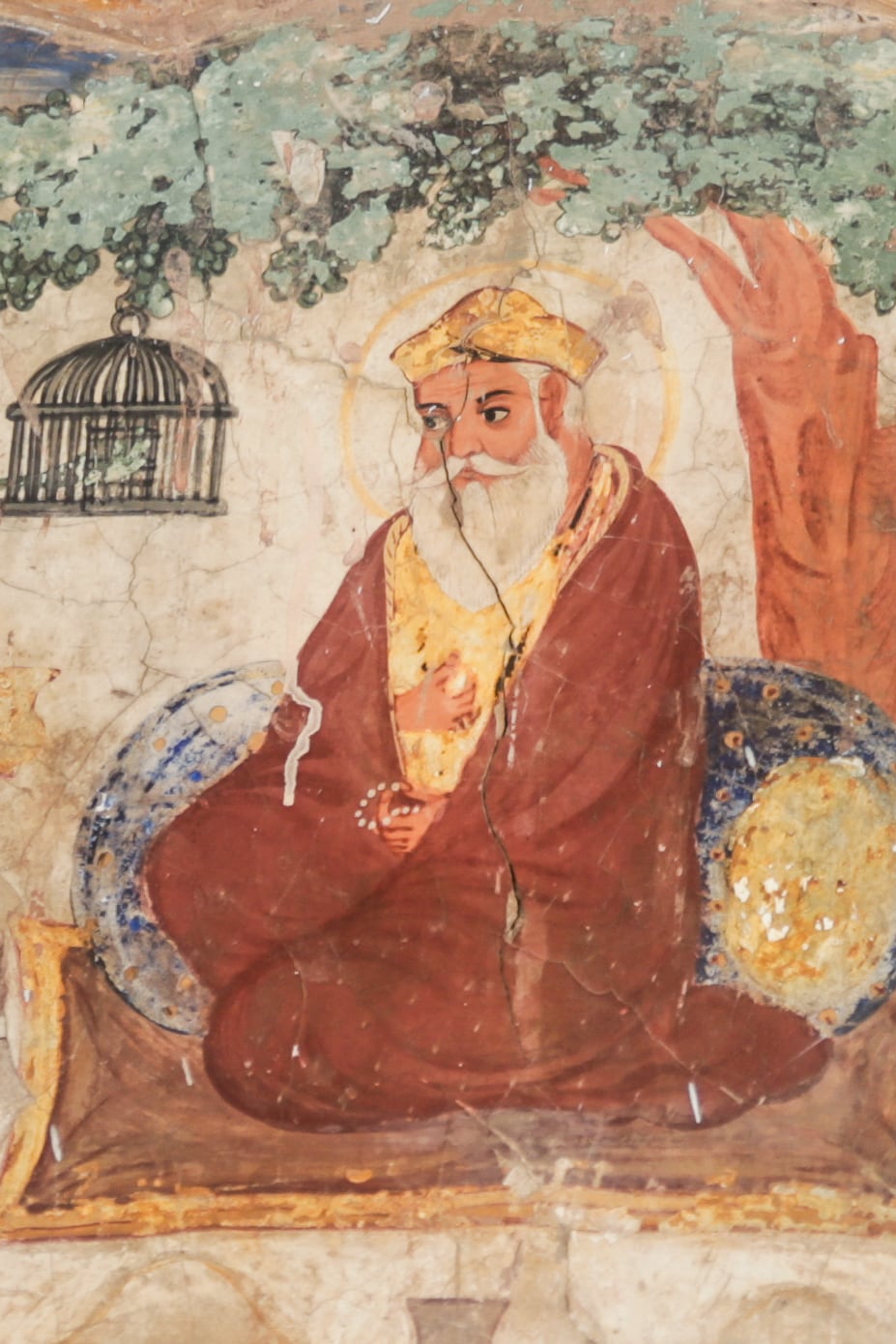
Guru Nanak
Ils concordent sur: Pourquoi méditer ou prier ? · Qu'est-ce que l'Absolu ? Dieu existe-t-il ? · Pourquoi souffrons-nous ?

Francis of Assisi
Ils concordent sur: Qu'est-ce que l'Absolu ? Dieu existe-t-il ? · Pourquoi souffrons-nous ? · Comment atteint-on la libération ou le salut ?

Ignatius Brianchaninov
Ils concordent sur: Pourquoi souffrons-nous ? · Qu'est-ce que l'Absolu ? Dieu existe-t-il ? · Comment atteint-on la libération ou le salut ?

Teresa of Ávila
Ils concordent sur: Qu'est-ce que l'Absolu ? Dieu existe-t-il ? · Pourquoi souffrons-nous ? · Comment atteint-on la libération ou le salut ?


Anecdotes et récits
Anecdotes et récits
Témoignage1882 y después
"Mismeeting"
Origine du récit: Begegnung. Autobiographische Fragmente (1960), first fragment; taken up by Friedman and Mendes-Flohr.
Source: Buber, Martin. Begegnung. Autobiographische Fragmente. Stuttgart: W. Kohlhammer, 1960 (trad. ingl.: Meetings, ed. Maurice Friedman, La Salle, Open Court, 1973).
Témoignagec. 1889
The dapple-grey horse
Origine du récit: Zwiesprache (1929/1932) and Begegnung (1960): Buber's own autobiographical account.
Source: Buber, Martin. Zwiesprache. Berlín: Schocken, 1932 (primera publicación en Die Kreatur, 1929); reunido en Das dialogische Prinzip, Heidelberg: Lambert Schneider, 1962.
Témoignagec. 1892–1895
Kant in adolescence
Origine du récit: Begegnung (1960), fragment "Philosophers".
Source: Buber, Martin. Begegnung. Autobiographische Fragmente. Stuttgart: W. Kohlhammer, 1960 (trad. ingl.: Meetings, ed. Maurice Friedman, La Salle, Open Court, 1973).
Témoignagec. 1914
A conversion
Origine du récit: Zwiesprache (1929/1932), section "Eine Bekehrung", and Begegnung (1960). Some biographers identify the young man; Buber does not give his name.
Source: Buber, Martin. Zwiesprache. Berlín: Schocken, 1932 (primera publicación en Die Kreatur, 1929); reunido en Das dialogische Prinzip, Heidelberg: Lambert Schneider, 1962.
Documenté1938–1939
The letter to Gandhi
Origine du récit: The letter was published in 1939 in the pamphlet Two Letters to Gandhi (with Judah Magnes's) and is included in A Land of Two Peoples (1983).
Source: Mendes-Flohr, Paul R. (ed.). A Land of Two Peoples: Martin Buber on Jews and Arabs. Nueva York: Oxford University Press, 1983.
Documenté1953
In the Paulskirche
Origine du récit: Official text of the speech "Das echte Gespräch und die Möglichkeit des Friedens" published by the Friedenspreis des Deutschen Buchhandels.
Documenté1962
Against Eichmann's gallows
Origine du récit: National Library of Israel blog ("Who Opposed Eichmann's Execution?") and Mendes-Flohr's biography (2019).
Source: National Library of Israel Blog. «Who Opposed Eichmann's Execution?».
Enseignements
Enseignements
Les notions qui structurent sa pensée, expliquées dans leur contexte.
I-Thou (Ich-Du)ich-du
Set out in I and Thou (1923), in dialogue with Feuerbach, Kierkegaard, Hermann Cohen, Ferdinand Ebner and Franz Rosenzweig.
I-It (Ich-Es)ich-es
Second part of I and Thou, devoted to the critique of modern civilisation.
The eternal Thouewiges-du
Third part of I and Thou; developed in Eclipse of God (1952–1953).
The between (das Zwischen)das-zwischen
What Is Man? (1942/1948) and Elements of the Interhuman (1954).
Genuine dialogueechtes-gespraech
Dialogue (1929/1932) and the 1953 speech.
Source: Buber, Martin. Zwiesprache. Berlín: Schocken, 1932 (primera publicación en Die Kreatur, 1929); reunido en Das dialogische Prinzip, Heidelberg: Lambert Schneider, 1962.
Eclipse of Godgottesfinsternis
Eclipse of God (1952) / Gottesfinsternis (1953).
Source: Buber, Martin. Gottesfinsternis. Betrachtungen zur Beziehung zwischen Religion und Philosophie. Zúrich: Manesse, 1953 (ed. ingl.: Eclipse of God, Nueva York: Harper, 1952), con el debate con C. G. Jung publicado en Merkur (1952).
Vergegnung (mismeeting)vergegnung
Meetings: Autobiographical Fragments (1960).
Source: Buber, Martin. Begegnung. Autobiographische Fragmente. Stuttgart: W. Kohlhammer, 1960 (trad. ingl.: Meetings, ed. Maurice Friedman, La Salle, Open Court, 1973).
Vidéos
Vidéos
Enregistrements, entretiens et documentaires. Les vidéos sont lues depuis YouTube ; elles ne sont pas hébergées ici.
Martin Buber - Das Wort, das gesprochen wird (Audio)
Enregistrement original· DE· 61 min
PhilosophieKanal
BUBER - PRIZE - NO SOUND
Enregistrement original· EN· 1 min
British MovietoneChaîne officielle
Martin Buber and Martin Heidegger in Dialogue, Paul Mendes-Flohr
Conférence· EN· 80 min
The University of ChicagoChaîne officielle
Martin Buber: A Life of Faith and Dissent by Paul Mendes-Flohr (Jewish Lives Book Club)
Entretien· EN· 71 min
Jewish LivesChaîne officielle
Dissent and Dialogue: On Buber, Faith and Jewish Identity (Paul Mendes-Flohr)
Conférence· EN· 58 min
JBS
Wish You Were Here: Martin Buber
Conférence· EN· 65 min
thejewishmuseumChaîne officielle
Martin Buber and His Legacy | 08/16 Buber, Levinas, and the Idea of Hebrew... - Guy G. Stroumsa
Conférence· EN· 21 min
The Israel Academy of Sciences and HumanitiesChaîne officielle
Martin Buber and His Legacy | 10/16 Buber: A Jewish Icon for the World after... - Dominique Bourel
Conférence· EN· 21 min
The Israel Academy of Sciences and HumanitiesChaîne officielle
On The Life & Philosophy of Martin Buber (1878-1965) With Dr. Zachary J. Braiterman (Syracuse Uni)
Entretien· EN· 42 min
The Young Idealist
19 - מרטין בובר ופרנץ רוזנצווייג - חלק א
Conférence· HE· 29 min
The Open University of IsraelChaîne officielle
Martin Buber, La révolution hassidique, avec Catherine Chalier, Dominique Bourel et Macha Fogel
Conférence· FR· 32 min
AkademChaîne officielle
Begegnungen mit Martin Buber
Conférence· DE· 96 min
Katholische Akademie BerlinChaîne officielle
Martín Buber: El humanismo del encuentro
Conférence· ES· 72 min
Universidad Católica del UruguayChaîne officielle
Galerie
Galerie
Images dont la licence a été vérifiée. Chacune conserve son auteur et son attribution.
Relations
Relations
Influences, filiations et affinités. On distingue la relation documentée de la similitude identifiée par analyse.
A reçu l'influence de
Buber devoted *Die Legende des Baalschem* (1908) and an anthology of sayings (1927) to the founder of Hasidism, and saw in Hasidism a model of the hallowing of everyday life. Scholem reproached him for a selective reading.
Relation documentée
A reçu l'influence de
He translated and commented on a selection from the *Zhuangzi* in *Reden und Gleichnisse des Tschuang-Tse* (1910), with the afterword "Die Lehre vom Tao".
Relation documentée
A reçu l'influence de
His afterword on the Tao (1910) and the course on the *Tao Te Ching* he gave at Monte Verità in 1924 show his interest in Taoism as a doctrine of realised unity.
Relation documentée
A reçu l'influence de
His doctoral thesis (Vienna, 1904) studied the problem of individuation in Nicholas of Cusa and Jakob Böhme.
Relation documentée
En désaccord avec
In 1952 Buber accused Jung's psychology in *Merkur* of reducing God to an immanent psychic reality; Jung answered and Buber replied. The debate is collected in *Eclipse of God*.
Relation documentée
En désaccord avec
Siddhartha Gautama, the Buddha
The third part of *I and Thou* discusses the Buddha at length: it admires his capacity to say Thou to men but rejects the goal of an absorption or extinction that abolishes relation.
Relation documentée
Idées proches de
Buber included medieval mysticism in his *Ecstatic Confessions* and mentions the Eckhartian idea of God's birth in the soul in *I and Thou*, in order to distance himself from every mysticism of immersion.
Similitude identifiée par analyse
Idées proches de
In the preface to *Two Types of Faith* (1950) Buber declares that since his youth he has felt Jesus to be his "great brother", and places his teaching within Jewish faith-as-trust (*emunah*).
Relation documentée
Idées proches de
Two opposite models of Jewish thought about God: Maimonides's negative theology and intellectualism versus personal relation with the eternal Thou; both deny that God can be an object of description.
Similitude identifiée par analyse
Idées proches de
Both share the critique of religion reduced to an institution and the pursuit of dialogue between religious traditions; no direct relationship is documented here.
Similitude identifiée par analyse
Sources
Sources
Bibliographie et catalogues consultés pour cette fiche.
- Mendes-Flohr, Paul. Martin Buber: A Life of Faith and Dissent. New Haven/Londres: Yale University Press (Jewish Lives), 2019.
- Friedman, Maurice. Martin Buber's Life and Work. 3 vols. (The Early Years 1878–1923; The Middle Years 1923–1945; The Later Years 1945–1965). Nueva York: E. P. Dutton, 1981–1983; reed. Detroit: Wayne State University Press, 1988.
- Zank, Michael, y Zachary Braiterman. «Martin Buber». Stanford Encyclopedia of Philosophy (primera publicación 2004; revisión sustancial 2026).
- Buber, Martin. Ich und Du. Leipzig: Insel-Verlag, 1923 (ejemplar digitalizado en Internet Archive, «ich-und-du»).
- Buber, Martin. Begegnung. Autobiographische Fragmente. Stuttgart: W. Kohlhammer, 1960 (trad. ingl.: Meetings, ed. Maurice Friedman, La Salle, Open Court, 1973).
- Wikidata, Q84423: «Martin Buber» (8 de febrero de 1878 – 13 de junio de 1965), 79 enlaces entre wikis.
- Martin Buber Werkausgabe (MBW), ed. Paul Mendes-Flohr, Peter Schäfer y Bernd Witte, por encargo de la Academia de Ciencias de Berlín-Brandeburgo, la Israel Academy of Sciences and Humanities y la Universidad Heinrich Heine de Düsseldorf. 21 vols. Gütersloh: Gütersloher Verlagshaus, 2001–2019.
- Scholem, Gershom. «Martin Buber's Interpretation of Hasidism». Commentary 32 (octubre de 1961); reimpr. en The Messianic Idea in Judaism, Nueva York: Schocken, 1971.
- Cohn, Margot, y Rafael Buber. Martin Buber: A Bibliography of His Writings, 1897–1978. Jerusalén: Magnes Press; Múnich: K. G. Saur, 1980.
- Buber, Martin. Zwiesprache. Berlín: Schocken, 1932 (primera publicación en Die Kreatur, 1929); reunido en Das dialogische Prinzip, Heidelberg: Lambert Schneider, 1962.
- Buber, Martin. «Das echte Gespräch und die Möglichkeit des Friedens», discurso de aceptación del Premio de la Paz del Comercio Librero Alemán, Paulskirche de Fráncfort, 27 de septiembre de 1953 (PDF oficial del Friedenspreis des Deutschen Buchhandels).
- Mendes-Flohr, Paul R. (ed.). A Land of Two Peoples: Martin Buber on Jews and Arabs. Nueva York: Oxford University Press, 1983.
- National Library of Israel Blog. «Who Opposed Eichmann's Execution?».
- Wikimedia Commons, categoría «Martin Buber» (licencias leídas por la API imageinfo).
- Wikipedia en alemán, «Martin Buber» (sección «Schriften»), contrastada con el catálogo de Open Library por autor.
- Anderson, Rob, y Kenneth N. Cissna. The Martin Buber–Carl Rogers Dialogue: A New Transcript with Commentary. Albany: State University of New York Press, 1997.
- Buber, Martin. Gottesfinsternis. Betrachtungen zur Beziehung zwischen Religion und Philosophie. Zúrich: Manesse, 1953 (ed. ingl.: Eclipse of God, Nueva York: Harper, 1952), con el debate con C. G. Jung publicado en Merkur (1952).
- Berlin-Brandenburgische Akademie der Wissenschaften, documento sobre la Martin Buber Werkausgabe que cita «Aus einer philosophischen Rechenschaft» (1961), en Werke I, Múnich/Heidelberg, 1962.
- Ayant droit
- Herederos de Martin Buber (murió en 1965: sus obras están protegidas en la UE hasta el 1 de enero de 2036 y en España hasta 2046). Las primeras ediciones alemanas anteriores a 1930 son de dominio público en EE. UU. El archivo personal se conserva en la Biblioteca Nacional de Israel. Las traducciones tienen derechos propios de sus traductores y editores.
En attente de confirmation
Ce que cette fiche n'a pas encore pu établir. Nous préférons le dire plutôt que de combler.
- Sala de lectura: no se registra ningún texto. Ich und Du (Insel, 1923) está escaneado en Internet Archive (ich-und-du) y es de dominio público en EE. UU., pero no en la UE (hasta 2036) ni en España (hasta 2046); no hay traducciones libres.
- Confirmar en Mendes-Flohr (2019) el mes exacto de la emigración a Jerusalén (marzo de 1938) y la fecha de la carta a Gandhi (24 de febrero de 1939).
- Verificar el editor y el año de la primera edición de Worte an die Zeit (1919) y de Die vier Zweige des Mabinogi (1914) en el catálogo de la DNB.
- Comprobar la titularidad de la grabación sonora «Das Wort, das gesprochen wird» (Sj7Y0cTz3R4); buscar la versión oficial del archivo de la Bayerische Akademie der Schönen Künste o de la radio pública.
- Identificar el premio que muestra el noticiario de British Movietone (k5JMxWWDpGs).
- Ediciones italianas (Il principio dialogico, Il cammino dell'uomo) y árabes sin ISBN verificado en Open Library.
- Localizar el texto alemán exacto de «Ich habe keine Lehre. Ich zeige nur etwas» en Werke I (1962) para pasar la cita de probable a verificada.
Recherche effectuée le 2026-10-25