Hindouisme · Advaita Vedanta · Tradition védique
Ashtavakra
अष्टावक्र
Figure légendaire
Sage de la tradition sanskrite dont le nom signifie « tordu en huit endroits ». Le Mahābhārata raconte que, maudit par son père avant sa naissance, il vainquit enfant le disputeur Bandin à la cour du roi Janaka et arracha son père aux eaux. La tradition lui attribue l'Aṣṭāvakra Gītā, dialogue avec Janaka en vingt chapitres et l'un des textes les plus radicaux de la non-dualité, d'auteur et de date inconnus (entre le VIIIe et le XIVe siècle, selon Brockington).
- œuvres
- 3œuvres
- éditions
- 19éditions
- citations
- 6citations
- vidéos
- 13vidéos
- images
- 2images
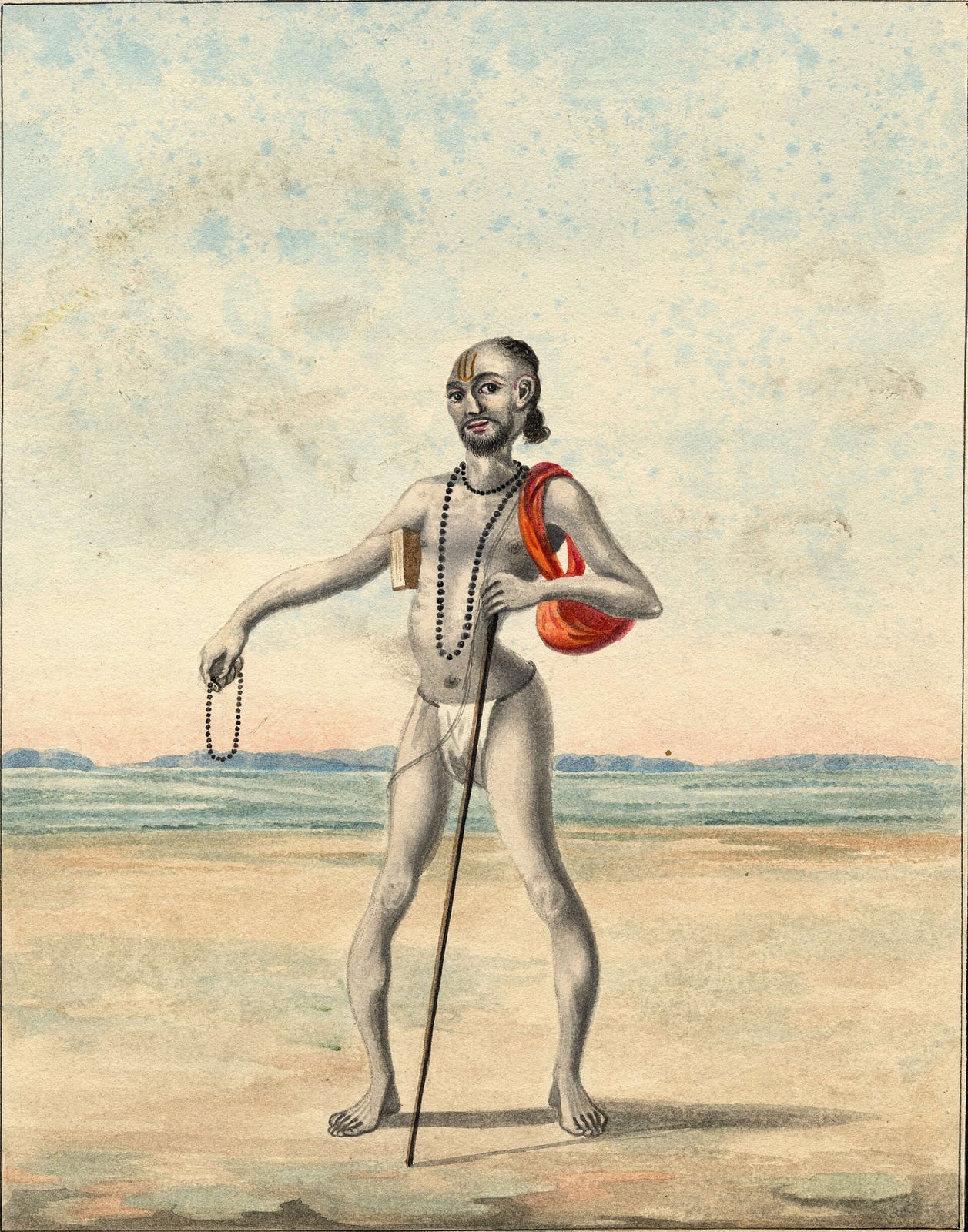
Aṣṭāvakra, acuarela de principios del siglo XIX · Public domain
Dans ses propres mots
«You are not earth, nor water, nor fire, nor air, nor space. For liberation, know yourself as the witness of all these, whose form is consciousness.»Aṣṭāvakra Gītā 1.3 (texto sánscrito de Wikisource); versiones española e inglesa del investigador

Son idée centrale
The witness (sākṣin): This is the central notion of the Aṣṭāvakra Gītā.
Le voir en contexte
Biographie
5 min de lecture
Traduction assistée à partir de l'original espagnol, en attente de relecture par un traducteur natif.
Un nom qui est une blessure
Aṣṭāvakra signifie « celui qui est tordu en huit endroits ». Rares sont les sages de l'Inde ancienne qui portent une difformité dans leur nom, et aucun n'en fait un argument avec autant d'efficacité : toute la tradition qui gravite autour de lui répète que le corps n'est pas la mesure du sage, que l'âge n'est pas la mesure du savoir et que le soi n'est pas la figure que l'on voit. Il importe pourtant de distinguer d'emblée deux plans que la dévotion a coutume de confondre. D'un côté, le personnage de l'épopée sanskrite, dont le récit le plus complet est conservé dans le Mahābhārata ; de l'autre, le poème philosophique qui circule sous son nom, l'Aṣṭāvakra Gītā ou Aṣṭāvakra Saṃhitā, texte d'auteur inconnu qu'aucun passage ancien ne rattache à ce personnage. Aucune date, aucun lieu, aucun témoignage ne permet de traiter Aṣṭāvakra en figure historique : c'est une figure de la tradition.
L'enfant qui corrigea son père
Le récit canonique occupe trois chapitres de l'Āraṇyakaparvan (3.132–134 dans l'édition critique), où le sage Lomaśa le raconte à Yudhiṣṭhira pendant le pèlerinage des Pāṇḍava. Kahoḍa, disciple du maître védique Uddālaka, épouse Sujātā, la fille de son maître. Alors qu'elle est enceinte, l'enfant parle depuis le ventre de sa mère et reproche à son père de réciter toute la nuit sans réciter correctement. Humilié devant ses élèves, Kahoḍa le maudit : il naîtra tordu en huit endroits. Peu après, poussé par la pauvreté, Kahoḍa se rend à la cour du roi Janaka de Videha en quête de richesses ; il y est vaincu en joute par le disputeur Bandin (ou Vandin) et, selon la règle du concours, jeté à l'eau. Uddālaka ordonne qu'on le cache à l'enfant, et Aṣṭāvakra grandit en croyant que son grand-père est son père et que Śvetaketu, son oncle du même âge, est son frère.
Le tournoi des nombres
À douze ans, lorsque Śvetaketu l'écarte des genoux d'Uddālaka en lui lançant « ce ne sont pas les genoux de ton père », Aṣṭāvakra découvre la vérité et part avec son oncle pour le sacrifice de Janaka. Le portier lui barre le passage, car seuls entrent les brahmanes âgés et savants, et l'enfant lui répond par une sentence que le poème rendra célèbre : n'est pas vieux celui dont la tête blanchit, mais celui qui connaît, et les sages n'ont fondé le mérite ni sur les années, ni sur les cheveux blancs, ni sur la richesse, ni sur la parenté. Devant le roi, il défie Bandin. Le duel est une pièce singulière de la littérature sanskrite : chacun des adversaires doit composer sur-le-champ des vers sur les nombres de un à treize, et lorsque Bandin ne parvient à dire que la première moitié de la strophe du treize, Aṣṭāvakra l'achève et l'emporte. Le vaincu révèle alors qu'il est fils du dieu Varuṇa et qu'il envoyait les brahmanes noyés à un sacrifice de douze ans au fond des eaux ; il les rend, Kahoḍa parmi eux, et le père ordonne au fils de se baigner dans la rivière Samaṅgā, d'où il ressort les membres redressés.
D'autres traces dans l'épopée et les Purāṇa
Le nom reparaît ailleurs. Le Rāmāyaṇa de Vālmīki en fait l'emblème du fils qui rachète son père : dans le livre de la guerre (6.119.17 selon la numérotation de la vulgate), le défunt Daśaratha dit à Rāma qu'il a été sauvé par lui comme le brahmane Kahoḍa le fut par Aṣṭāvakra. L'Anuśāsanaparvan du Mahābhārata (sections 19–21 dans la traduction de Ganguli) raconte une autre épreuve : pour obtenir la main de Suprabhā, fille du sage Vadānya, Aṣṭāvakra se rend dans le Nord et résiste aux avances d'une vieille femme qui se révèle être la divinité de cette région, Diś. Le Viṣṇu Purāṇa (5.38) lui prête au contraire un geste de colère : des apsaras qui chantaient ses louanges éclatèrent de rire en le voyant sortir de l'eau, contrefait, et il les maudit à tomber aux mains de brigands, ce qui explique, selon Vyāsa, le rapt des épouses de Kṛṣṇa après la mort du dieu.
Un poème sans date
L'Aṣṭāvakra Gītā est tout autre chose. Ce sont quelque trois cents vers répartis en vingt chapitres, qui prennent la forme d'un dialogue entre Janaka et Aṣṭāvakra, même si le dialogue se dissout bientôt en une déclaration presque ininterrompue d'identité avec la conscience. Ni le texte ni l'épopée n'établissent le lien entre l'enfant du concours et le maître du poème ; c'est la tradition qui l'établit, par le nom et par la figure de Janaka. Les datations proposées divergent considérablement. Radhakamal Mukerjee, dans une étude parue à titre posthume en 1971, la plaçait vers les Ve–IVe siècles av. J.-C. ; J. L. Brockington, dans sa préface à la traduction de Thomas Byrom (1990), y voit l'œuvre d'un advaitin postérieur à Śaṅkara, du VIIIe ou du XIVe siècle, à un moment de renouveau de son école. L'édition critique de Richard Hauschild (Berlin, 1967) demeure l'étude philologique de référence.
Ce que dit le texte
Le poème s'ouvre sur trois questions du roi : comment atteint-on la connaissance, comment la délivrance, comment le détachement ? La réponse est abrupte : tu n'es ni terre, ni eau, ni feu, ni air, ni espace, mais le témoin conscient de tout cela ; si tu te sépares du corps et reposes dans la conscience, tu seras dès à présent heureux et libre. Le texte ne prescrit ni rites, ni devoirs de caste, ni étapes de la vie, et va jusqu'à affirmer que la servitude consiste précisément à continuer de pratiquer la concentration pour atteindre ce que l'on est déjà. Sa sentence fameuse, « qui se tient pour libre est libre, qui se tient pour lié est lié : on devient ce que l'on pense », condense un enseignement qui exclut toute gradation. Le chapitre XVIII, le plus long, décrit le délivré vivant, indifférent au succès comme à l'échec, qui agit sans se sentir l'auteur de ses actes.
Lecteurs modernes
L'œuvre atteignit les lecteurs européens au XIXe siècle : l'Italien Silvio Pagani rappelait en 1912 la traduction en prose de Carlo Giussani, parue dans la Rivista Orientale d'Angelo De Gubernatis en 1867–1868, qu'il mit en vers ; en 1904, Lala Baij Nath publia la première version anglaise connue. Dans l'Inde moderne, elle devint un livre de chevet du mouvement védantique : Vivekananda citait son vers sur la liberté pour dire que tout tient à l'idée que l'on se fait de soi-même, et Ramana Maharshi évoquait devant ses visiteurs l'histoire d'Aṣṭāvakra et de Janaka et recopia à la main le texte sanskrit du poème, que Sri Ramanasramam a reproduit en fac-similé avec la traduction de Swami Nityaswarupananda (1940). Osho lui consacra en hindi une longue série de discours, publiée sous le titre Ashtavakra Mahageeta, et les versions de Thomas Byrom (1990) et de John Richards, qui versa la sienne dans le domaine public en 1994, en ont fait l'un des textes les plus lus de la non-dualité contemporaine.
Sources: Mahābhārata, Āraṇyakaparvan 3.132–134 (ed. crítica de Poona: V. S. Sukthankar et al., Bhandarkar Oriental Research Institute, 1942). Traducción inglesa: Kisari Mohan Ganguli (trad.), The Mahabharata of Krishna-Dwaipayana Vyasa, vol. «Vana Parva», Calcuta, Bharata Press (Pratap Chandra Roy), 1884, secciones CXXXII–CXXXIV (Tirtha-yatra Parva), pp. 396–407. · Mahābhārata, Anuśāsanaparvan, secciones XIX–XXI de la traducción de Kisari Mohan Ganguli (The Mahabharata of Krishna-Dwaipayana Vyasa, vol. «Anusasana Parva», Calcuta, Pratap Chandra Roy, 1883–1896): diálogo de Aṣṭāvakra con la dama Diś. · Wilson, Horace Hayman (trad.). The Vishnu Purana: A System of Hindu Mythology and Tradition. Londres: Oriental Translation Fund / John Murray, 1840, libro V, cap. XXXVIII, pp. 617–618. · Byrom, Thomas (trad.). The Heart of Awareness: A Translation of the Ashtavakra Gita. Prólogo de J. L. Brockington. Boston y Londres: Shambhala, 1990. ISBN 9780877735748. · Hauschild, Richard (ed. y trad.). Die Aṣṭāvakra-Gītā. Berlín: Akademie-Verlag, 1967 (reimpresión De Gruyter, ISBN 9783112742679).
Chronologie
La vie, année après année
Chaque point est un événement documenté. Cliquez pour le lire, avec sa source et son degré de certitude.
v. 300 av. J.-C.
The story in the Āraṇyakaparvan
The Mahābhārata, composed and expanded over several centuries around the turn of the era, includes in its forest book (3.132–134) the story of Aṣṭāvakra, Kahoḍa and Bandin. The date is only an order of magnitude: the epic does not allow individual episodes to be dated.
ProbableMahābhārata, Āraṇyakaparvan 3.132–134 (ed. crítica de Poona: V. S. Sukthankar et al., Bhandarkar Oriental Research Institute, 1942). Traducción inglesa: Kisari Mohan Ganguli (trad.), The Mahabharata of Krishna-Dwaipayana Vyasa, vol. «Vana Parva», Calcuta, Bharata Press (Pratap Chandra Roy), 1884, secciones CXXXII–CXXXIV (Tirtha-yatra Parva), pp. 396–407.
v. 300 av. J.-C.
The story in the Āraṇyakaparvan
The Mahābhārata, composed and expanded over several centuries around the turn of the era, includes in its forest book (3.132–134) the story of Aṣṭāvakra, Kahoḍa and Bandin. The date is only an order of magnitude: the epic does not allow individual episodes to be dated.
Probable
VIIIe siècle
Composition of the Aṣṭāvakra Gītā (hypothesis)
J. L. Brockington ascribes the poem to a follower of Śaṅkara in the eighth or the fourteenth century. Other authors propose much earlier dates (Mukerjee: fifth to fourth centuries BCE); there is no consensus.
Contesté
1840
Wilson translates the Viṣṇu Purāṇa
Horace Hayman Wilson publishes in London his translation of the Viṣṇu Purāṇa, which includes (5.38) Aṣṭāvakra's curse on the apsarases who laughed at his body.
Documenté
v. 1867
First Italian translation
Carlo Giussani publishes a prose translation of the Aṣṭāvakra Gītā in Angelo De Gubernatis's Rivista Orientale (Milan, 1867–1868), as Silvio Pagani recalled in 1912.
Documenté
1884
Ganguli translates the forest book
Kisari Mohan Ganguli publishes in Calcutta the English translation of the Vana Parva, with the full story of the contest of numbers.
Documenté
1904
First English translation of the poem
Lala Baij Nath publishes The Ashtavakra Gita: A Treatise on Adwaita Philosophy, with notes and an introduction.
Documenté
1912
Pagani's verse version
Silvio Pagani publishes in Milan (Sonzogno) an Italian version in hendecasyllables based on Giussani's prose.
Documenté
6 février 1937
Ramana Maharshi comments on the story of Aṣṭāvakra and Janaka
In talk 350 Ramana explains to a devotee that the point of the story of Aṣṭāvakra and Janaka is the disciple's complete surrender, and warns that "the anecdotes differ in different books".
Documenté
1940
Nityaswarupananda's translation
Advaita Ashrama publishes Swami Nityaswarupananda's Aṣṭāvakra Saṃhitā, with word-by-word translation and commentary; it would become the reference version of the Ramakrishna movement.
Documenté
1967
Hauschild's critical edition
Richard Hauschild publishes in Berlin the edition and German translation Die Aṣṭāvakra-Gītā.
Documenté
1990
The Heart of Awareness
Shambhala publishes Thomas Byrom's free rendering with a foreword by J. L. Brockington, one of the most widely read in the West.
Documenté
Œuvres
Œuvres essentielles
Les œuvres sans lesquelles on ne comprend pas son héritage.
Attribution traditionnelle ·
Aṣṭāvakra Gītā (The Song of Aṣṭāvakra)
अष्टावक्रगीता (Aṣṭāvakragītā), también अष्टावक्रसंहिता (Aṣṭāvakrasaṃhitā)
A Sanskrit poem of some three hundred verses in twenty chapters, cast as a dialogue between King Janaka of Mithilā and Aṣṭāvakra. After the king's opening questions on knowledge, liberation and dispassion, the teacher asserts that the self is the conscious witness, formless and actionless, and that bondage is merely a mistaken identification with body and mind. Janaka answers with songs of wonder at his own nature, and the text culminates in a long chapter (XVIII) on the one liberated while living. It dispenses with rites, duties and stages of life, and even regards the practice of concentration itself as bondage.
16 éditions
Ashtavakra
The number debate with Bandin (Mahābhārata 3.132–134)
Attribution traditionnelle
The number debate with Bandin (Mahābhārata 3.132–134)
अष्टावक्रीय (Aṣṭāvakrīya), Mahābhārata 3.132–134
Aṣṭāvakra's answers to the gatekeeper, to King Janaka and to the disputant Bandin. They include the maxim on true old age, which lies in knowledge and not in grey hair, and the tournament of improvised stanzas on the numbers from one to thirteen, in which each figure evokes ritual, cosmological and philosophical groups (two friends, Indra and Agni; twelve months of the year; thirteen metres). Commentators read in it a controversy between doctrines about the unity of the Self.
2 éditions
Citations
Citations localisées dans une œuvre précise. Chacune porte sa provenance et son degré de fiabilité.
You are not earth, nor water, nor fire, nor air, nor space. For liberation, know yourself as the witness of all these, whose form is consciousness.न पृथ्वी न जलं नाग्निर्न वायुर्द्यौर्न वा भवान्। एषां साक्षिणमात्मानं चिद्रूपं विद्धि मुक्तये॥
VérifiéeAṣṭāvakra Gītā 1.3 (texto sánscrito de Wikisource); versiones española e inglesa del investigador
Dernières paroles
Il n'existe aucun témoignage vérifiable de ses dernières paroles.
There is no record of his death or of his last words. The epic and Purāṇic texts present him in isolated episodes (his birth, the contest, his marriage, the curse on the apsarases) and none narrates his end.
Interroger
Ce que répond son œuvre
Douze grandes questions de l'humanité et ce que ses textes permettent d'y répondre, références à l'appui. Nous ne lui prêtons jamais de paroles.
Qu'est-ce que l'Absolu ? Dieu existe-t-il ?
The Absolute is the witnessing consciousness, one, full and actionless
Un Absolu impersonnelIl le dit expressément
The Aṣṭāvakra Gītā does not speak of a God to be addressed but of a consciousness that the disciple already is. In the first chapter the teacher describes the Self as witness, all-pervading, full, one, free, pure consciousness and actionless (1.12), and compares it to space, which is at once inside and outside a jar: so the eternal brahman is in the multitude of beings (1.20). The whole world appears in it like the snake in the rope (1.10) or the waves in the ocean (2.4), adding nothing to it and taking nothing away. The text does not expressly deny a personal God, but grants him no role: the ultimate is not someone who creates or judges, but the conscious ground of all experience, identical with the one who asks.
Comparer cette question avec d'autres maîtresQui suis-je ? Existe-t-il un vrai soi ?
You are not the elements: you are the witness, whose form is consciousness
Le Soi est l'AbsoluIl le dit expressément
The Aṣṭāvakra Gītā answers the question from its third verse: the disciple is not earth, water, fire, air or space, but the witness of them all, whose form is consciousness (1.3). That witness belongs to no caste or stage of life, neither acts nor enjoys (1.5–1.6), and is one with the brahman that is in all beings as space is in jars (1.20). Bondage consists in seeing the seer as if it were another, that is, in taking oneself for an object (1.7). That is why the poem does not propose building a higher self, but recognising what one already is: whoever considers himself free is free, and whoever considers himself bound is bound (1.11).
Comparer cette question avec d'autres maîtresPourquoi souffrons-nous ?
The bite of the serpent of ego: believing oneself the doer
L'ignorance de ce que nous sommesIl le dit expressément
The Aṣṭāvakra Gītā places the root of suffering in a mistaken identification. The disciple, says the teacher, has been bitten by the great black serpent of the pride of thinking «I am the doer», and the antidote is to drink the nectar of the conviction «I am not the doer» (1.8). Bondage consists in taking the seer for another, that is, for an object (1.7), and in identifying for a long time with the body (1.14). Desire, aversion, pleasure and pain belong to the mind, not to the Self; whoever separates from the body and rests in consciousness is happy and serene right now (1.4). Suffering is neither punishment nor trial: it is the price of not knowing what one is.
Comparer cette question avec d'autres maîtresQue se passe-t-il après la mort ?
The witness is neither born nor dies; the sage neither craves life nor fears death
Ce que je suis ne naît ni ne meurtIl le dit expressément
The Aṣṭāvakra Gītā does not describe what happens after death, because for it death affects something the disciple is not. From the first chapter it asks him to recognise himself as the witness of the elements (1.3) and to stop identifying with the body, the rope by which he has long been bound (1.14). Body and world arise and dissolve in consciousness like waves in the ocean (2.4); consciousness neither comes nor goes. Chapter XVIII, devoted to one liberated in life, describes someone who neither desires life nor fears death, indifferent to pleasure and pain. The text neither discusses rebirth nor expressly denies it: it simply leaves it on the side of what is not the Self.
Comparer cette question avec d'autres maîtresComment atteint-on la libération ou le salut ?
You are already free: your bondage is that you keep practising concentration
Par la connaissance directeIl le dit expressément
The Aṣṭāvakra Gītā understands liberation as recognition, not achievement. The teacher asks Janaka to burn the forest of ignorance with the fire of the conviction «I am the one pure consciousness» (1.9), and assures him that if he rests in consciousness, separating from the body, he will be free right now (1.4). The most radical feature of the poem is its distrust of discipline: Janaka is already free, actionless and luminous, and his bondage consists precisely in continuing to practise concentration (1.15). Hence the text states that a disciple of pure mind reaches his goal through a mere instruction, while the other seeks all his life (15.1). In chapter II Janaka does indeed awaken at the first dialogue.
Comparer cette question avec d'autres maîtresFaut-il un maître ?
One instruction suffices for the ripe disciple; in the end there is no teacher or disciple
Utile mais pas indispensableCela se déduit de sa doctrine
The Aṣṭāvakra Gītā is a dialogue between teacher and disciple, and its very form grants a role to the sage's word: Janaka asks, Aṣṭāvakra answers, and in the second chapter the king declares that he has awakened. The text explains why: the disciple of pure mind reaches his goal through a mere instruction, while the other goes on seeking all his life (15.1). But the instruction conveys nothing the disciple does not already have; it only points to what he already is. Hence the poem distrusts learning (16.1) and, in its last chapter, lists among the things that no longer exist for the liberated one the scriptures, knowledge and the distinction between the one who teaches and the one who learns. The teacher is an occasion, not a condition.
Comparer cette question avec d'autres maîtresLe monde est-il réel ?
The world appears through not knowing the Self, like the snake in the rope
Apparence sur l'unique réalitéIl le dit expressément
The Aṣṭāvakra Gītā treats the world as a superimposition on consciousness. It appears through not knowing the Self and ceases to appear when the Self is known, as the snake appears through not recognising the rope and vanishes once it is recognised (2.7). The poem also uses other classical Vedānta images: the silver seen in mother-of-pearl, the water of a mirage (2.9). But alongside them it offers a more conciliatory one: as waves, foam and bubbles are not different from water, the universe that has arisen from the Self is not different from it (2.4). The world is unreal as an independent reality and, at the same time, nothing but the Self appearing. That is why the liberated one need not flee it: it is enough not to take it for what it is not.
Comparer cette question avec d'autres maîtresQu'est-ce que l'amour ?
It does not speak of love: it describes the sage free from attachment and aversion
Ne s'est pas prononcé
The Aṣṭāvakra Gītā contains no teaching on love. Its vocabulary is that of detachment: desire and aversion belong to the mind, not to the Self (15.5), and the liberated one of chapter XVIII is indifferent to pleasure and pain, praise and blame, with neither affection nor hatred towards anything. It would be a mistake to read coldness there: the text describes someone who has stopped dividing the world into what is his and what is another's, and who acts without feeling himself the doer. But it does not call that state love, nor develop it as compassion towards others. If anything follows from its doctrine, it is that the sage's equanimity arises from seeing himself in all beings and all beings in himself (6.4).
Comparer cette question avec d'autres maîtresSommes-nous libres ou tout est-il déterminé ?
Drink the nectar of the conviction «I am not the doer» and be happy
Il n'y a pas d'agentIl le dit expressément
The Aṣṭāvakra Gītā answers the question by displacing it. The problem is not whether the self chooses freely or is determined, but the very belief in a self that acts: the disciple has been bitten by the great black serpent of the pride of thinking «I am the doer», and the antidote is the nectar of the conviction «I am not the doer» (1.8). The Self is witness, actionless (1.12); merit and demerit, pleasure and pain, belong to the mind (1.6). Chapter XVIII describes the liberated one as someone who does what comes without feeling himself the author, gaining nothing by acting and losing nothing by not acting. The freedom that concerns the poem is not that of the will, but that of not being identified with any agent.
Comparer cette question avec d'autres maîtresPourquoi méditer ou prier ?
Your bondage is precisely that you practise concentration
La méditation n'est pas une techniqueIl le dit expressément
The Aṣṭāvakra Gītā is one of the texts most critical of meditative practice in all Indian literature. In the first chapter the teacher tells Janaka that he is already free, actionless, self-luminous and stainless, and that his bondage consists precisely in continuing to practise concentration (samādhi) (1.15). The idea recurs throughout the poem: whoever strives to still the mind still presupposes a self that strives and a goal to be reached, and the sage neither meditates nor ceases to meditate. This is not a recommendation of laxity: what the text points out is that what is sought is not a produced state. All it asks is to rest in the consciousness one already is (1.4).
Comparer cette question avec d'autres maîtresLa raison peut-elle connaître l'ultime ?
Though you read and hear many scriptures, you will find no rest until you forget all
L'ultime est au-delà du mentalIl le dit expressément
The Aṣṭāvakra Gītā distrusts study as much as practice. In chapter XVI the teacher tells Janaka that he may expound or hear many scriptures, again and again, but that he will not attain rest in himself until he forgets everything (16.1). Reason and learning belong to the mind, and what is sought is that to which the mind appears: the witness, which is not an object of the senses or of thought (1.5). The poem does not despise instruction —it is what awakens Janaka— but it understands it as a pointer that is exhausted once understood. In the last chapter, the liberated one no longer has any scripture or knowledge to defend.
Comparer cette question avec d'autres maîtresSe retirer du monde ou le transformer ?
King or ascetic, it matters not: the liberated one acts without feeling the author
La contemplation dans l'actionIl le dit expressément
The Aṣṭāvakra Gītā is a dialogue with a king, Janaka, whom tradition considers liberated without leaving his throne, and its answer to the question is consistent with that frame. Chapter XVIII describes the sage liberated in life as someone not distinguished by outward conduct: he may act or not act, live at court or in the forest, because he no longer feels himself the author of what he does. He neither seeks solitude nor flees it: in the fool, the poem observes, even abstention turns into activity, while in the sage activity itself bears the fruit of abstention (18.61). Nor is there in the text any programme for reforming the world: the sage's action happens, but pursues nothing. What changes is not where one lives, but who one believes is living.
Comparer cette question avec d'autres maîtres
Affinités et tensions
Affinités et tensions
Calculées question par question à partir de ses positions. La raison de chaque accord ou de chaque désaccord s'affiche d'un clic.
Pense comme
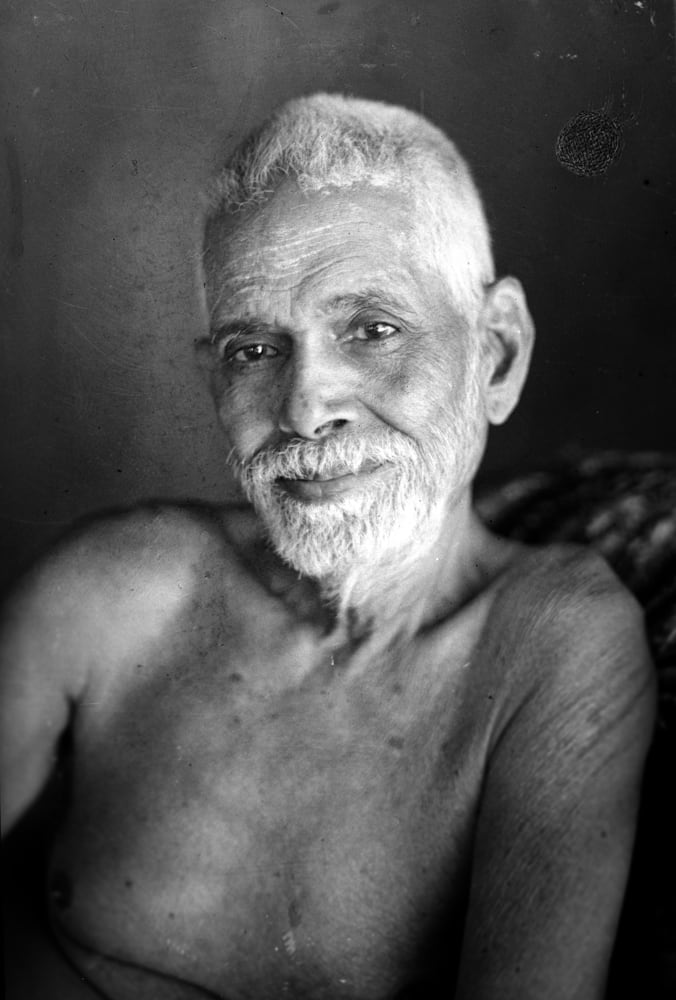
Ramana Maharshi
Ils concordent sur: Qu'est-ce que l'Absolu ? Dieu existe-t-il ? · Le monde est-il réel ? · Qui suis-je ? Existe-t-il un vrai soi ?
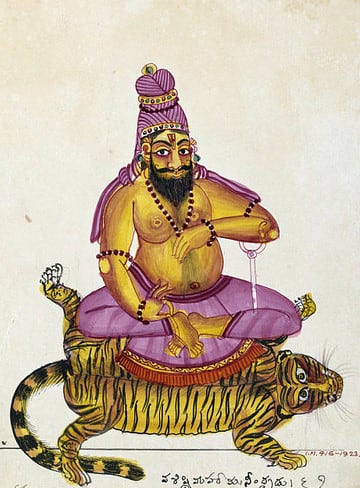
Vasishtha
Ils concordent sur: Qu'est-ce que l'Absolu ? Dieu existe-t-il ? · Qui suis-je ? Existe-t-il un vrai soi ? · Pourquoi souffrons-nous ?
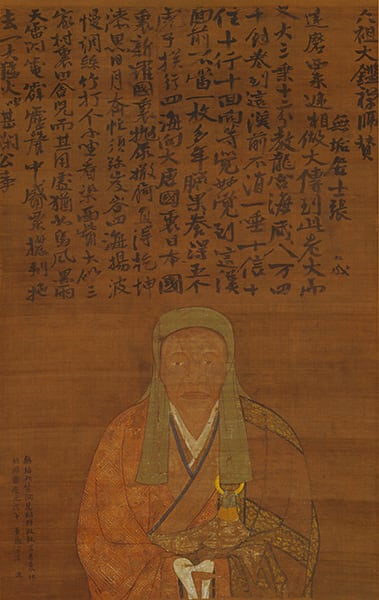
Huineng
Ils concordent sur: Qu'est-ce que l'Absolu ? Dieu existe-t-il ? · Qui suis-je ? Existe-t-il un vrai soi ? · Pourquoi souffrons-nous ?
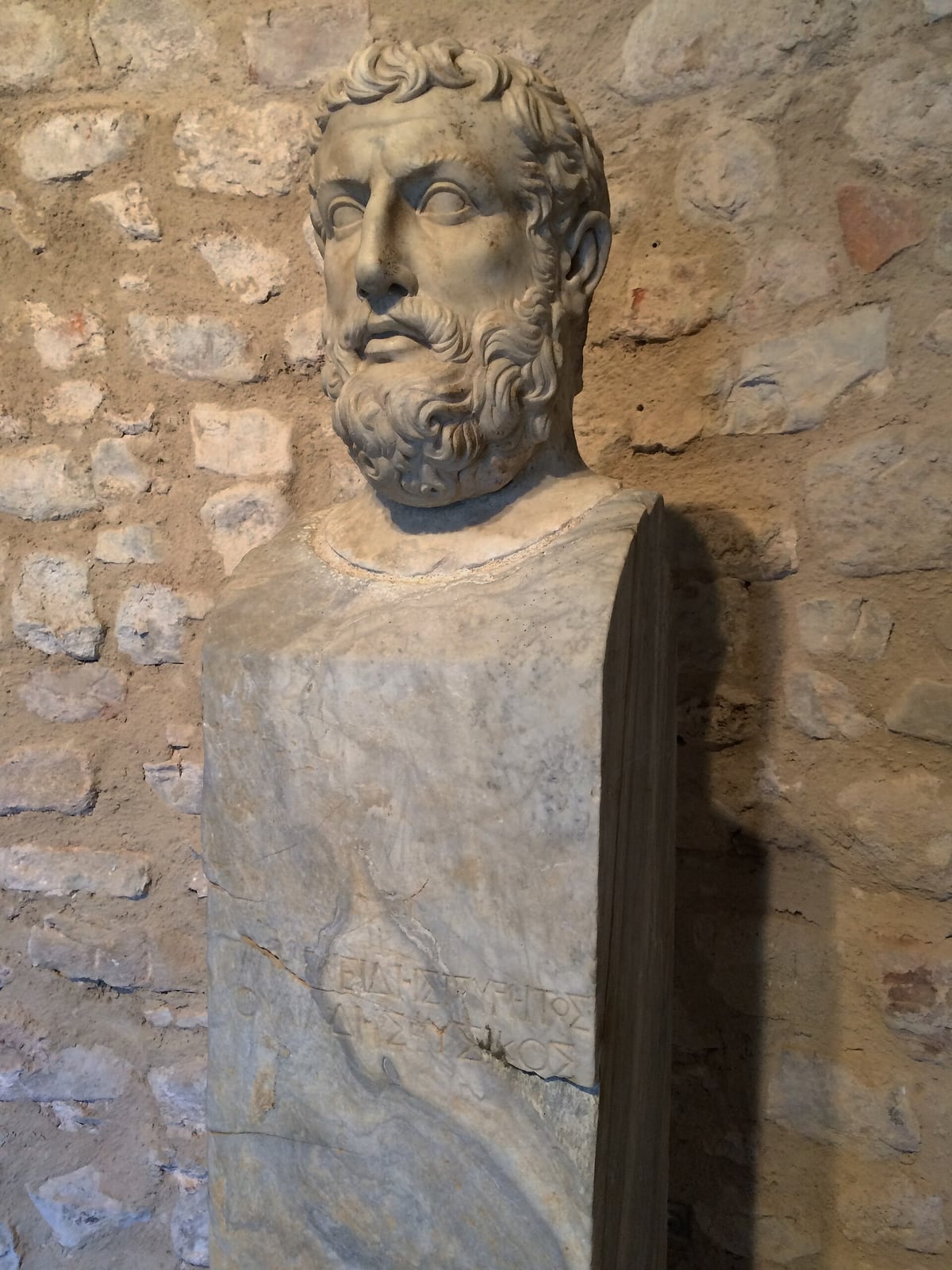
Parmenides
Ils concordent sur: Qu'est-ce que l'Absolu ? Dieu existe-t-il ? · Comment atteint-on la libération ou le salut ? · Faut-il un maître ?
Pense autrement que

Julian of Norwich
Ils s'opposent sur: Qui suis-je ? Existe-t-il un vrai soi ? · Le monde est-il réel ?
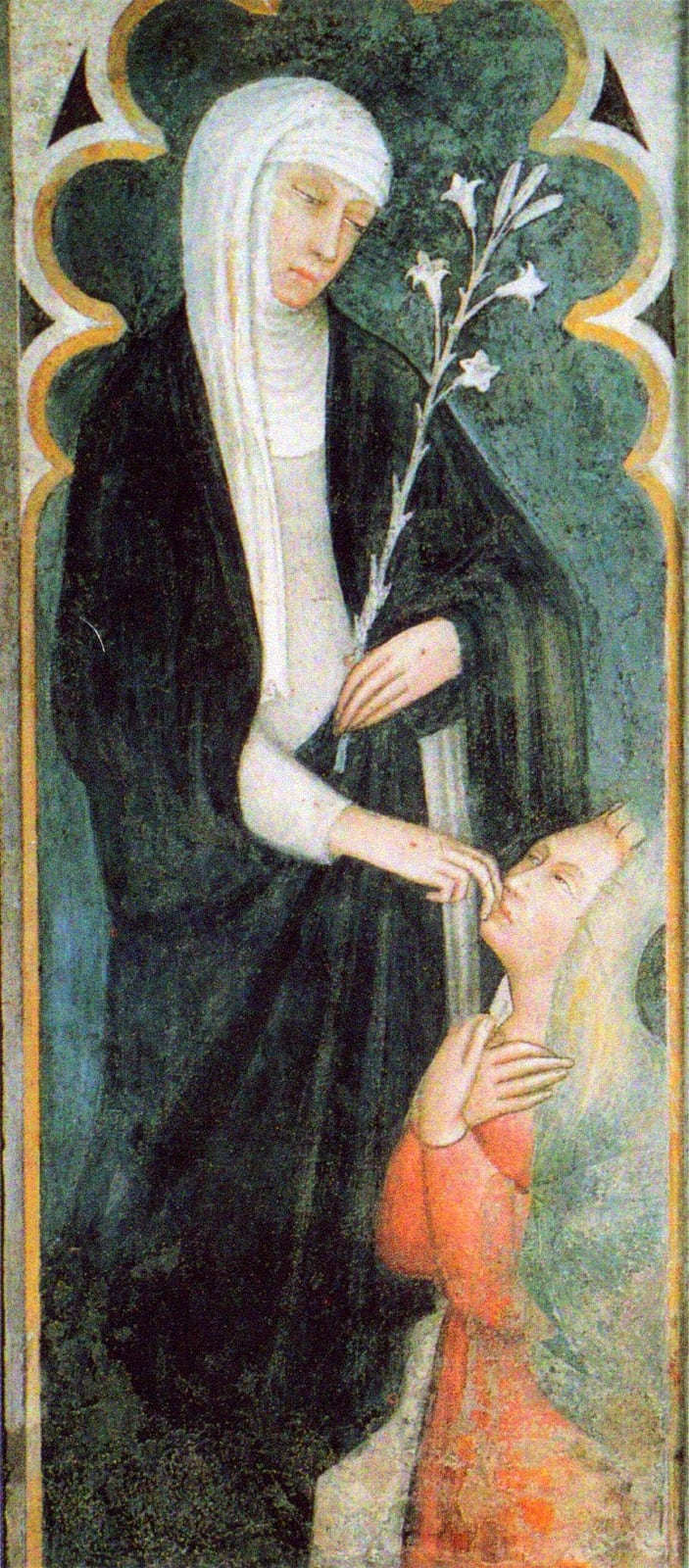
Catherine of Siena
Ils s'opposent sur: Qui suis-je ? Existe-t-il un vrai soi ? · Le monde est-il réel ?
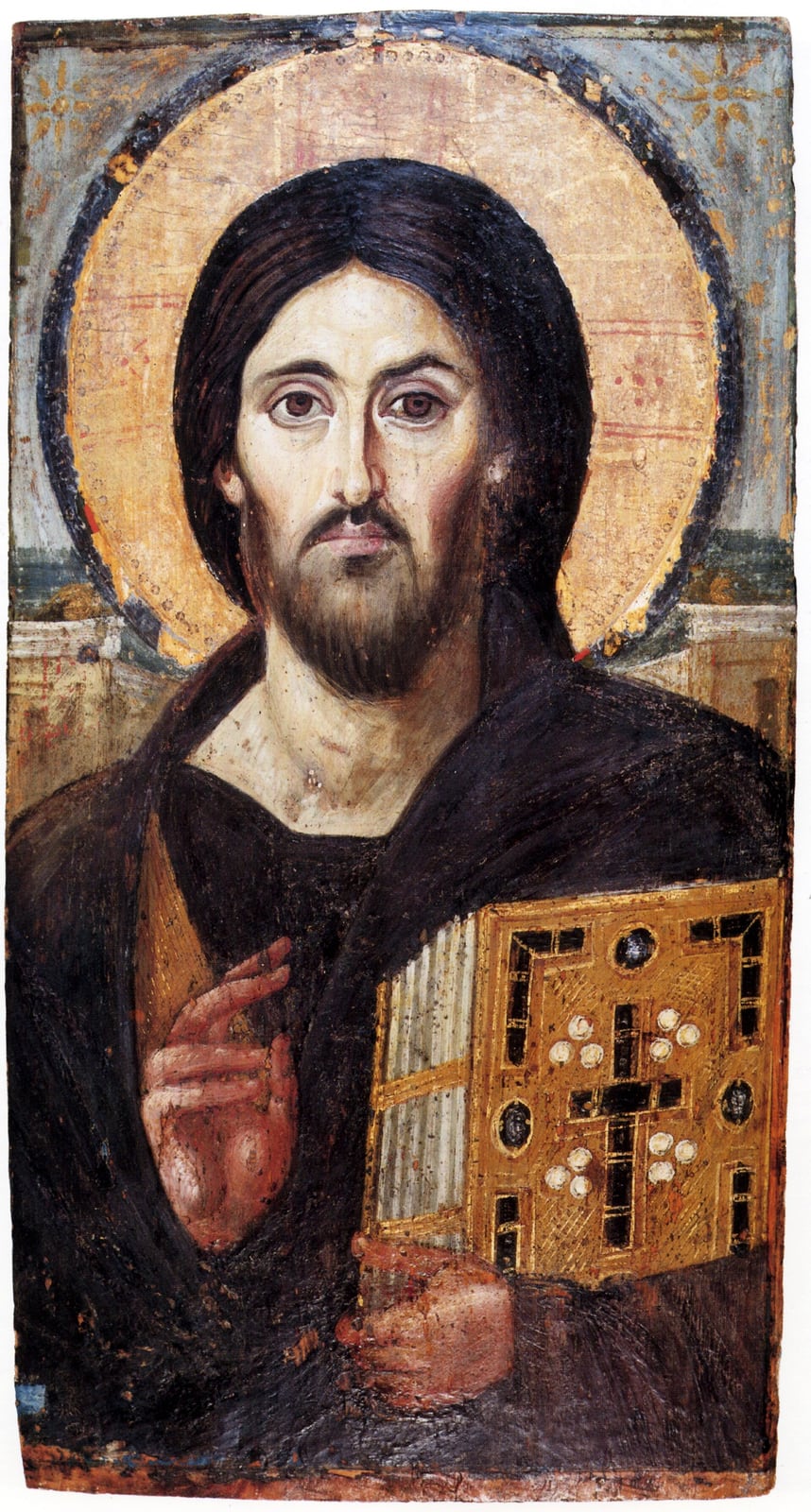
Jesus of Nazareth
Ils s'opposent sur: Le monde est-il réel ? · Qui suis-je ? Existe-t-il un vrai soi ?

Francis of Assisi
Ils s'opposent sur: Qui suis-je ? Existe-t-il un vrai soi ? · Le monde est-il réel ?
Anecdotes et récits
Anecdotes et récits
Récit hagiographiquetiempo legendario
The reproach from the womb
Origine du récit: Mahābhārata 3.132 (critical edition), narrated by the sage Lomaśa to Yudhiṣṭhira; English translation by Ganguli (1884), pp. 396–397. H. H. Wilson summarises it in a note to his translation of the Viṣṇu Purāṇa (1840).
Récit hagiographiquetiempo legendario
The boy before Janaka's gatekeeper
Origine du récit: Mahābhārata 3.133; Ganguli's translation (1884), pp. 398–399. The maxim on grey hair has parallels in normative Sanskrit literature.
Récit hagiographiquetiempo legendario
The contest of numbers
Origine du récit: Mahābhārata 3.134; Ganguli's translation (1884), pp. 402–407, with notes interpreting each number as the thesis of a philosophical school.
Récit hagiographiquetiempo legendario
The bath in the Samaṅgā
Origine du récit: Mahābhārata 3.134, end of the episode; Ganguli's translation (1884), p. 407. It is an aetiology of a sacred site (tīrtha) within the book of pilgrimages.
Récit hagiographiquetiempo legendario
The trial of the North
Origine du récit: Mahābhārata, Anuśāsanaparvan, sections XIX–XXI of Ganguli's translation.
Récit hagiographiquetiempo legendario
The apsarases who laughed
Origine du récit: Viṣṇu Purāṇa 5.38; H. H. Wilson's translation (1840), pp. 617–618. It is a Purāṇic story that does not appear in the Mahābhārata.
Invérifiabletiempo legendario (circulación moderna)
The king with one foot in the stirrup
Origine du récit: It has not been located in the Mahābhārata, in the Purāṇas consulted or in the Aṣṭāvakra Gītā. It circulates in oral versions and in modern devotional literature, with variants; Ramana Maharshi refers to "the story of Aṣṭāvakra and Janaka" and to its differences between books in talk 350 (6 February 1937), without citing a source.
Enseignements
Enseignements
Les notions qui structurent sa pensée, expliquées dans leur contexte.
The witness (sākṣin)sakshin
The notion of sākṣin, the unchanging witness, is common to Advaita Vedānta and has precedents in Sāṃkhya (puruṣa as spectator) and in the Upaniṣads.
Bondage and liberation as convictionbandha-moksha
It corresponds to the Advaita doctrine of superimposition (adhyāsa) and of liberation through knowledge, not through action.
Practice as bondagesamadhi-como-atadura
It contrasts with Patañjali's yoga, which defines yoga as the stilling of the movements of the mind and organises it into eight limbs.
Liberation while living (jīvanmukti)jivanmukti
Jīvanmukti is a classic theme of post-Śaṅkara Advaita (Vidyāraṇya's Jīvanmuktiviveka) and of texts such as the Yogavāsiṣṭha.
The contest of sages at Janaka's courtvada-certamen
The Bṛhadāraṇyaka Upaniṣad (book 3) presents another famous contest at Janaka's court, that of Yājñavalkya.
Vidéos
Vidéos
Enregistrements, entretiens et documentaires. Les vidéos sont lues depuis YouTube ; elles ne sont pas hébergées ici.
Selected Verses of the Ashtavakra Gita (Part 1) | Swami Sarvapriyananda
Conférence· EN· 2019· 88 min
Vedanta Society of New YorkChaîne officielle
Ashtavakra Samhita by Swami Sarvapriyananda
Conférence· EN· 2017· 74 min
Vedanta Society of Southern CaliforniaChaîne officielle
Ashtavakra Gita - The Enlightened Life | Swami Sarvapriyananda
Conférence· EN· 2022· 99 min
Vedanta Society of New YorkChaîne officielle
Why Astavakra Gita Stands Apart in Spiritual Wisdom | Swami Sarvapriyananda
Conférence· EN· 2025· 33 min
Ramakrishna Math & Ramakrishna Mission MangaluruChaîne officielle
Concluding Talk on Ashtavakra Gita at Sri Ramanasramam
Conférence· EN· 2024· 27 min
Swami ShantanandaChaîne officielle
Introduction to Ashtavakra Gita — Non-dual Teachings for Vedantic Contemplation
Conférence· EN· 2026· 9 min
ArshaBodha - Swami TadatmanandaChaîne officielle
Upanishad Ganga Episode 4 | Ashtavakra's Wisdom!
Documentaire· HI· 2022· 23 min
ChinmayaChannelChaîne officielle
The GREATEST Spiritual STORY Ever Told | Ashtavakra Gita | Gurudev
Conférence· EN· 2022· 15 min
Gurudev Sri Sri Ravi ShankarChaîne officielle
A Story of Ashtavakra and Janaka Maharaj's Relationship | Sadhguru
Enregistrement de tiers· EN· 2017· 13 min
SadhguruChaîne officielle
అరణ్యపర్వం 32 • అష్టావక్రుని వృత్తాంతం • Chaganti • Mahabharatham
Conférence· TE· 2023· 23 min
Sanatana Bharathi
Ashtavakra Gîta - Chapitres 1 à 6 [Advaita Vedanta]
Enregistrement de tiers· FR· 2021· 32 min
Le Vieux Sage
Manik "Ashtavakra Gita 1. Kapitel - Teil 1/8 - Wie kann Erkenntnis entstehen" Satsang-Auszug
Conférence· DE· 2025· 33 min
Manik Satsang
Day 1 Ashtavakara Gita Ch 1 Verse 1 & 2
Conférence· ES· 2020· 45 min
Shivender Nagar Gita Vedanta
Galerie
Galerie
Images dont la licence a été vérifiée. Chacune conserve son auteur et son attribution.
Relations
Relations
Influences, filiations et affinités. On distingue la relation documentée de la similitude identifiée par analyse.
Famille de
According to the Mahābhārata (3.132), Aṣṭāvakra is the son of Sujātā, Uddālaka's daughter, and of Kahoḍa, Uddālaka's disciple; he grows up believing his grandfather to be his father.
Relation documentée
A influencé
Ramana commented on the story of Aṣṭāvakra and Janaka (Talks, talk 350, 1937) and copied by hand the Sanskrit text of the Aṣṭāvakra Gītā, published in facsimile by Sri Ramanasramam.
Relation documentée
A influencé
Vivekananda quotes Aṣṭāvakra Saṃhitā 1.11 ("he who considers himself free is free") in the conversations recorded by Sharat Chandra Chakravarty.
Relation documentée
A influencé
Osho devoted an extensive series of Hindi discourses to the Aṣṭāvakra Gītā, published as Ashtavakra Mahageeta.
Relation documentée
Idées proches de
In tradition both are protagonists of contests of knowledge at the court of Janaka of Videha (Yājñavalkya's in the Bṛhadāraṇyaka Upaniṣad, book 3).
Similitude identifiée par analyse
Idées proches de
The Aṣṭāvakra Gītā sets out a radical Advaita; Brockington ascribes it to a follower of Śaṅkara (eighth or fourteenth century).
Similitude identifiée par analyse
Idées proches de
Some commentators (Swami Shantananda Puri) see in the poem a seed of the doctrine of non-origination (ajātivāda) that Gauḍapāda develops in the Māṇḍūkya Kārikā.
Similitude identifiée par analyse
Idées proches de
The Aṣṭāvakra Gītā and the Yogavāsiṣṭha share the ideal of the one liberated while living; Ramana Maharshi engaged with both (he copied the Gītā's Sanskrit by hand, and a selection of the Yogavāsiṣṭha was published at his ashram).
Similitude identifiée par analyse
Idées proches de
The Aṣṭāvakra Gītā and the Avadhūta Gītā, ascribed to Dattātreya, are often published together (Alexandra David-Néel translated them in a single volume) because of their uncompromising non-dualism.
Similitude identifiée par analyse
Idées proches de
The insistence on the self as witness and on the futility of gradual seeking brings his teaching close to that of the poem.
Similitude identifiée par analyse
Lié depuis d'autres fiches
Sources
Sources
Bibliographie et catalogues consultés pour cette fiche.
- Mahābhārata, Āraṇyakaparvan 3.132–134 (ed. crítica de Poona: V. S. Sukthankar et al., Bhandarkar Oriental Research Institute, 1942). Traducción inglesa: Kisari Mohan Ganguli (trad.), The Mahabharata of Krishna-Dwaipayana Vyasa, vol. «Vana Parva», Calcuta, Bharata Press (Pratap Chandra Roy), 1884, secciones CXXXII–CXXXIV (Tirtha-yatra Parva), pp. 396–407.
- Mahābhārata, Anuśāsanaparvan, secciones XIX–XXI de la traducción de Kisari Mohan Ganguli (The Mahabharata of Krishna-Dwaipayana Vyasa, vol. «Anusasana Parva», Calcuta, Pratap Chandra Roy, 1883–1896): diálogo de Aṣṭāvakra con la dama Diś.
- Wilson, Horace Hayman (trad.). The Vishnu Purana: A System of Hindu Mythology and Tradition. Londres: Oriental Translation Fund / John Murray, 1840, libro V, cap. XXXVIII, pp. 617–618.
- Byrom, Thomas (trad.). The Heart of Awareness: A Translation of the Ashtavakra Gita. Prólogo de J. L. Brockington. Boston y Londres: Shambhala, 1990. ISBN 9780877735748.
- Hauschild, Richard (ed. y trad.). Die Aṣṭāvakra-Gītā. Berlín: Akademie-Verlag, 1967 (reimpresión De Gruyter, ISBN 9783112742679).
- Mukerjee, Radhakamal. Aṣṭāvakragītā (The Song of the Self Supreme). Delhi: Motilal Banarsidass, 1971 (póstumo). Datación citada según la entrada «Ashtavakra Gita» de la Wikipedia en inglés (consultada el 26-10-2026); no se ha visto el libro.
- Baij Nath, Rai Bahadur Lala (trad.). The Ashtavakra Gita: A Treatise on Adwaita Philosophy, translated into English with brief notes and introduction. Meerut: oficina del Vaishya Hitkari (impreso en Allahabad, Liddell's Printing Works), 1904.
- Nityaswarupananda, Swami (trad.). Aṣṭāvakra Saṃhitā. Mayavati: Advaita Ashrama, 1940. Edición facsímil con el texto sánscrito copiado a mano por Ramana Maharshi: Tiruvannamalai, Sri Ramanasramam, 2001 (ficha del distribuidor Society of Abidance in Truth).
- Venkataramiah, Munagala (comp.). Talks with Sri Ramana Maharshi. Tiruvannamalai: Sri Ramanasramam, 1955; charlas 104 y 350 (6 de febrero de 1937).
- Vivekananda, Swami. The Complete Works of Swami Vivekananda, vol. 7, «Conversations and Dialogues», V (notas de Sharat Chandra Chakravarty). Mayavati: Advaita Ashrama. Cita de la Aṣṭāvakra Saṃhitā 1.11.
- Wikidata: «Ashtavakra» (Q2722992, sabio védico) y «Ashtavakra Gita» (Q780145).
- Osho. Ashtavakra Mahageeta, bhāg 1 (discursos en hindi). Nueva Delhi: Diamond Books, 2021. ISBN 9788189605773 (serie en varios volúmenes).
- Vālmīki, Rāmāyaṇa, Yuddhakāṇḍa 6.119.17 (numeración de la vulgata), texto y traducción inglesa de Desiraju Hanumanta Rao y K. M. K. Murthy, Valmiki Ramayan.
- अष्टावक्रगीता (Aṣṭāvakragītā), texto sánscrito completo en veinte capítulos, Wikisource en sánscrito.
- Pagani, Silvio (versión en verso). Asht'avakragìtà o il canto di Asht'àvakra. Poemetto filosofico indiano. Milán: Sonzogno (Biblioteca Universale), 1912. Prefacio sobre la traducción en prosa de Carlo Giussani (Rivista Orientale, 1867–1868).
- Ayant droit
- Texto sánscrito anónimo en dominio público. Las traducciones modernas tienen derechos propios: Shambhala (Byrom), Advaita Ashrama (Nityaswarupananda), Shanti Sadan (Shastri), José J. de Olañeta, Luis Cárcamo, Éditions du Rocher (David-Néel), Éditions de l'Éclat (Porte), De Gruyter (Hauschild), Diamond Books (Osho). La versión de John Richards fue cedida por su autor al dominio público (1994); las de Baij Nath (1904) y Pagani (1912) son de dominio público.
En attente de confirmation
Ce que cette fiche n'a pas encore pu établir. Nous préférons le dire plutôt que de combler.
- Fechas: no existen fechas de nacimiento ni muerte; la línea de tiempo usa la recepción de los textos.
- Comprobar en el libro de Radhakamal Mukerjee (1971) la datación que le atribuye la Wikipedia (siglos V–IV a. C.); no se ha visto el volumen.
- Comprobar en la edición de Hauschild (1967) su propuesta de datación, los manuscritos utilizados y la serie exacta (Abhandlungen de la Academia Sajona de Ciencias); registrar después los manuscritos en manuscripts[].
- Traducción de Janaki Nath Mukerjee: no se ha localizado en ningún catálogo (Open Library, Internet Archive, búsqueda general). No se registra.
- Comprobar en el catálogo del British Museum (objeto 1880,0.2073) el título y la identificación de la figura de la acuarela; la identificación como Aṣṭāvakra procede de la ficha de Commons.
- Confirmar el año de publicación del fascículo del Anuśāsana Parva de Ganguli y la numeración de la edición crítica (13.19–21) del diálogo con Diś.
- Edición de Sri Ramanasramam con la caligrafía de Ramana (2001): confirmar el ISBN (el distribuidor da 8188018570).
- Osho: no se ha encontrado un canal oficial (OSHO International) con los discursos de la Ashtavakra Mahageeta; las subidas encontradas son de terceros y no se registran.
- Sala de lectura: la traducción de Baij Nath y la versión de Pagani tienen OCR deficiente; buscar transcripciones limpias. No se ha encontrado ningún texto español en dominio público.
- Vídeo ivZ9kPLxMqA: confirmar que la clase es en español.
- Project Gutenberg no tiene ninguna edición de estas obras (búsqueda en gutenberg.org el 2026-10-26: «No records found»).
Recherche effectuée le 2026-10-26