Hindouisme · Yoga · Advaita Vedanta · Tradition védique
Yajnavalkya
याज्ञवल्क्य
Historicité débattue
Sage védique, protagoniste de la Bṛhadāraṇyaka Upaniṣad et autorité rituelle du Śatapatha Brāhmaṇa, textes de l'école du Yajurveda blanc qu'on lui attribue. À la cour de Janaka de Videha, il l'emporte sur les brahmanes, enseigne à Gārgī l'impérissable et au roi que l'ātman est à lui-même sa propre lumière, définissable seulement par « pas ceci, pas ceci ». Avant de partir comme ascète, il instruit son épouse Maitreyī. Son historicité est débattue ; la Yājñavalkya Smṛti et le Yoga Yājñavalkya, qui portent son nom, sont bien plus tardifs.
- œuvres
- 12œuvres
- éditions
- 35éditions
- citations
- 11citations
- vidéos
- 15vidéos
- images
- 7images
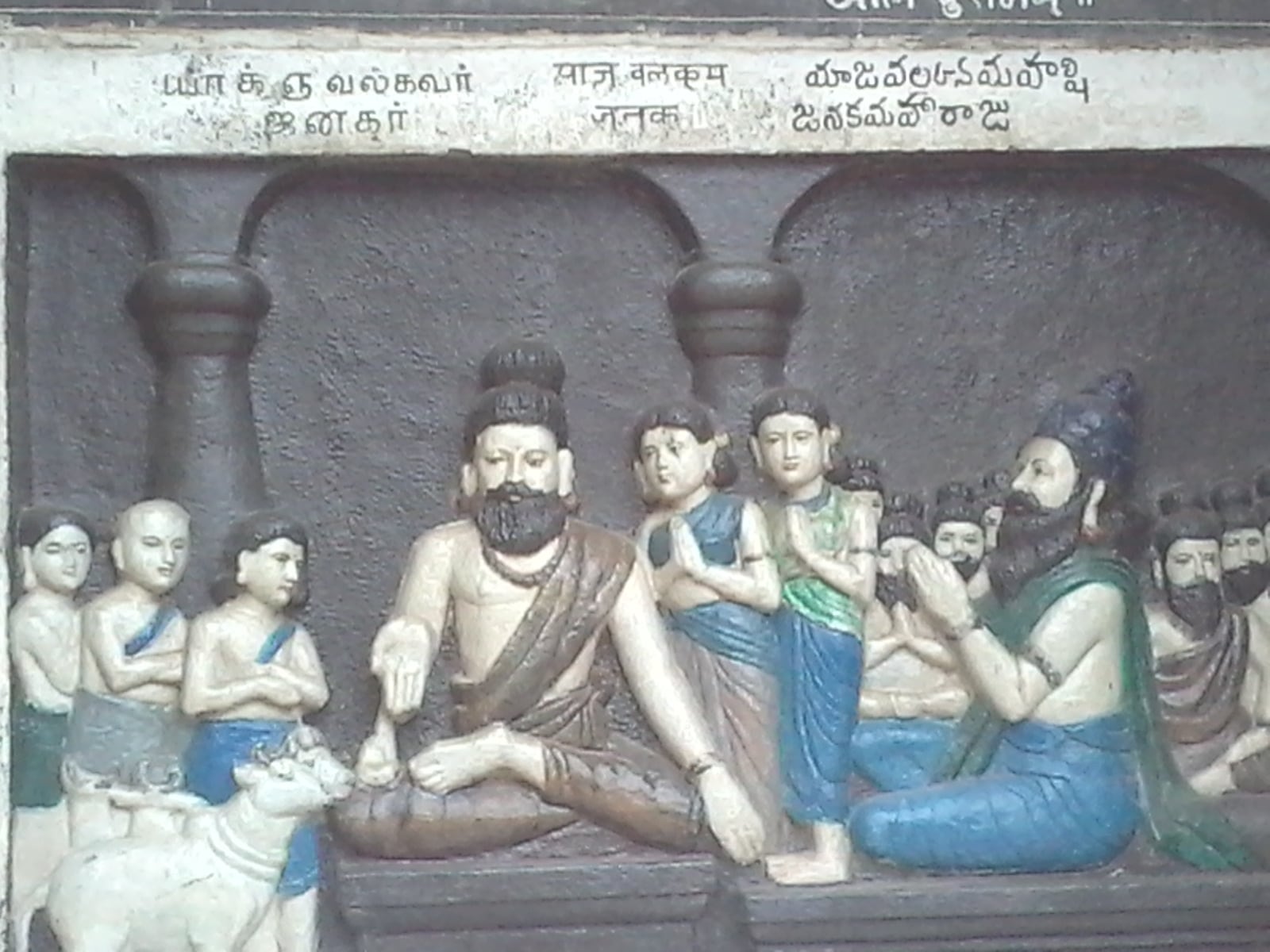
Yājñavalkya con el rey Janaka (relieve) · CC BY-SA 3.0
Dans ses propres mots
«It is not for the love of the husband, my dear, that a husband is loved, but for the love of the ātman. […] It is the ātman, my dear, that must be seen, heard, reflected on and meditated upon, Maitreyī.»Bṛhadāraṇyaka Upaniṣad 2.4.5 (traducción propia del sánscrito)

Son idée centrale
Neti neti ("not this, not this"): The formula with which the Bṛhadāraṇyaka designates the ātman or brahman: it cannot be described by any attribute, because anything said of it would turn it into one object among others.
Le voir en contexte
Biographie
6 min de lecture
Traduction assistée à partir de l'original espagnol, en attente de relecture par un traducteur natif.
Un nom qui n'existe que dans deux livres
Presque tout ce que l'on peut dire de Yâjñavalkya provient de deux textes de l'école du Yajurveda blanc : le Śatapatha Brāhmaṇa, le grand traité du sacrifice, et la Bṛhadāraṇyaka Upaniṣad, qui en constitue le dernier livre. Tous deux nous sont parvenus en deux recensions, la Kāṇva et la Mādhyandina, et cette double tradition permet, selon Michael Witzel, de vérifier que le portrait n'est pas l'invention d'une seule école. Il n'existe ni inscription, ni chronique, ni témoignage extérieur : Yâjñavalkya est un personnage des textes, et son historicité reste débattue. Ce que l'on peut affirmer, en revanche, c'est que la tradition lui attribue la révélation des formules du Yajus « blanc », et que le Śatapatha lui-même clôt sa lignée de maîtres en déclarant que ces formules, reçues du Soleil, furent proclamées par Yâjñavalkya Vājasaneya.
Le ritualiste qui se riait des règles
Le Yâjñavalkya le plus ancien est un prêtre. Dans les livres un à cinq du Śatapatha, puis de nouveau dans les livres onze à treize, il discute des points techniques du rite avec une acuité qui frôle parfois l'insolence. Alors que le texte interdit de manger la chair de la vache ou du bœuf, parce que ces animaux « soutiennent tout ce qui est sur la terre », il ajoute sans transition : « Et pourtant Yâjñavalkya dit : moi, j'en mange, pourvu qu'elle soit tendre » (Śatapatha 3.1.2.21). Un autre passage le montre déjà vieux, exhibant ses bras grisonnants. Witzel remarque qu'il n'apparaît pas dans les livres six à dix, de tradition plus occidentale, et voit en lui une figure de l'est, du royaume de Videha, bien que le texte le range parmi les brahmanes des Kuru et des Pañcāla : un immigré, donc, dans un Orient qui s'intégrait à la culture védique au cours des siècles antérieurs au Bouddha.
Mille vaches à la cour de Janaka
La scène qui lui a valu l'immortalité littéraire se trouve au troisième livre de la Bṛhadāraṇyaka. Janaka, roi de Videha, célèbre un sacrifice aux dons abondants et met à part mille vaches, des pièces d'or attachées aux cornes, pour le plus savant des brahmanes. Personne n'ose les réclamer, hormis Yâjñavalkya, qui ordonne à son disciple Sāmaśravas de les emmener ; devant le scandale, il répond qu'il s'incline devant le plus savant, mais que lui ne veut que les vaches. On l'interroge alors l'un après l'autre : Aśvala, Ārtabhāga, Bhujyu, Uṣasta, Kahola, Gārgī Vācaknavī, Uddālaka Āruṇi, Gārgī de nouveau et, pour finir, Vidagdha Śākalya. Avec Ārtabhāga, il se retire pour parler en tête à tête, et ce dont ils traitent, dit le texte, c'est de l'acte : on devient bon par l'acte bon, mauvais par l'acte mauvais. À Gārgī, qui demande ce qui soutient les mondes de brahman, il conseille de ne pas trop questionner si elle ne veut pas que sa tête tombe ; lorsqu'elle revient avec deux questions « comme des flèches », il lui parle de l'impérissable, qui voit sans être vu. Śākalya, qui s'obstine, meurt la tête fracassée.
La lumière de l'homme et le « pas ceci, pas ceci »
Au quatrième livre, Yâjñavalkya instruit Janaka lui-même. Le roi lui demande quelle est la lumière de l'homme : le soleil, répond-il, et quand le soleil se couche, la lune ; puis le feu, puis la voix, et quand tout cela fait défaut, le soi, l'ātman, qui est à lui-même sa propre lumière. Suit une exploration des états de conscience — la veille, le rêve et le sommeil profond, où celui qui voit devient « un seul océan, sans second » — et une explication de la mort et de la renaissance selon le désir et l'acte : « tel on agit, tel on devient ». De l'ātman on ne peut rien dire que par négation : neti neti, « pas ceci, pas ceci » ; il est insaisissable, indestructible, sans attache. Janaka, à la fin, s'offre lui-même et offre son peuple comme esclaves au maître.
Maitreyī et le départ
Par deux fois, l'Upaniṣad raconte que Yâjñavalkya, sur le point de quitter la vie de maître de maison, voulut partager ses biens entre ses deux épouses, Maitreyī et Kātyāyanī. Maitreyī, que le texte appelle « celle qui discourt sur le brahman », demande si la terre entière remplie de richesses la rendrait immortelle ; devant la réponse négative, elle répond : « Que ferais-je de ce qui ne me rend pas immortelle ? » Il lui enseigne alors que l'on n'aime pas l'époux, l'épouse, les fils ou la richesse pour eux-mêmes, mais pour l'ātman, et que là où tout est devenu ātman il ne reste personne pour voir un autre. Witzel souligne qu'il est le premier personnage dont un texte indien dise qu'il quitte sa maison pour vivre sans foyer ; Joel Brereton a montré comment les deux versions du dialogue furent composées et assemblées selon un plan délibéré.
Ce que disent les textes et ce que dit la critique
Patrick Olivelle situe la Bṛhadāraṇyaka et la Chāndogya, les deux plus anciennes Upaniṣad, vers les VIIe et VIe siècles av. J.-C., avant le Bouddha, et rappelle que la première est une œuvre composée de strates. Witzel, à la suite de Tsuji, soutient que le ritualiste du Śatapatha et le penseur de l'Upaniṣad sont une seule et même personne, et que ses contemporains — Uddālaka Āruṇi, Janaka de Videha, Ajātaśatru de Kāśī — renvoient à une époque antérieure à celle du Bouddha ; d'autres auteurs, comme Horsch ou Ruben, ont mis en doute cette unité. Brian Black et Steven Lindquist lisent le personnage comme une construction littéraire : le modèle du brahmane qui l'emporte dans les joutes, dont la biographie s'écrit à travers ces joutes mêmes. Aucune de ces lectures ne permet de fixer une date de naissance ou de mort.
Un nom qui ne cessa de grandir
Après les Upaniṣad, le nom de Yâjñavalkya devint un aimant. Le Viṣṇu Purāṇa raconte que son maître Vaiśaṃpāyana, offensé, exigea qu'il lui rende ce qu'il avait appris ; il vomit alors les formules du Yajus, que d'autres disciples recueillirent sous la forme de perdrix (tittiri) — d'où viendrait le nom de l'école Taittirīya —, puis il obtint du Soleil, apparu sous la forme d'un cheval, le Yajus blanc des Vājasaneyin. Le Mahābhārata lui fait exposer la doctrine du Sāṃkhya au roi Janaka, et le canon jaina le compte parmi ses sages sous le nom de Jannavakka. Sous son nom circulent des œuvres bien plus tardives : la Yājñavalkya Smṛti, traité de dharma et de droit qu'Olivelle date des IVe ou Ve siècles de notre ère et qui, avec le commentaire Mitākṣarā, régit une grande partie du droit hindou ; et le Yoga Yājñavalkya, manuel de yoga dont la date est discutée entre le début de notre ère et le XIIe siècle.
Un héritage à la racine du Vedānta
Śaṅkara commenta la Bṛhadāraṇyaka, et la méthode de la négation, l'ātman lumière de lui-même et l'unité de l'ātman et du brahman, telles qu'on les lit dans les dialogues de Yâjñavalkya, devinrent des pièces maîtresses de l'Advaita Vedānta. Les traditions du renoncement virent dans son départ le modèle du saṃnyāsa, et deux Upaniṣad tardives, la Jābāla et celle qui porte son nom, le montrent enseignant comment devenir moine. Pour la philosophie comparée, Yâjñavalkya compte parmi les premiers penseurs dont on ait conservé quelque chose comme une voix propre : ironique, avide de vaches, implacable dans la discussion et, en même temps, le premier à dire que l'ultime ne peut être nommé.
Sources: Olivelle, Patrick (ed. y trad.). The Early Upaniṣads: Annotated Text and Translation. Nueva York: Oxford University Press, 1998 (South Asia Research). Introducción (datación, pp. 12–13) y Bṛhadāraṇyaka 2.4, 3.1–3.9, 4.1–4.5, 6.5. · Olivelle, Patrick (trad.). Upaniṣads. Oxford World's Classics. Oxford: Oxford University Press, 1996. · Müller, F. Max (trad.). The Upanishads, Part II (Sacred Books of the East, vol. 15). Oxford: Clarendon Press, 1884. Incluye la Bṛhadāraṇyaka Upaniṣad. · Eggeling, Julius (trad.). The Śatapatha-Brāhmaṇa according to the Text of the Mādhyandina School, 5 vols. (Sacred Books of the East, vols. 12, 26, 41, 43, 44). Oxford: Clarendon Press, 1882–1900. · Black, Brian. The Character of the Self in Ancient India: Priests, Kings, and Women in the Early Upaniṣads. Albany: State University of New York Press, 2007.
Chronologie
La vie, année après année
Chaque point est un événement documenté. Cliquez pour le lire, avec sa source et son degré de certitude.
VIIIe siècle av. J.-C. – 600 av. J.-C.Videha y Kuru-Pañcāla (llanura del Ganges)
The ritualist of the Śatapatha Brāhmaṇa
The ritual opinions attributed to Yājñavalkya in books 1–5 and 11–13 of the Śatapatha Brāhmaṇa reflect, according to Witzel, the late Vedic period before the Buddha. The range is an estimate, not a date.
ProbableWitzel, Michael. «Yājñavalkya as Ritualist and Philosopher, and His Personal Language». En Siamak Adhami (ed.), Paitimāna: Essays in Iranian, Indo-European, and Indian Studies in Honor of Hanns-Peter Schmidt. Costa Mesa: Mazda Publishers, 2003, pp. 103–143.
VIIIe siècle av. J.-C. – 600 av. J.-C.
The ritualist of the Śatapatha Brāhmaṇa
The ritual opinions attributed to Yājñavalkya in books 1–5 and 11–13 of the Śatapatha Brāhmaṇa reflect, according to Witzel, the late Vedic period before the Buddha. The range is an estimate, not a date.
Probable
VIIe siècle av. J.-C.
Revelation of the White Yajus (according to tradition)
The Bṛhadāraṇyaka (6.5.3) credits Yājñavalkya Vājasaneya with proclaiming the "white" Yajus formulas received from the Sun; the Purāṇas add the story of Vaiśaṃpāyana and the partridges.
Tradition
VIIe siècle av. J.-C.
The debate of the thousand cows
At Janaka's sacrifice Yājñavalkya answers nine interlocutors, including Gārgī Vācaknavī and Uddālaka Āruṇi (Bṛhadāraṇyaka 3.1–3.9). It is a literary account of uncertain date.
Tradition
VIIe siècle av. J.-C.
The teachings to Janaka
The light of man, the states of waking, dreaming and deep sleep, death and rebirth, and "neti neti" (Bṛhadāraṇyaka 4.1–4.4).
Tradition
VIIe siècle av. J.-C.
Dialogue with Maitreyī and departure as an ascetic
Before leaving household life he teaches Maitreyī the doctrine of the ātman (Bṛhadāraṇyaka 2.4 and 4.5). Witzel regards it as the first textual case of a "proto-renouncer".
Tradition
IIe siècle av. J.-C. – 400
Yājñavalkya in the Mahābhārata
The Śāntiparvan (12.298 ff.) has him expound Sāṃkhya doctrine to Janaka. The epic took shape between the third century BCE and the fourth century CE.
Probable
IVe siècle – 500
Composition of the Yājñavalkya Smṛti
Treatise on dharma in three books attributed to Yājñavalkya; Olivelle dates it to around the fourth or fifth century CE.
Probable
XIe siècle
Vijñāneśvara's Mitākṣarā
Vijñāneśvara's commentary on the Yājñavalkya Smṛti (late eleventh or twelfth century) became the principal authority of Hindu law in much of India and, later, the basis of the "Hindu law" of British courts.
Probable
1884
Max Müller's translation
Max Müller publishes the Bṛhadāraṇyaka in volume 15 of the Sacred Books of the East, which made Yājñavalkya's dialogues known in the West.
Documenté
2019
Olivelle's edition of the Yājñavalkya Smṛti
Patrick Olivelle publishes the text and translation of the Smṛti in the Murty Classical Library of India.
Documenté
Œuvres
Œuvres essentielles
Les œuvres sans lesquelles on ne comprend pas son héritage.
Compilation postérieure · VIIe siècle av. J.-C.
Bṛhadāraṇyaka Upaniṣad (The Great Forest Upaniṣad)
बृहदारण्यकोपनिषद् (Bṛhadāraṇyaka Upaniṣad)
The longest and probably the oldest of the Upaniṣads. It is traditionally divided into three sections: the Madhu-kāṇḍa (chapters 1–2), with the first dialogue between Yājñavalkya and Maitreyī; the Muni- or Yājñavalkya-kāṇḍa (3–4), with the debate at Janaka's court and the teachings to the king on the light of the ātman, the states of consciousness, death and "neti neti"; and the Khila-kāṇḍa (5–6), a supplement of doctrines and rites ending with the lists of teachers. It is the main source for the early form of the doctrine of karma and rebirth, and one of the textual foundations of Vedānta.
13 éditions · amazon.es
Attribution traditionnelle · VIIe siècle av. J.-C.
Yājñavalkya-kāṇḍa (Muni-kāṇḍa): the debate at Janaka's court and the teachings to the king
याज्ञवल्कीयकाण्ड / मुनिकाण्ड (Bṛhadāraṇyaka 3–4)
Chapter 3 narrates the contest at the sacrifice of Janaka of Videha: Yājñavalkya answers Aśvala, Ārtabhāga, Bhujyu, Uṣasta, Kahola, Gārgī Vācaknavī, Uddālaka Āruṇi and Vidagdha Śākalya on ritual, death, karma, the "inner controller" (antaryāmin) and the imperishable (akṣara). Chapter 4 records his conversations with Janaka: the light of man, the states of waking, dreaming and deep sleep, death and rebirth, desire and liberation, and the doctrine of the ātman as "not this, not this". It ends with the second version of the dialogue with Maitreyī.
3 éditions · amazon.es
Yajnavalkya
Śatapatha Brāhmaṇa (The Brāhmaṇa of a Hundred Paths)
Attribution traditionnelle · VIIIe siècle av. J.-C.
Śatapatha Brāhmaṇa (The Brāhmaṇa of a Hundred Paths)
शतपथब्राह्मण (Śatapatha Brāhmaṇa)
The longest of the Vedic prose treatises on sacrifice. It explains, rite by rite, the meaning of the new- and full-moon offerings, the soma sacrifice, the great fire altar (agnicayana), royal consecration and the horse sacrifice, and includes famous narratives such as the flood and Manu, Purūravas and Urvaśī, and Videgha Māthava, which tells of the eastward spread of the sacrificial fire. Its later books contain the first speculative debates (brahmodya) involving Yājñavalkya, Uddālaka Āruṇi and Janaka.
4 éditions

Attribution traditionnelle · IVe siècle
Yājñavalkya Smṛti (Yājñavalkya's Treatise on Dharma)
याज्ञवल्क्यस्मृति (Yājñavalkya Smṛti)
About a thousand verses in three books: conduct (ācāra), legal procedure (vyavahāra) and expiation (prāyaścitta). More concise and systematic than the Laws of Manu, it gives priority to documentary evidence, describes the trial in four stages (plaint, answer, proof and verdict) and grants women broader inheritance rights. It also includes passages on medicine, embryology and yoga. With Vijñāneśvara's Mitākṣarā commentary (eleventh–twelfth century) it was the main authority of Hindu law across much of India and the basis of the "Hindu law" applied by British courts.
5 éditions
Toute son œuvre (12)

The dialogue with Maitreyī
650
Yajnavalkya
Vājasaneyi Saṃhitā (White Yajurveda)
The Conscious LibraryVājasaneyi Saṃhitā (White Yajurveda)
800

Yoga Yājñavalkya
Yajnavalkya
Bṛhad Yogi Yājñavalkya Smṛti
The Conscious LibraryBṛhad Yogi Yājñavalkya Smṛti

Jābāla Upaniṣad and Yājñavalkya Upaniṣad (Upaniṣads of renunciation)
Yajnavalkya
The dialogue of Yājñavalkya and Janaka in the Mahābhārata
The Conscious LibraryThe dialogue of Yājñavalkya and Janaka in the Mahābhārata
100
Yajnavalkya
Vṛddha-Yājñavalkya and Bṛhad-Yājñavalkya (fragments)
The Conscious LibraryVṛddha-Yājñavalkya and Bṛhad-Yājñavalkya (fragments)
Yajnavalkya
Yājñavalkya Śikṣā (treatise on phonetics)
The Conscious LibraryYājñavalkya Śikṣā (treatise on phonetics)
Citations
Citations localisées dans une œuvre précise. Chacune porte sa provenance et son degré de fiabilité.
It is not for the love of the husband, my dear, that a husband is loved, but for the love of the ātman. […] It is the ātman, my dear, that must be seen, heard, reflected on and meditated upon, Maitreyī.न वा अरे पत्युः कामाय पतिः प्रियो भवत्यात्मनस्तु कामाय पतिः प्रियो भवति । … आत्मा वा अरे द्रष्टव्यः श्रोतव्यो मन्तव्यो निदिध्यासितव्यो मैत्रेयि ।
VérifiéeBṛhadāraṇyaka Upaniṣad 2.4.5 (traducción propia del sánscrito)
Dernières paroles
Il n'existe aucun témoignage vérifiable de ses dernières paroles.
There is no record of his death or of his last words. The Bṛhadāraṇyaka closes his story with a departure, not a death: the last words the text gives him are those addressed to Maitreyī, "such, my dear, is immortality" (etāvad are khalv amṛtatvam), after which "Yājñavalkya went away" (4.5.15). They are not last words in a biographical sense. What the Purāṇas and the local traditions of Mithilā tell afterwards is late hagiography.
Source: Olivelle, Patrick (ed. y trad.). The Early Upaniṣads: Annotated Text and Translation. Nueva York: Oxford University Press, 1998 (South Asia Research). Introducción (datación, pp. 12–13) y Bṛhadāraṇyaka 2.4, 3.1–3.9, 4.1–4.5, 6.5.
Interroger
Ce que répond son œuvre
Douze grandes questions de l'humanité et ce que ses textes permettent d'y répondre, références à l'appui. Nous ne lui prêtons jamais de paroles.
Qu'est-ce que l'Absolu ? Dieu existe-t-il ?
«Not this, not this»: the ultimate cannot be the object of any knowing
L'innommableIl le dit expressément
In the Bṛhadāraṇyaka Upaniṣad, Yājñavalkya designates the ātman, identical with brahman, by the formula «not this, not this» (neti neti): it is ungraspable because it cannot be grasped, indestructible because it is not destroyed. To Gārgī he describes the imperishable (akṣara) through a long series of negations —neither coarse nor fine, neither short nor long, with no inside or outside— and, at the same time, as that under whose command the sun and moon are held apart. The reason for so much negation is epistemological: the ultimate is the knower, and he asks Maitreyī by what the knower could be known. It is not nihilism; it is the impossibility of turning into an object what is the subject of all knowing.
Comparer cette question avec d'autres maîtresQui suis-je ? Existe-t-il un vrai soi ?
The ātman sees without being seen: it is its own light and is brahman
Le Soi est l'AbsoluIl le dit expressément
In the Bṛhadāraṇyaka, Yājñavalkya defines the ātman as the ultimate subject of experience: the one who sees without being seen, hears without being heard, thinks without being thought and knows without being known (3.7.23). When King Janaka asks him what the light of a person is once the sun and moon have set, the fire has gone out and the voice is silent, he answers that the ātman is then its own light (4.3.6). That ātman persists in waking, dream and deep sleep, where it becomes «one ocean, without a second» (4.3.32). And Yājñavalkya identifies it plainly with the principle of everything: «this ātman is brahman» (4.4.5). The true self is not the body or the mind, but what illumines them and cannot be known as an object.
Comparer cette question avec d'autres maîtresPourquoi souffrons-nous ?
Everything other than the ātman is afflicted
L'ignorance de ce que nous sommesIl le dit expressément
In the debate at Janaka's court, Yājñavalkya closes several of his answers with the same phrase: what is other than the ātman is afflicted (ārta). He says it to Uṣasta, to Kahola and to Uddālaka Āruṇi, after describing the ātman as the one who sees without being seen (3.4.2; 3.5.1; 3.7.23). Suffering is thus tied to living turned towards what is perceived as something else, instead of recognising oneself in the subject who perceives it. Before Janaka he adds the mechanism: a person is made of desire; as is his desire, so is his will, as his will, so his action, and as his action, so he becomes (4.4.5). Whoever knows the ātman, he tells Kahola, leaves behind hunger, thirst, sorrow, delusion, old age and death.
Comparer cette question avec d'autres maîtresQue se passe-t-il après la mort ?
As a caterpillar moves from blade to blade, the ātman passes to another body
Renaissance selon le karmaIl le dit expressément
The Bṛhadāraṇyaka contains, in Yājñavalkya's mouth, one of the first formulations of transmigration according to one's deeds. What he discusses alone with Ārtabhāga, away from the debate, is action: one becomes good by good action and bad by bad (3.2.13). Before Janaka he describes death: the senses gather in the heart, and the ātman, with its knowledge, its deeds and its past experience, leaves the body like a caterpillar that reaches for another blade before letting go of the last, or like a goldsmith who gives gold a new and more beautiful form (4.4.3–4). As is his desire, so will be his action, and as his action, so he will become. But one who desires nothing, whose only desire is the ātman, does not transmigrate: being brahman, he goes to brahman (4.4.6).
Comparer cette question avec d'autres maîtresComment atteint-on la libération ou le salut ?
Whoever knows the ātman and desires nothing more becomes brahman
Par la connaissance directeIl le dit expressément
For the Yājñavalkya of the Bṛhadāraṇyaka, liberation is knowledge. He tells Maitreyī that it is the ātman that must be seen, heard, reflected on and meditated upon, for by knowing it everything is known (2.4.5). He teaches Janaka that one who desires nothing, whose only desire is the ātman, does not transmigrate: being brahman, he goes to brahman (4.4.6). That knowledge goes together with renunciation: the brahmins who know the ātman, he says, give up the desire for sons, wealth and worlds, and live on alms (3.5.1). Ritual, Vedic study, generosity and austerity serve to make one wish to know it (4.4.22), but do not produce it. He himself, before departing as an ascetic, proposes to divide his goods between his two wives.
Comparer cette question avec d'autres maîtresFaut-il un maître ?
Knowledge is won in debate and passes through a lineage of teachers
La communauté et la traditionCela se déduit de sa doctrine
Yājñavalkya appears in the Bṛhadāraṇyaka within a network of teachers and disciples. He is presented as a pupil of Uddālaka Āruṇi (6.3.7) and in turn teaches King Janaka, his wife Maitreyī and those who question him at court. Knowledge is tested in public, in the theological debate (brahmodya) for Janaka's thousand cows, where Yājñavalkya answers eight opponents, and transmitted in private, as when he withdraws with Ārtabhāga to speak of action. The Upaniṣad closes its sections with lists of lineages (vaṃśa) that trace the teaching from teacher to teacher back to its source. The text contains no thesis on the need for a teacher: what it shows is that knowledge of the ātman lives in a community that debates, transmits and tests.
Comparer cette question avec d'autres maîtresLe monde est-il réel ?
Where there is something like duality, one sees the other
Apparence sur l'unique réalitéCela se déduit de sa doctrine
Yājñavalkya does not deny that the world exists: he explains to Gārgī that all that is above the sky, below the earth and between them is woven on space, and space on the imperishable (3.8). But he introduces a decisive distinction. He tells Maitreyī that where there is «something like duality» (dvaitam iva) one sees, hears and knows the other; when everything has become one's own ātman, with what and whom would one see? (2.4.14). Multiplicity belongs to ordinary experience; in the ultimate vision there is no second. Verses he quotes before Janaka add that there is no diversity here at all, and that whoever sees as if there were goes from death to death (4.4.19). The world is real as that in which the ātman is manifest, not as something separate from it.
Comparer cette question avec d'autres maîtresQu'est-ce que l'amour ?
The husband is not loved for the husband's sake, but for the ātman
Le désir ardent et l'unionIl le dit expressément
Yājñavalkya's most famous passage on love is in his farewell dialogue with Maitreyī. Before leaving as an ascetic he offers to divide his goods; she asks whether wealth would make her immortal, and he answers with a teaching: it is not for love of the husband that the husband is dear, but for love of the ātman; and likewise the wife, the sons, wealth, the gods and all beings (2.4.5). All love has the ātman as its ultimate object, and that is why it is the ātman that must be seen, heard, reflected on and meditated upon. Love, then, is not rejected: one discovers what it was always seeking. Beneath every bond lies a longing for the one thing that is not lost, and wisdom consists in recognising it.
Comparer cette question avec d'autres maîtresSommes-nous libres ou tout est-il déterminé ?
As is one's desire, so is one's will; as one's action, so one becomes
Le karma et le choixIl le dit expressément
The Bṛhadāraṇyaka ascribes to Yājñavalkya an early and precise formulation of the relation between action and destiny. Before Janaka he explains that a person is made of desire: as is his desire, so is his will; as his will, so his action; and according to the action he performs, so he becomes (4.4.5). As one acts and behaves, so one becomes: the one who does good becomes good; the one who does evil, evil. The past conditions, because at death the ātman departs accompanied by its deeds and experience; but the chain begins in desire, and that is why it can be broken. One who desires nothing, whose only desire is the ātman, leaves it. Responsibility thus rests on what each person desires and does.
Comparer cette question avec d'autres maîtresPourquoi méditer ou prier ?
It is the ātman that must be seen, heard, reflected on and meditated upon
Revenir à la source du jeIl le dit expressément
The phrase Yājñavalkya addresses to Maitreyī —it is the ātman, my dear, that must be seen, heard, reflected on and meditated upon (2.4.5)— became the programme of Vedāntic practice: hearing the teaching (śravaṇa), reflecting on it (manana) and meditating on it until it becomes evident (nididhyāsana). What is meditated on is not an image or an external god, but the subject itself: the one who sees without being seen and knows without being known. His dialogues with Janaka traverse the states of waking, dream and deep sleep to show what remains in all three, and ask the knower to become calm, restrained, withdrawn, patient and collected, and to see the ātman in himself (4.4.23).
Comparer cette question avec d'autres maîtresLa raison peut-elle connaître l'ultime ?
By what could one know the knower?
L'ultime est au-delà du mentalIl le dit expressément
Yājñavalkya is a master of debate: at Janaka's court he answers eight opponents and wins the king's thousand cows. And yet what he defends with arguments is that the ultimate cannot be reached by them. To Uṣasta, who asks him to show the ātman as one points to a cow, he replies that one cannot see the seer of seeing or think the thinker of thought (3.4.2). He asks Maitreyī by what one could know the knower (2.4.14). To Gārgī, who insists on asking on what brahman is woven, he warns her not to ask too much, or her head will fall off (3.6.1). Reasoning can clear away errors and point towards the subject, but the subject never becomes an object of thought.
Comparer cette question avec d'autres maîtresSe retirer du monde ou le transformer ?
Those who know the ātman leave sons, wealth and worlds, and beg
Se retirer pour trouverIl le dit expressément
The Bṛhadāraṇyaka presents Yājñavalkya on the point of «going forth» from his home to lead a wandering life: before leaving he wishes to divide his goods between his two wives, and Maitreyī asks for his teaching instead (2.4.1; 4.5.2). In Janaka's debate he describes the knowers of the ātman as those who, giving up the desire for sons, wealth and worlds, live on alms (3.5.1). Knowledge of the ātman leads to detachment from everything else, and detachment is expressed in a way of life. Michael Witzel regards him as the first textual case of a «proto-renouncer», prior to the systematisation of the stages of life. The late Upaniṣads of renunciation made him the teacher par excellence of saṃnyāsa.
Comparer cette question avec d'autres maîtres
Affinités et tensions
Affinités et tensions
Calculées question par question à partir de ses positions. La raison de chaque accord ou de chaque désaccord s'affiche d'un clic.
Pense comme
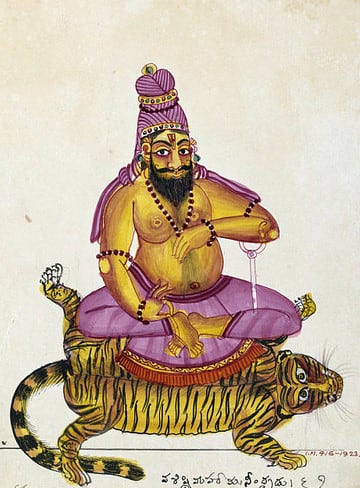
Vasishtha
Ils concordent sur: Qui suis-je ? Existe-t-il un vrai soi ? · Pourquoi souffrons-nous ? · Comment atteint-on la libération ou le salut ?
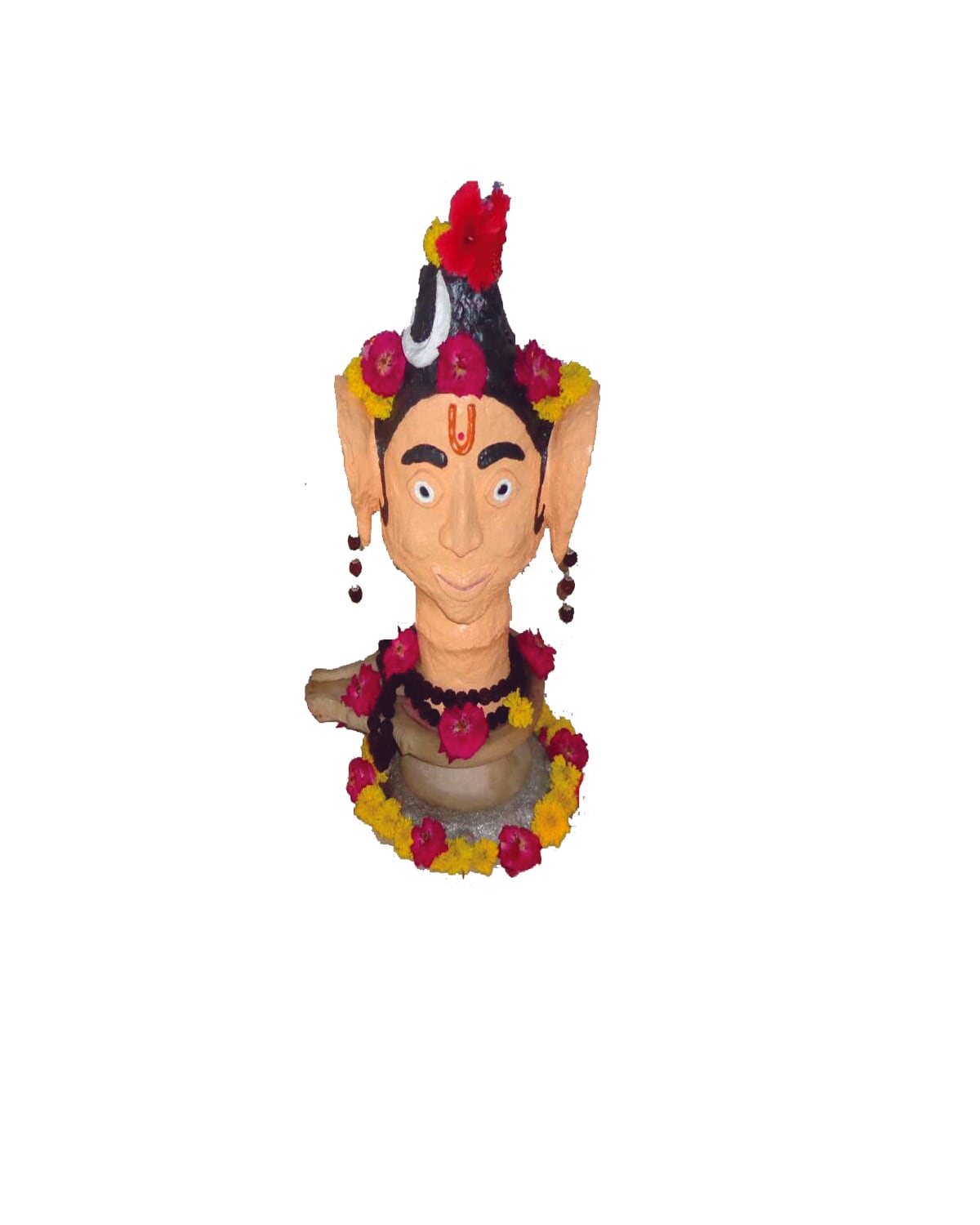
Nisargadatta Maharaj
Ils concordent sur: Qu'est-ce que l'Absolu ? Dieu existe-t-il ? · Qui suis-je ? Existe-t-il un vrai soi ? · Pourquoi souffrons-nous ?
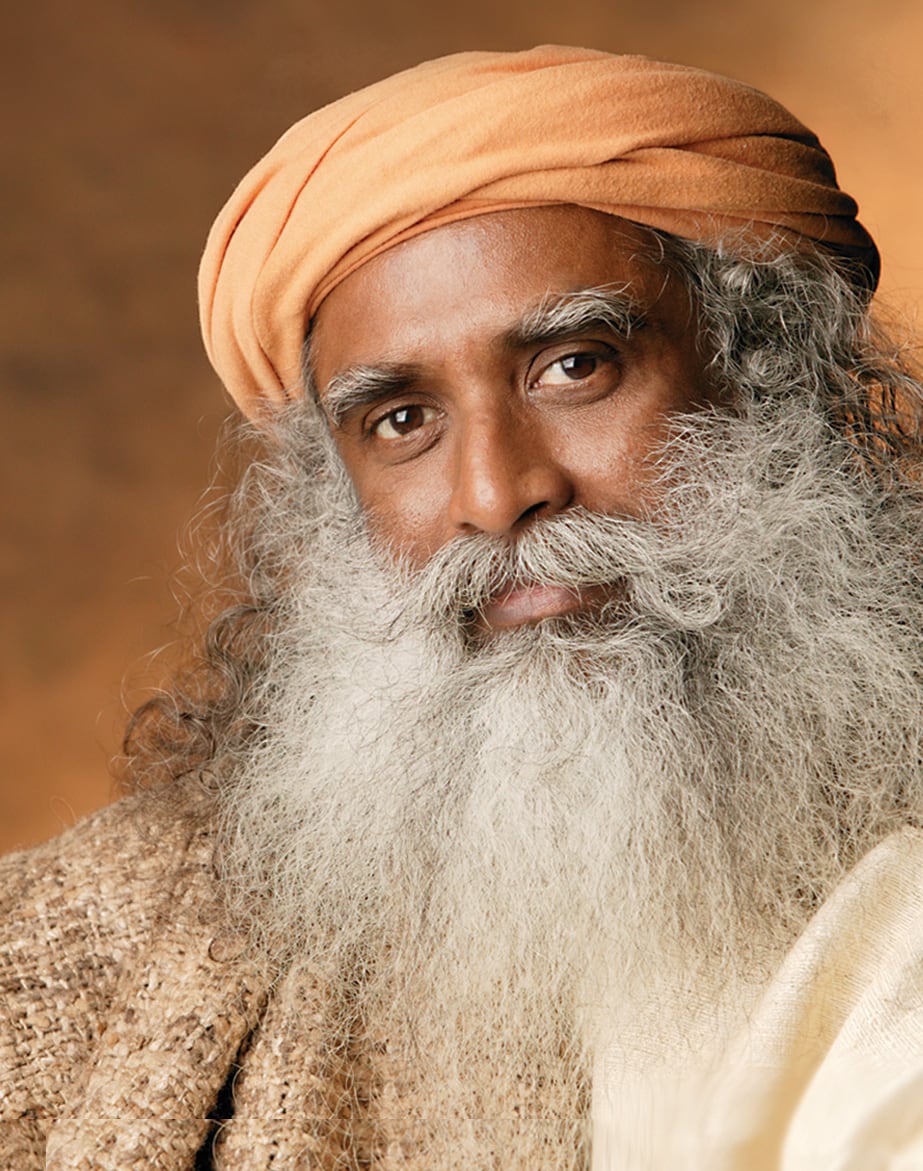
Sadhguru
Ils concordent sur: Qui suis-je ? Existe-t-il un vrai soi ? · Que se passe-t-il après la mort ? · Le monde est-il réel ?
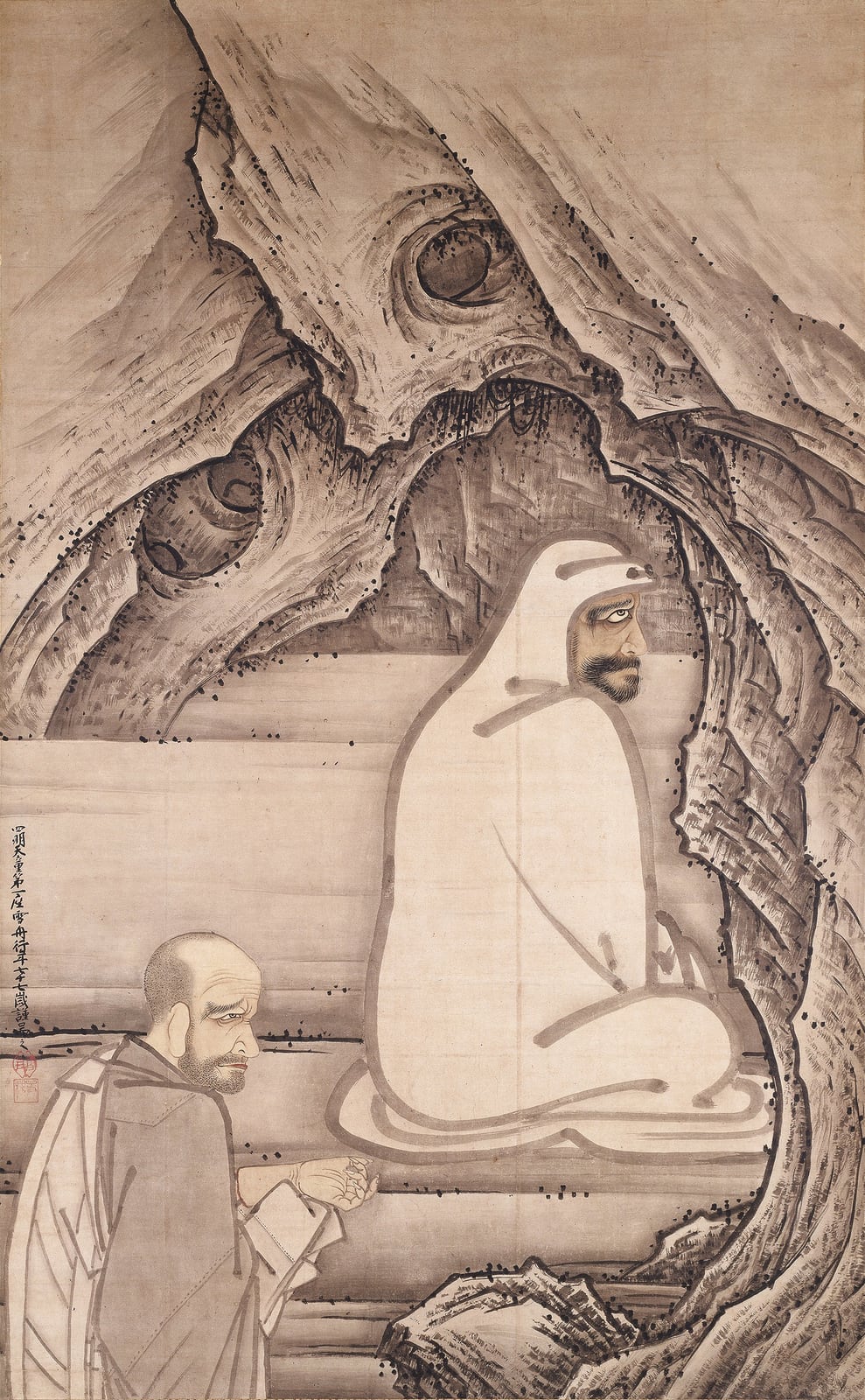
Bodhidharma
Ils concordent sur: Qui suis-je ? Existe-t-il un vrai soi ? · Que se passe-t-il après la mort ? · Sommes-nous libres ou tout est-il déterminé ?
Pense autrement que
Ignatius of Loyola
Ils s'opposent sur: Qui suis-je ? Existe-t-il un vrai soi ? · Que se passe-t-il après la mort ? · Le monde est-il réel ?
Teresa of Ávila
Ils s'opposent sur: Qui suis-je ? Existe-t-il un vrai soi ? · Que se passe-t-il après la mort ? · Le monde est-il réel ?
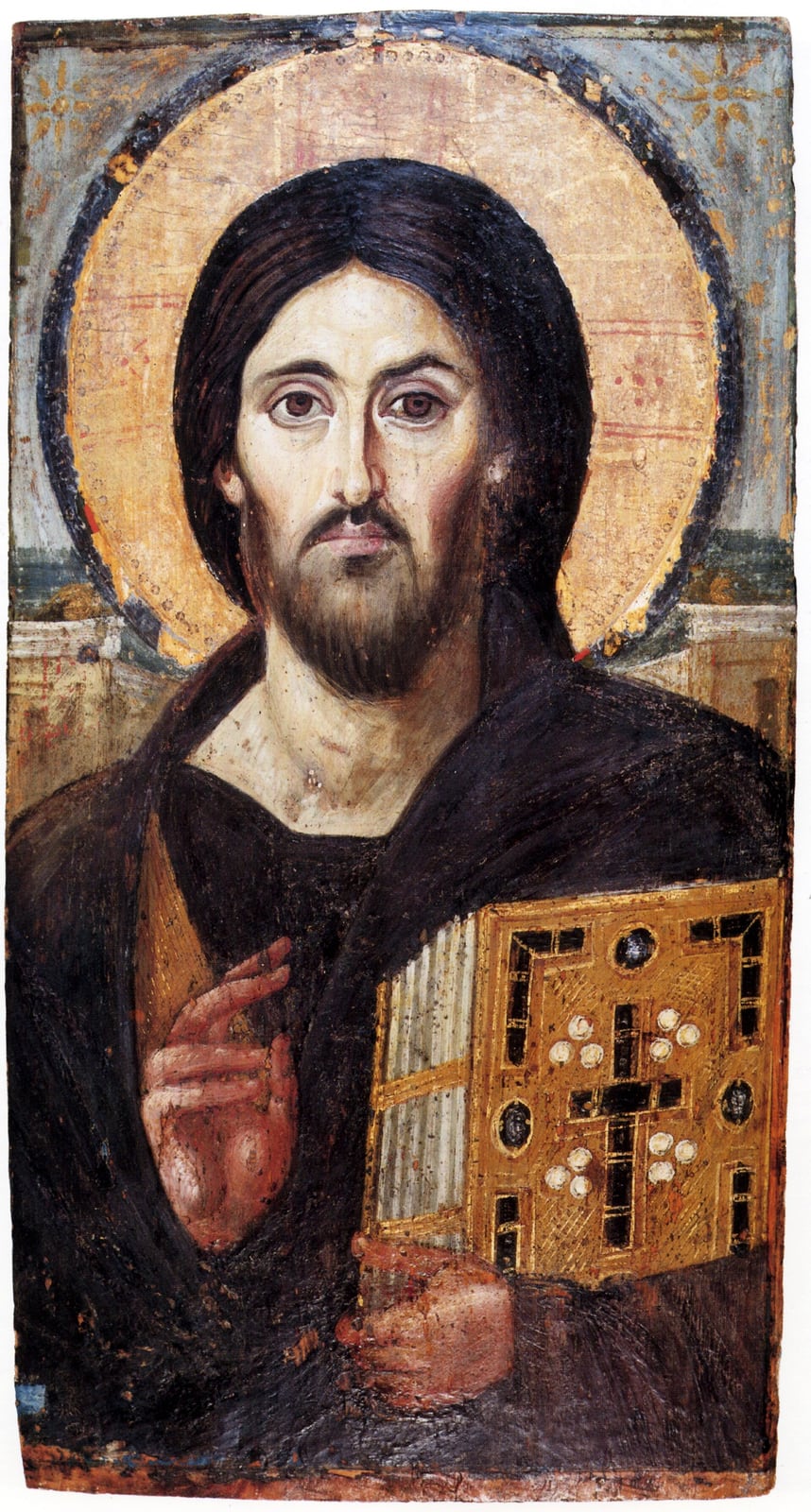
Jesus of Nazareth
Ils s'opposent sur: Le monde est-il réel ? · Qui suis-je ? Existe-t-il un vrai soi ? · Que se passe-t-il après la mort ?

Francis of Assisi
Ils s'opposent sur: Qui suis-je ? Existe-t-il un vrai soi ? · Que se passe-t-il après la mort ? · Le monde est-il réel ?
Anecdotes et récits
Anecdotes et récits
Documentéépoca védica tardía (ss. VII–VI a. C., según la datación del texto)
The thousand cows with gold on their horns
Origine du récit: Bṛhadāraṇyaka Upaniṣad 3.1.1–2 (parallel in Śatapatha Brāhmaṇa 11.6.3). "Documented" means here that the story is in the text; it does not imply that the scene is historical.
Source: Olivelle, Patrick (ed. y trad.). The Early Upaniṣads: Annotated Text and Translation. Nueva York: Oxford University Press, 1998 (South Asia Research). Introducción (datación, pp. 12–13) y Bṛhadāraṇyaka 2.4, 3.1–3.9, 4.1–4.5, 6.5.
Documentéépoca védica tardía
Gārgī and the two arrows
Origine du récit: Bṛhadāraṇyaka Upaniṣad 3.6 and 3.8. Later traditions turn her into a philosopher of Janaka's court or, in one manuscript of the Yoga Yājñavalkya, into Yājñavalkya's wife; none of this is in the Upaniṣad.
Source: Lindquist, Steven E. «Gender at Janaka's Court: Women in the Bṛhadāraṇyaka Upaniṣad Reconsidered». Journal of Indian Philosophy 36 (2008): 405–426.
Documentéépoca védica tardía
The death of Śākalya
Origine du récit: Bṛhadāraṇyaka Upaniṣad 3.9 (with a parallel in Śatapatha Brāhmaṇa 11.6.3 and in Jaiminīya Brāhmaṇa 2.76–77, according to Witzel). The analysis is Lindquist's (2011).
Source: Lindquist, Steven E. «Literary Lives and a Literal Death: Yājñavalkya, Śākalya, and an Upaniṣadic Death Sentence». Journal of the American Academy of Religion 79, n.º 1 (2011): 33–57.
Documentéépoca védica tardía
"I eat it, provided it is tender"
Origine du récit: Śatapatha Brāhmaṇa 3.1.2.21 (and 3.8.2.24 for the scene of the grey-haired arms), following Eggeling's translation and Witzel's analysis (2003).
Récit hagiographiquerelato purāṇico (primer milenio d. C.)
The pupil who vomited the Veda
Origine du récit: Viṣṇu Purāṇa 3.5 and Bhāgavata Purāṇa 12.6. It does not come from the Taittirīya Upaniṣad, as is sometimes said, but from the Purāṇas, which thus explain the names of the two schools of the Yajurveda. The Bṛhadāraṇyaka (6.5.3) says only that the white formulas come from the Sun.
Documentéépoca védica tardía
Janaka offers himself as a slave
Origine du récit: Bṛhadāraṇyaka Upaniṣad 4.3.1–4.4.23 (the final sentence at 4.4.23). The reading of the relation between king and brahmin is Black's (2007).
Source: Black, Brian. The Character of the Self in Ancient India: Priests, Kings, and Women in the Early Upaniṣads. Albany: State University of New York Press, 2007.
Enseignements
Enseignements
Les notions qui structurent sa pensée, expliquées dans leur contexte.
Neti neti ("not this, not this")neti-neti
Bṛhadāraṇyaka 2.3.6, 3.9.26, 4.2.4, 4.4.22, 4.5.15 (Kāṇva recension). Gauḍapāda quotes it in the Māṇḍūkya Kārikā 3.26.
Source: Olivelle, Patrick (ed. y trad.). The Early Upaniṣads: Annotated Text and Translation. Nueva York: Oxford University Press, 1998 (South Asia Research). Introducción (datación, pp. 12–13) y Bṛhadāraṇyaka 2.4, 3.1–3.9, 4.1–4.5, 6.5.
Ātman (the self)atman
Bṛhadāraṇyaka 2.4, 3.4–3.7, 4.3–4.5.
Source: Olivelle, Patrick (ed. y trad.). The Early Upaniṣads: Annotated Text and Translation. Nueva York: Oxford University Press, 1998 (South Asia Research). Introducción (datación, pp. 12–13) y Bṛhadāraṇyaka 2.4, 3.1–3.9, 4.1–4.5, 6.5.
Karma and rebirthkarman-y-renacimiento
Bṛhadāraṇyaka 3.2.13 and 4.4.2–7; Witzel 2003.
Akṣara (the imperishable)akshara
Bṛhadāraṇyaka 3.8.
Source: Olivelle, Patrick (ed. y trad.). The Early Upaniṣads: Annotated Text and Translation. Nueva York: Oxford University Press, 1998 (South Asia Research). Introducción (datación, pp. 12–13) y Bṛhadāraṇyaka 2.4, 3.1–3.9, 4.1–4.5, 6.5.
Antaryāmin (the inner controller)antaryamin
Bṛhadāraṇyaka 3.7.
Source: Olivelle, Patrick (ed. y trad.). The Early Upaniṣads: Annotated Text and Translation. Nueva York: Oxford University Press, 1998 (South Asia Research). Introducción (datación, pp. 12–13) y Bṛhadāraṇyaka 2.4, 3.1–3.9, 4.1–4.5, 6.5.
Renunciation (saṃnyāsa)renuncia-samnyasa
Bṛhadāraṇyaka 3.5.1, 4.4.22, 4.5.1; Olivelle 1992.
Source: Olivelle, Patrick (trad.). The Saṃnyāsa Upaniṣads: Hindu Scriptures on Asceticism and Renunciation. Nueva York: Oxford University Press, 1992 (incluye la Jābāla y la Yājñavalkya Upaniṣad).
Vidéos
Vidéos
Enregistrements, entretiens et documentaires. Les vidéos sont lues depuis YouTube ; elles ne sont pas hébergées ici.
1. Brihadaranyaka Upanishad - Introduction | Swami Sarvapriyananda
Conférence· EN· 2026· 71 min
Vedanta Society of New YorkChaîne officielle
3. Brihadaranyaka Upanishad - Mantras 2.4.1 to 2.4.5 | Swami Sarvapriyananda
Conférence· EN· 2026· 73 min
Vedanta Society of New YorkChaîne officielle
4. Brihadaranyaka Upanishad - Mantra 2.4.5 continued | Swami Sarvapriyananda
Conférence· EN· 2026· 68 min
Vedanta Society of New YorkChaîne officielle
5. Brihadaranyaka Upanishad - Mantra 2.4.6 | Swami Sarvapriyananda
Conférence· EN· 2026· 75 min
Vedanta Society of New YorkChaîne officielle
Swami Atmajnanananda on "Yajnavalkya and Maitreyi - An Interesting Dialogue"
Conférence· EN· 2016· 66 min
Austin VedantaChaîne officielle
Swami Yogatmananda - Dialogue on the Self (Yajnavalkya and Maitreyi)
Conférence· EN· 2021· 58 min
VedantaSTLChaîne officielle
Yagnavalkya Upadesham (Brihadaranyaka Upanishad) | Kanchipuram | 2024
Conférence· TA· 2024· 95 min
Voice of Rishis Swami Ramanacharanatirtha (Nochur)Chaîne officielle
Understanding the Dharma Shastras: A Conversation with Dr. Patrick Olivelle and Dr. Donald Davis
Entretien· EN· 2022· 113 min
Meru Media
Patrick Olivelle on Law, Religion, and Dharma
Conférence· EN· 2014· 45 min
Central European UniversityChaîne officielle
The Central Doctrines of the Upanishads
Conférence· EN· 2016· 37 min
Vidya-mitraChaîne officielle
'Introduction to Shatpath Brahmana' - 100 paths of Moksha; Dr Aparna Dhir Khandelwal
Conférence· EN· 2021· 31 min
Sattology
Shatapatha Brahmana Parayana in presence of His Holiness
Enregistrement original· SA· 2020· 20 min
Sri Kanchi Kamakoti Peetam, KanchipuramChaîne officielle
Yajnavalkya / ಯಾಜ್ಞವಲ್ಕ್ಯ | Upanishat Rushigalu | Vid C G Vijayasimha Acharya
Conférence· KN· 2021· 12 min
JnanaGamya Prasarana
YAJNAVALKYA: La Búsqueda del Conocimiento Interior y de la Realidad Última. 1
Analyse· ES· 2024· 28 min
Una Historia Pequeña de la Filosofía
La metafísica de los Upanishad. José Carlos Fernández
Conférence· ES· 2021· 60 min
Nueva Acrópolis EspañaChaîne officielle
Galerie
Galerie
Images dont la licence a été vérifiée. Chacune conserve son auteur et son attribution.
Manuscrits
Manuscrits
Témoins manuscrits et textes anciens, avec leur dépositaire et leurs conditions de consultation.
SA · Devanagari · c. ss. VII–VI a. C. (Olivelle)
बृहदारण्यकोपनिषद् (adhyāya 1, folio 3b)
- Témoin conservé
- Manuscrito en papel sin fecha publicada
- Dépositaire
- University of Pennsylvania Libraries (Filadelfia)
- Numérisation
- commons.wikimedia.org/wiki/File:Brihadaranyaka_u…
SA · Devanagari · c. ss. VIII–VI a. C.
शतपथब्राह्मण (kāṇḍa 14, prapāṭhaka 3–4)
- Témoin conservé
- Manuscrito del siglo XIII según la descripción de Commons
- Numérisation
- commons.wikimedia.org/wiki/File:13th-century_Sha…
SA · Escrituras del norte de la India sobre hoja de palma · Fecha discutida (entre el inicio de la era común y el s. XII)
योगयाज्ञवल्क्य
- Témoin conservé
- Manuscritos en hoja de palma de finales del s. IX o inicios del X y de 1024 d. C., según Wujastyk
- Dépositaire
- National Archives of Nepal (Katmandú, NAK 5-696) y British Library (Londres, Or. 3568) · NAK 5-696; BL Or. 3568
Relations
Relations
Influences, filiations et affinités. On distingue la relation documentée de la similitude identifiée par analyse.
En désaccord avec
Debate on the "thread" and the "inner controller" (Bṛhadāraṇyaka 3.7), which Uddālaka loses.
Relation documentée
Disciple de
The Bṛhadāraṇyaka's lists of teachers make him a pupil of Uddālaka Āruṇi: in the list for the mantha rite (6.3.7, Kāṇva recension) and in the final lineage, "Yājñavalkya from Uddālaka; Uddālaka from Aruṇa"; in 3.7 Uddālaka questions him at Janaka's court and falls silent. Witzel regards them as contemporaries.
Relation documentée
Maître de
Janaka de Videha
King of Videha, organizer of the contest and Yājñavalkya's pupil in Bṛhadāraṇyaka 4.1–4.4 and Śatapatha 11.6.2.
Relation documentée
A rencontré
Gārgī Vācaknavī
His interlocutor in Bṛhadāraṇyaka 3.6 and 3.8.
Relation documentée
Famille de
Maitreyī
One of his two wives, together with Kātyāyanī; recipient of the dialogue on the ātman (Bṛhadāraṇyaka 2.4 and 4.5).
Relation documentée
A influencé
Śaṅkara wrote an extensive commentary on the Bṛhadāraṇyaka and based much of his doctrine of the ātman and of renunciation on Yājñavalkya's dialogues.
Relation documentée
A influencé
The Māṇḍūkya Kārikā (3.26) quotes the Bṛhadāraṇyaka's "neti neti" as proof that scripture denies all difference.
Relation documentée
A reçu l'influence de
According to the Purāṇas, Yājñavalkya was a pupil of Vaiśaṃpāyana, himself a pupil of Vyāsa, who is said to have divided the Veda. This is a traditional lineage, not a historical fact.
Similitude identifiée par analyse
Idées proches de
The Yājñavalkya of the Mahābhārata (12.298 ff.) expounds to Janaka the Sāṃkhya doctrine that tradition attributes to Kapila.
Similitude identifiée par analyse
Idées proches de
The Yoga Yājñavalkya expands the eight-limbed yoga of the Yoga Sūtras (ten restraints and ten observances instead of five and five).
Similitude identifiée par analyse
Idées proches de
Ramana's "Who am I?" inquiry and his description of the self as an objectless witness recall "neti neti" and the ātman that sees without being seen.
Similitude identifiée par analyse
Idées proches de
His method of denying identification with body and mind has a clear precedent in "not this, not this".
Similitude identifiée par analyse
Idées proches de
A classic comparison in comparative philosophy (Rudolf Otto, among others) between Eckhart's negative way and the ungraspable ātman of the Upaniṣads.
Similitude identifiée par analyse
Sources
Sources
Bibliographie et catalogues consultés pour cette fiche.
- Wikidata, «Yajnavalkya», QID Q1423663.
- Olivelle, Patrick (ed. y trad.). The Early Upaniṣads: Annotated Text and Translation. Nueva York: Oxford University Press, 1998 (South Asia Research). Introducción (datación, pp. 12–13) y Bṛhadāraṇyaka 2.4, 3.1–3.9, 4.1–4.5, 6.5.
- Olivelle, Patrick (trad.). Upaniṣads. Oxford World's Classics. Oxford: Oxford University Press, 1996.
- Müller, F. Max (trad.). The Upanishads, Part II (Sacred Books of the East, vol. 15). Oxford: Clarendon Press, 1884. Incluye la Bṛhadāraṇyaka Upaniṣad.
- Eggeling, Julius (trad.). The Śatapatha-Brāhmaṇa according to the Text of the Mādhyandina School, 5 vols. (Sacred Books of the East, vols. 12, 26, 41, 43, 44). Oxford: Clarendon Press, 1882–1900.
- Witzel, Michael. «Yājñavalkya as Ritualist and Philosopher, and His Personal Language». En Siamak Adhami (ed.), Paitimāna: Essays in Iranian, Indo-European, and Indian Studies in Honor of Hanns-Peter Schmidt. Costa Mesa: Mazda Publishers, 2003, pp. 103–143.
- Brereton, Joel P. «The Composition of the Maitreyī Dialogue in the Bṛhadāraṇyaka Upaniṣad». Journal of the American Oriental Society 126, n.º 3 (2006): 323–345.
- Black, Brian. The Character of the Self in Ancient India: Priests, Kings, and Women in the Early Upaniṣads. Albany: State University of New York Press, 2007.
- Lindquist, Steven E. «Literary Lives and a Literal Death: Yājñavalkya, Śākalya, and an Upaniṣadic Death Sentence». Journal of the American Academy of Religion 79, n.º 1 (2011): 33–57.
- Olivelle, Patrick (ed. y trad.). Yājñavalkya: A Treatise on Dharma. Murty Classical Library of India 20. Cambridge (Mass.): Harvard University Press, 2019. Introducción, pp. vii–xxxvii.
- Mohan, A. G., con Ganesh Mohan (trad.). Yoga Yājñavalkya. 2.ª ed. Singapur: Svastha Yoga, 2013.
- Dutt, Manmatha Nath (trad.). A Prose English Translation of Vishnupuranam. Calcuta, 1896; libro III, cap. 5 (la historia de Yājñavalkya y Vaiśaṃpāyana). Project Gutenberg n.º 66208. Véase también H. H. Wilson, The Vishńu Puráńa, Londres, 1840.
- Mahābhārata, Śāntiparvan 12.298 y ss. (edición crítica de Poona): diálogo de Yājñavalkya y Janaka (Daivarāti). Trad. inglesa de Kisari Mohan Ganguli, The Mahabharata of Krishna-Dwaipayana Vyasa, Calcuta, 1883–1896.
- Wikipedia (en inglés), «Yajnavalkya», consultada el 26 de octubre de 2026.
- Hume, Robert Ernest (trad.). The Thirteen Principal Upanishads. Londres: Oxford University Press, 1921.
- Herold, A.-Ferdinand (trad.). L'Upanishad du grand Aranyaka (Bṛhadāraṇyakopaniṣad). París: Librairie de l'art indépendant, 1894.
- Wikisource en sánscrito, «बृहदारण्यकोपनिषद्» (texto sánscrito, seis adhyāya).
- Röer, Edward, y W. A. Montriou (trads.). Hindu Law and Judicature from the Dharma-Sástra of Yájnavalkya. Calcuta, 1859. Project Gutenberg n.º 21918.
- Divanji, Prahlad Chandrashekhar (ed.). Yoga-Yājñavalkya: A Treatise on Yoga as Taught by Yogī Yājñavalkya. Bombay: Bombay Branch of the Royal Asiatic Society, 1954.
- Wikipedia (en inglés), «Yoga Yajnavalkya» y «Yajnavalkya Smriti» (resumen de las dataciones de Divanji, Mohan, White, Wujastyk y Olivelle), consultadas el 26 de octubre de 2026.
- Ilárraz, Félix G., y Óscar Pujol (trads.). La sabiduría del bosque: antología de las principales Upaniṣad. Madrid: Trotta, 2003.
- Martín, Consuelo (trad.). Gran Upaniṣad del Bosque (Bṛhadāraṇyaka Upaniṣad), con el comentario advaita de Śaṅkara. Madrid: Trotta, 2002.
- Wikisource en sánscrito, «याज्ञवल्क्यस्मृतिः» (texto de la Yājñavalkya Smṛti por prakaraṇa).
- Wikisource en sánscrito, «शतपथब्राह्मणम्» (texto del Śatapatha Brāhmaṇa por kāṇḍa).
- Deussen, Paul (trad.). Sechzig Upanishad's des Veda. Leipzig: F. A. Brockhaus, 1897.
- Wikimedia Commons, ficheros y metadatos de licencia consultados mediante la API (imageinfo/extmetadata).
- Olivelle, Patrick (trad.). The Saṃnyāsa Upaniṣads: Hindu Scriptures on Asceticism and Renunciation. Nueva York: Oxford University Press, 1992 (incluye la Jābāla y la Yājñavalkya Upaniṣad).
- Dvivedi, Manilal N. (trad.). The Māṇḍūkyopanishad with Gauḍapāda's Kārikās and the Bhāshya of Śaṅkara. Bombay: Tookaram Tatya, 1894 (Kārikā 3.26).
- Lindquist, Steven E. «Gender at Janaka's Court: Women in the Bṛhadāraṇyaka Upaniṣad Reconsidered». Journal of Indian Philosophy 36 (2008): 405–426.
- Ayant droit
- Los textos sánscritos (Śatapatha Brāhmaṇa, Bṛhadāraṇyaka, Yājñavalkya Smṛti, Yoga Yājñavalkya) son de dominio público. Las traducciones modernas tienen derechos propios: Oxford University Press (Olivelle; Hume hasta 2029 en España), Harvard University Press (Olivelle 2019), Trotta (Ilárraz y Pujol; Consuelo Martín), Penguin (Roebuck), Svastha Yoga (Mohan). Las de Müller (1884), Eggeling (1882–1900), Herold (1894), Deussen (1897), Stenzler (1849), Röer y Montriou (1859) y Vidyarnava (1918) son de dominio público.
En attente de confirmation
Ce que cette fiche n'a pas encore pu établir. Nous préférons le dire plutôt que de combler.
- Mahābhārata: confirmar en la edición crítica de Poona el final del diálogo de Yājñavalkya y Janaka (empieza en 12.298) y la equivalencia con las secciones de Ganguli; confirmar el año del volumen de Ganguli (Śānti Parva).
- Bṛhad Yogi Yājñavalkya Smṛti: confirmar año y responsables de la edición de Kaivalyadhama y localizar el estudio de 2017 que revisa la tesis de White sobre la autoría común con el Yoga Yājñavalkya.
- Yoga Yājñavalkya: comprobar en el libro la atribución a T. K. V. Desikachar de la edición del Krishnamacharya Yoga Mandiram (ISBN 9788187847007); Open Library no indica traductor.
- Ediciones: buscar ISBN de traducciones al español, alemán, italiano, ruso e hindi de la Bṛhadāraṇyaka y de la Yājñavalkya Smṛti; confirmar el ISBN de la edición de Motilal de Deussen (Sixty Upanishads).
- Sala de lectura: no se ha encontrado en Internet Archive un escaneo con OCR de Deussen, Sechzig Upanishad's des Veda (1897); no hay texto español de dominio público de la Bṛhadāraṇyaka en es.wikisource.
- Relaciones: los slugs janaka-de-videha, gargi-vachaknavi y maitreyi no existen todavía en el Atlas.
- Isibhāsiyāiṃ: localizar el capítulo exacto de «Jannavakka» en la edición de Schubring.
- Vídeos: no se ha encontrado una clase universitaria monográfica en español ni un documental de televisión pública sobre Yājñavalkya.
Recherche effectuée le 2026-10-26