Hindouisme · Yoga
Patañjali
पतञ्जलि · Patañjali · पातञ्जलयोगशास्त्र · பதஞ்சலி
Historicité débattue
Nom de l'auteur du Pātañjalayogaśāstra, le traité qui contient les Yogasūtra, texte fondateur de l'école classique du yoga, et du grammairien qui écrivit le Mahābhāṣya, le grand commentaire de Pāṇini. La tradition voit en eux une seule personne, incarnation du serpent Śeṣa, à laquelle elle attribue en outre des ouvrages médicaux ; la critique distingue le grammairien (IIe siècle av. J.-C.) de l'auteur du yoga, que Philipp Maas date entre 325 et 425 apr. J.-C. On ne connaît la biographie ni de l'un ni de l'autre.
- œuvres
- 11œuvres
- éditions
- 30éditions
- citations
- 9citations
- vidéos
- 13vidéos
- images
- 6images

Patañjali como encarnación de Ādiśeṣa (imagen de culto) · CC BY-SA 3.0
Dans ses propres mots
«Now the exposition of yoga [is to be made].»Yogasūtra 1.1; trad. inglesa de James Haughton Woods (1914, dominio público); versión española del investigador

Son idée centrale
Stilling of the movements of the mind (cittavṛttinirodha): This is the definition of yoga in the second aphorism.
Le voir en contexte
Biographie
5 min de lecture
Traduction assistée à partir de l'original espagnol, en attente de relecture par un traducteur natif.
Un nom au bas d'un livre
Peu d'œuvres de l'Inde ancienne ont connu une postérité aussi vaste que les Yogasūtra, et peu ont un auteur aussi insaisissable. Patañjali est avant tout un nom au bas d'un texte : celui de l'homme qui, selon les colophons des manuscrits, composa le « traité de yoga de Patañjali » (Pātañjalayogaśāstra). La tradition indienne a fait de ce nom une figure triple — le grammairien qui commenta Pāṇini, le maître du yoga et le médecin qui révisa le traité de Caraka — et l'a divinisée comme incarnation de Śeṣa, le serpent cosmique sur lequel repose Viṣṇu. La première source qui réunit ces trois visages en une seule personne est le commentaire du roi Bhoja de Dhārā, au XIe siècle ; la critique moderne a presque entièrement défait cette unité.
Le grammairien du IIe siècle avant notre ère
Le Patañjali le mieux daté est l'auteur du Mahābhāṣya, le « grand commentaire » de la grammaire de Pāṇini et des remarques (vārttika) de Kātyāyana. C'est une prose dialoguée, faite d'objections et de réponses, qui s'ouvre sur la formule « à présent, l'enseignement des mots » et raisonne sur les fins de la grammaire, sur le rapport entre le mot et son sens et sur l'éternité du langage. Ses exemples grammaticaux laissent affleurer l'actualité de son temps : « ici, nous célébrons le sacrifice de Puṣyamitra », « le Grec assiégea Sāketa ». Puṣyamitra, fondateur de la dynastie Śuṅga, régna vers 185–149 av. J.-C., et le siège fait allusion aux incursions indo-grecques de ces années-là ; c'est pourquoi la critique situe l'œuvre au milieu du IIe siècle avant notre ère. Bhartṛhari, au Ve siècle, rappelle que l'étude du Mahābhāṣya faillit se perdre avant d'être restaurée, et l'ouvrage fut dès lors l'autorité suprême de la grammaire sanskrite.
Un seul et même Patañjali ?
Que le grammairien et l'auteur du yoga aient été une seule et même personne est une conviction de la tradition, non un fait établi. James Haughton Woods, dans la première traduction savante complète (1914), conclut que rien dans le Mahābhāṣya n'obligeait à admettre cette identité, et Louis Renou l'écarta en 1940 après avoir comparé le vocabulaire des deux textes ; Surendranath Dasgupta, en revanche, inclinait à l'accepter. La plupart des spécialistes distinguent aujourd'hui deux auteurs séparés par plusieurs siècles. Woods observa en outre que les Yogasūtra polémiquent avec une doctrine idéaliste qui semble être celle du bouddhisme vijñānavāda, ce qui les rendrait postérieurs au IVe siècle ; Edwin Bryant rappelle que d'autres chercheurs ont proposé des dates plus hautes et que la question reste ouverte.
Un seul livre : aphorismes et commentaire
La recherche des dernières décennies a déplacé la question. En préparant la première édition critique du premier chapitre (2006), Philipp Maas a constaté que les manuscrits transmettent les aphorismes et leur commentaire comme une œuvre unique, le Pātañjalayogaśāstra, parfois appelée aussi « exposé du Sāṃkhya » (sāṃkhyapravacana). L'attribution du commentaire à un auteur distinct, Vyāsa, n'apparaît que dans des sources postérieures. Reprenant une suggestion de Johannes Bronkhorst, Maas soutient que Patañjali rassembla des aphorismes issus de traditions antérieures et en rédigea lui-même l'explication, et il date l'ensemble entre 325 et 425 de notre ère. Beaucoup de traducteurs conservent la distinction traditionnelle entre les sūtra de Patañjali et le bhāṣya de Vyāsa ; cette notice consigne les deux positions.
Ce qu'enseigne le texte
Les Yogasūtra comptent 195 ou 196 aphorismes selon les éditions, répartis en quatre chapitres (pāda) : la concentration (samādhi), les moyens (sādhana), les pouvoirs (vibhūti) et l'isolement (kaivalya). Le deuxième aphorisme donne la définition qui a fait le tour du monde : le yoga est l'arrêt des mouvements du mental. Quand ils cessent, celui qui voit demeure dans sa propre forme ; tant qu'ils ne cessent pas, il se confond avec eux. Pour y parvenir, le texte propose la pratique soutenue et le détachement, décrit les afflictions (kleśa) qui nourrissent la souffrance et ordonne le chemin en huit membres, des abstentions morales jusqu'à l'absorption. La métaphysique est dualiste et proche du Sāṃkhya : une conscience pure (puruṣa) face à une nature (prakṛti) qui agit, et un īśvara, puruṣa particulier que les afflictions n'ont jamais atteint et vers lequel peut se tourner l'abandon de soi. Le vocabulaire dialogue avec celui de la scolastique bouddhique, et les cinq abstentions — ne pas nuire, ne pas mentir, ne pas voler, la chasteté, la non-possession — coïncident avec les grands vœux jaïns.
Sur la posture, le texte dit fort peu de chose : qu'elle soit « stable et confortable ». Les enchaînements de postures du yoga moderne viennent d'autres traditions, surtout du haṭhayoga médiéval et de la culture physique du XXe siècle.
La légende
Autour de ce nom s'est développée une hagiographie tardive. Une étymologie populaire l'explique comme « tombé (pata) dans le creux des mains jointes (añjali) » d'une femme qui offrait de l'eau au soleil ; la tradition du temple de Chidambaram en fait, aux côtés du sage Vyāghrapāda, un témoin de la danse de Śiva Naṭarāja ; et le Patañjalicarita de Rāmabhadra Dīkṣita, poème composé à la cour de Tanjore à la fin du XVIIe siècle, le montre enseignant la grammaire à mille disciples derrière un rideau, afin qu'ils ne voient pas ses mille têtes de serpent. Ce sont des récits de dévotion qui expriment la vénération portée à l'auteur ; ils n'apprennent rien sur sa vie.
La postérité du texte
Le Pātañjalayogaśāstra fut pendant des siècles un texte de référence philosophique. Il fut commenté par Vācaspati Miśra, par le roi Bhoja, par l'auteur du Vivaraṇa attribué à Śaṅkara et par Vijñānabhikṣu, et vers 1030 le savant persan al-Bīrūnī l'adapta en arabe sous le titre de Kitāb Bātanjal. David Gordon White a montré qu'il perdit ensuite de son poids dans la pratique vivante et que sa renommée actuelle est en grande partie moderne : la première traduction anglaise partielle, due à James Ballantyne, parut en 1852 ; en 1896, Swami Vivekananda l'intégra à Raja Yoga, le livre qui le présenta à l'Occident comme la science du yoga, et l'édition de Woods (1914) l'installa à l'université. Il est aujourd'hui le texte fondateur qu'invoquent les écoles de yoga du monde entier, même si beaucoup enseignent tout autre chose que ce qu'il décrit.
Sources: Maas, Philipp André. Samādhipāda. Das erste Kapitel des Pātañjalayogaśāstra zum ersten Mal kritisch ediert / The First Chapter of the Pātañjalayogaśāstra for the First Time Critically Edited. Aachen: Shaker, 2006 (Geisteskultur Indiens 9). · Woods, James Haughton (trad.). The Yoga-System of Patañjali, or the Ancient Hindu Doctrine of Concentration of Mind, embracing the Mnemonic Rules, called Yoga-sūtras, of Patañjali, and the Comment, called Yoga-bhāshya, attributed to Veda-Vyāsa, and the Explanation, called Tattva-vāiçāradī, of Vāchaspati-Miçra. Cambridge (Mass.): Harvard University Press, 1914 (Harvard Oriental Series 17). Introducción, §§ 3–5, sobre la identidad de los dos Patañjali y las fechas. · Bryant, Edwin F. The Yoga Sūtras of Patañjali: A New Edition, Translation, and Commentary with Insights from the Traditional Commentators. Nueva York: North Point Press, 2009. ISBN 9780865477360. · White, David Gordon. The Yoga Sutra of Patanjali: A Biography. Princeton: Princeton University Press, 2014 (Lives of Great Religious Books). ISBN 9780691143774. · Cardona, George. Pāṇini: A Survey of Research. La Haya / París: Mouton, 1976 (reimpr. Delhi: Motilal Banarsidass, 1980 y 1997); sobre la fecha del Mahābhāṣya y su transmisión.
Chronologie
La vie, année après année
Chaque point est un événement documenté. Cliquez pour le lire, avec sa source et son degré de certitude.
v. 150 av. J.-C.Norte de la India (reino Śuṅga)
The Mahābhāṣya of Patañjali the grammarian
Composition of the great commentary on Pāṇini and Kātyāyana. Its examples allude to the sacrifice of Puṣyamitra Śuṅga (c. 185–149 BCE) and to the Indo-Greek siege of Sāketa, which date it to the mid-second century BCE.
ProbableCardona, George. Pāṇini: A Survey of Research. La Haya / París: Mouton, 1976 (reimpr. Delhi: Motilal Banarsidass, 1980 y 1997); sobre la fecha del Mahābhāṣya y su transmisión.
v. 150 av. J.-C.
The Mahābhāṣya of Patañjali the grammarian
Composition of the great commentary on Pāṇini and Kātyāyana. Its examples allude to the sacrifice of Puṣyamitra Śuṅga (c. 185–149 BCE) and to the Indo-Greek siege of Sāketa, which date it to the mid-second century BCE.
Probable
v. 325 – 425
Composition of the Pātañjalayogaśāstra
Date proposed by Philipp Maas for the complete work (aphorisms and commentary) of the yoga Patañjali. Woods (1914) proposed 300–500 for the sūtras; Bryant notes that other scholars argue for earlier dates.
Contesté
v. 450
Bhartṛhari and the restoration of the Mahābhāṣya
The grammarian-philosopher Bhartṛhari (5th c.) relates in the Vākyapadīya that the study of the Mahābhāṣya had declined almost to extinction and was then restored; from that time on it is the authority of the grammatical school.
Probable
v. 850
Vācaspati Miśra's Tattvavaiśāradī
The first great surviving sub-commentary on the Pātañjalayogaśāstra, translated by Woods together with the text in 1914. Vācaspati's date ranges, according to different scholars, from the mid-ninth to the late tenth century.
Probable
v. 1030
Al-Bīrūnī renders the yoga text into Arabic
The Persian scholar al-Bīrūnī, who accompanied Maḥmūd of Ghazni in India, composes the Kitāb Bātanjal, an Arabic adaptation of the text with a commentary, before completing his book on India (c. 1030).
Documenté
v. 1040
Bhoja and the threefold Patañjali
In the opening verse of his Rājamārtaṇḍa commentary, King Bhoja of Dhārā compares himself to "the lord of serpents" for having written on grammar, yoga and medicine: it is the first source that presupposes a single Patañjali as author in all three fields.
Documenté
v. 1575
Vijñānabhikṣu's Yogavārttika
Vijñānabhikṣu, in the sixteenth century, comments on the text from a Vedāntic synthesis; it is the last great premodern exegesis.
Probable
v. 1690
The Patañjalicarita
Rāmabhadra Dīkṣita, a poet at the Tanjore court under Śāhajī I (1683–1712), composes a poem in eight cantos on Patañjali's legendary life as an incarnation of Śeṣa.
Probable
1852
First English translation
James R. Ballantyne publishes at Allahabad an English translation of the first two chapters of the aphorisms with extracts from Bhoja's commentary.
Documenté
1896
Vivekananda's Raja Yoga
Swami Vivekananda publishes Raja Yoga in London and New York, with his annotated translation of the aphorisms; the book makes the text the reference work of yoga in the West.
Documenté
1914
Woods's translation
James Haughton Woods publishes in the Harvard Oriental Series the first complete scholarly translation of the aphorisms, the commentary and Vācaspati Miśra's gloss, and argues against identifying the two Patañjalis.
Documenté
2006
The first critical edition
Philipp Maas publishes the critical edition of the first chapter, based on more than twenty manuscripts, and argues that aphorisms and commentary form a single work by one author.
Documenté
Œuvres
Œuvres essentielles
Les œuvres sans lesquelles on ne comprend pas son héritage.
Œuvre écrite · v. 325
Yoga Sūtras (The Aphorisms of Yoga)
योगसूत्र (Yogasūtra), en los colofones पातञ्जलयोगशास्त्र (Pātañjalayogaśāstra)
A treatise in 195 or 196 aphorisms (the number varies in the third chapter) divided into four pādas: Samādhi (51), Sādhana (55), Vibhūti (55 or 56) and Kaivalya (34). It defines yoga as the stilling of the movements of the mind and describes the states of concentration, the afflictions that cause suffering, the eight-limbed path, the powers that accompany absorption and the final isolation of consciousness from nature. It is the base text of the Yoga school, one of the six orthodox "views", and today the founding work invoked by yoga schools throughout the world.
20 éditions

Attribution traditionnelle · v. 325
Yogabhāṣya (Commentary on the Yoga)
योगभाष्य (Yogabhāṣya, también Vyāsabhāṣya)
The prose commentary that accompanies the aphorisms in all manuscripts and without which many of them are unintelligible. It develops the psychology of mental states and latent impressions, quotes earlier masters of Sāṃkhya and yoga such as Pañcaśikha and Jaigīṣavya, and argues with the Buddhist schools. All later exegesis —Vācaspati Miśra, the Vivaraṇa, Vijñānabhikṣu— in fact comments on the combined aphorisms and commentary.
4 éditions
Patañjali
Mahābhāṣya (The Great Commentary)
Attribution traditionnelle · v. 150 av. J.-C.
Mahābhāṣya (The Great Commentary)
व्याकरणमहाभाष्य (Vyākaraṇa-Mahābhāṣya)
A commentary in dialogic prose on Pāṇini's grammar (Aṣṭādhyāyī) and on Kātyāyana's critical remarks. It discusses the aims of grammatical study, the eternity of the word, the relation between word and meaning and the notion of sphoṭa, and defends or corrects hundreds of rules. Its examples are a historical source on Śuṅga India. It was the supreme authority of Sanskrit grammar, commented on by Bhartṛhari, Kaiyaṭa and Nāgeśa.
3 éditions
Toute son œuvre (11)
Patañjali
Samādhipāda (Chapter on Concentration)
The Conscious LibrarySamādhipāda (Chapter on Concentration)
Patañjali
Sādhanapāda (Chapter on Means)
The Conscious LibrarySādhanapāda (Chapter on Means)
Patañjali
Vibhūtipāda (Chapter on Powers)
The Conscious LibraryVibhūtipāda (Chapter on Powers)
Patañjali
Kaivalyapāda (Chapter on Isolation)
The Conscious LibraryKaivalyapāda (Chapter on Isolation)
Patañjali
Revision of Caraka's treatise (lost)
The Conscious LibraryRevision of Caraka's treatise (lost)
Patañjali
Pātañjalatantra (medical treatise)
The Conscious LibraryPātañjalatantra (medical treatise)
Patañjali
Nidānasūtra (aphorisms on Vedic metre)
The Conscious LibraryNidānasūtra (aphorisms on Vedic metre)

Paramārthasāra (The Essence of Supreme Truth)
Citations
Citations localisées dans une œuvre précise. Chacune porte sa provenance et son degré de fiabilité.
Now the exposition of yoga [is to be made].atha yogānuśāsanam
VérifiéeYogasūtra 1.1; trad. inglesa de James Haughton Woods (1914, dominio público); versión española del investigador
Citations apocryphes ou d'attribution contestée (2)
«When you are inspired by some great purpose, some extraordinary project, all your thoughts break their bonds: your mind transcends limitations, and you discover yourself to be a great person by far.»
It is the line most often quoted under his name on English quotation sites, but it corresponds to no aphorism of the Yogasūtra nor to any passage of the commentary: it does not appear in the complete translations of Woods or Bryant, and its vocabulary ("project", "great person") belongs to modern self-help literature. Its first appearance has not been traced.
«I bow to Patañjali, the noblest of sages, who removed the impurities of the mind by yoga, of speech by grammar and of the body by medicine.»
A Sanskrit verse (yogena cittasya padena vācāṃ…) recited at the start of many yoga classes as if it were an ancient invocation. It is not by Patañjali but in praise of him, and it is late: Meulenbeld places it in a tradition that begins with King Bhoja's commentary (11th c.), the first source to unite the three disciplines in a single person.
Dernières paroles
Il n'existe aucun témoignage vérifiable de ses dernières paroles.
There is no record of his last words or of his death. The biography of none of the authors named Patañjali is known; the Tamil traditions that point to the place of his "samādhi" (Rameswaram, Tirupattur, Chidambaram) are devotional and late.
Source: White, David Gordon. The Yoga Sutra of Patanjali: A Biography. Princeton: Princeton University Press, 2014 (Lives of Great Religious Books). ISBN 9780691143774.
Interroger
Ce que répond son œuvre
Douze grandes questions de l'humanité et ce que ses textes permettent d'y répondre, références à l'appui. Nous ne lui prêtons jamais de paroles.
Qu'est-ce que l'Absolu ? Dieu existe-t-il ?
Ishvara is a special purusha, not a creator; liberation is isolation
Pas de Dieu créateurIl le dit expressément
The Yoga Sutras start from Samkhya dualism: there are pure consciousnesses (purusha) and a nature (prakriti) that nobody created. Within that frame Patanjali introduces Ishvara in I.23–26 as a special purusha, untouched by the afflictions, by karma and its fruits, the seed of omniscience, teacher even of the ancients and designated by the syllable OM. But Ishvara does not create the world nor is he the ground from which souls proceed, and surrender to him is presented as one path among others: sutra I.23 begins with an ‘or’. The goal, kaivalya, is not union with God but the isolation of consciousness, which rests in its own form. Classical yoga thus admits a Lord worthy of devotion without making either the cosmos or liberation depend on him.
Comparer cette question avec d'autres maîtresQui suis-je ? Existe-t-il un vrai soi ?
I am the seer: pure consciousness, distinct from the mind it observes
Le Soi est l'AbsoluIl le dit expressément
For the Yoga Sutras the true self is purusha, the seer (drashtri): pure consciousness that does not change, does not act and does not mix with the contents of the mind. What we ordinarily call the self is a confusion: the sense of ‘I am’ (asmita), one of the five afflictions, consists in identifying the power that sees with the instrument through which it sees (II.6). The mind (citta) belongs to nature and is in itself unconscious; it only seems conscious because it reflects purusha. When its movements cease, the seer rests in its own form (I.3). That rest is the goal of yoga and Patanjali’s answer to the question: I am the witness, not the witnessed.
Comparer cette question avec d'autres maîtresPourquoi souffrons-nous ?
The root of pain is avidya: confusing the seer with the seen
L'ignorance de ce que nous sommesIl le dit expressément
The Yoga Sutras offer one of the most precise aetiologies of suffering in ancient India. There are five afflictions (kleshas): ignorance, sense of self, attachment, aversion and clinging to life (II.3). Ignorance is the field of the others (II.4) and consists in taking the impermanent, impure, painful and not-self for permanent, pure, pleasant and self (II.5). For the discerning, everything is painful, because of change, anxiety and the impressions it leaves (II.15). But future pain can be avoided (II.16), and its cause is the conjunction of seer and seen (II.17), whose origin is ignorance (II.24). When ignorance ceases through discernment, that conjunction ceases too: that is isolation (kaivalya).
Comparer cette question avec d'autres maîtresQue se passe-t-il après la mort ?
The store of karma ripens as birth, lifespan and experience
Renaissance selon le karmaIl le dit expressément
The Yoga Sutras presuppose rebirth and explain it with technical precision. The store of karma (karmashaya), rooted in the afflictions, is experienced in visible and invisible births (II.12); while the root exists, it ripens into three fruits: the type of birth, the length of life and the experience of pleasure or pain (II.13). Among the afflictions is clinging to life (abhinivesha), present even in the wise (II.9), which Vyasa interprets as the trace of previous deaths. Latent impressions (vasanas) persist through lives (IV.8–10). Only when discernment burns the seeds of the afflictions does the cycle cease, and consciousness attains isolation.
Comparer cette question avec d'autres maîtresComment atteint-on la libération ou le salut ?
Constant practice and detachment: the eight limbs of yoga
Par une pratique disciplinéeIl le dit expressément
The Yoga Sutras are above all a manual of practice. The stilling of the mind’s movements is achieved through practice (abhyasa) and detachment (vairagya) (I.12), and practice becomes firm when cultivated for a long time, without interruption and with devotion (I.14). The second book sets out the eight limbs: ethical restraints (non-harming, truthfulness, non-stealing, chastity, non-possession), observances, posture, regulation of breath, withdrawal of the senses, concentration, meditation and absorption (II.29). Surrender to Ishvara is also offered as a path (I.23), but within a programme of discipline. The fruit is discernment between consciousness and nature, which leads to isolation.
Comparer cette question avec d'autres maîtresFaut-il un maître ?
He names only Ishvara, as teacher of the ancients
Ne s'est pas prononcé
The Yoga Sutras do not deal with the relationship between human master and disciple. The only mention of a teacher is theological: Ishvara, unlimited by time, is the guru even of the ancients (I.26). The text presupposes, without saying so, the context of oral transmission in classical India, in which a sutra was studied with a teacher’s explanation; its very form, aphorisms almost unintelligible without commentary, requires it. Among the observances is study (svadhyaya), which Vyasa’s commentary understands as recitation and study of texts of liberation. But Patanjali does not say whether there is a path without a human teacher; anyone wishing to attribute a doctrine of the guru to him must look for it in later tradition.
Comparer cette question avec d'autres maîtresLe monde est-il réel ?
Nature is real and changing, and exists for the seer
Un ordre naturel en transformationIl le dit expressément
The Yoga Sutras are realist: the seen, nature (prakriti) made up of the three qualities (gunas), truly exists and undergoes constant transformation. Its purpose is the experience and liberation of the seer (II.18): nature unfolds for the sake of purusha. When a consciousness is freed, the seen ceases to exist for it, but does not disappear, because it remains common to others (II.22). In the fourth book Patanjali argues against those who reduce objects to mind: the same object is perceived differently by different minds, so it does not depend on a single mind (IV.15–16). The world is not an illusion but a real process to be understood in order to disengage from it.
Comparer cette question avec d'autres maîtresQu'est-ce que l'amour ?
Friendliness, compassion, joy and equanimity clear the mind
Une compassion sans limitesIl le dit expressément
The Yoga Sutras do not treat love as a theme, but they propose cultivating four attitudes towards others: friendliness to the happy, compassion to those who suffer, gladness at the virtuous and equanimity towards wrongdoers. Through them, says sutra I.33, the mind becomes clear and serene. These are the same four abodes known to Buddhism. The first ethical restraint, non-harming (ahimsa), has an effect described in sutra II.35: in the presence of one firmly established in it, hostility ceases. Attachment (raga), by contrast, is listed among the afflictions (II.7). The love that counts for Patanjali is therefore a benevolence without attachment.
Comparer cette question avec d'autres maîtresSommes-nous libres ou tout est-il déterminé ?
Impressions condition, but future pain can be avoided
Le karma et le choixIl le dit expressément
The Yoga Sutras describe in detail how the past conditions the present: actions leave impressions (samskaras) and latent tendencies (vasanas) that ripen into birth, lifespan and experience (II.13), and persist even when separated by time, place or birth (IV.9). But the whole system presupposes that this conditioning can be broken. Pain not yet come can be avoided (II.16), constant practice creates new impressions that counteract the old, and discernment burns the seeds of the afflictions until they no longer sprout. The yogi’s karma, says IV.7, is neither white nor black. Freedom is the goal, and practice the means of winning it.
Comparer cette question avec d'autres maîtresPourquoi méditer ou prier ?
Concentration, meditation and absorption until the seer is discerned
Voir la réalité telle qu'elle estIl le dit expressément
For the Yoga Sutras meditation is the heart of the method. The last three limbs of yoga, concentration (dharana), meditation (dhyana) and absorption (samadhi), together form samyama (III.1–4). Samadhi has degrees: with and without an object as support, with and without discursive thought (I.17–18, I.42–51). Its fruit is truth-bearing wisdom (I.48) and, above all, discernment (viveka-khyati) between pure consciousness and nature, which is the means of removing ignorance (II.26). Meditation does not serve to obtain pleasant states, nor even the powers listed in the third book, which it regards as obstacles: it serves to see exactly what the seer is and what it is not.
Comparer cette question avec d'autres maîtresLa raison peut-elle connaître l'ultime ?
Perception, inference and testimony are movements of the mind
L'ultime est au-delà du mentalIl le dit expressément
The Yoga Sutras recognise three valid means of knowledge: perception, inference and reliable testimony or scripture (I.7). But they classify them among the movements of the mind (vrittis) that yoga sets out to still (I.6). Above them they place a wisdom that arises in the purest absorption, truth-bearing (ritambhara prajna), whose object differs from that of inference and testimony because it concerns the particular rather than the general (I.48–49). The supreme knowledge is discernment, culminating in an omniscience born of discrimination (III.54). Reason and scripture are valid in their domain, but the ultimate is known only when the mind is stilled.
Comparer cette question avec d'autres maîtresSe retirer du monde ou le transformer ?
Detachment, withdrawal of the senses and final isolation
Se retirer pour trouverCela se déduit de sa doctrine
The Yoga Sutras do not speak of society or politics, nor do they expressly prescribe leaving family life. But their logic is one of withdrawal: detachment (vairagya) is, together with practice, the fundamental means (I.12–16); withdrawal of the senses (pratyahara) draws the mind away from its objects (II.54); and the goal is called kaivalya, isolation, the definitive separation of consciousness from nature. The ethical rules (yamas), such as non-harming or non-possession, have a social reach, but are presented as personal disciplines and, when observed without exception of place, time or circumstance, as a great vow (II.31). Classical yoga looks inward, not towards transforming the world.
Comparer cette question avec d'autres maîtres
Affinités et tensions
Affinités et tensions
Calculées question par question à partir de ses positions. La raison de chaque accord ou de chaque désaccord s'affiche d'un clic.
Pense comme
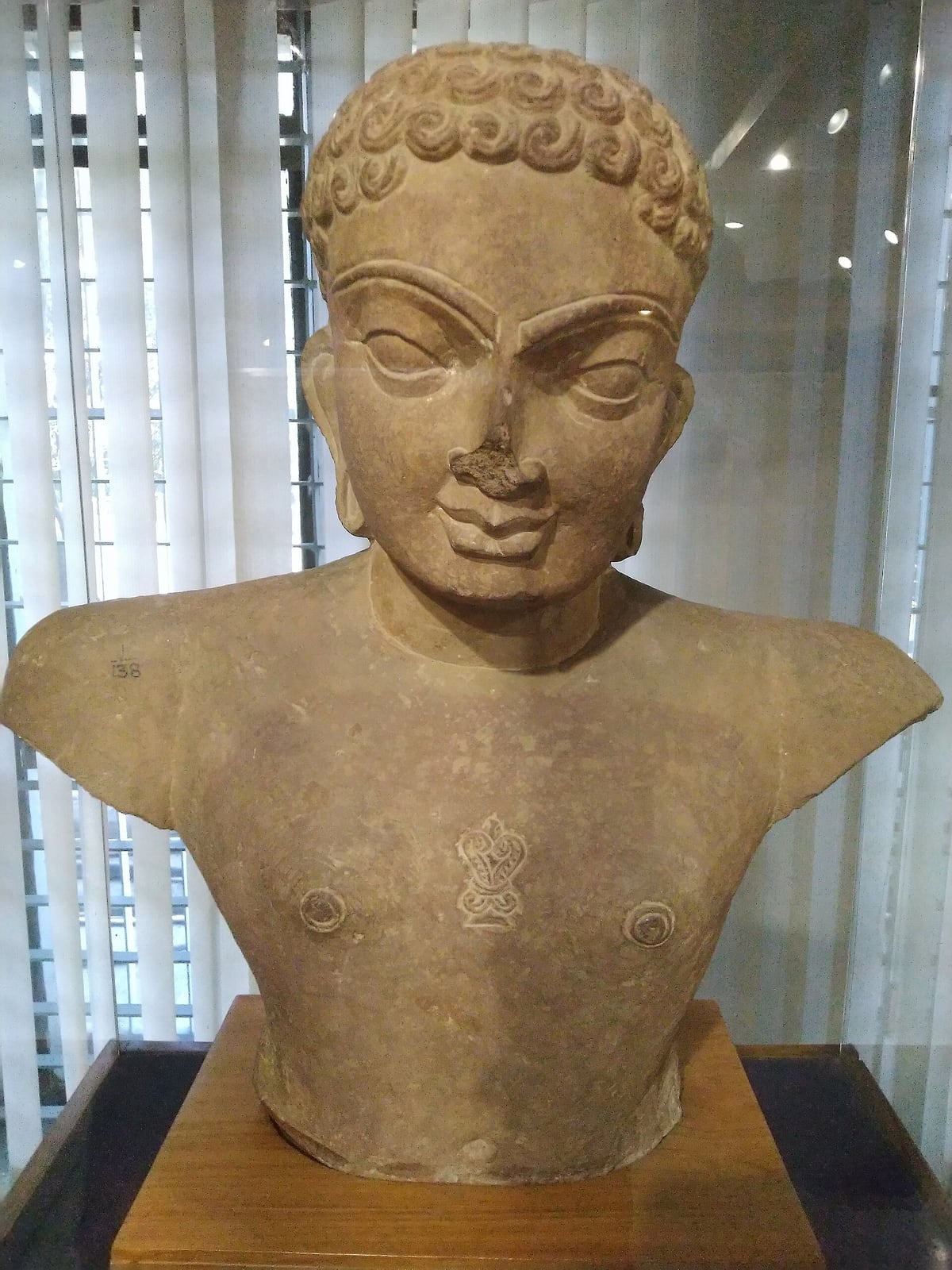
Mahāvīra
Ils concordent sur: Qu'est-ce que l'Absolu ? Dieu existe-t-il ? · Que se passe-t-il après la mort ? · Comment atteint-on la libération ou le salut ?
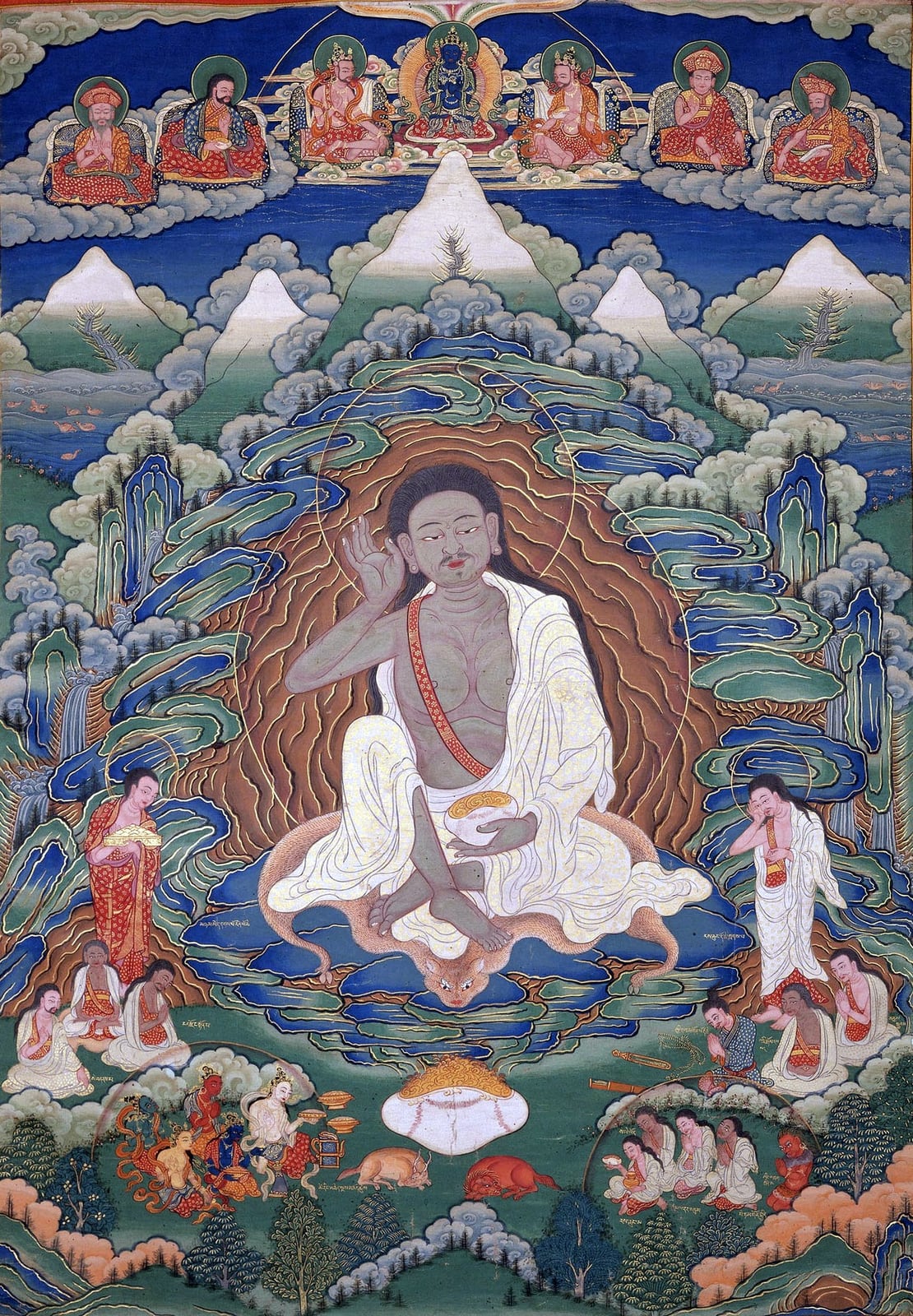
Milarepa
Ils concordent sur: Sommes-nous libres ou tout est-il déterminé ? · Qu'est-ce que l'Absolu ? Dieu existe-t-il ? · Que se passe-t-il après la mort ?
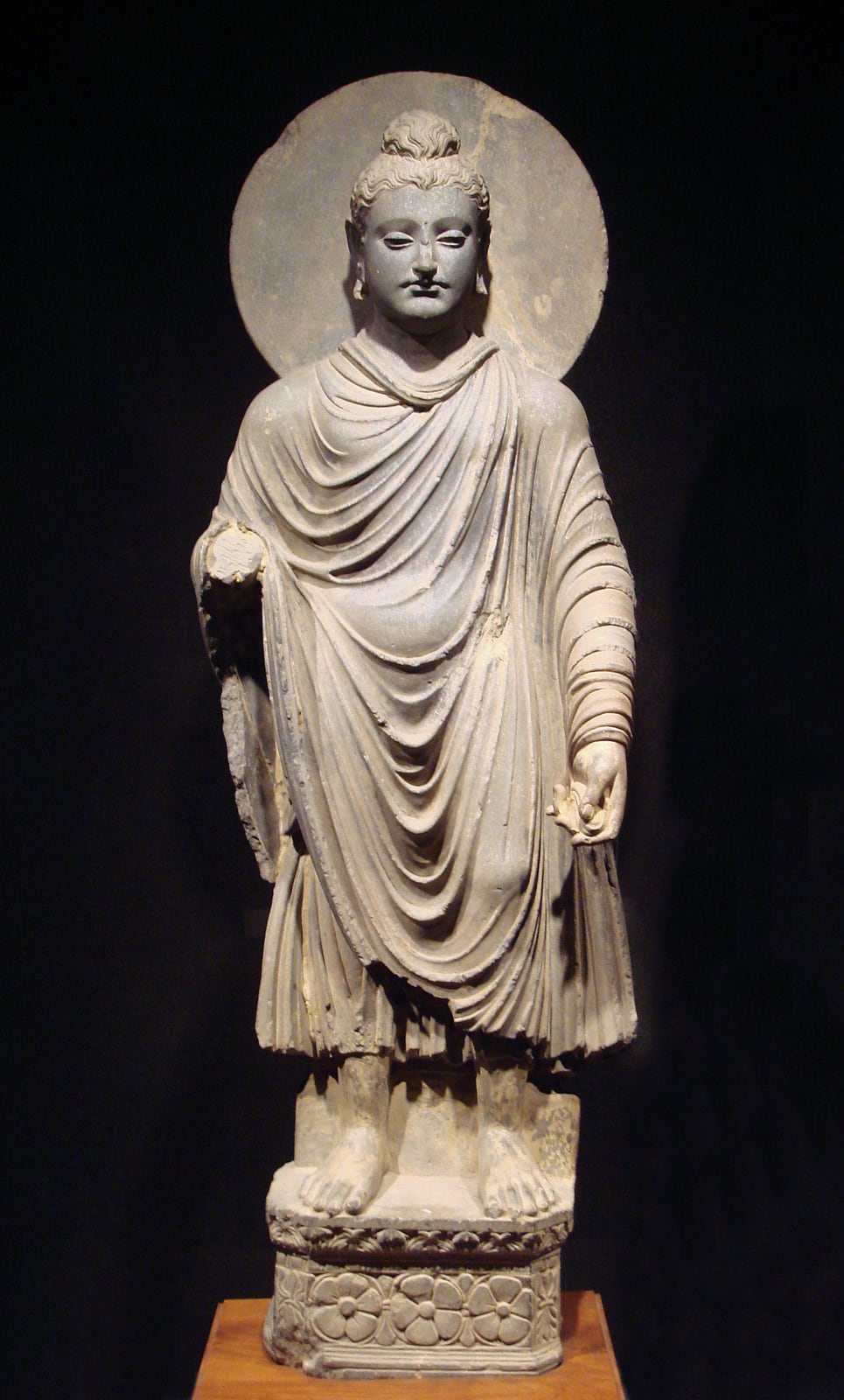
Siddhartha Gautama, the Buddha
Ils concordent sur: Qu'est-ce que l'Absolu ? Dieu existe-t-il ? · Que se passe-t-il après la mort ? · Comment atteint-on la libération ou le salut ?
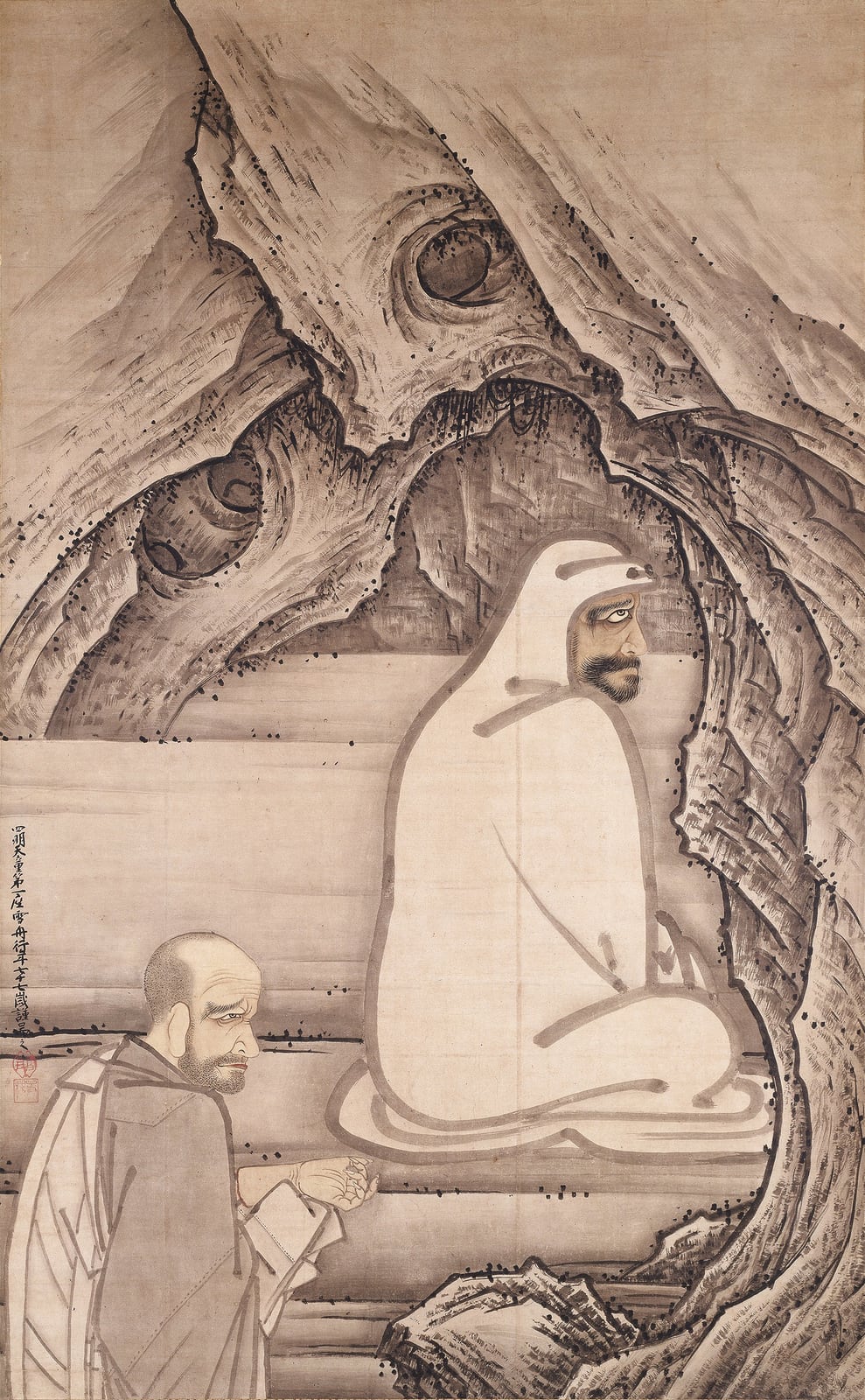
Bodhidharma
Ils concordent sur: Qui suis-je ? Existe-t-il un vrai soi ? · Que se passe-t-il après la mort ? · Comment atteint-on la libération ou le salut ?
Pense autrement que

Francis of Assisi
Ils s'opposent sur: Qu'est-ce que l'Absolu ? Dieu existe-t-il ? · Qui suis-je ? Existe-t-il un vrai soi ? · Que se passe-t-il après la mort ?
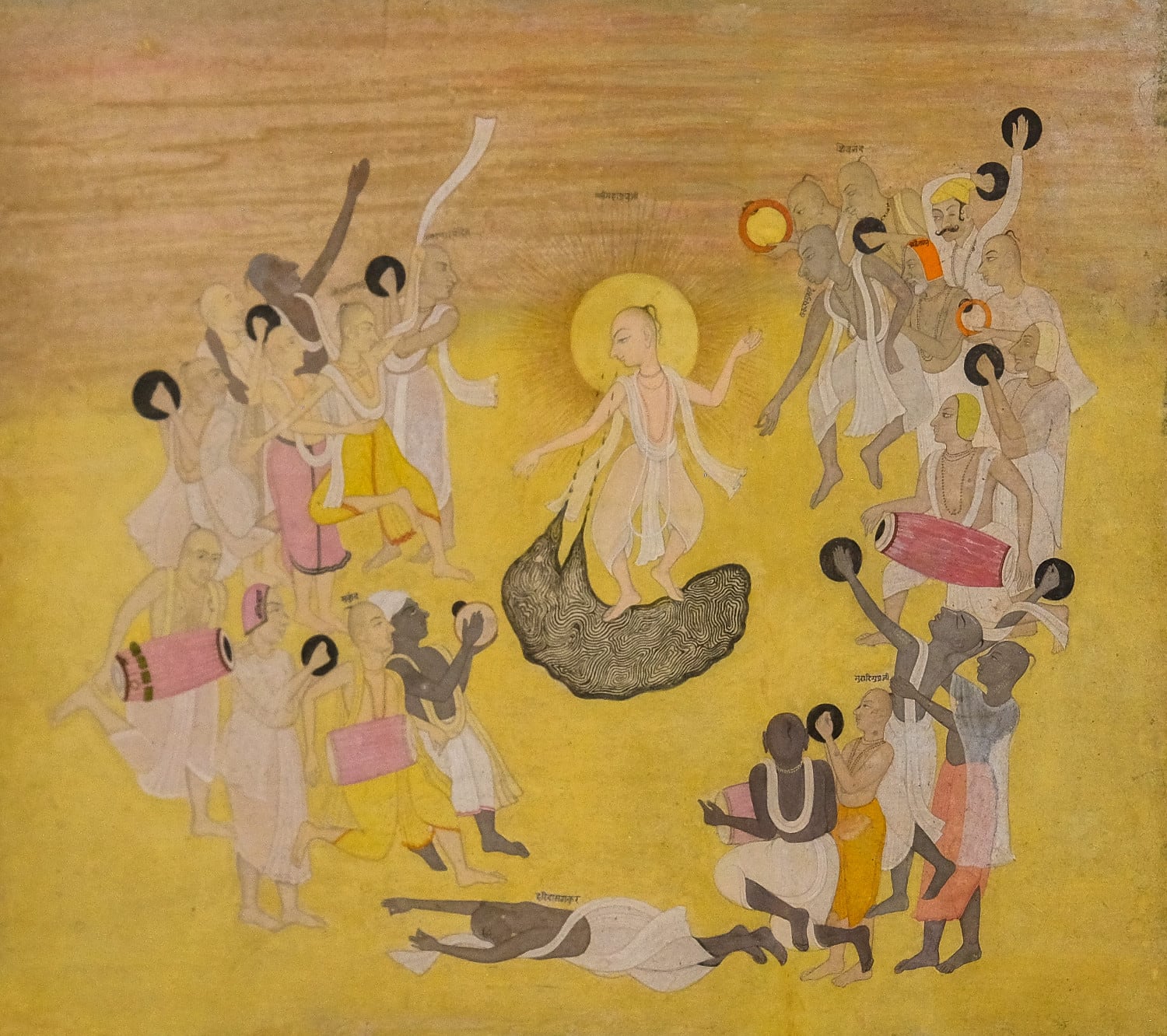
Chaitanya Mahaprabhu
Ils s'opposent sur: Qu'est-ce que l'Absolu ? Dieu existe-t-il ? · Qui suis-je ? Existe-t-il un vrai soi ? · Que se passe-t-il après la mort ?

Emanuel Swedenborg
Ils s'opposent sur: Qu'est-ce que l'Absolu ? Dieu existe-t-il ? · Qui suis-je ? Existe-t-il un vrai soi ? · Que se passe-t-il après la mort ?
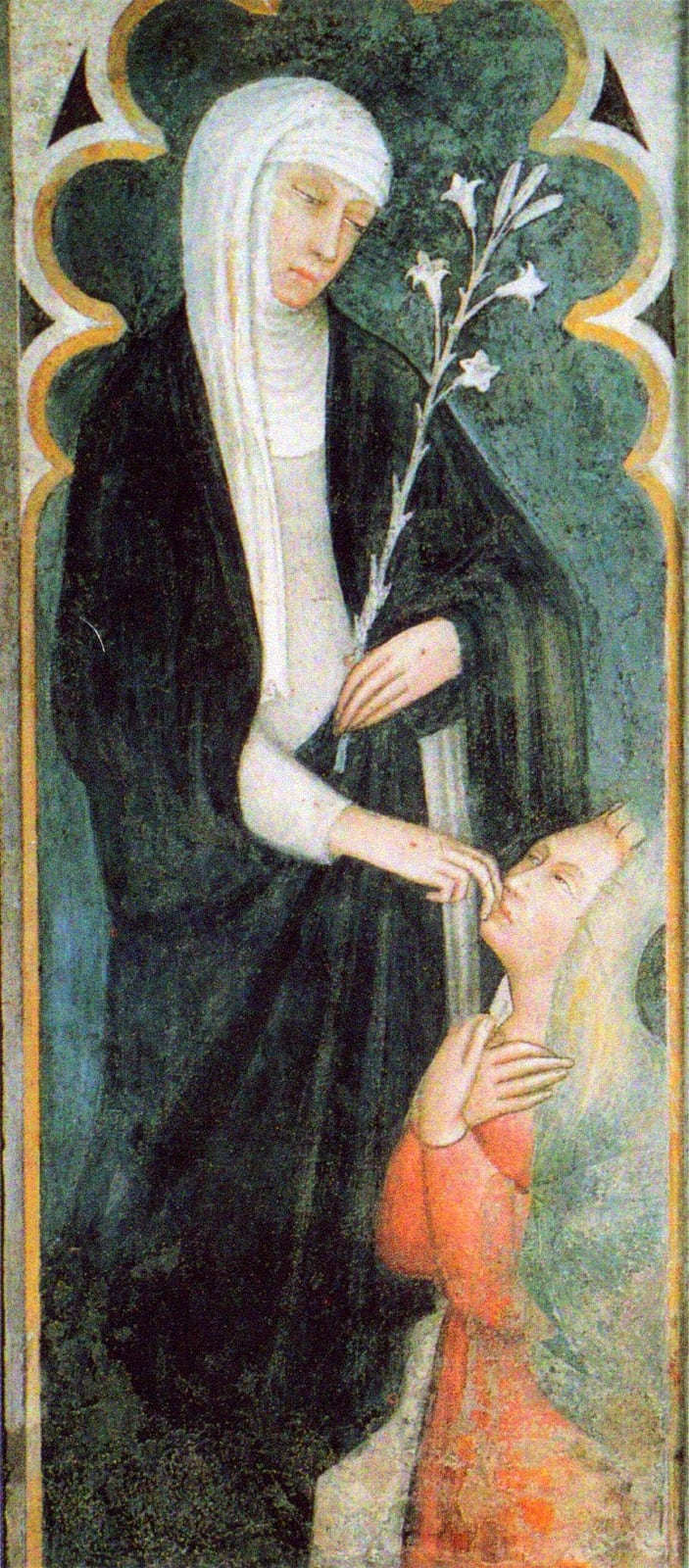
Catherine of Siena
Ils s'opposent sur: Qu'est-ce que l'Absolu ? Dieu existe-t-il ? · Qui suis-je ? Existe-t-il un vrai soi ? · Que se passe-t-il après la mort ?
Anecdotes et récits
Anecdotes et récits
Documentémediados del s. II a. C.
The Greek who besieged Sāketa
Origine du récit: Examples from the Mahābhāṣya itself (commentary on Pāṇini 3.2.111 and 3.2.123 in Kielhorn's edition), discussed by Cardona as a dating argument.
Source: Cardona, George. Pāṇini: A Survey of Research. La Haya / París: Mouton, 1976 (reimpr. Delhi: Motilal Banarsidass, 1980 y 1997); sobre la fecha del Mahābhāṣya y su transmisión.
Tradition oralesin fecha
Fallen into the cupped hands
Origine du récit: A devotional story of modern circulation (biographies of teachers and yoga schools) based on a popular etymology of the name. It has not been located in ancient Sanskrit sources; the Mahābhāṣya quotes a Gonikāputra as an authority distinct from its author, and the identification with him is late and uncertain. The identification of Patañjali with Śeṣa is, however, presupposed in Bhoja's verse (11th c.).
Source: White, David Gordon. The Yoga Sutra of Patanjali: A Biography. Princeton: Princeton University Press, 2014 (Lives of Great Religious Books). ISBN 9780691143774.
Récit hagiographiquesin fecha (textos medievales)
The dance at Chidambaram
Origine du récit: The foundation myth of the Chidambaram temple, transmitted in medieval Sanskrit and Tamil texts praising the temple, studied by David Smith (1996). It has no documentary connection with the author of the Mahābhāṣya or that of the Yogasūtra.
Source: Smith, David. The Dance of Siva: Religion, Art and Poetry in South India. Cambridge: Cambridge University Press, 1996. ISBN 9780521482349 (sobre los mitos del templo de Chidambaram, Patañjali y Vyāghrapāda).
Récit hagiographiquerelato compuesto a finales del s. XVII
A thousand disciples behind a curtain
Origine du récit: The Patañjalicarita of Rāmabhadra Dīkṣita (Tanjore court, late 17th c.; Kāvyamālā 51). Specialists on the Indology list point out that it is the only written source linking Gauḍapāda with Patañjali. A literary legend with no biographical value.
Documentéc. 1017–1030
Yoga in Arabic
Origine du récit: Arabic text preserved in an Istanbul manuscript, edited by Hellmut Ritter (Oriens, 1956) and translated and studied by Shlomo Pines and Tuvia Gelblum (BSOAS, 1966–1989).
Source: Pines, Shlomo, y Tuvia Gelblum. «Al-Bīrūnī's Arabic Version of Patañjali's Yogasūtra: A Translation of his First Chapter and a Comparison with Related Sanskrit Texts». Bulletin of the School of Oriental and African Studies 29, n.º 2 (1966): 302–325; continuado en BSOAS 40 (1977), 46 (1983) y 52 (1989).
Documenté1895–1896
Raja Yoga, New York, 1896
Origine du récit: Preface and text of Raja Yoga (1896) and White's analysis (2014).
Source: White, David Gordon. The Yoga Sutra of Patanjali: A Biography. Princeton: Princeton University Press, 2014 (Lives of Great Religious Books). ISBN 9780691143774.
Enseignements
Enseignements
Les notions qui structurent sa pensée, expliquées dans leur contexte.
Stilling of the movements of the mind (cittavṛttinirodha)citta-vritti-nirodha
Yogasūtra 1.2–1.11 and commentary; foundation of the whole classical school.
Practice and detachment (abhyāsa and vairāgya)abhyasa-vairagya
Yogasūtra 1.12–1.16 and commentary.
Afflictions (kleśa)klesha
Yogasūtra 2.2–2.11; the Buddhist parallels are discussed by Maas and Bryant.
Source: Bryant, Edwin F. The Yoga Sūtras of Patañjali: A New Edition, Translation, and Commentary with Insights from the Traditional Commentators. Nueva York: North Point Press, 2009. ISBN 9780865477360.
The eight limbs (aṣṭāṅga)ashtanga-yoga
Yogasūtra 2.28–3.8; on the Jain parallel, Chapple (2003).
Source: Chapple, Christopher Key. Reconciling Yogas: Haribhadra's Collection of Views on Yoga. Albany: State University of New York Press, 2003. ISBN 9780791458990.
Īśvara, the lordishvara
Yogasūtra 1.23–1.29, 2.1, 2.32, 2.45.
Source: Bryant, Edwin F. The Yoga Sūtras of Patañjali: A New Edition, Translation, and Commentary with Insights from the Traditional Commentators. Nueva York: North Point Press, 2009. ISBN 9780865477360.
Absorption (samādhi)samadhi
Yogasūtra 1.17–1.51 and 3.3.
Isolation (kaivalya)kaivalya
Yogasūtra 2.25–2.26, 3.50–3.55 and 4.25–4.34.
Vidéos
Vidéos
Enregistrements, entretiens et documentaires. Les vidéos sont lues depuis YouTube ; elles ne sont pas hébergées ici.
The Yoga Sutras of Patanjali | Prof. Edwin Bryant
Conférence· EN· 2018· 106 min
Vedanta Society of New YorkChaîne officielle
YSP 11 Philipp Maas | The Pātañjalayogaśāstra and its Textual History
Entretien· EN· 2021· 99 min
Yogic Studies
The Yoga Sutras in Depth - Dr. Philipp Maas
Entretien· EN· 2022· 51 min
Keen on Yoga
Once More on Postures in the Pātañjala Yogaśāstra by Philipp Maas
Conférence· EN· 2016· 53 min
Loyola Marymount University, BCLA Yoga StudiesChaîne officielle
Thinking with the Yoga Sūtra, Opening by Dr Christopher Key Chapple, Chair
Conférence· EN· 2016· 39 min
Loyola Marymount University, BCLA Yoga StudiesChaîne officielle
MIPodcast #13: What's the "Yoga Sutra of Patanjali," featuring David Gordon White
Entretien· EN· 2015· 67 min
Maxwell InstituteChaîne officielle
Historical, Popular, and Scholarly Constructions of Yoga with David Gordon White
Entretien· EN· 2016· 37 min
Religious Studies Project
What is Yoga?
Analyse· EN· 2024· 50 min
Let's Talk Religion
Lecturas en Español. De los Aforismos de Yoga de Patañjali
Conférence· ES· 2017· 87 min
Instituto Cervantes Rio de JaneiroChaîne officielle
Los Yoga Sutras de Patamjali | Conferencia | 21/11/2024
Conférence· ES· 2024· 58 min
Instituto Cervantes Nueva DelhiChaîne officielle
Les Yogas-Sutras - Erik Sablé : Les yoga-sutras de Patanjali - Jeudis Philo
Conférence· FR· 2022· 138 min
Ancrages Éditions
Mahābhāṣya of Patañjali, Samarthāhnikam: Lecture-1, Part-2
Conférence· EN· 2019· 116 min
RKMVERI - Deemed UniversityChaîne officielle
Ancient grammatical puzzle solved after 2,500 years
Documentaire· EN· 2022· 6 min
Cambridge UniversityChaîne officielle
Galerie
Galerie
Images dont la licence a été vérifiée. Chacune conserve son auteur et son attribution.
Manuscrits
Manuscrits
Témoins manuscrits et textes anciens, avec leur dépositaire et leurs conditions de consultation.
SA · Devanagari · c. 325–425 d. C. (Maas)
पातञ्जलयोगशास्त्र (Yogasūtra con bhāṣya)
- Témoin conservé
- Manuscrito sin fecha, anterior a 1900
- Dépositaire
- National Library of India, Rare Books Division (Calcuta) · Th 217
SA · Devanagari · mediados del s. II a. C. (Mahābhāṣya); s. XI (Pradīpa)
व्याकरणमहाभाष्य with महाभाष्यप्रदीप (Mahābhāṣya con el Pradīpa de Kaiyaṭa)
- Témoin conservé
- Copia sin fecha en formato de «doble libro»
- Dépositaire
- University of Pennsylvania, Kislak Center for Special Collections · Ms. Coll. 390
Relations
Relations
Influences, filiations et affinités. On distingue la relation documentée de la similitude identifiée par analyse.
A influencé
Vijñānabhikṣu
Author of the Yogavārttika (16th c.), a Vedāntic reading of the text.
Relation documentée
A influencé
Bhartṛhari
He commented on the Mahābhāṣya and related its decline and restoration (5th c.).
Relation documentée
A reçu l'influence de
Pāṇini
The grammarian Patañjali's Mahābhāṣya is the great commentary on Pāṇini's grammar.
Relation documentée
A reçu l'influence de
Kātyāyana
The Mahābhāṣya discusses one by one Kātyāyana's critical remarks (vārttika) on Pāṇini.
Relation documentée
Idées proches de
Siddhartha Gautama, the Buddha
The yoga text shares vocabulary and schemes with scholastic Buddhism (afflictions, absorptions, the four attitudes of friendliness, compassion, joy and equanimity) and argues against an idealist Buddhist school; the exact debt is debated (Maas, Bryant).
Similitude identifiée par analyse
Idées proches de
The five restraints of aphorism 2.30 (non-harming, truthfulness, non-stealing, chastity, non-possession) coincide with the five great vows of Jain monasticism, and the text calls them the "great vow" when kept without exception; Chapple (2003) studies this kinship.
Similitude identifiée par analyse
Contemporain de
Woods (1914) noted that Nāgārjuna does not mention Patañjali although he knew a school of yoga; if the Yogasūtra are later than Buddhist idealism, as Woods and Maas argue, Patañjali wrote after him. No contact is documented.
Similitude identifiée par analyse
A influencé
Tradition ascribes to Śaṅkara a sub-commentary on the Pātañjalayogaśāstra (the Vivaraṇa), whose authorship is disputed; in the Brahmasūtra commentary (2.1.3) Śaṅkara refutes the dualist metaphysics of yoga while accepting its techniques.
Relation documentée
A influencé
He translated and commented on the aphorisms in Raja Yoga (1896), the book that made the text known in the West.
Relation documentée
A influencé
In Autobiography of a Yogi (1946, ch. 26) he quotes the aphorisms on kriyāyoga and breath control to present his lineage's Kriya Yoga as a continuation of Patañjali.
Relation documentée
A influencé
Al-Bīrūnī
He adapted the text into Arabic as the Kitāb Bātanjal (c. 1030).
Relation documentée
A influencé
Vācaspati Miśra
Author of the Tattvavaiśāradī, the great classical sub-commentary, translated by Woods.
Relation documentée
A influencé
Bhoja de Dhārā
King and author of the Rājamārtaṇḍa commentary (11th c.), first source of the threefold Patañjali.
Relation documentée
Lié depuis d'autres fiches
Sources
Sources
Bibliographie et catalogues consultés pour cette fiche.
- Wikidata, «Patanjali», QID Q231680 (descrito como «autor o autores» de la gramática, del yoga y de tratados médicos; LCCN n80044780; GND 119387077; BnF 121635181).
- Maas, Philipp A. «A Concise Historiography of Classical Yoga Philosophy». En Eli Franco (ed.), Periodization and Historiography of Indian Philosophy. Viena: Sammlung de Nobili, 2013, pp. 53–90.
- Maas, Philipp André. Samādhipāda. Das erste Kapitel des Pātañjalayogaśāstra zum ersten Mal kritisch ediert / The First Chapter of the Pātañjalayogaśāstra for the First Time Critically Edited. Aachen: Shaker, 2006 (Geisteskultur Indiens 9).
- Woods, James Haughton (trad.). The Yoga-System of Patañjali, or the Ancient Hindu Doctrine of Concentration of Mind, embracing the Mnemonic Rules, called Yoga-sūtras, of Patañjali, and the Comment, called Yoga-bhāshya, attributed to Veda-Vyāsa, and the Explanation, called Tattva-vāiçāradī, of Vāchaspati-Miçra. Cambridge (Mass.): Harvard University Press, 1914 (Harvard Oriental Series 17). Introducción, §§ 3–5, sobre la identidad de los dos Patañjali y las fechas.
- Bryant, Edwin F. The Yoga Sūtras of Patañjali: A New Edition, Translation, and Commentary with Insights from the Traditional Commentators. Nueva York: North Point Press, 2009. ISBN 9780865477360.
- White, David Gordon. The Yoga Sutra of Patanjali: A Biography. Princeton: Princeton University Press, 2014 (Lives of Great Religious Books). ISBN 9780691143774.
- Bronkhorst, Johannes. «Patañjali and the Yoga sūtras». Studien zur Indologie und Iranistik 10 (1984 [1985]): 191–212.
- Cardona, George. Pāṇini: A Survey of Research. La Haya / París: Mouton, 1976 (reimpr. Delhi: Motilal Banarsidass, 1980 y 1997); sobre la fecha del Mahābhāṣya y su transmisión.
- Meulenbeld, G. Jan. A History of Indian Medical Literature, vol. IA. Groninga: Egbert Forsten, 1999 (sobre los Patañjali médicos y la estrofa de Bhoja).
- Larson, Gerald James, y Ram Shankar Bhattacharya (eds.). Encyclopedia of Indian Philosophies, vol. XII: Yoga: India's Philosophy of Meditation. Delhi: Motilal Banarsidass, 2008.
- Vivekananda, Swami. Raja Yoga, or Conquering the Internal Nature. Londres / Nueva York: Longmans, Green and Co., 1896. Texto en The Complete Works of Swami Vivekananda, vol. 1 (Wikisource).
- Pines, Shlomo, y Tuvia Gelblum. «Al-Bīrūnī's Arabic Version of Patañjali's Yogasūtra: A Translation of his First Chapter and a Comparison with Related Sanskrit Texts». Bulletin of the School of Oriental and African Studies 29, n.º 2 (1966): 302–325; continuado en BSOAS 40 (1977), 46 (1983) y 52 (1989).
- Renou, Louis. «On the Identity of the Two Patañjalis». En Narendra Nath Law (ed.), Louis de La Vallée Poussin Memorial Volume. Calcuta, 1940.
- Kielhorn, Franz (ed.). The Vyâkaraṇa-Mahâbhâshya of Patañjali. 3 vols. Bombay: Government Central Book Depôt, 1880–1885 (Bombay Sanskrit Series).
- Johnston, Charles (trad.). The Yoga Sutras of Patanjali: «The Book of the Spiritual Man». Nueva York, 1912. Project Gutenberg n.º 2526.
- Dvivedi, Manilal Nabhubhai (trad.). The Yoga-Sutra of Patanjali. Bombay: Bombay Theosophical Publication Fund, 1890.
- Pujol, Óscar (trad.). Yogasūtra. Los aforismos del yoga. Barcelona: Kairós, 2021. ISBN 9788499884981.
- Yogananda, Paramahansa. Autobiography of a Yogi. Nueva York: The Philosophical Library, 1946, cap. 26, «The Science of Kriya Yoga».
- Chapple, Christopher Key. Reconciling Yogas: Haribhadra's Collection of Views on Yoga. Albany: State University of New York Press, 2003. ISBN 9780791458990.
- The Pandit Project, «Rāmabhadra Dīkṣita» (ficha biográfica: nacido en la segunda mitad del siglo XVII cerca de Kumbakonam, protegido de Śāhajī I de Tanjore); el Patañjalicarita está impreso en la serie Kāvyamālā (n.º 51), Bombay, Nirṇaya Sāgara Press.
- Angot, Michel (ed. y trad.). Le Yoga-Sūtra de Patañjali. Le Yoga-Bhāṣya de Vyāsa, avec des extraits du Yoga-Vārttika de Vijñāna-Bhikṣu. París: Les Belles Lettres, 2008. ISBN 9782251720500.
- Ritter, Hellmut. «Al-Bīrūnī's Übersetzung des Yoga-Sūtra des Patañjali». Oriens 9, n.º 2 (1956): 165–200 (edición del texto árabe).
- Wikimedia Commons, ficheros de imagen citados en images[] (licencias comprobadas por la API imageinfo el 2026-10-25).
- Mallinson, James, y Mark Singleton (trads. y eds.). Roots of Yoga. Londres: Penguin Classics, 2017. ISBN 9780241253045.
- Smith, David. The Dance of Siva: Religion, Art and Poetry in South India. Cambridge: Cambridge University Press, 1996. ISBN 9780521482349 (sobre los mitos del templo de Chidambaram, Patañjali y Vyāghrapāda).
- Bhatnagar, K. N. (ed.). Nidāna-sūtra of Patañjali. Delhi: Meharchand Lachhmandas, 1971.
- Danielson, Henrik (trad.). Ādiśeṣa: The Essence of Supreme Truth (Paramārthasāra). Leiden: E. J. Brill, 1980. ISBN 9789004061736.
- Open Library (openlibrary.org), fichas por ISBN y búsquedas por autor y título consultadas el 2026-10-25 para verificar las ediciones.
- Ayant droit
- Textos sánscritos en dominio público (s. II a. C. y s. IV–V d. C.). Las traducciones modernas tienen derechos propios: Kairós (Pujol; Iyengar), Debate (Bahm), Edaf (Desikachar), Oniro (Hartranft), North Point Press / Farrar, Straus and Giroux (Bryant), SUNY Press (Hariharānanda Āraṇya), Les Belles Lettres (Angot), Integral Yoga Publications (Satchidananda), Vedanta Press (Prabhavananda e Isherwood). Las de Woods (1914), Johnston (1912), Vivekananda (1896) y Dvivedi (1890) son de dominio público.
En attente de confirmation
Ce que cette fiche n'a pas encore pu établir. Nous préférons le dire plutôt que de combler.
- Fechas: no hay fecha de nacimiento ni de muerte para ningún Patañjali; se dejan como «unknown» y la línea de tiempo usa las fechas de las obras (Mahābhāṣya, mediados del s. II a. C.; Pātañjalayogaśāstra, c. 325–425 según Maas).
- Comprobar en el texto de Renou (1940) la paginación exacta del artículo «On the Identity of the Two Patañjalis».
- Sala de lectura: la traducción de M. N. Dvivedi (1890) en Internet Archive (b28119411) tiene un OCR inservible (reconocido como devanagari); buscar otro escaneo limpio. El Mahābhāṣya de Kielhorn (1880–1885) solo existe en escaneos con OCR deficiente del devanagari. No se ha encontrado ningún texto en español de dominio público (es.wikisource no tiene ninguno).
- Ediciones: falta ISBN de la edición crítica de Maas (Shaker, 2006) y de las traducciones del Mahābhāṣya de Joshi y Roodbergen; buscar ediciones con ISBN en alemán, italiano, ruso e hindi. La edición española de Raja Yoga (Kier, ISBN 9789501701210) no indica fecha ni traductor en Open Library.
- Obras: Meulenbeld menciona otros textos médicos y alquímicos puestos bajo el nombre de Patañjali que no se han podido verificar; cotejar con su History of Indian Medical Literature, vol. IA.
- Vídeo CS2vRfWeFw4 (Instituto Cervantes Nueva Delhi): identificar al ponente.
- Anécdota del nacimiento en el «añjali» de Gonikā: localizar su primera fuente escrita.
Recherche effectuée le 2026-10-25