Hindouisme · Yoga · Bhakti · Advaita Vedanta
Paramahansa Yogananda
পরমহংস যোগানন্দ · মুকুন্দলাল ঘোষ · परमहंस योगानन्द
1893 – 1952Personne historiquement documentée
Moine bengali de la lignée du Kriya Yoga (Mahavatar Babaji, Lahiri Mahasaya, Sri Yukteswar) qui vécut aux États-Unis de 1920 à sa mort. Il fonda la Self-Realization Fellowship et la Yogoda Satsanga Society of India, initia des dizaines de milliers de personnes à la méditation et écrivit l'Autobiographie d'un yogi (1946), l'un des livres spirituels les plus lus du XXe siècle. Il enseigna l'unité du yoga de Krishna et du christianisme originel. Son héritage éditorial et les récits sur sa mort restent objets de dispute.
- œuvres
- 38œuvres
- éditions
- 105éditions
- citations
- 5citations
- vidéos
- 11vidéos
- images
- 9images
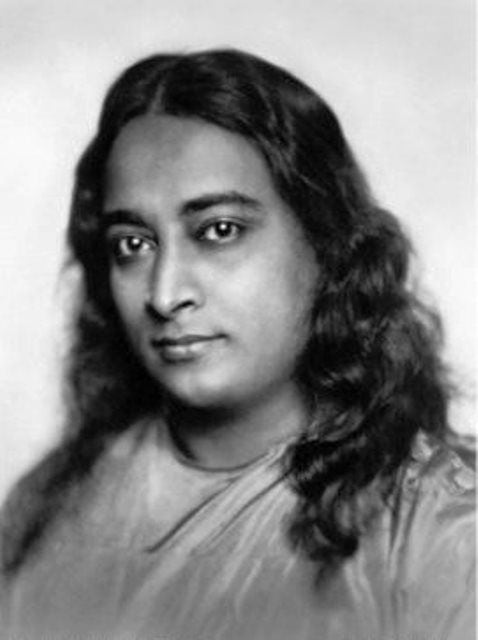
Paramahansa Yogananda, retrato de la «pose estándar» · Public domain
Dans ses propres mots
«The characteristic features of Indian culture have long been a search for ultimate verities and the concomitant disciple-guru relationship.»Autobiography of a Yogi (1946), cap. 1, «My Parents and Early Life», primera frase

Son idée centrale
Kriya yoga: A meditation technique based on controlling life energy along the spine, which Yogananda presents as an ancient science revived by Mahavatar Babaji and spread by Lahiri Mahasaya from 1861.
Le voir en contexte
Biographie
6 min de lecture
Traduction assistée à partir de l'original espagnol, en attente de relecture par un traducteur natif.
Un enfant de Gorakhpur dans une maison de disciples
Mukunda Lal Ghosh naquit le 5 janvier 1893 à Gorakhpur, dans le nord de l'Inde britannique, quatrième des huit enfants d'une famille bengalie de caste kayastha. Son père, Bhagabati Charan Ghosh, était un cadre supérieur de la compagnie ferroviaire Bengal-Nagpur ; sa mère, Gyana Prabha, mourut quand l'enfant avait onze ans. Tous deux étaient disciples de Lahiri Mahasaya, le chef de famille de Bénarès qui, dans la seconde moitié du XIXe siècle, avait répandu une technique de méditation appelée kriya yoga. Cet héritage domestique — une photographie du maître au mur, le souvenir d'une guérison qui lui était attribuée — est le point de départ de tout ce que Yogananda raconterait ensuite. Il faut avertir d'emblée que presque tout ce que nous savons de son enfance provient de son propre récit, écrit un demi-siècle plus tard dans un dessein dévotionnel et pédagogique.
Sri Yukteswar et l'ordre des swamis
Adolescent inquiet, Mukunda fréquenta saints et ascètes de Calcutta et de Bénarès, et alla jusqu'à fuguer vers l'Himalaya. En 1910, à dix-sept ans, il rencontra à Bénarès l'homme qui serait son gourou : Swami Sri Yukteswar Giri, disciple de Lahiri Mahasaya, astronome amateur, auteur de La Science sacrée et responsable d'un petit ermitage à Serampore, sur les bords de la Hooghly. Pendant dix ans, il alterna la discipline de cet ermitage et les études au Serampore College, affilié à l'université de Calcutta, où il obtint son diplôme en 1915. En juillet de cette année-là, il reçut de son maître les vœux de l'ordre monastique des swamis, branche Giri, et prit le nom de Yogananda, « la béatitude par l'union divine ».
En 1917, il fonda à Dihika, au Bengale, une école de garçons qui associait le programme ordinaire au yoga et à la vie au grand air ; l'année suivante, grâce au mécénat du maharaja de Kasimbazar, elle fut transférée à Ranchi. De là naquit la Yogoda Satsanga Society of India, l'institution qui conserve encore son œuvre dans le sous-continent.
Boston, 1920 : le yoga comme science de la religion
En août 1920, il s'embarqua pour les États-Unis comme délégué de l'Inde à l'International Congress of Religious Liberals, réuni à Boston par l'Association unitarienne. Son intervention, « La science de la religion », soutenait une thèse qu'il répéterait toute sa vie : les religions partagent un même but — l'expérience directe de Dieu comme joie — et le yoga offre une méthode vérifiable pour l'atteindre. La même année, il fonda à Boston l'organisation qui, à partir de 1935, prendrait le nom de Self-Realization Fellowship (SRF).
Au cours de la décennie suivante, il fut selon toute probabilité le maître indien le plus visible d'Amérique du Nord. Il sillonna le pays avec des cycles de conférences qui remplissaient des salles de plusieurs milliers de personnes, annoncés comme des cours de « Yogoda », un système d'exercices d'« énergisation » et de concentration qu'il vendait par fascicules. En 1925, il installa son siège dans l'ancien hôtel de Mount Washington, à Los Angeles. En 1927, le président Calvin Coolidge le reçut à la Maison-Blanche. Les historiens — Anya Foxen et Philip Goldberg parmi eux — soulignent à quel point il sut traduire le yoga dans la langue de la psychologie pratique, de la réussite personnelle et du christianisme libéral américain. Ce succès eut aussi sa part d'ombre : la presse l'associa au « péril hindou », il y eut des tensions raciales dans certaines villes et, en 1929, son ancien collaborateur Swami Dhirananda le poursuivit pour arriérés de salaire.
Le retour en Inde et le titre de Paramahansa
En 1935-1936, il regagna l'Inde en passant par l'Europe et le Proche-Orient. À Konnersreuth, en Bavière, il rendit visite à la stigmatisée Thérèse Neumann ; à Wardha, à Gandhi, à qui, selon son récit, il enseigna la technique du kriya ; il rencontra aussi Ramana Maharshi et Anandamayi Ma. Sri Yukteswar lui conféra le titre monastique de paramahansa, « cygne suprême », et mourut à Puri le 9 mars 1936. À son retour en Californie, son disciple le plus fortuné, l'homme d'affaires de Kansas City James J. Lynn, lui offrit l'ermitage d'Encinitas, au-dessus des falaises du Pacifique.
L'Autobiographie et les années d'écriture
C'est dans cet ermitage qu'il écrivit, pendant une décennie, le livre qui lui survivrait : Autobiography of a Yogi (Autobiographie d'un yogi), publié à New York par The Philosophical Library en décembre 1946. L'ouvrage est difficile à classer : à la fois mémoires, hagiographie de sa lignée — Mahavatar Babaji, Lahiri Mahasaya, Sri Yukteswar —, catalogue de saints et de prodiges et manuel d'initiation. Ce qui y est raconté de lévitations, de matérialisations ou de résurrections relève, pour l'historien, du témoignage de foi et non du fait documenté, et c'est ainsi que cet Atlas le présente. Son influence, en revanche, est bien un fait : traduit en plus de cinquante langues, vendu à plusieurs millions d'exemplaires, il compte parmi les livres qui ont conduit le plus d'Occidentaux à la méditation. La première édition de 1946 est aujourd'hui dans le domaine public aux États-Unis ; la SRF a continué de réviser le texte au fil des éditions successives.
Durant ces mêmes années, il rédigea les commentaires que la SRF publierait après sa mort — sur la Bhagavad-Gîtâ, les Évangiles et les Rubaïyat d'Omar Khayyâm —, parus d'abord en feuilleton dans ses revues East-West et Inner Culture. En 1946, après la modification de la loi sur l'immigration, il demanda la nationalité américaine, qu'il obtint en 1949. En 1950, il inaugura le Lake Shrine de Pacific Palisades, avec un mémorial à Gandhi qui abrite une partie de ses cendres.
La mort au Biltmore
Le 7 mars 1952, lors d'un banquet donné à l'hôtel Biltmore de Los Angeles en l'honneur de l'ambassadeur indien Binay Ranjan Sen, il prononça un bref discours et lut les derniers vers de son poème « My India ». Selon les témoins de la SRF, il s'effondra en terminant. Le certificat de décès attribua la mort à une occlusion coronarienne aiguë ; ses disciples parlent de mahasamadhi, la sortie consciente du corps. Il est enterré à Forest Lawn, à Glendale.
Un héritage en litige
L'héritage de Yogananda est aussi une histoire d'institutions. La SRF et la Yogoda Satsanga Society, dirigées après lui par Rajarsi Janakananda (Lynn), Sri Daya Mata et leurs successeurs, conservent ses Leçons, ses enregistrements et ses droits d'édition. En 1962, la SRF écarta l'un de ses moines, Swami Kriyananda (J. Donald Walters), qui fonda en 1968 la communauté Ananda, près de Nevada City. Le procès que la SRF intenta en 1990 à Ananda pour l'usage de l'expression « Self-Realization » et pour les droits d'auteur sur les œuvres, photographies et enregistrements du maître dura douze ans : les tribunaux refusèrent à la SRF l'exclusivité du nom et de l'image, et le jury de 2002 lui donna raison sur la propriété des droits et sur la contrefaçon de certains enregistrements. Ananda, de son côté, réédite la première édition de l'Autobiographie et défend ses propres versions de ses enseignements.
Autre sujet de controverse : le récit de son corps « incorrompu », fondé sur une lettre du directeur des pompes funèbres de Forest Lawn dont la version intégrale mentionnait un embaumement ordinaire. Ce qui demeure hors de toute contestation, c'est la portée de son œuvre : Yogananda fut le premier gourou indien à vivre presque toute sa vie adulte en Occident et à y laisser une institution capable de lui survivre.
Sources: Yogananda, Paramhansa. Autobiography of a Yogi. Nueva York: The Philosophical Library, 1946 (1.ª ed.; texto en Project Gutenberg #7452). · Goldberg, Philip. The Life of Yogananda: The Story of the Yogi Who Became the First Modern Guru. Carlsbad (California): Hay House, 2018. · Yogananda, Swami. The Science of Religion. Los Ángeles: Yogoda and Sat-Sanga Headquarters, 4.ª ed., septiembre de 1925 (copyright 1924; 1.ª ed. en la India). Ejemplar digitalizado en Internet Archive. · Self-Realization Fellowship. Paramahansa Yogananda: In Memoriam. Los Ángeles: Self-Realization Fellowship, 1958 (reproduce la carta notarial de Harry T. Rowe, director de la funeraria de Forest Lawn, publicada antes en Self-Realization, mayo-junio de 1952). · Kriyananda, Swami (J. Donald Walters). The Path: Autobiography of a Western Yogi. Nevada City (California): Ananda Publications, 1977; reeditado como The New Path, Crystal Clarity, 2009.
Chronologie
La vie, année après année
Chaque point est un événement documenté. Cliquez pour le lire, avec sa source et son degré de certitude.
5 janvier 18930 ansGorakhpur
Birth of Mukunda Lal Ghosh
Born into a Bengali family; his parents, Bhagabati Charan Ghosh and Gyana Prabha, are disciples of Lahiri Mahasaya.
DocumentéWikidata, «Paramahansa Yogananda» (Q312549): nacimiento 05-01-1893 en Gorakhpur, muerte 07-03-1952 en Los Ángeles, sepultura en Forest Lawn (Glendale); 84 enlaces entre wikis.
Après sa mort
- 1962Kriyananda's departure
- 1990SRF v. Ananda lawsuit
5 janvier 1893 · 0 ans
Birth of Mukunda Lal Ghosh
Born into a Bengali family; his parents, Bhagabati Charan Ghosh and Gyana Prabha, are disciples of Lahiri Mahasaya.
Documenté
1904 · 11 ans
Death of his mother
The death of Gyana Prabha, which he dates to his eleventh year, opens by his own account an intense spiritual search.
Probable
1910 · 17 ans
Meeting Sri Yukteswar
Meets Swami Sri Yukteswar Giri, a disciple of Lahiri Mahasaya, and becomes his disciple at the Serampore hermitage.
Documenté
juillet 1915 · 22 ans
Swami vows: Yogananda
After graduating from Serampore College (University of Calcutta), he takes the vows of the Swami order, Giri branch, with the name Yogananda.
Documenté
1917 · 24 ans
Ranchi school and Yogoda Satsanga Society
Founds at Dihika a school for boys that moves to Ranchi in 1918 with the support of the Maharaja of Kasimbazar; origin of Yogoda Satsanga Society of India.
Documenté
octobre 1920 · 27 ans
Congress of Religious Liberals
Indian delegate to the International Congress of Religious Liberals; delivers "The Science of Religion" and founds the organisation that will become Self-Realization Fellowship.
Documenté
1925 · 32 ans
Mount Washington headquarters
Acquires the former Mount Washington hotel, which becomes SRF's international headquarters.
Documenté
1927 · 34 ans
Received by Calvin Coolidge
President Coolidge receives him at the White House; the press reports it as an unprecedented visit by an Indian teacher.
Documenté
1929 · 36 ans
Swami Dhirananda's lawsuit
His former associate Basu Kumar Bagchi (Swami Dhirananda) sues him for unpaid wages and royalties; the case is settled.
Documenté
1935 · 42 ans
Journey to India and title of Paramahansa
Visits Therese Neumann in Bavaria and Gandhi at Wardha; Sri Yukteswar confers on him the title of paramahansa. Self-Realization Fellowship is legally incorporated.
Documenté
9 mars 1936 · 43 ans
Death of Sri Yukteswar
His master dies at Puri while he is in Calcutta; the chapter on Sri Yukteswar's "resurrection" in the Autobiography is a visionary account.
Documenté
1936 · 43 ans
The Encinitas hermitage
Back in California he receives as a gift from James J. Lynn (Rajarsi Janakananda) the Encinitas hermitage, where he will write the Autobiography.
Documenté
décembre 1946 · 53 ans
Publication of Autobiography of a Yogi
The Philosophical Library publishes the first edition; that edition is now in the public domain in the United States.
Documenté
1949 · 56 ans
American citizenship
Obtains the citizenship he had applied for in 1946, after the Luce–Celler Act.
Documenté
août 1950 · 57 ans
Dedication of the Lake Shrine
Dedicates the Lake Shrine and the Gandhi World Peace Memorial, which holds part of Gandhi's ashes.
Documenté
7 mars 1952 · 59 ans
Death at Ambassador Sen's banquet
After a short speech and the reading of his poem "My India" he collapses; death certificate: acute coronary occlusion. His disciples call it mahasamadhi.
Documenté
mai 1952
The Forest Lawn letter
SRF publishes Harry T. Rowe's notarised letter on the absence of visible signs of decay; the full version mentions embalming.
Documenté
1962
Kriyananda's departure
SRF's board asks Swami Kriyananda (J. Donald Walters) to resign; he will found Ananda in 1968.
Documenté
1990
SRF v. Ananda lawsuit
SRF sues Ananda over the name "Self-Realization" and the rights in Yogananda's works, photographs and recordings; the litigation ends in 2002.
Documenté
Œuvres
Œuvres essentielles
Les œuvres sans lesquelles on ne comprend pas son héritage.
Œuvre écrite · 1946
Autobiography of a Yogi
An account of his life from childhood in Gorakhpur to the founding of his work in America, woven together with the story of his lineage—Mahavatar Babaji, Lahiri Mahasaya and Sri Yukteswar—and with encounters with figures such as Rabindranath Tagore, Gandhi, Therese Neumann, Anandamayi Ma and Luther Burbank. It mixes memoir, hagiography and doctrinal exposition: it presents kriya yoga as a science of liberation and narrates wonders to be read as testimony of faith. One of the most widely read spiritual books of the twentieth century, translated into more than fifty languages, it was the gateway to meditative yoga for several generations of Western readers.
13 éditions · amazon.fr

Conférences publiées · 1975
Man's Eternal Quest
Lectures given mostly in SRF temples between the 1930s and 1952: the nature of God, reincarnation, karma, health, family life, world peace. It shows Yogananda the preacher, with humour, homely examples and a more intimate tone than the Autobiography, and is the most direct route to his spoken teaching.
4 éditions · amazon.com

Œuvre posthume · 1995
God Talks with Arjuna: The Bhagavad Gita
A translation of and commentary on the Gita's eighteen chapters read as an allegory of yoga: the field of Kurukshetra is the body, the Pandavas are the soul's faculties and the battle is meditation against the ego's habits. It develops the correspondence between the verses and the subtle centres of the spine, and presents Krishna as the guru who teaches kriya yoga. Alongside the Autobiography, it is his most ambitious doctrinal work.
5 éditions · amazon.com

Œuvre posthume · 2004
The Second Coming of Christ
The Second Coming of Christ: The Resurrection of the Christ Within You
A reading of Jesus's words as a teaching of yoga: the "second coming" is not a future historical event but the awakening of Christ consciousness in each person through meditation. It comments on the baptism, the Sermon on the Mount, the miracles and the resurrection in parallel with the Bhagavad Gita, and argues for the essential unity of original Christianity and Krishna's yoga.
3 éditions · amazon.com
Toute son œuvre (38)

The Science of Religion
1920

Songs of the Soul
1923

Scientific Healing Affirmations
1924
Paramahansa Yogananda
Psychological Chart and the Yogoda booklets
The Conscious LibraryPsychological Chart and the Yogoda booklets
1925

Whispers from Eternity
1929
Paramahansa Yogananda
Self-Realization Fellowship Lessons
The Conscious LibrarySelf-Realization Fellowship Lessons
1934

Metaphysical Meditations
1932

Cosmic Chants
1938

The Law of Success
1944

Sayings of Paramahansa Yogananda
1952

How You Can Talk with God
1957

Prayers of a Master for His Disciples
1965

Spiritual Diary
1968

The Divine Romance
1986

Where There Is Light
1988

Wine of the Mystic
1994

Journey to Self-Realization
1997

In the Sanctuary of the Soul
1998

Inner Peace
1999

To Be Victorious in Life
2002

Why God Permits Evil and How to Rise Above It
2002

Living Fearlessly
2003

The Yoga of Jesus
2007

The Yoga of the Bhagavad Gita
2007
Citations
Citations localisées dans une œuvre précise. Chacune porte sa provenance et son degré de fiabilité.
The characteristic features of Indian culture have long been a search for ultimate verities and the concomitant disciple-guru relationship.VérifiéeAutobiography of a Yogi (1946), cap. 1, «My Parents and Early Life», primera frase
Dernières paroles
Récit postérieur de témoins
«"Where Ganges, woods, Himalayan caves, and men dream God— I am hallowed; my body touched that sod."»Where Ganges, woods, Himalayan caves, and men dream God— I am hallowed; my body touched that sod.
These are the closing lines of his poem "My India", which he read at the end of his speech at the Biltmore Hotel banquet (7 March 1952) for Ambassador Binay Ranjan Sen. The account comes from Self-Realization Fellowship witnesses—among them Sri Daya Mata, who was in the room—and was spread through Self-Realization magazine (May–June 1952), the In Memoriam booklet and later editions of the Autobiography. There is no independent transcript of the moment; the exact coincidence between the last line and his collapse belongs to the devotional account.
Source: Self-Realization Fellowship. Paramahansa Yogananda: In Memoriam. Los Ángeles: Self-Realization Fellowship, 1958 (reproduce la carta notarial de Harry T. Rowe, director de la funeraria de Forest Lawn, publicada antes en Self-Realization, mayo-junio de 1952).
Interroger
Ce que répond son œuvre
Douze grandes questions de l'humanité et ce que ses textes permettent d'y répondre, références à l'appui. Nous ne lui prêtons jamais de paroles.
Qu'est-ce que l'Absolu ? Dieu existe-t-il ?
God is formless Spirit and also Divine Mother to whom one speaks
À la fois personnel et impersonnelIl le dit expressément
Paramahansa Yogananda describes God with the Vedantic formula of existence, consciousness and bliss, which he renders as ever-existing, ever-conscious, ever-new bliss: an omnipresent, formless Spirit from which creation proceeds. In chapter 14 of Autobiography of a Yogi he recounts an experience of cosmic consciousness in which he perceives the whole universe as light within his own being. But his work is also intensely devotional: he speaks with God as Divine Mother, prays, asks and receives answers, and holds that the divine can manifest in the form the devotee loves. In his commentaries on the Bhagavad Gita and the Gospels he presents both facets as complementary. The divine has, for him, a formless ground and a personal face that are equally real.
Comparer cette question avec d'autres maîtresQui suis-je ? Existe-t-il un vrai soi ?
The soul is individualised Spirit returning to God through many lives
Une âme en évolutionIl le dit expressément
Paramahansa Yogananda defines the soul as individualised Spirit: a reflection of God, of the same blissful nature, which has forgotten its origin by identifying with body and ego. That soul passes through many incarnations, subject to the law of karma, and inhabits not only physical bodies but also subtle sheaths; in chapter 43 of Autobiography of a Yogi, his master Sri Yukteswar, after his death, describes to him the astral and causal worlds and the three bodies of the human being. The practice of Kriya Yoga hastens that evolution. The goal is reunion with Spirit, in which, according to Yogananda, the soul knows its unity with God without wholly losing its individuality. The true self is thus a divine soul on its way back, not the ego with which it is confused.
Comparer cette question avec d'autres maîtresPourquoi souffrons-nous ?
Pain arises from misused free will and pushes the soul back to God
Le karma et l'apprentissage de l'âmeIl le dit expressément
Paramahansa Yogananda explains suffering with two intertwined ideas. The first is karma: the human being, endowed with free will, sows by its acts the causes of what befalls it, in this life or others, and pain is the harvest of actions contrary to divine law. The second is maya, the cosmic delusion that makes the soul identify with the body and forget its divine nature; from that forgetfulness it seeks happiness in what cannot give it. Yogananda often compares the world to a film projected by God's light, in which suffering is real for those absorbed in it. Pain has, in his view, a function: it awakens longing for something more and pushes the soul, over many lives, to seek God.
Comparer cette question avec d'autres maîtresQue se passe-t-il après la mort ?
The soul passes into astral worlds and reincarnates until it is free
Renaissance selon le karmaIl le dit expressément
Yogananda offers a detailed description of the beyond in the chapter of Autobiography of a Yogi entitled «The Resurrection of Sri Yukteswar». He relates that his master, who died in 1936, appeared to him in a body of flesh and blood and explained the structure of the after-death worlds: the human being has a physical, an astral and a causal body; at death one passes into the astral world, made of light and energy, where one remains for a time according to karma, and afterwards most return to incarnate on earth. Only when desires and karma have been exhausted does the soul also leave the astral and causal bodies and unite with Spirit. In his commentary on the Bhagavad Gita he develops the image of the soul changing bodies as one changes clothes. Kriya yoga, he holds, speeds up that evolution.
Comparer cette question avec d'autres maîtresComment atteint-on la libération ou le salut ?
Kriya Yoga, a technique received from the guru, accelerates evolution towards union with God
Par une pratique disciplinéeIl le dit expressément
In Autobiography of a Yogi, Paramahansa Yogananda presents Kriya Yoga as the principal means of liberation. In the chapter devoted to its «science» he describes it as a psychophysiological method, based on controlling the life energy through the breath, which accelerates spiritual evolution and lets the practitioner achieve in a few years what would take many lives of natural development. The technique is received by initiation within a lineage of masters (Babaji, Lahiri Mahasaya, Sri Yukteswar) and is practised together with devotion to God, ethical discipline and daily meditation. The goal is Self-realisation and conscious communion with God, whom Yogananda conceives as ever-new Bliss.
Comparer cette question avec d'autres maîtresFaut-il un maître ?
The guru-disciple bond and initiation into the lineage are the sure path
IndispensableIl le dit expressément
Autobiography of a Yogi is, in large part, the story of searching for a master and of the relationship with him. Paramahansa Yogananda narrates his meeting with Sri Yukteswar, whom he recognised as the guru he had been awaiting, and the years of discipline in his hermitage, where he learned an obedience he describes as liberating. Kriya Yoga is transmitted through initiation within a lineage of masters (Mahavatar Babaji, Lahiri Mahasaya, Sri Yukteswar and himself), and Yogananda presents the true guru as a channel of God whose help accompanies the disciple beyond death. The organisation he founded, Self-Realization Fellowship, maintains that conception of the guru lineage as guarantor of the teaching.
Comparer cette question avec d'autres maîtresLe monde est-il réel ?
A universe of light dreamed by God, with physical, astral and causal worlds
Des plans d'existenceIl le dit expressément
In Autobiography of a Yogi, Paramahansa Yogananda describes the universe as a projection of light similar to a motion picture, sustained by God's consciousness: in the chapter on the law of miracles he presents it as God's cosmic dream, whose ultimate substance is light. That universe has levels. In the chapter on the resurrection of his master Sri Yukteswar he relates the description the latter allegedly gave him of the astral and causal worlds, subtler than the physical, in which souls live between incarnations. The physical world is real as a level of creation, but it is maya, an illusion relative to God, and the yogi learns to perceive it as such.
Comparer cette question avec d'autres maîtresQu'est-ce que l'amour ?
All human love reflects the love of God, which draws the soul back
Le désir ardent et l'unionIl le dit expressément
For Paramahansa Yogananda love is God's nature and the force that draws the soul back to Him. He holds that the love of parents, friends or lovers is a partial reflection of divine love, which expresses itself through them and is never exhausted in any one of them; that is why no human love fully satisfies. The devotee must learn to recognise God behind every affection and direct to Him a constant longing, until feeling His love in deep meditation. In Whispers from Eternity and in the prayers of How You Can Talk with God he addresses to God petitions of personal love, as Divine Mother or as Beloved, and in Autobiography of a Yogi he describes experiences of ecstatic communion. Friendship, to which he gives great value, is for him the purest form of human love.
Comparer cette question avec d'autres maîtresSommes-nous libres ou tout est-il déterminé ?
The stars point to karma, but the wise can outwit them
Le karma et le choixIl le dit expressément
In chapter 16 of *Autobiography of a Yogi*, «Outwitting the Stars», Yogananda recounts his master Sri Yukteswar's teaching on astrology: the birth chart does not cause destiny but indicates it, because a child is born at the moment when the celestial rays harmonise with his individual karma. That karma, however, is not final. Prayer, will power, deep meditation and the counsel of a sage can soften or cancel its effects. Yogananda thus acknowledges a real determination inherited from previous lives, but stresses that the soul, made in God's image, keeps the power to free itself. His teaching of *Kriya Yoga* is presented precisely as the swiftest means to burn accumulated karma.
Comparer cette question avec d'autres maîtresPourquoi méditer ou prier ?
Talking with God as a child demands of a father, with Kriya as method
L'amitié avec DieuIl le dit expressément
Yogananda joins two elements that appear separately in other teachers. On one side, a precise technique, *Kriya Yoga*, which in *Autobiography of a Yogi* (1946) he describes as a scientific method of controlling life energy to accelerate spiritual evolution. On the other, a deeply personal conception of prayer: in *Whispers from Eternity* and in his booklet *How You Can Talk With God* he teaches one to address God as Father, Mother or Friend, not with fearful pleading but with a child's confident demand, until an answer comes. Meditation stills mind and body so that this communion is possible; its end is conscious union with God, which he calls Self-realisation.
Comparer cette question avec d'autres maîtresLa raison peut-elle connaître l'ultime ?
A science of the soul, transmitted by initiation and verifiable by intuition
Une connaissance ésotériqueIl le dit expressément
Yogananda presents religion as an experimental science. In *The Science of Religion* (1920) he holds that all religions seek the same end, the removal of pain and the attainment of bliss, and that the methods for reaching it can be tested in experience. His instrument is not reason but intuition, the soul's faculty that perceives truth directly. In *Autobiography of a Yogi* he narrates the transmission of *Kriya Yoga* through a lineage of masters —Babaji, Lahiri Mahasaya, Sri Yukteswar— as an ancient technique lost and recovered, received through initiation and verified in practice. Reason and modern science are cited as allies, but subordinate to intuitive knowledge.
Comparer cette question avec d'autres maîtresSe retirer du monde ou le transformer ?
Acting in the world without attachment, anchored in daily meditation
La contemplation dans l'actionIl le dit expressément
Paramahansa Yogananda, a monk of the order of swamis, taught mainly Western lay people and maintained that the spiritual life does not require abandoning family or work. His model is the one he attributes to his lineage: Lahiri Mahasaya, master of kriya yoga, was a householder with a job and responsibilities, and in Autobiography of a Yogi he presents him as proof that realisation is compatible with life in the world. In his commentary on the Bhagavad Gita he interprets Krishna's exhortation to Arjuna as a call to fulfil one's own duty without attachment to the fruits, sustained by meditation. He recommended a balance between activity and recollection, a life of simple living and high thinking, and proposed the creation of world brotherhood colonies, communities in which spiritual practice would be united with work and life in common.
Comparer cette question avec d'autres maîtres
Affinités et tensions
Affinités et tensions
Calculées question par question à partir de ses positions. La raison de chaque accord ou de chaque désaccord s'affiche d'un clic.
Pense comme
Helena Roerich
Ils concordent sur: Qui suis-je ? Existe-t-il un vrai soi ? · Pourquoi souffrons-nous ? · Que se passe-t-il après la mort ?
Annie Besant
Ils concordent sur: Sommes-nous libres ou tout est-il déterminé ? · Qu'est-ce que l'Absolu ? Dieu existe-t-il ? · Qui suis-je ? Existe-t-il un vrai soi ?
Alice A. Bailey
Ils concordent sur: Qu'est-ce que l'Absolu ? Dieu existe-t-il ? · Qui suis-je ? Existe-t-il un vrai soi ? · Pourquoi souffrons-nous ?
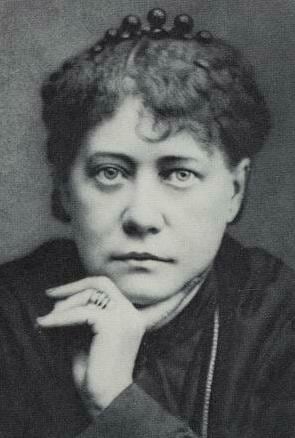
Helena Blavatsky
Ils concordent sur: Sommes-nous libres ou tout est-il déterminé ? · Qui suis-je ? Existe-t-il un vrai soi ? · Pourquoi souffrons-nous ?
Pense autrement que
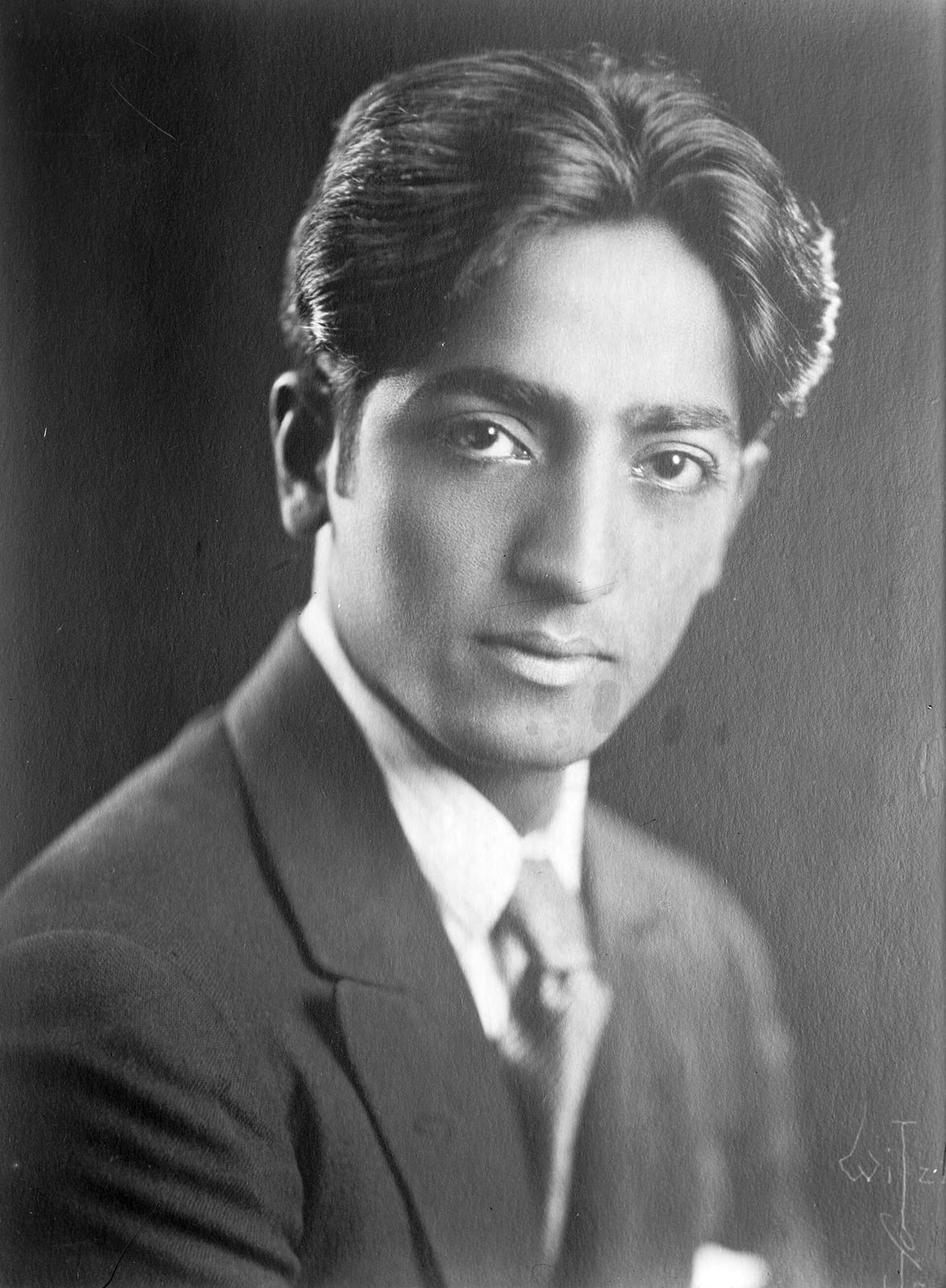
Jiddu Krishnamurti
Ils s'opposent sur: Comment atteint-on la libération ou le salut ? · Faut-il un maître ?

Nikolai Berdyaev
Ils s'opposent sur: Que se passe-t-il après la mort ? · Faut-il un maître ?
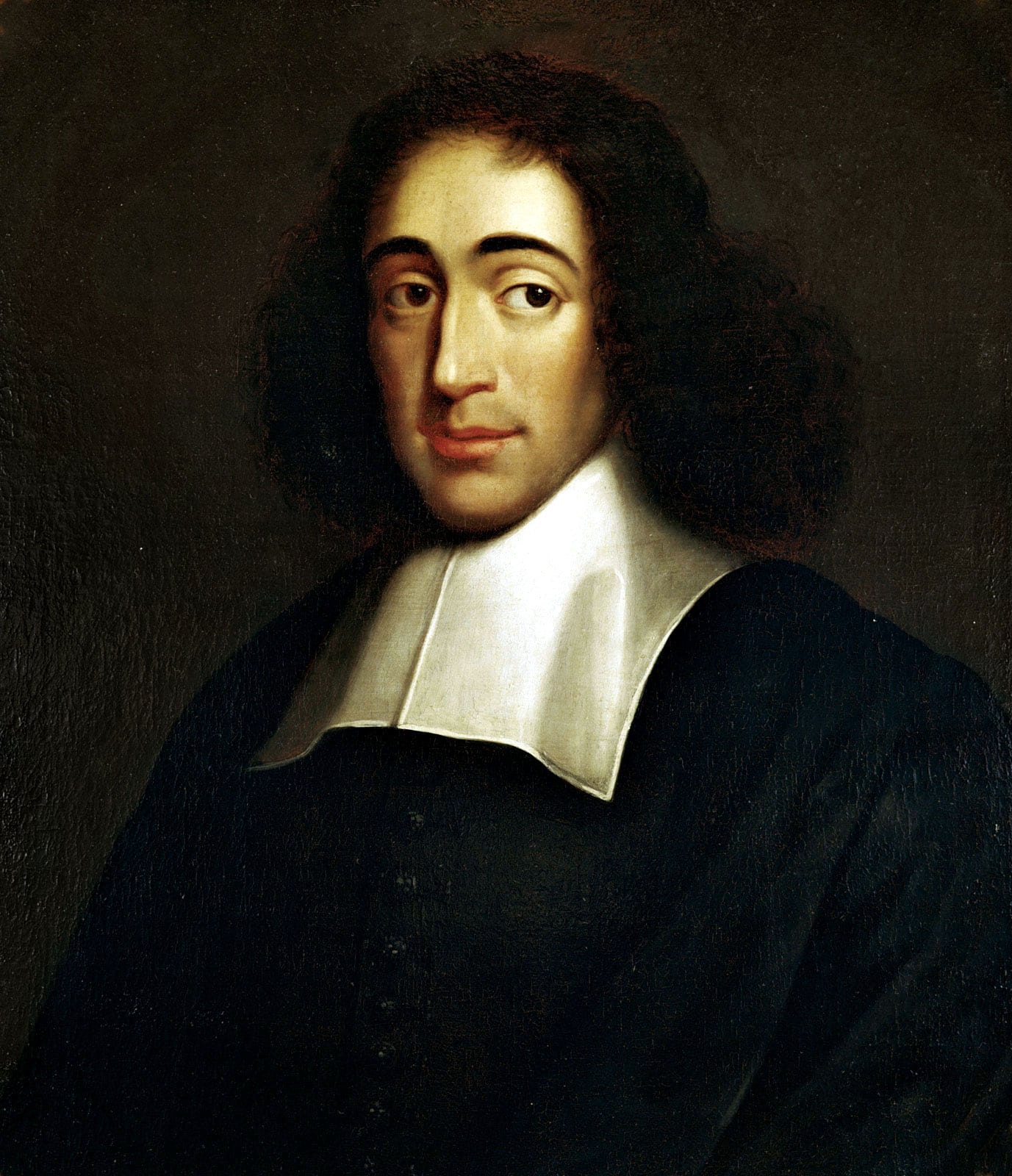
Baruch Spinoza
Ils s'opposent sur: Faut-il un maître ?
Alan Watts
Ils s'opposent sur: Comment atteint-on la libération ou le salut ? · Faut-il un maître ?
Ils s'opposent surContradiction apparente
Paramahansa Yogananda · Nisargadatta Maharaj
The lineage that transmits and the guru within: two grateful disciples
Pourquoi: The contradiction is apparent because both describe the same relationship from opposite ends. Both had a decisive guru and both belonged to a lineage with initiation; they differ in where they place the emphasis. Yogananda writes for Western readers to whom he wants to present a living tradition and an organisation, Self-Realization Fellowship, that guarantees transmission; hence he stresses lineage. Nisargadatta speaks to seekers who came to his home in Bombay with years of accumulated practices, and he urges them not to depend on anyone, himself included. The Hindu tradition knows this double face well: the outer master points to the inner one, which is the Self.
Ils concordent sur
Paramahansa Yogananda · Jesus of Nazareth
Christ consciousness: a yogi comments on the Gospels
Pourquoi: The relationship is documented in one direction: Yogananda read and commented on the Gospels and presented Jesus as a realised master. His reading, however, is yogic and Vedantic: he distinguishes the historical Jesus from a universal Christ consciousness, reads some passages in terms of reincarnation and meditative technique, and conceives God as having a formless ground besides a personal face. None of this appears in the Synoptics, which present a first-century Jew who presupposes the God of Israel and announces his Kingdom, and Christian theology rejects reincarnation. They agree on the way of praying, not on the doctrine surrounding it.
Ils concordent sur
Paramahansa Yogananda · Sadhguru
Yoga as a testable science: from kriya to inner engineering
Pourquoi: They converge because they share a strategy for presenting yoga to global audiences, inaugurated at the end of the nineteenth century: translating an initiatory tradition into the language of science and efficacy, for readers who distrust dogma. There is no relation between them and their lineages are different. They differ in theology: Yogananda is intensely devotional, speaks to God as Divine Mother and comments on the Gospels; Sadhguru prefers an impersonal language, in which the ultimate is a dimension of life accessed through experience. The claims of both about the effects of their techniques are doctrinal: the library sets them out, it does not verify them.
Anecdotes et récits
Anecdotes et récits
Témoignage1910
The meeting in a Benares lane
Origine du récit: Single source: Yogananda himself, Autobiography of a Yogi (1946), ch. 10, "I Meet My Master, Sri Yukteswar". There is no independent testimony of the meeting; the 1910 date is confirmed by the biographies (Goldberg, 2018).
Témoignage1935
Gandhi's kriya at Wardha
Origine du récit: Autobiography of a Yogi (1946), ch. 44, "With Mahatma Gandhi at Wardha", which reproduces Wright's travel notes. Photographs of Yogananda with Gandhi survive (Wikimedia Commons). No mention of the initiation is known in Gandhi's own writings.
Témoignage1935
The stigmatic of Konnersreuth
Origine du récit: Autobiography of a Yogi (1946), ch. 39, "Therese Neumann, the Catholic Stigmatist". The visit is plausible and fits the known itinerary; the claims about inedia are Neumann's and her circle's, unverified.
Récit hagiographique1936
Sri Yukteswar's 'resurrection'
Origine du récit: Autobiography of a Yogi (1946), ch. 43, "The Resurrection of Sri Yukteswar". No other testimony exists; classified as a hagiographic, visionary account.
Témoignage1952
'My India' at the Biltmore
Origine du récit: An account by SRF witnesses published in Self-Realization (May–June 1952) and in Paramahansa Yogananda: In Memoriam (1958); the current institutional version is YSS, "Final Years and Mahasamadhi". The medical cause comes from the death certificate cited by Time.
Source: Self-Realization Fellowship. Paramahansa Yogananda: In Memoriam. Los Ángeles: Self-Realization Fellowship, 1958 (reproduce la carta notarial de Harry T. Rowe, director de la funeraria de Forest Lawn, publicada antes en Self-Realization, mayo-junio de 1952).
Contesté1952
The 'incorrupt' body: origin of the story
Origine du récit: Primary source: Harry T. Rowe's letter in Self-Realization (May–June 1952) and in Paramahansa Yogananda: In Memoriam (SRF, 1958); reported by Time (4 August 1952). Critique: Harry Edwards (1995) and David C. Lane's summary in Integral World. SRF continues to present the case as a sign of sanctity.
Source: Self-Realization Fellowship. Paramahansa Yogananda: In Memoriam. Los Ángeles: Self-Realization Fellowship, 1958 (reproduce la carta notarial de Harry T. Rowe, director de la funeraria de Forest Lawn, publicada antes en Self-Realization, mayo-junio de 1952).
Documenté1990–2002
SRF v. Ananda: twelve years in court
Origine du récit: Court decisions: 59 F.3d 902 (9th Cir. 1995) and 206 F.3d 1322 (9th Cir. 2000); 2002 verdict as reported by The Union (Grass Valley). Partisan account: Ananda Sangha. The $29,000 figure comes from the press and Wikipedia ("Kriyananda").
Enseignements
Enseignements
Les notions qui structurent sa pensée, expliquées dans leur contexte.
Kriya yogakriya-yoga
Autobiography of a Yogi, ch. 26; God Talks with Arjuna; SRF Lessons.
Self-realizationself-realization
Autobiography of a Yogi; Man's Eternal Quest; SRF v. Ananda litigation.
Source: Self-Realization Fellowship, sitio oficial (biografía, Forest Lawn, publicaciones).
Christ consciousness and the unity of Krishna and Christchrist-consciousness
The Second Coming of Christ; God Talks with Arjuna; The Yoga of Jesus.
Energization (Yogoda)energization
Yogoda booklets (1925); Autobiography of a Yogi; SRF Lessons; Foxen (2017).
Source: Foxen, Anya P. Biography of a Yogi: Paramahansa Yogananda and the Origins of Modern Yoga. Nueva York: Oxford University Press, 2017.
The world as a cosmic motion picturecosmic-motion-picture
Autobiography of a Yogi, ch. 30 ("The Law of Miracles"); Why God Permits Evil and How to Rise Above It.
The SRF line of gurusguru-parampara-srf
Autobiography of a Yogi, chs. 33–36; Goldberg (2018).
Retraites
Retraites et centres
Lieux et rencontres liés à son enseignement. Nous vous mettons en relation avec ceux qui les organisent.
Encinitas, California · Estados Unidos
SRF How-to-Live retreats in Encinitas
Self-Realization Fellowship
Encinitas was one of Yogananda's most beloved places: here is the Hermitage where he wrote much of Autobiography of a Yogi, beside gardens on the Pacific cliffs. Self-Realization Fellowship runs its How-to-Live retreat centre in this setting, silent retreats intended, in the teacher's words, as a dynamo of silence where one may be recharged by the Infinite. Guests join the monastics for morning and evening meditation and may attend classes and receive spiritual counselling. There are personal retreats as well as conducted weekends with a more concentrated schedule on the teachings and techniques.
Pacific Palisades, Los Ángeles, California · Estados Unidos
Lake Shrine: SRF meditation gardens
Self-Realization Fellowship
Lake Shrine is the sanctuary Yogananda dedicated in 1950 beside a small natural lake in Pacific Palisades, a few minutes from the Pacific. Its meditation gardens, open to people of every faith, are designed for quiet recollection, and its temple holds Sunday meditation and inspirational services. After the January 2025 fire in the area, the gardens have reopened by advance reservation while recovery continues, but the retreat house remains closed until further notice. It is one of the most visited of the places the teacher founded during his lifetime, and a gentle introduction to his spirit.
Estudio en casa (correo postal y aplicación) · Internacional
Self-Realization Fellowship Lessons
Self-Realization Fellowship
The Self-Realization Fellowship Lessons are the home-study course Yogananda himself prepared to pass on his teaching to those who could not be with him. The basic series teaches three techniques: the Energization Exercises, the Hong-Sau Technique of Concentration and the Aum Technique of Meditation, together with guidance on prayer, affirmation and daily life. After the first months the student may apply for Kriya Yoga initiation. They arrive by post and through an app, and include access to spiritual counselling from the order's monastics, who remain the custodians of his method.
Ranchi, Jharkhand (y ashrams en Dakshineswar, Noida, Dwarahat y Chennai) · India
Yogoda Satsanga Society: Ranchi ashram and sadhana sangams
Yogoda Satsanga Society of India
Yogoda Satsanga Society of India is the organisation Yogananda founded in India in 1917, the sister society of Self-Realization Fellowship. Its Ranchi ashram grew out of the boys' school the young yogi opened there, and preserves places connected with his life. Together with the ashrams at Dakshineswar, Noida, Dwarahat and Chennai, it organises retreats and sadhana sangams, gatherings of intensive practice with group meditations and classes given by monastics of the order. It is the reference path in India for studying his Lessons, which are available in English and in several Indian languages.
Vidéos
Vidéos
Enregistrements, entretiens et documentaires. Les vidéos sont lues depuis YouTube ; elles ne sont pas hébergées ici.
Paramahansa Yogananda on the Dream-Nature of the World
Enregistrement original· EN· 5 min
Self-Realization FellowshipChaîne officielle
Paramahansa Yogananda on How to Destroy Suffering by Its Roots
Enregistrement original· EN· 3 min
Self-Realization FellowshipChaîne officielle
Paramahansa Yogananda on Karma
Enregistrement original· EN· 5 min
Self-Realization FellowshipChaîne officielle
God Is as Real as You Are | Paramahansa Yogananda
Conférence· EN· 4 min
Self-Realization FellowshipChaîne officielle
AWAKE: The Life of Yogananda – Theatrical Trailer
Documentaire· EN· 2014· 2 min
Self-Realization FellowshipChaîne officielle
Trailer Oficial Español – Awake: La Vida de Yogananda
Documentaire· ES· 2014· 1 min
AntropoDocs & Films
Yogananda // Official Trailer (HD) – French Version
Documentaire· FR· 2014· 2 min
Jupiter Films
Il Sentiero della Felicità – Awake, The Life of Yogananda – Trailer Ufficiale
Documentaire· IT· 2014· 2 min
Cineama
Celebrating Yogananda's Founding of the SRF International Headquarters 100 Years Ago
Conférence· EN· 2025· 79 min
Self-Realization FellowshipChaîne officielle
«Karunamay Gurudeva» — Kirtan Chanting by the Sannyasis of Yogoda Satsanga Society of India
Enregistrement de tiers· HI· 7 min
Yogoda Satsanga Society of IndiaChaîne officielle
Energization Exercises of Paramhansa Yogananda
Enregistrement de tiers· EN· 17 min
The Expanding Light Retreat
Galerie
Galerie
Images dont la licence a été vérifiée. Chacune conserve son auteur et son attribution.
Relations
Relations
Influences, filiations et affinités. On distingue la relation documentée de la similitude identifiée par analyse.
Disciple de
His guru from 1910 to 1936; ordained him swami in 1915 and gave him the title of paramahansa in 1935.
Relation documentée
A reçu l'influence de
Lahiri Mahasaya
Teacher of his parents and of Sri Yukteswar; Yogananda spread his kriya yoga.
Relation documentée
A reçu l'influence de
He devoted his major Gospel commentary to him and placed him in the SRF lineage alongside Krishna.
Relation documentée
A reçu l'influence de
He identifies kriya yoga with the pranayama of the Yoga Sutras and quotes Patañjali when explaining it.
Relation documentée
A rencontré
Visited him at Tiruvannamalai in late November 1935 with his secretary C. R. Wright; the visit is recorded in Talks with Sri Ramana Maharshi and in photographs. The first edition of the Autobiography does not mention it.
Relation documentée
A rencontré
Mahatma Gandhi
Spent several days at Wardha in August 1935 and, by his account, initiated him into kriya yoga.
Relation documentée
A rencontré
Meeting in 1936 in Calcutta, narrated in the Autobiography (ch. 45) and photographed.
Relation documentée
A rencontré
Therese Neumann
Visit at Konnersreuth (Bavaria) in July 1935.
Relation documentée
A rencontré
Rabindranath Tagore
Meeting at Santiniketan, where they compared their schools (Autobiography, ch. 29).
Relation documentée
A rencontré
Luther Burbank
Friendship with the Santa Rosa botanist, who received kriya initiation from him; he dedicated the Autobiography to him (ch. 38 and dedication).
Relation documentée
Maître de
Swami Kriyananda (J. Donald Walters)
Disciple from 1948; removed from SRF in 1962, he founded Ananda in 1968.
Relation documentée
Maître de
Sri Daya Mata
Disciple from 1931 and president of SRF from 1955 to 2010; witness of his death.
Relation documentée
Idées proches de
Both presented yoga to the West as a universal science of religion; Yogananda reached the United States a quarter of a century later.
Similitude identifiée par analyse
Contemporain de
Bengali contemporaries with spiritual readings of the Gita and of the evolution of consciousness; no meeting is recorded.
Similitude identifiée par analyse
Sources
Sources
Bibliographie et catalogues consultés pour cette fiche.
- Yogananda, Paramhansa. Autobiography of a Yogi. Nueva York: The Philosophical Library, 1946 (1.ª ed.; texto en Project Gutenberg #7452).
- Goldberg, Philip. The Life of Yogananda: The Story of the Yogi Who Became the First Modern Guru. Carlsbad (California): Hay House, 2018.
- Wikidata, «Paramahansa Yogananda» (Q312549): nacimiento 05-01-1893 en Gorakhpur, muerte 07-03-1952 en Los Ángeles, sepultura en Forest Lawn (Glendale); 84 enlaces entre wikis.
- Yogananda, Swami. The Science of Religion. Los Ángeles: Yogoda and Sat-Sanga Headquarters, 4.ª ed., septiembre de 1925 (copyright 1924; 1.ª ed. en la India). Ejemplar digitalizado en Internet Archive.
- Self-Realization Fellowship. Paramahansa Yogananda: In Memoriam. Los Ángeles: Self-Realization Fellowship, 1958 (reproduce la carta notarial de Harry T. Rowe, director de la funeraria de Forest Lawn, publicada antes en Self-Realization, mayo-junio de 1952).
- Time, 4 de agosto de 1952: nota sobre la carta de Harry T. Rowe (Forest Lawn Memorial-Park) acerca del cuerpo de Yogananda.
- Wikipedia (en), «Paramahansa Yogananda», consultada el 2026-10-23 (secciones Death, Lawsuits; resumen de los párrafos de la carta de Rowe sobre el embalsamamiento y la mancha en la nariz).
- Kriyananda, Swami (J. Donald Walters). The Path: Autobiography of a Western Yogi. Nevada City (California): Ananda Publications, 1977; reeditado como The New Path, Crystal Clarity, 2009.
- Self-Realization Fellowship Church v. Ananda Church of Self-Realization, 59 F.3d 902 (9th Cir. 1995), y decisión del Noveno Circuito de 23 de marzo de 2000 (n.º 97-17407) sobre los derechos de autor de las obras de Yogananda.
- «Jury: Copyrights violated by church», The Union (Grass Valley, California), 2002 (veredicto del jurado en el pleito SRF contra Ananda).
- Ananda Sangha, «Self-Realization Fellowship vs. Ananda: Religious Freedom Lawsuit 1990-2002» (versión de una de las partes).
- Self-Realization Fellowship, sitio oficial (biografía, Forest Lawn, publicaciones).
- Yogoda Satsanga Society of India, sitio oficial.
- Open Library, registros de ediciones de Paramahansa Yogananda (consultados por ISBN).
- Foxen, Anya P. Biography of a Yogi: Paramahansa Yogananda and the Origins of Modern Yoga. Nueva York: Oxford University Press, 2017.
- Wikimedia Commons, metadatos de licencia de las fotografías de Paramahansa Yogananda (API imageinfo) y Library of Congress, National Photo Company Collection (LCCN 2016842956).
- Yogananda, Swami. Songs of the Soul. Los Ángeles: Yogoda Sat-Sanga, 1923. Ejemplar digitalizado en Internet Archive.
- Williamson, Lola. Transcendent in America: Hindu-Inspired Meditation Movements as New Religion. Nueva York: New York University Press, 2010.
- Lane, David C. «The Incorruptible Body of Paramahansa Yogananda» (Integral World), que resume y cita el artículo de Harry Edwards «Incorruptibility: Miracle or Myth?» (noviembre de 1995) y las gestiones del profesor Angel ante el registro civil de Los Ángeles (certificado de defunción firmado por el embalsamador Kenneth I. Johnson).
- Self-Realization Fellowship Church v. Ananda Church of Self-Realization, 206 F.3d 1322 (9th Cir., 23 de marzo de 2000): los escritos y conferencias de Yogananda no eran «obras por encargo»; cuestión de las cesiones devuelta a juicio.
- Wikipedia (en), «Kriyananda» (salida de SRF en 1962, fundación de Ananda en 1968, pleito SRF contra Ananda 1990-2002 y su desenlace), consultada el 2026-10-25.
- Wikipedia (en), «Paramahansa Yogananda bibliography» (catálogo de títulos de SRF y YSS), consultada el 2026-10-25.
- Self-Realization Fellowship Bookstore, catálogo de libros de Paramahansa Yogananda.
- Crystal Clarity Publishers (editorial de Ananda), catálogo de obras de Paramhansa Yogananda, incluida la reimpresión de la primera edición de 1946 de Autobiography of a Yogi.
- Yogoda Satsanga Society of India, «Final Years and Mahasamadhi» (versión institucional de los últimos años, del banquete del Biltmore y de la carta de Forest Lawn).
- Venkataramiah, Munagala (Swami Ramanananda Saraswati), ed. Talks with Sri Ramana Maharshi. Tiruvannamalai: Sri Ramanasramam, 1955 (conversaciones anotadas entre 1935 y 1939; incluye la visita de Yogananda y de su secretario C. R. Wright a finales de 1935).
- Yogoda Satsanga Society of India, librería en línea: fichas de «Who Made God?» (ISBN 9788189535360), «Developing Dynamic Will», «Awake in the Cosmic Dream» (grabación del 5 de enero de 1952, ℗ 1987 SRF), «The Great Light of God» (grabación del 23 de diciembre de 1951, ℗ 1993 SRF) y «Self-Realization: The Inner and the Outer Path» (grabación del 25 de diciembre de 1950, ℗ 2002/2004 SRF). Consultadas el 2026-10-25.
- Ayant droit
- Self-Realization Fellowship (Los Ángeles) y, en la India, Yogoda Satsanga Society of India, como herederas de Yogananda; el jurado de 2002 confirmó la titularidad de SRF. La primera edición de 1946 de Autobiography of a Yogi está en dominio público en EE. UU.
- Site officiel
- yogananda.org/
En attente de confirmation
Ce que cette fiche n'a pas encore pu établir. Nous préférons le dire plutôt que de combler.
- Anotado (2026-10-25): Folletos de YSS publicados solo en la India (The Art of Living, Developing Dynamic Will, Man's Greatest Adventure, Nervousness: Cause and Cure, Seek God Now, Who Made God?, Habit—Your Master or Your Slave?, etc.; una decena según Wikipedia «Paramahansa Yogananda bibliography»): no registrados uno a uno. → agrupados en la obra «yss-booklets» con tres ediciones verificadas; faltan ISBN verificados de The Art of Living, Increasing the Power of Initiative, Habit, Man’s Greatest Adventure y Seek God Now (Open Library no los registra y Google Books tenía la cuota agotada).
- Revistas East-West (1925-1934) e Inner Culture (1934-1942): primera publicación de muchos textos; no se tratan como obras.
- Confirmar ISBN de Solving the Mystery of Life (SRF, 2025) y de Cosmic Chants en español.
- Fecha exacta del primer encuentro con Calvin Coolidge (enero o febrero de 1927 según las fuentes).
- Cotejar el texto íntegro de la carta de Harry T. Rowe (In Memoriam, 1958) para citar literalmente la fecha de la carta y la mención del embalsamamiento.
- Obras de Swami Kriyananda basadas en Yogananda (Conversations with Yogananda, The Essence of the Bhagavad Gita, Revelations of Christ): pertenecen a la ficha de Kriyananda, no se registran aquí como obras de Yogananda.
- Sala de lectura (2026-10-25): los cuatro textos registrados (Autobiography 1946, The Science of Religion 1925, Songs of the Soul 1923, Whispers from Eternity 1929) son dominio público en EE. UU. y en la UE, pero no en España hasta el 1-1-2033 (80 años desde 1952): van con caution. Revisar entonces.
- Sala de lectura: Metaphysical Meditations (1932) y Scientific Healing Affirmations (1924) podrían ser dominio público en EE. UU.; no se ha localizado un texto completo con OCR limpio.
- Grabaciones de su voz: además de las tres añadidas y Beholding the One in All, SRF edita otras charlas grabadas (catálogo de la librería de SRF/YSS); inventariar la serie completa.
Recherche effectuée le 2026-10-25