Hindouisme · Non-dualité contemporaine · Advaita Vedanta
Nisargadatta Maharaj
निसर्गदत्त महाराज
v. 1897 – 1981Personne historiquement documentée
Maître indien de la non-dualité, né Maruti Shivrampant Kambli, qui vendit des bidis à Bombay pendant des décennies et enseigna depuis une petite mezzanine de Khetwadi. Disciple de Siddharameshwar Maharaj, de la lignée Navnath d'Inchegiri, il résuma la voie en une attention au sentiment « je suis » jusqu'à le transcender. Ses entretiens en marathi, traduits par Maurice Frydman dans I Am That (1973), lui valurent une renommée mondiale ; les volumes de ses dernières années radicalisèrent l'enseignement vers l'absolu, antérieur à la conscience.
- œuvres
- 21œuvres
- éditions
- 48éditions
- citations
- 6citations
- vidéos
- 10vidéos
- images
- 3images
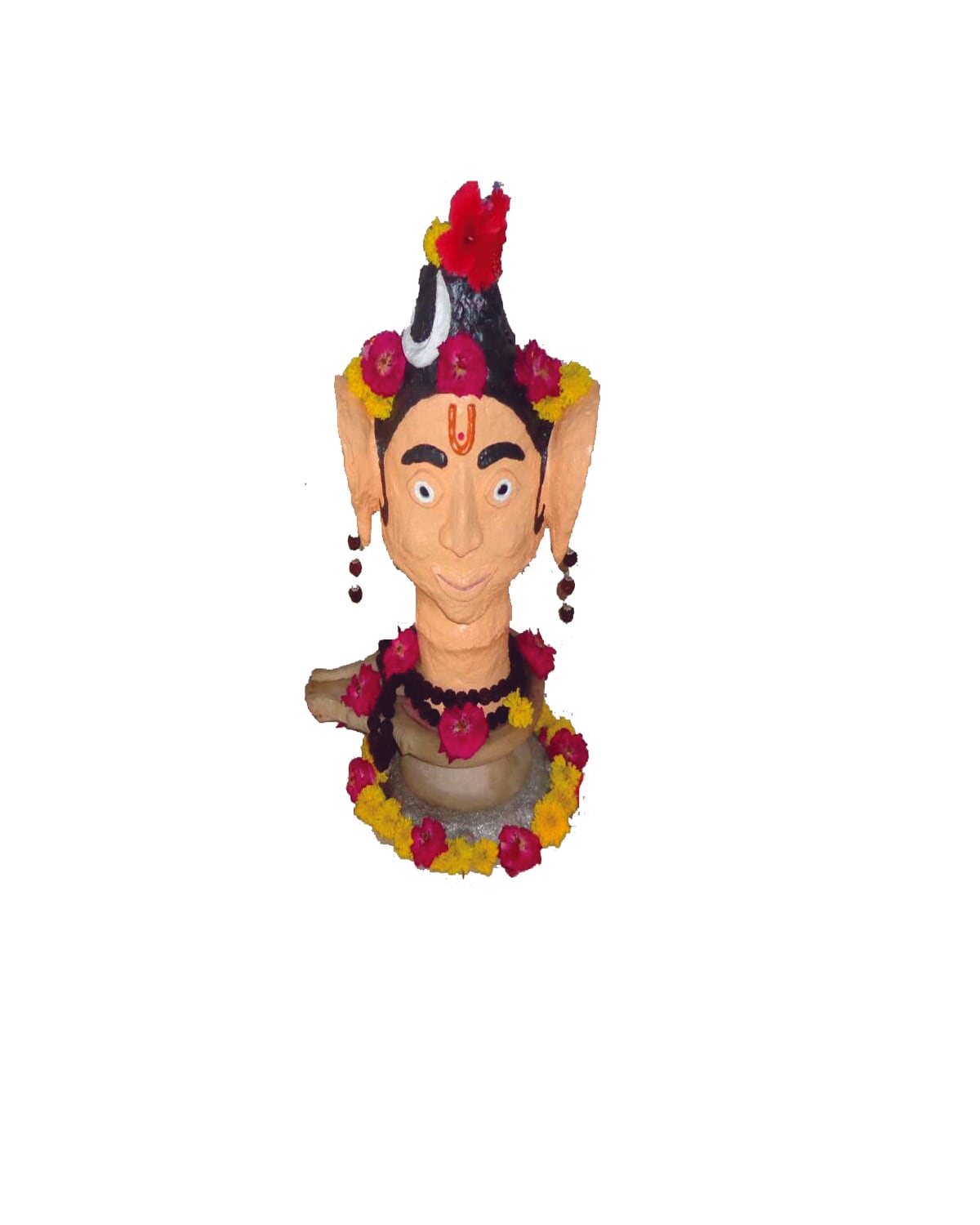
Imagen devocional de Nisargadatta Maharaj · CC BY-SA 4.0
Dans ses propres mots
«Establish yourself firmly in the awareness of 'I am'. This is the beginning and also the end of all endeavour.»I Am That, cap. 16, «Desirelessness, the Highest Bliss»

Son idée centrale
The starting point is neither a belief nor a technique but the most immediate fact of experience: the feeling of existing, prior to any idea of who one is. Abiding in it, separating it from everything added to it—body, name, history—is for Nisargadatta the whole practice.
Le voir en contexte
Biographie
5 min de lecture
Traduction assistée à partir de l'original espagnol, en attente de relecture par un traducteur natif.
Un garçon sans école
Rien dans la vie de Maruti Shivrampant Kambli ne laissait prévoir qu'il deviendrait l'un des maîtres de la non-dualité les plus lus du XXe siècle. Même sa date de naissance est incertaine : la tradition la situe en 1897, à la pleine lune de Hanuman Jayanti — d'où le prénom de Maruti, autre nom de Hanuman —, que l'on fixe d'ordinaire au 17 avril, bien que la notice biographique de I Am That rapporte que ses proches parlaient du mois de mars. Lui-même, interrogé sur ce point, répondait qu'il n'était jamais né. Son père, Shivrampant, avait été domestique à Bombay, puis avait cultivé une petite propriété à Kandalgaon, dans l'arrière-pays du district de Ratnagiri (aujourd'hui Sindhudurg), sur la côte du Maharashtra. Maruti fréquenta à peine l'école : il gardait le bétail, menait les bœufs, faisait les courses. La famille appartenait à la piété vārkarī, vouée à Vithoba, et un voisin brahmane, Vishnu Haribhau Gore, lui parla de religion avec un sérieux que l'enfant n'oublia pas.
Bombay et la boutique de bidis
À la mort de son père, vers 1915, il suivit son frère aîné à Bombay. Il travailla quelques mois comme commis aux écritures, puis y renonça ; il ouvrit ensuite une petite mercerie où il vendait des vêtements d'enfant, du tabac et des bidis, les cigarettes indiennes roulées à la main. L'affaire prospéra au point de compter plusieurs boutiques. En 1924, il épousa Sumatibai, dont il eut un fils et trois filles. C'était, selon les mots de son éditeur Sudhakar S. Dikshit, la vie ordinaire d'un homme ordinaire.
« Demeure dans le sentiment “je suis” »
En 1933, un ami, Yashwantrao Baagkar, le conduisit auprès de son maître, Siddharameshwar Maharaj, de la lignée d'Inchegiri, une branche de la Navnath Sampradaya fondée par Bhausaheb Maharaj. Siddharameshwar lui donna un mantra et une instruction qu'il résumerait bien des années plus tard avec une simplicité désarmante : tu n'es pas ce que tu crois être ; veille sur le sentiment « je suis » et ne prête attention à rien d'autre. Maruti suivit la consigne à chaque moment libre, assis en silence. D'après son propre témoignage, trois ans lui suffirent pour comprendre sa vraie nature. Siddharameshwar mourut le 9 novembre 1936. Avec le temps, on le connut sous le nom de Nisargadatta, que l'on peut comprendre comme « celui qui s'est donné au naturel » ou « celui qui demeure dans l'état naturel » ; les sources ne s'accordent pas sur la date et les circonstances de son adoption.
Le pèlerinage interrompu
En 1937, il quitta sa famille et sa boutique et partit pieds nus vers l'Himalaya, avec l'intention d'y passer le reste de sa vie. Le pèlerinage dura environ huit mois. En chemin, racontait-il, il comprit l'inutilité de chercher ce qu'il possédait déjà, et il revint à Bombay. Le récit d'un condisciple qui l'aurait convaincu de reprendre sa vie de chef de famille relève de la tradition orale du cercle. Il retourna à la boutique, mais dès lors, dit Dikshit, il cessa d'être un commerçant soucieux du profit. Les années suivantes furent dures : sa femme mourut en 1942 et une de ses filles en 1948.
La mezzanine de Khetwadi
À partir de 1951, à la suite de ce qu'il décrivit comme une indication intérieure de son maître, il commença à donner l'initiation. Il vivait dans un appartement modeste d'une rue populaire de Khetwadi, au centre de Bombay, et, pour recevoir les visiteurs, il fit aménager une petite mezzanine, une pièce basse où quelques dizaines de personnes pouvaient s'asseoir par terre. En 1966, il se retira du commerce. Là, deux fois par jour, il répondait aux questions en marathi ; entre deux séances, on chantait les bhajans de la lignée. Il n'écrivit aucun traité et ne fonda aucune institution. Il parlait avec rudesse, interrompait, fumait des bidis et congédiait sans ménagement quiconque venait chercher une consolation, des expériences ou un nouveau système de croyances.
Maurice Frydman et I Am That
Sa renommée hors de l'Inde porte un nom : Maurice Frydman, ingénieur juif polonais arrivé en Inde dans les années 1930, qui avait participé à l'expérience d'autonomie villageoise d'Aundh, inspirée par Gandhi, et fréquenté Ramana Maharshi et Krishnamurti. Frydman parlait le marathi et devint son disciple en 1965. Il traduisit les entretiens — certains enregistrés sur bande, souvent dans un mélange de langues — et les organisa en cent une sections. Publié à Bombay par Chetana en 1973, en deux volumes et sous la direction de Dikshit, I Am That (en français Je suis) devint un classique : des lecteurs du monde entier se mirent à chercher cette rue de Khetwadi. Frydman mourut en 1976 ; l'édition révisée en un seul volume ajouta en postface son essai « Nisarga Yoga ».
Au-delà du « je suis »
Dans les dernières années, le ton de l'enseignement changea. Les entretiens enregistrés entre 1979 et 1981 et traduits par des interprètes comme Saumitra Mullarpattan ou Ramesh Balsekar — édités ensuite par Jean Dunn et Robert Powell — insistent sur le fait que la conscience, le « je suis » lui-même, est un produit passager du corps fait de nourriture, une sorte de maladie qui apparaît et disparaît ; le réel est l'absolu, antérieur à la conscience. Au cours de ses deux dernières années, il souffrit d'un cancer de la gorge. Il continua de recevoir des visiteurs tant qu'il put parler. Il mourut chez lui, à Bombay, le 8 septembre 1981.
Un héritage sans organisation
Nisargadatta n'a pas laissé d'institution comparable à celles d'autres maîtres indiens ; il a laissé des livres. Aucun n'est de sa main : tous sont des transcriptions, des traductions et des sélections faites par d'autres, et l'écart entre le ton plus ample de I Am That et la radicalité des derniers volumes reflète autant son évolution que celle de ses interprètes. Son influence sur ce qu'on appelle la non-dualité contemporaine est immense : Ramesh Balsekar, Jean Dunn, Stephen Wolinsky et bien des maîtres occidentaux ultérieurs se sont reconnus dans son enseignement.
Sources: Nisargadatta Maharaj. I Am That: Talks with Sri Nisargadatta Maharaj. Trad. Maurice Frydman; ed. Sudhakar S. Dikshit. Bombay: Chetana, 1973 (2 vols.); 2.ª ed. revisada en un volumen, 1976. Incluye la nota biográfica de Dikshit y el epílogo «Nisarga Yoga» de Frydman. · Nisargadatta Maharaj. Prior to Consciousness: Talks with Sri Nisargadatta Maharaj. Ed. Jean Dunn. Durham (Carolina del Norte): The Acorn Press, 1985; y Seeds of Consciousness, ed. Jean Dunn, Nueva York: Grove Press, 1982. · Nisargadatta Maharaj. The Ultimate Medicine, ed. Robert Powell (San Diego: Blue Dove Press, 1994); The Experience of Nothingness (1996) y The Nectar of the Lord's Feet / The Nectar of Immortality (Element, 1987; Blue Dove, 1996).
Chronologie
La vie, année après année
Chaque point est un événement documenté. Cliquez pour le lire, avec sa source et son degré de certitude.
v. 18970 ansBombay / Kandalgaon
Birth of Maruti Kambli
Born on Hanuman Jayanti according to family tradition; the exact date is undocumented (the note in I Am That speaks of March).
ProbableWikidata, «Nisargadatta Maharaj» (Q175532): nacimiento 17-04-1897 y muerte 08-09-1981 en Bombay; 30 enlaces entre wikis.
v. 1897 · 0 ans
Birth of Maruti Kambli
Born on Hanuman Jayanti according to family tradition; the exact date is undocumented (the note in I Am That speaks of March).
Probable
v. 1915 · 18 ans
Arrival in Bombay
After his father's death he follows his elder brother to Bombay; works as a clerk and opens a shop selling clothes, tobacco and bidis.
Documenté
1924 · 27 ans
Marriage to Sumatibai
Marries Sumatibai; they will have a son and three daughters.
Documenté
1933 · 36 ans
Meeting Siddharameshwar Maharaj
His friend Yashwantrao Baagkar takes him to Siddharameshwar Maharaj, who gives him a mantra and the instruction to attend to the sense "I am".
Documenté
9 novembre 1936 · 39 ans
Death of Siddharameshwar
His teacher dies. Nisargadatta would say three years of practice were enough for him to understand his true nature.
Documenté
1937 · 40 ans
The interrupted pilgrimage
Leaves family and shop and sets out barefoot for the Himalayas; returns some eight months later convinced of the futility of seeking what he already had.
Probable
1942 · 45 ans
Death of his wife
Sumatibai dies; in 1948 one of his daughters will also die.
Documenté
1951 · 54 ans
First initiations
Begins initiating disciples in the Inchegiri lineage, after what he described as an inner prompting from his teacher.
Documenté
1963 · 66 ans
Self Knowledge and Self Realisation
His first booklet in English is published in Bombay.
Documenté
1965 · 68 ans
Maurice Frydman becomes a disciple
The Polish engineer, who spoke Marathi, becomes a disciple and begins translating and recording the conversations.
Documenté
1966 · 69 ans
Retirement from trade
Gives up the shop and devotes himself to receiving visitors in his Khetwadi flat, with two sessions a day.
Documenté
1973 · 76 ans
Publication of I Am That
Chetana publishes in two volumes the conversations translated by Frydman and edited by Sudhakar S. Dikshit; foreign visitors begin to arrive.
Documenté
1976 · 79 ans
Second edition and Frydman's death
The revised one-volume edition appears, with the epilogue "Nisarga Yoga"; Frydman dies that year.
Documenté
1979 · 82 ans
The final conversations
Between 1979 and 1981 the talks later edited by Jean Dunn and Robert Powell are recorded, centred on the absolute prior to consciousness.
Documenté
8 septembre 1981 · 84 ans
Death
Dies at his Khetwadi home from throat cancer.
Documenté
Œuvres
Œuvres essentielles
Les œuvres sans lesquelles on ne comprend pas son héritage.
Enseignement oral recueilli · 1973
I Am That
I Am That: Talks with Sri Nisargadatta Maharaj
A hundred and one conversations with Indian and foreign visitors, held mostly in the late 1960s and early 1970s in his Khetwadi flat. Through concrete questions—suffering, death, desire, the guru, practice—Nisargadatta leads again and again to the same point: the sense "I am" as the entrance and the understanding that one is nothing one perceives. The tone is direct, sometimes abrupt, and the clarity of Frydman's translation explains why it has become one of the reference texts of contemporary Advaita, read across all traditions.
7 éditions · amazon.fr

Enseignement oral recueilli · 1985
Prior to Consciousness
Prior to Consciousness: Talks with Sri Nisargadatta Maharaj
The conversations of the last eighteen months, when the cancer was already advanced. The master shifts the emphasis from the "I am" to what precedes it: consciousness is a passing product of food and body, and the absolute does not know that it is. Many answers are dry and polemical; the book also shows how he received visitors and how he rejected practices turned into routine. Alongside I Am That, it is the most read book for knowing his mature teaching.
4 éditions · amazon.com

Enseignement oral recueilli · 1994
The Ultimate Medicine
The Ultimate Medicine: As Prescribed by Sri Nisargadatta Maharaj
Dialogues of the last two years centred on the "medicine" that cures identification with the body: understanding that the sense of being is a passing state and remaining its witness until it dissolves. It includes exchanges with Western visitors and direct references to his illness, which he treated with detachment. It is one of the most quoted titles of his final period.
6 éditions · amazon.fr
Toute son œuvre (21)

Self Knowledge and Self Realisation
1963

Pointers from Nisargadatta Maharaj
1982

Seeds of Consciousness
1982
Nisargadatta Maharaj
The Blissful Life
The Conscious LibraryThe Blissful Life
1984

The Nectar of the Lord's Feet
1987

Consciousness and the Absolute
1994

The Experience of Nothingness
1996
Nisargadatta Maharaj
Atmasparsha (Marathi talks)
The Conscious LibraryAtmasparsha (Marathi talks)
1992

The Wisdom-Teachings of Nisargadatta Maharaj: A Visual Journey
2003
Nisargadatta Maharaj
Gleanings from Nisargadatta
The Conscious LibraryGleanings from Nisargadatta
2006
Nisargadatta Maharaj
Beyond Freedom
The Conscious LibraryBeyond Freedom
2007
Nisargadatta Maharaj
I Am Unborn
The Conscious LibraryI Am Unborn
2007
Nisargadatta Maharaj
The Nisargadatta Gita
The Conscious LibraryThe Nisargadatta Gita
2008
Nisargadatta Maharaj
Meditations with Sri Nisargadatta Maharaj
The Conscious LibraryMeditations with Sri Nisargadatta Maharaj
2014

Nothing is Everything
2014
Nisargadatta Maharaj
Self-Love: The Original Dream
The Conscious LibrarySelf-Love: The Original Dream
2017
Nisargadatta Maharaj
The Earliest Discourses
The Conscious LibraryThe Earliest Discourses
2020
Nisargadatta Maharaj
Amrutvarsha (Shower of Grace: Meditations with Shri Nisargadatta Maharaj)
The Conscious LibraryAmrutvarsha (Shower of Grace: Meditations with Shri Nisargadatta Maharaj)
Citations
Citations localisées dans une œuvre précise. Chacune porte sa provenance et son degré de fiabilité.
Establish yourself firmly in the awareness of 'I am'. This is the beginning and also the end of all endeavour.VérifiéeI Am That, cap. 16, «Desirelessness, the Highest Bliss»
Idées essentielles (résumé éditorial)
Par respect du droit d'auteur, ces idées sont résumées avec nos propres mots et ne sont pas présentées comme des citations littérales.
- The starting point is neither a belief nor a technique but the most immediate fact of experience: the feeling of existing, prior to any idea of who one is. Abiding in it, separating it from everything added to it—body, name, history—is for Nisargadatta the whole practice.
- Everything that can be perceived, including one's own body and mind, cannot be what one is. The decisive question is not what I am but what I am not: patient negation of the perceived leaves the perceiver free.
- In the final period, consciousness itself appears as a passing phenomenon dependent on the body nourished by food; it is born and goes out with it. The real precedes that consciousness and does not know that it exists.
- The true teacher gives no experiences and promises no states; he points to what the disciple already is. Trust in the guru's word, like his own in Siddharameshwar's, is enough if followed seriously.
- The spiritual search turned into an accumulation of practices, pilgrimages and teachers is another form of desire. Nisargadatta dismissed the professional seeker sharply and sent him back to the only question that mattered.
Dernières paroles
Il n'existe aucun témoignage vérifiable de ses dernières paroles.
The volumes edited by Jean Dunn and Robert Powell record conversations up to a few weeks before his death, when his voice was already much weakened by cancer, but none of the published sources consulted transcribes words spoken at the moment of death. Sentences presented online as "his last words" circulate without reference to any witness or recording; they are not included here.
Source: Nisargadatta Maharaj. Prior to Consciousness: Talks with Sri Nisargadatta Maharaj. Ed. Jean Dunn. Durham (Carolina del Norte): The Acorn Press, 1985; y Seeds of Consciousness, ed. Jean Dunn, Nueva York: Grove Press, 1982.
Interroger
Ce que répond son œuvre
Douze grandes questions de l'humanité et ce que ses textes permettent d'y répondre, références à l'appui. Nous ne lui prêtons jamais de paroles.
Qu'est-ce que l'Absolu ? Dieu existe-t-il ?
The Absolute is prior even to consciousness and admits no description
L'innommableIl le dit expressément
Nisargadatta Maharaj, a teacher of the Navnath lineage in Bombay, starts from the awareness of existing, the «I am», which he regards as the gateway. But in the conversations collected in I Am That (1973) and, more sharply, in those of his last years gathered in Prior to Consciousness, he insists that the Absolute (Parabrahman) is prior even to that consciousness: it does not know, is not known and cannot be the object of any statement. God, in his language, is often consciousness itself in manifestation, the «I am» that makes the world appear, and therefore something transient; the Absolute is neither personal nor impersonal in any thinkable sense. Whatever is said of it is concept, and his teaching consists in negating all one believes oneself to be until nothing remains to be said.
Comparer cette question avec d'autres maîtresQui suis-je ? Existe-t-il un vrai soi ?
Staying with «I am»: one is not body or mind, but what perceives
Le Soi est l'AbsoluIl le dit expressément
Nisargadatta Maharaj recounts that his teacher, Siddharameshwar Maharaj, told him to stay with the sense «I am», and that this was enough. In the conversations of I Am That (1973) he teaches discarding everything that can be perceived — body, thoughts, memories, one's own story — because what is perceived cannot be the perceiver. Neither body nor mind is what one is; nor is the person society names. Holding attention on the pure sense of existing reveals its own source. In his last years he radicalises the teaching: even «I am», consciousness, is a transient state tied to the body, and what one really is is the Absolute, prior to it, of which nothing can be affirmed. The true self, then, is not a self.
Comparer cette question avec d'autres maîtresPourquoi souffrons-nous ?
Pain belongs to the body; suffering, to identifying with it
L'ignorance de ce que nous sommesIl le dit expressément
Nisargadatta Maharaj distinguishes in his conversations between pain and suffering. Pain is physical, a sensation the body registers; suffering is mental, and appears when one takes oneself to be body and mind and believes something is happening to oneself. In I Am That he holds that all unhappiness comes from this mistaken identification with what one is not, and from the attachment to desire and fear that accompanies it. Whoever knows themselves as witness of the states, and not the states themselves, can pass through pain without suffering from it. Nisargadatta lived this teaching in his last years, ill with throat cancer, and went on receiving visitors and speaking. He does not promise the disappearance of pain, but the end of suffering once one sees clearly what one is not.
Comparer cette question avec d'autres maîtresQue se passe-t-il après la mort ?
The death of the body does not happen to what one is
Ce que je suis ne naît ni ne meurtIl le dit expressément
Nisargadatta Maharaj holds that death is an event for the body and for the «I am» sense that depends on it, not for what one really is. In the conversations of I Am That he distinguishes three levels: the body, made of food; the consciousness of being, which appears with the body and disappears with it; and the Absolute, prior to both, which was never born and cannot die. Whoever takes himself for the body fears death; whoever has seen that he is neither body nor mind regards it as a change of scene. To questions about reincarnation he replies that only what believes itself born is reborn: desires and memories may seek another form, but that does not concern the Self. In the talks of his last years, collected in Prior to Consciousness, he speaks calmly of his own cancer and of the body's imminent disappearance.
Comparer cette question avec d'autres maîtresComment atteint-on la libération ou le salut ?
Abide in the «I am» until seeing one is nothing that is perceived
Par la connaissance directeIl le dit expressément
According to the dialogues gathered in I Am That, Nisargadatta Maharaj holds that the person already is what they seek and only needs to discover it. His central instruction, received from his teacher Siddharameshwar, is to hold on to the sense «I am», the bare feeling of existing, setting everything else aside, and to abide in it. One thus sees that everything one believed oneself to be, body, mind, history, is perceived and therefore is not oneself. That discernment leads beyond the «I am» itself, to the Absolute prior to consciousness. Nisargadatta insists that no complicated effort is needed, only earnestness and trust in the teacher's word.
Comparer cette question avec d'autres maîtresFaut-il un maître ?
He trusted his guru's word, but the real guru is one's own being
Le maître est à l'intérieurIl le dit expressément
Nisargadatta Maharaj used to say that everything he realised was due to believing without reservation what his teacher, Siddharameshwar Maharaj, told him: that he was not what he believed himself to be but the supreme reality, and that he should attend to the sense «I am». That trust in the outer teacher was therefore decisive in his life. Yet in the dialogues of I Am That he distinguishes the outer guru, who gives instruction and confidence, from the inner guru, who is one's own being and who works the transformation. The outer teacher is a timely help; the inner one, permanent. Nisargadatta also insisted on not depending on him: what the teacher says must be verified in one's own experience.
Comparer cette question avec d'autres maîtresLe monde est-il réel ?
The world appears in consciousness like a dream; the Absolute is prior
Apparence sur l'unique réalitéIl le dit expressément
In the dialogues of I Am That, Nisargadatta Maharaj holds that the world does not exist independently of the consciousness that perceives it: it appears with the sense «I am» and disappears with it, as in deep sleep. He often compares it to a dream: real while it lasts, but without substance of its own. Consciousness itself, with its content, is for him a temporary appearance bound to the body, and the Absolute is prior to it and untouched by it. He does not therefore propose disengaging from life: he accepted that one acts in the world and attends to it, but without identifying with it. In his last period the emphasis on the illusory character of all manifestation becomes even more radical.
Comparer cette question avec d'autres maîtresQu'est-ce que l'amour ?
Wisdom says I am nothing; love says I am everything
Ce qui apparaît quand le moi cesseIl le dit expressément
Nisargadatta Maharaj unites love and wisdom as two sides of the same understanding. In the conversations of I Am That he holds that wisdom consists in seeing that one is nothing of what is perceived — neither body nor mind — while love is the experience of being everything; life flows between the two. That love is not a feeling towards someone or a desire, but the absence of separation that appears when identification with a limited person falls away: where there is no self defending itself, the other ceases to be other. That is why he distrusts love that seeks something for itself, which he calls desire under another name, and states that true love neither chooses nor excludes. In practice, his only advice is to abide in the sense «I am» until seeing what is prior to it.
Comparer cette question avec d'autres maîtresSommes-nous libres ou tout est-il déterminé ?
Everything happens, nobody does it: personal will is one more idea
Il n'y a pas d'agentIl le dit expressément
In the conversations collected in *I Am That* (1973), Nisargadatta answers questions about free will by dismantling the questioner. The person who believes he chooses is a combination of body, memories and the sense «I am», and what he does is determined by countless causes; claiming authorship is part of the dream. The consciousness in which everything appears neither chooses nor refrains from choosing: it witnesses. So to whoever asks for a method to change his destiny, he returns the prior question of who he is. When one stops identifying with the person, one does not gain a freer will but loses interest in the question, discovering that one was never a separate individual with anything to decide.
Comparer cette question avec d'autres maîtresPourquoi méditer ou prier ?
Abiding in the sense «I am» until going beyond it
Revenir à la source du jeIl le dit expressément
The practice Nisargadatta received from his teacher Siddharameshwar, and passes on in *I Am That*, is simple: keep attention on the sense «I am», the pure feeling of existing, before adding anything to it (I am this, I am that). He recounts that he followed it for about three years and that it was enough. By abiding in that «I am» without identifying it with body or mind, one discovers that this feeling too appears and disappears, and that what one is comes before it. He attaches no importance to techniques, postures or mantra repetition —he himself sang *bhajans* at home—, because what is decisive is the earnestness and interest of the seeker.
Comparer cette question avec d'autres maîtresLa raison peut-elle connaître l'ultime ?
Whatever the mind can conceive is not what one is
L'ultime est au-delà du mentalIl le dit expressément
In *I Am That*, Nisargadatta repeats that the real cannot be an object of knowledge, since it is the ultimate subject in which all knowledge appears. Everything that can be perceived or conceived —body, mind, world, even God as an idea— is not what one is; hence his method is negative: discarding, one by one, the objects with which consciousness identifies. He valued the sharp intelligence of his visitors, but warned them that verbal understanding is not enough and that bookish knowledge can become another obstacle. He himself, who had little formal schooling, insisted that what matters is not knowing more but seeing clearly what is false until it falls away of itself.
Comparer cette question avec d'autres maîtresSe retirer du monde ou le transformer ?
Set yourself right and the world will be right
La révolution est intérieureIl le dit expressément
Nisargadatta Maharaj lived his whole life in the world: he had a wife and children and ran a small shop selling Indian cigarettes (bidis) in Bombay while teaching in a loft room of his home. He never advised abandoning ordinary life. But to those who asked him how to help the world or change society he replied, in the conversations of I Am That, that they should first find out who they were: the world is as one takes it to be, and one who acts out of confusion only adds confusion. When one is free of identification with body and mind, the right action happens of itself, without a self claiming credit or seeking results. He does not deny the value of relieving suffering, but holds that the root of the problems lies in the illusion of being a separate person, and that this can only be corrected from within.
Comparer cette question avec d'autres maîtres
Affinités et tensions
Affinités et tensions
Calculées question par question à partir de ses positions. La raison de chaque accord ou de chaque désaccord s'affiche d'un clic.
Pense comme
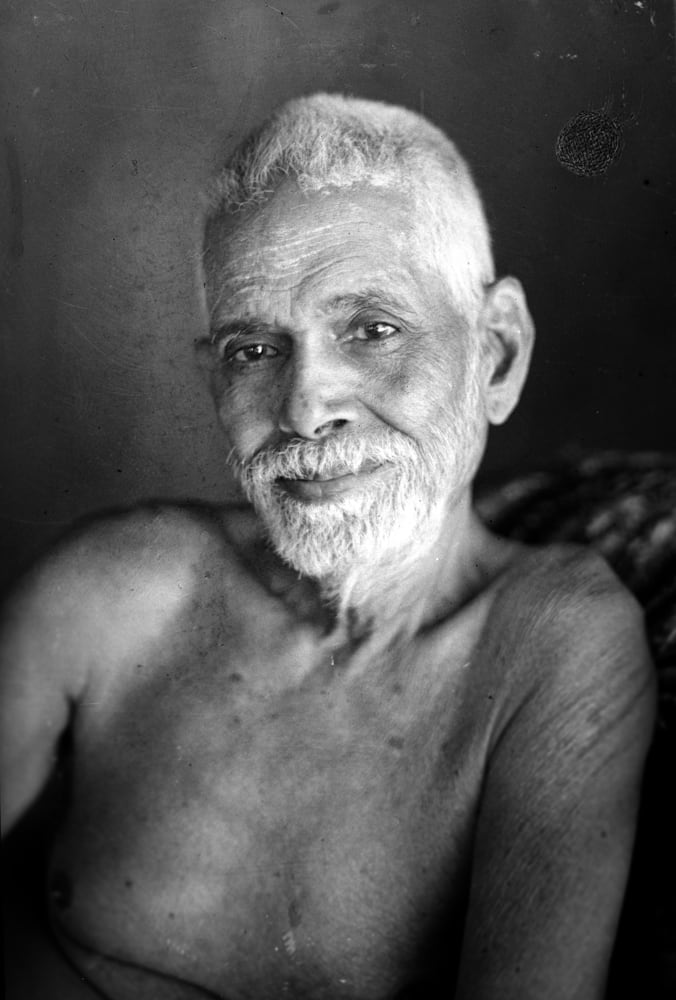
Ramana Maharshi
Ils concordent sur: Le monde est-il réel ? · Qui suis-je ? Existe-t-il un vrai soi ? · Pourquoi souffrons-nous ?
David R. Hawkins
Ils concordent sur: Qui suis-je ? Existe-t-il un vrai soi ? · Pourquoi souffrons-nous ? · Que se passe-t-il après la mort ?
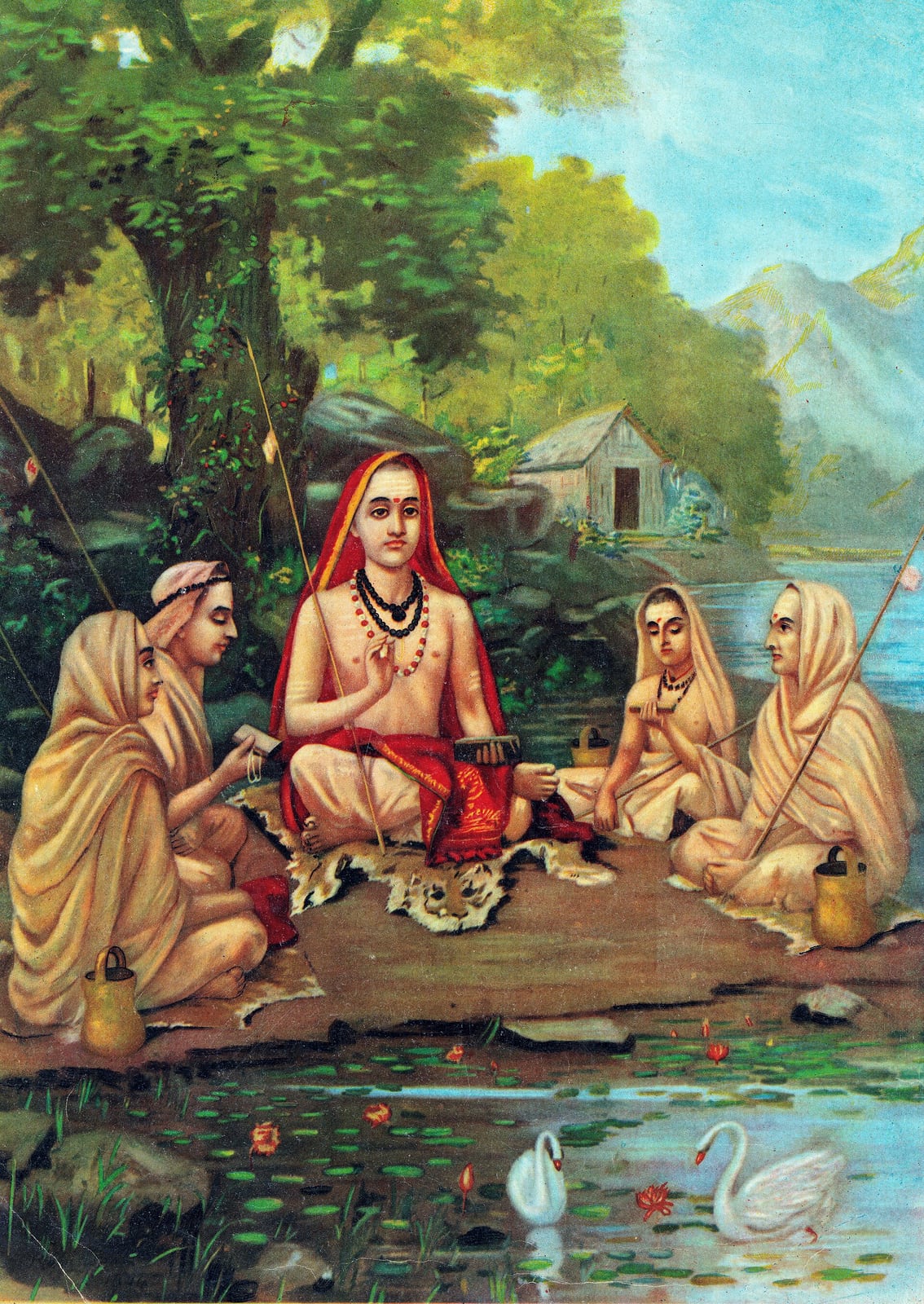
Adi Shankara
Ils concordent sur: Qui suis-je ? Existe-t-il un vrai soi ? · Pourquoi souffrons-nous ? · Que se passe-t-il après la mort ?
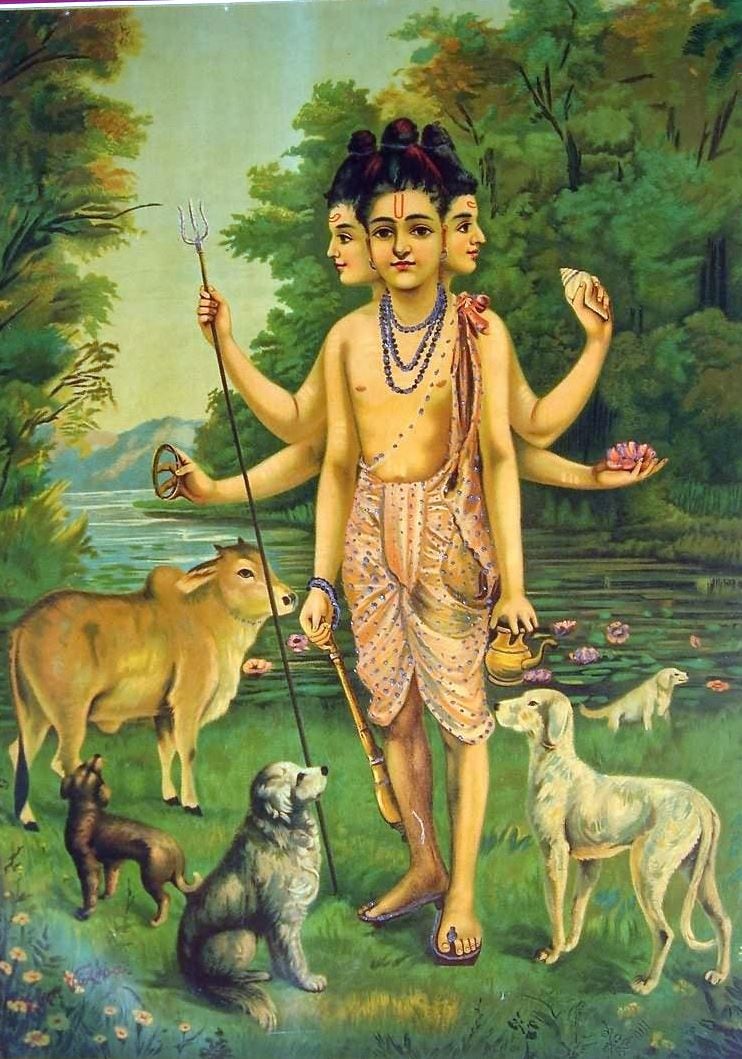
Dattatreya
Ils concordent sur: Qui suis-je ? Existe-t-il un vrai soi ? · Que se passe-t-il après la mort ? · Comment atteint-on la libération ou le salut ?
Pense autrement que

Francis of Assisi
Ils s'opposent sur: Qui suis-je ? Existe-t-il un vrai soi ? · Le monde est-il réel ?

Julian of Norwich
Ils s'opposent sur: Qui suis-je ? Existe-t-il un vrai soi ? · Le monde est-il réel ?

Ignatius Brianchaninov
Ils s'opposent sur: Qui suis-je ? Existe-t-il un vrai soi ? · Le monde est-il réel ?

Theophan the Recluse
Ils s'opposent sur: Qui suis-je ? Existe-t-il un vrai soi ? · Le monde est-il réel ?
Ils s'opposent surContradiction apparente
Nisargadatta Maharaj · Paramahansa Yogananda
The lineage that transmits and the guru within: two grateful disciples
Pourquoi: The contradiction is apparent because both describe the same relationship from opposite ends. Both had a decisive guru and both belonged to a lineage with initiation; they differ in where they place the emphasis. Yogananda writes for Western readers to whom he wants to present a living tradition and an organisation, Self-Realization Fellowship, that guarantees transmission; hence he stresses lineage. Nisargadatta speaks to seekers who came to his home in Bombay with years of accumulated practices, and he urges them not to depend on anyone, himself included. The Hindu tradition knows this double face well: the outer master points to the inner one, which is the Self.
Ils s'opposent surDésaccord de fond
Nisargadatta Maharaj · Adi Shankara
Scripture as the only means of knowing Brahman, or a cigarette seller without books
Pourquoi: The contradiction is real at the level of method, even if the goal is the same. Shankara is a Brahmin commentator debating rival schools and needs to establish what counts as valid knowledge: for him, without the word of scripture there is no way of knowing that the Self is Brahman. Nisargadatta belongs to a devotional lineage from Maharashtra that transmitted the teaching in the vernacular and through the master's direct instruction, and he speaks to modern seekers, often saturated with reading. Neither trusts free-standing reasoning, and both rely on a master; they differ over whether ultimate authority lies in the revealed word or in the evidence of one's own existing.
Ils concordent sur
Nisargadatta Maharaj · David R. Hawkins
Everything happens and no one does it: the doer as an assumption
Pourquoi: The affinity comes from a common matrix, non-duality of Vedantic origin, which Nisargadatta received from his lineage and Hawkins adopted in his mature works. No relationship between them is recorded in this library. They differ in register and audience: Nisargadatta speaks in direct conversations, translated from Marathi, with a negative method that discards everything perceived; Hawkins writes books combining his experience, clinical language and a map of levels of consciousness whose calibration basis lacks scientific validation. Hawkins also stresses devotional surrender to God; Nisargadatta stays with pure enquiry into the I am.
Anecdotes et récits
Anecdotes et récits
Témoignage1933–1936
An evening with Siddharameshwar
Origine du récit: Nisargadatta's own testimony in I Am That, chs. 48 and 64, and Sudhakar S. Dikshit's biographical note in the same work, which names Baagkar.
Témoignage1937–1938
Barefoot towards the Himalayas
Origine du récit: Dikshit's biographical note in I Am That (which does not date the journey) and the Wikipedia chronology ("Nisargadatta Maharaj"), which places it in 1937–38. The role of the fellow disciple comes from the circle's oral tradition.
Documenté1966–1981
The man who sold cigarettes
Origine du récit: The remark about his trade as a cigarette-maker is in I Am That, ch. 35, "Greatest Guru is Your Inner Self". The description of the mezzanine and his smoking habit comes from visitors' testimonies and Dikshit's note.
Documenté1965–1976
Frydman's tape recorder
Origine du récit: The translator's note in I Am That and the Wikipedia article "I Am That", which records the rejection by major publishers and the choice of Chetana.
Témoignage1980–1981
Teaching with cancer
Origine du récit: Introductions and conversations in Prior to Consciousness (ed. Jean Dunn, 1985), The Ultimate Medicine (ed. Robert Powell, 1994) and Consciousness and the Absolute (1994).
Source: Nisargadatta Maharaj. Prior to Consciousness: Talks with Sri Nisargadatta Maharaj. Ed. Jean Dunn. Durham (Carolina del Norte): The Acorn Press, 1985; y Seeds of Consciousness, ed. Jean Dunn, Nueva York: Grove Press, 1982.
Enseignements
Enseignements
Les notions qui structurent sa pensée, expliquées dans leur contexte.
The sense 'I am'i-am
Instruction received from Siddharameshwar; I Am That, chs. 1, 16, 18, 48, 64.
Nisarga yoganisarga-yoga
I Am That, chs. 26 and 38, and Appendix I, "Nisarga Yoga", by Maurice Frydman (added in the second edition).
The absolute, prior to consciousnessthe-absolute
Seeds of Consciousness, Prior to Consciousness, The Ultimate Medicine, Consciousness and the Absolute.
Source: Nisargadatta Maharaj. Prior to Consciousness: Talks with Sri Nisargadatta Maharaj. Ed. Jean Dunn. Durham (Carolina del Norte): The Acorn Press, 1985; y Seeds of Consciousness, ed. Jean Dunn, Nueva York: Grove Press, 1982.
The witnesswitness
I Am That, chs. 10, 50, 62 and 79.
The Inchegiri lineage (Navnath Sampradaya)inchegiri-lineage
I Am That, Appendix II, "Navnath Sampradaya", and Dikshit's biographical note.
Vidéos
Vidéos
Enregistrements, entretiens et documentaires. Les vidéos sont lues depuis YouTube ; elles ne sont pas hébergées ici.
Rays of the Absolute (the Legacy of Sri Nisargadatta Maharaj)
Documentaire· EN· 2015· 85 min
Science and Nonduality
Rayos del Absoluto, El Legado de Sri Nisargadatta Maharaj (2015) SUBTITULADO
Documentaire· ES· 2015· 85 min
Raul Campos
TATVAMASI - YOU ARE THAT. English Documentary Film on Sri Nisargadatta Maharaj
Documentaire· EN· 88 min
Nitin Ram Official
The Lost Satsang: Sri Nisargadatta Maharaj Archival Film 1979
Enregistrement original· EN· 1979· 93 min
Sabine NowHere
I am only the Self - Nisargadatta Maharaj
Enregistrement original· EN· 21 min
Felix Wolf
Sri Nisargadatta Maharaj – Archive of Audio Recordings - 8th June 1980
Enregistrement original· MR· 1980· 94 min
Sri Nisargadatta Maharaj
NISARGADATTA MAHARAJ - documental (subtitulado en español)
Documentaire· ES· 53 min
CanalGanges
NISARGADATTA - Satsang 1 (subtitulado en español)
Enregistrement original· ES· 15 min
CanalGanges
Shree Nisargadatta Maharaj Pravachan part - 1 (Hanuman Jayanti Utsav 2026)
Voir sur YouTube
Cette vidéo ne peut pas être intégrée ; elle s'ouvre sur YouTube.
Shree Nisargadatta Maharaj Pravachan part - 1 (Hanuman Jayanti Utsav 2026)
Enregistrement original· MR· 27 min
Shree Nisargadatta Adhyatma Kendra Official ChannelChaîne officielle
Shree Nisargadatta Maharaj Pravachan part 2 (Hanuman Jayanti Utsav 2026)
Voir sur YouTube
Cette vidéo ne peut pas être intégrée ; elle s'ouvre sur YouTube.
Shree Nisargadatta Maharaj Pravachan part 2 (Hanuman Jayanti Utsav 2026)
Enregistrement original· MR· 9 min
Shree Nisargadatta Adhyatma Kendra Official ChannelChaîne officielle
Galerie
Galerie
Images dont la licence a été vérifiée. Chacune conserve son auteur et son attribution.
Relations
Relations
Influences, filiations et affinités. On distingue la relation documentée de la similitude identifiée par analyse.
A influencé
Tolle has recommended I Am That among his fundamental readings, according to the reception recorded on Wikipedia ("I Am That").
Similitude identifiée par analyse
Disciple de
Siddharameshwar Maharaj
His guru from 1933 until his death in 1936; gave him the mantra and the instruction to attend to the "I am".
Relation documentée
Maître de
Maurice Frydman
Disciple from 1965 and translator of I Am That.
Relation documentée
Maître de
Ramesh S. Balsekar
Interpreter in the last years and author of Pointers from Nisargadatta Maharaj (1982); later taught in his own right.
Relation documentée
Maître de
Jean Dunn
American disciple who recorded and edited Seeds of Consciousness, Prior to Consciousness and Consciousness and the Absolute.
Relation documentée
Idées proches de
Asked about Ramana, he answered that both were "in the same ancient state"; no personal meeting is recorded (I Am That, ch. 70).
Relation documentée
Idées proches de
In I Am That he comments on Krishnamurti's view that a guru is unnecessary and remarks that, in a way, Krishnamurti is acting as one (ch. 64).
Relation documentée
Idées proches de
His distinction between the perceived and the perceiver and his notion of the absolute continue the classical Advaita tradition, although Nisargadatta did not present himself as a commentator on Shankara.
Similitude identifiée par analyse
Contemporain de
Indian contemporaries with very different approaches: Yogananda taught a technique and founded an institution in the West; Nisargadatta founded none and distrusted techniques.
Similitude identifiée par analyse
Lié depuis d'autres fiches
Sources
Sources
Bibliographie et catalogues consultés pour cette fiche.
- Wikidata, «Nisargadatta Maharaj» (Q175532): nacimiento 17-04-1897 y muerte 08-09-1981 en Bombay; 30 enlaces entre wikis.
- Nisargadatta Maharaj. I Am That: Talks with Sri Nisargadatta Maharaj. Trad. Maurice Frydman; ed. Sudhakar S. Dikshit. Bombay: Chetana, 1973 (2 vols.); 2.ª ed. revisada en un volumen, 1976. Incluye la nota biográfica de Dikshit y el epílogo «Nisarga Yoga» de Frydman.
- Wikipedia (en), «Nisargadatta Maharaj» (biografía, cronología y bibliografía), consultada el 2026-10-25.
- Wikipedia (en), «I Am That» (historia editorial, Maurice Frydman, recepción), consultada el 2026-10-25.
- Nisargadatta Maharaj. Prior to Consciousness: Talks with Sri Nisargadatta Maharaj. Ed. Jean Dunn. Durham (Carolina del Norte): The Acorn Press, 1985; y Seeds of Consciousness, ed. Jean Dunn, Nueva York: Grove Press, 1982.
- Open Library, obras y ediciones de Nisargadatta Maharaj (consultadas por clave de obra e ISBN).
- Nisargadatta Maharaj. The Ultimate Medicine, ed. Robert Powell (San Diego: Blue Dove Press, 1994); The Experience of Nothingness (1996) y The Nectar of the Lord's Feet / The Nectar of Immortality (Element, 1987; Blue Dove, 1996).
- Wikimedia Commons, metadatos de licencia de las imágenes relacionadas con Nisargadatta Maharaj (API imageinfo).
- Shri Nisargadatta Adhyatma Kendra / Nisargadatta Maharaj Official Center (sitio del centro en Bombay; fuente indicada en Commons para la fotografía de 1973).
- Conway, Timothy. «Sri Nisargadatta Maharaj (1897–1981): Life & Teachings of Bombay's Fiery Sage of Liberating Wisdom». Enlightened-Spirituality.org, © 1981/2007 (biografía detallada con cronología: 1915, 1924, 1933, 1936–1938, 1942, 1948, 1951, 1966; Khetwadi; intérpretes de los últimos años).
- Lucas, Phillip Charles. «Non-Traditional Modern Advaita Gurus in the West and Their Traditional Modern Advaita Critics». Nova Religio 17, n.º 3 (2014): 6–37. doi:10.1525/nr.2014.17.3.6.
- Shree Nisargadatta Adhyatma Kendra (Bombay). Catálogo de la tienda oficial de libros (API de la tienda): Sukhsanwad – I AM THAT (Marathi Version), Atmadnyan aani Parmarthayog, Gurubodhananda (Shree Nisargadatta Maharaj Charitra), Swaroopaanubhav y otros títulos en marathi.
- Exotic India (librería). Ficha de Shower of Grace: Meditations with Shri Nisargadatta Maharaj, de Jayashri Gaitonde. Mumbai: Zen Publications, 2020, 282 pp., ISBN 9789387242746 (traducción inglesa de Amrutvarsha); Bagchee (librería) da el mismo ISBN.
- Ayant droit
- Derechos vigentes (fallecido en 1981). Las traducciones y ediciones pertenecen a sus editores y traductores: Chetana Pvt. Ltd. (Bombay) para I Am That y Pointers, con The Acorn Press (Durham, Carolina del Norte) como editorial norteamericana; los herederos de Jean Dunn y The Acorn Press para sus volúmenes; Robert Powell / Blue Dove Press (distribución actual de North Atlantic Books) para los suyos; Zen Publications y Yogi Impressions para las recopilaciones recientes. No se ha identificado un titular único.
En attente de confirmation
Ce que cette fiche n'a pas encore pu établir. Nous préférons le dire plutôt que de combler.
- Retrato principal: la fotografía de 1973 de Commons («File:Nisargadatta Maharaj.jpg», Shree Nisargadatta Adhyatma Kendra) usa la plantilla «Attribution», que no figura entre las licencias admitidas (PD, CC0, CC BY, CC BY-SA); no se incluye hasta confirmar su equivalencia.
- Fecha de nacimiento: 17 de abril de 1897 (Wikidata, Wikipedia) frente a «marzo de 1897, luna llena de Hanuman Jayanti» (nota de Dikshit en I Am That); lugar exacto (Bombay o Kandalgaon) no documentado.
- Primera editorial de Seeds of Consciousness (Grove Press según Open Library, Acorn Press según Wikipedia) y de Prior to Consciousness (al revés): cotejar con las portadillas.
- ISBN de Beyond Freedom (2007), I Am Unborn (2007), The Nisargadatta Gita (2008), Meditations with Sri Nisargadatta Maharaj (2014), Self-Love (2017), The Earliest Discourses (2020) y Gleanings from Nisargadatta (2006): Google Books no respondió y Open Library no los registra.
- Origen y fecha del nombre «Nisargadatta» y posible obra poética devocional en marathi: no documentados en las fuentes consultadas.
- Traducciones españolas sin original identificado: «Ser» (Sirio, 2001, ISBN 9788478083732), «Balance cero» y «Yo no sabía» (CreateSpace, 2016-2017) y «Enseñanzas sobre la no-dualidad» (Kairós, 2022, ISBN 9788499889115).
- Volumen conmemorativo «Sri Nisargadatta Maharaj presentation volume» (Sri Nisargadatta Adhyatma Kendra, 1980): no examinado.
- Cronología interna de I Am That (años exactos de las conversaciones) y fecha del diagnóstico del cáncer.
- Sala de lectura (2026-10-25): ninguna obra en dominio público. Nisargadatta murió en 1981 (libre en la India en 2042 y en los países de 70 años p. m. en 2052); todas sus obras son transcripciones o traducciones de terceros con derechos vigentes.
- Obras (2026-10-25): el catálogo oficial del Shree Nisargadatta Adhyatma Kendra vende además en marathi Swanandamrut (con versión inglesa «A Nectar of Self-Joy»), Nisarg Bhagvat, Swaroopaanubhav («Narrations»), Shree Nisargadatta Bodhsudha, Swabodh Sanjeevani, Bhakti Dnyan Pradeep, Ishwardnyan Swaroop aani Sat Swaroopdnyan, Vivek Ki Nirupan y Sadgurubodh (partes 1 y 2), sin autor ni fecha en la ficha; algunos pueden ser de Siddharameshwar Maharaj (Dnyan Vidnyan Yogeshwar es su biografía y Gurubodhananda la de Nisargadatta). Determinar autoría antes de registrarlos.
- Fecha de la edición marathi de Amrutvarsha y nombre del traductor de Shower of Grace (2020).
Recherche effectuée le 2026-10-25