Hindouisme · Yoga · Bhakti · Advaita Vedanta · Tradition védique
Vyasa
व्यास · वेदव्यास · कृष्णद्वैपायन · Kṛṣṇa Dvaipāyana Vyāsa
Récit mêlant histoire, théologie et tradition
Sage légendaire, appelé Kṛṣṇa Dvaipāyana, auquel la tradition attribue la division du Veda en quatre, la composition du Mahâbhârata — avec la Bhagavad-Gîtâ — et des dix-huit Purāṇa, et qu'elle identifie à Bādarāyaṇa, auteur des Brahma Sūtra, ainsi qu'au commentateur des Yoga-sūtra. Dans le Mahâbhârata, il est à la fois auteur, narrateur et grand-père des deux camps. La philologie voit en lui une figure d'autorité construite par les textes, composés entre le IVe siècle av. J.-C. et le Ier millénaire de notre ère.
- œuvres
- 30œuvres
- éditions
- 44éditions
- citations
- 5citations
- vidéos
- 15vidéos
- images
- 8images
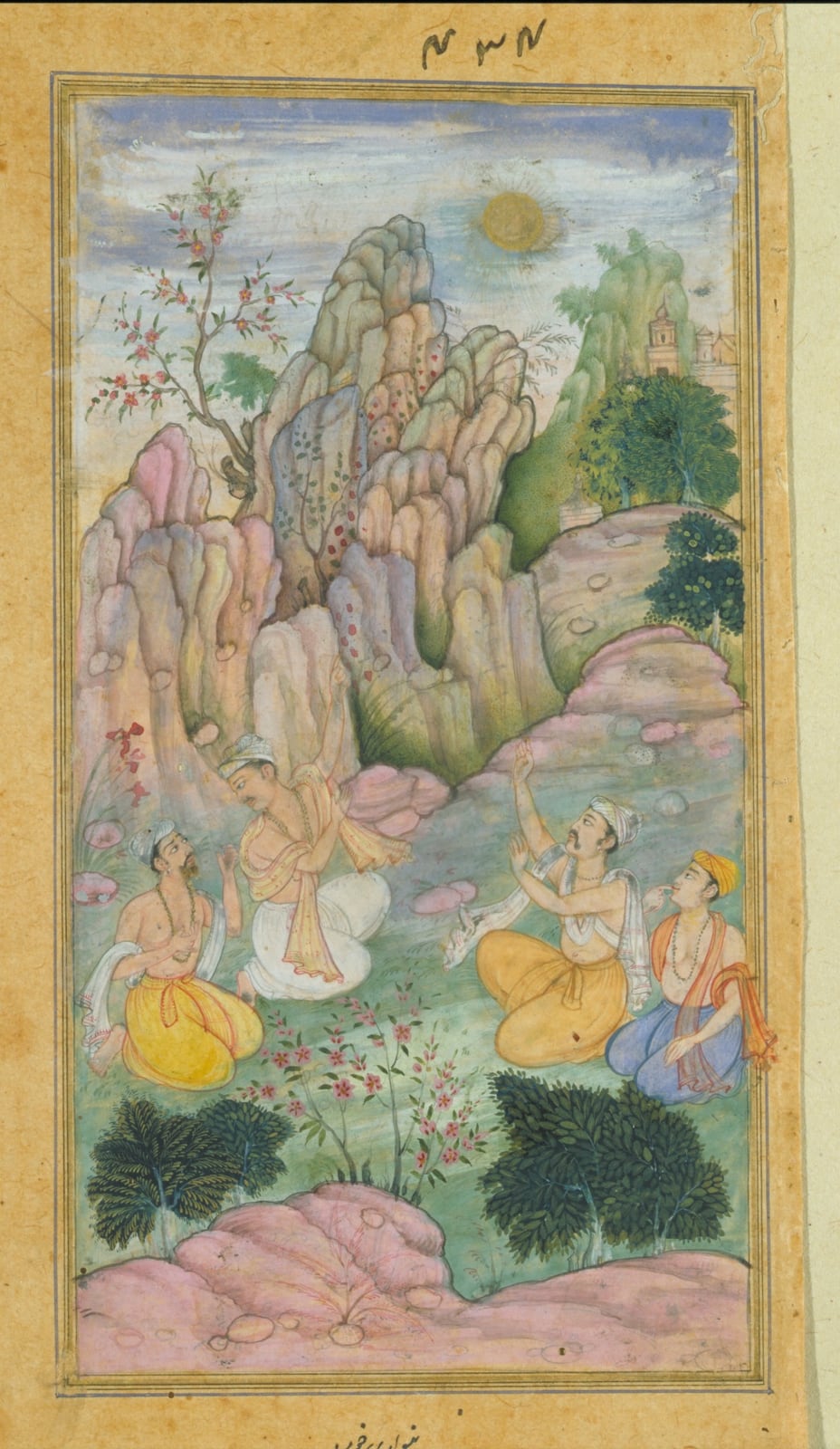
Vyāsa y sus discípulos ven llegar a Śuka (Razmnāma) · Public domain
Dans ses propres mots
«Whatever is spoken about virtue, wealth, pleasure, and salvation may be seen elsewhere; but whatever is not contained in this is not to be found anywhere.»Mahābhārata, Ādiparvan (1.56.33 de la edición crítica; sección LXII de la trad. de K. M. Ganguli, dominio público); versión española del investigador

Son idée centrale
Subtle dharma (sūkṣma dharma): One of the ideas running through the Mahābhārata is that dharma, the right order of conduct, is 'subtle' and hard to know: norms conflict, the just lose and the victors doubt their victory.
Le voir en contexte
Biographie
5 min de lecture
Traduction assistée à partir de l'original espagnol, en attente de relecture par un traducteur natif.
Celui qui ordonna les textes
Vyāsa signifie en sanskrit « celui qui divise » ou « celui qui ordonne », et c'est moins un nom qu'une fonction. La tradition désigne ainsi Kṛṣṇa Dvaipāyana, « le sombre né sur une île », et lui attribue une œuvre qu'aucun être humain n'aurait pu écrire : la division du Veda unique en quatre recueils, la composition du Mahâbhârata — le plus long poème de l'Antiquité —, les dix-huit grands Purāṇa, les Brahma Sūtra et le commentaire classique des Yoga-sūtra. Aucun document extérieur ne l'atteste. La philologie voit en Vyāsa une figure d'auteur créée à l'intérieur des textes pour leur conférer autorité, et l'histoire des religions un composé où se sont déposées des attributions pendant plus de mille ans.
Fils d'un sage et d'une batelière
Le Mahâbhârata raconte sa naissance. Le sage Parāśara, petit-fils de Vasiṣṭha, traversait la Yamunā dans la barque de Satyavatī, fille d'un pêcheur ; il la désira, l'enveloppa d'un brouillard et la rendit mère sur une île du fleuve. L'enfant naquit le jour même, grandit aussitôt et partit pratiquer l'ascèse avec une promesse : il viendrait chaque fois que sa mère l'appellerait. Parce qu'il était né sur une île, on l'appela Dvaipāyana ; parce qu'il avait ordonné le Veda, Vyāsa. Des années plus tard, Satyavatī épousa le roi Śaṃtanu, et lorsque ses fils moururent sans descendance, elle fit venir Vyāsa pour qu'il engendre des héritiers avec les veuves, selon la coutume du niyoga. De ces unions naquirent Dhṛtarāṣṭra, aveugle, Pāṇḍu, pâle, et Vidura, fils d'une servante. L'auteur du poème est ainsi le grand-père des deux camps qui s'y entre-détruisent.
Auteur et personnage
Vyāsa entre dans son œuvre et en sort. Il conseille les Pāṇḍava pendant leur exil, accorde à Sañjaya la vue divine pour qu'il raconte la guerre au roi aveugle, console les survivants et, des années après la bataille, fait surgir pour une nuit des eaux du Gange les guerriers morts afin que leurs familles puissent les revoir. Le poème se présente comme une chaîne de récitations : Vyāsa l'enseigne à son disciple Vaiśampāyana, qui le récite lors du sacrifice des serpents du roi Janamejaya, et le barde Ugraśravas le répète devant les sages de la forêt de Naimiṣa. Bruce Sullivan a lu ce Vyāsa comme une figure semblable à Brahmā, créateur et voyant du « cinquième Veda » ; Alf Hiltebeitel, comme l'auteur qui s'inscrit dans le texte pour en guider la lecture. Le célèbre épisode où Gaṇeśa écrit sous la dictée figure dans la vulgate, mais l'édition critique le relègue en appendice parce qu'il manque dans une bonne partie des manuscrits.
Une bibliothèque en dix-huit livres
Le Mahâbhârata se dit « recueil de cent mille strophes » ; divisé en dix-huit livres (parvan) et complété par le Harivaṃśa, il raconte la rivalité entre les Kaurava et les Pāṇḍava jusqu'à la grande guerre de Kurukṣetra et ses suites, mais il contient aussi des récits comme ceux de Nala et de Sāvitrī, une version de l'histoire de Rāma et des livres entiers d'enseignement sur le dharma, la politique et la délivrance. Le poème affirme lui-même : « Ce qui est ici peut se trouver ailleurs ; ce qui n'est pas ici n'est nulle part. » Le Bhandarkar Oriental Research Institute de Pune en a publié l'édition critique entre 1919 et 1966. Sur la date, il n'y a pas d'accord : John Brockington décrit une croissance de plusieurs siècles, entre le IVe siècle av. J.-C. et le IVe siècle apr. J.-C. ; Hiltebeitel et James Fitzgerald défendent une composition écrite, relativement rapide, dans les deux derniers siècles avant notre ère, suivie d'ajouts.
La Bhagavad-Gîtâ
Au sixième livre, le Bhīṣmaparvan, alors que les armées sont rangées en ordre de bataille, le guerrier Arjuna refuse de combattre ses parents et Kṛṣṇa, son cocher, lui répond en sept cents strophes réparties en dix-huit chants : la Bhagavad-Gîtâ. La tradition l'attribue à Vyāsa en tant que compilateur du poème, et la narration enchâsse le dialogue dans le récit que Sañjaya fait au roi aveugle grâce au don du sage. Depuis la première traduction anglaise, celle de Charles Wilkins en 1785, elle est le texte indien le plus lu hors de l'Inde ; celles de Kashinath Trimbak Telang (1882) et d'Edwin Arnold (1885) sont aujourd'hui dans le domaine public.
L'ordonnateur du Veda et des Purāṇa
Les Purāṇa font de Vyāsa une charge cosmique : à chaque âge dvāpara du monde apparaît un Vyāsa qui répartit le Veda, et le Viṣṇu Purāṇa en énumère vingt-huit, parmi lesquels Vasiṣṭha, Vālmīki et Parāśara, jusqu'à Kṛṣṇa Dvaipāyana, celui de l'ère présente. Il confia le Ṛgveda à Paila, le Yajurveda à Vaiśampāyana, le Sāmaveda à Jaimini, l'Atharvaveda à Sumantu, et l'histoire et les Purāṇa à Lomaharṣaṇa. Le Bhāgavata Purāṇa ajoute qu'après tout cela Vyāsa demeurait insatisfait, jusqu'à ce que Nārada lui conseille de chanter les exploits de Kṛṣṇa : ainsi serait né le Bhāgavata, qu'il enseigna à son fils Śuka. Ludo Rocher a montré que l'attribution des Purāṇa à Vyāsa est une formule d'autorité pour des textes composés tout au long du Ier millénaire et au-delà.
Bādarāyaṇa et le commentaire du yoga
Deux traités de philosophie s'abritent aussi sous son nom. Les Brahma Sūtra, fondement du Vedānta, sont attribués à Bādarāyaṇa, que la tradition védantique postérieure identifie à Vyāsa ; la critique distingue les deux et date la rédaction des aphorismes des premiers siècles de notre ère — Hajime Nakamura a proposé 400–450. Le commentaire des Yoga-sūtra (Yogabhāṣya) est attribué à Vyāsa depuis les commentateurs médiévaux, mais Philipp Maas et Johannes Bronkhorst soutiennent qu'aphorismes et commentaire forment une seule œuvre, le Pātañjalayogaśāstra, des environs de 325–425.
Ce que l'on peut affirmer
L'historien ne peut donner à Vyāsa ni dates ni lieu. Il peut affirmer que son nom a fonctionné pendant deux millénaires comme le sceau des grands textes de la tradition brahmanique, et que le Mahâbhârata l'a construit comme un auteur présent dans son œuvre, à la fois grand-père, témoin et narrateur. L'Inde l'honore à chaque pleine lune du mois d'āṣāḍha, lors de la Guru Pūrṇimā, la fête des maîtres, et le compte parmi les immortels qui parcourent encore le monde. Dans le dernier livre du poème, Vyāsa résume son enseignement dans une plainte : « Les bras levés, je crie, et nul ne m'écoute : du dharma naissent la richesse et le plaisir ; pourquoi ne suit-on pas le dharma ? »
Sources: Sullivan, Bruce M. Kṛṣṇa Dvaipāyana Vyāsa and the Mahābhārata: A New Interpretation. Leiden: Brill, 1990; reed. como Seer of the Fifth Veda: Kṛṣṇa Dvaipāyana Vyāsa in the Mahābhārata. Delhi: Motilal Banarsidass, 1999. · Hiltebeitel, Alf. Rethinking the Mahābhārata: A Reader's Guide to the Education of the Dharma King. Chicago: University of Chicago Press, 2001 (caps. 1–2, sobre Vyāsa como autor y la fecha de composición). · Fitzgerald, James L. (trad.). The Mahābhārata, vol. 7: Book 11, The Book of the Women; Book 12, The Book of Peace, Part One. Chicago: University of Chicago Press, 2004. Introducción. · Brockington, John. The Sanskrit Epics. Leiden: Brill, 1998 (Handbuch der Orientalistik, 2. Abt., Bd. 12). Capítulos sobre el Mahābhārata. · Sukthankar, Vishnu S. (ed.). The Mahābhārata for the First Time Critically Edited. Vol. 1: The Ādiparvan, with Prolegomena. Poona: Bhandarkar Oriental Research Institute, 1933 (edición crítica completa, 1919–1966).
Chronologie
La vie, année après année
Chaque point est un événement documenté. Cliquez pour le lire, avec sa source et son degré de certitude.
v. 400 av. J.-C. – 400Norte de la India
Formation of the Mahābhārata
According to John Brockington, the epic grew over some eight centuries, from an oral bardic tradition to a text of a hundred thousand stanzas. This is the range of the work ascribed to Vyāsa, not of a person.
ContestéBrockington, John. The Sanskrit Epics. Leiden: Brill, 1998 (Handbuch der Orientalistik, 2. Abt., Bd. 12). Capítulos sobre el Mahābhārata.
v. 400 av. J.-C. – 400
Formation of the Mahābhārata
According to John Brockington, the epic grew over some eight centuries, from an oral bardic tradition to a text of a hundred thousand stanzas. This is the range of the work ascribed to Vyāsa, not of a person.
Contesté
v. 150 av. J.-C.
Written composition, according to Hiltebeitel
Alf Hiltebeitel and James Fitzgerald argue that the Mahābhārata was composed in writing by a group of Brahmin authors in a relatively short period, between the mid-second century BCE and the turn of the era, and then enlarged.
Contesté
v. 300 – 1000
The composition of the Purāṇas
The great Purāṇas, ascribed to Vyāsa, were composed and reworked throughout the first millennium and later, according to Ludo Rocher; in them Vyāsa appears as the arranger of the Veda in each age of the world.
Probable
v. 325 – 425
The Pātañjalayogaśāstra
The date Philipp Maas proposes for the Yogasūtras and their commentary, which medieval tradition ascribed to Vyāsa and which Maas regards as the work of the same author as the aphorisms.
Contesté
v. 400 – 450
Bādarāyaṇa's Brahmasūtras
Date proposed by Hajime Nakamura for the final redaction of the Brahmasūtras, which Vedāntic tradition ascribes to Bādarāyaṇa, identified with Vyāsa.
Contesté
1598
Vyāsa in the Razmnāma
Banwari paints Vyāsa with his disciples for an illustrated copy of the Razmnāma, the Persian translation of the Mahābhārata commissioned by Akbar; the folio is in the Victoria and Albert Museum.
Documenté
1785
First English translation of the Gītā
Charles Wilkins publishes The Bhagvat-Geeta, the first translation of the Bhagavad Gītā into a European language.
Documenté
1883 – 1896
Ganguli's translation
Kisari Mohan Ganguli translates the complete Mahābhārata into English, published by Pratap Chandra Roy; it is the only complete public-domain English translation.
Documenté
1900
Vivekananda speaks on the Mahābhārata
Swami Vivekananda devotes a lecture to the Mahābhārata before an American audience and presents Vyāsa as its author.
Documenté
1919 – 1966
The Bhandarkar Oriental Research Institute's critical edition
Under the direction of V. S. Sukthankar and his successors, the Pune institute publishes the critical edition of the Mahābhārata, which relegates to appendices the passages missing from many manuscripts, such as that of Gaṇeśa as scribe.
Documenté
Œuvres
Œuvres essentielles
Les œuvres sans lesquelles on ne comprend pas son héritage.
Attribution traditionnelle · v. 400 av. J.-C.
Mahābhārata
महाभारत (Mahābhārata)
The longest epic in world literature, a 'collection of a hundred thousand stanzas' in eighteen books, with the Harivaṃśa as a supplement. It narrates the rivalry between the Kauravas and their cousins the Pāṇḍavas for the kingdom of Hastināpura, the dice game, the exile and the eighteen-day war at Kurukṣetra, with its aftermath. It includes the Bhagavad Gītā and numerous tales and treatises on dharma, politics and liberation, and regards itself as a 'fifth Veda'.
8 éditions
Attribution traditionnelle · v. 200 av. J.-C.
Bhagavad Gītā (The Song of the Lord)
भगवद्गीता (Bhagavadgītā)
A dialogue of seven hundred stanzas in eighteen cantos between the warrior Arjuna, who refuses to fight his kinsmen, and Kṛṣṇa, his charioteer, who teaches him to act without attachment to the fruit of action, sets out the paths of knowledge, action and devotion and reveals himself to him in his universal form. It is the most commented text of Hinduism —by Śaṅkara, Rāmānuja, Madhva and so many others— and the most widely read outside India.
9 éditions · amazon.es
Vyasa
The eighteen great Purāṇas (traditional attribution)
Compilation postérieure · v. 300
The eighteen great Purāṇas (traditional attribution)
महापुराण (mahāpurāṇa)
Encyclopaedias of mythology, cosmology, royal genealogies, ritual and devotion. According to the canonical list there are eighteen: Brahma, Padma, Viṣṇu, Śiva (or Vāyu), Bhāgavata, Nārada, Mārkaṇḍeya, Agni, Bhaviṣya, Brahmavaivarta, Liṅga, Varāha, Skanda, Vāmana, Kūrma, Matsya, Garuḍa and Brahmāṇḍa. The lists vary slightly from text to text, and alongside them there are numerous upapurāṇas or minor Purāṇas.
0 éditions

Attribution traditionnelle · v. 400
Brahmasūtras (Aphorisms on Brahman)
ब्रह्मसूत्र (Brahmasūtra), también वेदान्तसूत्र
Some 555 aphorisms in four books systematising the teaching of the Upaniṣads on Brahman: its nature, the refutation of other schools (Sāṃkhya, Buddhists, Jains), the means of realisation and the fruit of liberation. Their concision makes them intelligible only with a commentary, and each school of Vedānta —Śaṅkara, Rāmānuja, Madhva— founded its doctrine on its own.
4 éditions · amazon.com
Toute son œuvre (30)
Vyasa
Mahābhārata I: Ādiparvan (The Book of the Beginning)
The Conscious LibraryMahābhārata I: Ādiparvan (The Book of the Beginning)
Vyasa
Mahābhārata II: Sabhāparvan (The Book of the Assembly)
The Conscious LibraryMahābhārata II: Sabhāparvan (The Book of the Assembly)
Vyasa
Mahābhārata III: Āraṇyakaparvan (The Book of the Forest)
The Conscious LibraryMahābhārata III: Āraṇyakaparvan (The Book of the Forest)
Vyasa
Mahābhārata IV: Virāṭaparvan (The Book of Virāṭa)
The Conscious LibraryMahābhārata IV: Virāṭaparvan (The Book of Virāṭa)
Vyasa
Mahābhārata V: Udyogaparvan (The Book of the Effort)
The Conscious LibraryMahābhārata V: Udyogaparvan (The Book of the Effort)
Vyasa
Mahābhārata VI: Bhīṣmaparvan (The Book of Bhīṣma)
The Conscious LibraryMahābhārata VI: Bhīṣmaparvan (The Book of Bhīṣma)
Vyasa
Mahābhārata VII: Droṇaparvan (The Book of Droṇa)
The Conscious LibraryMahābhārata VII: Droṇaparvan (The Book of Droṇa)
Vyasa
Mahābhārata VIII: Karṇaparvan (The Book of Karṇa)
The Conscious LibraryMahābhārata VIII: Karṇaparvan (The Book of Karṇa)
Vyasa
Mahābhārata IX: Śalyaparvan (The Book of Śalya)
The Conscious LibraryMahābhārata IX: Śalyaparvan (The Book of Śalya)
Vyasa
Mahābhārata X: Sauptikaparvan (The Book of the Night Raid)
The Conscious LibraryMahābhārata X: Sauptikaparvan (The Book of the Night Raid)
Vyasa
Mahābhārata XI: Strīparvan (The Book of the Women)
The Conscious LibraryMahābhārata XI: Strīparvan (The Book of the Women)
Vyasa
Mahābhārata XII: Śāntiparvan (The Book of Peace)
The Conscious LibraryMahābhārata XII: Śāntiparvan (The Book of Peace)
Vyasa
Mahābhārata XIII: Anuśāsanaparvan (The Book of Instruction)
The Conscious LibraryMahābhārata XIII: Anuśāsanaparvan (The Book of Instruction)
Vyasa
Mahābhārata XIV: Āśvamedhikaparvan (The Book of the Horse Sacrifice)
The Conscious LibraryMahābhārata XIV: Āśvamedhikaparvan (The Book of the Horse Sacrifice)
Vyasa
Mahābhārata XV: Āśramavāsikaparvan (The Book of the Hermitage)
The Conscious LibraryMahābhārata XV: Āśramavāsikaparvan (The Book of the Hermitage)
Vyasa
Mahābhārata XVI: Mausalaparvan (The Book of the Clubs)
The Conscious LibraryMahābhārata XVI: Mausalaparvan (The Book of the Clubs)
Vyasa
Mahābhārata XVII: Mahāprasthānikaparvan (The Book of the Great Journey)
The Conscious LibraryMahābhārata XVII: Mahāprasthānikaparvan (The Book of the Great Journey)
Vyasa
Mahābhārata XVIII: Svargārohaṇaparvan (The Book of the Ascent to Heaven)
The Conscious LibraryMahābhārata XVIII: Svargārohaṇaparvan (The Book of the Ascent to Heaven)
Vyasa
Harivaṃśa (The Lineage of Hari)
The Conscious LibraryHarivaṃśa (The Lineage of Hari)
Vyasa
The division of the Veda into four collections (traditional attribution)
The Conscious LibraryThe division of the Veda into four collections (traditional attribution)

Bhāgavata Purāṇa
900
Vyasa
Viṣṇu Purāṇa
The Conscious LibraryViṣṇu Purāṇa
Vyasa
Devī Bhāgavata Purāṇa
The Conscious LibraryDevī Bhāgavata Purāṇa
Vyasa
Adhyātma Rāmāyaṇa
The Conscious LibraryAdhyātma Rāmāyaṇa
Citations
Citations localisées dans une œuvre précise. Chacune porte sa provenance et son degré de fiabilité.
Whatever is spoken about virtue, wealth, pleasure, and salvation may be seen elsewhere; but whatever is not contained in this is not to be found anywhere.dharme cārthe ca kāme ca mokṣe ca bharatarṣabha / yad ihāsti tad anyatra yan nehāsti na tat kvacit
VérifiéeMahābhārata, Ādiparvan (1.56.33 de la edición crítica; sección LXII de la trad. de K. M. Ganguli, dominio público); versión española del investigador
Dernières paroles
Il n'existe aucun témoignage vérifiable de ses dernières paroles.
There is no record of his death: tradition counts him among the ciranjīvins, the immortals who will live until the end of the age. His last words in the Mahābhārata are the closing verses of the Svargārohaṇaparvan, but they are not presented as the words of a dying man.
Source: Wikipedia (inglés), «Vyasa», sobre la Guru Pūrṇimā (Vyāsa Pūrṇimā), los cirañjīvin y los lugares de culto asociados.
Interroger
Ce que répond son œuvre
Douze grandes questions de l'humanité et ce que ses textes permettent d'y répondre, références à l'appui. Nous ne lui prêtons jamais de paroles.
Qu'est-ce que l'Absolu ? Dieu existe-t-il ?
Formless Brahman and the supreme Lord: the Gītā holds both
À la fois personnel et impersonnelIl le dit expressément
In the Bhagavad Gītā, which tradition ascribes to Vyāsa, the Absolute has two faces that the text does not separate. On one side is the supreme brahman, beginningless, of which it cannot be said that it is or that it is not (13.12); on the other, Kṛṣṇa presents himself as the Lord who sustains the world, the «supreme spirit» beyond both the perishable and the imperishable (15.16–18), and even says that he is the foundation of brahman itself (14.27). Chapter 12 compares those who worship the unmanifest with those who worship him, and declares the first path harder. The Brahmasūtras, ascribed to Bādarāyaṇa, whom tradition identifies with Vyāsa, define brahman as that from which the birth, subsistence and dissolution of the world proceed (1.1.2).
Comparer cette question avec d'autres maîtresQui suis-je ? Existe-t-il un vrai soi ?
The embodied one is neither born nor dies; the ego believes it acts
Le Soi est l'AbsoluCela se déduit de sa doctrine
The Bhagavad Gītā distinguishes sharply between the embodied one (dehin) and the body: the former is neither born nor dies, is not wounded by weapons nor wetted by water, and changes bodies as one changes clothes (2.20–22). The sense of being the author of one's acts belongs to material nature: one deluded by the ego (ahaṃkāra) thinks «I am the doer», when it is the qualities of nature that act (3.27). Chapter 13 identifies the knower of the field in all bodies with Kṛṣṇa himself, and the one who attains wisdom «becomes brahman» (18.54). The Gītā thus invites one to recognise oneself as an eternal Self, witness of the activity of body and mind.
Comparer cette question avec d'autres maîtresPourquoi souffrons-nous ?
From attachment comes desire, from desire anger, and from anger ruin
Le désir et l'attachementIl le dit expressément
The Bhagavad Gītā describes a precise chain: whoever dwells on the objects of the senses becomes attached to them; from attachment comes desire, from desire anger, from anger delusion, and thence the loss of memory and intelligence, down to ruin (2.62–63). When Arjuna asks what drives a person to do wrong even against his will, Kṛṣṇa answers that it is desire, which turns into anger, the insatiable enemy (3.37). The remedy is not to stop acting, but to act without attachment to the fruit. Behind desire lies an ignorance that veils knowledge (5.15). The Mahābhārata as a whole, for its part, shows the collective suffering to which the greed and pride of a lineage that destroys itself can lead.
Comparer cette question avec d'autres maîtresQue se passe-t-il après la mort ?
It is not slain when the body is slain: it changes bodies like clothes
Ce que je suis ne naît ni ne meurtIl le dit expressément
The Bhagavad Gītā's answer is born on a battlefield: Arjuna does not want to kill his kinsmen, and Kṛṣṇa teaches him that the embodied one is neither born nor dies, is eternal and ancient, and is not slain when the body is slain (2.20). As a man discards worn-out clothes and puts on new ones, so it discards worn-out bodies and enters others (2.22); for one who is born death is certain, and for one who dies, birth. What one remembers on leaving the body determines where one goes (8.6), and whoever thinks of Kṛṣṇa at death reaches him and is not born again (8.5, 8.15–16). The Mahābhārata tests this teaching in the yakṣa's question to Yudhiṣṭhira: the greatest wonder is that, seeing everyone die, each believes himself immortal.
Comparer cette question avec d'autres maîtresComment atteint-on la libération ou le salut ?
Action without attachment, knowledge and, finally, refuge in the Lord alone
Par la dévotion et l'abandonIl le dit expressément
The Bhagavad Gītā presents several paths: action without attachment to the fruit (karmayoga), knowledge (jñāna), meditation and devotion (bhakti). It does not set them against one another but integrates them, and the text culminates in surrender. Kṛṣṇa says that only by exclusive devotion can he be known and seen as he is (11.54); that whoever offers him with love a leaf, a flower, a fruit or water, he accepts it (9.26); and, at the end, he asks Arjuna to abandon all duties and take refuge in him alone, for he will free him from all evil (18.66). The Brahmasūtras, ascribed to Bādarāyaṇa, whom tradition identifies with Vyāsa, assert instead that the human goal is attained through the knowledge of brahman (3.4.1).
Comparer cette question avec d'autres maîtresFaut-il un maître ?
Learn from the sages who have seen the truth, serving and questioning them
IndispensableIl le dit expressément
The Bhagavad Gītā is itself a scene of teaching: Arjuna, paralysed, declares himself Kṛṣṇa's disciple and asks him for instruction (2.7). Kṛṣṇa explains that this knowledge was handed down from teacher to teacher since ancient times and was lost over time (4.1–2), and advises seeking it by prostrating, questioning and serving the sages who have seen the truth, for they will teach it (4.34). Tradition made Vyāsa the teacher par excellence: the one who divided the Veda and transmitted it to his disciples, and whose birth is celebrated on the full moon of āṣāḍha, Guru Pūrṇimā, the festival in which teachers are honoured. The seat from which the texts are recited is still called the «seat of Vyāsa».
Comparer cette question avec d'autres maîtresLe monde est-il réel ?
The world is the Lord's nature, which Arjuna sees whole in his form
Manifestation du divinIl le dit expressément
In the Bhagavad Gītā, Kṛṣṇa says that the world proceeds from his twofold nature (prakṛti): the lower, made of earth, water, fire, air, space, mind, intellect and ego, and the higher, the life principle that sustains the universe (7.4–6). Everything is strung on him like pearls on a thread (7.7). In chapter 11, Arjuna receives divine sight and beholds the entire universe, with its gods and its armies, in Kṛṣṇa's body. The world here is not a dream, but the divine unfolded, although the Gītā also calls māyā the power by which the Lord produces it, which is hard to cross (7.14). The Brahmasūtras hold that brahman is both the material and the efficient cause of the world (1.4.23).
Comparer cette question avec d'autres maîtresQu'est-ce que l'amour ?
Whoever loves me is in me, and I in him; you are dear
Le désir ardent et l'unionIl le dit expressément
In the Bhagavad Gītā love is above all devotion (bhakti), and it is reciprocal. Kṛṣṇa says he is the same towards all beings, but that those who worship him with devotion are in him and he in them (9.29). He accepts what is offered with love, be it a leaf or a little water (9.26), and at the end declares to Arjuna that he is very dear to him and that, if he fixes his mind and his devotion on him, he will come to him (18.64–65). Love so understood is the force that leads the being to its source. It also has an ethical side: the devotee the Lord loves is the one who hates no being, is friendly and compassionate, without possessiveness or egoism, equal in pain and pleasure (12.13–20).
Comparer cette question avec d'autres maîtresSommes-nous libres ou tout est-il déterminé ?
Nature's qualities act; the deluded believes himself the author
Il n'y a pas d'agentCela se déduit de sa doctrine
The Bhagavad Gītā states that all actions are performed by the qualities (guṇa) of nature, and that only one deluded by the ego thinks «I am the doer» (3.27). The sage, absorbed in reality, thinks that he does nothing while he sees, hears or breathes (5.8). In chapter 11, after showing him his universal form, Kṛṣṇa tells Arjuna that the warriors have already been slain by him and that Arjuna is merely his instrument (11.33); and in chapter 18, that the Lord dwells in the heart of all beings and turns them as if mounted on a machine (18.61). The freedom that remains is not that of a separate agent, but that of acting without attachment, offering one's acts and renouncing the idea of being their author.
Comparer cette question avec d'autres maîtresPourquoi méditer ou prier ?
Fix the mind on the Lord, who calls the disciple friend
L'amitié avec DieuCela se déduit de sa doctrine
The Bhagavad Gītā describes meditation in detail: sitting in a clean, steady place, holding body, head and neck erect, fixing the gaze and stilling the mind like a flame that does not flicker where no wind blows (6.10–19). But the object of that concentration is not a void: the yogin is to sit «intent on me», with his mind on Kṛṣṇa (6.14). Practice culminates in a personal relationship. Kṛṣṇa imparts his teaching to Arjuna because he is his devotee and his friend (4.3), accepts what is offered with love (9.26) and assures him that, fixing his mind on him, he will come to him (18.65). Meditating and praying thus converge in dealing with a Lord who knows and loves whoever turns to him.
Comparer cette question avec d'autres maîtresLa raison peut-elle connaître l'ultime ?
Brahman is known through scripture; reasoning alone has no firm footing
L'Écriture et le raisonnementIl le dit expressément
The Brahmasūtras, which tradition ascribes to Bādarāyaṇa and identifies with Vyāsa, establish from the outset that scripture is the source of the knowledge of brahman (1.1.3) and that reasoning on its own lacks a firm foundation, because what one thinker proves a cleverer one refutes (2.1.11). Reasoning is not discarded: the whole text is an exercise in interpretation that reconciles passages and refutes other schools, such as Sāṃkhya or Buddhism. But its role is to serve scripture, not to replace it. The Bhagavad Gītā says the same in the field of conduct: let scripture be the authority in deciding what to do and what not to do (16.24), and whoever abandons it to follow his whim does not reach perfection.
Comparer cette question avec d'autres maîtresSe retirer du monde ou le transformer ?
Your right is to action, never to its fruits
La contemplation dans l'actionIl le dit expressément
The Bhagavad Gītā is born of a thwarted renunciation: on the battlefield, Arjuna lets fall his bow and would rather live on alms than kill his kinsmen. Kṛṣṇa replies that no one can stop acting even for an instant, that true renunciation is not abandoning action but attachment to its fruits, and that each must fulfil his own duty (svadharma) even if imperfectly. Let right deeds be the motive, not the fruit which comes from them; live in action (2.47). The model is Janaka, who attained perfection through action (3.20). The Mahābhārata, for its part, devotes two whole books to Bhīṣma's teaching on the duty of the king and on conduct in times of crisis.
Comparer cette question avec d'autres maîtres
Affinités et tensions
Affinités et tensions
Calculées question par question à partir de ses positions. La raison de chaque accord ou de chaque désaccord s'affiche d'un clic.
Pense comme
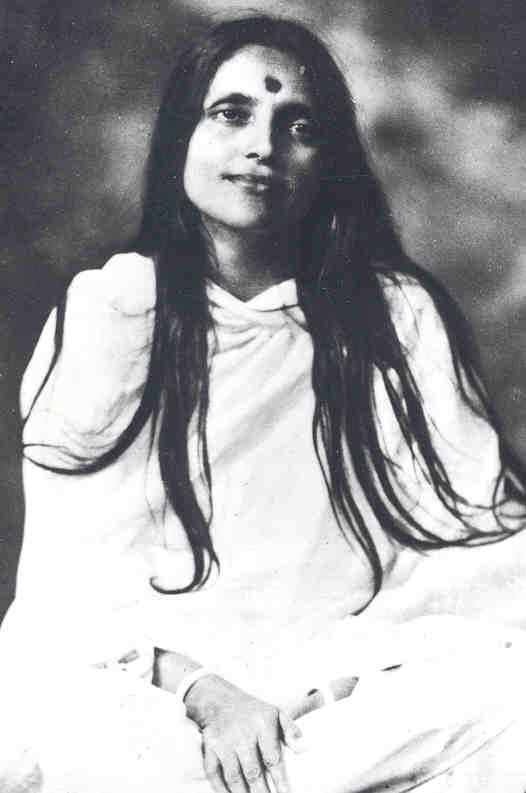
Anandamayi Ma
Ils concordent sur: Qu'est-ce que l'Absolu ? Dieu existe-t-il ? · Qui suis-je ? Existe-t-il un vrai soi ? · Que se passe-t-il après la mort ?
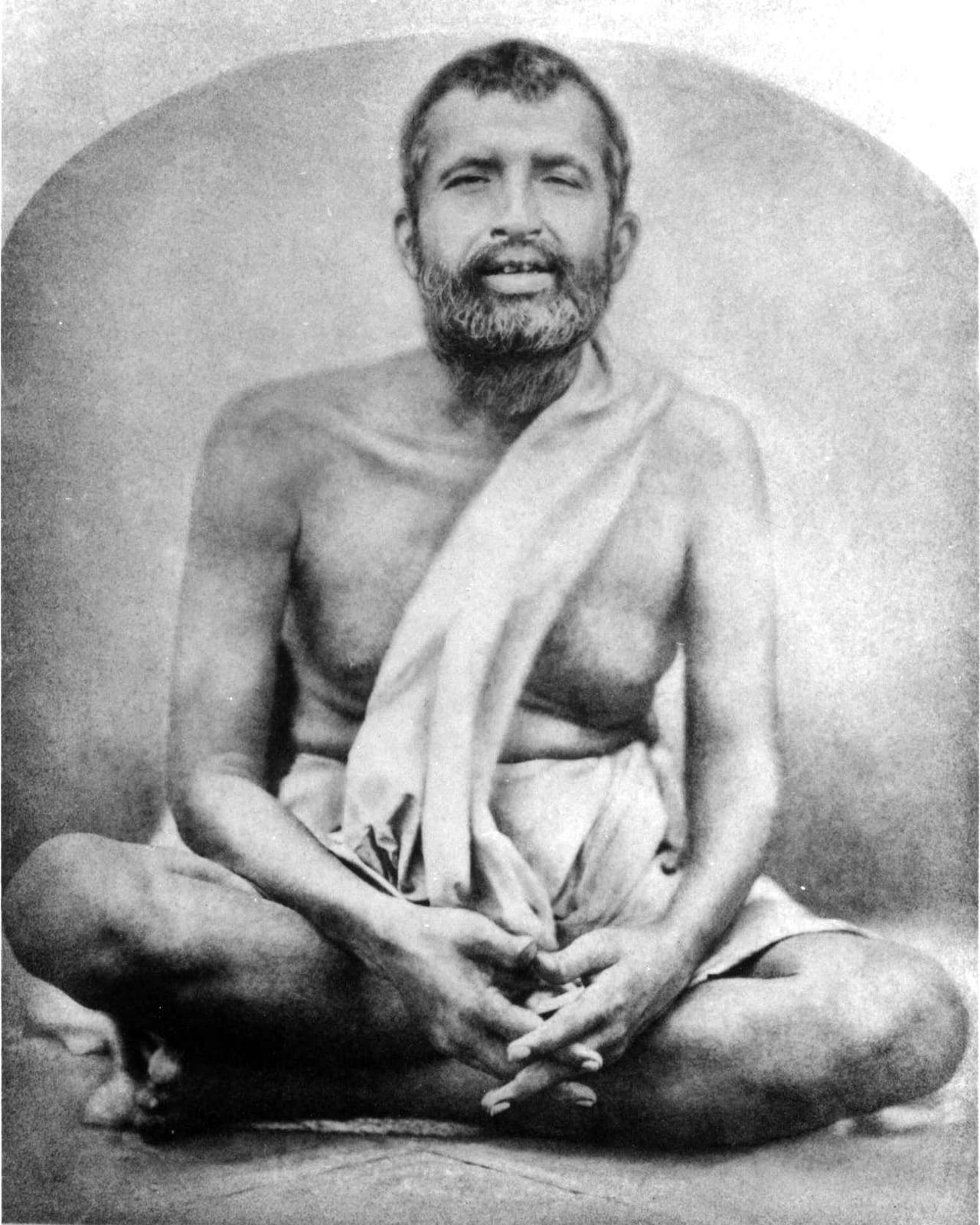
Ramakrishna
Ils concordent sur: Qu'est-ce que l'Absolu ? Dieu existe-t-il ? · Qui suis-je ? Existe-t-il un vrai soi ? · Comment atteint-on la libération ou le salut ?
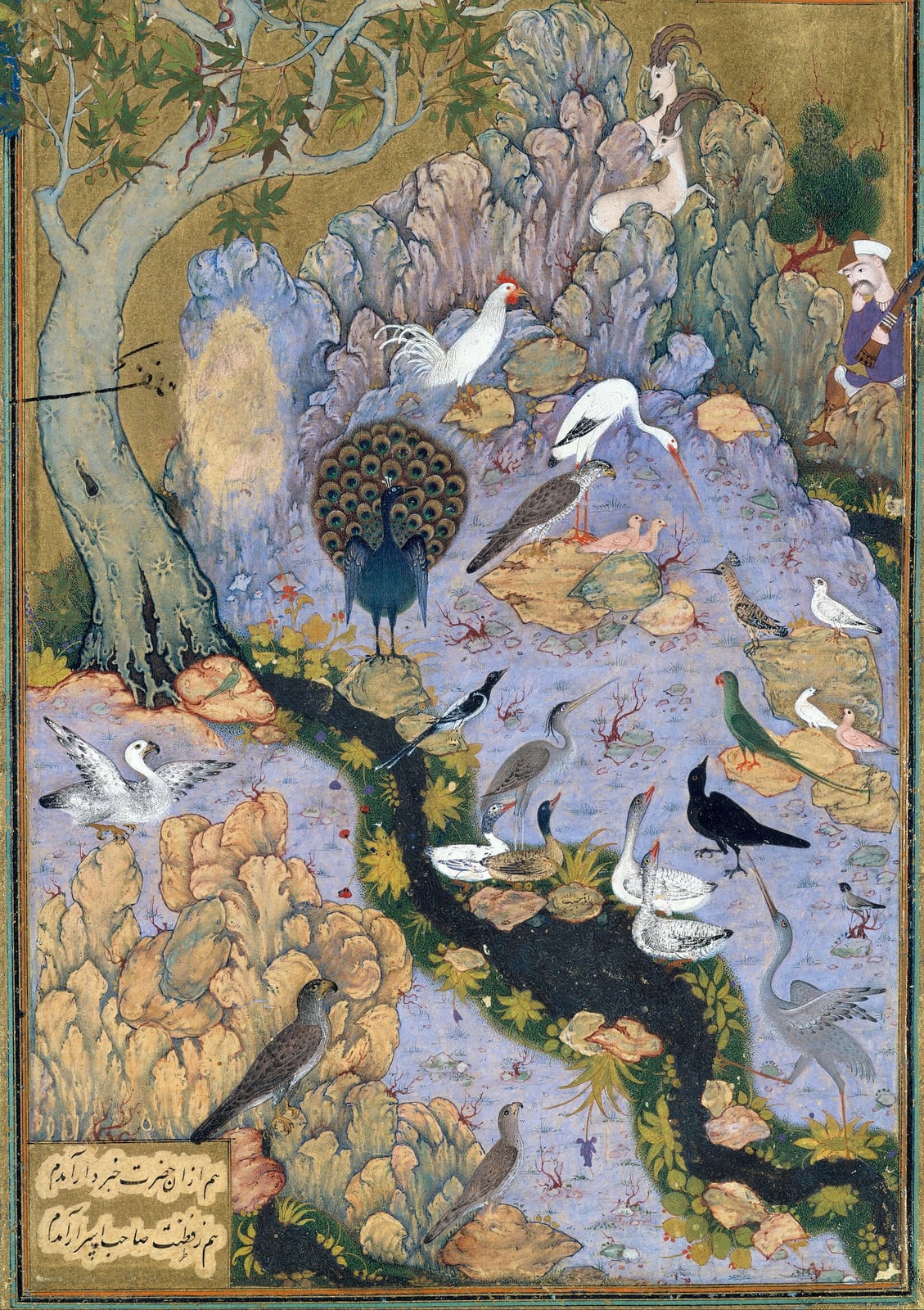
Attar
Ils concordent sur: Qu'est-ce que l'Absolu ? Dieu existe-t-il ? · Qui suis-je ? Existe-t-il un vrai soi ? · Faut-il un maître ?
Ibn Arabi
Ils concordent sur: Qu'est-ce que l'Absolu ? Dieu existe-t-il ? · Qui suis-je ? Existe-t-il un vrai soi ? · Le monde est-il réel ?
Pense autrement que

Nikolai Berdyaev
Ils s'opposent sur: Qui suis-je ? Existe-t-il un vrai soi ? · Faut-il un maître ?
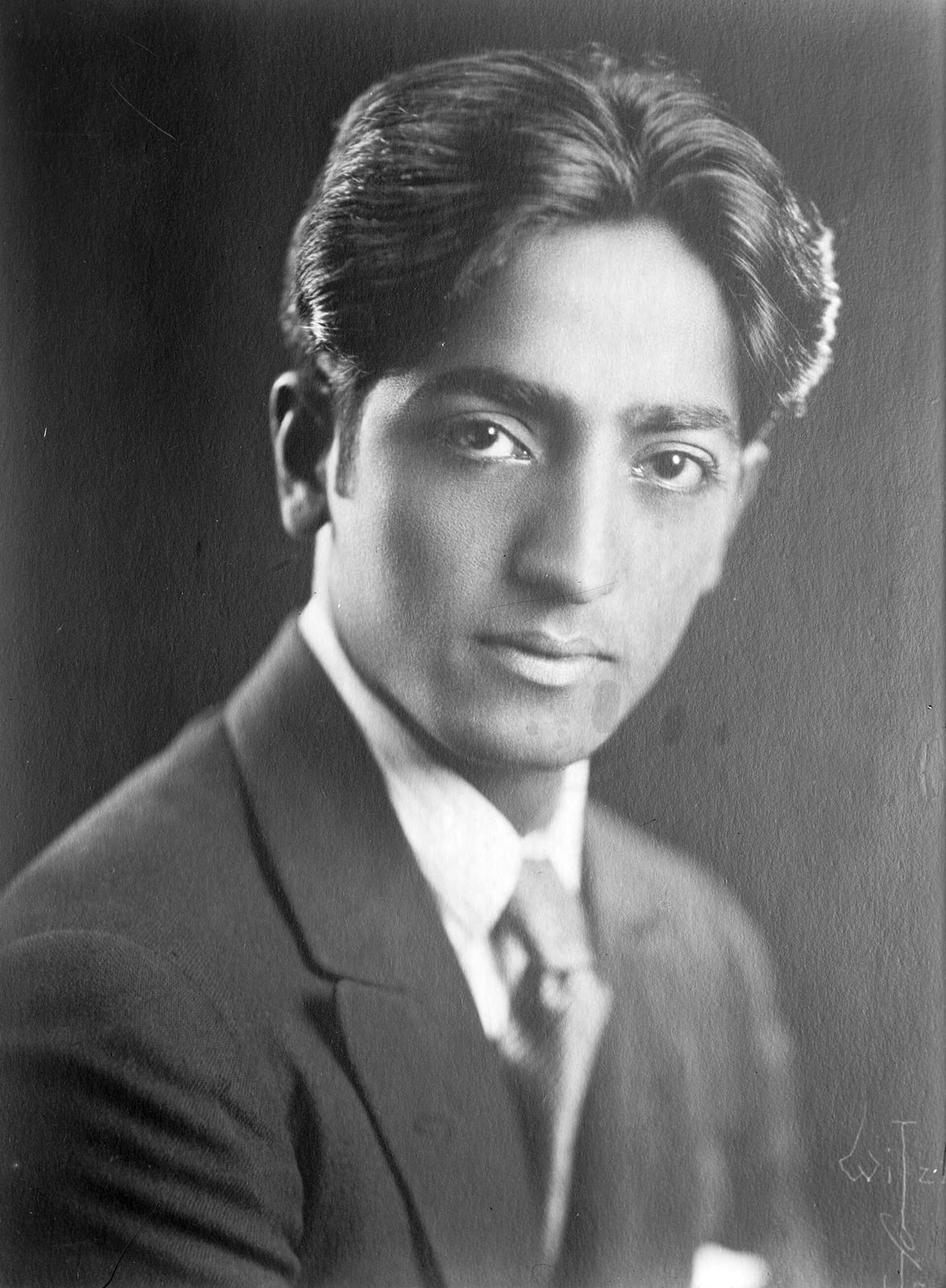
Jiddu Krishnamurti
Ils s'opposent sur: Comment atteint-on la libération ou le salut ? · Faut-il un maître ?
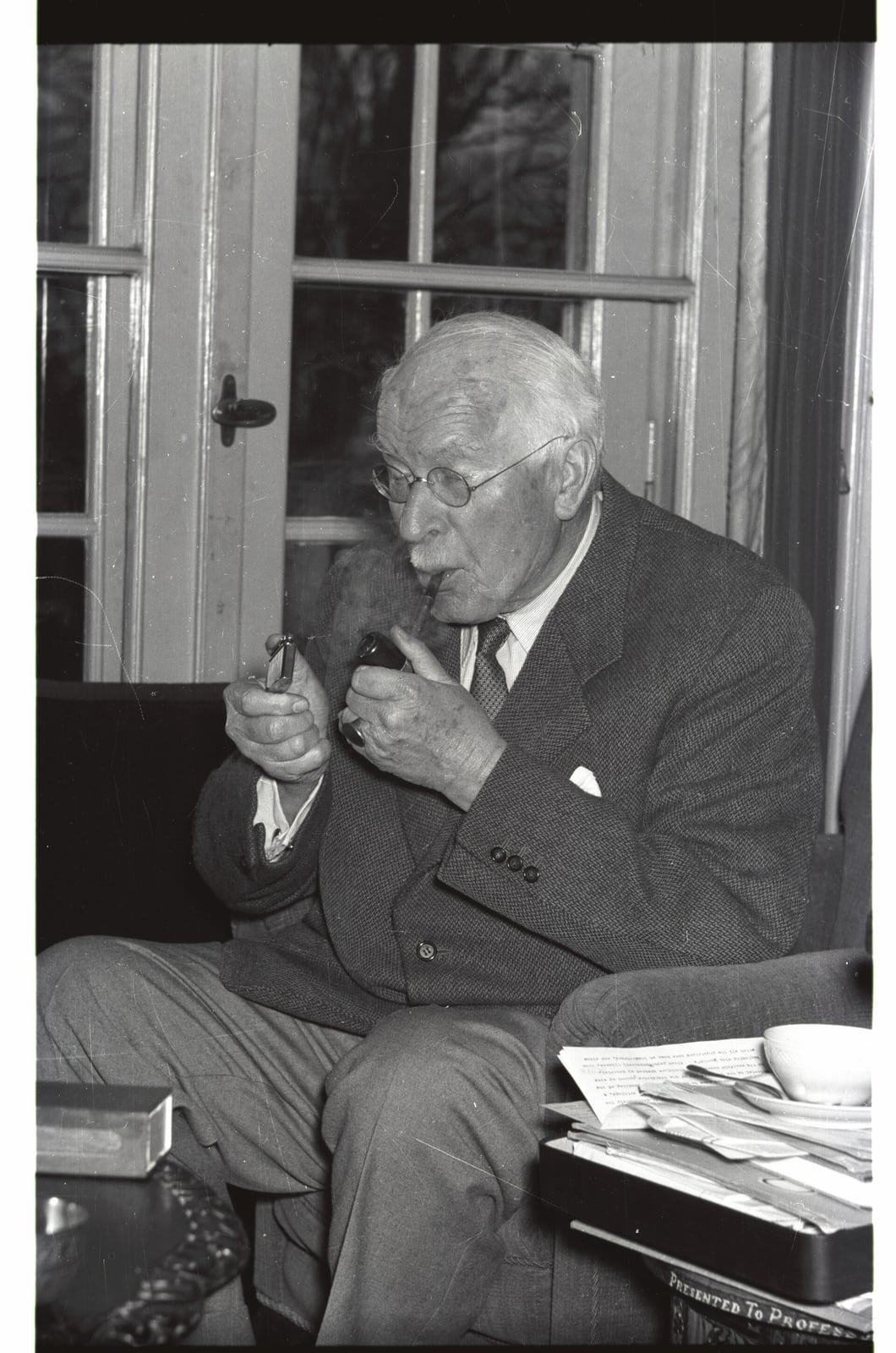
Carl Gustav Jung
Ils s'opposent sur: Qu'est-ce que l'Absolu ? Dieu existe-t-il ? · Qui suis-je ? Existe-t-il un vrai soi ? · Pourquoi souffrons-nous ?

Seraphim of Sarov
Ils s'opposent sur: Qui suis-je ? Existe-t-il un vrai soi ?
Anecdotes et récits
Anecdotes et récits
Récit hagiographiquerelato épico
Born on an island in the Yamunā
Origine du récit: Mahābhārata, Ādiparvan, section LXIII of Ganguli's translation (and Satyavatī's account to Bhīṣma, section CV). It is epic legend with no verifiable historical basis.
Récit hagiographiquerelato épico
The grandfather of both sides
Origine du récit: Mahābhārata, Ādiparvan, sections CV–CVI of Ganguli's translation. Sullivan sees in this episode a central piece in the construction of Vyāsa as an author figure.
Contestérelato épico (interpolación)
Gaṇeśa the scribe
Origine du récit: Ādiparvan, section I of Ganguli's translation (vulgate). Sukthankar's critical edition (1933) relegates it to appendix I of the Ādiparvan because it is missing from many manuscripts: it is regarded as an interpolation.
Source: Sukthankar, Vishnu S. (ed.). The Mahābhārata for the First Time Critically Edited. Vol. 1: The Ādiparvan, with Prolegomena. Poona: Bhandarkar Oriental Research Institute, 1933 (edición crítica completa, 1919–1966).
Récit hagiographiquerelato épico
Sañjaya's divine sight
Origine du récit: Mahābhārata, Bhīṣmaparvan, section II of Ganguli's translation (Jambū-khaṇḍa-nirmāṇa). Text checked.
Récit hagiographiquerelato épico
One night with the dead
Origine du récit: Mahābhārata, Āśramavāsikaparvan, sections XXXI–XXXIII of Ganguli's translation. Text checked (section XXXII).
Récit hagiographiquerelato épico
Śuka's echo
Origine du récit: Mahābhārata, Śāntiparvan (Mokṣadharma), sections CCCXXXIII–CCCXXXIV of Ganguli's translation. The Bhāgavata Purāṇa (1.2.2) preserves a version in which the trees answer.
Récit hagiographiquerelato purāṇico
Vyāsa's dissatisfaction
Origine du récit: Bhāgavata Purāṇa, book I, chaps. 4–7. A self-presentation of the Purāṇa itself, composed according to scholarship around the ninth–tenth centuries; summary after Bryant's introduction (2003).
Source: Bryant, Edwin F. (trad. e introd.). Krishna: The Beautiful Legend of God. Śrīmad Bhāgavata Purāṇa, Book X. Londres: Penguin, 2003. Introducción (el marco del Bhāgavata y su atribución a Vyāsa).
Enseignements
Enseignements
Les notions qui structurent sa pensée, expliquées dans leur contexte.
Subtle dharma (sūkṣma dharma)dharma-sutil
Ethics of the Mahābhārata.
Source: Hiltebeitel, Alf. Rethinking the Mahābhārata: A Reader's Guide to the Education of the Dharma King. Chicago: University of Chicago Press, 2001 (caps. 1–2, sobre Vyāsa como autor y la fecha de composición).
The fifth Veda (itihāsa)quinto-veda
The Mahābhārata's self-understanding (Ādiparvan, section LXIII).
Source: Sullivan, Bruce M. Kṛṣṇa Dvaipāyana Vyāsa and the Mahābhārata: A New Interpretation. Leiden: Brill, 1990; reed. como Seer of the Fifth Veda: Kṛṣṇa Dvaipāyana Vyāsa in the Mahābhārata. Delhi: Motilal Banarsidass, 1999.
Vyāsa as a function: the twenty-eight Vyāsasvyasa-de-cada-era
Viṣṇu Purāṇa, part III, chaps. 3–4.
Action without desire for the fruit (niṣkāma karma)nishkama-karma
Bhagavad Gītā, cantos 2–5.
Guru Pūrṇimā (Vyāsa Pūrṇimā)guru-purnima
Hindu religious calendar.
Vidéos
Vidéos
Enregistrements, entretiens et documentaires. Les vidéos sont lues depuis YouTube ; elles ne sont pas hébergées ici.
Understanding the Mahabharata
Conférence· EN· 2021· 79 min
Oxford Centre for Hindu StudiesChaîne officielle
Mahābhārata - History or Mythology? | Prof. Robert P. Goldman
Conférence· EN· 2022· 92 min
Argumentative Indians
Dharma and Dharmas: The Moral and Ethical Legacies of the Mahābharata and Rāmāyaṇa
Conférence· EN· 2022· 109 min
Karwaan Heritage
The Geography of the Mahabharata
Conférence· EN· 2022· 67 min
Bhandarkar Oriental Research InstituteChaîne officielle
From Manuscripts to Masterpieces - Bhandarkar Institute's Mahabharata Publications
Documentaire· EN· 2023· 3 min
Bhandarkar Oriental Research InstituteChaîne officielle
Dr. Vishwa Adluri - Mahābhārata: The Principal Monument to Bhakti
Conférence· EN· 2018· 54 min
Indian Institute of World Culture - IIWCChaîne officielle
Wendy Doniger: Cutting the Red Cord of Vengeance — The Oresteia and the Mahabharata
Conférence· EN· 2021· 37 min
Einstein ForumChaîne officielle
Peter Brook on the making of his 1985 production of The Mahabharata
Entretien· EN· 2015· 3 min
Young VicChaîne officielle
Mahabharata: the Ancient Indian Epic
Documentaire· EN· 2021· 16 min
World History EncyclopediaChaîne officielle
Brahma Sutra with Shankara Bhashyam | Session 13 (Sutra 1.1.4) | Swami Tattwamayananda
Conférence· EN· 2026· 79 min
Vedanta Society of New YorkChaîne officielle
Bharat Ek Khoj | Episode-5 | Mahabharata, Part I
Documentaire· HI· 1988· 49 min
Prasar Bharati ArchivesChaîne officielle
Bharat Ek Khoj | Episode-6 | Mahabharata, Part II
Documentaire· HI· 1988· 43 min
Prasar Bharati ArchivesChaîne officielle
Juan Arnau. Bhagavad Gita. Tesoros de la Literatura India
Conférence· ES· 2020· 35 min
Casa de la India in SpainChaîne officielle
Diálogo entre Òscar Pujol y Agustín Pániker: «La Bhagavadgītā»
Conférence· ES· 2023· 76 min
Casa AsiaChaîne officielle
«La Bhagavadgītā», conferencia dictada por el Dr. Òscar Pujol
Conférence· ES· 2023· 90 min
RDenIndiaChaîne officielle
Galerie
Galerie
Images dont la licence a été vérifiée. Chacune conserve son auteur et son attribution.
Manuscrits
Manuscrits
Témoins manuscrits et textes anciens, avec leur dépositaire et leurs conditions de consultation.
FA · Nastaʿlīq (persa) · Mahābhārata (s. IV a. C.–IV d. C.); traducción persa de la década de 1580
Razmnāma (traducción persa del Mahābhārata), copia ilustrada de 1598
- Témoin conservé
- Copia ilustrada de 1598, hoy dispersa
- Dépositaire
- Folios dispersos; uno en el Victoria and Albert Museum (Londres) y otro en el Dallas Museum of Art
- Numérisation
- collections.vam.ac.uk/item/O112323/painting-the-…
Relations
Relations
Influences, filiations et affinités. On distingue la relation documentée de la similitude identifiée par analyse.
Famille de
According to the Mahābhārata, Vyāsa is the son of Parāśara, grandson of Śakti and great-grandson of Vasiṣṭha. A textual, not historical, genealogy.
Relation documentée
Disciple de
In the Bhāgavata Purāṇa, Nārada appears as Vyāsa's teacher and advises him to compose the Bhāgavata. A textual relation.
Relation documentée
Idées proches de
The two 'authors' of the epics are at once characters in their works and names that authorise whole corpora; the Viṣṇu Purāṇa counts Vālmīki among the twenty-eight Vyāsas.
Similitude identifiée par analyse
A reçu l'influence de
Tradition ascribes to Vyāsa the commentary (Yogabhāṣya) on Patañjali's Yogasūtras; Maas maintains that both texts are by the same author.
Relation documentée
A influencé
Śaṅkara commented on the Brahmasūtras, which he ascribes to Bādarāyaṇa (identified with Vyāsa by tradition), and on the Bhagavad Gītā.
Relation documentée
A influencé
Rāmānuja
Rāmānuja founded his Vedānta on his commentary on the Brahmasūtras (Śrī Bhāṣya) and also commented on the Gītā.
Relation documentée
Idées proches de
The traditional list of Advaita teachers places Gauḍapāda after Vyāsa and his son Śuka; it is a school genealogy, not historically documented.
Similitude identifiée par analyse
A influencé
In 1900 Vivekananda devoted a lecture to the Mahābhārata and commented on the Gītā on many occasions.
Relation documentée
A influencé
Yogananda wrote an extensive commentary on the Bhagavad Gītā, God Talks with Arjuna, published posthumously in 1995.
Relation documentée
Idées proches de
Aurobindo made the Bhagavad Gītā one of the foundations of his integral yoga; the relation is one of reception of the work ascribed to Vyāsa.
Similitude identifiée par analyse
Idées proches de
The Bhāgavata Purāṇa, ascribed to Vyāsa, was the central text of Caitanya's devotion and of the Gauḍīya school.
Similitude identifiée par analyse
Sources
Sources
Bibliographie et catalogues consultés pour cette fiche.
- Wikipedia (inglés), «Vyasa», sobre la Guru Pūrṇimā (Vyāsa Pūrṇimā), los cirañjīvin y los lugares de culto asociados.
- Wikidata, «Vyasa», QID Q330521 (sabio legendario, compilador de los Veda y autor del Mahābhārata; LCCN n79109341; GND 119017687; BnF 11928738t).
- Sullivan, Bruce M. Kṛṣṇa Dvaipāyana Vyāsa and the Mahābhārata: A New Interpretation. Leiden: Brill, 1990; reed. como Seer of the Fifth Veda: Kṛṣṇa Dvaipāyana Vyāsa in the Mahābhārata. Delhi: Motilal Banarsidass, 1999.
- Hiltebeitel, Alf. Rethinking the Mahābhārata: A Reader's Guide to the Education of the Dharma King. Chicago: University of Chicago Press, 2001 (caps. 1–2, sobre Vyāsa como autor y la fecha de composición).
- Fitzgerald, James L. (trad.). The Mahābhārata, vol. 7: Book 11, The Book of the Women; Book 12, The Book of Peace, Part One. Chicago: University of Chicago Press, 2004. Introducción.
- Brockington, John. The Sanskrit Epics. Leiden: Brill, 1998 (Handbuch der Orientalistik, 2. Abt., Bd. 12). Capítulos sobre el Mahābhārata.
- Sukthankar, Vishnu S. (ed.). The Mahābhārata for the First Time Critically Edited. Vol. 1: The Ādiparvan, with Prolegomena. Poona: Bhandarkar Oriental Research Institute, 1933 (edición crítica completa, 1919–1966).
- Ganguli, Kisari Mohan (trad.). The Mahabharata of Krishna-Dwaipayana Vyasa. Calcuta: Bharata Press (P. C. Roy), 1883–1896. Ādi Parva, secc. I, LXII, LXIII y CV–CVI; Bhishma Parva, secc. II; Asramavasika Parva, secc. XXXII; Svargarohanika Parva, secc. V. Project Gutenberg n.º 15474–15477.
- Telang, Kashinath Trimbak (trad.). The Bhagavadgîtâ, with the Sanatsugâtîya and the Anugîtâ. Oxford: Clarendon Press, 1882 (Sacred Books of the East 8).
- Arnold, Edwin (trad.). The Song Celestial; or, Bhagavad-Gîtâ (from the Mahâbhârata). Londres: Trübner, 1885. Project Gutenberg n.º 2388.
- Rocher, Ludo. The Purāṇas. Wiesbaden: Otto Harrassowitz, 1986 (A History of Indian Literature, vol. II, fasc. 3).
- Dutt, Manmatha Nath (trad.). A Prose English Translation of Vishnupuranam (Based on Professor H. H. Wilson's Translation). Calcuta, 1894. Parte III, secc. III–IV (los veintiocho Vyāsa y la división del Veda). Project Gutenberg n.º 66208.
- Nakamura, Hajime. A History of Early Vedānta Philosophy, Part One. Delhi: Motilal Banarsidass, 1983 (sobre Bādarāyaṇa y la fecha de los Brahmasūtra).
- Maas, Philipp A. «A Concise Historiography of Classical Yoga Philosophy». En Eli Franco (ed.), Periodization and Historiography of Indian Philosophy. Viena: Sammlung de Nobili, 2013, pp. 53–90.
- Woods, James Haughton (trad.). The Yoga-System of Patañjali … and the Comment, called Yoga-bhāshya, attributed to Veda-Vyāsa. Cambridge (Mass.): Harvard University Press, 1914 (Harvard Oriental Series 17).
- Bryant, Edwin F. (trad. e introd.). Krishna: The Beautiful Legend of God. Śrīmad Bhāgavata Purāṇa, Book X. Londres: Penguin, 2003. Introducción (el marco del Bhāgavata y su atribución a Vyāsa).
- Thibaut, George (trad.). The Vedânta-Sûtras with the Commentary by Śaṅkarâkârya. Part I. Oxford: Clarendon Press, 1890 (Sacred Books of the East 34). Introducción. Project Gutenberg n.º 16295.
- Vivekananda, Swami. «The Mahabharata», conferencia en Pasadena, 1 de febrero de 1900. The Complete Works of Swami Vivekananda, vol. 4 (Wikisource).
- Thibaut, George (trad.). The Vedânta-Sûtras with the Commentary by Râmânuja. Oxford: Clarendon Press, 1904 (Sacred Books of the East 48). Project Gutenberg n.º 7297.
- Paramahansa Yogananda. God Talks with Arjuna: The Bhagavad Gita. Royal Science of God-Realization. 2 vols. Los Ángeles: Self-Realization Fellowship, 1995.
- Wikipedia (inglés), «Bhagavad Gita», sección de traducciones (Charles Wilkins, The Bhagvat-Geeta, Londres, 1785).
- Victoria and Albert Museum, «The sage Vyasa with disciples observes his son Suka approaching them», pintura de Banwari para una copia del Razmnāma (traducción persa del Mahābhārata), 1598 (registro O112323).
- Ayant droit
- Textos sánscritos de dominio público. Traducciones con derechos propios: University of Chicago Press (van Buitenen, Fitzgerald), Penguin (Debroy, Smith, Patton, Bryant), Bantam (Miller), SUNY Press (Sargeant, Hariharānanda Āraṇya), Seuil (Biardeau), Kairós, Edaf (Barrio), Trotta (Consuelo Martín), Advaita Ashrama (Gambhirananda). Son de dominio público las de Ganguli (1883–1896), Telang (1882), Arnold (1885), Burnouf (1861), Schroeder (1912), Thibaut (1890–1904), Woods (1914) y Dutt (1894–1897).
En attente de confirmation
Ce que cette fiche n'a pas encore pu établir. Nous préférons le dire plutôt que de combler.
- Fechas: no hay nacimiento ni muerte; la línea de tiempo usa las fechas de los textos atribuidos. Las horquillas (Brockington, Hiltebeitel, Nakamura, Maas, Rocher) se resumen sin cita de página: precisarlas.
- Ediciones en español: solo se han verificado la adaptación de R. K. Narayan (Kairós) para el Mahābhārata y las Gītā de Edaf y Trotta. Buscar con ISBN la Bhagavadgītā de Òscar Pujol (Kairós) y ediciones españolas de los Purāṇa y de los Brahmasūtra distintas de Trotta; también ediciones en italiano, ruso e hindi (Gita Press).
- Obras atribuidas menores (Vyāsa Smṛti, Devī Bhāgavata, Adhyātma Rāmāyaṇa): falta fuente académica propia y ediciones con ISBN.
- Sala de lectura: falta la segunda parte de los Vedānta-Sūtras de Thibaut (SBE 38) en una fuente con texto; no se ha encontrado traducción española de dominio público de ninguna obra. Las páginas inglesas por libro del Mahābhārata en Wikisource son esbozos y no se han registrado.
- Manuscritos: identificar las signaturas de los folios del Razmnāma de 1598 (V&A, Dallas) y añadir el manuscrito de Jaipur (1584–1586).
- Vídeos: verificar el idioma de otras charlas en hindi de canales académicos (BORI) para equilibrar las lenguas.
Recherche effectuée le 2026-10-26