Christianisme · Mystique chrétienne · Platonisme
Simone Weil
1909 – 1943Personne historiquement documentée
Philosophe française (1909-1943), élève d'Alain et professeure de lycée, qui voulut penser à partir de l'expérience des opprimés : elle travailla un an en usine, combattit brièvement dans la guerre d'Espagne et vécut, à partir de 1937, une expérience mystique chrétienne sans jamais se faire baptiser. Elle mourut de tuberculose et de dénutrition en Angleterre, à trente-quatre ans, au service de la France libre. Son œuvre, presque entièrement posthume — La Pesanteur et la Grâce, L'Enracinement, Attente de Dieu, les Cahiers —, pense l'attention, le malheur et la force.
- œuvres
- 33œuvres
- éditions
- 63éditions
- citations
- 8citations
- vidéos
- 13vidéos
- images
- 8images
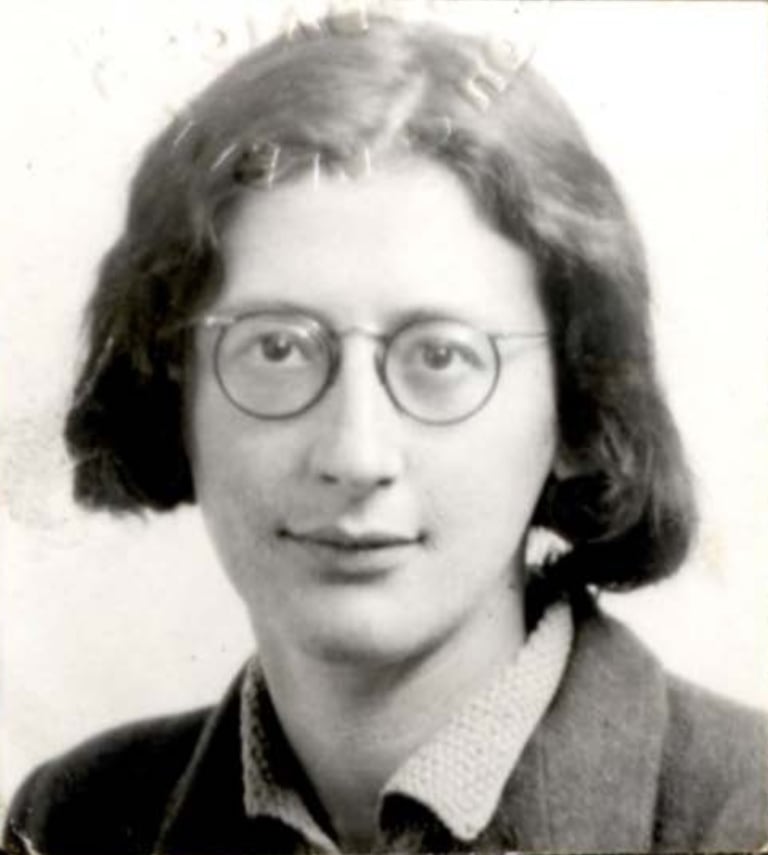
Simone Weil en 1943 · Public domain
Dans ses propres mots
«Le vrai héros, le vrai sujet, le centre de l’Iliade, c’est la force.»«L'Iliade ou le poème de la force», primera frase (Cahiers du Sud, 1940–1941)

Pour commencer, une œuvre
La Pesanteur et la GrâceSon idée centrale
For Weil, attention is the highest faculty of the soul: it consists in suspending thought, leaving it empty and available, without searching, so that the object may enter it. In its purest form it is prayer, and turned toward an afflicted person it is the rarest form of love of neighbour.
Le voir en contexte
Biographie
5 min de lecture
Traduction assistée à partir de l'original espagnol, en attente de relecture par un traducteur natif.
Une enfance sans concessions
Simone Adolphine Weil naquit à Paris le 3 février 1909 dans une famille juive, laïque et aisée : son père, Bernard Weil, était médecin, et sa mère, Salomea Reinherz, avait grandi à Rostov et en Belgique. Son frère aîné, André, allait devenir l'un des grands mathématiciens du siècle et le fondateur du groupe Bourbaki. On racontait dans la famille qu'à cinq ans, pendant la Première Guerre mondiale, la fillette renonça au sucre parce que les soldats du front n'en avaient pas ; le geste, transmis par les siens et recueilli par sa biographe Simone Pétrement, annonce une vie où la compassion ne s'en tenait pas au sentiment mais passait dans le corps.
L'élève d'Alain
Elle étudia au lycée Victor-Duruy avec René Le Senne puis, à partir de 1925, en khâgne au lycée Henri-IV auprès d'Émile Chartier, dit Alain, qui lui apprit à penser contre les idées reçues et à se défier de toute abstraction invérifiable dans l'action. En 1928, elle entra à l'École normale supérieure, seule femme de sa promotion. Le directeur adjoint de l'École, Célestin Bouglé, la surnomma la « Vierge rouge » pour son militantisme syndical et pacifiste. Son mémoire de diplôme, Science et perception dans Descartes (1930), défend déjà une idée qu'elle n'abandonnera pas : la connaissance naît du travail, du contact de l'esprit avec la résistance du monde. Elle fut reçue à l'agrégation de philosophie en 1931.
Professeure et militante
Professeure de lycée au Puy (1931-1932), à Auxerre (1932-1933) et à Roanne (1933-1934), elle scandalisa les autorités en prenant la tête de délégations de chômeurs et en versant à la caisse de solidarité la part de son traitement qui excédait l'allocation d'un chômeur. Elle se rendit en Allemagne à l'été 1932 et décrivit avec lucidité la décomposition qui préparait le nazisme ; elle collabora à la presse syndicaliste révolutionnaire et rédigea en 1934 les Réflexions sur les causes de la liberté et de l'oppression sociale, une analyse de l'oppression qui ne se laisse réduire ni au marxisme ni au libéralisme. Les notes prises à Roanne par une élève furent publiées plus tard sous le titre de Leçons de philosophie.
L'année d'usine
En décembre 1934, elle demanda un congé et entra comme ouvrière sans qualification à l'usine Alsthom, à Paris ; elle travailla ensuite aux Forges de Basse-Indre, puis chez Renault, jusqu'en août 1935. Son Journal d'usine consigne avec une précision d'ethnographe le rythme, les cadences, la peur de perdre sa place et l'humiliation des ordres. De cette expérience, elle écrivit qu'elle y avait reçu « pour toujours la marque de l'esclavage » et que le malheur des autres était entré dans sa chair. Le corps et l'âme « en morceaux », elle partit au Portugal avec ses parents ; dans un village de pêcheurs, elle vit une procession de femmes qui chantaient au clair de lune et eut la certitude que le christianisme était « la religion des esclaves ».
L'Espagne, Assise, Solesmes
En août 1936, au déclenchement de la guerre civile espagnole, elle gagna Barcelone et rejoignit le groupe international d'une colonne anarchiste sur le front d'Aragon. Le 20 août, elle se brûla la jambe avec de l'huile bouillante, et ses parents vinrent la chercher. Ce qu'elle y vit — des exécutions sommaires dont se félicitaient les deux camps — elle le raconterait en 1938 dans une lettre à Georges Bernanos. Au printemps 1937, seule dans la chapelle de Santa Maria degli Angeli, à Assise, « quelque chose de plus fort » qu'elle l'obligea pour la première fois à se mettre à genoux. Pendant la semaine sainte de 1938, à l'abbaye de Solesmes, le chant grégorien lui permit de traverser d'atroces migraines ; un jeune catholique anglais lui fit connaître George Herbert. En récitant son poème Love avec toute son attention, écrit-elle, « le Christ lui-même est descendu et m'a prise ».
Marseille : l'œuvre secrète
Après l'occupation de Paris, en juin 1940, la famille se réfugia à Vichy, puis à Marseille. Exclue de l'enseignement par les lois antijuives, Weil écrivit dans les Cahiers du Sud — c'est là que parut, sous l'anagramme d'Émile Novis, L'Iliade ou le poème de la force —, étudia le grec et le sanskrit, participa à des réseaux de résistance et remplit des cahiers de fragments qui allaient constituer son héritage. Le dominicain Joseph-Marie Perrin devint son interlocuteur ; elle lui expliqua par lettre pourquoi elle demeurait au seuil de l'Église sans recevoir le baptême, par solidarité avec tout ce que l'Église laissait au-dehors. Perrin lui fit rencontrer le philosophe paysan Gustave Thibon, dans la ferme ardéchoise duquel elle travailla et avec qui elle fit les vendanges de 1941, récitant chaque matin le Notre Père en grec.
New York et Londres
En mai 1942, elle s'embarqua avec ses parents pour Casablanca et New York, résolue à revenir au plus vite dans la lutte. De là, elle écrivit la Lettre à un religieux, catalogue de ses objections à l'Église, et parvint en novembre à gagner Londres pour travailler à la France libre. Ses supérieurs écartèrent son projet d'infirmières de première ligne et la chargèrent de rapports sur la reconstruction de la France. De cette commande naquit L'Enracinement, réflexion sur les « besoins de l'âme » et le déracinement moderne, ainsi que La Personne et le sacré et la Note sur la suppression générale des partis politiques.
La mort à Ashford
Le 15 avril 1943, on la trouva inconsciente dans sa chambre ; à l'hôpital Middlesex, on diagnostiqua une tuberculose. Elle mangeait très peu, et l'on dit dans son entourage qu'elle refusait de prendre davantage que la ration de la France occupée. Elle démissionna de la France libre à la fin de juillet et, le 17 août, fut transférée au sanatorium Grosvenor d'Ashford, dans le Kent, où elle mourut le 24 août 1943, à trente-quatre ans. Le coroner conclut à un suicide par refus de s'alimenter dans un moment de déséquilibre mental, verdict que ses biographes contestent. Elle fut inhumée au cimetière d'Ashford, entre les carrés juif et catholique.
Une œuvre posthume
Presque rien de ce qui la rendit célèbre ne parut de son vivant. Thibon réunit des fragments des cahiers dans La Pesanteur et la Grâce (1947) ; Albert Camus publia chez Gallimard L'Enracinement et une bonne part des inédits ; Perrin fit paraître Attente de Dieu (1950). Depuis, sa pensée — l'attention comme forme de la prière, le malheur, la « décréation », la primauté des obligations sur les droits — n'a cessé d'interpeller croyants et agnostiques, philosophes politiques et mystiques. La figure historique est moins sainte et plus dérangeante que la légende : une penseuse rigoureuse, intransigeante envers elle-même, qui fit de l'accord entre l'idée et la vie une exigence sans relâche.
Sources: Pétrement, Simone. La Vie de Simone Weil. 2 vols. Paris: Fayard, 1973 (reed. en un volumen, 1997). · Weil, Simone. Attente de Dieu. Ed. Joseph-Marie Perrin. Paris: La Colombe, 1950 (incluye la «Autobiographie spirituelle», carta al P. Perrin de mayo de 1942). Texto en Wikisource. · Weil, Simone. La Pesanteur et la Grâce. Ed. Gustave Thibon. Paris: Plon, 1947. Texto en Wikisource. · Weil, Simone. L'Enracinement: prélude à une déclaration des devoirs envers l'être humain. Paris: Gallimard (col. «Espoir»), 1949. Texto en Wikisource. · Weil, Simone. La Condition ouvrière. Paris: Gallimard (col. «Espoir»), 1951 (incluye el Journal d'usine). Texto en Wikisource.
Chronologie
La vie, année après année
Chaque point est un événement documenté. Cliquez pour le lire, avec sa source et son degré de certitude.
3 février 19090 ansParís
Birth
Born into a secular Jewish family; her brother André is almost three.
DocumentéRozelle-Stone, A. Rebecca, y Benjamin P. Davis. «Simone Weil». Stanford Encyclopedia of Philosophy, publicado el 10 de marzo de 2018, revisión sustantiva del 18 de septiembre de 2025.
Après sa mort
- 1947Gravity and Grace
- 1949The Need for Roots in the 'Espoir' series
- 1988Complete works
3 février 1909 · 0 ans
Birth
Born into a secular Jewish family; her brother André is almost three.
Documenté
octobre 1925 · 16 ans
Pupil of Alain
She enters the khâgne of the Lycée Henri-IV, where Émile Chartier (Alain) shapes her philosophical method.
Documenté
1928
Admission to the École normale supérieure
The only woman in her year; Célestin Bouglé nicknames her the 'Red Virgin'.
Documenté
1931
Agrégation and first post
She passes the agrégation in philosophy and is posted to the lycée at Le Puy, where she supports the unemployed.
Documenté
août 1932
Journey to Germany
She observes the German crisis on the eve of Nazism and publishes a series of articles.
Documenté
1934
Reflections on oppression
She writes the Reflections concerning the Causes of Liberty and Social Oppression, which she calls her 'great work'.
Documenté
décembre 1934
Factory worker at Alsthom
She begins her factory year (Alsthom, Basse-Indre, Renault), which lasts until August 1935.
Documenté
août 1935
The fishermen's procession
In a Portuguese village she feels that Christianity is 'the religion of slaves': her first decisive contact with Catholicism.
Documenté
20 août 1936
Injured in the Spanish war
A militia volunteer in an anarchist column, she burns her leg with boiling oil and returns to France.
Documenté
avril 1937
Santa Maria degli Angeli
Alone in Saint Francis's chapel, something 'stronger' than herself makes her kneel for the first time.
Documenté
avril 1938
Solesmes and the poem 'Love'
She attends the Holy Week offices; she discovers George Herbert's poem whose recitation will lead her to feel that 'Christ himself came down'.
Documenté
décembre 1940
The Iliad, or the Poem of Force
The Cahiers du Sud publish the essay under the anagram Émile Novis (December 1940–January 1941).
Documenté
septembre 1941
Grape harvest with Gustave Thibon
She works on the land and recites the Lord's Prayer in Greek daily, making it her only practice of prayer.
Documenté
mai 1942
Exile in New York
She leaves with her parents for the United States; there she writes the Letter to a Priest.
Documenté
novembre 1942
In the service of Free France
She reaches England; in the office of the Commissariat for the Interior she writes The Need for Roots and the London Writings.
Documenté
15 avril 1943
Hospitalised
She is found unconscious; at the Middlesex Hospital she is diagnosed with tuberculosis.
Documenté
24 août 1943 · 34 ans
Death
She dies at the Grosvenor Sanatorium; the coroner returns a verdict of suicide by refusing to eat.
Documenté
1947
Gravity and Grace
Gustave Thibon publishes with Plon the anthology from the notebooks that makes her known.
Documenté
1949
The Need for Roots in the 'Espoir' series
Albert Camus publishes L'Enracinement with Gallimard and begins editing her unpublished writings.
Documenté
1988
Complete works
Gallimard begins the edition of the Œuvres complètes directed by André A. Devaux and Florence de Lussy.
Documenté
Œuvres
Œuvres essentielles
Les œuvres sans lesquelles on ne comprend pas son héritage.
Œuvre posthume · 1947
La Pesanteur et la Grâce
Short fragments grouped into chapters —gravity and grace, the void, detachment, decreation, the self, affliction, violence, attention and will, love, chance, the sacred— which set out her metaphysics: every natural movement of the soul obeys a law analogous to gravity, and only grace, which needs a void in order to enter, is the exception. This was the book that revealed Weil to the public and it remains the most widespread entry point to her thought, although Thibon's edition emphasises her spiritual side.
5 éditions

Œuvre posthume · 1949
L'Enracinement. Prélude à une déclaration des devoirs envers l'être humain
It starts from a principle: obligation precedes right. The first part lists the 'needs of the soul' (order, liberty, obedience, responsibility, equality, hierarchy, honour, punishment, freedom of opinion, security, risk, property, truth…); the second analyses the uprootedness of workers, peasants and nations; the third sketches how to give a people roots again through education and work with a spiritual meaning. It is her major political work and a radical critique both of the modern state and of the cult of greatness.
5 éditions

Œuvre posthume · 1950
Attente de Dieu
It contains the six letters to Perrin —among them 'Hesitations concerning Baptism' and the 'Spiritual Autobiography', which recounts Portugal, Assisi, Solesmes and Herbert's poem— and the essays 'Reflections on the Right Use of School Studies', 'The Love of God and Affliction', 'Forms of the Implicit Love of God', 'Concerning the Our Father' and 'The Three Sons of Noah'. It is Weil's most personal text and the one that fixes her position on the threshold of the Church.
4 éditions

Œuvre posthume · 1951
Cahiers
The laboratory of all her thought: reading notes on Plato, the Upanishads and the Gita, the Pythagoreans and the Gospels, exercises in Greek and Sanskrit, problems of mathematics and physics, and fragments on gravity, grace, the void, necessity, beauty and decreation. They are the source of Gravity and Grace and the most direct way to read Weil without an editor's mediation.
3 éditions
Toute son œuvre (33)

La Connaissance surnaturelle
1950

Réflexions sur les causes de la liberté et de l'oppression sociale
1934
Oppression et Liberté
1955

La Condition ouvrière
1951
Journal d'usine
1935

L'Iliade ou le poème de la force
1940

La Source grecque
1953

Intuitions pré-chrétiennes
1951

Lettre à un religieux
1951

Écrits de Londres et dernières lettres
1957

La Personne et le Sacré
1943

Note sur la suppression générale des partis politiques
1943
Simone Weil
Étude pour une déclaration des obligations envers l'être humain
The Conscious LibraryÉtude pour une déclaration des obligations envers l'être humain
1943
Simone Weil
Projet d'une formation d'infirmières de première ligne
The Conscious LibraryProjet d'une formation d'infirmières de première ligne
1940

Réflexions sur le bon usage des études scolaires en vue de l'amour de Dieu
1942
L'Amour de Dieu et le malheur
1942

Formes de l'Amour implicite de Dieu
1942
Autobiographie spirituelle (lettre au P. Perrin, mayo de 1942)
1942

Pensées sans ordre concernant l'amour de Dieu
1962

Leçons de philosophie (Roanne 1933–1934)
1959
Simone Weil
Science et perception dans Descartes
The Conscious LibraryScience et perception dans Descartes
1930

Sur la science
1966

Écrits historiques et politiques
1960
Lettre à Georges Bernanos
1938
Citations
Citations localisées dans une œuvre précise. Chacune porte sa provenance et son degré de fiabilité.
Le vrai héros, le vrai sujet, le centre de l’Iliade, c’est la force.Vérifiée«L'Iliade ou le poème de la force», primera frase (Cahiers du Sud, 1940–1941)
Idées essentielles (résumé éditorial)
Par respect du droit d'auteur, ces idées sont résumées avec nos propres mots et ne sont pas présentées comme des citations littérales.
- For Weil, attention is the highest faculty of the soul: it consists in suspending thought, leaving it empty and available, without searching, so that the object may enter it. In its purest form it is prayer, and turned toward an afflicted person it is the rarest form of love of neighbour.
- Affliction (malheur) is not simply pain but a simultaneous destruction of body, soul and social place that marks the victim with contempt, even in their own eyes; that is why it can scarcely be looked at directly and almost no one is capable of true compassion.
- Creation is an act of withdrawal: God limits himself to let the world be. 'Decreation' is the reverse movement asked of human beings: renouncing the self so that God may love through them, without destroying themselves by force of will.
- Force, in her reading of the Iliad, is what turns a person into a thing; it intoxicates those who wield it and petrifies those who suffer it, and no one truly possesses it. Justice begins by recognising that law without being deceived by it.
- Obligations come before rights: a right exists only if someone recognises an obligation to respect it. Hence her proposal to replace the declaration of the rights of man with a declaration of obligations toward the human being, founded on the needs of body and soul.
- Uprootedness —of workers by the factory, of peasants by the rural exodus, of peoples by conquest and the centralised state— is the gravest disease of modern societies, because it spreads: the uprooted uproot others.
- Manual work, carried out with attention and free from haste and fear, can be contact with the necessity of the world and therefore a form of spirituality; a well-ordered civilisation would place physical work at its spiritual centre.
- The 'metaxu' (intermediaries, in Plato's word) are the relative goods —homeland, home, culture, beauty— that must not be mistaken for the absolute good, yet cannot be taken from anyone without harming their soul.
Dernières paroles
Il n'existe aucun témoignage vérifiable de ses dernières paroles.
No reliable final words survive. Weil died at the Grosvenor Sanatorium in Ashford on the night of 24 August 1943, after falling into a coma, with no family or friends present; her parents were still in New York and did not know how ill she was, because her last letters concealed it. The last written words that survive are those letters to her family (Écrits de Londres et dernières lettres).
Source: Weil, Simone. Écrits de Londres et dernières lettres. Paris: Gallimard (col. «Espoir»), 1957. Texto en Wikisource.
Interroger
Ce que répond son œuvre
Douze grandes questions de l'humanité et ce que ses textes permettent d'y répondre, références à l'appui. Nous ne lui prêtons jamais de paroles.
Qu'est-ce que l'Absolu ? Dieu existe-t-il ?
God is love that withdraws in creating: personal and impersonal at once
À la fois personnel et impersonnelIl le dit expressément
Simone Weil, raised in agnosticism, recounts in her Spiritual Autobiography that in 1938 Christ himself came down and took her, without her having sought it. Her God is love, but a love that shows itself as renunciation: in creating, God withdraws, abdicates, ceases to be everything so that something other than him may exist, and the world is handed over to necessity. In the Notebooks and in The Love of God and Affliction, the cross is the infinite distance between God and God crossed by love. Weil insists that God is at once personal and impersonal: personal in Christ and in the relationship of love; impersonal in the order of the world, in beauty, and in the sacred that dwells in every human being.
Comparer cette question avec d'autres maîtresQui suis-je ? Existe-t-il un vrai soi ?
We own only the power to say «I»: it must be surrendered
L'ego est une construction de la penséeIl le dit expressément
Simone Weil does not look for a true self to discover, but for a self to undo. In Gravity and Grace, the «I» is what a human being believes to be their own and which actually belongs to gravity: psychological necessity, the imagination that fills voids, the will to be the centre. The only thing that truly belongs to us is the faculty of saying «I», and that is what must be offered to God. She calls this process decreation: undoing in ourselves what is created so that God may love himself through us. In Human Personality she adds that what is sacred in each human being is not their person, but something impersonal that expects good.
Comparer cette question avec d'autres maîtresPourquoi souffrons-nous ?
Affliction is distance from God that love can cross
La séparation d'avec DieuIl le dit expressément
Simone Weil distinguishes mere suffering from affliction (malheur), which strikes body, soul and social standing at once, and marks the one who undergoes it like a slave. In The Love of God and Affliction she maintains that affliction is not punishment: it is the effect of the mechanical necessity to which God handed over the world when he withdrew so that it could exist. That is why it makes God absent for a time. But the cross reveals that this distance is the one separating God from God, and that love crosses it: if the soul goes on loving in the void, even if only by wanting to love, affliction becomes the place where God touches it.
Comparer cette question avec d'autres maîtresQue se passe-t-il après la mort ?
Belief in immortality robs us of the use of death
Silence ou réserveIl le dit expressément
Simone Weil distrusts hope in another life as consolation. In the texts gathered in Gravity and Grace she writes that belief in the immortality of the soul is harmful, because we cannot picture the soul as truly incorporeal: it becomes belief in a prolongation of life and takes away the use of death. What matters is to love God without expecting reward, to consent to necessity and to one's own disappearance, and to accept the void without filling it with imagination. She does not deny eternal life, which in her Spiritual Autobiography she associates with grace, but refuses to speculate on it: death teaches renunciation of the self here.
Comparer cette question avec d'autres maîtresComment atteint-on la libération ou le salut ?
Only grace escapes gravity; ours is to wait
Par la grâce et l'amourIl le dit expressément
Simone Weil frames the question with a physical image: all the natural movements of the soul are governed by laws analogous to those of gravity, and grace alone is the exception. The human being cannot rise by himself; every effort of the will to be good returns him to gravity. What is his to do is attention and waiting (attente): to look, to desire, not to fill the void with imaginings, to consent. In her Reflections on the Right Use of School Studies she argues that a geometry problem solved with true attention prepares for prayer. Salvation is grace descending into the soul that has emptied itself to receive it.
Comparer cette question avec d'autres maîtresFaut-il un maître ?
Intelligence needs total freedom, even before the Church
Aucune autorité spirituelleIl le dit expressément
Simone Weil stresses that no human being played a part in her encounter with Christ: neither in her reasoning nor in her reading had she foreseen the possibility of a real contact, person to person, with God. She had decisive interlocutors, such as the Dominican Joseph-Marie Perrin and Gustave Thibon, but declined baptism. In the Spiritual Autobiography and the Letter to a Priest she explains that the proper function of the intelligence demands total freedom, implying the right to deny everything and the absence of all domination; the Church's anathema sit, as an instrument of collective power, seemed to her incompatible with that freedom. No authority can take the place of personal attention to truth.
Comparer cette question avec d'autres maîtresLe monde est-il réel ?
Love the order of the world and consent to necessity
Un ordre naturel en transformationIl le dit expressément
Simone Weil sees the world as a fabric of necessity: blind forces, mechanical laws, gravity, to which God handed it over when he withdrew to let it be. That necessity crushes, produces affliction and takes no account of anyone. And yet it is beautiful: in Forms of the Implicit Love of God, love of the order of the world and its beauty appears as one of the ways in which the soul loves God without knowing it, and Weil links it with the Stoic tradition of amor fati. The sea is no less beautiful because it sinks ships. The right attitude is consent: to obey necessity as the stars do, without rebellion and without imagination, until one recognises in it the world's obedience to God.
Comparer cette question avec d'autres maîtresQu'est-ce que l'amour ?
To love is to give attention to the afflicted
Une compassion sans limitesIl le dit expressément
For Simone Weil, love of neighbour begins with attention. In the Reflections on the Right Use of School Studies she writes that the afflicted need nothing else in this world than people capable of giving them their attention, and that to ask the other «what are you going through?» is to recognise them as a fellow being, not as a specimen of the category of the afflicted. In Forms of the Implicit Love of God, love of neighbour is one of the ways God is loved without being named, and she describes it as a creative love which, like the Samaritan's, gives existence to one whom affliction had reduced to a thing. That love requires renouncing being the centre: it is attention emptied of self.
Comparer cette question avec d'autres maîtresSommes-nous libres ou tout est-il déterminé ?
The soul obeys a gravity; only grace is the exception
Nous sommes des machines jusqu'à l'éveilIl le dit expressément
Simone Weil opens the selection Gravity and Grace with a thesis that sounds like physics: all the natural movements of the soul are governed by laws analogous to those of physical gravity, and grace alone is the exception. The human being, left to himself, does nothing but fall: he seeks compensations, fills voids with imagination, yields to force. What we call will changes hardly anything essential. The only true freedom is consent: accepting necessity and desiring the good without claiming to reach it by one's own effort, leaving a void through which grace may descend. Apart from that consented obedience, the soul is mechanism.
Comparer cette question avec d'autres maîtresPourquoi méditer ou prier ?
Attention, at its highest, is prayer
Être présentIl le dit expressément
For Simone Weil, prayer consists in attention. In the Reflections on the Right Use of School Studies she argues that attention consists in suspending thought, leaving it available, empty and open to its object, and that this capacity, exercised even on a geometry problem, prepares for prayer; elsewhere she writes that attention, at its highest degree, is the same thing as prayer. In the Spiritual Autobiography she recounts that she made herself recite the Our Father in Greek each day with absolute attention, and that sometimes, during that recitation, Christ was present in person. To pray is to stop filling the void and to look without appropriating.
Comparer cette question avec d'autres maîtresLa raison peut-elle connaître l'ultime ?
Intelligence must go to its limit, where contradiction opens the way
La foi et la raison s'entraidentIl le dit expressément
Simone Weil, agrégée in philosophy and a pupil of Alain, always defended the honesty of the intelligence. In the Spiritual Autobiography she recounts that, even after Christ took her, she continued to think that one can never wrestle enough with God if one does so out of pure regard for truth, because Christ likes us to prefer truth to him, since before being Christ he is truth. The intelligence must be exercised with total freedom and go to its limit; there it meets contradictions —necessity and the good, justice and affliction— that it cannot resolve, and which, held with attention, open it to the supernatural. Faith does not cancel reason: reason pushed to the extreme makes way for mystery.
Comparer cette question avec d'autres maîtresSe retirer du monde ou le transformer ?
Share the condition of the oppressed and think through rootedness
S'engager dans le mondeIl le dit expressément
Simone Weil carried engagement into her own body. A philosophy teacher, she was active in trade unionism, took leave to work as a labourer in metalworking factories in 1934–1935 —an experience recorded in the Factory Journal and The Workers' Condition—, enlisted in Durruti's anarchist column in the Spanish war and, in London, worked for Free France. There she wrote The Need for Roots, a programme for the reconstruction of France based on the needs of the soul and on obligations toward the human being. But her engagement was never merely political: in The Iliad, or the Poem of Force she analyses the force that turns people into things, which only attention and grace can counter.
Comparer cette question avec d'autres maîtres
Affinités et tensions
Affinités et tensions
Calculées question par question à partir de ses positions. La raison de chaque accord ou de chaque désaccord s'affiche d'un clic.
Pense comme

Nikolai Berdyaev
Ils concordent sur: Qu'est-ce que l'Absolu ? Dieu existe-t-il ? · Pourquoi souffrons-nous ? · Comment atteint-on la libération ou le salut ?
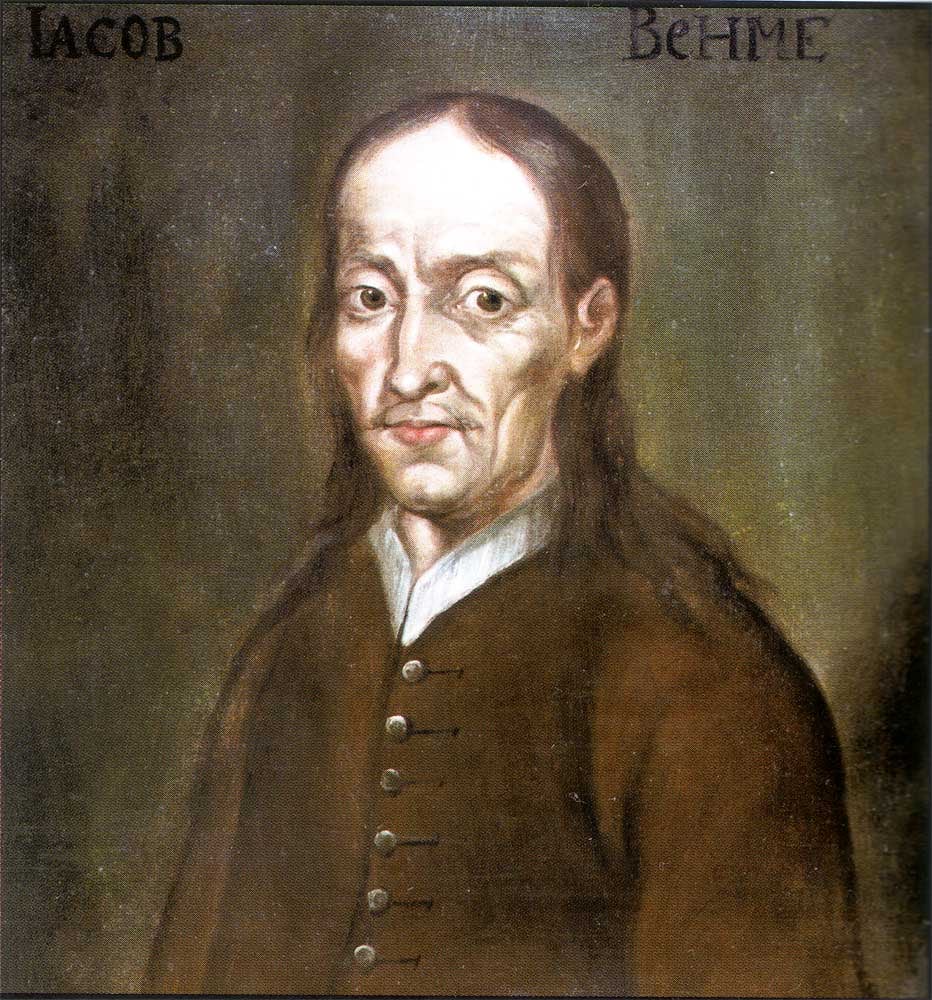
Jakob Böhme
Ils concordent sur: Qu'est-ce que l'Absolu ? Dieu existe-t-il ? · Pourquoi souffrons-nous ? · Comment atteint-on la libération ou le salut ?
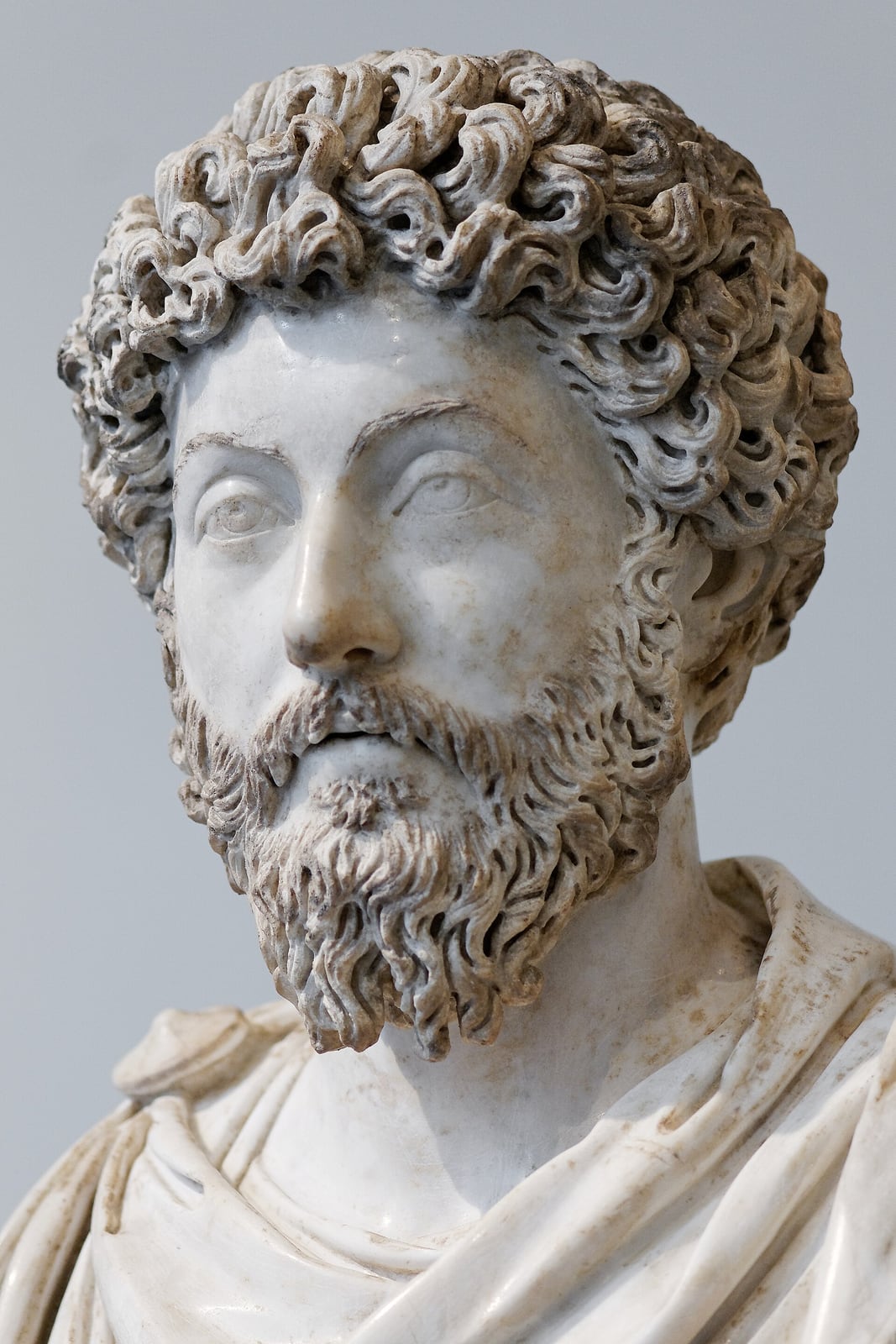
Marcus Aurelius
Ils concordent sur: Qu'est-ce que l'Absolu ? Dieu existe-t-il ? · Que se passe-t-il après la mort ? · Le monde est-il réel ?
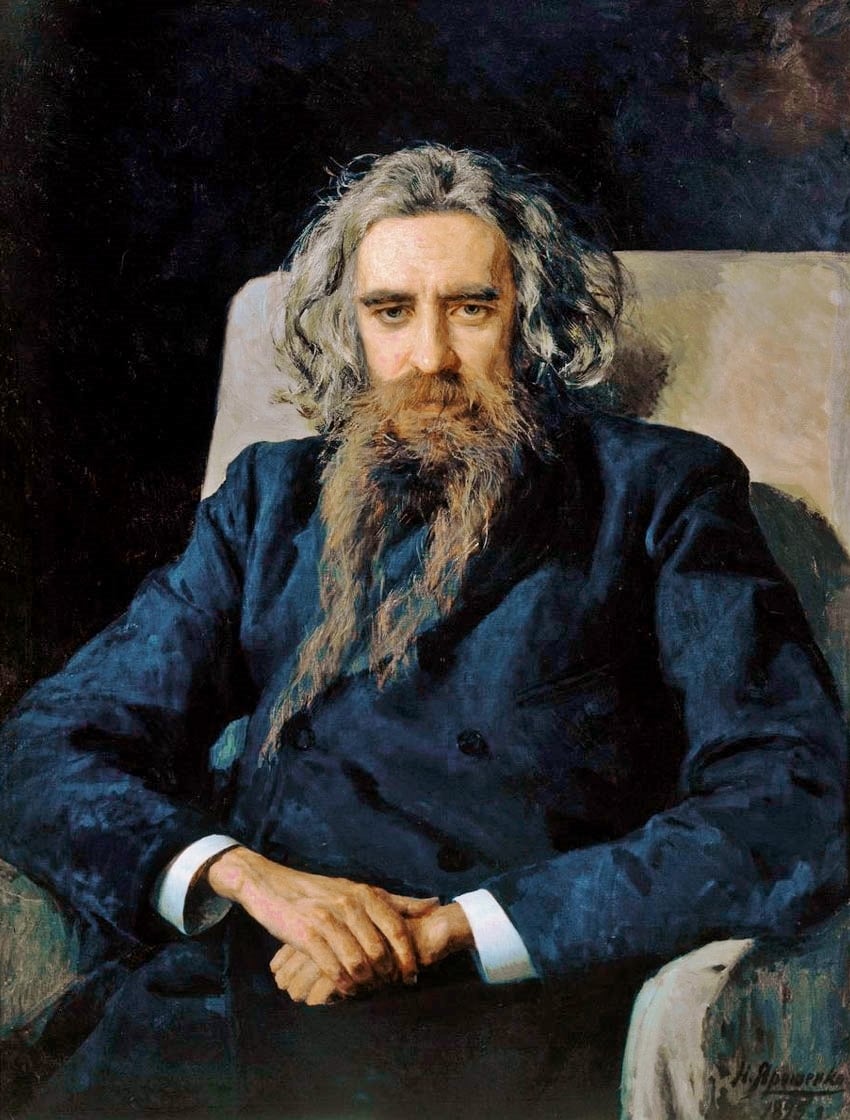
Vladimir Solovyov
Ils concordent sur: Qu'est-ce que l'Absolu ? Dieu existe-t-il ? · Pourquoi souffrons-nous ? · Comment atteint-on la libération ou le salut ?
Pense autrement que

Anecdotes et récits
Anecdotes et récits
Témoignage1914–1915
The soldiers' sugar
Origine du récit: Family recollections gathered by Simone Pétrement, her friend and fellow student, in La Vie de Simone Weil (1973).
Source: Pétrement, Simone. La Vie de Simone Weil. 2 vols. Paris: Fayard, 1973 (reed. en un volumen, 1997).
Témoignage1931–1932
The 'Red Virgin' of Le Puy
Origine du récit: Told by Pétrement on the basis of the local press and testimony; the reply about dismissal is handed down in several versions.
Source: Pétrement, Simone. La Vie de Simone Weil. 2 vols. Paris: Fayard, 1973 (reed. en un volumen, 1997).
Témoignage1933
Trotsky in the flat on rue Auguste-Comte
Origine du récit: Pétrement (La Vie de Simone Weil), from her parents' recollections and Simone's notes on the discussion.
Source: Pétrement, Simone. La Vie de Simone Weil. 2 vols. Paris: Fayard, 1973 (reed. en un volumen, 1997).
Témoignage1934–1935
The mark of slavery
Origine du récit: Her own testimony in the 'Spiritual Autobiography' (1942) and the Journal d'usine published in La Condition ouvrière.
Documenté1936
The boiling oil on the Aragon front
Origine du récit: Date of the accident according to the Stanford Encyclopedia of Philosophy; details of the stay in Pétrement and in the letter to Bernanos (Écrits historiques et politiques).
Témoignage1938
George Herbert's poem 'Love'
Origine du récit: 'Spiritual Autobiography', letter to Fr. Perrin of May 1942 (Attente de Dieu). Weil does not give the young Englishman's name.
Témoignage1941
The Greek Our Father in the vineyard
Origine du récit: 'Spiritual Autobiography' (Attente de Dieu), where Thibon appears as 'T…'; Thibon gave his version in Simone Weil telle que nous l'avons connue (1952).
Contesté1943
The rations of occupied France
Origine du récit: The verdict appears on the death certificate and is cited by the Stanford Encyclopedia of Philosophy and the biographies by Pétrement and Du Plessix Gray; the ration motive comes from testimony by those around her in London.
Enseignements
Enseignements
Les notions qui structurent sa pensée, expliquées dans leur contexte.
Attentionattention
Developed above all in Marseille (1941–1942), rooted in Alain's teaching on perception.
Affliction (malheur)malheur
Born of the factory experience (1934–1935) and formulated in 'L'Amour de Dieu et le malheur' (1942).
Decreationdecreation
A term coined in the Marseille Notebooks; gathered by Thibon into a chapter of La Pesanteur et la Grâce.
Source: Weil, Simone. La Pesanteur et la Grâce. Ed. Gustave Thibon. Paris: Plon, 1947. Texto en Wikisource.
Gravity and gracepesanteur-et-grace
The founding metaphor of the 1940–1942 Notebooks.
Source: Weil, Simone. La Pesanteur et la Grâce. Ed. Gustave Thibon. Paris: Plon, 1947. Texto en Wikisource.
Forceforce
Written in 1939–1940, in the face of war.
Rootedness and uprootednessenracinement
The core of L'Enracinement (London, 1943).
Obligations and the needs of the soulobligations
First part of L'Enracinement and the 'Draft for a Statement of Obligations'.
Metaxu (intermediaries)metaxu
Fragments from the Notebooks gathered in La Pesanteur et la Grâce (chapter 'Metaxu').
Source: Weil, Simone. La Pesanteur et la Grâce. Ed. Gustave Thibon. Paris: Plon, 1947. Texto en Wikisource.
Vidéos
Vidéos
Enregistrements, entretiens et documentaires. Les vidéos sont lues depuis YouTube ; elles ne sont pas hébergées ici.
Simone Weil "L'irrégulière" | Documentaire
Documentaire· FR· 26 min
Le Jour du SeigneurChaîne officielle
Pourquoi il faut lire Simone Weil aujourd'hui - #CulturePrime
Analyse· FR· 4 min
France CultureChaîne officielle
Relire la philosophe Simone Weil - L'édito culture
Analyse· FR· 5 min
France InterChaîne officielle
Colloque Simone Weil - Emmanuel Gabellieri
Conférence· FR· 52 min
Institut du Pont-Neuf
Conférence de Christian Loubère, Simone Weil et le poème de la force
Conférence· FR· 75 min
Société toulousaine de philosophie
An Encounter with Simone Weil: trailer (documentary feature)
Documentaire· EN· 3 min
SimoneWeilMovieChaîne officielle
Sylvie Weil talks about what it was like growing up as Simone Weil's niece
Entretien· EN· 1 min
SimoneWeilMovieChaîne officielle
Why Study Simone Weil with Philip Goodchild
Conférence· EN· 6 min
University of NottinghamChaîne officielle
Simone Weil, Waiting for God
Conférence· EN· 62 min
The Philosophical Research Society
Remedios Zafra. Conversando con la obra de Simone Weil
Conférence· ES· 62 min
La Casa EncendidaChaîne officielle
«Simone Weil: una filosofía nueva y muy antigua» por Laia Colell. Foro Arte y Pensamiento
Conférence· ES· 70 min
Fundación CajaCanariasChaîne officielle
En torno a la cuestión colonial. Simone Weil y el destino de Europa — Cristina Basili
Conférence· ES· 75 min
Círculo de Bellas ArtesChaîne officielle
Hebe Uhart - «¿Para qué le sirve Simone Weil a los escritores?»
Conférence· ES· 68 min
Cátedra Abierta Roberto Bolaño
Galerie
Galerie
Images dont la licence a été vérifiée. Chacune conserve son auteur et son attribution.
Manuscrits
Manuscrits
Témoins manuscrits et textes anciens, avec leur dépositaire et leurs conditions de consultation.
FR · Latin · 1925–1943
Fonds Simone Weil (cuadernos, manuscritos y correspondencia)
- Témoin conservé
- Cuadernos de Marsella, Nueva York y Londres; borradores de L'Enracinement y de los ensayos
- Dépositaire
- Bibliothèque nationale de France, departamento de Manuscritos (París)
Relations
Relations
Influences, filiations et affinités. On distingue la relation documentée de la similitude identifiée par analyse.
A reçu l'influence de
She considered him the father of Western mysticism; she translated and commented on him at length in Intuitions pré-chrétiennes and La Source grecque.
Relation documentée
A reçu l'influence de
She devoted her longest study in Intuitions pré-chrétiennes to 'The Pythagorean Doctrine', seeing in harmony and mediation Christian foreshadowings.
Relation documentée
A reçu l'influence de
'I fell in love with Saint Francis as soon as I came to know of him,' she writes; in his chapel at Assisi she knelt for the first time (1937).
Relation documentée
A reçu l'influence de
She quotes him repeatedly in the Notebooks and the letters to Perrin (the image of the thread that holds the bird down).
Relation documentée
A reçu l'influence de
In the Spiritual Autobiography she acknowledges having found in Marcus Aurelius, as amor fati, the duty of accepting God's will.
Relation documentée
A reçu l'influence de
In the fragments on non-action she states that the highest 'passive activity' is perfectly described in the Bhagavad Gita and in Lao Tzu.
Relation documentée
A reçu l'influence de
Her mystical experience of 1938 was, by her own account, a personal contact with Christ; the Passion is at the centre of her theology of affliction.
Relation documentée
Idées proches de
'Decreation' and the critique of self-will have been compared with Eckhart's detachment (Abgeschiedenheit); no significant direct reading is recorded.
Similitude identifiée par analyse
Contemporain de
French contemporaries engaging with Catholicism from opposite positions: Teilhard optimistic about evolution, Weil focused on affliction and necessity. There is no record that they met.
Similitude identifiée par analyse
Lié depuis d'autres fiches
Sources
Sources
Bibliographie et catalogues consultés pour cette fiche.
- Wikidata, «Simone Weil» (Q157309).
- Pétrement, Simone. La Vie de Simone Weil. 2 vols. Paris: Fayard, 1973 (reed. en un volumen, 1997).
- Weil, Simone. Attente de Dieu. Ed. Joseph-Marie Perrin. Paris: La Colombe, 1950 (incluye la «Autobiographie spirituelle», carta al P. Perrin de mayo de 1942). Texto en Wikisource.
- Rozelle-Stone, A. Rebecca, y Benjamin P. Davis. «Simone Weil». Stanford Encyclopedia of Philosophy, publicado el 10 de marzo de 2018, revisión sustantiva del 18 de septiembre de 2025.
- Weil, Simone. La Pesanteur et la Grâce. Ed. Gustave Thibon. Paris: Plon, 1947. Texto en Wikisource.
- Weil, Simone. L'Enracinement: prélude à une déclaration des devoirs envers l'être humain. Paris: Gallimard (col. «Espoir»), 1949. Texto en Wikisource.
- Weil, Simone [Émile Novis]. «L'Iliade ou le poème de la force». Cahiers du Sud, n.º 230–231, diciembre de 1940 – enero de 1941; recogido en La Source grecque, Gallimard, 1953. Texto en Wikisource.
- Weil, Simone. La Condition ouvrière. Paris: Gallimard (col. «Espoir»), 1951 (incluye el Journal d'usine). Texto en Wikisource.
- Fiori, Gabriella. Simone Weil: biografia di un pensiero. Milano: Garzanti, 1981.
- Du Plessix Gray, Francine. Simone Weil. New York: Viking (Penguin Lives), 2001.
- Perrin, Joseph-Marie, y Gustave Thibon. Simone Weil telle que nous l'avons connue. Paris: La Colombe, 1952.
- Weil, Simone. Œuvres complètes. Dir. André A. Devaux y Florence de Lussy. Paris: Gallimard, 1988– (7 tomos previstos en 16 volúmenes).
- Wikisource en francés, «Auteur:Simone Weil» (relación de obras con fechas de redacción y publicación).
- Weil, Simone. Écrits de Londres et dernières lettres. Paris: Gallimard (col. «Espoir»), 1957. Texto en Wikisource.
- Weil, Simone. Oppression et Liberté. Paris: Gallimard (col. «Espoir»), 1955 (incluye las Réflexions sur les causes de la liberté et de l'oppression sociale, 1934). Texto en Wikisource.
- Weil, Simone. Lettre à un religieux. Paris: Gallimard (col. «Espoir»), 1951. Texto en Wikisource.
- Weil, Simone. Intuitions pré-chrétiennes. Paris: La Colombe, 1951. Texto en Wikisource.
- Open Library, registros de edición consultados por ISBN (obras de Simone Weil).
- Haslett, Julia (dir.). An Encounter with Simone Weil. Documental, Line Street Productions, 2010.
- Weil, Simone, y Joë Bousquet. Correspondance 1942. Paris: Éditions Claire Paulhan, 2019 (primera ed.: Lausanne, L'Âge d'homme, 1982).
- Ayant droit
- Éditions Gallimard (ediciones francesas) y los herederos de Simone Weil; obra de dominio público en la UE desde 2014 y en España desde 2024, pero no en EE. UU. Las traducciones tienen derechos propios (Trotta, Routledge, NYRB, Harper, etc.).
- Site officiel
- www.simoneweil-association.com/
En attente de confirmation
Ce que cette fiche n'a pas encore pu établir. Nous préférons le dire plutôt que de combler.
- Derechos: comprobar si Simone Weil fue declarada «morte pour la France», lo que en Francia añadiría 30 años de protección a sus obras; no afecta a la regla UE/España/EE. UU. aplicada aquí, pero sí a la difusión en Francia.
- Todas las entradas de reading_texts llevan caution: la obra no es de dominio público en EE. UU. (publicaciones francesas de 1940–1968 restauradas por la URAA). Reevaluar a partir de 2036 (La Ilíada) y de 2043 (primeras obras póstumas).
- Verificar en la biografía de Pétrement los detalles de la anécdota de Trotski (fecha exacta y lugar) y la réplica de Le Puy sobre la destitución.
- Localizar ISBN de ediciones en alemán, italiano y ruso de La gravedad y la gracia, Echar raíces y A la espera de Dios; y de la edición castellana de Venecia salvada.
- Confirmar los traductores de las ediciones de Trotta sin traductor registrado (A la espera de Dios, Intuiciones precristianas, Escritos de Londres).
- Confirmar la signatura del fondo Simone Weil en la Bibliothèque nationale de France y si existe digitalización en Gallica.
- Vídeos: no se encontraron en YouTube documentales completos de televisiones públicas en alemán o italiano con canal oficial; se registran 13.
- Programas de afiliación: ninguno verificado.
Recherche effectuée le 2026-10-25