Christianisme · Mystique chrétienne · Catholicisme
Pierre Teilhard de Chardin
1881 – 1955Personne historiquement documentée
Jésuite, géologue et paléontologue français (1881-1955) qui prit part à l'étude de l'homme de Pékin et passa vingt ans à faire des recherches en Chine. Il voulut unir la théorie de l'évolution et la foi chrétienne : dans Le Phénomène humain, il décrit un univers qui monte vers plus de complexité et de conscience, forme une « noosphère » et converge vers un point Oméga qu'il identifie au Christ. Rome lui interdit de publier ses œuvres philosophiques, parues après sa mort et d'une influence considérable, aux côtés du Milieu divin et de La Messe sur le Monde.
- œuvres
- 31œuvres
- éditions
- 39éditions
- citations
- 8citations
- vidéos
- 12vidéos
- images
- 9images
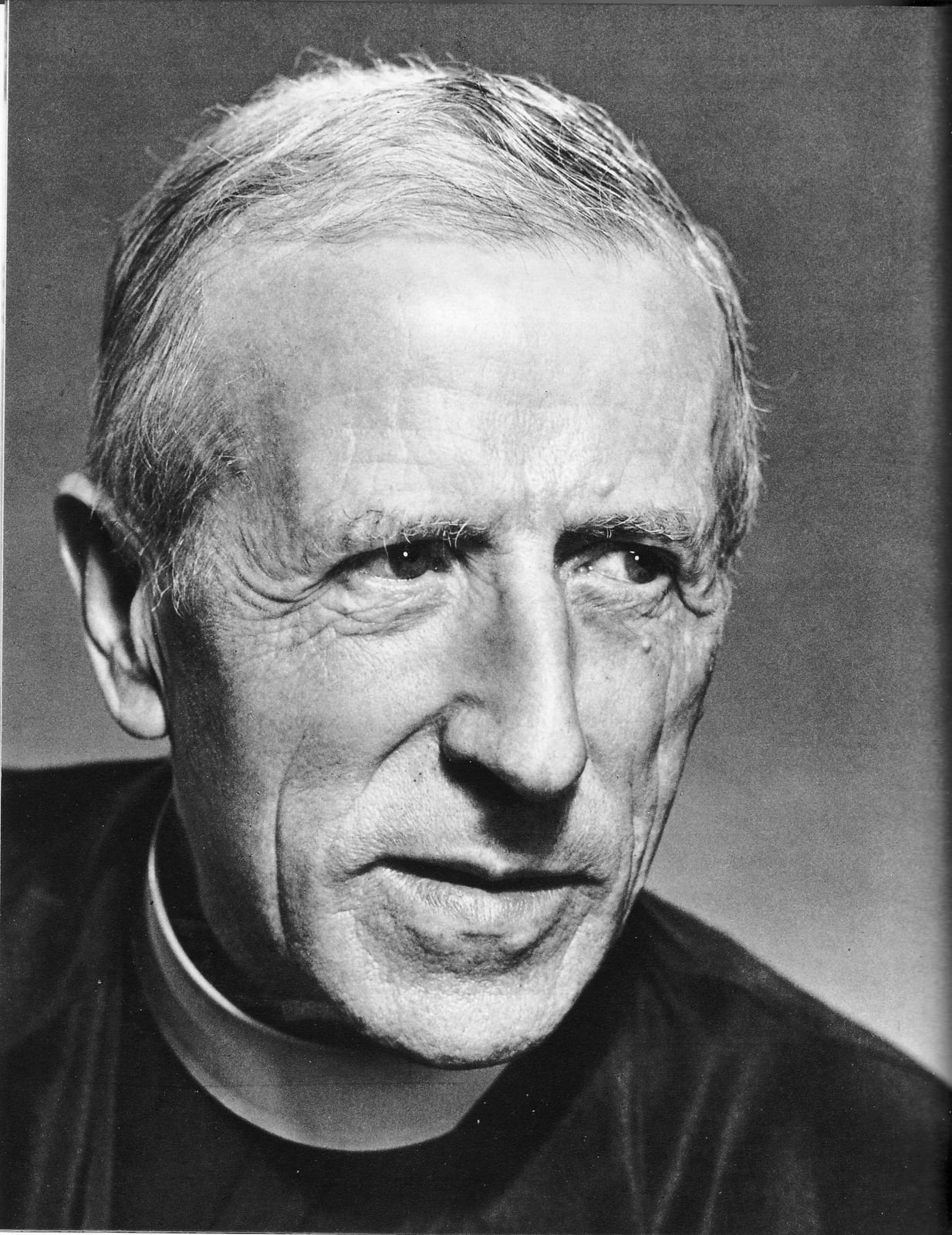
Pierre Teilhard de Chardin en 1955 · CC BY-SA 3.0
Dans ses propres mots
«Voir. On pourrait dire que toute la Vie est là, — sinon finalement, du moins essentiellement.»Le Phénomène humain, prólogo «Voir»

Pour commencer, une œuvre
Le Phénomène humainSon idée centrale
Evolution is not merely a biological fact but the movement of the whole universe: matter arranges itself into ever more complex and, at the same time, ever more conscious structures. Teilhard formulates this as the law of complexity-consciousness and takes it as the thread of all cosmic history.
Le voir en contexte
Biographie
4 min de lecture
Traduction assistée à partir de l'original espagnol, en attente de relecture par un traducteur natif.
Un enfant et son « Dieu de fer »
Marie-Joseph Pierre Teilhard de Chardin naquit le 1er mai 1881 au château de Sarcenat, à Orcines, près de Clermont-Ferrand, quatrième des onze enfants d'Emmanuel Teilhard de Chardin, archiviste et naturaliste amateur, et de Berthe-Adèle de Dompierre d'Hornoy, arrière-petite-nièce de Voltaire. De son père, il hérita la passion des pierres et des insectes ; de sa mère, une piété ardente centrée sur le Sacré-Cœur. Dans Le Cœur de la Matière, écrit à la fin de sa vie, il se souvint que, vers six ou sept ans, il adorait en secret son « Dieu de fer » — une clef de charrue, une tête de boulon, des éclats d'obus — parce que rien ne lui semblait plus dur ni plus durable : la « consistance », écrit-il, fut pour lui l'attribut fondamental de l'Être, et il cherchait déjà l'inaltérable au cœur de la matière.
Jésuite en exil
Il fit ses études au collège jésuite de Mongré, à Villefranche-sur-Saône, et entra en mars 1899 au noviciat de la Compagnie de Jésus à Aix-en-Provence. Les lois anticongréganistes de 1901 contraignirent les jésuites français à l'exil, et Teilhard acheva sa formation philosophique à Jersey, où la géologie devint pour lui une vocation. De 1905 à 1908, il enseigna la physique et la chimie au collège de la Sainte-Famille du Caire, puis, de 1908 à 1912, étudia la théologie à Ore Place, à Hastings, où il lut L'Évolution créatrice d'Henri Bergson. Il fut ordonné prêtre le 24 août 1911.
La guerre, rencontre avec l'absolu
De 1912 à 1914, il se forma à la paléontologie au Muséum national d'histoire naturelle de Paris auprès de Marcellin Boule. En 1913, il participa quelques jours aux fouilles de Piltdown, qui se révéleraient des années plus tard une supercherie. Mobilisé en décembre 1914, il servit comme brancardier dans un régiment de tirailleurs marocains à Ypres, à Verdun et au Chemin des Dames, et fut décoré de la Médaille militaire et de la Légion d'honneur. Dans les tranchées, il écrivit ses premiers essais — La Vie cosmique (1916), Le Milieu mystique, La Puissance spirituelle de la Matière (1919) — et entretint avec sa cousine Marguerite Teillard-Chambon une correspondance où l'on voit naître sa pensée. Il prononça ses vœux solennels le 26 mai 1918.
De l'Institut catholique à la Chine
Docteur ès sciences de la Sorbonne en 1922 avec une thèse sur les mammifères de l'Éocène inférieur français, il enseigna la géologie à l'Institut catholique de Paris. En 1923, il partit pour Tianjin rejoindre le jésuite Émile Licent ; dans le désert des Ordos, n'ayant ni pain ni vin pour célébrer, il écrivit La Messe sur le Monde. Une note privée sur le péché originel, qui avait circulé sans son autorisation, provoqua l'intervention de Rome : en 1925, on lui retira son enseignement, et en 1926 il repartit pour la Chine, qui serait sa base pendant vingt ans. C'est là qu'il rédigea Le Milieu divin (1926-1927), dont la publication lui fut refusée.
Le géologue de l'Asie
Conseiller du Laboratoire de recherches cénozoïques de Pékin, il prit part aux fouilles de Zhoukoudian, où Pei Wenzhong découvrit en 1929 le crâne du Sinanthrope, l'« homme de Pékin » ; Teilhard établit la géologie du gisement et, avec Henri Breuil, la présence d'outils et de feu. Il participa à la Croisière jaune de Citroën (1931-1932), parcourut le Yangzi, l'Inde, la Birmanie et Java, et dressa une carte géologique générale de la Chine. Ses centaines d'articles scientifiques, réunis en onze volumes, le placèrent parmi les grands géologues du continent. À Pékin, il noua une amitié intense et chaste avec la sculptrice Lucile Swan, que documente une longue correspondance.
Le Phénomène humain
Entre 1938 et 1940, à Pékin, il écrivit son œuvre maîtresse, Le Phénomène humain : une lecture de l'évolution comme montée de complexité et de conscience qui, après la biosphère, engendre la « noosphère » et converge vers un pôle d'unité personnelle, le point Oméga, qu'il identifie au Christ cosmique. Retenu en Chine pendant la Seconde Guerre mondiale, il fonda avec Pierre Leroy l'Institut de géobiologie. De retour à Paris en 1946, il jouit d'un prestige croissant, mais Rome lui interdit de publier des ouvrages philosophiques, renouvela en 1948 le refus d'imprimer Le Phénomène humain et l'empêcha d'accepter une chaire au Collège de France. En 1950, il fut élu à l'Académie des sciences.
New York et la mort à Pâques
En 1951, il s'installa à New York, attaché à la fondation Wenner-Gren, d'où il se rendit deux fois en Afrique du Sud pour étudier les australopithèques. Il continua d'écrire : Le Cœur de la Matière (1950) et Le Christique (1955) sont son testament spirituel. Selon plusieurs témoins, il avait exprimé le souhait de mourir un jour de la Résurrection. Il mourut d'une crise cardiaque le dimanche de Pâques, 10 avril 1955, à New York, et fut inhumé dans le cimetière du noviciat jésuite de Saint Andrew-on-Hudson, au bord de l'Hudson.
Une œuvre révélée après coup
Avant de mourir, il avait confié ses manuscrits à sa secrétaire, Jeanne Mortier, pour contourner l'interdiction de publier, qui ne s'étendait pas aux inédits d'un défunt. Le Phénomène humain parut au Seuil en 1955, et les Œuvres atteignirent treize volumes. Leur diffusion fut immense dans les années soixante ; le Saint-Office répondit en 1962 par un monitum mettant en garde contre les ambiguïtés et les erreurs de ses écrits, jamais formellement retiré. Des scientifiques comme Peter Medawar critiquèrent durement son langage, tandis que des théologiens comme Henri de Lubac le défendirent. Benoît XVI évoqua en 2009 sa « grande vision », et François le cita dans Laudato si' (2015). Sa figure demeure entre la mystique et la science : un jésuite obéissant qui ne cessa jamais de penser.
Sources: Cuénot, Claude. Pierre Teilhard de Chardin: les grandes étapes de son évolution. Paris: Plon, 1958. · Speaight, Robert. Teilhard de Chardin: A Biography. London: Collins, 1967. · King, Ursula. Spirit of Fire: The Life and Vision of Teilhard de Chardin. Maryknoll (N.Y.): Orbis Books, 1996 (ed. revisada, 2015). · Teilhard de Chardin, Pierre. Le Phénomène humain. Paris: Éditions du Seuil, 1955 (Œuvres, t. I). Texto en Wikisource. · Teilhard de Chardin, Pierre. Le Milieu divin. Paris: Éditions du Seuil, 1957 (Œuvres, t. IV). Texto en Wikisource.
Chronologie
La vie, année après année
Chaque point est un événement documenté. Cliquez pour le lire, avec sa source et son degré de certitude.
1 mai 18810 ansSarcenat, Orcines
Birth
Fourth of eleven children of Emmanuel Teilhard de Chardin and Berthe-Adèle de Dompierre d'Hornoy.
DocumentéWikipedia en inglés, «Pierre Teilhard de Chardin» (consultada para fechas y trayectoria, contrastada con las demás fuentes).
Après sa mort
- 30 juin 1962Monitum of the Holy Office
- 24 mai 2015Laudato si'
1 mai 1881 · 0 ans
Birth
Fourth of eleven children of Emmanuel Teilhard de Chardin and Berthe-Adèle de Dompierre d'Hornoy.
Documenté
mars 1899 · 17 ans
Jesuit novice
He enters the Society of Jesus's novitiate.
Documenté
v. 1902
Exile in Jersey
With the Jesuits expelled from France, he studies philosophy in Jersey and becomes passionate about the island's geology.
Documenté
1905
Teacher in Cairo
He teaches physics and chemistry at the Holy Family college (1905–1908).
Documenté
24 août 1911 · 30 ans
Ordination
Ordained priest at the end of his theology studies at Ore Place.
Documenté
1913
Piltdown excavations
He spends a few days at the Piltdown excavations with Charles Dawson; 'Piltdown Man' was exposed as a hoax in 1953.
Documenté
décembre 1914
Stretcher-bearer in the Great War
Mobilised as a stretcher-bearer in a regiment of Moroccan riflemen; Médaille militaire and Legion of Honour.
Documenté
1916
Cosmic Life
He writes his first essay, the core of all his later work.
Documenté
26 mai 1918
Solemn vows
During military leave he takes his final vows as a Jesuit.
Documenté
1922
Doctorate in science
He defends at the Sorbonne his thesis on the mammals of the French Lower Eocene.
Documenté
1923
The Mass on the World
On his first Chinese expedition, with no bread or wine to celebrate, he writes the offering of 'the whole Earth'.
Documenté
avril 1926
Exile in China
Removed from teaching in Paris over a note on original sin, he returns to China; he writes The Divine Milieu (1926–1927).
Documenté
décembre 1929
Peking Man
Pei Wenzhong finds the skull of Sinanthropus; Teilhard is the site's geologist.
Documenté
1931
Croisière jaune
He takes part as a scientist in the Citroën expedition across Central Asia (1931–1932).
Documenté
1938
The Human Phenomenon
He writes his major work (1938–1940); Rome refuses permission to publish it.
Documenté
1946
Return to France
After the war he returns to Paris, where his thought circulates in typescript copies.
Documenté
1950
Academy of Sciences
Elected to the Academy of Sciences; he writes The Heart of Matter.
Documenté
1951
New York
He settles in New York, attached to the Wenner-Gren Foundation; he travels to South Africa in 1951 and 1953.
Documenté
10 avril 1955 · 73 ans
Death on Easter Sunday
He dies of a heart attack; he is buried in the cemetery of the Saint Andrew-on-Hudson novitiate.
Documenté
novembre 1955
Publication of The Human Phenomenon
Éditions du Seuil publishes the first volume of his Works, made possible because he had bequeathed his manuscripts to Jeanne Mortier.
Documenté
30 juin 1962
Monitum of the Holy Office
A warning to bishops and superiors about ambiguities and doctrinal errors in his works.
Documenté
24 mai 2015
Laudato si'
Pope Francis cites his contribution in the encyclical on integral ecology (no. 83, note 53).
Documenté
Œuvres
Œuvres essentielles
Les œuvres sans lesquelles on ne comprend pas son héritage.
Œuvre posthume · 1955
Le Phénomène humain
His major work, presented as a 'purely phenomenological' essay. It covers Before Life (matter and its 'within'), Life (the biosphere and the law of complexity-consciousness), Thought (the threshold of reflection and the noosphere) and Survival, in which humanity, compressed on the closed surface of the planet, converges toward a personal centre, the Omega Point. An epilogue on the 'Christian phenomenon' identifies that centre with Christ. Its visionary prose fascinated millions of readers and exasperated scientists such as Peter Medawar.
6 éditions

Œuvre posthume · 1957
Le Milieu divin. Essai de vie intérieure
A treatise on spirituality for Christians living in the world. The first part shows the 'divinisation of activities': all human work, brought to perfection, collaborates in the consummation of the world in Christ, because God waits 'at the tip of my pen, my pick, my paintbrush'. The second deals with the 'divinisation of passivities' —what is undergone, diminishment, death—, and the third describes the 'divine milieu', the presence of Christ that envelops everything. It is his most widely read book as a spiritual guide.
5 éditions

Œuvre posthume · 1923
La Messe sur le Monde
A prayer in the form of a cosmic Mass: with neither bread, wine nor altar, the priest offers 'on the altar of the whole Earth' the labour and suffering of the world, and asks that the consecration reach the entire universe. Its parts —the offering, fire over the world, fire in the world, communion, prayer— distil his mysticism of matter and his intuition of the cosmic Christ.
3 éditions
Œuvre posthume · 1976
Le Cœur de la Matière
A spiritual autobiography in three parts —the cosmic, the human, the christic— telling how the child fascinated by his 'iron God' came to discover the convergence of the universe and the personal 'heart' that draws it. Together with The Christic, written a month before his death, it is the final synthesis of his vision and the best biographical gateway to his thought.
2 éditions
Toute son œuvre (31)
Pierre Teilhard de Chardin
Le Christique
The Conscious LibraryLe Christique
1955
Hymne de l'Univers
1961

L'Apparition de l'Homme
1956

La Vision du Passé
1957
Pierre Teilhard de Chardin
La Place de l'homme dans la nature. Le Groupe zoologique humain
The Conscious LibraryLa Place de l'homme dans la nature. Le Groupe zoologique humain
1956
L'Avenir de l'Homme
1959

L'Énergie humaine
1962

L'Activation de l'Énergie
1963

Science et Christ
1965

Comment je crois
1969

Les Directions de l'avenir
1973

Écrits du temps de la guerre (1916–1919)
1965
Pierre Teilhard de Chardin
La Vie cosmique
The Conscious LibraryLa Vie cosmique
1916
Pierre Teilhard de Chardin
La Puissance spirituelle de la Matière
The Conscious LibraryLa Puissance spirituelle de la Matière
1919
Pierre Teilhard de Chardin
Mon Univers
The Conscious LibraryMon Univers
1924
L'Esprit de la Terre
1931
Pierre Teilhard de Chardin
Le Phénomène spirituel
The Conscious LibraryLe Phénomène spirituel
1937
Note sur quelques représentations historiques possibles du Péché originel
1922
Pierre Teilhard de Chardin
Les Mammifères de l'Éocène inférieur français et leurs gisements
The Conscious LibraryLes Mammifères de l'Éocène inférieur français et leurs gisements
1922

Early Man in China
1941
Pierre Teilhard de Chardin
L'Œuvre scientifique
The Conscious LibraryL'Œuvre scientifique
1971

Genèse d'une pensée. Lettres 1914–1919
1961

Lettres de voyage (1923–1955)
1956
Pierre Teilhard de Chardin
Lettres d'Égypte (1905–1908) y Lettres d'Hastings et de Paris (1908–1914)
The Conscious LibraryLettres d'Égypte (1905–1908) y Lettres d'Hastings et de Paris (1908–1914)
1963
Citations
Citations localisées dans une œuvre précise. Chacune porte sa provenance et son degré de fiabilité.
Voir. On pourrait dire que toute la Vie est là, — sinon finalement, du moins essentiellement.VérifiéeLe Phénomène humain, prólogo «Voir»
Idées essentielles (résumé éditorial)
Par respect du droit d'auteur, ces idées sont résumées avec nos propres mots et ne sont pas présentées comme des citations littérales.
- Evolution is not merely a biological fact but the movement of the whole universe: matter arranges itself into ever more complex and, at the same time, ever more conscious structures. Teilhard formulates this as the law of complexity-consciousness and takes it as the thread of all cosmic history.
- Every being has a 'without', what science measures, and a 'within', a degree of interiority or psychism, minute in atoms and greatest in human beings; without admitting that within, he says, the appearance of thought cannot be understood.
- With human beings evolution crosses a threshold: reflection, knowing that one knows. From then on evolution continues above all at the cultural and collective level, and the Earth is covered with a thinking layer, the noosphere, which grows denser as humanity communicates and unifies.
- The convergence of humanity does not lead to a depersonalised collective but to a union that differentiates: the more persons unite, the more personal they become. This process points to a supreme centre, personal and already existing, which Teilhard calls the Omega Point.
- For the believer, the Omega Point is the risen Christ: the cosmic Christ of the Pauline letters, in whom all things hold together, drawing evolution from ahead. The history of the cosmos is thus a christogenesis.
- Human work, research and technology do not lead away from God: brought to their perfection, they are collaboration in the consummation of the world. Likewise, what is undergone —illness, diminishment, death— can be taken up as communion. These are the two faces, active and passive, of his spirituality.
- Love is the energy that unites beings by what is most intimate in them; Teilhard speaks of the 'amorisation' of the universe and predicts that one day humanity will learn to harness that energy as it once harnessed fire.
Citations apocryphes ou d'attribution contestée (1)
«'We are not human beings having a spiritual experience; we are spiritual beings having a human experience.'»
It is the most widely circulated saying under his name and it appears in none of his published writings. It was popularised in American self-help literature of the 1990s, without a source; some also attribute it to G. I. Gurdjieff or Wayne Dyer. It matches neither his vocabulary nor his thought, which does not oppose spirit and human experience.
Dernières paroles
Il n'existe aucun témoignage vérifiable de ses dernières paroles.
No reliable record of his last words survives. He died of a heart attack on the afternoon of Easter Sunday, 10 April 1955, at friends' home in New York, after attending Mass that morning. Several sources hand down, in differing versions and without precise documentary citation, that shortly before he had expressed the wish to die on the day of the Resurrection. The last thing in his hand that survives is the Journal page of Holy Thursday, 7 April 1955, which sums up his creed in two articles: the cosmos is centred and 'Christ is its centre' (published in Le Cœur de la Matière).
Source: Teilhard de Chardin, Pierre. Le Cœur de la Matière (incluye Le Christique y la última página del Diario, 1955). Paris: Éditions du Seuil, 1976 (Œuvres, t. XIII). Texto en Wikisource.
Interroger
Ce que répond son œuvre
Douze grandes questions de l'humanité et ce que ses textes permettent d'y répondre, références à l'appui. Nous ne lui prêtons jamais de paroles.
Qu'est-ce que l'Absolu ? Dieu existe-t-il ?
God is the personal Omega toward which evolution converges
Un Dieu personnelIl le dit expressément
Teilhard de Chardin thinks of God from evolution. In The Human Phenomenon, the law of complexity-consciousness leads the universe to converge on an Omega point, which cannot be an abstraction: it must be already actual, transcendent and personal, because only a personal centre can unite persons without dissolving them. His faith identifies this Omega with the cosmic Christ, in whom all things are recapitulated: in How I Believe he sums up his journey as faith in the world, in Spirit, in immortality and in personality. The Divine Milieu describes this God present in all matter and in every action. The Absolute is for him hyper-personal: more a person, not less, than the human.
Comparer cette question avec d'autres maîtresQui suis-je ? Existe-t-il un vrai soi ?
To be more is to be more united: union differentiates the person
Un soi cultivé dans la relationIl le dit expressément
Teilhard de Chardin thinks of the self within evolution. In The Human Phenomenon, reflective consciousness appears when the universe, growing more complex, centres upon itself: the human being is evolution become conscious of itself. But that personal centre is not perfected by isolating itself, but by uniting: «to be more is to be more united» sums up the work, and its law is that true union does not confuse, it differentiates. The person is fulfilled in a process of centration, decentration in the other and super-centration in God. The self is not a closed substance, but a growing centre whose fullness lies in the convergence of all in Omega.
Comparer cette question avec d'autres maîtresPourquoi souffrons-nous ?
Evil is the statistical price of a world in evolution
Le karma et l'apprentissage de l'âmeIl le dit expressément
Teilhard de Chardin places evil within evolution. In the appendix to The Human Phenomenon on the place and part of evil, he explains that a universe advancing by trial and error toward unity inevitably produces disorder, failure, decomposition, loneliness and anguish: evil is the statistical by-product of a creation under way. The Divine Milieu adds the other half: the «passivities of diminishment» —illness, old age, death— can be taken up in communion with God, who does not will them for themselves but transforms them. Suffering is the cost of growth and can become an energy of union.
Comparer cette question avec d'autres maîtresQue se passe-t-il après la mort ?
Death is the final diminishment, in which God takes us
Vie éternelle et résurrectionIl le dit expressément
Teilhard de Chardin believes in personal immortality and thinks of it on a cosmic scale. In The Human Phenomenon he argues that a universe that has produced consciousness cannot end in nothingness: evolution requires the irreversibility of the personal, which is preserved and consummated in Omega. In The Divine Milieu, death is the last and most radical of the passivities of diminishment, the one that strips us of everything; and his prayer asks that, at that moment, it be God who, from within, detaches us from ourselves in order to take us into him. Individual death is set within a collective consummation: humanity as a whole maturing toward its encounter with Christ.
Comparer cette question avec d'autres maîtresComment atteint-on la libération ou le salut ?
God divinises both our activities and our passivities
Par la grâce et l'amourCela se déduit de sa doctrine
Teilhard de Chardin does not conceive salvation as flight from the world, but as the divinisation of everything human. The Divine Milieu distinguishes two sides: activities, in which the human being cooperates with creation and, with right intention, builds something that Christ gathers up; and passivities, of growth and of diminishment, in which God acts upon us. Both, lived in communion, unite us to God. Salvation is personal and collective at once: all of humanity, converging on Omega, prepares the fullness of Christ. Human effort counts, but what divinises is God's presence in all things, received in faith.
Comparer cette question avec d'autres maîtresFaut-il un maître ?
Leaving the current of Catholicism would be a biological error
La communauté et la traditionIl le dit expressément
Teilhard de Chardin suffered for decades the censorship of his Jesuit superiors and of Rome: he was removed from teaching in Paris and forbidden to publish his philosophical and religious works, which appeared only after his death. Even so, he refused to leave the order or the Church. In the text «On my attitude toward the official Church», collected in The Heart of Matter, he justified this with a characteristic formula: it would be for him a biological error to break away from the religious current of Catholicism, because it is in that living trunk that Christian consciousness continues to grow. He claims no personal teacher, but belonging to an evolving organism, with its tensions, which he hopes will eventually take up his vision.
Comparer cette question avec d'autres maîtresLe monde est-il réel ?
For one who knows how to see, nothing here below is profane
Manifestation du divinIl le dit expressément
Teilhard de Chardin loves matter as the place of the divine. In The Divine Milieu he states that, by virtue of creation and still more of the incarnation, nothing here below is profane for one who knows how to see; God is found at the tip of the pen, the pick, the paintbrush or the needle. The world is neither a static backdrop nor an illusion: it is a cosmogenesis, a process of increasing complexity which, in The Human Phenomenon, moves toward consciousness and unity. In The Mass on the World, celebrated without an altar in the Ordos desert, he offers to God the labour and suffering of the whole Earth. The world is the divine becoming visible, on its way toward Christ.
Comparer cette question avec d'autres maîtresQu'est-ce que l'amour ?
Love is the energy uniting beings toward Omega
Le désir ardent et l'unionIl le dit expressément
Teilhard de Chardin gives love a cosmic reach. In The Human Phenomenon he holds that love, in its biological reality, is the affinity of one being for another, present in rudimentary form throughout matter and fully conscious in the human being; it is the only force capable of uniting beings so that they complete one another without destruction, because it takes hold of them by what is deepest in them. Humanity will only be able to converge if it learns to love beyond its immediate circle, and that is possible only if there exists a loving and lovable centre toward which everything tends: Omega, which he identifies with Christ. Love is the energy that drives evolution toward its consummation.
Comparer cette question avec d'autres maîtresSommes-nous libres ou tout est-il déterminé ?
Freedom grows with consciousness: evolution passes into our hands
Un libre arbitre réelIl le dit expressément
Teilhard de Chardin sees freedom as a fruit of evolution. In The Human Phenomenon, as matter grows more complex, interiority grows, and with reflective thought appears a being capable of foreseeing, choosing and orienting itself: evolution, which advanced by groping, becomes conscious of itself and passes partly into human hands. Hence his insistence on the collective responsibility to build the Earth and on the «zest for living», without which humanity might refuse to go forward. Convergence toward Omega is no mechanical fate: it requires that human freedoms consent to unite. Providence acts through that freedom, not in its place.
Comparer cette question avec d'autres maîtresPourquoi méditer ou prier ?
Offer on the altar of the Earth the labour and pain of the world
Le rite et la culture de soiIl le dit expressément
Teilhard de Chardin's most famous prayer was born from the impossibility of celebrating: in 1923, in the Ordos desert, with no bread, no wine and no altar, he composed The Mass on the World, in which he offers to God, on the altar of the whole Earth, the labour and suffering of the world. The liturgy expands to cosmic scale: the consecration reaches matter, which becomes the body of Christ. The Divine Milieu proposes a prayer united to action: purity of intention turns every work into communion, and daily faithfulness is the way of entering into contact with God. To meditate is to learn to see the divine in all things.
Comparer cette question avec d'autres maîtresLa raison peut-elle connaître l'ultime ?
Science and faith converge in seeing the whole phenomenon
La foi et la raison s'entraidentIl le dit expressément
Teilhard de Chardin was a palaeontologist and a Jesuit, and sought to unite both vocations. The Human Phenomenon presents itself as a scientific work, neither theological nor metaphysical: an attempt to see the whole human phenomenon, consciousness included, within evolution. That gaze leads, by extrapolation from the facts, to the hypothesis of an Omega point; Christian faith recognises Christ in that Omega. In Science and Christ and How I Believe he argues that scientific research, carried through to the end, does not lead away from God but raises the questions that revelation answers. Reason prepares and faith consummates, without either absorbing the other.
Comparer cette question avec d'autres maîtresSe retirer du monde ou le transformer ?
Building the Earth is cooperating in God's work
S'engager dans le mondeIl le dit expressément
Teilhard de Chardin rejects the spirituality that sees the world as an obstacle. In The Divine Milieu he holds that human effort —research, work, technology, art— is not indifferent to salvation: through right intention, every work contributes to the world's consummation in Christ, and nothing that is built is lost. In The Spirit of the Earth and the essays collected in The Future of Man he calls humanity to become aware of its unity and to build the Earth, joining forces across nations and races. The Christian must not flee the world, but be the first to work for its progress, knowing that it is ordered to something greater.
Comparer cette question avec d'autres maîtres
Affinités et tensions
Affinités et tensions
Calculées question par question à partir de ses positions. La raison de chaque accord ou de chaque désaccord s'affiche d'un clic.
Pense comme
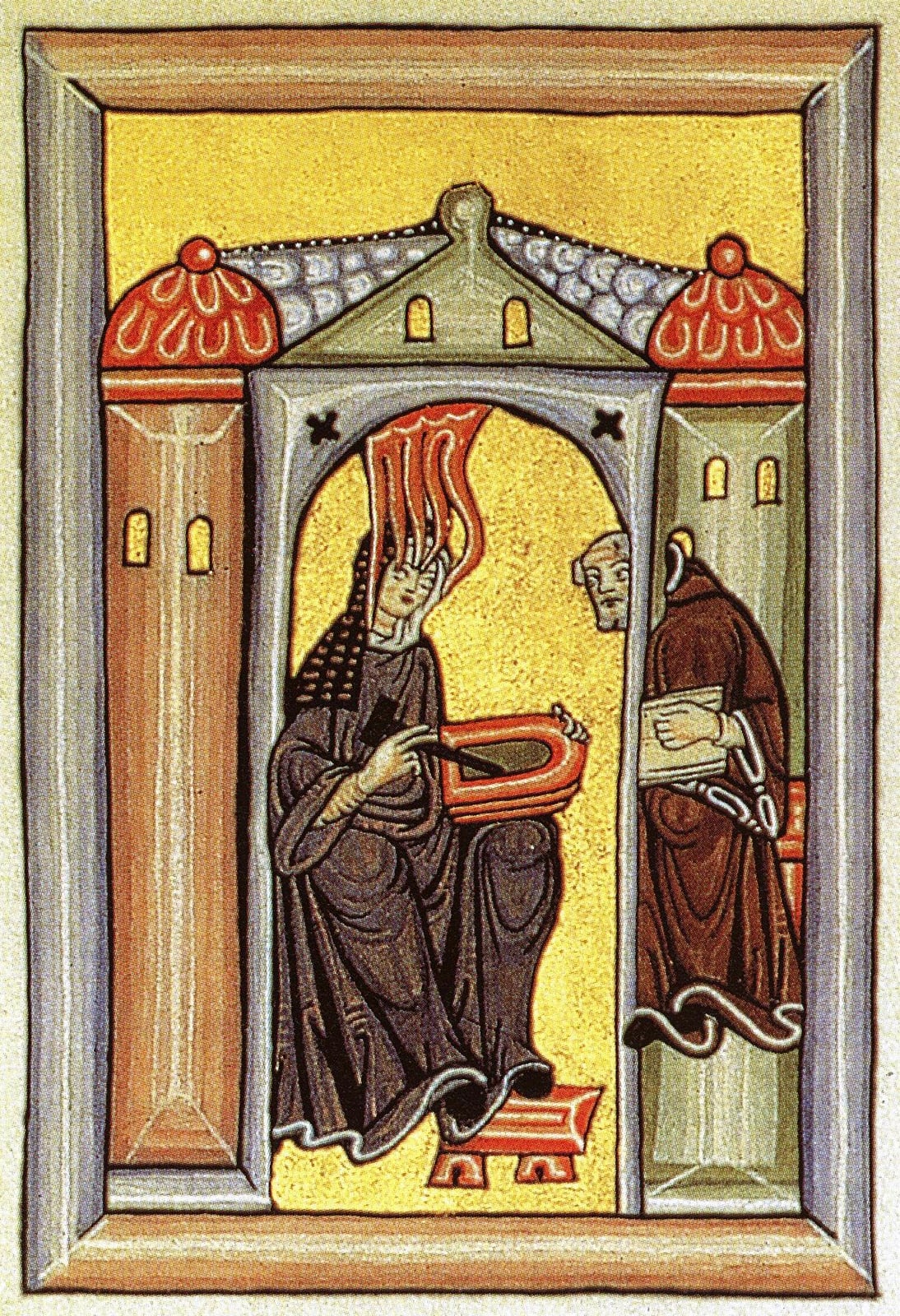
Hildegard of Bingen
Ils concordent sur: Sommes-nous libres ou tout est-il déterminé ? · Qu'est-ce que l'Absolu ? Dieu existe-t-il ? · Que se passe-t-il après la mort ?
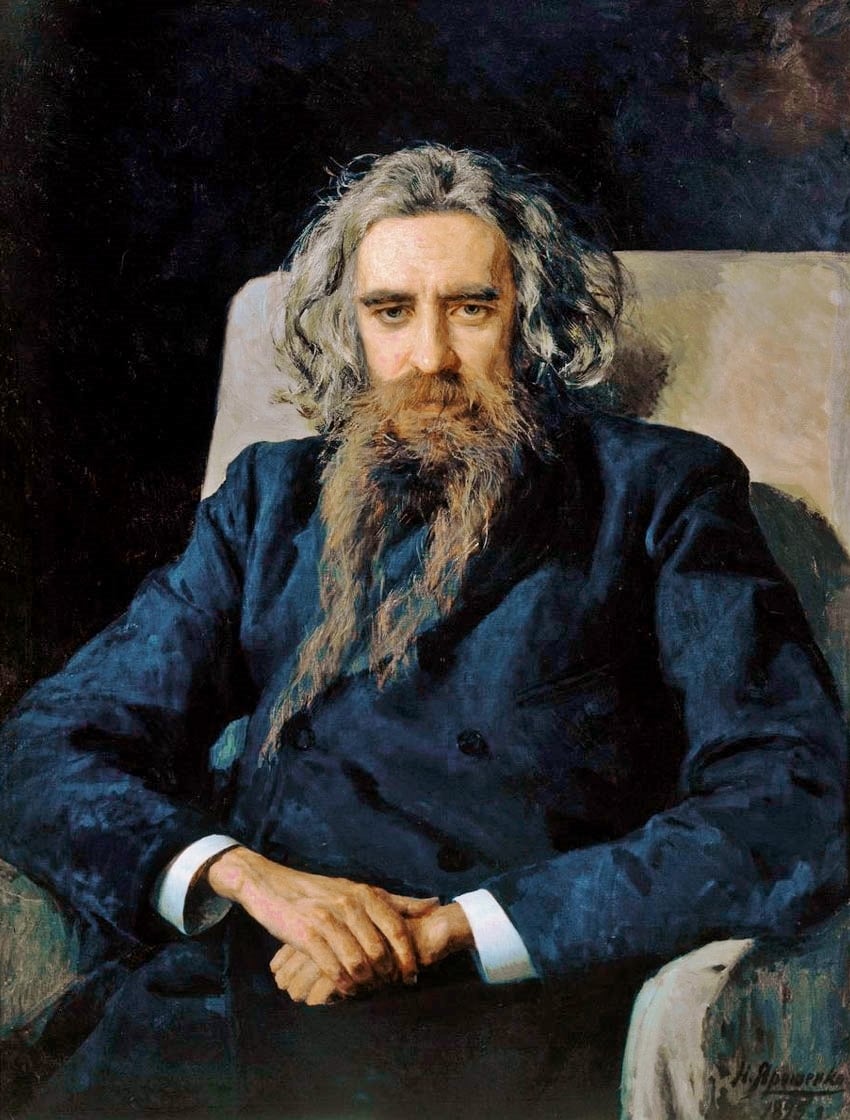
Vladimir Solovyov
Ils concordent sur: Que se passe-t-il après la mort ? · Comment atteint-on la libération ou le salut ? · Faut-il un maître ?
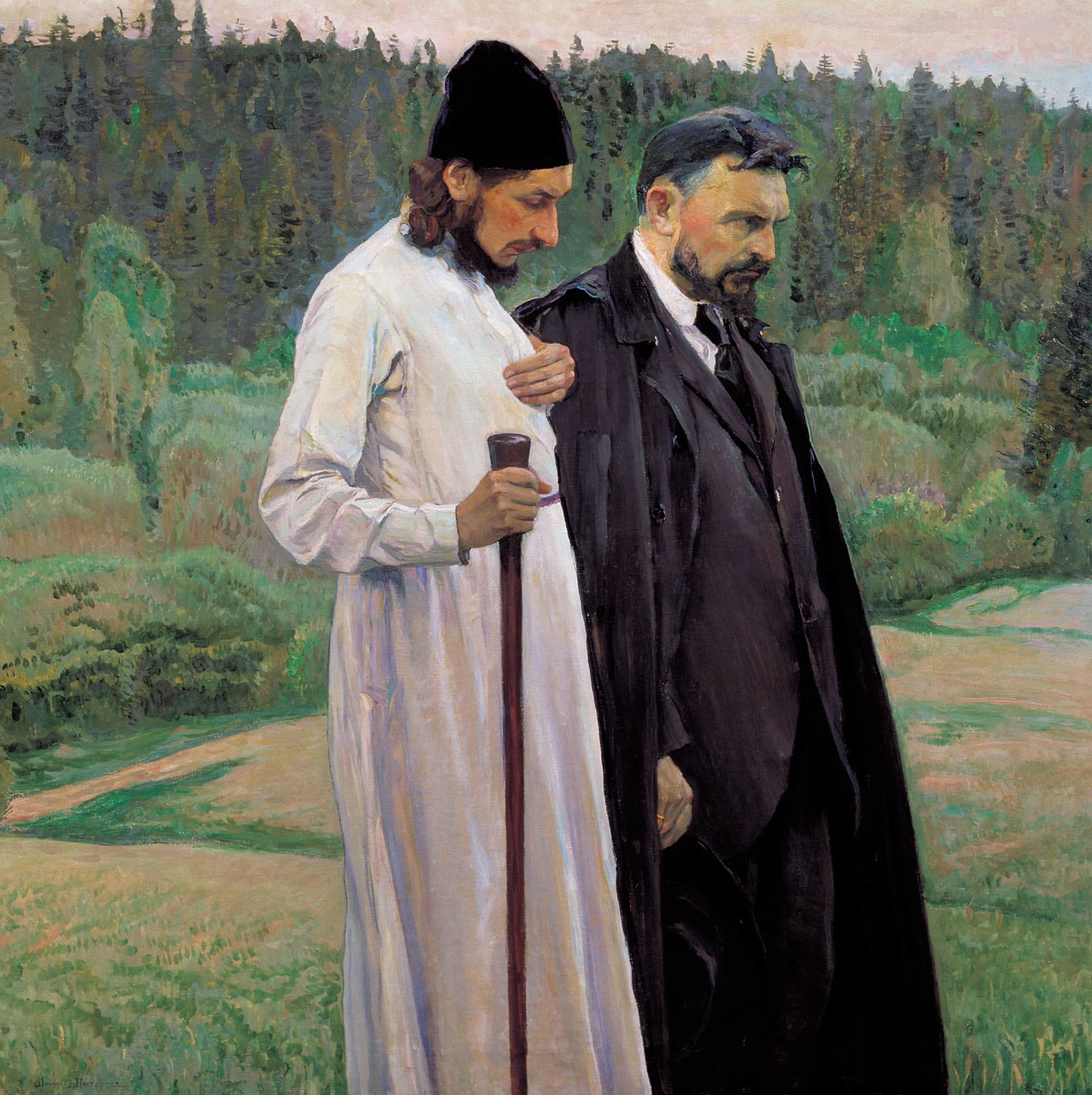
Pavel Florensky
Ils concordent sur: Qu'est-ce que l'Absolu ? Dieu existe-t-il ? · Qui suis-je ? Existe-t-il un vrai soi ? · Que se passe-t-il après la mort ?
Augustine of Hippo
Ils concordent sur: Comment atteint-on la libération ou le salut ? · Qu'est-ce que l'Absolu ? Dieu existe-t-il ? · Que se passe-t-il après la mort ?
Pense autrement que

Pema Chödrön
Ils s'opposent sur: Qu'est-ce que l'Absolu ? Dieu existe-t-il ? · Que se passe-t-il après la mort ?

Patañjali
Ils s'opposent sur: Qu'est-ce que l'Absolu ? Dieu existe-t-il ? · Que se passe-t-il après la mort ?

Nāgārjuna
Ils s'opposent sur: Qu'est-ce que l'Absolu ? Dieu existe-t-il ? · Que se passe-t-il après la mort ?
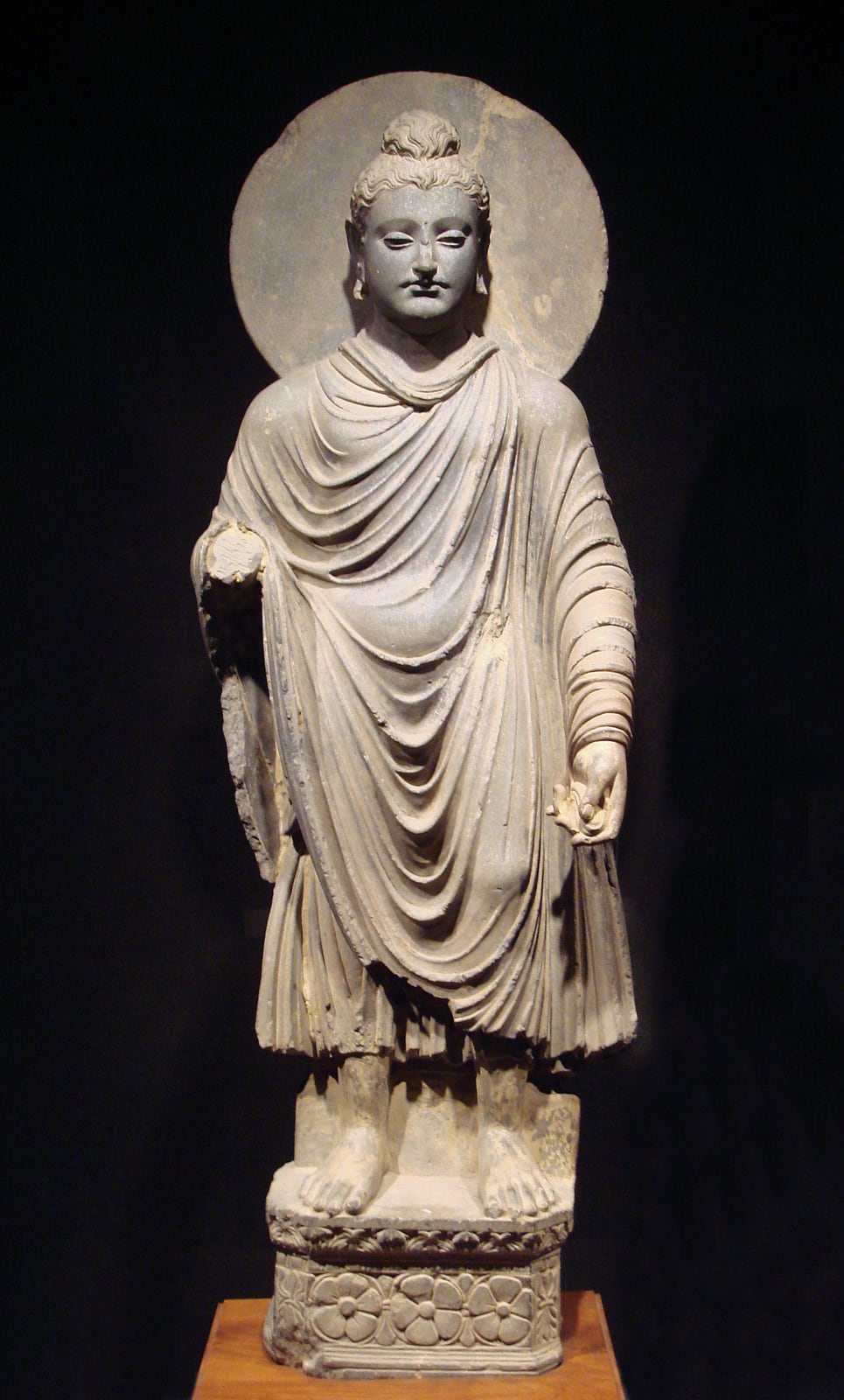
Siddhartha Gautama, the Buddha
Ils s'opposent sur: Qu'est-ce que l'Absolu ? Dieu existe-t-il ? · Que se passe-t-il après la mort ?
Anecdotes et récits
Anecdotes et récits
Témoignagec. 1887–1888
The 'iron God'
Origine du récit: His own account in Le Cœur de la Matière (1950), part I, 'Le Cosmique'.
Documenté1914–1919
The stretcher-bearer of Verdun
Origine du récit: Letters from the front published in Genèse d'une pensée (1961); decorations and postings according to the biographies and Wikipedia (s11).
Témoignage1923
The Mass in the Ordos desert
Origine du récit: The text itself places the scene 'in the steppes of Asia'; the dating to Ordos, 1923, comes from the edition of Hymne de l'Univers and the travel letters.
Contesté1913 / 1980
The shadow of Piltdown
Origine du récit: The accusation was made in Gould (Natural History, 1980); its general rejection is summarised by Wikipedia (s11).
Source: Gould, Stephen Jay. «The Piltdown Conspiracy». Natural History 89, n.º 8 (1980): 8–28.
Documenté1929–1931
The Zhoukoudian skull
Origine du récit: Facts from the history of palaeoanthropology recorded in Wikipedia and in his own articles in L'Apparition de l'Homme ('La découverte du Sinanthrope').
Témoignage1920s–1955
A biological blunder
Origine du récit: Text collected in Le Cœur de la Matière (1976), pp. 133–137.
Témoignage1955
To die at Easter
Origine du récit: It circulates in the biographies (Cuénot, King) in differing versions; the original testimony has not been checked.
Source: King, Ursula. Spirit of Fire: The Life and Vision of Teilhard de Chardin. Maryknoll (N.Y.): Orbis Books, 1996 (ed. revisada, 2015).
Enseignements
Enseignements
Les notions qui structurent sa pensée, expliquées dans leur contexte.
Law of complexity-consciousnesscomplejidad-conciencia
The guiding thread of The Human Phenomenon (1938–1940).
Noospherenoosfera
A term coined around 1922–1925; central in The Human Phenomenon and The Future of Man.
Omega Pointpunto-omega
Introduced in The Human Phenomenon (book IV, 'Survival').
The cosmic Christ and christogenesiscristo-cosmico
Present from 1916; formulated on the last page of the Journal (1955): 'Christ is the centre of the Cosmos'.
The divine milieu: activities and passivitiesmedio-divino
Written in 1926–1927; his most widely read text as a spiritual guide.
Hominisation and the threshold of reflectionhominizacion
A theme of La Vision du Passé, The Human Zoological Group and book III of The Human Phenomenon.
Vidéos
Vidéos
Enregistrements, entretiens et documentaires. Les vidéos sont lues depuis YouTube ; elles ne sont pas hébergées ici.
Portrait en 1981 de Teilhard de Chardin, théologien et paléontologue
Documentaire· FR· 28 min
Radio-Canada ArchivesChaîne officielle
Teilhard de Chardin
Documentaire· FR· 52 min
KTO TV
L'Unité créatrice du monde - Pierre Teilhard de Chardin
Voir sur YouTube
Cette vidéo ne peut pas être intégrée ; elle s'ouvre sur YouTube.
L'Unité créatrice du monde - Pierre Teilhard de Chardin
Documentaire· FR· 52 min
KTO TV
Le Centre Teilhard-de-Chardin : un lieu de dialogue entre sciences et spiritualité
Documentaire· FR· 9 min
KTO TV
Teilhard et la Chine, un documentaire de Benoît Vermander
Documentaire· FR· 44 min
Benoît Vermander Videos
Ilia Delio / Why Science and Religion Need Each Other: Teilhard de Chardin's Deep Catholicity
Conférence· EN· 61 min
College of the Holy CrossChaîne officielle
Ilia Delio: Teilhard's Evolution and the Body of Christ
Conférence· EN· 48 min
Centre for Catholic Studies, Durham UniversityChaîne officielle
Ilia Delio: "Teilhard de Chardin and World Religions"
Conférence· EN· 100 min
Yale Forum on Religion and EcologyChaîne officielle
Annual Teilhard de Chardin, S.J. Lecture feat. Sr. Ilia Delio
Conférence· EN· 90 min
Hank Center for the Catholic Intellectual HeritageChaîne officielle
Teilhard de Chardin, entre el cielo y el suelo: Testimonios para la Iglesia del futuro
Conférence· ES· 68 min
Centro Loyola - Loiola ZentroaChaîne officielle
Teilhard de Chardin | Ciclo Los viernes de la evolución
Conférence· ES· 146 min
El Colegio Nacional (México)Chaîne officielle
Ringvorlesung: Pierre Teilhard de Chardin
Conférence· DE· 69 min
CTS Berlin
Galerie
Galerie
Images dont la licence a été vérifiée. Chacune conserve son auteur et son attribution.
Manuscrits
Manuscrits
Témoins manuscrits et textes anciens, avec leur dépositaire et leurs conditions de consultation.
FR · Latin · 1932–1955
Teilhard de Chardin Manuscripts (cartas a Lucile Swan y otras colecciones)
- Témoin conservé
- 205 cartas a Lucile Swan, 77 cartas a un sacerdote biólogo francés (1938–1952) y documentos de su etapa china
- Dépositaire
- Booth Family Center for Special Collections, Georgetown University Library (Washington)
- Numérisation
- guides.library.georgetown.edu/teilhard-de-chardi…
Relations
Relations
Influences, filiations et affinités. On distingue la relation documentée de la similitude identifiée par analyse.
A reçu l'influence de
A Jesuit from 1899, formed by the Spiritual Exercises; his search for God 'in all things' of matter extends Ignatian spirituality.
Relation documentée
A reçu l'influence de
The risen Christ, read through Saint Paul, is the centre of his vision: Omega and centre of the cosmos.
Relation documentée
Idées proches de
Both, contemporaries with no known contact, interpreted evolution as the rise of consciousness toward divine fulfilment (Aurobindo's Supermind, Teilhard's Omega Point); the comparison is common in comparative religion.
Similitude identifiée par analyse
Idées proches de
Soloviov's vision of a cosmic process culminating in Godmanhood has been compared with Teilhardian christogenesis.
Similitude identifiée par analyse
Contemporain de
A French contemporary engaging with Catholicism from an opposite position: Weil focused on affliction and necessity, Teilhard on convergence and progress. There is no record that they met.
Similitude identifiée par analyse
Idées proches de
Franciscan cosmic fraternity and Teilhard's 'Hymn to Matter' share a mysticism of creation; Pope Francis, who took his name from the saint, cites Teilhard in Laudato si'.
Similitude identifiée par analyse
Lié depuis d'autres fiches
Sources
Sources
Bibliographie et catalogues consultés pour cette fiche.
- Wikidata, «Pierre Teilhard de Chardin» (Q189564); orden religiosa: Compañía de Jesús (P611 = Q36380).
- Cuénot, Claude. Pierre Teilhard de Chardin: les grandes étapes de son évolution. Paris: Plon, 1958.
- Speaight, Robert. Teilhard de Chardin: A Biography. London: Collins, 1967.
- King, Ursula. Spirit of Fire: The Life and Vision of Teilhard de Chardin. Maryknoll (N.Y.): Orbis Books, 1996 (ed. revisada, 2015).
- Teilhard de Chardin, Pierre. Le Phénomène humain. Paris: Éditions du Seuil, 1955 (Œuvres, t. I). Texto en Wikisource.
- Teilhard de Chardin, Pierre. Le Milieu divin. Paris: Éditions du Seuil, 1957 (Œuvres, t. IV). Texto en Wikisource.
- Teilhard de Chardin, Pierre. Hymne de l'Univers (incluye La Messe sur le Monde, 1923). Paris: Éditions du Seuil, 1961. Texto en Wikisource.
- Teilhard de Chardin, Pierre. Le Cœur de la Matière (incluye Le Christique y la última página del Diario, 1955). Paris: Éditions du Seuil, 1976 (Œuvres, t. XIII). Texto en Wikisource.
- Teilhard de Chardin, Pierre. Écrits du temps de la guerre (1916–1919). Paris: Grasset, 1965; Seuil, 1976 (Œuvres, t. XII). Texto en Wikisource.
- Teilhard de Chardin, Pierre. Genèse d'une pensée: lettres 1914–1919. Ed. Alice Teillard-Chambon y Max Henri Begouën. Paris: Grasset, 1961. Texto en Wikisource.
- Wikipedia en inglés, «Pierre Teilhard de Chardin» (consultada para fechas y trayectoria, contrastada con las demás fuentes).
- Wikisource en francés, «Auteur:Pierre Teilhard de Chardin» (relación de las Œuvres de Seuil, 1955–1976, y de la correspondencia).
- Suprema Sagrada Congregación del Santo Oficio. Monitum sobre los escritos del P. Pierre Teilhard de Chardin, 30 de junio de 1962. Acta Apostolicae Sedis 54 (1962), p. 526.
- Francisco. Carta encíclica Laudato si' sobre el cuidado de la casa común, 24 de mayo de 2015, n.º 83 y nota 53.
- Teilhard de Chardin, Pierre, y Lucile Swan. The Letters of Teilhard de Chardin and Lucile Swan. Ed. Thomas M. King y Mary Wood Gilbert. Washington: Georgetown University Press, 1993. ISBN 9780878405220.
- Open Library, registros de edición consultados por ISBN (obras de Pierre Teilhard de Chardin).
- Teilhard de Chardin, Pierre. Comment je crois. Paris: Éditions du Seuil, 1969 (Œuvres, t. X). Texto en Wikisource.
- Teilhard de Chardin, Pierre. Science et Christ. Paris: Éditions du Seuil, 1965 (Œuvres, t. IX). Texto en Wikisource.
- Medawar, Peter B. Reseña de The Phenomenon of Man. Mind 70, n.º 277 (1961): 99–106.
- Gould, Stephen Jay. «The Piltdown Conspiracy». Natural History 89, n.º 8 (1980): 8–28.
- Ayant droit
- Éditions du Seuil (Œuvres) y los derechohabientes de la Fondation Teilhard de Chardin; dominio público en la UE desde 2026, no en España (2036) ni en EE. UU. Traducciones con derechos propios (Trotta, Sussex Academic Press, HarperCollins, etc.).
En attente de confirmation
Ce que cette fiche n'a pas encore pu établir. Nous préférons le dire plutôt que de combler.
- Últimas palabras: localizar el testimonio de primera mano (Pierre Leroy, Cuénot o la familia) sobre la tarde del 10 de abril de 1955 y sobre el deseo de morir en Pascua, con su formulación exacta.
- Derechos: todas las entradas de reading_texts llevan caution (España hasta 2036; EE. UU. 95 años desde la publicación póstuma). La tesis de 1921–1922 será plenamente de dominio público en 2036.
- Comprobar si la Wikisource francesa ofrece páginas «Texte entier» para Le Phénomène humain y Le Milieu divin; ahora se registran las páginas índice con subpáginas.
- Verificar la autoría y licencia de las fotografías TeilhardP 1947 y 1955 en Commons (autor desconocido con licencia CC BY-SA).
- Localizar ISBN de ediciones actuales en español de El fenómeno humano y El porvenir del hombre (Taurus), y de ediciones en italiano (Queriniana, Il Saggiatore) y alemán de El medio divino.
- Sitio oficial: no se ha verificado la web de la Fondation Teilhard de Chardin ni de la Association des Amis de Pierre Teilhard de Chardin; se deja official_site en null.
- Localizar el fondo principal de manuscritos de los ensayos (depositados por Jeanne Mortier y la Fondation Teilhard de Chardin) y sus signaturas; solo se ha verificado la guía de Georgetown.
- Programas de afiliación: ninguno verificado.
Recherche effectuée le 2026-10-25