Аристотелизм
Aristotle
Ἀριστοτέλης · أرسطوطاليس
384 до н. э. – 322 до н. э.Исторически документированная личность
Греческий философ и учёный (384–322 до н. э.), двадцать лет бывший учеником Платона, наставник Александра Македонского и основатель Ликея в Афинах. Он создал формальную логику, разделил знание на дисциплины и оставил трактаты по физике, биологии, психологии, метафизике, этике, политике, риторике и поэтике, которые на протяжении двух тысячелетий господствовали в греческой, арабской, еврейской и христианской философии. Его представление о созерцательной жизни как высшей форме счастья по-прежнему остаётся одним из главных ориентиров.
- трудов
- 67трудов
- изданий
- 245изданий
- цитат
- 18цитат
- видео
- 15видео
- изображений
- 9изображений
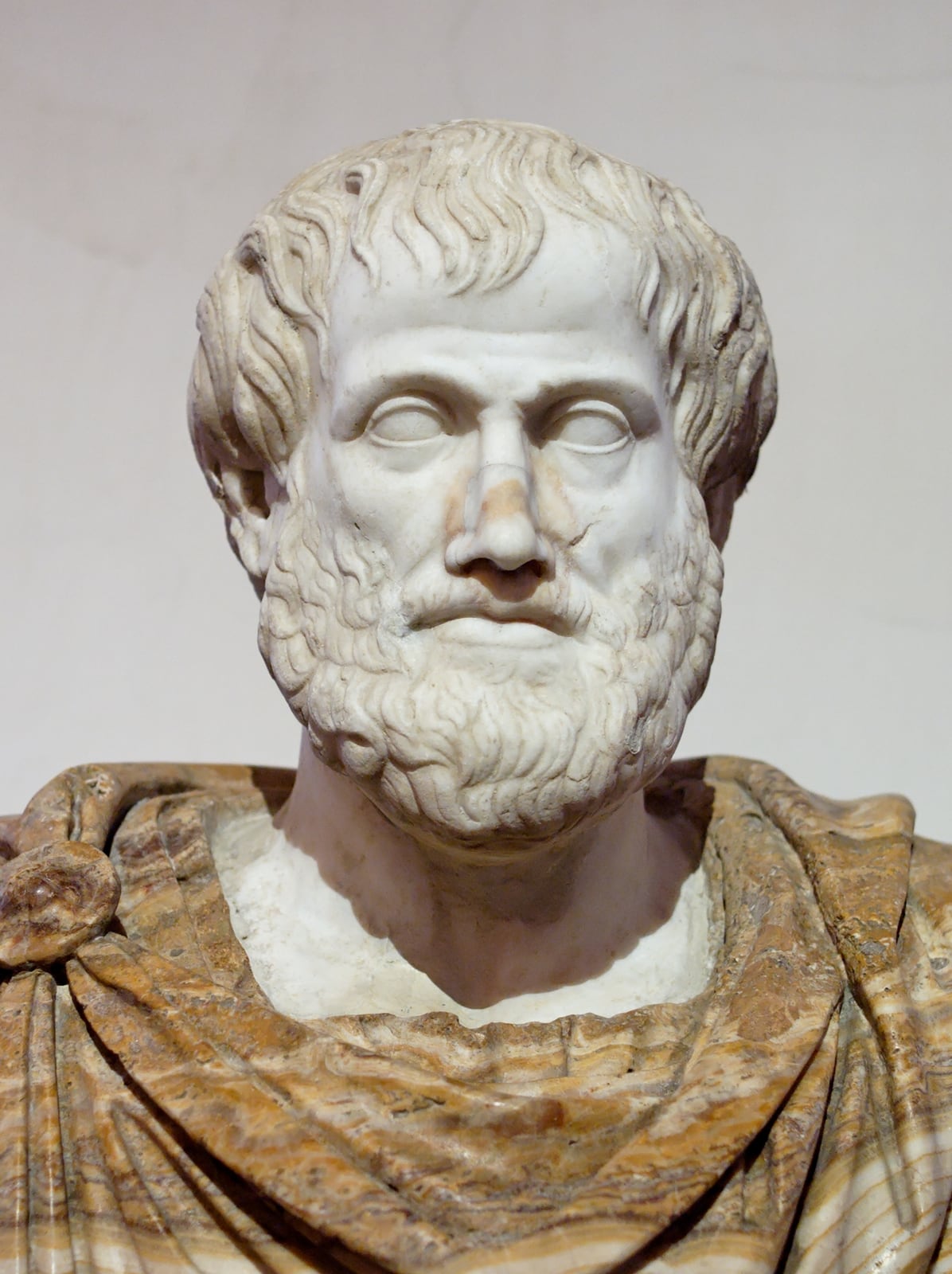
Busto de Aristóteles (Museo Nacional Romano, Palazzo Altemps) · Public domain
Своими словами
«“All men by nature desire to know.”»Metafísica I (A) 1, 980a21. Inglés: trad. de W. D. Ross (Oxford, 1908); español: trad. propia del griego.

Главная мысль
Substance (ousia): For Aristotle, “being” is said in many ways, but all of them refer to a first one: substance.
В контексте
Биография
5 мин чтения
Перевод с испанского оригинала, выполненный с помощью ИИ; ожидает проверки носителем языка.
Сын врача на македонском пограничье
Аристотель родился в 384 году до н. э. в Стагире, небольшом греческом городе на Халкидике, на северном побережье Эгейского моря. Его отец Никомах был врачом и другом македонского царя Аминты III, а семья возводила свой род через Махаона к Асклепию; мать, Фестида, происходила из Халкиды на Эвбее. Оба умерли, когда он был ещё подростком, и опека над ним перешла к Проксену из Атарнея, память которого философ почтит в завещании, распорядившись поставить ему статую. Детство среди врачей и придворных объясняет, по мнению многих исследователей, две черты его жизни: страсть к наблюдению за живыми существами и связь с македонским царским домом, которая в конце концов решила его судьбу.
С самого начала следует оговориться, что почти всё, что мы знаем о его жизни, восходит к поздним источникам. Самое подробное жизнеописание принадлежит Диогену Лаэртскому, который писал в III веке н. э., опираясь на эллинистических авторов, таких как Гермипп и Аполлодор; к нему добавляются Жития, составленные неоплатоническими комментаторами, скорее благоговейные, чем критические, и враждебная традиция, рисовавшая его тщеславным льстецом царей. Современная наука, начиная с Ингемара Дюринга, тщательно отделяет хронологические данные, вероятно достоверные, от анекдотов.
Двадцать лет в Академии
В семнадцать лет, около 367 года до н. э., он прибыл в Афины и поступил в Академию Платона, где оставался двадцать лет, до самой смерти учителя. Он был там учеником, исследователем, а вскоре и преподавателем риторики. В эти годы он писал диалоги, предназначенные для широкой публики, — «Грилл», «Евдем», «Протрептик», «О философии», — прозой которых Цицерон будет восхищаться как «золотой рекой»; от них сохранились лишь фрагменты. Вероятно, к тем же годам относятся и первые редакции его логических сочинений.
Его отношения с Платоном были отношениями ученика, который спорит. Диоген Лаэртский приводит слова, приписываемые учителю: Аристотель лягал его, «как жеребята лягают родившую их мать». Критика учения об идеях проходит через «Метафизику» и «Никомахову этику», где он признаётся, что ему тяжело опровергать друзей, но благочестие велит предпочесть истину. Вернер Йегер предложил в 1923 году читать его творчество как постепенный отход от платонизма; сегодня эта хронология кажется слишком прямолинейной, но напряжение, на которое он указал, остаётся реальным.
Малая Азия, Лесбос и македонский двор
Когда в 348/347 году до н. э. Платон умер и Академия перешла к его племяннику Спевсиппу, Аристотель покинул Афины. Он поселился в Ассе, в Троаде, под покровительством Гермия, правителя Атарнея, с которым его связывала тесная дружба, и женился на Пифиаде, племяннице и приёмной дочери Гермия; у них родилась дочь, названная так же. Около 345/344 года он перебрался в Митилену на Лесбосе, где работал вместе с Феофрастом, уроженцем Эреса. Многочисленные упоминания лагуны Пирры в «Истории животных» побуждают исследователей помещать туда значительную часть его наблюдений над рыбами, моллюсками и птицами.
В 343/342 году Филипп II пригласил его в Македонию воспитывать сына Александра, которому было тогда тринадцать лет. По словам Плутарха, занятия проходили в святилище нимф в Миезе, и царевич всю жизнь хранил «Илиаду», исправленную его учителем. Аристотель добился восстановления Стагиры, разрушенной македонянами. Около 341 года Гермий был вероломно схвачен персами и казнён; Аристотель посвятил ему гимн Добродетели и эпиграмму для его статуи в Дельфах, которые впоследствии дорого ему обошлись.
Ликей
В 335/334 году, вскоре после восшествия Александра на престол, он вернулся в Афины. Как метек он не мог владеть землёй и потому преподавал в Ликее — общественном гимнасии, посвящённом Аполлону Ликейскому, крытые галереи для прогулок которого, перипатос, дали школе имя перипатетической. Там он собрал библиотеку и организовал небывалую коллективную работу: свод ста пятидесяти восьми государственных устройств греческих городов, список победителей Пифийских игр, составленный вместе с его родственником Каллисфеном, и множество зоологических и ботанических наблюдений.
Дошедшие до нас трактаты — не отделанные для публики книги, а учебные материалы, которые многократно перерабатывались: логика, физика, психология, биология, метафизика, этика, политика, риторика и поэтика. Этим объясняются их сжатость, повторы и поразительный охват. В Афинах умерла Пифиада; затем Аристотель жил с Герпиллидой из Стагиры, родившей ему сына Никомаха. Его отношения с Александром охладели после гибели Каллисфена, обвинённого в 327 году в заговоре против царя.
Халкида, завещание и судьба книг
Смерть Александра в Вавилоне в июне 323 года вызвала в Афинах волну антимакедонских настроений. Иерофант Евримедонт обвинил Аристотеля в нечестии, взяв предлогом гимн Гермию, и философ удалился в Халкиду, в дом семьи своей матери. Древняя традиция приписывает ему слова о том, что он не позволит афинянам дважды согрешить против философии, — намёк на Сократа. Там он и умер в 322 году, шестидесяти двух или шестидесяти трёх лет, естественной смертью, согласно хронологии Аполлодора; версия о том, что он выпил аконит, которую Диоген Лаэртский заимствует у Евмела, доверия не заслуживает.
Диоген Лаэртский переписал его завещание — один из самых трогательных личных документов античности. В нём Аристотель назначает душеприказчиком Антипатра, поручает заботам близких Герпиллиду и детей, отпускает на волю нескольких рабов, запрещает продавать тех, кто ему служил, и просит, чтобы, где бы его ни похоронили, рядом положили кости Пифиады, как она сама того пожелала.
По словам Страбона и Плутарха, его библиотека перешла к Феофрасту, а от него к Нелею из Скепсиса, наследники которого спрятали её в погребе; её купил коллекционер Апелликон Теосский, и Сулла, взяв в 86 году до н. э. Афины, увёз её в Рим. Там Андроник Родосский будто бы издал трактаты в том порядке, в котором мы, в основном, читаем их до сих пор. Учёные спорят о том, насколько можно доверять этому рассказу, но нынешний корпус действительно восходит к изданию I века до н. э.
Два тысячелетия учительства
Ни у одного философа не было столь долгого посмертного бытия. Греческие комментаторы, от Александра Афродисийского до неоплатоников Афин и Александрии, сделали его логику вратами всякой философии, хотя Плотин резко оспаривал его категории. В IX веке его труды перевели в Багдаде на арабский; аль-Фараби назвали «вторым учителем», Авиценна заново выстроил его метафизику, а Аверроэс заслужил прозвание «Комментатора». Аль-Газали боролся с философами, следовавшими за ним, а Маймонид считал его вершиной человеческого разумения во всём, что касается подлунного мира.
Через Толедо в XII веке и благодаря переводам Вильгельма из Мёрбеке в XIII веке его наследие вошло в латинские университеты. Для Фомы Аквинского он был просто «Философом», а Данте поместил его в Лимб как «учителя тех, кто знает». Научная революция ниспровергла его физику, но биология устояла: Дарвин писал в 1882 году, что Линней и Кювье, два его бога, рядом со старым Аристотелем — «просто школьники».
Издание Берлинской академии, которое с 1831 года готовил Иммануил Беккер, установило нумерацию по странице, столбцу и строке, по которой его цитируют до сих пор, — «Метафизика» 980a21, — а в 1891 году папирус Британского музея вернул «Афинскую политию». В XX веке его этика добродетели вновь оказалась в центре споров о морали. Читателю библиотеки сознания Аристотель предлагает нечто менее очевидное, чем духовное учение: убеждение, что высшая жизнь — созерцательная, жизнь ума, познающего самого себя, и что прийти к ней можно, терпеливо воспитывая привычки каждого дня.
Источники: Cicerón. Académicos II (Lúculo), 119: «veniet flumen orationis aureum fundens Aristoteles». · Diógenes Laercio. Vidas de los filósofos ilustres, libro V, 1–35 («Aristóteles»). Trad. inglesa de R. D. Hicks, Lives of Eminent Philosophers, vol. I, Loeb Classical Library 184. Londres: Heinemann, 1925 (texto en Wikisource). · Natali, Carlo. Aristotle: His Life and School. Ed. D. S. Hutchinson. Princeton: Princeton University Press, 2013. · Düring, Ingemar. Aristotle in the Ancient Biographical Tradition. Göteborg: Acta Universitatis Gothoburgensis, 1957. · Barnes, Jonathan (ed.). The Complete Works of Aristotle: The Revised Oxford Translation. 2 vols. Princeton: Princeton University Press (Bollingen Series LXXI.2), 1984.
Хронология
Жизнь год за годом
Каждая точка — документированное событие. Нажмите, чтобы прочитать о нём, с источником и степенью достоверности.
384 до н. э.0 летEstagira (Calcídica)
Birth at Stagira
Aristotle is born, son of the physician Nicomachus and of Phaestis. Apollodorus, quoted by Diogenes Laertius, dates the birth to the first year of the 99th Olympiad (384/383 BCE).
ДокументированоDiógenes Laercio. Vidas de los filósofos ilustres, libro V, 1–35 («Aristóteles»). Trad. inglesa de R. D. Hicks, Lives of Eminent Philosophers, vol. I, Loeb Classical Library 184. Londres: Heinemann, 1925 (texto en Wikisource).
После смерти
- 86 до н. э.The library reaches Rome
- I век до н. э.Andronicus of Rhodes's edition
- IX векTranslations into Arabic
- 1255Aristotle in the University of Paris curriculum
- 1495Aldus Manutius's editio princeps
- 1831Bekker's edition
- 1891The Constitution of the Athenians reappears
384 до н. э. · 0 лет
Birth at Stagira
Aristotle is born, son of the physician Nicomachus and of Phaestis. Apollodorus, quoted by Diogenes Laertius, dates the birth to the first year of the 99th Olympiad (384/383 BCE).
Документировано
ок. 370 до н. э.
Orphaned, in the care of Proxenus
His parents having died while he was still a child, he passes into the care of Proxenus of Atarneus. The detail comes from the late Lives; the will confirms the bond by commissioning a statue of Proxenus.
Вероятно
367 до н. э. · 17 лет
Entry into Plato's Academy
At seventeen he comes to Athens and enters the Academy, where he will remain for twenty years as student, researcher and teacher.
Документировано
ок. 360 до н. э.
The public dialogues
He writes dialogues and exhortations for a wide readership — Gryllus, Eudemus, Protrepticus, On Philosophy — now lost except for fragments.
Вероятно
347 до н. э. · 37 лет
Plato's death and departure from Athens
After Plato's death and Speusippus's election as head of the Academy, he leaves Athens and settles at Assos with Hermias of Atarneus.
Документировано
ок. 346 до н. э.
Marriage to Pythias
He marries Pythias, Hermias's niece and adopted daughter; they will have a daughter of the same name.
Вероятно
345 до н. э.
Lesbos and biological research
In the archonship of Eubulus (345/344) he moves to Mytilene. With Theophrastus he studies the fauna of the lagoon of Pyrrha, the basis of much of his zoological work.
Документировано
343 до н. э. · 41 год
Tutor to Alexander
Philip II summons him to Macedonia to educate the thirteen-year-old Alexander. According to Plutarch, the lessons take place in the sanctuary of the Nymphs at Mieza.
Документировано
ок. 341 до н. э.
Execution of Hermias; the hymn to Virtue
Hermias is treacherously captured by the Persians and executed. Aristotle composes in his honour a hymn to Virtue and an epigram for his statue at Delphi, both preserved by Diogenes Laertius.
Документировано
335 до н. э. · 49 лет
Foundation of the Lyceum
He returns to Athens (335/334) and teaches in the gymnasium of the Lyceum for thirteen years. His followers will be called Peripatetics.
Документировано
ок. 330 до н. э.
The 158 constitutions and the Pythian list
He directs the collection of the constitutions of 158 cities and, with Callisthenes, the list of victors at the Pythian Games, honoured by Delphi with an inscription.
Документировано
327 до н. э.
Death of Callisthenes
Callisthenes, Aristotle's kinsman and historian of the expedition, dies accused of conspiring against Alexander; ancient sources place here the cooling between the king and his former teacher.
Вероятно
323 до н. э. · 61 год
Charge of impiety and retreat to Chalcis
After Alexander's death, the hierophant Eurymedon charges him with impiety over the hymn to Hermias. He withdraws to Chalcis in Euboea, to his mother's family house.
Документировано
322 до н. э. · 62 года
Death at Chalcis
He dies at Chalcis aged sixty-two or sixty-three, a natural death according to Apollodorus, in the same year as Demosthenes. His will is preserved by Diogenes Laertius.
Документировано
86 до н. э.
The library reaches Rome
According to Strabo and Plutarch, Sulla carries off to Rome the library of Apellicon of Teos, which contained the manuscripts of Aristotle and Theophrastus.
Оспаривается
I век до н. э.
Andronicus of Rhodes's edition
Andronicus of Rhodes arranges and edits the school treatises in the first century BCE; the corpus we possess derives from his edition.
Вероятно
IX век
Translations into Arabic
In the ninth century the Baghdad translators, among them Hunayn ibn Ishaq and his son Ishaq, render most of the corpus into Arabic, the foundation of falsafa.
Документировано
1255
Aristotle in the University of Paris curriculum
A 1255 statute of the Paris Faculty of Arts places practically all the known works of Aristotle on the curriculum, after decades of prohibitions.
Документировано
1495
Aldus Manutius's editio princeps
Aldus Manutius prints in Venice (1495–1498) the first edition of Aristotle's Greek text, in five volumes.
Документировано
1831
Bekker's edition
The Prussian Academy publishes Immanuel Bekker's edition, whose pagination (for example, 980a21) remains the universal system of reference.
Документировано
1891
The Constitution of the Athenians reappears
Frederic Kenyon publishes, from a papyrus acquired by the British Museum, the Constitution of the Athenians, lost since antiquity.
Документировано
Труды
Главные труды
Труды, без которых не понять это наследие.
Письменный труд
Metaphysics
Τὰ μετὰ τὰ φυσικά
The work in which Aristotle seeks “first science”: the study of being qua being, of the highest causes and principles and of divine substance. It opens with the famous sentence “all men by nature desire to know” and with a history of earlier philosophy read as a progressive discovery of the four causes. Book B sets out the puzzles; Γ defends the principle of non-contradiction; Δ is a philosophical lexicon; Z, H and Θ, the core, examine substance, form, matter, actuality and potentiality; Λ culminates in the first unmoved mover, “thinking of thinking”; M and N criticise the Platonic theory of Forms and numbers. No work has influenced Western, Islamic and Jewish metaphysics more.
6 изданий · amazon.com

Письменный труд
Nicomachean Ethics
Ἠθικὰ Νικομάχεια
The most influential work of ethics in history. It starts from the question of the highest human good, which everyone calls happiness, and defines it as an activity of the soul in accordance with virtue over a complete life. It explains ethical virtue as habit and as a mean chosen according to right reason, analyses courage, temperance, liberality, magnanimity and justice, distinguishes the intellectual virtues — with practical wisdom at their centre —, studies incontinence and pleasure, and devotes two admirable books to friendship. Book X concludes that the happiest life is the contemplative one, in which a human being lives according to what is divine in him, and leads into the Politics.
4 издания · amazon.com

Письменный труд
Politics
Πολιτικά
A continuation of the Ethics: if happiness is the end of the individual, the city is the community that makes it possible. Book I holds that the human being is by nature a political animal, endowed with speech, and studies the household, economics and — in pages unacceptable today — natural slavery. Book II criticises Plato's Republic and the constitutions of Sparta, Crete and Carthage; book III defines the citizen and classifies regimes into correct (monarchy, aristocracy, polity) and deviant (tyranny, oligarchy, democracy); books IV–VI, based on the 158 constitutions collected at the Lyceum, analyse the causes of revolutions and praise the mixed regime resting on the middle classes; books VII–VIII describe the ideal city and its education.
4 издания · amazon.com

Письменный труд
Poetics
Περὶ ποιητικῆς
The founding text of Western literary theory. It conceives poetry as imitation (mimesis) of human actions, natural to human beings and a source of knowledge and pleasure, and claims it is more philosophical than history because it speaks of the universal. It defines tragedy as the imitation of a serious and complete action which, through pity and fear, accomplishes the purification (katharsis) of such emotions, and analyses its six parts, with the plot as the “soul” of the work, reversal, recognition and the tragic error (hamartia). Rediscovered in the Renaissance, it dictated the rules of classical drama for centuries.
5 изданий · amazon.com
Все труды (67)

Categories

On Interpretation (De interpretatione)
Prior Analytics
Posterior Analytics
Topics
Sophistical Refutations

Physics

On the Heavens (De caelo)

On Generation and Corruption
Meteorology (Meteorologica)

On the Cosmos (De mundo)

On the Soul (De anima)
On Sense and the Sensible
On Memory and Recollection
On Sleep and Waking
On Dreams
On Divination in Sleep
On Length and Shortness of Life
On Youth and Old Age, On Life and Death
On Respiration

On Breath (De spiritu)

History of Animals (Historia animalium)

Parts of Animals
Movement of Animals (De motu animalium)
Изречения
Изречения, найденные в конкретном труде. Каждое сопровождается указанием происхождения и степени надёжности.
“All men by nature desire to know.”Πάντες ἄνθρωποι τοῦ εἰδέναι ὀρέγονται φύσει.
ПровереноMetafísica I (A) 1, 980a21. Inglés: trad. de W. D. Ross (Oxford, 1908); español: trad. propia del griego.
Апокрифические изречения и изречения спорной атрибуции (3)
«“We are what we repeatedly do. Excellence, then, is not an act, but a habit.”»
Not Aristotle's: it is a paraphrase by Will Durant in The Story of Philosophy (1926), chapter on Aristotle, summarising in his own words the doctrine of Nicomachean Ethics II 1 on virtue as habit. The sentence circulates as if it were a direct quotation.
«“Amicus Plato, sed magis amica veritas” (“Plato is a friend, but truth is a greater friend”).»
The idea is in Nicomachean Ethics I 6, 1096a16, but the Latin formula is not his. An ancient Life of Aristotle attributed to Ammonius transmits it as “Socrates is a friend, but truth is a greater friend”; Roger Bacon uses it with Socrates, Newton writes “amicus Plato, amicus Aristoteles, magis amica veritas”, and the version with Plato appears in Don Quixote.
«“It is the mark of an educated mind to be able to entertain a thought without accepting it.”»
It is found in no work of Aristotle. It appears attributed to him in American books from 1959 (Lowell L. Bennion, Religion and the Pursuit of Truth) and seems a distortion of Nicomachean Ethics I 3, 1094b23–25, which says that an educated person looks for as much precision in each subject as its nature admits.
Последние слова
Проверяемых записей о последних словах не существует.
No reliable final sentence survives. The nearest thing to last words is his will, copied by Diogenes Laertius (V 11–16): it opens “All will be well; but, in case anything should happen, Aristotle has made these dispositions”, and closes with the instruction to lay the bones of Pythias beside him and to set up statues of Zeus and Athena the Saviours at Stagira. Contradictory accounts of his death circulated: a natural death at sixty-three (Apollodorus, accepted by Diogenes Laertius), poisoning with aconite (Eumelus, rejected by Diogenes himself) and, in late authors, the legend that he threw himself into the strait of Euripus because he could not explain its currents, with no basis in the early sources. The remark about not letting Athens “sin twice against philosophy” belongs to his departure from Athens, not to his deathbed.
Источник: Diógenes Laercio. Vidas de los filósofos ilustres, libro V, 1–35 («Aristóteles»). Trad. inglesa de R. D. Hicks, Lives of Eminent Philosophers, vol. I, Loeb Classical Library 184. Londres: Heinemann, 1925 (texto en Wikisource).
Спросить
На что отвечают эти труды
Двенадцать великих вопросов человечества и то, что позволяют на них ответить эти тексты, со ссылками. Мы никогда не вкладываем слова в чужие уста.
Что такое Абсолют? Существует ли Бог?
A first unmoved mover that is thought thinking itself
Безличный АбсолютСказано прямо
Aristotle reaches God through physics and metaphysics, not revelation. If there is eternal motion, there must be a first mover that moves without being moved; in book Lambda of the Metaphysics this mover is pure actuality, without matter, and moves as the beloved moves, by attraction. Its life is the best: it is thought, and since the most excellent can only think itself, it is thought of thought. Aristotle calls it god and an eternal living being, but it does not create the world, which is eternal, nor know individuals nor answer prayer. It is an absolute that is faceless intelligence, final cause of everything, closer to a principle than to someone.
Сравнить этот вопрос с другими учителямиКто я? Существует ли истинное «я»?
The soul is the body's form; character is forged by habit and friendship
«Я», взращённое в отношенияхСказано прямо
Aristotle rejects both Plato's separate soul and the atomists' materialism. In On the Soul he defines it as the form, the first actuality of a natural body that has life potentially: it makes no sense to ask whether soul and body are one, any more than to ask it of the wax and its shape. What we call character is not given: virtues are acquired by habit, becoming just by doing just acts. And the human being, by nature a political animal, is fulfilled only in the city and in friendship: the friend is another self. Only intellect, which in an obscure passage he calls separable, immortal and eternal, escapes this embodied form.
Сравнить этот вопрос с другими учителямиПочему мы страдаем?
Happiness depends on virtue, but also on fortune and the city
Социальный и нравственный беспорядокСледует из учения
Aristotle does not ask about suffering in general but about why a life fails. His answer has several layers. The main one is vice: an ill-formed character, which does not feel pleasure and pain at the right things, lives in conflict with itself, and in book IX he describes the wicked man as someone who flees from himself. But virtue is not enough: happiness also needs external goods, and great misfortunes like Priam's can ruin it, though the good man bears them nobly. And since we are political animals, a badly ordered city and a bad education deform their citizens. Pain comes from disorder of character, from fortune and from the community.
Сравнить этот вопрос с другими учителямиЧто происходит после смерти?
The soul dies with the body; perhaps only intellect is immortal
Молчание или сдержанностьСледует из учения
If the soul is the form of the living body, as On the Soul maintains, it cannot exist without it, just as shape does not exist without wax; Aristotle describes no destiny of the individual soul after death. The exception is a brief and obscure passage: the intellect that makes all things is separable, impassive and unmixed, and it alone is immortal and eternal, though “we do not remember”. Since antiquity it has been debated whether that intellect is personal, common to all humans or even divine. The Ethics treats death as the most fearful of evils because it is an end, and the courageous man is the one who faces it nobly. About the beyond, Aristotle keeps his reserve.
Сравнить этот вопрос с другими учителямиКак достигается освобождение или спасение?
Happiness is activity of the soul according to virtue, culminating in contemplation
Через добродетель и гармониюСказано прямо
Aristotle seeks no exit from the world but the accomplished life within it. The Nicomachean Ethics defines happiness as activity of the soul in accordance with virtue over a complete life: one swallow does not make a spring. Moral virtues are acquired by habit and consist in a mean determined by practical reason; friendship and the city are their natural setting. In book X he adds that the highest activity is contemplation, because it is that of intellect, the most divine thing in us, and urges us to make ourselves immortal as far as possible. There is no grace or sudden illumination: there is cultivated excellence that makes a human happy insofar as one can be.
Сравнить этот вопрос с другими учителямиНужен ли учитель?
Virtues are learned through good habits, laws and educators
Полезен, но не обязателенСказано прямо
Aristotle, who spent twenty years in the Academy and later founded the Lyceum, gives great weight to education but does not make it initiatory transmission. Moral virtues are acquired by habit, so it matters a great deal, or rather everything, to be habituated one way or another from youth. For this good educators and good laws are needed, and the Ethics ends by passing to the Politics precisely because the legislator is the great educator. But nobody can be virtuous for another: we become just by doing just acts. And in theoretical knowledge, loyalty to the teacher yields to truth: both being dear, piety requires preferring truth, he says when criticising Plato.
Сравнить этот вопрос с другими учителямиРеален ли мир?
An eternal nature, in motion, that does nothing in vain
Природный порядок в измененииСказано прямо
Aristotle is the defender par excellence of the reality of the sensible world. Against Parmenides, he explains change through potentiality and actuality; against Plato, he places forms in things themselves. Nature is a principle of motion and rest in what possesses it, and acts for an end: it does nothing in vain. The cosmos is eternal, without beginning or end, with a heaven of perfect circular motion and a sublunary region of ceaseless generation and corruption. Even the humblest animals deserve study, because in all natural things there is something marvellous. The world is real, ordered and changing, and knowing it is the task of science.
Сравнить этот вопрос с другими учителямиЧто такое любовь?
Perfect friendship is wishing the other's good for their own sake
Упорядоченная благожелательностьСказано прямо
Aristotle devotes two books of the Nicomachean Ethics to friendship (philia), which he considers necessary for life: no one would choose to live without friends even with all other goods. He distinguishes three kinds by their motive — utility, pleasure and the good — and only the last is perfect and lasting: that of good people who wish the friend's good for the friend's sake. The friend is another self, and right self-love, that of one who loves the best in himself, is its foundation. Friendship has its degrees and proportions: that of parents and children, of spouses, of fellow citizens. It is an ordered goodwill that begins in the household and sustains the city.
Сравнить этот вопрос с другими учителямиСвободны ли мы или всё предопределено?
It is in our power to be virtuous and also to be vicious
Подлинная свобода волиСказано прямо
In book III of the Nicomachean Ethics Aristotle analyses the voluntary and the involuntary to delimit responsibility. Involuntary are acts forced from outside or done through ignorance of the circumstances; the others have their principle in the agent. Deliberate choice (prohairesis) bears on what depends on us, and it follows that virtue and vice are in our power: where it is up to us to act, it is also up to us not to act. Even character, once formed, is our responsibility, because we formed it by our acts. In On Interpretation he further argues that future contingents are not already settled.
Сравнить этот вопрос с другими учителямиЗачем медитировать или молиться?
Contemplation is the highest and happiest activity
Видеть реальность такой, как она естьСказано прямо
Aristotle does not speak of prayer in a personal sense; his god hears no supplications. But he places at the summit of human life an activity that has something of what other traditions call meditation: contemplation (theoria). In book X of the Nicomachean Ethics he describes it as the activity of intellect, the most divine thing in us; it is the most continuous, the most pleasant, the most self-sufficient, the only one loved for its own sake, and in it a human lives according to what is divine in him. Its object is truth: causes, principles, the eternal. To contemplate is to see what is as it is, with no other end than seeing it.
Сравнить этот вопрос с другими учителямиМожет ли разум познать предельное?
All humans by nature desire to know, up to the first causes
Учение и знаниеСказано прямо
The Metaphysics opens by stating that all humans by nature desire to know, and that philosophy was born of wonder. For Aristotle reason can know the ultimate: wisdom is the science of first causes and principles, and it culminates in theology, the study of the first mover. The way is long and gradual: from sensation to memory, from memory to experience, from experience to art and science; first principles are grasped by intellect through induction. None of this is received by revelation: it is learned by inquiry, gathering the opinions of predecessors and examining their puzzles. Knowledge of the divine is the highest fruit of study.
Сравнить этот вопрос с другими учителямиУйти от мира или преобразить его?
Man is a political animal: the good life is realised in the city
Упорядочить обществоСказано прямо
For Aristotle the human being is by nature a political animal, and whoever cannot live in community or does not need it is either a beast or a god. The city exists for the sake of living well, and its good is greater and more complete than the individual's; that is why ethics leads into politics and legislation. Aristotle studied one hundred and fifty-eight constitutions and discussed in the Politics which regime is best. At the same time, in book X of the Ethics he places the contemplative life, the most divine and happiest, above the political life. But even the contemplative, as a human, lives among others and chooses to act in accordance with virtue.
Сравнить этот вопрос с другими учителями
Созвучия и противоречия
Созвучия и противоречия
Рассчитаны вопрос за вопросом на основе позиций. Причина каждого совпадения или расхождения — по нажатию.
Ближе всего к
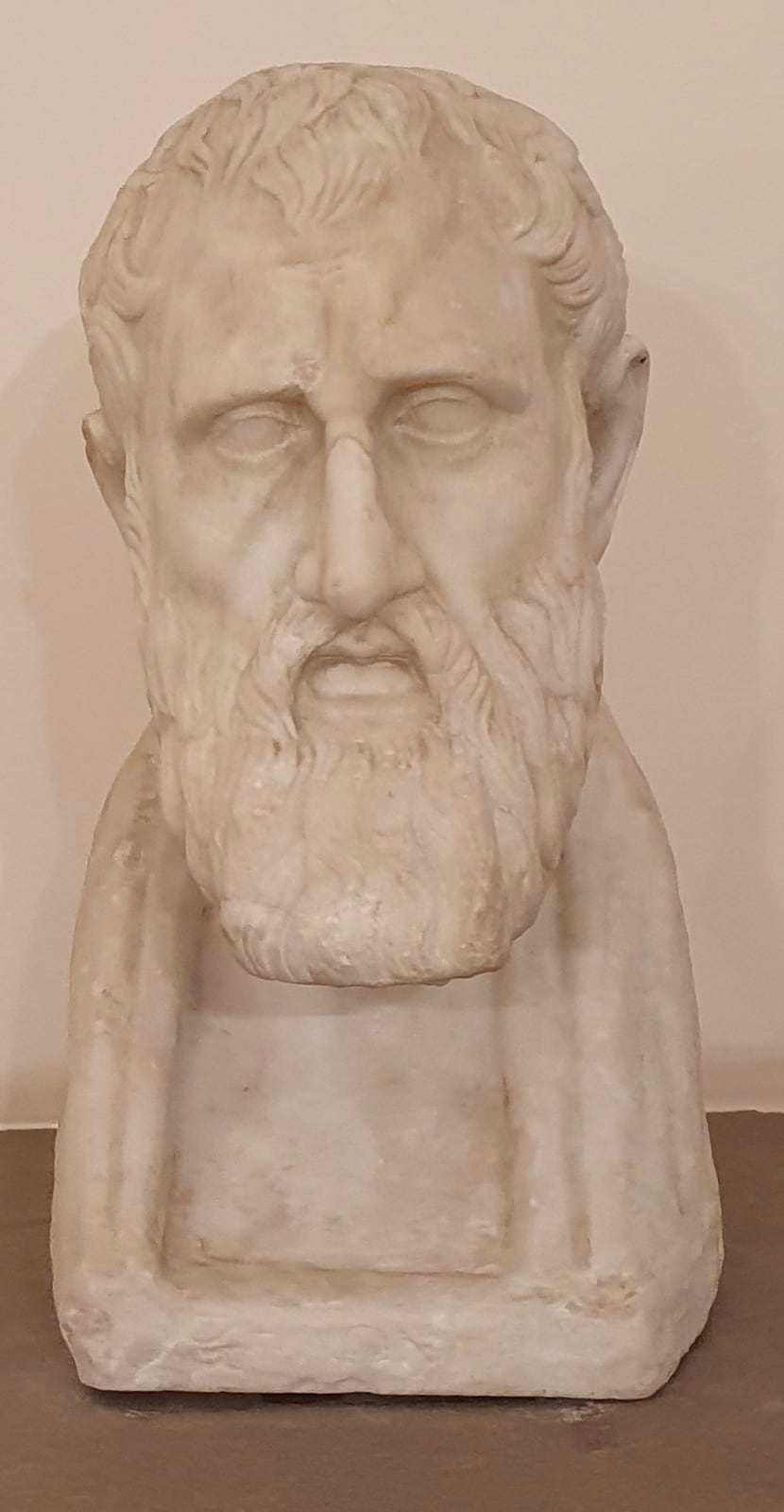
Zeno of Citium
Совпадают в вопросах: Что такое Абсолют? Существует ли Бог? · Кто я? Существует ли истинное «я»? · Почему мы страдаем?
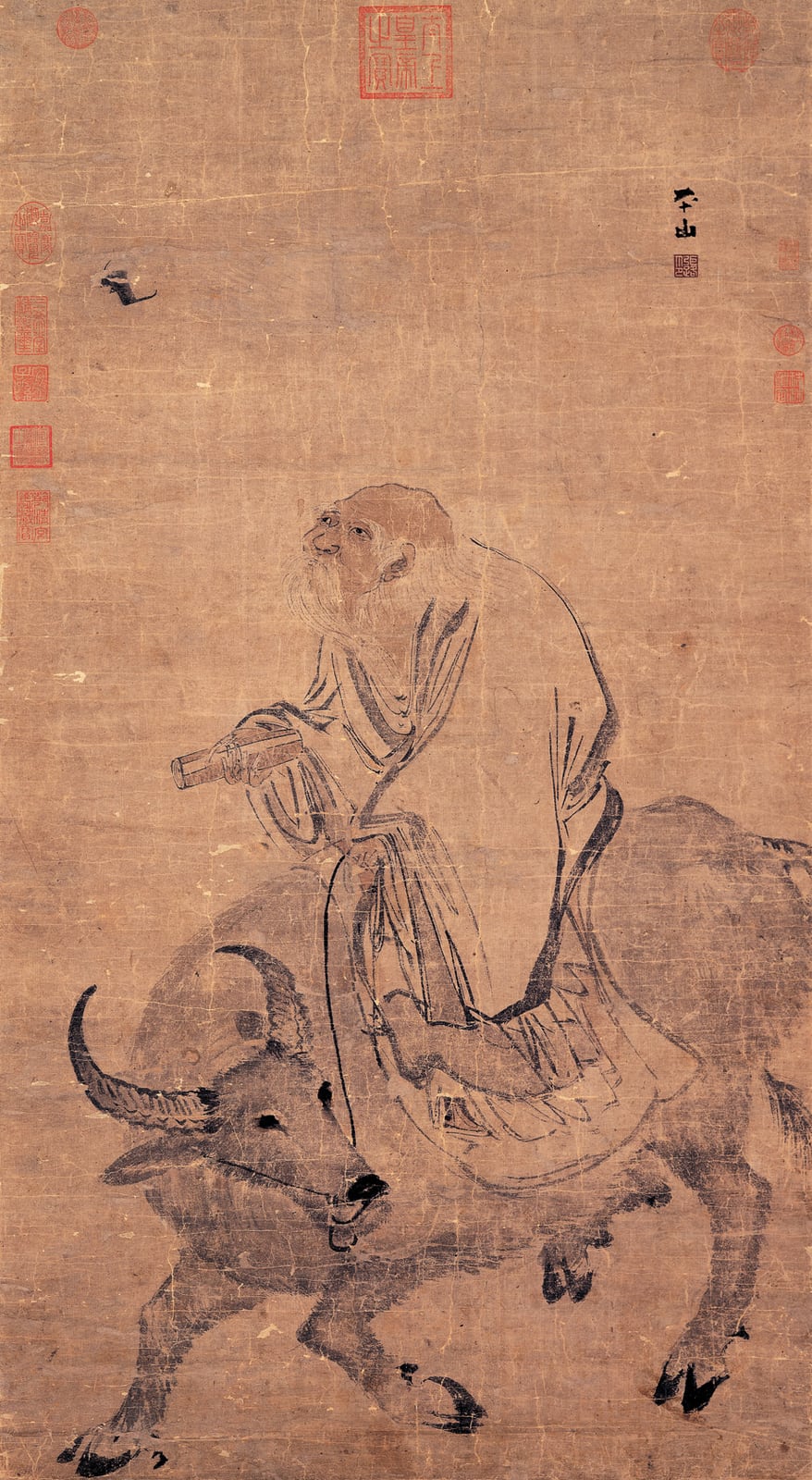
Laozi
Совпадают в вопросах: Почему мы страдаем? · Что происходит после смерти? · Как достигается освобождение или спасение?
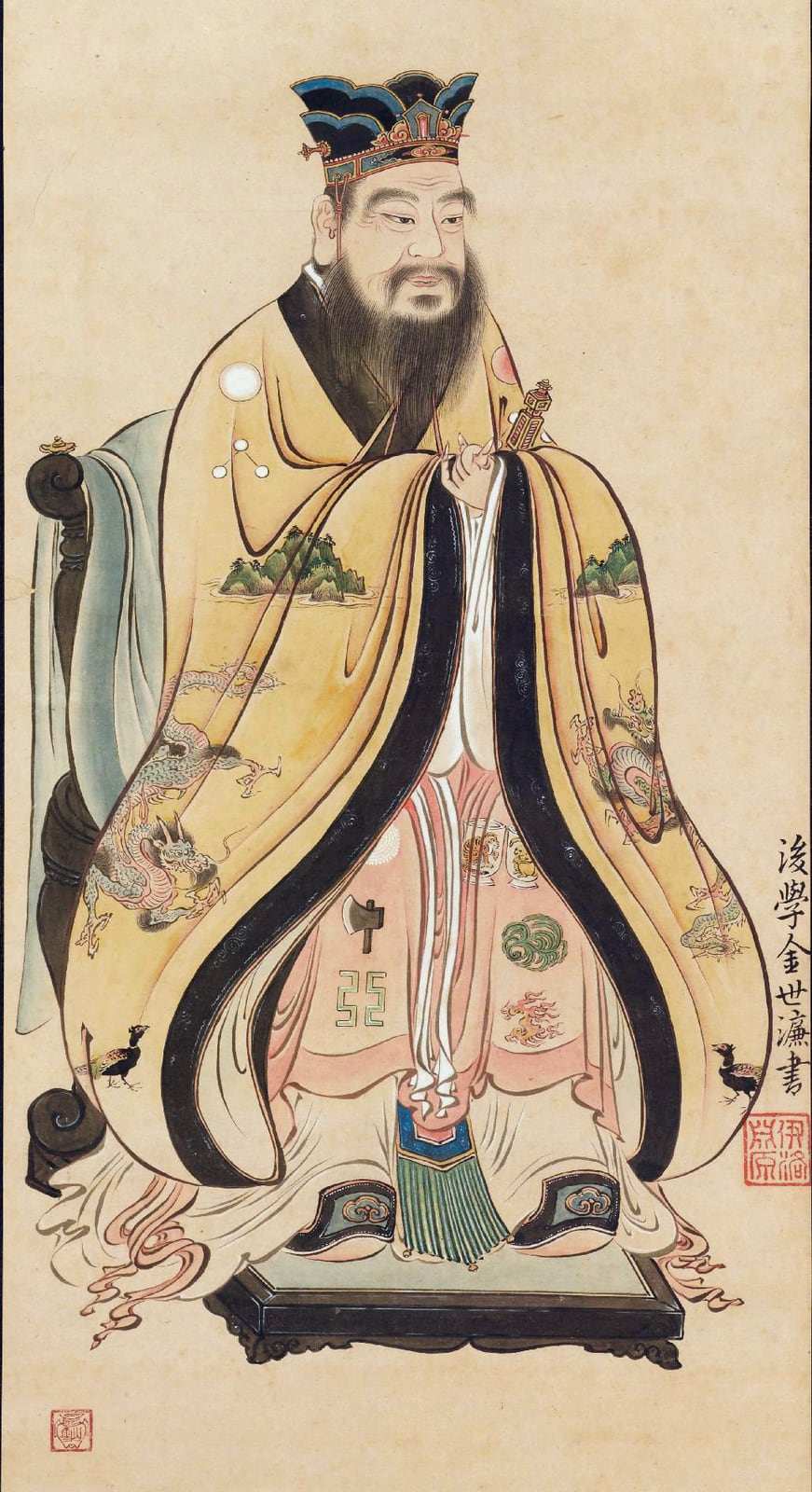
Confucius
Совпадают в вопросах: Кто я? Существует ли истинное «я»? · Почему мы страдаем? · Что происходит после смерти?
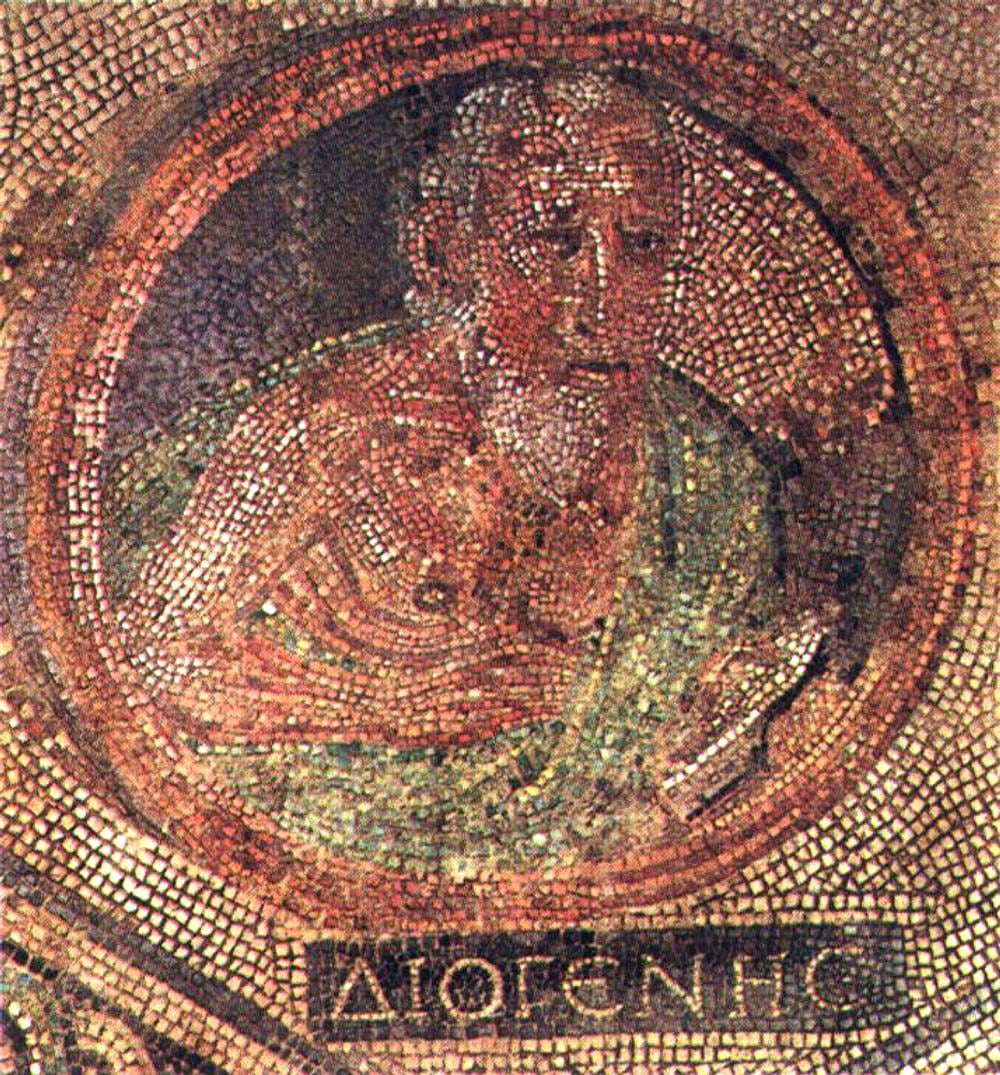
Diogenes of Sinope
Совпадают в вопросах: Что происходит после смерти? · Нужен ли учитель? · Реален ли мир?
Дальше всего от
Baal Shem Tov
Расходятся в вопросах: Что такое Абсолют? Существует ли Бог? · Кто я? Существует ли истинное «я»? · Почему мы страдаем?
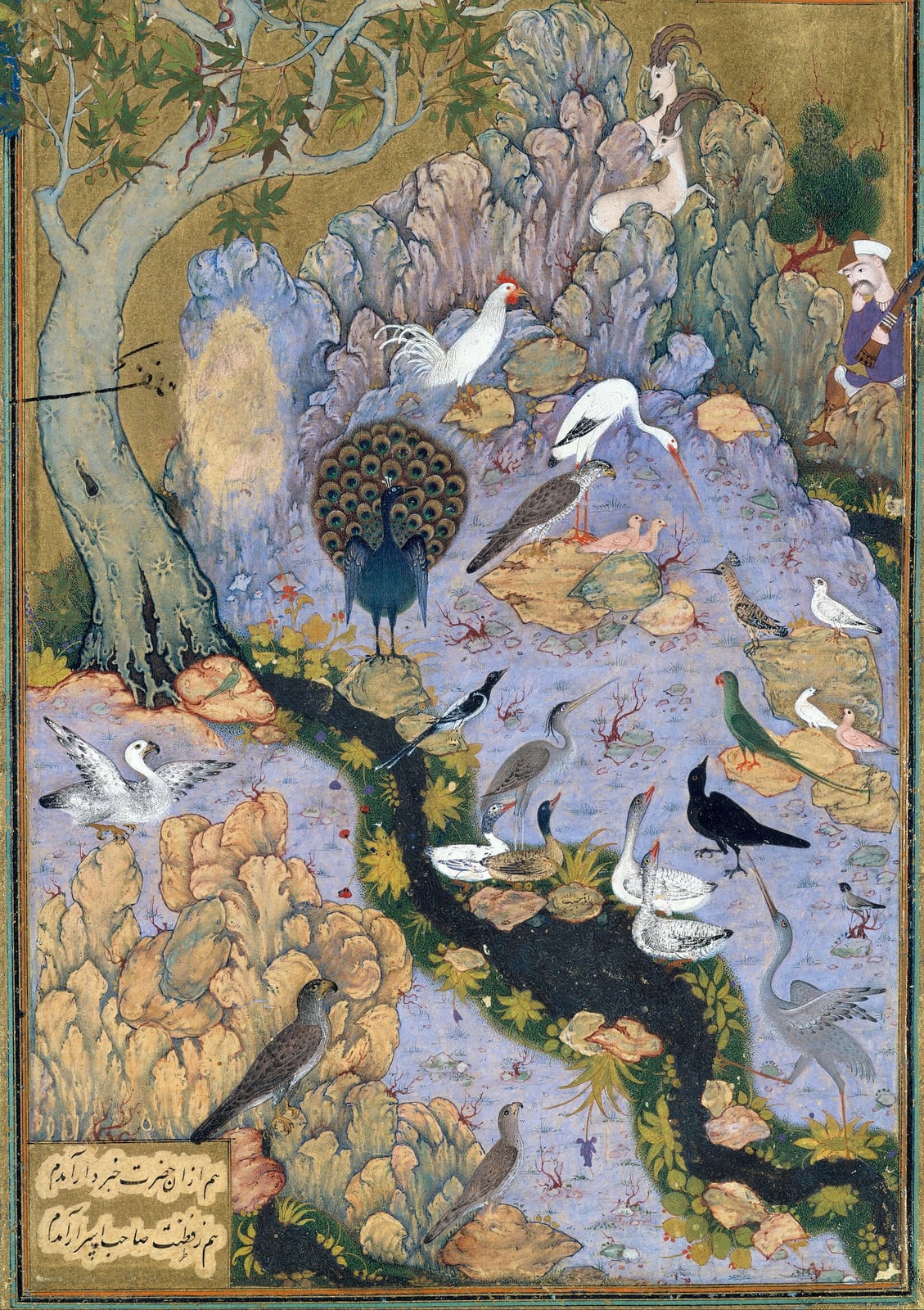
Attar
Расходятся в вопросах: Что такое Абсолют? Существует ли Бог? · Кто я? Существует ли истинное «я»? · Почему мы страдаем?
Hafez
Расходятся в вопросах: Что такое Абсолют? Существует ли Бог? · Кто я? Существует ли истинное «я»? · Почему мы страдаем?
Shunryu Suzuki
Расходятся в вопросах: Что такое Абсолют? Существует ли Бог? · Кто я? Существует ли истинное «я»? · Почему мы страдаем?
Предания и рассказы
Предания и рассказы
Устная традицияc. 367–347 a. C.
The colt that kicked its mother
Происхождение рассказа: The colt remark is in Diogenes Laertius V 2 (“they say Plato said”); the nicknames “reader” and “mind” come from the Neoplatonic Lives (Vita Marciana and related texts), collected by Düring (1957). None is contemporary.
Свидетельство343/342–340 a. C.
Alexander's tutor at Mieza
Происхождение рассказа: Plutarch, Life of Alexander 7–8 (late first century CE). The exchange of letters he quotes is almost certainly a later composition; the stay at Mieza and the teacher-pupil relationship are well attested.
Документированоc. 341 y 323 a. C.
A hymn for an executed friend
Происхождение рассказа: Diogenes Laertius V 5–8 transmits the hymn, the epigram and the charge; Athenaeus (Deipnosophists XV 696a–697b) also preserves the hymn and part of the ancient debate about its religious character.
Устная традиция323 a. C.
“I will not let Athens sin twice against philosophy”
Происхождение рассказа: The remark is recorded by Aelian (Varia Historia III 36) and the Neoplatonic Lives, several centuries later. Diogenes Laertius documents the charge and the retreat to Chalcis, but not the remark; handbooks cite it as traditional.
Источник: Eliano. Historias curiosas (Varia historia) III, 36; Aulo Gelio. Noches áticas XIII, 5 y XX, 5.
Документировано322 a. C.
The will of Chalcis
Происхождение рассказа: Diogenes Laertius V 11–16, who states that he found the document. Most specialists (Düring, Natali) consider it substantially authentic; Arabic versions of the will also exist.
Устная традицияc. 323–322 a. C.
The wine of Lesbos
Происхождение рассказа: Aulus Gellius, Attic Nights XIII 5 (second century CE), with no known earlier source. That Theophrastus succeeded Aristotle is documented; the wine scene is a late anecdote.
Источник: Eliano. Historias curiosas (Varia historia) III, 36; Aulo Gelio. Noches áticas XIII, 5 y XX, 5.
Оспариваетсяc. 287–40 a. C.
The books in the cellar
Происхождение рассказа: Strabo, Geography XIII 1, 54, and Plutarch, Life of Sulla 26. Modern scholars accept the library's journey to Rome and Andronicus's edition but doubt that the treatises were unknown for two centuries: there are signs that copies circulated.
Источник: Estrabón. Geografía XIII, 1, 54; y Plutarco, Vida de Sila, 26 (sobre la biblioteca de Aristóteles y Teofrasto, Neleo de Escepsis, Apelicón y Andrónico de Rodas).
Документированоc. 330 a. C. (redacción de la Ética nicomáquea)
Plato is a friend, but truth is a greater friend
Происхождение рассказа: The passage is Nicomachean Ethics I 6, 1096a11–17 (documented). The Latin formula “Amicus Plato, sed magis amica veritas” is later: the Life attributed to Ammonius, Roger Bacon (Opus maius I 7), Newton (Quaestiones quaedam philosophicae, c. 1664) and Cervantes mark its spread.
Учение
Учение
Понятия, на которых строится мысль учителя, объяснённые в их контексте.
Substance (ousia)ousia
Aristotle's answer to the question about being raised by Parmenides and Plato; the basis of scholastic, Arabic and modern ontology.
Matter and form, potentiality and actualityhilemorfismo
A solution to the puzzles about change inherited from Parmenides; the basis of Aristotelian psychology and of the scholastic theory of the soul as the form of the body.
The four causescuatro-causas
Physics II and Metaphysics A; the framework of natural science until the seventeenth century.
The unmoved movermotor-inmovil
The philosophical theology of Physics VIII and Metaphysics Λ; the point of contact between Greek philosophy and monotheistic theology.
The soul as the form of the bodypsyche
The psychology of On the Soul and the Parva naturalia; the origin of the medieval dispute over the agent intellect.
Happiness (eudaimonia) and the contemplative lifeeudaimonia
The core of both Ethics; an inspiration for the contemplative ideal in later philosophy and mysticism.
Virtue as a meantermino-medio
Books II–VI of the Nicomachean Ethics; the basis of virtue ethics.
Syllogism and logicsilogismo
The Organon (“instrument”), the name the commentators gave to the logical treatises.
Видео
Видео
Записи, интервью и документальные фильмы. Видео воспроизводятся с YouTube; здесь они не хранятся.
Aristotle
Лекция· EN· 2021· 44 min
Gresham CollegeОфициальный канал
Aristotle's Lyceum - Edith Hall
Лекция· EN· 2019· 49 min
Gresham CollegeОфициальный канал
Armand Marie Leroi, "The Lagoon: how Aristotle invented science"
Лекция· EN· 2018· 57 min
British School at AthensОфициальный канал
7. The Mixed Regime and the Rule of Law: Aristotle's Politics, I, III
Лекция· EN· 2008· 44 min
YaleCoursesОфициальный канал
8. The Mixed Regime and the Rule of Law: Aristotle's Politics, IV
Лекция· EN· 2008· 48 min
YaleCoursesОфициальный канал
9. The Mixed Regime and the Rule of Law: Aristotle's Politics, VII
Лекция· EN· 2008· 46 min
YaleCoursesОфициальный канал
Justice: What's The Right Thing To Do? Episode 10: "THE GOOD CITIZEN"
Лекция· EN· 2009· 55 min
Harvard UniversityОфициальный канал
Edith Hall • Aristotle and the Future of the Human Race
Лекция· EN· 2023· 81 min
Wolf Humanities CenterОфициальный канал
Aristotle & Virtue Theory: Crash Course Philosophy #38
Разбор· EN· 2016· 9 min
CrashCourseОфициальный канал
Aristóteles | Por Darío Sztajnszrajber
Лекция· ES· 2016· 153 min
Facultad LibreОфициальный канал
Mentira la verdad IV: Aristóteles, Metafísica - Canal Encuentro
Документальный фильм· ES· 2016· 28 min
Canal EncuentroОфициальный канал
7ª - 8ª Introducción a la Filosofía de Aristóteles
Лекция· ES· 2022· 157 min
Fundación Universitaria EspañolaОфициальный канал
Aristóteles: el discípulo díscolo de Platón | Introduc. Seminario | Filosofía Clásica | Ginés Marco
Лекция· ES· 2023· 72 min
Ateneo Mercantil de ValenciaОфициальный канал
Aristóteles, Galeno y Avicena en la Escuela de Traductores de Toledo | Mariano Gómez Aranda
Лекция· ES· 2023· 61 min
Fundación Juan MarchОфициальный канал
Aristóteles, ¿el primer ecologista?
Смотреть на YouTube
Это видео нельзя встроить; оно откроется на YouTube.
Aristóteles, ¿el primer ecologista?
Документальный фильм· ES· 2025· 25 min
UNEDОфициальный канал
Галерея
Галерея
Изображения с проверенной лицензией. Каждое сохраняет своё авторство и атрибуцию.
Рукописи
Рукописи
Рукописные свидетельства и древние тексты, с указанием хранителя и условий доступа.
GRC · Griego (minúscula) · s. IV a. C.
Κατηγορίαι κ.ἄ. (Ὄργανον)
- Сохранившийся список
- Códice fechado en el año 954
- Хранитель
- Biblioteca Nazionale Marciana, Venecia · Gr. 201
- Оцифровка
- commons.wikimedia.org/wiki/File:Aristotle,_Categ…
GRC · Griego (minúscula) · s. IV a. C.
Τὰ μετὰ τὰ φυσικά
- Сохранившийся список
- Códice copiado entre 1311 y 1321
- Хранитель
- Biblioteca Apostolica Vaticana · Vat. gr. 256
- Оцифровка
- commons.wikimedia.org/wiki/File:Aristotle,_Metap…
GRC · Griego (minúscula) · s. IV a. C.
Ἀριστοτέλους ἔργα (miscelánea)
- Сохранившийся список
- Manuscrito de 1457 con miniatura de Aristóteles (fol. 8v)
- Хранитель
- Österreichische Nationalbibliothek, Viena · Cod. phil. gr. 64
- Оцифровка
- commons.wikimedia.org/wiki/File:Aristotle,_Vienn…
GRC · Griego (cursiva sobre papiro) · c. 330–322 a. C.
Ἀθηναίων πολιτεία
- Сохранившийся список
- Papiro egipcio de finales del siglo I d. C., escrito en el reverso de unas cuentas agrícolas
- Хранитель
- British Library, Londres · Papyrus 131
- Оцифровка
- www.bl.uk/manuscripts/FullDisplay.aspx?ref=Papyr…
Связи
Связи
Влияния, ученичество и близость взглядов. Документированная связь отличается от сходства, выявленного путём анализа.
Ученик
He was Plato's student in the Academy for twenty years (c. 367–347 BCE) and his most influential critic: he rejected the separation of the Forms but kept the primacy of form and of knowledge of the universal.
Документированная связь
Испытал влияние
He never met him (Socrates died in 399), but knew him through Plato and discusses him in the Metaphysics (A 6, M 4), crediting him with the search for universal definitions and inductive arguments, and in the Ethics, where he criticises his thesis that no one does wrong knowingly.
Документированная связь
Расходился во взглядах с
Book I of the Physics answers the Eleatic denial of change with the notions of subject, privation and form, and of potentiality and actuality.
Документированная связь
Расходился во взглядах с
In Metaphysics Γ he argues against those who, following Heraclitus, seem to deny the principle of non-contradiction; in Parts of Animals I 5 he recalls with appreciation his saying “here too there are gods”.
Документированная связь
Расходился во взглядах с
He discusses him often in the Physics, On the Soul and On Generation and Corruption; he criticises his explanation of living beings by chance combinations.
Документированная связь
Расходился во взглядах с
In Metaphysics A 5 he expounds and criticises the Pythagorean doctrine that the principles of numbers are the principles of all things; he also wrote a lost treatise on the Pythagoreans.
Документированная связь
Современник
Diogenes Laertius (V 18) records an anecdotal encounter between the two over some dried figs; the episode's historicity is doubtful.
Документированная связь
Повлиял на
Plotinus integrated Aristotelian concepts into his system — actuality and potentiality, the intellect thinking itself — and devoted treatises VI 1–3 of the Enneads to criticising the doctrine of the categories.
Документированная связь
Повлиял на
In the Confessions (IV 16) he relates that he read and understood on his own, at about twenty, Aristotle's Categories in Latin translation, and that they did him little good in thinking about God.
Документированная связь
Расходился во взглядах с
The Incoherence of the Philosophers attacks the falasifa who followed Aristotle through al-Farabi and Avicenna, naming him explicitly as the source of their errors, although al-Ghazali accepted and spread Aristotelian logic.
Документированная связь
Повлиял на
The Guide of the Perplexed relies on Aristotelian physics and metaphysics and holds that what Aristotle says about the sublunary world is true, while rejecting his thesis of the eternity of the world.
Документированная связь
Идеи, близкие к
Indirect relation: Ibn Arabi knew the Aristotelian vocabulary (form, matter, intellect) through falsafa and transformed it in a mystical key; there is no record that he discussed Aristotle's texts.
Сходство, выявленное путём анализа
Повлиял на
As a Dominican master at Paris, Eckhart worked within scholastic Aristotelianism and frequently cites On the Soul and the Metaphysics, particularly the doctrine of the intellect. A general relation, with no specific source recorded in this entry.
Сходство, выявленное путём анализа
Расходился во взглядах с
The appendix to part one of Spinoza's Ethics rejects final causes, a pillar of Aristotelian physics, as an anthropomorphic prejudice.
Документированная связь
Идеи, близкие к
A parallel often drawn by comparative philosophy: virtue as cultivated habit and the Aristotelian mean are compared with the Confucian doctrine of the mean. There was no historical contact.
Сходство, выявленное путём анализа
Идеи, близкие к
Siddhartha Gautama, the Buddha
A thematic parallel: the ethics of the mean and the Buddhist “middle way” between asceticism and pleasure; the underlying conceptions are very different and there was no contact.
Сходство, выявленное путём анализа
Современник
Epicurus (b. 341 BCE) belongs to the following generation; his atomist physics and his ethics of pleasure developed in polemic with the Platonic and Peripatetic tradition.
Сходство, выявленное путём анализа
Упоминается в других статьях
- Heraclitus · Повлиял на
- Marcus Aurelius · Идеи, близкие к
- Parmenides · Повлиял на
- Zeno of Citium · Современник
- Epicurus · Расходился во взглядах с
- Socrates · Повлиял на
- Diogenes of Sinope · Современник
- Empedocles · Повлиял на
- Epictetus · Идеи, близкие к
- Maimonides · Испытал влияние
- Pythagoras · Повлиял на
- Plotinus · Испытал влияние
- Al-Ghazali · Расходился во взглядах с
- Plato · Учитель
Источники
Источники
Библиография и каталоги, использованные для этой статьи.
- Cicerón. Académicos II (Lúculo), 119: «veniet flumen orationis aureum fundens Aristoteles».
- Wikimedia Commons: metadatos y licencias de las imágenes, verificados por la API imageinfo el 25 de octubre de 2026.
- YouTube: verificación de cada vídeo mediante el servicio oEmbed, 25 de octubre de 2026.
- Diógenes Laercio. Vidas de los filósofos ilustres, libro V, 1–35 («Aristóteles»). Trad. inglesa de R. D. Hicks, Lives of Eminent Philosophers, vol. I, Loeb Classical Library 184. Londres: Heinemann, 1925 (texto en Wikisource).
- Shields, Christopher. «Aristotle». Stanford Encyclopedia of Philosophy, ed. Edward N. Zalta (revisión de 2020).
- «Aristotle», Wikipedia en inglés, y «Aristóteles», Wikipedia en español (consultadas para hechos verificables y bibliografía; texto propio).
- Natali, Carlo. Aristotle: His Life and School. Ed. D. S. Hutchinson. Princeton: Princeton University Press, 2013.
- Düring, Ingemar. Aristotle in the Ancient Biographical Tradition. Göteborg: Acta Universitatis Gothoburgensis, 1957.
- Barnes, Jonathan (ed.). The Complete Works of Aristotle: The Revised Oxford Translation. 2 vols. Princeton: Princeton University Press (Bollingen Series LXXI.2), 1984.
- Plutarco. Vida de Alejandro, 7–8. Trad. inglesa de Bernadotte Perrin, Plutarch's Lives, vol. VII, Loeb Classical Library 99. Cambridge (Mass.): Harvard University Press, 1919.
- Estrabón. Geografía XIII, 1, 54; y Plutarco, Vida de Sila, 26 (sobre la biblioteca de Aristóteles y Teofrasto, Neleo de Escepsis, Apelicón y Andrónico de Rodas).
- Wikidata, «Aristotle» (Q868).
- Bekker, Immanuel (ed.). Aristotelis Opera, edidit Academia Regia Borussica. 5 vols. Berlín: G. Reimer, 1831–1870 (vols. I–II, texto griego, 1831).
- Open Library (Internet Archive): registros de edición e ISBN de la Biblioteca Clásica Gredos, la Loeb Classical Library (Harvard University Press) y Princeton University Press consultados el 25 de octubre de 2026.
- Eliano. Historias curiosas (Varia historia) III, 36; Aulo Gelio. Noches áticas XIII, 5 y XX, 5.
- Jaeger, Werner. Aristoteles: Grundlegung einer Geschichte seiner Entwicklung. Berlín: Weidmann, 1923 (trad. esp.: Aristóteles. Bases para la historia de su desarrollo intelectual. México: Fondo de Cultura Económica, 1946).
- Leroi, Armand Marie. The Lagoon: How Aristotle Invented Science. Londres: Bloomsbury, 2014.
- Kenyon, Frederic G. (ed.). Aristotle on the Constitution of Athens. Londres: British Museum, 1891 (editio princeps del Papiro 131 de la British Library).
- Project Gutenberg (catálogo vía Gutendex) e Internet Classics Archive del MIT (traducciones de Oxford y otras), consultados el 25 de octubre de 2026.
- Azcárate, Patricio de (trad.). Obras de Aristóteles. 10 vols. Madrid: Medina y Navarro, 1873–1875 (digitalización parcial en el Proyecto Filosofía en español y facsímiles completos en Wikimedia Commons).
- Darwin, Charles. Carta a William Ogle, 22 de febrero de 1882. Darwin Correspondence Project, DCP-LETT-13697.
- Moraux, Paul. Les listes anciennes des ouvrages d'Aristote. Lovaina: Éditions Universitaires, 1951.
- Kraye, Jill; Ryan, W. F.; Schmitt, C. B. (eds.). Pseudo-Aristotle in the Middle Ages: The Theology and Other Texts. Londres: The Warburg Institute, 1986.
- Rose, Valentin (ed.). Aristotelis qui ferebantur librorum fragmenta. Leipzig: Teubner, 1886; y Gigon, Olof (ed.). Aristotelis Opera III: Librorum deperditorum fragmenta. Berlín: De Gruyter, 1987.
- Hutchinson, D. S.; Johnson, Monte Ransome. «Authenticating Aristotle's Protrepticus». Oxford Studies in Ancient Philosophy 29 (2005): 193–294.
- Maimónides. Guía de perplejos II, 22 (trad. inglesa de Shlomo Pines, The Guide of the Perplexed, Chicago: University of Chicago Press, 1963); y carta a Samuel ibn Tibón (1199) sobre los libros de Aristóteles.
- al-Ghazali. Tahafut al-falasifa (La incoherencia de los filósofos), introducción. Trad. inglesa de Michael E. Marmura, The Incoherence of the Philosophers. Provo: Brigham Young University Press, 2000.
- Agustín de Hipona. Confesiones IV, 16, 28–29 (lectura de las Categorías de Aristóteles hacia los veinte años).
- Plotino. Enéadas VI, 1–3 («Sobre los géneros del ser»), con la crítica de las categorías aristotélicas. Trad. inglesa de A. H. Armstrong, Loeb Classical Library 445. Cambridge (Mass.): Harvard University Press, 1988.
- Spinoza, Baruch. Ethica ordine geometrico demonstrata (1677), parte I, apéndice (crítica de las causas finales).
- Wikiquote en inglés, «Aristotle», secciones «Disputed» y «Misattributed» (atribuciones dudosas y falsas, con sus fuentes).
- Правообладатель
- Los textos griegos de Aristóteles son de dominio público. Las traducciones y ediciones modernas pertenecen a sus traductores y editoriales: Editorial Gredos (Biblioteca Clásica Gredos, hoy en RBA Libros), Harvard University Press (Loeb Classical Library), Princeton University Press (The Complete Works of Aristotle, ed. Barnes), Oxford University Press (Oxford Classical Texts y Clarendon Aristotle Series), Alianza Editorial, Abada y otras.
Ожидает подтверждения
То, что в этой статье пока не удалось установить. Мы предпочитаем сказать об этом, а не заполнять пробел.
- Ediciones en español con ISBN no localizadas en catálogo para los opúsculos espurios Sobre el mundo, Sobre el aliento, Sobre los colores, Sobre las cosas audibles, Sobre las plantas, Relatos maravillosos, Situación y nombres de los vientos y Sobre Meliso, Jenófanes y Gorgias, ni para la Teología de Aristóteles; tampoco ediciones inglesas con ISBN del Libro de las causas y del Secreto de los secretos.
- ISBN de la Política en la Biblioteca Clásica Gredos n.º 116 (1988) no visto en Open Library: se ha registrado la reedición de Gredos de 2022 con la misma traducción. Falta también el ISBN de History of Animals VII–X (Loeb 439, Balme).
- Los años de primera edición de los volúmenes Loeb y de la Biblioteca Clásica Gredos proceden de la bibliografía general; los ISBN corresponden a las reimpresiones registradas en Open Library. Confirmar con los catálogos de las editoriales.
- Gredos 2020, «Poética. Magna Moralia» (ISBN 9788424939151): confirmar qué traductor firma cada obra (el registro cita a Teresa Martínez Manzano y Leonardo Martínez Dupla).
- Tomo V de las Obras de Aristóteles de Azcárate («Psicología: Opúsculos»): confirmar qué tratados de los Parva naturalia contiene antes de enlazarlo a cada uno por separado; hoy solo se enlaza a Acerca del sentido y lo sensible.
- Derechos de las traducciones de Oxford en la UE: verificar las fechas de muerte de A. J. Jenkinson, W. A. Pickard-Cambridge, R. P. Hardie, E. W. Webster, G. R. T. Ross y J. Solomon. En EE. UU. todas son de dominio público por ser anteriores a 1931, salvo la de Acerca del alma de J. A. Smith (1931), que lo será el 1 de enero de 2027.
- Traductor de la Ética nicomáquea de Project Gutenberg n.º 8438 (edición Everyman de 1911): el ebook no lo nombra; identificarlo en la edición impresa.
- Catálogo antiguo de obras (Diógenes Laercio V 22–27, unos ciento cincuenta títulos, y las listas de Hesiquio y de Ptolomeo el Árabe estudiadas por Moraux): se han registrado las obras perdidas principales y mejor documentadas, no todos los títulos de la lista.
- Manuscritos: añadir el Parisinus graecus 1741 (Poética y Retórica, s. X), el Vindobonensis phil. gr. 100 (s. IX, Física, Del cielo, Metafísica) y el Parisinus gr. 1853 (s. X) con sus digitalizaciones oficiales (Gallica, ÖNB), no verificadas en esta pasada; tampoco se ha verificado la digitalización íntegra del Vat. gr. 256 en DigiVatLib.
- Wikidata registra como fecha de muerte el 7 de marzo del 322 a. C. sin fuente primaria localizada; se mantiene solo el año.
- Vídeos: el programa de la UNED «Aristóteles, ¿el primer ecologista?» no permite inserción (oEmbed 401). No se ha encontrado un documental de televisión pública española dedicado íntegramente a Aristóteles en un canal oficial.
- Imagen descartada: «Stagira, an ancient Greek city, birth place of Aristotle.jpg» (CC BY-SA 4.0) por metadatos de fecha anómalos (2026-06-16); revisar antes de usarla. No hay retrato de Aristóteles anterior a la copia romana del tipo de Lisipo.
- Sin programa de afiliación verificado ni web oficial: Aristóteles no tiene titular de derechos; las editoriales citadas no se han comprobado como programas de afiliados.
Исследовано 2026-10-25