Сократическая философия
Socrates
Σωκράτης
ок. 469 до н. э. – 399 до н. э.Исторически документированная личность
Афинский философ (ок. 469–399 гг. до н. э.), который ничего не написал и изменил ход философии, сделав её главным предметом вопрос о том, как следует жить. Он беседовал на агоре, испытывая тех, кто считал себя знающим, и не брал за это платы. Обвинённый в нечестии и развращении юношества, он был приговорён к смерти и выпил цикуту. Мы знаем его по Платону, Ксенофонту, Аристофану и Аристотелю, чьи портреты не совпадают: это и есть «сократический вопрос».
- трудов
- 31трудов
- изданий
- 104изданий
- цитат
- 9цитат
- видео
- 13видео
- изображений
- 9изображений
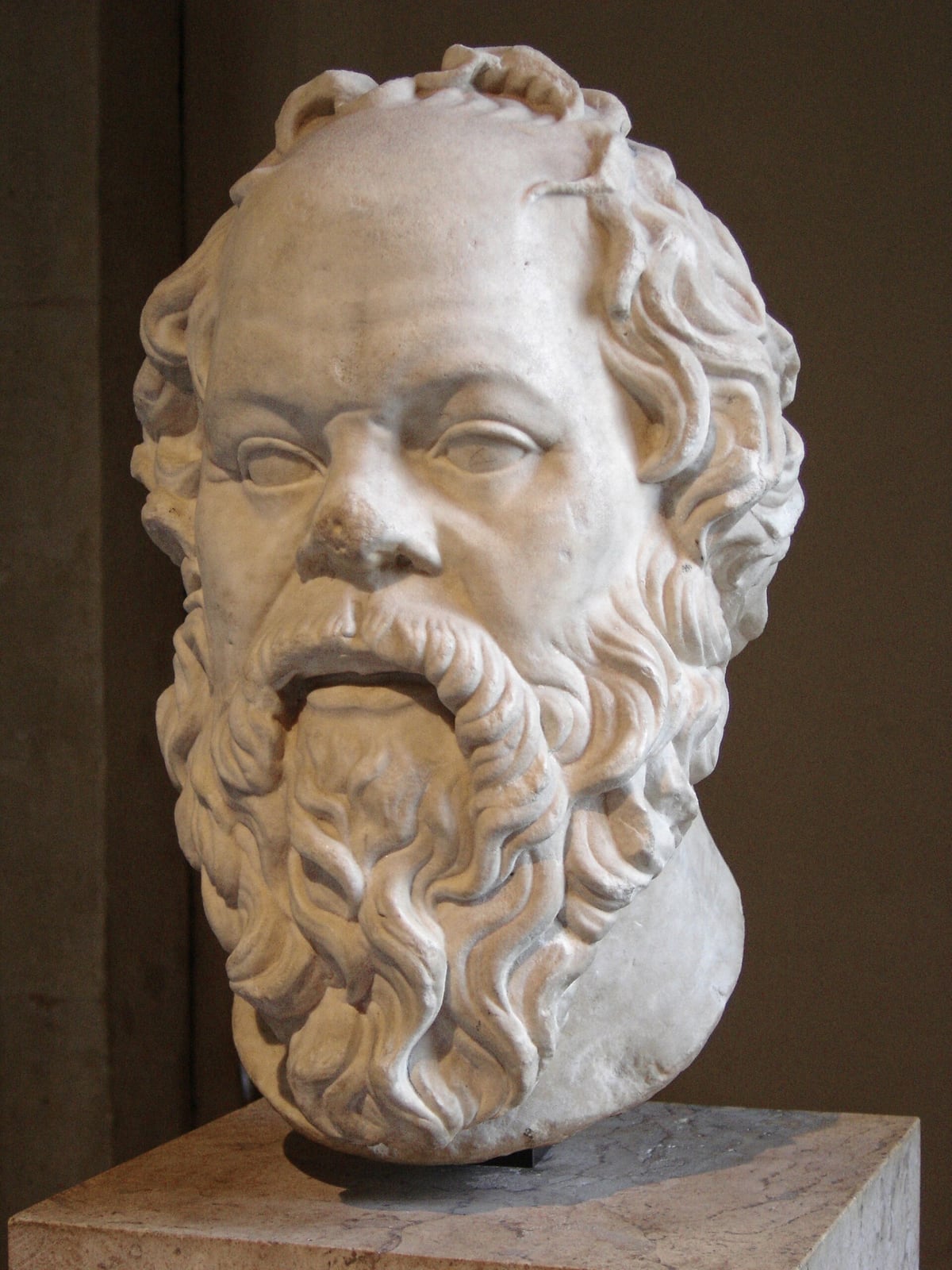
Busto de Sócrates (Louvre) · Public domain
Своими словами
«The unexamined life is not worth living.»Platón, Apología 38a. Griego: ed. Burnet (OCT); inglés: Benjamin Jowett (1892); español: traducción propia. Son palabras que Platón atribuye a Sócrates.

Главная мысль
Elenchus (Socratic refutation): The *elenchus*—"test", "refutation"—is the procedure Plato's early dialogues attribute to Socrates.
В контексте
Биография
5 мин чтения
Перевод с испанского оригинала, выполненный с помощью ИИ; ожидает проверки носителем языка.
Человек, который ничего не написал
Сократ не оставил ни одной написанной строки. Всё, что мы о нём знаем, исходит от других: из диалогов его ученика Платона, из сократических сочинений Ксенофонта, из комедии Аристофана, высмеявшего его ещё при жизни, из сведений, которые Аристотель — родившийся через пятнадцать лет после его смерти — собрал в Академии, и из поздней компиляции Диогена Лаэртского, относящейся к III веку н. э. Эти свидетельства расходятся. Сократ Аристофана — шарлатан, рассуждающий об облаках и обучающий выигрывать неправые тяжбы; Сократ Ксенофонта — здравомыслящий моралист, дающий друзьям добрые советы; Сократ Платона — мыслитель несравненной глубины, который в поздних диалогах становится выразителем учений, которых сам, вероятно, никогда не придерживался.
Этот разрыв между источниками называют «сократическим вопросом». Его сформулировал Фридрих Шлейермахер в 1818 году, задавшись вопросом, каким должен был быть Сократ, чтобы Платон и Ксенофонт изобразили его именно так. С тех пор одни доверялись Ксенофонту за его видимую трезвость; другие, как Грегори Властос, реконструировали исторического Сократа по ранним диалогам Платона; третьи, как Олоф Гигон или Чарлз Кан, подчёркивали, что «сократические беседы» были литературным жанром, в котором упражнялись многие ученики, и ни один из них не намеревался вести протокол. Ниже, насколько возможно, разграничено то, в чём источники сходятся, и то, что привносит каждый из них.
Алопека
Он родился в Афинах около 469 г. до н. э. — Диоген Лаэртский, следуя хронологии Аполлодора, относит его рождение к четвёртому году 77-й олимпиады — в деме Алопека, относившемся к филе Антиохиде. Его отец Софрониск был каменотёсом или скульптором; мать, Фенарета, — повитухой, и это ремесло сам Сократ превратит в «Теэтете» в образ своего метода. Женился он поздно, на Ксантиппе, от которой у него было трое сыновей — Лампрокл, Софрониск и Менексен; Аристотель, на которого ссылается Диоген, приписывает ему и вторую жену, Мирто, но учёные считают это известие сомнительным.
Он вырос в Афинах Перикла, в поколении, на глазах у которого поднялся Парфенон и расцвели трагедия, софистика и исследование природы. Платон заставляет его в юности беседовать с Парменидом и Зеноном — встреча, по всей видимости, литературная — и изображает его в молодые годы увлечённым физикой Анаксагора, от которой он будто бы отказался, не найдя в ней ответа на вопрос о благе.
Воин и гражданин
Он служил гоплитом, а это предполагает, что в молодости он был человеком с некоторым достатком. Он сражался при Потидее (432–430 гг. до н. э.), где, по рассказу, который Платон в «Пире» вкладывает в уста Алкивиада, спас тому жизнь и переносил зиму босым; при отступлении от Делия (424 г. до н. э.), где его невозмутимость поразила стратегов; и при Амфиполе (422 г. до н. э.). «Апология» вспоминает эти три похода как доказательство того, что он ни разу не покинул вверенного ему поста.
Общественную должность он занимал лишь однажды, и то по жребию. В 406 г. до н. э., будучи членом Совета во время притании своей филы, он воспротивился тому, чтобы вопреки закону судить скопом стратегов, победивших при Аргинусах и обвинённых в том, что они не подобрали потерпевших кораблекрушение. Два года спустя, при олигархии Тридцати, он вместе с четырьмя другими получил приказ арестовать Леонта Саламинского, чтобы предать его казни, — и ушёл домой. Платон и Ксенофонт согласно передают оба эпизода.
Вопрошание как ремесло
Его ремеслом была беседа. Он вёл её на агоре, в гимнасиях и в домах друзей, не беря платы — в отличие от софистов, с которыми его многие путали, — и в бедности, которую «Апология» называет крайней. Знаменито было его безобразие: курносый нос, глаза навыкате, облик силена. Согласно «Апологии», его друг Херефонт спросил в Дельфах, есть ли кто-нибудь мудрее Сократа, и Пифия ответила, что нет; озадаченный Сократ стал испытывать политиков, поэтов и ремесленников и пришёл к выводу, что единственное его преимущество — в том, что он не думает, будто знает то, чего не знает. С тех пор он понимал своё испытание других как служение богу.
Это испытание — эленхос — состояло в том, чтобы спросить определение мужества, благочестия или справедливости, добиться согласия собеседника с другими положениями и показать ему, что исходное определение с ними несовместимо. Аристотель приписывает Сократу два нововведения: индуктивные рассуждения и поиск общих определений применительно к нравственным вопросам — причём эти общие понятия он не отделял от вещей, как позднее сделает Платон со своими идеями. Сократ говорил также о божественном знамении, своём даймонии, голосе, который с детства удерживал его от некоторых поступков и никогда ни к чему не побуждал.
«Облака»
В 423 г. до н. э. Аристофан поставил «Облака», где Сократ, подвешенный в корзине, руководит «мыслильней», в которой изучают небесные явления, заменяют Зевса Вихрем и обучают неправому слову. Комедия заняла лишь третье место, но карикатура пережила её: в «Апологии» Сократ причисляет к своим «первым обвинителям» тех, кто распространил этот образ, и прямо называет имя комедиографа. Против него говорила и его близость к Алкивиаду, предавшему Афины, и к Критию, самому непримиримому из Тридцати.
Суд
Весной 399 г. до н. э. Мелет при поддержке Анита и Ликона обвинил его в том, что он не признаёт богов, которых признаёт город, вводит новые божества и развращает юношество; обвинитель потребовал смертной казни. Поскольку амнистия 403 года запрещала преследовать за прежние политические проступки, обвинение было сформулировано в религиозных терминах. Перед судом примерно из пятисот граждан Сократ защищался без мольб и слёз. Его осудили большинством примерно в шестьдесят голосов, как следует из платоновской «Апологии»; когда ему предложили назначить себе иное наказание, он сначала заявил, что заслуживает бесплатного питания в Пританее за счёт государства, а затем предложил штраф в тридцать мин, за который поручились Платон, Критон, Критобул и Аполлодор. Суд проголосовал за смерть.
Казнь отложили примерно на тридцать дней, потому что священный корабль, отправленный на Делос, ещё не вернулся, а в его отсутствие город не мог никого казнить. Критон предложил ему бежать, и Сократ отказался: в диалоге, носящем имя Критона, Законы Афин напоминают ему, что он семьдесят лет прожил под их защитой и не вправе отвечать на несправедливость несправедливостью.
Смерть
«Федон» повествует о последнем дне. Платона при этом не было — «Платон, кажется, был болен», говорит рассказчик, — и диалог, посвящённый доказательствам бессмертия души, — это скорее произведение искусства и учения, чем протокол. К вечеру Сократ омылся, простился с женой и сыновьями, выпил яд — цикуту, согласно традиционному отождествлению, — и ходил, пока не почувствовал тяжесть в ногах. Когда холод уже подступал к сердцу, он открыл лицо и сказал Критону, что они должны Асклепию петуха и пусть не забудут отдать долг. Это были, по словам Федона, его последние слова.
Что осталось
Из его круга вышли соперничавшие между собой школы: Академия Платона, киники, возводившие себя к Антисфену, киренаики Аристиппа, мегарики Евклида. Стоики видели в нём образец мудреца, и Эпиктет то и дело его цитирует. В Новое время Кьеркегор посвятил свою диссертацию сократической иронии (1841), Ницше сделал его симптомом упадка (1889), а Жак-Луи Давид в 1787 году запечатлел образ его безмятежной смерти. Для западной традиции он остаётся фигурой философа, который предпочёл умереть, но не перестать испытывать жизнь.
Источники: Platón. Platonis Opera, ed. John Burnet, 5 vols. Oxford University Press (Oxford Classical Texts), 1900–1907; tomo I (Eutifrón, Apología, Critón, Fedón) consultado en la edición digital del Perseus Digital Library (Tufts University). · Plato. The Dialogues of Plato, trad. Benjamin Jowett, 3.ª ed., 5 vols. Clarendon Press, Oxford, 1892 (Project Gutenberg, n.º 1656 Apology, 1657 Crito, 1658 Phaedo y otros). · Platón. Obras completas, trad. Patricio de Azcárate, 11 vols. Medina y Navarro, Madrid, 1871–1872 (edición digital en Filosofía en español). · Jenofonte. Memorables (Recuerdos de Sócrates), Apología de Sócrates, Banquete y Económico. Texto griego: Xenophontis opera omnia, ed. E. C. Marchant, vol. 2, 2.ª ed., Clarendon Press, Oxford, 1921 (Perseus); trad. inglesa de H. G. Dakyns, The Works of Xenophon, Macmillan, Londres, 1890–1897 (Project Gutenberg). · Aristófanes. Las nubes (Νεφέλαι), representada en 423 a. C.; trad. inglesa de W. J. Hickie, The Comedies of Aristophanes, Bohn's Classical Library, Londres, 1853 (Project Gutenberg n.º 2562).
Хронология
Жизнь год за годом
Каждая точка — документированное событие. Нажмите, чтобы прочитать о нём, с источником и степенью достоверности.
ок. 469 до н. э.0 летAlopece (Atenas)
Birth
Born in the deme of Alopece, son of the stonemason Sophroniscus and the midwife Phaenarete. Diogenes Laertius (II 44), following Apollodorus, gives the fourth year of the 77th Olympiad (469/468 BCE); Wikidata records 470. Years BCE are expressed as negative numbers.
ВероятноDiógenes Laercio. Vidas y opiniones de los filósofos ilustres, libro II, 18–47 (Sócrates), s. III d. C. Trad. inglesa de C. D. Yonge, Bohn, Londres, 1853 (Project Gutenberg n.º 57342); trad. española de José Ortiz y Sanz, Madrid, 1792 (Wikisource).
После смерти
- ок. 395 до н. э.The "Socratic discourses"
- ок. 387 до н. э.Founding of the Academy
- 1787David's Death of Socrates
- 1818Schleiermacher poses the "Socratic problem"
- 1841Kierkegaard on irony
ок. 469 до н. э. · 0 лет
Birth
Born in the deme of Alopece, son of the stonemason Sophroniscus and the midwife Phaenarete. Diogenes Laertius (II 44), following Apollodorus, gives the fourth year of the 77th Olympiad (469/468 BCE); Wikidata records 470. Years BCE are expressed as negative numbers.
Вероятно
ок. 432 до н. э. · 37 лет
The Potidaea campaign
Serves as a hoplite at the siege of Potidaea (432–430 BCE). In the Symposium (219e–220e) Alcibiades says Socrates saved his life and endured the winter barefoot.
Вероятно
424 до н. э. · 45 лет
The retreat from Delium
Takes part in the Athenian defeat at Delium; the Laches (181b) and the Symposium (221a–b) praise his composure during the retreat.
Вероятно
423 до н. э. · 46 лет
Aristophanes' Clouds
Aristophanes stages the Clouds at the City Dionysia, caricaturing Socrates as a teacher of speculative physics and unscrupulous rhetoric. It comes third; the surviving text is a later revision that was never staged.
Документировано
422 до н. э. · 47 лет
Amphipolis
Last military campaign attributed to him in the Apology (28e).
Вероятно
406 до н. э. · 63 года
The Arginusae trial
As a member of the Council, during the prytany of the tribe Antiochis, he opposes trying the generals of Arginusae en bloc, against the law (Apology 32b; Xenophon, Hellenica I 7.15).
Документировано
404 до н. э. · 65 лет
Leon of Salamis
Under the Thirty Tyrants he refuses the order to arrest Leon of Salamis for execution (Apology 32c–d; Xenophon, Memorabilia IV 4.3).
Документировано
403 до н. э. · 66 лет
Democratic restoration and amnesty
Fall of the Thirty. The amnesty forbids prosecution for earlier political offences, which partly explains the religious framing of the 399 charge.
Документировано
399 до н. э. · 70 лет
Trial
Meletus, Anytus and Lycon accuse him of impiety and of corrupting the youth. He is convicted by about sixty votes before a jury of some five hundred citizens and sentenced to death.
Документировано
399 до н. э. · 70 лет
Death
After some thirty days' wait for the return of the Delian ship, he drinks the poison in prison, surrounded by his friends (Phaedo 116a–118a; Xenophon, Memorabilia IV 8.2).
Документировано
ок. 395 до н. э.
The "Socratic discourses"
Plato, Xenophon, Aeschines of Sphettus, Antisthenes, Phaedo and others write dialogues with Socrates as protagonist; Aristotle (Poetics 1447b) treats them as a genre of their own. Except for Plato's and Xenophon's, almost all survive only in fragments.
Документировано
ок. 387 до н. э.
Founding of the Academy
Plato founds his school in the grove of Academus; the dialogues read there will fix the image of Socrates for posterity.
Вероятно
1787
David's Death of Socrates
Jacques-Louis David shows at the Salon the painting that fixes the modern image of Socrates' death, now in the Metropolitan Museum, New York.
Документировано
1818
Schleiermacher poses the "Socratic problem"
In "Über den Werth des Sokrates als Philosophen" Schleiermacher asks how to reconcile Plato's and Xenophon's portraits: the critical question of the historical Socrates is born.
Документировано
1841
Kierkegaard on irony
Søren Kierkegaard defends his dissertation On the Concept of Irony with Continual Reference to Socrates.
Документировано
Труды
Главные труды
Труды, без которых не понять это наследие.
Записанное устное учение · ок. 395 до н. э.
Apology of Socrates
Ἀπολογία Σωκράτους
Socrates' defence speech before the Athenian court in 399 BCE, in three parts: the defence against the "first accusers" and against Meletus; the counter-proposal of a penalty after the verdict; and closing words to the jurors. It contains the account of the Delphic oracle, the image of the gadfly that rouses the city, the statement that he will obey the god rather than the Athenians and the dictum that the unexamined life is not worth living. It is the main source for reconstructing the trial and Socrates' understanding of himself.
6 изданий
Записанное устное учение · ок. 395 до н. э.
Crito
Κρίτων
In prison, at dawn, his old friend Crito tells Socrates that the ship from Delos is about to arrive and offers him an escape, already arranged and paid for. Socrates examines whether it is just to flee: one must not answer an injustice with another, and the personified Laws of Athens remind him that for seventy years he has accepted living under them. It is the classic text on the obligation to obey the law and one of the first arguments about the compact between citizen and city.
6 изданий

Записанное устное учение · ок. 385 до н. э.
Phaedo
Φαίδων
Account of Socrates' last day, told by Phaedo of Elis to Echecrates at Phlius. Socrates talks with the Thebans Simmias and Cebes, who had frequented Pythagoreans, about why the philosopher does not fear death, and sets out four arguments for the immortality of the soul and a myth about the fate of souls. The dialogue closes with the death scene: the bath, the farewell to his family, the cup of poison and the last words to Crito about the cock owed to Asclepius (118a).
6 изданий

Позднейший сборник · ок. 371 до н. э.
Memorabilia (Memoirs of Socrates)
Ἀπομνημονεύματα
Four books that begin by refuting one by one the charges of impiety and corruption of the young, and go on to dozens of short conversations: Socrates advises his son Lamprocles to be patient with Xanthippe, talks with the sophist Antiphon about poverty, with Aristippus about self-mastery, with craftsmen and generals about their trades. It is the portrait of a practical and pious teacher and the second great source on Socrates alongside Plato.
4 издания
Все труды (31)
Euthyphro
395
Symposium
380
Socrates
Laches
The Conscious LibraryLaches
390
Socrates
Charmides
The Conscious LibraryCharmides
390
Socrates
Lysis
The Conscious LibraryLysis
390

Protagoras
385

Gorgias
385

Meno
385
Socrates
Ion
The Conscious LibraryIon
395
Socrates
Lesser Hippias
The Conscious LibraryLesser Hippias
395
Socrates
Euthydemus
The Conscious LibraryEuthydemus
385

Theaetetus
369
Phaedrus
370

Republic
375
Socrates
Greater Hippias
The Conscious LibraryGreater Hippias
390
Socrates
First Alcibiades
The Conscious LibraryFirst Alcibiades
360
Socrates
Parmenides
The Conscious LibraryParmenides
365
Socrates
Other dialogues of the Platonic corpus featuring Socrates
The Conscious LibraryOther dialogues of the Platonic corpus featuring Socrates
360
Apology of Socrates (Xenophon)
380
Symposium (Xenophon)
380
Oeconomicus (The Estate Manager)
362

The Clouds (Aristophanes)
423
Socrates
Aristotle's testimonies on Socrates
The Conscious LibraryAristotle's testimonies on Socrates
340

Life of Socrates (Diogenes Laertius, Lives II 18–47)
230
Изречения
Изречения, найденные в конкретном труде. Каждое сопровождается указанием происхождения и степени надёжности.
The unexamined life is not worth living.ὁ δὲ ἀνεξέταστος βίος οὐ βιωτὸς ἀνθρώπῳ
ПровереноPlatón, Apología 38a. Griego: ed. Burnet (OCT); inglés: Benjamin Jowett (1892); español: traducción propia. Son palabras que Platón atribuye a Sócrates.
Апокрифические изречения и изречения спорной атрибуции (5)
«I know that I know nothing.»
The formula appears in no ancient text about Socrates. It is a later simplification of Apology 21d, where Socrates says something more precise: that he does not think he knows what he does not know. In Plato Socrates claims to know some things (for instance, that doing wrong is bad, Apology 29b).
«Know thyself.»
It is one of the maxims inscribed at the temple of Apollo at Delphi, older than Socrates and ascribed in antiquity to several of the Seven Sages. Socrates quotes and discusses it (Phaedrus 229e, Charmides 164d), but it is not his.
«There is only one good, knowledge, and one evil, ignorance.»
Only Diogenes Laertius (II 31) transmits it, more than six centuries later and without naming a source. It sums up Socratic intellectualism as a slogan, but it is not found in Plato or Xenophon.
«Education is the kindling of a flame, not the filling of a vessel.»
Attributed to Socrates online, it comes from Plutarch, On Listening (Moralia 48c), who says the mind is not a vessel to be filled but kindling to be set alight. Plutarch lived five centuries later.
«The "triple filter test": before you tell me something, is it true, is it good, is it useful?»
A moralising anecdote circulating in self-help books and chain emails since the late twentieth century. It has no ancient source.
Последние слова
Позднейший рассказ свидетелей
«"Crito, we owe a cock to Asclepius. Pay it and do not neglect it."»ὦ Κρίτων, ἔφη, τῷ Ἀσκληπιῷ ὀφείλομεν ἀλεκτρυόνα· ἀλλὰ ἀπόδοτε καὶ μὴ ἀμελήσητε.
Plato, Phaedo 118a. According to the narrator, Phaedo of Elis, he spoke them when the chill of the poison had reached his abdomen: he uncovered his face and said these words, "which were his last". Crito answered that it would be done and asked whether he had anything else to say; Socrates no longer replied. The testimony is literary and second-hand—Plato states in the same dialogue (59b) that he was ill and absent—hence its classification as a witness account transmitted by another. The Greek verb is plural, "we owe": Jowett translates "I owe", Azcárate "debemos un gallo a Esculapio". Asclepius was the god of healing, to whom a cock was offered after recovery. The sentence has been interpreted in many ways: Nietzsche saw in it the confession that life is a disease; Georges Dumézil (1984), thanks for the cure of a false opinion; others, an outstanding vow for Plato's illness or a simple act of piety. Xenophon transmits no last words.
Источник: Platón. Platonis Opera, ed. John Burnet, 5 vols. Oxford University Press (Oxford Classical Texts), 1900–1907; tomo I (Eutifrón, Apología, Critón, Fedón) consultado en la edición digital del Perseus Digital Library (Tufts University).
Спросить
На что отвечают эти труды
Двенадцать великих вопросов человечества и то, что позволяют на них ответить эти тексты, со ссылками. Мы никогда не вкладываем слова в чужие уста.
Что такое Абсолют? Существует ли Бог?
A god who entrusts him with a mission and warns him by a sign
Личный БогСказано прямо
Socrates wrote nothing; his relation to the divine is known through Plato and Xenophon, who agree on the essentials. In Plato's Apology he speaks of “the god” of Delphi as someone who has assigned him a post in the city and whom he will obey rather than the Athenians, and he describes a divine sign, a voice that since childhood turns him away from what he should not do. Xenophon, in the Memorabilia, attributes to him an argument from design: eyes, eyelids or affection for offspring show the work of a wise craftsman who loves living beings, and the gods care for humans and see everything. It is a personal dealing with the divine, though Socrates avoids speculating about its nature.
Сравнить этот вопрос с другими учителямиКто я? Существует ли истинное «я»?
What we are is the soul, and caring for it matters above all
Сотворённая бессмертная душаСледует из учения
In Plato's Apology Socrates sums up his life in an exhortation: not to care for the body or for wealth before the soul, so that it may become as good as possible. The Alcibiades I, of disputed authenticity, draws the conclusion that the human being is his soul, and the Delphic command to know oneself becomes a lifelong task. On immortality, the Socrates of the Apology is cautious and leaves two possibilities open; the arguments of the Phaedo are already Plato's elaboration. Xenophon, for his part, attributes to him the idea that the soul is what in the human shares in the divine. The core attributable to Socrates is that the true self is the soul.
Сравнить этот вопрос с другими учителямиПочему мы страдаем?
Nobody does wrong knowingly: evil is ignorance and harms the soul
Незнание того, кто мы естьСледует из учения
Plato's dialogues attribute to Socrates two theses that together answer the question. First: no one errs willingly; whoever does wrong does so because he takes for good what is not, so that evil is a form of ignorance. Second: the greatest harm is not to suffer injustice but to commit it, because it spoils the only thing that matters, the soul; hence he would rather suffer it than commit it. Thus his reproach to the Athenians in the Apology: they care for wealth, fame and honours and not for the soul or for truth. The suffering that truly counts arises from not knowing oneself and confusing the goods of the body with one's own good.
Сравнить этот вопрос с другими учителямиЧто происходит после смерти?
Either a dreamless sleep or a journey: in either case, not an evil
Молчание или сдержанностьСказано прямо
In Plato's Apology, already condemned, Socrates reasons that fearing death is thinking one knows what one does not know. He proposes two possibilities: either death is being nothing and feeling nothing, like a dreamless sleep, which would be a gain; or it is a migration of the soul to another place, where he could converse with poets and heroes of the past, which would be an immense good. To the good man, he concludes, no evil befalls in life or after death. His last words to the court leave the question open: who goes to the better lot, nobody knows but the god. The proofs of immortality in the Phaedo are already Plato's.
Сравнить этот вопрос с другими учителямиКак достигается освобождение или спасение?
Examining oneself and others: an unexamined life is not worth living
Через прямое знаниеСказано прямо
Socrates promises no salvation, but his whole life is a method for making the soul better. In Plato's Apology he says that the greatest good for a man is to converse every day about virtue and to examine himself and others, and that an unexamined life is not worth living. The instrument is refutation: questioning until the interlocutor discovers that he does not know what he thought he knew, the first step to truly seeking it. If virtue is knowledge, as Aristotle attributes to him, knowing oneself — in the Delphic sense — is the way to become good. His own death, accepted without committing injustice, appears in the dialogues as proof of that freedom.
Сравнить этот вопрос с другими учителямиНужен ли учитель?
He does not teach: like a midwife, he delivers what the other carries
Учитель внутриСказано прямо
Plato's Socrates rejects the title of teacher: in the Apology he states that he has never been anyone's teacher nor charged for conversation. In the Theaetetus he describes himself as a midwife: barren of wisdom himself, he helps others give birth to what they carried within and to tell whether it is true or false offspring; what they find they learn not from him but from themselves. His own guidance was inner: a divine sign that turned him away from certain actions. The Meno adds the Platonic theory of recollection, by which seeking and learning are remembering. The outer teacher only asks; truth lies in the soul of the seeker.
Сравнить этот вопрос с другими учителямиРеален ли мир?
A world arranged by provident gods, though physics does not occupy him
Благое и реальное творениеСледует из учения
The sources agree that Socrates turned away from the investigation of nature. Aristotle states that he dealt with moral questions and not with nature as a whole; Xenophon says he did not discuss how the cosmos came about and considered those who did so foolish. In Plato's Apology he denies knowing anything of what lies beneath the earth or in the sky. But when he speaks of the world he does so in terms of providence: in the Memorabilia he argues that the arrangement of the organs and the beauty of the universe reveal a wise craftsman who cares for living beings, and that the gods have ordered the cosmos for the benefit of humans.
Сравнить этот вопрос с другими учителямиЧто такое любовь?
He claims to know only love: the desire that improves the beloved
Тоска и соединениеСледует из учения
The man who claimed to know nothing declared himself expert in one thing alone: love. So Plato has him say in the Symposium and the Lysis. In the Symposium Socrates sets out what, he says, Diotima taught him: Eros is the desire to possess the good for ever and to beget in beauty, and it leads by degrees from beautiful bodies to Beauty itself. The Alcibiades of Aeschines of Sphettus, another Socratic, presents his love for the young man as a force that, by divine gift, could make him better without teaching him anything. Xenophon adds conversations on friendship. Socratic love is longing for the good that raises both lover and beloved.
Сравнить этот вопрос с другими учителямиСвободны ли мы или всё предопределено?
The god assigned him a post, and he answers for how he holds it
Судьба и ответственностьСледует из учения
Socrates does not discuss the theoretical problem of freedom, but his life, as Plato and Xenophon tell it, is ordered by a charge. In the Apology he interprets the Delphic oracle as a mission: the god has set him beside the city like a gadfly, and abandoning that post for fear of death would be like deserting in battle. The divine sign turns him away from certain actions and, significantly, did not stop him on the day of the trial. At the same time, responsibility is fully his: in the Crito he chooses not to flee because committing injustice is never permitted. The thesis that nobody errs willingly, however, complicates any reading in terms of free will.
Сравнить этот вопрос с другими учителямиЗачем медитировать или молиться?
Asking the gods for the good, unspecified, and to be beautiful within
Ритуал и самосовершенствованиеСказано прямо
The sources show a Socrates pious in the ways of his city. Xenophon relates that he sacrificed at home and at the public altars, consulted divination and asked the gods simply for good things, since they know best what is fitting; modest sacrifices from someone with little please them no less than great ones. In Plato's Phaedrus, at the end of the conversation, he prays to Pan and the gods of the place to grant him to be beautiful within and that what is outside be in friendship with what is within. Plato also relates that at Potidaea he stood absorbed in thought from dawn to the following dawn.
Сравнить этот вопрос с другими учителямиМожет ли разум познать предельное?
He knows he does not know: he tests the god's word by reason
Вера и разум помогают друг другуСказано прямо
Plato's Apology relates how Socrates received the reply of the Delphic oracle — no one was wiser than he — and, instead of simply accepting it, set out to examine it by questioning politicians, poets and craftsmen. He concluded that his wisdom lay in not thinking he knew what he did not know, and that human wisdom is worth little or nothing: the truly wise one is the god. Reason, exercised in dialogue, does not reach a final science of the ultimate, but it purges false opinions and guides life; divine signs and dreams complete that limited knowledge. Aristotle credits him with the search for universal definitions and inductive arguments.
Сравнить этот вопрос с другими учителямиУйти от мира или преобразить его?
True politics is making the citizens' souls better
Революция — внутренняяСказано прямо
Socrates did not withdraw from Athens: he spent his life in the agora, served as a hoplite and fulfilled his public offices, opposing the majority and the Thirty when justice required it. But, according to Plato's Apology, he abstained from active politics because his divine sign prevented him and because whoever truly fights for justice does not survive long in it. His task was another: to urge each citizen, in private, to care for the soul before wealth. In the Gorgias he claims to be one of the few Athenians practising the true political art, because he seeks his fellow citizens' good and not their pleasure. Changing the city begins with changing souls.
Сравнить этот вопрос с другими учителями
Созвучия и противоречия
Созвучия и противоречия
Рассчитаны вопрос за вопросом на основе позиций. Причина каждого совпадения или расхождения — по нажатию.
Ближе всего к
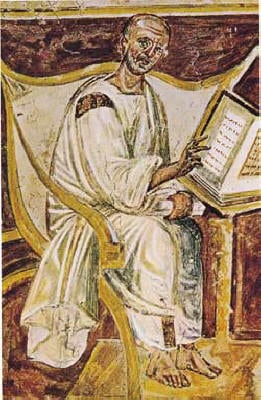
Augustine of Hippo
Совпадают в вопросах: Что такое Абсолют? Существует ли Бог? · Кто я? Существует ли истинное «я»? · Нужен ли учитель?
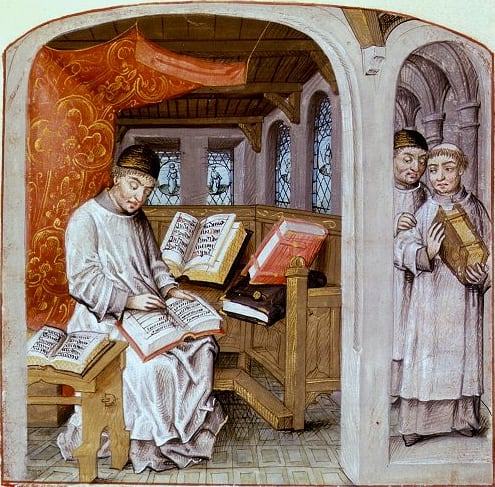
Thomas à Kempis
Совпадают в вопросах: Что такое Абсолют? Существует ли Бог? · Кто я? Существует ли истинное «я»? · Нужен ли учитель?
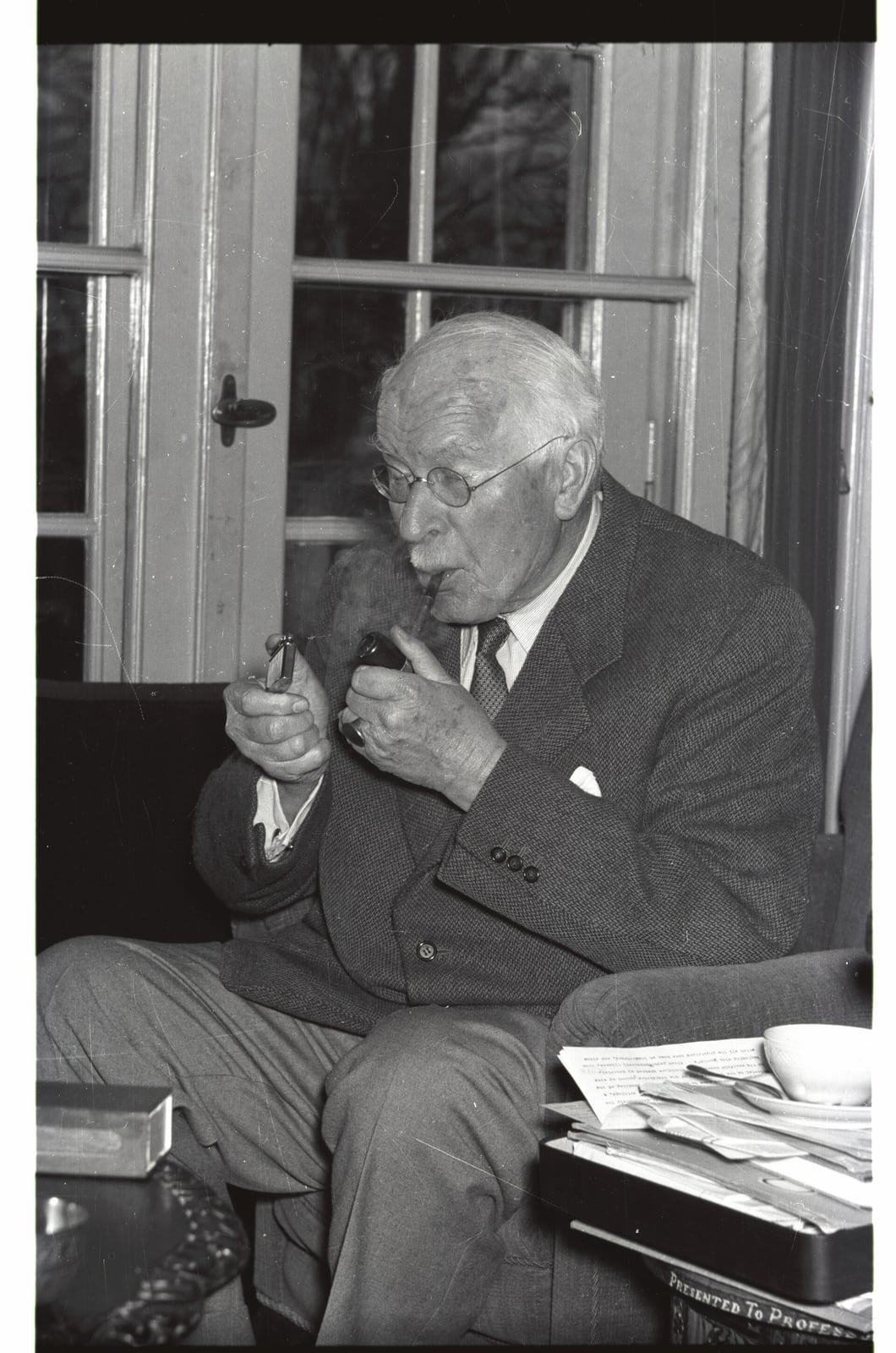
Carl Gustav Jung
Совпадают в вопросах: Почему мы страдаем? · Что происходит после смерти? · Нужен ли учитель?
Al-Ghazali
Совпадают в вопросах: Что такое Абсолют? Существует ли Бог? · Кто я? Существует ли истинное «я»? · Реален ли мир?
Дальше всего от

Dōgen
Расходятся в вопросах: Что такое Абсолют? Существует ли Бог? · Кто я? Существует ли истинное «я»?

Siddhartha Gautama, the Buddha
Расходятся в вопросах: Что такое Абсолют? Существует ли Бог? · Кто я? Существует ли истинное «я»?

Tsongkhapa
Расходятся в вопросах: Что такое Абсолют? Существует ли Бог? · Кто я? Существует ли истинное «я»?

Śāntideva
Расходятся в вопросах: Что такое Абсолют? Существует ли Бог? · Кто я? Существует ли истинное «я»?
Предания и рассказы
Предания и рассказы
Свидетельствоantes del 431 a. C. (incierto)
The Delphic oracle
Происхождение рассказа: Plato, Apology 20e–23b, where Socrates calls Chaerephon's brother as witness, Chaerephon being dead. Xenophon (Apology 14) gives a different version: the oracle supposedly said no one was more free, just or sensible than Socrates. Some scholars doubt the consultation took place; others accept it because it appears in a speech delivered before hundreds of Athenians.
Свидетельство432–424 a. C.
Potidaea and Delium
Происхождение рассказа: Plato, Symposium 219e–221c; the Laches (181b) confirms the conduct at Delium through the general Laches. It is a literary testimony in a character's mouth, but it agrees with the Apology (28e) on the three campaigns. The Aristophanes quotation comes from the Clouds (362).
Документировано406–404 a. C.
The Arginusae generals and Leon of Salamis
Происхождение рассказа: Plato, Apology 32b–e; Xenophon, Hellenica I 7.14–15 and Memorabilia I 1.18 and IV 4.2–3. It is one of the few episodes in Socrates' life attested by two independent authors and by a historian narrating the events apart from Socrates.
Оспаривается423 a. C.
Socrates stands up in the theatre
Происхождение рассказа: Aelian, Varia Historia II 13 (2nd–3rd century CE). There is no contemporary testimony. Plutarch (On the Education of Children 14) attributes a similar reaction to Socrates when mocked by comedy. The story of a bribe to Aristophanes is incompatible with the chronology.
Источник: Eliano, Claudio. Historias curiosas (Varia historia) II 13, s. II–III d. C. Trad. esp. de Juan Manuel Cortés Copete, Gredos, Madrid, 2006.
Не поддаётся проверкеs. V a. C. (tradicional)
Xanthippe and the water
Происхождение рассказа: Diogenes Laertius II 36–37 (3rd century CE); the image of the difficult wife is already in Xenophon, Symposium 2.10, where Antisthenes calls her "the most intolerable of women", and Memorabilia II 2. The bucket scene appears only in late sources and belongs to a repertoire of jokes about philosophers; it inspired many Baroque paintings.
Свидетельство401 a. C.
Xenophon asks for advice
Происхождение рассказа: Xenophon, Anabasis III 1.4–7, in which the author himself narrates the episode. It is the only surviving autobiographical testimony of a private conversation with Socrates.
Учение
Учение
Понятия, на которых строится мысль учителя, объяснённые в их контексте.
Elenchus (Socratic refutation)elenchos
The method of Plato's "aporetic" dialogues (Euthyphro, Laches, Charmides, Lysis); Aristotle links it to the search for universal definitions.
Источник: Vlastos, Gregory. Socrates, Ironist and Moral Philosopher. Cambridge University Press / Cornell University Press, Cambridge e Ithaca, 1991.
Socratic ironyironia-socratica
A character trait attributed to Socrates by Plato, Xenophon and Aristotle; a central category of later rhetoric and philosophy.
Источник: Vlastos, Gregory. Socrates, Ironist and Moral Philosopher. Cambridge University Press / Cornell University Press, Cambridge e Ithaca, 1991.
The daimonion (the divine sign)daimonion
The religious element in Socrates' figure, central to the impiety charge of 399 BCE.
No one does wrong willingly (moral intellectualism)nadie-obra-mal-voluntariamente
The core of Socratic ethics in the Protagoras, the Gorgias and the Meno.
Care of the soulcuidado-del-alma
The ethical programme of the Apology and the First Alcibiades; the basis of the ancient idea of philosophy as spiritual exercise.
Maieuticsmayeutica
An image from the Theaetetus, associated with the Meno and Platonic recollection.
Видео
Видео
Записи, интервью и документальные фильмы. Видео воспроизводятся с YouTube; здесь они не хранятся.
2. Socratic Citizenship: Plato's Apology
Лекция· EN· 2008· 46 min
YaleCoursesОфициальный канал
3. Socratic Citizenship: Plato's Crito
Лекция· EN· 2008· 47 min
YaleCoursesОфициальный канал
Ancient Philosophies as a Way of Life: Socrates
Лекция· EN· 2012· 61 min
StanfordОфициальный канал
Bettany Hughes | Socrates and his Athens
Лекция· EN· 2021· 61 min
The Ramsay Centre for Western CivilisationОфициальный канал
PBS Broadcast - The Trial of Socrates
Документальный фильм· EN· 2025· 58 min
National Hellenic MuseumОфициальный канал
Paul Woodruff, "In Socrates' Footsteps: A Better Model for Virtue Ethics."
Лекция· EN· 2020· 85 min
International Society for Socratic StudiesОфициальный канал
Socrates & Plato's Philosophy - Myles Burnyeat & Bryan Magee (1987)
Интервью· EN· 1987· 44 min
Philosophy Overdose
Conferencia de Francesc Casadesús: 'Sócrates y sus enemigos'
Лекция· ES· 2022· 63 min
Fundación BBVAОфициальный канал
Carlos Fernández Liria "Sócrates y el problema de la democracia"
Лекция· ES· 2021· 55 min
G.I. UCM: Metafísica, Crítica y PolíticaОфициальный канал
«Apología de Sócrates» | Notas a Platón (3/27)
Разбор· ES· 2020· 107 min
Ernesto CastroОфициальный канал
El juicio a Sócrates: ¿Por qué Atenas mató a su hombre más sabio? - H. Grecia #48
Лекция· ES· 2024· 40 min
Darío Sánchez VendraminiОфициальный канал
Portrait de Socrate | Cours méthodiques et populaires de philosophie
Лекция· FR· 2014· 98 min
Bibliothèque nationale de France BnFОфициальный канал
Geschichte der Philosophie (2): Von Sokrates zu Platon, Prof. Dr. Torsten Wilholt
Лекция· DE· 2013· 88 min
InstPhilОфициальный канал
Галерея
Галерея
Изображения с проверенной лицензией. Каждое сохраняет своё авторство и атрибуцию.
Рукописи
Рукописи
Рукописные свидетельства и древние тексты, с указанием хранителя и условий доступа.
GRC · Minúscula griega · Diálogos compuestos c. 399–347 a. C.; copia de 895
Codex Oxoniensis Clarkianus 39 («Clarke Plato», B)
- Сохранившийся список
- Códice de pergamino de 418 folios, copiado por Juan el Calígrafo para Aretas de Patras
- Хранитель
- Bodleian Library, Oxford · MS. E. D. Clarke 39
- Оцифровка
- medieval.bodleian.ox.ac.uk/catalog/manuscript_40…
Связи
Связи
Влияния, ученичество и близость взглядов. Документированная связь отличается от сходства, выявленного путём анализа.
Учитель
Plato frequented Socrates in his youth, attended the trial (Apology 34a, 38b) and made him the protagonist of almost all his dialogues.
Документированная связь
Учитель
Jenofonte
A pupil in his youth; he wrote the Memorabilia, the Apology, the Symposium and the Oeconomicus, and recounts in the Anabasis how he asked him for advice.
Документированная связь
Учитель
Antístenes
A follower of Socrates present at his death (Phaedo 59b); founder of the tradition that would lead to Cynicism.
Документированная связь
Современник
Aristófanes
He caricatured him in the Clouds (423 BCE); Plato seats them together in the Symposium.
Документированная связь
Повлиял на
He never knew him, but in the Metaphysics credits him with induction and universal definition and discusses his moral intellectualism in the Nicomachean Ethics.
Документированная связь
Повлиял на
A pupil of Antisthenes according to Diogenes Laertius (VI 21); Plato allegedly called him "a Socrates gone mad" (VI 54).
Документированная связь
Повлиял на
According to Diogenes Laertius (VII 2–3), he became a philosopher after reading the second book of Xenophon's Memorabilia in Athens.
Документированная связь
Повлиял на
The Discourses recorded by Arrian hold up Socrates as the constant model of the philosophical life.
Документированная связь
Встречался с
Plato narrates a meeting between a very young Socrates and the aged Parmenides in the dialogue Parmenides; it is almost certainly a literary fiction.
Сходство, выявленное путём анализа
Идеи, близкие к
The speakers of the Phaedo, Simmias and Cebes, had frequented the Pythagorean Philolaus; the immortality of the soul and the philosophical life as purification bring Plato's Socrates close to the Pythagorean tradition.
Сходство, выявленное путём анализа
Идеи, близкие к
Oral teachers known through their disciples, centred on virtue and self-examination; Karl Jaspers grouped them among the "paradigmatic individuals".
Сходство, выявленное путём анализа
Идеи, близкие к
Neither wrote anything, both were executed by the authority of their city and their figure reaches us through disciples who disagree; the comparison has been a commonplace since the Christian apologists.
Сходство, выявленное путём анализа
Упоминается в других статьях
- Aristotle · Испытал влияние
- Heraclitus · Повлиял на
- Marcus Aurelius · Испытал влияние
- Parmenides · Встречался с
- Zeno of Citium · Испытал влияние
- Epicurus · Расходился во взглядах с
- Diogenes of Sinope · Испытал влияние
- Epictetus · Испытал влияние
- Pythagoras · Идеи, близкие к
- Plotinus · Испытал влияние
- Augustine of Hippo · Идеи, близкие к
- Plato · Ученик
Источники
Источники
Библиография и каталоги, использованные для этой статьи.
- Wikidata, entidad Q913 «Socrates» (276 enlaces entre wikis; P31=Q5). Registra nacimiento en 470 a. C. (precisión: año) y muerte en 399 a. C. (15 de febrero o mayo, fechas sin base antigua); lugar de nacimiento Alopece y Atenas.
- Platón. Platonis Opera, ed. John Burnet, 5 vols. Oxford University Press (Oxford Classical Texts), 1900–1907; tomo I (Eutifrón, Apología, Critón, Fedón) consultado en la edición digital del Perseus Digital Library (Tufts University).
- Plato. The Dialogues of Plato, trad. Benjamin Jowett, 3.ª ed., 5 vols. Clarendon Press, Oxford, 1892 (Project Gutenberg, n.º 1656 Apology, 1657 Crito, 1658 Phaedo y otros).
- Platón. Obras completas, trad. Patricio de Azcárate, 11 vols. Medina y Navarro, Madrid, 1871–1872 (edición digital en Filosofía en español).
- Jenofonte. Memorables (Recuerdos de Sócrates), Apología de Sócrates, Banquete y Económico. Texto griego: Xenophontis opera omnia, ed. E. C. Marchant, vol. 2, 2.ª ed., Clarendon Press, Oxford, 1921 (Perseus); trad. inglesa de H. G. Dakyns, The Works of Xenophon, Macmillan, Londres, 1890–1897 (Project Gutenberg).
- Aristófanes. Las nubes (Νεφέλαι), representada en 423 a. C.; trad. inglesa de W. J. Hickie, The Comedies of Aristophanes, Bohn's Classical Library, Londres, 1853 (Project Gutenberg n.º 2562).
- Aristóteles. Metafísica A 6, 987b1–4, y M 4, 1078b17–32; Poética 1, 1447b11. Trad. inglesa de W. D. Ross (Oxford, 1908; Internet Classics Archive, MIT); trad. española de Patricio de Azcárate, Obras de Aristóteles, vol. 10, Madrid, 1875.
- Diógenes Laercio. Vidas y opiniones de los filósofos ilustres, libro II, 18–47 (Sócrates), s. III d. C. Trad. inglesa de C. D. Yonge, Bohn, Londres, 1853 (Project Gutenberg n.º 57342); trad. española de José Ortiz y Sanz, Madrid, 1792 (Wikisource).
- Guthrie, W. K. C. A History of Greek Philosophy, vol. III: The Fifth-Century Enlightenment, parte 2: Socrates. Cambridge University Press, Cambridge, 1969 (publicado aparte como Socrates, 1971; trad. esp. Historia de la filosofía griega, vol. III, Gredos).
- Vlastos, Gregory. Socrates, Ironist and Moral Philosopher. Cambridge University Press / Cornell University Press, Cambridge e Ithaca, 1991.
- Nails, Debra y Monoson, S. Sara. «Socrates». The Stanford Encyclopedia of Philosophy, ed. Edward N. Zalta; primera publicación 2005, revisión sustancial del 26 de mayo de 2022.
- Kahn, Charles H. Plato and the Socratic Dialogue: The Philosophical Use of a Literary Form. Cambridge University Press, Cambridge, 1996.
- Brickhouse, Thomas C. y Smith, Nicholas D. (eds.). The Trial and Execution of Socrates: Sources and Controversies. Oxford University Press, Nueva York, 2002.
- Waterfield, Robin. Why Socrates Died: Dispelling the Myths. Faber and Faber / W. W. Norton, Londres y Nueva York, 2009.
- «Socrates», Wikipedia en inglés, y «Sócrates», Wikipedia en español (consultadas para contrastar datos y bibliografía; texto propio).
- Giannantoni, Gabriele (ed.). Socratis et Socraticorum Reliquiae, 4 vols. Bibliopolis, Nápoles, 1990 (fragmentos de Esquines de Esfeto, Antístenes y demás socráticos).
- Eliano, Claudio. Historias curiosas (Varia historia) II 13, s. II–III d. C. Trad. esp. de Juan Manuel Cortés Copete, Gredos, Madrid, 2006.
- The Metropolitan Museum of Art. Jacques-Louis David, «The Death of Socrates» (1787), n.º de inventario 31.45.
- Bodleian Libraries, Universidad de Oxford. MS. E. D. Clarke 39 («Clarke Plato»), códice de las tetralogías I–VI de Platón copiado en 895 por Juan el Calígrafo para Aretas. A Catalogue of Western Manuscripts at the Bodleian Libraries.
- Open Library (Internet Archive): ediciones de Platón, Jenofonte, Aristófanes y Diógenes Laercio verificadas por ISBN.
- Правообладатель
- Textos antiguos en dominio público; cada traducción y edición crítica pertenece a su traductor o editorial
Ожидает подтверждения
То, что в этой статье пока не удалось установить. Мы предпочитаем сказать об этом, а не заполнять пробел.
- Fecha de nacimiento: se adopta 469 a. C. (Apolodoro en Diógenes Laercio II 44; Nails y Monoson); Wikidata da 470. Las fechas de muerte de Wikidata (15 de febrero o 1 de mayo de 399) no tienen base antigua: solo se sabe que fue en primavera, unos treinta días después del juicio.
- Ediciones españolas con ISBN verificado de Gorgias, Menón, Eutidemo, Teeteto, Parménides y Alcibíades I (Gredos, Diálogos II y V; Alianza): no localizadas en Open Library en esta sesión.
- «Las nubes» en español: solo se ha verificado la edición de Ediciones Clásicas (1999) sin traductor identificado; falta la de Gredos (Comedias I) con ISBN y contenido comprobados.
- Traducción española de dominio público de las Memorables y el Banquete de Jenofonte (p. ej., Diego Gracián, s. XVI): no localizada en línea con URL estable.
- Programas de afiliación: ninguno verificado (Gredos, Alianza, Penguin, Hackett). Lista vacía.
- Año de los vídeos: es el de la grabación cuando la descripción lo indica y, si no, el de publicación en YouTube.
Исследовано 2026-10-25