Стоицизм
Zeno of Citium
Ζήνων ὁ Κιτιεύς
ок. 334 до н. э. – ок. 262 до н. э.Исторически документированная личность
Греческий философ, родившийся в Китии на Кипре (ок. 334–262 гг. до н. э.), основатель стоицизма. Купец, попавший в Афины после кораблекрушения, он учился у киника Кратета, у мегариков и академиков и около 300 г. до н. э. начал преподавать в Стое Пойкиле — расписном портике, давшем имя школе. Цель жизни он определил как жизнь согласованную и разделил философию на логику, физику и этику. Его сочинения, начиная с «Государства», утрачены: мы знаем их по фрагментам и свидетельствам.
- трудов
- 28трудов
- изданий
- 24изданий
- цитат
- 10цитат
- видео
- 10видео
- изображений
- 5изображений
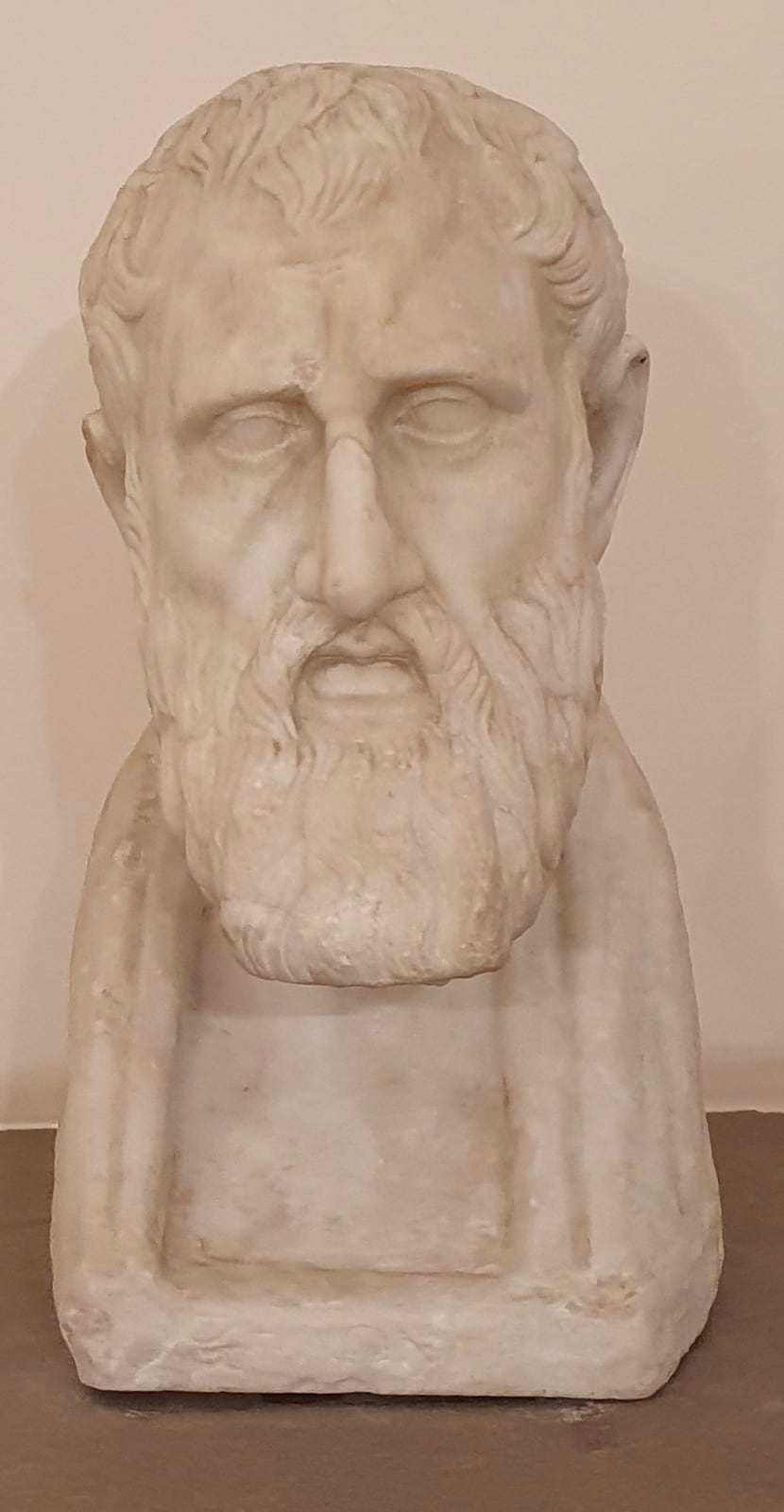
Busto de Zenón de Citio (colección Farnese, Nápoles) · CC BY-SA 4.0
Своими словами
«I made a prosperous voyage when I suffered shipwreck.»Diógenes Laercio VII 4; Laercio advierte que otros sitúan el dicho en la época en que seguía a Crates. Griego: Diógenes Laercio VII, ed. de Wikisource griega; inglés: R. D. Hicks (Loeb, 1925, dominio público); español: traducción propia.

Главная мысль
Living in agreement (homologia): The end (*telos*) of human life, according to Zeno, is "living in agreement".
В контексте
Биография
4 мин чтения
Перевод с испанского оригинала, выполненный с помощью ИИ; ожидает проверки носителем языка.
Основатель без книг
Зенон Китийский основал одну из самых влиятельных школ античности, а от него самого не сохранилось ни страницы. Его двадцать с лишним книг утрачены — отчасти, можно предположить, потому, что трактаты его третьего преемника, Хрисиппа, сделали их ненужными для самой школы. То, что мы знаем, восходит к седьмой книге «Жизнеописаний» Диогена Лаэртского, где собраны анекдоты, афинский декрет и список его сочинений, и к сотням цитат и пересказов у Цицерона, Плутарха, Стобея, Секста Эмпирика или Афинея, собранных в 1905 году Гансом фон Арнимом в первом томе «Stoicorum veterum fragmenta». Нередко эти источники говорят о «стоиках», не отличая основателя от учеников, и выделить то, что принадлежит ему, — задача тонкая.
Купец из Кития
Он родился около 334 г. до н. э. в Китии, на южном побережье Кипра, греческом городе с многочисленным финикийским населением; противники звали его «финикийцем», а сам он никогда не скрывал своего происхождения. Он был сыном Мнасея, торговца, который, по Деметрию Магнесийскому, привозил ему ребенком из Афин сократические книги. Лаэртский описывает его худым, высоким, смуглым, с шеей, склоненной набок, любителем зеленых смокв и солнца. Около 312 г., лет двадцати двух, по словам его ученика Персея, он потерпел кораблекрушение с грузом пурпура близ Пирея. Поднявшись в Афины, он сел в книжной лавке и прочел вторую книгу «Воспоминаний о Сократе» Ксенофонта; он спросил, где можно найти таких людей, как Сократ, и книготорговец указал ему на проходившего мимо киника Кратета: «Ступай за ним».
Ученичество: пес, Мегара и Академия
У Кратета он научился безразличию к условностям, хотя, как рассказывает Лаэртский, был слишком стыдлив для кинического бесстыдства: учитель велел ему пронести через Керамик горшок чечевичной похлебки и, когда Зенон попытался его спрятать, разбил горшок ударом палки. Затем он посещал Стильпона Мегарского, Диодора Крона и Полемона, схоларха Академии, который упрекал его, что он пробирается через садовую калитку, чтобы похитить его учения и переодеть их на финикийский лад. Годы спустя он говорил, что плавание его было удачным именно тогда, когда он потерпел кораблекрушение. Из этой разносторонней выучки родилась собственная система: киническая этика самодостаточности и добродетели, мегарская диалектика и сократическое и платоновское наследие.
«Государство», написанное «на собачьем хвосте»
Еще учеником Кратета он написал свое самое знаменитое сочинение, «Государство», и некоторые в шутку говорили, что он написал его «на собачьем хвосте». Это был ответ Платону и продолжение Диогена Синопского: община мудрецов — единственных подлинных граждан, друзей и свободных людей, — без храмов, судов и гимнасиев, без денег, с общностью жен и одинаковой одеждой для мужчин и женщин. Плутарх так изложил его идеал: чтобы мы не жили, разделенные на города и общины, каждая со своими законами, но считали всех людей согражданами, как стадо, пасущееся под общим законом. Преемники порой стыдились этой книги; Хрисипп защищал ее подлинность, а один пергамский библиотекарь дошел до того, что вырезал из его сочинений неудобные места.
Расписной портик
Около 300 г. до н. э. он начал учить, прохаживаясь по Стое Пойкиле — портику на агоре, расписанному Полигнотом, где во времена Тридцати были казнены тысяча четыреста граждан. Туда приходили его слушать, и его последователей, называвшихся сперва зеноновцами, стали звать стоиками — «людьми портика». Он говорил кратко и сурово, избегал толпы и жил с вошедшей в поговорку умеренностью: хлеб, мед, немного вина, тонкий плащ; «воздержнее философа Зенона», говорили в Афинах, а комические поэты высмеивали философию, учившую голодать. Антигон Гонат, царь Македонии, бывая в Афинах, посещал его занятия и приглашал его ко двору; Зенон, уже старик, отправил к нему своих учеников Персея и Филонида.
Логика, физика и этика
Зенон первым, по Лаэртскому, разделил философию на логику, физику и этику. Цель жизни он определил как «жить согласованно», то есть в соответствии с последовательным разумом; его преемник Клеанф будто бы добавил «с природой», хотя другие источники приписывают полную формулу уже Зенону. Он ввел термин кафекон — «надлежащее», подобающее, — и определил страсть как неразумное движение души, чрезмерное влечение, четырех родов: скорбь, страх, вожделение и наслаждение. В физике мир — живое и разумное существо, образованное из начала деятельного, логоса, или бога, и страдательного — материи; душа есть теплое дыхание (пневма). Цицерон сохранил жест, которым Зенон объяснял познание: открытая ладонь — представление, слегка согнутые пальцы — согласие, сжатый кулак — постижение, а кулак, крепко охваченный другой рукой, — знание, которым обладает лишь мудрец.
Стоическая смерть
Он умер около 262 г. до н. э. По Лаэртскому, выходя из школы, он споткнулся и сломал палец на ноге; ударив рукой о землю, он произнес стих из «Ниобы» Тимофея: «Иду; зачем зовешь меня?» — и тут же умер, задержав дыхание. По другой версии, он перестал принимать пищу. Персей давал ему семьдесят два года, другие источники — девяносто восемь. Афиняне, вверившие ему ключи от городских стен, постановили увенчать его золотым венком и похоронить на общественный счет в Керамике за то, что он побуждал юношей к добродетели и его жизнь была примером того, чему он учил. Антигон, узнав о его смерти, сказал, что лишился своего зрителя.
Наследие Стои
Ему наследовали Клеанф из Асса, а затем Хрисипп из Сол, превративший его прозрения в систему столь полную, что школа перестала читать основателя. Стоя прошла через пять столетий, перешла в Рим с Панэцием и Посидонием и достигла вершины в Сенеке, Эпиктете и Марке Аврелии; Эпиктет советовал перед лицом любого власть имущего спрашивать себя, как поступили бы Сократ или Зенон. Его идея закона и гражданства, общих для всех разумных существ, питала новоевропейское естественное право и космополитизм. В Ларнаке, древнем Китии, город и сегодня чтит своего самого знаменитого сына.
Источники: Diógenes Laercio. Vidas y opiniones de los filósofos ilustres, libro VII, 1–160 (Zenón y la doctrina estoica), s. III d. C. Trad. inglesa de R. D. Hicks, Loeb Classical Library 185, 1925 (Wikisource en inglés); texto griego en Wikisource griega; trad. de C. D. Yonge, Bohn, 1853 (Project Gutenberg n.º 57342). · Diógenes Laercio. Los diez libros de Diógenes Laercio sobre las vidas, opiniones y sentencias de los filósofos más ilustres, trad. de José Ortiz y Sanz, tomo II (libros VI–X). Imprenta Real, Madrid, 1792 (Internet Archive). · Arnim, Hans von (ed.). Stoicorum veterum fragmenta, vol. I: Zeno et Zenonis discipuli. Teubner, Leipzig, 1905 (Internet Archive). · Pearson, Alfred C. (ed.). The Fragments of Zeno and Cleanthes, with Introduction and Explanatory Notes. C. J. Clay, Londres, 1891 (Internet Archive). · Cappelletti, Ángel J. (introd., trad. y notas). Los estoicos antiguos: Zenón, Aristón, Apolófanes, Herilo, Dionisio de Heraclea, Perseo, Cleantes, Esfero. Gredos (Biblioteca Clásica Gredos, 230), Madrid, 1996.
Хронология
Жизнь год за годом
Каждая точка — документированное событие. Нажмите, чтобы прочитать о нём, с источником и степенью достоверности.
ок. 334 до н. э.0 летCitio (Chipre)
Birth
Born at Citium, son of Mnaseas (or Demeas). The date is inferred from Persaeus' chronology (arrival in Athens at 22, death at 72) and the Athenian decree of the archonship of Arrhenides (262/261 BCE). Wikidata records 334. Years BCE are expressed as negative numbers.
ВероятноDiógenes Laercio. Vidas y opiniones de los filósofos ilustres, libro VII, 1–160 (Zenón y la doctrina estoica), s. III d. C. Trad. inglesa de R. D. Hicks, Loeb Classical Library 185, 1925 (Wikisource en inglés); texto griego en Wikisource griega; trad. de C. D. Yonge, Bohn, 1853 (Project Gutenberg n.º 57342).
После смерти
- ок. 230 до н. э.Chrysippus heads the Stoa
- ок. 50 до н. э.Philodemus, On the Stoics
- 1891Pearson edits the fragments
- 1905Stoicorum veterum fragmenta, vol. I
ок. 334 до н. э. · 0 лет
Birth
Born at Citium, son of Mnaseas (or Demeas). The date is inferred from Persaeus' chronology (arrival in Athens at 22, death at 72) and the Athenian decree of the archonship of Arrhenides (262/261 BCE). Wikidata records 334. Years BCE are expressed as negative numbers.
Вероятно
ок. 312 до н. э. · 22 года
Shipwreck and meeting with Crates
He is shipwrecked with a cargo of purple near Piraeus, reads Xenophon's Memorabilia in an Athenian bookshop and becomes a pupil of Crates the Cynic (Diogenes Laertius VII 2–3). Laertius also gives the age of thirty.
Предание
ок. 310 до н. э.
The Republic
While still a pupil of Crates he writes the Republic, inspired by that of Diogenes of Sinope; it was jokingly said that he had written it "on the dog's tail" (Diogenes Laertius VII 4).
Вероятно
ок. 305 до н. э.
With Stilpo, Diodorus and Polemo
He leaves Crates and studies with the Megarian Stilpo, the dialectician Diodorus Cronus and Polemo, head of the Academy; according to Laertius, for some twenty years (VII 2, 4, 16, 25).
Вероятно
ок. 300 до н. э.
Begins teaching in the Painted Stoa
He begins teaching in the Stoa Poikile in the agora; his followers, first called Zenonians, come to be called Stoics (Diogenes Laertius VII 5).
Вероятно
ок. 276 до н. э.
Antigonus Gonatas' invitation
Antigonus Gonatas, king of Macedon from 277/276, who attended his lectures, invites him to his court; Zeno sends Persaeus and Philonides. Laertius copies the exchange of letters, of disputed authenticity (VII 6–9).
Вероятно
ок. 262 до н. э. · 72 года
Death and public honours
He dies after tripping as he left the school (Diogenes Laertius VII 28). An Athenian decree of the archonship of Arrhenides grants him a golden crown and a tomb in the Ceramicus at public expense (VII 10–12).
Вероятно
ок. 262 до н. э.
Cleanthes, second scholarch
Cleanthes of Assos succeeds him at the head of the school; Zeno compared him to hard wax tablets, hard to write on but retaining what is written (Diogenes Laertius VII 37).
Документировано
ок. 230 до н. э.
Chrysippus heads the Stoa
Chrysippus of Soli heads the school around 230–206 BCE and systematises the doctrine; his treatises displace Zeno's.
Документировано
ок. 50 до н. э.
Philodemus, On the Stoics
Philodemus of Gadara discusses the Republics of Zeno and Diogenes and the Stoic attempts to disown them (PHerc. 155 and 339).
Документировано
1891
Pearson edits the fragments
Alfred C. Pearson publishes The Fragments of Zeno and Cleanthes, the first annotated edition of Zeno's fragments.
Документировано
1905
Stoicorum veterum fragmenta, vol. I
Hans von Arnim collects in the first volume of the SVF the fragments and testimonies of Zeno and his immediate pupils; its numbering remains the standard reference.
Документировано
Труды
Главные труды
Труды, без которых не понять это наследие.
Письменный труд · ок. 310 до н. э.
Republic (Politeia)
Πολιτεία
Zeno's most famous work, written in his youth while he still followed Crates. According to the critics cited by Diogenes Laertius (VII 32–33), it declared ordinary education useless, called those who are not virtuous enemies and strangers to one another and reserved for the good the status of citizens, friends and free men; it established community of wives, forbade building temples, law courts and gymnasia, dispensed with coinage and ordered men and women to dress alike. Plutarch sums it up as the project of a single way of life and a single order for all men, like a herd under a common law. It is the founding text of Stoic cosmopolitanism.
5 изданий · amazon.com
Письменный труд
On Impulse, or On Human Nature
Περὶ ὁρμῆς ἢ περὶ ἀνθρώπου φύσεως
In this treatise, according to Diogenes Laertius (VII 87), Zeno was the first to designate as the end of life "living in agreement with nature", which amounts to living according to virtue, since nature leads us to it. The double title indicates that the work studied impulse (horme), the tendency that moves animals and that in man should be governed by reason. Other sources (Stobaeus) credit Zeno with the short formula "living in agreement" and Cleanthes with the addition "with nature"; the contradiction between the two testimonies is still debated.
4 издания
Позднейший сборник · 1905
Fragments and testimonies
Ζήνωνος ἀποσπάσματα (SVF I 1–332)
The only form in which Zeno can be read today. It comprises the life and sayings in Diogenes Laertius VII 1–38—the shipwreck, the pot of lentils, "a friend is another self", "we have two ears and one mouth to listen more and speak less"—the doctrines the sources expressly attribute to him in logic (comprehension illustrated with the hand), physics (the two principles, fire, the soul as warm breath) and ethics (the end, the appropriate, the passions), and the testimonies on his Republic. Von Arnim's edition numbers 332 fragments of Zeno.
11 изданий · amazon.com
Все труды (28)
Zeno of Citium
On Life according to Nature
The Conscious LibraryOn Life according to Nature
Zeno of Citium
On the Passions
The Conscious LibraryOn the Passions
Zeno of Citium
On the Appropriate (Duty)
The Conscious LibraryOn the Appropriate (Duty)
Zeno of Citium
On Law
The Conscious LibraryOn Law
Zeno of Citium
On Greek Education
The Conscious LibraryOn Greek Education
Zeno of Citium
On Vision
The Conscious LibraryOn Vision
Zeno of Citium
On the Whole (the Universe)
The Conscious LibraryOn the Whole (the Universe)
Zeno of Citium
On Signs
The Conscious LibraryOn Signs
Zeno of Citium
Pythagorean Questions
The Conscious LibraryPythagorean Questions
Zeno of Citium
Universals (General Questions)
The Conscious LibraryUniversals (General Questions)
Zeno of Citium
On Diction
The Conscious LibraryOn Diction
Zeno of Citium
Homeric Problems (5 books)
The Conscious LibraryHomeric Problems (5 books)
Zeno of Citium
On Listening to Poetry
The Conscious LibraryOn Listening to Poetry
Zeno of Citium
Art (Handbook of Rhetoric)
The Conscious LibraryArt (Handbook of Rhetoric)
Zeno of Citium
Solutions
The Conscious LibrarySolutions
Zeno of Citium
Refutations (2 books)
The Conscious LibraryRefutations (2 books)
Zeno of Citium
Memoirs of Crates
The Conscious LibraryMemoirs of Crates
Zeno of Citium
Ethics
The Conscious LibraryEthics
Zeno of Citium
On Reason (Discourse)
The Conscious LibraryOn Reason (Discourse)
Zeno of Citium
On Substance
The Conscious LibraryOn Substance
Zeno of Citium
On the Soul
The Conscious LibraryOn the Soul
Zeno of Citium
Art of Love
The Conscious LibraryArt of Love
Zeno of Citium
Diatribes (Interludes)
The Conscious LibraryDiatribes (Interludes)
Zeno of Citium
Chreiai (Anecdotes)
The Conscious LibraryChreiai (Anecdotes)
Изречения
Изречения, найденные в конкретном труде. Каждое сопровождается указанием происхождения и степени надёжности.
I made a prosperous voyage when I suffered shipwreck.Νῦν εὐπλόηκα, ὅτε νεναυάγηκα.
ВероятноDiógenes Laercio VII 4; Laercio advierte que otros sitúan el dicho en la época en que seguía a Crates. Griego: Diógenes Laercio VII, ed. de Wikisource griega; inglés: R. D. Hicks (Loeb, 1925, dominio público); español: traducción propia.
Апокрифические изречения и изречения спорной атрибуции (2)
«Man conquers the world by conquering himself.»
It circulates online attributed to Zeno of Citium without any reference. It does not appear in Diogenes Laertius nor in the fragments collected by Pearson and von Arnim.
«We have two ears and one mouth so that we can listen twice as much as we speak.»
A modern, arithmetical version of the saying genuinely transmitted by Diogenes Laertius (VII 23), which says only "that we may listen more and talk less". The "twice as much" form is not in the ancient text.
Последние слова
Противоречивые версии
«"I come, I come, why dost thou call for me?"»Ἔρχομαι· τί μ' αὔεις;
Diogenes Laertius VII 28: leaving the school he tripped and broke a toe; striking the ground with his hand, he recited this line from the poet Timotheus' Niobe, addressed to the earth or to death, and died on the spot by holding his breath. At VII 31 Laertius himself records the variant "I come of my own accord; why then call me?" and another tradition according to which he died by ceasing to eat, with no final words. English: R. D. Hicks; Spanish: own translation.
Источник: Diógenes Laercio. Vidas y opiniones de los filósofos ilustres, libro VII, 1–160 (Zenón y la doctrina estoica), s. III d. C. Trad. inglesa de R. D. Hicks, Loeb Classical Library 185, 1925 (Wikisource en inglés); texto griego en Wikisource griega; trad. de C. D. Yonge, Bohn, 1853 (Project Gutenberg n.º 57342).
Спросить
На что отвечают эти труды
Двенадцать великих вопросов человечества и то, что позволяют на них ответить эти тексты, со ссылками. Мы никогда не вкладываем слова в чужие уста.
Что такое Абсолют? Существует ли Бог?
God is the reason pervading matter, and its substance is the whole cosmos
Безличный АбсолютСказано прямо
Only testimonies and fragments of Zeno survive, but they already contain the core of Stoic theology. According to Diogenes Laertius, Zeno distinguished two principles of the whole, a passive one, unqualified matter, and an active one, the reason in it, which is god; and he held that the substance of god is the whole cosmos and the heaven. God is thus immanent, corporeal in the Stoic sense, craftsman and seminal reason of all that exists, and may be given the names of Zeus or of fate. It is not a separate being creating from outside but the rational order of the world, conceived as a craftsmanlike fire proceeding methodically towards generation.
Сравнить этот вопрос с другими учителямиКто я? Существует ли истинное «я»?
A soul of warm breath, citizen of a single human community
«Я», взращённое в отношенияхСледует из учения
For Zeno, according to the testimonies, the soul is a warm, corporeal breath that holds the living being together and has a ruling part where impression, assent and impulse reside. The human end is to live in agreement with nature, which is to live according to virtue, and that nature is rational and therefore common. His Republic, known from Plutarch's summary, drew the political consequence: not to live apart in cities with their own laws, but to regard all humans as fellow citizens under a single law. The Stoic self is not an isolated substance: it discovers itself in its kinship with the other rational beings.
Сравнить этот вопрос с другими учителямиПочему мы страдаем?
Passion is an excessive impulse, against right reason and nature
Социальный и нравственный беспорядокСказано прямо
According to the testimonies, Zeno defined passion as an irrational movement of the soul contrary to nature, or an excessive impulse. The four basic passions — desire, fear, pleasure and distress — are not blows from outside: they arise from hasty judgements about what is good or bad, to which the soul gives its assent. Since the human end is to live in agreement with nature, which is to live according to virtue, suffering appears when impulse overflows rational measure. The anecdote of the shipwreck that led him to philosophy sums up the other side: a setback is no evil if reason is in order.
Сравнить этот вопрос с другими учителямиЧто происходит после смерти?
The soul is corporeal and not eternal: it lasts a while and dissolves
Молчание или сдержанностьСледует из учения
The testimonies about Zeno are scarce on this point. According to Diogenes Laertius, for him the soul is warm breath, that is, a body, and the Stoic school held that it survives death, but not for ever. The known variants belong to his successors: Cleanthes thought all souls last until the conflagration that closes each cosmic cycle, and Chrysippus, only those of the wise. No source attributes to Zeno a description of the beyond or a personal reward. The ethics he founded rests not on what is to come but on living now in agreement with nature; death is an indifferent, neither good nor bad.
Сравнить этот вопрос с другими учителямиКак достигается освобождение или спасение?
To live in agreement with nature, which is to live by virtue
Через добродетель и гармониюСказано прямо
Diogenes Laertius attributes to Zeno the formula that defined Stoicism: the end is to live in agreement with nature, which amounts to living according to virtue, since nature leads us to it. Virtue suffices for happiness, and all else — health, wealth, fame, even life — is indifferent. The sage, who possesses virtue, is free, a king and happy even in chains. There is no leap and no grace: the good is reached little by little, says a saying Laertius attributes to him, but it is no little thing. Zeno's own conversion, who came to philosophy after a shipwreck, became an example of that slow transformation.
Сравнить этот вопрос с другими учителямиНужен ли учитель?
He learned from several masters and founded a school open in a portico
Полезен, но не обязателенСледует из учения
According to Diogenes Laertius, Zeno reached Athens after a shipwreck, read Xenophon in a bookshop and asked where he could find men like Socrates; the bookseller pointed to Crates, who was passing by, and he became his disciple. Afterwards he studied with Stilpo, Polemo and the dialectician Diodorus, some twenty years in all, and only then founded his own school in the Painted Portico, a public place. The path shows the teacher as a guide, not as the exclusive holder of truth: Zeno took from each what seemed right to him. His doctrine places the weight on each person's reason, which the sage embodies perfectly.
Сравнить этот вопрос с другими учителямиРеален ли мир?
The cosmos is god's body, a craftsmanlike fire that generates all
Проявление божественногоСказано прямо
For Zeno, according to the testimonies, the world is real and corporeal, and penetrated through and through by divine reason. God is the active principle acting in matter, and his substance is the whole cosmos and the heaven; nature is a craftsmanlike fire proceeding methodically towards generation. This rational cosmos is a living being, ensouled and intelligent, and periodically resolves into fire in a conflagration from which the same order is born again. There is no distance between the divine and the world: the world is the divine visible and at work, and each thing bears a seminal reason within it. To understand it is to understand fate.
Сравнить этот вопрос с другими учителямиЧто такое любовь?
Eros is the god of friendship and of the city's concord
Упорядоченная благожелательностьСледует из учения
Only scattered reports about love survive from Zeno, but they are significant. Athenaeus relates that, in his Republic, he presented Eros as the god of friendship and freedom, and also as the author of the city's concord. The Stoic definition of love transmitted by Diogenes Laertius — an impulse to form a friendship aroused by visible beauty — points the same way: the sage's love seeks not the union of bodies but friendship. Asked what a friend is, Zeno replied: “Another self.” His ideal of a single human community under a common law extends that bond to all humans, though with an order marked by reason.
Сравнить этот вопрос с другими учителямиСвободны ли мы или всё предопределено?
“It was fated that I should steal.” “And that you should be flogged”
Судьба и ответственностьСказано прямо
The Stoics held that everything happens according to fate, a chain of causes coinciding with the divine reason governing the cosmos, and Diogenes Laertius' report already places Zeno in that line. But they did not therefore exempt humans from responsibility. The best-known anecdote sums it up: to a slave caught stealing, who claimed it was fated that he should steal, Zeno replied that it was also fated that he should be flogged. Fate is no excuse: the assent we give to our impressions is our own work, and we answer for it. The formula attributed to the school — fate leads the willing and drags the unwilling — expresses that reconciliation.
Сравнить этот вопрос с другими учителямиЗачем медитировать или молиться?
His Republic would have no temples; no testimony of his practice remains
Не высказывался
No teaching of Zeno on prayer or meditation survives, nor any report of how he practised them. The only thing the sources transmit is a controversial thesis of his Republic: in the ideal city no temples should be built, because it is not fitting to hold sacred a work of builders and craftsmen, which is worth little. Plutarch records it to reproach the Stoics for inconsistency, since they attended the rites. The thesis suggests that the sacred lies in reason rather than in buildings, but it is not enough to attribute a doctrine of prayer to him. The spiritual exercises now associated with Stoicism belong to later authors.
Сравнить этот вопрос с другими учителямиМожет ли разум познать предельное?
From assent to knowledge: the sage's clenched fist
Учение и знаниеСказано прямо
Zeno founded the Stoic theory of knowledge, according to which reason can grasp reality with certainty. Cicero relates how he explained it with a gesture: the open hand with fingers outstretched was impression; the fingers slightly bent, assent; the closed fist, comprehension; and the fist gripped by the other hand, knowledge, which only the sage possesses. There are “cognitive” impressions that cannot be false, and on them a firm knowledge is built. Since the cosmos is governed by reason, human reason can know its order. That knowledge is reached through long study of logic, physics and ethics, which the school taught as a whole.
Сравнить этот вопрос с другими учителямиУйти от мира или преобразить его?
A single human community under a common law, like a herd grazing together
Упорядочить обществоСказано прямо
Zeno's Republic, written according to tradition while he still followed Crates, was a political manifesto. Plutarch summarises it thus: that we should not live apart in cities and villages, each with its own laws, but regard all humans as fellow citizens, and that there be one life and one order, like a herd grazing together under a common law. Other testimonies add provocative traits: no temples, no law courts, no coinage, community of wives among the wise. More than a programme of immediate government, it is the image of a just order founded on shared reason. The later Stoic school held that the sage takes part in politics if nothing prevents him.
Сравнить этот вопрос с другими учителями
Созвучия и противоречия
Созвучия и противоречия
Рассчитаны вопрос за вопросом на основе позиций. Причина каждого совпадения или расхождения — по нажатию.
Ближе всего к
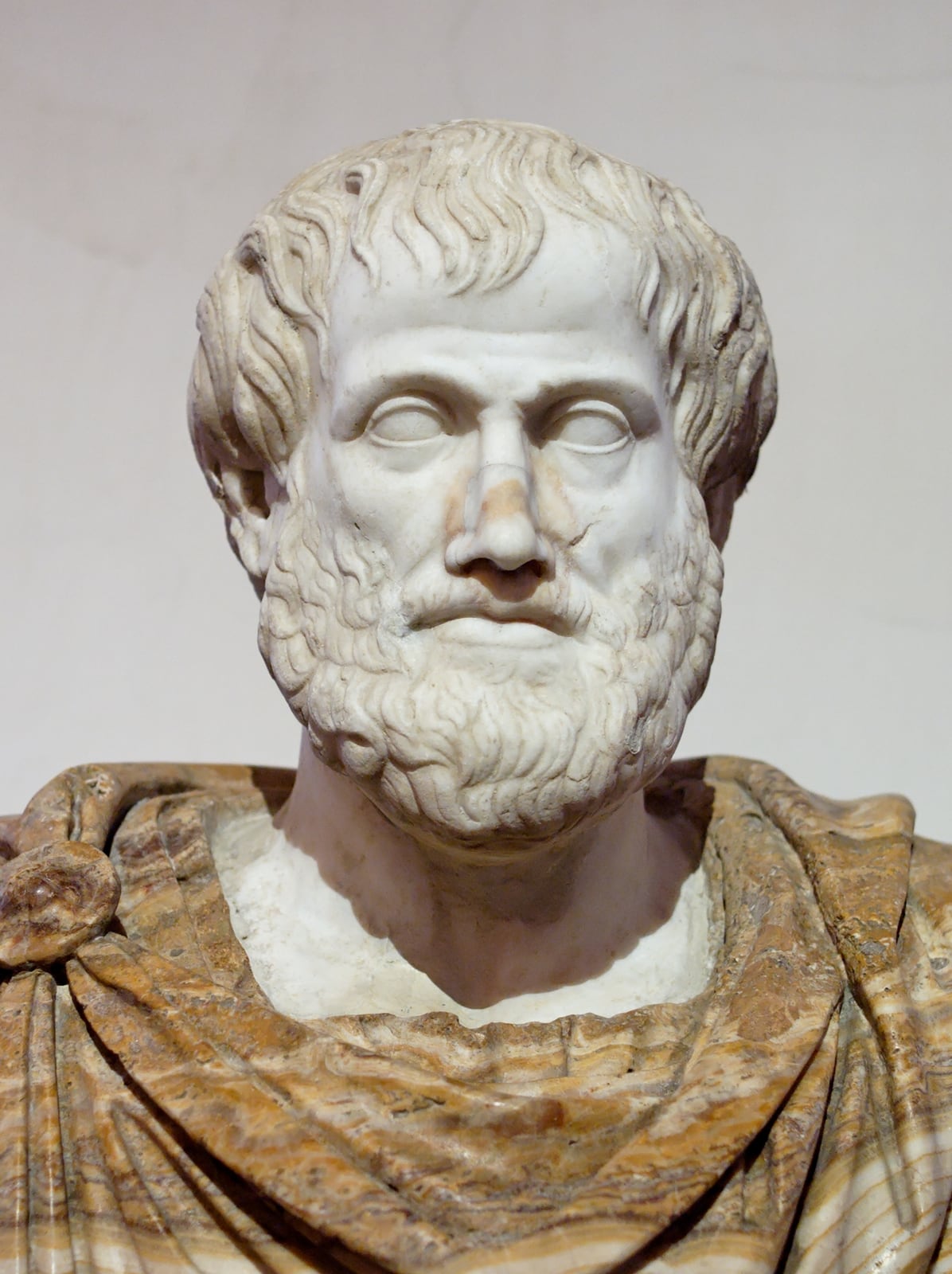
Aristotle
Совпадают в вопросах: Что такое Абсолют? Существует ли Бог? · Кто я? Существует ли истинное «я»? · Почему мы страдаем?
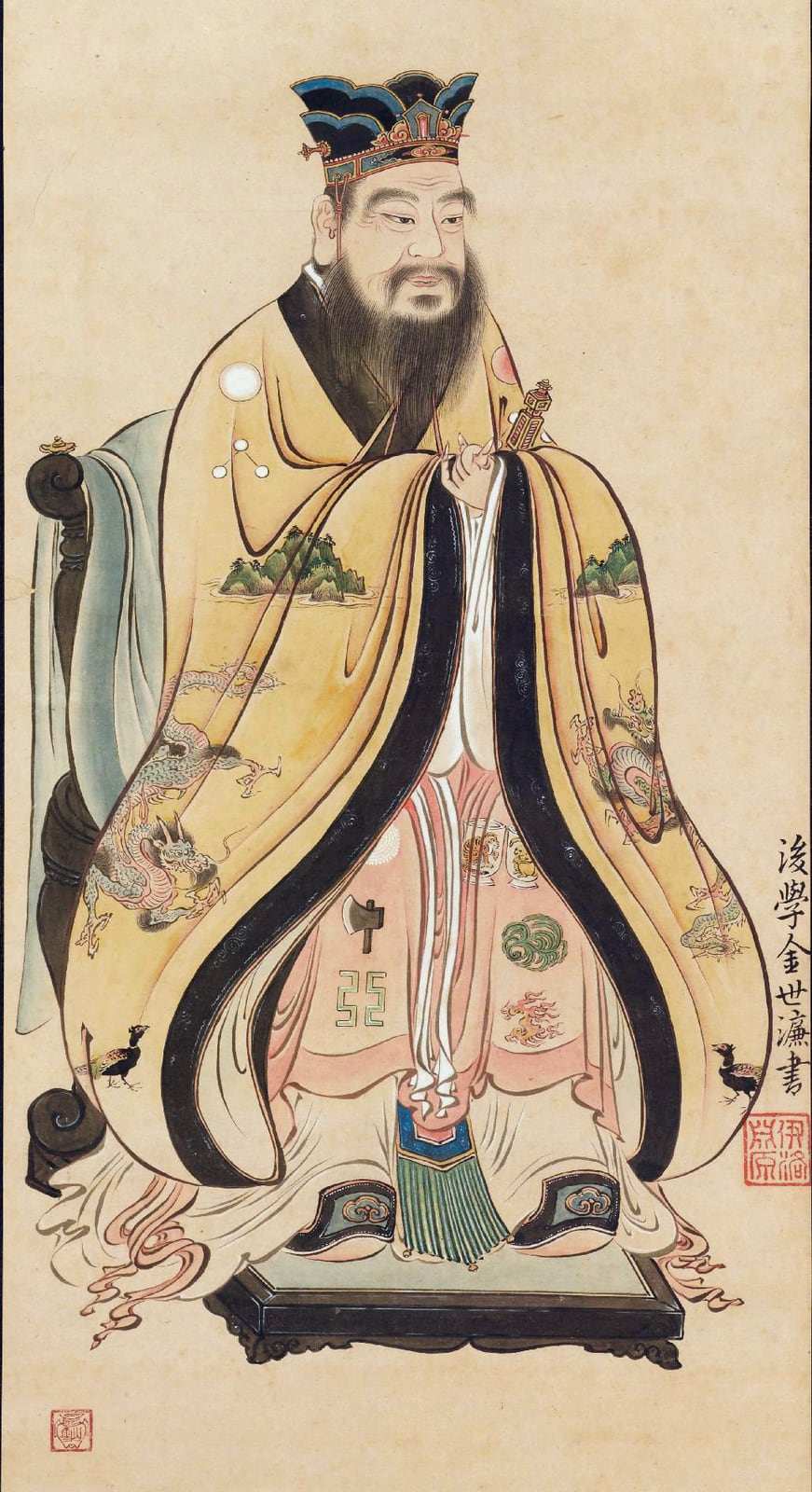
Confucius
Совпадают в вопросах: Свободны ли мы или всё предопределено? · Кто я? Существует ли истинное «я»? · Почему мы страдаем?
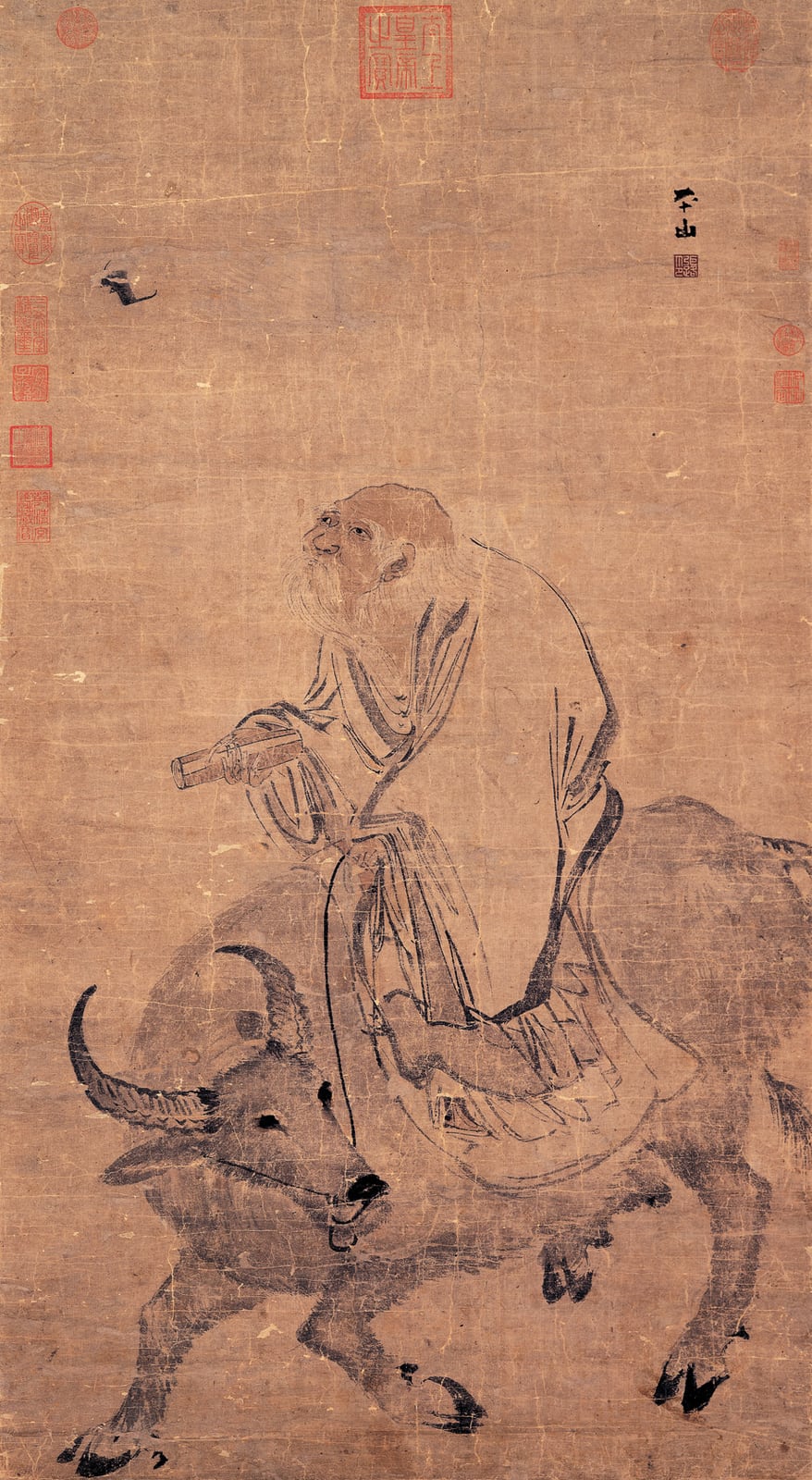
Laozi
Совпадают в вопросах: Почему мы страдаем? · Что происходит после смерти? · Как достигается освобождение или спасение?
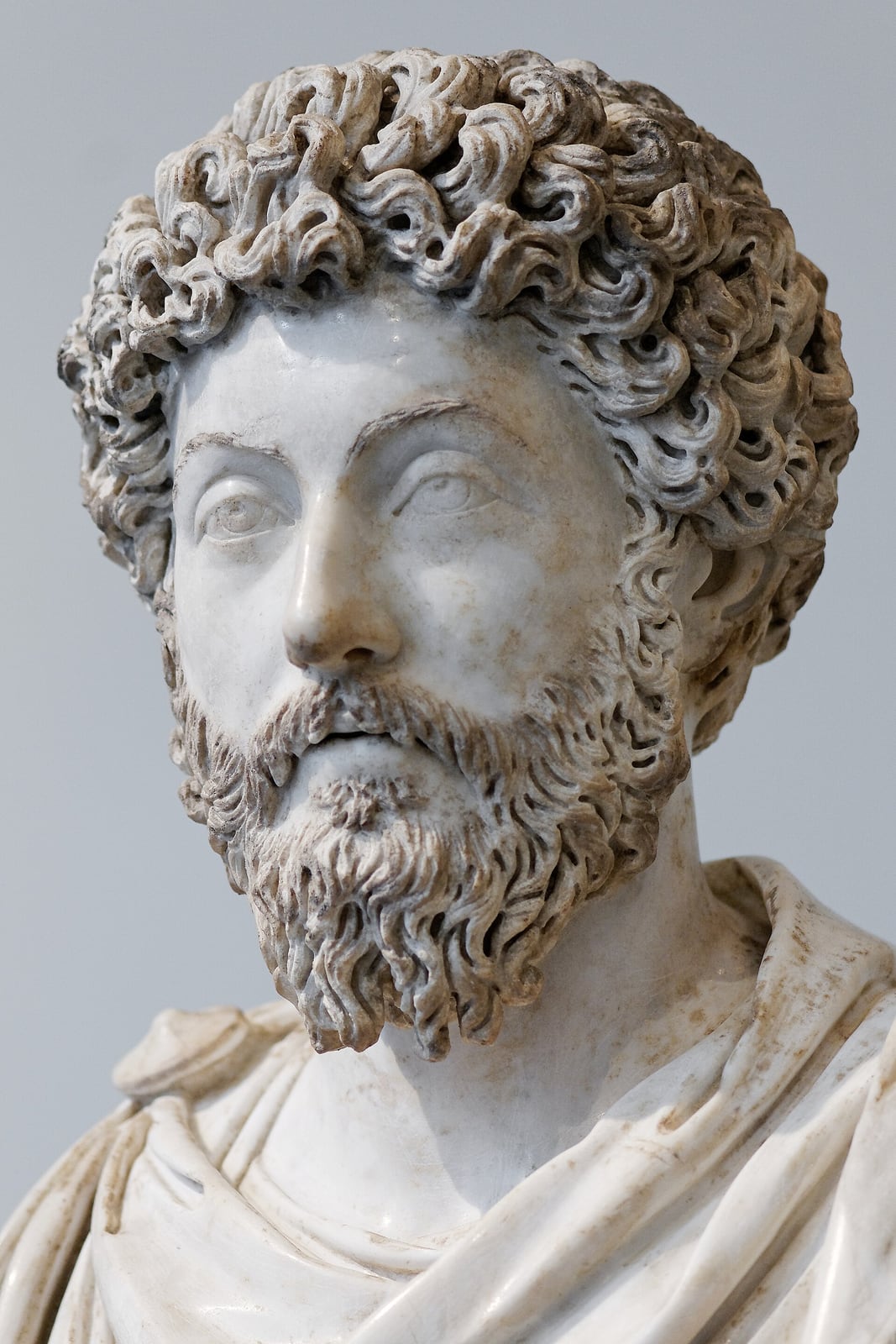
Marcus Aurelius
Совпадают в вопросах: Кто я? Существует ли истинное «я»? · Что происходит после смерти? · Как достигается освобождение или спасение?
Дальше всего от
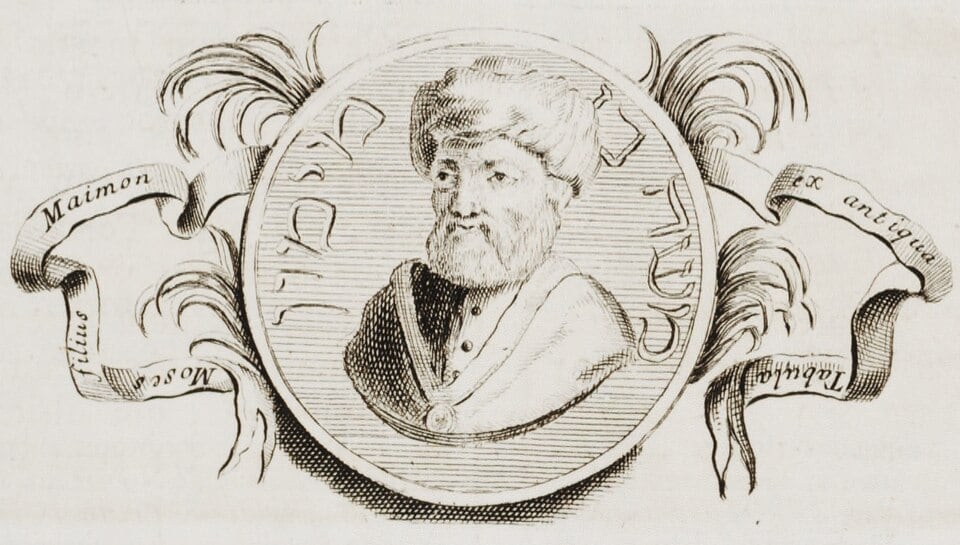
Maimonides
Расходятся в вопросах: Что такое Абсолют? Существует ли Бог? · Кто я? Существует ли истинное «я»? · Почему мы страдаем?
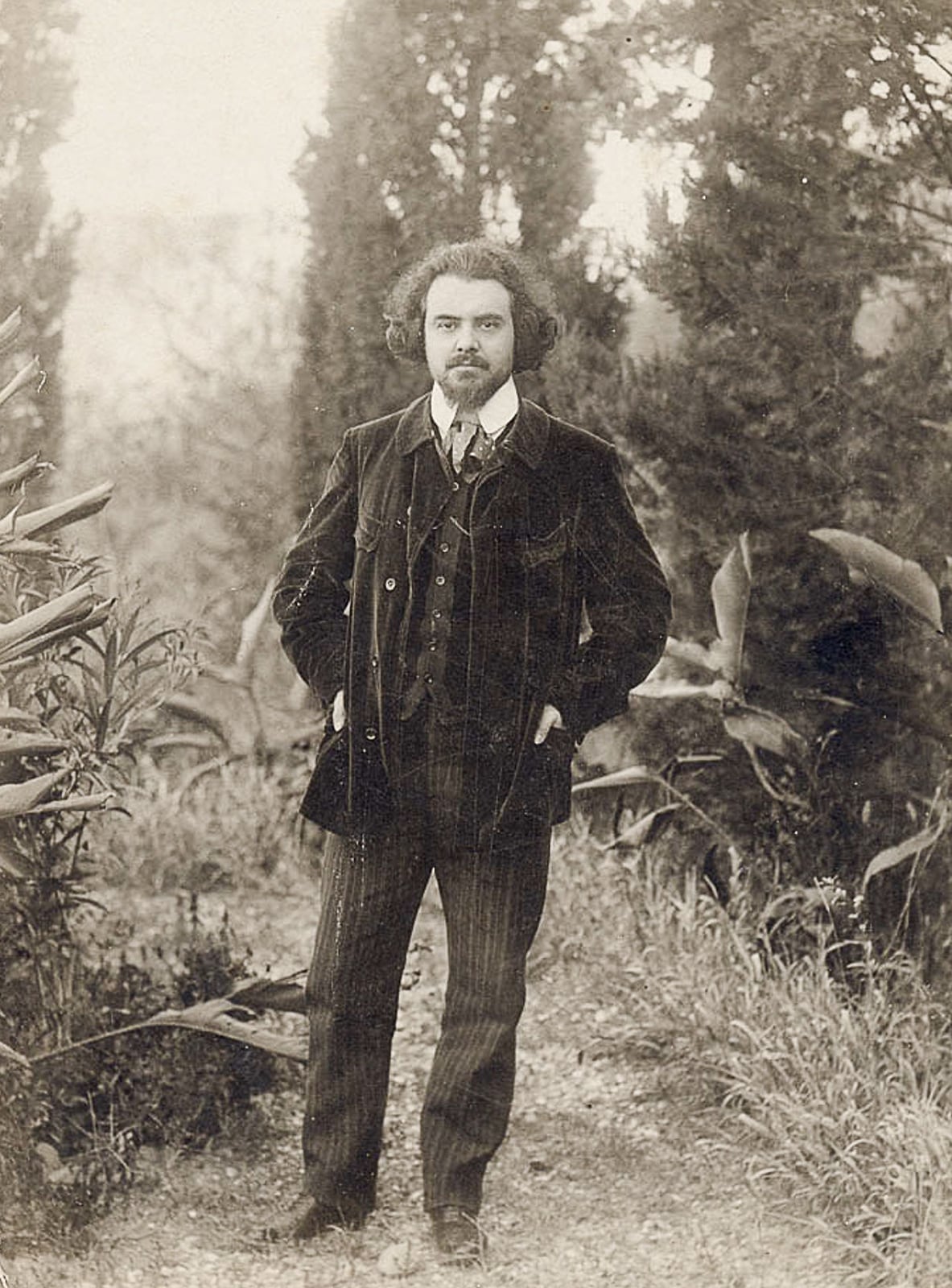
Nikolai Berdyaev
Расходятся в вопросах: Что такое Абсолют? Существует ли Бог? · Кто я? Существует ли истинное «я»? · Почему мы страдаем?
Seraphim of Sarov
Расходятся в вопросах: Что такое Абсолют? Существует ли Бог? · Кто я? Существует ли истинное «я»? · Почему мы страдаем?
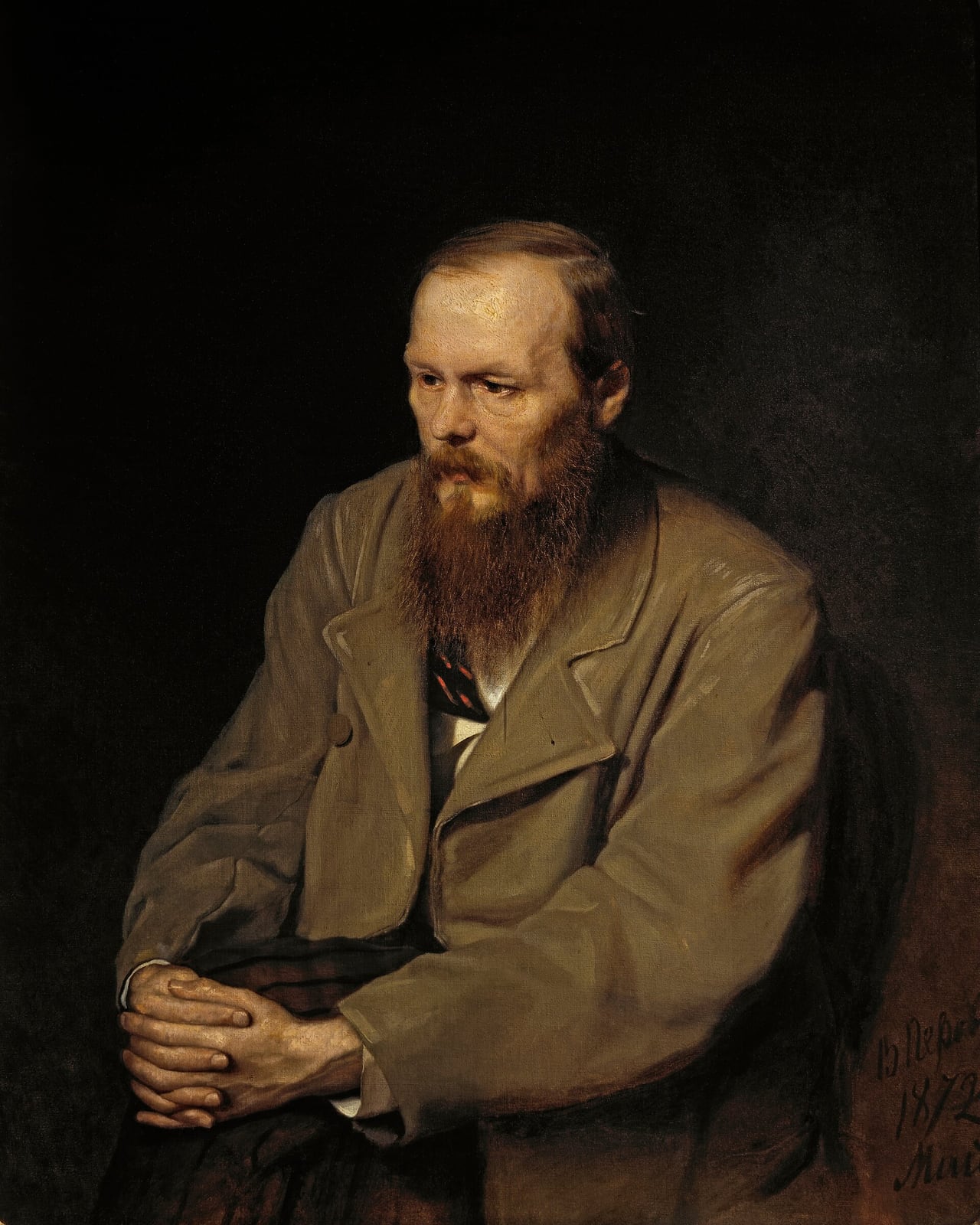
Fyodor Dostoevsky
Расходятся в вопросах: Что такое Абсолют? Существует ли Бог? · Кто я? Существует ли истинное «я»? · Почему мы страдаем?
Предания и рассказы
Предания и рассказы
Устная традицияc. 312 a. C.
The shipwreck and the bookshop
Происхождение рассказа: Diogenes Laertius VII 2–5 and 31–32, with several contradictory versions (Hecato, Apollonius of Tyre, Demetrius of Magnesia). The story has the shape of an exemplary conversion and was probably embellished in the school; Zeno's mercantile background and his arrival in Athens with Crates are, by contrast, plausible.
Устная традицияc. 312–310 a. C.
The pot of lentil soup
Происхождение рассказа: Diogenes Laertius VII 3, with no named source. It is a chreia of school tradition; it reflects the relationship between Cynicism and Stoicism well, but cannot be taken as verified fact.
Свидетельствоc. 300–262 a. C.
Zeno's hand
Происхождение рассказа: Cicero, Academica II (Lucullus) 145, voiced by the Academic Cicero criticising Zeno and Antiochus; a report transmitted more than two centuries later, but consistent with the terminology other sources attribute to Zeno (katalepsis, phantasia kataleptike).
Документированоc. 262 a. C.
The keys of the city and the golden crown
Происхождение рассказа: Diogenes Laertius VII 6, 10–12 and 15, who copies the decree. Some scholars believe the transmitted text conflates two different decrees (one during his life and one posthumous); no one doubts that Athens officially honoured Zeno.
Оспариваетсяc. 276–262 a. C.
Zeno and Antigonus
Происхождение рассказа: Diogenes Laertius VII 6–9 and 13–15 (the letters, from Apollonius of Tyre); Epictetus, Discourses II 13. The friendship between king and philosopher is well attested; the letters are generally regarded as later compositions.
Оспариваетсяc. 262 a. C.
"I come"
Происхождение рассказа: Diogenes Laertius VII 28 and 31, with two versions of the death. Timotheus' Niobe was a well-known dithyramb; the gesture of striking the ground addresses the earth or the underworld. On the "reasonable exit" (eulogos exagoge), see Diogenes Laertius VII 130.
Учение
Учение
Понятия, на которых строится мысль учителя, объяснённые в их контексте.
Living in agreement (homologia)homologia
Diogenes Laertius VII 87; Stobaeus, Eclogae II 7 (LS 63B). It is the founding definition of Stoic ethics, taken up by Seneca, Epictetus and Marcus Aurelius.
The appropriate (kathekon)kathekon
Diogenes Laertius VII 25 and 107–109.
The passions (pathe)pathe
Diogenes Laertius VII 110–111 (citing Zeno's On the Passions).
Presentation and comprehension (katalepsis)katalepsis
Cicero, Academica II 145 and I 40–42; Diogenes Laertius VII 46–54.
The two principles: logos and matterlogos-y-materia
Diogenes Laertius VII 134, 136, 142 and 157 (On Substance, On the Whole, On the Soul).
The world-city (cosmopolis)cosmopolis
Diogenes Laertius VII 32–34; Plutarch, Moralia 329a–b; Schofield (1991).
Источник: Schofield, Malcolm. The Stoic Idea of the City. Cambridge University Press, Cambridge, 1991.
Virtue and indifferentsadiaphora
Diogenes Laertius VII 101–105 and 160 (Ariston); Cicero, De finibus III–IV.
Видео
Видео
Записи, интервью и документальные фильмы. Видео воспроизводятся с YouTube; здесь они не хранятся.
La filosofía helenística (III): El estoicismo · La March
Лекция· ES· 2022· 59 min
Fundación Juan MarchОфициальный канал
La filosofía helenística (I) · La March
Лекция· ES· 2022· 57 min
Fundación Juan MarchОфициальный канал
Diógenes, Epicuro y Crisipo | Historia de la filosofía (8/61)
Лекция· ES· 2017· 87 min
Ernesto Castro
Cynics, Stoics, Epicureans
Лекция· EN· 2021· 46 min
Gresham CollegeОфициальный канал
A History of Philosophy | 16 Stoicism
Лекция· EN· 2015· 64 min
wheatoncollegeОфициальный канал
Stoicon 2018: Tony Long "Stoicism Ancient and Modern"
Лекция· EN· 2018· 50 min
Modern StoicismОфициальный канал
Stoics vs. Skeptics vs. Epicureans | AA Long on Hellenistic Philosophy
Интервью· EN· 2025· 86 min
Johnathan Bi
The philosophy of Stoicism - Massimo Pigliucci
Разбор· EN· 2017· 6 min
TED-EdОфициальный канал
Introducing... The Early and Middle Stoics
Лекция· EN· 2020· 107 min
Dan Taylor
Geschichte der Philosophie (5): Stoa, Epikureer und pyrrhonische Skepsis, Prof. Dr. Torsten Wilholt
Лекция· DE· 2013· 76 min
InstPhilОфициальный канал
Галерея
Галерея
Изображения с проверенной лицензией. Каждое сохраняет своё авторство и атрибуцию.
Рукописи
Рукописи
Рукописные свидетельства и древние тексты, с указанием хранителя и условий доступа.
GRC · Mayúscula griega (papiro) · s. I a. C.
Φιλοδήμου Περὶ τῶν Στωικῶν (PHerc. 155 y 339)
- Сохранившийся список
- Rollos carbonizados de la Villa de los Papiros de Herculano.
- Хранитель
- Biblioteca Nazionale «Vittorio Emanuele III», Officina dei Papiri Ercolanesi, Nápoles · PHerc. 155; PHerc. 339
Связи
Связи
Влияния, ученичество и близость взглядов. Документированная связь отличается от сходства, выявленного путём анализа.
Ученик
Crates de Tebas
His first teacher in Athens (Diogenes Laertius VII 2–4); Zeno wrote Memoirs of Crates.
Документированная связь
Испытал влияние
Through Crates, Diogenes' pupil, he inherited Cynic ethics; his Republic continues Diogenes', as Philodemus notes, and it was said he wrote it "on the dog's tail" (Diogenes Laertius VII 4).
Документированная связь
Испытал влияние
He came to philosophy by reading Xenophon's Memorabilia of Socrates (Diogenes Laertius VII 3); Epictetus names them together as models (Encheiridion 33).
Документированная связь
Расходился во взглядах с
He studied with Polemo, head of the Academy (VII 2, 25); his Republic and his corporeal physics oppose Plato's, and his pupil Persaeus wrote against the Laws (VII 36).
Документированная связь
Современник
Zeno was born around 334, when Aristotle was teaching at the Lyceum; no direct relationship is recorded. The Athenian decree in his honour was also to be inscribed at the Lyceum (Diogenes Laertius VII 11).
Сходство, выявленное путём анализа
Современник
They taught at the same time in Athens, the Stoa and the Garden; Epicurus mentions in his letters Zeno's followers called Stoics and Persaeus and Philonides at Antigonus' court (Diogenes Laertius VII 5, 9).
Документированная связь
Учитель
Cleantes de Aso
Pupil and successor at the head of the school (Diogenes Laertius VII 37, 168–176).
Документированная связь
Повлиял на
Crisipo de Solos
Third scholarch, he systematised the doctrine and defended the authenticity of Zeno's Republic (Diogenes Laertius VII 34).
Документированная связь
Повлиял на
Epictetus holds up Zeno as an example of freedom before Antigonus (Discourses II 13) and advises asking what Socrates or Zeno would have done (Encheiridion 33).
Документированная связь
Повлиял на
The last great representative of the Stoa that Zeno founded; the Meditations do not name him, but develop his ethics of agreement with nature and the idea of the universal city.
Документированная связь
Встречался с
Antígono Gonatas
The king of Macedon attended his lectures, invited him to his court and asked for him to be buried in the Ceramicus (Diogenes Laertius VII 6–9, 15).
Документированная связь
Идеи, близкие к
A typological parallel: both conceive virtue as the harmony of the individual with a rational world order and make ethics the basis of public life; there is no historical contact.
Сходство, выявленное путём анализа
Источники
Источники
Библиография и каталоги, использованные для этой статьи.
- Wikidata, entidad Q171303 «Zeno of Citium» (91 enlaces entre wikis; P31=Q5). Registra nacimiento en 334 a. C. y muerte en 263 a. C.; lugar de nacimiento, Citio.
- Diógenes Laercio. Vidas y opiniones de los filósofos ilustres, libro VII, 1–160 (Zenón y la doctrina estoica), s. III d. C. Trad. inglesa de R. D. Hicks, Loeb Classical Library 185, 1925 (Wikisource en inglés); texto griego en Wikisource griega; trad. de C. D. Yonge, Bohn, 1853 (Project Gutenberg n.º 57342).
- Diógenes Laercio. Los diez libros de Diógenes Laercio sobre las vidas, opiniones y sentencias de los filósofos más ilustres, trad. de José Ortiz y Sanz, tomo II (libros VI–X). Imprenta Real, Madrid, 1792 (Internet Archive).
- Arnim, Hans von (ed.). Stoicorum veterum fragmenta, vol. I: Zeno et Zenonis discipuli. Teubner, Leipzig, 1905 (Internet Archive).
- Pearson, Alfred C. (ed.). The Fragments of Zeno and Cleanthes, with Introduction and Explanatory Notes. C. J. Clay, Londres, 1891 (Internet Archive).
- Cappelletti, Ángel J. (introd., trad. y notas). Los estoicos antiguos: Zenón, Aristón, Apolófanes, Herilo, Dionisio de Heraclea, Perseo, Cleantes, Esfero. Gredos (Biblioteca Clásica Gredos, 230), Madrid, 1996.
- Durand, Marion; Shogry, Simon; Baltzly, Dirk. «Stoicism». The Stanford Encyclopedia of Philosophy, ed. Edward N. Zalta; primera publicación del 20 de enero de 2023.
- Schofield, Malcolm. The Stoic Idea of the City. Cambridge University Press, Cambridge, 1991.
- Dorandi, Tiziano. «Filodemo, Gli Stoici (PHerc. 155 e 339)». Cronache Ercolanesi 12 (1982).
- Cicerón. Académicos II (Lúculo) 145, 45 a. C. Trad. inglesa de C. D. Yonge, The Academic Questions, Treatise De Finibus, and Tusculan Disputations, Bohn, Londres, 1853 (Project Gutenberg n.º 29247).
- Plutarco. Sobre la fortuna o la virtud de Alejandro I 6 (Moralia 329a–b), s. I–II d. C. Texto griego en Wikisource griega.
- Epicteto. Disertaciones II 13 y Enquiridión 33, c. 108 d. C. Trad. inglesa de George Long, A Selection from the Discourses of Epictetus with the Encheiridion (Project Gutenberg n.º 10661).
- Long, A. A. y Sedley, D. N. The Hellenistic Philosophers, vol. 1. Cambridge University Press, Cambridge, 1987 (Estobeo, Églogas II 7 sobre el fin: LS 63B).
- Sellars, John. Stoicism. Acumen, Chesham, 2006 (Ancient Philosophies, 1).
- Inwood, Brad y Gerson, Lloyd P. (trads.). The Stoics Reader: Selected Writings and Testimonia. Hackett, Indianápolis, 2008.
- «Zeno of Citium», Wikipedia en inglés, y «Zenón de Citio», Wikipedia en español (consultadas para contrastar datos y bibliografía; texto propio).
- Open Library (Internet Archive): ediciones de los estoicos antiguos y de Diógenes Laercio verificadas por ISBN.
- Inwood, Brad (ed.). The Cambridge Companion to the Stoics. Cambridge University Press, Cambridge, 2003.
- Правообладатель
- Textos antiguos en dominio público; cada traducción y edición moderna pertenece a su traductor o editorial
Ожидает подтверждения
То, что в этой статье пока не удалось установить. Мы предпочитаем сказать об этом, а не заполнять пробел.
- Fechas: se adopta c. 334–262 a. C. (cronología de Perseo y decreto del arcontado de Arrénides, 262/261); Wikidata da la muerte en 263. Laercio da también 98 años de vida y una llegada a Atenas a los 30.
- Numeración SVF: comprobar los números de fragmento de la República y de cada tratado en SVF I (se ha citado solo el total, 1–332, para Zenón).
- Edición española de Gredos de 2001 (ISBN 9788424925918): confirmar si es reedición del volumen de Cappelletti (BCG 230) o una obra distinta.
- Traducción española de dominio público de los fragmentos de Zenón: no localizada; solo la de Diógenes Laercio por Ortiz y Sanz (1792).
- Manuscritos: no hay manuscritos de obras de Zenón; se registra el papiro de Filodemo. Verificar su digitalización.
- Imágenes: la estatua moderna de Zenón en Lárnaca (Plaza de Europa) existe en Commons, pero no se ha incluido por ser una escultura moderna que puede estar protegida por derechos de autor; revisar su licencia y la libertad de panorama en Chipre.
- Programas de afiliación: ninguno verificado. Lista vacía.
- Vídeos: no se ha encontrado un documental de televisión pública dedicado a Zenón en canal oficial; los vídeos son lecciones generales sobre el estoicismo antiguo.
Исследовано 2026-10-25