Досократическая философия
Heraclitus
Ἡράκλειτος ὁ Ἐφέσιος
ок. 535 до н. э. – ок. 475 до н. э.Исторически документированная личность
Философ из Эфеса (ок. 535–475 гг. до н. э.), написавший одну-единственную, ныне утраченную книгу, от которой осталось около ста тридцати изречений в цитатах других авторов. Учил, что всем правит общий логос, что противоположности образуют напряженное единство и что мир есть вечно живой огонь, мерами разгорающийся и мерами угасающий. Прозванный «Темным» за оракульский слог, он известен по античной биографии, почти целиком легендарной и выведенной из его же фрагментов.
- трудов
- 4трудов
- изданий
- 25изданий
- цитат
- 17цитат
- видео
- 12видео
- изображений
- 7изображений
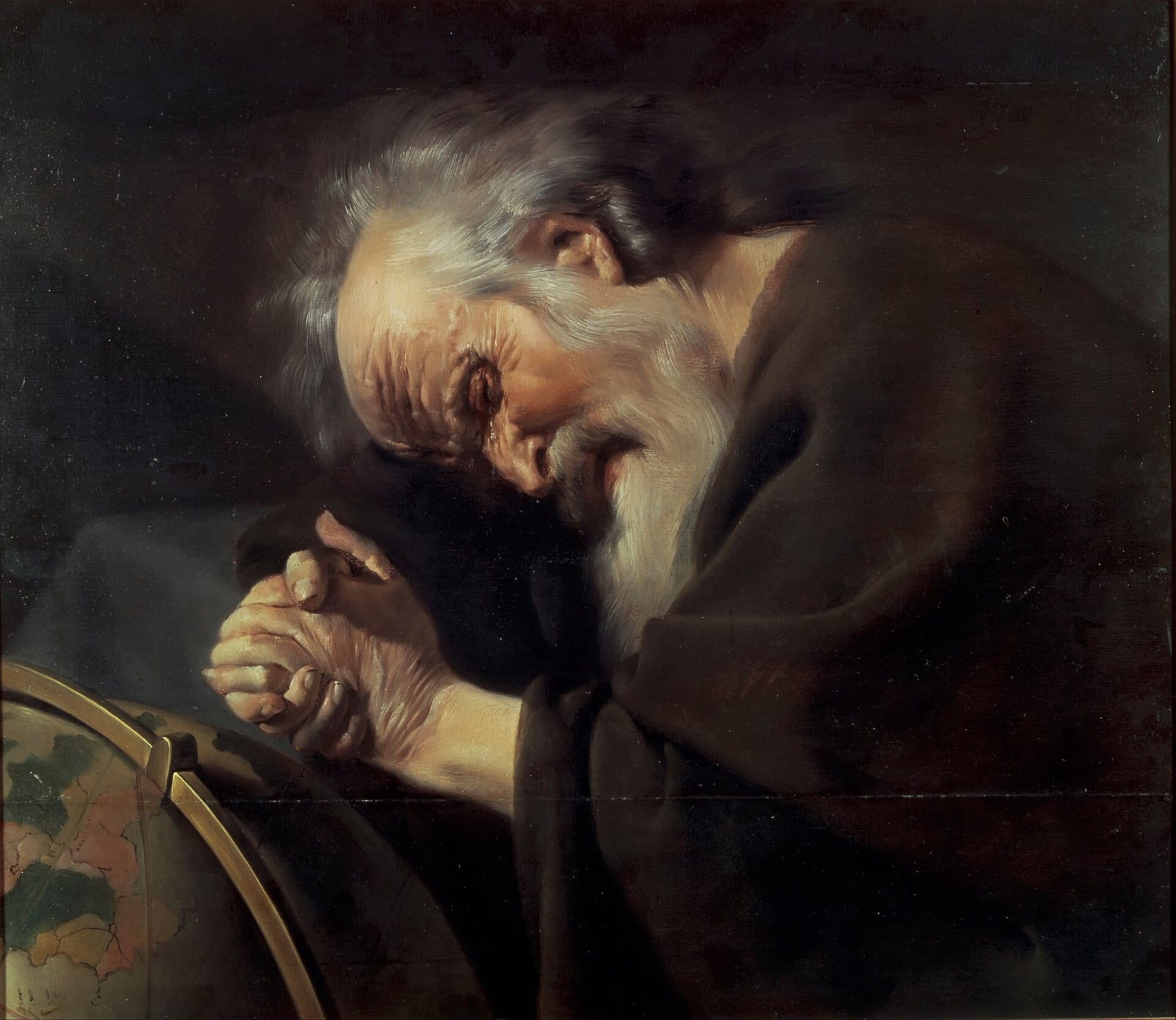
Heráclito, de Johannes Moreelse · Public domain
Своими словами
«Though this Word is true evermore, yet men are as unable to understand it when they hear it for the first time as before they have heard it at all. For, though all things come to pass in accordance with this Word, men seem as if they had no experience of them, when they make trial of words and deeds such as I set forth, dividing each thing according to its nature and showing how it truly is. But other men know not what they are doing when awake, even as they forget what they do in sleep.»DK 22 B1, transmitido por Sexto Empírico, Contra los matemáticos VII 132; Aristóteles (Retórica III 5) lo cita como comienzo del libro. Griego: Diels-Kranz; inglés: John Burnet, Early Greek Philosophy (1908), fr. 2 de la numeración de Bywater; español: traducción propia.

Главная мысль
Logos: In sixth-century Greek, *logos* means word and discourse, but also account, reckoning and proportion.
В контексте
Биография
5 мин чтения
Перевод с испанского оригинала, выполненный с помощью ИИ; ожидает проверки носителем языка.
Темный из Эфеса
От Гераклита не сохранилось ни одного цельного сочинения. Он написал одну-единственную книгу ионийской прозой, которая еще ходила по рукам в эллинистическую эпоху, а затем была утрачена; то, что мы читаем сегодня, — около ста тридцати кратких изречений, которые другие авторы на протяжении более чем тысячи лет приводили то дословно, то по памяти: Платон и Аристотель, Плутарх, Секст Эмпирик, Марк Аврелий, Климент Александрийский, Ипполит Римский, Диоген Лаэртский, Стобей. Со времени издания Германа Дильса (1903) их цитируют по номеру с предшествующим ему шифром DK 22 B. Они имеют форму оракула и сентенции, и уже древность находила их трудными: Тимон из Флиунта назвал его «загадчиком», а позднейшая традиция дала ему прозвище «Темный».
Эфес около 500 года
Диоген Лаэртский, писавший в III веке н. э. и следовавший хронологии Аполлодора, называет его сыном Блосона — или, по мнению некоторых, Гераконта — и относит его акме к 69-й олимпиаде (504–501 гг. до н. э.). Эта дата — условность древних хронографов, которые приурочивали расцвет автора примерно к сорока годам, и она позволяет отнести его рождение приблизительно к 540–535 гг. до н. э. Его город был одним из великих ионийских полисов на побережье Малой Азии, с середины VI века подвластным Персии и прославленным святилищем Артемиды — одним из самых больших храмов греческого мира. То, что Гераклит упоминает Пифагора и Ксенофана в прошедшем времени, а Парменид, по-видимому, ему отвечает, подтверждает датировку рубежом VI и V веков.
Почти все остальное сомнительно. Антисфен Родосский, на которого ссылается Диоген, сообщает, что Гераклит принадлежал к царскому роду Эфеса и уступил брату титул басилевса, сохранявший в его время религиозные и почетные функции. Джон Бернет считал это, пожалуй, единственным сведением о его жизни, которое можно принять; остальное, как мы увидим, — истории, выведенные из его собственных изречений.
Книга в храме
По словам Диогена, его книга была «о природе» и делилась на три рассуждения — о Вселенной, о государстве и о богословии; он положил ее в храм Артемиды и нарочно написал темно, чтобы к ней приближались лишь способные. Ни заглавие, ни деление не достоверны: древние цитировали книгу также как «Музы» или как «верный кормчий жизненного пути», а разбивка на три части, вероятно, отражает порядок, который придали ей комментаторы. Зато фрагменты ясно показывают нарочитый стиль — симметричные фразы, игру слов и парадоксы — по образу дельфийского бога, который «не говорит и не утаивает, но знаками указывает» (B93).
Против мудрецов и против своего города
Гераклит говорит с пренебрежением почти обо всех. Многознание уму не научает, пишет он, иначе оно научило бы Гесиода и Пифагора, а также Ксенофана и Гекатея (B40). Гомер заслуживает того, чтобы его выгнали с состязаний и высекли, и Архилох тоже (B42); Гесиод, учитель большинства, не знал, что день и ночь — одно (B57). Не щадит он и сограждан: взрослым эфесцам следовало бы всем перевешаться и оставить город безусым юнцам, ибо они изгнали Гермодора, лучшего из них (B121). Этому аристократическому голосу, для которого один стоит десяти тысяч, если он наилучший (B49), отвечает требовательная этика: народ должен сражаться за закон, как за свою стену (B44).
Чему учат фрагменты
Средоточие его мысли — логос, слово, означающее по-гречески одновременно речь, счет и соразмерность. Фрагмент, которым, вероятно, открывалась книга (B1), утверждает, что этот логос существует вечно, но люди не понимают его ни прежде, чем услышат, ни услышав, и живут как спящие. Слушая не автора, но логос, говорит B50, мудро признать, что все едино. Это единство — не покой, а напряжение противоположностей: расходящееся сходится с самим собой, как у лука и лиры (B51); путь вверх и вниз — один и тот же (B60); война — отец всего (B53), и справедливость — распря (B80). Мир, один и тот же для всех, не создал никто из богов и никто из людей: он всегда был, есть и будет вечно живым огнем, мерами разгорающимся и мерами угасающим (B30).
Отсюда и образ реки. На входящих в одни и те же реки текут все новые и новые воды (B12): река остается, потому что вода меняется. Платон свел учение к формуле «все движется и ничто не пребывает» («Кратил», 402a), а традиция превратила его в девиз panta rhei — «все течет», которого нет ни в одном фрагменте. Со времен Дж. С. Кирка (1954) многие исследователи полагают, что всеобщая текучесть — платоновское прочтение и что Гераклит подчеркивал скорее устойчивость, рождающуюся из размеренного изменения; другие, как Дэниел У. Грэм, отстаивают мысль, что текучесть все же входила в его учение. Особое место занимает душа: границ души не отыщешь, по какому бы пути ты ни шел, — столь глубок ее логос (B45); сухая душа — мудрейшая (B118); а сам Гераклит пишет: «Я искал самого себя» (B101).
Легенда
Диоген Лаэртский передает романическую биографию. Гераклит будто бы отказался давать эфесцам законы и удалился в храм Артемиды играть в бабки с детьми; став человеконенавистником, жил в горах, питаясь травами, заболел водянкой, загадкой спросил врачей, сумеют ли они превратить ливень в засуху, а когда те его не поняли, обложился навозом, чтобы высохнуть в тепле. Умер он шестидесяти лет; по Гермиппу, его похоронили на агоре, а по Неанфу Кизикскому, неузнаваемого под навозом, его сожрали собаки. Бернет, а подробнее Ава Читвуд показали, что эти истории сфабрикованы из фрагментов: смерть души, становящейся водой (B36), дала водянку; трупы, которые следует выбрасывать скорее, чем навоз (B96), — навоз; время как играющее дитя (B52) — бабки.
Другая традиция, эллинистического происхождения, распространенная Сенекой, Ювеналом и Лукианом, сделала его философом, плачущим над человеческой глупостью, в противоположность смеющемуся Демокриту; Возрождение и барокко превратили эту пару в живописный мотив. Поздние и девять писем, ходивших под его именем, в том числе ответ царю Дарию, в котором он отклоняет приглашение ко двору: они вышли из кинической среды I века до н. э. и I века н. э. Надежнее сцена, которую рассказывает Аристотель: гостям, которые медлили войти, увидев, что он греется у печи, Гераклит сказал, чтобы они входили смело, ибо и здесь есть боги.
Наследие
Его влияние было немедленным и долгим. Аристотель сообщает, что Платон в юности общался с Кратилом, радикальным гераклитовцем, и воспринял от него убеждение, что чувственное вечно течет; стоики поставили огонь и логос в центр своей физики, а Клеанф написал толкование его книги. Христианские авторы цитировали его то с похвалой, то с осуждением: благодаря Ипполиту Римскому, который представил его источником ереси Ноэта, мы знаем многие из главных фрагментов. В Новое время Гегель заявил, что нет ни одного положения Гераклита, которого он не принял бы в свою «Логику»; Ницше восхищался им; Хайдеггер посвятил ему лекционные курсы 1943 и 1944 годов и семинар с Ойгеном Финком в 1966–1967 годах. Он по-прежнему самый читаемый из досократиков — быть может, потому, что его изречения, отдельные и отточенные, приглашают каждую эпоху узнать в них себя.
Источники: Diógenes Laercio. Vidas y opiniones de los filósofos ilustres, libro IX, 1–17 (Heráclito), y II 22, VII 174, s. III d. C. Trad. inglesa de C. D. Yonge, Bohn, Londres, 1853 (Project Gutenberg n.º 57342); trad. inglesa de R. D. Hicks, Loeb Classical Library, 1925 (Wikisource). · Diels, Hermann y Kranz, Walther. Die Fragmente der Vorsokratiker, 6.ª ed., 3 vols. Weidmann, Berlín, 1951–1952; cap. 22 (Heraklit), A (testimonios) y B (fragmentos 1–126, más los dudosos y espurios). Texto griego de los fragmentos B consultado en la transcripción de Wikisource en griego. · Kirk, G. S., Raven, J. E. y Schofield, M. The Presocratic Philosophers: A Critical History with a Selection of Texts, 2.ª ed. Cambridge University Press, Cambridge, 1983, cap. VI (Heraclitus of Ephesus). Trad. esp. de Jesús García Fernández, Los filósofos presocráticos, Gredos, Madrid, 1987. · Kahn, Charles H. The Art and Thought of Heraclitus: An Edition of the Fragments with Translation and Commentary. Cambridge University Press, Cambridge, 1979. · Burnet, John. Early Greek Philosophy, 2.ª ed. Adam and Charles Black, Londres, 1908, cap. III (Herakleitos of Ephesos), §§ 63–80 (Project Gutenberg n.º 67097).
Хронология
Жизнь год за годом
Каждая точка — документированное событие. Нажмите, чтобы прочитать о нём, с источником и степенью достоверности.
ок. 535 до н. э.0 летÉfeso (Jonia)
Birth
Born in Ephesus, son of Bloson (or of Heracon, according to others). The date is inferred from the floruit Apollodorus sets in the 69th Olympiad; Wikidata records 535 BCE. Years BCE are expressed as negative numbers.
ВероятноDiógenes Laercio. Vidas y opiniones de los filósofos ilustres, libro IX, 1–17 (Heráclito), y II 22, VII 174, s. III d. C. Trad. inglesa de C. D. Yonge, Bohn, Londres, 1853 (Project Gutenberg n.º 57342); trad. inglesa de R. D. Hicks, Loeb Classical Library, 1925 (Wikisource).
После смерти
- ок. 385 до н. э.Plato's Cratylus
- ок. 260 до н. э.Cleanthes comments on his book
- ок. 225 до н. э.Hippolytus quotes his fragments
- 1877Bywater's edition
- 1903Diels fixes the numbering
- 1943Heidegger lectures on Heraclitus
- 1979The Art and Thought of Heraclitus
ок. 535 до н. э. · 0 лет
Birth
Born in Ephesus, son of Bloson (or of Heracon, according to others). The date is inferred from the floruit Apollodorus sets in the 69th Olympiad; Wikidata records 535 BCE. Years BCE are expressed as negative numbers.
Вероятно
ок. 504 до н. э. · 31 год
Floruit according to Apollodorus
Diogenes Laertius (IX 1), following Apollodorus' chronology, places his prime in the 69th Olympiad (504–501 BCE), in the reign of Darius I.
Предание
ок. 500 до н. э.
He cedes the royal title
According to Antisthenes of Rhodes (in Diogenes Laertius IX 6), he cedes to his brother the title of basileus, with religious functions. Date unknown; Burnet considers it the most plausible biographical fact.
Предание
499 до н. э.
The Ionian Revolt
The Ionian cities revolt against Persia (499–494 BCE); Ephesus remains in the Persian orbit. It is the political setting of the civic tensions reflected in his fragments.
Документировано
ок. 490 до н. э.
Banishment of Hermodorus
The Ephesians banish his friend Hermodorus, "the best man among them", and Heraclitus rebukes them (B121). The date is unknown: Zeller placed it after 478 BCE and Burnet thought it possible under Persian rule.
Оспаривается
ок. 480 до н. э.
The book deposited in the Artemision
According to Diogenes Laertius (IX 6), he deposits his book in the temple of Artemis. The report is late, though dedicating writings in sanctuaries was a known practice.
Предание
ок. 475 до н. э. · 60 лет
Death
Dies at about sixty, according to Diogenes Laertius (IX 3). The circumstances (dropsy, dung, dogs) are legendary and derived from his fragments.
Предание
ок. 385 до н. э.
Plato's Cratylus
Plato ascribes to Heraclitus the view that "everything moves and nothing stays" and that one cannot step twice into the same river (402a); Aristotle reports that Plato knew the Heraclitean Cratylus in his youth.
Вероятно
ок. 260 до н. э.
Cleanthes comments on his book
The Stoic Cleanthes writes Explanations of Heraclitus in four books (Diogenes Laertius VII 174); the Stoics adopt fire and logos.
Документировано
ок. 225 до н. э.
Hippolytus quotes his fragments
In the Refutation of All Heresies (IX 9–10), Hippolytus of Rome transcribes a series of fragments (B1, B50–B67) to show that Noetus' heresy derives from Heraclitus.
Документировано
1877
Bywater's edition
Ingram Bywater publishes Heracliti Ephesii reliquiae, the first standard modern critical edition.
Документировано
1903
Diels fixes the numbering
Hermann Diels publishes Die Fragmente der Vorsokratiker; his numbering, revised by Walther Kranz (5th ed., 1934–1937; 6th, 1951–1952), is the one used today (DK 22 B).
Документировано
1943
Heidegger lectures on Heraclitus
Martin Heidegger devotes his summer-semester courses of 1943 and 1944 to Heraclitus; in winter 1966–1967 he leads a seminar on the fragments with Eugen Fink.
Документировано
1979
The Art and Thought of Heraclitus
Charles H. Kahn publishes an annotated edition that rearranges the fragments and argues for the book's literary unity and deliberate ambiguity.
Документировано
Труды
Главные труды
Труды, без которых не понять это наследие.
Письменный труд · ок. 500 до н. э.
On Nature (lost book)
Περὶ φύσεως (título convencional)
A book in Ionic prose, written around 500 BCE and, by tradition, deposited in the temple of Artemis at Ephesus. It was read and commented on for centuries—Theophrastus, Cleanthes, Sphaerus and several grammarians explained it—and was lost in late antiquity. Its content is reconstructed from some hundred and thirty quotations: the doctrine of the common logos, the unity and tension of opposites, the ever-living fire kindling and going out in measures, the soul and its depth, the critique of Homer, Hesiod and Pythagoras, mystery religion and the political life of Ephesus. The original order of the sentences is unknown; each editor proposes his own.
15 изданий · amazon.com

Критическое издание · 1903
Fragments (Diels-Kranz 22 B 1–126)
Ἡρακλείτου ἀποσπάσματα (DK 22 B)
The corpus of verbatim quotations that modern philology ascribes to Heraclitus, some 125 sentences grouped as DK 22 B, together with the indirect testimonies (DK 22 A). They come from authors who quoted them for their own purposes: Hippolytus of Rome (who transmits B1 and the series B50–B67), Clement of Alexandria, Plutarch, Sextus Empiricus, Diogenes Laertius, Stobaeus, Marcus Aurelius, Porphyry, Origen and others. Each quotation raises problems of delimitation—where Heraclitus' sentence ends and paraphrase begins—and of dialect. Later editions (Marcovich 1967, Kahn 1979, Mouraviev 1999–2011, Laks and Most 2016) rearrange the material, but the DK reference remains universal.
7 изданий · amazon.com

Изречения
Изречения, найденные в конкретном труде. Каждое сопровождается указанием происхождения и степени надёжности.
Though this Word is true evermore, yet men are as unable to understand it when they hear it for the first time as before they have heard it at all. For, though all things come to pass in accordance with this Word, men seem as if they had no experience of them, when they make trial of words and deeds such as I set forth, dividing each thing according to its nature and showing how it truly is. But other men know not what they are doing when awake, even as they forget what they do in sleep.τοῦ δὲ λόγου τοῦδ᾽ ἐόντος ἀεὶ ἀξύνετοι γίνονται ἄνθρωποι καὶ πρόσθεν ἢ ἀκοῦσαι καὶ ἀκούσαντες τὸ πρῶτον· γινομένων γὰρ πάντων κατὰ τὸν λόγον τόνδε ἀπείροισιν ἐοίκασι, πειρώμενοι καὶ ἐπέων καὶ ἔργων τοιούτων, ὁκοίων ἐγὼ διηγεῦμαι κατὰ φύσιν διαιρέων ἕκαστον καὶ φράζων ὅκως ἔχει· τοὺς δὲ ἄλλους ἀνθρώπους λανθάνει ὁκόσα ἐγερθέντες ποιοῦσιν, ὅκωσπερ ὁκόσα εὕδοντες ἐπιλανθάνονται.
ПровереноDK 22 B1, transmitido por Sexto Empírico, Contra los matemáticos VII 132; Aristóteles (Retórica III 5) lo cita como comienzo del libro. Griego: Diels-Kranz; inglés: John Burnet, Early Greek Philosophy (1908), fr. 2 de la numeración de Bywater; español: traducción propia.
Апокрифические изречения и изречения спорной атрибуции (5)
«Everything flows (panta rhei).»
The formula appears in no fragment. It sums up Plato's reading of Heraclitus ("everything moves and nothing stays", Cratylus 402a), and the literal expression πάντα ῥεῖ comes from late commentators such as Simplicius. Many scholars think Heraclitus stressed the stability resulting from measured change, not universal flux.
«No man ever steps in the same river twice, for it is not the same river and he is not the same man.»
A modern expansion combining B12, B91 and the disputed B49a ("we step and do not step into the same rivers, we are and are not"). The second half, about the man no longer being the same, is in no ancient source.
«The only constant is change.»
Widespread in business books and social media. It has no ancient source; it is a modern paraphrase of the flux commonplace.
«The soul becomes dyed with the colour of its thoughts.»
Frequently attributed to Heraclitus, it is by Marcus Aurelius, Meditations V 16, six centuries later.
«Out of every one hundred men, ten shouldn't even be there, eighty are just targets, nine are the real fighters… but one is a warrior.»
It circulates in military circles and online under Heraclitus' name. It appears in no collection of fragments and in no ancient author.
Последние слова
Проверяемых записей о последних словах не существует.
No record of his last words survives. Diogenes Laertius (IX 3) only transmits the riddle he supposedly put to the doctors—whether they could turn a downpour into drought—within an account of his death that scholars regard as derived from his own fragments (B36).
Источник: Diógenes Laercio. Vidas y opiniones de los filósofos ilustres, libro IX, 1–17 (Heráclito), y II 22, VII 174, s. III d. C. Trad. inglesa de C. D. Yonge, Bohn, Londres, 1853 (Project Gutenberg n.º 57342); trad. inglesa de R. D. Hicks, Loeb Classical Library, 1925 (Wikisource).
Спросить
На что отвечают эти труды
Двенадцать великих вопросов человечества и то, что позволяют на них ответить эти тексты, со ссылками. Мы никогда не вкладываем слова в чужие уста.
Что такое Абсолют? Существует ли Бог?
A common logos and an ever-living fire that no god made
Безличный АбсолютСказано прямо
For Heraclitus the ultimate is the logos, the measure according to which everything happens, and the ever-living fire that is kindled and quenched in measures. Fragment B30 explicitly denies that any of the gods or of men made the cosmos: it always was, is and will be. The divine here has no face of craftsman or father. Yet Heraclitus does not abandon religious language: B32 says that the one, the only wise thing, is unwilling and willing to be called by the name of Zeus, and B67 calls god the unity of opposites, day and night, winter and summer, war and peace. It is an impersonal and intelligent principle that the traditional name of the god only half designates.
Сравнить этот вопрос с другими учителямиКто я? Существует ли истинное «я»?
The soul has no limits: its measure is the common logos
Самость есть АбсолютСледует из учения
Heraclitus says of himself that he searched himself (B101) and that it belongs to all humans to know themselves and to be sound of mind (B116). But what he finds in searching himself is not a private interiority: you would not find the limits of the soul though you travelled every road, so deep is its logos (B45). That logos is common to all, as thinking is common (B113), and the error of the many lies in living as if they had a private understanding (B2). The soul is moreover fiery and changing: it comes from water and dies into water (B36). His work suggests that the depth of the self coincides with the measure governing the cosmos, though he never states an identity.
Сравнить этот вопрос с другими учителямиПочему мы страдаем?
Sickness makes health sweet: whoever misses the logos suffers
Незнание того, кто мы естьСледует из учения
Heraclitus devotes no fragment to the cause of suffering, but his work allows an attitude to be reconstructed. Opposites are inseparable: sickness makes health pleasant, hunger satiety, weariness rest (B111), and it would not be better for humans to get all they wish (B110). For god all things are beautiful, good and just; it is humans who have taken some things as unjust and others as just (B102). War itself is common and justice is strife (B80). Pain thus arises from a partial view: from those who do not grasp the logos although everything happens according to it (B1) and who live as if asleep.
Сравнить этот вопрос с другими учителямиЧто происходит после смерти?
At death things await humans that they neither expect nor imagine
Молчание или сдержанностьСледует из учения
Heraclitus speaks of death in several fragments, always in his enigmatic style, and none offers a description of the beyond. B27 says that at death things await humans that they neither expect nor imagine; B62, that immortals and mortals live each other's death; B36 places the soul in the cycle of elements, for to souls it is death to become water. B25 promises greater portions to greater deaths, perhaps those of the fallen in battle. Together they suggest that death is one more transformation within the flux governed by the logos, and that what comes after does not match usual expectations; they do not allow us to affirm personal survival or to deny it.
Сравнить этот вопрос с другими учителямиКак достигается освобождение или спасение?
The wise is one thing: to know the thought that steers all through all
Через прямое знаниеСледует из учения
Heraclitus speaks not of salvation but of waking up. Humans live as if asleep, not understanding the logos although everything happens according to it (B1), and each turns towards a private world. The wise, says B41, is one thing: to know the thought that steers all things through all things. That understanding is not given by much learning, which did not teach Hesiod or Pythagoras (B40), but by listening to the logos and agreeing that all is one (B50). B112 joins knowledge and conduct: sound thinking is the greatest virtue, and wisdom is to speak the truth and act according to nature, heeding it. What frees is grasping the common measure.
Сравнить этот вопрос с другими учителямиНужен ли учитель?
Not to me but to the logos: borrowed learning gives no understanding
Никакого духовного авторитетаСказано прямо
Heraclitus is perhaps the Greek thinker most hostile to the authority of recognised sages. Much learning does not teach understanding, says B40; otherwise it would have taught Hesiod, Pythagoras, Xenophanes and Hecataeus. Homer deserves to be thrown out of the contests and flogged, and Hesiod, teacher of most, did not know that day and night are one. He does not even claim authority for himself: it is wise, listening not to him but to the logos, to agree that all is one (B50). And against any school he sets his own method: I searched myself (B101). No one can grasp for another the logos that is common to all.
Сравнить этот вопрос с другими учителямиРеален ли мир?
Ever-living fire, kindled and quenched in measures
Природный порядок в измененииСказано прямо
For Heraclitus the world is real and in perpetual transformation. B30 describes it as an ever-living fire kindled and quenched in measures, which no one made and which always was, is and will be. Upon those who step into the same rivers, other and other waters flow (B12): the identity of things holds through change, like that of the river. Opposites are joined in tension, as in the bow and the lyre (B51), and war is the father of all things (B53). But the flux is not chaos: the sun will not overstep its measures (B94). The real is the changing course of things, ordered by a logos to which the wise attune themselves.
Сравнить этот вопрос с другими учителямиЧто такое любовь?
No fragment speaks of love; the uniting force is tension
Не высказывался
Among Heraclitus' surviving fragments there is none devoted to love, either erotic or as goodwill. What joins things in his work is not attraction but the tension of opposites: what differs agrees with itself, a harmony of opposing tensions, as in the bow and the lyre (B51). War is the father of all (B53) and justice is strife (B80). Heraclitus even reproaches Homer for wishing strife would vanish from among gods and men, since without it there would be no harmony (A22). It would be forced to extract a doctrine of love from this; the closest is hidden harmony, which is better than the manifest (B54).
Сравнить этот вопрос с другими учителямиСвободны ли мы или всё предопределено?
Character is a human being's destiny
Судьба и ответственностьСказано прямо
Heraclitus' most quoted fragment on this question is B119: character is a human being's destiny, his daimon. The sentence can be read in two senses that do not exclude each other: each person's destiny is not an alien power but is identified with his way of being; and, at the same time, that character works as a force that guides him. Elsewhere Heraclitus states that everything happens according to the logos (B1) and through strife and necessity (B80), and that the sun will not overstep its measures, for the Erinyes, helpers of Justice, would find it out (B94). There is an order governing everything, but the centre of gravity of human destiny lies in conduct.
Сравнить этот вопрос с другими учителямиЗачем медитировать или молиться?
Praying to statues is talking to walls: one must grasp the logos
Видеть реальность такой, как она естьСледует из учения
Heraclitus sharply criticises the religious forms of his time. Those who purify themselves by defiling themselves with blood are like someone who, having stepped into mud, would wash it off with mud; and they pray to statues as if one were to converse with houses, knowing nothing of gods or heroes (B5). Mystery rites, as practised, are unholy (B14). What he proposes instead is a form of attention: to listen to the logos and not to him (B50), to wake from the sleep in which most live (B1) and to search oneself (B101). The aim is not to gain favours but to see what is, the common logos that nature, which loves to hide, conceals.
Сравнить этот вопрос с другими учителямиМожет ли разум познать предельное?
Nature loves to hide; the logos is common, but few grasp it
Эзотерическое знаниеСледует из учения
Heraclitus believes the logos can be understood — it is common to all, as thinking is (B113) — but that almost no one does. Nature loves to hide (B123), invisible harmony is better than visible (B54), and the lord whose oracle is at Delphi neither speaks nor conceals but gives signs (B93), just like his own enigmatic style, which earned him the nickname “the Obscure”. Eyes and ears are bad witnesses for those with barbarian souls (B107), and much learning does not give understanding (B40). Unless one expects the unexpected, one will not find it (B18). The ultimate is accessible but requires deciphering the signs; truth is in plain sight, hidden from those who cannot look.
Сравнить этот вопрос с другими учителямиУйти от мира или преобразить его?
The people must fight for the law as for its city wall
Упорядочить обществоСказано прямо
Ancient biography relates that Heraclitus renounced hereditary kingship in favour of his brother, refused to give laws to Ephesus and ended up living in the mountains, feeding on herbs. But these anecdotes, transmitted by Diogenes Laertius, are largely regarded as inferences from his fragments. The fragments themselves speak otherwise: the people must fight for the law as for the wall (B44); those who speak with understanding must rely on what is common to all, as a city on its law, and far more strongly, for all human laws are nourished by one, the divine (B114). Wisdom thus has a civic dimension: just law reflects the logos.
Сравнить этот вопрос с другими учителями
Созвучия и противоречия
Созвучия и противоречия
Рассчитаны вопрос за вопросом на основе позиций. Причина каждого совпадения или расхождения — по нажатию.
Ближе всего к
Baruch Spinoza
Совпадают в вопросах: Что такое Абсолют? Существует ли Бог? · Кто я? Существует ли истинное «я»? · Почему мы страдаем?
Aristotle
Совпадают в вопросах: Что такое Абсолют? Существует ли Бог? · Что происходит после смерти? · Реален ли мир?
Laozi
Совпадают в вопросах: Что происходит после смерти? · Реален ли мир? · Зачем медитировать или молиться?
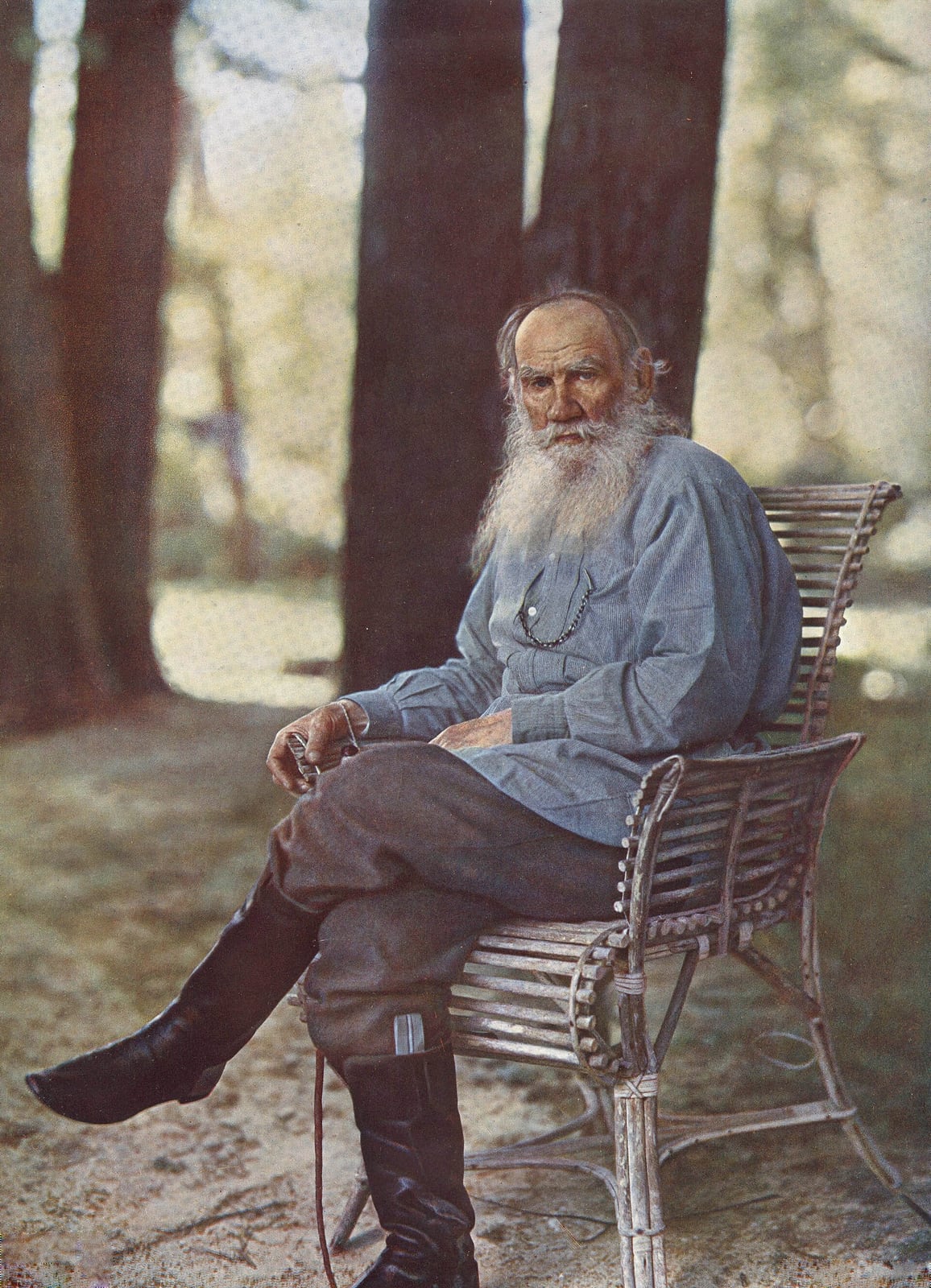
Leo Tolstoy
Совпадают в вопросах: Свободны ли мы или всё предопределено? · Что такое Абсолют? Существует ли Бог? · Кто я? Существует ли истинное «я»?
Дальше всего от

Chaitanya Mahaprabhu
Расходятся в вопросах: Кто я? Существует ли истинное «я»? · Нужен ли учитель?

Dōgen
Расходятся в вопросах: Кто я? Существует ли истинное «я»? · Нужен ли учитель?
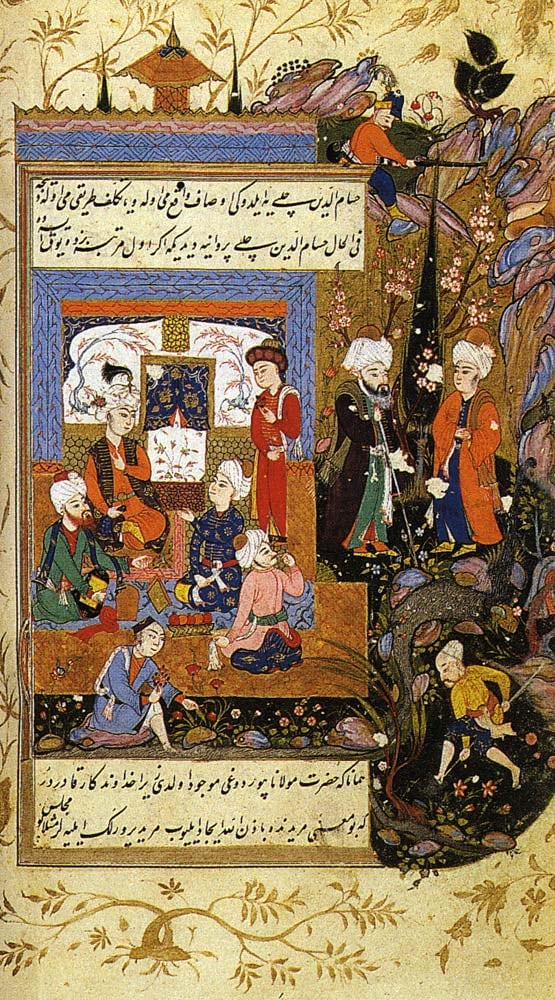
Rumi
Расходятся в вопросах: Кто я? Существует ли истинное «я»? · Нужен ли учитель?
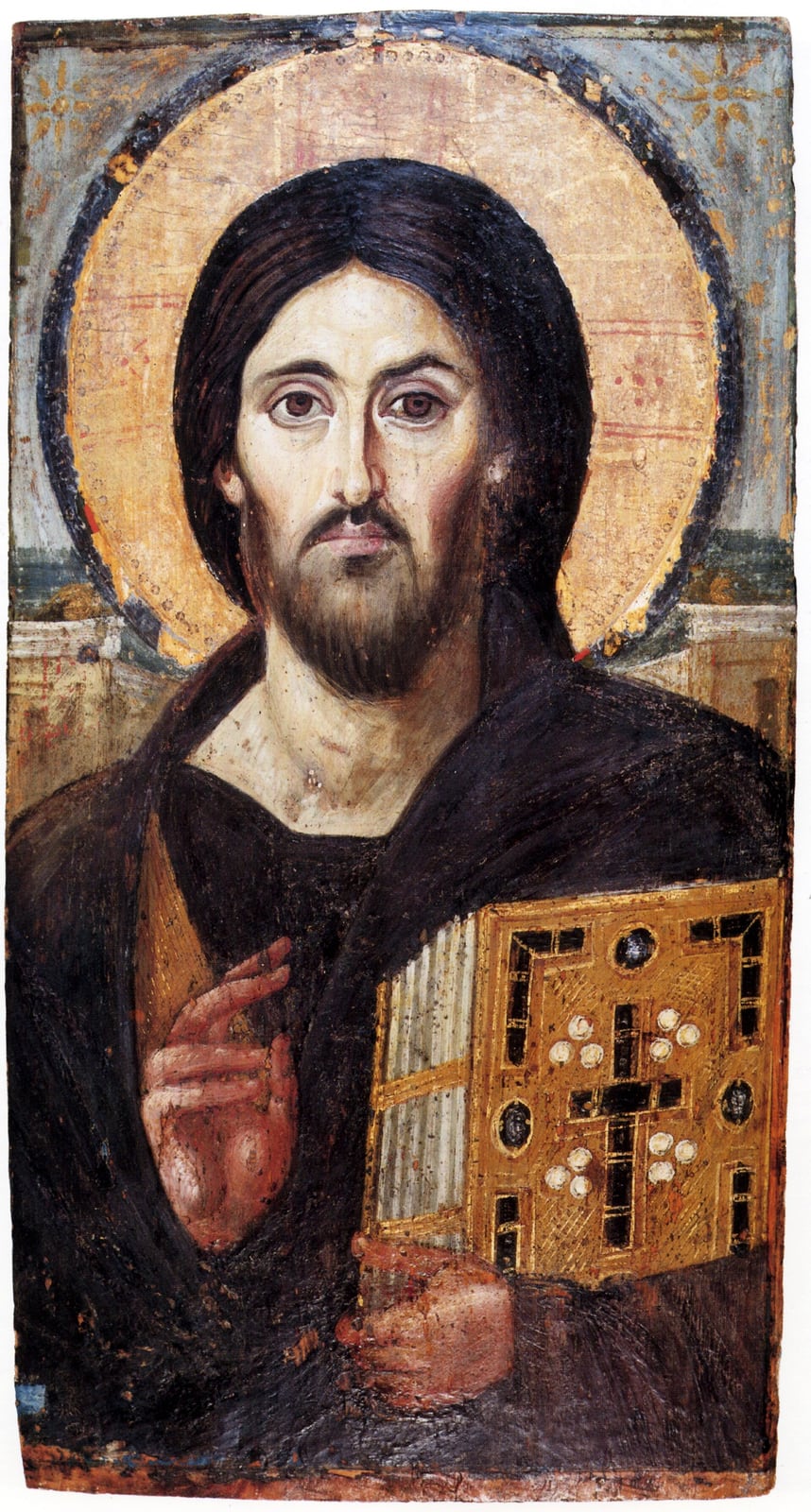
Jesus of Nazareth
Расходятся в вопросах: Кто я? Существует ли истинное «я»? · Нужен ли учитель?
Предания и рассказы
Предания и рассказы
Свидетельствоc. 500 a. C. (incierto)
"There are gods here too"
Происхождение рассказа: Aristotle, Parts of Animals I 5, 645a17–23, who introduces it with "it is said". It is the oldest testimony to an anecdote about Heraclitus and does not come from the late biographical tradition, though Aristotle writes a century and a half later.
Оспариваетсяc. 500 a. C.
The king who gave up the throne
Происхождение рассказа: Diogenes Laertius IX 6, quoting the Successions of Antisthenes of Rhodes (2nd century BCE). Strabo (XIV 1.3) confirms that the descendants of Androclus, founder of Ephesus, kept the royal title and its honours.
Не поддаётся проверкеc. 490–480 a. C. (tradicional)
Knucklebones in the temple of Artemis
Происхождение рассказа: Diogenes Laertius IX 2–3 (3rd century CE), without a named source. Burnet (Early Greek Philosophy, § 63, n. 324) and Chitwood (Death by Philosophy, 2004) show how the biographical tradition derived these scenes from the fragments.
Не поддаётся проверкеs. V a. C. (tradicional)
The Delian diver
Происхождение рассказа: Diogenes Laertius II 22 (life of Socrates, quoting Ariston) and IX 11–12 (quoting Seleucus the grammarian and Croton). It is not found in Plato or Xenophon.
Оспариваетсяc. 475 a. C. (tradicional)
Death under the dung
Происхождение рассказа: Diogenes Laertius IX 3–5, with the versions of Hermippus, Neanthes, Ariston and Hippobotus. Ava Chitwood (Death by Philosophy, 2004), and Burnet before her, showed that the story is built from his fragments: water as the death of soul (B36), corpses more fit to be thrown out than dung (B96), contempt for doctors (B58). The versions contradict one another.
Источник: Chitwood, Ava. Death by Philosophy: The Biographical Tradition in the Life and Death of the Archaic Philosophers Empedocles, Heraclitus, and Democritus. University of Michigan Press, Ann Arbor, 2004.
Не поддаётся проверкеtópico helenístico y romano
The weeping philosopher
Происхождение рассказа: Seneca, On Anger II 10.5 and On Tranquillity of Mind 15.2; Juvenal, Satires X 28–32; Lucian, Philosophies for Sale 13–14. The word "melancholy" comes from Theophrastus according to Diogenes Laertius IX 6. It is a literary commonplace, not a biographical fact.
Источник: Séneca. De ira II 10.5 y De tranquillitate animi 15.2; Juvenal, Sátiras X 28–32; Luciano, Subasta de vidas 13–14 (el tópico de Heráclito que llora y Demócrito que ríe).
Оспариваетсяc. 500 a. C. (tradicional)
The book deposited in the temple
Происхождение рассказа: Diogenes Laertius IX 6; Theophrastus quoted in the same passage. Kahn (1979) and Burnet discuss the report without wholly rejecting it.
Учение
Учение
Понятия, на которых строится мысль учителя, объяснённые в их контексте.
Logoslogos
The book's central concept, present in B1, B2, B45, B50, B72 and B115.
Источник: Kahn, Charles H. The Art and Thought of Heraclitus: An Edition of the Fragments with Translation and Commentary. Cambridge University Press, Cambridge, 1979.
Unity of oppositesunidad-de-los-contrarios
A doctrine transmitted chiefly by Hippolytus (B51–B67), who links it to Noetus' theology.
Источник: Kirk, G. S., Raven, J. E. y Schofield, M. The Presocratic Philosophers: A Critical History with a Selection of Texts, 2.ª ed. Cambridge University Press, Cambridge, 1983, cap. VI (Heraclitus of Ephesus). Trad. esp. de Jesús García Fernández, Los filósofos presocráticos, Gredos, Madrid, 1987.
Ever-living firefuego-siempre-vivo
The cosmology of fragments B30, B31, B64, B66, B90.
Источник: Kirk, G. S. Heraclitus: The Cosmic Fragments. Cambridge University Press, Cambridge, 1954.
The river and fluxel-rio
Fragments B12, B49a and B91; testimonies of Plato (Cratylus 402a) and Aristotle (Metaphysics Γ 5, 1010a10–15).
Polemos: war and justicepolemos
Fragments B53, B80 and A22 (Aristotle, Eudemian Ethics VII 1, 1235a25).
Источник: Kirk, G. S., Raven, J. E. y Schofield, M. The Presocratic Philosophers: A Critical History with a Selection of Texts, 2.ª ed. Cambridge University Press, Cambridge, 1983, cap. VI (Heraclitus of Ephesus). Trad. esp. de Jesús García Fernández, Los filósofos presocráticos, Gredos, Madrid, 1987.
The soul (psyche)psyche
Fragments B36, B45, B77, B85, B101, B115–B119.
Источник: Kahn, Charles H. The Art and Thought of Heraclitus: An Edition of the Fragments with Translation and Commentary. Cambridge University Press, Cambridge, 1979.
Видео
Видео
Записи, интервью и документальные фильмы. Видео воспроизводятся с YouTube; здесь они не хранятся.
Heraclitus: Pre-Socratic Philosophy
Лекция· EN· 2022· 28 min
Philosophy Overdose
HoP 005 - Old Man River - Heraclitus
Лекция· EN· 2020· 18 min
history of philosophy without any gapsОфициальный канал
2) The Pre-Socratics: Xenophanes and Heraclitus
Лекция· EN· 2016· 74 min
Adam RosenfeldОфициальный канал
Prof. Richard Capobianco: Heidegger's Readings of Heraclitus: The Metaphysical and Spiritual Import
Лекция· EN· 2023· 33 min
Stonehill CollegeОфициальный канал
Heraclitus of Ephesus | The Logos | Philosophy Core Concepts
Разбор· EN· 2020· 19 min
Gregory B. Sadler - That Philosophy GuyОфициальный канал
Heraclitus of Ephesus | Strife, Opposition, and Harmony | Philosophy Core Concepts
Разбор· EN· 2020· 20 min
Gregory B. Sadler - That Philosophy GuyОфициальный канал
Heráclito de Éfeso
Документальный фильм· ES· 2016· 22 min
UNEDОфициальный канал
Conferencia Teresa Oñate "Heráclito"
Лекция· ES· 2018· 134 min
Hercritia-Cátedra de Hermenéutica CríticaОфициальный канал
Heráclito, Empédocles y Anaxágoras | Historia de la filosofía (7/61)
Лекция· ES· 2017· 68 min
Ernesto CastroОфициальный канал
Filosofía más allá de la academia. Ciclo de filosofía antigua. Parménides y Heráclito
Лекция· ES· 2022· 88 min
Universidad Nacional Abierta y a Distancia UNADОфициальный канал
Héraclite avec André Laks
Интервью· FR· 2010· 56 min
Résonance[s]
Hans-Georg Gadamer über Heraklit/on Heraclitus (full, 1989)
Интервью· DE· 1989· 50 min
PhilosophieKanal
Галерея
Галерея
Изображения с проверенной лицензией. Каждое сохраняет своё авторство и атрибуцию.
Рукописи
Рукописи
Рукописные свидетельства и древние тексты, с указанием хранителя и условий доступа.
GRC · Minúscula griega · c. 222–235 d. C.; copia del s. XIV
Ἱππολύτου κατὰ πασῶν αἱρέσεων ἔλεγχος (Refutatio omnium haeresium), libros IV–X
- Сохранившийся список
- Códice en papel, único testigo de los libros IV–X; atribuido a Orígenes hasta mediados del s. XIX
- Хранитель
- Bibliothèque nationale de France, París · Supplément grec 464
Связи
Связи
Влияния, ученичество и близость взглядов. Документированная связь отличается от сходства, выявленного путём анализа.
Расходился во взглядах с
He criticises him in B40 among the learned without understanding; B129, of disputed authenticity, accuses him of appropriating others' writings and calls his wisdom "artful knavery".
Документированная связь
Расходился во взглядах с
Jenófanes
He names him in B40 alongside Hesiod, Pythagoras and Hecataeus. Sotion made him Xenophanes' pupil, a report Burnet considers improbable.
Документированная связь
Расходился во взглядах с
Homero
B42 calls for him to be thrown out of the contests and flogged; B56 cites him as an example of how men are deceived about what is visible.
Документированная связь
Расходился во взглядах с
Hesíodo
"Teacher of most", he did not know that day and night are one (B57); he also appears in B40 and B106.
Документированная связь
Современник
They were contemporaries. Many scholars read in Parmenides B6 ("two-headed mortals… for whom the path of all things turns back on itself") a polemical allusion to Heraclitus; others deny it.
Сходство, выявленное путём анализа
Повлиял на
Diogenes Laertius (II 22) tells that Euripides lent him Heraclitus' book and that he asked for "a Delian diver" to understand it; the anecdote has no contemporary confirmation.
Сходство, выявленное путём анализа
Повлиял на
According to Aristotle (Metaphysics A 6), he knew the Heraclitean Cratylus in his youth and kept the conviction that sensible things flow; he discusses the doctrine in the Cratylus and the Theaetetus.
Документированная связь
Повлиял на
He quotes and criticises him: he accuses him of denying the principle of non-contradiction (Metaphysics Γ 3), comments on the ambiguity of his prose (Rhetoric III 5) and transmits the anecdote of the oven.
Документированная связь
Повлиял на
The Stoics, from Zeno and Cleanthes—author of Explanations of Heraclitus—adopted fire as principle and logos as the reason of the cosmos.
Документированная связь
Повлиял на
The Meditations quote and paraphrase Heraclitus (IV 46, VI 42); fragments DK B71–B76 come from them.
Документированная связь
Повлиял на
He took from Heraclitus the term "enantiodromia"—the turning of something into its opposite—and defined it in Psychological Types (1921).
Документированная связь
Идеи, близкие к
Empedocles' Love and Strife extend, in another key, the Heraclitean tension between harmony and war.
Сходство, выявленное путём анализа
Идеи, близкие к
The complementarity of opposites, the praise of the hidden and water as an image of change bring the Daodejing close to Heraclitus' fragments; the comparison has been common since the nineteenth century, without historical contact.
Сходство, выявленное путём анализа
Идеи, близкие к
Siddhartha Gautama, the Buddha
Approximate contemporaries, both made continual change a key to reality, though the Buddha understood it as liberating impermanence and Heraclitus as ordering measure.
Сходство, выявленное путём анализа
Источники
Источники
Библиография и каталоги, использованные для этой статьи.
- Wikidata, entidad Q41155 «Heraclitus» (146 enlaces entre wikis; P31=Q5). Registra nacimiento en 535 a. C. y muerte en 470 a. C., ambos en Éfeso.
- Diógenes Laercio. Vidas y opiniones de los filósofos ilustres, libro IX, 1–17 (Heráclito), y II 22, VII 174, s. III d. C. Trad. inglesa de C. D. Yonge, Bohn, Londres, 1853 (Project Gutenberg n.º 57342); trad. inglesa de R. D. Hicks, Loeb Classical Library, 1925 (Wikisource).
- Diels, Hermann y Kranz, Walther. Die Fragmente der Vorsokratiker, 6.ª ed., 3 vols. Weidmann, Berlín, 1951–1952; cap. 22 (Heraklit), A (testimonios) y B (fragmentos 1–126, más los dudosos y espurios). Texto griego de los fragmentos B consultado en la transcripción de Wikisource en griego.
- Kirk, G. S., Raven, J. E. y Schofield, M. The Presocratic Philosophers: A Critical History with a Selection of Texts, 2.ª ed. Cambridge University Press, Cambridge, 1983, cap. VI (Heraclitus of Ephesus). Trad. esp. de Jesús García Fernández, Los filósofos presocráticos, Gredos, Madrid, 1987.
- Kahn, Charles H. The Art and Thought of Heraclitus: An Edition of the Fragments with Translation and Commentary. Cambridge University Press, Cambridge, 1979.
- Burnet, John. Early Greek Philosophy, 2.ª ed. Adam and Charles Black, Londres, 1908, cap. III (Herakleitos of Ephesos), §§ 63–80 (Project Gutenberg n.º 67097).
- Graham, Daniel W. «Heraclitus». The Stanford Encyclopedia of Philosophy, ed. Edward N. Zalta y Uri Nodelman; primera publicación el 8 de febrero de 2007, revisión sustancial del 8 de diciembre de 2023.
- Laks, André y Most, Glenn W. (eds. y trads.). Early Greek Philosophy, vol. III: Early Ionian Thinkers, Part 2. Loeb Classical Library 526, Harvard University Press, Cambridge (Mass.), 2016.
- Graham, Daniel W. (ed. y trad.). The Texts of Early Greek Philosophy: The Complete Fragments and Selected Testimonies of the Major Presocratics, 2 vols. Cambridge University Press, Cambridge, 2010.
- Eggers Lan, Conrado y Juliá, Victoria E. (introd., trad. y notas). Los filósofos presocráticos I. Biblioteca Clásica Gredos 12, Gredos, Madrid, 1978 (incluye Heráclito).
- Chitwood, Ava. Death by Philosophy: The Biographical Tradition in the Life and Death of the Archaic Philosophers Empedocles, Heraclitus, and Democritus. University of Michigan Press, Ann Arbor, 2004.
- Aristóteles. Partes de los animales I 5, 645a17–23 (la anécdota del horno); Metafísica A 6, 987a29–b1 (Platón y Crátilo) y Γ 3, 1005b23–25; Retórica III 5, 1407b11–18 (la puntuación de B1). Trad. inglesa de W. Ogle (1882) y W. D. Ross (1908), Internet Classics Archive (MIT).
- Platón. Crátilo 402a; Teeteto 152d–e y 160d; Sofista 242d–e; Banquete 187a. Trad. inglesa de Benjamin Jowett, The Dialogues of Plato, 3.ª ed., Clarendon Press, Oxford, 1892 (Project Gutenberg n.º 1616, Cratylus).
- Attridge, Harold W. First-Century Cynicism in the Epistles of Heraclitus. Harvard Theological Studies 29, Scholars Press, Missoula, 1976; y Malherbe, Abraham J. (ed.), The Cynic Epistles: A Study Edition, Scholars Press, Missoula, 1977.
- Séneca. De ira II 10.5 y De tranquillitate animi 15.2; Juvenal, Sátiras X 28–32; Luciano, Subasta de vidas 13–14 (el tópico de Heráclito que llora y Demócrito que ríe).
- Fairbanks, Arthur (ed. y trad.). The First Philosophers of Greece: An Edition and Translation of the Remaining Fragments of the Pre-Sokratic Philosophers. Kegan Paul, Trench, Trübner, Londres, 1898 (Project Gutenberg n.º 78670).
- Bywater, Ingram (ed.). Heracliti Ephesii reliquiae. Clarendon Press, Oxford, 1877; y Patrick, G. T. W., The Fragments of the Work of Heraclitus of Ephesus on Nature, translated from the Greek text of Bywater, N. Murray, Baltimore, 1889 (Internet Archive).
- «Heraclitus», Wikipedia en inglés, y «Heráclito», Wikipedia en español (consultadas para contrastar datos y bibliografía; texto propio).
- Open Library (Internet Archive): ediciones de los fragmentos de Heráclito y de las colecciones de presocráticos verificadas por ISBN.
- Bibliothèque nationale de France. Hippolyte, Réfutation de toutes les hérésies (notice de titre conventionnel), y manuscrito Supplément grec 464 (s. XIV), único testigo de los libros IV–X; ed. M. Marcovich, Hippolytus. Refutatio omnium haeresium, De Gruyter, Berlín, 1986.
- Mondolfo, Rodolfo. Heráclito. Textos y problemas de su interpretación. Siglo XXI, México, 1966 (reed. 2007).
- García Calvo, Agustín. Razón común. Edición crítica, ordenación, traducción y comentario de los restos del libro de Heraclito. Lucina, Madrid, 1985 (Lecturas presocráticas II).
- Marcovich, Miroslav. Heraclitus. Greek Text with a Short Commentary. Editio maior. Universidad de los Andes, Mérida (Venezuela), 1967.
- Kirk, G. S. Heraclitus: The Cosmic Fragments. Cambridge University Press, Cambridge, 1954.
- Jung, Carl Gustav. Psychologische Typen. Rascher, Zúrich, 1921, cap. XI, «Definiciones», s. v. «Enantiodromie».
- Marco Aurelio. Meditaciones IV 46 y V 16. Trad. inglesa de George Long, 1862 (Project Gutenberg n.º 2680).
- Правообладатель
- Textos antiguos en dominio público; cada traducción y edición crítica pertenece a su traductor o editorial
Ожидает подтверждения
То, что в этой статье пока не удалось установить. Мы предпочитаем сказать об этом, а не заполнять пробел.
- Fechas: se adopta c. 535–475 a. C. (Wikidata y uso común); Diógenes Laercio solo da la madurez en la 69.ª olimpiada (504–501) y la edad de sesenta años al morir (así traduce Hicks; la versión de Yonge dice «setenta», probablemente por error).
- Ediciones con ISBN no verificado en catálogo: Diels-Kranz (Weidmann; los ISBN de la reimpresión de 2005 no indican volumen), Marcovich (Mérida, 1967, sin ISBN) y Mouraviev (solo se ha verificado una parte).
- Traducción española de dominio público de los fragmentos: no localizada en línea con URL estable.
- Manuscrito BnF Supplément grec 464: no se ha localizado digitalización en Gallica; añadir el enlace si existe.
- Imagen de la moneda de Éfeso: licencia «Public domain» según Commons sin plantilla específica; revisar la ficha si se usa como principal.
- Programas de afiliación: ninguno verificado (Gredos, Alianza, Cambridge, Harvard). Lista vacía.
- Año de los vídeos: el de la grabación cuando la descripción lo indica y, si no, el de publicación en YouTube.
Исследовано 2026-10-25