Тантра · Дзэн / Чань · Джайнизм · Современная недвойственность
Osho
चन्द्र मोहन जैन · ओशो
1931 – 1990Исторически документированная личность
Индийский духовный учитель (1931–1990), известный последовательно как Ачарья Раджниш, Бхагван Шри Раджниш и Ошо. Профессор философии, ставший гуру, он создал динамическую медитацию и международное движение неосаньясинов. Его орегонская коммуна Раджнишпурам прекратила существование в 1985 году — после биотеррористической атаки, совершённой в 1984 году членами коммуны под руководством его секретаря, и его отъезда из США по делу об иммиграционном мошенничестве. Более шестисот изданий под его именем — расшифровки бесед.
- трудов
- 54трудов
- изданий
- 95изданий
- цитат
- 8цитат
- видео
- 14видео
- изображений
- 6изображений
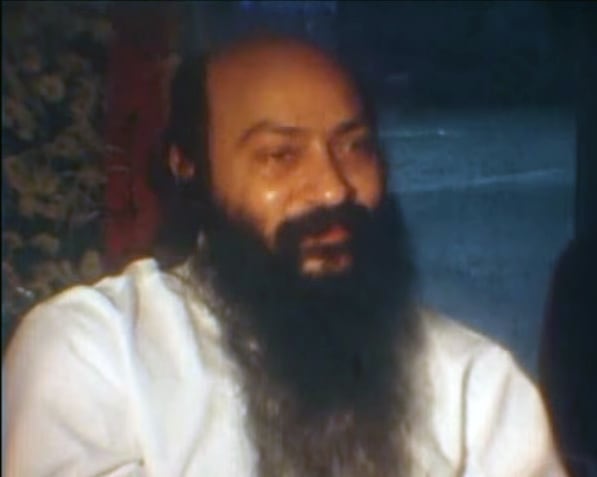
Osho en 1972 · CC BY-SA 3.0
Своими словами
«Never Born – Never Died. Only visited this planet Earth between December 11, 1931 and January 19, 1990»Epitafio de su samadhi en la casa Lao Tzu, Pune; texto dictado por él semanas antes de morir

Для начала — одна книга
From Sex to SuperconsciousnessГлавная мысль
Enlightenment is not the preserve of exceptional saints: every human being is a potential buddha, and what prevents it is the ego, formed by social conditioning.
В контексте
Биография
5 мин чтения
Перевод с испанского оригинала, выполненный с помощью ИИ; ожидает проверки носителем языка.
Джайнский мальчик из Мадхья-Прадеша
Чандра Мохан Джайн родился 11 декабря 1931 года в Кучваде, деревне в нынешнем округе Райсен (Мадхья-Прадеш), в доме деда и бабушки по матери. Он был старшим из одиннадцати детей Бабулала, торговца тканями из джайнской семьи дигамбаров, и Сарасвати. До семи лет он жил у деда с бабушкой, пока смерть деда не привела его к родителям в Гадарвару. С детства его звали Раджниш — «владыка ночи». Сам он видел корни своего характера в этом детстве без навязанной дисциплины и в ранней встрече со смертью — деда, а в пятнадцать лет и его подруги Шаши. Блестящий ученик и грозный полемист, он читал Маркса и русских анархистов и рано проникся недоверием к официальным религиям.
Бунтарь-профессор
В 1951 году он поступил в университет в Джабалпуре. По его собственному рассказу, 21 марта 1953 года, в двадцать один год, он пережил просветление, сидя под деревом в саду Бханвартал; иных свидетельств, кроме его собственного, нет. Получив степень бакалавра философии в 1955 году и магистра в Университете Сагара в 1957-м, он преподавал в Санскритском колледже в Райпуре, а с 1958 года — в Джабалпурском университете. Одновременно он разъезжал по Индии как «Ачарья Раджниш», критикуя социализм, Ганди и институциональные религии, а с 1962 года проводил медитационные лагеря. В 1966 году он оставил университет.
Его лекции 1968 года о сексуальности, позднее изданные под названием «От секса к сверхсознанию», принесли ему в индийской прессе прозвище «секс-гуру». На Второй всемирной индуистской конференции в 1969 году он заявил, что религия, которая учит ненавидеть жизнь, не есть истинная религия, чем возмутил традиционных религиозных лидеров.
Бомбей и Пуна: неосаньяса
В 1970 году он представил динамическую медитацию — быстрое дыхание, катарсис, прыжки, неподвижность и танец — и 26 сентября посвятил первых учеников, неосаньясинов: они получали новое имя, носили одежду шафранового цвета и мала с его портретом, но отрекаться от мира от них не требовали. Обосновавшись в Бомбее, в 1971 году он принял титул Бхагван Шри Раджниш. В 1974 году он переехал в Корегаон-Парк в Пуне, где ашрам со временем стал принимать около тридцати тысяч посетителей в год, по большей части западных. Он выступал каждое утро, чередуя циклы бесед на хинди и на английском о Будде, Лао-цзы, Иисусе, суфиях, тантре или дзэне; эти беседы, записанные и расшифрованные, легли в основу почти всего его наследия. Ашрам сочетал медитацию с групповой терапией в духе движения за развитие человеческого потенциала, причём некоторые группы были настолько жестокими, что в 1979 году сам ашрам их упразднил.
Орегон: Раджнишпурам
В 1981 году он погрузился в долгое публичное молчание, и руководство организацией перешло к его секретарю Ма Ананд Шиле. В том же году он отправился в США по туристической визе — для лечения, — а фонд купил ранчо Биг-Мадди в Орегоне, где ученики выстроили город Раджнишпурам, получивший в 1982 году статус муниципалитета. Тяжбы с соседями, властями штата и судами из-за землепользования не прекращались, а его коллекция из более чем девяноста «роллс-ройсов» стала медийным символом коммуны.
В сентябре 1984 года члены коммуны под руководством Шилы заразили сальмонеллой салатные бары десяти ресторанов в Дэ-Даллсе, чтобы помешать местным жителям проголосовать на выборах в округе. Заболели 751 человек, 45 были госпитализированы; погибших не было. Это крупнейшая биотеррористическая атака в истории Соединённых Штатов. Преднамеренный характер заражения подтвердился лишь в сентябре 1985 года, когда, после бегства Шилы и её команды в Европу, сам Раджниш на пресс-конференции обвинил их в этом и других преступлениях и потребовал расследования. Шила и несколько её сподвижников были осуждены. Прокуроры признали, что располагают скудными доказательствами прямой причастности Раджниша, хотя некоторые из них публично утверждали, что его ответственность выходила за пределы того, что было предметом суда.
В октябре 1985 года федеральное большое жюри предъявило ему обвинение в иммиграционном мошенничестве. Он был задержан в Шарлотте (Северная Каролина), когда летел на Бермудские острова, и по соглашению с обвинением признал себя виновным по двум пунктам — в том, что скрыл намерение остаться в стране, и в том, что поощрял фиктивные браки, — в форме так называемого «признания Элфорда» (Alford plea), которое не означает признания фактов. Он был приговорён к десяти годам лишения свободы условно, пяти годам испытательного срока и выплате 400 000 долларов штрафа и судебных издержек и покинул США, обязавшись не возвращаться в течение пяти лет. Вскоре после этого коммуна распалась.
Мировое турне и возвращение в Пуну
17 ноября 1985 года он прибыл в Дели. В последующие месяцы он побывал в Непале, Греции, Уругвае и других странах, многие из которых отказывали ему во въезде или в праве на проживание; в июле 1986 года он вернулся в Бомбей, а в январе 1987 года — в ашрам в Пуне. Ухудшение своего здоровья он объяснял отравлением в американских тюрьмах; обвинение назвало это вымыслом, и доказано это так и не было. Он отказался от титула «Бхагван» и в 1989 году принял имя Ошо. Он умер в Пуне 19 января 1990 года в возрасте пятидесяти восьми лет; официальной причиной смерти была названа сердечная недостаточность. Его прах покоится в доме Лао-цзы на территории ашрама под эпитафией, гласящей, что он никогда не рождался и никогда не умирал, а лишь посетил Землю между этими двумя датами.
Устное наследие и спорная память
Книг в строгом смысле Ошо почти не писал: более шестисот изданий под его именем — это почти сплошь отредактированные расшифровки бесед, к которым добавляются письма, диалоги даршанов и тематические сборники, составленные после его смерти фондом Osho International Foundation с центром в Цюрихе, который распоряжается правами на его наследие и товарным знаком OSHO; в 2017 году Общий суд Европейского союза подтвердил права фонда в споре с другой группой учеников. Ашрам в Пуне сегодня действует под названием Osho International Meditation Resort.
Оценки его фигуры по-прежнему расходятся. Писатель Кушвант Сингх и философ Петер Слотердайк видели в нём оригинального мыслителя; такие исследователи, как Хью Б. Урбан, подчёркивают эклектизм его идей и их созвучие культуре потребления, а профессор религиоведения Рональд О. Кларк приписывал ему черты нарциссической личности. С 2022 года бывшие ученицы в книгах, подкастах и документальных фильмах заявляют о сексуальном насилии, которое он совершал во время частных встреч, а документальное расследование 2024 года собрало свидетельства о насилии над несовершеннолетними внутри движения; эти обвинения прозвучали уже после его смерти и никогда не рассматривались в суде.
Источники: Joshi, Vasant. The Awakened One: The Life and Work of Bhagwan Shree Rajneesh. San Francisco: Harper & Row, 1982 (ISBN 006064205X). Biografía escrita por un discípulo. · Fox, Judith M. Osho Rajneesh. Studies in Contemporary Religion, 4. Salt Lake City: Signature Books, 2002 (ISBN 1560851562). · Carter, Lewis F. Charisma and Control in Rajneeshpuram: A Community without Shared Values. Cambridge: Cambridge University Press, 1990 (ISBN 0521385547). · Urban, Hugh B. Zorba the Buddha: Sex, Spirituality, and Capitalism in the Global Osho Movement. Oakland: University of California Press, 2015. · Gordon, James S. The Golden Guru: The Strange Journey of Bhagwan Shree Rajneesh. Lexington (Massachusetts): The Stephen Greene Press, 1987 (ISBN 0828906300).
Хронология
Жизнь год за годом
Каждая точка — документированное событие. Нажмите, чтобы прочитать о нём, с источником и степенью достоверности.
11 декабря 1931 г.0 летKuchwada, Madhya Pradesh
Born in Kuchwada
Chandra Mohan Jain is born on 11 December in Kuchwada (Madhya Pradesh) into a Jain family.
ДокументированоWikidata, «Osho» (Q148285).
После смерти
- 11 октября 2017 г.Ruling on the OSHO trademark
- 2022Abuse allegations
11 декабря 1931 г. · 0 лет
Born in Kuchwada
Chandra Mohan Jain is born on 11 December in Kuchwada (Madhya Pradesh) into a Jain family.
Документировано
1939 · 7 лет
Move to Gadarwara
After his maternal grandfather's death he goes to live with his parents in Gadarwara.
Вероятно
21 марта 1953 г. · 21 год
Enlightenment experience
By his own account, on 21 March he attains enlightenment under a tree in the Bhanvartal garden, Jabalpur.
Предание
1957 · 25 лет
Master's in philosophy
Gains his master's in philosophy at the University of Sagar and begins teaching in Raipur.
Документировано
1958 · 26 лет
Lecturer at Jabalpur
Teaches philosophy at the University of Jabalpur, where he is made professor in 1960.
Документировано
1966 · 34 года
Leaves the university
After a controversial lecture tour he leaves his university post.
Документировано
1968 · 36 лет
Talks on sex
The Bombay lectures later published as From Sex to Superconsciousness earn him the nickname 'sex guru'.
Документировано
26 сентября 1970 г. · 38 лет
Dynamic Meditation and first sannyasins
Introduces Dynamic Meditation and on 26 September initiates his first neo-sannyasins.
Документировано
1971 · 39 лет
Bhagwan Shree Rajneesh
Adopts the title Bhagwan Shree Rajneesh.
Документировано
1974 · 42 года
Pune ashram
Settles in Koregaon Park (Pune), where he founds the ashram.
Документировано
май 1980 г. · 48 лет
Attack during a talk
In May a young Hindu fundamentalist attempts to attack him during a discourse.
Документировано
1981 · 49 лет
Silence and move to the United States
On 10 April he begins a public silence; on 1 June he travels to the United States and in August settles on the Oregon ranch.
Документировано
май 1982 г. · 50 лет
Rajneeshpuram
Ranch residents vote to incorporate it as the city of Rajneeshpuram.
Документировано
сентябрь 1984 г. · 52 года
The Dalles bioterror attack
Commune members led by Ma Anand Sheela contaminate restaurants in The Dalles with salmonella: 751 people fall ill.
Документировано
16 сентября 1985 г. · 53 года
Accusation against Sheela
On 16 September he accuses Sheela and her team of serious crimes at a press conference and asks for an investigation.
Документировано
28 октября 1985 г. · 53 года
Arrest and departure from the United States
Arrested on 28 October in Charlotte; in November he accepts a plea deal for immigration fraud and leaves the country. He lands in Delhi on 17 November.
Документировано
1986 · 54 года
World tour
Travels through several countries that refuse him entry or residence; returns to Bombay on 30 July.
Документировано
январь 1987 г. · 55 лет
Return to Pune
In January he returns to the Pune ashram and resumes his talks.
Документировано
1989 · 57 лет
Takes the name Osho
Drops the title Bhagwan and adopts the name Osho; in April he gives his last public discourse.
Документировано
19 января 1990 г. · 58 лет
Death in Pune
Dies on 19 January at the Pune ashram; official cause, heart failure.
Документировано
11 октября 2017 г.
Ruling on the OSHO trademark
The EU General Court upholds the Osho International Foundation's ownership of the OSHO trademark.
Документировано
2022
Abuse allegations
Former disciples publicly allege sexual abuse by Osho; the accusations have not been tried.
Оспаривается
Труды
Главные труды
Труды, без которых не понять это наследие.
Опубликованные лекции · 1968
From Sex to Superconsciousness
संभोग से समाधि की ओर (Sambhog se samadhi ki or)
Series of talks given in Hindi in Bombay in 1968 that caused the scandal that made him famous in India. It argues that religious repression of sex produces sex-obsessed societies and that sexual energy, lived with full awareness, can be transformed into meditation and lead to samadhi. It is probably the best-selling and most controversial title of his Indian period.
5 изданий

Опубликованные лекции · 1974
The Book of Secrets
Vigyan Bhairav Tantra
Commentary, in eighty talks given in Bombay and Pune in 1972–1973, on the 112 meditation techniques of the Vigyan Bhairav Tantra, a Kashmir Shaivite text framed as a dialogue between Shiva and Devi. Osho explains each technique — attention to breath, the senses, sound, emptiness — and relates it to modern psychology. His followers regard it as his central work on meditation.
2 издания

Позднейший сборник · 1988
Meditation: The First and Last Freedom
Practical handbook gathering, from his talks, the active meditations Osho created — dynamic, kundalini, nadabrahma, nataraj — and techniques from various traditions, with instructions and answers to practitioners' questions. It is the Osho International Foundation's reference guide to his methods and one of his most translated works.
4 издания

Посмертное издание · 2000
Autobiography of a Spiritually Incorrect Mystic
Account of his life assembled posthumously by the Osho International Foundation from excerpts of hundreds of talks in which he spoke of his childhood, student and teaching years, the 1953 experience, Pune, Oregon and his arrest. It is not a written autobiography but an editorial selection that presents events from his point of view and omits or softens the most controversial episodes.
3 издания
Все труды (54)

Glimpses of a Golden Childhood
1985

Notes of a Madman
1985
Osho
Books I Have Loved
The Conscious LibraryBooks I Have Loved
1985

The Mustard Seed
1975
Osho
Come Follow Me
The Conscious LibraryCome Follow Me
1976

Tantra: The Supreme Understanding
1975

The Tantra Vision
1978

Tao: The Three Treasures
1975

The Empty Boat
1976

When the Shoe Fits
1976

The Hidden Harmony
1976

No Water, No Moon
1975

And the Flowers Showered
1975

Neither This Nor That
1975
Osho
This Very Body the Buddha
The Conscious LibraryThis Very Body the Buddha
1978

The Heart Sutra
1977

The Diamond Sutra
1979
Osho
The Dhammapada
The Conscious LibraryThe Dhammapada
1979

The Discipline of Transcendence
1976
Osho
Yoga: The Alpha and the Omega
The Conscious LibraryYoga: The Alpha and the Omega
1976

The Ultimate Alchemy
1974
Osho
I Am That
The Conscious LibraryI Am That
1980

Until You Die
1976

Unio Mystica
1980
Изречения
Изречения, найденные в конкретном труде. Каждое сопровождается указанием происхождения и степени надёжности.
Never Born – Never Died. Only visited this planet Earth between December 11, 1931 and January 19, 1990ПровереноEpitafio de su samadhi en la casa Lao Tzu, Pune; texto dictado por él semanas antes de morir
Основные идеи (редакционное изложение)
Из уважения к авторскому праву эти идеи изложены своими словами и не выдаются за дословные цитаты.
- Enlightenment is not the preserve of exceptional saints: every human being is a potential buddha, and what prevents it is the ego, formed by social conditioning.
- Repressing desires — especially sex — does not eliminate them but displaces them and makes them obsessive; accepted and lived with awareness, they transform of their own accord.
- Modern people are too tense to sit in silence; they first need to discharge their emotions physically before they can meditate, hence the active meditations.
- Spirituality does not require renouncing the world or wealth: the ideal is a human being who unites the sensual fullness of Zorba the Greek with the Buddha's inner silence.
- Organised religions, political ideologies, the traditional family and the nation are structures of control that keep people in obedience and fear.
- Meditation is not a practice confined to a moment of the day but a state of witnessing awareness that can be maintained in any activity.
- Truth cannot be transmitted as doctrine; the master only creates situations — talks, jokes, contradictions, silences — to shake the disciple's mind.
Апокрифические изречения и изречения спорной атрибуции (2)
«If you love a flower, don't pick it up. Because if you pick it up it dies and it ceases to be what you love. Love is not about possession; love is about appreciation.»
Probably the most widely shared line under his name on social media, but it has not been located in the published transcripts consulted or in the Osho International Foundation's talk archive; its wording looks like a modern paraphrase.
«'The most beautiful sayings of Osho' on Italian politics.»
Since 2016 an Italian satirical page, Le più belle frasi di Osho, has put humorous comments on current affairs into Osho's mouth over photographs of him. It passed a million followers and its lines have sometimes been quoted as genuine: none is.
Последние слова
Проверяемых записей о последних словах не существует.
There is no independent record of his last words. He died on 19 January 1990 in Pune and his physician, Swami Amrito, announced the death that afternoon in Buddha Hall. Several versions circulate in the movement — instructions about his belongings, a sentence naming a disciple as his 'medium', the title 'I Leave You My Dream' of the commemorative video — all from internal sources and unconfirmed. The epitaph text was dictated a few weeks before his death, according to his press secretary Swami Chaitanya Keerti.
Источник: «Osho», «1984 Rajneeshee bioterror attack» y «Ma Anand Sheela», Wikipedia en inglés (consultadas para cotejar hechos y bibliografía secundaria; texto propio).
Спросить
На что отвечают эти труды
Двенадцать великих вопросов человечества и то, что позволяют на них ответить эти тексты, со ссылками. Мы никогда не вкладываем слова в чужие уста.
Что такое Абсолют? Существует ли Бог?
There is no personal God: only the godliness of existence itself
Безличный АбсолютСказано прямо
Osho rejects the creator and personal God of organised religions, which he regards as a projection of fear and an instrument of priests. In its place he speaks of godliness as a quality of existence: there is no God but life itself, in one of his most repeated formulas. The ultimate is not someone who judges or rewards but the living totality in which one dissolves when the ego disappears, an experience reached through meditation and not through belief. In his commentaries on the Upanishads, Zen or Tantra he renders that totality in each tradition’s vocabulary: Brahman, emptiness, consciousness. What remains constant is the denial of a separate God and the affirmation of the sacred in what exists.
Сравнить этот вопрос с другими учителямиКто я? Существует ли истинное «я»?
The ego is a social product; behind it is the witness, the potential buddha
Эго — конструкция мыслиСказано прямо
Osho describes the ego as a construction: an image manufactured by parents, school, religion and society so that the individual will be useful and obedient. It is not an enemy to be defeated, since fighting it strengthens it, but an illusion that vanishes when observed. What observes is the witnessing consciousness (sakshi), which is neither a thing nor an idea and which he identifies with the buddha-nature every human being carries in potential. In The Book of the Ego and in his commentaries on the Heart Sutra he sets out this double thesis: the social self is fictitious, and what remains when its fiction is seen is not a sad void but consciousness itself, free and joyful.
Сравнить этот вопрос с другими учителямиПочему мы страдаем?
Misery is made by the mind: repression, ego and living outside the now
Мысль и психологическое времяСказано прямо
Osho holds that human misery is largely manufactured: it is produced by a mind that lives in past and future, compares, desires and fears, and that, as one of his recorded sayings puts it, has no capacity of its own for joy but only thinks about joy. To this cause he adds another he regards as social: religions and morality have taught people to repress the body, sex and emotions, and what is repressed becomes obsessive and painful. Hence his criticism of any religion that teaches hatred of life. The way out he proposes is not a doctrine but meditation: first releasing what is repressed through active techniques, then watching the mind until it loses its hold.
Сравнить этот вопрос с другими учителямиЧто происходит после смерти?
Never born, never died: death is a threshold crossed awake
То, что я есть, не рождается и не умираетСказано прямо
The epitaph Osho dictated weeks before his death says that he was never born and never died, and only visited this planet between 1931 and 1990. That formula sums up the thesis he develops in The Art of Dying and in his commentaries on the Upanishads: what dies is body and mind; witnessing consciousness has no beginning or end. Hence his proposal to learn to die before dying, through a meditation that allows one to watch the dissolution of the ego, so that physical death is lived lucidly. In certain contexts he accepted rebirth: he even claimed that in a previous life he had died seven hundred years earlier, during a long fast, without completing his path.
Сравнить этот вопрос с другими учителямиКак достигается освобождение или спасение?
Techniques to reach witnessing awareness, then dropping them
Без метода: полное вниманиеСказано прямо
For Osho enlightenment is not an achievement reserved for saints: it is the nature of every human being, hidden by ego and conditioning. What reveals it is witnessing awareness: watching body, mind and emotions without identifying with them. Unlike Krishnamurti, whom he both admired and criticised, Osho defended the use of techniques: he commented on the 112 of the Vigyan Bhairav Tantra in The Book of Secrets and created active meditations, such as Dynamic Meditation, for modern people too tense to sit in silence. But he insisted that techniques are provisional devices to be dropped: meditation itself is not a method but a state of effortless attention.
Сравнить этот вопрос с другими учителямиНужен ли учитель?
The master shares his being; but obey nothing that does not arise in you
Учитель внутриСказано прямо
Osho holds two claims that pull in opposite directions. On the one hand he initiated thousands into neo-sannyas and spoke of surrender to the master as the condition of transformation: a master, as one of his recorded sayings has it, shares his being, not his philosophy, and transmission happens through closeness rather than words. On the other he repeated that no one should obey an order that does not also come from within, criticised all religious authority, and in his last years presented himself as a friend rather than a guru. What reconciles the two, in his account, is that the master serves only to awaken the inner witness.
Сравнить этот вопрос с другими учителямиРеален ли мир?
No need to flee the world: existence itself is the divine
Проявление божественногоСказано прямо
Osho fights the Indian tradition that declares the world illusory and counsels renouncing it. For him there is no God but life itself, and the world, with its beauty, pleasures and wealth, is the expression of that godliness. His ideal of ‘Zorba the Buddha’ joins the sensual fullness of Kazantzakis’s character with the Buddha’s inner silence: the point is not to choose between world and spirit but to live both consciously. Hence he criticises religions that teach hatred of life and defines religion as the art of enjoying it. What is illusory for Osho is not the world but the mind that interprets it and turns it into a problem.
Сравнить этот вопрос с другими учителямиЧто такое любовь?
Love is a state of being, not a relationship: it flowers without ego
То, что появляется, когда «я» прекращаетсяСказано прямо
Osho distinguishes love as need, which seeks to possess and turns into jealousy and dependence, from love as overflowing, which is only possible when the ego has quietened. In Love, Freedom, Aloneness he holds that only someone who can be alone without feeling isolated is able to love without chaining the other, and that love and freedom are inseparable. His approach also has an energetic trajectory: in From Sex to Superconsciousness he argues that sexual energy, accepted and lived consciously rather than repressed, is transformed into love and, in its highest form, into prayer and meditation. Love is not cultivated as a virtue: it appears when the self is absent.
Сравнить этот вопрос с другими учителямиСвободны ли мы или всё предопределено?
The sleeping man is a robot; awareness is the only freedom
Мы машины, пока не проснёмсяСледует из учения
Osho often takes up the diagnosis of Gurdjieff, whom he commented on and admired: ordinary human beings live asleep, reacting mechanically according to their conditioning, like robots. What he calls freedom is not the capacity to choose between options but the awareness that watches the mechanisms without identifying with them; only one who is awake acts instead of reacting. But this view coexists with another, equally insistent, that recommends letting go of control and being carried by existence, floating with the river rather than swimming against it. The two theses meet in witnessing consciousness: one who watches without choosing is no longer a mechanism, and has no need to impose a will either.
Сравнить этот вопрос с другими учителямиЗачем медитировать или молиться?
Meditation is not concentration: it is being present, a witness, without mind
Быть в присутствииСказано прямо
Osho distinguishes meditation from concentration and contemplation: to concentrate is to narrow the mind, to contemplate is to think about something, and to meditate is a state of no-mind, of pure attention to the present. Hence it can be done while walking, eating or working, and its goal is not to achieve anything in the future but to be wholly here. To reach that state he designed active meditations, such as Dynamic or Kundalini, which begin with movement, catharsis or dance and end in silence, because he held that modern people are too tense to sit still. Prayer, in his devotional talks, is the same state lived as gratitude towards existence.
Сравнить этот вопрос с другими учителямиМожет ли разум познать предельное?
The mind only thinks about joy; truth lies in no-mind
Мысль ограниченаСказано прямо
Osho, who was a philosophy lecturer before becoming a spiritual teacher, uses reason with polemical skill, but holds that thought cannot reach truth. The mind works with memory and language, repeats the known and cannot touch the new; according to one of his recorded sayings it has no capacity of its own for joy, it only thinks about joy. Hence he sets mind against no-mind, the meditative state in which thought falls quiet and reality is perceived directly. He does not, however, ask for faith: he sharply criticises beliefs and encourages doubting everything, himself included. Reason serves to dismantle beliefs; truth appears when the mind falls silent.
Сравнить этот вопрос с другими учителямиУйти от мира или преобразить его?
The rebel, not the revolutionary: change consciousness, not the system
Революция — внутренняяСказано прямо
Osho rejected traditional renunciation: his sannyasins wore orange but kept working, earning money and living in the world, following the ideal of Zorba the Buddha. At the same time he distrusted projects of social transformation. In The Rebel he distinguishes the revolutionary, who wants to change society and ends up reproducing the power he fights, from the rebel, who transforms himself and, by contagion, creates a new human being. He criticised Gandhi, socialism and organised religions as ways of imposing ideals. The only thing that truly changes the world, he held, is individual consciousness, and a new society can only be born of meditative individuals.
Сравнить этот вопрос с другими учителями
Созвучия и противоречия
Созвучия и противоречия
Рассчитаны вопрос за вопросом на основе позиций. Причина каждого совпадения или расхождения — по нажатию.
Ближе всего к
Eckhart Tolle
Совпадают в вопросах: Что такое Абсолют? Существует ли Бог? · Кто я? Существует ли истинное «я»? · Почему мы страдаем?
- BKByron Katie
Byron Katie
Совпадают в вопросах: Что такое Абсолют? Существует ли Бог? · Кто я? Существует ли истинное «я»? · Почему мы страдаем?
Alan Watts
Совпадают в вопросах: Что такое Абсолют? Существует ли Бог? · Почему мы страдаем? · Что происходит после смерти?
Jiddu Krishnamurti
Совпадают в вопросах: Кто я? Существует ли истинное «я»? · Почему мы страдаем? · Как достигается освобождение или спасение?
Дальше всего от
Mirabai
Расходятся в вопросах: Как достигается освобождение или спасение?

Rabia al-Adawiyya
Расходятся в вопросах: Как достигается освобождение или спасение?
Al-Hallaj
Расходятся в вопросах: Как достигается освобождение или спасение?
Ajahn Chah
Расходятся в вопросах: Как достигается освобождение или спасение?
Предания и рассказы
Предания и рассказы
Свидетельство1953
Under a tree in Jabalpur
Происхождение рассказа: The only testimony is his own, in later talks; it is recorded in the biography by his disciple Vasant Joshi (1982) and repeated in the movement's publications.
Источник: Joshi, Vasant. The Awakened One: The Life and Work of Bhagwan Shree Rajneesh. San Francisco: Harper & Row, 1982 (ISBN 006064205X). Biografía escrita por un discípulo.
Документировано1970
The first sannyasins
Происхождение рассказа: Facts recorded by Judith M. Fox, Bob Mullan and Vasant Joshi; the description of the stages comes from the instructions published by the movement itself.
Источник: Fox, Judith M. Osho Rajneesh. Studies in Contemporary Religion, 4. Salt Lake City: Signature Books, 2002 (ISBN 1560851562).
Документировано1980
A knife in Buddha Hall
Происхождение рассказа: Recorded in the literature on the movement (Fox, Carter) and in the Indian press of the time; the attacker's motives come from his own statement.
Документировано1981–1985
Ninety-three Rolls-Royces
Происхождение рассказа: Documented by Lewis F. Carter, Frances FitzGerald and the Oregon press; the figure of 93 vehicles comes from the inventory of the owning company.
Источник: Carter, Lewis F. Charisma and Control in Rajneeshpuram: A Community without Shared Values. Cambridge: Cambridge University Press, 1990 (ISBN 0521385547).
Документированоseptiembre de 1985
The press conference and the bonfire
Происхождение рассказа: Press conference reported by the Oregon press and by Frances FitzGerald (The New Yorker, 1986); the booklet burning was reported by international agencies and is recorded in the academic literature.
Свидетельство1990
'Never born, never died'
Происхождение рассказа: The plaque text can be verified on site; the circumstances of its dictation come from the testimony of his press secretary, Swami Chaitanya Keerti (The Indian Express, 2024), and the cremation is described by Judith M. Fox and the Indian press.
Источник: Fox, Judith M. Osho Rajneesh. Studies in Contemporary Religion, 4. Salt Lake City: Signature Books, 2002 (ISBN 1560851562).
Учение
Учение
Понятия, на которых строится мысль учителя, объяснённые в их контексте.
Dynamic Meditationmeditacion-dinamica
Osho's active meditations (dynamic, kundalini, nadabrahma, nataraj), described in Meditation: The First and Last Freedom.
Источник: Fox, Judith M. Osho Rajneesh. Studies in Contemporary Religion, 4. Salt Lake City: Signature Books, 2002 (ISBN 1560851562).
Neo-sannyasneo-sannyas
Neo-sannyasin movement (1970–1990); studied by Carter, Mullan and Palmer.
Источник: Mullan, Bob. Life as Laughter: Following Bhagwan Shree Rajneesh. Londres: Routledge & Kegan Paul, 1983 (ISBN 0710200439).
Zorba the Buddhazorba-el-buda
Pune talks (1970s and 1987–1989); critical analysis in Urban, Zorba the Buddha (2015).
Источник: Urban, Hugh B. Zorba the Buddha: Sex, Spirituality, and Capitalism in the Global Osho Movement. Oakland: University of California Press, 2015.
Witnessing awarenessconciencia-testigo
Present in almost all his talk series, especially The Book of Secrets.
Источник: Fox, Judith M. Osho Rajneesh. Studies in Contemporary Religion, 4. Salt Lake City: Signature Books, 2002 (ISBN 1560851562).
From sex to superconsciousnessdel-sexo-a-la-superconsciencia
Bombay talks of 1968 (Sambhog se samadhi ki or); later commentaries on Tilopa and Saraha.
Источник: Urban, Hugh B. Zorba the Buddha: Sex, Spirituality, and Capitalism in the Global Osho Movement. Oakland: University of California Press, 2015.
Silence and heart-to-heart communionsilencio-y-comunion
Rajneeshpuram, 1981–1984; assessment in Carter (1990) and FitzGerald (1986).
Источник: Carter, Lewis F. Charisma and Control in Rajneeshpuram: A Community without Shared Values. Cambridge: Cambridge University Press, 1990 (ISBN 0521385547).
Видео
Видео
Записи, интервью и документальные фильмы. Видео воспроизводятся с YouTube; здесь они не хранятся.
OSHO: Waking Up the World
Оригинальная запись· EN· 14 min
OSHO InternationalОфициальный канал
OSHO: The Greatest Courage Is Being Capable of Change
Оригинальная запись· EN· 22 min
OSHO InternationalОфициальный канал
OSHO: Sheela Never Even Listened
Оригинальная запись· EN· 1985· 21 min
OSHO InternationalОфициальный канал
OSHO: Ateet Aur Bhavishya Se Mukti (अतीत और भविष्य से मुक्ति)
Оригинальная запись· HI· 15 min
OSHO InternationalОфициальный канал
OSHO: Nacho, Gao, Dhyan Mein Dubo
Оригинальная запись· HI· 7 min
OSHO InternationalОфициальный канал
OSHO Dynamic Meditation – a revolution in consciousness
Документальный фильм· EN· 24 min
OSHO InternationalОфициальный канал
Bhagwan Shree Rajneesh Interview - July 1985 | KATU In The Archives
Интервью· EN· 1985· 13 min
KATU NewsОфициальный канал
Rajneeshpuram: Paradise Lost? - November 2nd, 1985 - KATU In The Archives
Документальный фильм· EN· 1985· 23 min
KATU NewsОфициальный канал
Rajneeshpuram - News Footage (KGW, 1985)
Документальный фильм· EN· 1985· 52 min
Oregon Historical SocietyОфициальный канал
Update: Rajneesh | KGW 1984 award-winning documentary
Документальный фильм· EN· 1984· 59 min
KGW NewsОфициальный канал
How the Rajneesh Cult Overran This Oregon Town
Документальный фильм· EN· 1 min
Smithsonian ChannelОфициальный канал
Wild Wild Country | Official Trailer | Netflix
Документальный фильм· EN· 2018· 3 min
NetflixОфициальный канал
Bhagwan - Die Deutschen und der Guru | Dokumentarfilm | Trailer
Документальный фильм· DE· 11 min
ARDОфициальный канал
Einblicke in Oshos umstrittenen Kult - Die dunkle Seite der Rajneesh-Bewegung (Dokumentation, 2013)
Документальный фильм· DE· 2013· 97 min
wocomoDEUTSCH
Галерея
Галерея
Изображения с проверенной лицензией. Каждое сохраняет своё авторство и атрибуцию.
Связи
Связи
Влияния, ученичество и близость взглядов. Документированная связь отличается от сходства, выявленного путём анализа.
Испытал влияние
He commented on the Japji in The True Name.
Документированная связь
Испытал влияние
He commented on the Yoga Sutras in Yoga: The Alpha and the Omega.
Документированная связь
Учитель
Ma Anand Sheela
His secretary from 1981 to 1985 and manager of Rajneeshpuram; she led the 1984 bioterror attack and was convicted. Osho accused her publicly in September 1985.
Документированная связь
Испытал влияние
The Pune ashram's work regime was consciously modelled on Gurdjieff's community in France.
Документированная связь
Современник
Krishnamurti disapproved of Rajneesh, though similarities between their teachings have been noted; Osho commented on him often.
Документированная связь
Испытал влияние
Siddhartha Gautama, the Buddha
He devoted long cycles of talks to the Dhammapada and the Mahayana sutras.
Документированная связь
Испытал влияние
He commented on the Tao Te Ching in Tao: The Three Treasures.
Документированная связь
Испытал влияние
He commented on his stories in The Empty Boat and When the Shoe Fits.
Документированная связь
Испытал влияние
He commented on his fragments in The Hidden Harmony.
Документированная связь
Испытал влияние
He devoted several talk cycles to him, such as The Divine Melody.
Документированная связь
Испытал влияние
He commented on the Gospel of Thomas and the canonical Gospels in The Mustard Seed and Come Follow Me.
Документированная связь
Испытал влияние
He commented on his Song of Meditation in This Very Body the Buddha.
Документированная связь
Испытал влияние
During his 1981 silence The Prophet was read at satsangs; he commented on it in several talks.
Документированная связь
Учитель
Peter Sloterdijk
The German philosopher lived at the Pune ashram from 1978 to 1980 and called him 'a Wittgenstein of religions'.
Документированная связь
Современник
Both spread Zen, Tantra and Taoism in the West in a free and provocative style; there is no record that they met.
Сходство, выявленное путём анализа
Идеи, близкие к
The emphasis on witnessing awareness recalls Ramana's self-enquiry, though their teaching styles are opposite.
Сходство, выявленное путём анализа
Упоминается в других статьях
Источники
Источники
Библиография и каталоги, использованные для этой статьи.
- Wikidata, «Osho» (Q148285).
- Joshi, Vasant. The Awakened One: The Life and Work of Bhagwan Shree Rajneesh. San Francisco: Harper & Row, 1982 (ISBN 006064205X). Biografía escrita por un discípulo.
- Fox, Judith M. Osho Rajneesh. Studies in Contemporary Religion, 4. Salt Lake City: Signature Books, 2002 (ISBN 1560851562).
- Carter, Lewis F. Charisma and Control in Rajneeshpuram: A Community without Shared Values. Cambridge: Cambridge University Press, 1990 (ISBN 0521385547).
- FitzGerald, Frances. «Rajneeshpuram», The New Yorker, 22 y 29 de septiembre de 1986 (recogido en Cities on a Hill, Nueva York: Simon & Schuster, 1986).
- Török, Thomas J. et al. «A Large Community Outbreak of Salmonellosis Caused by Intentional Contamination of Restaurant Salad Bars». JAMA 278, n.º 5 (1997): 389–395.
- Urban, Hugh B. Zorba the Buddha: Sex, Spirituality, and Capitalism in the Global Osho Movement. Oakland: University of California Press, 2015.
- Gordon, James S. The Golden Guru: The Strange Journey of Bhagwan Shree Rajneesh. Lexington (Massachusetts): The Stephen Greene Press, 1987 (ISBN 0828906300).
- «Osho», «1984 Rajneeshee bioterror attack» y «Ma Anand Sheela», Wikipedia en inglés (consultadas para cotejar hechos y bibliografía secundaria; texto propio).
- OSHO International Foundation, web oficial (biblioteca de charlas, meditaciones y catálogo).
- Open Library: obras y ediciones atribuidas a Osho / Bhagwan Shree Rajneesh (búsqueda por autor y por título).
- Carus, W. Seth. «The Rajneeshees (1984)», en Jonathan B. Tucker (ed.), Toxic Terror: Assessing Terrorist Use of Chemical and Biological Weapons. Cambridge (Massachusetts): MIT Press, 2000, pp. 115–137.
- Goldman, Marion S. «Rajneesh/Osho», en James R. Lewis (ed.), Controversial New Religions. Nueva York: Oxford University Press, 2004.
- Mullan, Bob. Life as Laughter: Following Bhagwan Shree Rajneesh. Londres: Routledge & Kegan Paul, 1983 (ISBN 0710200439).
- Richter, Anke. Cult Trip: Inside the World of Coercion and Control. Auckland: HarperCollins New Zealand, 2022.
- Tribunal General de la Unión Europea, sentencia de 11 de octubre de 2017, asunto T-670/15, Osho Lotus Commune contra EUIPO (marca denominativa «OSHO»).
- Milne, Hugh. Bhagwan: The God That Failed. Londres: Caliban Books, 1986 (ISBN 1850660069). Memorias de su antiguo guardaespaldas.
- Abbott, Carl. «Utopia and Bureaucracy: The Fall of Rajneeshpuram, Oregon». Pacific Historical Review 59, n.º 1 (1990): 77–103.
- Children of the Cult (documental, 2024), investigación periodística sobre abusos a menores dentro del movimiento Rajneesh.
- Archivo audiovisual de KGW y KATU (Portland) y Oregon Historical Society: reportajes y entrevistas sobre Rajneeshpuram, 1984–1985.
- Chryssides, George D. Exploring New Religions. Londres y Nueva York: Cassell, 1999, cap. «New Forms of Buddhism: Osho/Rajneesh».
- Clarke, Ronald O. «The Narcissistic Guru: A Profile of Bhagwan Shree Rajneesh». Free Inquiry, primavera de 1988, pp. 33–45 (reimpr. en Harry Aveling, ed., Osho Rajneesh and His Disciples, Delhi: Motilal Banarsidass, 1999).
- Правообладатель
- OSHO International Foundation (Zúrich); marca OSHO registrada en la Unión Europea (confirmada por el Tribunal General en 2017)
- Официальный сайт
- www.osho.com
Ожидает подтверждения
То, что в этой статье пока не удалось установить. Мы предпочитаем сказать об этом, а не заполнять пробел.
- Obra: más de 600 títulos atribuidos (transcripciones de charlas en hindi e inglés, cartas, diarios de darshan y recopilaciones póstumas de la Osho International Foundation). Se registran 54 principales; el resto son compilaciones de discursos editadas por la OIF. Pendiente cotejar el catálogo completo de la OIF y la lista de series en hindi (Geeta Darshan, Shiv Sutra, Mahavir Vani, etc.) con su año y su ISBN.
- ISBN sin verificar en catálogo: Geeta Darshan, The True Name, Yoga: The Alpha and the Omega, The Silent Explosion; ediciones en español de El libro de los secretos posteriores a 2003 y de los ciclos sobre Tao y zen.
- Localizar en la transcripción original (archivo de la OIF) las citas marcadas como «probable», hoy tomadas de fuentes secundarias (Joshi, Fox, Goldman, Gordon).
- Acusaciones de abusos (2022–2024): seguir la bibliografía y la prensa de referencia; hoy se apoyan en el libro de Anke Richter (2022), pódcasts de antiguas discípulas y el documental Children of the Cult (2024). Confirmar la ficha técnica completa del documental.
- Coordenadas exactas de Kuchwada (distrito de Raisen) sin verificar.
- Vídeos: no hay en YouTube un canal oficial de Osho en español ni documentales en castellano de televisiones públicas; los vídeos en español disponibles son de canales de terceros sin garantías.
Исследовано 2026-10-25