Индуизм · Бхакти · Адвайта-веданта
Ramana Maharshi
ரமண மகரிஷி
1879 – 1950Исторически документированная личность
Тамильский мудрец (1879–1950), который после пережитого в шестнадцать лет опыта смерти удалился к священной горе Аруначале и больше никогда не покидал Тируваннамалай. Учил прежде всего молчанием и единственным вопросом — «Кто я?», — исследованием Я, которое предлагал как прямой путь к освобождению. Немногочисленные тамильские сочинения и беседы, записанные учениками, сделали его центральной фигурой современной адвайты и нынешней недвойственной мысли.
- трудов
- 33трудов
- изданий
- 50изданий
- цитат
- 8цитат
- видео
- 10видео
- изображений
- 7изображений
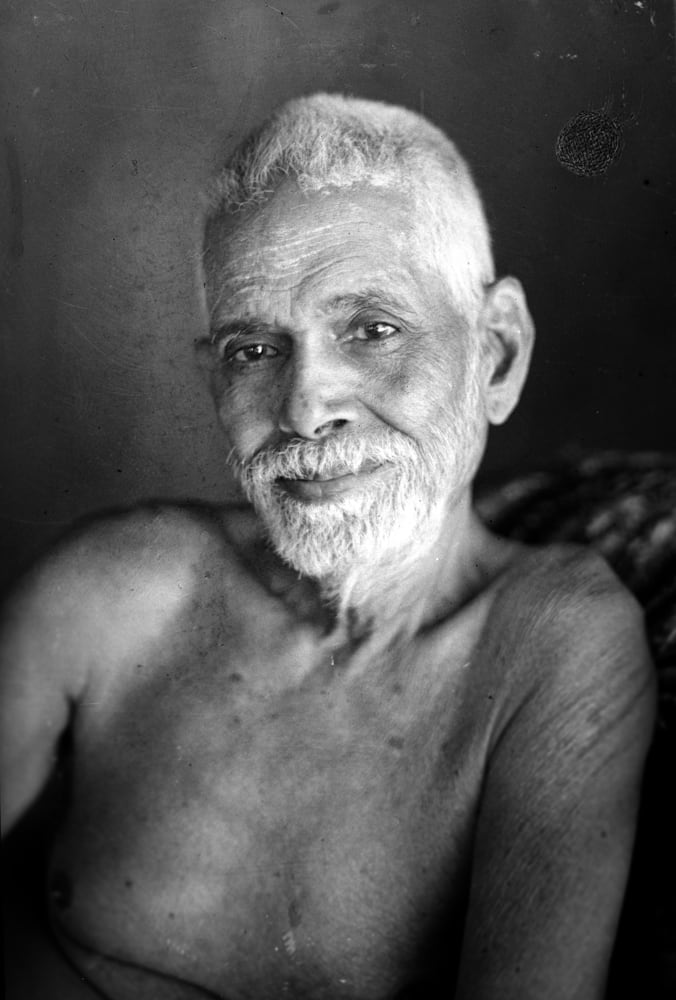
Retrato de Ramana Maharshi por G. G. Welling (1948) · Public domain
Своими словами
«I have set out in quest of my Father in accordance with his command.»Nota dejada a su hermano al salir de Madurai, 29 de agosto de 1896 (original tamil; trad. inglesa en Osborne 1954)

Главная мысль
Happiness is not obtained from objects: it is the very nature of the Self, glimpsed in deep sleep, when there are no thoughts or objects and no one feels unhappy.
В контексте
Биография
5 мин чтения
Перевод с испанского оригинала, выполненный с помощью ИИ; ожидает проверки носителем языка.
Мальчик из Мадурая
Венкатараман Айер родился 30 декабря 1879 года в Тиручули, деревне на юге Мадрасского президентства, в тамилоязычной брахманской семье. Его отец, Сундарам Айер, без диплома вёл дела в местных судах как ходатай; мать, Алагаммал, много позже стала одной из его учениц. Когда мальчику было двенадцать лет, отец умер и семья распалась: Венкатараман переехал к дяде в Мадурай, большой город-храм богини Минакши, где учился в Scott's Middle School, а затем в школе Американской миссии. Биографы описывают его как обычного ученика, увлекавшегося футболом, борьбой и плаванием, без видимой склонности к религиозной жизни. Лишь две черты предвещали нечто иное: сон столь глубокий, что товарищи могли трясти его, не разбудив, и потрясение, которое он испытал в ноябре 1895 года, услышав, как старший родственник произнёс имя Аруначалы — священной горы Тируваннамалая. Вскоре после этого он прочёл «Перия-пуранам», жития шестидесяти трёх тамильских шиваитских святых, и что-то в нём замерло в ожидании.
Смерть в шестнадцать лет
В середине июля 1896 года, оставшись один в комнате на верхнем этаже дядиного дома, он без всякой причины ощутил сильнейший страх смерти. Вместо того чтобы звать на помощь, он лёг на пол, задержал дыхание, сделал тело неподвижным, как у трупа, и спросил себя, что же, собственно, умирает. Тело, понял он, отнесут к погребальному костру и обратят в пепел; но то, что это осознаёт, остаётся — нетронутое, не зависящее от тела. По его позднейшему рассказу, это было не умозаключение, а непосредственная очевидность: истинное «я» — живой поток, которого смерть не касается. С того дня, говорил он, погружённость в это Я больше не прерывалась. Следует оговорить, что всё известное нам об этом эпизоде восходит к его собственному рассказу, записанному десятилетия спустя Б. В. Нарасимхой Свами в биографии 1931 года и в беседах, которые фиксировали ученики; современных событию свидетельств нет.
К Аруначале
Юноша утратил всякий интерес к учёбе. 29 августа 1896 года, после выговора старшего брата, он сослался на дополнительный урок, оставил записку о том, что отправился искать своего Отца, и сел на поезд. 1 сентября он прибыл в Тируваннамалай, вошёл в великий храм Аруначалешвары, обрил голову, выбросил оставшиеся деньги и брахманский шнур и сел. Последующие годы — это годы почти полного погружения: недели в Патала-лингаме, тёмной храмовой крипте, где насекомые изъязвили ему ноги, а он, казалось, этого не замечал; месяцы в святилище Гурумуртам, где его служителем стал аскет по имени Паланисвами; затем манговая роща, храм Павалаккундру и с 1899 года пещера Вирупакша на склоне горы, где он прожил до 1916 года. Он не говорил — не по обету, как пояснил впоследствии, а потому, что не испытывал в этом нужды. Когда в 1898 году мать пришла умолять его вернуться, он ответил ей письменно: чему суждено случиться, то случится, и лучше всего хранить молчание.
В те годы он письменно, на грифельных досках и клочках бумаги, отвечал на вопросы двух посетителей — Гамбхирама Сешайи и Шивапракасама Пиллаи. Из этих ответов годы спустя возникли «Вичара-санграхам» и «Нан яр?» («Кто я?») — самый распространённый текст его учения. В 1907 году знаток санскрита Кавьякантха Ганапати Муни, получив от него краткое наставление об истоке представления «я», провозгласил его Бхагаваном Шри Раманой Махарши; под этим именем его с тех пор и знали. В 1911 году пришёл первый европеец, молодой британский полицейский Фрэнк Хамфрис, чьи письма, опубликованные в Лондоне в 1913 году, впервые по-английски описали силу этого молчания. В 1914 году он сложил для товарищей по сбору подаяния сто восемь строф «Брачной гирлянды букв для Аруначалы».
Скандашрам и мать
В 1916 году мать поселилась рядом с ним, и маленькая община перебралась в Скандашрам, чуть выше по склону. Алагаммал, правоверная вдова, научилась рядом с сыном отказываться от кастовых предрассудков и в конце концов сама приняла жизнь отрешённой; она умерла 19 мая 1922 года, когда сын сидел подле неё, положив одну руку ей на грудь, а другую на голову. Её похоронили у подножия горы. Несколько месяцев спустя Рамана спустился навестить могилу и больше наверх не поднялся: вокруг этой гробницы и вырос Шри Раманашрам.
Ашрам и молчание
С декабря 1922 года до самой смерти он жил в открытом зале, дверь которого ни для кого не была заперта. Он вставал затемно, чтобы резать овощи на кухне, читал почту и отказывался получать лучшую пищу или лучшее обхождение, чем любой другой обитатель ашрама. У его учения было два регистра: молчание, которое посетители описывают как ощутимое присутствие, и ответы — почти всегда краткие — тем, кто спрашивал. Каждому он возвращал один и тот же вопрос: кто спрашивает? Исследование Я (атма-вичара) и полная предданность Богу или учителю были для него двумя путями, ведущими в одно и то же место. В 1927 и 1928 годах он написал две главные свои вероучительные поэмы — «Упадеша-сарам» и «Улладу нарпаду».
В ночь на 26 июня 1924 года грабители напали на ашрам и избили его; он попросил своих не защищаться, ибо у нападавших своя роль, а у них своя. В 1931 году вышла биография Нарасимхи Свами, и в том же году приехал британский журналист Пол Брантон, чья книга «A Search in Secret India» («В поисках тайной Индии», 1934) сделала Раману известным на Западе. Затем через Тируваннамалай прошли Парамаханса Йогананда (1935), Сомерсет Моэм (1938), индолог Генрих Циммер — который, так и не побывав у него, издал в 1944 году антологию его наставлений с предисловием К. Г. Юнга, — и длинная череда искателей. В 1935–1939 годах Мунагала Венкатарамайя записывал беседы, опубликованные в 1955 году под названием «Talks with Sri Ramana Maharshi» («Беседы с Шри Раманой Махарши»).
Болезнь и смерть
В конце 1948-го или в начале 1949 года — источники расходятся — под левым локтем появился небольшой узелок; его определили как злокачественную опухоль и с февраля по декабрь 1949 года оперировали четыре раза. Рамана отказался от ампутации руки и соглашался на предлагаемое лечение скорее для того, чтобы не огорчать близких, чем по убеждению. Тем, кто просил его исцелить себя, он отвечал, что они придают телу слишком большое значение. Он умер 14 апреля 1950 года в 20:47, когда снаружи группа почитателей пела стихи, обращённые к Аруначале. Артур Осборн, свидетель этой сцены, сообщает, что в тот же миг несколько человек видели, как большой метеор медленно пересёк небо по направлению к вершине горы. Тело похоронили в ашраме, рядом с храмом, воздвигнутым над могилой его матери.
Задокументированное и переданное
Биография Раманы необычайно богата свидетельствами, но читать её следует послойно. Внешние факты (даты, места, посетители, последняя болезнь) надёжно подтверждены множеством источников. О его внутренних переживаниях мы знаем лишь из его собственного рассказа — позднего и опосредованного переводчиками. Его устные наставления сохранились в записях, сделанных, часто наспех и по-английски, толмачами, переводившими с тамильского, телугу или малаялам; написанное его рукой немногочисленно и кратко. И вокруг него, как вокруг всякого индийского святого, выросла корона чудес, которые он сам нередко отвергал: он отрицал, что обладает сверхъестественными силами, и всякий вопрос о чудесах обращал в вопрос о том, кто спрашивает.
Наследие
Шри Раманашрам по-прежнему открыт в Тируваннамалае; им управляют потомки его брата Ниранджанананды, и там хранятся зал, где он жил, и его гробница. Благодаря Брантону, Осборну — основавшему в 1964 году журнал «The Mountain Path», — Дэвиду Годмену и индийским ученикам вроде Х. У. Л. Пунджи его учение стало одним из главных источников современной недвойственности. Немногие учителя XX века оставили столь скудное письменное наследие и столь широкий след — след, сотканный из одного вопроса: «Кто я?», который задал себе подросток, лежавший на полу дома в Мадурае.
Источники: Osborne, Arthur. Ramana Maharshi and the Path of Self-Knowledge. Londres: Rider, 1954 (reed. Sri Ramanasramam). Texto consultado en Internet Archive. · Narasimha Swami, B. V. Self-Realization: The Life and Teachings of Sri Ramana Maharshi. Tiruvannamalai: Sri Ramanasramam, 1931. · Venkataramiah, Munagala (Swami Ramanananda Saraswathi), ed. Talks with Sri Ramana Maharshi. Tiruvannamalai: Sri Ramanasramam, 1955 (conversaciones de 1935–1939; ed. 2006 consultada en Internet Archive). · Godman, David, ed. Be As You Are: The Teachings of Sri Ramana Maharshi. Londres: Arkana, 1985. · Brunton, Paul. A Search in Secret India. Londres: Rider, 1934 (caps. 9 y 16–17 sobre Ramana Maharshi).
Хронология
Жизнь год за годом
Каждая точка — документированное событие. Нажмите, чтобы прочитать о нём, с источником и степенью достоверности.
30 декабря 1879 г.0 летTiruchuli
Birth
Venkataraman Iyer is born, second son of Sundaram Iyer and Alagammal, into a Tamil Brahmin family, on the night of Ardra Darshanam, a festival of Shiva.
ДокументированоOsborne, Arthur. Ramana Maharshi and the Path of Self-Knowledge. Londres: Rider, 1954 (reed. Sri Ramanasramam). Texto consultado en Internet Archive.
После смерти
- 1964The Mountain Path
30 декабря 1879 г. · 0 лет
Birth
Venkataraman Iyer is born, second son of Sundaram Iyer and Alagammal, into a Tamil Brahmin family, on the night of Ardra Darshanam, a festival of Shiva.
Документировано
ок. 1892 · 12 лет
Father's death and move to Madurai
His father dies when the boy is about twelve; Venkataraman goes to live with an uncle in Madurai and attends Scott's Middle School and the American Mission High School.
Вероятно
ноябрь 1895 г. · 15 лет
The name Arunachala
He hears an elderly relative say he has come from Arunachala, and the name gives him a shock he later described. Shortly afterwards he reads the Periya Puranam.
Вероятно
июль 1896 г. · 16 лет
The death experience
Alone in his uncle's house, a sudden fear of death leads him to enact his own death and enquire what it is that dies. From then on, by his account, absorption in the Self never ceases.
Вероятно
29 августа 1896 г. · 16 лет
Departure for Arunachala
He leaves a note for his brother ('I have set out in quest of my Father') with two rupees for the college fees and takes the train to Tiruvannamalai.
Документировано
1 сентября 1896 г. · 16 лет
Arrival at Tiruvannamalai
He enters the Arunachaleshvara temple, shaves his head, discards his money and sacred thread. He will never again leave the town and its mountain.
Документировано
февраль 1897 г. · 17 лет
Gurumurtam and Palaniswami
After weeks in the Patala Lingam and other corners of the temple, he moves to the Gurumurtam shrine; the ascetic Palaniswami becomes his attendant for twenty-one years.
Документировано
1898 · 18 лет
His mother asks him to return
Alagammal finds him and begs him to come home. He replies in writing that what is destined to happen will happen and that the best course is to remain silent.
Документировано
1899 – 1916 · 19 лет
Virupaksha cave
He settles in Virupaksha cave on the slope of Arunachala, where he will live with his first disciples until 1916.
Документировано
ок. 1902 · 22 года
Sivaprakasam Pillai's questions
He answers in writing Sivaprakasam Pillai's questions on how to know one's true identity. The answers will be published in 1923 as Nan Yar? ('Who Am I?').
Документировано
1907 · 27 лет
Ganapati Muni names him Bhagavan Sri Ramana Maharshi
The Sanskrit poet and scholar Kavyakantha Ganapati Muni receives instruction from him on self-enquiry and proclaims him Bhagavan Sri Ramana Maharshi.
Документировано
ноябрь 1911 г. · 31 год
Frank Humphreys, the first Westerner
The British police officer Frank H. Humphreys visits him; his letters, published in 1913 in London's International Psychic Gazette, are the first Western account of his silence.
Документировано
1914 · 34 года
Aksharamanamalai
He composes the 108 verses of the Marital Garland of Letters to Arunachala, at his companions' request, to be sung on the alms round.
Документировано
1916 · 36 лет
Skandashram and his mother's arrival
His mother and younger brother come to live with him; the community moves to Skandashram, a little higher up the mountain.
Документировано
19 мая 1922 г. · 42 года
His mother's death
Alagammal dies with her son beside her, one of his hands on her heart and the other on her head. She is buried at the foot of the mountain.
Документировано
декабрь 1922 г. · 42 года
Sri Ramanasramam begins
He comes down to his mother's tomb and stays there. Around the grave grows the ashram where he will live until his death.
Документировано
26 июня 1924 г. · 44 года
The robbery
Three thieves raid the ashram and beat him; he forbids his companions to retaliate and invites the robbers to come in by the door. They were arrested days later.
Документировано
1927 · 47 лет
Upadesa Saram
At Muruganar's request he writes the thirty verses of Upadesa Undiyar, which he himself will render into Sanskrit as Upadesa Saram.
Документировано
1928 · 48 лет
Ulladu Narpadu
He composes the Forty Verses on Reality, his fullest doctrinal statement.
Документировано
1931 · 51 год
First biography and Paul Brunton's visit
B. V. Narasimha Swami's Self-Realization is published; that same year Paul Brunton arrives, whose 1934 book will make Ramana known in the West.
Документировано
29 ноября 1935 г. · 55 лет
Paramahansa Yogananda's visit
Yogananda visits him with his secretary; the oldest surviving film footage of Ramana comes from that visit.
Документировано
1935 – 1939 · 55 лет
The Talks begin
Munagala Venkataramiah begins recording the conversations with visitors (1935–1939), published in 1955 as Talks with Sri Ramana Maharshi.
Документировано
18 июня 1948 г. · 68 лет
Death of the cow Lakshmi
Lakshmi, the cow closest to him, dies; he stays with her in her last hours and writes an epitaph stating that she attained liberation.
Документировано
февраль 1949 г. · 69 лет
First operation on the tumour
A nodule is removed from his left arm; it returns and he is operated on three more times in 1949. He refuses amputation.
Документировано
14 апреля 1950 г. · 70 лет
Death
He dies at 8.47 p.m. while devotees sing the verses to Arunachala. Witnesses describe a shooting star crossing the sky at that moment.
Документировано
1964
The Mountain Path
Arthur Osborne founds the ashram's quarterly journal, still published, which spreads his teachings in English.
Документировано
Труды
Главные труды
Труды, без которых не понять это наследие.
Записанное устное учение · ок. 1902
Who Am I? (Nan Yar?)
நான் யார்?
Ramana's most widely read text and the best gateway to his teaching. In a few pages it proposes that happiness is the nature of the Self, that the mind is nothing but a bundle of thoughts held together by the 'I'-thought, and that the direct path consists in turning attention to the source of that thought by asking 'Who am I?'. It distinguishes enquiry from mere suppression of thoughts, presents surrender as an equivalent path and states that the real Self is not attained: it is revealed when identification with body and mind ceases.
3 издания · amazon.com
Ramana Maharshi
Upadesa Saram (The Essence of Instruction)
Письменный труд · 1927
Upadesa Saram (The Essence of Instruction)
உபதேச உந்தியார் / उपदेशसारम्
Thirty verses that move in ascending order through the spiritual paths: ritual action without attachment, worship, repetition of the name, meditation, breath control and, at the summit, enquiry into the source of the mind. It does not disqualify the earlier paths but shows that all lead to the stillness of the heart. It is the text recited daily at Sri Ramanasramam.
2 издания · amazon.com
Ramana Maharshi
Ulladu Narpadu (Forty Verses on Reality)
Письменный труд · 1928
Ulladu Narpadu (Forty Verses on Reality)
உள்ளது நாற்பது
His fullest and most demanding doctrinal statement. It examines the relation between the world, the individual and God, the illusion of time and space, destiny and free will, and the status of the 'I'-thought as the root of all duality. Its thesis is that only what exists without interruption is real, and that this conscious existence is the Self. It has received extensive commentaries, including those of Lakshmana Sarma and Sadhu Om.
3 издания · amazon.es

Позднейший сборник · 1955
Talks with Sri Ramana Maharshi
The broadest source for his oral teaching: 653 numbered conversations with Indian and Western visitors on enquiry, surrender, deep sleep, karma, meditation, the world and the master. Its value is immense and so are its limits: these are an interpreter's notes, not verbatim transcripts. It is the book from which many quotations attributed to Ramana derive.
4 издания · amazon.com

Позднейший сборник · 1959
The Collected Works of Ramana Maharshi
The reference volume: Nan Yar, Vichara Sangraham, Upadesa Saram, Ulladu Narpadu and its supplement, the hymns to Arunachala, the Ekatma Panchakam, occasional verses and the versions of Shankara and the Gita. The ashram keeps its own revised edition.
3 издания · amazon.com

Позднейший сборник · 1985
Be As You Are
The most widely used modern introduction to Ramana's teaching. Godman arranges the dialogues by question (the Self, enquiry, surrender, the master, meditation, suffering, the world) and prefaces each chapter with a short, precise explanation. It has been translated into many languages.
4 издания · amazon.com
Все труды (33)

Vichara Sangraham (Self-Enquiry)
1901
Ramana Maharshi
The Marital Garland of Letters to Arunachala (Aksharamanamalai)
The Conscious LibraryThe Marital Garland of Letters to Arunachala (Aksharamanamalai)
1914
Ramana Maharshi
Five Hymns to Arunachala
The Conscious LibraryFive Hymns to Arunachala
1914
Ramana Maharshi
Supplement to the Forty Verses
The Conscious LibrarySupplement to the Forty Verses
1928
Ramana Maharshi
Five Verses on the One Self (Ekatma Panchakam)
The Conscious LibraryFive Verses on the One Self (Ekatma Panchakam)
1947
Ramana Maharshi
Tamil translations (Vivekachudamani, Atma Bodha, Drig-Drishya-Viveka and others)
The Conscious LibraryTamil translations (Vivekachudamani, Atma Bodha, Drig-Drishya-Viveka and others)

Sri Ramana Gita
1917
Ramana Maharshi
Maharshi's Gospel
The Conscious LibraryMaharshi's Gospel
1939

The Spiritual Teaching of Ramana Maharshi
1972

The Teachings of Bhagavan Sri Ramana Maharshi in His Own Words
1962

Day by Day with Bhagavan
1968

Letters from Sri Ramanasramam
1970
Ramana Maharshi
Self-Realization: The Life and Teachings of Sri Ramana Maharshi
The Conscious LibrarySelf-Realization: The Life and Teachings of Sri Ramana Maharshi
1931

Ramana Maharshi and the Path of Self-Knowledge
1954
Ramana Maharshi
Atma Vidya Kirtanam (Song on Self-Knowledge)
The Conscious LibraryAtma Vidya Kirtanam (Song on Self-Knowledge)
1927
Ramana Maharshi
Appalappattu (The Song of the Poppadum)
The Conscious LibraryAppalappattu (The Song of the Poppadum)
1914

Sat-Darshana Bhashya and Talks with Maharshi
1931
Ramana Maharshi
Spiritual Instruction (Upadesa Manjari)
The Conscious LibrarySpiritual Instruction (Upadesa Manjari)
1948
Ramana Maharshi
Guru Vachaka Kovai (The Garland of Guru's Sayings)
The Conscious LibraryGuru Vachaka Kovai (The Garland of Guru's Sayings)
1939

Crumbs from His Table

Gems from Bhagavan
1965
Ramana Maharshi
Conscious Immortality
The Conscious LibraryConscious Immortality
1984
Ramana Maharshi
Padamalai
The Conscious LibraryPadamalai
2004

The Essential Teachings of Ramana Maharshi: A Visual Journey
2002
Изречения
Изречения, найденные в конкретном труде. Каждое сопровождается указанием происхождения и степени надёжности.
I have set out in quest of my Father in accordance with his command.ПровереноNota dejada a su hermano al salir de Madurai, 29 de agosto de 1896 (original tamil; trad. inglesa en Osborne 1954)
Основные идеи (редакционное изложение)
Из уважения к авторскому праву эти идеи изложены своими словами и не выдаются за дословные цитаты.
- Happiness is not obtained from objects: it is the very nature of the Self, glimpsed in deep sleep, when there are no thoughts or objects and no one feels unhappy.
- For Ramana, enquiry and surrender are not opposed paths: seeking the source of the 'I' or abandoning it entirely to God lead to the same result, the disappearance of the ego.
- The true master is not an outer person but the Self; the human master only pushes inward one who seeks outside, and his grace works above all in silence.
Апокрифические изречения и изречения спорной атрибуции (1)
«Wanting to reform the world without discovering one's true self is like trying to cover the world with leather to avoid the pain of walking on stones; it is much simpler to wear shoes.»
Widely circulated online under his name, but it does not appear in the Talks, the Gospel or the collected works. The image of leather covering the earth comes from Shantideva's Bodhicharyavatara (V, 12–13), an eighth-century Buddhist text.
Последние слова
Позднейший рассказ свидетелей
«"They say that I am dying but I am not going away. Where could I go? I am here."»They say that I am dying but I am not going away. Where could I go? I am here.
Ramana left no single final sentence. In his last days, according to Arthur Osborne, who was present, he answered those who grieved his going that they said he was dying, but he was not going away: where could he go? He was here. This is the sentence tradition remembers as his farewell. Osborne also records other words from those days: to those who asked him to will his recovery he asked who was there to will it; at noon on 14 April, asking the time, he added that henceforth time did not matter; and he thanked his attendants for their years of service by telling them that the English have the word 'thanks' but they only say santosham ('I am pleased'). At nightfall, no longer speaking, he opened his eyes on hearing the verses to Arunachala sung outside, smiled, shed a few tears and stopped breathing at 8.47 p.m. The words are known in the English version of witnesses who heard them in Tamil.
Источник: Osborne, Arthur. Ramana Maharshi and the Path of Self-Knowledge. Londres: Rider, 1954 (reed. Sri Ramanasramam). Texto consultado en Internet Archive.
Спросить
На что отвечают эти труды
Двенадцать великих вопросов человечества и то, что позволяют на них ответить эти тексты, со ссылками. Мы никогда не вкладываем слова в чужие уста.
Что такое Абсолют? Существует ли Бог?
God, soul and world are the one Reality, which is the Self
Безличный АбсолютСказано прямо
Ramana Maharshi answers from Advaita. In the Forty Verses on Reality (Ulladu Narpadu) he notes that all doctrines start from three realities — world, soul and God — and states that it is the one Reality that appears as the three; to dispute whether they are three or one while the ego lasts is futile. That Reality is the Self, pure formless consciousness. Ramana does not deny God: in his conversations he admits Ishvara as long as there is a sense of individuality, and recommends surrender to God as a path as valid as enquiry. But a separate God exists only for one who believes himself separate; when the ego dissolves, God, the Self and the Absolute are the same. His practical teaching is not to debate God's existence but to ask who it is that asks.
Сравнить этот вопрос с другими учителямиКто я? Существует ли истинное «я»?
Asking «Who am I?» dissolves the ego and reveals the Self
Самость есть АбсолютСказано прямо
The question «Who am I?» is the core of Ramana Maharshi's teaching and gives its title to his best-known text, Nan Yar?, compiled from answers he gave in the 1900s. There he rules out, one by one, the body, the senses, the breath and the mind: none of these is the self. The ego is the «I»-thought, the first of all thoughts, which arises with the body and on which the others depend; if its source is sought, it vanishes. What remains is not nothingness but the Self (atman), pure consciousness identical with the Absolute, whose nature is happiness. Ramana teaches holding attention on that sense of «I» until it dissolves into its source. According to his biographers, he himself awoke to this understanding at sixteen, after an experience of his own death.
Сравнить этот вопрос с другими учителямиПочему мы страдаем?
Happiness is the Self's nature; we suffer by taking ourselves for the body
Незнание того, кто мы естьСказано прямо
Ramana Maharshi answers in Nan Yar? that happiness is the very nature of the Self, and that when a desired object is obtained and one feels happy, what happens is that the mind turns for a moment towards its source and tastes that happiness, which was never in the object. Suffering appears when the mind goes out towards the world and identifies with the body: the thought «I am this body» is the root of all others and of all sorrows. In his conversations he insists that problems exist for the ego, and that asking who suffers undoes the one who suffers. He does not deny physical pain, which he himself endured with cancer in his last years, but distinguishes between the body's pain and identification with it. The remedy is to know what one is.
Сравнить этот вопрос с другими учителямиЧто происходит после смерти?
The body dies; the Self that knew it was never born and never dies
То, что я есть, не рождается и не умираетСказано прямо
Ramana Maharshi linked his awakening to an experience of death. According to the account he himself gave, at sixteen, in Madurai, he was seized by a sudden fear of dying; he lay down like a corpse, held his breath and asked what it was that died: the body would be inert, but the «I» that knew this remained present and was untouched by death. All his later teaching develops that insight. In the conversations recorded in Talks he distinguishes the body, which is born and dies, from the Self, which is pure consciousness without beginning or end. To those who asked about rebirth he replied that they should first find out who is born: as long as identification with the body persists there are births and deaths; for one who knows the Self, the question disappears. When his disciples lamented his final illness, he told them he was not going anywhere.
Сравнить этот вопрос с другими учителямиКак достигается освобождение или спасение?
The enquiry «Who am I?» dissolves the false self; surrender is the other way
Через прямое знаниеСказано прямо
For Ramana Maharshi liberation is not something acquired, because the Self is already what one is: the only thing to remove is the ignorance that veils it, the identification with the thought «I» that takes itself to be the body. The principal means, set out in Who Am I? (Nan Yar), is enquiry: for each thought, ask to whom it arises and trace the sense of «I» back to its source until it dissolves in the Self. Ramana admitted a second, equally valid path, total surrender to God or the guru, because both lead to the disappearance of the ego. He regarded action, ritual devotion or breath control as preparatory aids, not causes of liberation.
Сравнить этот вопрос с другими учителямиНужен ли учитель?
God, guru and Self are not different: the true teacher is within
Учитель внутриСказано прямо
Ramana Maharshi attained realisation at sixteen without a human teacher, and never gave formal initiation or presented himself as the guru of an organisation. His teaching, recorded in Who Am I? and in Talks with Sri Ramana Maharshi, holds that God, the guru and the Self are essentially the same: the true teacher is the Self dwelling in the heart. The outer guru fulfils a function, pushing the mind inward while the inner Self draws it, but his grace does not act without the disciple's effort. Ramana did not deny the usefulness of a human teacher for most people; he denied that it is something other than the Self to which it points.
Сравнить этот вопрос с другими учителямиРеален ли мир?
The world is unreal as a separate object and real as the Self
Видимость поверх единой реальностиСказано прямо
Ramana Maharshi takes up the Advaita thesis that only the Self is real, but formulates it from experience rather than speculation. In Who Am I? he explains that the world appears when the thought «I» arises and disappears in deep sleep, like the snake imagined in a rope: it cannot be attributed a reality independent of the perceiver. That is why he advised not getting lost in debates about whether the world is real, but finding out who sees it. In Forty Verses on Reality and in the conversations recorded by his disciples he qualifies that, for one who knows the Self, the world is not unreal: it is the Self itself, perceived without the division between subject and object.
Сравнить этот вопрос с другими учителямиЧто такое любовь?
The Self is love; full devotion and knowledge are the same
То, что появляется, когда «я» прекращаетсяСледует из учения
Ramana Maharshi does not separate love from knowledge of the Self. To those who asked him about devotion (bhakti) he replied that supreme devotion and knowledge (jñāna) are one and the same: to love God fully is to surrender the ego to him, and what remains when the ego is surrendered is the Self. What everyone loves in everything, he said, is their own happiness, and happiness is the nature of the Self; so love of others, understood deeply, is love of the Self present in all. This love is not produced by emotional effort: it appears when the question «who am I?» dissolves identification with body and mind. Ramana nevertheless cultivated and encouraged devotion: his hymns to Arunachala, such as the Akshara Mana Malai, are poems of love and surrender to the hill he revered as Shiva.
Сравнить этот вопрос с другими учителямиСвободны ли мы или всё предопределено?
What is destined will happen; the only freedom is not being the doer
Нет делающегоСказано прямо
Ramana holds that what the body is to live through was fixed by *prarabdha karma*, the karma that has already begun to bear fruit. In the note he wrote to his mother in 1898, when she came to fetch him at Tiruvannamalai, he states that what is destined to happen will happen however one tries to prevent it, and that the best course is to remain silent. In *Upadesa Saram* (vv. 1–2) he recalls that karma bears fruit by the Lord's ordinance and that action by itself is insentient. Where, then, is freedom? According to the conversations recorded in *Talks*, there are only two ways out: to enquire who it is that believes he has free will —and discover that it does not exist as a separate entity— or to surrender completely to God. Both dissolve the idea of a doer.
Сравнить этот вопрос с другими учителямиЗачем медитировать или молиться?
Asking «who am I?» until the «I»-thought dissolves in its source
Возвращение к источнику «я»Сказано прямо
Ramana is the reference for this key. In *Who Am I?* (*Nan Yar*), his written answers of around 1901-1902 to Sivaprakasam Pillai, he explains that of all thoughts the first is the «I»-thought, and all the others depend on it. The practice is to ask, each time a thought arises, to whom it occurs; the answer is «to me», and then one enquires who that I is. Thus the mind turns towards its source and eventually dissolves in the Self, which is not an object but what has always been present. Ramana also accepts complete surrender to God as an equivalent path, but holds that mantra repetition or breath control only quiet the mind temporarily.
Сравнить этот вопрос с другими учителямиМожет ли разум познать предельное?
The mind does not know the Self: it dissolves into it
Предельное лежит за пределами умаСказано прямо
For Ramana the mind is not an instrument able to know the Self, because the mind itself arises from the Self as the «I»-thought and veils it. In *Who Am I?* he explains that the mind is nothing but a bundle of thoughts and that, when its origin is sought, it vanishes; what remains is the Self, which is not an object of knowledge but knowledge itself. In *Ulladu Narpadu* (*Forty Verses on Reality*) he adds that all arguments over whether the world is real or illusory, one or many, belong to the ego. He did not scorn scripture, which he could quote precisely, but considered it useful only to turn one towards enquiry: endless reading, he said, is useless unless one seeks who reads.
Сравнить этот вопрос с другими учителямиУйти от мира или преобразить его?
True renunciation is of the ego, not of home or work
Созерцание в действииСказано прямо
Ramana Maharshi's life looks like an example of withdrawal: he came to Arunachala at sixteen, spent years in temples and caves on the hill and never again left Tiruvannamalai. His teaching, however, does not require anyone to do the same. In the conversations recorded in Talks, to those who wished to abandon family and work to devote themselves to the search he replied that true renunciation does not consist in leaving external things but in giving up the sense of being the doer; the ego that goes to the forest takes the problem along with it. One can work and live in the world with attention on the Self, and then actions happen without attachment. Asked how to help the world, he held that one who knows himself helps the world more than through any activity, and that the world is not outside the Self.
Сравнить этот вопрос с другими учителями
Созвучия и противоречия
Созвучия и противоречия
Рассчитаны вопрос за вопросом на основе позиций. Причина каждого совпадения или расхождения — по нажатию.
Ближе всего к
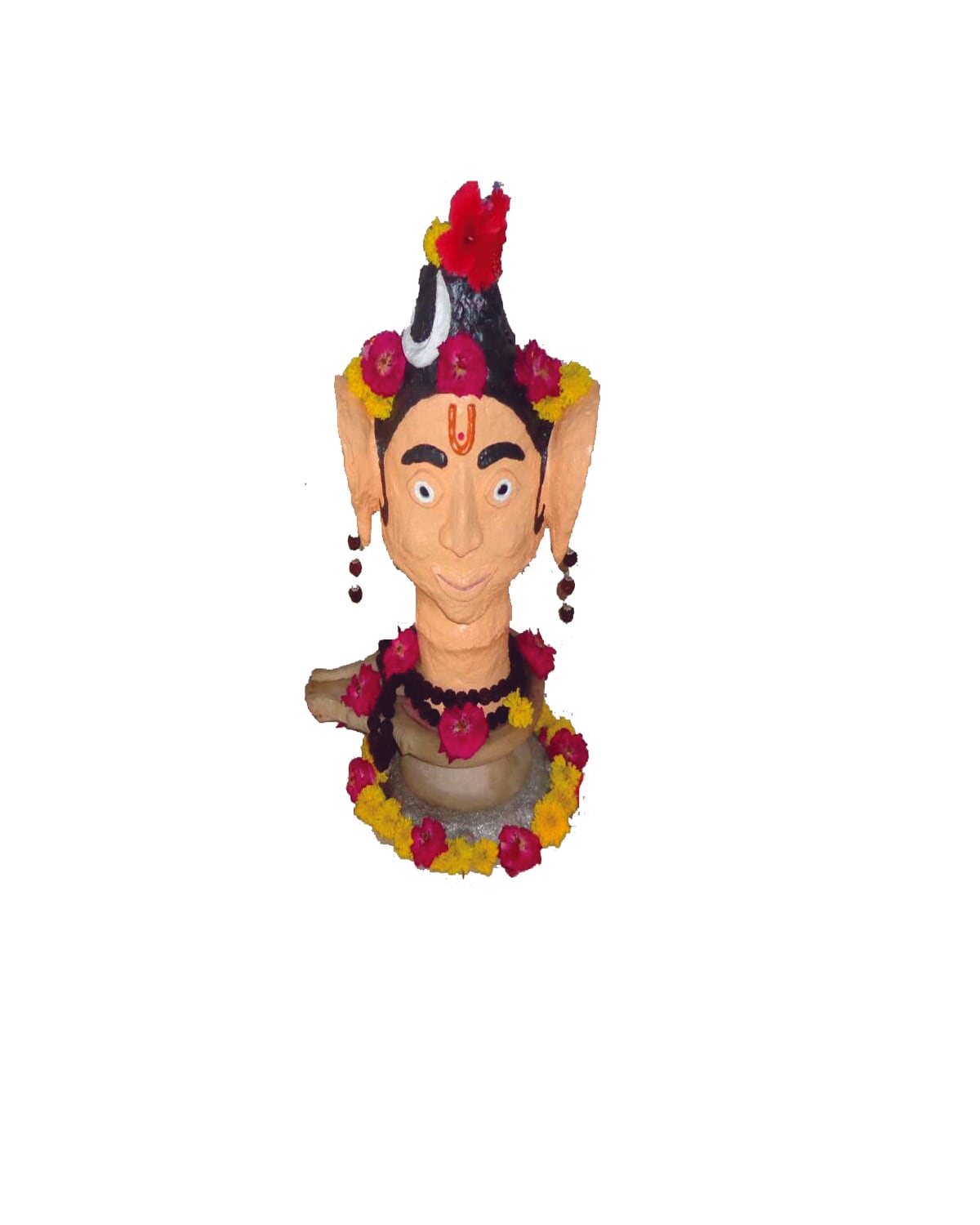
Nisargadatta Maharaj
Совпадают в вопросах: Кто я? Существует ли истинное «я»? · Почему мы страдаем? · Что происходит после смерти?
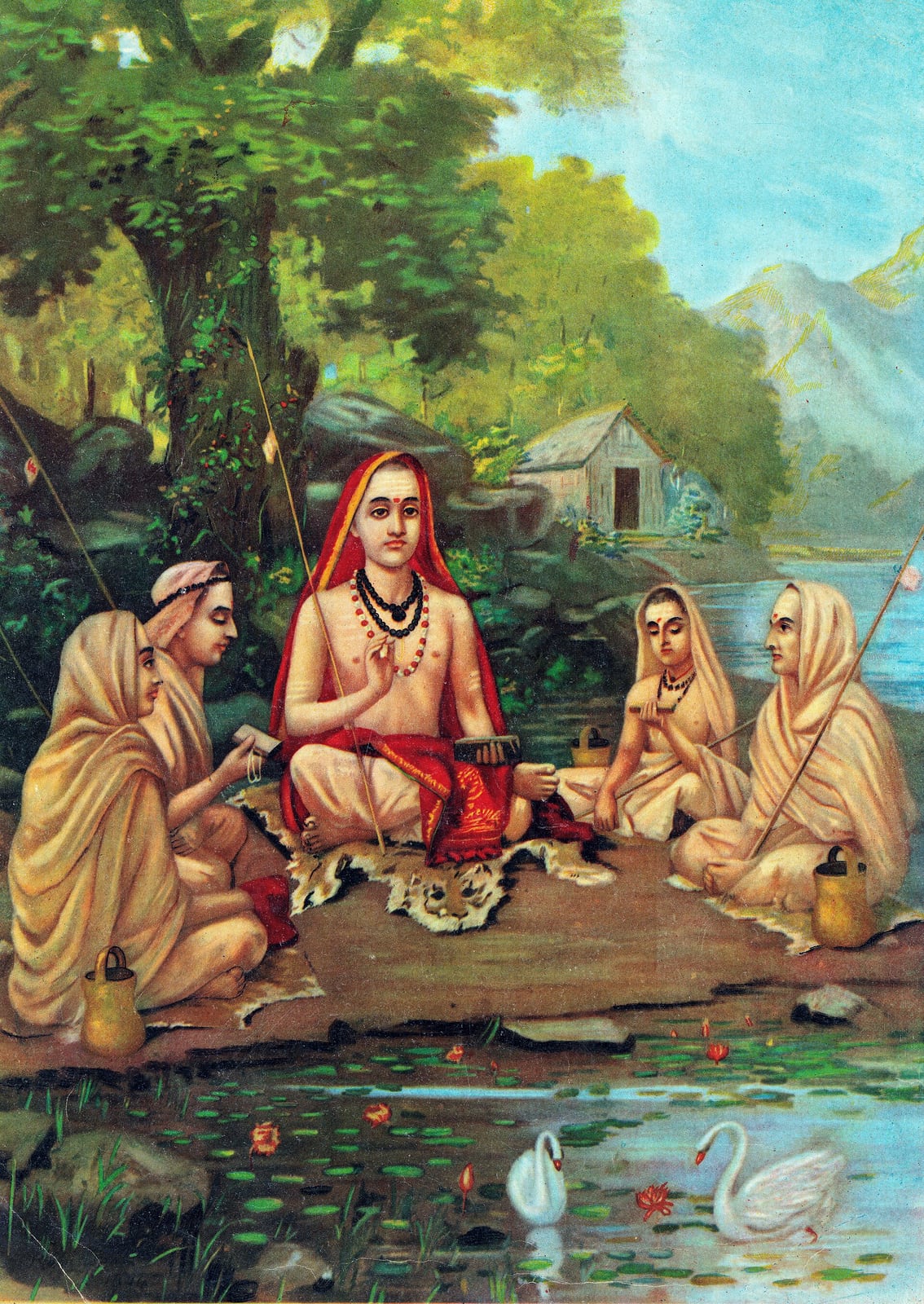
Adi Shankara
Совпадают в вопросах: Что такое Абсолют? Существует ли Бог? · Кто я? Существует ли истинное «я»? · Почему мы страдаем?
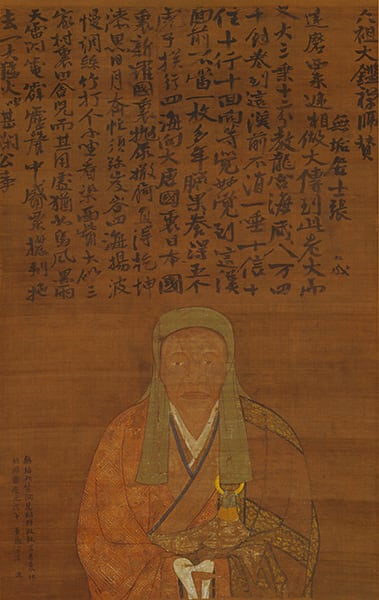
Huineng
Совпадают в вопросах: Что такое Абсолют? Существует ли Бог? · Кто я? Существует ли истинное «я»? · Почему мы страдаем?
Parmenides
Совпадают в вопросах: Что такое Абсолют? Существует ли Бог? · Как достигается освобождение или спасение? · Реален ли мир?
Дальше всего от
Julian of Norwich
Расходятся в вопросах: Кто я? Существует ли истинное «я»? · Реален ли мир?
Catherine of Siena
Расходятся в вопросах: Кто я? Существует ли истинное «я»? · Реален ли мир?
Jesus of Nazareth
Расходятся в вопросах: Кто я? Существует ли истинное «я»? · Реален ли мир?
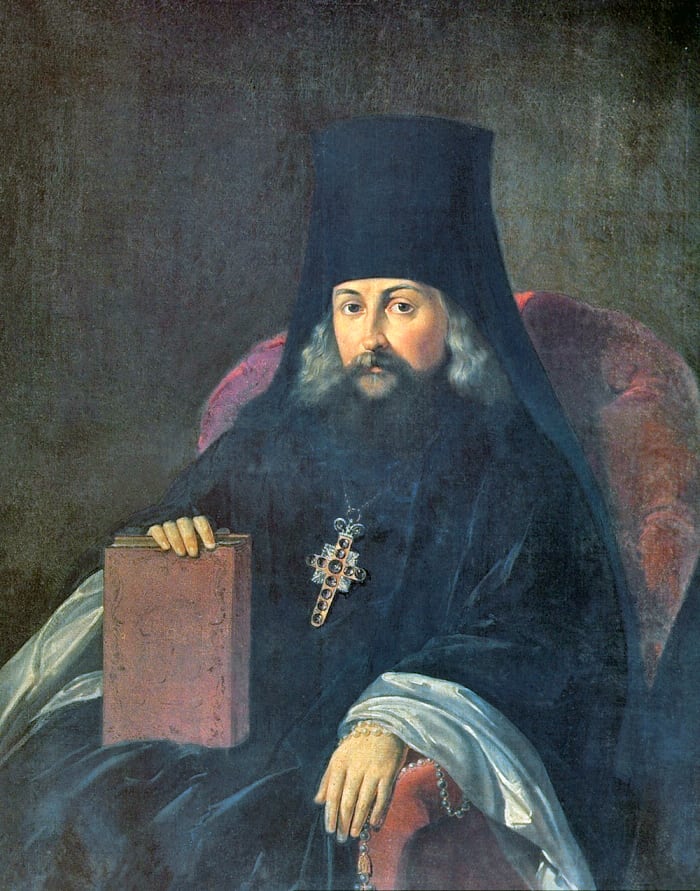
Ignatius Brianchaninov
Расходятся в вопросах: Кто я? Существует ли истинное «я»? · Реален ли мир?
Расходятся в вопросахКажущееся противоречие
Ramana Maharshi · G. I. Gurdjieff
Conscious effort versus being what one already is: a smaller conflict than it seems
Почему: The contradiction is largely apparent because they speak from different levels. Gurdjieff describes the human being from the side of sleep and the machine, and his effort is the condition for something to awaken; Ramana speaks from the Self, for which effort produces nothing new, and he admits it only as a means of stopping the ego from interfering. Both deny the ordinary doer. A real difference remains, however, and should not be glossed over: for Gurdjieff the permanent self does not exist and must be created; for Ramana it already exists and one need only stop veiling it. In one effort builds; in the other, it clears away.
Совпадают в вопросах
Ramana Maharshi · Eckhart Tolle
You are not what you think: the shift of the subject on the hill and in the now
Почему: The affinity has a contextual explanation: Tolle writes in a contemporary Western milieu that had received Advaita, among other sources, through Ramana and his popularisers, and he adopts a vocabulary without scriptures or gods. The differences are of register and audience. Ramana speaks from the Vedantic tradition, with an explicit metaphysical horizon, since the Self is identical with the Absolute, and with a very precise question-method; Tolle addresses readers without religious training, stresses the now and the inner body, and extends the diagnosis to a collective scale. One asks who; the other asks one to be present. Both point to the same shift of the subject.
Расходятся в вопросахКажущееся противоречие
Ramana Maharshi · Rumi
The path of knowledge and the path of love: two ways ending in the same burning of the ego
Почему: The contradiction is apparent at the level of the path: both seek the dissolution of the ego and attribute it to something that exceeds the subject, the Beloved who draws in Rumi, the Self or grace in Ramana. The difference of language comes from their traditions: Persian Sufism expresses the way in terms of lover and Beloved; Advaita, in terms of knowledge of the Self. A metaphysical difference remains, however, that is not apparent: Rumi stays within the Islamic doctrine of creation, and the soul returns to a God who is not itself, while Ramana affirms that the Self is the Absolute. They agree on the how more than on the what.
Расходятся в вопросахКажущееся противоречие
Ramana Maharshi · P. D. Ouspensky
Many I's or a single Self: the same word for two levels
Почему: The contradiction is apparent at the level of diagnosis because they use the word I for different levels: Ouspensky calls I's the psychological states of ordinary man; Ramana reserves the term Self for the awareness that witnesses them all, which is neither a state nor a content. Ramana's ego and Ouspensky's many I's are the same reality seen from two systems. There is a real difference in the goal: the Fourth Way aims to build a permanent I through work, whereas for Ramana the Self is not built but recognised. One starts from a psychology of the machine; the other, from a Vedantic metaphysics.
Совпадают в вопросах
Ramana Maharshi · Adi Shankara
The Advaita of the commentaries and the Advaita of silence
Почему: The relationship is documented in one sense: Ramana rendered into Tamil texts attributed to Shankara, such as the Vivekachudamani and the Atmabodha, although scholars dispute Shankara's authorship of them. The difference is one of method and authority. Shankara is a commentator who holds that Brahman is known only through scripture, with reason in its service, and who assigns monastic renunciation to the sage. Ramana never received scholastic training, spoke from an experience lived at sixteen, proposed a single question as method and considered that true renunciation is of the ego, not of home or work. One argues for the identity; the other invites one to verify it.
Совпадают в вопросах
Ramana Maharshi · Jiddu Krishnamurti
No outer authority: the question who am I and the observer who is the observed
Почему: The affinity is comparative: there is no record that they met. It is explained by a shared distrust of institutional religion and of learning, which in Ramana stems from an early experience lived without teacher or study, and in Krishnamurti from his break with the Theosophical organisation that had formed him. The underlying difference is metaphysical. Ramana speaks from Advaita and affirms a Self that is the Absolute, and accepts devotion and surrender as a path; Krishnamurti rejects any doctrine of the Self, which he sees as another projection of thought seeking security, and every tradition. One enquires in order to find what has always been; the other observes so that what thought manufactures comes to an end.
Предания и рассказы
Предания и рассказы
Свидетельствоjulio de 1896
The boy who rehearsed his own death
Происхождение рассказа: It comes from Ramana's own account, recorded by B. V. Narasimha Swami for Self-Realization (1931) from conversations with him, and repeated with minimal variations in later dialogues (Talks, 1935–1939; collected by Godman in Be As You Are). There are no witnesses: it is an autobiographical testimony given more than thirty years later.
Источник: Narasimha Swami, B. V. Self-Realization: The Life and Teachings of Sri Ramana Maharshi. Tiruvannamalai: Sri Ramanasramam, 1931.
Свидетельство1896–1897
In the vault of the Patala Lingam
Происхождение рассказа: Narrated by Narasimha Swami (1931) with testimony from those involved, including Venkatachala Mudali, and followed by Osborne (1954). The details (the sores, Seshadri's intervention) come from witnesses; the reading that he did not feel the pain because he was absorbed in the Self is the biographers' and Ramana's own interpretation.
Свидетельство1896–1950
A silence that could be felt
Происхождение рассказа: The fame of his stillness has a traceable early origin: Humphreys' letters (The International Psychic Gazette, London, 1913), reproduced by Narasimha Swami and Osborne; Brunton's A Search in Secret India (1934), which spread it in the West; and Ramana's own words on silence in the Talks (talks 20 and 398). The explanation that it was not a vow is his own, quoted by Osborne. What witnesses felt is, by nature, subjective testimony.
Источник: Humphreys, Frank H. Cartas sobre su visita a Ramana Maharshi (1911), publicadas en The International Psychic Gazette, Londres, 1913; reproducidas en Osborne 1954 y por Sri Ramanasramam (Glimpses of the Life and Teachings of Bhagavan Sri Ramana Maharshi).
Документировано1924
The thieves of the night of 26 June
Происхождение рассказа: A documented event: there was a police report, the thieves were arrested and sentenced, and several eyewitnesses (Kunjuswami, Ramakrishnaswami) left their accounts. Osborne narrates it in detail following Narasimha; Ramana's words come from those witnesses.
Свидетельство1926–1948
The cow Lakshmi
Происхождение рассказа: Told by Osborne (1954), who was living at the ashram at the time, and by Devaraja Mudaliar, who asked Ramana whether the epitaph was a conventional formula or literally meant liberation. The grave with the epitaph exists at Sri Ramanasramam; the spiritual interpretation of the episode belongs to the devotees and to Ramana himself.
Свидетельство14 de abril de 1950
The star of 14 April 1950
Происхождение рассказа: It comes from the account of Osborne (1954), an eyewitness, who in turn relays what the photographer told him. Osborne does not name him; he is usually identified as Henri Cartier-Bresson, who photographed Ramana in his last days, an identification we have not been able to confirm in a primary source. That a fireball was seen that night is plausible; that its passage coincided exactly with the death, and its reading as a sign, belong to devotional testimony.
Не поддаётся проверкеsin fecha
The shadow that could not be seen
Происхождение рассказа: It cannot be traced. It does not appear in the full texts of Osborne (1954) or the Talks (1955), which we have reviewed in full, nor have we found it in Narasimha (1931), Mudaliar, Nagamma, Godman or any accessible primary source; nor in searches in English and Spanish. The surviving photographs and films (1935–1950) do not support it; that many were taken in diffuse light (overcast sky, umbrella, inside the hall) might explain why no marked shadow is visible in them, but this is our hypothesis. The motif of shadowless gods comes from the Nalopakhyana (Mahabharata III).
Учение
Учение
Понятия, на которых строится мысль учителя, объяснённые в их контексте.
Self-enquiryatma-vichara
It has roots in the Upanishads and Shankara, but in scholastic Advaita enquiry (vichara) is usually intellectual discrimination guided by scripture. Ramana turns it into a direct attentional practice, with no requirement of study or initiation.
Источник: Osborne, Arthur, ed. The Collected Works of Ramana Maharshi. Londres: Rider, 1959; Tiruvannamalai: Sri Ramanasramam (ediciones posteriores).
The 'I'-thoughtaham-vritti
The expression 'knot between the conscious and the inert' (chit-jada-granthi) comes from the Tamil tradition and texts such as the Yoga Vasishtha, which Ramana knew. His analysis through the three states (waking, dream, deep sleep) follows the Mandukya Upanishad.
Источник: Osborne, Arthur, ed. The Collected Works of Ramana Maharshi. Londres: Rider, 1959; Tiruvannamalai: Sri Ramanasramam (ediciones posteriores).
The Hearthridayam
Placing the spiritual heart on the right does not come from the classical Upanishads, which put it in the chest without laterality; Ramana based it on his experience and said he found confirmation in a Malayalam Ayurvedic treatise (the index of the Talks refers to the Ashtanga Hridayam) and in the Sita Upanishad (Talks, talk 4).
Silence (mauna)mauna
The ideal of the silent master has a long history in South Indian Shaivism (the hymn to Dakshinamurti attributed to Shankara, which Ramana translated into Tamil). Jung and Zimmer noted that the figure of the silent saint fitted deep-rooted Indian notions of holiness.
Surrender (saranagati)saranagati
The notion comes from the devotional (bhakti) tradition and, in South India, from Vaishnavism and Tamil Shaivism, whose saints (the Nayanmars of the Periya Puranam) marked Ramana in his adolescence.
Источник: Godman, David, ed. Be As You Are: The Teachings of Sri Ramana Maharshi. Londres: Arkana, 1985.
Natural samadhi (sahaja samadhi)sahaja-samadhi
The terminology of degrees of samadhi comes from yoga and late Vedanta; the insistence that the ultimate state is natural (sahaja) and compatible with activity connects with the jivanmukta ideal and the Tamil siddha traditions.
Источник: Godman, David, ed. Be As You Are: The Teachings of Sri Ramana Maharshi. Londres: Arkana, 1985.
Ретриты
Ретриты и центры
Места и встречи, связанные с этим учением. Мы свяжем вас с их организаторами.
Tiruvannamalai, Tamil Nadu · India
Sri Ramanasramam, Tiruvannamalai
Sri Ramanasramam
Sri Ramanasramam is the ashram that grew around Ramana Maharshi at the foot of Arunachala, the sacred hill of Tiruvannamalai, where he lived until his death in 1950. Today it preserves his samadhi shrine, the old hall where he received visitors and his mother's shrine, and keeps the daily chanting and routine. It does not run courses or guided retreats: the ashram makes itself available as a simple home for anyone who wishes to sit in silence and practise the enquiry Who am I. It provides rooms and South Indian meals to visitors from all over the world.
Tiruvannamalai, Tamil Nadu · India
Giri pradakshina: walking around Arunachala
Sri Ramanasramam (información) · Arulmigu Arunachaleswarar Temple
Giri pradakshina is the walking circuit of about fourteen kilometres around Arunachala, the hill Ramana Maharshi regarded as the visible form of the Self. It is walked clockwise, keeping the mountain on one's right, past the temples, tanks and lingams that mark the route. Ramana recommended it to everyone: go round the hill once and you will see that it attracts you, he told one devotee, and to the elderly or unwell he simply said they could go slowly. Sri Ramanasramam explains the meaning of the practice on its website, along with the places on the path connected to the teacher.
Jamaica (Queens), Nueva York · Bridgetown, Nueva Escocia · Estados Unidos / Canadá
Arunachala Ashrama (New York and Nova Scotia)
Arunachala Ashrama – Bhagavan Sri Ramana Maharshi Center
Arunachala Ashrama is the oldest centre devoted to Ramana Maharshi in North America, with a house in the New York borough of Queens and another in rural Nova Scotia, Canada. It holds satsangs, chanting and readings from the teacher's works, and marks occasions such as his Jayanthi or birth anniversary, some of them livestreamed. It also distributes books and materials connected with Sri Ramanasramam. It does not present itself as a centre for guided retreats, but as a simple space of devotion and study for anyone who wants to approach the teaching of self-enquiry without travelling to India.
Видео
Видео
Записи, интервью и документальные фильмы. Видео воспроизводятся с YouTube; здесь они не хранятся.
The Archival Films - Sri Ramanasramam
Оригинальная запись· 1950· 60 min
Sri RamanasramamОфициальный канал
The Archival Films of Sri Ramana Maharshi (1935–1950) | Complete Restored Footage
Оригинальная запись· 1950· 60 min
Arunachala AshramaОфициальный канал
Sri Ramana Maharshi – Full Documentary: The Sage of Arunachala (English)
Документальный фильм· EN· 73 min
Arunachala AshramaОфициальный канал
Sri Ramana Maharshi full Documentary in Spanish
Документальный фильм· ES· 73 min
Arunachala AshramaОфициальный канал
'Ulladu Narpadu' Forty Verses On Reality - Sri Ramana Maharshi (recitation by Sri J. Jayaraman)
Запись третьих лиц· TA
Arunachala AshramaОфициальный канал
Annamalai Swami in Tamil from a 1989
Интервью· TA· 1989
Arunachala AshramaОфициальный канал
Ramaswami Pillai 1989 interview
Интервью· 1989
Arunachala AshramaОфициальный канал
From Sri Ramanasramam to Skandasramam, Walking in Meditation - Home of Bhagavan Ramana Maharshi
Запись третьих лиц· 34 min
Sri RamanasramamОфициальный канал
Turiya, "The Life and Teachings of Ramana Maharshi" - Full HD Film
Документальный фильм· EN· 55 min
AwakenTheWorldFilm
Turiya (Spanish), «La vida y las enseñanzas de Ramana Maharshi» - Película en Full HD
Документальный фильм· ES· 55 min
AwakenTheWorldFilm
Галерея
Галерея
Изображения с проверенной лицензией. Каждое сохраняет своё авторство и атрибуцию.
Связи
Связи
Влияния, ученичество и близость взглядов. Документированная связь отличается от сходства, выявленного путём анализа.
Испытал влияние
Ramana was not trained in scholastic Advaita, but recognised his experience in the texts attributed to Shankara and translated into Tamil the Vivekachudamani, the Atma Bodha, the Drig-Drishya-Viveka and the hymn to Dakshinamurti.
Документированная связь
Встречался с
Yogananda visited Sri Ramanasramam in November 1935 and described it in Autobiography of a Yogi (ch. 41); a short film of the visit survives.
Документированная связь
Учитель
Kavyakantha Ganapati Muni
In 1907 Ganapati Muni received instruction from Ramana on enquiry and proclaimed him Bhagavan Sri Ramana Maharshi; he later composed the Sri Ramana Gita.
Документированная связь
Встречался с
Paul Brunton
Brunton visited him in 1931 and devoted the central chapters of A Search in Secret India (1934) to him, the book that made him known in the West.
Документированная связь
Современник
C. G. Jung
In 1944 Jung wrote the foreword to Heinrich Zimmer's anthology Der Weg zum Selbst, devoted to Ramana; he did not visit him during his 1937–1938 trip to India.
Документированная связь
Современник
Contemporaries in South India, some hundred kilometres apart (Pondicherry and Tiruvannamalai); there is no record that they met, though disciples of both moved between the two ashrams.
Сходство, выявленное путём анализа
Идеи, близкие к
Both centre their teaching on the sense 'I am' as the gateway to what precedes it; there is no record that they met.
Сходство, выявленное путём анализа
Идеи, близкие к
The emphasis on presence and disidentification from thought takes up, in contemporary language, themes of Ramana's teaching.
Сходство, выявленное путём анализа
Современник
Contemporaries, both from South India; both rejected methods and outer authority, but there is no record that they met.
Сходство, выявленное путём анализа
Упоминается в других статьях
- David R. Hawkins · Идеи, близкие к
- Eckhart Tolle · Идеи, близкие к
- Byron Katie · Идеи, близкие к
- Adi Shankara · Повлиял на
- Sri Aurobindo · Современник
- Carl Gustav Jung · Современник
- Osho · Идеи, близкие к
- Meher Baba · Современник
- Jiddu Krishnamurti · Идеи, близкие к
- Nisargadatta Maharaj · Идеи, близкие к
- Anandamayi Ma · Современник
- Ramakrishna · Идеи, близкие к
- Paramahansa Yogananda · Встречался с
Источники
Источники
Библиография и каталоги, использованные для этой статьи.
- Osborne, Arthur. Ramana Maharshi and the Path of Self-Knowledge. Londres: Rider, 1954 (reed. Sri Ramanasramam). Texto consultado en Internet Archive.
- Narasimha Swami, B. V. Self-Realization: The Life and Teachings of Sri Ramana Maharshi. Tiruvannamalai: Sri Ramanasramam, 1931.
- Venkataramiah, Munagala (Swami Ramanananda Saraswathi), ed. Talks with Sri Ramana Maharshi. Tiruvannamalai: Sri Ramanasramam, 1955 (conversaciones de 1935–1939; ed. 2006 consultada en Internet Archive).
- Godman, David, ed. Be As You Are: The Teachings of Sri Ramana Maharshi. Londres: Arkana, 1985.
- Brunton, Paul. A Search in Secret India. Londres: Rider, 1934 (caps. 9 y 16–17 sobre Ramana Maharshi).
- Osborne, Arthur, ed. The Collected Works of Ramana Maharshi. Londres: Rider, 1959; Tiruvannamalai: Sri Ramanasramam (ediciones posteriores).
- Wikidata: Ramana Maharshi (Q288441).
- Sri Ramanasramam, Tiruvannamalai. Web oficial del ashram (biografía, obras, publicaciones).
- Humphreys, Frank H. Cartas sobre su visita a Ramana Maharshi (1911), publicadas en The International Psychic Gazette, Londres, 1913; reproducidas en Osborne 1954 y por Sri Ramanasramam (Glimpses of the Life and Teachings of Bhagavan Sri Ramana Maharshi).
- Arunachala Ashrama. The Archival Films 1935 to 1950: Research Booklet. Nueva York: Arunachala Ashrama, 1996–2012 (artículos publicados en The Maharshi, 1991–1993).
- Yogananda, Paramahansa. Autobiography of a Yogi. Nueva York: Philosophical Library, 1946, cap. 41.
- Zimmer, Heinrich. Der Weg zum Selbst: Lehre und Leben des indischen Heiligen Shri Ramana Maharshi aus Tiruvannamalai. Ed. C. G. Jung. Zúrich: Rascher, 1944.
- Mudaliar, A. Devaraja. Day by Day with Bhagavan (diario del 16-3-1945 al 4-1-1947). Tiruvannamalai: Sri Ramanasramam, 1968 (ed. 2002, ISBN 81-88018-82-1).
- Nagamma, Suri. Letters from Sri Ramanasramam. Trad. D. S. Sastri. Tiruvannamalai: Sri Ramanasramam, 1970.
- Open Library (Internet Archive): registros de obra y edición de Ramana Maharshi y de sus compiladores, consultados el 2026-10-23.
- Mahabharata, Vana Parva (Aranyaka Parvan), episodio de Nala y Damayanti (Nalopakhyana). Edición crítica, Poona: Bhandarkar Oriental Research Institute, 1933–1966; libro III, adhyaya 54.
- Shantideva. Bodhicharyavatara (s. VIII), cap. V, estrofas 12–13 (imagen de cubrir la tierra de cuero frente a calzarse).
- Maugham, W. Somerset. «The Saint», en Points of View. Londres: Heinemann, 1958 (ensayo sobre su visita a Ramana Maharshi en 1938).
- Sri Ramanasramam. «The Mountain Path» (revista trimestral fundada en 1964 por Arthur Osborne y publicada por el ashram). Web oficial de Sri Ramanasramam.
- Arunachala Ashrama (Nueva York). «Sri Ramanasramam's Centenary Celebration»: cronología del ashram y de su presidencia (T. N. Venkataraman, V. S. Ramanan, Venkat S. Ramanan).
- Lucas, Phillip Charles. «Non-Traditional Modern Advaita Gurus in the West and Their Traditional Modern Advaita Critics». Nova Religio 17, n.º 3 (2014): 6–37. doi:10.1525/nr.2014.17.3.6.
- Osborne, Arthur, ed. The Collected Works of Ramana Maharshi. Tiruvannamalai: Sri Ramanasramam, 1974 (índice: obras originales, versos sueltos, traducciones de los Agamas y de Shankara, Vichara Mani Mala). Escaneo en Internet Archive (colección eGangotri).
- Ramana Maharshi. Sri Ramana Nool Thirattu (obras reunidas en tamil), 3.ª ed. Tiruvannamalai: Sri Ramanasramam (publ. por Niranjanananda Swami), c. 1940. Digital Library of India 2015.384252, en Internet Archive.
- Правообладатель
- Sri Ramanasramam (Tiruvannamalai) es titular de los derechos de las traducciones, compilaciones y ediciones que publica (Talks, Collected Works, Sri Ramana Gita, The Mountain Path) y del archivo fotográfico y fílmico. Los textos originales en tamil de Ramana (m. 1950) están en dominio público en la India; las traducciones y antologías modernas (Godman, Osborne y otras) tienen derechos de sus autores y editores.
- Официальный сайт
- www.sriramanamaharshi.org/
Ожидает подтверждения
То, что в этой статье пока не удалось установить. Мы предпочитаем сказать об этом, а не заполнять пробел.
- Ediciones en español con ISBN de Upadesa Saram, de los Talks (traducción completa) y de las Obras completas: no aparecen en Open Library y Google Books devuelve cuota 0 sin clave.
- Ediciones en italiano, ruso, hindi y árabe de las obras principales: no localizadas en catálogo.
- Confirmar que «Enseñanzas de Bhagavan Sri Ramana Maharshi» (Kier, ISBN 9501700828) es la traducción de la antología de Osborne; el registro no da traductor ni año.
- Manuscritos: localizar los autógrafos conservados en el archivo de Sri Ramanasramam (respuestas originales de Nan Yar y Vichara Sangraham, cuadernos de himnos) y, si existe, su digitalización; no se ha encontrado catálogo público.
- Transcribir de una edición fiable los originales tamiles de la nota de 1896 y de la respuesta a su madre de 1898, para dar text_original en tamil.
- Confirmar en fuente primaria la identidad del fotógrafo francés de la noche del 14 de abril de 1950 (se suele decir Henri Cartier-Bresson; Osborne no lo nombra).
- Fijar mes de la proclamación de Ganapati Muni (1907) y fecha exacta de la primera visita de Brunton (1931).
- Imágenes descartadas por metadatos poco fiables en Commons (autor y fecha erróneos): Ramana-Maharshi-walk.jpg, Ramana-Maharshi-stand.jpg, Ramana-Maharshi-1949.jpg, Paramahansa-Yogananda-with-Ramana-Maharshi.jpg. Revisar con la fuente original antes de usarlas.
- Sin programas de afiliación verificados (ni Sri Ramanasramam ni sus editoriales).
- Obras (2026-10-25): se añadieron 10 obras (dos composiciones de su mano —Atma Vidya Kirtanam y Appalappattu— y ocho recopilaciones reconocidas). Los cinco himnos a Arunachala, el Gita Saram y las traducciones de Shankara ya figuraban agrupados. Quedan fuera las antologías modernas derivadas (Words of Grace, A Practical Guide to Know Yourself, Sayings of Sri Ramana Maharshi), los libros de recuerdos de devotos (Guru Ramana de S. S. Cohen, The Power of the Presence de David Godman) y las ediciones autopublicadas.
- Fijar fecha de primera edición de Crumbs from His Table y de Upadesa Manjari en tamil (la de Appalappattu se resolvió el 2026-10-25: «1914 o 1915», Collected Works 1974).
- Localizar ISBN de The Garland of Guru's Sayings (Sri Ramanasramam, 1990) y de la traducción de Sadhu Om y Michael James de Guru Vachaka Kovai; y de Conscious Immortality (ed. revisada).
- Sala de lectura (2026-10-25): solo se registra el Nool Thirattu tamil (c. 1940). Las traducciones inglesas antiguas localizadas no son aún de dominio público en los países de 70 años p. m.: Upadesa Saram trad. B. V. Narasimha Swami, 1938 (m. 1956; libre en 2027), o tienen autoría del comentario sin identificar (Sri Ramana Gita con comentario sánscrito, 1946, archive.org/details/sriramanagitawithsanskritcommentaryganapatimuni1946_202004_376_r). Revisar en 2027 y confirmar el estatus en España (80 años p. m.: 2031).
Исследовано 2026-10-25