Буддизм · Махаяна · Дзэн / Чань
Huineng
惠能 / 慧能 · 六祖大鑒禪師 · 慧能 (Enō)
638 – 713Историчность оспаривается
Китайский монах эпохи Тан, почитаемый как шестой патриарх чань и основатель школы «внезапного пробуждения». Традиция изображает его неграмотным дровосеком, который одолел стихотворением главного ученика своего учителя и получил облачение Бодхидхармы; современная критика показала, что эту биографию создал его последователь Шэньхуэй. Приписываемая ему «Сутра помоста» — основополагающее произведение чань и дзэн и единственный текст китайского наставника, удостоенный звания сутры, которое прежде принадлежало лишь слову Будды.
- трудов
- 11трудов
- изданий
- 25изданий
- цитат
- 8цитат
- видео
- 12видео
- изображений
- 5изображений
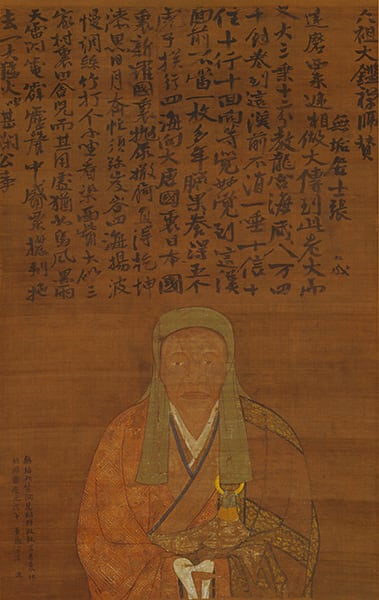
Daikan Zenji (Huineng), templo Shōfukuji · Public domain
Своими словами
«Among people there are northerners and southerners; in buddha-nature there is neither north nor south. A barbarian's body is not like Your Reverence's, but what difference is there in buddha-nature?»Sūtra de la plataforma, versión de Dunhuang, respuesta a Hongren (§3 de Yampolsky). Traducción propia del chino clásico.

Главная мысль
Buddha-nature is equally present in everyone, regardless of origin, culture or learning: awakening is not a conquest but the recognition of what one already is.
В контексте
Биография
4 мин чтения
Перевод с испанского оригинала, выполненный с помощью ИИ; ожидает проверки носителем языка.
Патриарх, которого понадобилось выдумать
Немногие фигуры буддизма столь же знамениты и столь же недостоверны, как Хуэйнэн, «шестой патриарх» чань. Традиция знает о нём почти всё: что он был неграмотным дровосеком с юга Китая, что пробудился, услышав строку из «Алмазной сутры», что одолел стихотворением главного ученика своего учителя и ночью получил облачение Бодхидхармы. История же знает очень мало: что жил монах по имени Хуэйнэн, ученик пятого патриарха Хунжэня, что он учил в Цаоси, на севере Гуандуна, и что умер в 713 году, пользуясь скорее местной известностью. Всё остальное было написано позже, и во многом по необходимости — по необходимости школы, искавшей основателя под стать своему учению.
Жизнь, о которой рассказывает сутра
Каноническое повествование — это автобиография, открывающая «Сутру помоста». Хуэйнэн, по фамилии Лу, родился в 638 году в Синьчжоу, в нынешнем Гуандуне; его отец, чиновник из Фаньяна, разжалованный и сосланный на юг, рано умер, и мальчик кормил мать, продавая дрова на рынке в Наньхае. Однажды, доставив вязанку на постоялый двор, он услышал, как один из постояльцев читает «Алмазную сутру», и его ум «раскрылся». Так он узнал, что в Хуанмэе учит Хунжэнь, отправился к нему и, когда наставник с пренебрежением назвал его «южным варваром», ответил, что люди бывают северные и южные, но природа будды — нет. Хунжэнь отправил его рушить рис на мельницу, подальше от зала медитации, и там он провёл восемь месяцев.
Стихи на стене
Центральный эпизод — состязание. Хунжэнь просит учеников написать стихотворение, которое показало бы их понимание, и обещает облачение тому, кто им обладает. Шэньсю, самый почитаемый монах, ночью пишет на стене галереи: тело — древо пробуждения, ум — зеркало на подставке; его нужно непрестанно протирать, чтобы на него не садилась пыль. Хуэйнэн, не умеющий читать, просит прочесть ему эти строки и диктует свой ответ. В дуньхуанской рукописи это две строфы, и в первой говорится, что у пробуждения нет древа, у зеркала нет подставки и что, поскольку природа будды всегда чиста, пыли негде осесть. Лишь издания X–XIII веков вкладывают в его уста строку, которую знают все: «изначально нет ни единой вещи». Разница немалая: самая цитируемая формула дзэн — не самая древняя.
Облачение и бегство
Согласно рассказу, Хунжэнь стирает стихотворение, чтобы защитить автора, ночью приходит на мельницу, растолковывает ему «Алмазную сутру» и вручает облачение и чашу — знаки передачи. Он провожает его до реки и советует бежать. На перевале Даюй его настигает бывший военачальник Хуэймин, желающий отнять облачение, но не способный даже поднять его с земли; поздняя версия добавляет, что Хуэйнэн спросил его, каково его изначальное лицо до того, как он подумал о добре и зле. Позднейшие издания заставляют его пятнадцать лет скрываться среди охотников, питаясь овощами, сваренными в их котлах для мяса, прежде чем он явился в храм Фасин в Гуанчжоу, где два монаха спорили, движется ли флаг или ветер: «Ни ветер, ни флаг; движется ваш ум». Настоятель храма Иньцзун будто бы тогда и посвятил его в монахи.
Проповедь в храме Дафань
Текст, принёсший ему славу, выдаёт себя за запись проповеди в храме Дафань в Шаочжоу перед префектом Вэй Цюем, монахами, учёными и более чем тысячей слушателей, сделанную его учеником Фахаем. Он учит, что пробуждение внезапно, потому что собственная природа уже чиста, что сосредоточение и мудрость — одно, как светильник и его свет, и что метод сводится к отсутствию мысли, отсутствию формы и отсутствию пребывания: не подавлять мысли, а не попадать к ним в плен. Кроме того, он даёт «бесформенные заповеди» и критикует сидячую медитацию, сводящуюся к неподвижности. Хуэйнэн умер в 713 году в храме Гоэнь в родном городе, в возрасте семидесяти шести лет, согласно сутре, и тело его перенесли в Цаоси; то, что в храме Наньхуа почитают как его мумию, видел уже иезуит Маттео Риччи в 1589 году.
Шэньхуэй и мастерская шестого патриарха
Современная критика началась около 1930 года, когда философ Ху Ши нашёл среди дуньхуанских рукописей сочинения Шэньхуэя (684–758) — монаха, называвшего себя учеником Хуэйнэна. В 732 году на публичном собрании в Хуатае Шэньхуэй обвинил школу Шэньсю — самую влиятельную в столице — в узурпации преемства: истинным наследником Хунжэня был его учитель, безвестный южанин, а истинным учением — внезапное, а не постепенное. Ху Ши заключил, что и сама «Сутра помоста» была творением Шэньхуэя или его окружения; дуньхуанская рукопись содержит даже пророчество о том, что через двадцать лет после смерти учителя кто-то рискнёт жизнью, защищая его учение, — а именно это Шэньхуэй и сделал. Филип Ямпольский, издавший и переведший в 1967 году дуньхуанский текст, смягчил этот тезис: сутра была составлена около 780 года из материалов разного происхождения; Янагида Сэйдзан предположил, что её составитель принадлежал к школе Нютоу («Бычья голова»), и эту мысль разделил Джон Макрей. В своих исследованиях Северной школы и в книге «Seeing through Zen» Макрей показал, что противопоставление внезапного и постепенного было прежде всего полемическим оружием, и сформулировал правило, по которому Хуэйнэна читают сегодня: это неправда — и потому это важнее.
Три редакции одной книги
«Сутра помоста» — единственный китайский текст, принадлежащий наставнику, который получил титул цзин, «сутра», предназначенный для слова Будды, и она не переставала разрастаться. Древнейшая сохранившаяся рукопись, найденная в Дуньхуане и ныне хранящаяся в Британской библиотеке, относится к середине IX века и насчитывает около двенадцати тысяч иероглифов; в Китае хранятся и другие дуньхуанские списки. В 967 году монах Хуэйсинь перестроил её в два свитка и одиннадцать разделов — эта редакция сохранилась в Японии; в 1056 году Цисун подготовил ещё одну, ныне утраченную; а в 1291 году Цзунбао издал ту, которой предстояло стать канонической, — более двадцати тысяч иероглифов в десяти главах, с эпизодами об охотниках, флаге и изначальном лице. Мортен Шлюттер показал, что эти расширения отвечали спорам чаньских школ эпохи Сун. В XIII веке Догэн отверг её как апокриф; линия Линьцзи, от которой происходит дзэн Хакуина, и линия Цаодун, от которой происходят дзэн Догэна и дзэн Сюнрю Судзуки, по-прежнему признают в Хуэйнэне свой общий корень.
Источники: Yampolsky, Philip B. (ed. y trad.). The Platform Sutra of the Sixth Patriarch: The Text of the Tun-huang Manuscript. Nueva York: Columbia University Press, 1967; reed. 2012 (ISBN 9780231159562). · McRae, John R. Seeing through Zen: Encounter, Transformation, and Genealogy in Chinese Chan Buddhism. Berkeley: University of California Press, 2003. ISBN 0520237986. · McRae, John R. (trad.). The Platform Sutra of the Sixth Patriarch, translated from the Chinese of Tsung-pao. Berkeley: Numata Center for Buddhist Translation and Research, 2000. ISBN 1886439133. · McRae, John R. The Northern School and the Formation of Early Ch'an Buddhism. Honolulu: University of Hawai'i Press (Kuroda Institute), 1986. · Schlütter, Morten y Stephen F. Teiser (eds.). Readings of the Platform Sūtra. Nueva York: Columbia University Press, 2012. ISBN 9780231158206.
Хронология
Жизнь год за годом
Каждая точка — документированное событие. Нажмите, чтобы прочитать о нём, с источником и степенью достоверности.
6380 летXinzhou (Xinxing, Guangdong)
Birth in Xinzhou
Born in Xinzhou (Guangdong) into the Lu family; his father, an official from Fanyang, had been demoted and banished to the south.
ПреданиеWikisource en chino: 南宗頓教最上大乘摩訶般若波羅蜜經六祖惠能大師於韶州大梵寺施法壇經 (texto de la copia de Dunhuang, compilado por Fahai).
После смерти
- 732Shenhui at Huatai
- ок. 780Compilation of the Platform Sūtra
- 796The court recognises the Southern line
- ок. 816Posthumous title Dajian
- 967Huixin's version
- 1291Zongbao's version
- 1589Matteo Ricci at the Nanhua temple
- 1930Hu Shi and modern criticism
- 1967Yampolsky's edition
638 · 0 лет
Birth in Xinzhou
Born in Xinzhou (Guangdong) into the Lu family; his father, an official from Fanyang, had been demoted and banished to the south.
Предание
ок. 661
Reaches Huangmei and meets Hongren
After hearing the Diamond Sūtra he travels to Mount Huangmei; Hongren sends him to the mill. Date inferred from traditional chronology.
Предание
ок. 661
Poem contest and transmission of the robe
He answers Shenxiu's poem, receives the robe at night and flees south.
Предание
ок. 676
Ordination at the Faxing temple
After years in hiding he appears in Canton during the wind-and-banner dispute and is ordained by Yinzong; Wang Wei's stele already mentions Yinzong.
Предание
ок. 677
Teaches at Caoxi
He settles at the Baolin temple (now Nanhua) at Caoxi, near Shaozhou, where he will teach until his death.
Вероятно
ок. 700
The sermon at the Dafan temple
According to the sūtra, he preaches before prefect Wei Qu and over a thousand listeners; Fahai records the sermon. Date unknown.
Предание
713 · 76 лет
Death at the Guoen temple
He dies on the third day of the eighth month of the second Xiantian year, aged seventy-six according to the sūtra; his body is taken to Caoxi.
Документировано
732
Shenhui at Huatai
At a public assembly Shenhui proclaims Huineng sixth patriarch and attacks Shenxiu's school; the construction of the figure begins.
Документировано
ок. 780
Compilation of the Platform Sūtra
Date proposed by Yampolsky for the composition of the text preserved at Dunhuang.
Вероятно
796
The court recognises the Southern line
According to Zongmi, an imperial commission recognises the Southern school as the orthodox transmission and Shenhui as seventh patriarch.
Вероятно
ок. 816
Posthumous title Dajian
Emperor Xianzong grants him the title Chan Master Dajian, “Great Mirror”; Liu Zongyuan composes the stele.
Вероятно
967
Huixin's version
Huixin reorganises the sūtra into two fascicles and eleven sections.
Документировано
1291
Zongbao's version
Zongbao publishes the edition that will enter the Ming canon and become canonical.
Документировано
1589
Matteo Ricci at the Nanhua temple
The Jesuit sees the mummified body venerated as Huineng's and describes it in his journals.
Документировано
1930
Hu Shi and modern criticism
Hu Shi publishes Shenhui's works found at Dunhuang and attributes the Platform Sūtra to his circle.
Документировано
1967
Yampolsky's edition
Philip Yampolsky publishes the Dunhuang text with translation and study; the same year Yanagida Seizan's study of early Chan histories appears.
Документировано
Труды
Главные труды
Труды, без которых не понять это наследие.
Позднейший сборник · ок. 780
The Platform Sūtra of the Sixth Patriarch
六祖壇經 (Liuzu tanjing) · 六祖大師法寶壇經 (Liuzu dashi fabao tanjing) · título de Dunhuang: 南宗頓教最上大乘摩訶般若波羅蜜經六祖惠能大師於韶州大梵寺施法壇經
The master's autobiography (the woodcutter, the poem contest, the transmission of the robe), a sermon on wisdom (prajñā), the formless precepts, the unity of meditation and wisdom and the triple principle of no-thought, no-form and no-abiding, followed by dialogues with disciples and the account of his death. It is the only text by a Chinese master to bear the title of sūtra and the founding work of all later Chan and Zen.
13 изданий

Рукопись · ок. 780
Platform Sūtra: the Dunhuang version
南宗頓教最上大乘摩訶般若波羅蜜經六祖惠能大師於韶州大梵寺施法壇經一卷 (copia Stein 5475 y otras de Dunhuang)
Some twelve thousand characters in a single fascicle, without chapters (Suzuki and Yampolsky divided it into 57 sections). Huineng answers Shenxiu with two stanzas, not with the famous “from the beginning there is not a single thing”; the episodes of the hunters, the banner and the original face are missing. Its language is full of copying errors that scholars have had to correct.
3 издания
Huineng
Platform Sūtra: the Zongbao version (1291)
Критическое издание · 1291
Platform Sūtra: the Zongbao version (1291)
六祖大師法寶壇經 (versión de Zongbao 宗寶, 1291; Taishō n.º 2008)
Ten chapters and over twenty thousand characters: it adds the fifteen years among hunters, the wind-and-banner episode, the question to Huiming about his original face and many dialogues with disciples. It is the basis of the first English translation (Wong Mou-lam, 1930) and of McRae's (2000).
3 издания
Все труды (11)
Huineng
Platform Sūtra: the Huixin version (967)
The Conscious LibraryPlatform Sūtra: the Huixin version (967)
967
Huineng
Platform Sūtra: the Qisong version (1056, lost)
The Conscious LibraryPlatform Sūtra: the Qisong version (1056, lost)
1056
Huineng
Commentary on the Diamond Sūtra (attributed)
The Conscious LibraryCommentary on the Diamond Sūtra (attributed)
Huineng
Treatise Determining the True and False about the Southern School (Shenhui)
The Conscious LibraryTreatise Determining the True and False about the Southern School (Shenhui)
732
Huineng
Stele for Chan Master Neng (Wang Wei)
The Conscious LibraryStele for Chan Master Neng (Wang Wei)
750

Seeing through Zen (John McRae)
2003

Inventing Hui-neng (John Jorgensen)
2005
Huineng
Readings of the Platform Sūtra (Schlütter and Teiser, eds.)
The Conscious LibraryReadings of the Platform Sūtra (Schlütter and Teiser, eds.)
2012
Изречения
Изречения, найденные в конкретном труде. Каждое сопровождается указанием происхождения и степени надёжности.
Among people there are northerners and southerners; in buddha-nature there is neither north nor south. A barbarian's body is not like Your Reverence's, but what difference is there in buddha-nature?人即有南北,佛性即無南北;獵獠身與和尚不同,佛性有何差別?
ПровереноSūtra de la plataforma, versión de Dunhuang, respuesta a Hongren (§3 de Yampolsky). Traducción propia del chino clásico.
Основные идеи (редакционное изложение)
Из уважения к авторскому праву эти идеи изложены своими словами и не выдаются за дословные цитаты.
- Buddha-nature is equally present in everyone, regardless of origin, culture or learning: awakening is not a conquest but the recognition of what one already is.
- Awakening is sudden because there is nothing to build: what gradual practice tries to polish is already pure; the degrees lie in people, not in the truth.
- Meditating is not blanking the mind nor staying motionless: it is not being caught in thoughts while thinking, not stopping at any form while perceiving.
- Meditation and wisdom are not two stages but the substance and function of the same thing, like the lamp and its light.
- The Pure Land, the Buddha and the precepts are not outside: if the mind is pure, the place where one stands is the Pure Land.
Апокрифические изречения и изречения спорной атрибуции (1)
«From the beginning there is not a single thing.»
Huineng's most famous line does not appear in the oldest copy of the Platform Sūtra (Dunhuang, ninth century), where the third line says that buddha-nature is always pure; it appears in the Huixin (967) and Zongbao (1291) versions. It is not false as a text of the tradition, but it cannot safely be attributed to the historical Huineng.
Последние слова
Традиционная атрибуция
«Stay well; now I take leave of you. When I am gone, do not weep after the fashion of the world… When I am gone, simply practise according to the Dharma and it will be as when I was alive; if I remained in the world and you disobeyed the teaching, there would be no use in my staying.»汝等好住,今共汝別。吾去以後,莫作世情悲泣……吾去以後,但依法修行,共吾在日一種;吾若在世,汝違教法,吾住無益。
Final words that the Dunhuang copy of the Platform Sūtra attributes to Huineng at the Guoen temple in Xinzhou, in the eighth month of the second Xiantian year (713), after reciting the “verse of true liberation in seeing the buddha of one's own nature”; the text adds that he died in the third watch of the night, aged seventy-six. It is an account composed decades later; the Zongbao version expands it. Translation by the researcher from the Chinese.
Источник: Wikisource en chino: 南宗頓教最上大乘摩訶般若波羅蜜經六祖惠能大師於韶州大梵寺施法壇經 (texto de la copia de Dunhuang, compilado por Fahai).
Спросить
На что отвечают эти труды
Двенадцать великих вопросов человечества и то, что позволяют на них ответить эти тексты, со ссылками. Мы никогда не вкладываем слова в чужие уста.
Что такое Абсолют? Существует ли Бог?
The buddha is in one's own nature, ever pure, not outside
Безличный АбсолютСказано прямо
The Platform Sūtra, which presents itself as Huineng's sermon recorded by his disciple Fahai but is a later compilation, locates the ultimate in each person's «own nature» (zixing). In the Dunhuang version it invites listeners to take refuge in the three bodies of the buddha within their own body: the buddha is not outside but in one's own nature, which is ever pure. No creator god appears, nor any being who governs the world; nor an Absolute that could be spoken of as an object, since one's own nature is seen, not defined. The most famous verse, in Zongbao's late version, sums it up by saying that from the beginning there is not a single thing.
Сравнить этот вопрос с другими учителямиКто я? Существует ли истинное «я»?
Seeing one's own nature is buddhahood: the original face, prior to good and evil
Самость есть АбсолютСказано прямо
The Platform Sūtra turns on one formula: seeing one's own nature (jianxing) and attaining buddhahood. That nature does not distinguish between north and south, between a barbarian and an abbot, as Huineng answers Hongren in the Dunhuang version; it is complete in each person and ever pure. What is taken for the self, the one that clings to thoughts and forms, is the confusion that hides it: when one is confused, the buddha is a living being; when one awakens, the living being is buddha. Zongbao's late version condenses the question in the scene at the Dayu pass: without thinking of good or evil, at this very moment, what is your original face? The true self is not the ego but that awakened nature.
Сравнить этот вопрос с другими учителямиПочему мы страдаем?
Confused, we are suffering beings; awakened, we are buddhas
Незнание того, кто мы естьСледует из учения
The Platform Sūtra does not develop a theory of suffering: it locates it in confusion (mi) about one's own nature. In the Dunhuang version, the difference between the ordinary being and the buddha is only one of confusion and awakening; one confused thought suffices to be an ordinary being and one awakened thought to be a buddha. Confusion consists in being caught in thoughts, in stopping at forms and in seeking outside what is within: a buddha, a Pure Land, merit. Hence the method is summed up in no-thought, no-form and no-abiding. We suffer because we do not know what we are and identify with what passes through the mind, not because there is anything to purify in a nature that is already pure.
Сравнить этот вопрос с другими учителямиЧто происходит после смерти?
One's own nature is neither born nor dies; there is no reason to weep
То, что я есть, не рождается и не умираетСказано прямо
The Platform Sūtra narrates Huineng's farewell at its end. When he announces his death and some disciples weep, he rebukes them: if they knew where he was going, they would not weep; the nature of the Dharma has neither birth nor extinction, neither going nor coming. He leaves them a verse and asks that after his departure they hold no lamentations and wear no mourning, since that is not in accord with the teaching. Zongbao's version places the same theme at the beginning: on hearing the Diamond Sūtra, Huineng exclaims that one's own nature is pure from the origin and neither arises nor perishes. Death affects what is composed and dissolves; what the sermon invites one to see never began. The text does not dwell on rebirth, which it takes for granted for those who remain confused.
Сравнить этот вопрос с другими учителямиКак достигается освобождение или спасение?
Sudden awakening: seeing one's own nature, with no degrees in the truth
Через прямое знаниеСказано прямо
The Platform Sūtra defends sudden awakening against gradual practice. In the verse contest that opens the story, Shenxiu compares the mind to a mirror that must be cleaned ceaselessly, and Huineng answers that buddha-nature is always pure: there is no dust to remove. What liberates is seeing one's own nature, and that happens all at once, because there is nothing to build; the degrees, says the sermon, lie in people, not in the teaching. Meditation and wisdom are one body: meditation is the substance of wisdom and wisdom the function of meditation. It is not a matter of emptying the mind, but of not being caught in thoughts while thinking.
Сравнить этот вопрос с другими учителямиНужен ли учитель?
Confused, the master ferries us across; awakened, we cross alone
Учитель внутриСказано прямо
The Platform Sūtra acknowledges the role of the good spiritual friend and at the same time relativises it. The sermon explains that wisdom is in each person from the beginning; if someone cannot awaken by themselves, they should seek a great friend to show them the way to see their nature, but that friend only points to what is already within. Zongbao's version condenses this in the boat scene: when Hongren offers to row him across, Huineng replies that when one is in error the master ferries us to the other shore, and once awakened we cross alone. The story is also a legitimation: Huineng receives Hongren's robe, despite being an illiterate woodcutter, because he has seen his nature.
Сравнить этот вопрос с другими учителямиРеален ли мир?
The myriad phenomena are in one's own nature: not the wind, it is the mind
Проявление божественногоСказано прямо
The Platform Sūtra states that the myriad phenomena are in one's own nature, as the sky contains the sun, moon and stars: the nature of mind is vast as space and embraces everything, good and bad, without clinging to anything. The world is not rejected or considered a deception; it is seen from the nature that contains it. Zongbao's version adds the scene at the Faxing temple, where two monks argue whether the wind or the banner is moving, and Huineng tells them that what moves is their mind. What we call the world depends on how the mind looks at it: confused, it scatters into things; awakened, it sees them arise from its own nature without stopping at them.
Сравнить этот вопрос с другими учителямиЧто такое любовь?
Saving the countless beings of one's own mind: the vow is made within
Безграничное состраданиеСледует из учения
The Platform Sūtra incorporates the four great bodhisattva vows, the first of which is to save all beings, but gives them a characteristic twist. In the Dunhuang version, Huineng asks the assembly to make the vow to save the countless beings of one's own mind: confused, deceitful, evil or jealous ideas are the beings to be liberated, and each must be liberated by means of one's own nature. Compassion does not disappear, but becomes inseparable from awakening: whoever sees their nature also liberates others. Zongbao's version goes so far as to say that compassion is Avalokiteśvara and generous joy is Mahāsthāmaprāpta: the bodhisattvas are qualities of the mind, not external figures.
Сравнить этот вопрос с другими учителямиСвободны ли мы или всё предопределено?
He does not debate free will: confusion and awakening are decided in each thought
Не высказывался
The Platform Sūtra does not raise the question of free will or determinism, and hardly deals with karma. What it says nearby is something else: the difference between confusion and awakening is decided in each thought. A confused thought makes one an ordinary being; the next, awakened, makes one a buddha. The practice of no-thought does not consist in suppressing thinking but in not being caught in any thought, so that the mind is not swept along by what arises. From this one can infer a form of freedom that is not choosing between alternatives but not being carried away. But it would be forcing the text to attribute to it a doctrine of will or destiny.
Сравнить этот вопрос с другими учителямиЗачем медитировать или молиться?
Sitting motionless is not meditation: not stopping at any thought is
Медитация — не техникаСказано прямо
The Platform Sūtra criticises those who believe that meditating is sitting without moving and emptying the mind. According to the sermon, this practice turns meditation into one more form of attachment, and it recalls that Vimalakīrti rebuked Śāriputra for sitting in repose in the forest. Huineng redefines the terms: «sitting» means that no thoughts arise before any external object, and «meditation» means seeing one's own nature within without agitation. Meditation and wisdom are one body, like the lamp and its light. Practice is not a technique repeated to reach another state, but not being caught in thoughts while thinking, in any activity. External prayer does not save either: the Pure Land is in the pure mind.
Сравнить этот вопрос с другими учителямиМожет ли разум познать предельное?
An illiterate woodcutter sees his nature: truth does not depend on letters
Предельное лежит за пределами умаСказано прямо
The Platform Sūtra's story is itself an answer: Huineng, a woodcutter from the south who cannot read, hears the Diamond Sūtra recited and awakens; later he dictates his verse because he cannot write it, and surpasses the scholar Shenxiu. The sermon explains that wisdom is in each person from the beginning and that the sūtras are in one's own nature: whoever does not see it, though they recite, does not understand. Zongbao's version formulates it in the dialogue with the nun Wujinzang: the subtle meaning of the buddhas has nothing to do with letters. This does not mean rejecting the scriptures, which the sermon itself comments on; it means that understanding is a direct seeing, not a conclusion of thought.
Сравнить этот вопрос с другими учителямиУйти от мира или преобразить его?
One can practise at home: there is no need to be in a monastery
Созерцание в действииСказано прямо
The Platform Sūtra, preached according to the story before an assembly of monks, officials and laypeople, states that whoever wishes to practise can do so at home: it does not depend on being in a monastery. If one practises at home with an upright mind, one is like the people of the east who do good; if one is in the monastery without practising, one is like the people of the west with a crooked heart. The formless verse Huineng teaches the laity translates the path into ordinary life: gratitude to parents, respect between superiors and inferiors, patience, correction of one's own faults. The practice of no-thought is exercised in the midst of things, without stopping at them. Awakening does not require leaving the world but not being caught in it.
Сравнить этот вопрос с другими учителями
Созвучия и противоречия
Созвучия и противоречия
Рассчитаны вопрос за вопросом на основе позиций. Причина каждого совпадения или расхождения — по нажатию.
Ближе всего к
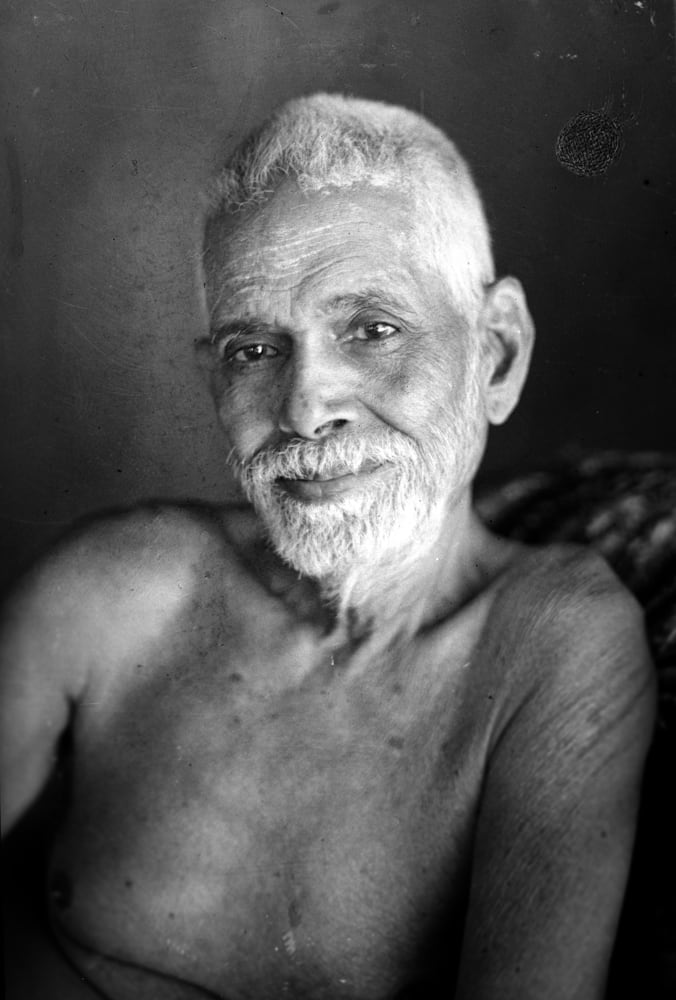
Ramana Maharshi
Совпадают в вопросах: Что такое Абсолют? Существует ли Бог? · Кто я? Существует ли истинное «я»? · Почему мы страдаем?
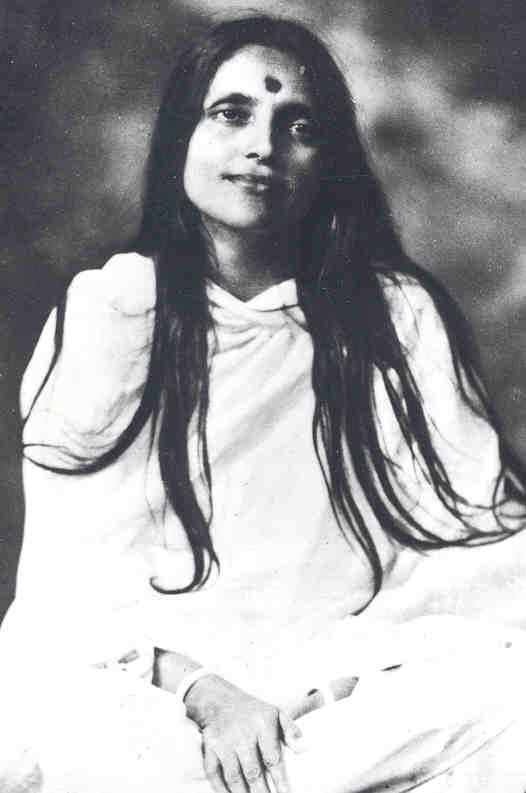
Anandamayi Ma
Совпадают в вопросах: Кто я? Существует ли истинное «я»? · Почему мы страдаем? · Что происходит после смерти?
Nisargadatta Maharaj
Совпадают в вопросах: Кто я? Существует ли истинное «я»? · Почему мы страдаем? · Что происходит после смерти?
Plotinus
Совпадают в вопросах: Кто я? Существует ли истинное «я»? · Что происходит после смерти? · Как достигается освобождение или спасение?
Дальше всего от



Предания и рассказы
Предания и рассказы
Житийное повествованиеc. 660
The woodcutter who heard the Diamond Sūtra
Происхождение рассказа: Autobiography in the Platform Sūtra, already in the Dunhuang copy (ninth century); there is no independent testimony.
Житийное повествованиеc. 661
The poem contest
Происхождение рассказа: Autobiography in the Platform Sūtra, already in the Dunhuang copy (ninth century); there is no independent testimony.
Источник: McRae, John R. Seeing through Zen: Encounter, Transformation, and Genealogy in Chinese Chan Buddhism. Berkeley: University of California Press, 2003. ISBN 0520237986.
Житийное повествованиеc. 661
Three knocks on the mortar
Происхождение рассказа: Only in the late versions of the Platform Sūtra (Huixin 967 and above all Zongbao 1291) and in Song-period case collections (Wumenguan, 1228); absent from the Dunhuang copy.
Источник: Wikisource en chino: 六祖大師法寶壇經 (versión de Zongbao, 1291), con una página por capítulo.
Житийное повествованиеc. 661
Huiming's original face
Происхождение рассказа: Only in the late versions of the Platform Sūtra (Huixin 967 and above all Zongbao 1291) and in Song-period case collections (Wumenguan, 1228); absent from the Dunhuang copy.
Источник: Wikisource en chino: 六祖大師法寶壇經 (versión de Zongbao, 1291), con una página por capítulo.
Житийное повествование676 (según la tradición)
The wind and the banner
Происхождение рассказа: Only in the late versions of the Platform Sūtra (Huixin 967 and above all Zongbao 1291) and in Song-period case collections (Wumenguan, 1228); absent from the Dunhuang copy.
Источник: Wikisource en chino: 六祖大師法寶壇經 (versión de Zongbao, 1291), con una página por capítulo.
Житийное повествованиеc. 700
The three blows to Shenhui
Происхождение рассказа: Dunhuang copy of the Platform Sūtra (§48–49 in Yampolsky); interpretation by Hu Shi (1930) and Yampolsky (1967).
Свидетельство1589
Matteo Ricci before the sixth patriarch's body
Происхождение рассказа: Ricci's journals, published in Latin by Nicolas Trigault (1615) and translated by Gallagher (1953); study by Jorgensen (2005).
Источник: Ricci, Matteo y Nicolas Trigault. China in the Sixteenth Century: The Journals of Matthew Ricci, 1583–1610. Trad. Louis J. Gallagher. Nueva York: Random House, 1953.
Учение
Учение
Понятия, на которых строится мысль учителя, объяснённые в их контексте.
Sudden awakening (dunwu)dunwu
Controversy between the Northern and Southern schools (eighth century).
Источник: McRae, John R. Seeing through Zen: Encounter, Transformation, and Genealogy in Chinese Chan Buddhism. Berkeley: University of California Press, 2003. ISBN 0520237986.
No-thought, no-form, no-abidingwunian
Platform Sūtra, section 17 of the Dunhuang copy.
Источник: Yampolsky, Philip B. (ed. y trad.). The Platform Sutra of the Sixth Patriarch: The Text of the Tun-huang Manuscript. Nueva York: Columbia University Press, 1967; reed. 2012 (ISBN 9780231159562).
Unity of meditation and wisdom (dinghui)dinghui
A Chinese reinterpretation of the discipline-meditation-wisdom triad.
Seeing one's nature (jianxing)jianxing
Doctrine of buddha-nature (foxing) in Chan.
Источник: Dōgen. Shōbōgenzō, fascículo «Shizen biku» (四禪比丘), en la recensión de doce fascículos; trad. inglesa en Nishijima, Gudo y Chodo Cross, Master Dogen's Shobogenzo, vol. 4, Windbell, 1999.
Formless precepts (wuxiang jie)wuxiang-jie
Mass lay ordinations in eighth- and ninth-century Chan.
Источник: Yampolsky, Philip B. (ed. y trad.). The Platform Sutra of the Sixth Patriarch: The Text of the Tun-huang Manuscript. Nueva York: Columbia University Press, 1967; reed. 2012 (ISBN 9780231159562).
Transmission of the robe and patriarchal lineagechuanyi
Chan historiography (eighth to eleventh centuries).
Источник: McRae, John R. Seeing through Zen: Encounter, Transformation, and Genealogy in Chinese Chan Buddhism. Berkeley: University of California Press, 2003. ISBN 0520237986.
Видео
Видео
Записи, интервью и документальные фильмы. Видео воспроизводятся с YouTube; здесь они не хранятся.
The Platform Sutra of Chan Buddhism - Jun Wang
Лекция· EN· 2018
Debashish Banerji
Sixth Patriarch's Dharma Jewel Platform Sutra (1) by Rev. Heng Sure from BRF2018
Лекция· EN· 2019
DharmaRealmLiveОфициальный канал
Reflections from the Platform Sutra of the Sixth Patriarch - Ven. Dr Juewei
Лекция· EN· 2020
Buddhist Library
The Platform Sutra of the Sixth Patriarch L1
Лекция· EN
Khenpo Sodargye's TeachingsОфициальный канал
SBZC with Bill Powell "The Platform Sutra" class #1
Лекция· EN· 2021
Santa Barbara Zen CenterОфициальный канал
Class on the Platform Sutra
Лекция· EN
kansaszencenterОфициальный канал
The Mind Has No Stand: Zen, Huineng, Teaching & Text
Разбор· EN· 2021
Eric Gerlach
Huineng - The 6th Chinese Ancestor of Zen Buddhism
Лекция· EN
Great Mountain Zen CenterОфициальный канал
【六祖壇經的生活實踐】 主講:慧知法師
Лекция· ZH
VIBPS 溫哥華佛光山 Vancouver IBPSОфициальный канал
慧知法師紐約佛學講座-《六祖壇經》的生活智慧
Лекция· ZH
FGS IBPS New YorkОфициальный канал
佛教紀錄片:六祖惠能的最後一年 (智慧東方)
Документальный фильм· ZH· 2017
佛弟子
¿Quién fue Hui Neng?
Запись третьих лиц· ES
Cosas del Zen
Галерея
Галерея
Изображения с проверенной лицензией. Каждое сохраняет своё авторство и атрибуцию.
Рукописи
Рукописи
Рукописные свидетельства и древние тексты, с указанием хранителя и условий доступа.
ZH · Chino (escritura regular, copia manuscrita) · c. 780
南宗頓教最上大乘摩訶般若波羅蜜經六祖惠能大師於韶州大梵寺施法壇經
- Сохранившийся список
- Copia de hacia 830–860, la más antigua conocida, en formato de cuadernillo
- Хранитель
- British Library (Londres) · Or.8210/S.5475
- Оцифровка
- idp.bl.uk/…
ZH · Chino · c. 780
六祖壇經 (copia de Dunhuang)
- Сохранившийся список
- Segunda copia completa de Dunhuang, de mejor calidad textual
- Хранитель
- Museo de Dunhuang · Dunbo 077
Связи
Связи
Влияния, ученичество и близость взглядов. Документированная связь отличается от сходства, выявленного путём анализа.
Испытал влияние
The sūtra presents him as the sixth link of the lineage beginning with Bodhidharma and records his transmission verse.
Документированная связь
Ученик
Hongren (601–674), quinto patriarca
His teacher at Huangmei, according to all sources, including Wang Wei's stele.
Документированная связь
Современник
Shenxiu (c. 606–706)
Hongren's chief disciple and figure of the Northern school; the poem contest pitting them against each other is legendary.
Документированная связь
Учитель
Shenhui (684–758)
He proclaimed himself his disciple and was the architect of his fame; the Dunhuang copy includes him among his ten disciples.
Документированная связь
Повлиял на
Heir of a Caodong lineage going back to Huineng; in the Shōbōgenzō (“Shizen biku”) he rejected the Platform Sūtra as apocryphal.
Документированная связь
Повлиял на
His Rinzai lineage goes back to Huineng through Linji; the kenshō Hakuin demands is the sūtra's “seeing the nature”.
Сходство, выявленное путём анализа
Повлиял на
A Sōtō master, of Dōgen's lineage which goes back to Huineng.
Сходство, выявленное путём анализа
Повлиял на
His Vietnamese Lâm Tế (Linji) lineage goes back to Huineng.
Сходство, выявленное путём анализа
Испытал влияние
The sūtra's logic of emptiness—denying tree and mirror—extends the prajñāpāramitā and Madhyamaka; tradition counts Nāgārjuna among the Indian patriarchs.
Сходство, выявленное путём анализа
Современник
Rough contemporaries at the two ends of Asia, both centred on the nature of mind and the wisdom of emptiness.
Сходство, выявленное путём анализа
Идеи, близкие к
The sūtra's valuing of flow, non-fixation and immediacy recalls Daoist themes; the influence is debated.
Сходство, выявленное путём анализа
Источники
Источники
Библиография и каталоги, использованные для этой статьи.
- Wikidata, «Huineng», QID Q345012 (VIAF 32007548; LCCN n50078883).
- Yampolsky, Philip B. (ed. y trad.). The Platform Sutra of the Sixth Patriarch: The Text of the Tun-huang Manuscript. Nueva York: Columbia University Press, 1967; reed. 2012 (ISBN 9780231159562).
- McRae, John R. Seeing through Zen: Encounter, Transformation, and Genealogy in Chinese Chan Buddhism. Berkeley: University of California Press, 2003. ISBN 0520237986.
- McRae, John R. (trad.). The Platform Sutra of the Sixth Patriarch, translated from the Chinese of Tsung-pao. Berkeley: Numata Center for Buddhist Translation and Research, 2000. ISBN 1886439133.
- McRae, John R. The Northern School and the Formation of Early Ch'an Buddhism. Honolulu: University of Hawai'i Press (Kuroda Institute), 1986.
- Schlütter, Morten y Stephen F. Teiser (eds.). Readings of the Platform Sūtra. Nueva York: Columbia University Press, 2012. ISBN 9780231158206.
- Jorgensen, John. Inventing Hui-neng, the Sixth Patriarch: Hagiography and Biography in Early Ch'an. Leiden: Brill (Sinica Leidensia 68), 2005. ISBN 9004145087.
- Thompson, John M. «Huineng (Hui-neng) (638–713)». Internet Encyclopedia of Philosophy.
- Hu Shi 胡適 (ed.). Shenhui heshang yiji 神會和尚遺集 (Obras conservadas del monje Shenhui). Shanghái: Yadong tushuguan, 1930.
- Wang Wei 王維. «Neng chanshi bei» 能禪師碑 (Estela del maestro de chan Neng), mediados del siglo VIII, recogida en el Quan Tang wen; inscripción encargada por Shenhui.
- Schlütter, Morten. «A Study in the Genealogy of the Platform Sūtra». Studies in Central and East Asian Religions 2 (1989): 53–114.
- Wong Mou-lam (trad.). Sutra Spoken by the Sixth Patriarch, Wei Lang, on the High Seat of the Gem of Law. Shanghái: Yu Ching Press, 1930.
- Wikisource en chino: 南宗頓教最上大乘摩訶般若波羅蜜經六祖惠能大師於韶州大梵寺施法壇經 (texto de la copia de Dunhuang, compilado por Fahai).
- Wikisource en chino: 六祖大師法寶壇經 (versión de Zongbao, 1291), con una página por capítulo.
- Huineng (atrib.), Fahai (comp.). 六祖壇經 (Liuzu tanjing), edición de la dinastía Ming colacionada por Deqing. Project Gutenberg, e-book n.º 23844, 2007.
- Ricci, Matteo y Nicolas Trigault. China in the Sixteenth Century: The Journals of Matthew Ricci, 1583–1610. Trad. Louis J. Gallagher. Nueva York: Random House, 1953.
- Dumoulin, Heinrich. Zen Buddhism: A History. Vol. 1: India and China. Nueva York: Macmillan, 1988.
- Red Pine (Bill Porter) (trad.). The Platform Sutra: The Zen Teaching of Hui-neng. Emeryville (CA): Shoemaker & Hoard, 2006. ISBN 9781593760861.
- Dōgen. Shōbōgenzō, fascículo «Shizen biku» (四禪比丘), en la recensión de doce fascículos; trad. inglesa en Nishijima, Gudo y Chodo Cross, Master Dogen's Shobogenzo, vol. 4, Windbell, 1999.
- Yanagida Seizan 柳田聖山. Shoki zenshū shisho no kenkyū 初期禅宗史書の研究. Kioto: Hōzōkan, 1967.
- Yanagida Seizan (ed.). Rokuso dangyō shohon shūsei 六祖壇經諸本集成. Kioto: Chūbun shuppansha, 1976.
- Chan, Wing-tsit (trad.). The Platform Scripture. Nueva York: St. John's University Press, 1963.
- Правообладатель
- Texto chino original en dominio público. Traducciones modernas con derechos: Columbia University Press (Yampolsky), Numata Center/BDK (McRae), Counterpoint (Red Pine), Shambhala (Cleary; Price y Wong), Editorial Kairós (Laureano Ramírez), Edaf.
Ожидает подтверждения
То, что в этой статье пока не удалось установить. Мы предпочитаем сказать об этом, а не заполнять пробел.
- Traducción inglesa de Wong Mou-lam (Shanghái, Yu Ching Press, 1930): es de dominio público en EE. UU. (publicada en 1930, libre desde el 1 de enero de 2026), en la UE y en España (Wong Mou-lam, 1886–1934), pero no se ha localizado un escaneo con OCR limpio de la edición de 1930; las de Luzac (1944, 1953) y Shambhala llevan la revisión de Christmas Humphreys (m. 1983), protegida. Buscar en Internet Archive o HathiTrust la edición de 1930.
- Versión base de la traducción española de Laureano Ramírez (Kairós, 2010; hay ediciones anteriores) — comprobar si es la de Dunhuang o la de Zongbao.
- Signatura y digitalización de la copia del Museo de Dunhuang (Dunbo 077) y de la de Lüshun; no verificadas en un catálogo accesible.
- Fecha y circunstancias exactas del título póstumo (815/816) y de las estelas de Liu Zongyuan y Liu Yuxi: se han tomado de la bibliografía secundaria (Dumoulin), no de las fuentes.
- Vídeos en español: solo se ha encontrado material divulgativo breve; no hay conferencias académicas en español con canal solvente.
- Las ediciones francesas, alemanas e italianas del sūtra no se han cotejado en catálogo.
Исследовано 2026-10-25