Христианство · Христианская мистика · Католицизм
Catherine of Siena
1347 – 1380Исторически документированная личность
Сиенская мистичка, писательница и общественная деятельница (1347–1380), доминиканская терциарка. Дочь красильщика, не получившая образования, она собрала вокруг себя «семью» учеников, ухаживала за чумными и приговорёнными, была посредницей между Флоренцией и папством и убеждала Григория XI вернуться из Авиньона в Рим. Она продиктовала «Диалог о Божественном Провидении», около 380 писем папам, королям, наёмникам и простым людям и двадцать шесть молитв, благодаря которым стала одной из великих прозаиков итальянского языка. Умерла в Риме в тридцать три года. Учитель Церкви (1970), сопокровительница Италии и Европы.
- трудов
- 9трудов
- изданий
- 17изданий
- цитат
- 7цитат
- видео
- 13видео
- изображений
- 6изображений
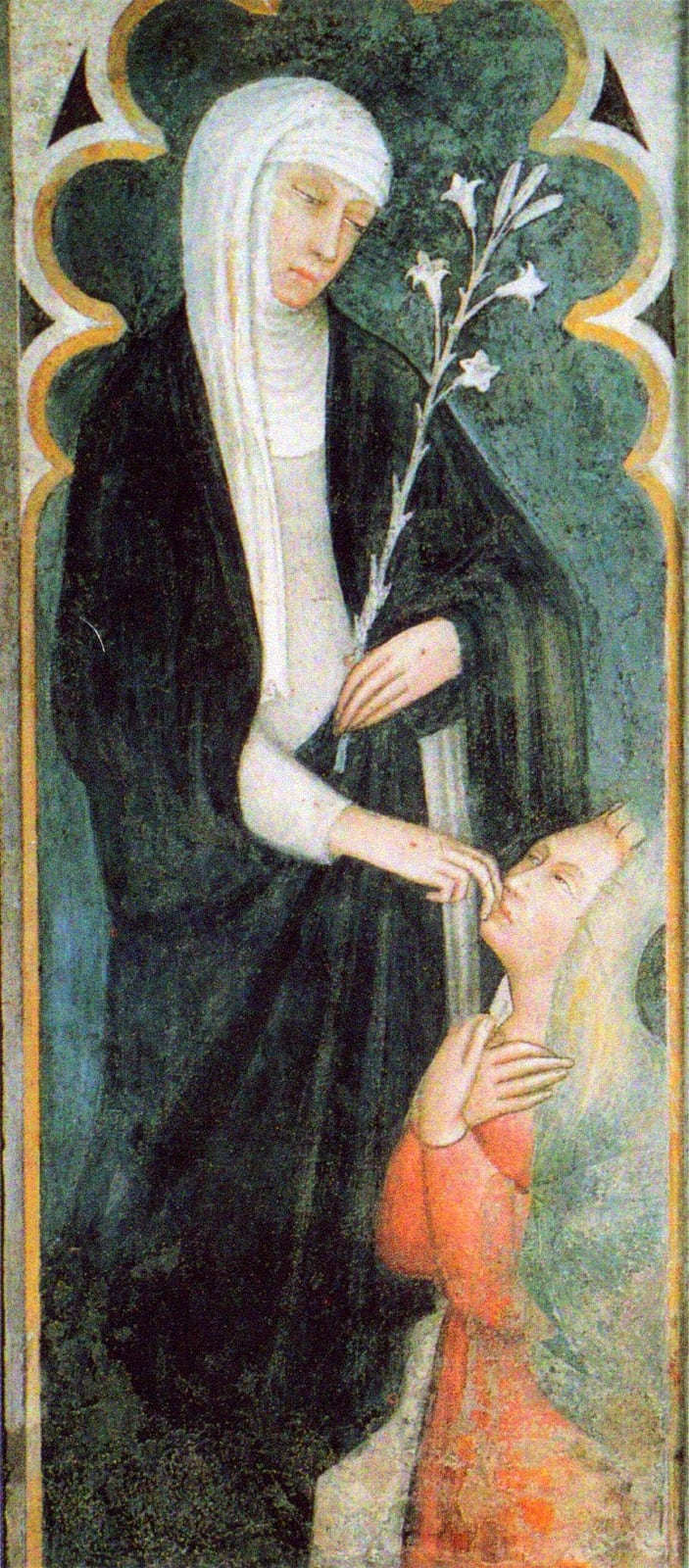
Santa Catalina, por Andrea Vanni (San Domenico, Siena) · Public domain
Своими словами
«You, eternal Trinity, are a deep sea: the more I enter you, the more I find, and the more I find, the more I seek you.»Diálogo, ed. Fiorilli (1912), cap. CLXVII

Главная мысль
The cell of self-knowledge: The Dialogue begins with a soul 'accustomed to dwell in the cell of self-knowledge'.
В контексте
Биография
4 мин чтения
Перевод с испанского оригинала, выполненный с помощью ИИ; ожидает проверки носителем языка.
Дочь красильщика
Катерина ди Якопо ди Бенинказа родилась в Сиене 25 марта 1347 года, в праздник Благовещения, вместе с сестрой-близнецом Джованной, которая вскоре умерла. Она была двадцать третьим или двадцать четвёртым ребёнком Якопо Бенинказы, красильщика шерсти, и Лапы ди Пуччо де Пьяченти и жила в доме в квартале Фонтебранда, рядом с чанами красильщиков, в тени доминиканской церкви Сан-Доменико. Год спустя Чёрная смерть унесла почти половину города. Почти всё, что мы знаем о её детстве, взято из Legenda maior — «Большого жития», которое её духовник Раймунд Капуанский написал между 1385 и 1395 годами ради её канонизации и которое следует читать как то, чем оно является: тщательно выстроенную агиографию.
Согласно этому преданию, лет в шесть она увидела Христа над крышей Сан-Доменико, а в семь дала обет девства. Когда после смерти её сестры Бонавентуры в 1362 году родные решили выдать её замуж, она остригла волосы; тогда её сделали служанкой в доме, пока отец не позволил ей жить по-своему. Около 1364 или 1365 года она — не без сопротивления — получила одеяние мантеллат, доминиканских кающихся, живших у себя дома, а не в монастыре, как правило вдов. Около трёх лет она провела почти взаперти в своей комнате, в молитве и посте, и выучилась читать.
Обручение и «семья»
В последний день карнавала 1367 года, по словам Раймунда, Христос взял её в невесты, дав ей кольцо, видимое лишь ей одной, и велел выйти из кельи, чтобы служить другим. Так началась её деятельная жизнь в городе: она ухаживала за больными в госпитале Санта-Мария-делла-Скала и по домам, помогала прокажённым, раздавала всё, что было в отцовском доме. В 1370 году она пережила опыт, который ученики назвали её «мистической смертью». Вокруг неё сложилась bella brigata, «семья»: братья-доминиканцы, отшельники, молодые аристократы вроде Стефано Макони, поэты вроде Нери ди Ландоччо Пальяреси, горожанки. Её звали mamma — «мама». То, что молодая неучёная мирянка была духовной наставницей священников и богословов, вызывало подозрения; в 1374 году генеральный капитул доминиканцев, собравшийся во Флоренции, подверг её испытанию и назначил ей наставником Раймунда Капуанского.
Политика крови
С 1374 года её письма всё чаще обращены к сильным мира сего. Она добивалась трёх вещей: возвращения папы из Авиньона в Рим, реформы клира и крестового похода, который примирил бы христиан, обратив их оружие против турок. В 1375 году она сопровождала на казнь Никколо ди Тольдо, молодого перуджинца, осуждённого за слова против сиенского правительства, и приняла его голову в свои руки; об этом она рассказывает в письме к Раймунду редкой силы. 1 апреля того же года в Пизе она, по свидетельству очевидцев, получила стигматы, по её просьбе остававшиеся невидимыми при жизни. Английскому кондотьеру Джону Хоквуду она писала, чтобы он повёл своё войско на Восток.
Когда Флоренция, воевавшая с папством, оказалась под интердиктом, Екатерина вызвалась быть посредницей и в июне 1376 года отправилась в Авиньон. Флорентийцы отреклись от её посредничества, но она воспользовалась случаем, чтобы убеждать Григория XI, которого называла babbo, «папочка», вернуться в Рим. Григорий покинул Авиньон в сентябре 1376 года и вступил в Рим в январе 1377-го. Историки спорят о том, насколько повлияла Екатерина на решение, которое папа вынашивал и сам; несомненно одно: двадцатидевятилетняя женщина, не занимавшая никакой должности, говорила на равных с самой могущественной курией Европы.
Книга
В 1377 году она удалилась в Рокка-д'Орча, в сиенской округе, чтобы примирить враждовавшие знатные семьи; там, по одному из её писем, она сама научилась писать. На следующий год, вновь оказавшись во Флоренции как посланница папы, она едва не погибла во время восстания чомпи в июне 1378 года. Вернувшись в Сиену, между концом 1377 и октябрём 1378 года она продиктовала секретарям — по их словам, нередко в состоянии экстаза — «Книгу о божественном учении», известную впоследствии как «Диалог»: беседу души с Богом Отцом о самопознании, о мосте, который есть Христос, о слезах, о Провидении, о послушании и о реформе Церкви.
Раскол
В сентябре 1378 года французские кардиналы, недовольные Урбаном VI, избрали антипапу Климента VII, и начался Великий западный раскол. Екатерина без колебаний встала на сторону Урбана, который призвал её в Рим. Она прибыла туда в ноябре 1378 года с двумя десятками учеников и больше не покидала города. Оттуда она писала королям Франции и Венгрии, королеве Джованне Неаполитанской, отступившим кардиналам и итальянским городам и молилась вслух перед папой и курией. Её последние молитвы были записаны секретарями в эти месяцы.
Тридцать три года
Она почти ничего не ела. Весь Великий пост 1380 года она каждый день ходила пешком к собору Святого Петра. В конце января она пережила тяжёлый упадок сил после видения, в котором ощутила на своих плечах корабль Церкви, а 26 февраля уже не смогла подняться. Она умерла в Риме 29 апреля 1380 года, тридцати трёх лет, окружённая своей духовной семьёй. Её ученик Бардуччо Каниджани описал её агонию в письме. Она была погребена в церкви Санта-Мария-сопра-Минерва; её голову в 1384 году перенесли в Сиену.
Святая Италии
Раймунд Капуанский, магистр ордена доминиканцев, и Томмазо Каффарини создали её культ: Legenda maior, Libellus de supplemento и венецианский процесс 1411–1416 годов. Папа-сиенец Пий II канонизировал её в 1461 году. Её письма, напечатанные в Болонье в 1492 году и Альдом Мануцием в Венеции в 1500 году, сделали её классиком итальянского языка; Пий XII в 1939 году провозгласил её покровительницей Италии вместе с Франциском Ассизским, Павел VI 4 октября 1970 года — учителем Церкви, через неделю после Терезы Авильской, а Иоанн Павел II в 1999 году — сопокровительницей Европы. Современная критика терпеливо отделила женщину от легенды: остаётся мирянка, которая, не имея ни сана, ни латыни, мыслила веру как огонь, а политику — как ответственность души.
Источники: Raimundo de Capua. Legenda maior sive Legenda admirabilis virginis Catherine de Senis. Ed. Silvia Nocentini. Florencia: SISMEL – Edizioni del Galluzzo, 2013. Trad. inglesa de Conleth Kearns, The Life of Catherine of Siena. Wilmington: Michael Glazier, 1980. · Caterina da Siena. Il Dialogo della divina provvidenza ovvero Libro della divina dottrina. Ed. Giuliana Cavallini. Roma: Edizioni Cateriniane, 1968 (2.ª ed., Siena: Cantagalli, 1995). · Caterina da Siena. Libro della divina dottrina volgarmente detto Dialogo della divina provvidenza. Ed. Matilde Fiorilli. Scrittori d'Italia. Bari: Laterza, 1912 (Project Gutenberg n.º 26961). · Noffke, Suzanne (trad. y ed.). The Letters of Catherine of Siena. 4 vols. Tempe: Arizona Center for Medieval and Renaissance Studies, 2000–2008. · Tommaseo, Niccolò (ed.). Le lettere di S. Caterina da Siena. 4 vols. Florencia: G. Barbèra, 1860; reed. ampliada por Piero Misciattelli, 6 vols., Siena: Giuntini-Bentivoglio, 1913–1922.
Хронология
Жизнь год за годом
Каждая точка — документированное событие. Нажмите, чтобы прочитать о нём, с источником и степенью достоверности.
25 марта 1347 г.0 летSiena (Fontebranda)
Birth
Born with a twin, Giovanna, daughter of Jacopo Benincasa, a dyer, and Lapa di Puccio de' Piacenti.
ДокументированоRaimundo de Capua. Legenda maior sive Legenda admirabilis virginis Catherine de Senis. Ed. Silvia Nocentini. Florencia: SISMEL – Edizioni del Galluzzo, 2013. Trad. inglesa de Conleth Kearns, The Life of Catherine of Siena. Wilmington: Michael Glazier, 1980.
После смерти
- ок. 1385 – 1395The Legenda maior
- ок. 1411 – 1416The Processo Castellano
- 29 июня 1461 г.Canonisation
- 1500The Aldine edition of the letters
- 1939Patroness of Italy
- 4 октября 1970 г.Doctor of the Church
- 1 октября 1999 г.Co-patroness of Europe
25 марта 1347 г. · 0 лет
Birth
Born with a twin, Giovanna, daughter of Jacopo Benincasa, a dyer, and Lapa di Puccio de' Piacenti.
Документировано
ок. 1353 · 6 лет
The first vision
According to Raymond of Capua, she sees Christ above the church of San Domenico; the following year she vows virginity.
Предание
ок. 1362 · 15 лет
Refusal of marriage
After the death of her sister Bonaventura she resists marriage plans and cuts off her hair.
Предание
ок. 1364 – 1365 · 17 лет
Habit of the mantellate
She joins the Dominican penitent women (mantellate), who live in their own homes.
Вероятно
1367 · 20 лет
Mystical espousal
On the last day of Carnival, according to Raymond, she receives a ring visible only to her and leaves her seclusion to serve the sick.
Предание
май 1374 г. · 27 лет
Examined by the Dominican general chapter
She appears before the order's general chapter, which assigns Raymond of Capua as her confessor. In the summer she tends plague victims in Siena.
Документировано
1 апреля 1375 г. · 28 лет
The stigmata
In the church of Santa Cristina she receives, according to her witnesses, the stigmata, invisible during her lifetime.
Предание
1375 · 28 лет
The execution of Niccolò di Toldo
She accompanies a young condemned man to the scaffold and receives his head; she narrates it in a letter to Raymond of Capua.
Документировано
июнь 1376 г. · 29 лет
Embassy to Avignon
She travels to the papal court as Florence's mediator and urges Gregory XI to return to Rome; the pope leaves in September.
Документировано
1377 · 30 лет
Peacemaking and learning to write
Stay at the Salimbeni castle to reconcile families; according to her letter to Raymond, she learns to write there. She founds the monastery of Belcaro.
Документировано
июнь 1378 г. · 31 год
The Ciompi tumult
Urban VI's envoy for peace with Florence, she narrowly escapes a mob seeking to kill her.
Документировано
октябрь 1378 г. · 31 год
The Dialogue completed
She finishes dictating the Book of Divine Doctrine to her secretaries.
Документировано
ноябрь 1378 г. · 31 год
In Rome, in the service of Urban VI
Summoned by the pope after the outbreak of the Western Schism, she settles in Rome with her disciples.
Документировано
29 апреля 1380 г. · 33 года
Death
She dies after months of exhaustion, accompanied by her disciples. Barduccio Canigiani narrates her agony.
Документировано
ок. 1385 – 1395
The Legenda maior
Raymond of Capua writes Catherine's official life.
Документировано
ок. 1411 – 1416
The Processo Castellano
In Venice testimonies about her holiness are gathered, promoted by Tommaso Caffarini.
Документировано
29 июня 1461 г.
Canonisation
She is canonised by the Sienese pope Pius II.
Документировано
1500
The Aldine edition of the letters
Aldus Manutius prints Catherine's Epistole devotissime.
Документировано
1939
Patroness of Italy
Pius XII proclaims her principal patroness of Italy together with Francis of Assisi.
Документировано
4 октября 1970 г.
Doctor of the Church
Paul VI proclaims her a Doctor of the Church, a week after Teresa of Ávila.
Документировано
1 октября 1999 г.
Co-patroness of Europe
John Paul II proclaims her co-patroness of Europe with Bridget of Sweden and Teresa Benedicta of the Cross (motu proprio Spes aedificandi).
Документировано
Труды
Главные труды
Труды, без которых не понять это наследие.
Письменный труд · 1378
The Dialogue (Book of Divine Doctrine)
Libro della divina dottrina (Dialogo della divina provvidenza)
A book dictated by Catherine to her secretaries between late 1377 and October 1378. It opens with a soul that, 'dwelling in the cell of self-knowledge', addresses four petitions to God (for herself, for the reform of the Church, for the world and for a particular case) and the Father answers in a long colloquy. Its great images are the bridge that is Christ, with its three steps (the feet, the side, the mouth), stretched over the river of the world; the doctrine of tears; providence; obedience; and the reform of the Church's ministers, the 'mystical body'. It closes with a prayer to the Trinity as a 'deep sea'. Since Girolamo Gigli (1707) it has usually been divided into treatises (on discretion, prayer, providence and obedience). It is one of the summits of fourteenth-century Italian prose.
7 изданий

Переписка · ок. 1370
Letters
Lettere (Epistolario)
Some 380 letters dictated between c. 1370 and 1380 (381 according to the most widely cited count; editions range between 373 and 383), addressed to two popes, cardinals, kings and queens, condottieri, city governments, friars, nuns, disciples, her mother and anonymous people. Almost all begin with the formula 'In the name of Jesus Christ crucified and of sweet Mary' and end with 'Sweet Jesus, Jesus love'. They mix spiritual doctrine and concrete politics: the pope's return to Rome, peace with Florence, the crusade, the defence of Urban VI in the schism. Among them stand out the letters to Gregory XI, whom she calls babbo, the letter to Raymond on the execution of Niccolò di Toldo and the one recounting her experience of January 1380. Their vigour and imagery make them a monument of Italian prose.
5 изданий

Записанное устное учение · ок. 1376
Prayers
Orazioni
Twenty-six prayers spoken aloud by Catherine, almost always in ecstasy after communion, and transcribed by her secretaries between 1376 and 1380, most of them in Rome during the schism. They are prayers to the Trinity, to Christ and to the 'eternal Godhead', of a lyrical intensity culminating in the identification of God's nature with fire and in intercession for the Church and her disciples. They show the final Catherine, consumed by the Church's crisis.
2 издания
Все труды (9)

Raymond of Capua's Legenda maior
1385
Catherine of Siena
Tommaso Caffarini's Supplement to the Legend
The Conscious LibraryTommaso Caffarini's Supplement to the Legend
1412
Catherine of Siena
Tommaso Caffarini's Legenda minor
The Conscious LibraryTommaso Caffarini's Legenda minor
1414
Catherine of Siena
The Processo Castellano
The Conscious LibraryThe Processo Castellano
1411
Catherine of Siena
The Miracles of Catherine, by an Anonymous Florentine
The Conscious LibraryThe Miracles of Catherine, by an Anonymous Florentine
1374
Catherine of Siena
Barduccio Canigiani's Letter on Catherine's Death
The Conscious LibraryBarduccio Canigiani's Letter on Catherine's Death
1380
Изречения
Изречения, найденные в конкретном труде. Каждое сопровождается указанием происхождения и степени надёжности.
You, eternal Trinity, are a deep sea: the more I enter you, the more I find, and the more I find, the more I seek you.Tu, Trinitá etterna, se' uno mare profondo, che quanto piú c'entro tanto piú truovo, e quanto piú truovo piú cerco di te.
ПровереноDiálogo, ed. Fiorilli (1912), cap. CLXVII
Апокрифические изречения и изречения спорной атрибуции (1)
«Be who God meant you to be and you will set the world on fire.»
A widespread modern version of the sentence in the letter to Stefano Maconi ('If you are what you ought to be, you will set fire to all Italy'). The original speaks of Italy and of duty, not of the world or personal identity and became popular in twentieth-century anthologies and Catholic youth gatherings.
Последние слова
Позднейший рассказ свидетелей
«Father, into your hands I commend my soul and my spirit.»Padre, nelle tue mani raccomando l'anima e lo spirito mio.
According to the letter of her secretary Barduccio Canigiani, present at her agony, Catherine died in Rome on Sunday 29 April 1380, at the hour of Sext, after blessing her disciples and praying: 'You, Lord, call me, and I come to you, not through my merits but through your mercy alone, which I ask of you by virtue of your Blood'; she cried out several times 'Blood, blood!' and, following Christ's example, finally said: 'Father, into your hands I commend my soul and my spirit'. The Italian wording follows the tradition of Barduccio's text; the version consulted is Thorold's English translation (1907).
Источник: Canigiani, Barduccio. Carta sobre el tránsito de Catalina, dirigida a sor Caterina Petriboni (1380). Trad. inglesa en Algar Thorold, The Dialogue of the Seraphic Virgin Catherine of Siena… together with an account of her death by an eye-witness. Londres: Kegan Paul, 1907.
Спросить
На что отвечают эти труды
Двенадцать великих вопросов человечества и то, что позволяют на них ответить эти тексты, со ссылками. Мы никогда не вкладываем слова в чужие уста.
Что такое Абсолют? Существует ли Бог?
God is the eternal Trinity, a deep sea, mad with love
Личный БогСказано прямо
In The Dialogue, Catherine of Siena hears and transcribes the voice of a God who speaks to the soul in the first person: the eternal Father who explains, rebukes, promises and answers her petitions. This God is the first Truth and is, above all, love that precedes the creature: in the Dialogue's closing prayer she confesses that God loved her before she existed, «mad» for his creature. The closing prayer of the Dialogue calls the eternal Trinity a deep sea in which the more one enters the more one finds, and the more one finds the more one seeks. The Absolute is therefore personal, Trinitarian and inexhaustible: someone with whom one converses and whose knowledge never closes.
Сравнить этот вопрос с другими учителямиКто я? Существует ли истинное «я»?
The soul is an image of the Trinity, known in the cell of self
Сотворённая бессмертная душаСказано прямо
For Catherine of Siena, the soul is a creature made in the image of the Trinity: in The Dialogue she thanks God for giving it memory to hold his benefits, intellect to know and will to love. Self-knowledge is indispensable, and the book sets it out from its first page as dwelling in the «cell of self-knowledge». But this knowledge has two faces: the soul discovers itself as something that of itself is not, since it has received everything, and in that same cell it knows God's goodness, which love follows. The true self is therefore a created, immortal soul whose being depends on the love that created it.
Сравнить этот вопрос с другими учителямиПочему мы страдаем?
The root of every evil is self-love that turns away from God
Отделённость от БогаСказано прямо
In The Dialogue, Catherine of Siena places in God's mouth a constant diagnosis: the root of all evils is sensual self-love, which makes the human being love itself apart from God. Whoever broke the road through sin drowns in the river of the world, and that is why God laid down the bridge of his Son. But not all suffering is punishment: the pains of this life, borne with patience and with desire for God, purify and make satisfaction, because what gives them value is not the pain itself but the infinite desire with which it is suffered. Pain separates when it springs from self-love and unites when it becomes charity.
Сравнить этот вопрос с другими учителямиЧто происходит после смерти?
At death each soul sees what it chose and receives what it loved
Вечная жизнь и воскресениеСказано прямо
In The Dialogue, God explains to Catherine of Siena how the just, sinners and those who have lived in intermediate states die. At the moment of death, each soul sees clearly what it has loved: the just man dies in peace, because his will is united to God's and the devil finds nothing of his own in him; one who dies in self-love judges himself before being judged. Eternal blessedness is seeing God face to face and rejoicing in the good of the other blessed through charity. The letter of Barduccio Canigiani recounts her own death in Rome in 1380, amid prayers for the Church.
Сравнить этот вопрос с другими учителямиКак достигается освобождение или спасение?
One climbs the bridge that is Christ by three steps of love
Через преданность и предание себяСказано прямо
The central image of The Dialogue is the bridge: the road between heaven and earth, broken by sin, has been rebuilt in the Son, and whoever wishes to be saved must climb it. One climbs by three steps, which are the body of the crucified Christ: the feet, representing affection stripped of self-love; the open side, where the soul discovers the secret of the heart; and the mouth, where it finds peace. The engine of the ascent is love: holy desire, kindled by the blood of Christ, which Catherine invokes ceaselessly in her letters. Grace is the foundation, but the way is a loving surrender proved in service to one's neighbour.
Сравнить этот вопрос с другими учителямиНужен ли учитель?
Obedience to the Church, the confessor and truth known in the cell
Община и традицияСказано прямо
Catherine of Siena was at once disciple and teacher. A laywoman of the Dominican Order of Penance, she submitted to confessors such as Raymond of Capua and called the pope, in her letters, the «sweet Christ on earth», to be obeyed even if he were a devil incarnate. But around her formed a famiglia of disciples, clerics and laypeople, who called her «mamma», and her letters are an immense work of spiritual direction. The Dialogue devotes a long section to obedience, the key that opens heaven. For Catherine one learns within the body of the Church, in a living community, but every soul must also dwell in the cell of self-knowledge.
Сравнить этот вопрос с другими учителямиРеален ли мир?
Everything was made out of love and to serve humankind
Благое и реальное творениеСледует из учения
Catherine of Siena does not develop a cosmology, but The Dialogue presents creation as the work of love: God created the human being moved by the fire of his charity, and all things were made to serve him, so that he might serve God. The world is good in itself; what makes it dangerous is the disordered use that self-love makes of it. Hence Catherine's image of the river: the world, when loved for its own sake, is a stormy river in which those who do not cross by the bridge drown. Created things should be held without attachment, as on loan. Real, good and dangerous at once: such is creation for her.
Сравнить этот вопрос с другими учителямиЧто такое любовь?
We cannot be useful to God: love is returned to him in our neighbour
Любовь к Богу и ближнемуСказано прямо
Catherine of Siena places in God's mouth, in The Dialogue, a precise reason for love of neighbour: God loved us first and without self-interest, and we cannot return that love in the same way, because we cannot be useful to him; that is why he has set our neighbour beside us, so that we may do for him what we cannot do for God. Every virtue is proved and exercised through one's neighbour, and every sin reaches him. Love springs from knowledge of self and of God's goodness, and has its model in the Christ «mad with love» who gave himself to the point of blood. Catherine lived it by tending the sick and the condemned and working for peace in Italy.
Сравнить этот вопрос с другими учителямиСвободны ли мы или всё предопределено?
No one can force the will: neither the devil nor any creature
Подлинная свобода волиСказано прямо
In The Dialogue, Catherine of Siena attributes to God a repeated assertion: the human being was created free, and neither the devil nor any creature can force his will to sin unless he consents. Temptations may besiege it, but the will is like a city whose gate opens only from within. That freedom is the condition of merit and responsibility: each person is saved or lost according to what his will loves. God's providence, to which she devotes a long section of the book, orders everything for the soul's salvation, but respects the freedom he himself gave. Free will and providence coexist without cancelling each other out.
Сравнить этот вопрос с другими учителямиЗачем медитировать или молиться?
Prayer is holy desire: a continual dialogue with God
Дружба с БогомСказано прямо
Catherine of Siena's main work is, literally, a prayer turned into dialogue: the soul asks and God answers. The Dialogue describes prayer as a path running from vocal to mental prayer, and from this to a continual prayer that is holy desire, present in every work done for love. Prayer is born in the cell of self-knowledge, where the soul recognises itself as creature and discovers God's goodness; and it flows into petition for others, for the Church and for the world. Her Prayers, taken down by her disciples as she spoke in ecstasy, show that bold familiarity with the eternal Father.
Сравнить этот вопрос с другими учителямиМожет ли разум познать предельное?
The eye of the intellect sees through the pupil of faith
Вера и разум помогают друг другуСказано прямо
Catherine of Siena learned to read late and never studied theology, but in The Dialogue the intellect holds a central place: it is the eye of the soul, and its pupil is faith. Without that light the intellect is darkened by self-love; with it, it knows the truth of God and of itself. Hence in The Dialogue God explains that there are learned men who, without charity, understand Scripture less than the simple enlightened by grace, and that many unlettered saints received from him the knowledge of truth. Reason is not opposed to faith, but sees well only when faith illuminates it and love purifies it. In 1970 she was proclaimed a doctor of the Church.
Сравнить этот вопрос с другими учителямиУйти от мира или преобразить его?
If you are what you should be, you will set all Italy on fire
Действовать в миреСказано прямо
Catherine of Siena spent three years in seclusion in her family home, and from that solitude went forth into the most intense public life known to any woman of her century. She nursed plague victims and accompanied men condemned to death; she mediated between Florence and the papacy; she wrote to popes, kings, cardinals and condottieri, and went to Avignon to urge Gregory XI to return the see to Rome, which happened in 1377. In a letter to her disciple Stefano Maconi she writes that, if they were what they ought to be, they would set all Italy on fire. For her, the charity born in the inner cell is proved in service to one's neighbour and the Church.
Сравнить этот вопрос с другими учителями
Созвучия и противоречия
Созвучия и противоречия
Рассчитаны вопрос за вопросом на основе позиций. Причина каждого совпадения или расхождения — по нажатию.
Ближе всего к

Julian of Norwich
Совпадают в вопросах: Что такое Абсолют? Существует ли Бог? · Кто я? Существует ли истинное «я»? · Почему мы страдаем?

Francis of Assisi
Совпадают в вопросах: Что такое Абсолют? Существует ли Бог? · Кто я? Существует ли истинное «я»? · Почему мы страдаем?

Theophan the Recluse
Совпадают в вопросах: Почему мы страдаем? · Что такое Абсолют? Существует ли Бог? · Кто я? Существует ли истинное «я»?
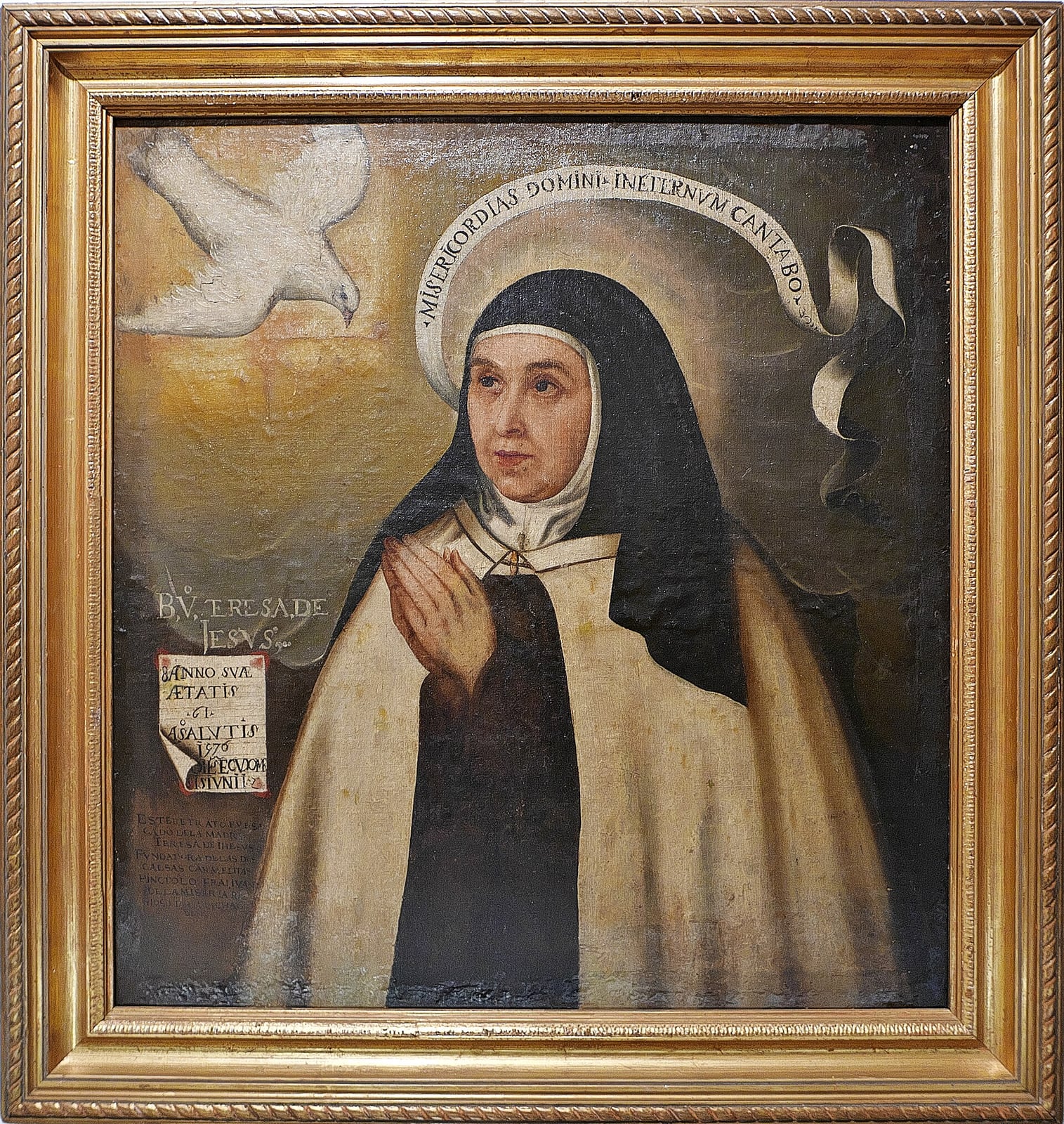
Teresa of Ávila
Совпадают в вопросах: Что такое Абсолют? Существует ли Бог? · Кто я? Существует ли истинное «я»? · Почему мы страдаем?
Дальше всего от

Pema Chödrön
Расходятся в вопросах: Что такое Абсолют? Существует ли Бог? · Кто я? Существует ли истинное «я»? · Что происходит после смерти?

Patañjali
Расходятся в вопросах: Что такое Абсолют? Существует ли Бог? · Кто я? Существует ли истинное «я»? · Что происходит после смерти?

Nāgārjuna
Расходятся в вопросах: Что такое Абсолют? Существует ли Бог? · Кто я? Существует ли истинное «я»? · Что происходит после смерти?

Dōgen
Расходятся в вопросах: Что такое Абсолют? Существует ли Бог? · Кто я? Существует ли истинное «я»? · Что происходит после смерти?
Предания и рассказы
Предания и рассказы
Житийное повествованиеc. 1353
The vision above San Domenico
Происхождение рассказа: Raymond of Capua, Legenda maior I.2, from the account he says he heard from Catherine herself and her family.
Источник: Raimundo de Capua. Legenda maior sive Legenda admirabilis virginis Catherine de Senis. Ed. Silvia Nocentini. Florencia: SISMEL – Edizioni del Galluzzo, 2013. Trad. inglesa de Conleth Kearns, The Life of Catherine of Siena. Wilmington: Michael Glazier, 1980.
Документировано1375
The head of Niccolò di Toldo
Происхождение рассказа: Catherine's letter to Raymond of Capua (no. 273 in Tommaseo's numbering). It is the only account of the event and comes from the protagonist.
Источник: Noffke, Suzanne (trad. y ed.). The Letters of Catherine of Siena. 4 vols. Tempe: Arizona Center for Medieval and Renaissance Studies, 2000–2008.
Свидетельствоoctubre de 1377
Learning to write
Происхождение рассказа: Letter to Raymond of Capua (no. 272 in Tommaseo's numbering); the miraculous interpretation comes from Raymond and Caffarini.
Источник: Noffke, Suzanne (trad. y ed.). The Letters of Catherine of Siena. 4 vols. Tempe: Arizona Center for Medieval and Renaissance Studies, 2000–2008.
Документировано1376
'My sweet babbo'
Происхождение рассказа: Letters to Gregory XI preserved in the correspondence (Scudder, 1905; Noffke, 2000–2008); historical assessment in Luongo (2006) and Vauchez (2015).
Свидетельствоenero–febrero de 1380
The ship of the Church on her shoulders
Происхождение рассказа: Letter to Raymond of Capua of February 1380 (no. 373 in Tommaseo's numbering) and Barduccio Canigiani's letter.
Источник: Noffke, Suzanne (trad. y ed.). The Letters of Catherine of Siena. 4 vols. Tempe: Arizona Center for Medieval and Renaissance Studies, 2000–2008.
Устная традиция1384
The head that turned to roses
Происхождение рассказа: The translation of the head to Siena is documented; the story of the roses is a late Sienese tradition without support in fourteenth-century sources.
Источник: Vauchez, André. Catherine de Sienne: vie et passions. París: Éditions du Cerf, 2015.
Учение
Учение
Понятия, на которых строится мысль учителя, объяснённые в их контексте.
The cell of self-knowledgecelda-del-conocimiento-de-si
The Augustinian legacy of knowledge of God and of self, transmitted through Dominican preaching.
Источник: Caterina da Siena. Il Dialogo della divina provvidenza ovvero Libro della divina dottrina. Ed. Giuliana Cavallini. Roma: Edizioni Cateriniane, 1968 (2.ª ed., Siena: Cantagalli, 1995).
Christ the bridgeel-puente
Tradition of the degrees of love (Bernard of Clairvaux) and the theology of Christ's mediation.
Источник: Caterina da Siena. Il Dialogo della divina provvidenza ovvero Libro della divina dottrina. Ed. Giuliana Cavallini. Roma: Edizioni Cateriniane, 1968 (2.ª ed., Siena: Cantagalli, 1995).
The bloodla-sangre
The piety of the passion in fourteenth-century Italy and Dominican sacramental theology.
Источник: Noffke, Suzanne (trad. y ed.). The Letters of Catherine of Siena. 4 vols. Tempe: Arizona Center for Medieval and Renaissance Studies, 2000–2008.
The doctrine of tearsdoctrina-de-las-lagrimas
The monastic tradition of the gift of tears, from Cassian and Gregory the Great.
Источник: Noffke, Suzanne (trad.). Catherine of Siena: The Dialogue. Classics of Western Spirituality. Nueva York: Paulist Press, 1980.
The mystical body and the reform of the Churchcuerpo-mistico
Crisis of the Avignon papacy and of the Great Schism (1378).
Источник: Luongo, F. Thomas. The Saintly Politics of Catherine of Siena. Ithaca: Cornell University Press, 2006.
God as fire and 'mad with love'fuego-de-amor
Medieval bridal mysticism and the tradition of the excessus amoris.
Источник: Caterina da Siena. Il Dialogo della divina provvidenza ovvero Libro della divina dottrina. Ed. Giuliana Cavallini. Roma: Edizioni Cateriniane, 1968 (2.ª ed., Siena: Cantagalli, 1995).
Видео
Видео
Записи, интервью и документальные фильмы. Видео воспроизводятся с YouTube; здесь они не хранятся.
Catherine of Siena as Woman of the Word: 'It is Silence that Kills the World'
Лекция· EN· 2015· 53 min
McGrath Institute for Church LifeОфициальный канал
Sister Barbara Reid, O.P. - St. Catherine of Siena Lecture
Лекция· EN· 2017· 60 min
Providence CollegeОфициальный канал
St. Catherine of Siena Lecture - Dr. Perry Cahall
Лекция· EN· 2015· 47 min
Ohio Dominican UniversityОфициальный канал
The Apostle of the Blood of Christ: St. Catherine of Siena
Документальный фильм· EN· 2024· 58 min
Bishop Robert BarronОфициальный канал
André Vauchez - Santa Caterina da Siena
Лекция· IT· 2019· 46 min
Festival del MedioevoОфициальный канал
La tradizione delle lettere di Caterina da Siena: status quaestionis e prospettive di ricerca
Лекция· IT· 2022· 34 min
DUSIC - Università di ParmaОфициальный канал
Santa Caterina - prima lezione
Лекция· IT· 2022· 84 min
Arcidiocesi di SienaОфициальный канал
Lezioni di storia a Trieste, 'I volti del potere': Caterina da Siena secondo Muzzarelli
Лекция· IT· 2020· 73 min
Il PiccoloОфициальный канал
Camino a la CELDA INTERIOR - Doctrina de Santa Catalina de Siena
Лекция· ES· 2024· 75 min
fraynelson
SANTA CATALINA DE SIENA: biografía [Al encuentro de Dios Padre con S. Catalina de Siena, 09 de 12]
Лекция· ES· 2025· 78 min
fraynelson
Santa Catalina de Siena IV - Cisma de Occidente, muerte y canonización
Лекция· ES· 2021· 39 min
Dominicos EspañaОфициальный канал
Catherine de Sienne ou la conduite du monde - partie 1/2
Документальный фильм· FR· 2018· 67 min
KTO TVОфициальный канал
Sainte Catherine de Sienne
Документальный фильм· FR· 2019· 52 min
KTO TVОфициальный канал
Галерея
Галерея
Изображения с проверенной лицензией. Каждое сохраняет своё авторство и атрибуцию.
Связи
Связи
Влияния, ученичество и близость взглядов. Документированная связь отличается от сходства, выявленного путём анализа.
Испытал влияние
Her whole spirituality revolves around Christ crucified: her letters begin 'in the name of Jesus Christ crucified' and the Dialogue presents Christ as the bridge between God and the world.
Документированная связь
Идеи, близкие к
Pius XII proclaimed them together principal patrons of Italy in 1939. They share identification with the passion (both stigmatised according to their hagiographers) and the preaching of peace; Catherine, a Dominican, shows no particular devotion to Francis in her writings.
Сходство, выявленное путём анализа
Идеи, близкие к
The first two women proclaimed Doctors of the Church, a week apart (27 September and 4 October 1970). Both combined mysticism and reform, and wrote without Latin learning.
Сходство, выявленное путём анализа
Идеи, близкие к
Her anthropology of memory, understanding and will as the image of the Trinity (Dialogue, ch. XIII) and her theme of self-knowledge come from the Augustinian tradition, mediated by Dominican preaching; no direct reading is documented.
Сходство, выявленное путём анализа
Современник
Exact contemporaries, both laywomen without Latin learning who left a theology in the vernacular; they never had contact.
Сходство, выявленное путём анализа
Идеи, близкие к
Like Hildegard two centuries earlier, Catherine wrote to popes and the powerful with prophetic authority and denounced clerical corruption; both are Doctors of the Church. No documented relation.
Сходство, выявленное путём анализа
Идеи, близкие к
Both belong to the Dominican family and share the idea of a self-knowledge that issues in God, but Catherine is narrative, affective and ecclesial where Eckhart is speculative. No documented relation.
Сходство, выявленное путём анализа
Упоминается в других статьях
Источники
Источники
Библиография и каталоги, использованные для этой статьи.
- Wikidata, Q229190 «Catalina de Siena / Catherine of Siena» (P31=Q5; 83 enlaces entre wikis; P569 1347-03-25, P570 1380-04-29).
- Raimundo de Capua. Legenda maior sive Legenda admirabilis virginis Catherine de Senis. Ed. Silvia Nocentini. Florencia: SISMEL – Edizioni del Galluzzo, 2013. Trad. inglesa de Conleth Kearns, The Life of Catherine of Siena. Wilmington: Michael Glazier, 1980.
- Caterina da Siena. Il Dialogo della divina provvidenza ovvero Libro della divina dottrina. Ed. Giuliana Cavallini. Roma: Edizioni Cateriniane, 1968 (2.ª ed., Siena: Cantagalli, 1995).
- Caterina da Siena. Libro della divina dottrina volgarmente detto Dialogo della divina provvidenza. Ed. Matilde Fiorilli. Scrittori d'Italia. Bari: Laterza, 1912 (Project Gutenberg n.º 26961).
- Noffke, Suzanne (trad. y ed.). The Letters of Catherine of Siena. 4 vols. Tempe: Arizona Center for Medieval and Renaissance Studies, 2000–2008.
- Tommaseo, Niccolò (ed.). Le lettere di S. Caterina da Siena. 4 vols. Florencia: G. Barbèra, 1860; reed. ampliada por Piero Misciattelli, 6 vols., Siena: Giuntini-Bentivoglio, 1913–1922.
- Noffke, Suzanne (ed. y trad.). The Prayers of Catherine of Siena. Nueva York: Paulist Press, 1983.
- Vauchez, André. Catherine de Sienne: vie et passions. París: Éditions du Cerf, 2015.
- Luongo, F. Thomas. The Saintly Politics of Catherine of Siena. Ithaca: Cornell University Press, 2006.
- Benedicto XVI. Audiencia general del 24 de noviembre de 2010: Santa Catalina de Siena. Libreria Editrice Vaticana.
- Juan Pablo II. Motu proprio Spes aedificandi, proclamación de las copatronas de Europa (1 de octubre de 1999). Libreria Editrice Vaticana.
- Noffke, Suzanne (trad.). Catherine of Siena: The Dialogue. Classics of Western Spirituality. Nueva York: Paulist Press, 1980.
- Tommaso Caffarini. Libellus de supplemento: legende prolixe virginis beate Catherine de Senis. Ed. Giuliana Cavallini e Imelda Foralosso. Roma: Edizioni Cateriniane, 1974.
- Laurent, M.-H. (ed.). Il Processo Castellano. Fontes vitae S. Catharinae Senensis historici IX. Milán: Fratelli Bocca, 1942.
- Scudder, Vida D. (trad. y ed.). Saint Catherine of Siena as Seen in Her Letters. Londres: J. M. Dent / Nueva York: E. P. Dutton, 1905 (Project Gutenberg n.º 7403).
- Thorold, Algar (trad.). The Dialogue of the Seraphic Virgin Catherine of Siena. Londres: Kegan Paul, Trench, Trübner & Co., 1896 (nueva ed. abreviada, 1907).
- Salvador y Conde, José (intr. y trad.). Obras de Santa Catalina de Siena: El Diálogo, Oraciones y Soliloquios. Madrid: Biblioteca de Autores Cristianos, 1991.
- Open Library (Internet Archive), registros de edición consultados por ISBN para las ediciones listadas.
- Wikisource en italiano: Caterina da Siena, Libro della divina dottrina (ed. Fiorilli, 1912) y Le lettere di S. Caterina da Siena (ed. Misciattelli, 1922).
- Gardner, Edmund G. Saint Catherine of Siena: A Study in the Religion, Literature and History of the Fourteenth Century in Italy. Londres: J. M. Dent, 1907.
- Canigiani, Barduccio. Carta sobre el tránsito de Catalina, dirigida a sor Caterina Petriboni (1380). Trad. inglesa en Algar Thorold, The Dialogue of the Seraphic Virgin Catherine of Siena… together with an account of her death by an eye-witness. Londres: Kegan Paul, 1907.
- Anónimo florentino. I Miracoli di Caterina di Iacopo da Siena di anonimo fiorentino. Ed. Francesco Valli. Fontes vitae S. Catharinae Senensis historici IV. Siena: R. Università di Siena, 1936.
- Associazione Internazionale dei Caterinati (Siena).
- Правообладатель
- Dominio público (obra del siglo XIV). Las ediciones críticas, traducciones y aparatos modernos (Cantagalli, Edizioni Cateriniane, BAC, Paulist Press, ACMRS, Studio Domenicano…) están sujetos a los derechos de sus editores. El Centro Nazionale di Studi Cateriniani (Roma) y la Associazione Internazionale dei Caterinati (Siena) promueven su estudio y su culto.
- Официальный сайт
- www.caterinati.org/
Ожидает подтверждения
То, что в этой статье пока не удалось установить. Мы предпочитаем сказать об этом, а не заполнять пробел.
- Localizar en catálogo los principales manuscritos del Diálogo y del epistolario (Siena, Biblioteca Comunale degli Intronati; Roma, Biblioteca Casanatense; Florencia, Biblioteca Nazionale) con sus signaturas: no se han registrado manuscritos para no aportar signaturas sin verificar.
- Confirmar el número de cartas según la edición crítica en curso (Antonio Volpato, Centro Nazionale di Studi Cateriniani): las cifras habituales oscilan entre 373 y 383.
- Verificar la redacción italiana exacta de la carta a Stefano Maconi («Se sarete quello che dovete essere…»), aquí marcada como «probable», contra la edición Misciattelli.
- Localizar ISBN de la edición crítica de Cavallini del Diálogo (Cantagalli, 1995), de Le Orazioni (1978) y de la Legenda maior de Nocentini (SISMEL, 2013).
- Ediciones españolas de las cartas y de la Leyenda de Raimundo de Capua con ISBN: no localizadas en Open Library.
- Buscar una traducción española de dominio público del Diálogo con texto completo en línea (hay traducciones de los siglos XVI–XVIII en bibliotecas digitales, sin OCR utilizable).
- Revisar la calidad del OCR de los textos de Internet Archive (Thorold 1896 y 1907; Hamilton 1862).
- La edición de Thorold de 1907 (reading_texts, lettera-di-barduccio) reúne la carta de Barduccio con una versión abreviada del Diálogo: queda con caution hasta extraer solo la carta.
- Programas de afiliación: ninguno verificado.
Исследовано 2026-10-25