Индуизм · Йога
Patañjali
पतञ्जलि · Patañjali · पातञ्जलयोगशास्त्र · பதஞ்சலி
Историчность оспаривается
Имя автора «Патанджала-йога-шастры» — трактата, содержащего «Йога-сутры», основополагающий текст классической школы йоги, — и грамматика, написавшего «Махабхашью», великий комментарий к Панини. Традиция считает их одним лицом, воплощением змея Шеши, и приписывает ему также медицинские сочинения; наука отличает грамматика (II век до н. э.) от автора трактата о йоге, которого Филипп Маас датирует 325–425 годами н. э. Биография ни того, ни другого неизвестна.
- трудов
- 11трудов
- изданий
- 30изданий
- цитат
- 9цитат
- видео
- 13видео
- изображений
- 6изображений

Patañjali como encarnación de Ādiśeṣa (imagen de culto) · CC BY-SA 3.0
Своими словами
«Now the exposition of yoga [is to be made].»Yogasūtra 1.1; trad. inglesa de James Haughton Woods (1914, dominio público); versión española del investigador

Главная мысль
Stilling of the movements of the mind (cittavṛttinirodha): This is the definition of yoga in the second aphorism.
В контексте
Биография
4 мин чтения
Перевод с испанского оригинала, выполненный с помощью ИИ; ожидает проверки носителем языка.
Имя под текстом
Немногие произведения древней Индии имели столь обширное посмертное бытие, как «Йога-сутры», и немногие имеют столь неуловимого автора. Патанджали — прежде всего имя под текстом: имя того, кто, согласно колофонам рукописей, составил «Трактат о йоге Патанджали» (Патанджала-йога-шастра). Индийская традиция превратила это имя в тройственную фигуру — грамматика, комментировавшего Панини, учителя йоги и врача, переработавшего трактат Чараки, — и обожествила её как воплощение Шеши, космического змея, на котором покоится Вишну. Первый источник, соединяющий все три облика в одном лице, — комментарий царя Бходжи из Дхары, XI век; современная наука почти полностью разрушила это единство.
Грамматик II века до н. э.
Лучше всего датируется тот Патанджали, что написал «Махабхашью», «Великий комментарий» к грамматике Панини и к замечаниям (варттика) Катьяяны. Это диалогическая проза из возражений и ответов, открывающаяся формулой «Теперь — наставление в словах» и рассуждающая о целях грамматики, об отношении слова к значению и о вечности языка. В грамматических примерах проступает злоба дня: «здесь мы совершаем жертвоприношение для Пушьямитры», «грек осадил Сакету». Пушьямитра, основатель династии Шунга, правил около 185–149 гг. до н. э., а осада намекает на индо-греческие вторжения тех лет; поэтому исследователи относят сочинение к середине II века до н. э. Бхартрихари в V веке напоминает, что изучение «Махабхашьи» едва не прервалось, прежде чем его восстановили, и с тех пор она оставалась высшим авторитетом санскритской грамматики.
Один и тот же Патанджали?
То, что грамматик и автор трактата о йоге — одно лицо, есть убеждение традиции, а не установленный факт. Джеймс Хоутон Вудс в первом полном научном переводе (1914) пришёл к выводу, что ничто в «Махабхашье» не вынуждает признать это тождество, а Луи Рену отверг его в 1940 году, сопоставив лексику обоих текстов; Сурендранатх Дасгупта, напротив, склонялся к нему. Сегодня большинство специалистов различает двух авторов, разделённых несколькими веками. Вудс заметил также, что «Йога-сутры» полемизируют с идеалистическим учением, по всей видимости буддийской виджнянавады, а это делало бы их позднее IV века; Эдвин Брайант напоминает, что другие учёные предлагали более ранние датировки и что вопрос не закрыт.
Одна книга: афоризмы и комментарий
Исследования последних десятилетий изменили сам вопрос. Готовя первое критическое издание первой главы (2006), Филипп Маас установил, что рукописи передают афоризмы и комментарий к ним как единое сочинение — Патанджала-йога-шастру, иногда называемую также «изложением санкхьи» (санкхья-правачана). Приписывание комментария отдельному автору, Вьясе, появляется в более поздних источниках. Развивая предположение Йоханнеса Бронкхорста, Маас утверждает, что Патанджали собрал афоризмы, восходящие к более ранним традициям, и сам написал к ним объяснение, и датирует всё сочинение 325–425 годами н. э. Многие переводчики сохраняют традиционное различие между сутрами Патанджали и бхашьей Вьясы; в этой статье отражены обе позиции.
Чему учит текст
«Йога-сутры» насчитывают, в зависимости от издания, 195 или 196 афоризмов, распределённых по четырём главам (пада): о сосредоточении (самадхи), о средствах (садхана), о силах (вибхути) и об обособлении (кайвалья). Второй афоризм даёт определение, обошедшее весь мир: йога есть прекращение движений ума. Когда они прекращаются, видящий пребывает в собственной форме; пока не прекращаются, он отождествляет себя с ними. Чтобы этого достичь, текст предлагает неослабное упражнение и бесстрастие, описывает омрачения (клеша), питающие страдание, и выстраивает путь из восьми ступеней — от нравственных воздержаний до полного погружения. Метафизика дуалистична и близка санкхье: чистое сознание (пуруша) противостоит действующей природе (пракрити), а ишвара — особый пуруша, никогда не затронутый омрачениями, — может быть предметом самоотдачи. Словарь текста перекликается со словарём буддийской схоластики, а пять воздержаний — непричинение вреда, неложь, неворовство, целомудрие, нестяжание — совпадают с великими обетами джайнов.
О позе текст говорит совсем немного: она должна быть «устойчивой и удобной». Последовательности поз современной йоги происходят из других традиций — прежде всего из средневековой хатха-йоги и из физической культуры XX века.
Легенда
Вокруг имени сложилась поздняя агиография. Народная этимология объясняет его как «упавший (пата) в сложенные пригоршней ладони (анджали)» женщины, подносившей воду солнцу; предание храма в Чидамбараме делает его, вместе с мудрецом Вьягхрападой, свидетелем танца Шивы Натараджи; а «Патанджали-чарита» Рамабхадры Дикшиты, поэма, сложенная при дворе Танджавура в конце XVII века, изображает его обучающим грамматике тысячу учеников из-за занавеса, чтобы те не увидели его тысячи змеиных голов. Это благочестивые рассказы, выражающие почитание автора; сведений о его жизни они не дают.
Судьба текста
«Патанджала-йога-шастра» на протяжении веков оставалась философским текстом первого ряда. Её комментировали Вачаспати Мишра, царь Бходжа, автор «Вивараны», приписываемой Шанкаре, и Виджнянабхикшу, а около 1030 года персидский учёный аль-Бируни переложил её на арабский под названием «Китаб Батанджал». Дэвид Гордон Уайт показал, что затем она утратила вес в живой практике и что её нынешняя слава во многом современна: первый частичный английский перевод, выполненный Джеймсом Баллантайном, вышел в 1852 году; в 1896 году Свами Вивекананда включил её в «Раджа-йогу» — книгу, представившую её Западу как науку йоги, — а издание Вудса (1914) закрепило её в университете. Сегодня это основополагающий текст, на который ссылаются школы йоги по всему миру, хотя многие из них учат совсем не тому, что в нём описано.
Источники: Maas, Philipp André. Samādhipāda. Das erste Kapitel des Pātañjalayogaśāstra zum ersten Mal kritisch ediert / The First Chapter of the Pātañjalayogaśāstra for the First Time Critically Edited. Aachen: Shaker, 2006 (Geisteskultur Indiens 9). · Woods, James Haughton (trad.). The Yoga-System of Patañjali, or the Ancient Hindu Doctrine of Concentration of Mind, embracing the Mnemonic Rules, called Yoga-sūtras, of Patañjali, and the Comment, called Yoga-bhāshya, attributed to Veda-Vyāsa, and the Explanation, called Tattva-vāiçāradī, of Vāchaspati-Miçra. Cambridge (Mass.): Harvard University Press, 1914 (Harvard Oriental Series 17). Introducción, §§ 3–5, sobre la identidad de los dos Patañjali y las fechas. · Bryant, Edwin F. The Yoga Sūtras of Patañjali: A New Edition, Translation, and Commentary with Insights from the Traditional Commentators. Nueva York: North Point Press, 2009. ISBN 9780865477360. · White, David Gordon. The Yoga Sutra of Patanjali: A Biography. Princeton: Princeton University Press, 2014 (Lives of Great Religious Books). ISBN 9780691143774. · Cardona, George. Pāṇini: A Survey of Research. La Haya / París: Mouton, 1976 (reimpr. Delhi: Motilal Banarsidass, 1980 y 1997); sobre la fecha del Mahābhāṣya y su transmisión.
Хронология
Жизнь год за годом
Каждая точка — документированное событие. Нажмите, чтобы прочитать о нём, с источником и степенью достоверности.
ок. 150 до н. э.Norte de la India (reino Śuṅga)
The Mahābhāṣya of Patañjali the grammarian
Composition of the great commentary on Pāṇini and Kātyāyana. Its examples allude to the sacrifice of Puṣyamitra Śuṅga (c. 185–149 BCE) and to the Indo-Greek siege of Sāketa, which date it to the mid-second century BCE.
ВероятноCardona, George. Pāṇini: A Survey of Research. La Haya / París: Mouton, 1976 (reimpr. Delhi: Motilal Banarsidass, 1980 y 1997); sobre la fecha del Mahābhāṣya y su transmisión.
ок. 150 до н. э.
The Mahābhāṣya of Patañjali the grammarian
Composition of the great commentary on Pāṇini and Kātyāyana. Its examples allude to the sacrifice of Puṣyamitra Śuṅga (c. 185–149 BCE) and to the Indo-Greek siege of Sāketa, which date it to the mid-second century BCE.
Вероятно
ок. 325 – 425
Composition of the Pātañjalayogaśāstra
Date proposed by Philipp Maas for the complete work (aphorisms and commentary) of the yoga Patañjali. Woods (1914) proposed 300–500 for the sūtras; Bryant notes that other scholars argue for earlier dates.
Оспаривается
ок. 450
Bhartṛhari and the restoration of the Mahābhāṣya
The grammarian-philosopher Bhartṛhari (5th c.) relates in the Vākyapadīya that the study of the Mahābhāṣya had declined almost to extinction and was then restored; from that time on it is the authority of the grammatical school.
Вероятно
ок. 850
Vācaspati Miśra's Tattvavaiśāradī
The first great surviving sub-commentary on the Pātañjalayogaśāstra, translated by Woods together with the text in 1914. Vācaspati's date ranges, according to different scholars, from the mid-ninth to the late tenth century.
Вероятно
ок. 1030
Al-Bīrūnī renders the yoga text into Arabic
The Persian scholar al-Bīrūnī, who accompanied Maḥmūd of Ghazni in India, composes the Kitāb Bātanjal, an Arabic adaptation of the text with a commentary, before completing his book on India (c. 1030).
Документировано
ок. 1040
Bhoja and the threefold Patañjali
In the opening verse of his Rājamārtaṇḍa commentary, King Bhoja of Dhārā compares himself to "the lord of serpents" for having written on grammar, yoga and medicine: it is the first source that presupposes a single Patañjali as author in all three fields.
Документировано
ок. 1575
Vijñānabhikṣu's Yogavārttika
Vijñānabhikṣu, in the sixteenth century, comments on the text from a Vedāntic synthesis; it is the last great premodern exegesis.
Вероятно
ок. 1690
The Patañjalicarita
Rāmabhadra Dīkṣita, a poet at the Tanjore court under Śāhajī I (1683–1712), composes a poem in eight cantos on Patañjali's legendary life as an incarnation of Śeṣa.
Вероятно
1852
First English translation
James R. Ballantyne publishes at Allahabad an English translation of the first two chapters of the aphorisms with extracts from Bhoja's commentary.
Документировано
1896
Vivekananda's Raja Yoga
Swami Vivekananda publishes Raja Yoga in London and New York, with his annotated translation of the aphorisms; the book makes the text the reference work of yoga in the West.
Документировано
1914
Woods's translation
James Haughton Woods publishes in the Harvard Oriental Series the first complete scholarly translation of the aphorisms, the commentary and Vācaspati Miśra's gloss, and argues against identifying the two Patañjalis.
Документировано
2006
The first critical edition
Philipp Maas publishes the critical edition of the first chapter, based on more than twenty manuscripts, and argues that aphorisms and commentary form a single work by one author.
Документировано
Труды
Главные труды
Труды, без которых не понять это наследие.
Письменный труд · ок. 325
Yoga Sūtras (The Aphorisms of Yoga)
योगसूत्र (Yogasūtra), en los colofones पातञ्जलयोगशास्त्र (Pātañjalayogaśāstra)
A treatise in 195 or 196 aphorisms (the number varies in the third chapter) divided into four pādas: Samādhi (51), Sādhana (55), Vibhūti (55 or 56) and Kaivalya (34). It defines yoga as the stilling of the movements of the mind and describes the states of concentration, the afflictions that cause suffering, the eight-limbed path, the powers that accompany absorption and the final isolation of consciousness from nature. It is the base text of the Yoga school, one of the six orthodox "views", and today the founding work invoked by yoga schools throughout the world.
20 изданий

Традиционная атрибуция · ок. 325
Yogabhāṣya (Commentary on the Yoga)
योगभाष्य (Yogabhāṣya, también Vyāsabhāṣya)
The prose commentary that accompanies the aphorisms in all manuscripts and without which many of them are unintelligible. It develops the psychology of mental states and latent impressions, quotes earlier masters of Sāṃkhya and yoga such as Pañcaśikha and Jaigīṣavya, and argues with the Buddhist schools. All later exegesis —Vācaspati Miśra, the Vivaraṇa, Vijñānabhikṣu— in fact comments on the combined aphorisms and commentary.
4 издания
Patañjali
Mahābhāṣya (The Great Commentary)
Традиционная атрибуция · ок. 150 до н. э.
Mahābhāṣya (The Great Commentary)
व्याकरणमहाभाष्य (Vyākaraṇa-Mahābhāṣya)
A commentary in dialogic prose on Pāṇini's grammar (Aṣṭādhyāyī) and on Kātyāyana's critical remarks. It discusses the aims of grammatical study, the eternity of the word, the relation between word and meaning and the notion of sphoṭa, and defends or corrects hundreds of rules. Its examples are a historical source on Śuṅga India. It was the supreme authority of Sanskrit grammar, commented on by Bhartṛhari, Kaiyaṭa and Nāgeśa.
3 издания
Все труды (11)
Patañjali
Samādhipāda (Chapter on Concentration)
The Conscious LibrarySamādhipāda (Chapter on Concentration)
Patañjali
Sādhanapāda (Chapter on Means)
The Conscious LibrarySādhanapāda (Chapter on Means)
Patañjali
Vibhūtipāda (Chapter on Powers)
The Conscious LibraryVibhūtipāda (Chapter on Powers)
Patañjali
Kaivalyapāda (Chapter on Isolation)
The Conscious LibraryKaivalyapāda (Chapter on Isolation)
Patañjali
Revision of Caraka's treatise (lost)
The Conscious LibraryRevision of Caraka's treatise (lost)
Patañjali
Pātañjalatantra (medical treatise)
The Conscious LibraryPātañjalatantra (medical treatise)
Patañjali
Nidānasūtra (aphorisms on Vedic metre)
The Conscious LibraryNidānasūtra (aphorisms on Vedic metre)

Paramārthasāra (The Essence of Supreme Truth)
Изречения
Изречения, найденные в конкретном труде. Каждое сопровождается указанием происхождения и степени надёжности.
Now the exposition of yoga [is to be made].atha yogānuśāsanam
ПровереноYogasūtra 1.1; trad. inglesa de James Haughton Woods (1914, dominio público); versión española del investigador
Апокрифические изречения и изречения спорной атрибуции (2)
«When you are inspired by some great purpose, some extraordinary project, all your thoughts break their bonds: your mind transcends limitations, and you discover yourself to be a great person by far.»
It is the line most often quoted under his name on English quotation sites, but it corresponds to no aphorism of the Yogasūtra nor to any passage of the commentary: it does not appear in the complete translations of Woods or Bryant, and its vocabulary ("project", "great person") belongs to modern self-help literature. Its first appearance has not been traced.
«I bow to Patañjali, the noblest of sages, who removed the impurities of the mind by yoga, of speech by grammar and of the body by medicine.»
A Sanskrit verse (yogena cittasya padena vācāṃ…) recited at the start of many yoga classes as if it were an ancient invocation. It is not by Patañjali but in praise of him, and it is late: Meulenbeld places it in a tradition that begins with King Bhoja's commentary (11th c.), the first source to unite the three disciplines in a single person.
Последние слова
Проверяемых записей о последних словах не существует.
There is no record of his last words or of his death. The biography of none of the authors named Patañjali is known; the Tamil traditions that point to the place of his "samādhi" (Rameswaram, Tirupattur, Chidambaram) are devotional and late.
Источник: White, David Gordon. The Yoga Sutra of Patanjali: A Biography. Princeton: Princeton University Press, 2014 (Lives of Great Religious Books). ISBN 9780691143774.
Спросить
На что отвечают эти труды
Двенадцать великих вопросов человечества и то, что позволяют на них ответить эти тексты, со ссылками. Мы никогда не вкладываем слова в чужие уста.
Что такое Абсолют? Существует ли Бог?
Ishvara is a special purusha, not a creator; liberation is isolation
Нет Бога-творцаСказано прямо
The Yoga Sutras start from Samkhya dualism: there are pure consciousnesses (purusha) and a nature (prakriti) that nobody created. Within that frame Patanjali introduces Ishvara in I.23–26 as a special purusha, untouched by the afflictions, by karma and its fruits, the seed of omniscience, teacher even of the ancients and designated by the syllable OM. But Ishvara does not create the world nor is he the ground from which souls proceed, and surrender to him is presented as one path among others: sutra I.23 begins with an ‘or’. The goal, kaivalya, is not union with God but the isolation of consciousness, which rests in its own form. Classical yoga thus admits a Lord worthy of devotion without making either the cosmos or liberation depend on him.
Сравнить этот вопрос с другими учителямиКто я? Существует ли истинное «я»?
I am the seer: pure consciousness, distinct from the mind it observes
Самость есть АбсолютСказано прямо
For the Yoga Sutras the true self is purusha, the seer (drashtri): pure consciousness that does not change, does not act and does not mix with the contents of the mind. What we ordinarily call the self is a confusion: the sense of ‘I am’ (asmita), one of the five afflictions, consists in identifying the power that sees with the instrument through which it sees (II.6). The mind (citta) belongs to nature and is in itself unconscious; it only seems conscious because it reflects purusha. When its movements cease, the seer rests in its own form (I.3). That rest is the goal of yoga and Patanjali’s answer to the question: I am the witness, not the witnessed.
Сравнить этот вопрос с другими учителямиПочему мы страдаем?
The root of pain is avidya: confusing the seer with the seen
Незнание того, кто мы естьСказано прямо
The Yoga Sutras offer one of the most precise aetiologies of suffering in ancient India. There are five afflictions (kleshas): ignorance, sense of self, attachment, aversion and clinging to life (II.3). Ignorance is the field of the others (II.4) and consists in taking the impermanent, impure, painful and not-self for permanent, pure, pleasant and self (II.5). For the discerning, everything is painful, because of change, anxiety and the impressions it leaves (II.15). But future pain can be avoided (II.16), and its cause is the conjunction of seer and seen (II.17), whose origin is ignorance (II.24). When ignorance ceases through discernment, that conjunction ceases too: that is isolation (kaivalya).
Сравнить этот вопрос с другими учителямиЧто происходит после смерти?
The store of karma ripens as birth, lifespan and experience
Перерождение согласно кармеСказано прямо
The Yoga Sutras presuppose rebirth and explain it with technical precision. The store of karma (karmashaya), rooted in the afflictions, is experienced in visible and invisible births (II.12); while the root exists, it ripens into three fruits: the type of birth, the length of life and the experience of pleasure or pain (II.13). Among the afflictions is clinging to life (abhinivesha), present even in the wise (II.9), which Vyasa interprets as the trace of previous deaths. Latent impressions (vasanas) persist through lives (IV.8–10). Only when discernment burns the seeds of the afflictions does the cycle cease, and consciousness attains isolation.
Сравнить этот вопрос с другими учителямиКак достигается освобождение или спасение?
Constant practice and detachment: the eight limbs of yoga
Через дисциплинированную практикуСказано прямо
The Yoga Sutras are above all a manual of practice. The stilling of the mind’s movements is achieved through practice (abhyasa) and detachment (vairagya) (I.12), and practice becomes firm when cultivated for a long time, without interruption and with devotion (I.14). The second book sets out the eight limbs: ethical restraints (non-harming, truthfulness, non-stealing, chastity, non-possession), observances, posture, regulation of breath, withdrawal of the senses, concentration, meditation and absorption (II.29). Surrender to Ishvara is also offered as a path (I.23), but within a programme of discipline. The fruit is discernment between consciousness and nature, which leads to isolation.
Сравнить этот вопрос с другими учителямиНужен ли учитель?
He names only Ishvara, as teacher of the ancients
Не высказывался
The Yoga Sutras do not deal with the relationship between human master and disciple. The only mention of a teacher is theological: Ishvara, unlimited by time, is the guru even of the ancients (I.26). The text presupposes, without saying so, the context of oral transmission in classical India, in which a sutra was studied with a teacher’s explanation; its very form, aphorisms almost unintelligible without commentary, requires it. Among the observances is study (svadhyaya), which Vyasa’s commentary understands as recitation and study of texts of liberation. But Patanjali does not say whether there is a path without a human teacher; anyone wishing to attribute a doctrine of the guru to him must look for it in later tradition.
Сравнить этот вопрос с другими учителямиРеален ли мир?
Nature is real and changing, and exists for the seer
Природный порядок в измененииСказано прямо
The Yoga Sutras are realist: the seen, nature (prakriti) made up of the three qualities (gunas), truly exists and undergoes constant transformation. Its purpose is the experience and liberation of the seer (II.18): nature unfolds for the sake of purusha. When a consciousness is freed, the seen ceases to exist for it, but does not disappear, because it remains common to others (II.22). In the fourth book Patanjali argues against those who reduce objects to mind: the same object is perceived differently by different minds, so it does not depend on a single mind (IV.15–16). The world is not an illusion but a real process to be understood in order to disengage from it.
Сравнить этот вопрос с другими учителямиЧто такое любовь?
Friendliness, compassion, joy and equanimity clear the mind
Безграничное состраданиеСказано прямо
The Yoga Sutras do not treat love as a theme, but they propose cultivating four attitudes towards others: friendliness to the happy, compassion to those who suffer, gladness at the virtuous and equanimity towards wrongdoers. Through them, says sutra I.33, the mind becomes clear and serene. These are the same four abodes known to Buddhism. The first ethical restraint, non-harming (ahimsa), has an effect described in sutra II.35: in the presence of one firmly established in it, hostility ceases. Attachment (raga), by contrast, is listed among the afflictions (II.7). The love that counts for Patanjali is therefore a benevolence without attachment.
Сравнить этот вопрос с другими учителямиСвободны ли мы или всё предопределено?
Impressions condition, but future pain can be avoided
Карма и выборСказано прямо
The Yoga Sutras describe in detail how the past conditions the present: actions leave impressions (samskaras) and latent tendencies (vasanas) that ripen into birth, lifespan and experience (II.13), and persist even when separated by time, place or birth (IV.9). But the whole system presupposes that this conditioning can be broken. Pain not yet come can be avoided (II.16), constant practice creates new impressions that counteract the old, and discernment burns the seeds of the afflictions until they no longer sprout. The yogi’s karma, says IV.7, is neither white nor black. Freedom is the goal, and practice the means of winning it.
Сравнить этот вопрос с другими учителямиЗачем медитировать или молиться?
Concentration, meditation and absorption until the seer is discerned
Видеть реальность такой, как она естьСказано прямо
For the Yoga Sutras meditation is the heart of the method. The last three limbs of yoga, concentration (dharana), meditation (dhyana) and absorption (samadhi), together form samyama (III.1–4). Samadhi has degrees: with and without an object as support, with and without discursive thought (I.17–18, I.42–51). Its fruit is truth-bearing wisdom (I.48) and, above all, discernment (viveka-khyati) between pure consciousness and nature, which is the means of removing ignorance (II.26). Meditation does not serve to obtain pleasant states, nor even the powers listed in the third book, which it regards as obstacles: it serves to see exactly what the seer is and what it is not.
Сравнить этот вопрос с другими учителямиМожет ли разум познать предельное?
Perception, inference and testimony are movements of the mind
Предельное лежит за пределами умаСказано прямо
The Yoga Sutras recognise three valid means of knowledge: perception, inference and reliable testimony or scripture (I.7). But they classify them among the movements of the mind (vrittis) that yoga sets out to still (I.6). Above them they place a wisdom that arises in the purest absorption, truth-bearing (ritambhara prajna), whose object differs from that of inference and testimony because it concerns the particular rather than the general (I.48–49). The supreme knowledge is discernment, culminating in an omniscience born of discrimination (III.54). Reason and scripture are valid in their domain, but the ultimate is known only when the mind is stilled.
Сравнить этот вопрос с другими учителямиУйти от мира или преобразить его?
Detachment, withdrawal of the senses and final isolation
Уйти, чтобы найтиСледует из учения
The Yoga Sutras do not speak of society or politics, nor do they expressly prescribe leaving family life. But their logic is one of withdrawal: detachment (vairagya) is, together with practice, the fundamental means (I.12–16); withdrawal of the senses (pratyahara) draws the mind away from its objects (II.54); and the goal is called kaivalya, isolation, the definitive separation of consciousness from nature. The ethical rules (yamas), such as non-harming or non-possession, have a social reach, but are presented as personal disciplines and, when observed without exception of place, time or circumstance, as a great vow (II.31). Classical yoga looks inward, not towards transforming the world.
Сравнить этот вопрос с другими учителями
Созвучия и противоречия
Созвучия и противоречия
Рассчитаны вопрос за вопросом на основе позиций. Причина каждого совпадения или расхождения — по нажатию.
Ближе всего к
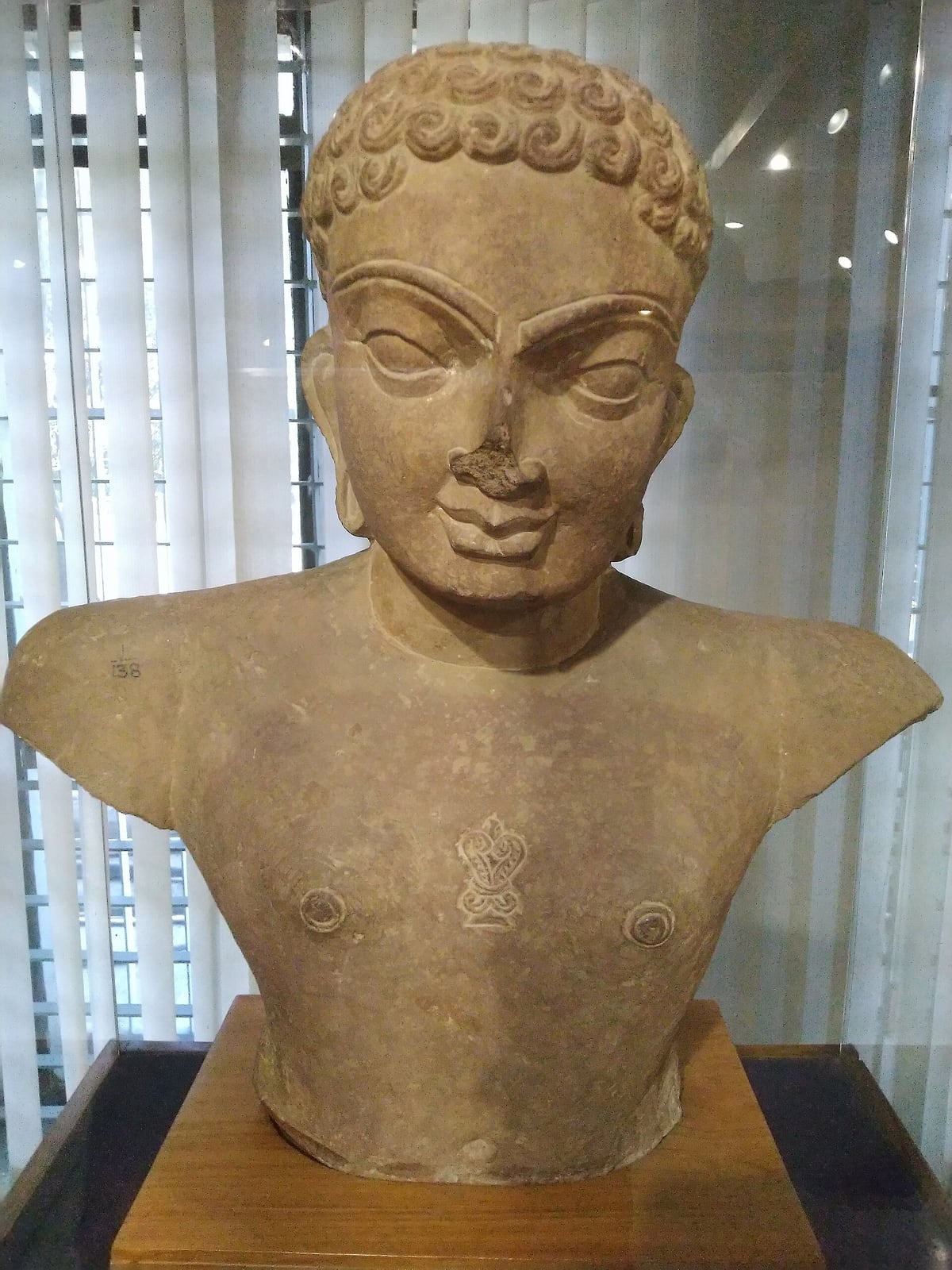
Mahāvīra
Совпадают в вопросах: Что такое Абсолют? Существует ли Бог? · Что происходит после смерти? · Как достигается освобождение или спасение?
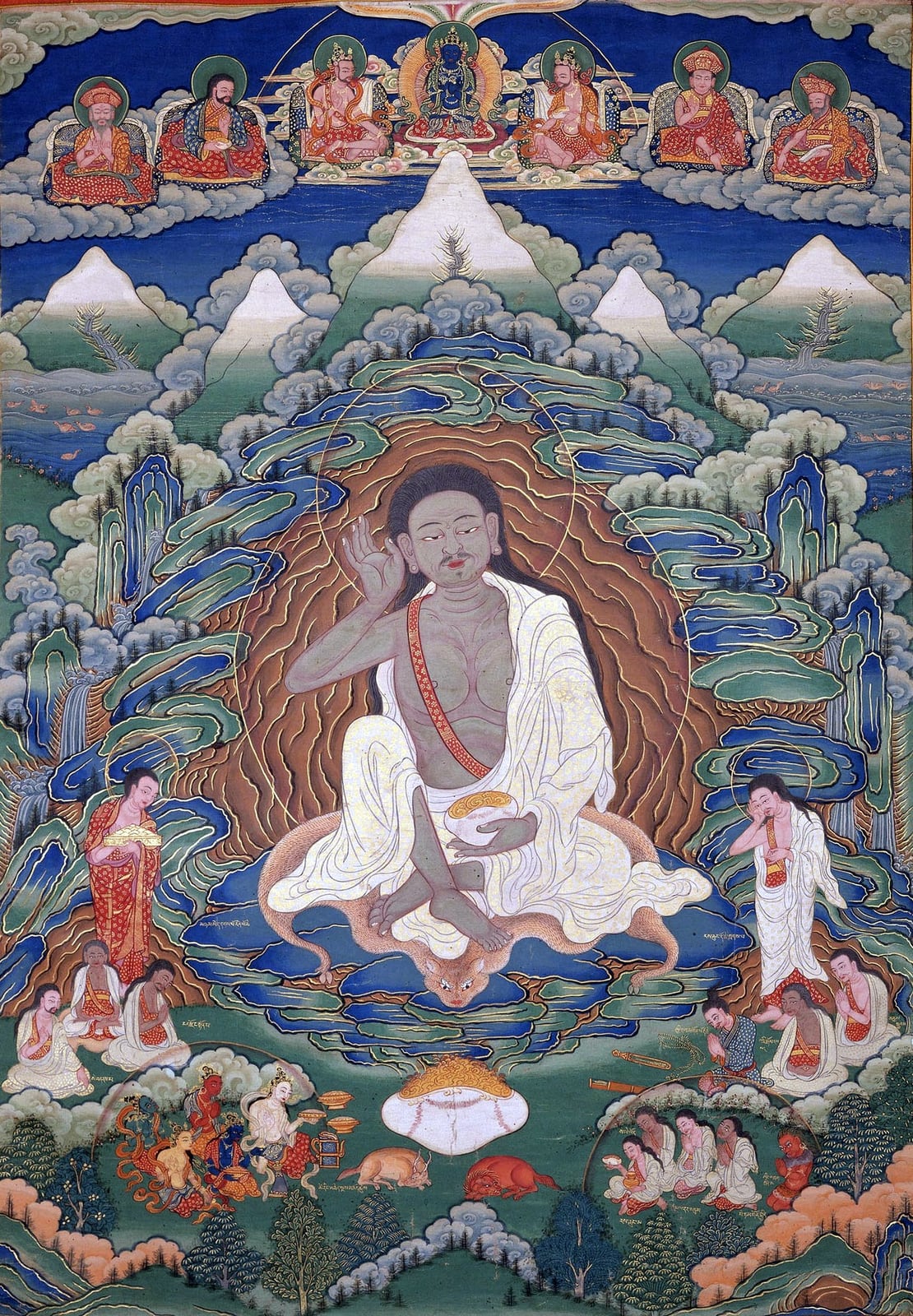
Milarepa
Совпадают в вопросах: Свободны ли мы или всё предопределено? · Что такое Абсолют? Существует ли Бог? · Что происходит после смерти?

Siddhartha Gautama, the Buddha
Совпадают в вопросах: Что такое Абсолют? Существует ли Бог? · Что происходит после смерти? · Как достигается освобождение или спасение?
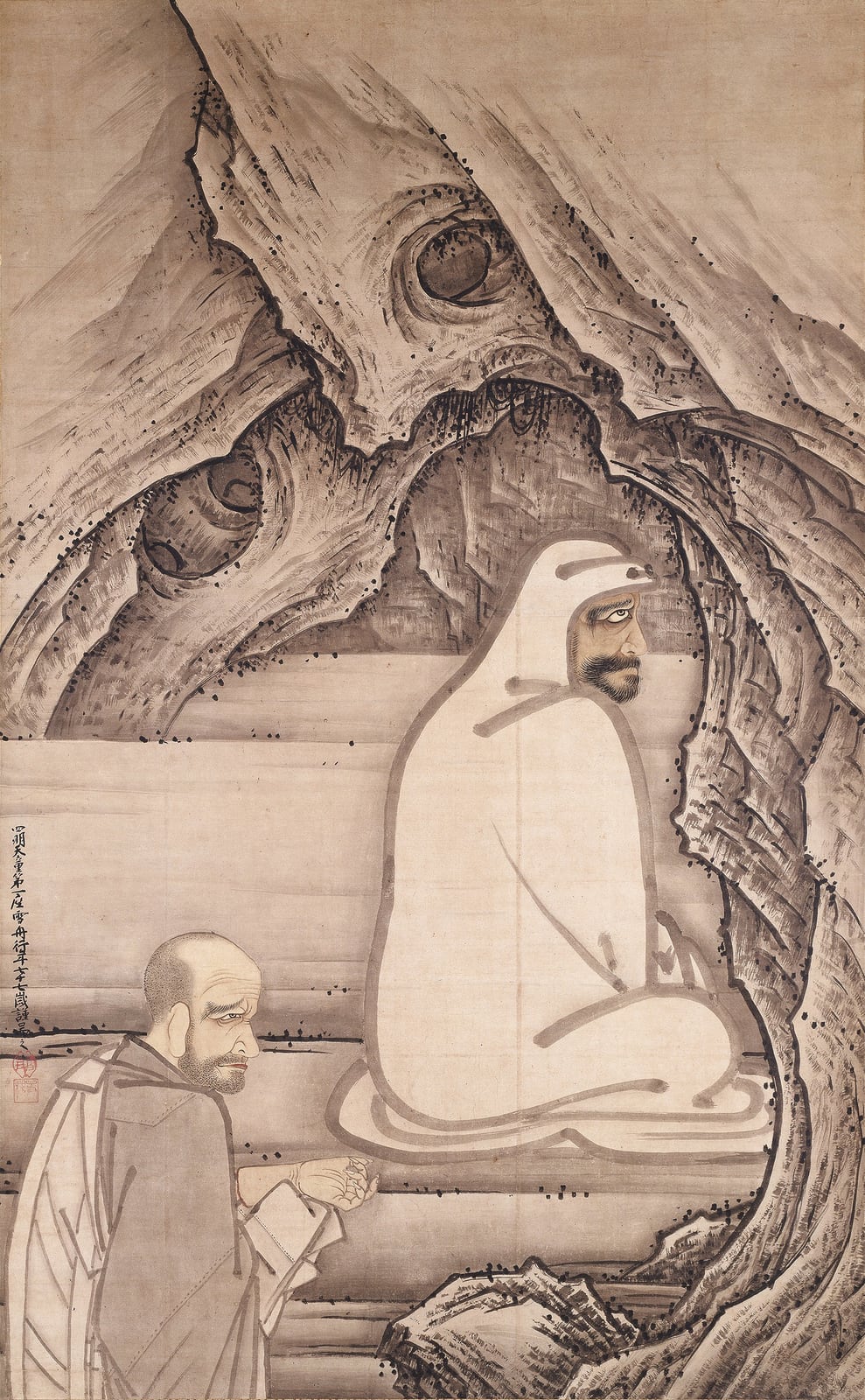
Bodhidharma
Совпадают в вопросах: Кто я? Существует ли истинное «я»? · Что происходит после смерти? · Как достигается освобождение или спасение?
Дальше всего от

Francis of Assisi
Расходятся в вопросах: Что такое Абсолют? Существует ли Бог? · Кто я? Существует ли истинное «я»? · Что происходит после смерти?

Chaitanya Mahaprabhu
Расходятся в вопросах: Что такое Абсолют? Существует ли Бог? · Кто я? Существует ли истинное «я»? · Что происходит после смерти?

Emanuel Swedenborg
Расходятся в вопросах: Что такое Абсолют? Существует ли Бог? · Кто я? Существует ли истинное «я»? · Что происходит после смерти?
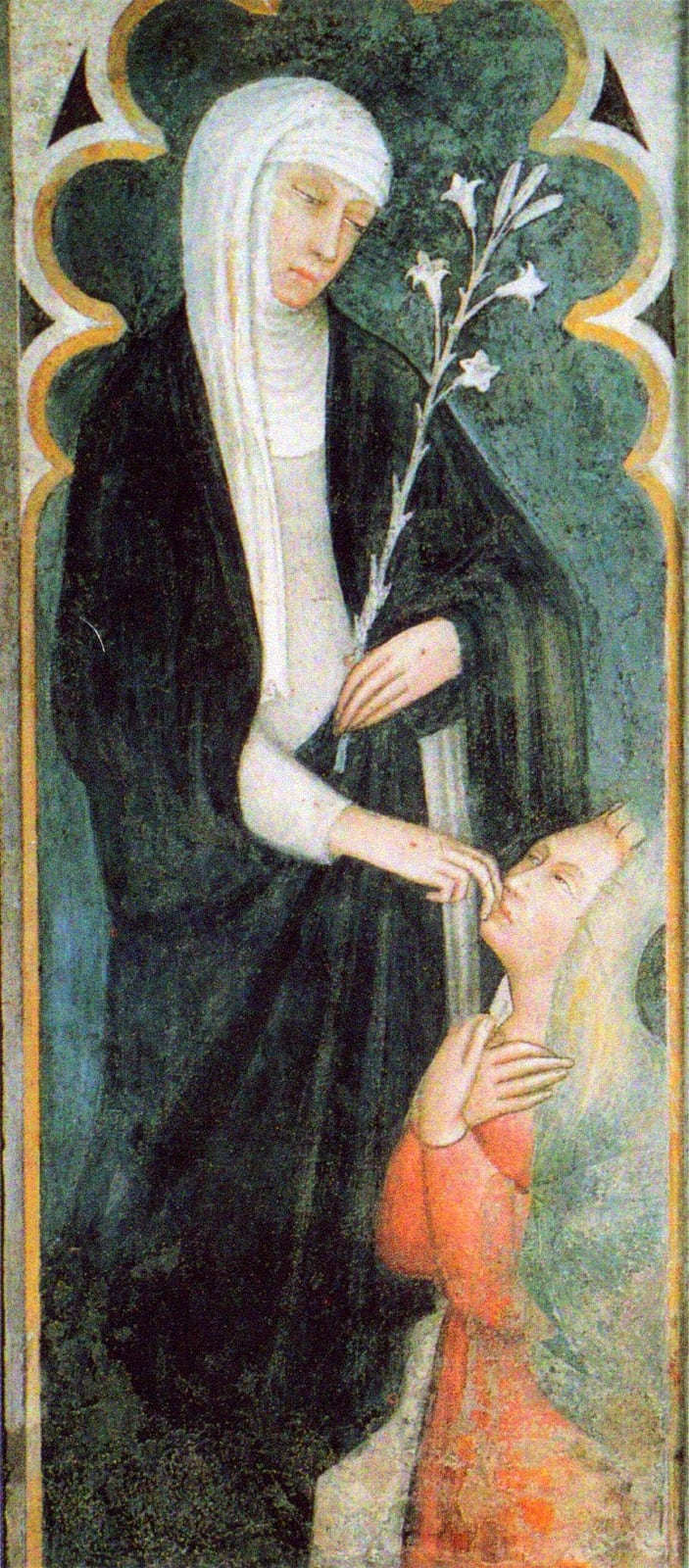
Catherine of Siena
Расходятся в вопросах: Что такое Абсолют? Существует ли Бог? · Кто я? Существует ли истинное «я»? · Что происходит после смерти?
Предания и рассказы
Предания и рассказы
Документированоmediados del s. II a. C.
The Greek who besieged Sāketa
Происхождение рассказа: Examples from the Mahābhāṣya itself (commentary on Pāṇini 3.2.111 and 3.2.123 in Kielhorn's edition), discussed by Cardona as a dating argument.
Источник: Cardona, George. Pāṇini: A Survey of Research. La Haya / París: Mouton, 1976 (reimpr. Delhi: Motilal Banarsidass, 1980 y 1997); sobre la fecha del Mahābhāṣya y su transmisión.
Устная традицияsin fecha
Fallen into the cupped hands
Происхождение рассказа: A devotional story of modern circulation (biographies of teachers and yoga schools) based on a popular etymology of the name. It has not been located in ancient Sanskrit sources; the Mahābhāṣya quotes a Gonikāputra as an authority distinct from its author, and the identification with him is late and uncertain. The identification of Patañjali with Śeṣa is, however, presupposed in Bhoja's verse (11th c.).
Источник: White, David Gordon. The Yoga Sutra of Patanjali: A Biography. Princeton: Princeton University Press, 2014 (Lives of Great Religious Books). ISBN 9780691143774.
Житийное повествованиеsin fecha (textos medievales)
The dance at Chidambaram
Происхождение рассказа: The foundation myth of the Chidambaram temple, transmitted in medieval Sanskrit and Tamil texts praising the temple, studied by David Smith (1996). It has no documentary connection with the author of the Mahābhāṣya or that of the Yogasūtra.
Источник: Smith, David. The Dance of Siva: Religion, Art and Poetry in South India. Cambridge: Cambridge University Press, 1996. ISBN 9780521482349 (sobre los mitos del templo de Chidambaram, Patañjali y Vyāghrapāda).
Житийное повествованиеrelato compuesto a finales del s. XVII
A thousand disciples behind a curtain
Происхождение рассказа: The Patañjalicarita of Rāmabhadra Dīkṣita (Tanjore court, late 17th c.; Kāvyamālā 51). Specialists on the Indology list point out that it is the only written source linking Gauḍapāda with Patañjali. A literary legend with no biographical value.
Документированоc. 1017–1030
Yoga in Arabic
Происхождение рассказа: Arabic text preserved in an Istanbul manuscript, edited by Hellmut Ritter (Oriens, 1956) and translated and studied by Shlomo Pines and Tuvia Gelblum (BSOAS, 1966–1989).
Источник: Pines, Shlomo, y Tuvia Gelblum. «Al-Bīrūnī's Arabic Version of Patañjali's Yogasūtra: A Translation of his First Chapter and a Comparison with Related Sanskrit Texts». Bulletin of the School of Oriental and African Studies 29, n.º 2 (1966): 302–325; continuado en BSOAS 40 (1977), 46 (1983) y 52 (1989).
Документировано1895–1896
Raja Yoga, New York, 1896
Происхождение рассказа: Preface and text of Raja Yoga (1896) and White's analysis (2014).
Источник: White, David Gordon. The Yoga Sutra of Patanjali: A Biography. Princeton: Princeton University Press, 2014 (Lives of Great Religious Books). ISBN 9780691143774.
Учение
Учение
Понятия, на которых строится мысль учителя, объяснённые в их контексте.
Stilling of the movements of the mind (cittavṛttinirodha)citta-vritti-nirodha
Yogasūtra 1.2–1.11 and commentary; foundation of the whole classical school.
Practice and detachment (abhyāsa and vairāgya)abhyasa-vairagya
Yogasūtra 1.12–1.16 and commentary.
Afflictions (kleśa)klesha
Yogasūtra 2.2–2.11; the Buddhist parallels are discussed by Maas and Bryant.
Источник: Bryant, Edwin F. The Yoga Sūtras of Patañjali: A New Edition, Translation, and Commentary with Insights from the Traditional Commentators. Nueva York: North Point Press, 2009. ISBN 9780865477360.
The eight limbs (aṣṭāṅga)ashtanga-yoga
Yogasūtra 2.28–3.8; on the Jain parallel, Chapple (2003).
Источник: Chapple, Christopher Key. Reconciling Yogas: Haribhadra's Collection of Views on Yoga. Albany: State University of New York Press, 2003. ISBN 9780791458990.
Īśvara, the lordishvara
Yogasūtra 1.23–1.29, 2.1, 2.32, 2.45.
Источник: Bryant, Edwin F. The Yoga Sūtras of Patañjali: A New Edition, Translation, and Commentary with Insights from the Traditional Commentators. Nueva York: North Point Press, 2009. ISBN 9780865477360.
Absorption (samādhi)samadhi
Yogasūtra 1.17–1.51 and 3.3.
Isolation (kaivalya)kaivalya
Yogasūtra 2.25–2.26, 3.50–3.55 and 4.25–4.34.
Видео
Видео
Записи, интервью и документальные фильмы. Видео воспроизводятся с YouTube; здесь они не хранятся.
The Yoga Sutras of Patanjali | Prof. Edwin Bryant
Лекция· EN· 2018· 106 min
Vedanta Society of New YorkОфициальный канал
YSP 11 Philipp Maas | The Pātañjalayogaśāstra and its Textual History
Интервью· EN· 2021· 99 min
Yogic Studies
The Yoga Sutras in Depth - Dr. Philipp Maas
Интервью· EN· 2022· 51 min
Keen on Yoga
Once More on Postures in the Pātañjala Yogaśāstra by Philipp Maas
Лекция· EN· 2016· 53 min
Loyola Marymount University, BCLA Yoga StudiesОфициальный канал
Thinking with the Yoga Sūtra, Opening by Dr Christopher Key Chapple, Chair
Лекция· EN· 2016· 39 min
Loyola Marymount University, BCLA Yoga StudiesОфициальный канал
MIPodcast #13: What's the "Yoga Sutra of Patanjali," featuring David Gordon White
Интервью· EN· 2015· 67 min
Maxwell InstituteОфициальный канал
Historical, Popular, and Scholarly Constructions of Yoga with David Gordon White
Интервью· EN· 2016· 37 min
Religious Studies Project
What is Yoga?
Разбор· EN· 2024· 50 min
Let's Talk Religion
Lecturas en Español. De los Aforismos de Yoga de Patañjali
Лекция· ES· 2017· 87 min
Instituto Cervantes Rio de JaneiroОфициальный канал
Los Yoga Sutras de Patamjali | Conferencia | 21/11/2024
Лекция· ES· 2024· 58 min
Instituto Cervantes Nueva DelhiОфициальный канал
Les Yogas-Sutras - Erik Sablé : Les yoga-sutras de Patanjali - Jeudis Philo
Лекция· FR· 2022· 138 min
Ancrages Éditions
Mahābhāṣya of Patañjali, Samarthāhnikam: Lecture-1, Part-2
Лекция· EN· 2019· 116 min
RKMVERI - Deemed UniversityОфициальный канал
Ancient grammatical puzzle solved after 2,500 years
Документальный фильм· EN· 2022· 6 min
Cambridge UniversityОфициальный канал
Галерея
Галерея
Изображения с проверенной лицензией. Каждое сохраняет своё авторство и атрибуцию.
Рукописи
Рукописи
Рукописные свидетельства и древние тексты, с указанием хранителя и условий доступа.
SA · Devanagari · c. 325–425 d. C. (Maas)
पातञ्जलयोगशास्त्र (Yogasūtra con bhāṣya)
- Сохранившийся список
- Manuscrito sin fecha, anterior a 1900
- Хранитель
- National Library of India, Rare Books Division (Calcuta) · Th 217
SA · Devanagari · mediados del s. II a. C. (Mahābhāṣya); s. XI (Pradīpa)
व्याकरणमहाभाष्य with महाभाष्यप्रदीप (Mahābhāṣya con el Pradīpa de Kaiyaṭa)
- Сохранившийся список
- Copia sin fecha en formato de «doble libro»
- Хранитель
- University of Pennsylvania, Kislak Center for Special Collections · Ms. Coll. 390
Связи
Связи
Влияния, ученичество и близость взглядов. Документированная связь отличается от сходства, выявленного путём анализа.
Повлиял на
Vijñānabhikṣu
Author of the Yogavārttika (16th c.), a Vedāntic reading of the text.
Документированная связь
Повлиял на
Bhartṛhari
He commented on the Mahābhāṣya and related its decline and restoration (5th c.).
Документированная связь
Испытал влияние
Pāṇini
The grammarian Patañjali's Mahābhāṣya is the great commentary on Pāṇini's grammar.
Документированная связь
Испытал влияние
Kātyāyana
The Mahābhāṣya discusses one by one Kātyāyana's critical remarks (vārttika) on Pāṇini.
Документированная связь
Идеи, близкие к
Siddhartha Gautama, the Buddha
The yoga text shares vocabulary and schemes with scholastic Buddhism (afflictions, absorptions, the four attitudes of friendliness, compassion, joy and equanimity) and argues against an idealist Buddhist school; the exact debt is debated (Maas, Bryant).
Сходство, выявленное путём анализа
Идеи, близкие к
The five restraints of aphorism 2.30 (non-harming, truthfulness, non-stealing, chastity, non-possession) coincide with the five great vows of Jain monasticism, and the text calls them the "great vow" when kept without exception; Chapple (2003) studies this kinship.
Сходство, выявленное путём анализа
Современник
Woods (1914) noted that Nāgārjuna does not mention Patañjali although he knew a school of yoga; if the Yogasūtra are later than Buddhist idealism, as Woods and Maas argue, Patañjali wrote after him. No contact is documented.
Сходство, выявленное путём анализа
Повлиял на
Tradition ascribes to Śaṅkara a sub-commentary on the Pātañjalayogaśāstra (the Vivaraṇa), whose authorship is disputed; in the Brahmasūtra commentary (2.1.3) Śaṅkara refutes the dualist metaphysics of yoga while accepting its techniques.
Документированная связь
Повлиял на
He translated and commented on the aphorisms in Raja Yoga (1896), the book that made the text known in the West.
Документированная связь
Повлиял на
In Autobiography of a Yogi (1946, ch. 26) he quotes the aphorisms on kriyāyoga and breath control to present his lineage's Kriya Yoga as a continuation of Patañjali.
Документированная связь
Повлиял на
Al-Bīrūnī
He adapted the text into Arabic as the Kitāb Bātanjal (c. 1030).
Документированная связь
Повлиял на
Vācaspati Miśra
Author of the Tattvavaiśāradī, the great classical sub-commentary, translated by Woods.
Документированная связь
Повлиял на
Bhoja de Dhārā
King and author of the Rājamārtaṇḍa commentary (11th c.), first source of the threefold Patañjali.
Документированная связь
Источники
Источники
Библиография и каталоги, использованные для этой статьи.
- Wikidata, «Patanjali», QID Q231680 (descrito como «autor o autores» de la gramática, del yoga y de tratados médicos; LCCN n80044780; GND 119387077; BnF 121635181).
- Maas, Philipp A. «A Concise Historiography of Classical Yoga Philosophy». En Eli Franco (ed.), Periodization and Historiography of Indian Philosophy. Viena: Sammlung de Nobili, 2013, pp. 53–90.
- Maas, Philipp André. Samādhipāda. Das erste Kapitel des Pātañjalayogaśāstra zum ersten Mal kritisch ediert / The First Chapter of the Pātañjalayogaśāstra for the First Time Critically Edited. Aachen: Shaker, 2006 (Geisteskultur Indiens 9).
- Woods, James Haughton (trad.). The Yoga-System of Patañjali, or the Ancient Hindu Doctrine of Concentration of Mind, embracing the Mnemonic Rules, called Yoga-sūtras, of Patañjali, and the Comment, called Yoga-bhāshya, attributed to Veda-Vyāsa, and the Explanation, called Tattva-vāiçāradī, of Vāchaspati-Miçra. Cambridge (Mass.): Harvard University Press, 1914 (Harvard Oriental Series 17). Introducción, §§ 3–5, sobre la identidad de los dos Patañjali y las fechas.
- Bryant, Edwin F. The Yoga Sūtras of Patañjali: A New Edition, Translation, and Commentary with Insights from the Traditional Commentators. Nueva York: North Point Press, 2009. ISBN 9780865477360.
- White, David Gordon. The Yoga Sutra of Patanjali: A Biography. Princeton: Princeton University Press, 2014 (Lives of Great Religious Books). ISBN 9780691143774.
- Bronkhorst, Johannes. «Patañjali and the Yoga sūtras». Studien zur Indologie und Iranistik 10 (1984 [1985]): 191–212.
- Cardona, George. Pāṇini: A Survey of Research. La Haya / París: Mouton, 1976 (reimpr. Delhi: Motilal Banarsidass, 1980 y 1997); sobre la fecha del Mahābhāṣya y su transmisión.
- Meulenbeld, G. Jan. A History of Indian Medical Literature, vol. IA. Groninga: Egbert Forsten, 1999 (sobre los Patañjali médicos y la estrofa de Bhoja).
- Larson, Gerald James, y Ram Shankar Bhattacharya (eds.). Encyclopedia of Indian Philosophies, vol. XII: Yoga: India's Philosophy of Meditation. Delhi: Motilal Banarsidass, 2008.
- Vivekananda, Swami. Raja Yoga, or Conquering the Internal Nature. Londres / Nueva York: Longmans, Green and Co., 1896. Texto en The Complete Works of Swami Vivekananda, vol. 1 (Wikisource).
- Pines, Shlomo, y Tuvia Gelblum. «Al-Bīrūnī's Arabic Version of Patañjali's Yogasūtra: A Translation of his First Chapter and a Comparison with Related Sanskrit Texts». Bulletin of the School of Oriental and African Studies 29, n.º 2 (1966): 302–325; continuado en BSOAS 40 (1977), 46 (1983) y 52 (1989).
- Renou, Louis. «On the Identity of the Two Patañjalis». En Narendra Nath Law (ed.), Louis de La Vallée Poussin Memorial Volume. Calcuta, 1940.
- Kielhorn, Franz (ed.). The Vyâkaraṇa-Mahâbhâshya of Patañjali. 3 vols. Bombay: Government Central Book Depôt, 1880–1885 (Bombay Sanskrit Series).
- Johnston, Charles (trad.). The Yoga Sutras of Patanjali: «The Book of the Spiritual Man». Nueva York, 1912. Project Gutenberg n.º 2526.
- Dvivedi, Manilal Nabhubhai (trad.). The Yoga-Sutra of Patanjali. Bombay: Bombay Theosophical Publication Fund, 1890.
- Pujol, Óscar (trad.). Yogasūtra. Los aforismos del yoga. Barcelona: Kairós, 2021. ISBN 9788499884981.
- Yogananda, Paramahansa. Autobiography of a Yogi. Nueva York: The Philosophical Library, 1946, cap. 26, «The Science of Kriya Yoga».
- Chapple, Christopher Key. Reconciling Yogas: Haribhadra's Collection of Views on Yoga. Albany: State University of New York Press, 2003. ISBN 9780791458990.
- The Pandit Project, «Rāmabhadra Dīkṣita» (ficha biográfica: nacido en la segunda mitad del siglo XVII cerca de Kumbakonam, protegido de Śāhajī I de Tanjore); el Patañjalicarita está impreso en la serie Kāvyamālā (n.º 51), Bombay, Nirṇaya Sāgara Press.
- Angot, Michel (ed. y trad.). Le Yoga-Sūtra de Patañjali. Le Yoga-Bhāṣya de Vyāsa, avec des extraits du Yoga-Vārttika de Vijñāna-Bhikṣu. París: Les Belles Lettres, 2008. ISBN 9782251720500.
- Ritter, Hellmut. «Al-Bīrūnī's Übersetzung des Yoga-Sūtra des Patañjali». Oriens 9, n.º 2 (1956): 165–200 (edición del texto árabe).
- Wikimedia Commons, ficheros de imagen citados en images[] (licencias comprobadas por la API imageinfo el 2026-10-25).
- Mallinson, James, y Mark Singleton (trads. y eds.). Roots of Yoga. Londres: Penguin Classics, 2017. ISBN 9780241253045.
- Smith, David. The Dance of Siva: Religion, Art and Poetry in South India. Cambridge: Cambridge University Press, 1996. ISBN 9780521482349 (sobre los mitos del templo de Chidambaram, Patañjali y Vyāghrapāda).
- Bhatnagar, K. N. (ed.). Nidāna-sūtra of Patañjali. Delhi: Meharchand Lachhmandas, 1971.
- Danielson, Henrik (trad.). Ādiśeṣa: The Essence of Supreme Truth (Paramārthasāra). Leiden: E. J. Brill, 1980. ISBN 9789004061736.
- Open Library (openlibrary.org), fichas por ISBN y búsquedas por autor y título consultadas el 2026-10-25 para verificar las ediciones.
- Правообладатель
- Textos sánscritos en dominio público (s. II a. C. y s. IV–V d. C.). Las traducciones modernas tienen derechos propios: Kairós (Pujol; Iyengar), Debate (Bahm), Edaf (Desikachar), Oniro (Hartranft), North Point Press / Farrar, Straus and Giroux (Bryant), SUNY Press (Hariharānanda Āraṇya), Les Belles Lettres (Angot), Integral Yoga Publications (Satchidananda), Vedanta Press (Prabhavananda e Isherwood). Las de Woods (1914), Johnston (1912), Vivekananda (1896) y Dvivedi (1890) son de dominio público.
Ожидает подтверждения
То, что в этой статье пока не удалось установить. Мы предпочитаем сказать об этом, а не заполнять пробел.
- Fechas: no hay fecha de nacimiento ni de muerte para ningún Patañjali; se dejan como «unknown» y la línea de tiempo usa las fechas de las obras (Mahābhāṣya, mediados del s. II a. C.; Pātañjalayogaśāstra, c. 325–425 según Maas).
- Comprobar en el texto de Renou (1940) la paginación exacta del artículo «On the Identity of the Two Patañjalis».
- Sala de lectura: la traducción de M. N. Dvivedi (1890) en Internet Archive (b28119411) tiene un OCR inservible (reconocido como devanagari); buscar otro escaneo limpio. El Mahābhāṣya de Kielhorn (1880–1885) solo existe en escaneos con OCR deficiente del devanagari. No se ha encontrado ningún texto en español de dominio público (es.wikisource no tiene ninguno).
- Ediciones: falta ISBN de la edición crítica de Maas (Shaker, 2006) y de las traducciones del Mahābhāṣya de Joshi y Roodbergen; buscar ediciones con ISBN en alemán, italiano, ruso e hindi. La edición española de Raja Yoga (Kier, ISBN 9789501701210) no indica fecha ni traductor en Open Library.
- Obras: Meulenbeld menciona otros textos médicos y alquímicos puestos bajo el nombre de Patañjali que no se han podido verificar; cotejar con su History of Indian Medical Literature, vol. IA.
- Vídeo CS2vRfWeFw4 (Instituto Cervantes Nueva Delhi): identificar al ponente.
- Anécdota del nacimiento en el «añjali» de Gonikā: localizar su primera fuente escrita.
Исследовано 2026-10-25