Индуизм · Йога · Бхакти · Адвайта-веданта
Swami Vivekananda
স্বামী বিবেকানন্দ · নরেন্দ্রনাথ দত্ত · स्वामी विवेकानन्द
1863 – 1902Исторически документированная личность
Бенгальский монах, главный ученик Рамакришны и основатель Ордена и Миссии Рамакришны. Выступление на Парламенте религий в Чикаго (1893) сделало его первым великим истолкователем индуизма для Запада. Всего за девять лет публичного учительства он сформулировал практическую веданту — четыре йоги, потенциальную божественность каждой души, служение человеку как богопочитание, — которая определила облик современной йоги, индийского национализма и межрелигиозного диалога. Умер в тридцать девять лет.
- трудов
- 55трудов
- изданий
- 113изданий
- цитат
- 15цитат
- видео
- 12видео
- изображений
- 8изображений
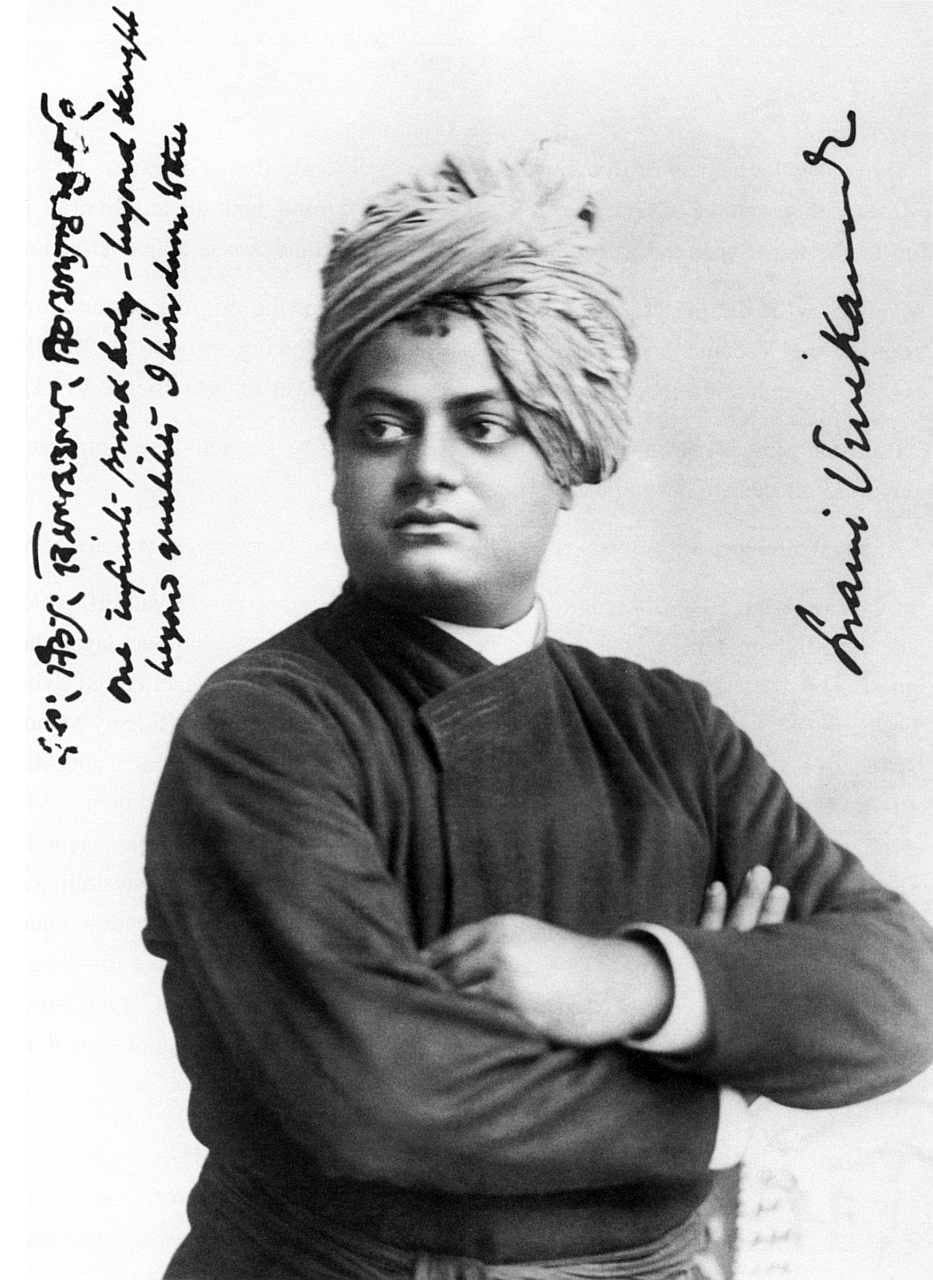
Swami Vivekananda en Chicago, septiembre de 1893 (con dedicatoria autógrafa) · Public domain
Своими словами
«Sisters and Brothers of America,»Discurso de bienvenida, Parlamento Mundial de las Religiones, Chicago, 11 de septiembre de 1893 (Complete Works, vol. 1, «Response to Welcome»)

Главная мысль
The four yogas: Vivekananda organised Hindu spiritual practice into four paths corresponding to four temperaments: karma yoga, for the active, purifies through work done without attachment; bhakti yoga, for the emotional, transforms love into devotion to God; raja yoga, for the contemplative, controls the mind through concentration and meditation; jnana yoga, for the intellectual, attains freedom through discrimination between the real and the unreal.
В контексте
Биография
4 мин чтения
Перевод с испанского оригинала, выполненный с помощью ИИ; ожидает проверки носителем языка.
Юноша из Калькутты, которому нужны были доказательства
Нарендранатх Датта родился 12 января 1863 года в Калькутте, в состоятельной семье из касты каястхов, жившей в квартале Симла. Его отец, Вишванатх Датта, был адвокатом Высокого суда, человеком космополитических вкусов и любителем персидской поэзии; мать, Бхуванешвари Деви, передала ему сказания «Рамаяны» и «Махабхараты». Нарендра учился блестяще, но неровно: классическая музыка, гимнастика, западная логика, Милль, Спенсер и Юм в General Assembly's Institution (ныне Scottish Church College), которую он окончил в 1884 году. Как и многие юноши бенгальской элиты, он посещал «Брахмо Самадж» — реформаторское движение, заменившее культ изображений рациональным теизмом. Но проповедей ему было мало. Согласно рассказу, который он сам повторял годы спустя и который приводят его биографы, он спрашивал у религиозных учителей Калькутты, видели ли они Бога. Ни один не ответил утвердительно.
Дакшинешвар
В конце 1881 года он познакомился с Рамакришной, экстатическим жрецом храма Кали в Дакшинешваре, на берегу Ганга. На тот же вопрос этот почти неграмотный человек ответил: да, видит — так же, как видит его самого, и даже яснее. Отношения между ними, запечатлённые в дневниках Махендранатха Гупты («Шри Шри Рамакришна Катхамрита»), пять лет оставались поединком скептицизма ученика и уверенности учителя. Нарендра высмеивал идолопоклонство и адвайтистское учение о том, что «всё есть Брахман»; Рамакришна обращался с ним как с избранником. Внезапная смерть отца в 1884 году разорила семью и поставила Нарендру лицом к лицу с голодом; рассказ о том, как Рамакришна послал его просить у богини избавления от нужды, а он смог попросить лишь различения и непривязанности, восходит к преданию Ордена и должен читаться именно так. Когда Рамакришна умер в августе 1886 года в Коссипуре, Нарендра уже был средоточием небольшой группы молодых людей, которые в конце того же года основали монашескую общину в полуразрушенном доме в Баранагаре.
Странствующий монах
С 1888 по 1893 год он обошёл Индию пешком и объездил её поездом, под сменявшимися монашескими именами, ночуя то во дворцах махараджей, то в хижинах парий. Эти годы, неравномерно освещённые письмами и свидетельствами, собранными десятилетия спустя, дали ему непосредственное знание деревенской нищеты и кастового унижения, которое питало затем его социальную критику. В декабре 1892 года он пришёл в Каньякумари, на южную оконечность субконтинента, и медитировал на скале у берега; там, как он рассказывал потом в письмах, у него родилась мысль искать на Западе средства, чтобы поднять народные массы Индии. Имя Вивекананда — «блаженство различения» — закрепилось незадолго до путешествия, в окружении махараджи Кхетри, оплатившего часть дороги.
Чикаго, 1893
В июле 1893 года он прибыл в Чикаго, не имея полномочий ни от одной организации. Гарвардский профессор греческого языка Джон Генри Райт помог ему попасть на Всемирный парламент религий, проходивший в рамках Колумбовой выставки. 11 сентября он начал своё краткое выступление словами «Sisters and Brothers of America» («Сёстры и братья Америки»), которые, согласно отчётам, собранным Джоном Генри Барроузом, вызвали долгую овацию. В последующие дни он представил индуизм без каст и идолов, сосредоточенный на божественности души («индус отказывается называть вас грешниками») и на гармонии всех религий. Пресса сделала его главной фигурой Парламента.
Учитель на Западе
Более трёх лет он читал лекции в Соединённых Штатах и Англии. В 1894 году основал Нью-Йоркское общество веданты; летом 1895 года занимался с небольшой группой в Таузенд-Айленд-Парке (беседы, изданные как Inspired Talks); в Лондоне познакомился с Маргарет Нобл, будущей сестрой Ниведитой; в Оксфорде посетил Макса Мюллера, в Киле — Пауля Дойссена. Из этих занятий выросли четыре книги, закрепившие его систему: «Карма-йога» и «Раджа-йога» (1896), «Бхакти-йога» и изданные посмертно лекции, собранные под названием «Джнана-йога». «Раджа-йога» с комментированным переводом «Йога-сутр» Патанджали десятилетиями служила западному читателю входом в йогу; историк Элизабет Де Микелис считает её основополагающим текстом «современной йоги» с её психологическим и экспериментальным прочтением медитации.
Вернуться, чтобы служить
В январе 1897 года он высадился в Коломбо и, встречаемый многотысячными толпами, проехал по Южной Индии до Альморы; лекции этого путешествия, «Лекции от Коломбо до Альморы» (Lectures from Colombo to Almora), составляют ядро его обращения к индийцам: сила, вера в себя, просвещение масс, беспощадная критика неприкасаемости и обрядоверия. 1 мая 1897 года он основал в Калькутте Ассоциацию «Миссия Рамакришны», соединившую монашескую жизнь с социальным служением; в декабре 1898 года был освящён монастырь в Белуре, а в 1899-м — Адвайта-ашрам в Майявати. Его формула, восходящая, по преданию, к Рамакришне, — служить человеку как самому Богу (шива джнане джива сева). В 1899–1900 годах он совершил второе путешествие на Запад — Калифорния, Нью-Йорк, Конгресс по истории религий в Париже, — уже тяжело больной диабетом и астмой.
Смерть в тридцать девять лет
Он умер в Белур-матхе 4 июля 1902 года, на закате, во время медитации, после дня, который его товарищи описывали как самый обычный. Ему было тридцать девять лет; ученики вспоминали, что он предсказывал, что не доживёт до сорока. Его кремировали на берегу Ганга, напротив того места, где шестнадцатью годами ранее было предано огню тело его учителя.
Документированное и переданное преданием
От Вивекананды до нас дошёл исключительный объём первоисточников: стенографические записи лекций, письма, статьи и беседы, собранные в девяти томах Complete Works («Полного собрания сочинений»). Годы странствий и многие эпизоды его отношений с Рамакришной, напротив, известны главным образом по официальной биографии, написанной его учениками (1912–1918), и по поздним свидетельствам, с присущим жанру агиографическим уклоном. Исследования Мари Луизы Бёрк в американской прессе позволили точно восстановить американские годы и исправить не одну легенду. Ни одной звукозаписи его голоса не сохранилось: записи, которые выдаются за таковые, — более поздние чтения.
Наследие
Орден и Миссия Рамакришны с центром в Белуре содержат сегодня сотни центров, больниц и школ. Его прочтение веданты — опыт как доказательство религии, единство религий, индуизм как вселенская вера — подвергалось критике со стороны таких учёных, как Анантананд Рамбачан и Вильгельм Хальбфас, за перенос западных категорий на традицию и было присвоено индуистским национализмом в смыслах, которых он не предвидел. Ганди, Тагор, Ауробиндо и Субхас Чандра Бос признавали его влияние, а Индия отмечает день его рождения как Национальный день молодёжи. За пределами Индии без него невозможно понять приход на Запад йоги, веданты и самой идеи универсальной духовности.
Источники: Vivekananda, Swami. The Complete Works of Swami Vivekananda. Mayavati Memorial Edition, 9 vols. Calcuta: Advaita Ashrama, 1907–1997 (vol. 9 añadido en 1997). · His Eastern and Western Disciples. The Life of Swami Vivekananda. 2 vols. Mayavati / Calcuta: Advaita Ashrama, 1912–1918; 6.ª ed. revisada, 1979–1981. · Nikhilananda, Swami. Vivekananda: A Biography. Nueva York: Ramakrishna-Vivekananda Center, 1953. · Burke, Marie Louise. Swami Vivekananda in the West: New Discoveries. 6 vols. Calcuta: Advaita Ashrama, 1983–1987 (1.ª ed. en un volumen, 1958). · Barrows, John Henry (ed.). The World's Parliament of Religions. 2 vols. Chicago: The Parliament Publishing Company, 1893.
Хронология
Жизнь год за годом
Каждая точка — документированное событие. Нажмите, чтобы прочитать о нём, с источником и степенью достоверности.
12 января 1863 г.0 летCalcuta
Birth of Narendranath Datta
Born at the family home in Gourmohan Mukherjee Street, son of the attorney Vishwanath Datta and Bhuvaneswari Devi.
ДокументированоHis Eastern and Western Disciples. The Life of Swami Vivekananda. 2 vols. Mayavati / Calcuta: Advaita Ashrama, 1912–1918; 6.ª ed. revisada, 1979–1981.
После смерти
- 1907First Complete Works
- 1984National Youth Day
12 января 1863 г. · 0 лет
Birth of Narendranath Datta
Born at the family home in Gourmohan Mukherjee Street, son of the attorney Vishwanath Datta and Bhuvaneswari Devi.
Документировано
1881 · 18 лет
First meeting with Ramakrishna
Ramakrishna hears him sing at Surendranath Mitra's house (November 1881, according to the official biography) and he soon visits Dakshineswar, where he asks whether he has seen God.
Вероятно
1884 · 21 год
Degree and father's death
He graduates (B.A.) from Calcutta University. His father's sudden death leaves the family in debt and poverty.
Документировано
16 августа 1886 г. · 23 года
Death of Ramakrishna
Ramakrishna dies of throat cancer at the Cossipore garden house, where Narendra and other young men had nursed him for months.
Документировано
декабрь 1886 г. · 23 года
Birth of the monastic community
The young disciples settle in a house at Baranagar—the Order's first monastery—and at Antpur on Christmas Eve take the vow of renunciation; formal ordination (viraja homa) follows early in 1887.
Документировано
1888 – 1893 · 25 лет
Years of wandering
He travels India as a wandering monk until 1893, in contact with maharajas, pandits and peasants.
Документировано
декабрь 1892 г. · 29 лет
The rock at Kanyakumari
He meditates on a rock off Cape Comorin; in his letters he places there the decision to seek help for India's masses. The rock now holds the Vivekananda Rock Memorial (1970).
Документировано
31 мая 1893 г. · 30 лет
Sails for America
He sails from Bombay via Ceylon, Singapore, Hong Kong, Japan and Vancouver, reaching Chicago at the end of July.
Документировано
11 сентября 1893 г. · 30 лет
Welcome address at the Parliament of Religions
'Sisters and Brothers of America.' Until 27 September he speaks several times, the 'Paper on Hinduism' (19 September) being the central text.
Документировано
ноябрь 1894 г. · 31 год
Vedanta Society of New York
He founds the first Vedanta society in the West, still active.
Документировано
июнь 1895 г. · 32 года
The Thousand Island Park talks
Seven weeks of teaching a small group of disciples; Sarah Ellen Waldo's notes will be published as Inspired Talks (1908).
Документировано
ноябрь 1895 г. · 32 года
Meeting Margaret Noble
The Irish educator, the future Sister Nivedita, hears him in a West End drawing room.
Документировано
1896 · 33 года
Raja Yoga, Karma Yoga and meetings with Max Müller and Deussen
Longmans publishes Raja Yoga in London; Karma Yoga and Bhakti Yoga appear. He visits Max Müller in Oxford (May) and Paul Deussen in Kiel (September).
Документировано
15 января 1897 г. · 34 года
Triumphant return to India
He lands at Colombo and travels north to Calcutta and Almora; his speeches form Lectures from Colombo to Almora.
Документировано
1 мая 1897 г. · 34 года
Founding of the Ramakrishna Mission
He establishes the Ramakrishna Mission Association, joining monastic renunciation to social service.
Документировано
9 декабря 1898 г. · 35 лет
Consecration of Belur Math
He installs Ramakrishna's relics in the new monastery on the Ganges, the Order's headquarters.
Документировано
20 июня 1899 г. – 1900 · 36 лет
Second journey to the West
He leaves with Turiyananda and Nivedita; teaches in New York and California (Shanti Ashrama) and in 1900 attends the Congress of the History of Religions in Paris.
Документировано
4 июля 1902 г. · 39 лет
Death
He dies in the evening in his room, during meditation; the monks speak of mahasamadhi. He is cremated the next day on the bank of the Ganges.
Документировано
1907
First Complete Works
Advaita Ashrama begins publishing the Complete Works (Mayavati Memorial Edition), which will reach nine volumes in 1997.
Документировано
1984
National Youth Day
The Government of India declares 12 January, his birthday, National Youth Day (observed since 1985).
Документировано
Труды
Главные труды
Труды, без которых не понять это наследие.
Опубликованные лекции · 1896
Raja Yoga
Raja Yoga, or Conquering the Internal Nature
The exposition of meditative yoga that most influenced the West for half a century. It presents raja yoga as an experimental science of the mind—posture, control of prana, withdrawal of the senses, concentration, meditation and samadhi—without prior faith. The second part translates and comments on Patañjali's aphorisms. Its language of energy, psychology and method, and its syncretism with notions of the time, were decisive in making yoga understood in the West as a universal technique; Elizabeth De Michelis regards it as the founding text of modern yoga.
8 изданий · amazon.com

Опубликованные лекции · 1896
Karma Yoga
Karma-Yoga
The yoga of action: how work done without attachment to its fruits purifies the mind and leads to freedom. Drawing on the Bhagavad Gita, Vivekananda develops an ethic of duty relative to each person ('each is great in his own place'), the idea that in helping the world we help ourselves, and the ideal of work for work's sake. It is the doctrinal foundation of the Ramakrishna Mission and of social service as spiritual practice.
7 изданий · amazon.com

Опубликованные лекции · ок. 1896
Bhakti Yoga
Bhakti-Yoga
The path of love for God. Vivekananda defines bhakti as 'a real, genuine search after the Lord' that begins, continues and ends in love, and follows it from preparatory devotion—with symbols, images, names and the need for a teacher—to supreme devotion, in which lover, love and beloved merge. He defends image worship as a legitimate step against reformist critics and reconciles it with non-dual Vedanta.
6 изданий · amazon.com

Опубликованные лекции · ок. 1899
Jnana Yoga
Jnana-Yoga
The path of knowledge according to Advaita Vedanta: the necessity of religion, maya as a statement of facts rather than a theory, the personal and impersonal God, the unity of existence and the realisation of the Self. It is his most philosophical exposition: a defence of monism as the rational culmination of religion, in dialogue with the science and agnosticism of his time, and the basis of his thesis that all religions lead to the same unity.
8 изданий · amazon.com
Все труды (55)
Swami Vivekananda
Chicago Addresses
The Conscious LibraryChicago Addresses
1893

The Complete Works
1907

Lectures from Colombo to Almora
1897

Inspired Talks
1908

My Master
1901
Swami Vivekananda
Letters
The Conscious LibraryLetters
1940

Practical Vedanta
1896

The Vedanta Philosophy (Harvard address)
1896
Swami Vivekananda
Memoirs of European Travel (Parivrajak)
The Conscious LibraryMemoirs of European Travel (Parivrajak)
1899
Swami Vivekananda
Modern India (Bartaman Bharat)
The Conscious LibraryModern India (Bartaman Bharat)
1899
Swami Vivekananda
The East and the West (Prachya o Paschatya)
The Conscious LibraryThe East and the West (Prachya o Paschatya)
1902
Swami Vivekananda
Poems
The Conscious LibraryPoems
1947

Talks with Swami Vivekananda
1902

Meditation and Its Methods
1976
Swami Vivekananda
Sangeet Kalpataru
The Conscious LibrarySangeet Kalpataru
1887
Swami Vivekananda
The Ideal of a Universal Religion
The Conscious LibraryThe Ideal of a Universal Religion
1896
Swami Vivekananda
The Real and the Apparent Man
The Conscious LibraryThe Real and the Apparent Man
1896
Swami Vivekananda
Vedanta Philosophy: Lecture on "The Atman"
The Conscious LibraryVedanta Philosophy: Lecture on "The Atman"
1896

Speeches and Writings of Swami Vivekananda: A Comprehensive Collection
1899
Swami Vivekananda
Christ, the Messenger
The Conscious LibraryChrist, the Messenger
1900
Swami Vivekananda
The Science and Philosophy of Religion
The Conscious LibraryThe Science and Philosophy of Religion
1908

Essentials of Hinduism
1919

Hinduism
1943

Religion of Love
1947
Изречения
Изречения, найденные в конкретном труде. Каждое сопровождается указанием происхождения и степени надёжности.
Sisters and Brothers of America,ПровереноDiscurso de bienvenida, Parlamento Mundial de las Religiones, Chicago, 11 de septiembre de 1893 (Complete Works, vol. 1, «Response to Welcome»)
Апокрифические изречения и изречения спорной атрибуции (3)
«'Talk to yourself once in a day, otherwise you may miss meeting an excellent person in this world.'»
It circulates massively on social media and posters under his name, but it does not appear in any of the nine volumes of the Complete Works (search of the full Wikisource text, 2026-10-23). Neither its style nor its vocabulary is Vivekananda's.
«'In a day, when you don't come across any problems – you can be sure that you are travelling in a wrong path.'»
Not located in the Complete Works (Wikisource search, 2026-10-23). It belongs to the self-help sayings attributed online without a source.
«The audio recordings circulating as 'the voice of Swami Vivekananda' delivering the Chicago address.»
No sound recording of Vivekananda survives. The recordings presented as his 'own voice' are modern readings; neither the Ramakrishna Order nor Marie Louise Burke's research on his American stay mentions any recording.
Последние слова
Проверяемых записей о последних словах не существует.
His disciples' official biography (The Life of Swami Vivekananda, 1912–1918) describes 4 July 1902 in detail—three hours of meditation in the morning, a Sanskrit grammar class, a walk, talk of a planned Vedic college—and says that around seven in the evening he withdrew to meditate and died at about nine; sources differ on the time (9:10 or 9:20). It records no words spoken at the moment of death. A remark he supposedly made that day, overheard by a brother monk, that only 'another Vivekananda' would understand what Vivekananda had done, circulates widely; it could not be checked against the primary source and is in any case not his last words.
Источник: His Eastern and Western Disciples. The Life of Swami Vivekananda. 2 vols. Mayavati / Calcuta: Advaita Ashrama, 1912–1918; 6.ª ed. revisada, 1979–1981.
Спросить
На что отвечают эти труды
Двенадцать великих вопросов человечества и то, что позволяют на них ответить эти тексты, со ссылками. Мы никогда не вкладываем слова в чужие уста.
Что такое Абсолют? Существует ли Бог?
The personal God is the Absolute as read by the human mind
И личный, и безличныйСказано прямо
Swami Vivekananda, disciple of Ramakrishna, defends Advaita Vedanta without disdaining devotion. In his Jnana Yoga lectures he holds that the only reality is the impersonal Brahman, existence, consciousness and bliss, and that the human soul is identical with it. In Bhakti Yoga, in the chapter on the philosophy of Ishvara, he explains that the personal God is that same Absolute as perceived by the human mind: not an illusion to be discarded but the highest reading of the Absolute available to one who still feels himself an individual. Hence his claim that dualism, qualified non-dualism and non-dualism are stages of one path. For Vivekananda, the divine has a face that is loved and a formless ground with which, ultimately, one is identified.
Сравнить этот вопрос с другими учителямиКто я? Существует ли истинное «я»?
Each soul is potentially divine; the real man is the infinite Atman
Самость есть АбсолютСказано прямо
Swami Vivekananda distinguishes, in the lecture «The Real and the Apparent Man» collected in Jnana Yoga, between the limited individual we believe ourselves to be and the real man, the Atman, infinite, immortal and one with Brahman. The apparent man is a passing manifestation of that Atman through body and mind; everything that limits us belongs to the level of appearance. Hence his motto, which heads his exposition of Raja Yoga: each soul is potentially divine, and the goal is to manifest this divinity within by controlling nature, external and internal, through work, devotion, psychic control or philosophy. Vivekananda stresses the ethical consequences: if we are all the same Self, serving another is serving God. The true self is not a part of the Absolute but the Absolute itself.
Сравнить этот вопрос с другими учителямиПочему мы страдаем?
Maya always mixes pleasure and pain; only the Atman is free of both
Незнание того, кто мы естьСказано прямо
Swami Vivekananda treats suffering in his lectures on maya, collected in Jnana Yoga. Maya is not for him a theory of illusion but a statement of the contradiction in which we live: every pleasure drags its pain, every good its evil, and no worldly progress will remove that mixture, because it belongs to the nature of the relative world. Whoever seeks complete happiness in the finite is condemned to frustration. The root of suffering is ignorance of our true nature: we identify with body and mind, subject to contradiction, rather than with the Atman, which lies beyond it. Vivekananda does not draw indifference from this: in Karma Yoga he proposes working to relieve the pain of others without attachment to results, as a way of purifying oneself and of serving God in every being.
Сравнить этот вопрос с другими учителямиЧто происходит после смерти?
The Atman is immortal; bodies change, are reborn and are finally known as illusory
То, что я есть, не рождается и не умираетСказано прямо
Vivekananda sets out the question of death from Vedanta in lectures such as «Immortality», included in Jnana Yoga. He denies that the soul is created or can die: what has a beginning has an end, and the Atman, which is Brahman, has none. On the relative plane he accepts reincarnation: the subtle mind, laden with impressions (samskaras), leaves the body and seeks another in accordance with its karma, and Vivekananda defends it as a more rational explanation of the differences between beings than the creation of new souls at each birth. But on the ultimate plane, that of non-duality, the soul never came and never went: the same infinite Self appears under names and forms. The goal is not an eternal life in a heaven, which would be another form of birth, but to recognise that one was never born.
Сравнить этот вопрос с другими учителямиКак достигается освобождение или спасение?
Manifest the inner divinity through work, devotion, mental control or knowledge
Через дисциплинированную практикуСказано прямо
Swami Vivekananda sums up his position in the preface to Raja Yoga: each soul is potentially divine and the goal is to manifest that divinity by controlling nature, external and internal, whether by work, by worship, by psychic control or by philosophy, by one, several or all of these means. The other elements of religion (doctrines, rites, books or temples) are secondary details. He devoted a book to each path: Karma Yoga, Bhakti Yoga, Raja Yoga and Jnana Yoga. His originality lies in presenting them as verifiable, almost experimental methods suited to different temperaments, and in joining them to service of others, whom he asked people to see as manifestations of the divine. The ultimate horizon is the Advaitic realisation of identity with Brahman.
Сравнить этот вопрос с другими учителямиНужен ли учитель?
Spiritual impulse passes from soul to soul: a true guru is needed
НезаменимСказано прямо
In Bhakti Yoga, Swami Vivekananda devotes chapters to the need for a guru and to the qualities of the aspirant and the teacher. He holds that books alone do not awaken the soul: the spiritual impulse must come from another, already awakened soul, and the one who transmits it is the guru. He asks much of the teacher: he must know the spirit of the scriptures, be free from sin and not teach for money or fame. And he asks of the disciple purity, thirst for knowledge and perseverance. His own life illustrates this position: he attributed everything he was to his master Ramakrishna. At the same time, Vivekananda rejected credulity and asked that teaching be examined; the guru is necessary, but not just anyone is one.
Сравнить этот вопрос с другими учителямиРеален ли мир?
Maya is not a theory: it is a description of the world as it is
Видимость поверх единой реальностиСказано прямо
In the lectures collected in Jnana Yoga, Swami Vivekananda devotes several talks to maya and warns against understanding it as a claim that the world does not exist. Maya is, for him, a description of facts: the world is a contradictory mixture of good and evil, pleasure and pain, life and death, which cannot be resolved within itself. It is neither simply unreal nor real in the ultimate sense: it is the appearance the Absolute takes on through time, space and causality. Behind that appearance stands Brahman, the only reality, which is also the Self of each person. Hence his practical emphasis: seeing the divine in the beings one serves.
Сравнить этот вопрос с другими учителямиЧто такое любовь?
Love for love's sake, without asking or fearing, leads to union
Тоска и соединениеСказано прямо
Vivekananda devoted one of his four yogas to love. In Bhakti Yoga he defines devotion as the search for God through love and describes its culmination, supreme devotion (para-bhakti), through what he calls the triangle of love: love asks nothing in return, knows no fear and has no other object than love itself, which is its own ideal. He goes through the forms the relationship with God takes — as Father, as Mother, as friend, as beloved — and holds that all human love, even the most limited, is a reflection of divine love. At its height, the lover, love and the beloved become one, and devotion flows into the same non-duality that knowledge reaches. At the same time, Vivekananda joins love of God with service: to serve the human being is to serve God present in him.
Сравнить этот вопрос с другими учителямиСвободны ли мы или всё предопределено?
We are what our acts have made us, and we can remake ourselves
Карма и выборСказано прямо
Vivekananda stresses human responsibility with almost programmatic vigour: in *Karma Yoga* (1896) he holds that each person is the sum of his past thoughts and actions, and therefore holds in his own hands what he will become. His critique of the fatalism of the India of his day is explicit: weakness, not destiny, is the cause of misery. But as a Vedantin he distinguishes levels. In his *Jnana Yoga* lectures he explains that the will, as a phenomenon of the world of *māyā*, is subject to cause and effect and is not free in an absolute sense; what is free is the Ātman, beyond the causal chain. Practice consists in using conditioned action to reach that freedom which does not depend on choosing.
Сравнить этот вопрос с другими учителямиЗачем медитировать или молиться?
Concentrating the mind until the soul knows itself in samadhi
Возвращение к источнику «я»Сказано прямо
In *Raja Yoga* (1896), his commentary on Patañjali's *Yoga Sutras*, Vivekananda presents meditation as an experimental science: just as the chemist focuses his instruments on matter, the yogi focuses the mind on itself. His ladder runs from ethics and posture through breath control, withdrawal of the senses, concentration and meditation up to *samādhi*, a superconscious state in which the soul recognises itself as free and independent of nature. He does not deny the value of devotion, to which he devotes *Bhakti Yoga*, nor of selfless action, but for him the end of meditative practice is realisation of the Ātman, identical with Brahman, not petition to a separate God.
Сравнить этот вопрос с другими учителямиМожет ли разум познать предельное?
Religion must withstand reason's scrutiny and culminate in superconsciousness
Вера и разум помогают друг другуСказано прямо
Vivekananda claims for religion the same rational scrutiny applied to science: in his lecture «Reason and Religion» he holds that a religion unable to defend itself before reason does not deserve to survive, and presents Vedānta as the most rational of doctrines. But in *Raja Yoga* (ch. 7, «Dhyāna and Samādhi») he sets out a scale of knowledge: instinct, reason and superconsciousness. Reason surpasses instinct but moves within a limited circle; beyond it is *samādhi*, in which truths are known that reason cannot reach, though they never contradict it. The statements of sages and scriptures, he insists, must be verified in one's own experience.
Сравнить этот вопрос с другими учителямиУйти от мира или преобразить его?
Serving the human being is worshipping God: a practical Vedanta
Действовать в миреСказано прямо
Swami Vivekananda, a renunciant monk, set out to bring Vedanta out of the forests and caves and into daily life. In his lectures on Practical Vedanta, delivered in London in 1896, he holds that the unity of all beings in the Ātman is not an idea for isolated contemplation but the foundation of an ethic of service: if God is in every human being, serving the poor, the sick or the ignorant is worshipping God. He takes up his master Ramakrishna's teaching of serving beings by seeing them as Shiva, and in 1897 founds the Ramakrishna Mission, which joins monastic life with hospitals, schools and relief in famines and epidemics. In Karma Yoga he presents selfless action as a path to liberation. He harshly criticised a religiosity concerned with rites while the people of India went hungry.
Сравнить этот вопрос с другими учителями
Созвучия и противоречия
Созвучия и противоречия
Рассчитаны вопрос за вопросом на основе позиций. Причина каждого совпадения или расхождения — по нажатию.
Ближе всего к
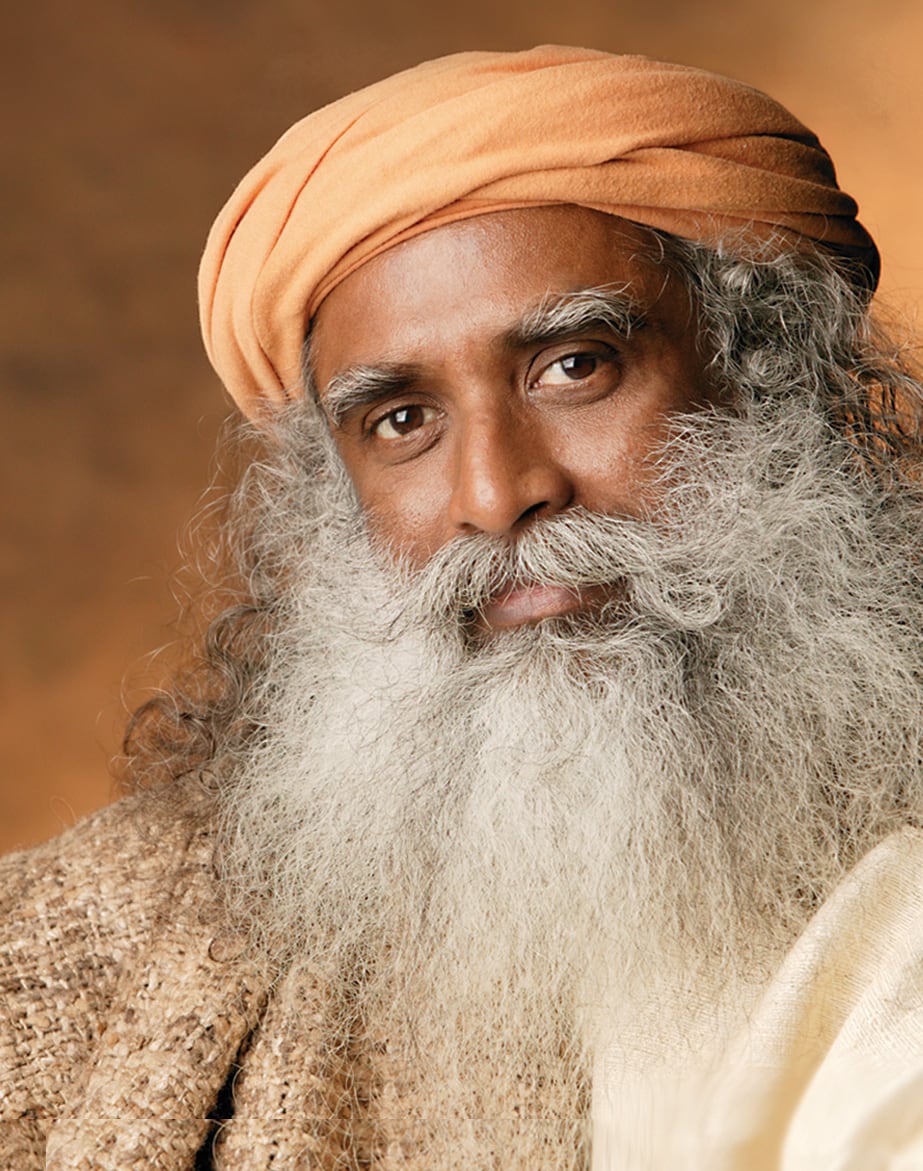
Sadhguru
Совпадают в вопросах: Как достигается освобождение или спасение? · Кто я? Существует ли истинное «я»? · Нужен ли учитель?
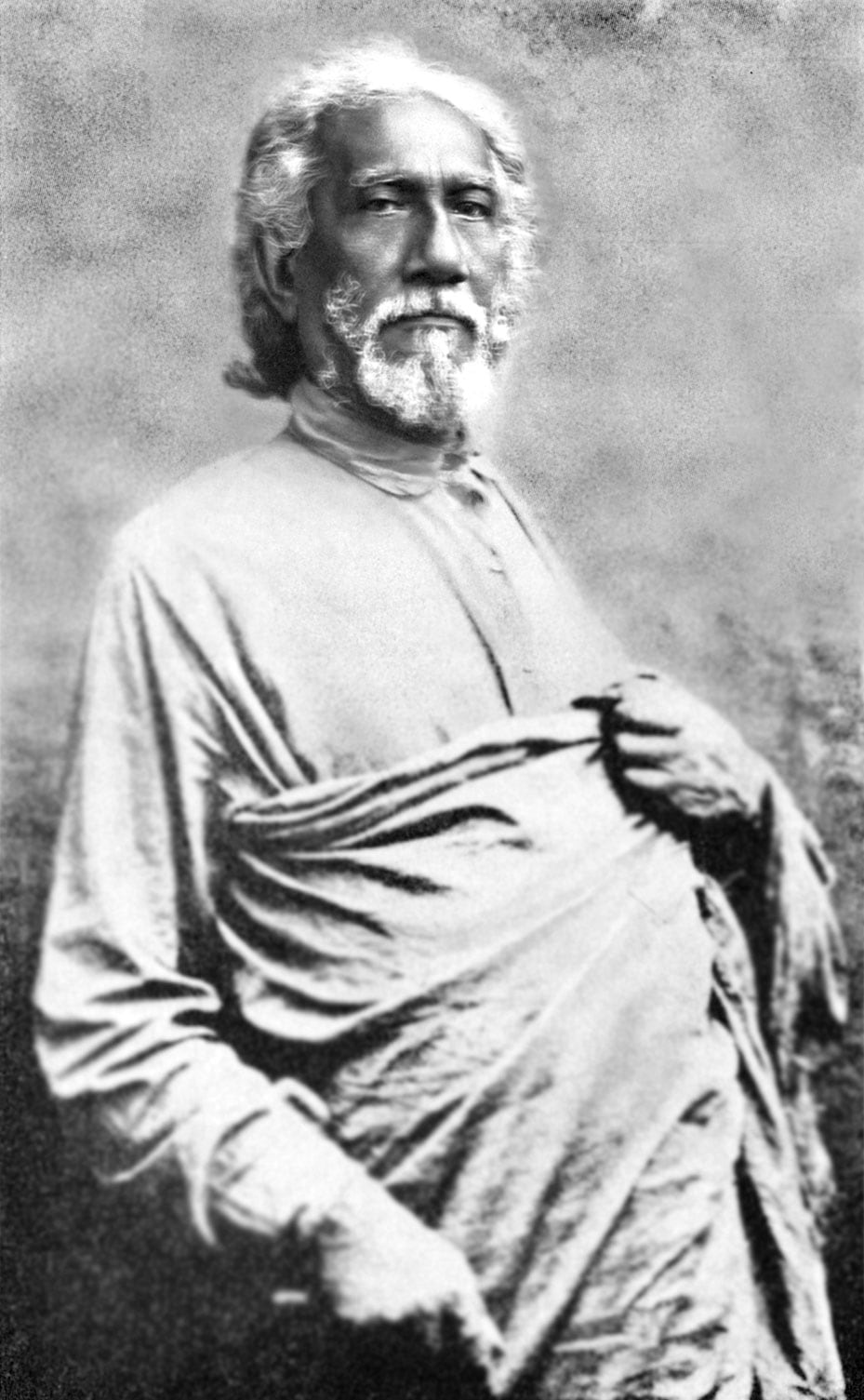
Sri Yukteswar
Совпадают в вопросах: Зачем медитировать или молиться? · Кто я? Существует ли истинное «я»? · Почему мы страдаем?
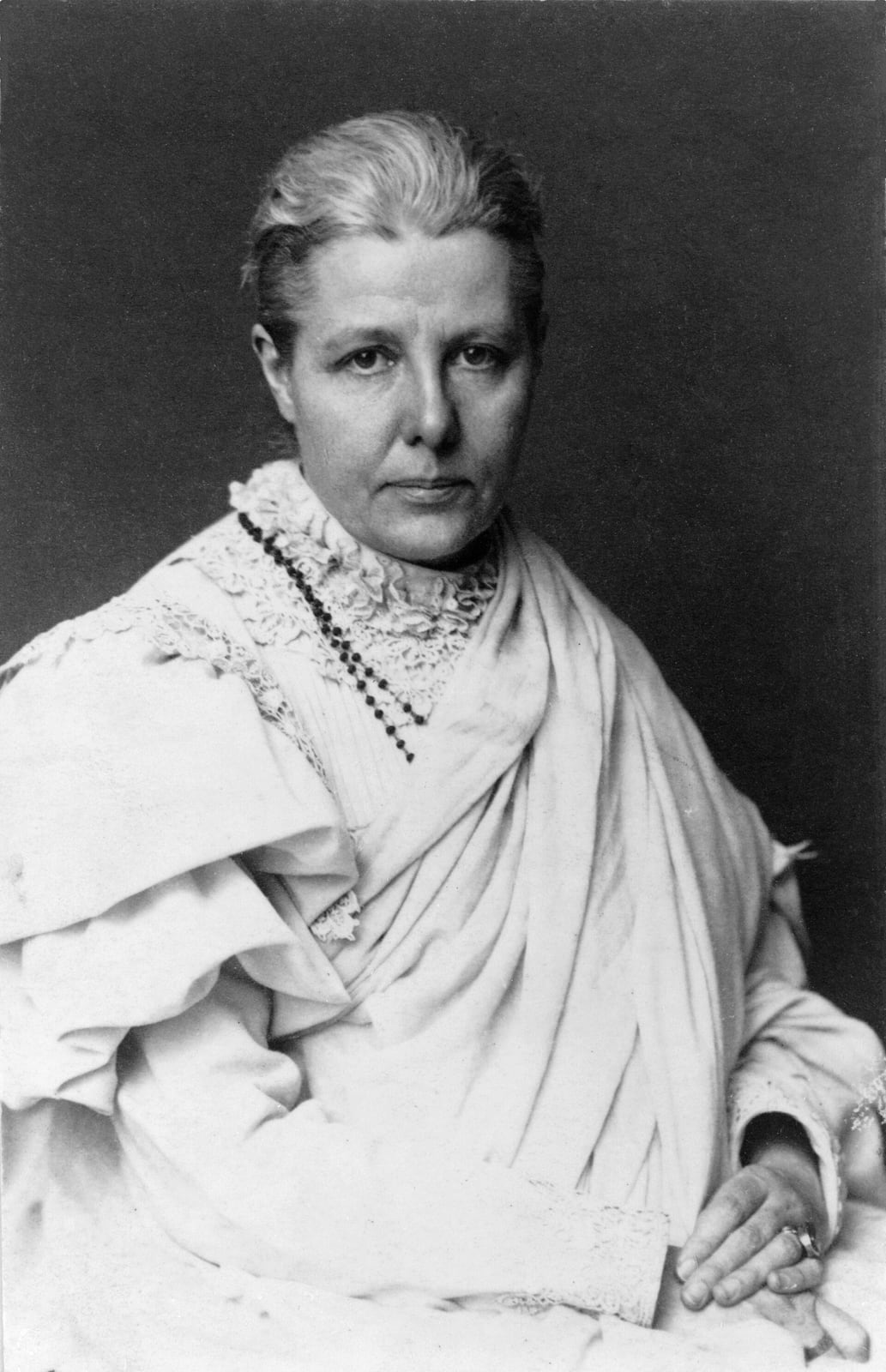
Annie Besant
Совпадают в вопросах: Свободны ли мы или всё предопределено? · Что такое Абсолют? Существует ли Бог? · Как достигается освобождение или спасение?
Anandamayi Ma
Совпадают в вопросах: Что такое Абсолют? Существует ли Бог? · Кто я? Существует ли истинное «я»? · Почему мы страдаем?
Дальше всего от

Francis of Assisi
Расходятся в вопросах: Кто я? Существует ли истинное «я»? · Реален ли мир?

Seraphim of Sarov
Расходятся в вопросах: Кто я? Существует ли истинное «я»? · Реален ли мир?
Fyodor Dostoevsky
Расходятся в вопросах: Кто я? Существует ли истинное «я»? · Реален ли мир?

Jiddu Krishnamurti
Расходятся в вопросах: Как достигается освобождение или спасение? · Нужен ли учитель?
Расходятся в вопросахКажущееся противоречие
Swami Vivekananda · Adi Shankara
The sage who renounces and the sage who serves: two readings of the same Advaita
Почему: The contradiction is largely apparent. Shankara does not condemn action: he regards it as the purifying duty of those who do not yet know, and Vivekananda presents karma yoga precisely as a path of purification towards a knowledge that remains, for him, the summit. What changes is audience and era. Shankara writes for renunciants, in a scholastic dispute with those who combined ritual and knowledge; Vivekananda, who saw himself as heir to Advaita, speaks to a colonised and impoverished India and to a Western public, and turns service into worship of the divine in every being. A real difference of emphasis remains: in Shankara the liberated one ceases to act; in Vivekananda, he goes on serving.
Расходятся в вопросахПринципиальное разногласие
Swami Vivekananda · Annie Besant
Chicago, 1893: the wisdom of the hidden Masters versus a Vedanta to be verified
Почему: The relationship is historical: both spoke at the 1893 Parliament of Religions in Chicago, which launched Vivekananda, and they later competed to represent India's wisdom before the West. Vivekananda publicly distanced himself from the Theosophical Society and its doctrine of the Mahatmas, which he regarded as foreign to the Vedantic tradition. The tension is not only one of rivalry: Besant inherits from Blavatsky a wisdom presented as hidden and revealed to initiates; Vivekananda, from Ramakrishna and Vedanta, a public teaching anyone can test through practice. Both wanted to reconcile religion and science; they differed over the place they left for secrecy.
Совпадают в вопросах
Swami Vivekananda · The 14th Dalai Lama (Tenzin Gyatso)
A religion that accepts examination: the monk of Chicago and the monk of Nalanda
Почему: The convergence is explained by context: both present an Asian tradition before a West shaped by modern science and by the critique of religion, and both want to show that their tradition does not fear that examination. Each also draws on resources specific to his tradition: Vivekananda, on the experimental reading of yoga and on Vedanta; the Dalai Lama, on the logic and epistemology of Nalanda. They differ on the goal: for Vivekananda experience culminates in identity with Brahman; for the Dalai Lama, in the understanding of emptiness, which denies precisely a permanent Self. No relationship between them is documented.
Предания и рассказы
Предания и рассказы
Свидетельство1881–1882
'Have you seen God?'
Происхождение рассказа: Vivekananda's own account transmitted by his disciples: The Life of Swami Vivekananda (1912–1918) and Nikhilananda, Vivekananda: A Biography (1953). Ramakrishna left his own version of the first meetings in the conversations recorded by M. in the Kathamrita.
Источник: His Eastern and Western Disciples. The Life of Swami Vivekananda. 2 vols. Mayavati / Calcuta: Advaita Ashrama, 1912–1918; 6.ª ed. revisada, 1979–1981.
Житийное повествование1884–1885
The prayer before the goddess
Происхождение рассказа: It comes from the disciples' biography (The Life…) and Swami Saradananda's Sri Ramakrishna Lilaprasanga (1909–1919), which present it as Vivekananda's own recollection. There is no independent contemporary testimony.
Источник: His Eastern and Western Disciples. The Life of Swami Vivekananda. 2 vols. Mayavati / Calcuta: Advaita Ashrama, 1912–1918; 6.ª ed. revisada, 1979–1981.
Свидетельствоc. 1888–1890
'Face the brutes'
Происхождение рассказа: Autobiographical account in the lecture 'What Is Religion?', Complete Works, vol. 1 (Lectures and Discourses). There are no witnesses; it is his own recollection used as a moral example.
ДокументированоDiciembre de 1892
The rock at Kanyakumari
Происхождение рассказа: The plan conceived at Kanyakumari is documented in his letter to Ramakrishnananda of 19 March 1894 (Complete Works, vol. 6). The swim and the length of the meditation come from the Order's oral tradition recorded in The Life…, with no direct testimony.
СвидетельствоSeptiembre de 1893
The night in the freight car
Происхождение рассказа: Account transmitted by the disciples' biography from Vivekananda's own recollections and those of the Hale family; Marie Louise Burke (Swami Vivekananda in the West: New Discoveries) checked the chronology against the Chicago press and confirms the Hales' role, though the details of the night rest on the protagonist's account.
Источник: His Eastern and Western Disciples. The Life of Swami Vivekananda. 2 vols. Mayavati / Calcuta: Advaita Ashrama, 1912–1918; 6.ª ed. revisada, 1979–1981.
Устная традиция1891 o 1893
The singer of Khetri
Происхождение рассказа: It comes from The Life of Swami Vivekananda, which attributes it to Vivekananda's own recollections; the date (first visit to Khetri in 1891 or that of 1893) and the singer's name vary between versions. No contemporary source.
Источник: His Eastern and Western Disciples. The Life of Swami Vivekananda. 2 vols. Mayavati / Calcuta: Advaita Ashrama, 1912–1918; 6.ª ed. revisada, 1979–1981.
Учение
Учение
Понятия, на которых строится мысль учителя, объяснённые в их контексте.
The four yogasfour-yogas
Karma Yoga, Raja Yoga, Bhakti Yoga and Jnana Yoga (1896–1907); Complete Works, vols. 1–3. On its role in modern yoga: De Michelis (2004).
Источник: De Michelis, Elizabeth. A History of Modern Yoga: Patañjali and Western Esotericism. Londres / Nueva York: Continuum, 2004.
The potential divinity of the soulpotential-divinity
Raja Yoga (1896); 'Paper on Hinduism' (1893); writings on education collected in the Complete Works.
Practical Vedantapractical-vedanta
Practical Vedanta (London, 1896); Lectures from Colombo to Almora (1897). Critiques: Halbfass (1988), Rambachan (1994).
Источник: Halbfass, Wilhelm. India and Europe: An Essay in Understanding. Albany: State University of New York Press, 1988.
Serving human beings as God (shiva jnane jiva seva)service-as-worship
Founding of the Ramakrishna Mission (1897); letters of 1894–1897; Lectures from Colombo to Almora.
Источник: His Eastern and Western Disciples. The Life of Swami Vivekananda. 2 vols. Mayavati / Calcuta: Advaita Ashrama, 1912–1918; 6.ª ed. revisada, 1979–1981.
Universal acceptance of religionsharmony-of-religions
Chicago addresses (1893), especially 'Response to Welcome' and 'Address at the Final Session'; lectures on universal religion (Complete Works, vol. 2).
Maya as a statement of factsmaya-statement-of-facts
Jnana Yoga, lectures 'Maya and Illusion' and 'Maya and the Evolution of the Conception of God' (London, 1896; Complete Works, vol. 2).
Ретриты
Ретриты и центры
Места и встречи, связанные с этим учением. Мы свяжем вас с их организаторами.
Belur, Howrah (junto a Calcuta), Bengala Occidental · India
Belur Math, headquarters of the Ramakrishna Order
Ramakrishna Math and Ramakrishna Mission
Belur Math, on the banks of the Ganges, is the headquarters of the Ramakrishna Order that Swami Vivekananda founded on his return from the West, and the place where he died in 1902. The grounds hold the Sri Ramakrishna temple, whose architecture Vivekananda conceived to bring together motifs from different religions, the temples of Sarada Devi and of Vivekananda himself, the room where he lived and a museum. The institution describes it as a place of pilgrimage for people of all faiths. It has a guest house for pilgrims, and its branch centres worldwide share the same spirit of service and study.
Kanyakumari, Tamil Nadu · India
Vivekananda Rock Memorial and Vivekananda Kendra, Kanyakumari
Vivekananda Rock Memorial & Vivekananda Kendra
At the southern tip of India, on a rock off Kanyakumari, Vivekananda meditated in December 1892 before setting out for the West; the Vivekananda Rock Memorial now stands there. Its sister organisation, Vivekananda Kendra, is based at Vivekanandapuram on the mainland and describes itself as a spiritually oriented service mission working in education, health and rural development. As well as receiving the pilgrims who visit the memorial, it runs residential yoga camps, certificate courses and spiritual retreats, taught mainly in English and Hindi, under the motto that they alone live who live for others.
Nueva York (Upper West Side) · Estados Unidos
Vedanta Society of New York
Vedanta Society of New York (Orden de Ramakrishna)
The Vedanta Society of New York is the first Vedanta society in the West: Swami Vivekananda founded it in 1894, during his first stay in the United States, and it belongs to the Ramakrishna Order. From its home on West 71st Street it offers Sunday lectures, weekday discussions on the Upanishads, the Bhagavad Gita and other texts, and daily vesper services. Its talks, particularly those of its current minister, are published openly as videos and podcasts, which has made it one of the most accessible sources for studying Advaita Vedanta in Vivekananda's line from anywhere in the world.
Видео
Видео
Записи, интервью и документальные фильмы. Видео воспроизводятся с YouTube; здесь они не хранятся.
Swami Vivekananda in Chicago 1893: A short film
Документальный фильм· EN· 24 min
Ramakrishna Math & Ramakrishna Mission, Belur MathОфициальный канал
Vivekananda By Vivekananda (película biográfica, versión inglesa)
Документальный фильм· EN· 128 min
Sri Ramakrishna Math ChennaiОфициальный канал
स्वामी विवेकानंद की आत्मकथा (Vivekananda Ki Atmakatha), versión hindi
Документальный фильм· HI· 127 min
Sri Ramakrishna Math ChennaiОфициальный канал
A Documentary on Swami Vivekananda's Swadesh Chetana
Документальный фильм· EN· 38 min
Ramakrishna Math & Ramakrishna Mission, Belur MathОфициальный канал
The Life and Message of Swami Vivekananda / स्वामी विवेकानंद का जीवन और संदेश
Документальный фильм· EN· 71 min
Films DivisionОфициальный канал
BELUR MATH: The heart of Ramakrishna Movement (documental completo)
Документальный фильм· EN· 54 min
Ramakrishna Mission Ashrama, NarendrapurОфициальный канал
Swami Ranganathananda – Swami Vivekananda at the World's Parliament of Religions in Chicago 1893
Лекция· EN· 40 min
Vedanta Video
Karma Yoga: The Path of Action (Part 1) | Swami Sarvapriyananda
Лекция· EN· 68 min
Vedanta Society of New YorkОфициальный канал
Swami Vivekananda en Chicago, 1893 | Serie de Discursos Famosos | Audio en Español
Запись третьих лиц· ES· 9 min
Moksha Life
Swami Vivekananda's 1893 Speech at the World's Parliament of Religions
Запись третьих лиц· EN· 4 min
Satchidananda Ashram – Yogaville
Swami Vivekananda – Die vier Stufen des Yoga
Разбор· DE· 10 min
Neue Akropolis – Schule der Philosophie
Swami Vivekananda's Chicago Address | Chicago Addresses | English Speech
Смотреть на YouTube
Это видео нельзя встроить; оно откроется на YouTube.
Swami Vivekananda's Chicago Address | Chicago Addresses | English Speech
Запись третьих лиц· EN· 4 min
Udbodhan – Ramakrishna Math BaghbazarОфициальный канал
Галерея
Галерея
Изображения с проверенной лицензией. Каждое сохраняет своё авторство и атрибуцию.
Связи
Связи
Влияния, ученичество и близость взглядов. Документированная связь отличается от сходства, выявленного путём анализа.
Ученик
Chief disciple from 1881–82 until the master's death in 1886; organised his disciples into a monastic order and spread his message.
Документированная связь
Испытал влияние
His jnana yoga starts from Shankara's Advaita, which he often quotes and discusses, while reinterpreting it in a practical, universalist key.
Документированная связь
Испытал влияние
He translated and commented on the Yoga Sutras in the second part of Raja Yoga (1896).
Документированная связь
Учитель
Sister Nivedita (Margaret Noble)
He met her in London in 1895 and initiated her as a brahmacharini in Calcutta in 1898; she left the portrait The Master as I Saw Him (1910).
Документированная связь
Повлиял на
Aurobindo wrote that during his imprisonment at Alipore (1908–09) he felt Vivekananda's presence guiding his meditation for a fortnight; they never met.
Документированная связь
Современник
Both spoke at the World's Parliament of Religions in Chicago (1893). Vivekananda later criticised the Theosophical Society in his 1897 speeches.
Документированная связь
Идеи, близкие к
Two successive generations of Bengali monks who founded lasting organisations in the United States to teach yoga and Vedanta and presented meditation as a universal science. Similarity identified by the editors, with no personal relationship (Yogananda was nine when Vivekananda died).
Сходство, выявленное путём анализа
Идеи, близкие к
Both join Vedantic spirituality to India's national regeneration and conceive spiritual realisation as transforming life in the world.
Сходство, выявленное путём анализа
Упоминается в других статьях
- Annie Besant · Встречался с
- Adi Shankara · Повлиял на
- Sri Aurobindo · Испытал влияние
- Helena Blavatsky · Расходился во взглядах с
- Patañjali · Повлиял на
- Nicholas Roerich · Испытал влияние
- Ramakrishna · Учитель
- Helena Roerich · Испытал влияние
- Kahlil Gibran · Современник
- Paramahansa Yogananda · Идеи, близкие к
- Sri Yukteswar · Современник
- Sadhguru · Идеи, близкие к
Источники
Источники
Библиография и каталоги, использованные для этой статьи.
- Vivekananda, Swami. The Complete Works of Swami Vivekananda. Mayavati Memorial Edition, 9 vols. Calcuta: Advaita Ashrama, 1907–1997 (vol. 9 añadido en 1997).
- His Eastern and Western Disciples. The Life of Swami Vivekananda. 2 vols. Mayavati / Calcuta: Advaita Ashrama, 1912–1918; 6.ª ed. revisada, 1979–1981.
- Nikhilananda, Swami. Vivekananda: A Biography. Nueva York: Ramakrishna-Vivekananda Center, 1953.
- Burke, Marie Louise. Swami Vivekananda in the West: New Discoveries. 6 vols. Calcuta: Advaita Ashrama, 1983–1987 (1.ª ed. en un volumen, 1958).
- Barrows, John Henry (ed.). The World's Parliament of Religions. 2 vols. Chicago: The Parliament Publishing Company, 1893.
- De Michelis, Elizabeth. A History of Modern Yoga: Patañjali and Western Esotericism. Londres / Nueva York: Continuum, 2004.
- Wikidata, «Swami Vivekananda» (Q47478): nacimiento 12-01-1863, muerte 04-07-1902, 138 enlaces entre wikis.
- Gupta, Mahendranath («M.»). The Gospel of Sri Ramakrishna. Trad. de Swami Nikhilananda. Nueva York: Ramakrishna-Vivekananda Center, 1942 (original bengalí: Sri Sri Ramakrishna Kathamrita, 1902–1932).
- Sen, Amiya P. Swami Vivekananda. Nueva Delhi: Oxford University Press, 2000.
- Rambachan, Anantanand. The Limits of Scripture: Vivekananda's Reinterpretation of the Vedas. Honolulu: University of Hawaii Press, 1994.
- Nivedita, Sister (Margaret E. Noble). The Master as I Saw Him: Being Pages from the Life of the Swami Vivekananda. Londres / Nueva York: Longmans, Green and Co., 1910.
- Ramakrishna Math & Ramakrishna Mission, Belur Math. Sitio oficial (historia de la Orden, Swami Vivekananda).
- Advaita Ashrama (Mayavati), departamento de publicaciones de la Orden Ramakrishna. Sitio oficial y tienda en línea.
- Open Library, registros de ediciones de Swami Vivekananda (consultados por ISBN).
- Halbfass, Wilhelm. India and Europe: An Essay in Understanding. Albany: State University of New York Press, 1988.
- Wikimedia Commons, metadatos de licencia de las fotografías de Swami Vivekananda (API imageinfo).
- Vivekananda, Swami. Raja Yoga, or Conquering the Internal Nature. Londres / Nueva York: Longmans, Green and Co., 1896.
- Aurobindo, Sri. Sri Aurobindo on Himself and on the Mother. Pondicherry: Sri Aurobindo Ashram, 1953 (ed. ampliada en Collected Works, vol. 26, 1972).
- Rolland, Romain. La vie de Vivekananda et l'évangile universel. París: Stock, 1930.
- Wikipedia (en). «Swami Vivekananda», sección Works/Publications (lista de obras publicadas en vida y póstumas, con referencias a Chattopadhyaya 1999).
- Wikipedia (en), «National Youth Day (India)»: el Gobierno de la India declaró en 1984 el 12 de enero, aniversario del nacimiento de Vivekananda, Día Nacional de la Juventud, celebrado desde 1985; consultada el 2026-10-25.
- Ramakrishna Math & Ramakrishna Mission, Belur Math, «Fact Check and Clarifications»: la voz de Vivekananda se grabó un par de veces en vida, pero esas grabaciones no se han localizado; los vídeos que dicen contener su «voz original» son falsos. Consultada el 2026-10-25.
- Правообладатель
- Dominio público (fallecido en 1902; toda su obra publicada antes de 1929 está en dominio público). Las traducciones, compilaciones y aparato editorial modernos pertenecen a sus editores, principalmente Advaita Ashrama (Ramakrishna Math, Belur), titular de la edición de referencia de las Complete Works.
- Официальный сайт
- belurmath.org/
Ожидает подтверждения
То, что в этой статье пока не удалось установить. Мы предпочитаем сказать об этом, а не заполнять пробел.
- Cotejar en The Life of Swami Vivekananda (ed. 1979-1981) la frase atribuida a Vivekananda el 4 de julio de 1902 sobre «otro Vivekananda» y quién la oyó (se suele citar a Swami Premananda).
- Hora exacta de la muerte (9:10 o 9:20 p. m.) y diagnóstico: las fuentes de la Orden difieren.
- Resuelto (2026-10-25): Fecha y editorial de la primera edición en libro de Jnana Yoga (conferencias de Londres, 1896): el prefacio de 1907 dice que apareció «varios años antes»; no localizada. → localizada la edición de 1902 (Nueva York, The Vedânta Society; Internet Archive vedaantaphilosop00viveuoft), añadida a las ediciones.
- Ediciones con ISBN en alemán, italiano y ruso de Raja Yoga y Jnana Yoga publicadas por editoriales establecidas: Open Library solo registra ediciones antiguas sin ISBN o autoediciones.
- Ediciones bengalíes de Udbodhan Karyalaya (Bani o Rachana, 10 vols.) con ISBN: no localizadas en Open Library.
- Los cuatro primeros títulos de Kier (Raja, Karma, Gnana, Bhakti) figuran sin año en algunos registros; confirmar en el catálogo de la editorial.
- Las fotografías subidas a Commons en 2025 por «RKM Archives» llevan licencia CC BY-SA 2.5 aunque son de 1886-1899 (dominio público por antigüedad): confirmar la procedencia del escaneo.
- Identificar al fotógrafo del retrato de Chicago de septiembre de 1893 (la ficha de Commons solo nombra al usuario que lo subió).
- Obras (2026-10-25): se añadieron 26 obras (libro de 1887, folletos de conferencias de 1896-1900 publicados en vida, colecciones de Natesan y antologías de la Orden Ramakrishna). Quedan fuera, por ser folletos sueltos o extractos ya incluidos en otras obras: Six Lessons on Raja Yoga, Work and Its Secret, Is Vedanta the Future Religion?, Immortality, Powers of the Mind, Personality Development, Thus Spake Vivekananda, Ramakrishna and His Message, My India the India Eternal, Para-Bhakti, Addresses on Bhakti-Yoga, la traducción de los Narada Bhakti Sutras y decenas de antologías en lenguas indias (Open Library registra unos 550 títulos bajo su nombre, mayoritariamente ediciones y selecciones).
- Sangeet Kalpataru (1887): localizar una edición (original bengalí o reimpresión moderna) con editorial y año; no figura en Open Library.
- Bhavbar Katha (ensayos bengalíes) y Pavhari Baba: confirmar si circularon como libros independientes antes de integrarse en The Complete Works.
- Fechas de primera edición de las antologías de la Orden (Thoughts on Vedanta, Realisation and Its Methods, Teachings, To the Youth of India, Our Women, etc.): las de Open Library pueden ser reimpresiones; se marcaron como aproximadas.
- Sala de lectura (2026-10-25): confirmar la fecha y el traductor de las versiones inglesas de Bartaman Bharat (Modern India), Prachya o Paschatya (The East and the West) y Parivrajak (Memoirs of European Travel) que transcribe Wikisource; mientras tanto van con caution.
- Sala de lectura: confirmar la primera publicación de «Is Vedanta the Future Religion?» (vol. 8 de las Complete Works); si es posterior a 1930, puede no ser dominio público en EE. UU. (va con caution).
- Sala de lectura: no se ha localizado ninguna traducción española de Vivekananda en dominio público (las de Kier y otras editoriales son modernas); solo se registran textos en inglés.
- Obras (2026-10-25): añadidas 11 (Para-Bhakti, Addresses on Bhakti-Yoga, Narada-Bhakti-Sutras, Work and Its Secret, The Powers of the Mind, Is Vedanta the Future Religion?, Ramakrishna and His Message, Thus Spake Vivekananda, Personality Development, My India: The India Eternal, Living at the Source). Siguen fuera Six Lessons on Raja Yoga e Immortality (sin edición independiente localizada en Open Library) y la biografía de Pavhari Baba (artículo sin edición independiente localizada).
Исследовано 2026-10-23