Джайнизм
Mahāvīra
महावीर · वर्धमान · Mahāvīra / Vardhamāna · Samaṇe Bhagavaṃ Mahāvīre / Vaddhamāṇe
ок. 599 до н. э. – ок. 527 до н. э.Историчность оспаривается
Аскет и учитель из долины Ганга, двадцать четвёртый и последний тиртханкара джайнизма, несколько старший современник Будды, знавшего его как Нигантху Натапутту. Носивший имя Вардхамана, он в тридцать лет отрёкся от мира, после двенадцати лет аскезы достиг всеведения и учил пути ненасилия, обетов и подвижничества, ведущему к освобождению души от кармы. Сам он ничего не написал: джайнский канон, передающий его учение, был закреплён в Валабхи в V веке н. э.
- трудов
- 51трудов
- изданий
- 20изданий
- цитат
- 8цитат
- видео
- 12видео
- изображений
- 7изображений
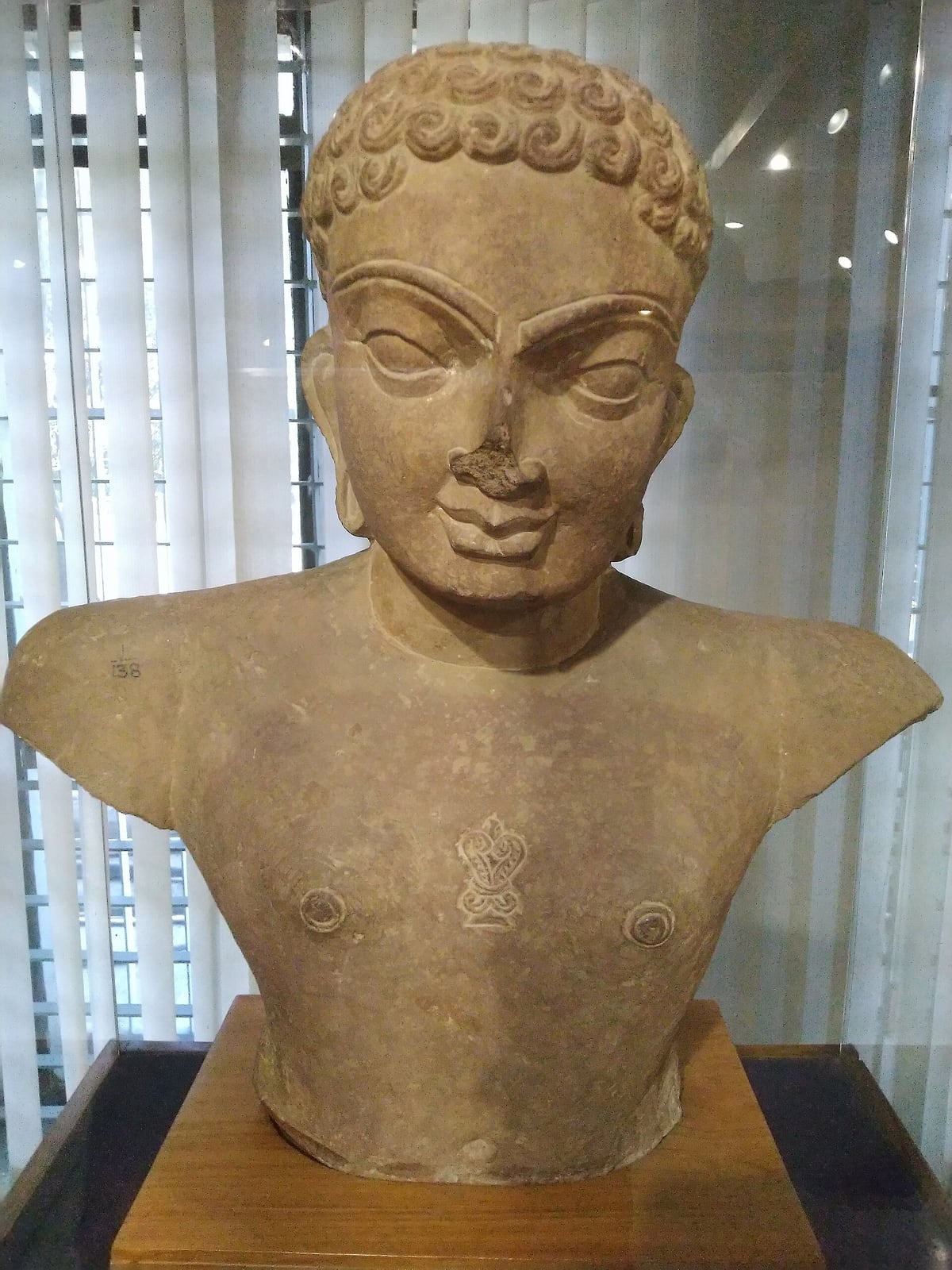
Busto de Mahāvīra, período kuṣāṇa (Museo de Chandigarh) · CC BY 3.0
Своими словами
«All breathing, existing, living, sentient creatures should not be slain, nor treated with violence, nor abused, nor tormented, nor driven away.»Ācārāṅga I.4.1.1; trad. de Hermann Jacobi, SBE 22 (1884), verificada en el texto; versión española del investigador; palabras que el canon atribuye a Mahāvīra

Для начала — одна книга
Ācārāṅga (The Book of Conduct)Главная мысль
Non-violence (ahiṃsā): The central principle of Jain ethics and the first of the vows.
В контексте
Биография
4 мин чтения
Перевод с испанского оригинала, выполненный с помощью ИИ; ожидает проверки носителем языка.
Последний из создателей бродов
Для джайнов Махавира не основал религию. Он был двадцать четвёртым и последним тиртханкарой нынешнего цикла времени, последним «создателем брода», открывающим живым существам переправу через реку существований, и его учение обновило учение предшественника, Паршвы, община которого уже существовала. Его личное имя было Вардхамана, «возрастающий»; Махавира, «великий герой», — это титул, как и Джина, «победитель», от которого происходит название его последователей. Его историческое существование надёжно подтверждено сторонним и враждебным свидетельством: буддийские тексты на пали часто упоминают Нигантху Натапутту, «выходца из рода Ната, главу тех, кто свободен от уз», как одного из соперничавших с Буддой учителей и приписывают ему учения, совпадающие с джайнскими.
Когда он жил
Традиция относит его смерть к 527 году до н. э., за 470 лет до начала эры Викрама, а рождение — на семьдесят два года раньше, к 599 году. Уже в XII веке монах Хемачандра передавал иной расчёт, ведущий к 467 году до н. э., который Герман Якоби считал наиболее правдоподобным. Палийские тексты представляют Махавиру как несколько старшего современника Будды, чья смерть в Паве доходит до буддийской общины как известие, и современная наука, сдвинувшая даты Будды к концу V века до н. э., склонна сдвигать и его даты. В этой статье традиционные даты сохранены как ориентир, с оговоркой, что они могут на столетие опережать действительные.
Два жизнеописания
Всё, что известно о его жизни, восходит к каноническим текстам, составленным и закреплённым столетия спустя, и две большие джайнские общины рассказывают не одну и ту же историю. Древнейшее свидетельство — поэма из «Ачаранги», первой книги канона, без всяких чудес описывающая годы аскезы: холод, насекомых, собак, которых крестьяне страны Ладха натравливали на него, молчание, с которым он всё это сносил. Полное жизнеописание появляется в «Калпа-сутре», приписываемой наставнику Бхадрабаху, и ему следуют шветамбары, «одетые в белое». У дигамбаров, «одетых сторонами света», есть собственное — в санскритских текстах VIII–IX веков, — и оно расходится с первым в существенном: они отрицают, что зародыш Махавиры был перенесён из чрева брахманки в чрево царицы, отрицают, что он был женат и имел дочь, и утверждают, что он с первого же дня отказался от всякой одежды.
Что рассказывает традиция
Согласно рассказу шветамбаров, он родился в Кундаграме близ Вайшали, в нынешнем Бихаре, сыном Сиддхартхи, знатного человека из рода джнятри, и Тришалы, состоявшей в родстве с главами конфедерации личчхавов. Перед его рождением мать увидела четырнадцать благоприятных снов. Он женился на Яшоде и имел дочь Прийядаршану. В тридцать лет, после смерти родителей, он вырвал себе волосы и покинул дом; двенадцать с половиной лет он странствовал как аскет, подолгу постясь и храня молчание, а через тринадцать месяцев сбросил единственную ткань, которую носил. В сорок два года на берегу реки Риджупалика он достиг всеведения (кевала). Тридцать лет он проповедовал в царствах долины Ганга; его одиннадцать главных учеников, ганадхары, были обращёнными брахманами во главе с Индрабхути Гаутамой, а община включала монахов, монахинь и мирян обоего пола. Он умер в семьдесят два года в Паве; в ту ночь, говорит «Калпа-сутра», цари той земли зажгли светильники, ибо угас свет знания, и отсюда берёт начало джайнский праздник Дипавали.
Учение о ненасилии
Вселенная, по Махавире, населена бесчисленными душами (джива) — не только в людях и животных, но и в растениях, воде, земле, огне и воздухе; и каждая душа, по природе всеведущая и блаженная, омрачена кармой, которую джайнизм понимает как тонкую материю, прилипающую к ней из-за поступков и страстей. Отсюда центральное место ненасилия (ахимса): «все существа любят жизнь», говорит «Ачаранга», и причинить вред любому из них — значит заковать себя в цепи. Путь состоит в том, чтобы обетами — не причинять вреда, не лгать, не красть, хранить целомудрие и не привязываться ни к какому имуществу — остановить приток новой кармы и сжечь накопленную аскезой, пока освобождённая душа не поднимется на вершину вселенной. Из четырёх обетов традиции Паршвы Махавира, согласно диалогу Кешина и Гаутамы в «Уттарадхьяяне», выделил целомудрие в отдельный, пятый обет. Бога-творца в его учении нет.
Канон и его закрепление
Махавира ничего не писал. По преданию, ученики собрали его учение в двенадцать книг, анги, передававшихся по памяти; двенадцатая, содержавшая четырнадцать пурв, рано утратилась. После нескольких соборов канон шветамбаров был записан в Валабхи, в Гуджарате, под председательством Девардхигани, через 980 или 993 года после смерти учителя, то есть около 453 или 466 года н. э. В зависимости от направления он включает 45 или 32 текста на пракрите ардхамагадхи. Дигамбары считают изначальный канон утраченным и почитают как священные писания «Шаткхандагаму» и «Касаяпахуду». В этой статье все эти тексты учитываются как собрания, возводимые к учению Махавиры, а не как его сочинения.
Наследие
Переводы Германа Якоби в серии «Священные книги Востока» (Sacred Books of the East, 1884 и 1895) доказали европейской индологии, что джайнизм — не ветвь буддизма, как считалось прежде, а самостоятельная и древняя традиция. Сегодня джайнская община насчитывает несколько миллионов верующих, главным образом на западе Индии; она празднует рождение Махавиры каждой весной и повлияла на этику ненасилия далеко за своими пределами: Ганди признавал, что на его нравственное становление наложил отпечаток джайнский ювелир и мыслитель Райчандбхай Мехта.
Источники: Dundas, Paul. The Jains. 2.ª ed. Londres / Nueva York: Routledge, 2002 (Library of Religious Beliefs and Practices). ISBN 9780415266055. · Jaini, Padmanabh S. The Jaina Path of Purification. Berkeley: University of California Press, 1979; reimpr. Delhi: Motilal Banarsidass, 1998. ISBN 9788120815780. · Jacobi, Hermann (trad.). Gaina Sûtras, Part I: The Âkârâṅga Sûtra. The Kalpa Sûtra. Oxford: Clarendon Press, 1884 (Sacred Books of the East 22). Introducción y textos; reimpr. Motilal Banarsidass (ISBN 9788120801233). · Jacobi, Hermann (trad.). Gaina Sûtras, Part II: The Uttarâdhyayana Sûtra. The Sûtrakritâṅga Sûtra. Oxford: Clarendon Press, 1895 (Sacred Books of the East 45). Reimpr. Motilal Banarsidass (ISBN 9788120801462). · Pániker, Agustín. El jainismo. Historia, sociedad, filosofía y práctica. Barcelona: Kairós, 2001; ed. 2007. ISBN 9788472454842.
Хронология
Жизнь год за годом
Каждая точка — документированное событие. Нажмите, чтобы прочитать о нём, с источником и степенью достоверности.
ок. 599 до н. э.0 летKuṇḍagrāma, junto a Vaiśālī
Birth at Kuṇḍagrāma (traditional date)
Son of Siddhārtha and Triśalā according to the Kalpasūtra, which relates the mother's fourteen dreams and, in the Śvetāmbara version, the transfer of the embryo from the womb of the brahmin woman Devānandā. Traditional date; scholars lower it by up to a century.
ПреданиеJacobi, Hermann (trad.). Gaina Sûtras, Part I: The Âkârâṅga Sûtra. The Kalpa Sûtra. Oxford: Clarendon Press, 1884 (Sacred Books of the East 22). Introducción y textos; reimpr. Motilal Banarsidass (ISBN 9788120801233).
После смерти
- ок. 453 до н. э. – 466 до н. э.The Council of Valabhī
- ок. 300 до н. э.Council of Pāṭaliputra
- ок. 150 до н. э.The Ṣaṭkhaṇḍāgama
- ок. 80 до н. э.The Śvetāmbara–Digambara split
- ок. 1160Hemacandra's life of Mahāvīra
- 1884 – 1895Jacobi and the Sacred Books of the East
- 19742500 years since the nirvāṇa
ок. 599 до н. э. · 0 лет
Birth at Kuṇḍagrāma (traditional date)
Son of Siddhārtha and Triśalā according to the Kalpasūtra, which relates the mother's fourteen dreams and, in the Śvetāmbara version, the transfer of the embryo from the womb of the brahmin woman Devānandā. Traditional date; scholars lower it by up to a century.
Предание
ок. 569 до н. э. · 30 лет
Renunciation
At thirty, his parents dead, he tears out his hair in five handfuls and leaves home. The Śvetāmbaras hold that he had previously married Yaśodā and had a daughter; the Digambaras deny it.
Предание
ок. 569 до н. э. – 557 до н. э.
Twelve and a half years of asceticism
He wanders as an ascetic, fasts and keeps silence; the Ācārāṅga describes the hardships suffered in the land of the Lāḍhas. According to the Śvetāmbara tradition he spends six years with Gośāla Maṅkhaliputta, future head of the Ājīvikas.
Предание
ок. 557 до н. э. · 42 года
Omniscience
At forty-two, beside the river Ṛjupālikā near Jṛmbhikagrāma, he attains absolute knowledge (kevala) and becomes a Jina.
Предание
ок. 557 до н. э. – 527 до н. э.
Thirty years of teaching
He teaches in the Ganges kingdoms; eleven brahmins led by Indrabhūti Gautama become his chief disciples (gaṇadharas). The Pali texts present him as a rival of the Buddha under the name Nigaṇṭha Nātaputta.
Предание
ок. 527 до н. э. · 72 года
Death at Pāvā (traditional date)
He dies at seventy-two at Pāvā; the kings of the region light lamps, origin of the Jain celebration of Dīpāvalī. The Pali canon (DN 29) records the news of his death and the division of his followers.
Оспаривается
ок. 453 до н. э. – 466 до н. э.
The Council of Valabhī
Under the presidency of Devarddhigaṇi Kṣamāśramaṇa, the Śvetāmbara canon is written down, 980 or 993 years after Mahāvīra's death according to the Kalpasūtra (§ 148).
Вероятно
ок. 300 до н. э.
Council of Pāṭaliputra
According to tradition, after a great famine the monks who had stayed in Magadha assemble the Aṅgas at Pāṭaliputra under Sthūlabhadra while Bhadrabāhu is absent; the Digambaras do not recognise the result.
Предание
ок. 150 до н. э.
The Ṣaṭkhaṇḍāgama
Puṣpadanta and Bhūtabali write down in Śaurasenī Prakrit a treatise on karma that the Digambaras revere as their oldest scripture. Date much disputed (1st–3rd c.).
Вероятно
ок. 80 до н. э.
The Śvetāmbara–Digambara split
The two traditions date their separation only three years apart: 609 years after Mahāvīra (82 CE) according to the Śvetāmbaras, 136 years after Vikrama (79 CE) according to the Digambaras. The actual division was a gradual process.
Предание
ок. 1160
Hemacandra's life of Mahāvīra
The monk Hemacandra (1089–1172) narrates Mahāvīra's life in the tenth book of the Triṣaṣṭiśalākāpuruṣacarita and transmits the chronology placing his death 155 years before Candragupta.
Вероятно
1884 – 1895
Jacobi and the Sacred Books of the East
Hermann Jacobi translates the Ācārāṅga and the Kalpasūtra (SBE 22, 1884) and, in 1895, the Uttarādhyayana and the Sūtrakṛtāṅga (SBE 45); he shows that Jainism is independent of Buddhism.
Документировано
1974
2500 years since the nirvāṇa
India officially celebrates the 2500th anniversary of Mahāvīra's nirvāṇa according to the traditional chronology, the occasion on which the different Jain branches adopt a common flag and emblem.
Документировано
Труды
Главные труды
Труды, без которых не понять это наследие.
Позднейший сборник
Ācārāṅga (The Book of Conduct)
आयारंग (Āyāraṃga) / आचाराङ्ग (Ācārāṅga)
The first Aṅga and probably the oldest Jain text, in two parts. The first, in archaic prose and verse, sets out non-violence towards all beings —including earth, water, fire, air and plants— and the ascetic's discipline; its ninth chapter, the "Uvahāṇasuya", is the oldest account of Mahāvīra's austerities. The second, later part regulates monastic life and adds a biography of the master.
3 издания
Mahāvīra
Sūtrakṛtāṅga (The Book of Doctrines)
Позднейший сборник
Sūtrakṛtāṅga (The Book of Doctrines)
सूयगड (Sūyagaḍa) / सूत्रकृताङ्ग (Sūtrakṛtāṅga)
The second Aṅga, also of an early stratum. It sets out and refutes the doctrines of the rival teachers of Mahāvīra's time —materialists, fatalists, agnostics, ritualists— and warns the monk against the world's temptations. It is a key source for the panorama of the ascetics of the Ganges valley in the time of Mahāvīra and the Buddha. The second part includes Ārdraka's dialogue with Gośāla and with a Buddhist.
2 издания
Mahāvīra
Kalpasūtra (Lives of the Jinas)
Традиционная атрибуция
Kalpasūtra (Lives of the Jinas)
कप्पसुत्त (Kappasutta) / कल्पसूत्र (Kalpasūtra), también Pajjosavaṇākappa (Paryuṣaṇākalpa)
The eighth chapter of the Daśāśrutaskandha turned into an independent book, and the most copied and illustrated Jain text. It has three parts: the lives of the Jinas, above all Mahāvīra's —the transfer of the embryo, the fourteen dreams, renunciation, asceticism, omniscience and death at Pāvā—, the list of successors (sthavirāvalī) and the rules for the rainy-season retreat. It is read aloud every year during the festival of Paryuṣaṇa. The illuminated manuscripts from Gujarat of the fourteenth to sixteenth centuries are held in museums around the world.
4 издания
Mahāvīra
Uttarādhyayana (The Last Lectures)
Позднейший сборник
Uttarādhyayana (The Last Lectures)
उत्तरज्झयण (Uttarajjhayaṇa) / उत्तराध्ययन (Uttarādhyayana)
Thirty-six lectures in verse and prose, one of the oldest and most beautiful texts of the canon, which tradition identifies with the "thirty-six unasked questions" Mahāvīra recited on the night of his death (Kalpasūtra § 147). It contains teachings on the monk's discipline, parables, King Nami's dialogue with Indra, the exhortation to Gautama "not to be careless for a moment" and the meeting of Keśin, a disciple of Pārśva, with Gautama, which explains the reform of the vows.
3 издания
Все труды (51)
Mahāvīra
The Śvetāmbara canon (the Āgamas)
The Conscious LibraryThe Śvetāmbara canon (the Āgamas)
453
Mahāvīra
Sthānāṅga (The Stations)
The Conscious LibrarySthānāṅga (The Stations)
Mahāvīra
Samavāyāṅga (The Groupings)
The Conscious LibrarySamavāyāṅga (The Groupings)
Mahāvīra
Bhagavatī Sūtra (Vyākhyāprajñapti)
The Conscious LibraryBhagavatī Sūtra (Vyākhyāprajñapti)
Mahāvīra
Jñātādharmakathā (Parables and Stories of the Doctrine)
The Conscious LibraryJñātādharmakathā (Parables and Stories of the Doctrine)
Mahāvīra
Upāsakadaśā (The Ten Lay Followers)
The Conscious LibraryUpāsakadaśā (The Ten Lay Followers)
Mahāvīra
Antakṛddaśā (Those Who Made an End)
The Conscious LibraryAntakṛddaśā (Those Who Made an End)
Mahāvīra
Anuttaraupapātikadaśā (Those Reborn in the Highest Heavens)
The Conscious LibraryAnuttaraupapātikadaśā (Those Reborn in the Highest Heavens)
Mahāvīra
Praśnavyākaraṇa (Explanation of Questions)
The Conscious LibraryPraśnavyākaraṇa (Explanation of Questions)
Mahāvīra
Vipākaśruta (The Ripening of Deeds)
The Conscious LibraryVipākaśruta (The Ripening of Deeds)
Mahāvīra
Dṛṣṭivāda (The Exposition of Views, lost)
The Conscious LibraryDṛṣṭivāda (The Exposition of Views, lost)
Mahāvīra
The fourteen Pūrvas (lost)
The Conscious LibraryThe fourteen Pūrvas (lost)
Mahāvīra
Aupapātika (On Rebirths)
The Conscious LibraryAupapātika (On Rebirths)
Mahāvīra
Rājapraśnīya (The King's Questions)
The Conscious LibraryRājapraśnīya (The King's Questions)
Mahāvīra
Jīvājīvābhigama (Understanding the Living and the Non-living)
The Conscious LibraryJīvājīvābhigama (Understanding the Living and the Non-living)
Mahāvīra
Prajñāpanā (The Exposition)
The Conscious LibraryPrajñāpanā (The Exposition)
Mahāvīra
Sūryaprajñapti (Exposition on the Sun)
The Conscious LibrarySūryaprajñapti (Exposition on the Sun)
Mahāvīra
Jambūdvīpaprajñapti (Exposition on Jambūdvīpa)
The Conscious LibraryJambūdvīpaprajñapti (Exposition on Jambūdvīpa)
Mahāvīra
Candraprajñapti (Exposition on the Moon)
The Conscious LibraryCandraprajñapti (Exposition on the Moon)
Mahāvīra
Nirayāvalikā (The Series of Hells)
The Conscious LibraryNirayāvalikā (The Series of Hells)
Mahāvīra
Kalpāvataṃsikā (The Ornaments of the Heavens)
The Conscious LibraryKalpāvataṃsikā (The Ornaments of the Heavens)
Mahāvīra
Puṣpikā (The Flowers)
The Conscious LibraryPuṣpikā (The Flowers)
Mahāvīra
Puṣpacūlikā (The Flower Crests)
The Conscious LibraryPuṣpacūlikā (The Flower Crests)
Mahāvīra
Vṛṣṇidaśā (The Ten Vṛṣṇis)
The Conscious LibraryVṛṣṇidaśā (The Ten Vṛṣṇis)
Изречения
Изречения, найденные в конкретном труде. Каждое сопровождается указанием происхождения и степени надёжности.
All breathing, existing, living, sentient creatures should not be slain, nor treated with violence, nor abused, nor tormented, nor driven away.savve pāṇā savve bhūyā savve jīvā savve sattā na haṃtavvā na ajjāveyavvā na parighetavvā na pariyāveyavvā na uddaveyavvā
ПровереноĀcārāṅga I.4.1.1; trad. de Hermann Jacobi, SBE 22 (1884), verificada en el texto; versión española del investigador; palabras que el canon atribuye a Mahāvīra
Апокрифические изречения и изречения спорной атрибуции (2)
«Live and let live.»
A slogan widely spread as a summary of Mahāvīra's teaching (in Hindi, "jiyo aur jīne do"), present on posters, stamps and twentieth-century celebrations. It is not a quotation from any canonical text; it condenses the doctrine of non-violence in a modern formula.
«Non-violence is the highest law (ahiṃsā paramo dharmaḥ).»
A Sanskrit formula the Jain community has adopted as a motto and which is often ascribed to Mahāvīra. It appears in the Mahābhārata, in brahmanical contexts, and not in the Prakrit Jain canon, which expresses the idea in other words (see the Daśavaikālika quotation).
Последние слова
Проверяемых записей о последних словах не существует.
No final words of Mahāvīra survive. The Kalpasūtra (§ 147) says he died at Pāvā, alone and seated, while reciting the fifty-five lectures on the fruits of karma and the thirty-six "unasked questions", which tradition identifies with the Uttarādhyayana, but it quotes no sentence. For the Digambaras the omniscient Jina does not speak in human words but with a "divine sound" (divyadhvani), and he died in silent meditation.
Источник: Jacobi, Hermann (trad.). Gaina Sûtras, Part I: The Âkârâṅga Sûtra. The Kalpa Sûtra. Oxford: Clarendon Press, 1884 (Sacred Books of the East 22). Introducción y textos; reimpr. Motilal Banarsidass (ISBN 9788120801233).
Спросить
На что отвечают эти труды
Двенадцать великих вопросов человечества и то, что позволяют на них ответить эти тексты, со ссылками. Мы никогда не вкладываем слова в чужие уста.
Что такое Абсолют? Существует ли Бог?
An eternal universe with no creator; the divine is the liberated soul
Нет Бога-творцаСказано прямо
In the Jain canon attributed to him, Mahavira teaches that the universe is eternal and created by no god: it is made of souls (jiva) and non-living substances (ajiva) that follow their own laws. The Sutrakritanga examines and rejects the doctrines that ascribe the world to a creator god, to Brahma or to Ishvara. What Jainism venerates is not a lord of the cosmos but the tirthankaras, human souls who by their own effort shed karma and attained omniscience (kevala). These perfected souls do not intervene in the world or grant favours: they are model and guide. Liberation therefore depends on each soul’s conduct and knowledge, not on the will of a God.
Сравнить этот вопрос с другими учителямиКто я? Существует ли истинное «я»?
Each being is an eternal individual soul, veiled by karmic matter
Эволюционирующая душаСказано прямо
The Jainism that goes back to Mahavira affirms countless souls (jiva), eternal, uncreated and individual, whose nature is consciousness, knowledge and bliss. These qualities are veiled by subtle particles of karma that cling to the soul through action driven by the passions. The soul transmigrates through the four destinies (hells, animals and plants, humans and gods) and can be purified life after life. When it sheds all karma it attains omniscience and rises to the summit of the universe, where it keeps its individuality forever. The true self is neither body nor passions, but neither does it merge into an Absolute: it is a soul recovering its original purity.
Сравнить этот вопрос с другими учителямиПочему мы страдаем?
Karma, drawn by violence and passions, binds the soul to pain
Карма и обучение душиСказано прямо
In the Jain canon suffering is explained by karma, understood as a subtle matter that flows into the soul when it acts driven by the passions (kashaya): anger, pride, deceit and greed. Violence is the action that attracts the most karma, and the Acaranga insists that all beings love life, desire pleasure and hate pain. Accumulated karma ripens into experiences of suffering in this life and the next. But Mahavira does not teach resignation: karma can be stopped through right conduct and destroyed through asceticism (tapas). Hardships voluntarily accepted by the monk burn up past karma. Pain is thus the consequence of one’s own acts and an occasion for purification.
Сравнить этот вопрос с другими учителямиЧто происходит после смерти?
The soul transmigrates through four destinies until freed and ascending
Перерождение согласно кармеСказано прямо
According to the Jain canon, at death the soul, drawn by its karma, is reborn in one of four destinies: the hells, animals and plants, humans or gods. None is final, not even the heavenly. Only the soul that has destroyed all its karma escapes the cycle and rises to the summit of the universe, where it abides in omniscience and bliss. The Uttaradhyayana recalls with the image of the dry leaf that human life is short and must not be wasted: Gautama must not be careless for a single moment. The tradition also values voluntary death by fasting (sallekhana), accepted in full awareness and without passion when life can no longer sustain the practice.
Сравнить этот вопрос с другими учителямиКак достигается освобождение или спасение?
Right faith, knowledge and conduct; asceticism that burns karma
Через дисциплинированную практикуСказано прямо
Mahavira’s path, as handed down by the Jain canon, is one of self-effort. Chapter 28 of the Uttaradhyayana, devoted to the road to liberation, sums it up as right knowledge, faith, conduct and asceticism. Conduct takes concrete form in the monk’s five great vows: non-violence, truthfulness, non-stealing, chastity and non-possession. Asceticism (tapas), inner and outer, destroys accumulated karma, and vigilance prevents new karma from entering. No one can do this work for another; one of the sayings attributed to him asks one to fight oneself rather than external enemies, since conquering oneself is the greatest victory. The fruit is omniscience (kevala) and final liberation.
Сравнить этот вопрос с другими учителямиНужен ли учитель?
The Jina shows the ford, but each soul crosses alone
Полезен, но не обязателенСказано прямо
For Jains Mahavira is a tirthankara, a ‘ford-maker’ who shows the crossing through the ocean of rebirths. His teaching was handed down by his chief disciples (ganadharas) and is preserved in a fourfold community of monks, nuns, laymen and laywomen, with detailed rules of obedience to superiors and of communal life. But the teacher neither saves nor grants grace: the Acaranga says, in a line recorded among his sayings, that one is one’s own friend and need not seek friends outside. The tirthankara teaches and gives example, the community sustains, and the work of purifying the soul is done by each through their own effort.
Сравнить этот вопрос с другими учителямиРеален ли мир?
An eternal universe of substances that endure and change
Природный порядок в измененииСказано прямо
Jainism teaches that the world is real, eternal and uncreated, made up of six substances: souls, matter, the principle of motion, that of rest, space and time. Each substance endures in its essence while its modes arise and pass away: everything is at once permanent and changing. The universe passes through immense cycles of ascent and descent, without beginning or end, and is ordered in regions: the hells below, the middle world of humans and the heavens above. This vision goes with the doctrine of many-sidedness (anekantavada): no statement about reality exhausts it. The world is no illusion, but its truth requires looking at it from many sides.
Сравнить этот вопрос с другими учителямиЧто такое любовь?
Friendship with all beings, enmity towards none
Безграничное состраданиеСказано прямо
Love, in Mahavira’s Jainism, takes the form of universal non-violence. The Acaranga grounds it in reciprocity: all beings love life, desire pleasure and shrink from pain, and therefore no breathing being should be killed, mistreated or tormented. The confession formula preserved in the Avasyaka, which Jains recite every year, asks forgiveness of all beings, forgives them and declares friendship with all and enmity towards none. That benevolence extends to insects, plants and invisible beings, and demands meticulous care in every act. Affective attachment, by contrast, is considered a binding passion: Jain love is benevolence without possession.
Сравнить этот вопрос с другими учителямиСвободны ли мы или всё предопределено?
Against fatalism: human effort changes the course of karma
Карма и выборСказано прямо
Mahavira shared his time and setting with Makkhali Gosala, head of the Ajivikas, who taught that everything is determined by fate (niyati) and that human effort is useless. The Jain canon presents him as Mahavira’s great adversary. In the Upasakadasa Mahavira refutes a potter who follows Gosala with a practical argument: if someone broke his pots, would he punish them or think it was all determined? For Jainism karma truly conditions the present, but the soul can stop its inflow through vigilance and destroy it through asceticism. Effort (purushartha) is real and decisive: without it the doctrine of liberation would make no sense.
Сравнить этот вопрос с другими учителямиЗачем медитировать или молиться?
The daily duties: equanimity, confession and abandonment of the body
Ритуал и самосовершенствованиеСказано прямо
Jainism does not pray to a God who answers: the liberated tirthankaras do not intervene in the world. Their veneration is a remembrance of their example. Daily practice is organised in the six obligatory duties preserved in the Avasyaka: equanimity (samayika), praise of the tirthankaras, veneration of the teacher, confession of faults (pratikramana), motionless abandonment of the body (kayotsarga) and voluntary renunciation. Tradition attributes to Mahavira long periods of motionless meditation in which he bore cold, heat and assaults without reacting. Meditation serves to stop the inflow of karma and burn what has accumulated, and ultimately leads to omniscience.
Сравнить этот вопрос с другими учителямиМожет ли разум познать предельное?
The pure soul’s omniscience surpasses all sensory and textual knowledge
Предельное лежит за пределами умаСказано прямо
Jain epistemology, which the canon attributes to Mahavira’s teaching, distinguishes five kinds of knowledge: sensory and mental, scriptural, clairvoyance, knowledge of others’ minds and omniscience (kevala). The first two are indirect, mediated by senses and mind; the last is direct, proper to the soul freed from all karma, and knows all things in all their modes. Mahavira is said to have attained it after twelve years of asceticism. Meanwhile human reasoning is partial, and the doctrine of many-sidedness (anekantavada) teaches one not to absolutise any statement. Reason is useful and necessary, but the ultimate is seen only by the purified soul.
Сравнить этот вопрос с другими учителямиУйти от мира или преобразить его?
The monk’s total renunciation is the path; the layperson follows halfway
Уйти, чтобы найтиСказано прямо
According to the Kalpa Sutra and the Acaranga, Mahavira left his princely life at thirty, renounced his possessions and wandered for twelve years as an ascetic, enduring hunger, cold and assault, until he attained omniscience. The path he taught has renunciation at its centre: the monk’s five great vows demand owning nothing and leaving family life. Laypeople keep milder versions of those vows and support the monastic community, but their liberation lies through a future renunciation. This withdrawal is not indifference to the world: non-violence towards every living being is its way of relating to it.
Сравнить этот вопрос с другими учителями
Созвучия и противоречия
Созвучия и противоречия
Рассчитаны вопрос за вопросом на основе позиций. Причина каждого совпадения или расхождения — по нажатию.
Ближе всего к
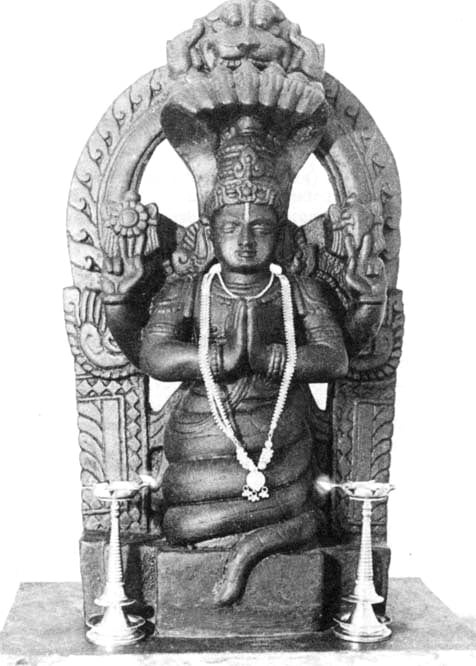
Patañjali
Совпадают в вопросах: Что такое Абсолют? Существует ли Бог? · Что происходит после смерти? · Как достигается освобождение или спасение?
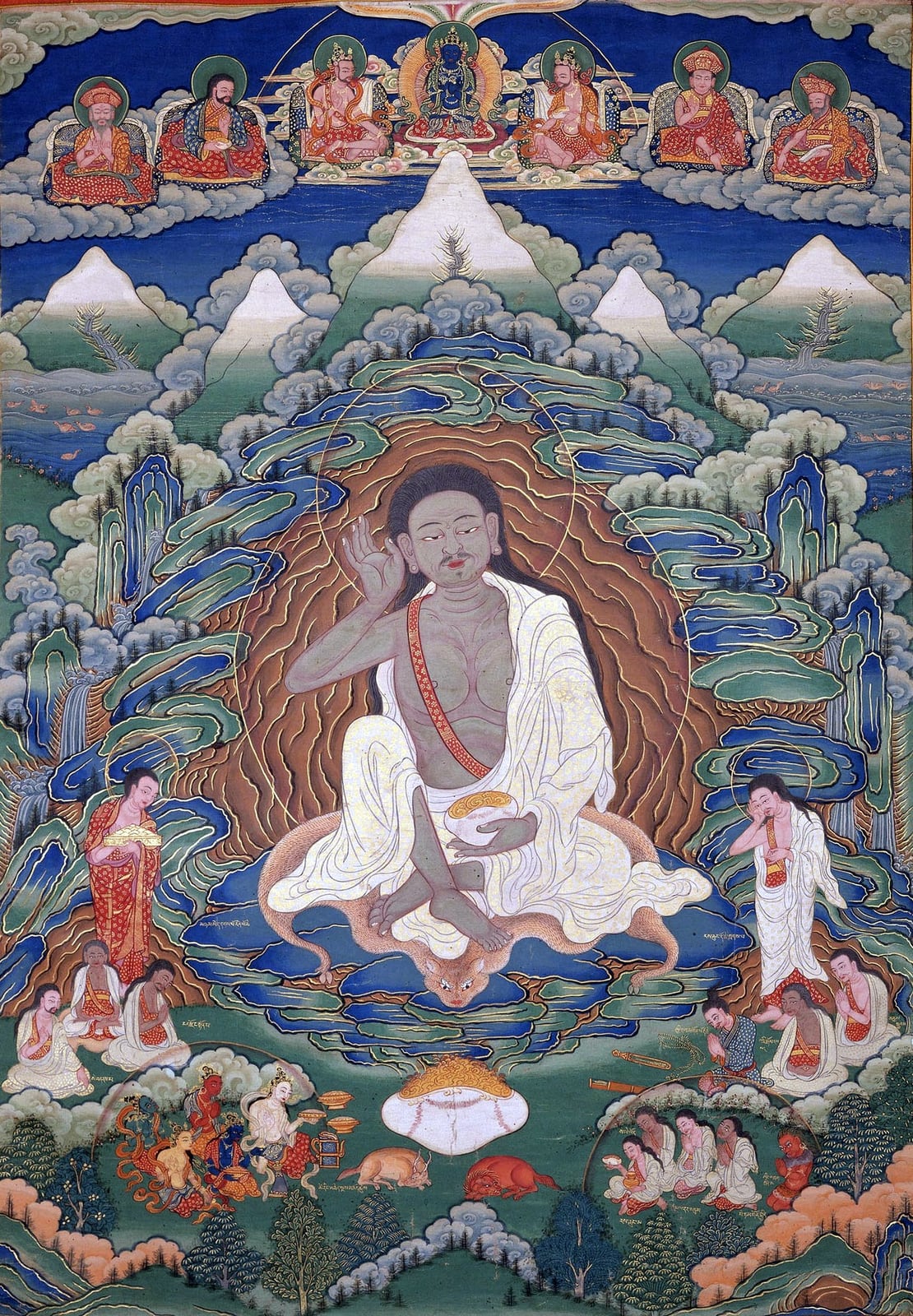
Milarepa
Совпадают в вопросах: Свободны ли мы или всё предопределено? · Что такое Абсолют? Существует ли Бог? · Почему мы страдаем?

Siddhartha Gautama, the Buddha
Совпадают в вопросах: Что такое Абсолют? Существует ли Бог? · Что происходит после смерти? · Как достигается освобождение или спасение?
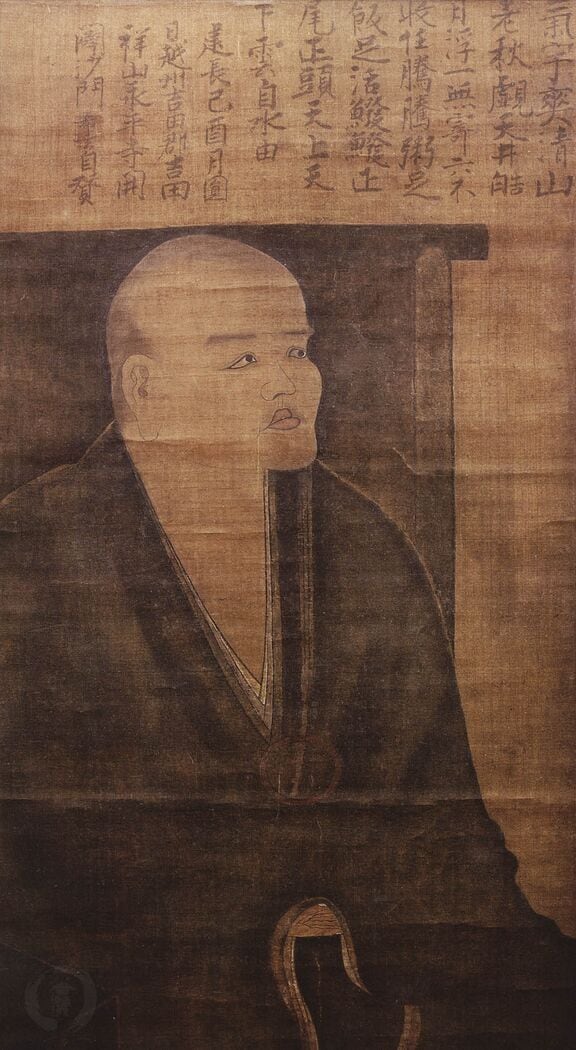
Dōgen
Совпадают в вопросах: Что такое Абсолют? Существует ли Бог? · Что происходит после смерти? · Как достигается освобождение или спасение?
Дальше всего от

Francis of Assisi
Расходятся в вопросах: Что такое Абсолют? Существует ли Бог? · Что происходит после смерти?

Chaitanya Mahaprabhu
Расходятся в вопросах: Что такое Абсолют? Существует ли Бог? · Что происходит после смерти?
Maimonides
Расходятся в вопросах: Что такое Абсолют? Существует ли Бог? · Что происходит после смерти?
Catherine of Siena
Расходятся в вопросах: Что такое Абсолют? Существует ли Бог? · Что происходит после смерти?
Предания и рассказы
Предания и рассказы
Житийное повествованиеconcepción (fecha tradicional c. 600 a. C.)
The transferred embryo
Происхождение рассказа: Kalpasūtra, Life of Mahāvīra, §§ 2–31 (trans. Jacobi, SBE 22), also in the second part of the Ācārāṅga. Exclusive to the Śvetāmbara tradition.
Источник: Jacobi, Hermann (trad.). Gaina Sûtras, Part I: The Âkârâṅga Sûtra. The Kalpa Sûtra. Oxford: Clarendon Press, 1884 (Sacred Books of the East 22). Introducción y textos; reimpr. Motilal Banarsidass (ISBN 9788120801233).
Устная традицияaños de ascesis (c. 569–557 a. C., fechas tradicionales)
The dogs of Lāḍha
Происхождение рассказа: Ācārāṅga I.9 ("Uvahāṇasuya"), 3.1–3.8 (trans. Jacobi, SBE 22), the oldest stratum of the canon according to scholarship. Lāḍha is identified with the region of Rāḍha, in western Bengal.
Источник: Jacobi, Hermann (trad.). Gaina Sûtras, Part I: The Âkârâṅga Sûtra. The Kalpa Sûtra. Oxford: Clarendon Press, 1884 (Sacred Books of the East 22). Introducción y textos; reimpr. Motilal Banarsidass (ISBN 9788120801233).
Оспариваетсяc. 560–540 a. C. (fechas tradicionales)
Gośāla, the companion who became a rival
Происхождение рассказа: Bhagavatī Sūtra, book 15, and the Āvaśyaka-cūrṇi; critical study in Basham (1951). Buddhist texts mention Makkhali Gosāla as another of the Buddha's six rival teachers.
Источник: Basham, A. L. History and Doctrines of the Ājīvikas: A Vanished Indian Religion. Londres: Luzac, 1951.
Житийное повествованиеnoche de la muerte de Mahāvīra
Gautama's night
Происхождение рассказа: Kalpasūtra, Life of Mahāvīra, § 127, and Jacobi's note (SBE 22); Indrabhūti's arrival to debate is narrated in the commentarial literature (Āvaśyaka-niryukti).
Источник: Jacobi, Hermann (trad.). Gaina Sûtras, Part I: The Âkârâṅga Sûtra. The Kalpa Sûtra. Oxford: Clarendon Press, 1884 (Sacred Books of the East 22). Introducción y textos; reimpr. Motilal Banarsidass (ISBN 9788120801233).
Житийное повествованиеmuerte (527 a. C. según la tradición)
The lamps of Pāvā
Происхождение рассказа: Kalpasūtra, Life of Mahāvīra, § 128 (trans. Jacobi, SBE 22, quotation verified in the text); on the Jain celebration of Dīpāvalī, Dundas (2002).
Источник: Jacobi, Hermann (trad.). Gaina Sûtras, Part I: The Âkârâṅga Sûtra. The Kalpa Sûtra. Oxford: Clarendon Press, 1884 (Sacred Books of the East 22). Introducción y textos; reimpr. Motilal Banarsidass (ISBN 9788120801233).
Оспариваетсяfinales de la vida de Mahāvīra
Nātaputta as seen by the Buddhists
Происхождение рассказа: Upāli Sutta (MN 56) and Pāsādika Sutta (DN 29), in Bhikkhu Sujato's translations (SuttaCentral, CC0). A Buddhist and polemical witness; the death at Pāvā agrees with Jain tradition.
Источник: Upāli Sutta (Majjhima Nikāya 56), trad. Bhikkhu Sujato (CC0), SuttaCentral.
Учение
Учение
Понятия, на которых строится мысль учителя, объяснённые в их контексте.
Non-violence (ahiṃsā)ahimsa
Ācārāṅga I.1–I.4; Sūtrakṛtāṅga I.11; Daśavaikālika 1.1.
Источник: Jacobi, Hermann (trad.). Gaina Sûtras, Part I: The Âkârâṅga Sûtra. The Kalpa Sûtra. Oxford: Clarendon Press, 1884 (Sacred Books of the East 22). Introducción y textos; reimpr. Motilal Banarsidass (ISBN 9788120801233).
Soul and non-soul (jīva and ajīva)jiva-ajiva
Ācārāṅga I.1; Jīvājīvābhigama; Prajñāpanā; Uttarādhyayana 36.
Источник: Jaini, Padmanabh S. The Jaina Path of Purification. Berkeley: University of California Press, 1979; reimpr. Delhi: Motilal Banarsidass, 1998. ISBN 9788120815780.
Karma as matterkarma-jaina
Uttarādhyayana 33; Ṣaṭkhaṇḍāgama; systematised in Umāsvāti's Tattvārthasūtra.
Источник: Jaini, Padmanabh S. The Jaina Path of Purification. Berkeley: University of California Press, 1979; reimpr. Delhi: Motilal Banarsidass, 1998. ISBN 9788120815780.
The five great vows (mahāvrata)mahavrata
Ācārāṅga II.15; Uttarādhyayana 23; Upāsakadaśā.
Источник: Jacobi, Hermann (trad.). Gaina Sûtras, Part II: The Uttarâdhyayana Sûtra. The Sûtrakritâṅga Sûtra. Oxford: Clarendon Press, 1895 (Sacred Books of the East 45). Reimpr. Motilal Banarsidass (ISBN 9788120801462).
Tīrthaṅkara (ford-maker)tirthankara
Kalpasūtra (lives of the Jinas); Samavāyāṅga; Jambūdvīpaprajñapti.
Источник: Dundas, Paul. The Jains. 2.ª ed. Londres / Nueva York: Routledge, 2002 (Library of Religious Beliefs and Practices). ISBN 9780415266055.
Omniscience (kevala-jñāna)kevala
Kalpasūtra § 120–121; Nandīsūtra (the five kinds of knowledge).
Источник: Jaini, Padmanabh S. The Jaina Path of Purification. Berkeley: University of California Press, 1979; reimpr. Delhi: Motilal Banarsidass, 1998. ISBN 9788120815780.
Many-sidedness (anekāntavāda)anekantavada
Bhagavatī Sūtra; Anuyogadvāra (the nayas); later development in the 5th–8th centuries.
Источник: Pániker, Agustín. El jainismo. Historia, sociedad, filosofía y práctica. Barcelona: Kairós, 2001; ed. 2007. ISBN 9788472454842.
Видео
Видео
Записи, интервью и документальные фильмы. Видео воспроизводятся с YouTube; здесь они не хранятся.
What is Jainism?
Разбор· EN· 2021· 28 min
Let's Talk Religion
2 Mahavira and the Fordmakers
Лекция· EN· 2020· 56 min
Dr. Christopher Miller
Session 1 - Textual Studies, 17th Jaina Studies Workshop, SOAS, University of London
Лекция· EN· 2015· 55 min
SOAS University of LondonОфициальный канал
19th Jaina Studies Workshop, Jainism and Buddhism, Session 1, SOAS University of London
Лекция· EN· 2017· 113 min
SOAS University of LondonОфициальный канал
In Conversation with Professor Padmanabh S. Jaini: Jaina and Buddhist Karma Theory – Part 1
Интервью· EN· 2022· 53 min
SahapediaОфициальный канал
Inaugural Bhagwaan Mahavir Lecture in Jain Studies | Feb. 3, 2023 lecture by Anil Mundra
Лекция· EN· 2023· 70 min
Rice Humanities and ArtsОфициальный канал
Jain Manuscripts: A Unique Cultural Heritage
Лекция· EN· 2025· 70 min
University of Toronto Mississauga AlumniОфициальный канал
Prof. Nalini Balbir on Illustrated Manuscripts of a 17th-Century Jain Tale
Лекция· EN· 2023· 40 min
Pure Soul Exhibition @ SOAS LondonОфициальный канал
Jaïnisme - leçon 2 : Origines
Лекция· FR· 2022· 21 min
Jaïnisme - Une introduction
II Módulo Ciencias contemplativas. Agustín Pániker. El Jainismo: La religión de la no violencia
Лекция· ES· 2024· 68 min
Javier García Campayo
Agustín Pániker: «Pluralismo filosófico en el Jainismo»
Смотреть на YouTube
Это видео нельзя встроить; оно откроется на YouTube.
Agustín Pániker: «Pluralismo filosófico en el Jainismo»
Лекция· ES· 2022· 59 min
Raquel Ferrández
Frontiers of Peace, Jainism
Смотреть на YouTube
Это видео нельзя встроить; оно откроется на YouTube.
Frontiers of Peace, Jainism
Документальный фильм· EN· 80 min
Edward Bastian FilmsОфициальный канал
Галерея
Галерея
Изображения с проверенной лицензией. Каждое сохраняет своё авторство и атрибуцию.
Рукописи
Рукописи
Рукописные свидетельства и древние тексты, с указанием хранителя и условий доступа.
PRA · Devanagari (escritura jaina) · Redacción final c. 453/466 d. C. (Valabhī)
कल्पसूत्र (Kalpasūtra), manuscrito iluminado
- Сохранившийся список
- Manuscrito en papel con oro y pigmentos, Gujarat, fechado en 1461 (Saṃvat 1519)
- Хранитель
- Metropolitan Museum of Art, Nueva York
PRA · Devanagari (escritura jaina) · Redacción final c. 453/466 d. C.
कल्पसूत्र (Kalpasūtra), manuscrito iluminado
- Сохранившийся список
- Folios ilustrados de Gujarat, c. 1460–1500
- Хранитель
- Victoria and Albert Museum, Londres
Связи
Связи
Влияния, ученичество и близость взглядов. Документированная связь отличается от сходства, выявленного путём анализа.
Современник
Siddhartha Gautama, the Buddha
Contemporaries and rivals in the Ganges valley. The Pali canon mentions Nigaṇṭha Nātaputta among the six non-Buddhist teachers (DN 2), narrates the conversion of his lay follower Upāli (MN 56) and the news of his death at Pāvā (DN 29). No personal meeting is recorded.
Документированная связь
Испытал влияние
Pārśva (Pārśvanātha)
The twenty-third tīrthaṅkara, whose community existed before Mahāvīra; the Uttarādhyayana (23) narrates the meeting of his disciple Keśin with Gautama and the adoption of the fifth vow.
Документированная связь
Учитель
Indrabhūti Gautama
His first and chief disciple (gaṇadhara), interlocutor of almost the whole Bhagavatī; he attained omniscience on the night of Mahāvīra's death according to the Kalpasūtra.
Документированная связь
Учитель
Sudharman
The gaṇadhara who, according to the Śvetāmbara tradition, transmitted the Aṅgas to his disciple Jambū and from whom the monastic lineages descend.
Документированная связь
Расходился во взглядах с
Gośāla Maṅkhaliputta
Companion in asceticism for six years and later a rival, founder of the Ājīvikas; the Bhagavatī (book 15) narrates his break with Mahāvīra.
Документированная связь
Идеи, близкие к
The five restraints (yama) of the Yogasūtra coincide with the five great Jain vows, and the text calls them the "great vow" when kept without exception; Chapple (2003) studies the dialogue between yoga and Jainism.
Сходство, выявленное путём анализа
Идеи, близкие к
Jain pluralism of standpoints and Nāgārjuna's four-cornered analysis are often compared as Indian answers to absolute assertions, although they start from opposite assumptions.
Сходство, выявленное путём анализа
Расходился во взглядах с
Posthumous relation: Śaṅkara refutes the Jain doctrine of multiple predication (syādvāda) and the variable size of the soul in his commentary on Brahmasūtra 2.2.33–36.
Документированная связь
Повлиял на
Mahatma Gandhi
Indirect influence, through the Jain tradition: Gandhi acknowledged in his autobiography the mark of the Jain thinker Raychandbhai Mehta on his moral formation and his idea of non-violence.
Документированная связь
Источники
Источники
Библиография и каталоги, использованные для этой статьи.
- Wikidata, «Mahavira», QID Q9422 (líder religioso indio). No confundir con Q2269861, el matemático jaina Mahāvīra (s. IX).
- Dundas, Paul. The Jains. 2.ª ed. Londres / Nueva York: Routledge, 2002 (Library of Religious Beliefs and Practices). ISBN 9780415266055.
- Jaini, Padmanabh S. The Jaina Path of Purification. Berkeley: University of California Press, 1979; reimpr. Delhi: Motilal Banarsidass, 1998. ISBN 9788120815780.
- Jacobi, Hermann (trad.). Gaina Sûtras, Part I: The Âkârâṅga Sûtra. The Kalpa Sûtra. Oxford: Clarendon Press, 1884 (Sacred Books of the East 22). Introducción y textos; reimpr. Motilal Banarsidass (ISBN 9788120801233).
- Jacobi, Hermann (trad.). Gaina Sûtras, Part II: The Uttarâdhyayana Sûtra. The Sûtrakritâṅga Sûtra. Oxford: Clarendon Press, 1895 (Sacred Books of the East 45). Reimpr. Motilal Banarsidass (ISBN 9788120801462).
- Pániker, Agustín. El jainismo. Historia, sociedad, filosofía y práctica. Barcelona: Kairós, 2001; ed. 2007. ISBN 9788472454842.
- Hoernle, A. F. Rudolf (ed. y trad.). The Uvâsagadasâo, or the Religious Profession of an Uvâsaga, being the Seventh Anga of the Jains. 2 vols. Calcuta: Asiatic Society of Bengal, 1885–1890 (Bibliotheca Indica). Vol. II: traducción inglesa (1888).
- Pāsādika Sutta (Dīgha Nikāya 29), trad. Bhikkhu Sujato (CC0), SuttaCentral: noticia de la muerte de Nigaṇṭha Nātaputta en Pāvā y de la división de sus discípulos.
- Upāli Sutta (Majjhima Nikāya 56), trad. Bhikkhu Sujato (CC0), SuttaCentral.
- Sāmaññaphala Sutta (Dīgha Nikāya 2), trad. Bhikkhu Sujato (CC0), SuttaCentral: doctrina atribuida a Nigaṇṭha Nātaputta.
- Schubring, Walther. The Doctrine of the Jainas, Described after the Old Sources. Trad. Wolfgang Beurlen. Delhi: Motilal Banarsidass, 1962 (original alemán: Die Lehre der Jainas, 1935).
- Wiley, Kristi L. Historical Dictionary of Jainism. Lanham: Scarecrow Press, 2004.
- Basham, A. L. History and Doctrines of the Ājīvikas: A Vanished Indian Religion. Londres: Luzac, 1951.
- Wisdom Library, textos de las traducciones de Hermann Jacobi (Ācārāṅga, Kalpasūtra, Uttarādhyayana, Sūtrakṛtāṅga) con índice de capítulos, consultados el 2026-10-25 para verificar las citas.
- Wikimedia Commons, ficheros de imagen citados en images[] (licencias comprobadas por la API imageinfo el 2026-10-25).
- Open Library (openlibrary.org), fichas por ISBN y búsquedas por autor y título consultadas el 2026-10-25.
- Long, Jeffrey D. Jainism: An Introduction. Londres: I. B. Tauris, 2009.
- Chapple, Christopher Key. Reconciling Yogas: Haribhadra's Collection of Views on Yoga. Albany: State University of New York Press, 2003. ISBN 9780791458990.
- Lalwani, Kastur Chand (trad.). Kalpa Sūtra of Bhadrabāhu Svāmī. Delhi: Motilal Banarsidass, 1979. ISBN 9780861862306.
- Gandhi, M. K. An Autobiography, or The Story of My Experiments with Truth. Ahmedabad: Navajivan, 1927–1929, parte II, cap. 1 («Raychandbhai»).
- Thibaut, George (trad.). The Vedânta-Sûtras with the Commentary by Śaṅkarâkârya, Part I. Oxford: Clarendon Press, 1890 (Sacred Books of the East 34), comentario a Brahmasūtra 2.2.33–36 (refutación de la doctrina jaina).
- Правообладатель
- Textos canónicos prácritos en dominio público. Las traducciones de Hermann Jacobi (1884, 1895), A. F. R. Hoernle (1888) y L. D. Barnett (1907, sujeta a cautela en la UE y España por la muerte del traductor en 1960) son anteriores; las modernas tienen derechos propios: Motilal Banarsidass (Lalwani y reimpresiones de los SBE), Dover, Routledge (Dundas), University of California Press y Motilal (Jaini), Kairós (Pániker), Jain Vishva Bharati y Prakrit Bharati Academy (traducciones del canon).
Ожидает подтверждения
То, что в этой статье пока не удалось установить. Мы предпочитаем сказать об этом, а не заполнять пробел.
- Fechas: se conservan las tradicionales (599–527 a. C.) con precisión aproximada; Hemacandra lleva la muerte a c. 467 a. C. (preferida por Jacobi) y la crítica reciente, a finales del s. V a. C. Comprobar en Dundas (2002), cap. 2, la datación exacta que propone.
- Ediciones en español: no se ha encontrado en Open Library ninguna traducción castellana de textos del canon jaina (Ācārāṅga, Kalpasūtra, Uttarādhyayana); solo el estudio de Agustín Pániker (Kairós). Verificar en la BNE y en catálogos latinoamericanos.
- Ediciones con ISBN de las traducciones modernas del canon (Jain Vishva Bharati, Prakrit Bharati Academy, Āgama Prakāśana Samiti) para los Aṅga y Upāṅga menores: no verificadas.
- Sala de lectura: localizar la URL exacta de un escaneo con OCR limpio de la traducción de Barnett (1907; con cautela de derechos) y textos de dominio público de los demás Aṅga y Upāṅga. No hay textos en español de dominio público.
- Manuscritos: obtener las signaturas (números de acceso) del Kalpasūtra de 1461 en el Metropolitan Museum y de los folios del Victoria and Albert Museum.
- Las listas de los diez Prakīrṇaka y de los Mūlasūtra varían según las fuentes; se registra la lista habitual de los mūrtipūjaka (Dundas, Wiley).
Исследовано 2026-10-25