Буддизм · Махаяна · Дзэн / Чань · Светская созерцательность
Thich Nhat Hanh
Thích Nhất Hạnh · 釋一行
1926 – 2022Исторически документированная личность
Вьетнамский дзэн-буддийский монах, поэт и борец за мир (1926–2022), основатель традиции Плам-Виллидж и Ордена взаимобытия. Во время войны во Вьетнаме он ввел выражение «вовлеченный буддизм», тридцать девять лет прожил в изгнании и сделал осознанность (mindfulness) повседневной практикой, доступной Западу. Автор более сотни книг; в 1967 году Мартин Лютер Кинг выдвинул его на Нобелевскую премию мира. Умер в своем коренном храме в Хюэ.
- трудов
- 135трудов
- изданий
- 209изданий
- цитат
- 7цитат
- видео
- 12видео
- изображений
- 7изображений
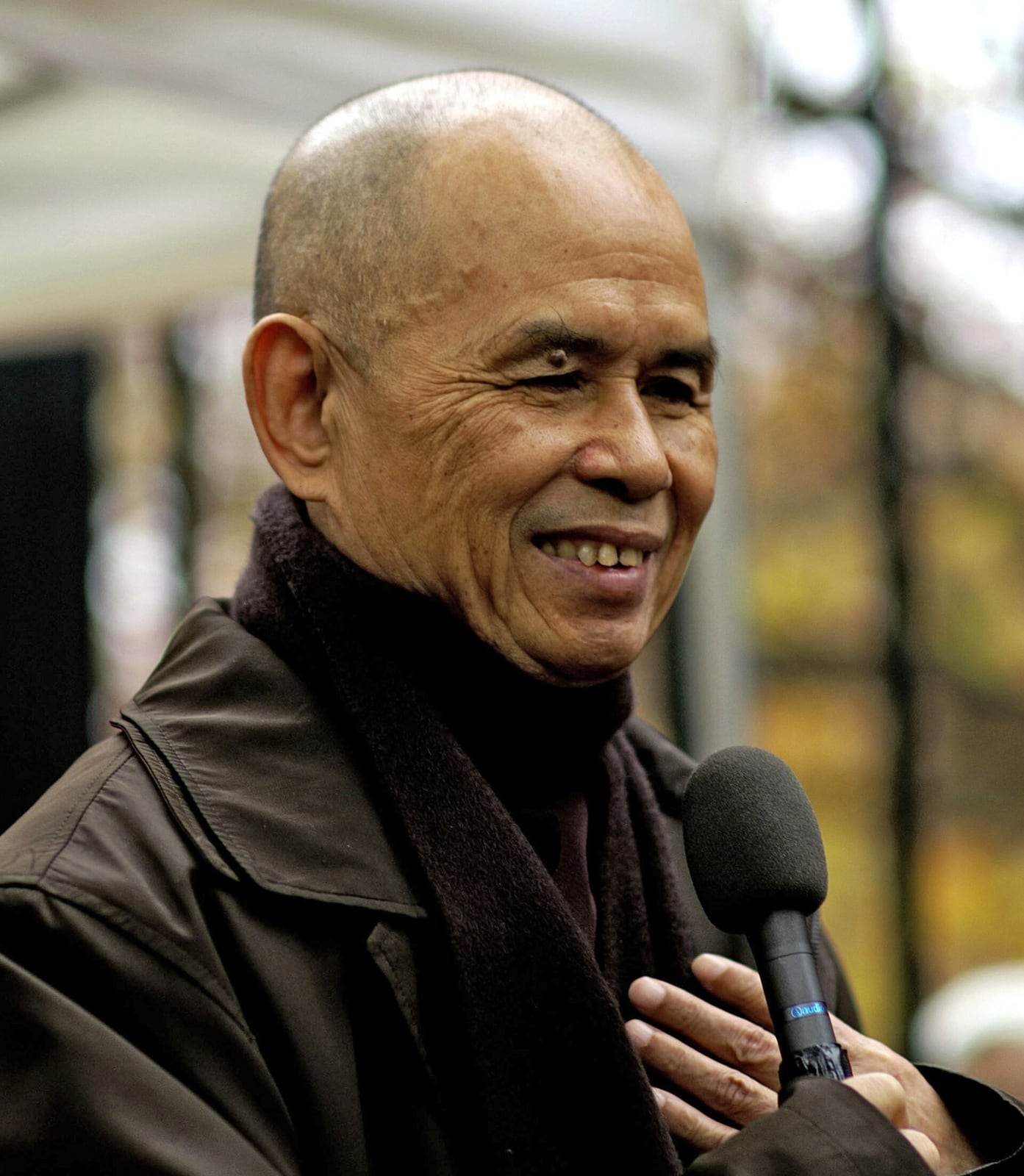
Thich Nhat Hanh en París, 2006 · CC BY-SA 2.0
Своими словами
«Breathing in, I calm my body. Breathing out, I smile. Dwelling in the present moment, I know this is the only moment.»Being Peace (1987), capítulo 1, «Suffering Is Not Enough»: la gatha de la respiración

Главная мысль
Peace is not the outcome of a negotiation but a way of being: whoever is not peace in their own breath cannot bring it to a conference table. Hence the title Being Peace, which reverses the usual order of means and ends.
В контексте
Биография
5 мин чтения
Перевод с испанского оригинала, выполненный с помощью ИИ; ожидает проверки носителем языка.
Мальчик, который пил из колодца
Нгуен Суан Бао родился 11 октября 1926 года в Хюэ, старой императорской столице Аннама, в многодетной семье чиновников и книжников, возводившей свой род к поэту Нгуен Динь Тьеу. Сам он связывал истоки своего призвания с двумя детскими образами, которые повторял до старости: рисунком сидящего на траве Будды, увиденным в журнале лет в семь-восемь, и школьной экскурсией на гору, где жил отшельник, — его так и не нашли, но неподалеку мальчик обнаружил естественный колодец и пил из него, пока не почувствовал себя «совершенно утоленным». Он рассказывал об этом много раз, и следует оговорить, что рассказывал именно он: эта часть повествования держится на его собственном свидетельстве, а не на каком-либо документе.
В шестнадцать лет, в 1942 году, он стал послушником в пагоде Ты-Хиеу под Хюэ у наставника Тхань Куи Тян Тхата, принадлежавшего к сорок первому поколению школы чань Лам Те — китайской Линьцзи — и к седьмому поколению ее вьетнамской ветви Лиеу Куан. Он получил родовое имя в линии преемственности Чынг Куанг («ясный отраженный свет»), а при посвящении — имя Фунг Суан («встречающий весну»). Имя Нят Хань («единое действие») он принял, переехав в 1949 году в Сайгон. Там, недовольный буддийским институтом, где не преподавали ни философии, ни языков, он сделал нечто неслыханное для монаха того времени: поступил в светский университет, изучал французскую и вьетнамскую литературу и зарабатывал на жизнь продажей книг и стихов. В 1951 году в пагоде Ан Куанг он принял обеты бхикшу.
Буддизм, который выходит на улицу
Пятидесятые годы прошли в трениях. Он редактировал официальный журнал Всеобщей ассоциации буддистов, который старшие монахи закрыли из-за его настойчивых призывов к объединению вьетнамских сангх; его имя было вычеркнуто из списков Ан Куанга; вместе с несколькими товарищами он удалился в лес близ Далата, в маленькую «общину сопротивления» под названием Фыонг Бой. В 1961–1963 годах он изучал сравнительное религиоведение в Принстоне и преподавал буддизм в Колумбийском университете. Дневники того времени, опубликованные много позже под названием «Благоуханные пальмовые листья», показывают человека немного за тридцать, который читает протестантских богословов, смотрит на снег и записывает однажды зимней ночью опыт пробуждения, описанный со сдержанностью того, кто не доверяет громким словам.
В декабре 1963 года, после падения Нго Динь Зьема, он вернулся в Сайгон, призванный помочь в переустройстве вьетнамского буддизма. Немногим более чем за два года он создал учреждения, которые определили его жизнь: Школу молодежи для социального служения — нейтральный корпус примерно из десяти тысяч добровольцев, которые отстраивали деревни и открывали медпункты, не принимая ничьей стороны; Буддийский университет Ван Хань; издательство Ла Бой; и в феврале 1966 года — Орден взаимобытия (Тиеп Хиен), в который вошли шесть человек — три женщины и трое мужчин — и который получил четырнадцать наставлений, переписывавших обеты бодхисаттвы для охваченной пламенем страны. Выражение «вовлеченный буддизм», которое он сам ввел в 1967 году в книге Vietnam: Lotus in a Sea of Fire, не было теорией: это было имя того, что они делали.
Тридцать девять лет вдали
1 мая 1966 года в Ты-Хиеу он получил от Тян Тхата «передачу светильника», сделавшую его учителем Дхармы и наследником храма. Через несколько дней он отправился в Соединенные Штаты добиваться прекращения бомбардировок. Он выступил вместе с Мартином Лютером Кингом в Чикаго, представил мирное предложение из пяти пунктов, держал пятидневный пост и беседовал в Гефсиманском аббатстве с Томасом Мертоном, который написал эссе «Нят Хань — мой брат», когда Сайгон пригрозил не пустить его обратно. Угроза была исполнена, и Ханой добавил свою: оба правительства отказали ему во въезде. 25 января 1967 года Кинг выдвинул его на Нобелевскую премию мира в письме, где называл этого «кроткого буддийского монаха из Вьетнама» апостолом мира и ненасилия; в тот год комитет премию не присудил.
Изгнание длилось тридцать девять лет. Он возглавлял Вьетнамскую буддийскую делегацию мира на Парижских переговорах, преподавал в Сорбонне, жил с беженцами в пригородах, а в 1975 году основал близ Труа общину «Сладкий картофель» (Les Patates Douces). Там он написал для социальных работников, остававшихся во Вьетнаме и ежедневно живших с возможностью гибели, короткое руководство, вышедшее по-английски под названием The Miracle of Mindfulness («Чудо осознанности»). Слово «mindfulness» в 1975 году почти не употреблялось в обиходном английском; его книга решающим образом способствовала тому, чтобы оно в нем закрепилось. После трогательной и тайной операции по спасению «людей в лодках» в Сиамском заливе в 1976–1977 годах — закончившейся его высылкой из Сингапура — письмо о двенадцатилетней девочке, изнасилованной пиратом и затем утонувшей, побудило его в 1978 году написать стихотворение «Зовите меня моими настоящими именами», в котором он узнаёт себя одновременно девочкой, пиратом и членом Политбюро.
Плам-Виллидж
В 1982 году община перебралась в Дордонь, и возникла Плам-Виллидж — «Сливовая деревня», Ланг Май, — рядом с ним была сестра Тян Кхонг, сопровождавшая его со времен Школы молодежи. То, что начиналось как хутор со сливовыми деревьями, стало крупнейшим буддийским монастырем Европы — более двухсот монахов и монахинь и тысячи посетителей в год — и материнской обителью сети центров в Калифорнии, Нью-Йорке, Миссисипи, Германии, Таиланде, Гонконге, Австралии, а со временем и во Вьетнаме. С 1986 года издательство Parallax Press выпускало его книги на английском — более сотни, переведенных более чем на сорок языков, — и оттуда пошли формы, которые сегодня связываются с его именем: колокол осознанности, останавливающий всякое занятие, медитация при ходьбе, пять тренировок осознанности, заново формулирующих мирянские обеты, ретриты для семей, ветеранов, полицейских или конгрессменов. Он учил по-английски, по-французски и по-вьетнамски, негромким голосом и короткими фразами, и комментировал Сутру сердца, Алмазную сутру и психологию «Только-сознания» тем же тоном, каким объяснял, как мыть посуду.
В 2005 году после долгих переговоров Ханой разрешил ему приехать с визитом, учить и издать четыре книги; в 2007 году он вернулся, чтобы провести большие церемонии в память обо всех погибших на войне, на чьей бы стороне они ни были. Запрещенная Объединенная буддийская церковь сочла эти поездки угодничеством перед режимом; в 2009 году полиция и нанятые группы силой изгнали сотни его монахов и монахинь из монастыря Бат Ня. Изгнание, в некотором смысле, так до конца и не завершилось.
Продолжение
11 ноября 2014 года он перенес кровоизлияние в мозг, лишившее его речи. Он проходил реабилитацию в Бордо, Сан-Франциско и Таиланде, а в октябре 2018 года жестами дал понять, что хочет вернуться в Ты-Хиеу и остаться там. Он прожил там еще три года, в инвалидном кресле, навещая пруды храма, под негласным надзором полицейских в штатском. Он умер вскоре после полуночи 22 января 2022 года, в возрасте девяноста пяти лет, в хижине Глубокого слушания. Он просил не воздвигать над ним ступы; а если будут настаивать, то пусть на табличке будет написано «Меня здесь нет», на второй — «Меня нет и там, снаружи», а на третьей — «Может быть, вы найдете меня в том, как вы дышите и ходите». Его кремировали 29 января, а на сорок девятый день прах был разделен между его коренным храмом и основанными им центрами.
То, что о нем задокументировано, обширно и проверяемо: даты, учреждения, книги, архив из тысяч записанных бесед. То, что передают его ученики, — история с колодцем, тон ретритов, непринужденность, с которой вьетнамский монах сделал «interbeing» («взаимобытие») английским словом, — принадлежит уже той иной форме продолжения, которую он сам предпочитал бессмертию.
Источники: Nhat Hanh, Thich. At Home in the World: Stories and Essential Teachings from a Monk's Life. Berkeley: Parallax Press, 2016 (ISBN 9781941529423). · Nhat Hanh, Thich. Being Peace. Berkeley: Parallax Press, 1987. ISBN 9780938077008. · Nhat Hanh, Thich. The Miracle of Mindfulness: A Manual on Meditation. Trad. Mobi Ho. Boston: Beacon Press, 1975 (ed. revisada 1987; ISBN 9780807012390). · Nhat Hanh, Thich. Fragrant Palm Leaves: Journals 1962–1966. Trad. Mobi Warren. Berkeley: Parallax Press, 1998 (reed. 2020, ISBN 9781946764720). · Nhat Hanh, Thich. Vietnam: Lotus in a Sea of Fire. Prólogo de Thomas Merton. Nueva York: Hill and Wang, 1967. Digitalizado en Internet Archive (préstamo).
Хронология
Жизнь год за годом
Каждая точка — документированное событие. Нажмите, чтобы прочитать о нём, с источником и степенью достоверности.
11 октября 1926 г.0 летHuế, Annam (Indochina francesa)
Birth in Huế
Nguyễn Xuân Bảo is born, the fifth of six children, in the old imperial capital. His father, Nguyễn Đình Phúc, was an official of the French administration; his mother, Trần Thị Dĩ, came from Gio Linh district.
ДокументированоWikidata, «Thích Nhất Hạnh», QID Q310913 (VIAF 87670142; LCCN n50006399).
11 октября 1926 г. · 0 лет
Birth in Huế
Nguyễn Xuân Bảo is born, the fifth of six children, in the old imperial capital. His father, Nguyễn Đình Phúc, was an official of the French administration; his mother, Trần Thị Dĩ, came from Gio Linh district.
Документировано
1942 · 16 лет
Enters Từ Hiếu as a novice
At sixteen he enters Từ Hiếu Temple under Zen master Thanh Quý Chân Thật of the Lâm Tế (Linji) school, Liễu Quán branch. He receives the lineage name Trừng Quang and, on ordination, the Dharma name Phùng Xuân.
Документировано
1951 · 25 лет
Full ordination as a bhikshu
Having left the Báo Quốc Buddhist Academy in 1950 over its neglect of philosophy and languages, he receives the bhikshu precepts in Saigon. He studies at a secular university, unusual for a monk, supporting himself by selling books and poems.
Документировано
1961 – 1963 · 35 лет
Princeton and Columbia
On a scholarship he studies comparative religion at Princeton Theological Seminary and in 1962 lectures on Buddhism at Columbia. His journals from these years, published as Fragrant Palm Leaves, record an awakening experience on a winter night.
Документировано
1964 · 38 лет
School of Youth for Social Service, Vạn Hạnh University and Lá Bối press
Back in Vietnam after Diệm's fall, he founds the School of Youth for Social Service (some ten thousand volunteers rebuilding villages without taking sides), co-founds Vạn Hạnh Buddhist University, and his students open the Lá Bối publishing house.
Документировано
февраль 1966 г. · 39 лет
The Order of Interbeing (Tiếp Hiện) is founded
He ordains the first six members—three women and three men from the School of Youth—with fourteen precepts that recast the bodhisattva vows for a time of war.
Документировано
1 мая 1966 г. · 39 лет
Lamp transmission
He receives the “lamp transmission” from his teacher Chân Thật, making him a Dharma teacher and spiritual heir of Từ Hiếu, days before leaving for the United States.
Документировано
31 мая 1966 г. · 39 лет
Press conference with Martin Luther King Jr. and the start of exile
On his tour of the United States and Europe calling for an end to the war he appears with King in Chicago and visits Thomas Merton at Gethsemani. Both Saigon and Hanoi bar his return: a thirty-nine-year exile begins.
Документировано
25 января 1967 г. · 40 лет
King nominates him for the Nobel Peace Prize
Martin Luther King Jr. writes to the Nobel Institute proposing “this gentle Buddhist monk from Vietnam” (1967 nomination no. 48). No prize was awarded that year. He publishes Vietnam: Lotus in a Sea of Fire, coining “engaged Buddhism”.
Документировано
1969 – 1973 · 42 года
Buddhist Peace Delegation at the Paris talks
He leads the Vietnamese Buddhist Peace Delegation during the negotiations leading to the Paris Accords, lectures at the Sorbonne and lives with Vietnamese refugees on the outskirts of the city.
Документировано
1975 · 49 лет
Sweet Potato community and The Miracle of Mindfulness
He founds the small Sweet Potato community near Troyes. There he writes The Miracle of Mindfulness, conceived as a manual for the social workers still in Vietnam, and The Sun My Heart.
Документировано
1978 · 52 года
Boat-people rescue and the poem “Please Call Me by My True Names”
With Sister Chân Không he secretly organises relief for refugees at sea until Singapore expels them. After a letter about a twelve-year-old girl raped by a pirate he writes his most famous poem.
Документировано
1982 · 56 лет
Plum Village is founded
The community moves to south-west France and Plum Village (Làng Mai) is born; it will become the largest Buddhist monastery in Europe and the mother house of a network of centres in the United States, Germany, Thailand, Hong Kong, Australia and Vietnam.
Документировано
12 января 2005 г. · 78 лет
Return to Vietnam after 39 years
Hanoi allows him to visit, teach and publish four books. He returns in 2007 (great chanting ceremonies for all the war dead) and 2008; in 2009 the authorities violently expel his monastics from Bát Nhã monastery.
Документировано
11 ноября 2014 г. · 88 лет
Severe stroke
A brain haemorrhage leaves him unable to speak for the rest of his life. He undergoes rehabilitation in Bordeaux, San Francisco (2015) and Thailand.
Документировано
28 октября 2018 г. · 92 года
He returns to his root temple to stay
He signals by gestures his wish to spend his remaining days at Từ Hiếu, which he had entered as a novice seventy-six years earlier.
Документировано
22 января 2022 г. · 95 лет
Death
He dies shortly after midnight in the Deep Listening Hut. Five days of funeral rites, cremation on 29 January and, after forty-nine days, his ashes are divided between Từ Hiếu and the Plum Village centres.
Документировано
Труды
Главные труды
Труды, без которых не понять это наследие.
Письменный труд · 1975
The Miracle of Mindfulness
Phép lạ của sự tỉnh thức
The book that carried the word “mindfulness” into everyday English. Simple exercises—washing the dishes in order to wash the dishes, following the breath, the tangerine eaten with attention—and an exposition of the Sutra on the Four Establishments of Mindfulness. It was born of war, not of self-help.
5 изданий · amazon.com
Письменный труд · 1991
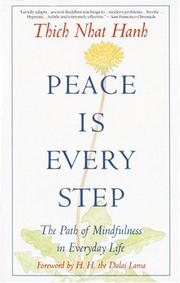
Peace Is Every Step
His most widely read book: short pieces on breathing, smiling, walking, driving, eating, anger and “interbeing”, bringing practice into the gestures of the day. In Spanish it was titled “Hacia la paz interior” and in German “Ich pflanze ein Lächeln”.
4 издания · amazon.com

Письменный труд · 1988
Old Path White Clouds
Đường xưa mây trắng
A novelised life of the Buddha reconstructed from the Pali and Chinese canons, told in part through the young buffalo-herder Svasti. With no added miracles, in a serene prose, it is his longest work and the one he regarded as his most important.
5 изданий · amazon.com

Письменный труд · 1998
The Heart of the Buddha's Teaching
His most complete doctrinal treatise: the Four Noble Truths, the Eightfold Path, the Three Dharma Seals, the twelve links of dependent arising, read from experience rather than scholasticism. The reference book of his retreats and of his monastics' training.
4 издания · amazon.com
Все труды (135)
Thich Nhat Hanh
Buddhism Enters Life
The Conscious LibraryBuddhism Enters Life
1964

Fragrant Palm Leaves: Journals 1962–1966
1966

Vietnam: Lotus in a Sea of Fire
1967

A Rose for Your Pocket
1962

The Sun My Heart
1982

Being Peace
1987

The Heart of Understanding
1988

Interbeing: Fourteen Guidelines for Engaged Buddhism
1987

Transformation and Healing
1990

Touching Peace
1992
Call Me by My True Names: The Collected Poems
1993

The Blooming of a Lotus
1993

Living Buddha, Living Christ
1995

Cultivating the Mind of Love
1996

Teachings on Love
1997

Going Home: Jesus and Buddha as Brothers
1999

Anger: Wisdom for Cooling the Flames
2001

No Death, No Fear
2002

True Love
1997

Understanding Our Mind
2006

The Art of Power
2007

You Are Here
2001

The Novice: A Story of True Love
2011
Thich Nhat Hanh
Fear
The Conscious LibraryFear
2012
Изречения
Изречения, найденные в конкретном труде. Каждое сопровождается указанием происхождения и степени надёжности.
Breathing in, I calm my body. Breathing out, I smile. Dwelling in the present moment, I know this is the only moment.ПровереноBeing Peace (1987), capítulo 1, «Suffering Is Not Enough»: la gatha de la respiración
Основные идеи (редакционное изложение)
Из уважения к авторскому праву эти идеи изложены своими словами и не выдаются за дословные цитаты.
- Peace is not the outcome of a negotiation but a way of being: whoever is not peace in their own breath cannot bring it to a conference table. Hence the title Being Peace, which reverses the usual order of means and ends.
- Nothing exists by itself. A sheet of paper contains the cloud, the rain, the logger and his breakfast; to be is always to inter-be. The emptiness of the Heart Sutra does not mean that things do not exist but that they are empty of separate existence and therefore full of everything else.
- A cloud does not die when it becomes rain: it changes form. Birth and death are notions, not ultimate realities; what we are continues in our actions, words and thoughts, as he himself wished to be read on his non-existent stupa.
- Consciousness is a storehouse of seeds: anger, fear, joy, compassion. Each time one manifests, it is watered. Practice consists in deliberately watering the wholesome seeds and holding the painful ones without suppressing them, as a mother picks up a crying child.
- Engaged Buddhism does not add social action to Buddhism: it holds that meditating and acting are a single movement. If bombs fall on the village, sitting in the temple doing nothing is not contemplation but evasion; and acting without calm reproduces the violence one hopes to cure.
- Suffering is necessary for understanding, as mud is for the lotus. It is not to be suppressed but looked into deeply until it reveals its causes, and not allowed to grow beyond what it already is.
- Wash the dishes in order to wash the dishes: if one scrubs while thinking of the cup of tea to come, one lives neither the washing nor the tea. Mindfulness is not a concentration technique but the decision to be where one is.
- Deep listening—listening with the sole purpose of relieving the other's suffering, without correcting or judging for that time—is, for him, the political practice par excellence: the one that lets two enemies see each other as human beings again.
Апокрифические изречения и изречения спорной атрибуции (3)
«There is no way to happiness—happiness is the way.»
Attributed to Thich Nhat Hanh on thousands of pages, but it is a variant of “There is no way to peace; peace is the way”, a line of the pacifist A. J. Muste (1940s), which he occasionally quoted without claiming it. It is not found in any of his works in that wording.
«Smile, breathe and go slowly.»
A card-and-T-shirt motto that sums up his teaching but does not appear as his sentence in any locatable work; probably a condensation of several passages from Peace Is Every Step.
«To be beautiful means to be yourself. You don't need to be accepted by others. You need to accept yourself.»
Widely circulated on social media and in quotation anthologies; it could not be traced to any book or specific talk. Listed here as unverified, not as false.
Последние слова
Проверяемых записей о последних словах не существует.
There is no reliable record of any last words. After his stroke of November 2014 he lost the ability to speak and communicated by gestures in his final years. The Plum Village announcement of 22 January 2022 says only that he passed away “peacefully” in the Deep Listening Hut at Từ Hiếu Temple shortly after midnight. In place of last words the community cites his 2015 request that no stupa be built for him: “I am not in here… I may be found in your way of breathing and walking.”
Источник: PBS NewsHour / Associated Press. «Influential Zen Buddhist monk Thich Nhat Hanh dies at 95», 22 de enero de 2022 (recoge el comunicado de Plum Village).
Спросить
На что отвечают эти труды
Двенадцать великих вопросов человечества и то, что позволяют на них ответить эти тексты, со ссылками. Мы никогда не вкладываем слова в чужие уста.
Что такое Абсолют? Существует ли Бог?
God and nirvana belong to the ultimate dimension, which no concept reaches
НеименуемоеСказано прямо
Thich Nhat Hanh does not defend a creator God, consistent with his Vietnamese Zen formation, but neither does he simply deny one. In Living Buddha, Living Christ he proposes reading the word God, when contemplative Christians use it, as a name for the ultimate dimension of reality, comparable to nirvana: the water as opposed to the waves, which rise and fall while the water remains water. That dimension is not described by the notions of being and non-being, birth and death, one and many; nirvana, he insists, is precisely the extinction of all notions. He therefore advises against arguing whether God exists or does not exist: both concepts fall short. What he does propose is touching that dimension here, through mindful breathing, instead of turning it into an object of belief.
Сравнить этот вопрос с другими учителямиКто я? Существует ли истинное «я»?
There is no separate self: we are made of non-self elements
Постоянного «я» нетСказано прямо
Thich Nhat Hanh translates the Buddhist doctrine of non-self (anatta) into his notion of interbeing. In The Heart of Understanding, his commentary on the Heart Sutra, he invites us to see in a sheet of paper the cloud, the rain, the tree and the logger: the paper is made entirely of non-paper elements. The same holds for the person: made of ancestors, food, culture, earth and others, and not existing apart from them. In The Heart of the Buddha's Teaching he presents non-self as one of the three Dharma seals, together with impermanence and nirvana. The point is not to deny that there is anyone, but to stop conceiving that someone as an isolated and permanent entity; this view, he insists, reduces fear and makes compassion possible.
Сравнить этот вопрос с другими учителямиПочему мы страдаем?
Suffering is fed: understanding what nourishes it begins its healing
Жажда и привязанностьСказано прямо
Thich Nhat Hanh starts from the four noble truths, which he comments on in The Heart of the Buddha's Teaching, but sets them out with his own accent. Suffering does not arise from nothing: it is fed by what we consume — food, sense impressions, intentions and consciousness — the four kinds of nutriment of early Buddhism. In Understanding Our Mind he explains that store consciousness holds seeds of anger, fear or desire that grow when watered; attachment, wrong perceptions and inherited habits keep the cycle going. He therefore insists on recognising suffering, embracing it with mindfulness as a mother embraces a crying child, and looking deeply into its roots. He also stresses that without mud there is no lotus: understood suffering is the material from which understanding and compassion are born.
Сравнить этот вопрос с другими учителямиЧто происходит после смерти?
Nothing is born and nothing dies: there is only manifestation and continuation
То, что я есть, не рождается и не умираетСказано прямо
Thich Nhat Hanh devotes a whole book to death, No Death, No Fear, whose thesis is that birth and death are notions, not ultimate realities. He uses the image of the cloud: when it turns into rain it does not die but continues in another form; nothing passes from being into non-being. Relying on the Heart Sutra — no birth and no death, no increasing and no decreasing — he holds that the person does not disappear either: she continues in her acts, her children, her students, in everything she has touched, because she never existed separately from the rest (interbeing). The practice in the face of death, therefore, is not to believe in a survival but to look deeply until one sees one's own continuation already present, and so to let go of fear. When his mother died, he relates, he recognised her alive in his own hands.
Сравнить этот вопрос с другими учителямиКак достигается освобождение или спасение?
Nirvana is touched here and now through mindfulness practised daily
Через дисциплинированную практикуСказано прямо
Thich Nhat Hanh places liberation within the classical framework of the Four Noble Truths and the Noble Eightfold Path, which he sets out in The Heart of the Buddha's Teaching, and organises it around the three trainings: ethics, concentration and insight. His distinctive emphasis is that nirvana is not a future place but the extinction of notions (birth and death, being and non-being) that can be touched in the present moment. The means is mindfulness applied to breathing, walking, eating or washing the dishes, as presented in The Miracle of Mindfulness. Practice is not a means of getting elsewhere: each mindful step is already a fragment of freedom, and it is sustained by the community (sangha).
Сравнить этот вопрос с другими учителямиНужен ли учитель?
The sangha is refuge and teacher: one practises and awakens in community
Община и традицияСказано прямо
Thich Nhat Hanh, a teacher of the Vietnamese Linji Zen school, did not deny the role of the teacher, but shifted the weight towards the community. In his account of the Three Refuges, the Buddha, the Dharma and the Sangha, he insists that the Sangha is not an add-on: without a community practising together, individual practice dies out, like an ember separated from the fire. That is why he founded communities, from the Order of Interbeing in the 1960s to Plum Village in France, and proposed the fourteen precepts of Interbeing as a common framework. The teacher transmits and guides, but each person must practise in their own life, and the community sustains and corrects that effort.
Сравнить этот вопрос с другими учителямиРеален ли мир?
Everything inter-is: a cloud floats in this sheet of paper
Сеть причин без субстанцииСказано прямо
Thich Nhat Hanh renders the Buddhist doctrine of dependent arising with his own term, interbeing. In The Heart of Understanding, his commentary on the Heart Sutra, he invites us to look at a sheet of paper until we see in it the cloud without which there would be no rain, no tree, no paper, and also the logger, the sun and the very mind looking at it. Nothing has a separate, independent existence: each thing is made of elements that are not itself. That is what emptiness means, not non-existence but emptiness of a separate self. The world is not illusion; what is illusory is conceiving things as isolated entities, and that mistaken perception generates suffering.
Сравнить этот вопрос с другими учителямиЧто такое любовь?
To love is to be present and to understand: kindness, compassion, joy, equanimity
Безграничное состраданиеСказано прямо
Thich Nhat Hanh defines true love through the four immeasurables of Buddhism: loving kindness (maitri), the capacity to offer joy; compassion (karuna), the capacity to relieve suffering; sympathetic joy (mudita); and equanimity or inclusiveness (upeksha), which leaves no one out. He holds that love is born of understanding: one cannot love someone one does not understand, and understanding requires looking deeply into the other's suffering. In True Love he makes it concrete in four phrases or mantras, the first of which is to recognise the other's presence: when you love someone, the best thing you can offer is your presence; how can you love if you are not there? Love begins with oneself — tending one's own wounds — and extends to all beings, not excluding the enemy, in whom suffering is also recognised.
Сравнить этот вопрос с другими учителямиСвободны ли мы или всё предопределено?
We continue our actions, and we choose which seeds to water
Карма и выборСледует из учения
Thich Nhat Hanh translates the Buddhist doctrine of karma into an agricultural image: store consciousness holds seeds of anger, fear, compassion or joy, inherited from ancestors and from our own acts, and what sprouts depends on which ones are watered. Mindfulness practice consists precisely in selective watering, so that the past conditions but does not decide. At the same time, his teaching of interbeing prevents us from imagining an isolated self choosing from outside the causes: every act is the fruit of countless conditions and, in turn, continues in the world. In *No Death, No Fear* he holds that we are the continuation of our thought, speech and action, which gives each present choice a lasting weight.
Сравнить этот вопрос с другими учителямиЗачем медитировать или молиться?
Stopping and looking deeply: the attention that heals and understands
Видеть реальность такой, как она естьСказано прямо
For Thich Nhat Hanh meditation has two inseparable aspects: stopping (*śamatha*), which calms and heals, and looking deeply (*vipaśyanā*), which reveals impermanence, non-self and interbeing. His most widespread teaching, gathered in *The Miracle of Mindfulness*, consists in bringing full attention to the breath and to every daily activity —washing dishes, walking, eating— so that there is no separation between the meditation session and life. The *gathas* he offers, such as breathing in calming the body and breathing out smiling, serve to return to the present moment. But presence is not the end: it is the condition for understanding the nature of things, and from that understanding love and compassion are born.
Сравнить этот вопрос с другими учителямиМожет ли разум познать предельное?
Notions are rafts: they must be let go to touch reality
Предельное лежит за пределами умаСказано прямо
Thich Nhat Hanh values study but constantly warns against attachment to ideas. The first training of the Order of Interbeing, which he drafted in the 1960s, asks one not to be idolatrous about any doctrine, theory or ideology, not even Buddhist ones: teachings are means to guide, not absolute truths, like the raft left behind after crossing the river. In *No Death, No Fear* and *The Heart of Understanding* he insists that reality lies beyond notions such as birth and death, being and non-being, one and many, and that nirvana is precisely the extinction of all notions. Conceptual thought can point; what transforms is direct contact, the deep looking born of mindfulness.
Сравнить этот вопрос с другими учителямиУйти от мира или преобразить его?
Engaged Buddhism: when villages are bombed, meditation goes into the street
Действовать в миреСказано прямо
Thich Nhat Hanh is one of the creators of so-called Engaged Buddhism. During the Vietnam War he founded the School of Youth for Social Service, which rebuilt bombed villages and cared for refugees, and in Vietnam: Lotus in a Sea of Fire (1967) he explained to Western readers the position of the Buddhists who supported neither side. He holds that practice cannot be shut up in the temple: when bombs fall, one must go out and help, and do so mindfully so as not to reproduce the violence. That is why the fourteen precepts of the Order of Interbeing, which he founded in 1966, include not closing one's eyes to suffering, not clinging to ideologies and working for peace. At the same time he insists that only one who has peace can make peace: action without practice turns into rage.
Сравнить этот вопрос с другими учителями
Созвучия и противоречия
Созвучия и противоречия
Рассчитаны вопрос за вопросом на основе позиций. Причина каждого совпадения или расхождения — по нажатию.
Ближе всего к

Śāntideva
Совпадают в вопросах: Как достигается освобождение или спасение? · Кто я? Существует ли истинное «я»? · Почему мы страдаем?
Ajahn Chah
Совпадают в вопросах: Кто я? Существует ли истинное «я»? · Почему мы страдаем? · Как достигается освобождение или спасение?
Shunryu Suzuki
Совпадают в вопросах: Что такое Абсолют? Существует ли Бог? · Кто я? Существует ли истинное «я»? · Почему мы страдаем?

The 14th Dalai Lama (Tenzin Gyatso)
Совпадают в вопросах: Как достигается освобождение или спасение? · Кто я? Существует ли истинное «я»? · Почему мы страдаем?
Дальше всего от
Chaitanya Mahaprabhu
Расходятся в вопросах: Кто я? Существует ли истинное «я»?
Socrates
Расходятся в вопросах: Кто я? Существует ли истинное «я»?
Jakob Böhme
Расходятся в вопросах: Кто я? Существует ли истинное «я»?
Meister Eckhart
Расходятся в вопросах: Кто я? Существует ли истинное «я»? · Как достигается освобождение или спасение?
Расходятся в вопросахКажущееся противоречие
Thich Nhat Hanh · The 14th Dalai Lama (Tenzin Gyatso)
No birth and no death, or a detailed map of dying: two Buddhists facing the end
Почему: The opposition is apparent because they speak from the two truths distinguished by Mahayana Buddhism. Thich Nhat Hanh deliberately places himself in the ultimate dimension, where nothing is born or dies because nothing exists by itself; he does not deny rebirth but reformulates it as continuation. The Dalai Lama speaks on the conventional plane, that of experience and practice, and from the Tibetan tantric tradition, which has a meticulous description of dying. Audiences matter too: the Vietnamese monk writes for Western readers who fear annihilation; the Tibetan comments on a classical text for practitioners who must prepare. Each would accept the other's truth at its own level.
Совпадают в вопросах
Thich Nhat Hanh · Teresa of Ávila
Among the pots and at the sink: attention in small things
Почему: The convergence is one of practice, not doctrine. Teresa prays to a personal God present in all things, the kitchen included; Thich Nhat Hanh addresses no one, but looks deeply into the impermanence and interbeing of what he holds in his hands. Yet both face the same difficulty: communities with daily manual work, where contemplation cannot depend on free time. The reformed Carmel and Vietnamese Zen solve it in the same way, making the task the place of presence. No relation between them is recorded; the affinity stems from the community life both organised and from their shared distrust of a merely intellectual spirituality.
Расходятся в вопросахКажущееся противоречие
Thich Nhat Hanh · Jiddu Krishnamurti
No method versus daily practice: two ways of not turning attention into a technique
Почему: The contradiction is largely apparent: both fight meditation understood as a technique for obtaining a state. Krishnamurti, raised in the occult disciplines of the Theosophical Society, attacks the word method because it implies time, imitation and a progressing self. Thich Nhat Hanh keeps the language of practice because he teaches monastic and lay communities that need a shared discipline, but he insists that peace is not the goal of the path but the path itself. The real difference lies in pedagogy: one trusts immediate perception; the other, the habit that makes it possible. There is no record that they ever met.
Совпадают в вопросах
Thich Nhat Hanh · Jesus of Nazareth
The Holy Spirit as the energy of mindfulness: a Zen monk before the living Christ
Почему: The relationship is documented in one sense: Thich Nhat Hanh read and commented on the Gospels, was in dialogue with Thomas Merton and Martin Luther King, and in 1995 published Living Buddha, Living Christ to show convergences. His reading draws on Paul Tillich's theology, which speaks of God as the ground of being. The affinity, however, is asymmetrical: the Gospels present a personal God, the Father who sees, listens and forgives, and Thich Nhat Hanh translates that language into the Buddhist ultimate dimension, in which there is no creator. Many Christian and Buddhist theologians consider that the translation blurs real differences. It is a bridge built from one bank.
Предания и рассказы
Предания и рассказы
Свидетельствоc. 1937
The hermit's well
Происхождение рассказа: Autobiographical story told by Thich Nhat Hanh himself in Dharma talks and published in At Home in the World (Parallax, 2016). No independent witnesses or documents.
Источник: Nhat Hanh, Thich. At Home in the World: Stories and Essential Teachings from a Monk's Life. Berkeley: Parallax Press, 2016 (ISBN 9781941529423).
Документировано1966
Gethsemani: “Nhat Hanh Is My Brother”
Происхождение рассказа: The meeting and the essay are documented by Merton's own text (1966, in Faith and Violence, 1968) and by the official Plum Village biography.
Источник: Merton, Thomas. «Nhat Hanh Is My Brother» (1966), recogido en Faith and Violence. Notre Dame: University of Notre Dame Press, 1968.
Документировано1966–1967
Martin Luther King's letter to Oslo
Происхождение рассказа: Nomination record in the Nobel Foundation archive (1967, no. 48); letter text transcribed by Buddhistdoor and reproduced by Plum Village. Transcriptions differ in one word (“personally”).
Свидетельство1978
The girl on the boat and the true names
Происхождение рассказа: The author's own account in Being Peace (1987) and on the poem's official page at plumvillage.org; the rescue operation and the expulsion from Singapore are documented in the official biography.
Документировано2005–2007
The return: Từ Hiếu, 2005
Происхождение рассказа: International press coverage of 2005 and 2007 and the official Plum Village biography; the controversy with the UBCV is recorded with statements from its spokesmen.
Источник: Wikipedia (en). «Thích Nhất Hạnh». Consultado como índice de hechos y fechas, contrastado con s2.
Документировано2015–2022
“I am not in here”: the stupa he refused
Происхождение рассказа: Passage published by the author himself in 2015 (quoted in the 2022 obituaries, including PBS/AP) and the Plum Village community's announcement of 22 January 2022.
Учение
Учение
Понятия, на которых строится мысль учителя, объяснённые в их контексте.
Interbeing (tiếp hiện)interser
Mahāyāna; Heart Sutra, Avataṃsaka, Huayan school; a modern reformulation of Nāgārjuna's emptiness.
Источник: Nhat Hanh, Thich. The Heart of Understanding: Commentaries on the Prajñaparamita Heart Sutra. Berkeley: Parallax Press, 1988.
Mindfulness (chánh niệm)chanh-niem
Satipaṭṭhāna and Ānāpānasati suttas; Vietnamese Zen tradition (Lâm Tế / Liễu Quán); direct precedent of secular mindfulness programmes.
Источник: Nhat Hanh, Thich. The Miracle of Mindfulness: A Manual on Meditation. Trad. Mobi Ho. Boston: Beacon Press, 1975 (ed. revisada 1987; ISBN 9780807012390).
Engaged Buddhismbudismo-comprometido
Vietnam War; the Vietnamese Buddhist renewal of the 1950s and 1960s; bodhisattva ethics applied to social action.
The Five Mindfulness Trainingscinco-entrenamientos
Pañcaśīla; bodhisattva vows; applied Mahāyāna ethics.
Источник: Nhat Hanh, Thich. The Heart of the Buddha's Teaching. Berkeley: Parallax Press, 1998 (ISBN 9780938077817).
No-birth, no-death (continuation)no-nacimiento-no-muerte
Heart Sutra, Prajñāpāramitā; two-truths doctrine; Mind-Only psychology.
Store consciousness and the seeds (tàng thức)conciencia-deposito
Yogācāra / Mind-Only (Vasubandhu, Xuanzang); Fa-hsiang/Duy thức tradition in Vietnam.
Deep listening and loving speechescucha-profunda
Right speech of the Eightfold Path; Avalokiteśvara of the Lotus Sutra; non-violent communication.
Источник: Nhat Hanh, Thich. True Love: A Practice for Awakening the Heart. Boston: Shambhala, 2004 (ISBN 9781590301883).
Ретриты
Ретриты и центры
Места и встречи, связанные с этим учением. Мы свяжем вас с их организаторами.
Thénac (Dordoña), Nueva Aquitania · Francia
Plum Village (France): mindfulness retreats
Plum Village Community of Engaged Buddhism
Plum Village is the monastery Thich Nhat Hanh founded in south-west France in 1982 and the heart of the practice community that bears its name. Its hamlets welcome lay visitors from around the world alongside the monks and nuns who live there. The day revolves around sitting and walking meditation, silent meals, Dharma talks, total relaxation and small-group sharing. It is the place where his understanding of practice is most tangible: not an isolated technique but a way of living each everyday gesture in community, with mindfulness as the thread running through work, rest and meals.
En línea · Internacional
Plum Village: online retreats and courses
Plum Village Community of Engaged Buddhism
For those who cannot travel to France, the Plum Village community offers online retreats and courses led by its monks and nuns. They cover the foundations of the practice Thich Nhat Hanh taught: conscious breathing, walking meditation, caring for strong emotions and deep listening. Alongside them is the free Plum Village App, with guided meditations and recorded talks by the teacher himself. It is a sober entry point that stays faithful to the lineage, designed to support practice at home and, if one wishes, to prepare a later visit to one of the community's monasteries.
Pine Bush, Nueva York · Estados Unidos
Blue Cliff Monastery (New York)
Blue Cliff Monastery – Plum Village Tradition
Blue Cliff is the Plum Village tradition's monastery in the north-eastern United States, in the Hudson Valley about two hours from New York City. Thich Nhat Hanh founded it in 2007, and a monastic community lives there and opens its doors to lay people for retreats, days of practice and stays. Its programme reproduces the way of life the teacher taught: breathing and walking mindfully, eating in silence, listening to the Dharma and sharing experience in small groups. It is an accessible option for people on the East Coast who wish to practise within the lineage.
Waldbröl, Renania del Norte-Westfalia · Alemania
European Institute of Applied Buddhism (EIAB)
Europäisches Institut für Angewandten Buddhismus (EIAB)
The EIAB is the centre Thich Nhat Hanh established in Waldbröl, Germany, in 2008, with the aim of applying Buddhist practice to education, healthcare, business and family life. Part of the Plum Village tradition, it houses a monastic community and offers retreats, courses and mindfulness training for lay people. Its approach of applied Buddhism reflects one of the teacher's central insights: that meditation is not separate from social life but is placed at its service. It is the lineage's main reference point in Central Europe, drawing practitioners from across the German-speaking world and beyond.
Escondido, California · Estados Unidos
Deer Park Monastery (California)
Deer Park Monastery – Plum Village Tradition
Deer Park is one of the Plum Village tradition's monasteries in the United States, founded by Thich Nhat Hanh in 2000 in the hills of southern California. A community of monks and nuns welcomes lay practitioners for retreats, days of mindfulness and longer stays. Practice follows the same framework as in France: sitting and walking meditation among oaks and boulders, silent meals, Dharma talks and mindful work. It is a reference point for anyone seeking the teacher's direct lineage on the American continent, with activities offered both in English and in Vietnamese for the wider community.
Видео
Видео
Записи, интервью и документальные фильмы. Видео воспроизводятся с YouTube; здесь они не хранятся.
Where Do We Go When We Die? | Thich Nhat Hanh, 2002.07.22 (Plum Village, France)
Оригинальная запись· EN· 2002
Plum VillageОфициальный канал
Practicing in a Stressful Environment | Dharma Talk by Thich Nhat Hanh, 2004.02.08
Оригинальная запись· EN· 2004
Plum VillageОфициальный канал
Through the Insight of Interbeing | Dharma Talk by Thich Nhat Hanh, 2012.10.11
Оригинальная запись· EN· 2012
Plum VillageОфициальный канал
The Practice of Compassion | Dharma Talk by Thich Nhat Hanh, 2013.11.03
Оригинальная запись· EN· 2013
Plum VillageОфициальный канал
The Silence of Life | Dharma Talk by Thich Nhat Hanh, April 17, 2014
Оригинальная запись· EN· 2014
Plum VillageОфициальный канал
Living Deeply - Dharma Talk by Thich Nhat Hanh | Barcelona Educators Retreat, 2014.05.10
Оригинальная запись· EN· 2014
Plum VillageОфициальный канал
Thich Nhat Hanh - Rare Interview - 1972 Conference on The Human Environment
Интервью· EN· 1972
Soundings Mindful Media
Thich Nhat Hanh on Compassionate Listening | SuperSoul Sunday | Oprah Winfrey Network
Интервью· EN· 2010
OWN
Cita con la vida. Charla de Thay, Thich Nhat Hanh, del 6 de julio de 2014
Оригинальная запись· ES· 2014
TnhSpain
Le lâcher-prise des notions - Enseignement de Thich Nhat Hanh sous-titré Français
Оригинальная запись· FR
Village des PruniersОфициальный канал
Smettere di Correre - Insegnamento di Thich Nhat Hanh
Оригинальная запись· IT
Plum village ItaliaОфициальный канал
Tình Yêu Chân Thật | Thiền sư Thích Nhất Hạnh (30-07-2004, Làng Mai)
Оригинальная запись· VI· 2004
Làng Mai OfficialОфициальный канал
Галерея
Галерея
Изображения с проверенной лицензией. Каждое сохраняет своё авторство и атрибуцию.
Связи
Связи
Влияния, ученичество и близость взглядов. Документированная связь отличается от сходства, выявленного путём анализа.
Ученик
Thanh Quý Chân Thật
His root teacher at Từ Hiếu from 1942; from him he received the lamp transmission on 1 May 1966.
Документированная связь
Испытал влияние
Siddhartha Gautama, the Buddha
His whole work is a re-reading of the Buddha's discourses; he devoted to him the novelised biography Old Path White Clouds (1988).
Документированная связь
Встречался с
They met at Gethsemani Abbey in May 1966; Merton wrote “Nhat Hanh Is My Brother” in his defence.
Документированная связь
Современник
The 14th Dalai Lama (Tenzin Gyatso)
They met at interfaith gatherings; the Dalai Lama wrote the foreword to Peace Is Every Step (1991) and sent condolences on his death. Thich Nhat Hanh's remarks on Tibet on Italian television (2008), according to his followers, precipitated the Bát Nhã crisis.
Документированная связь
Испытал влияние
A lineage relation, not a historical one: the Lâm Tế (Linji) school in which he was ordained traditionally traces its genealogy to Bodhidharma. Recorded as tradition, not as documented fact.
Сходство, выявленное путём анализа
Идеи, близкие к
Both teach holding difficult emotions without suppressing them or being carried away; no documented meeting.
Сходство, выявленное путём анализа
Идеи, близкие к
Both centre the present moment, though Tolle belongs to no tradition while Thich Nhat Hanh teaches from the Buddhist canon and the sangha.
Сходство, выявленное путём анализа
Упоминается в других статьях
Источники
Источники
Библиография и каталоги, использованные для этой статьи.
- Nhat Hanh, Thich. At Home in the World: Stories and Essential Teachings from a Monk's Life. Berkeley: Parallax Press, 2016 (ISBN 9781941529423).
- Wikidata, «Thích Nhất Hạnh», QID Q310913 (VIAF 87670142; LCCN n50006399).
- Plum Village Community of Engaged Buddhism. «Thich Nhat Hanh: Biography». plumvillage.org (biografía oficial).
- Wikipedia (en). «Thích Nhất Hạnh». Consultado como índice de hechos y fechas, contrastado con s2.
- Nobel Prize Nomination Archive. «Nomination for Nobel Peace Prize, 1967, number 48»: nominee Thich Nhat Hanh, nominator Martin Luther King Jr.
- Nhat Hanh, Thich. Being Peace. Berkeley: Parallax Press, 1987. ISBN 9780938077008.
- Nhat Hanh, Thich. The Miracle of Mindfulness: A Manual on Meditation. Trad. Mobi Ho. Boston: Beacon Press, 1975 (ed. revisada 1987; ISBN 9780807012390).
- Nhat Hanh, Thich. Fragrant Palm Leaves: Journals 1962–1966. Trad. Mobi Warren. Berkeley: Parallax Press, 1998 (reed. 2020, ISBN 9781946764720).
- Nhat Hanh, Thich. Vietnam: Lotus in a Sea of Fire. Prólogo de Thomas Merton. Nueva York: Hill and Wang, 1967. Digitalizado en Internet Archive (préstamo).
- Plum Village. «Please Call Me by My True Names (song & poem)», con la explicación del propio autor sobre su origen.
- Merton, Thomas. «Nhat Hanh Is My Brother» (1966), recogido en Faith and Violence. Notre Dame: University of Notre Dame Press, 1968.
- Open Library (Internet Archive). Registros de autor «Thích Nhất Hạnh» y de ISBN de cada edición citada.
- PBS NewsHour / Associated Press. «Influential Zen Buddhist monk Thich Nhat Hanh dies at 95», 22 de enero de 2022 (recoge el comunicado de Plum Village).
- Nhat Hanh, Thich. The Heart of Understanding: Commentaries on the Prajñaparamita Heart Sutra. Berkeley: Parallax Press, 1988.
- Nhat Hanh, Thich. Peace Is Every Step: The Path of Mindfulness in Everyday Life. Nueva York: Bantam Books, 1991 (ISBN 9780553351392).
- Nhat Hanh, Thich. True Love: A Practice for Awakening the Heart. Boston: Shambhala, 2004 (ISBN 9781590301883).
- Nhat Hanh, Thich. The Heart of the Buddha's Teaching. Berkeley: Parallax Press, 1998 (ISBN 9780938077817).
- Editorial Kairós. Página de autor «Thich Nhat Hanh» (catálogo en español).
- Wikimedia Commons, API imageinfo (licencia, autor y fecha de cada fichero citado en images[]).
- Plum Village, canal oficial de YouTube (ID de canal UCcv7KJIAsiddB2YRegvrF7g); canales hermanos «Làng Mai Official» (vietnamita), «Village des Pruniers» (francés), «Plum village Italia».
- Buddhistdoor Global. «Martin Luther King Jr.'s nomination for Thich Nhat Hanh as the Nobel Peace Prize recipient» (transcripción de la carta del 25 de enero de 1967).
- Nhat Hanh, Thich. Living Buddha, Living Christ. Nueva York: Riverhead Books, 1995 (ed. 10.º aniversario 2007, ISBN 9781594482397).
- Nhat Hanh, Thich. Call Me by My True Names: The Collected Poems. Berkeley: Parallax Press, 1993 (ISBN 9780938077619).
- Parallax Press. Catálogo de obras de Thich Nhat Hanh (editorial fundada por el autor y la comunidad de Plum Village).
- Open Library: búsqueda por autor y fichas de edición por ISBN (comprobado el 2026-10-25).
- Plum Village. «Ceremonies to Spread Thay's Ashes» (crónica de la recepción de las cenizas en Upper Hamlet y de la ceremonia de dispersión del 13 de marzo de 2022).
- Human Rights Watch. «Vietnam: Sharp Backsliding on Religious Freedom», 18 de octubre de 2009 (expulsión violenta de los monásticos de Plum Village del monasterio de Bát Nhã, 27–28 de septiembre de 2009).
- Wikipedia (vi). «Thích Nhất Hạnh», sección «Tác phẩm» (bibliografía en vietnamita por géneros, con editorial, año y seudónimos). Consultada como índice bibliográfico.
- Penguin Random House (distribuidor de Parallax Press y de Shambhala). Fichas de libro por ISBN de las obras de Thich Nhat Hanh (comprobado el 2026-10-25).
- Правообладатель
- Plum Village Community of Engaged Buddhism (antes Unified Buddhist Church), a través de su editorial sin ánimo de lucro Parallax Press; derechos vigentes (fallecido en 2022)
- Официальный сайт
- plumvillage.org
Ожидает подтверждения
То, что в этой статье пока не удалось установить. Мы предпочитаем сказать об этом, а не заполнять пробел.
- Comprobar sobre un escaneo la redacción exacta de la carta de nominación de M. L. King (25-01-1967): las transcripciones difieren en «I do not personally know» / «I do not know».
- Ediciones en ruso: ni Open Library ni Google Books (cuota cero sin clave) devolvieron registros con ISBN verificable para «Чудо осознанности» u otros títulos; queda sin edición rusa catalogada.
- Ediciones italianas (Ubaldini: «Il miracolo della presenza mentale», «La pace è ogni passo», «Essere pace»): existen en comercio, pero no se localizó ISBN en catálogo abierto; solo se incluye «Vita di Siddhartha il Buddha» (Ubaldini, 1992), verificada.
- Duraciones de los vídeos: la API oEmbed no las devuelve; quedan en null.
- Localizar página/capítulo exactos de las citas marcadas «probable» (Peace Is Every Step, True Love, Living Buddha Living Christ) sobre el texto impreso.
- Confirmar en catálogo la edición de Zenith de «El milagro de mindfulness» (ISBN 9788408180753, 2019) frente a la de Kairós de 2019 que cita un distribuidor (9788499887210 corresponde en Open Library a «Cómo luchar»): posible confusión del distribuidor.
- Las URL de Parallax Press y Shambhala responden 403 a clientes automáticos; verificadas solo como dominios oficiales, no página a página.
- Obras: publicó más de cien títulos; los libros en vietnamita sin traducción (editados por Lá Bối y por la comunidad de Plum Village) no se han inventariado uno a uno. Catálogo de referencia: Parallax Press (s24) y la bibliografía de plumvillage.org.
- Obras: no se registran como obras los productos derivados (calendarios, barajas, cuadernos y tarjetas de caligrafía, audiocursos de Sounds True como «The Present Moment» o «Mindfulness and Psychotherapy»), ni las antologías de citas que reempaquetan libros ya listados (Be Still and Know, The Pocket Thich Nhat Hanh, Wisdom from Peace Is Every Step).
- Obras: quedan por revisar títulos menores localizados en Open Library sin contenido verificado: «The Pine Gate» (White Pine Press, 1988), «A Joyful Path» (1994), «The Hermit and the Well» (2001), «Where Is the Buddha?» (2021), «Lay Bodhisattva, Monastic Bodhisattva» (2023), «Peacemaking» y «Looking Deeply».
- Obras: «Joyfully Together», «Inside the Now» y «The Mindfulness Survival Kit» registran año aproximado; Open Library solo muestra reediciones.
- Obras vietnamitas registradas en la bibliografía de vi.wikipedia sin año ni datos suficientes para describirlas con rigor, que quedan fuera de works: Tương lai văn hóa Việt Nam, Tương lai Thiền học Việt Nam, Tuổi trẻ tình yêu lý tưởng, Bưởi, Tố (Lá Bối, s. f.), la versión en prosa de Truyện Kiều (Văn hóa Sài Gòn, s. f.), Những con đường đưa về núi Thứu, Làng mai nhìn về núi Thứu, Sen búp từng cánh hé y Con gà đẻ trứng vàng (2018). Localizar año y contenido en un catálogo vietnamita (Thư viện Quốc gia) antes de añadirlas.
- Programas de audio con charlas (Sounds True y otros: The Art of Mindful Living, Mindful Living, The Ultimate Dimension, Looking Deeply, Peacemaking, Mindfulness and Psychotherapy, Drops of Emptiness, Classic Dharma Talks) no se han registrado como obras; decidir si entran con type «audiobook».
- «How to Heal» (Ebury, 2023, ISBN 9781846046551 / 9781473581708 en Open Library) no se ha podido confirmar como título de la serie Mindfulness Essentials ni localizar en el catálogo de Parallax; no se ha añadido.
- Sala de lectura: ninguna obra entra. El autor murió en 2022 y toda su obra (y la de sus traductores) tiene derechos vigentes en EE. UU., la UE y España; reading_texts queda vacío a propósito.
Исследовано 2026-10-22