Четвёртый путь
G. I. Gurdjieff
Георгий Иванович Гурджиев · Գեորգի Գյուրջիև
ок. 1872 – 1949Исторически документированная личность
Духовный учитель, писатель и композитор, родившийся в русской Армении между 1866 и 1877 годами и умерший в Париже в 1949 году. Он учил, что человек живёт во сне, подобно машине, и что пробуждение требует одновременной работы тела, чувства и мысли посреди обычной жизни. Основал Институт гармонического развития человека, создал Движения, вместе с Томасом де Гартманом сочинил около двухсот пьес и оставил трилогию «Всё и вся», открывающуюся «Рассказами Вельзевула своему внуку».
- трудов
- 14трудов
- изданий
- 60изданий
- цитат
- 7цитат
- видео
- 10видео
- изображений
- 8изображений
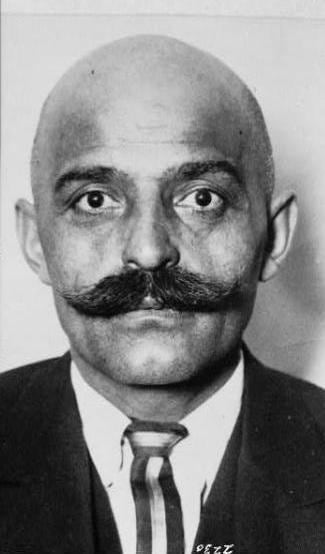
Retrato de G. I. Gurdjieff, 1925 · Public domain
Своими словами
«In life never do as others do.»Beelzebub's Tales to His Grandson, cap. 1, «The Arousing of Thought»: consejo de la abuela moribunda

Для начала — одна книга
Рассказы Вельзевула своему внуку / Beelzebub's Tales to His GrandsonГлавная мысль
Ordinary man has no single, permanent I but a multitude of small I's that take turns according to circumstance; each speaks in the name of the whole, which is why no one keeps what he promises.
В контексте
Биография
5 мин чтения
Перевод с испанского оригинала, выполненный с помощью ИИ; ожидает проверки носителем языка.
Дитя пограничья
Георгий Иванович Гурджиев родился в Александрополе — ныне Гюмри в Армении, — гарнизонном городе Российской империи, где бок о бок жили армяне, греки, русские, курды и турки. Год его рождения точно неизвестен, и об этом лучше сказать сразу: паспорта и официальные документы указывают 1877-й, день — 28 декабря; сам Гурджиев говорил ученикам о дате около 1866 или 1867 года, и эту версию поддерживают его племянница Люба Гурджиева-Эверитт и биограф Джеймс Мур; семейное предание и плита на его могиле в Авоне называют 1872 год. День рождения он праздновал 1 января по юлианскому календарю, то есть 13-го по григорианскому. Его отец, Иван Иванович Георгиадис, выходец из греческой семьи, был скотоводом, разорившимся из-за падежа скота, и ашугом — народным певцом, знавшим наизусть длинные эпические сказания; мать была армянкой, хотя некоторые современные исследователи считают гречанкой и её. Семья обосновалась в Карсе, недавно завоёванном Россией; там мальчик пел в соборном хоре и оказался под опекой декана Борша, которому позднее посвятит один из самых тёплых портретов во «Встречах с замечательными людьми».
Годы поисков
О дальнейшем периоде, примерно с 1887 по 1911 год, мы знаем почти исключительно из его собственного рассказа, а рассказ этот намеренно аллегоричен. Во «Встречах с замечательными людьми» Гурджиев представляет себя членом группы «Искателей истины», которая в поисках древнего знания исходила Египет, Абиссинию, Персию, Туркестан и Гиндукуш и добралась наконец до монастыря Сармунгского братства в Средней Азии. Ни один независимый документ не подтверждает ни этих путешествий, ни существования братства. Историки — Джеймс Уэбб, Джеймс Мур — признают, что он много странствовал и из первых рук знал суфизм, восточное христианство, музыку и танцы Кавказа и Средней Азии, но читают книгу как символическую автобиографию; сам автор предупреждал, что читать её нужно между строк. Он рассказывал также, что зарабатывал на жизнь торговлей, гипнозом, починкой всевозможных вещей и продажей ковров и даже красил воробьёв, чтобы продавать их как американских канареек.
Москва, революция и исход
Около 1912 года он появляется в Москве — женатым на Юлии Островской, молодой женщине польского происхождения, — и начинает собирать учеников. В 1915 году с ним знакомится П. Д. Успенский, журналист и автор сочинений на математические и эзотерические темы, только что вернувшийся из Индии. Его книга «В поисках чудесного. Фрагменты неизвестного учения», изданная в 1949 году, по-прежнему остаётся самым стройным изложением учения тех лет: человек как машина, живущая во сне, отсутствие постоянного «я», три центра, закон трёх и закон семи, эннеаграмма, необходимость «самовспоминания». В 1916 году к ним присоединяются композитор Фома (Томас) де Гартман и его жена Ольга. С началом революции Гурджиев уводит небольшую группу в Ессентуки, на Кавказ; в 1919 году в Тифлисе он основывает Институт гармонического развития человека, куда вступают Александр и Жанна де Зальцман. Через Константинополь и Берлин он в 1922 году прибывает в Париж.
Приоре в Авоне
В октябре 1922 года он размещает Институт в замке Приоре-де-Бас-Лож в Авоне, близ Фонтенбло. Между изнурительными сельскими работами, стройкой, кухней и упражнениями во внимании здесь преподавали Движения — танцы исключительной сложности, которые, по словам Гурджиева, он собрал в монастырях и братствах Востока. Писательница Кэтрин Мэнсфилд, больная туберкулёзом, провела здесь последние месяцы жизни и умерла 9 января 1923 года, что принесло Приоре скандальную славу в британской прессе. В конце 1923 года Движения были показаны в Театре Елисейских Полей, а в 1924-м отправились в Нью-Йорк и другие американские города. А. Р. Орейдж, бывший редактор журнала The New Age, стал его представителем в Америке.
Катастрофа и письмо
В июле 1924 года Гурджиев попал в тяжёлую автомобильную аварию неподалёку от Фонтенбло. Оправившись, он объявил о закрытии Института в прежнем виде и целиком отдался писательству. В декабре того же года он начал «Рассказы Вельзевула своему внуку» — огромную космическую аллегорию, в которой существо из другой солнечной системы объясняет внуку странную психологию обитателей Земли. Он работал над ней десять лет, писал по-русски и по-армянски в парижских кафе, устраивал чтения глав перед учениками и переписывал их, чтобы сделать менее доступными для торопливого чтения. В 1925 году умерла его мать, в 1926-м — жена. Из сотрудничества с де Гартманом, главным образом в 1925–1927 годах, родилось около двухсот фортепианных пьес. В 1932 году Приоре, осаждённое долгами, закрылось. В 1933 году Гурджиев частным образом напечатал «Вестник грядущего добра» — единственную книгу, изданную им при жизни, — и вскоре изъял её.
Париж, «Верёвка» и оккупация
С 1936 года он жил в квартире на улице Полковников Ренар, дом 6. Здесь он занимался с «Верёвкой» — группой женщин, в которую входили Джейн Хип, Маргарет Андерсон, Солита Солано и Кэтрин Хьюм, — а с 1940 года и с группой Жанны де Зальцман в Севре. Во время оккупации он сохранил свои ритуальные трапезы с тостами за разные категории «идиотов» и встречи, записи которых дошли до нас. После войны вернулись прежние ученики и пришли ученики Успенского, умершего в 1947 году; Дж. Г. Беннет вновь увиделся с ним в 1948 году, спустя двадцать пять лет.
Смерть и наследие
В 1949 году, уже больной, он готовил издание «Вельзевула». Он умер 29 октября 1949 года в Американском госпитале в Нёйи-сюр-Сен и был похоронен в Авоне, неподалёку от Приоре. Книга вышла в 1950 году; «Встречи с замечательными людьми» — по-французски в 1960-м и по-английски в 1963-м; «Жизнь реальна только тогда, когда „Я есть“» — частным изданием в середине 1970-х. Жанна де Зальцман, которой он доверил передачу учения, создала Институт Гурджиева в Париже, основанный в 1953 году Фонд Гурджиева в Нью-Йорке, Общество Гурджиева в Лондоне и фонд в Каракасе. Вне этой сети возникли иные линии — например, Беннета или Виллема Найленда. В 1979 году Питер Брук перенёс «Встречи с замечательными людьми» на экран.
Гурджиев и сегодня остаётся неудобной фигурой. Ученики описывают подавляющее присутствие, способное и на очень деятельное сострадание, и на расчётливую жёсткость; критики — человека, без стеснения требовавшего денег, манипулировавшего людьми и имевшего нескольких детей от учениц. Оба образа опираются на документы. Бесспорно одно — его влияние: мысль о том, что человек живёт во сне и что пробуждение требует работать одновременно с телом, чувством и мыслью посреди обычной жизни, а не вне её, — то, что Успенский назвал «Четвёртым путём», — проходит через значительную часть западной духовности XX века.
Источники: Ouspensky, P. D. In Search of the Miraculous: Fragments of an Unknown Teaching. Nueva York: Harcourt, Brace, 1949. · Moore, James. Gurdjieff: The Anatomy of a Myth. Shaftesbury: Element, 1991. · De Hartmann, Thomas y Olga de Hartmann. Our Life with Mr. Gurdjieff. Nueva York: Cooper Square, 1964 (ed. ampliada, Harper & Row, 1983). · Gurdjieff, G. I. Meetings with Remarkable Men. Londres: Routledge & Kegan Paul, 1963 (ed. francesa: Rencontres avec des hommes remarquables, París: Julliard, 1960). · Gurdjieff, G. I. All and Everything: Beelzebub's Tales to His Grandson. Nueva York: Harcourt, Brace, 1950; Londres: Routledge & Kegan Paul, 1950.
Хронология
Жизнь год за годом
Каждая точка — документированное событие. Нажмите, чтобы прочитать о нём, с источником и степенью достоверности.
ок. 18720 летAlexandropol (hoy Gyumri, Armenia)
Birth (disputed date)
Born in Alexandropol. Three versions: 1877 (28 December, in passports and official papers); c. 1866–1867 (what he told pupils; supported by his niece Luba Gurdjieff Everitt and James Moore); 1872 (a family recollection and the plaque on his grave at Avon). He celebrated his birthday on 1/13 January.
ОспариваетсяWikipedia (en), «George Gurdjieff», sección sobre la fecha de nacimiento (remite a Churton, Tobias. Deconstructing Gurdjieff, Inner Traditions, 2017, pp. 3–4 y 316–317).
После смерти
- 1950Beelzebub published
- 1953Gurdjieff Foundation
- 1979Peter Brook's film
ок. 1872 · 0 лет
Birth (disputed date)
Born in Alexandropol. Three versions: 1877 (28 December, in passports and official papers); c. 1866–1867 (what he told pupils; supported by his niece Luba Gurdjieff Everitt and James Moore); 1872 (a family recollection and the plaque on his grave at Avon). He celebrated his birthday on 1/13 January.
Оспаривается
ок. 1878
The family in Kars
After his father's ruin the family moves to Kars, newly taken by Russia. He sings in the cathedral choir and is tutored by Dean Borsh (according to Meetings with Remarkable Men).
Предание
ок. 1887
The years of search
Period of travels (c. 1887–1911) known almost only from his allegorical account: the 'Seekers of Truth', the Sarmoung Brotherhood. No independent documentary confirmation.
Предание
ок. 1912
First groups in Moscow
He appears in Moscow, married to Julia Ostrowska, and begins to gather pupils in Moscow and St Petersburg.
Вероятно
1915
Meeting with Ouspensky
P. D. Ouspensky meets him in a Moscow café; from that meeting comes In Search of the Miraculous.
Документировано
1916
The de Hartmanns join
The composer Thomas de Hartmann and his wife Olga become his pupils.
Документировано
1917
Essentuki
With the revolution he withdraws with a small group to Essentuki, where intensive work continues.
Документировано
1919
Institute for the Harmonious Development of Man
He founds the Institute in Tiflis; Alexandre and Jeanne de Salzmann join.
Документировано
октябрь 1922 г.
The Prieuré
After Constantinople and Berlin, he installs the Institute at the Château du Prieuré des Basses Loges.
Документировано
9 января 1923 г.
Death of Katherine Mansfield
The writer, ill with tuberculosis, dies at the Prieuré after spending her last months there.
Документировано
январь 1924 г.
The Movements in America
After the Paris demonstrations (December 1923), he presents the Movements in New York and other cities.
Документировано
июль 1924 г.
The accident
Serious car accident. On recovering he closes the Institute in its former shape and turns to writing.
Документировано
декабрь 1924 г.
Beelzebub begun
He begins writing Beelzebub's Tales to His Grandson, on which he will work for a decade.
Документировано
июнь 1926 г.
Death of his wife
Julia Ostrowska dies of cancer; his mother had died in 1925.
Документировано
1932
The Prieuré closes
The Prieuré ceases to operate, beset by debts.
Документировано
1933
The Herald of Coming Good
He prints privately the only book published in his lifetime; he soon withdraws it.
Документировано
1936
The Rope
He settles in the flat on rue des Colonels-Renard, where he teaches the women's group 'the Rope'.
Документировано
1940
The Occupation
He begins teaching Jeanne de Salzmann's group at Sèvres; during the Occupation he keeps up meetings and ritual meals.
Документировано
1948
Ouspensky's pupils arrive
After Ouspensky's death (1947), his pupils and J. G. Bennett come to Paris.
Документировано
29 октября 1949 г.
Death
He dies at the American Hospital in Neuilly; funeral at the Russian Orthodox cathedral on rue Daru and burial at Avon.
Документировано
1950
Beelzebub published
All and Everything: Beelzebub's Tales to His Grandson appears.
Документировано
1953
Gurdjieff Foundation
The Gurdjieff Foundation of New York is established, within the network organised by Jeanne de Salzmann.
Документировано
1979
Peter Brook's film
Release of Meetings with Remarkable Men, directed by Peter Brook in collaboration with Jeanne de Salzmann.
Документировано
Труды
Главные труды
Труды, без которых не понять это наследие.
Посмертное издание · 1950
Рассказы Вельзевула своему внуку / Beelzebub's Tales to His Grandson
First series of All and Everything. Beelzebub, a cosmic being travelling on the ship Karnak, tells his grandson Hassein what he observed on Earth over centuries: the history of a humanity that, through a cosmic accident and the atrophy of an organ that let it see reality, lives ruled by vanity, self-love and suggestibility. Beneath outsized humour and an invented vocabulary, the book sets out a complete cosmology—the law of three, the law of seven, the reciprocal feeding of everything that exists—and a relentless critique of religion, science, art and war. Gurdjieff wanted it read three times and in different ways.
14 изданий · amazon.com

Посмертное издание · 1963
Встречи с замечательными людьми / Meetings with Remarkable Men
A memoir of youth organised as portraits: the bard father, Dean Borsh, Prince Yuri Lubovedsky, Professor Skridlov, Ekim Bey and other companions among the 'Seekers of Truth', up to the arrival at the monastery of the Sarmoung Brotherhood. It is at once autobiography, adventure story and training manual: each meeting teaches a quality. Critics agree it should not be read as literal chronicle; none of its exotic episodes has independent documentary confirmation. Peter Brook filmed it in 1979.
9 изданий · amazon.com

Посмертное издание · ок. 1975
Жизнь реальна только тогда, когда «Я есть» / Life Is Real Only Then, When 'I Am'
Gurdjieff's most personal book: the account of the crisis after the 1924 accident, the decision to 'remember himself' through constant effort, the break with the New York pupils in 1931 and a series of lectures on 'I am', the body and sensation. Fragmentary and sometimes abrupt, it shows the teacher applying his own method to himself and doubting it.
8 изданий · amazon.com

Письменный труд · 1933
The Herald of Coming Good
A programmatic booklet subtitled 'First appeal to contemporary humanity'. It sets out the history of the Institute, the aims of the work, the plan of the All and Everything trilogy and a long declaration of intent, in a deliberately convoluted style. Its withdrawal made it a rarity; reprinted since 1969, it is a key document for dating the crisis of 1931–1933.
6 изданий · amazon.com
Все труды (14)

Views from the Real World
1973

The Struggle of the Magicians
1957
G. I. Gurdjieff
Gurdjieff–de Hartmann Music for the Piano
The Conscious LibraryGurdjieff–de Hartmann Music for the Piano
1996
G. I. Gurdjieff
Transcripts of Gurdjieff's Meetings 1941–1946
The Conscious LibraryTranscripts of Gurdjieff's Meetings 1941–1946
2008
G. I. Gurdjieff
Gurdjieff's Early Talks 1914–1931
The Conscious LibraryGurdjieff's Early Talks 1914–1931
2014

Paris Meetings 1943
2017

In Search of the Miraculous (P. D. Ouspensky)
1949

Our Life with Mr. Gurdjieff (Thomas and Olga de Hartmann)
1964

The Reality of Being (Jeanne de Salzmann)
2010

In Search of Being
2012
Изречения
Изречения, найденные в конкретном труде. Каждое сопровождается указанием происхождения и степени надёжности.
In life never do as others do.ПровереноBeelzebub's Tales to His Grandson, cap. 1, «The Arousing of Thought»: consejo de la abuela moribunda
Основные идеи (редакционное изложение)
Из уважения к авторскому праву эти идеи изложены своими словами и не выдаются за дословные цитаты.
- Ordinary man has no single, permanent I but a multitude of small I's that take turns according to circumstance; each speaks in the name of the whole, which is why no one keeps what he promises.
- Man cannot do: in him everything happens, as it rains or clears. True doing presupposes a unified being, and that unity is not a gift but the result of long work.
- Work on oneself requires conditions of friction: difficult people, uncomfortable tasks, fatigue. Without resistance there is no effort and without effort no transformation.
- Knowledge must be accompanied by an equivalent development of being; knowledge that grows without being becomes theoretical, useless or dangerous.
Апокрифические изречения и изречения спорной атрибуции (1)
«'I leave you all in a fine mess' ('Je vous laisse dans de beaux draps'), as last words.»
It circulates online as Gurdjieff's final words, but it has not been found in the published testimonies of his pupils or in the biographies consulted. No primary source.
Последние слова
Противоречивые версии
«Do everything, even the impossible, to develop what I have brought.»Do everything, even the impossible, to develop what I have brought.
There is no single, unambiguously attested final phrase; several versions of differing weight circulate. (1) Testimony attributed to Jeanne de Salzmann: the phrase above, which she reportedly received as his last words to her; it recurs in the literature on Gurdjieff, but its original publication has not been located (Wikipedia flags it 'citation needed'). (2) Instructions from his last weeks, passed on by de Salzmann and recorded by W. P. Patterson (Struggle of the Magicians, pp. 224–225): publish the first and second series 'as and when you are sure that the time has come', first prepare a nucleus of people, and the third need not be published. These are not last words in the strict sense. (3) J. G. Bennett, who saw him often in 1948–1949, narrated his last months (Witness, 1962; the diaries published as Idiots in Paris), but it has not been verified that he records a final phrase; pending. (4) His American physician William Welch left a testimony on the manner of his death—'he died like a king'—which are not Gurdjieff's words. (5) The phrase 'I leave you all in a fine mess' has no source and is treated as apocryphal.
Источник: The Gurdjieff Legacy Foundation, «Jeanne de Salzmann» (archivo), que cita a William Patrick Patterson, Struggle of the Magicians, pp. 224–225.
Спросить
На что отвечают эти труды
Двенадцать великих вопросов человечества и то, что позволяют на них ответить эти тексты, со ссылками. Мы никогда не вкладываем слова в чужие уста.
Что такое Абсолют? Существует ли Бог?
Our Common Father Endlessness created the universe and suffers for it
Личный БогСказано прямо
G. I. Gurdjieff speaks of God chiefly in Beelzebub's Tales to His Grandson (1950), a cosmic allegory in deliberately strange language. There the creator bears names such as Our Common Father, His Endlessness or Our Lord Sovereign Endlessness; He dwells on the Sun Absolute and creates the universe to counter the destructive action of time, the Heropass, establishing a system of reciprocal exchange of substances. This God has purpose, sends messengers to humanity and, according to the tale, grieves over the state of beings. The aim of inner work is partly to help Him: the conscious human being can lighten the burden of his Creator. Unlike the abstract account transmitted by Ouspensky, here the Absolute is someone with will and feeling, though wrapped in a myth designed to disconcert the reader.
Сравнить этот вопрос с другими учителямиКто я? Существует ли истинное «я»?
Man is born without a soul or an I: work must form them
Постоянного «я» нетСказано прямо
According to G. I. Gurdjieff's teachings as recorded by Ouspensky, ordinary man lacks individuality, a single I and will: he is a plurality of I's following one another mechanically. In one of the Moscow talks reproduced in chapter 2 of In Search of the Miraculous, Gurdjieff compares the human being to a carriage, a horse, a coachman and a master who is absent, and states that man is not born with an immortal soul: he may come to form higher bodies, and with them a permanent I, only through intense work. In Beelzebub's Tales to His Grandson he develops this idea in mythic language, speaking of bodies that a being may or may not crystallise. The self, then, is not a given substance but a possibility that most people do not realise.
Сравнить этот вопрос с другими учителямиПочему мы страдаем?
The legacy of the organ Kundabuffer: man lives asleep and suffers senselessly
Незнание того, кто мы естьСказано прямо
G. I. Gurdjieff offers in Beelzebub's Tales to His Grandson a mythic explanation of human suffering. According to the tale, at the dawn of humanity higher powers implanted in human beings an organ, the Kundabuffer, which made them perceive reality upside down and prevented them from seeing their true situation; although it was later removed, its properties — vanity, self-love, suggestibility, egoism — were passed down from generation to generation. Hence war, reciprocal destruction and mechanical life, which plunge people into a sleep of which they are unaware. In the teachings transmitted by Ouspensky, this state appears as identification and sleep. Gurdjieff distinguishes mechanical suffering, which serves no purpose, from intentional suffering, consciously accepted, which together with conscious labour is the means of the being's evolution.
Сравнить этот вопрос с другими учителямиЧто происходит после смерти?
Immortality is not possessed: it is acquired by first dying to oneself
Каждый день умирать для известногоСказано прямо
Gurdjieff denies that ordinary man possesses an immortal soul. According to the teaching recorded by Ouspensky in In Search of the Miraculous, man is a machine without a permanent I, and the only thing that could survive death are the higher bodies — the astral and those beyond it — which are formed only through conscious work and voluntary suffering; whoever has not formed them dies completely. In Beelzebub's Tales he speaks of the Kesdjan body and the higher being-body as achievements, not gifts. Hence the importance of an earlier death: Gurdjieff taught that to be born again one must die, and to die one must awaken; what must die is false personality, with its vanity and self-love. The decisive question is not what happens after death, but whether there is already someone capable of surviving it.
Сравнить этот вопрос с другими учителямиКак достигается освобождение или спасение?
Awakening through conscious effort and voluntary suffering: the Fourth Way in ordinary life
Через сознательную внутреннюю работуСказано прямо
George I. Gurdjieff taught that human beings are born without a finished soul and, unless they work on themselves, remain asleep and mechanical. According to Ouspensky's testimony, he distinguished four ways: the fakir's, working on the body; the monk's, on the emotions; the yogi's, on the mind; and a Fourth Way working on all three at once without leaving ordinary life. Its means are self-observation, self-remembering, the movements and dances he designed, and what Beelzebub's Tales to His Grandson calls conscious labours and intentional sufferings. The work requires a teacher who knows and a group; the result is the formation of a real and permanent «I».
Сравнить этот вопрос с другими учителямиНужен ли учитель?
Only one who knows can wake the sleeper: teacher and school are necessary
НезаменимСказано прямо
According to Ouspensky's testimony, George I. Gurdjieff taught that ordinary human beings cannot escape their sleep alone, because the very means they would use to wake up are asleep. They need someone who is awake, or more awake, who knows the way and enables them to work on themselves; and that knowledge is not invented but received from a source that possesses it. Gurdjieff played that role demandingly, often disconcertingly, with his pupils in Russia and later at the Prieuré in Fontainebleau. In Meetings with Remarkable Men he presents his own formation as a search for teachers and ancient knowledge through Central Asia and the Near East.
Сравнить этот вопрос с другими учителямиРеален ли мир?
A hierarchical cosmos of laws and matters, where everything feeds on everything
Планы бытияСказано прямо
George I. Gurdjieff taught a cosmology in which the universe is a hierarchy of worlds governed by two fundamental laws, the law of three and the law of seven (the octave). According to Ouspensky's testimony, everything in it is material, though with different degrees of density and vibration, and everything forms part of a reciprocal exchange of substances in which each level feeds others. In Beelzebub's Tales to His Grandson he develops it in mythic form, with a Sun Absolute at the centre and the Earth as a peripheral place where mechanical humanity serves cosmic purposes it does not know. The world is fully real, but ordinary human beings do not see it as it is, because they live asleep.
Сравнить этот вопрос с другими учителямиЧто такое любовь?
Mechanical man cannot love: only one who is conscious truly loves
То, что появляется, когда «я» прекращаетсяСказано прямо
Gurdjieff denies that ordinary man is capable of loving. According to the teaching recorded by Ouspensky, mechanical man can do nothing, and cannot love either: what he calls love is a mixture of attraction, habit, identification and self-love, which changes with circumstances and easily turns into its opposite. In a talk collected in Views from the Real World he distinguishes love of the body, which depends on type and polarity; love of feeling, which evokes its opposite; and conscious love, which evokes the same in response. In Beelzebub's Tales, vanity and self-love appear as consequences of the organ Kundabuffer and as the main obstacles to development. Real love is possible only for one who, through conscious labour and intentional suffering, has ceased to be governed by those forces.
Сравнить этот вопрос с другими учителямиСвободны ли мы или всё предопределено?
No one does anything: only one who works on himself gains a will
Мы машины, пока не проснёмсяСказано прямо
The thesis of human mechanicalness is the core of Gurdjieff's teaching as his pupils recorded it. Man has no self but a multitude of contradictory «I»s; he is not conscious but lives asleep, and what he calls his decisions are reactions of a machine driven by external influences. In his talks collected in *Views from the Real World* and in his major work, *Beelzebub's Tales to His Grandson*, he adds that humanity, being mechanical, serves cosmic purposes it does not understand. Only conscious labour and intentional suffering can create a permanent self and a real will. Freedom is not a birthright but something that must be manufactured.
Сравнить этот вопрос с другими учителямиЗачем медитировать или молиться?
Remembering oneself amid life, through conscious effort
Быть в присутствииСказано прямо
For Gurdjieff the human being lives asleep, and all practice has a single aim: to wake up. The main instrument, according to his pupils' testimony, is self-remembering, divided attention that includes the perceiver along with the perceived, exercised amid ordinary activities and not in retreat. To this he added practices of his own: the Movements, sacred dances requiring simultaneous attention of body, emotions and mind, exercises in sensing the body, hard physical work and what he called intentional suffering. In *Life Is Real Only Then, When «I Am»*, his last book, he describes that effort of presence as the condition for a real «I» to arise in man.
Сравнить этот вопрос с другими учителямиМожет ли разум познать предельное?
Real knowledge is scarce, material and transmitted; knowledge without being is useless
Эзотерическое знаниеСказано прямо
According to Ouspensky's testimony in *In Search of the Miraculous*, Gurdjieff held that there is a true knowledge, preserved by an esoteric circle of humanity and transmitted through schools, and that this knowledge is in a certain sense material and limited: it cannot be shared out to everyone. He insisted on distinguishing knowledge from being: a man may know a great deal and be unable to do anything, and knowledge that grows without the development of being produces only theories. In *Meetings with Remarkable Men* he narrates his youthful search for that knowledge across the East, with the «Seekers of Truth». Ordinary reason belongs to the man-machine; real understanding requires transformation.
Сравнить этот вопрос с другими учителямиУйти от мира или преобразить его?
Wars cannot be stopped from outside: mechanical man cannot do
Революция — внутренняяСказано прямо
Gurdjieff holds that ordinary man cannot do anything: everything happens to him, as rain happens. According to the 1915 conversation recorded by Ouspensky, when asked in the midst of the world war whether war could be stopped, he answered that it could not, because it is the result of cosmic influences and of the mechanicalness of millions of people, and that only men who had ceased to be machines could change things. In Beelzebub's Tales the periodic «reciprocal destruction» of the beings of the Earth is the most terrible symptom of their lack of consciousness. That is why he proposes no social reforms but work on oneself. Nor withdrawal: his Institute for the Harmonious Development of Man, at the Prieuré in Fontainebleau-Avon, was a community of intense physical work, sacred dances and deliberate friction between people, that is, life in the world used as a school.
Сравнить этот вопрос с другими учителями
Созвучия и противоречия
Созвучия и противоречия
Рассчитаны вопрос за вопросом на основе позиций. Причина каждого совпадения или расхождения — по нажатию.
Ближе всего к
Nicholas Roerich
Совпадают в вопросах: Нужен ли учитель? · Реален ли мир? · Может ли разум познать предельное?
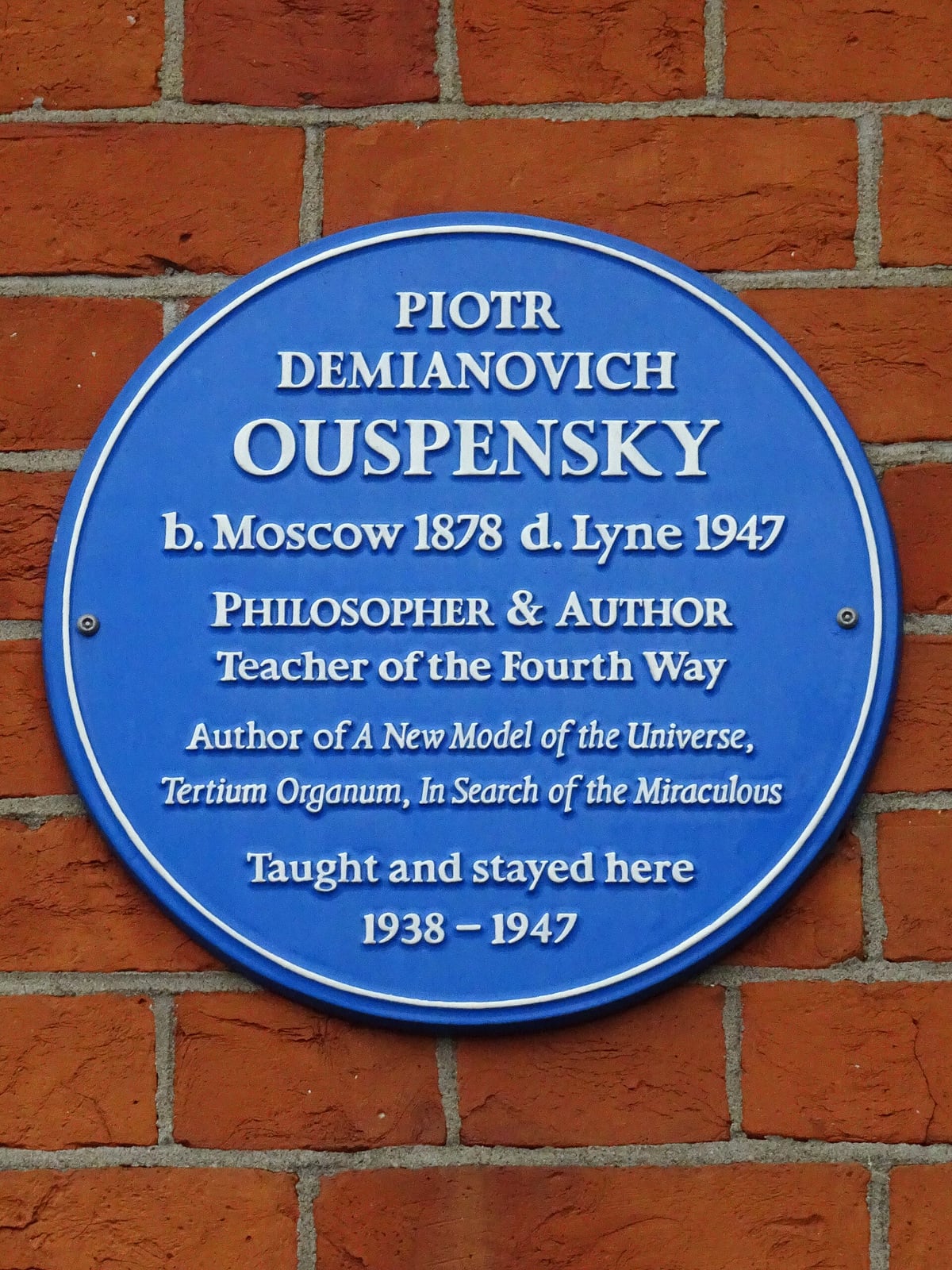
P. D. Ouspensky
Совпадают в вопросах: Кто я? Существует ли истинное «я»? · Почему мы страдаем? · Как достигается освобождение или спасение?
Eckhart Tolle
Совпадают в вопросах: Что такое любовь? · Свободны ли мы или всё предопределено? · Зачем медитировать или молиться?
Padmasambhava
Совпадают в вопросах: Кто я? Существует ли истинное «я»? · Почему мы страдаем? · Нужен ли учитель?
Дальше всего от

Nikolai Berdyaev
Расходятся в вопросах: Кто я? Существует ли истинное «я»? · Нужен ли учитель?

Patañjali
Расходятся в вопросах: Что такое Абсолют? Существует ли Бог? · Кто я? Существует ли истинное «я»?
Bodhidharma
Расходятся в вопросах: Кто я? Существует ли истинное «я»?
Vladimir Solovyov
Расходятся в вопросах: Кто я? Существует ли истинное «я»?
Расходятся в вопросахКажущееся противоречие
G. I. Gurdjieff · Ramana Maharshi
Conscious effort versus being what one already is: a smaller conflict than it seems
Почему: The contradiction is largely apparent because they speak from different levels. Gurdjieff describes the human being from the side of sleep and the machine, and his effort is the condition for something to awaken; Ramana speaks from the Self, for which effort produces nothing new, and he admits it only as a means of stopping the ego from interfering. Both deny the ordinary doer. A real difference remains, however, and should not be glossed over: for Gurdjieff the permanent self does not exist and must be created; for Ramana it already exists and one need only stop veiling it. In one effort builds; in the other, it clears away.
Совпадают в вопросах
G. I. Gurdjieff · P. D. Ouspensky
Man is a machine: the master and the disciple who systematised his teaching
Почему: The affinity is that of a master and his most systematic disciple: Ouspensky worked with Gurdjieff in Russia between 1915 and 1918 and transmitted that teaching in In Search of the Miraculous, published posthumously in 1949. The relationship broke down: Ouspensky withdrew in 1918 and definitively in the 1920s, and led his own groups in London, centred on the study of the system rather than on the figure of the master. They agree in doctrine, not in style: Gurdjieff taught in a demanding and disconcerting way, with dances, movements and provoked situations; Ouspensky, intellectually and in an orderly fashion. Hence they part on the question of the master: one deems him indispensable; the other stresses the school.
Расходятся в вопросахПринципиальное разногласие
G. I. Gurdjieff · Teresa of Ávila
The soul as gift or as achievement: the diamond castle versus an immortality to be manufactured
Почему: The contradiction is real and touches the core of both anthropologies. Teresa speaks from the Christian doctrine of creation, in which God gives each soul its immortal being and grace precedes effort. Gurdjieff builds a cosmology of his own, of laws and materials, in which immortality is conditional and must be acquired. There is nonetheless a point of contact: both think that most people live outside themselves, in the outer courtyard of the castle or in sleep, and that knowing oneself demands long and painful work. But in Teresa what is unknown is already there, and in Gurdjieff what is unknown is that there is not yet anyone.
Расходятся в вопросахПринципиальное разногласие
G. I. Gurdjieff · Jiddu Krishnamurti
Both see man as conditioned; one demands a school and effort, the other forbids them
Почему: The contradiction is real and comes from two opposite experiences of teaching. Gurdjieff presents himself as a seeker of an ancient knowledge transmitted in schools of Central Asia, and believes that this knowledge, scarce and almost material, can pass only from one who has it to one who works. Krishnamurti was raised precisely within an esoteric organisation with masters, grades and initiations, and his break in 1929 made the rejection of all authority the centre of his teaching. Both distrust comfortable spirituality and inherited beliefs; they part over whether directed effort awakens or lulls.
Предания и рассказы
Предания и рассказы
Свидетельствоc. 1870s–1880s
The grandmother's advice
Происхождение рассказа: It comes from Gurdjieff himself, in chapter 1 of Beelzebub's Tales ('The Arousing of Thought'). There are no independent witnesses; it is an autobiographical account within an allegorical work.
Источник: Gurdjieff, G. I. All and Everything: Beelzebub's Tales to His Grandson. Nueva York: Harcourt, Brace, 1950; Londres: Routledge & Kegan Paul, 1950.
Свидетельствоc. 1890s
The sparrows of Samarkand
Происхождение рассказа: Gurdjieff's own account in Meetings with Remarkable Men. No independent confirmation; its parable-like character is obvious.
Источник: Gurdjieff, G. I. Meetings with Remarkable Men. Londres: Routledge & Kegan Paul, 1963 (ed. francesa: Rencontres avec des hommes remarquables, París: Julliard, 1960).
Свидетельство1915
Ouspensky in the Moscow café
Происхождение рассказа: Ouspensky's testimony in chapter 1 of In Search of the Miraculous (1949), written years after the events.
Источник: Ouspensky, P. D. In Search of the Miraculous: Fragments of an Unknown Teaching. Nueva York: Harcourt, Brace, 1949.
Документировано1922–1923
Katherine Mansfield in the cowshed
Происхождение рассказа: Documented by Mansfield's letters (ed. Murry, 1928) and by Moore's biographies (Gurdjieff and Mansfield, 1980; The Anatomy of a Myth, 1991).
Источник: Mansfield, Katherine. The Letters of Katherine Mansfield. Ed. J. Middleton Murry. Londres: Constable, 1928 (cartas desde el Priorato, octubre de 1922 – enero de 1923).
Свидетельство1920s
Rachmilievitch, the necessary irritant
Происхождение рассказа: Fritz Peters's testimony in Boyhood with Gurdjieff (1964), written some thirty years later; Gurdjieff's words are the author's reconstruction.
Источник: Peters, Fritz. Boyhood with Gurdjieff. Nueva York: E. P. Dutton, 1964.
Документировано1924
The 1924 accident
Происхождение рассказа: The accident is documented (Moore; de Hartmann; WRSP). The details of the cushion and of the recovery come from pupils' testimonies; the interpretation, from Gurdjieff himself.
Источник: Moore, James. Gurdjieff: The Anatomy of a Myth. Shaftesbury: Element, 1991.
Не поддаётся проверкеc. 1900
The Sarmoung Brotherhood
Происхождение рассказа: Sole source: Meetings with Remarkable Men. Webb (The Harmonious Circle) and Moore analyse the hypotheses about its location without finding confirmation.
Источник: Gurdjieff, G. I. Meetings with Remarkable Men. Londres: Routledge & Kegan Paul, 1963 (ed. francesa: Rencontres avec des hommes remarquables, París: Julliard, 1960).
Учение
Учение
Понятия, на которых строится мысль учителя, объяснённые в их контексте.
Self-rememberingrecuerdo-de-si
Set out in Fragments (ch. 7) and in the Prieuré aphorisms; it runs through every phase of the teaching.
Источник: Ouspensky, P. D. In Search of the Miraculous: Fragments of an Unknown Teaching. Nueva York: Harcourt, Brace, 1949.
Sleep and man-machinesueno-y-mecanicidad
Core of the Russian teaching (1915–1918) according to Ouspensky; it reappears satirically in Beelzebub.
Источник: Ouspensky, P. D. In Search of the Miraculous: Fragments of an Unknown Teaching. Nueva York: Harcourt, Brace, 1949.
The three centrestres-centros
Basis of the Institute's name and of the 'fourth way' concept, which works on all three centres at once as against the ways of the fakir, the monk and the yogi.
Источник: Ouspensky, P. D. In Search of the Miraculous: Fragments of an Unknown Teaching. Nueva York: Harcourt, Brace, 1949.
The law of three and the law of sevenley-de-tres-y-ley-de-siete
Set out by Ouspensky (chs. 4–5 and 7) and developed in mythic key in Beelzebub.
Источник: Ouspensky, P. D. In Search of the Miraculous: Fragments of an Unknown Teaching. Nueva York: Harcourt, Brace, 1949.
The enneagrameneagrama
Ouspensky transmits it in chapter 14 of Fragments.
Источник: Ouspensky, P. D. In Search of the Miraculous: Fragments of an Unknown Teaching. Nueva York: Harcourt, Brace, 1949.
The fourth waycuarto-camino
Origin of the tradition's name (fourth-way) in the Atlas.
Источник: Ouspensky, P. D. In Search of the Miraculous: Fragments of an Unknown Teaching. Nueva York: Harcourt, Brace, 1949.
Conscious labour and intentional sufferingtrabajo-consciente-y-sufrimiento-intencional
Doctrine of the Prieuré period and of Beelzebub.
Источник: Gurdjieff, G. I. All and Everything: Beelzebub's Tales to His Grandson. Nueva York: Harcourt, Brace, 1950; Londres: Routledge & Kegan Paul, 1950.
Ретриты
Ретриты и центры
Места и встречи, связанные с этим учением. Мы свяжем вас с их организаторами.
Nueva York (Upper East Side) · Estados Unidos
Gurdjieff Foundation of New York
The Gurdjieff Foundation of New York
The Gurdjieff Foundation of New York belongs to the network of foundations established after Gurdjieff's death by his pupil Jeanne de Salzmann, together with the Institut Gurdjieff in Paris and the Gurdjieff Society in London. Its first president, Lord Pentland, had been a pupil of Ouspensky before working with Gurdjieff, and many of Ouspensky's pupils joined this work. It offers weekly group meetings led by senior students, classes in the Movements, the sacred dances and exercises Gurdjieff taught, meditation and retreats. Access is gradual and begins with introductory events.
San Francisco y Guerneville (Sonoma), California · Estados Unidos
Gurdjieff Foundation of California
The Gurdjieff Foundation of California
The Gurdjieff Foundation of California was founded in 1955 under the direction of Lord John Pentland, whom Gurdjieff himself had entrusted with the early American groups, and describes itself as the oldest group in California devoted to his teaching of inner development. It is a non-profit voluntary community based in San Francisco, with a second property in Guerneville, Sonoma County, where practical work takes place. It offers group meetings, Movements, sittings, study of the ideas and music, and belongs to the International Association of the Gurdjieff Foundations alongside Paris, New York and London.
Londres · Reino Unido
Gurdjieff Studies, London
Gurdjieff Studies Ltd (organización benéfica registrada)
Gurdjieff Studies is a London charity devoted to the Fourth Way that offers group meetings, reading groups, practical activities, Movements classes and intensive residential stays. It holds that the teaching is passed on from teacher to pupil in direct lines of transmission, and maintains two reference websites: one on Gurdjieff's life and work, with his music, dances and chronology, and another devoted to P. D. Ouspensky, reconstructing his work in England, including the Lyne Place period. It is independent of the network of foundations established by Jeanne de Salzmann.
Видео
Видео
Записи, интервью и документальные фильмы. Видео воспроизводятся с YouTube; здесь они не хранятся.
June 18, 1949 (improvisación al armonio)
Оригинальная запись· ZXX· 1949· 2 min
G. I. Gurdjieff - Topic
Mme de Salzmann in New York 1988
Оригинальная запись· EN· 1988· 3 min
Gurdjieff Meetings
Jacob Needleman - Gurdjieff: A Life in the Work
Лекция· EN· 116 min
CommonwealNewSchoolОфициальный канал
'Meetings with Remarkable Men' – An interview with Peter Brook
Интервью· EN· 10 min
Clarendon Events
The Gurdjieff Work and Gurdjieff Movements – J.G. Bennett at Sherborne, 1973
Оригинальная запись· EN· 1973· 3 min
Avrom Altman
Gurdjieff: The Rascal Saint – Sadhguru Exclusive
Разбор· EN· 7 min
SadhguruОфициальный канал
Gurdjieff : un maître spirituel unique en son genre
Разбор· FR· 7 min
Sadhguru FrançaisОфициальный канал
L'avenir de Gurdjieff avec Pierre Schaeffer par Michel Camus
Интервью· FR· 20 min
Résonance[s]
El Cuarto Camino, Gurdjieff, 1992 (documental de TVE2, La tabla redonda)
Документальный фильм· ES· 1992· 56 min
beapuertas
Георгий Гурджиев / George Gurdjieff. Жизнь Замечательных Людей
Документальный фильм· RU· 62 min
ЖИЗНЬ ЗАМЕЧАТЕЛЬНЫХ ЛЮДЕЙ
Галерея
Галерея
Изображения с проверенной лицензией. Каждое сохраняет своё авторство и атрибуцию.
Связи
Связи
Влияния, ученичество и близость взглядов. Документированная связь отличается от сходства, выявленного путём анализа.
Учитель
His pupil from 1915; he separated from him in the 1920s and taught independently in London. His In Search of the Miraculous is the main exposition of the Russian teaching.
Документированная связь
Учитель
Thomas de Hartmann
Composer, pupil from 1916 and collaborator on some two hundred piano pieces until 1929.
Документированная связь
Учитель
Jeanne de Salzmann
Pupil from 1919 in Tiflis; continuer of the teaching and organiser of the foundations after 1949.
Документированная связь
Учитель
J. G. Bennett
Met him in Constantinople in 1920 and studied with him in 1923 and 1948–1949; later founded his own line at Coombe Springs and Sherborne.
Документированная связь
Учитель
A. R. Orage
Editor of The New Age; pupil from 1922 and his representative in New York (1924–1931); collaborated on the translation of Beelzebub.
Документированная связь
Встречался с
Katherine Mansfield
Spent her last months at the Prieuré (1922–1923).
Документированная связь
Идеи, близкие к
Both presented ancient knowledge transmitted by Eastern masters; Gurdjieff nonetheless mocked Theosophists and parlour occultism.
Сходство, выявленное путём анализа
Современник
Contemporaries in interwar Europe; both gave movement—eurythmy or dance—a central place in spiritual training. No meeting is recorded.
Сходство, выявленное путём анализа
Идеи, близкие к
Both insisted on self-observation without illusions about the 'I'; unlike Gurdjieff, Krishnamurti rejected every method and every school.
Сходство, выявленное путём анализа
Источники
Источники
Библиография и каталоги, использованные для этой статьи.
- Ouspensky, P. D. In Search of the Miraculous: Fragments of an Unknown Teaching. Nueva York: Harcourt, Brace, 1949.
- Wikidata, «George Gurdjieff» (Q217771).
- Moore, James. Gurdjieff: The Anatomy of a Myth. Shaftesbury: Element, 1991.
- De Hartmann, Thomas y Olga de Hartmann. Our Life with Mr. Gurdjieff. Nueva York: Cooper Square, 1964 (ed. ampliada, Harper & Row, 1983).
- Gurdjieff, G. I. Meetings with Remarkable Men. Londres: Routledge & Kegan Paul, 1963 (ed. francesa: Rencontres avec des hommes remarquables, París: Julliard, 1960).
- Gurdjieff, G. I. All and Everything: Beelzebub's Tales to His Grandson. Nueva York: Harcourt, Brace, 1950; Londres: Routledge & Kegan Paul, 1950.
- Gurdjieff, G. I. Views from the Real World: Early Talks of Gurdjieff. Nueva York: E. P. Dutton, 1973.
- World Religions and Spirituality Project (Virginia Commonwealth University), «Gurdjieff» (perfil y cronología).
- The Gurdjieff Legacy Foundation, «Jeanne de Salzmann» (archivo), que cita a William Patrick Patterson, Struggle of the Magicians, pp. 224–225.
- The Gurdjieff Legacy Foundation, «Final Years» (últimos años, muerte y funeral).
- Wikipedia (en), «George Gurdjieff», sección sobre la fecha de nacimiento (remite a Churton, Tobias. Deconstructing Gurdjieff, Inner Traditions, 2017, pp. 3–4 y 316–317).
- Webb, James. The Harmonious Circle: The Lives and Work of G. I. Gurdjieff, P. D. Ouspensky, and Their Followers. Londres: Thames & Hudson, 1980.
- Peters, Fritz. Boyhood with Gurdjieff. Nueva York: E. P. Dutton, 1964.
- Bennett, J. G. Witness: The Story of a Search. Londres: Hodder & Stoughton, 1962.
- Open Library, registros de autor y ediciones de Georges Ivanovitch Gurdjieff (consultados para los ISBN).
- Gurdjieff Society of Austin, «Aphorisms» (aforismos inscritos en la Study House del Priorato; recogidos en Views from the Real World).
- Mansfield, Katherine. The Letters of Katherine Mansfield. Ed. J. Middleton Murry. Londres: Constable, 1928 (cartas desde el Priorato, octubre de 1922 – enero de 1923).
- Shambhala Publications, ficha de In Search of Being: The Fourth Way to Consciousness, por G. I. Gurdjieff, ed. Stephen A. Grant (2012; reed. 2021).
- Правообладатель
- Derechos vigentes sobre los textos póstumos y sus traducciones. Las ediciones autorizadas en inglés salen bajo el sello Triangle Editions (vinculado a la Gurdjieff Foundation de Nueva York) y Penguin; en francés, las de la red del Institut Gurdjieff. Pendiente de confirmar el titular exacto en cada territorio.
- Официальный сайт
- institut-gurdjieff.com/
Ожидает подтверждения
То, что в этой статье пока не удалось установить. Мы предпочитаем сказать об этом, а не заполнять пробел.
- Fecha de nacimiento: no resoluble con las fuentes disponibles (1866/1867, 1872, 1877); el campo birth usa 1872 «approx» como valor central, con las tres versiones en la cronología.
- Localizar la publicación original de las palabras «Do everything, even the impossible, to develop what I have brought», atribuidas a Jeanne de Salzmann.
- Comprobar en Witness (Bennett, 1962/1974) y en Idiots in Paris si Bennett recoge una frase final de Gurdjieff.
- Cotejar contra un ejemplar de Views from the Real World la redacción y la página de los aforismos citados (verificados contra la lista de la Gurdjieff Society of Austin).
- ISBN de las ediciones inglesas de Book Studio (Transcripts 1941–1946; Early Talks) y de Paris Meetings 1943; editor de la edición de 2008 de Struggle of the Magicians.
- Ediciones italianas de editoriales establecidas (Incontri con uomini straordinari, Racconti di Belzebù): no localizadas con ISBN en Open Library.
- Titular exacto de los derechos por territorio (Triangle Editions / herederos / Institut Gurdjieff).
- Fechas de fundación del Institut Gurdjieff (París) y de la Gurdjieff Society (Londres): solo se ha confirmado 1953 para Nueva York.
- Obras completas (2026-10-25): cotejado el catálogo de Open Library (OL767343A y variantes). Todo lo publicado de Gurdjieff está registrado; además existen grabaciones de sus improvisaciones al armonio (1948–1949) editadas en disco, que no son libros y no se registran como obras. Las entradas atribuidas a Gurdjieff de Psychology of Man's Possible Evolution, Tertium Organum, A Further Record o The Theory of Conscious Harmony son errores de catálogo (obras de Ouspensky y de Rodney Collin).
- Sala de lectura (2026-10-25): sin textos registrables. Lo único publicado en vida, The Herald of Coming Good (París, 1933, en inglés, traductores no identificados), tiene escaneo en Internet Archive (in.ernet.dli.2015.127965), pero su OCR no es limpio y la obra no cumple los tres derechos: libre en la UE desde 2020 (autor fallecido en 1949), no en España hasta 2030 (80 años) ni en EE. UU. hasta 2029 (obra extranjera de 1933 restaurada por la URAA, 95 años). Las demás obras son póstumas (1950 en adelante) y tienen derechos vigentes de Triangle Editions y de sus traductores. Revisar en 2030.
Исследовано 2026-10-23