Платонизм
Plato
Πλάτων
ок. 428 до н. э. – ок. 348 до н. э.Исторически документированная личность
Афинский философ IV века до н. э., ученик Сократа и учитель Аристотеля, основатель Академии. Его наследие, сохранившееся целиком, составляют диалоги, в которых чаще всего говорит Сократ: в них изложены учение об идеях, бессмертие души, восхождение через любовь к прекрасному и замысел государства, которым правят знающие Благо. Почти вся западная философия и значительная часть христианской, иудейской и исламской мистики мыслили себя в диалоге с ним.
- трудов
- 57трудов
- изданий
- 358изданий
- цитат
- 19цитат
- видео
- 15видео
- изображений
- 11изображений
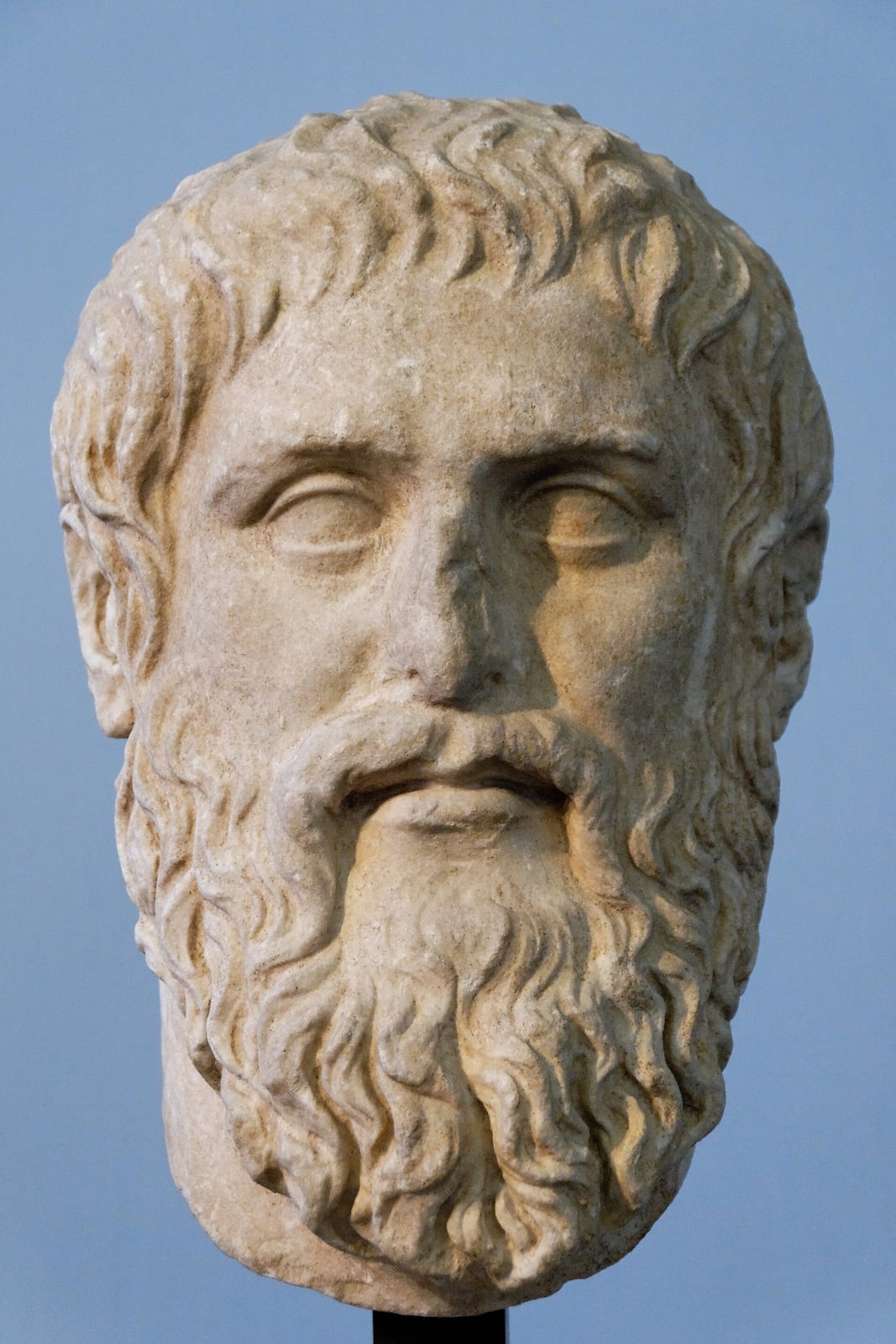
Busto de Platón (Museos Capitolinos, MC 1377) · CC BY 2.5
Своими словами
«He knows nothing, and thinks that he knows; I neither know nor think that I know.»Apología de Sócrates 21d (habla Sócrates). Español: traducción literal propia desde el griego (ed. Burnet). Inglés: Jowett, 1892 (dominio público).

Главная мысль
Theory of Forms (Ideas): Plato holds that, besides sensible things, which are many and changing, there exist intelligible realities, eternal and unchanging — the Forms or Ideas (eidos, idea) — such as the Beautiful itself, the Just itself or the Equal itself.
В контексте
Биография
5 мин чтения
Перевод с испанского оригинала, выполненный с помощью ИИ; ожидает проверки носителем языка.
Аристократ в Афинах военной поры
Платон родился в Афинах около 428 или 427 года до н. э., в первые годы Пелопоннесской войны, в одной из древнейших семей города. Его отец Аристон возводил свой род к царю Кодру; мать, Периктиона, состояла в родстве с Солоном. У него было двое старших братьев, Адимант и Главкон, которым он даст слово в «Государстве», и сестра Потона, мать его преемника Спевсиппа. После смерти Аристона Периктиона вышла замуж за своего дядю Пирилампа, друга Перикла. Мальчик, таким образом, рос среди людей, привыкших повелевать: Критий, двоюродный брат его матери, и Хармид, его дядя, станут центральными фигурами олигархического режима Тридцати.
О его образовании достоверно известно немногое. Диоген Лаэртский, писавший шесть веков спустя, сообщает, что настоящее его имя было Аристокл, а «Платон» — прозвище, данное за ширину плеч или лба; что он занимался борьбой, живописью и поэзией и сжёг свои трагедии, услышав Сократа. Это сведения эллинистических биографов, смешивавших предание, выводы из диалогов и чистый вымысел, и современная наука относится к ним с осторожностью.
Рана 399 года
Твёрдо установленным кажется то, что в юности Платон входил в круг Сократа и что эта связь определила его жизнь. «Седьмое письмо», подлинность которого оспаривается, но которое многие специалисты признают, рассказывает, что в молодости он собирался посвятить себя политике, что Тридцать приглашали его присоединиться к ним и что их насилие — включая попытку вовлечь Сократа в арест гражданина, обречённого на казнь, — оттолкнуло его. После восстановления демократии, в 399 году до н. э., новые правители привлекли Сократа к суду за нечестие и развращение юношества, и он был приговорён выпить цикуту.
Платон присутствовал на суде, как он сам отмечает в «Апологии Сократа», хотя «Федон» сообщает, что в день смерти он отсутствовал по болезни. Согласно письму, эта развязка привела его к выводу, который проходит через всё его творчество: государства не избавятся от зол, пока философы не станут править или правители не начнут по-настоящему философствовать. После казни он на время укрылся в Мегаре, у сократика Евклида.
Путешествия и Академия
Античные источники приписывают ему затем путешествия в Кирену, в Италию пифагорейцев и в Египет. Хорошо засвидетельствовано лишь знакомство с пифагорейцами: около сорока лет он посетил Южную Италию, подружился с Архитом Тарентским и перебрался в Сиракузы, где познакомился с Дионом, шурином тирана Дионисия I. Рассказ о том, что тиран велел продать его в рабство на Эгине и что некий киренаик его выкупил, восходит к поздним биографам и в «Седьмом письме» отсутствует.
Вернувшись в Афины около 387 года до н. э., он основал свою школу у гимнасия Академии — тенистой рощи к северо-западу от города, посвящённой герою Академу. Это был не университет в современном смысле, а сообщество учения и совместной жизни, где занимались математикой, астрономией, диалектикой и политической теорией и где работали такие математики, как Теэтет и Евдокс. Аристотель пришёл туда в 367 году до н. э., семнадцати лет, и пробыл около двадцати лет. Диоген Лаэртский называет среди учеников Платона даже двух женщин — Аксиотею из Флиунта и Ласфению из Мантинеи.
Сицилийское искушение
Политической философии Платона довелось пройти настоящее испытание. В 367 году до н. э., после смерти Дионисия I, Дион попросил его приехать и воспитать нового тирана, Дионисия II, в надежде сделать из него правителя-философа «Государства». Опыт закончился изгнанием Диона и возвращением Платона в Афины. Около 361 года он вновь отправился в Сиракузы, чтобы попытаться их примирить, был задержан против воли и смог уехать лишь благодаря Архиту. В 357 году Дион при поддержке членов Академии сверг Дионисия, а в 354 году был убит Каллиппом, афинянином из собственного окружения. «Седьмое» и «Восьмое» письма представляют собой итог этой неудачи.
Диалоги
В отличие почти от всех предшествующих философов, чьи труды известны нам лишь во фрагментах, от Платона сохранилось всё, что приписывала ему античность: тридцать пять диалогов и собрание тринадцати писем, расположенные в I веке н. э. Трасиллом в девять тетралогий, а также горстка сочинений, уже тогда признанных подложными. Платон никогда не говорит в них от первого лица; беседу обычно ведёт Сократ, а в поздних диалогах эта роль переходит к Элейскому чужеземцу, Тимею или Афинянину.
Хронология остаётся предметом споров, но общая схема принята всеми. Короткие диалоги, такие как «Лахет» или «Евтифрон», исследуют одну добродетель и завершаются без ответа. «Федон», «Пир», «Государство» и «Федр» излагают учение об идеях, бессмертие души и восхождение любви к Прекрасному. «Парменид», «Теэтет», «Софист», «Тимей», «Филеб» и «Законы», сочинение, оставшееся к его смерти неотделанным, подвергают эти идеи критике и распространяют их на космологию и законодательство.
«Федр» и «Седьмое письмо» добавляют предостережение о самом письме: самое важное не передаётся в книгах, а вспыхивает в душе после долгого совместного пребывания. Аристотель упоминает «неписаные учения» своего учителя, а знаменитая публичная лекция «О благе», в которой Платон говорил о математике и заключил, что Благо есть Единое, привела слушателей в недоумение. Какая часть его мысли осталась за пределами диалогов — по сей день один из великих спорных вопросов платоноведения.
Смерть и наследие
Платон умер в Афинах в 348 или 347 году до н. э., около восьмидесяти лет от роду, и был погребён в Академии. Источники расходятся в описании обстоятельств: свадебный пир, работа над текстом, ночь в лихорадке под звуки флейты. Ему наследовал племянник Спевсипп, и школа, претерпев глубокие изменения, просуществовала века.
Текст дошёл до печатного станка благодаря византийским рукописям — древнейшая из тех, что сохранили полностью первые шесть тетралогий, Clarkianus из Бодлианской библиотеки, была переписана в 895 году, — а в 1578 году Анри Этьенн (Стефан) издал в Женеве собрание, пагинация которого до сих пор служит для цитирования: «Государство» 514a отсылает к странице 514, раздел a, того тома. На испанский язык полное собрание сочинений впервые перевёл Патрисио де Аскарате в 1871–1872 годах.
Его влияние не знает равных. Плотин считал себя его истолкователем и основал неоплатонизм; Августин признавал, что платоновские книги открыли ему путь к христианскому Богу; «Тимей» в латинском переводе веками был почти всем, что Запад читал из Платона, а исламская фальсафа и средневековое иудейское богословие восприняли его собственными путями. Полный латинский перевод Марсилио Фичино 1484 года вернул его в средоточие европейской культуры. Альфред Норт Уайтхед подытожил этот долг, написав, что европейская философская традиция состоит из ряда примечаний к Платону.
Источники: Nails, Debra, The People of Plato: A Prosopography of Plato and Other Socratics, Indianápolis, Hackett, 2002 (entrada «Plato» y apéndices cronológicos). · Diógenes Laercio, Vidas y opiniones de los filósofos ilustres, libro III (Platón), s. III d. C. Trad. inglesa de R. D. Hicks, Loeb Classical Library, Harvard University Press, 1925 (texto en Wikisource). · Platón (atribuida), Carta VII, 324a–352a, en Platonis Opera, ed. John Burnet, vol. V, Oxford Classical Texts, 1907; trad. española de Juan Zaragoza y Pilar Gómez Cardó en Platón, Diálogos VII, Madrid, Gredos (Biblioteca Clásica Gredos 162), 1992. · Cooper, John M. (ed.) y Hutchinson, D. S. (ed. asociado), Plato: Complete Works, Indianápolis, Hackett, 1997 (introducción del editor sobre el corpus, las tetralogías de Trasilo y la autenticidad de cada obra). · Riginos, Alice Swift, Platonica: The Anecdotes Concerning the Life and Writings of Plato, Leiden, Brill (Columbia Studies in the Classical Tradition 3), 1976.
Хронология
Жизнь год за годом
Каждая точка — документированное событие. Нажмите, чтобы прочитать о нём, с источником и степенью достоверности.
ок. 428 до н. э.0 летAtenas (o Egina, según otra tradición)
Birth
Born into an aristocratic Athenian family: his father, Ariston, claimed descent from King Codrus; his mother, Perictione, from Solon's family. Diogenes Laertius dates the birth to the 88th Olympiad (428/427 BC), and Apollodorus has it coincide with Apollo's birthday. He had two brothers, Adeimantus and Glaucon, and a sister, Potone.
ВероятноDiógenes Laercio, Vidas y opiniones de los filósofos ilustres, libro III (Platón), s. III d. C. Trad. inglesa de R. D. Hicks, Loeb Classical Library, Harvard University Press, 1925 (texto en Wikisource).
После смерти
- ок. 347 до н. э.Speusippus heads the Academy
- ок. 14 до н. э.Thrasyllus' tetralogies
- 895The Codex Clarkianus
- 1484Ficino's Latin translation
- 1578The Stephanus edition
- 1871 – 1872Complete works in Spanish
ок. 428 до н. э. · 0 лет
Birth
Born into an aristocratic Athenian family: his father, Ariston, claimed descent from King Codrus; his mother, Perictione, from Solon's family. Diogenes Laertius dates the birth to the 88th Olympiad (428/427 BC), and Apollodorus has it coincide with Apollo's birthday. He had two brothers, Adeimantus and Glaucon, and a sister, Potone.
Вероятно
ок. 423 до н. э. · 5 лет
His mother marries Pyrilampes
After Ariston's death, Perictione marries her uncle Pyrilampes, a friend of Pericles; from this marriage is born Antiphon, Plato's half-brother, who appears in the Parmenides.
Вероятно
ок. 408 до н. э. · 20 лет
With Socrates
According to Diogenes Laertius, at twenty he began to frequent Socrates; tradition adds that he then burned his tragedies. The date and the burning episode are traditional.
Предание
404 до н. э. · 24 года
The Thirty Tyrants
After Athens' defeat, an oligarchic government including Critias, his mother's cousin, and Charmides, his uncle, invites the young Plato to collaborate. According to the Seventh Letter, its violence — and its attempt to involve Socrates in an unjust arrest — turned him away.
Вероятно
399 до н. э. · 29 лет
Trial and death of Socrates
Socrates is condemned to death for impiety and corrupting the young. Plato attends the trial, as he states in the Apology (34a, 38b), but according to the Phaedo (59b) he was not present at the death because he was ill.
Документировано
ок. 399 до н. э. · 29 лет
Withdrawal to Megara
After the execution, with other Socratics, he takes refuge for a while in Megara with Euclides, according to Hermodorus as cited by Diogenes Laertius.
Вероятно
ок. 395 до н. э. · 33 года
Journeys of study
Ancient tradition credits him with journeys to Cyrene, to the mathematician Theodorus, to the Pythagoreans of Italy and to Egypt. Only the contact with the Pythagoreans is well attested; the Egyptian journey is doubtful.
Предание
ок. 388 до н. э. · 40 лет
First journey to Sicily
Around the age of forty (Seventh Letter, 324a) he visits Italy, where he befriends Archytas of Tarentum, and the court of Dionysius I in Syracuse, where he meets the young Dion. Later tradition relates that the tyrant had him sold as a slave in Aegina.
Вероятно
ок. 387 до н. э. · 41 год
Founding of the Academy
He acquires land near the gymnasium of the Academy, north-west of Athens, and founds the community of study that will take its name. Mathematics, astronomy, dialectic and politics are studied there; it will survive, with transformations, for several centuries.
Вероятно
367 до н. э. · 61 год
Aristotle enters the Academy
Aristotle, aged seventeen, arrives from Stagira and remains in the Academy for some twenty years, until Plato's death.
Документировано
ок. 367 до н. э. – 365 до н. э. · 61 год
Second journey to Sicily
After Dionysius I's death, Dion calls him to educate the new tyrant, Dionysius II. The experiment fails: Dion is exiled and Plato returns to Athens.
Вероятно
ок. 361 до н. э. – 360 до н. э. · 67 лет
Third journey to Sicily
He returns to Syracuse at Dionysius II's request, hoping to reconcile him with Dion. Held against his will, he manages to leave thanks to the intervention of Archytas of Tarentum.
Вероятно
357 до н. э. · 71 год
Dion's expedition
Dion, with support from members of the Academy, overthrows Dionysius II. In 354 BC he is murdered by Callippus, an Athenian of his circle. Letters VII and VIII present themselves as written after his death.
Вероятно
ок. 348 до н. э. · 80 лет
Death
He dies in Athens in the first year of the 108th Olympiad (348/347 BC), aged about eighty or eighty-one, according to Hermippus as cited by Diogenes Laertius. He is buried in the Academy. He leaves the Laws not yet fair-copied.
Вероятно
ок. 347 до н. э.
Speusippus heads the Academy
He is succeeded by his nephew Speusippus, son of his sister Potone. Aristotle leaves Athens.
Документировано
ок. 14 до н. э.
Thrasyllus' tetralogies
In the first century AD, the astrologer Thrasyllus, close to Tiberius, arranges the works in nine tetralogies, the order in which the corpus has come down to us.
Вероятно
895
The Codex Clarkianus
John the Calligrapher copies for Arethas of Caesarea the codex now preserved in the Bodleian Library, the main witness for the first six tetralogies.
Документировано
1484
Ficino's Latin translation
Marsilio Ficino publishes the first complete Latin translation of the dialogues, commissioned by Cosimo de' Medici, which restores Plato to the centre of European thought.
Документировано
1578
The Stephanus edition
Henri Estienne publishes the Greek text in three volumes with Jean de Serres' Latin translation; its pagination becomes the universal system of reference.
Документировано
1871 – 1872
Complete works in Spanish
Patricio de Azcárate publishes the first Spanish translation of the complete works (11 volumes, 1871–1872).
Документировано
Труды
Главные труды
Труды, без которых не понять это наследие.
Письменный труд · ок. 395 до н. э.
Apology of Socrates
Ἀπολογία Σωκράτους
A recreation of the defence speech Socrates delivered in 399 BC before the Athenian popular jury, accused of not recognising the city's gods and of corrupting the young. Socrates explains the Delphic oracle, his mission of examining those who think they know, and his conscious ignorance; after the verdict he ironically proposes to be maintained in the Prytaneum, and accepts death declaring that the unexamined life is not worth living. Plato was present at the trial (34a, 38b). It is the classic doorway into philosophy.
8 изданий

Письменный труд · ок. 380 до н. э.
Phaedo
Φαίδων
Phaedo of Elis tells Echecrates of Socrates' last hours in prison: the conversation on why the philosopher does not fear death, the arguments for the immortality of the soul (from opposites, recollection, affinity with the invisible, participation in Forms), the closing myth on the fate of souls, and the calm death by hemlock. Here the theory of Forms appears explicitly, as does the definition of philosophy as practice for dying. Plato is said to have been absent through illness (59b).
9 изданий

Письменный труд · ок. 380 до н. э.
Symposium
Συμπόσιον
At the house of the poet Agathon, celebrating his victory in the tragic contest of 416 BC, the guests deliver speeches in honour of Eros: Phaedrus, Pausanias, the physician Eryximachus, Aristophanes with the myth of spherical beings cut in two, Agathon, and Socrates, who relays the teaching of the priestess Diotima on the ladder of love, from one beautiful body to Beauty itself. It closes with the entry of a drunken Alcibiades, who delivers a eulogy of Socrates. A literary masterpiece and source of the whole Western mysticism of love.
9 изданий

Письменный труд · ок. 375 до н. э.
Republic
Πολιτεία
In the Piraeus, after a festival, Socrates discusses what justice is. To see it writ large he imagines an ideal city with three classes, ruled by philosophers whose education culminates in knowledge of the Form of the Good. Its ten books contain the critique of poetry, the equal education of women guardians, the images of the sun, the line and the cave, the typology of degenerate regimes and the myth of Er on the choice of lives. Plato's central work and that of political philosophy.
13 изданий
Все труды (57)
Euthyphro
395
Crito
395

Cratylus
385

Theaetetus
368

Sophist
360

Statesman
360

Parmenides
370

Philebus
355
Phaedrus
370
Alcibiades I
Alcibiades II
Hipparchus
Rival Lovers (Lovers)
Theages

Charmides
390
Laches
390

Lysis
390
Euthydemus
385

Protagoras
390

Gorgias
387
Meno
385
Hippias Major
390
Hippias Minor
395
Ion
395
Изречения
Изречения, найденные в конкретном труде. Каждое сопровождается указанием происхождения и степени надёжности.
He knows nothing, and thinks that he knows; I neither know nor think that I know.οὗτος μὲν οἴεταί τι εἰδέναι οὐκ εἰδώς, ἐγὼ δέ, ὥσπερ οὖν οὐκ οἶδα, οὐδὲ οἴομαι.
ПровереноApología de Sócrates 21d (habla Sócrates). Español: traducción literal propia desde el griego (ed. Burnet). Inglés: Jowett, 1892 (dominio público).
Апокрифические изречения и изречения спорной атрибуции (2)
«'Let no one ignorant of geometry enter.'»
An inscription attributed to the Academy's door that appears only in sixth-century AD commentators; it is not found in any work of Plato or in sources of his time.
«'Only the dead have seen the end of war.'»
A widespread false attribution: it appears in no work of Plato. It comes from George Santayana, Soliloquies in England (1922), the soliloquy 'Tipperary'; General Douglas MacArthur popularised it as Platonic in an address at West Point (1962).
Последние слова
Проверяемых записей о последних словах не существует.
No final words of Plato survive. The ancient sources disagree even on the circumstances of his death: Hermippus, cited by Diogenes Laertius (III 2), says he died at a wedding feast; Cicero (On Old Age 13) that he died while writing, at eighty-one; and the Herculaneum papyrus of Philodemus' Index Academicorum, which goes back through Neanthes to Philip of Opus, relates that on his last night, feverish, he received a Chaldean visitor and that a Thracian girl played the flute while he marked the rhythm for her with a gesture. None of these versions records a sentence.
Источник: Riginos, Alice Swift, Platonica: The Anecdotes Concerning the Life and Writings of Plato, Leiden, Brill (Columbia Studies in the Classical Tradition 3), 1976.
Спросить
На что отвечают эти труды
Двенадцать великих вопросов человечества и то, что позволяют на них ответить эти тексты, со ссылками. Мы никогда не вкладываем слова в чужие уста.
Что такое Абсолют? Существует ли Бог?
A Good beyond being and a good craftsman who willed the world
И личный, и безличныйСледует из учения
In Plato two faces of the ultimate coexist. In the Republic the Good is the source from which things receive being and knowability, and it is not essence but still beyond essence: an impersonal principle named only by analogy with the sun. In the Timaeus, by contrast, a good demiurge, free of envy, wills that everything become as like him as possible and orders the cosmos looking to an eternal model. The Laws add gods who care for small things as much as great and punish impiety. Plato does not explicitly unify the two levels; the later tradition read them as degrees of a single divine reality.
Сравнить этот вопрос с другими учителямиКто я? Существует ли истинное «я»?
The immortal soul, akin to the Forms, imprisoned in the body
Сотворённая бессмертная душаСказано прямо
Plato identifies the human being with the soul and devotes his most famous proofs to it. In the Phaedo the soul is like the divine, immortal, intelligible and always the same as itself, while the body resembles the mortal and changing; to philosophise is to separate it from the body. The Phaedrus defines it as a self-moving principle of motion that therefore is neither born nor dies. In the Timaeus the demiurge fashions the immortal part of the human soul from the same mixture as the world soul and entrusts it to the lesser gods. Its destiny is to become like God as far as possible. Yet Plato also ascribes successive reincarnations to this soul.
Сравнить этот вопрос с другими учителямиПочему мы страдаем?
Injustice is a civil war in the soul, and the body feeds it
Социальный и нравственный беспорядокСказано прямо
Plato gives two complementary explanations. In the Phaedo the body fills the soul with loves, desires, fears and images, and from its needs arise wars, revolts and fights over money. In the Republic evil is thought of as disorder: the soul has three parts, reason, spirit and appetite, and justice consists in each doing its own work under reason's rule; injustice is an inner uprising, a sickness of the soul. The same holds for the city, whose degenerate forms correspond to disordered souls. We suffer when order is inverted and appetite rules, in the soul and in the city.
Сравнить этот вопрос с другими учителямиЧто происходит после смерти?
The immortal soul is judged and reborn until philosophy frees it
Перерождение согласно кармеСказано прямо
Plato upholds the immortality of the soul with arguments and describes it with myths. In the Phaedo philosophy is a practice of dying, because it prepares the soul to separate from the body; souls attached to it are reincarnated according to their habits, as asses, wolves or bees, while those purified by philosophy live with the gods. The Phaedrus tells of a ten-thousand-year cycle in which only the philosopher's soul regains its wings sooner. In the myth of Er, at the end of the Republic, judged souls choose their next life and drink from the river of forgetfulness. Plato warns that the form of the tale is approximate but that the risk of believing it is worth taking.
Сравнить этот вопрос с другими учителямиКак достигается освобождение или спасение?
Turning the whole soul towards what is and becoming like God
Через прямое знаниеСказано прямо
For Plato liberation is a conversion of knowledge. The allegory of the cave presents humans chained before shadows; education does not consist in putting knowledge into the soul but in turning it whole, away from what becomes, until it can bear the contemplation of what is and of the Good. The way passes through mathematics and culminates in dialectic. The Phaedo calls philosophy purification and a practice of dying; the Symposium describes an ascent of love from beautiful bodies to Beauty itself; the Theaetetus sums up the goal as flight from here to there, which is becoming like God by becoming just and holy with understanding.
Сравнить этот вопрос с другими учителямиНужен ли учитель?
Truth catches after long companionship, like a spark that leaps
Община и традицияСказано прямо
Plato founded the Academy, a community of study and life, and in his dialogues learning always happens between persons. The Seventh Letter, of disputed authenticity but very old, states the idea precisely: the essential cannot be put into words like other studies, but after long companionship with the matter itself and a shared life, it is suddenly born in the soul like a light kindled from a leaping spark. The Phaedrus criticises writing because it cannot answer the questioner and prefers the living word sown in a suitable soul. In the cave, someone has to unchain the prisoner and force him upward. Knowledge is passed on in a prolonged relationship, not in a book.
Сравнить этот вопрос с другими учителямиРеален ли мир?
The sensible always becomes and never fully is: an image of what is
Видимость поверх единой реальностиСказано прямо
Plato distinguishes what always is and never becomes, grasped by thought, from what always becomes and never fully is, the object of opinion and the senses. In the allegory of the cave the prisoners take projected shadows for reality; the divided line grades the levels of reality from images up to the Forms. But the sensible world is not nothing: in the Timaeus it is the work of a good craftsman, the most beautiful of generated things, an image of the intelligible which the dialogue's last sentence calls a perceptible god. The world is real as an image; the fully real are the Forms and, above them, the Good.
Сравнить этот вопрос с другими учителямиЧто такое любовь?
Eros ascends from beautiful bodies to Beauty itself
Тоска и соединениеСказано прямо
Plato makes love a force of ascent. In the Symposium, Diotima explains that Eros is not a god but an intermediary, child of Resource and Poverty, always lacking and always seeking; he desires the beautiful because he desires the good and immortality. Rightly guided, he climbs by degrees: from one beautiful body to all, from bodies to souls, to laws, to sciences, until suddenly beholding Beauty itself, the moment when, if ever, life is worth living. The Phaedrus describes love as divine madness: the sight of the beloved reminds the soul of the beauty it beheld before birth and makes its wings grow. To love is to remember the origin and return to it.
Сравнить этот вопрос с другими учителямиСвободны ли мы или всё предопределено?
The responsibility is the chooser's; the god is not responsible
Карма и выборСказано прямо
The myth of Er, at the end of the Republic, is Plato's great image on this question. Souls, before being reborn, choose their next life from many patterns; a prophet proclaims that virtue has no master, that each will have more or less of it as he honours or scorns it, and that the responsibility is the chooser's, not the god's. But the choice is not neutral: most choose according to the habits of their former life, and once made, the Fates render it irrevocable. The Laws likewise hold that God left to our wills the causes of our being one way or another. The past conditions choice but does not replace it.
Сравнить этот вопрос с другими учителямиЗачем медитировать или молиться?
Turning the soul towards what is until it contemplates the Good
Видеть реальность такой, как она естьСказано прямо
Plato proposes no meditation techniques, but contemplation is the centre of his philosophy. True education consists in turning the whole soul from what becomes until it can bear the sight of what is; the ascent of the Symposium culminates in the sudden contemplation of Beauty itself; the Phaedo describes philosophy as the soul's gathering into itself, away from the senses, to see the truth. Nor does Plato neglect prayer: the Timaeus opens with the remark that everyone with a little sense invokes the divine at the start of any undertaking. But the goal is to see: to know reality as it is.
Сравнить этот вопрос с другими учителямиМожет ли разум познать предельное?
After dialectic, the ultimate is born in the soul like a leaping spark
Предельное лежит за пределами умаСказано прямо
Plato trusts reason as few have: dialectic is the only method that ascends to the unhypothetical principle. But at the summit language falls short. The Good is beyond essence, and Socrates in the Republic declines to say what it is and offers only an image, the sun. In the Symposium Beauty itself is beheld suddenly at the end of the ascent. And the Seventh Letter states that the most serious matters cannot be put into words like other studies, but after long companionship with the subject, are born suddenly in the soul, like light kindled from a spark. Reason prepares the way; the ultimate is seen, not proved.
Сравнить этот вопрос с другими учителямиУйти от мира или преобразить его?
Until philosophers rule, there will be no respite from evils for cities
Упорядочить обществоСказано прямо
Plato sought to transform the world through government. The Republic holds that there will be no respite from evils for cities until philosophers rule or kings truly philosophise; the philosopher who has left the cave and beheld the Good is obliged to go back down to govern, though he would prefer contemplation. The Seventh Letter relates how the young Plato, disillusioned with Athenian politics after Socrates' death, reached that conviction, and his journeys to Syracuse attempted to put it into practice. The Laws, his last work, design a possible city in detail. Wisdom is realised in the good order of the city and the soul.
Сравнить этот вопрос с другими учителями
Созвучия и противоречия
Созвучия и противоречия
Рассчитаны вопрос за вопросом на основе позиций. Причина каждого совпадения или расхождения — по нажатию.
Ближе всего к
Meher Baba
Совпадают в вопросах: Что такое Абсолют? Существует ли Бог? · Что происходит после смерти? · Реален ли мир?
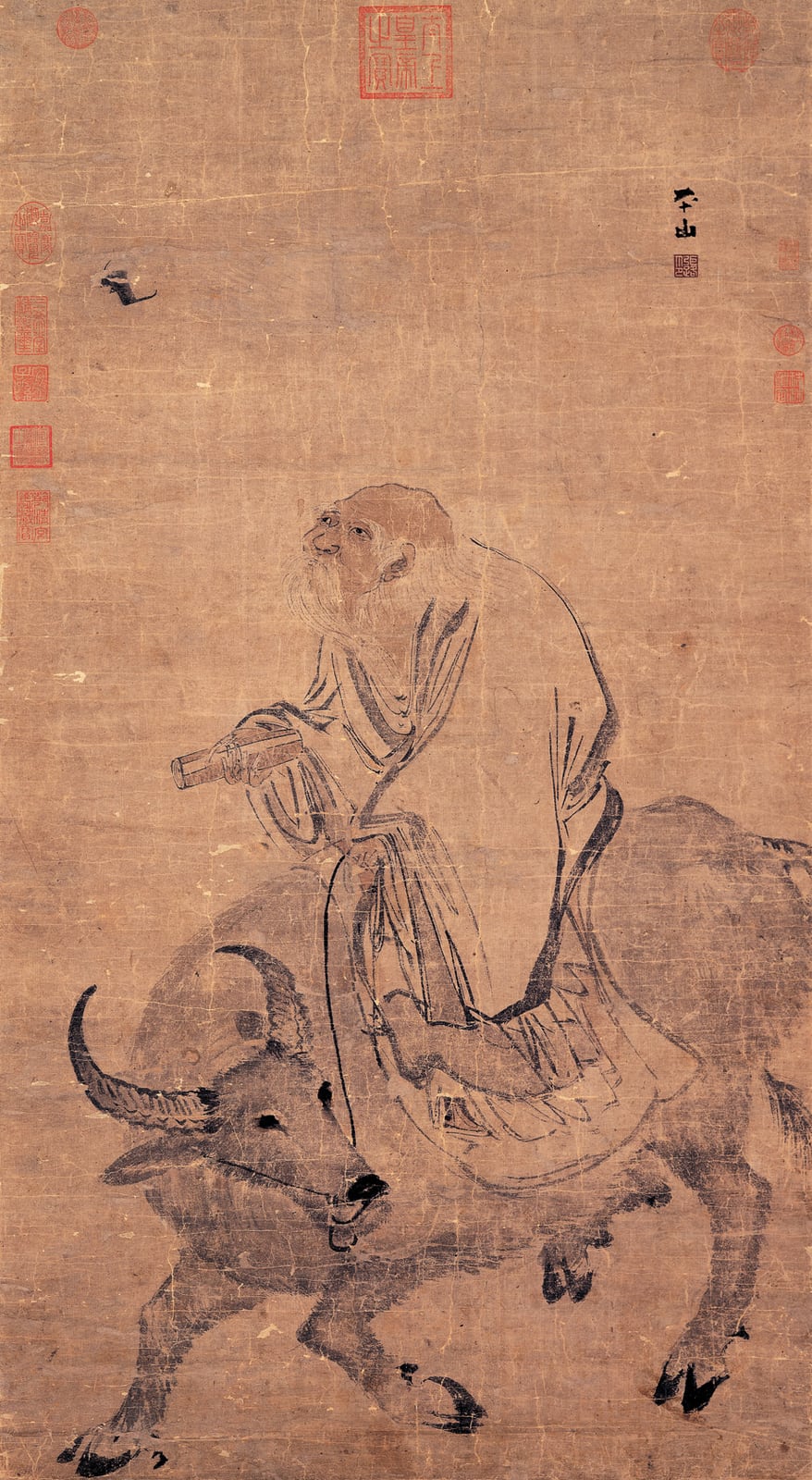
Laozi
Совпадают в вопросах: Почему мы страдаем? · Зачем медитировать или молиться? · Может ли разум познать предельное?
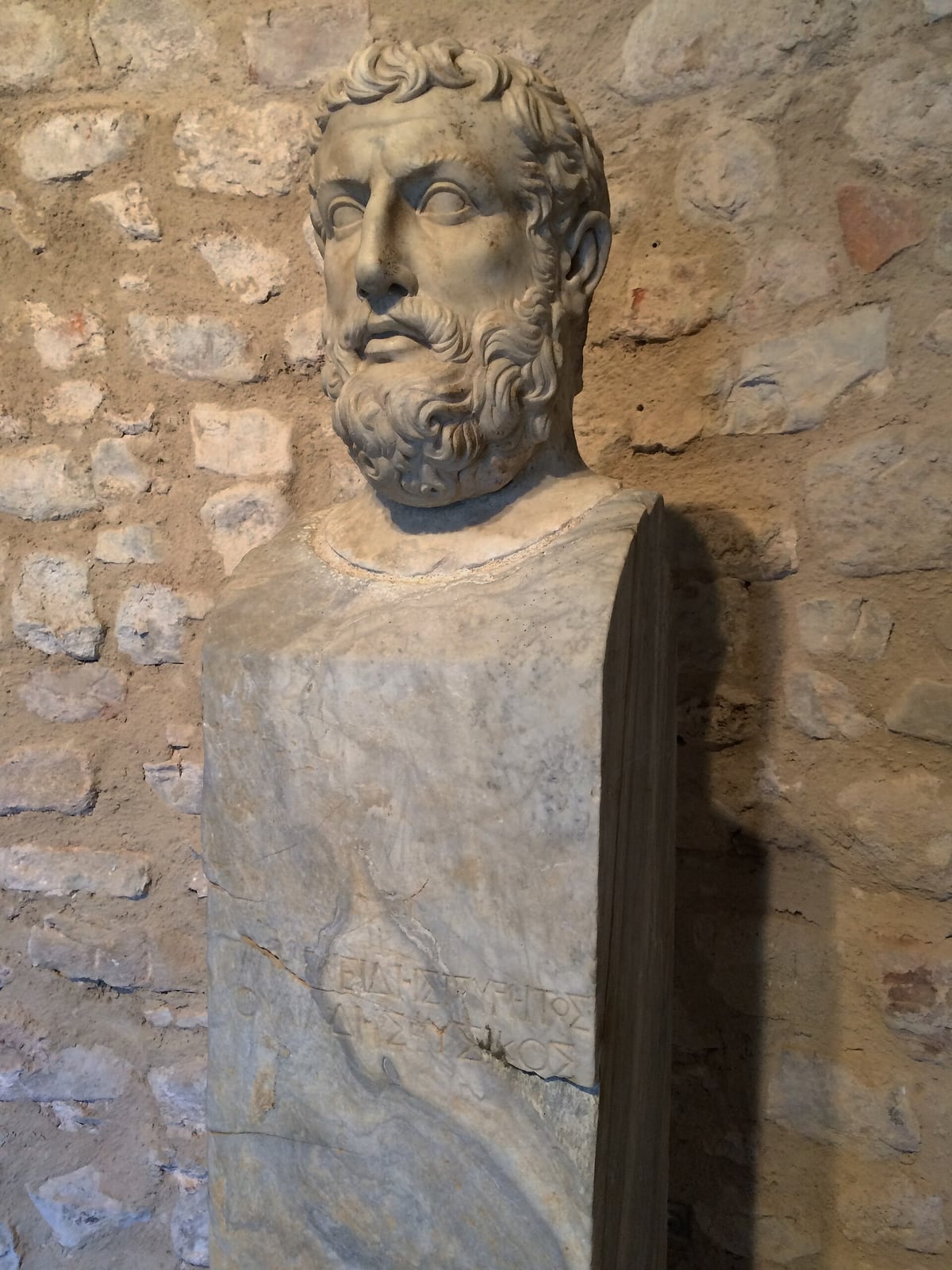
Parmenides
Совпадают в вопросах: Как достигается освобождение или спасение? · Реален ли мир?

Nāgārjuna
Совпадают в вопросах: Как достигается освобождение или спасение? · Что происходит после смерти? · Зачем медитировать или молиться?
Дальше всего от
Leo Tolstoy
Расходятся в вопросах: Кто я? Существует ли истинное «я»?
Epictetus
Расходятся в вопросах: Кто я? Существует ли истинное «я»? · Реален ли мир?

Epicurus
Расходятся в вопросах: Кто я? Существует ли истинное «я»? · Что происходит после смерти?
Thomas Merton
Расходятся в вопросах: Что происходит после смерти? · Реален ли мир?
Предания и рассказы
Предания и рассказы
Оспариваетсяc. 410 a. C.
The name Plato
Происхождение рассказа: Diogenes Laertius III 4, citing Alexander's Successions and Neanthes. Riginos (Platonica, 1976) and Nails (2002) treat it as a probable biographical invention.
Устная традицияc. 408 a. C.
The tragedies in the fire
Происхождение рассказа: Diogenes Laertius III 5; Aelian, Varia Historia II 30. The line parodies Iliad XVIII 392. Riginos classes it among the literary conversion anecdotes.
Источник: Riginos, Alice Swift, Platonica: The Anecdotes Concerning the Life and Writings of Plato, Leiden, Brill (Columbia Studies in the Classical Tradition 3), 1976.
Житийное повествованиеc. 408 a. C.
The dream of the swan
Происхождение рассказа: Diogenes Laertius III 5; also Pausanias I 30.3, Apuleius (On Plato I 1) and Olympiodorus. Riginos (1976) places it in the Apollonian cycle of Plato's biography.
Оспариваетсяc. 387 a. C.
Sold as a slave in Aegina
Происхождение рассказа: Diogenes Laertius III 18–21; Diodorus Siculus XV 7; Plutarch, Dion 5. Absent from the Seventh Letter. Riginos and Nails discuss its plausibility.
Свидетельствоs. IV a. C.
The lecture 'On the Good'
Происхождение рассказа: Aristoxenus, Elementa harmonica II 30–31, who transmits it as a story Aristotle often told. It is second-hand but close testimony: Aristoxenus was Aristotle's direct pupil.
Не поддаётся проверкеs. IV a. C. (atribuido)
'Let no one ignorant of geometry enter'
Происхождение рассказа: First mentions in sixth-century AD Alexandrian Neoplatonic commentaries (John Philoponus, In De anima; Elias, In Categorias), and in a scholion on Aelius Aristides. Riginos (1976) considers it a late invention.
Источник: Riginos, Alice Swift, Platonica: The Anecdotes Concerning the Life and Writings of Plato, Leiden, Brill (Columbia Studies in the Classical Tradition 3), 1976.
Устная традицияs. IV a. C.
Plato's man
Происхождение рассказа: Diogenes Laertius VI 40. The definition 'featherless biped' also appears in the pseudo-Platonic Definitions (415a). The anecdote circulated as a Cynic chreia, not as testimony.
Учение
Учение
Понятия, на которых строится мысль учителя, объяснённые в их контексте.
Theory of Forms (Ideas)teoria-de-las-formas
It answers Heraclitus (the flux of the sensible) and Parmenides (only what is can be known), and Socrates' search for definitions.
The Form of the Goodidea-del-bien
It crowns the central images of the Republic (sun, line, cave).
The allegory of the cavealegoria-de-la-caverna
It completes the images of the sun and the divided line; it is the most commented page of Western philosophy.
Recollection (anamnesis)anamnesis
It has Pythagorean roots (immortality and transmigration of the soul).
Immortality and parts of the soulinmortalidad-del-alma
It takes up Orphic and Pythagorean inheritances and subjects them to philosophical argument.
Eros and the ladder of beautyeros
Expressed as the teaching of a priestess, at a banquet, among speeches; the later 'Platonic love' greatly simplifies the doctrine.
The philosopher-ruler and justicefilosofo-rey
It arises from the experience of Socrates' condemnation by the democracy and of the tyranny of the Thirty; it has been read as utopia, as critique and, in the twentieth century (Popper), as the seed of totalitarianism.
Becoming like God (homoiosis theoi)homoiosis-theo
It is the bridge between Plato's philosophy and the spirituality of later Platonisms.
Видео
Видео
Записи, интервью и документальные фильмы. Видео воспроизводятся с YouTube; здесь они не хранятся.
2. Socratic Citizenship: Plato's Apology
Лекция· EN· 2006· 46 min
YaleCoursesОфициальный канал
3. Socratic Citizenship: Plato's Crito
Лекция· EN· 2006· 47 min
YaleCoursesОфициальный канал
4. Philosophers and Kings: Plato's Republic, I-II
Лекция· EN· 2006· 47 min
YaleCoursesОфициальный канал
5. Philosophers and Kings: Plato's Republic, III-IV
Лекция· EN· 2006· 47 min
YaleCoursesОфициальный канал
6. Philosophers and Kings: Plato's Republic, V
Лекция· EN· 2006· 45 min
YaleCoursesОфициальный канал
Great Minds - Part 1 - Plato's Republic I: Justice, Power, and Knowledge
Лекция· EN· 46 min
Michael SugrueОфициальный канал
Plato's Symposium: The Dialectic of Reason, Love, and Wisdom
Лекция· EN· 49 min
Michael SugrueОфициальный канал
Socrates & Plato's Philosophy - Myles Burnyeat & Bryan Magee (1987)
Интервью· EN· 1987· 44 min
Philosophy Overdose
Plato and Aristotle: Crash Course History of Science #3
Разбор· EN· 2018· 12 min
CrashCourseОфициальный канал
PHILOSOPHY - The Good Life: Plato [HD]
Разбор· EN· 6 min
Wireless PhilosophyОфициальный канал
Who did Plato (not) Love? Oxford Abridged Short Talks
Лекция· EN· 12 min
University of OxfordОфициальный канал
Mentira la verdad IV: Platón, Apología de Sócrates - Canal Encuentro
Разбор· ES· 27 min
Canal EncuentroОфициальный канал
01-03-2013. Timeo: El mito de Platón y la creación científica del mundo.
Документальный фильм· ES· 2013· 27 min
UNEDОфициальный канал
La alegoría de la caverna de Platón - Alex Gendler
Разбор· ES· 5 min
Sé Curioso — TED-EdОфициальный канал
La filosofía helenística (IV): El neoplatonismo · La March
Лекция· ES· 59 min
Fundación Juan MarchОфициальный канал
Галерея
Галерея
Изображения с проверенной лицензией. Каждое сохраняет своё авторство и атрибуцию.
Рукописи
Рукописи
Рукописные свидетельства и древние тексты, с указанием хранителя и условий доступа.
GRC · Greek minuscule · s. IV a. C.
Πλάτωνος διάλογοι (tetralogías I–VI)
- Сохранившийся список
- Codex Clarkianus (sigla B), pergamino, año 895
- Хранитель
- Bodleian Library, Oxford · MS. E. D. Clarke 39
- Оцифровка
- digital.bodleian.ox.ac.uk/…
GRC · Greek minuscule · s. IV a. C. (espurios, ss. IV–I a. C.)
Πλάτωνος διάλογοι (tetralogías VIII–IX y espurios)
- Сохранившийся список
- Codex Parisinus graecus 1807 (sigla A), pergamino, s. IX
- Хранитель
- Bibliothèque nationale de France, París · Grec 1807
- Оцифровка
- gallica.bnf.fr/…
GRC · Greek majuscule (bookhand) · s. IV a. C.
Πολιτεία (fragmentos)
- Сохранившийся список
- P. Oxy. LII 3679, papiro, s. III d. C.
- Хранитель
- Sackler Library / Egypt Exploration Society, Oxford · P. Oxy. 3679
- Оцифровка
- commons.wikimedia.org/wiki/File:POxy3679_Parts_P…
Связи
Связи
Влияния, ученичество и близость взглядов. Документированная связь отличается от сходства, выявленного путём анализа.
Ученик
He was his companion for about ten years, attended his trial and made him the protagonist of almost all his dialogues. Distinguishing the historical Socrates from the Platonic one is one of the classic problems of ancient philosophy.
Документированная связь
Учитель
Aristotle studied and taught in the Academy for some twenty years (367–347 BC) and developed his own philosophy in critical discussion with the Platonic theory of Forms.
Документированная связь
Испытал влияние
Aristotle (Metaphysics I 6) states that Plato followed the Pythagoreans in many things; his friendship with Archytas of Tarentum, the role of mathematics and the doctrine of the immortal soul confirm it.
Документированная связь
Испытал влияние
According to Aristotle (Metaphysics I 6), Plato became familiar in his youth with Cratylus and the Heraclitean doctrines of flux, and concluded from them that there is no knowledge of sensible things.
Документированная связь
Испытал влияние
The distinction between unchanging being and becoming, and the requirement that what is known must be, come from Parmenides, to whom Plato devotes a dialogue and with whom he breaks in the Sophist ('parricide').
Документированная связь
Повлиял на
Plotinus (3rd century AD) regarded himself as a mere interpreter of Plato; Neoplatonism arose from his reading of the Parmenides, the Timaeus, the Republic and the Symposium.
Документированная связь
Повлиял на
In the Confessions (VII 9) and the City of God (VIII) Augustine acknowledges that the 'books of the Platonists' opened his way to the Christian God; through him Platonism passed into Latin theology.
Документированная связь
Испытал влияние
The theory of the four elements that the Timaeus reworks geometrically comes from Empedocles.
Сходство, выявленное путём анализа
Расходился во взглядах с
Diogenes Laertius (VI 40, 53–54) transmits several gibes by the Cynic against Plato, such as the plucked chicken presented as 'Plato's man'; they are anecdotes of late tradition.
Документированная связь
Идеи, близкие к
The ascent of the soul towards a principle beyond being and conceptual knowledge has Platonic and Neoplatonic echoes in Rhineland mysticism.
Сходство, выявленное путём анализа
Повлиял на
Simone Weil read Plato as a mystic and devoted studies to him in Intimations of Christianity among the Ancient Greeks.
Сходство, выявленное путём анализа
Идеи, близкие к
The distinction between unchanging reality and the changing world of appearances invites comparison with Advaita, though without historical contact.
Сходство, выявленное путём анализа
Упоминается в других статьях
- Aristotle · Ученик
- Heraclitus · Повлиял на
- Marcus Aurelius · Испытал влияние
- Simone Weil · Испытал влияние
- Parmenides · Повлиял на
- Zeno of Citium · Расходился во взглядах с
- Epicurus · Расходился во взглядах с
- Nikolai Berdyaev · Расходился во взглядах с
- Socrates · Учитель
- Diogenes of Sinope · Расходился во взглядах с
- Empedocles · Повлиял на
- Epictetus · Испытал влияние
- Pavel Florensky · Испытал влияние
- Pythagoras · Повлиял на
- Plotinus · Испытал влияние
- Vladimir Solovyov · Испытал влияние
- Augustine of Hippo · Испытал влияние
Источники
Источники
Библиография и каталоги, использованные для этой статьи.
- Nails, Debra, The People of Plato: A Prosopography of Plato and Other Socratics, Indianápolis, Hackett, 2002 (entrada «Plato» y apéndices cronológicos).
- Wikidata, «Plato» (Q859): identidad, fechas y nombre en griego (Πλάτων).
- Diógenes Laercio, Vidas y opiniones de los filósofos ilustres, libro III (Platón), s. III d. C. Trad. inglesa de R. D. Hicks, Loeb Classical Library, Harvard University Press, 1925 (texto en Wikisource).
- Platón (atribuida), Carta VII, 324a–352a, en Platonis Opera, ed. John Burnet, vol. V, Oxford Classical Texts, 1907; trad. española de Juan Zaragoza y Pilar Gómez Cardó en Platón, Diálogos VII, Madrid, Gredos (Biblioteca Clásica Gredos 162), 1992.
- Kraut, Richard, «Plato», Stanford Encyclopedia of Philosophy (primera versión 2004; revisión sustantiva 2022), ed. Edward N. Zalta.
- Cooper, John M. (ed.) y Hutchinson, D. S. (ed. asociado), Plato: Complete Works, Indianápolis, Hackett, 1997 (introducción del editor sobre el corpus, las tetralogías de Trasilo y la autenticidad de cada obra).
- Riginos, Alice Swift, Platonica: The Anecdotes Concerning the Life and Writings of Plato, Leiden, Brill (Columbia Studies in the Classical Tradition 3), 1976.
- Guthrie, W. K. C., A History of Greek Philosophy, vol. IV: Plato, the Man and his Dialogues: Earlier Period (1975) y vol. V: The Later Plato and the Academy (1978), Cambridge University Press.
- Burnet, John (ed.), Platonis Opera, 5 vols., Oxford Classical Texts, Oxford, Clarendon Press, 1900–1907 (texto griego citado por la paginación de Stephanus; edición digital en Perseus).
- Open Library: obras y ediciones de Platón (búsqueda por autor, título e ISBN).
- Lledó Íñigo, Emilio, «Introducción general», en Platón, Diálogos I, Madrid, Gredos (Biblioteca Clásica Gredos 37), 1981; y plan de la serie de Diálogos I–IX de la Biblioteca Clásica Gredos (1981–1999).
- Jowett, Benjamin (trad.), The Dialogues of Plato, 3.ª ed., 5 vols., Oxford, Clarendon Press, 1892 (textos en Project Gutenberg).
- Azcárate, Patricio de (trad.), Obras completas de Platón, 11 vols., Madrid, Medina y Navarro, 1871–1872 (edición digital en el Proyecto Filosofía en español y en Wikisource).
- Burnyeat, Myles y Frede, Michael, The Pseudo-Platonic Seventh Letter, ed. Dominic Scott, Oxford University Press, 2015.
- Kahn, Charles H., Plato and the Socratic Dialogue: The Philosophical Use of a Literary Form, Cambridge University Press, 1996.
- Dorandi, Tiziano (ed.), Filodemo. Storia dei filosofi: Platone e l'Academia (PHerc. 1021 e 164), Nápoles, Bibliopolis, 1991.
- Bodleian Library, Oxford, MS. E. D. Clarke 39 (Codex Clarkianus, año 895): ficha y reproducción digital en Digital Bodleian.
- Aristóxeno, Elementa harmonica II 30–31 (testimonio de la lección «Sobre el Bien»), citado y comentado en Kraut, «Plato», SEP, y en Guthrie, HGP V.
- Bibliothèque nationale de France, Département des Manuscrits, Grec 1807 (Codex Parisinus graecus 1807, s. IX), en Gallica.
- Suzanne, Bernard, «Did Plato write “Only the dead have seen the end of war”?», Plato and his dialogues (FAQ), 2002; cf. Santayana, George, Soliloquies in England and Later Soliloquies, 1922, n.º 25 «Tipperary».
- Whitehead, Alfred North, Process and Reality: An Essay in Cosmology, Nueva York, Macmillan, 1929, parte II, cap. 1, sección 1 («a series of footnotes to Plato»).
- Правообладатель
- Los textos griegos de Platón (s. IV a. C.) son de dominio público, como las traducciones antiguas (Jowett, 1892; Burges, 1854–1855; Azcárate, 1871–1872). Las traducciones, introducciones y notas modernas pertenecen a sus traductores y editoriales (Gredos/RBA, Alianza, Akal, Cátedra, Hackett, Harvard University Press, Penguin, Oxford University Press, Cambridge University Press, entre otras).
Ожидает подтверждения
То, что в этой статье пока не удалось установить. Мы предпочитаем сказать об этом, а не заполнять пробел.
- Confirmar el índice exacto de Gredos, Diálogos VII (BCG 162, 1992): se ha asumido que contiene Alcibíades I y II, Hiparco, Amantes, Teages, Clitofonte, Minos, Epínomis, los apócrifos (Definiciones, Sobre la justicia, Sobre la virtud, Demódoco, Sísifo, Erixias, Axíoco) y las Cartas; no se ha visto el índice en un catálogo. Alción no se ha asignado a ese volumen.
- Traductores de cada diálogo en los volúmenes I–III, V y VI de Gredos: no consignados por no haberlos verificado en catálogo (solo República, Eggers Lan; vol. VII, Zaragoza y Gómez Cardó).
- Ediciones con ISBN en español e inglés de varios dudosos y espurios fuera de los volúmenes generales (Hiparco, Teages, Minos, Demódoco, Sísifo, Alción): solo figuran en Gredos VII y Hackett Complete Works. Localizar el volumen Loeb XII (Charmides, Alcibiades I–II, Hipparchus, Lovers, Theages, Minos, Epinomis, LCL 201) y el X (Laws I–VI, LCL 187), cuyos ISBN no aparecieron en Open Library.
- Alción y Demódoco/Sísifo no tienen texto castellano de dominio público localizado; Alción tampoco en inglés (está en el corpus de Luciano: buscar traducción antigua de dominio público).
- Ediciones en francés (Belles Lettres/Budé, GF Flammarion), alemán (Schleiermacher, de dominio público) e italiano: no registradas en esta versión.
- Fechas de composición: se dan años aproximados de la cronología convencional (Kahn, Kraut); no son datos documentados. Los dudosos y espurios quedan sin año salvo Epínomis y las Cartas IV, VII y VIII.
- Contenido de las páginas «Primer Alcibíades», «Ion», «Lisis» y demás de Wikisource en español: comprobado que existen; la de Protágoras figura «en desarrollo».
- Traductor «Mr. Knight» de Alcibíades II y Erixias en la edición de Jowett: identificar nombre completo y fecha de muerte (Jowett solo le llama «my friend and secretary, Mr. Knight»).
- Imagen del Codex Clarkianus: la reproducción procede de la Bodleiana vía Commons; enlazar la ficha exacta de Digital Bodleian del MS. E. D. Clarke 39 en manuscripts[].digitization_url (ahora apunta a la portada del portal). Ídem Gallica para el Parisinus graecus 1807.
- Vídeos: año exacto de los de Michael Sugrue, Wireless Philosophy, Oxford, Canal Encuentro, TED-Ed y Fundación Juan March (no consignado). Solo tres vídeos en español de canales institucionales; buscar más (RTVE, Fundación Juan March, universidades).
- Sin programas de afiliación verificados para ninguna de las editoriales registradas.
Исследовано 2026-10-25