Христианство · Христианская мистика · Католицизм
Thomas à Kempis
Thomas Hemerken a Kempis
ок. 1380 – 1471Исторически документированная личность
Каноник-регуляр августинского устава (ок. 1380–1471), сформировавшийся в Девентере в среде «нового благочестия» (devotio moderna) Герта Грота и более семидесяти лет проживший в монастыре на горе Святой Агнессы близ Зволле. Неутомимый переписчик, наставник новициев и летописец своей обители и основателей движения, он, по общему мнению исследователей, является автором книги «О подражании Христу» — самой распространенной христианской книги после Библии, авторство которой на протяжении веков оспаривали у него сторонники Жана Жерсона и мнимого аббата Герсена.
- трудов
- 28трудов
- изданий
- 49изданий
- цитат
- 8цитат
- видео
- 13видео
- изображений
- 8изображений
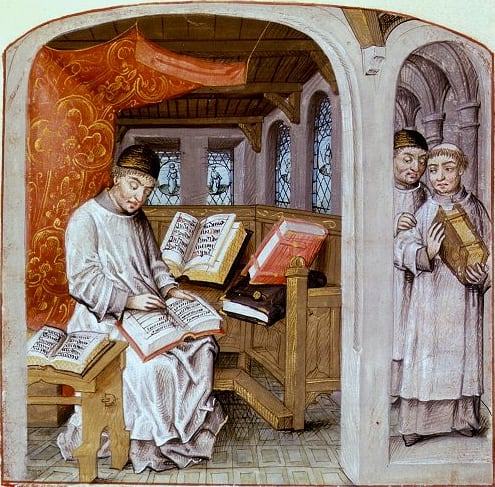
Thomas a Kempis escribiendo (miniatura de la Imitación) · Public domain
Своими словами
«'He who follows me does not walk in darkness,' says the Lord. These are the words of Christ, by which we are exhorted to imitate his life and ways if we wish to be truly enlightened and freed from all blindness of heart.»De imitatione Christi, I, 1, 1 (texto latino de Wikisource; traducción propia).

Главная мысль
The imitation of Christ: The idea that gives the book its title is not new (it starts from St Paul, 'be imitators of me as I am of Christ', and runs through Bernard and Francis of Assisi), but Thomas makes it a programme for daily life.
В контексте
Биография
4 мин чтения
Перевод с испанского оригинала, выполненный с помощью ИИ; ожидает проверки носителем языка.
Сын кузнеца из Кемпена
Томас Хемеркен родился около 1379 или 1380 года в Кемпене, небольшом городке Кельнского архиепископства неподалеку от Рейна. Его фамилия, означающая «молоточек» и латинизированная как Malleolus, вероятно, указывает на ремесло отца, Иоганна, работавшего с металлом; мать, Гертруда, по преданию, держала школу для детей. Мир узнает его по имени родного города — как Фому Кемпийского: сам он подписывался Thomas Kempensis или Thomas de Kempis. У него был брат Иоганн, старше лет на пятнадцать, который определил каждый его шаг.
Около 1392 или 1393 года он последовал за Иоганном в Девентер, в Нидерланды, чтобы учиться в знаменитой латинской школе этого города. Девентер был тогда сердцем devotio moderna — «нового благочестия», движения духовного обновления, начатого Гертом Гротом (ум. 1384): миряне и клирики, жившие общиной без обетов, Братья общей жизни, переписывали книги, чтобы зарабатывать на хлеб, и искали благочестия внутреннего, трезвого и деятельного, сосредоточенного на жизни Христа. Юный Фома жил в доме Флорента Радевейнса, преемника Грота, выучился ремеслу переписчика и навсегда остался отмечен этой средой, которую позднее изобразит в жизнеописаниях основателей.
Гора Святой Агнессы
В 1399 году он пришел в монастырь каноников-регуляров на горе Святой Агнессы (Агнитенберг) близ Зволле — обитель Виндесхеймской конгрегации, основанной учениками Грота, приором которой только что был избран его брат. Там он проведет более семидесяти лет. В 1406 году он принял облачение, на следующий год принес обеты и около 1413 года был рукоположен во священника. Дважды он был субприором и наставником новициев и посвятил большую часть жизни молитве, проповеди внутри обители и переписке рукописей: он несколько раз переписал всю Библию, и одна из этих копий, в пяти томах, хранится в Дармштадте.
Единственное большое потрясение в этой жизни пришло извне. В 1429 году вследствие Утрехтской схизмы папа наложил на епархию интердикт, и каноники горы Святой Агнессы, верные Риму, покинули свою обитель и до 1432 года укрывались в Лунекерке во Фрисландии. Во время этого изгнания Фому послали в Арнем ухаживать за больным братом Иоганном, и он оставался при нем до его смерти в ноябре 1432 года. Затем он вернулся в Зволле, откуда уже почти не отлучался.
«О подражании Христу»
В 1420-е годы начали ходить по рукам, без имени автора, четыре небольших сочинения, предназначенных для наставления монашествующих: Admonitiones ad spiritualem vitam utiles, Admonitiones ad interna trahentes, De interna consolatione и трактат о Евхаристии. Первое открывалось словами Христа из Евангелия от Иоанна — «кто последует за Мною, тот не будет ходить во тьме» — и главой под названием De imitatione Christi, и это заглавие в конце концов распространилось на все целое. В 1441 году Фома собственноручно переписал четыре книги вместе с другими своими трактатами в кодекс, который подписал и датировал и который ныне хранится в Королевской библиотеке Бельгии в Брюсселе. Книга не излагает учения — она увещевает. Она призывает не доверять знанию, которое не делает человека лучше, любить безвестность, принимать крест каждого дня, входить во внутреннее безмолвие и позволить Христу говорить с душой, как говорит друг.
Ни одна христианская книга, кроме Библии, не получила такого распространения. Сохранилось более семисот рукописей; первое печатное издание вышло в Аугсбурге около 1471–1472 года, а к XVI веку книга была переведена на все языки Европы. Однако многие ранние издания приписывали ее канцлеру Парижского университета Жану Жерсону, а в 1616 году бенедиктинец Костантино Гаэтани выдвинул кандидатуру мнимого верчелльского аббата XIII века Джованни Герсена, от которого не осталось никаких документальных следов. Спор длился три столетия. Сегодня наука приписывает сочинение Фоме, опираясь на автограф 1441 года, на свидетельство его современника Иоганна Буша, хрониста Виндесхейма, и на стиль других его писаний; некоторые исследователи до сих пор обсуждают, в какой мере он собрал и переработал более ранние материалы, возникшие в среде devotio moderna.
Хронист и наставник новициев
«Подражание» — лишь часть обширного наследия, целиком латинского и почти целиком обращенного к монастырской жизни. Он написал «Монолог души» — внутренние беседы с Богом; «Садик роз» и «Долину лилий» — собрания изречений; трактаты о сокрушении, об уединении, о бедности и о монашеской дисциплине; проповеди для новициев и размышления о жизни и страстях Христовых; гимны, письма и молитвы. Он был также добросовестным историком: его жизнеописания Герта Грота, Флорента Радевейнса и других братьев — важнейший источник по истории devotio moderna, а «Хроника горы Святой Агнессы», которую он вел почти до самой смерти, год за годом запечатлевает жизнь его обители. Кроме того, он составил житие святой Лидвины Схидамской.
Смерть и память
Он умер на горе Святой Агнессы 25 июля 1471 года, в возрасте более девяноста лет, и был погребен в клуатре. Монастырская хроника, продолженная другим каноником, отмечает его кончину с указанием возраста и лет монашеской жизни и вспоминает множество книг, которые он написал и переписал. Монастырь был разрушен во время войн XVI века. В 1672 году курфюрст Кельнский Максимилиан Генрих Баварский велел разыскать его останки, которые с 1674 года покоятся в раке; с 2006 года их почитают в базилике Богоматери в Зволле. Он так и не был канонизирован, но Кемпен чтит его как покровителя, а Евангелическая церковь Германии поминает его 25 июля.
Его же книгу не переставали читать никогда. Игнатий Лойола читал ее ежедневно и называл ее «Gersoncito», «маленьким Жерсоном»; Тереза Авильская включила ее в число книг, которые должны были иметься в ее монастырях; Джон Уэсли издал ее сокращенный вариант для методистов; Тереза из Лизье знала ее почти наизусть. Католики и протестанты читали ее с одинаковым благоговением, хотя восхищались ею не все: православный епископ Игнатий (Брянчанинов) предостерегал от нее как от плода мечтательного благочестия. Ее сила — в простоте: короткие, ритмичные, почти пословичные фразы, не требующие учености, которые каждый читатель словно слышит обращенными к нему одному.
Источники: Kettlewell, Samuel. Thomas à Kempis and the Brothers of Common Life. 2 vols. Londres: Kegan Paul, Trench & Co., 1882. · Van Engen, John. Sisters and Brothers of the Common Life: The Devotio Moderna and the World of the Later Middle Ages. Filadelfia: University of Pennsylvania Press, 2008. · Thomas à Kempis. The Founders of the New Devotion, being the Lives of Gerard Groote, Florentius Radewin and their Followers. Trad. J. P. Arthur. Londres: Kegan Paul, Trench, Trübner, 1905. · Pohl, Michael Joseph (ed.). Thomae Hemerken a Kempis Opera omnia. 7 vols. Friburgo de Brisgovia: Herder, 1902–1922. · Thomas à Kempis. The Chronicle of the Canons Regular of Mount St. Agnes. Trad. J. P. Arthur. Londres: Kegan Paul, Trench, Trübner, 1906 (Project Gutenberg n.º 16759; incluye la continuación con la noticia de su muerte).
Хронология
Жизнь год за годом
Каждая точка — документированное событие. Нажмите, чтобы прочитать о нём, с источником и степенью достоверности.
ок. 13800 летKempen
Birth
Born at Kempen, son of Johann and Gertrud Hemerken. The sources vary between 1379 and 1380.
ВероятноKettlewell, Samuel. Thomas à Kempis and the Brothers of Common Life. 2 vols. Londres: Kegan Paul, Trench & Co., 1882.
После смерти
- ок. 1472First printed edition
- 1604The Gersen thesis
- 1672Exhumation of his remains
- июнь 2006 г.Transfer to the Zwolle basilica
ок. 1380 · 0 лет
Birth
Born at Kempen, son of Johann and Gertrud Hemerken. The sources vary between 1379 and 1380.
Вероятно
ок. 1392 – 1399 · 12 лет
Studies at Deventer
He follows his brother Johannes to Deventer, studies at the Latin school and lives with the Brethren of the Common Life in the house of Florens Radewijns (until 1399).
Документировано
1399 · 19 лет
Entry into Mount St Agnes
He arrives at the monastery of canons regular of Agnietenberg, near Zwolle, where his brother is prior.
Документировано
1406 · 26 лет
Clothing
He receives the habit of a canon regular; he makes his profession the following year.
Документировано
1413 · 33 года
Ordination to the priesthood
He is ordained priest (some sources give 1414).
Вероятно
ок. 1424 · 44 года
The Imitation circulates
The oldest known copy of the first book of the Imitation is dated around this year; the four books circulate anonymously in the 1420s.
Вероятно
1425 · 45 лет
Subprior and master of novices
He is elected subprior for the first time; he takes charge of the formation of novices, for whom he writes sermons and booklets.
Документировано
1429 – 1432 · 49 лет
Exile over the Utrecht schism
Because of the papal interdict on the diocese of Utrecht, the community takes refuge at Lunenkerk (Friesland) until 1432.
Документировано
ноябрь 1432 г. · 52 года
Death of his brother Johannes
Having cared for him at Arnhem since 1431, he is present at his brother's death in November; he returns to Mount St Agnes.
Документировано
1441 · 61 год
The Brussels autograph
He finishes copying in his own hand a codex with the four books of the Imitation and other treatises, signed and dated (now KBR, ms. 5855–5861).
Документировано
ок. 1448 · 68 лет
Subprior a second time
He again holds the office of subprior.
Вероятно
ок. 1464 · 84 года
Johannes Busch's testimony
The Windesheim chronicler Johannes Busch attributes the Imitation to Thomas in his Chronicon Windeshemense, in the author's lifetime.
Документировано
25 июля 1471 г. · 91 год
Death
He dies at Mount St Agnes on 25 July, aged over ninety; the house chronicle records his death.
Документировано
ок. 1472
First printed edition
Günther Zainer prints the Imitation in Augsburg around 1471–1472; a circulation begins that will make it the most published Christian book after the Bible.
Вероятно
1604
The Gersen thesis
The Benedictine Constantino Gaetani attributes the Imitation to a supposed abbot Johannes Gersen of Vercelli; a three-century controversy opens with the partisans of Kempis and of Gerson.
Документировано
1672
Exhumation of his remains
The Elector of Cologne, Maximilian Henry of Bavaria, has his remains sought and raised; since 1674 they rest in a reliquary.
Документировано
июнь 2006 г.
Transfer to the Zwolle basilica
The reliquary, which had been in St Michael's church since 1897, is carried in procession to the basilica of Our Lady in Zwolle.
Документировано
Труды
Главные труды
Труды, без которых не понять это наследие.
Письменный труд · 1441
The Imitation of Christ
De imitatione Christi (Libri quattuor)
Four booklets written for the spiritual formation of religious which circulated anonymously from the 1420s and which Thomas copied in his own hand, signed and dated, in 1441. The first counsels detachment from vanity and from knowledge that does not make one better; the second invites to the inner life and culminates in 'the royal way of the holy cross'; the third, the longest, is a dialogue between Christ and the disciple on inner consolation and love; the fourth prepares for communion. With more than seven hundred manuscripts and thousands of editions, it is the most widely circulated Christian book after the Bible. For centuries it was also attributed to Jean Gerson and to a supposed abbot Johannes Gersen; the Brussels autograph and Johannes Busch's testimony support Thomas's authorship.
14 изданий

Письменный труд · ок. 1471
The Chronicle of the Canons Regular of Mount St Agnes
Chronica Montis Sanctae Agnetis
Annals of the monastery of Agnietenberg from its foundation (1398) to Thomas's last years: professions, deaths, works, financial difficulties, the exile of 1429–1432, with notes on his brother Johannes and his teacher Johannes Cele. Another canon continued it after his death and recorded Thomas's own.
2 издания
Все труды (28)
Thomas à Kempis
Imitation of Christ, Book I: Admonitions Useful for the Spiritual Life
The Conscious LibraryImitation of Christ, Book I: Admonitions Useful for the Spiritual Life
1424
Thomas à Kempis
Imitation of Christ, Book II: Admonitions Drawing toward the Inner Life
The Conscious LibraryImitation of Christ, Book II: Admonitions Drawing toward the Inner Life
1427
Thomas à Kempis
Imitation of Christ, Book III: On Inner Consolation
The Conscious LibraryImitation of Christ, Book III: On Inner Consolation
1430
Thomas à Kempis
Imitation of Christ, Book IV: On the Blessed Sacrament
The Conscious LibraryImitation of Christ, Book IV: On the Blessed Sacrament
1430

The Soliloquy of the Soul
1435

The Little Garden of Roses
1440

The Valley of Lilies
1440
Thomas à Kempis
Of the Three Tabernacles
The Conscious LibraryOf the Three Tabernacles
1440
Thomas à Kempis
On the Discipline of Cloistered Religious
The Conscious LibraryOn the Discipline of Cloistered Religious
1440

Of the Faithful Steward
1440
Thomas à Kempis
Letter to a Cellarer
The Conscious LibraryLetter to a Cellarer
1440
Thomas à Kempis
Of True Compunction of Heart
The Conscious LibraryOf True Compunction of Heart
1440
Thomas à Kempis
Little Book of Spiritual Exercise
The Conscious LibraryLittle Book of Spiritual Exercise
1440
Thomas à Kempis
On the Elevation of the Mind
The Conscious LibraryOn the Elevation of the Mind
1440
Thomas à Kempis
Manual for the Young
The Conscious LibraryManual for the Young
1440
Thomas à Kempis
Manual for Little Ones
The Conscious LibraryManual for Little Ones
1440
Thomas à Kempis
Hospice of the Poor
The Conscious LibraryHospice of the Poor
1440
Thomas à Kempis
Consolation of the Poor and the Sick
The Conscious LibraryConsolation of the Poor and the Sick
1440
Thomas à Kempis
Little Alphabet of a Good Monk
The Conscious LibraryLittle Alphabet of a Good Monk
1440

Sermons to the Novices Regular
1440
Thomas à Kempis
Sermons on the Life and Passion of Our Lord; A Meditation on the Incarnation
The Conscious LibrarySermons on the Life and Passion of Our Lord; A Meditation on the Incarnation
1440

Prayers and Meditations on the Life of Christ
1440
Thomas à Kempis
Dialogues of the Novices and Lives of the Founders
The Conscious LibraryDialogues of the Novices and Lives of the Founders
1450
Thomas à Kempis
Life of St Lidwina of Schiedam
The Conscious LibraryLife of St Lidwina of Schiedam
1448
Изречения
Изречения, найденные в конкретном труде. Каждое сопровождается указанием происхождения и степени надёжности.
'He who follows me does not walk in darkness,' says the Lord. These are the words of Christ, by which we are exhorted to imitate his life and ways if we wish to be truly enlightened and freed from all blindness of heart.Qui sequitur me non ambulat in tenebris, dicit Dominus. Hæc sunt verba Christi, quibus admonemur quatenus vitam eius et mores imitemur, si volumus veraciter illuminari, et ab omni cæcitate cordis liberari.
ПровереноDe imitatione Christi, I, 1, 1 (texto latino de Wikisource; traducción propia).
Апокрифические изречения и изречения спорной атрибуции (1)
«In all things I have sought rest and found it nowhere save in a corner with a book.»
A Latin saying ('In omnibus requiem quaesivi et nusquam inveni nisi in angulo cum libro') which has long accompanied some portraits of Thomas and which tradition attributes to him; it does not appear in his known works and its first attestation has not been established. It expresses his ideal well, but it is a traditional attribution.
Последние слова
Проверяемых записей о последних словах не существует.
No last words survive. The continuation of the Chronicle of Mount St Agnes records his death on 25 July 1471, with his age and his years of religious life, without transmitting any final sentence.
Источник: Thomas à Kempis. The Chronicle of the Canons Regular of Mount St. Agnes. Trad. J. P. Arthur. Londres: Kegan Paul, Trench, Trübner, 1906 (Project Gutenberg n.º 16759; incluye la continuación con la noticia de su muerte).
Спросить
На что отвечают эти труды
Двенадцать великих вопросов человечества и то, что позволяют на них ответить эти тексты, со ссылками. Мы никогда не вкладываем слова в чужие уста.
Что такое Абсолют? Существует ли Бог?
God is the Lord who speaks to the soul and consoles it
Личный БогСказано прямо
Thomas à Kempis does no speculative theology; he distrusts it. In The Imitation of Christ, God is someone one speaks with: book III is built as a dialogue between the disciple and Christ, who teaches inwardly, consoles, corrects and asks for the surrender of one's own will. Book I warns that it profits little to dispute loftily about the Trinity if one lacks humility and thus displeases the Trinity. Kempis's God is that of the Catholic faith and the Modern Devotion: provident Father, Christ present in the sacrament of the altar (book IV), truth that speaks within without the noise of words. The Absolute is a personal Thou, close and demanding.
Сравнить этот вопрос с другими учителямиКто я? Существует ли истинное «я»?
Humble self-knowledge is the surest way to God
Сотворённая бессмертная душаСледует из учения
Thomas à Kempis does not speculate about the nature of the soul; he takes for granted the Christian doctrine of an immortal soul and concerns himself with practical knowledge of it. The Imitation of Christ teaches that humble self-knowledge is a surer road to God than a deep search for learning, and recommends loving to be unknown and accounted as nothing. The self to be overcome is self-will and self-love, from which restlessness and vainglory arise; book III insists on denying oneself in order to follow Christ. The true self is the soul which, stripped of itself, finds itself small and loved.
Сравнить этот вопрос с другими учителямиПочему мы страдаем?
The cross carried willingly ends up carrying you
Отделённость от БогаСказано прямо
For Thomas à Kempis, suffering is inevitable in this life and the question is how it is borne. The chapter on the royal road of the holy cross, in book II of The Imitation of Christ, holds that in the cross lie health and life, and that if one carries the cross willingly, it will carry its bearer to the desired end; if dragged by force, it weighs more. Tribulation is useful because it returns the human being to his heart, reminds him that he is in exile and keeps him from placing his hope in the world. Suffering arises from being far from one's homeland and, accepted, unites with Christ.
Сравнить этот вопрос с другими учителямиЧто происходит после смерти?
Live each day as if it were your last
Вечная жизнь и воскресениеСказано прямо
The Imitation of Christ devotes an entire chapter to meditation on death. Thomas à Kempis urges living in such a way that death does not find one unprepared: blessed is the one who keeps the hour of his death daily before his eyes and makes ready to die each day. He recalls that the glory of the world passes quickly, that a man is here today and gone tomorrow, and that one should make friends of the saints while there is time. After death await judgement and eternal life, which book III describes as the homeland where the soul will rest in God without fear of losing him. Death is the door to the true homeland.
Сравнить этот вопрос с другими учителямиКак достигается освобождение или спасение?
Imitate Christ's life and love him above all things
Через преданность и предание себяСказано прямо
The Imitation of Christ is the most widely read fruit of the devotio moderna, the movement of the Brethren of the Common Life to which Thomas à Kempis belonged. Its first line marks the path: whoever follows Christ does not walk in darkness, and therefore one must imitate his life and ways. Salvation is received in grace, which book III carefully distinguishes from nature, but it is lived as personal love for Jesus: book II asks that one love him above all things and keep a familiar friendship with him. Humility, renunciation of self-will, daily examination and frequent communion (book IV) are the concrete forms of that surrender.
Сравнить этот вопрос с другими учителямиНужен ли учитель?
Truth speaks within, without the noise of words
Учитель внутриСказано прямо
Thomas à Kempis lived in obedience to his superiors at the monastery of Mount Saint Agnes, and The Imitation of Christ recommends living under a superior rather than being one's own master. But his most characteristic teaching places the teacher within. Book III, built as a dialogue between the soul and Christ, opens with the request to hear what the Lord says inwardly, and states that truth speaks within without the noise of words. Later on, Christ declares that it is he who teaches man knowledge and gives the little ones a clearer understanding than any man can teach. Human masters speak; he alone teaches.
Сравнить этот вопрос с другими учителямиРеален ли мир?
With an upright heart, every creature is a mirror of life
Благое и реальное творениеСказано прямо
Thomas à Kempis does not dispute the reality of the world, but its value. The Imitation of Christ begins with contempt for the world: vanity of vanities, all is vanity except to love God and serve him alone; the glory of the world passes quickly. But that contempt is not dualist: it is detachment from what passes. Book II offers the other side: if the heart were upright, every creature would be a mirror of life and a book of holy doctrine, for there is no creature so small and lowly that it does not show forth God's goodness. The world is good creation, but deceives whoever stops at it; purity of heart makes it transparent.
Сравнить этот вопрос с другими учителямиЧто такое любовь?
Love is born of God and rests only in God
Тоска и соединениеСказано прямо
The chapter of The Imitation of Christ on the wonderful effects of divine love is one of the most widely read texts of Western piety. Thomas à Kempis praises love as a great good that makes light all that is heavy, bears the burden without burden and makes the bitter sweet; nothing is sweeter, stronger, higher or wider. The reason he gives is its origin: love is born of God and can rest only in God, above all created things. It is therefore a movement of return, a longing that rises. Book II makes it concrete as love of Jesus above all things and familiar friendship with him.
Сравнить этот вопрос с другими учителямиСвободны ли мы или всё предопределено?
Man proposes and God disposes, yet each answers for himself
Судьба и ответственностьСказано прямо
Thomas à Kempis develops no theory of freedom, but his work holds two certainties at once. The first is providence: man proposes and God disposes, and a man's way is not in his own hands, says The Imitation of Christ, taking up a formula with biblical roots. The second is responsibility: daily resolutions, examination of conscience, the struggle against the passions and the judgement awaiting each person presuppose that one answers for one's acts. Between the two there is no contradiction, but trust: one must do all that lies in one's power and leave the outcome in God's hands. Book III insists on handing him one's own will.
Сравнить этот вопрос с другими учителямиЗачем медитировать или молиться?
Familiar friendship with Jesus, in inner conversation
Дружба с БогомСказано прямо
Thomas à Kempis understands prayer as personal converse with Christ. Book II of The Imitation of Christ describes the inner life as Christ's frequent visiting of the inner man, with sweet conversation, consolation, peace and an astonishing familiarity, and devotes a chapter to familiar friendship with Jesus. Book III is itself written as a dialogue between the disciple and the Lord, and book IV prepares for Eucharistic communion as the meeting of beloved and lover. Kempis's meditation is affective, not speculative: he would rather feel compunction than know how to define it, and he recommends retreat, silence and the reading of Scripture in order to hear that voice.
Сравнить этот вопрос с другими учителямиМожет ли разум познать предельное?
I would rather feel compunction than know how to define it
Предельное лежит за пределами умаСказано прямо
Thomas à Kempis distrusts speculative learning. The Imitation of Christ begins by asking what use it is to dispute loftily about the Trinity if one lacks humility, and states that he would rather feel compunction than know how to define it. Book I advises against wanting to know too much, for there is distraction and deceit in it, and places humble self-knowledge above learning. In book III, Christ declares that he teaches without the noise of words and that in a moment he raises the humble mind to grasp more of the reasons of eternal truth than ten years of study in the schools. He does not condemn learning, which is good in itself, but learning cut off from life.
Сравнить этот вопрос с другими учителямиУйти от мира или преобразить его?
As often as I was among men, I came back less a man
Уйти, чтобы найтиСказано прямо
Thomas à Kempis spent more than seventy years at the monastery of canons regular of Mount Saint Agnes, near Zwolle, copying manuscripts, writing and training novices. The Imitation of Christ devotes a chapter to the love of solitude and silence, where it quotes Seneca without naming him: as often as he was among men, he came back less a man. It recommends avoiding idle conversation, remaining in the cell, which grows sweet the more it is kept, and seeking the right time to attend to oneself. The world and its glory pass; whoever would reach what is inward and spiritual must withdraw with Jesus from the crowd.
Сравнить этот вопрос с другими учителями
Созвучия и противоречия
Созвучия и противоречия
Рассчитаны вопрос за вопросом на основе позиций. Причина каждого совпадения или расхождения — по нажатию.
Ближе всего к

Rabia al-Adawiyya
Совпадают в вопросах: Почему мы страдаем? · Что такое Абсолют? Существует ли Бог? · Что происходит после смерти?
Mirabai
Совпадают в вопросах: Что такое Абсолют? Существует ли Бог? · Почему мы страдаем? · Как достигается освобождение или спасение?
John of the Cross
Совпадают в вопросах: Что такое Абсолют? Существует ли Бог? · Кто я? Существует ли истинное «я»? · Почему мы страдаем?
Al-Ghazali
Совпадают в вопросах: Почему мы страдаем? · Что такое Абсолют? Существует ли Бог? · Кто я? Существует ли истинное «я»?
Дальше всего от

Pema Chödrön
Расходятся в вопросах: Что такое Абсолют? Существует ли Бог? · Кто я? Существует ли истинное «я»? · Что происходит после смерти?

The 14th Dalai Lama (Tenzin Gyatso)
Расходятся в вопросах: Что такое Абсолют? Существует ли Бог? · Кто я? Существует ли истинное «я»? · Что происходит после смерти?
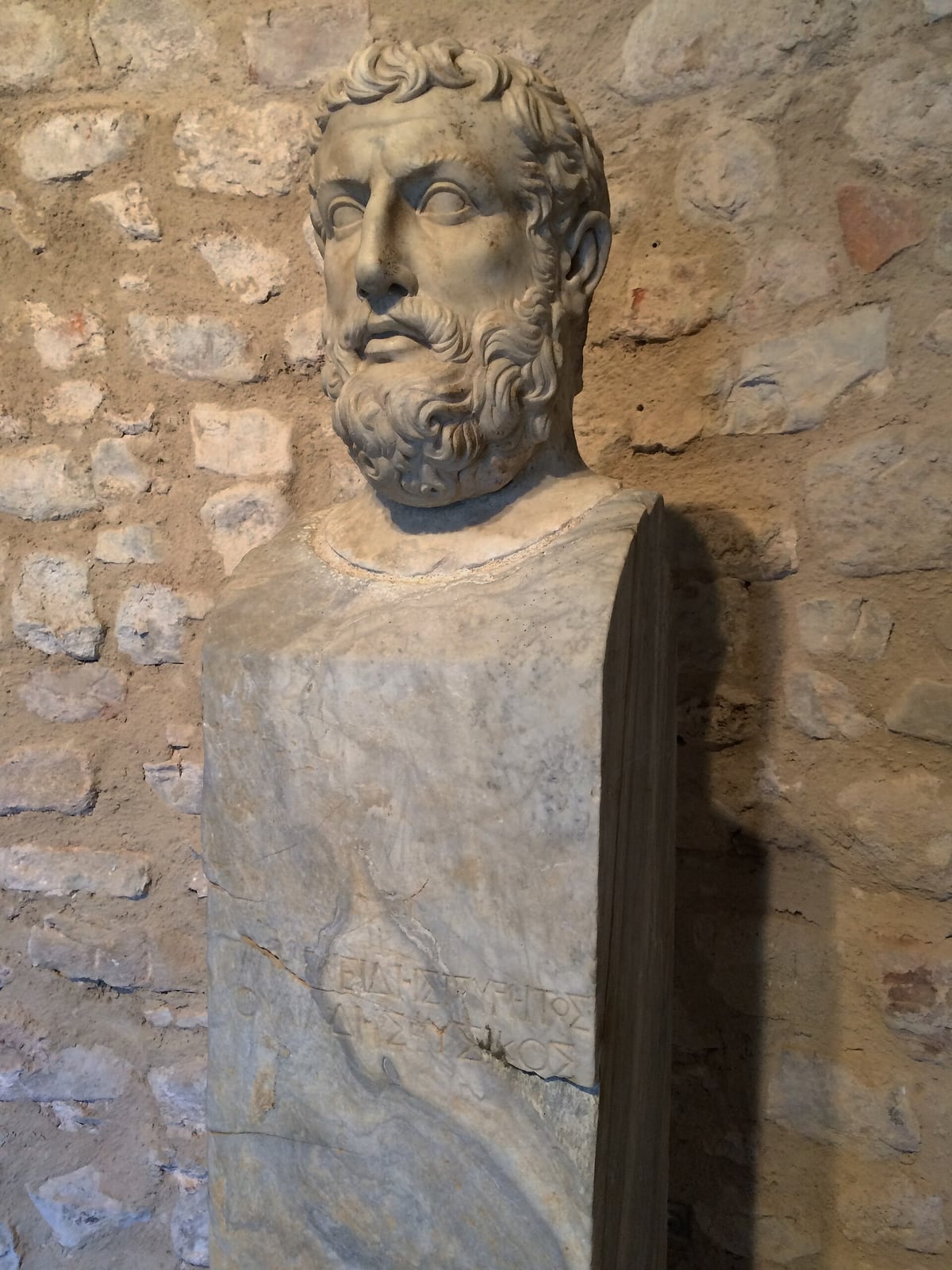
Parmenides
Расходятся в вопросах: Реален ли мир?

Nāgārjuna
Расходятся в вопросах: Что такое Абсолют? Существует ли Бог? · Кто я? Существует ли истинное «я»? · Что происходит после смерти?
Предания и рассказы
Предания и рассказы
Документировано1441
The codex of 1441
Происхождение рассказа: KBR, ms. 5855–5861; diplomatic edition and study by L. M. J. Delaissé (1956).
Источник: Delaissé, L. M. J. Le manuscrit autographe de Thomas a Kempis et «L'Imitation de Jésus-Christ»: examen archéologique et édition diplomatique du Bruxellensis 5855–61. 2 vols. París y Bruselas: Érasme, 1956.
Документировано1604–1900
The war of the three authors
Происхождение рассказа: History of the controversy in Ampe (1973) and Van Engen (2008); Gaetani's thesis, in his Roman edition of 1616 and writings from 1604; the attribution to Thomas, in Busch's Chronicon Windeshemense (1464).
Источник: Ampe, Albert. L'Imitation de Jésus-Christ et son auteur: réflexions critiques. Roma: Edizioni di Storia e Letteratura, 1973.
Документировано1522–1556
Ignatius's 'little Gerson'
Происхождение рассказа: Gonçalves da Câmara, Memoriale (1555), §§ 97–98; Spiritual Exercises, n. 100 (readings 'from the Imitation of Christ or the Gospels and lives of saints').
Источник: Gonçalves da Câmara, Luís. Memoriale (1555), en Fontes narrativi de S. Ignatio, vol. I (Monumenta Historica Societatis Iesu 66). Roma, 1943. Trad. española: Recuerdos ignacianos. Memorial de Luis Gonçalves da Câmara, ed. Benigno Hernández Montes. Bilbao y Santander: Mensajero y Sal Terrae, 1992.
Документировано1429–1432
Exile in Friesland and his brother's death
Происхождение рассказа: Chronica Montis Sanctae Agnetis, years 1429–1432 (trans. Arthur, 1906); Catholic Encyclopedia (1912).
Не поддаётся проверке1672 (supuesto)
The legend of the scratched coffin
Происхождение рассказа: No printed source earlier than its internet circulation has been located; the English Wikipedia itself marks it as unsupported. The data on the exhumation come from the Catholic Encyclopedia (1912).
Учение
Учение
Понятия, на которых строится мысль учителя, объяснённые в их контексте.
The imitation of Christimitatio-christi
De imitatione Christi, I, 1; Christocentric spirituality of the devotio moderna.
Источник: Thomas a Kempis. De imitatione Christi, libros I–IV (texto latino). Wikisource en latín.
Devotio modernadevotio-moderna
Lives of the founders (Dialogus noviciorum), Chronicle of Mount St Agnes; Van Engen (2008).
Источник: Van Engen, John. Sisters and Brothers of the Common Life: The Devotio Moderna and the World of the Later Middle Ages. Filadelfia: University of Pennsylvania Press, 2008.
Compunction of heartcompunctio
De imitatione Christi, I, 1 and I, 21; De vera compunctione cordis.
Источник: Thomas a Kempis. De imitatione Christi, libros I–IV (texto latino). Wikisource en latín.
The royal way of the holy crossvia-regia-crucis
De imitatione Christi, II, 11–12.
Источник: Thomas a Kempis. De imitatione Christi, libros I–IV (texto latino). Wikisource en latín.
'Ama nesciri': humility and hidden lifeama-nesciri
De imitatione Christi, I, 2; I, 20; III, 50; Alphabetum parvum boni monachi.
Источник: Thomas a Kempis. De imitatione Christi, libros I–IV (texto latino). Wikisource en latín.
Видео
Видео
Записи, интервью и документальные фильмы. Видео воспроизводятся с YouTube; здесь они не хранятся.
The Imitation of Christ by Thomas à KEMPIS read by David Barnes | Full Audio Book
Запись третьих лиц· EN· 522 min
LibriVox AudiobooksОфициальный канал
De la imitación de Cristo by Thomas à Kempis read by Mongope Part 1/2 | Full Audio Book
Запись третьих лиц· ES· 404 min
LibriVox AudiobooksОфициальный канал
La Devotio moderna, par Benoît Beyer de Ryke
Лекция· FR· 79 min
Académie royale de BelgiqueОфициальный канал
Geschichte des christlichen Mönchtums 11 – Leben in der Nachfolge – Die Brüder vom gemeinsamen Leben
Лекция· DE· 17 min
Athina Lexutt
Thomas a Kempis - L'Imitation de Jésus-Christ
Разбор· FR· 2019· 53 min
KTO TVОфициальный канал
Thomas a Kempis (ca. 1380-1471) | Zwolle, Nederland
Документальный фильм· NL· 2010· 2 min
LetterkundigMuseum2Официальный канал
Thomas à Kempis Part 1: Historical Background #SpirtualMasters
Лекция· EN· 41 min
TAN BooksОфициальный канал
Episode 1: Avoid Vanity, Seek Humility | The Commentaries: The Imitation of Christ
Разбор· EN· 20 min
TAN BooksОфициальный канал
Second Only to the Bible: The Imitation of Christ (Fr. Mike Schmitz & Fr. Gregory Pine)
Разбор· EN· 31 min
Ascension PresentsОфициальный канал
Pfarrer Dr. Peter Dyckhoff: Nachfolge Christi - geistlich leben nach Thomas von Kempen
Интервью· DE· 14 min
KIRCHE IN NOT DeutschlandОфициальный канал
Nachfolge Christi – Grundlagen für ein geistliches Leben (Teil 1)
Разбор· DE· 12 min
KIRCHE IN NOT DeutschlandОфициальный канал
Imitación de Cristo - Tomás de Kempis
Разбор· ES· 41 min
Bibliopolis - Ivo Hernandez
¿Es posible imitar a CRISTO como lo hizo Tomás de Kempis?
Разбор· ES· 10 min
Creer para Comprender
Галерея
Галерея
Изображения с проверенной лицензией. Каждое сохраняет своё авторство и атрибуцию.
Рукописи
Рукописи
Рукописные свидетельства и древние тексты, с указанием хранителя и условий доступа.
LA · Gótica libraria (textualis) de los Países Bajos · c. 1420–1441
De imitatione Christi libri IV et alia opuscula (autógrafo)
- Сохранившийся список
- Códice autógrafo terminado en 1441 con la Imitación y otros opúsculos; colofón con su nombre y la fecha
- Хранитель
- KBR, Biblioteca Real de Bélgica, Bruselas · ms. 5855–5861
LA · Gótica libraria · c. 1427–1439
Biblia (copia de Thomas a Kempis)
- Сохранившийся список
- Biblia completa en cinco volúmenes, una de las varias que copió
- Хранитель
- Universitäts- und Landesbibliothek Darmstadt
Связи
Связи
Влияния, ученичество и близость взглядов. Документированная связь отличается от сходства, выявленного путём анализа.
Идеи, близкие к
The imitation of the poor and humble Christ unites them; the Imitation expressly quotes a saying of Francis ('as much as each one is in your eyes, so much he is, and no more').
Документированная связь
Повлиял на
Ignatius came to know the Imitation at Manresa (1522), read it daily, called it 'the little Gerson' and recommended it in the Spiritual Exercises (n. 100).
Документированная связь
Повлиял на
Teresa included the Contemptus mundi (the Castilian name of the Imitation) among the books her convents should have in the Constitutions of 1567.
Документированная связь
Расходился во взглядах с
Brianchaninov judged the Imitation a fruit of 'prelest', an imaginative and exalted piety, and advised the Orthodox against reading it. The criticism is his; Thomas never knew him.
Документированная связь
Идеи, близкие к
The devotio moderna comes from the same Rhenish-Netherlandish world as the mysticism of Eckhart, Tauler and Ruusbroec, and shares its detachment and inner life; but it distrusts speculation and translates mysticism into practical exercise. There is no evidence that Thomas read Eckhart.
Сходство, выявленное путём анализа
Идеи, близкие к
The devotional treatises of The Way to Christ share with the Imitation the renunciation of self-will and the distrust of knowledge that does not transform; Böhme adds a cosmology the Imitation ignores.
Сходство, выявленное путём анализа
Источники
Источники
Библиография и каталоги, использованные для этой статьи.
- Wikidata, Q220976 «Thomas à Kempis» (P31=Q5; 78 enlaces entre wikis; P569 1379/1380; P570 1471-07-25; P20 Zwolle).
- Kettlewell, Samuel. Thomas à Kempis and the Brothers of Common Life. 2 vols. Londres: Kegan Paul, Trench & Co., 1882.
- Van Engen, John. Sisters and Brothers of the Common Life: The Devotio Moderna and the World of the Later Middle Ages. Filadelfia: University of Pennsylvania Press, 2008.
- Thomas à Kempis. The Founders of the New Devotion, being the Lives of Gerard Groote, Florentius Radewin and their Followers. Trad. J. P. Arthur. Londres: Kegan Paul, Trench, Trübner, 1905.
- Pohl, Michael Joseph (ed.). Thomae Hemerken a Kempis Opera omnia. 7 vols. Friburgo de Brisgovia: Herder, 1902–1922.
- Thomas à Kempis. The Chronicle of the Canons Regular of Mount St. Agnes. Trad. J. P. Arthur. Londres: Kegan Paul, Trench, Trübner, 1906 (Project Gutenberg n.º 16759; incluye la continuación con la noticia de su muerte).
- Delaissé, L. M. J. Le manuscrit autographe de Thomas a Kempis et «L'Imitation de Jésus-Christ»: examen archéologique et édition diplomatique du Bruxellensis 5855–61. 2 vols. París y Bruselas: Érasme, 1956.
- Thomas a Kempis. De imitatione Christi, libros I–IV (texto latino). Wikisource en latín.
- Busch, Johannes. Chronicon Windeshemense und Liber de reformatione monasteriorum (1464). Ed. Karl Grube. Halle: Otto Hendel, 1886 (Geschichtsquellen der Provinz Sachsen 19), con la atribución de la Imitación a Thomas.
- Scully, Vincent. «Thomas à Kempis». The Catholic Encyclopedia, vol. 14. Nueva York: Robert Appleton, 1912.
- Gonçalves da Câmara, Luís. Memoriale (1555), en Fontes narrativi de S. Ignatio, vol. I (Monumenta Historica Societatis Iesu 66). Roma, 1943. Trad. española: Recuerdos ignacianos. Memorial de Luis Gonçalves da Câmara, ed. Benigno Hernández Montes. Bilbao y Santander: Mensajero y Sal Terrae, 1992.
- Teresa de Jesús. Constituciones de las carmelitas descalzas (1567), «De los libros» (recomienda el Contemptus mundi). En Obras completas, ed. Efrén de la Madre de Dios y Otger Steggink. Madrid: BAC, 1962 y ediciones posteriores.
- Wesley, John (ed.). The Christian's Pattern: or, a Treatise of the Imitation of Christ. Londres: C. Rivington, 1735.
- Thérèse de l'Enfant-Jésus. Histoire d'une âme écrite par elle-même. Lisieux, 1898 (manuscrito A, cap. V: conocía casi de memoria la Imitación).
- Ignati (Brianchanínov). «О прелести», en Аскетические опыты, t. I (crítica de la Imitación de Cristo). Texto en Azbuka very.
- Open Library (Internet Archive): registros consultados por autor, título e ISBN para las ediciones listadas.
- Wikimedia Commons: metadatos de licencia (extmetadata) de cada fichero, leídos por la API imageinfo el 2026-10-25.
- KBR, Biblioteca Real de Bélgica (Bruselas): manuscrito autógrafo de Thomas a Kempis, ms. 5855–5861 (1441).
- Ampe, Albert. L'Imitation de Jésus-Christ et son auteur: réflexions critiques. Roma: Edizioni di Storia e Letteratura, 1973.
- Правообладатель
- Dominio público (Thomas murió en 1471). Las traducciones antiguas (Nieremberg, Challoner, Benham, Lamennais, Sailer) son de dominio público; las modernas (Edibesa, Debate, Vintage, Mercer, Dover y otras) pertenecen a sus editores y traductores.
Ожидает подтверждения
То, что в этой статье пока не удалось установить. Мы предпочитаем сказать об этом, а не заполнять пробел.
- Verificar las fechas de muerte de los traductores J. P. Arthur, Vincent Scully y William Duthoit para levantar la cautela sobre la Crónica, las Vidas de los fundadores, los Sermones a los novicios y las Oraciones y meditaciones.
- La edición española de la Imitación en Internet Archive (Nieremberg, 1876) carece de datos de imprenta: localizar una digitalización bibliotecaria (BNE, Biblioteca Digital Hispánica) de la traducción de Nieremberg o de la atribuida a fray Luis de Granada.
- No existe la Imitación en la Wikisource en español (comprobado el 2026-10-25), contra lo que se esperaba; la sala de lectura en español queda con el ejemplar de Internet Archive.
- Opúsculos menores (De tribus tabernaculis, De disciplina claustralium, Hortulus rosarum, Vallis liliorum, Doctrinale iuvenum, etc.): solo en los volúmenes de Pohl (1902–1922) en Internet Archive, que reúnen varias obras por volumen; buscar URL propia por obra.
- Precisar fechas de composición de los opúsculos (se dan aproximadas) con la introducción de la edición de Pohl.
- Confirmar traductor y año de la edición de Debate (2000) y del Libro de remedar a Christo (1495; ejemplar en la Biblioteca Digital Hispánica).
- Confirmar el ISBN de la nueva traducción alemana de Bernhard Lang (Reclam, 2022) y de Das Leben Meister Gerhards (2016): no localizados en Open Library.
- No hay retrato de Thomas hecho del natural: todas las imágenes de su persona son posteriores e imaginarias.
- Programas de afiliación: ninguno verificado; lista vacía.
- Documentar la procedencia del autógrafo de Bruselas (KBR ms. 5855–5861) entre Agnietenberg y la Biblioteca Real, y si existe digitalización pública.
Исследовано 2026-10-25