Ислам · Суфизм
Hafez
خواجه شمسالدین محمد حافظ شیرازی · حافظ
ок. 1315 – ок. 1390Исторически документированная личность
Персидский лирик XIV века (Шираз, ок. 1315–1390), признанная вершина газели. Он жил при Инджуидах и Музаффаридах, чьим государям посвящал стихи, а его «Диван», составленный после смерти поэта, объединяет около пятисот газелей (495 в издании Казвини и Гани), где любовь, вино и сатира на ложное благочестие сливаются в намеренной двусмысленности. В Иране его раскрывают наугад, чтобы получить предсказание. Стихи Дэниела Ладински, которые ходят под его именем, не являются переводами из Хафиза.
- трудов
- 8трудов
- изданий
- 25изданий
- цитат
- 9цитат
- видео
- 14видео
- изображений
- 9изображений
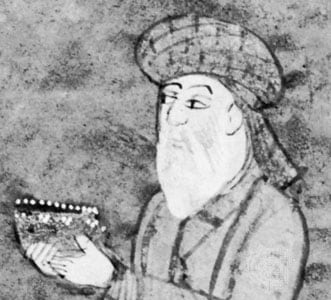
Hafez en una miniatura del siglo XVIII · Public domain
Своими словами
«Arise, oh Cup-bearer, rise! and bring / To lips that are thirsting the bowl they praise, / For it seemed that love was an easy thing, / But my feet have fallen on difficult ways.»Diván, gazal 1, v. 1 (Qazvini-Ghani; texto persa según Ganjoor); trad. inglesa de Gertrude Bell (1897), poema I; trad. española propia. El primer hemistiquio es árabe.

Главная мысль
The rend (sincere libertine): In ordinary Persian a *rend* was a scoundrel, a brawler of ill repute.
В контексте
Биография
5 мин чтения
Перевод с испанского оригинала, выполненный с помощью ИИ; ожидает проверки носителем языка.
Поэт без биографии
Ходжа Шамс ад-Дин Мухаммад, известный всему персоязычному миру под поэтическим именем Хафиз, — крайний случай классика, чья жизнь едва проступает сквозь время. Антологии поэтов (тазкире), где о нём говорится, поздние и, по словам «Энциклопедии Ираника», часто ненадёжны или попросту вымышлены. Древнейший документ — предисловие к его «Дивану», написанное современником, которого, возможно, звали Мухаммад Гуландам, и даже об этом тексте специалисты спорят. Источники сходятся в имени и в смысле прозвища: хафиз — тот, кто знает Коран наизусть, и сам поэт похваляется в одной газели, что читает его «в четырнадцати чтениях». Эпитет Лисан аль-гайб, «Язык Сокровенного», поначалу относился к книге и лишь потом — к человеку.
Он родился в Ширазе между 1315 и 1325 годами: Касем Гани предложил 717 год хиджры (1317), Мохаммад Моин — 715 (1315). Об отце есть лишь поздние и противоречивые сведения — некий Баха ад-Дин из Исфахана, некий Камаль ад-Дин из Туйсеркана, — а образ мальчика, разносившего хлеб из пекарни, принадлежит легенде. Несколько элегических стихотворений, особенно газель о «свете очей» и кыта о надгробном камне, дают понять, что он потерял сына. Он прошёл обычный для своего времени курс наук — коранические дисциплины и арабский язык — и в одном стихотворении прославляет пятерых именитых мужей, благодаря которым процветала провинция Фарс, среди них богослова Адуд ад-Дина Иджи, умершего в 1355 году.
Шираз между династиями
Хафиз жил в смутный промежуток между Чингисханом и Тимуром, когда за юг Ирана боролись мелкие династии. Первым его крупным покровителем был Абу Исхак Инджу, правитель Шираза, щедрый меценат и безрассудный государь, казнённый в 1357 году музаффаридом Мубариз ад-Дином Мухаммадом. Поэт посвятил ему касыду и элегическую газель «Помнится, жил я у края твоей улицы», которую предание читает как плач по этому недолгому правлению. Победитель был суровым ревнителем благочестия, столь строгим, что собственный сын прозвал его мухтасибом — блюстителем общественной нравственности, а Хафиз советует в одном бейте пить украдкой, ибо у мухтасиба острый слух.
В 1358 году Шах Шуджа сверг и ослепил отца, и бо́льшая часть поэтической жизни Хафиза прошла в его царствование. Гани подсчитал, что тридцать девять из семидесяти упоминаний государей в «Диване» относятся к нему. Это был образованный князь и сам поэт; по «Хабиб ас-сияр», он первым из критиков упрекнул Хафиза в отсутствии единства его газелей, перескакивающих от вина к суфизму и от суфизма к возлюбленному. Хафиз воспевал также везиров, Шаха Мансура и багдадских Джалаиридов. Поздние источники говорят о приглашениях из Индии, о разочаровавшем его посещении Йезда и о поездке в Ормуз, закончившейся ещё до посадки на корабль; почти ничему из этого нет документальных подтверждений.
Тимур, смерть и гробница
Тимур взял Шираз в 1387 году. Знаменитая встреча, на которой завоеватель упрекает поэта за то, что тот отдал Самарканд и Бухару за родинку юной тюрчанки, впервые появляется в «Анис ан-нас» Шуджи Ширази (1426) и была приукрашена Давлатшахом Самарканди в 1486 году: это литературный анекдот, а не факт. Колеблется и дата смерти. Джами и Хафи называют 792 год хиджры (1390), за ними следуют Казвини и большинство современных исследователей; надпись на гробнице с помощью хронограммы даёт 791 (1389). Его похоронили в саду Мусалла, столько раз воспетом им. Первый мавзолей был воздвигнут в 1451–1452 годах; нынешнее здание спроектировал Андре Годар в 1930-х годах.
Книга, которую никто не закрепил
Нет свидетельств, что Хафиз сам собрал свои стихи. Согласно предисловию Гуландама, их составили после его смерти, и текст дошёл до нас в сотнях рукописей, расходящихся в числе стихотворений, порядке бейтов и чтениях. Древнейшие списки относятся к XV веку — например, ташкентская копия, датированная 803 годом (1401), или рукопись 827 года (1424), изданная Халхали в 1927 году. На её основе и ещё семнадцати списков Мохаммад Казвини и Касем Гани выпустили в 1941 году издание, которое по сей день остаётся общепринятым, — 495 газелей; издание Парвиза Натель-Ханлари (1959; переработано в 1983), опирающееся на четырнадцать старых рукописей, признаёт 486, а другие критические издания опускаются ниже 450. Подлинное ядро составляет, таким образом, около пятисот газелей; касыды, кыта, «Саки-наме» и небольшое месневи дополняют «Диван» скромного объёма, тогда как подлинность приписываемых ему рубаи обоснована куда слабее.
Форма и ирония
Газель Хафиза насчитывает обычно от семи до девяти бейтов, объединённых размером и рифмой, а иногда и редифом (радиф). Каждый бейт самостоятелен, и поэт играет ихамом — словом, означающим сразу две вещи. Его мотивы — мотивы персидской лирики: неприступный возлюбленный, виночерпий, соловей и роза, кабачок, — но Эхсан Яршатер подчёркивает тему, которая не принадлежит лирике и не даёт ему покоя: лицемерие показного аскета, проповедника, муфтия, мухтасиба, а также суфия в залатанном рубище. Эта сатира присутствует примерно в 170 из 486 газелей издания Ханлари, и ей поэт с намеренным вызовом противопоставляет ринда, искреннего вольнодумца, и старца-мага, держащего кабачок.
Был ли Хафиз мистиком — вопрос, разделяющий его читателей. Уильям Джонс читал его как персидского Петрарку; Уилберфорс Кларк — как суфия, у которого вино всегда метафора; Яршатер утверждает, что он не принадлежал ни к одной суфийской школе и что многие бейты допускают лишь мирское прочтение; Леонард Льюисон, напротив, вписывает его в «религию любви» персидской мистики. Поэтический язык XIV века был настолько насыщен духовной лексикой, что двусмысленность — не изъян толкования, а сама материя стихотворения.
Посмертная жизнь оракула
Мало какие произведения знали сопоставимую общественную жизнь. «Диван» служит для гадания — фал-е Хафиз: его раскрывают наугад, и выпавшая газель читается как ответ. Рукопись, побывавшая при дворе Великих Моголов, хранит заметки Хумаюна и Джахангира об их предзнаменованиях, а в иранских домах обычай жив в ночь Ялда и на Навруз. Предание даже рассказывает, что, когда спорили, достоин ли поэт столь сомнительной славы погребальных почестей, раскрыли книгу и выпал бейт, призывающий не отказывать в шаге похоронной процессии Хафиза, ибо он, хоть и погряз в грехе, идёт в рай.
Европа открывала его постепенно: латинская версия Томаса Хайда около 1690 года, «Персидская песня» Уильяма Джонса в 1771 году и прежде всего полный немецкий перевод Йозефа фон Хаммер-Пургшталя (1812–1813), вдохновивший Гёте на «Западно-восточный диван» (1819). Из английских переводов Парвин Лолои считает версии Гертруды Белл (1897) самыми ясными и музыкальными среди рифмованных, а перевод Кларка (1891) — полным, но отягощённым догматически суфийским прочтением.
Хафиз, которого Хафиз не писал
С 1996 года американец Дэниел Ладински выпускает книги огромного тиража — «I Heard God Laughing», «The Subject Tonight Is Love», «The Gift», — представленные как «версии» Хафиза. Ладински не читает по-персидски, работал по переводу Кларка и признал, что это не переводы; такие специалисты, как Кристофер Шэкл, Ария Фани и Омид Сафи, показали, что этим стихам не соответствует никакой оригинал. Многие «цитаты из Хафиза», что ходят сегодня, — например, о солнце, которое никогда не говорит земле «ты мне должна», — принадлежат самому Ладински. Эта статья помещает их отдельно, как апокрифы, чтобы читатель мог отличить ширазского поэта от его современного эха.
Источники: Bell, Gertrude Lowthian (trad.). Poems from the Divan of Hafiz. Londres: William Heinemann, 1897 (introducción biográfica y notas). Project Gutenberg n.º 74883. · Clarke, H. Wilberforce (trad.). The Dīvān, written in the fourteenth century by Khwāja Shamsu-d-Dīn Muḥammad-i-Ḥāfiẓ-i-Shīrāzī. 2 vols. Calcuta: Government of India Central Printing Office, 1891. · Lewisohn, Leonard (ed.). Hafiz and the Religion of Love in Classical Persian Poetry. Londres: I. B. Tauris / Iran Heritage Foundation, 2010. ISBN 9781848853393.
Хронология
Жизнь год за годом
Каждая точка — документированное событие. Нажмите, чтобы прочитать о нём, с источником и степенью достоверности.
ок. 1315 – 13260 летShiraz
Birth in Shiraz
Shams al-Din Muhammad is born. Ghani proposed 717/1317 and Mo'in 715/1315; other estimates reach 1325–1326.
ВероятноKhorramshahi, Baha al-Din y EIr. «HAFEZ ii. Hafez's Life and Times». Encyclopaedia Iranica, vol. XI, fasc. 5, pp. 465–469. Publicado el 15-12-2002, actualizado el 01-03-2012.
После смерти
- ок. 1401First dated copy of the Divan
- ок. 1451First mausoleum
- 1771First English translation
- 1791First printed edition
- 1812 – 1819Hammer-Purgstall's translation
- 1897Gertrude Bell's versions
- 1941Qazvini-Ghani edition
- 1983Khanlari's revised edition
- 1996Ladinsky's first 'renderings'
ок. 1315 – 1326 · 0 лет
Birth in Shiraz
Shams al-Din Muhammad is born. Ghani proposed 717/1317 and Mo'in 715/1315; other estimates reach 1325–1326.
Вероятно
ок. 1343 – 1353
Under the patronage of Abu Ishaq Inju
Abu Ishaq Inju rules Shiraz (c. 1343–1353) and becomes the poet's first great patron, celebrated in a qasida and several ghazals.
Документировано
1355
Death of Adud al-Din Iji
Death of the theologian Adud al-Din Iji, one of the 'five notables' of Fars praised by Hafez in a qit'a.
Документировано
1357
Execution of Abu Ishaq
The Muzaffarid Mubariz al-Din Muhammad executes Abu Ishaq. Hafez writes a chronogram of his death and an elegiac ghazal; the new ruler imposes a rigorist morality the poet satirises through the figure of the *muhtasib*.
Документировано
1358 – 1384
Shah Shuja's reign begins
Shah Shuja deposes and blinds his father. Most of Hafez's poetic life is spent under his long reign (to 1384): 39 of his 70 allusions to rulers concern him.
Документировано
1366
Shah Shuja's triumphant return
Having lost Shiraz to his brother, Shah Shuja returns to the city (767/1366); several ghazals celebrate the event.
Вероятно
1387
Tamerlane takes Shiraz
Tamerlane occupies Shiraz. The meeting with Hafez about 'Samarkand and Bukhara' is an anecdote first attested in 1426.
Документировано
ок. 1390
Death in Shiraz
He dies in Shiraz: 792/1390 according to Jami and Khwafi (the date Qazvini preferred), 791/1389 according to the 'Khak-e Musalla' chronogram on his tomb. He is buried in the Musalla garden.
Вероятно
ок. 1401
First dated copy of the Divan
A Tashkent manuscript (Oriental Institute, no. 12770) dated by its colophon to 803/1401 contains some 407 ghazals; it is the oldest known copy, edited in Tehran in 2000.
Вероятно
ок. 1451
First mausoleum
After the Timurid Abu'l-Qasim Babur conquers Shiraz (855/1451), his minister Muhammad Mamai raises a monument over the tomb.
Документировано
1771
First English translation
William Jones publishes the 'Persian Song', a version of the Shirazi Turk ghazal, in his *Grammar of the Persian Language*.
Документировано
1791
First printed edition
Abu Taleb Khan prepares in Calcutta, from twelve manuscripts, the first movable-type edition of the *Divan* (1,200 copies).
Документировано
1812 – 1819
Hammer-Purgstall's translation
Joseph von Hammer-Purgstall publishes the first complete German translation (1812–1813), which Goethe reads and which gives rise to the *West-östlicher Divan* (1819).
Документировано
1897
Gertrude Bell's versions
Gertrude Bell publishes *Poems from the Divan of Hafiz* in London, regarded by Parvin Loloi as the most lucid of the English verse translations.
Документировано
1941
Qazvini-Ghani edition
Mohammad Qazvini and Qasem Ghani publish in Tehran (1320 Š.) the edition of the *Divan* based on the 827/1424 manuscript and seventeen further copies: 495 ghazals. It remains the common reference.
Документировано
1983
Khanlari's revised edition
Parviz Natel Khanlari publishes the second edition of his *Divan* (fourteen manuscripts of 807–836 AH), with 486 ghazals.
Документировано
1996
Ladinsky's first 'renderings'
Daniel Ladinsky publishes *I Heard God Laughing*, the first of a series of original works presented as 'renderings' of Hafez; *The Gift* follows in 1999.
Документировано
Труды
Главные труды
Труды, без которых не понять это наследие.
Письменный труд · ок. 1390
Divan: ghazals
دیوان حافظ — غزلیات (Divan-e Hafez: gazaliyat)
The heart of Hafez's work and, by common consent, the summit of the Persian ghazal. Each poem, of seven to nine couplets on a single rhyme, links lines that stand on their own and play on double meaning (*iham*). The aloof beloved, the cupbearer, the tavern, the nightingale and the rose live alongside a constant satire of the hypocritical ascetic, the preacher and the morals inspector, and alongside lines of wisdom on transience and fate. The book opens with an Arabic line ascribed to the caliph Yazid ("O cupbearer, pass round the cup!") and its reading oscillates, never resolved, between human and divine love. It is the book of poetry most present in Iranian homes and the one consulted as an oracle.
19 изданий · amazon.com
Все труды (8)
Hafez
Qasidas
The Conscious LibraryQasidas
Hafez
Qit'as (fragments)
The Conscious LibraryQit'as (fragments)
Hafez
Saqi-nama (Book of the Cupbearer)
The Conscious LibrarySaqi-nama (Book of the Cupbearer)
Hafez
Masnavi of the wild gazelle
The Conscious LibraryMasnavi of the wild gazelle
Hafez
Rubaiyat (attributed quatrains)
The Conscious LibraryRubaiyat (attributed quatrains)
Hafez
Attributed poems
The Conscious LibraryAttributed poems

Daniel Ladinsky's 'renderings' (The Gift and others)
1999
Изречения
Изречения, найденные в конкретном труде. Каждое сопровождается указанием происхождения и степени надёжности.
Arise, oh Cup-bearer, rise! and bring / To lips that are thirsting the bowl they praise, / For it seemed that love was an easy thing, / But my feet have fallen on difficult ways.الا یا ایها الساقی ادر کأسا و ناولها / که عشق آسان نمود اول ولی افتاد مشکلها
ПровереноDiván, gazal 1, v. 1 (Qazvini-Ghani; texto persa según Ganjoor); trad. inglesa de Gertrude Bell (1897), poema I; trad. española propia. El primer hemistiquio es árabe.
Апокрифические изречения и изречения спорной атрибуции (4)
«Even after all this time the sun never says to the earth, "You owe me." Look what happens with a love like that. It lights the whole sky.»
A poem by Daniel Ladinsky in *The Gift* (1999), circulated as Hafez's. Omid Safi cites it as an example of 'fake Hafez': it corresponds to no Persian ghazal. Text under its author's copyright; quoted briefly for identification.
«Fear is the cheapest room in the house. I would like to see you living in better conditions.»
A line by Daniel Ladinsky that Omid Safi identifies among the 'Hafez' quotes with no Persian original.
«I wish I could show you, when you are lonely or in darkness, the astonishing light of your own being.»
By Daniel Ladinsky. Safi acknowledges its quality but stresses that Hafez said nothing of the kind.
«Your heart and my heart are very very old friends.»
By Daniel Ladinsky; cited by Safi among the examples of poems falsely attributed to Hafez.
Последние слова
Проверяемых записей о последних словах не существует.
No account of his last moments survives. What tradition associates with his death is an augury: according to the story transmitted by late biographers (recorded by Gertrude Bell in 1897), when it was debated whether he deserved funeral rites the *Divan* was opened at random and out came the line 'Do not withhold your step from Hafez's bier…' (ghazal 79 in Qazvini-Ghani). These are not deathbed words of his.
Источник: Bell, Gertrude Lowthian (trad.). Poems from the Divan of Hafiz. Londres: William Heinemann, 1897 (introducción biográfica y notas). Project Gutenberg n.º 74883.
Спросить
На что отвечают эти труды
Двенадцать великих вопросов человечества и то, что позволяют на них ответить эти тексты, со ссылками. Мы никогда не вкладываем слова в чужие уста.
Что такое Абсолют? Существует ли Бог?
A Friend of grace, glimpsed behind the ambiguity of the ghazal
Личный БогСледует из учения
Hafez wrote no theology, and his Divan deliberately avoids definitions: the Friend or Beloved of his ghazals may be a prince, a youth of Shiraz or God, and is often all three at once. Even so, the God glimpsed in his verses is personal. He is the Lord of the pre-eternal covenant, the day of Alast when souls answered the Qur'anic question, whose memory runs through his poetry; He is a grace hoped for rather than earned, which is why the poet trusts he will reach paradise even though drowned in sin. Before this God there is no speculation about the essence, but dealings: complaint, entreaty, irony and gratitude addressed to Someone who listens. What Hafez rejects is not God but the ostentatious religion of those who preach in His name.
Сравнить этот вопрос с другими учителямиКто я? Существует ли истинное «я»?
A bird of the heavenly garden fallen into the world's snare
Сотворённая бессмертная душаСледует из учения
Hafez does not reason about the self, but his ghazals reveal an image traditional in Persian poetry. The soul is a bird of the garden of holiness that has fallen into the snare of this world's events and does not know how to tell of its separation; it comes from above and longs to return. At the same time, the empirical self, with its vanity and calculations, is the main obstacle: in a famous verse the poet tells himself that between lover and beloved there is no veil at all, that he himself is his own veil and must step out of the way. This double view, a soul of heavenly origin and an ego that gets in the way, is that of the Sufism Shiraz breathed, expressed without system and almost always with irony.
Сравнить этот вопрос с другими учителямиПочему мы страдаем?
Love seemed easy; then came the hardships of separation
Отделённость от БогаСледует из учения
Hafez's Divan opens with a confession: love seemed easy at first, but then difficulties arose. The pain running through his ghazals is that of separation (firaq) from the Beloved, whether human or divine: the dark night, the fear of the waves, the wait for the messenger, the complaint before a beauty that does not answer. To this is added the pain of an unstable world, in which kingdoms pass and fortune turns, and of a society in which preachers do not practise what they preach. Hafez offers no doctrine of suffering, but an attitude: to accept grief as part of love, to seek consolation in wine, music and grace, and not to trust those who promise salvation through the appearance of piety.
Сравнить этот вопрос с другими учителямиЧто происходит после смерти?
Seize the moment; grace will bring the sinner to paradise
Вечная жизнь и воскресениеСледует из учения
Hafez does not speculate about the hereafter, but neither does he deny it. His ghazals insist on the brevity of life and the fragility of kingdoms: the world is an old bride of a thousand grooms who keeps faith with none, and one should not postpone the cup or love. That urgency is not nihilism: the horizon of his verses is Islam, with its paradise and its judgement, and his wager is on grace rather than merit. In one ghazal he asks that no one refuse to follow Hafez's funeral procession, for though drowned in sin he is going to paradise. Tradition tells that when it was debated whether he deserved funeral honours, the Divan was opened at random and that very verse came out. Irony, faith in mercy and distrust of the pious mingle in his view of death.
Сравнить этот вопрос с другими учителямиКак достигается освобождение или спасение?
Only love and grace save, not piety put on display
Через благодать и любовьСказано прямо
Hafez distrusts salvation by merit. His favourite target is the ascetic (zahid) and the preacher who show off in the pulpit and, alone, do something else: piety turned into spectacle leads nowhere. Against it he sets love and grace. In a famous verse he states that love will come to the poet's aid even if he recites the Qur'an by heart in its fourteen readings, as if to say that not even that feat of piety saves on its own. And he trusts that he will reach paradise even though drowned in sin. Liberation, in his Divan, is a gift awaited with humility and without hypocrisy, from the condition of the rend, the sincere libertine, who claims no virtue and therefore remains open to mercy.
Сравнить этот вопрос с другими учителямиНужен ли учитель?
If the tavern elder bids it, stain the prayer rug with wine
НезаменимСледует из учения
In the first ghazal of the Divan, Hafez advises staining the prayer rug with wine if the pir-e moghan, the elder of the Magi or of the tavern, says so, for the wayfarer is not ignorant of the customs of the stages of the path. That figure, who returns again and again in his poems, is Hafez's master: not a shaykh of an order nor a preacher, but a sage of disorderly life in the eyes of the pious, who knows the way from experience. In another verse he warns not to travel this stage without the company of Khidr, the mysterious guide of Qur'anic tradition, for there is darkness and danger of going astray. Hafez needs a guide; what he rejects is the authority of the official clergy, whose piety he considers feigned.
Сравнить этот вопрос с другими учителямиРеален ли мир?
The Friend's face is mirrored in the cup; the world, a faithless bride, passes
Проявление божественногоСледует из учения
Hafez's world has two faces. On one side it is fleeting and faithless: an old bride who has had a thousand husbands and keeps faith with none. One should not cling to its kingdoms or honours. On the other side, that same world is where beauty is reflected: in a famous verse the poet says he has seen in the cup the reflection of the Friend's face, and the cup of Jamshid, which in Persian legend showed the whole universe, becomes in his ghazals an image of the heart that sees. Hafez does not deny the reality of things; he loves them because they let something shine through that does not pass away with them.
Сравнить этот вопрос с другими учителямиЧто такое любовь?
Love is the only path, even when it brings hardships
Тоска и соединениеСказано прямо
Love is the theme of almost all of Hafez's ghazals, and its ambiguity is deliberate: the Beloved has a face, a mole and curls, and at the same time points to the divine. The Divan opens by recalling that love seemed easy at first and that difficulties then arose; another famous poem offers Samarkand and Bukhara for the dark mole of a girl from Shiraz. In both cases love is excess, detachment and risk, the opposite of the ascetic's calculation. If one seeks the Beloved's presence, the poet advises, one must not be absent from Him; and when one finds Him, one must leave the world. For Hafez only love saves, and only love allows one to see through the hypocrisy of those who boast of piety.
Сравнить этот вопрос с другими учителямиСвободны ли мы или всё предопределено?
My lot was settled in pre-eternity: if you dislike it, change destiny
Судьба и ответственностьСледует из учения
Hafez often returns to the theme of the lot fixed in pre-eternity (azal): what each person is to drink was poured on the day of the primordial covenant, and no piety or calculation will change it. In a well-known verse he answers someone who reproaches him for his bad name that they did not let him pass through the street of good repute, and that if he dislikes it, he should change the divine decree. This fatalism is above all ironic: it serves to disarm the pride of the pious, who ascribe their virtue to their own merit, and to justify the sincere libertine who does not pretend. Hafez does not deny responsibility, but he places it before a grace and a destiny no one controls, and answers both with humility and humour.
Сравнить этот вопрос с другими учителямиЗачем медитировать или молиться?
If you seek the presence, do not be absent from Him
Быть в присутствииСказано прямо
Hafez mocks prayer turned into display — the preachers who show off in the pulpit and do something else in private — and sets against it another way of praying. The first ghazal of the Divan ends with advice addressed to himself: if you seek the presence (hozur), do not be absent from Him; when you find the one you love, leave the world. Presence here is that of the heart before the Beloved, the undivided attention Sufism asks for in prayer. In his poems there appear the dawn supplication and the night vigil, often alongside the cup and the musician. What Hafez values is not the number of prayers or their outward form, but that the heart should be where it claims to be.
Сравнить этот вопрос с другими учителямиМожет ли разум познать предельное?
No one has solved nor will solve the riddle of the world by wisdom
Предельное лежит за пределами умаСказано прямо
In the same ghazal in which he offers Samarkand and Bukhara for the mole of a girl from Shiraz, Hafez advises speaking of the minstrel and the wine and seeking less the secret of time, for no one has solved nor will solve that riddle by wisdom. It is one of his most constant convictions: philosophy and speculative theology do not reach the mystery, and those who boast of knowing everything, the ascetic, the jurist, the preacher, are often the blindest. What reason does not open, love opens, or it is left open. This renunciation is not intellectual laziness: Hafez was a scholar who knew the Qur'an by heart and mastered the poetic tradition. It is the irony of one who knows learning and its limits.
Сравнить этот вопрос с другими учителямиУйти от мира или преобразить его?
Neither convent nor pulpit: sincerity is lived in the tavern of the world
Созерцание в действииСледует из учения
Hafez lived in Shiraz, in the world: a court poet under several princes, a teacher of the Qur'an according to his biographers, witness to wars and dynastic changes. His ghazals often set the dervish convent (khanqah) and the mosque of hypocrites against the tavern of the Magi (kharabat), where the rend, the sincere libertine, lives without pretence. He chooses neither the ascetic's retreat, which he mocks, nor political action, which he distrusts, but a third way: to be in the world with an awake heart, to enjoy what life gives without clinging, to unmask false piety and to keep faith with the Beloved. His poetry itself, recited everywhere, was his way of intervening.
Сравнить этот вопрос с другими учителями
Созвучия и противоречия
Созвучия и противоречия
Рассчитаны вопрос за вопросом на основе позиций. Причина каждого совпадения или расхождения — по нажатию.
Ближе всего к
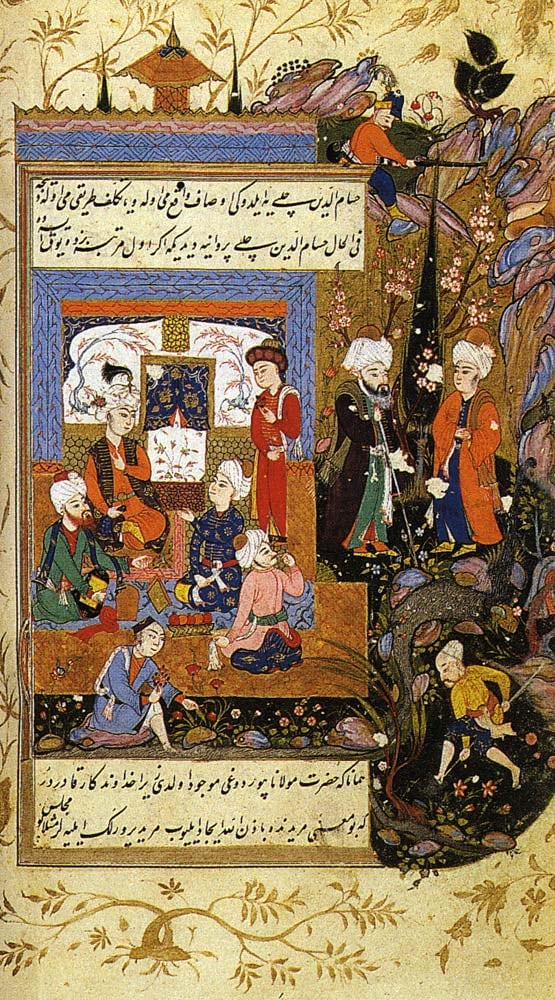
Rumi
Совпадают в вопросах: Что такое Абсолют? Существует ли Бог? · Кто я? Существует ли истинное «я»? · Почему мы страдаем?

Chaitanya Mahaprabhu
Совпадают в вопросах: Что такое Абсолют? Существует ли Бог? · Кто я? Существует ли истинное «я»? · Почему мы страдаем?
Baal Shem Tov
Совпадают в вопросах: Кто я? Существует ли истинное «я»? · Почему мы страдаем? · Что происходит после смерти?

Francis of Assisi
Совпадают в вопросах: Что такое Абсолют? Существует ли Бог? · Кто я? Существует ли истинное «я»? · Почему мы страдаем?
Дальше всего от

Pema Chödrön
Расходятся в вопросах: Что такое Абсолют? Существует ли Бог? · Кто я? Существует ли истинное «я»? · Что происходит после смерти?

Epicurus
Расходятся в вопросах: Что такое Абсолют? Существует ли Бог? · Кто я? Существует ли истинное «я»? · Что происходит после смерти?

The 14th Dalai Lama (Tenzin Gyatso)
Расходятся в вопросах: Что такое Абсолют? Существует ли Бог? · Кто я? Существует ли истинное «я»? · Что происходит после смерти?

Patañjali
Расходятся в вопросах: Что такое Абсолют? Существует ли Бог? · Кто я? Существует ли истинное «я»? · Что происходит после смерти?
Предания и рассказы
Предания и рассказы
Не поддаётся проверке1387 (según el relato)
Samarkand and Bukhara for a mole
Происхождение рассказа: It first appears in Shuja Shirazi's *Anis al-nas* (1426), some thirty-five years after the poet's death, and was expanded by Dawlatshah Samarqandi in his *Tadhkirat al-shu'ara* (1486). The *Encyclopaedia Iranica* warns that anecdotes from these sources reflect the later image of the poet and cannot be used as facts.
Устная традицияc. 1390
The augury at the funeral
Происхождение рассказа: A story transmitted by late biographers and recorded by Gertrude Bell in the introduction to *Poems from the Divan of Hafiz* (1897); it is not found in fourteenth-century sources.
Оспаривается1358–1384
The king who asked for unity
Происхождение рассказа: It comes from the *Habib al-siyar* of the historian Khwandamir (sixteenth century), more than a century later; it is recorded by Bell (1897) and the *Encyclopaedia Iranica* (Khorramshahi).
Оспариваетсяc. 1390
Persian sugar for the parrots of India
Происхождение рассказа: The correspondence with the sultan of Bengal is asserted in the Indo-Persian tradition and recorded by English Wikipedia; Bell (1897, note to poem XXI) ascribes the invitation to a 'Shah Mahmud Purabi' and tells of the interrupted journey. There is no contemporary documentation.
Не поддаётся проверкеs. XIV (según la leyenda)
Shakh-e Nabat and the forty-day vigil
Происхождение рассказа: Modern oral tradition spread in Iran and in Western anthologies; English Wikipedia presents it as legend and the *Encyclopaedia Iranica* warns against reconstructing the poet's life from literal readings of his verse.
Документировано1812–1819
Goethe finds his twin
Происхождение рассказа: Facts of literary history documented in the editions of Hammer-Purgstall and Goethe; see Hamid Tafazoli, 'Hafez xi. Translations of Hafez in German', *Encyclopaedia Iranica*.
Источник: Tafazoli, Hamid. «HAFEZ xi. Translations of Hafez in German». Encyclopaedia Iranica.
Учение
Учение
Понятия, на которых строится мысль учителя, объяснённые в их контексте.
The rend (sincere libertine)rendi
A figure inherited from the *qalandari* poetry of Sanai and Attar, which Hafez brings to its most elaborate form.
Riya: religious hypocrisyriya
Part of the rise of fourteenth-century Persian satire, alongside Obeyd Zakani.
Iham: amphibologyiham
A figure codified by classical Persian rhetoric; in Hafez it merges with the convergence of love lyric, panegyric and mysticism.
Wine and the cupbearermay-o-saqi
Bacchic symbolism inherited from Arabic and Persian poetry (Abu Nuwas, Khayyam, Sufi lyric), to which Hafez gives its canonical form.
Источник: Lewisohn, Leonard (ed.). Hafiz and the Religion of Love in Classical Persian Poetry. Londres: I. B. Tauris / Iran Heritage Foundation, 2010. ISBN 9781848853393.
Fal-e Hafez: the Divan as oraclefal-e-hafez
Bibliomancy comparable to the *sortes Vergilianae*; part of the Islamic tradition of *fal-namas*.
Видео
Видео
Записи, интервью и документальные фильмы. Видео воспроизводятся с YouTube; здесь они не хранятся.
Hafiz and the Religion of Love — Lecture by L. Lewisohn
Лекция· EN· 115 min
Golha Project Videos
Leonard Lewisohn «One Day with Hafez», Leiden University, Sep. 2012
Лекция· EN· 2012· 4 min
Persian Dutch Network
Scholar reflects bringing medieval Persian verse to the West
Интервью· EN· 2013· 6 min
PBS NewsHourОфициальный канал
Dick Davis reads 'I see no love in anyone'
Запись третьих лиц· EN· 2013· 2 min
PBS NewsHourОфициальный канал
بزرگان ایرانزمین: حافظ (Grandes de Irán: Hafez)
Документальный фильм· FA· 2012· 24 min
BBC PersianОфициальный канал
Hafez and Persian Poetry in Song (Part One)
Лекция· EN· 59 min
OxfordSongОфициальный канал
Hafez and Persian Poetry in Song (Part Two)
Лекция· EN· 65 min
OxfordSongОфициальный канал
How to Love Like A Poet: Why Rumi, Hafez, and Saadi Shirazi Matter Today
Лекция· EN· 2023· 80 min
Renovatio: The Journal of Zaytuna CollegeОфициальный канал
Hafez: inmortal y magistral poeta
Лекция· ES· 2019· 63 min
Espacio Persa
La poesía como experiencia cotidiana en Irán
Документальный фильм· ES· 2020· 28 min
INAH TVОфициальный канал
Hafez Commemoration — Shajarian & Pirniakan (بزرگداشت حافظ)
Запись третьих лиц· FA· 1988· 52 min
Khosousi
غزلیات حافظ با دکلمه شاملو و موسیقی فرهاد فخرالدینی
Запись третьих лиц· FA· 64 min
EngineeringMath
Hafezieh | The Timeless Shrine of Hafez in Shiraz, Iran
Документальный фильм· EN· 3 min
Visit Iran - Official Travel Guide of IranОфициальный канал
Poems from the Divan of Hafiz by Gertrude Bell — full audiobook
Запись третьих лиц· EN· 88 min
Best Audiobooks
Галерея
Галерея
Изображения с проверенной лицензией. Каждое сохраняет своё авторство и атрибуцию.
Рукописи
Рукописи
Рукописные свидетельства и древние тексты, с указанием хранителя и условий доступа.
FA · Perso-árabe · s. XIV
دیوان حافظ (Divan-e Hafez), copia de Taskent
- Сохранившийся список
- Copia que su colofón (fol. 140a) fecha en 803/1401, con unos 407 gazales; la más antigua conocida
- Хранитель
- Instituto de Estudios Orientales, Taskent · n.º 12770
FA · Perso-árabe · s. XIV
Antología de Iskandar Sultán (con gazales de Hafez)
- Сохранившийся список
- Antología copiada en 813–814/1410–1411 para el príncipe timúrida Iskandar Sultán
- Хранитель
- British Library, Londres · Add. MS 27261
FA · Perso-árabe · s. XIV
دیوان حافظ، نسخهٔ خلخالی (manuscrito de Jaljali)
- Сохранившийся список
- Copia fechada en 827/1424, unos treinta y cinco años después de la muerte del poeta
- Хранитель
- Colección particular
FA · Nastaliq · s. XIV
دیوان حافظ، نسخهٔ شاهان مغولیه (copia real mogola)
- Сохранившийся список
- Manuscrito probablemente del s. XV con inscripción de Husayn Bayqara; anotaciones de augurios de Humayun (una de 962/1554–1555) y Yahangir
- Хранитель
- Khuda Bakhsh Oriental Public Library, Patna
Связи
Связи
Влияния, ученичество и близость взглядов. Документированная связь отличается от сходства, выявленного путём анализа.
Идеи, близкие к
The two summits of the Persian ghazal, a century apart. Legend says Hafez knew Rumi's work by heart, but his ghazal derives rather from the school of Saadi and Khwaju of Kerman; the affinity lies in the mysticism of love and the language of wine and the tavern.
Сходство, выявленное путём анализа
Идеи, близкие к
The figure of the *rend* and the *qalandari* poetry that Hafez brings to its most refined form have precedents in Attar's ghazals. Farid al-Din Attar should not be confused with the shaykh Mahmud (or Zayn al-Din) Attar of Shiraz, whom tradition makes Hafez's master.
Сходство, выявленное путём анализа
Идеи, близкие к
Some critics (Lewisohn and others) read the *Divan* in the light of the 'religion of love' and the metaphysics of Ibn Arabi's school as spread in Iran; no direct dependence is documented.
Сходство, выявленное путём анализа
Идеи, близкие к
Both aim their sharpest verses at outward religion (the ascetic, the preacher, the pandit and the mullah) in the name of inner sincerity.
Сходство, выявленное путём анализа
Источники
Источники
Библиография и каталоги, использованные для этой статьи.
- Wikidata, Q6240 «Hafez» (P31=Q5; 163 enlaces entre wikis; P569 1325 y 1326; P570 1389; P1559 خواجه شمسالدین محمد حافظ شیرازی).
- Khorramshahi, Baha al-Din y EIr. «HAFEZ ii. Hafez's Life and Times». Encyclopaedia Iranica, vol. XI, fasc. 5, pp. 465–469. Publicado el 15-12-2002, actualizado el 01-03-2012.
- Yarshater, Ehsan. «HAFEZ i. An Overview». Encyclopaedia Iranica, vol. XI, fasc. 5. Publicado el 15-12-2002.
- Khorramshahi, Baha al-Din y EIr. «HAFEZ vi. Printed Editions of the Divān of Hafez». Encyclopaedia Iranica. Publicado el 15-12-2002.
- Loloi, Parvin. «HAFEZ x. Translations of Hafez in English». Encyclopaedia Iranica. Publicado el 15-12-2002.
- Tafazoli, Hamid. «HAFEZ xi. Translations of Hafez in German». Encyclopaedia Iranica.
- Bell, Gertrude Lowthian (trad.). Poems from the Divan of Hafiz. Londres: William Heinemann, 1897 (introducción biográfica y notas). Project Gutenberg n.º 74883.
- Hafez. Divan, texto según la edición de Mohammad Qazvini y Qasem Ghani (Teherán, 1320 Š./1941): 495 gazales, 3 casidas, 34 qit'as, 42 rubaiyat, Saqi-nama, masnaví «Ala ey ahu-ye vahshi», prefacio del compilador y 118 poemas atribuidos. Ganjoor (biblioteca digital de poesía persa).
- Clarke, H. Wilberforce (trad.). The Dīvān, written in the fourteenth century by Khwāja Shamsu-d-Dīn Muḥammad-i-Ḥāfiẓ-i-Shīrāzī. 2 vols. Calcuta: Government of India Central Printing Office, 1891.
- Safi, Omid. «Fake Hafez: How a supreme Persian poet of love was erased». Al Jazeera, 14-06-2020.
- Fani, Aria. «Rewriting Hafez: Re-theorizing Untranslatability in Persian Poetry». Ajam Media Collective, 08-07-2014.
- «Shirazi Turk». Wikipedia en inglés (origen de la anécdota de Tamerlán: Shuja Shirazi, Anis al-nas, 1426; Dawlatshah Samarqandi, Tadhkirat al-shu'ara, 1486).
- «Daniel Ladinsky». Wikipedia en inglés (obras, método de trabajo a partir de Clarke, críticas de Christopher Shackle, Aria Fani, Murat Nemet-Nejat y Omid Safi).
- Lewisohn, Leonard (ed.). Hafiz and the Religion of Love in Classical Persian Poetry. Londres: I. B. Tauris / Iran Heritage Foundation, 2010. ISBN 9781848853393.
- «Hafez». Wikipedia en inglés (mausoleo de André Godard, día de Hafez, fal-e Hafez, correspondencia con Ghiyath al-Din Azam Shah de Bengala, traducciones modernas).
- Правообладатель
- Dominio público (obra del siglo XIV). Las ediciones críticas modernas y las traducciones (Archetype, Mage, Penguin, Verdier, Gallimard, Visor…) están sujetas a los derechos de sus editores y traductores. Los libros de Daniel Ladinsky (Penguin) son obra original suya con derechos vigentes, no traducciones de Hafez.
Ожидает подтверждения
То, что в этой статье пока не удалось установить. Мы предпочитаем сказать об этом, а не заполнять пробел.
- Localizar un ISBN de una reimpresión moderna de la edición de Qazvini y Ghani y de la 2.ª edición de Janlari (Jarazmi, 1983); Open Library las registra sin ISBN.
- Confirmar en catálogo el traductor y la naturaleza de «El despertar del amor» (Sufí, 2003) y «La canción de Saki» (Alif): no se han incluido porque Open Library no da traductor ni permite saber si traducen a Hafez o a Ladinsky.
- No se ha encontrado una traducción española de Hafez de dominio público; tampoco una alemana de Hammer-Purgstall o Rosenzweig transcrita en Wikisource (solo escaneos).
- Vídeos: los recitados de Shajarian y Shamlu proceden de canales no oficiales; buscar ediciones oficiales (Delawaz, herederos de Shamlu) y algún documental en francés o alemán de televisión pública.
- Comprobar el enlace estable de la British Library para Add. MS 27261 (antología de Iskandar Sultán) cuando se restablezca su visor de manuscritos.
- Verificar con una fuente impresa (Limbert, *Shiraz in the Age of Hafez*, 2004) la datación de la correspondencia con Ghiyath al-Din Azam Shah de Bengala.
- Precisar la autoría del retrato de la British Library (File:Mohammad Shams al-Din Hafez.jpg): Commons no indica signatura ni pintor.
Исследовано 2026-10-25