Ислам · Суфизм
Attar
فریدالدین ابوحامد محمد عطار نیشابوری · عطار
ок. 1145 – 1221Исторически документированная личность
Персидский поэт и агиограф (Нишапур, ок. 1145 — ок. 1221), аптекарь по ремеслу и одна из главных фигур суфийской поэзии. Его «Беседа птиц» («Мантик ат-тайр») повествует о странствии птиц через семь долин, в конце которого они узнают, что Симург — это они сами; вместе с «Илахи-наме», «Мусибат-наме» и «Асрар-наме» она образует цикл мистических маснави, а «Тазкират аль-аулия» — великое персидское собрание житий святых. Многие сочинения, ходящие под его именем, принадлежат другому Аттару. Наследником его стал Руми.
- трудов
- 29трудов
- изданий
- 32изданий
- цитат
- 6цитат
- видео
- 13видео
- изображений
- 8изображений
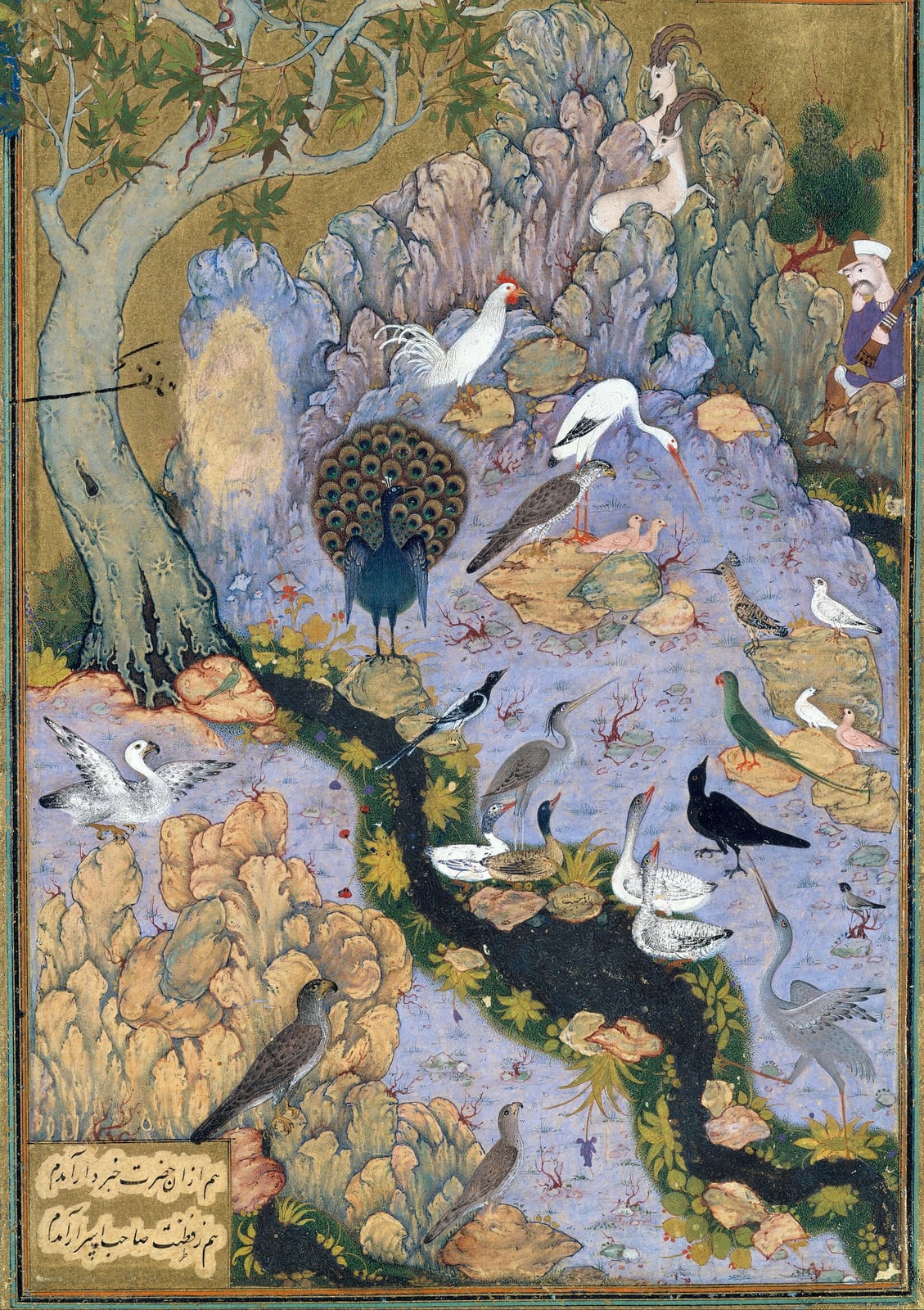
La asamblea de las aves · CC0
Своими словами
«Praise to the pure Creator of the soul, who gave the dust a soul and gave it faith.»Mantiq al-tayr, dístico inicial («Fi al-tawhid»), texto persa según Ganjoor; traducciones propias.

Главная мысль
The Simorgh and the thirty birds: The Simorgh is a fabulous bird of Iranian tradition, wise and benevolent, which in the *Shahnameh* raises the hero Zal.
В контексте
Биография
5 мин чтения
Перевод с испанского оригинала, выполненный с помощью ИИ; ожидает проверки носителем языка.
Аптекарь из Нишапура
Абу Хамид Мухаммад, сын Абу Бакра Ибрахима, подписывал свои сочинения двумя именами: Фарид ад-Дин, «жемчужина веры», и Аттар — так называли того, кто торгует благовониями, снадобьями и лекарствами. Он жил в Нишапуре, большом городе Хорасана, и о его жизни достоверно известно очень мало. Упоминают его лишь двое современников: составитель антологии Мухаммад Ауфи, причисляющий его к поэтам сельджукской эпохи, и философ Насир ад-Дин Туси, который еще студентом навестил Аттара, когда тот был уже глубоким стариком, и спустя годы рассказывал своему ученику Ибн аль-Фувати, как поразило его красноречие поэта. Следующее известие — «Тарих-и гузида» Хамдаллаха Мустауфи — относится уже к 1330 году.
Собственные сочинения Аттара говорят о нем немного, но одно — вполне определенно: он занимался аптекарским делом, сам принимал великое множество посетителей и сочинил «Мусибат-наме» и «Илахи-наме», не оставляя работы в лавке. Не завися от поэзии как от источника пропитания, он мог презирать ремесло придворного панегириста, которым никогда не занимался. Бернд Райнерт подчеркивает, что жизнь аптекаря и суфия, по-видимому, не прерывалась путешествиями и что в старости он жил весьма уединенно; дальние странствия в Мекку, Дамаск или Индию, которые приписывают ему позднейшие жизнеописания, принадлежат легенде.
Неясные даты
Бади аз-Заман Фурузанфар вычислил, что Аттар родился около 540 года хиджры (1145–1146); единственная дата, которую называет сам поэт, — 573 год (1177), когда он завершил «Беседу птиц», — содержится в бейте, имеющемся не во всех рукописях. Что касается смерти, то наиболее распространенное мнение, которого держатся Фурузанфар и Райнерт, гласит, что он погиб во время резни, учиненной монголами при разорении Нишапура в месяце сафар 618 года, то есть в апреле 1221-го; Герман Ландольт напоминает, что не исключен и 1230 год. «Британская энциклопедия» 1911 года, следуя поздним источникам, всё еще отводила ему сто десять лет жизни — с 1119 по 1229 год: пример того, как росла фигура поэта по мере того, как прославлялись его сочинения.
Легенды
При жизни Аттар был мало известен за пределами Нишапура. Его величие как мистика и рассказчика открыли в XV веке, и именно тогда Джами и Давлатшах Самарканди украсили его биографию фантастическими историями. По словам Давлатшаха, некий дервиш, заглянувший в его лавку, спросил, как он собирается умирать, оставляя после себя столько добра; Аттар бросил аптеку и стал суфием. По словам того же автора, монгольский воин, взявший его в плен, отказался продать его за тысячу дирхамов, а когда другой предложил за него мешок соломы, Аттар посоветовал соглашаться, ибо большего он не стоит; разъяренный воин убил его. Фурузанфар доказал, что приписываемые Аттару наставники — Наджм ад-Дин Кубра, Кутб ад-Дин Хайдар и другие — вымышлены; возможна лишь его связь с Маджд ад-Дином Багдади, с которым, по собственным словам, он был знаком, и, быть может, увайситская, внутренняя преемственность от Абу Саида Абу-ль-Хайра.
Наследие, разросшееся вместе со славой
Легенда приписала ему столько сочинений, сколько сур в Коране, и выяснение того, какие из них действительно принадлежат Аттару, заняло у специалистов целое столетие. Хельмут Риттер заметил различия в стиле и вероисповедании — одни сочинения суннитские, другие шиитские — и поначалу предположил эволюцию поэта; в 1941 году Саид Нафиси доказал, что произведения шиитского толка, такие как «Мазхар аль-аджаиб» и «Лисан аль-гайб», принадлежат другому Аттару, уроженцу Туна, жившему в Мешхеде примерно двумястами пятьюдесятью годами позже. Вторая группа, во главе с «Джаухар аз-зат» и сосредоточенная на фигуре аль-Халладжа, по соображениям стиля тоже ему не принадлежит, хотя ее автор до сих пор не установлен. Сам Аттар перечисляет свои сочинения в предисловиях: «Диван», «Асрар-наме», «Беседа птиц», «Мусибат-наме», «Илахи-наме», «Джавахир-наме» и «Шарх аль-кальб», добавляя, что два последних уничтожил собственными руками.
К этому перечню следует добавить «Мухтар-наме», избранное из его четверостиший, и «Тазкират аль-аулия», единственное его прозаическое сочинение. Наиболее спорен случай «Хосров-наме», куртуазного романа, известного также как «Гуль и Хурмуз»: Райнерт считал его подлинным; Мохаммад Реза Шафии-Кадкани утверждал, что это позднейшая подделка, а заглавие, которым Аттар обозначал одно из своих сочинений, на самом деле относилось к «Илахи-наме», — тезис, который Ландольт считает доказанным; в 2019 году Остин О'Мэлли вновь открыл вопрос, введя в оборот рукопись 1297 года, уже приписывающую роман Аттару.
Четыре мистических маснави
«Асрар-наме», «Книга тайн», лишенная обрамляющего сюжета, в двадцати двух беседах размышляет о падении души и ее освобождении от мирских уз. «Беседа птиц» («Мантик ат-тайр»), его шедевр, заимствует из «Рисалат ат-тайр», приписываемой братьям Газали, мотив собрания птиц, ищущих себе царя: ведомые удодом, они проходят семь долин, и лишь тридцать из них достигают Симурга, чтобы обнаружить, что Симург — это они сами, си мург, «тридцать птиц». «Мусибат-наме», «Книга бедствий», повествует о путнике, который вопрошает сорок существ, от архангела Джибрила до пророков, пока Мировая душа не открывает ему, что искомое — в нем самом. В «Илахи-наме», «Божественной книге», халиф отвечает на мирские желания шести своих сыновей — дочь царя пери, магия, чаша Джамшида, живая вода, перстень Сулеймана, алхимия, — раскрывая их внутренний смысл. Все четыре произведения говорят одно и то же на четыре лада: цель человека сокрыта в нем самом.
Поминание святых
«Тазкират аль-аулия», «Поминание святых», собирает жития и изречения наставников классического суфизма — от Джафара ас-Садика, Увайса аль-Карани и Хасана аль-Басри до аль-Халладжа, в котором Аттар видел того, кто довел суфизм до совершенства. Позднейшие жизнеописания, встречающиеся в некоторых списках, ему не принадлежат. Аттар почти никогда не называет своих источников и перерабатывает рассказы на свой лад, так что как история изображенных в ней людей книга мало что дает, зато как свидетельство суфийского мироощущения бесценна; кроме того, он с большой точностью переложил на персидский изречения, дошедшие по-арабски. Со второй половины XIII века книгу много читали; ее древний восточнотюркский перевод, записанный уйгурским письмом, перевел на французский Паве де Куртей в 1889 году.
Наследие
Руми использовал для своего «Маснави» размер «Беседы птиц» и переработал ряд историй Аттара. Предание пошло дальше: будто старый поэт, увидев проезжавшую через Нишапур семью Баха ад-Дина Валада, подарил мальчику Руми список «Асрар-наме». Риттер объяснил эту легенду влиянием названного сочинения на пролог «Маснави», а Франклин Льюис считает ее мифом о преемственности. Алишер Навои переложил «Беседу птиц» на чагатайский язык и воздвиг мавзолей в Нишапуре, обновленный в 1940 году. Европа узнала Аттара благодаря «Панд-наме» в переводе Сильвестра де Саси (1819), ныне признанному апокрифом, и благодаря изданию (1857) и переводу (1863) «Мантик ат-тайр», выполненным Гарсеном де Тасси; они так восхитили Эдварда Фицджеральда, что он вольно переложил поэму в своем «Птичьем парламенте» (Bird-Parliament), не изданном при его жизни и опубликованном посмертно в 1889 году.
Источники: «Farīd ud-Dīn ʽAttār». Encyclopædia Britannica, 11.ª ed., vol. 10. Cambridge, 1910–1911 (resume los relatos de Dawlatshah sobre su conversión y su muerte). Texto en Wikisource. · FitzGerald, Edward. Letters and Literary Remains of Edward FitzGerald, ed. William Aldis Wright, vol. II. Londres: Macmillan, 1889 (incluye «Bird-Parliament» con la nota de E. B. Cowell sobre su génesis). · Attar, Farid al-Din. The Tadhkiratu 'l-awliya («Memoirs of the saints»), ed. Reynold A. Nicholson, con introducción de Mirza Muhammad Qazvini. 2 vols. Londres y Leiden: Luzac / Brill, 1905–1907 (Persian Historical Texts).
Хронология
Жизнь год за годом
Каждая точка — документированное событие. Нажмите, чтобы прочитать о нём, с источником и степенью достоверности.
ок. 11450 летNishapur
Birth in Nishapur
Abu Hamid Muhammad, son of Abu Bakr Ibrahim, is born. Foruzanfar calculates c. 540/1145–1146; the 1911 Britannica, following late sources, gave 1119.
ВероятноReinert, Bernd. «ʿAṭṭār, Farīd-al-Dīn». Encyclopaedia Iranica, vol. III, fasc. 1, pp. 20–25. Publicado el 15-12-1987.
После смерти
- 1297Oldest manuscript of the Khusraw-nama
- 1330Mustawfi's mention
- ок. 1486The legend is born
- 1819The Pand-nama in Europe
- 1857 – 1863Garcin de Tassy's edition
- 1905 – 1907Nicholson's edition of the Tadhkirat
- 1940Ilahi-nama edition and renovation of the mausoleum
- 1941Nafisi identifies the 'other Attar'
- 1984Davis and Darbandi translation
ок. 1145 · 0 лет
Birth in Nishapur
Abu Hamid Muhammad, son of Abu Bakr Ibrahim, is born. Foruzanfar calculates c. 540/1145–1146; the 1911 Britannica, following late sources, gave 1119.
Вероятно
ок. 1170 – 1221
Druggist and Sufi
He practises pharmacy in Nishapur and attends many customers; according to his prefaces, he composes the *Musibat-nama* and the *Ilahi-nama* in the shop. The legends of his conversion by a dervish date from the fifteenth century.
Документировано
1177
Date of the Mantiq al-tayr
A closing line of the *Mantiq al-tayr* dates its completion to 573/1177, but it is not found in all manuscripts.
Оспаривается
ок. 1209
Meeting with Majd al-Din Baghdadi
Attar says in the *Tadhkirat al-awliya* that he met Majd al-Din Baghdadi, disciple of Najm al-Din Kubra, who died around 1209; he is the only plausible master among those tradition ascribed to him.
Вероятно
ок. 1215 – 1221
Visit of Nasir al-Din Tusi
The young Tusi visits the aged Attar in Nishapur (between 612/1215 and 618/1221, according to Foruzanfar) and praises his eloquence, as transmitted by his pupil Ibn al-Fuwati.
Документировано
апрель 1221 г.
Death in the Mongol sack of Nishapur
According to the most widespread opinion (Foruzanfar, Reinert), he dies violently in the massacre of Safar 618/April 1221; Landolt considers 1230 possible. The tale of the sack of straw is Dawlatshah's legend.
Вероятно
1297
Oldest manuscript of the Khusraw-nama
A copy of 1297, now in the Bibliothèque nationale de France, already contains the romance and its preface under Attar's name: Austin O'Malley adduces it in 2019 against the forgery thesis.
Документировано
1330
Mustawfi's mention
Hamdallah Mustawfi mentions him in the *Tarikh-e guzida*, the third surviving notice after those of Awfi and Tusi.
Документировано
ок. 1486
The legend is born
In the fifteenth century his work is rediscovered; Jami (*Nafahat al-uns*, 1476–1478) and Dawlatshah (*Tadhkirat al-shu'ara*, 1486) embroider his life with tales of conversion, masters and death. Ali Shir Nava'i raises a mausoleum for him in Nishapur.
Документировано
1819
The Pand-nama in Europe
Silvestre de Sacy publishes in Paris the *Pend-Namèh, ou le Livre des conseils*, the first 'Attar' work translated in Europe; modern scholarship considers it apocryphal.
Документировано
1857 – 1863
Garcin de Tassy's edition
Joseph Garcin de Tassy edits the Persian text of the *Mantiq al-tayr* (1857) and publishes his French translation in 1863; Edward FitzGerald, delighted, composes his free version *Bird-Parliament* (1862, posthumous in 1889).
Документировано
1905 – 1907
Nicholson's edition of the Tadhkirat
Reynold A. Nicholson publishes in London and Leiden, with an introduction by Muhammad Qazvini, the edition of the *Tadhkirat al-awliya* (1905–1907).
Документировано
1940
Ilahi-nama edition and renovation of the mausoleum
Hellmut Ritter publishes the critical edition of the *Ilahi-nama* (Leipzig and Istanbul); the Nishapur mausoleum is fully renovated under Reza Shah.
Документировано
1941
Nafisi identifies the 'other Attar'
Sa'id Nafisi shows in his *Jostoju dar ahval o asar-e Farid al-Din Attar* that the Shi'ite works ascribed to Attar belong to a namesake from Tun who lived in Mashhad some two and a half centuries later.
Документировано
1984
Davis and Darbandi translation
Afkham Darbandi and Dick Davis publish *The Conference of the Birds* in Penguin Classics, the most widely read English verse version.
Документировано
Труды
Главные труды
Труды, без которых не понять это наследие.
Письменный труд · ок. 1177
Mantiq al-tayr (The Conference of the Birds)
منطقالطیر (Mantiq al-tayr), también مقامات الطیور (Maqamat al-tuyur)
A masnavi of several thousand couplets and Attar's masterpiece. The birds of the world gather to choose a king; the hoopoe, Solomon's messenger, proposes that they seek the Simorgh. Each bird excuses itself with a human weakness (the nightingale's love for the rose, the parrot's longing for immortality, the peacock's paradise) and the hoopoe answers with stories, among them that of Shaykh San'an in love with a Christian girl. Those who set out cross seven valleys: quest, love, knowledge, detachment, unity, bewilderment, and poverty and annihilation. Only thirty arrive, and they discover that the Simorgh is their own reflection: *si morgh*, 'thirty birds'. The frame story comes from the Ghazalis' *Risalat al-tayr*.
14 изданий
Attar
Ilahi-nama (The Book of God)
Письменный труд
Ilahi-nama (The Book of God)
الهینامه (Ilahi-nama)
A masnavi of some 6,500 couplets with a frame story: a caliph asks his six sons what they desire, and each asks for something marvellous (the daughter of the king of the fairies, mastery of magic, Jamshid's world-reflecting cup, the water of life, Solomon's ring, alchemy). The father shows them that, taken literally, these wishes are absurd, but that understood inwardly they can be fulfilled: the princess is the purified soul, the cup is the mystic united with God, the elixir is the divine light that transforms everything. Hundreds of stories, from three to four hundred lines, illustrate the same message as the *Mantiq al-tayr*: what man seeks is within him.
3 издания

Письменный труд
Tadhkirat al-awliya (Memorial of God's Friends)
تذکرة الأولیاء (Tadhkirat al-awliya)
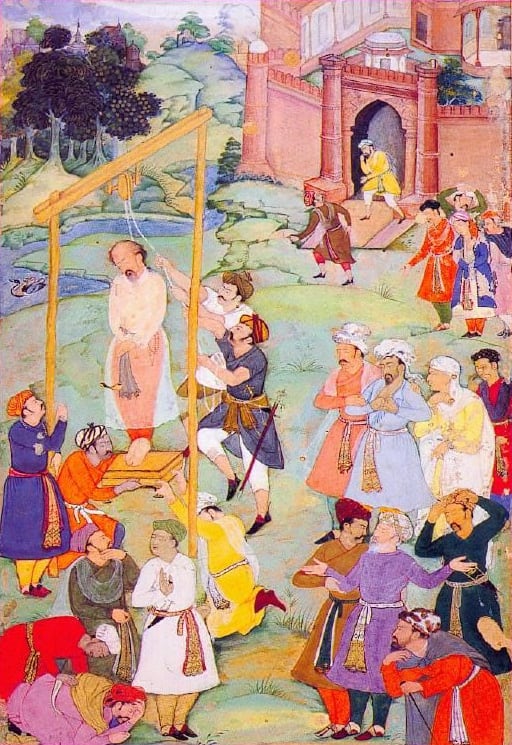
Attar's only prose work and the great Persian collection of saints' lives: some seventy biographies of masters of classical Sufism, from Ja'far al-Sadiq, Uways al-Qarani and Hasan of Basra to al-Hallaj, with their sayings and anecdotes, among them those of Rabi'a al-Adawiyya. Attar relies almost solely on written sources he rarely names and reworks the stories with a taste of his own, but he translates the Arabic sayings faithfully. The account of al-Hallaj's execution is its most famous page. Widely read since the thirteenth century, it also matters as a specimen of early Persian prose.
6 изданий
Все труды (29)

Musibat-nama (The Book of Affliction)
Attar
Asrar-nama (The Book of Secrets)
The Conscious LibraryAsrar-nama (The Book of Secrets)

Divan
Attar
Mukhtar-nama (The Book of Selections)
The Conscious LibraryMukhtar-nama (The Book of Selections)
Attar
Khusraw-nama (Gol and Hormoz)
The Conscious LibraryKhusraw-nama (Gol and Hormoz)
Attar
Mi'raj-nama (Book of the Ascension)
The Conscious LibraryMi'raj-nama (Book of the Ascension)
Attar
Jumjuma-nama (Book of the Skull)
The Conscious LibraryJumjuma-nama (Book of the Skull)
Attar
Jawahir-nama (Book of Jewels)
The Conscious LibraryJawahir-nama (Book of Jewels)
Attar
Sharh al-qalb (Commentary on the Heart)
The Conscious LibrarySharh al-qalb (Commentary on the Heart)
Attar
Kashf al-asrar and Ma'rifat al-nafs
The Conscious LibraryKashf al-asrar and Ma'rifat al-nafs
Attar
Pand-nama (Book of Counsel)
The Conscious LibraryPand-nama (Book of Counsel)
Attar
Bulbul-nama (Book of the Nightingale)
The Conscious LibraryBulbul-nama (Book of the Nightingale)
Attar
Jawhar al-dhat (The Essence of Essence)
The Conscious LibraryJawhar al-dhat (The Essence of Essence)
Attar
Ushtur-nama (Book of the Camel)
The Conscious LibraryUshtur-nama (Book of the Camel)
Attar
Haylaj-nama
The Conscious LibraryHaylaj-nama
Attar
Mansur-nama
The Conscious LibraryMansur-nama
Attar
Bisar-nama (Book of the Headless)
The Conscious LibraryBisar-nama (Book of the Headless)
Attar
Mazhar al-aja'ib (Manifestation of Wonders)
The Conscious LibraryMazhar al-aja'ib (Manifestation of Wonders)
Attar
Lisan al-ghayb (The Tongue of the Unseen)
The Conscious LibraryLisan al-ghayb (The Tongue of the Unseen)
Attar
Waslat-nama (Book of Union)
The Conscious LibraryWaslat-nama (Book of Union)
Attar
Khayyat-nama (Book of the Tailor)
The Conscious LibraryKhayyat-nama (Book of the Tailor)
Attar
Kanz al-asrar (The Treasure of Secrets)
The Conscious LibraryKanz al-asrar (The Treasure of Secrets)
Attar
Miftah al-futuh (The Key of Openings)
The Conscious LibraryMiftah al-futuh (The Key of Openings)
Attar
Wasiyat-nama (Book of the Testament)
The Conscious LibraryWasiyat-nama (Book of the Testament)
Изречения
Изречения, найденные в конкретном труде. Каждое сопровождается указанием происхождения и степени надёжности.
Praise to the pure Creator of the soul, who gave the dust a soul and gave it faith.آفرین جان آفرین پاک را / آن که جان بخشید و ایمان خاک را
ПровереноMantiq al-tayr, dístico inicial («Fi al-tawhid»), texto persa según Ganjoor; traducciones propias.
Апокрифические изречения и изречения спорной атрибуции (2)
«Boundless praise to that pure God who gave faith to a handful of dust.»
Opening couplet of the *Pand-nama*, which imitates the beginning of the *Mantiq al-tayr*. Ritter considers it apocryphal: there is no trace of the work before the fifteenth century and its language is alien to Attar's, although it was the first work 'of his' translated in Europe (Silvestre de Sacy, 1819).
«Praise to the Creator of the soul and soul of the soul, who is both manifest and hidden.»
Opening of the *Mazhar al-aja'ib*, a fifteenth-century Shi'ite poem composed by the Attar of Tun and ascribed for centuries to Farid al-Din; Sa'id Nafisi showed in 1941 that it belongs to that late namesake.
Последние слова
Традиционная атрибуция
«Sell me for the sack of straw, for I am worth no more.»Words put in his mouth by the legend transmitted by Dawlatshah of Samarkand (1486), more than two and a half centuries later: captured by a Mongol soldier, he is said to have refused to be sold for a thousand dirhams and then advised accepting a sack of straw (or fodder), which enraged the soldier, who killed him. It is a Sufi parable on the worth of the self, not a testimony; it is not even certain that he died in 1221.
Источник: «Farīd ud-Dīn ʽAttār». Encyclopædia Britannica, 11.ª ed., vol. 10. Cambridge, 1910–1911 (resume los relatos de Dawlatshah sobre su conversión y su muerte). Texto en Wikisource.
Спросить
На что отвечают эти труды
Двенадцать великих вопросов человечества и то, что позволяют на них ответить эти тексты, со ссылками. Мы никогда не вкладываем слова в чужие уста.
Что такое Абсолют? Существует ли Бог?
The Creator praised is also the mirror where the seeker is lost
И личный, и безличныйСказано прямо
Attar opens The Conference of the Birds by praising a personal Creator who gave soul to dust and granted it faith, and in the Memorial of the Saints he gathers prayers addressed to a Thou who answers. But the ending of the same poem shows another face of the divine. The Simurgh, the king the birds seek through seven valleys, turns out to be a mirror: the thirty birds who arrive — si murgh, in Persian — see that those thirty birds are the Simurgh, and the Presence explains to them, without tongue, that whoever arrives sees himself in it. Then they are lost in Him like a shadow in the sun. The Absolute is at once the King who is sought and entreated and the faceless unity in which the seeker is extinguished.
Сравнить этот вопрос с другими учителямиКто я? Существует ли истинное «я»?
The thirty birds discover that they are the Simurgh
Самость есть АбсолютСказано прямо
Attar's answer lies in the ending of The Conference of the Birds. Thousands of birds set out in search of their king, the Simurgh; only thirty survive the seven valleys. On arriving, they see that those thirty birds, si murgh in Persian, are the Simurgh, and the Presence tells them it is a mirror in which whoever arrives sees himself, soul and body. What the seeker finds at the end of the path is not a different object but his own reality in God. To get there one must cross the valley of poverty and annihilation (fana), where the self is consumed like the moth in the flame. The self being sought is not the one that sets out on the journey: it is the one that appears when that one has been extinguished.
Сравнить этот вопрос с другими учителямиПочему мы страдаем?
The soul's unrest is longing for the King; its pain is already the path
Отделённость от БогаСказано прямо
Attar wrote an entire book on affliction, the Musibat-nama: a restless wayfarer, guided by his master, questions angels, prophets, elements and creatures without anything calming his unrest, until he discovers that what he seeks lies in the ocean of the soul. The root of suffering is separation from the King: the birds of The Conference of the Birds live without a sovereign, scattered and busy with their attachments, and each makes an excuse not to set out. But Attar does not want to suppress this pain. The pain (dard) of the search is precious, because it is what sets one moving: whoever enters the valley of the quest meets a hundred hardships at every moment, and only through them advances. What is truly tragic is not to feel the lack.
Сравнить этот вопрос с другими учителямиЧто происходит после смерти?
Dying to oneself in the valley of annihilation to subsist in God
Вечная жизнь и воскресениеСказано прямо
Attar shares the eschatology of Islam, but his attention lies on another death: the one the seeker must pass through in life. The seventh valley of The Conference of the Birds is that of poverty and annihilation (fana), where the self is lost like a drop in the ocean or a moth in the flame; the poem adds that after this extinction the birds are returned to themselves and subsist in God. In the Memorial of the Saints he narrates the death of many masters as the culmination of their path, and his account of the execution of al-Hallaj is one of the most famous. Legend attributes to Attar himself a death at the hands of a Mongol soldier, with a last gesture of detachment, but it is a late account.
Сравнить этот вопрос с другими учителямиКак достигается освобождение или спасение?
Crossing seven valleys with a guide: of thousands of birds, thirty arrive
Через дисциплинированную практикуСказано прямо
The Conference of the Birds is an itinerary. The hoopoe announces to the birds that there are seven valleys on the way: the quest, love, knowledge, detachment, unity, bewilderment and, finally, poverty and annihilation; after that lies the King's court. Before setting out, each bird presents its excuse — the nightingale its rose, the hawk its king, the duck its water — and the hoopoe answers each with a story that dismantles its attachment. Liberation thus requires sustained effort, a guide and the progressive renunciation of all that holds one back. Many die on the way or give up; only thirty arrive. What they find at the end, however, is not a reward earned: it is their own annihilation in the Simurgh.
Сравнить этот вопрос с другими учителямиНужен ли учитель?
Without the hoopoe, no bird would have set out to seek the King
НезаменимСказано прямо
In The Conference of the Birds the birds do not set out on their own: they need the hoopoe, who knows the way, has been with Solomon and knows where the Simurgh lives. Before leaving they cast lots to choose a guide, and the lot falls on her; from then on they follow her, question her and confide their fears to her, and she answers each with a story. In The Book of Affliction the wayfarer also advances accompanied by a master who interprets what each creature tells him. For Attar, without a guide the soul gets lost in its excuses and in the dangers of the journey. The Memorial of the Saints is, at bottom, a gallery of masters whose lives and words serve as a guide to the reader.
Сравнить этот вопрос с другими учителямиРеален ли мир?
All the birds are the shadow of the Simurgh
Проявление божественногоСказано прямо
In The Conference of the Birds the hoopoe tells that the Simurgh first manifested itself in China, at midnight, and let fall a feather; all the images and arts of the world arise from the attempt to reproduce it. Later she explains to the birds that when the Simurgh showed its face its shadow fell upon the earth, and from that shadow came the birds: each of them is a shadow of the King it seeks. The world, then, is neither illusion nor autonomous reality but manifestation: reflection, shadow or trace of a beauty that exceeds it. That is why it can lead the seeker to that beauty, and why it can also hold him back, when the shadow is mistaken for the one who casts it.
Сравнить этот вопрос с другими учителямиЧто такое любовь?
Love is a fire that burns reason: the valley of love
Тоска и соединениеСказано прямо
In The Conference of the Birds the second valley is that of love: whoever enters it must be all fire, and whoever is not cannot cross it. Love does not calculate, knows neither prudence nor reputation, and that is why Attar constantly sets it against reason, which stops at the threshold. His most famous story shows it to the point of scandal: Shaykh San'an, a venerated master, falls in love with a Christian girl, abandons his faith, tends pigs for her, and returns to Islam only through his disciples' intercession. The story does not approve of apostasy; it teaches that love drags one on to lose everything and that only such total detachment prepares for true Love, in which the lover is finally consumed.
Сравнить этот вопрос с другими учителямиСвободны ли мы или всё предопределено?
No theory of freedom: in the valley of independence, all is God's
Не высказывался
Attar does not address free will as a theological problem. His poems presuppose both the seeker's decision and God's sovereignty. The birds of The Conference of the Birds choose to set out or to stay, and each is responsible for its excuses; but in the fourth valley, that of independence (istighna), the hoopoe describes a God who needs nothing and no one, before whom a hundred worlds may burn without its mattering. And in the valley of unity everything is discovered to be one, so that the distinction between the one who acts and what happens fades away. Attar lets effort and absolute divine self-sufficiency coexist without trying to reconcile them in a doctrine.
Сравнить этот вопрос с другими учителямиЗачем медитировать или молиться?
The prayer of the saints: intimate converse with God, without calculation
Дружба с БогомСледует из учения
Attar wrote no treatise on prayer, but his work is full of it. His masnavis open with praises and supplications to God, and the Memorial of the Saints gathers dozens of prayers of the Sufi masters, among them Rabia's famous one, which asks to be burned in hell if she worships from fear and not to be deprived of eternal beauty if she worships for God Himself. In the stories of his poems, the one who truly prays is often God's madman or the beggar, who speaks to the Lord with a frankness that would scandalise the pious. What Attar celebrates is that relationship without intermediaries or calculation, in which the soul addresses God as a Friend, with complaints, entreaties and love.
Сравнить этот вопрос с другими учителямиМожет ли разум познать предельное?
Reason stops at the threshold; love and bewilderment go on
Предельное лежит за пределами умаСказано прямо
Attar insistently sets love against reason. In the valley of love of The Conference of the Birds reason has no place: love is fire and reason, smoke. In the valley of knowledge each traveller sees according to his capacity, and no knowledge is the same for all. Further on, in the valley of bewilderment (hayrat), the seeker no longer knows anything, not even whether he exists or not, whether he is inside or outside; it is a perplexity worth more than all certainties. The stories of God's madmen that fill his masnavis say the same with humour: the one who has lost his mind sometimes sees more than the sage. For Attar the ultimate is not thought: it is suffered and loved.
Сравнить этот вопрос с другими учителямиУйти от мира или преобразить его?
He wrote his poems in the pharmacy, among hundreds of patients
Созерцание в действииСледует из учения
Attar was neither a withdrawn ascetic nor the shaykh of an order, but a pharmacist of Nishapur. In the introduction to the Khusraw-nama he tells that he composed The Book of Affliction and The Divine Book in his pharmacy, where hundreds of patients consulted him every day. His doctrine, however, demands radical detachment: the birds of The Conference of the Birds must abandon wealth, affections and securities, and the fourth valley is that of independence from everything. Attar resolves the tension in a way characteristic of Persian Sufism: detachment is inward and does not require giving up one's trade. One can heal bodies, sell remedies and write verses while the heart travels the valleys of the path.
Сравнить этот вопрос с другими учителями
Созвучия и противоречия
Созвучия и противоречия
Рассчитаны вопрос за вопросом на основе позиций. Причина каждого совпадения или расхождения — по нажатию.
Ближе всего к
Ibn Arabi
Совпадают в вопросах: Что такое Абсолют? Существует ли Бог? · Кто я? Существует ли истинное «я»? · Почему мы страдаем?
Anandamayi Ma
Совпадают в вопросах: Зачем медитировать или молиться? · Что такое Абсолют? Существует ли Бог? · Кто я? Существует ли истинное «я»?
Al-Hallaj
Совпадают в вопросах: Почему мы страдаем? · Кто я? Существует ли истинное «я»? · Что происходит после смерти?
Rumi
Совпадают в вопросах: Почему мы страдаем? · Что происходит после смерти? · Нужен ли учитель?
Дальше всего от
Jiddu Krishnamurti
Расходятся в вопросах: Как достигается освобождение или спасение? · Нужен ли учитель?

Pema Chödrön
Расходятся в вопросах: Кто я? Существует ли истинное «я»? · Что происходит после смерти?

Nāgārjuna
Расходятся в вопросах: Кто я? Существует ли истинное «я»? · Что происходит после смерти?

Epicurus
Расходятся в вопросах: Кто я? Существует ли истинное «я»? · Что происходит после смерти?
Предания и рассказы
Предания и рассказы
Житийное повествованиеs. XII (según la leyenda)
The dervish at the shop
Происхождение рассказа: A story transmitted by Dawlatshah of Samarkand (*Tadhkirat al-shu'ara*, 1486) and summarised by the 1911 *Britannica*; Reinert counts it among the initiation myths created in the fifteenth century. Attar's own work shows that he went on practising as a pharmacist while writing his poems.
Житийное повествование1221 (según la leyenda)
A thousand dirhams or a sack of straw
Происхождение рассказа: Dawlatshah (1486), summarised by the 1911 *Britannica*. That Attar died in the Nishapur massacre of 1221 is the most widespread opinion (Foruzanfar, Reinert), but Landolt allows for 1230; the details of the dialogue are legend.
Житийное повествованиеc. 1216 (según la leyenda)
The old poet and the boy Rumi
Происхождение рассказа: A tradition of the late anthologies. Hellmut Ritter explained it as a reflection of the *Asrar-nama*'s influence on the prologue of the *Masnavi* (Reinert), and Franklin Lewis (2000) considers it a succession myth, as summarised by Landolt. There is no contemporary source for the meeting.
Свидетельство1215–1221
Tusi visits the old druggist
Происхождение рассказа: Tusi's report transmitted by his pupil Ibn al-Fuwati (d. 1323); dates according to Foruzanfar's reckoning. Recorded by Reinert and Landolt.
Документированоs. XII–XIII
Poems written in the pharmacy
Происхождение рассказа: Attar's own statements in the *Asrar-nama* (p. 170 and vv. 3146–3151 of Gowharin's edition) and in the second preface of the *Khusraw-nama* (Ritter, 'Philologika X', 1939), recorded by Reinert. Should the *Khusraw-nama* not be his, as Shafi'i-Kadkani argues, this last point would lose support.
Документированоs. XII–XIII
Two books cast into the fire
Происхождение рассказа: Preface to the *Mukhtar-nama* (text in Ritter, 'Philologika X', pp. 147–153), cited by Reinert and Landolt.
Учение
Учение
Понятия, на которых строится мысль учителя, объяснённые в их контексте.
The Simorgh and the thirty birdssimurgh
It reworks the motif of the birds' journey to the king from the *Risalat al-tayr* of Avicenna and the Ghazalis.
The seven valleyshaft-vadi
It turns into an itinerary the stations (*maqamat*) and states (*ahwal*) of the Sufi manuals.
Love and reasonishq-o-aql
A common theme of Persian mysticism since Ahmad Ghazali and Sanai; Rumi inherited it from Attar.
Hayrat: bewildermenthayrat
A concept present in Islamic mysticism since Dhu'l-Nun and al-Junayd.
Faqr and fana: poverty and annihilationfana
Classical Sufi doctrine formulated by al-Junayd and Bayazid; in al-Hallaj, hero of the *Tadhkirat*, it reaches its extreme expression.
Видео
Видео
Записи, интервью и документальные фильмы. Видео воспроизводятся с YouTube; здесь они не хранятся.
The Long Journey Home | Attar's «The Conference of the Birds» | Spotlight
Разбор· EN· 2022· 7 min
The MetОфициальный канал
Attar's «Conference of the Birds» — The Greatest Sufi Masterpiece?
Разбор· EN· 25 min
Let's Talk Religion
Life-changing power of Attar's Conference of the Birds
Интервью· EN· 3 min
Sholeh WolpéОфициальный канал
La quête de l'Autre : «Le cantique des oiseaux» d'Attâr par Leili Anvar
Лекция· FR· 2014· 59 min
Résonance[s]
Et Dieu dans tout ça : «Le cantique des oiseaux» d'Attâr avec Leili Anvar
Интервью· FR· 2012· 18 min
Résonance[s]
Leili Anvar présente le livre d'art Le Cantique des oiseaux sur Public Sénat
Интервью· FR· 9 min
Éditions Diane de SelliersОфициальный канал
Lecture du Cantique des Oiseaux d'Attâr au Festival des Musiques Sacrées de Fès 2014
Запись третьих лиц· FR· 2014· 68 min
Transcordancias | Global Music Live
Philosophie et Littérature — Attar : La Conférence des Oiseaux (Jeudis Philo)
Лекция· FR· 106 min
Ancrages Éditions
هفت شهر عشق عطار ۱ (Las siete ciudades del amor de Attar, 1)
Лекция· FA· 26 min
Dr Elahi Ghomshei — canal oficialОфициальный канал
دکتر الهی قمشهای — آشنایی با عطار نیشابوری
Лекция· FA· 2025· 39 min
Majalle-ye farhangi-honari-ye Attar
حکایت نوشیروان و پیرمرد | الهی نامه عطار نیشابوری
Запись третьих лиц· FA· 28 min
Rashid KakavandОфициальный канал
مختارنامه | رباعیات عطار نیشابوری
Запись третьих лиц· FA· 2026· 24 min
Rashid KakavandОфициальный канал
La conferencia de los pájaros — Farid ud-Din Attar
Разбор· ES· 2022· 3 min
Universidad Externado de ColombiaОфициальный канал
Галерея
Галерея
Изображения с проверенной лицензией. Каждое сохраняет своё авторство и атрибуцию.
Рукописи
Рукописи
Рукописные свидетельства и древние тексты, с указанием хранителя и условий доступа.
FA · Nastaliq · c. 1177 (texto)
منطقالطیر (Mantiq al-tayr), manuscrito de Herat
- Сохранившийся список
- Códice copiado en 892/1487 por Sultán Ali Mashhadi; pinturas timúridas y otras añadidas hacia 1600 por Habiballah de Saveh
- Хранитель
- Metropolitan Museum of Art, Nueva York · 63.210
FA · Perso-árabe · s. XII–XIII
خسرونامه (Khusraw-nama), copia de 1297
- Сохранившийся список
- Manuscrito fechado en 1297 que contiene el romance y su prólogo atribuido a Attar
- Хранитель
- Bibliothèque nationale de France, París
CHG · Uigur · s. XIII (original persa)
تذکرة الأولیاء (Tadhkirat al-awliya), versión turca oriental en escritura uigur
- Сохранившийся список
- Manuscrito de la Biblioteca Nacional de Francia traducido por Pavet de Courteille (*Tezkereh-i-Evliâ*, 1889-1890)
- Хранитель
- Bibliothèque nationale de France, París
Связи
Связи
Влияния, ученичество и близость взглядов. Документированная связь отличается от сходства, выявленного путём анализа.
Повлиял на
Documented literary influence: Rumi adopted the metre of the *Mantiq al-tayr* for the *Masnavi* and reworked Attar's stories. By contrast, the meeting in Nishapur in which the aged Attar supposedly gave the *Asrar-nama* to the boy Rumi is a late legend: Ritter explained it by that work's influence on the prologue of the *Masnavi*, and Franklin Lewis considers it a succession myth (classification: hagiographic, no contemporary source).
Документированная связь
Испытал влияние
The frame story of the *Mantiq al-tayr* comes from the *Risalat al-tayr* ascribed to Ahmad Ghazali or to his brother Abu Hamid Muhammad al-Ghazali; Attar expanded and deepened the allegory.
Документированная связь
Испытал влияние
Attar closes the *Tadhkirat al-awliya* with the life and martyrdom of al-Hallaj, whom he regarded as the perfecter of Sufism; the apocryphal *Jawhar al-dhat* and other 'second group' works make him their central figure.
Документированная связь
Испытал влияние
Attar devotes a chapter of the *Tadhkirat al-awliya* to Rabi'a, the main source for many of her sayings and anecdotes in the Persian tradition, among them the prayer of disinterested love.
Документированная связь
Современник
Contemporaries (Ibn Arabi was born in 1165 and Attar died around 1221), at the two ends of the Islamic world; no contact or mutual knowledge of their works is recorded.
Документированная связь
Идеи, близкие к
Attar's *qalandari* ghazals, with their language of wine and the libertine, anticipate the figure of the *rend* that Hafez brought to its most refined form.
Сходство, выявленное путём анализа
Идеи, близкие к
Both teach that what is sought lies within the seeker and distrust outward religion; no historical connection is known.
Сходство, выявленное путём анализа
Источники
Источники
Библиография и каталоги, использованные для этой статьи.
- Wikidata, Q194091 «Attar of Nishapur» (P31=Q5; 69 enlaces entre wikis; P569 1145-03; P570 1221-04-26; P1559 فَریدالدّین ابوحامِد محمّد عطّار نِیشابوری).
- Reinert, Bernd. «ʿAṭṭār, Farīd-al-Dīn». Encyclopaedia Iranica, vol. III, fasc. 1, pp. 20–25. Publicado el 15-12-1987.
- Landolt, Hermann. «Farid al-Din 'Attar». En Medieval Islamic Civilization: An Encyclopaedia. Nueva York: Routledge, 2006; versión publicada por The Institute of Ismaili Studies.
- O'Malley, Austin. «An Unexpected Romance: Reevaluating the Authorship of the Khosrow-nāma». Al-'Usur al-Wusta 27 (2019), pp. 201–232. DOI 10.7916/alusur.v27i1.6785.
- «Farīd ud-Dīn ʽAttār». Encyclopædia Britannica, 11.ª ed., vol. 10. Cambridge, 1910–1911 (resume los relatos de Dawlatshah sobre su conversión y su muerte). Texto en Wikisource.
- Attar. Obras en persa: Diván, Mantiq al-tayr, Ilahi-nama, Asrar-nama, Musibat-nama, Mujtar-nama, Tadhkirat al-awliya y obras atribuidas (Pand-nama, Bulbul-nama, Ushtur-nama, Yawhar al-dhat, Mazhar al-ayaib, Haylay-nama, Bisar-nama, Waslat-nama, Si fasl, Bayan al-irshad, Nuzhat al-ahbab, Jusraw-nama). Ganjoor.
- «Attar of Nishapur». Wikipedia en inglés (mausoleo de Navai y su renovación de 1940; recepción moderna).
- FitzGerald, Edward. Letters and Literary Remains of Edward FitzGerald, ed. William Aldis Wright, vol. II. Londres: Macmillan, 1889 (incluye «Bird-Parliament» con la nota de E. B. Cowell sobre su génesis).
- Attar, Farid al-Din. The Tadhkiratu 'l-awliya («Memoirs of the saints»), ed. Reynold A. Nicholson, con introducción de Mirza Muhammad Qazvini. 2 vols. Londres y Leiden: Luzac / Brill, 1905–1907 (Persian Historical Texts).
- Правообладатель
- Dominio público (obra de los siglos XII–XIII). Las ediciones críticas (Shafii-Kadkani, Sukhan) y las traducciones modernas (Penguin, Norton, Islamic Texts Society, Paulist Press, Manchester University Press, Cerf, Diane de Selliers, Seuil, Fayard…) están sujetas a los derechos de sus editores y traductores.
Ожидает подтверждения
То, что в этой статье пока не удалось установить. Мы предпочитаем сказать об этом, а не заполнять пробел.
- Sala de lectura en inglés: el *Bird-Parliament* de FitzGerald (dominio público) solo se ha encontrado dentro del vol. II de *Letters and Literary Remains* (archive.org/details/lettersliteraryr02fitziala, OCR limpio), que contiene otras obras; no se registra hasta hallar una página propia.
- Sala de lectura en francés: la traducción de Garcin de Tassy (1863) está en Internet Archive con un OCR inservible (texto francés leído como persa); buscar una transcripción limpia (Wikisource o Gallica en modo texto).
- No se ha encontrado traducción española del *Ilahi-nama*, del *Musibat-nama* ni del *Asrar-nama* en Open Library; confirmar traductor de las ediciones de Humanitas (2007), Troquel (1994) y de «72 santos sufíes» (Hastinapura, 2000), y si esta última procede del *Tadhkirat*.
- Localizar ISBN de las ediciones críticas de Shafii-Kadkani del *Ilahi-nama*, *Asrar-nama*, *Musibat-nama*, *Mujtar-nama* y *Tadhkirat* (Sukhan).
- Imagen: la miniatura de Hossein Behzad (1960) que usa Wikidata como retrato figura en Commons como dominio público por la ley iraní, pero el pintor murió en 1968; no se ha incluido por dudas sobre su situación en la UE.
- Verificar con la edición impresa (Shafii-Kadkani, introducción al *Ilahi-nama*) la tesis de que el *Jusraw-nama* citado por Attar es el *Ilahi-nama*; aquí se apoya en Landolt (2006). Leer el artículo de O'Malley (2019), del que solo se ha consultado el resumen.
- Comprobar el enlace de la ficha del Met (63.210) y la signatura del manuscrito de 1297 del *Jusraw-nama* en la BnF.
- Vídeos en español de canales institucionales: solo uno (Universidad Externado de Colombia); faltan documentales de televisiones públicas.
Исследовано 2026-10-25