Vorsokratische Philosophie
Heraclitus
Ἡράκλειτος ὁ Ἐφέσιος
um 535 v. Chr. – um 475 v. Chr.Historisch belegte Person
Philosoph aus Ephesos (um 535–475 v. Chr.), der ein einziges, verlorenes Buch schrieb, von dem rund hundertdreißig von anderen Autoren zitierte Sätze erhalten sind. Er lehrte, dass ein gemeinsamer Logos alle Dinge lenkt, dass die Gegensätze eine gespannte Einheit bilden und dass die Welt ein ewig lebendiges Feuer ist, das nach Maßen entflammt und erlischt. Wegen seines orakelhaften Stils „der Dunkle“ genannt, ist seine antike Biographie fast ganz Legende, abgeleitet aus seinen eigenen Fragmenten.
- Werke
- 4Werke
- Ausgaben
- 25Ausgaben
- Zitate
- 17Zitate
- Videos
- 12Videos
- Bilder
- 7Bilder
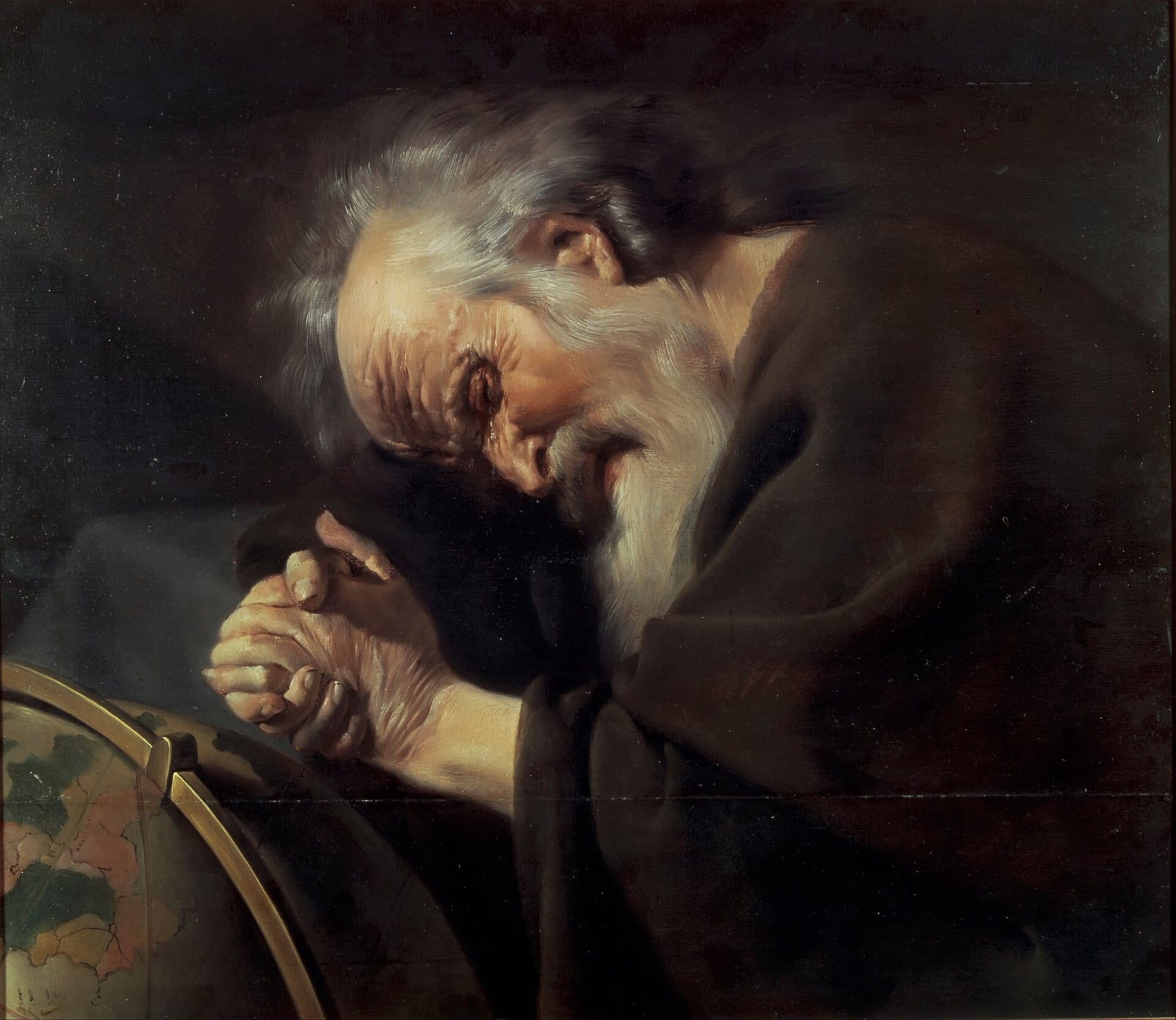
Heráclito, de Johannes Moreelse · Public domain
In eigenen Worten
«Though this Word is true evermore, yet men are as unable to understand it when they hear it for the first time as before they have heard it at all. For, though all things come to pass in accordance with this Word, men seem as if they had no experience of them, when they make trial of words and deeds such as I set forth, dividing each thing according to its nature and showing how it truly is. But other men know not what they are doing when awake, even as they forget what they do in sleep.»DK 22 B1, transmitido por Sexto Empírico, Contra los matemáticos VII 132; Aristóteles (Retórica III 5) lo cita como comienzo del libro. Griego: Diels-Kranz; inglés: John Burnet, Early Greek Philosophy (1908), fr. 2 de la numeración de Bywater; español: traducción propia.

Der zentrale Gedanke
Logos: In sixth-century Greek, *logos* means word and discourse, but also account, reckoning and proportion.
Im Zusammenhang sehen
Biografie
6 Min. Lesezeit
Unterstützte Übersetzung aus dem spanischen Original, Durchsicht durch einen muttersprachlichen Übersetzer ausstehend.
Der Dunkle von Ephesos
Von Heraklit ist kein vollständiges Werk erhalten. Er schrieb ein einziges Buch in ionischer Prosa, das in hellenistischer Zeit noch umlief und danach verloren ging; was wir heute lesen, sind rund hundertdreißig kurze Sätze, die andere Autoren über mehr als tausend Jahre hinweg zitiert haben, bald wörtlich, bald aus dem Gedächtnis: Platon und Aristoteles, Plutarch, Sextus Empiricus, Mark Aurel, Clemens von Alexandria, Hippolyt von Rom, Diogenes Laertios, Stobaios. Seit der Ausgabe von Hermann Diels (1903) zitiert man sie mit einer Nummer, der die Sigle DK 22 B vorangeht. Sie haben die Gestalt des Orakelspruchs und der Sentenz, und schon die Antike fand sie schwierig: Timon von Phleius nannte ihn den „Rätselredner“, und die spätere Überlieferung gab ihm den Beinamen „der Dunkle“.
Ephesos um das Jahr 500
Diogenes Laertios, der im 3. Jahrhundert n. Chr. der Chronologie Apollodors folgt, macht ihn zum Sohn des Bloson – oder, nach anderen, des Herakon – und setzt seine Blütezeit in die 69. Olympiade (504–501 v. Chr.). Dieses Datum folgt einer Konvention der antiken Chronographen, die die Akme eines Autors um sein vierzigstes Lebensjahr ansetzten, und erlaubt es, seine Geburt um 540–535 v. Chr. anzunehmen. Seine Stadt war eine der großen ionischen Poleis an der Küste Kleinasiens, seit der Mitte des 6. Jahrhunderts den Persern untertan und berühmt durch das Heiligtum der Artemis, einen der größten Tempel der griechischen Welt. Dass Heraklit Pythagoras und Xenophanes in der Vergangenheitsform nennt und Parmenides ihm zu antworten scheint, bestätigt eine Datierung an der Wende vom 6. zum 5. Jahrhundert.
Fast alles Übrige ist zweifelhaft. Antisthenes von Rhodos, den Diogenes zitiert, berichtet, er habe dem Königsgeschlecht von Ephesos angehört und seinem Bruder den Titel des basileus abgetreten, der zu seiner Zeit noch religiöse Aufgaben und Ehrenrechte umfasste. John Burnet hielt dies für die vielleicht einzige Angabe aus seinem Leben, die sich annehmen lässt; der Rest sind, wie sich zeigen wird, Geschichten, die aus seinen eigenen Sätzen herausgesponnen wurden.
Ein Buch im Tempel
Nach Diogenes handelte sein Buch „über die Natur“ und war in drei Reden gegliedert – über das All, über die Politik und über die Theologie; er habe es im Tempel der Artemis niedergelegt und absichtlich dunkel geschrieben, damit sich ihm nur die Befähigten näherten. Weder der Titel noch die Gliederung sind gesichert: Die Alten zitierten es auch als „Die Musen“ oder als „sicheres Steuer für den Lauf des Lebens“, und die Dreiteilung spiegelt wahrscheinlich die Ordnung wider, die ihm seine Kommentatoren gaben. Was die Fragmente dagegen zeigen, ist ein bewusst gestalteter Stil aus symmetrischen Sätzen, Wortspielen und Paradoxien, nach dem Bild des Gottes von Delphi, der „weder sagt noch verbirgt, sondern andeutet“ (B93).
Gegen die Weisen und gegen seine Stadt
Heraklit spricht über fast alle mit Verachtung. Vielwisserei lehrt nicht, Verstand zu haben, schreibt er: sonst hätte sie es Hesiod gelehrt und Pythagoras, Xenophanes und Hekataios (B40). Homer verdiene es, aus den Wettkämpfen hinausgeworfen und mit Ruten geschlagen zu werden, und Archilochos ebenso (B42); Hesiod, der Lehrer der meisten, wusste nicht, dass Tag und Nacht eins sind (B57). Auch seine Mitbürger schont er nicht: Die erwachsenen Ephesier täten gut daran, sich allesamt aufzuhängen und den Unmündigen die Stadt zu überlassen, weil sie Hermodoros, den Tüchtigsten unter ihnen, verbannt haben (B121). Dieser aristokratischen Stimme, für die einer zehntausend aufwiegt, wenn er der Beste ist (B49), entspricht eine anspruchsvolle Ethik: Das Volk soll für das Gesetz kämpfen wie für seine Mauer (B44).
Was die Fragmente lehren
Im Zentrum seines Denkens steht der Logos, ein Wort, das im Griechischen zugleich Rede, Rechnung und Verhältnis bedeutet. Das Fragment, mit dem das Buch wahrscheinlich begann (B1), sagt, dieser Logos sei immer, doch die Menschen verstünden ihn weder, bevor sie ihn gehört haben, noch danach, und lebten wie Schlafende. Wer nicht auf den Autor, sondern auf den Logos hört, so B50, dem ist es weise, anzuerkennen, dass alles eins ist. Diese Einheit ist keine Ruhe, sondern Spannung der Gegensätze: Das Auseinanderstrebende stimmt mit sich selbst überein, wie beim Bogen und bei der Leier (B51); der Weg hinauf und hinab ist ein und derselbe (B60); der Krieg ist der Vater aller Dinge (B53) und das Recht ist Streit (B80). Die Welt, dieselbe für alle, hat kein Gott und kein Mensch geschaffen: Sie war, ist und wird sein ewig lebendiges Feuer, das nach Maßen entflammt und nach Maßen erlischt (B30).
Daher stammt das Bild vom Fluss. Wer in dieselben Flüsse steigt, dem strömen immer andere Wasser zu (B12): Der Fluss bleibt, weil das Wasser sich wandelt. Platon fasste die Lehre in der Formel „alles bewegt sich und nichts bleibt“ zusammen (Kratylos 402a), und die Überlieferung machte daraus den Wahlspruch panta rhei, der in keinem Fragment steht. Seit G. S. Kirk (1954) vertreten viele Forscher die Ansicht, der universale Fluss sei eine platonische Lesart und Heraklit habe eher die Beständigkeit betont, die aus dem gemessenen Wandel hervorgeht; andere, wie Daniel W. Graham, halten daran fest, dass der Fluss sehr wohl zu seiner Lehre gehörte. Die Seele nimmt einen eigenen Rang ein: Ihre Grenzen kann man nicht finden, auch wenn man jeden Weg abschritte, so tief ist ihr Logos (B45); die trockene Seele ist die weiseste (B118); und Heraklit selbst schreibt: „Ich habe mich selbst erforscht“ (B101).
Die Legende
Diogenes Laertios überliefert eine romanhafte Lebensgeschichte. Heraklit habe sich geweigert, den Ephesiern Gesetze zu geben, und sich in den Tempel der Artemis zurückgezogen, um mit den Kindern Knöchel zu spielen; als Menschenfeind habe er in den Bergen gelebt und sich von Kräutern ernährt, sei an Wassersucht erkrankt, habe die Ärzte in Rätseln gefragt, ob sie aus Regen Trockenheit machen könnten, und sich, da sie ihn nicht verstanden, mit Mist bedeckt, um in der Wärme auszutrocknen. Er starb mit sechzig Jahren; nach Hermippos wurde er auf der Agora begraben, nach Neanthes von Kyzikos fraßen ihn, unkenntlich unter dem Mist, die Hunde. Burnet und, eingehender, Ava Chitwood haben gezeigt, dass diese Geschichten aus den Fragmenten fabriziert wurden: Der Tod der Seele, die zu Wasser wird (B36), ergab die Wassersucht; die Leichname, die man eher wegwerfen soll als Mist (B96), den Mist; die Zeit als spielendes Kind (B52), die Knöchel.
Eine andere Überlieferung hellenistischen Ursprungs, verbreitet durch Seneca, Juvenal und Lukian, machte ihn zum Philosophen, der über die menschliche Torheit weint, im Gegensatz zu Demokrit, der darüber lacht; Renaissance und Barock machten das Paar zu einem Bildmotiv. Spät sind auch die neun Briefe, die unter seinem Namen umliefen, darunter die Antwort an König Dareios, in der er die Einladung an dessen Hof ausschlägt: Sie stammen aus kynischen Kreisen des 1. Jahrhunderts v. und n. Chr. Verlässlicher ist die Szene, die Aristoteles erzählt: Besuchern, die zögerten einzutreten, als sie ihn sich am Ofen wärmen sahen, sagte er, sie sollten nur hereinkommen, denn auch hier seien Götter.
Nachwirkung
Seine Wirkung setzte sofort ein und hielt an. Aristoteles berichtet, Platon habe in seiner Jugend mit Kratylos, einem radikalen Herakliteer, Umgang gehabt und von ihm die Überzeugung übernommen, dass das Sinnliche beständig fließt; die Stoiker machten Feuer und Logos zum Zentrum ihrer Physik, und Kleanthes schrieb eine Erläuterung seines Buches. Die christlichen Autoren zitierten ihn bald, um ihn zu loben, bald, um ihn zu bekämpfen: Hippolyt von Rom, der ihn als Quelle der Häresie des Noëtos darstellte, verdanken wir viele der wichtigsten Fragmente. In der Neuzeit erklärte Hegel, es gebe keinen Satz des Heraklit, den er nicht in seine Logik aufgenommen habe; Nietzsche bewunderte ihn; Heidegger widmete ihm seine Vorlesungen von 1943 und 1944 und 1966/67 ein Seminar mit Eugen Fink. Er ist bis heute der meistgelesene Vorsokratiker, vielleicht weil seine Sätze, vereinzelt und geschliffen, jede Epoche einladen, sich in ihnen wiederzuerkennen.
Quellen: Jung, Carl Gustav. Psychologische Typen. Rascher, Zúrich, 1921, cap. XI, «Definiciones», s. v. «Enantiodromie». · Diógenes Laercio. Vidas y opiniones de los filósofos ilustres, libro IX, 1–17 (Heráclito), y II 22, VII 174, s. III d. C. Trad. inglesa de C. D. Yonge, Bohn, Londres, 1853 (Project Gutenberg n.º 57342); trad. inglesa de R. D. Hicks, Loeb Classical Library, 1925 (Wikisource). · Diels, Hermann y Kranz, Walther. Die Fragmente der Vorsokratiker, 6.ª ed., 3 vols. Weidmann, Berlín, 1951–1952; cap. 22 (Heraklit), A (testimonios) y B (fragmentos 1–126, más los dudosos y espurios). Texto griego de los fragmentos B consultado en la transcripción de Wikisource en griego. · Kirk, G. S., Raven, J. E. y Schofield, M. The Presocratic Philosophers: A Critical History with a Selection of Texts, 2.ª ed. Cambridge University Press, Cambridge, 1983, cap. VI (Heraclitus of Ephesus). Trad. esp. de Jesús García Fernández, Los filósofos presocráticos, Gredos, Madrid, 1987. · Kahn, Charles H. The Art and Thought of Heraclitus: An Edition of the Fragments with Translation and Commentary. Cambridge University Press, Cambridge, 1979.
Zeitleiste
Das Leben, Jahr für Jahr
Jeder Punkt ist ein belegtes Ereignis. Klicken Sie, um es mit Quelle und Grad der Gewissheit zu lesen.
um 535 v. Chr.0 JahreÉfeso (Jonia)
Birth
Born in Ephesus, son of Bloson (or of Heracon, according to others). The date is inferred from the floruit Apollodorus sets in the 69th Olympiad; Wikidata records 535 BCE. Years BCE are expressed as negative numbers.
WahrscheinlichDiógenes Laercio. Vidas y opiniones de los filósofos ilustres, libro IX, 1–17 (Heráclito), y II 22, VII 174, s. III d. C. Trad. inglesa de C. D. Yonge, Bohn, Londres, 1853 (Project Gutenberg n.º 57342); trad. inglesa de R. D. Hicks, Loeb Classical Library, 1925 (Wikisource).
Nach dem Tod
- um 385 v. Chr.Plato's Cratylus
- um 260 v. Chr.Cleanthes comments on his book
- um 225 v. Chr.Hippolytus quotes his fragments
- 1877Bywater's edition
- 1903Diels fixes the numbering
- 1943Heidegger lectures on Heraclitus
- 1979The Art and Thought of Heraclitus
um 535 v. Chr. · 0 Jahre
Birth
Born in Ephesus, son of Bloson (or of Heracon, according to others). The date is inferred from the floruit Apollodorus sets in the 69th Olympiad; Wikidata records 535 BCE. Years BCE are expressed as negative numbers.
Wahrscheinlich
um 504 v. Chr. · 31 Jahre
Floruit according to Apollodorus
Diogenes Laertius (IX 1), following Apollodorus' chronology, places his prime in the 69th Olympiad (504–501 BCE), in the reign of Darius I.
Überlieferung
um 500 v. Chr.
He cedes the royal title
According to Antisthenes of Rhodes (in Diogenes Laertius IX 6), he cedes to his brother the title of basileus, with religious functions. Date unknown; Burnet considers it the most plausible biographical fact.
Überlieferung
499 v. Chr.
The Ionian Revolt
The Ionian cities revolt against Persia (499–494 BCE); Ephesus remains in the Persian orbit. It is the political setting of the civic tensions reflected in his fragments.
Belegt
um 490 v. Chr.
Banishment of Hermodorus
The Ephesians banish his friend Hermodorus, "the best man among them", and Heraclitus rebukes them (B121). The date is unknown: Zeller placed it after 478 BCE and Burnet thought it possible under Persian rule.
Umstritten
um 480 v. Chr.
The book deposited in the Artemision
According to Diogenes Laertius (IX 6), he deposits his book in the temple of Artemis. The report is late, though dedicating writings in sanctuaries was a known practice.
Überlieferung
um 475 v. Chr. · 60 Jahre
Death
Dies at about sixty, according to Diogenes Laertius (IX 3). The circumstances (dropsy, dung, dogs) are legendary and derived from his fragments.
Überlieferung
um 385 v. Chr.
Plato's Cratylus
Plato ascribes to Heraclitus the view that "everything moves and nothing stays" and that one cannot step twice into the same river (402a); Aristotle reports that Plato knew the Heraclitean Cratylus in his youth.
Wahrscheinlich
um 260 v. Chr.
Cleanthes comments on his book
The Stoic Cleanthes writes Explanations of Heraclitus in four books (Diogenes Laertius VII 174); the Stoics adopt fire and logos.
Belegt
um 225 v. Chr.
Hippolytus quotes his fragments
In the Refutation of All Heresies (IX 9–10), Hippolytus of Rome transcribes a series of fragments (B1, B50–B67) to show that Noetus' heresy derives from Heraclitus.
Belegt
1877
Bywater's edition
Ingram Bywater publishes Heracliti Ephesii reliquiae, the first standard modern critical edition.
Belegt
1903
Diels fixes the numbering
Hermann Diels publishes Die Fragmente der Vorsokratiker; his numbering, revised by Walther Kranz (5th ed., 1934–1937; 6th, 1951–1952), is the one used today (DK 22 B).
Belegt
1943
Heidegger lectures on Heraclitus
Martin Heidegger devotes his summer-semester courses of 1943 and 1944 to Heraclitus; in winter 1966–1967 he leads a seminar on the fragments with Eugen Fink.
Belegt
1979
The Art and Thought of Heraclitus
Charles H. Kahn publishes an annotated edition that rearranges the fragments and argues for the book's literary unity and deliberate ambiguity.
Belegt
Werke
Grundlegende Werke
Die Werke, ohne die sich das Vermächtnis nicht verstehen lässt.
Schriftliches Werk · um 500 v. Chr.
On Nature (lost book)
Περὶ φύσεως (título convencional)
A book in Ionic prose, written around 500 BCE and, by tradition, deposited in the temple of Artemis at Ephesus. It was read and commented on for centuries—Theophrastus, Cleanthes, Sphaerus and several grammarians explained it—and was lost in late antiquity. Its content is reconstructed from some hundred and thirty quotations: the doctrine of the common logos, the unity and tension of opposites, the ever-living fire kindling and going out in measures, the soul and its depth, the critique of Homer, Hesiod and Pythagoras, mystery religion and the political life of Ephesus. The original order of the sentences is unknown; each editor proposes his own.
15 Ausgaben · amazon.com

Kritische Ausgabe · 1903
Fragments (Diels-Kranz 22 B 1–126)
Ἡρακλείτου ἀποσπάσματα (DK 22 B)
The corpus of verbatim quotations that modern philology ascribes to Heraclitus, some 125 sentences grouped as DK 22 B, together with the indirect testimonies (DK 22 A). They come from authors who quoted them for their own purposes: Hippolytus of Rome (who transmits B1 and the series B50–B67), Clement of Alexandria, Plutarch, Sextus Empiricus, Diogenes Laertius, Stobaeus, Marcus Aurelius, Porphyry, Origen and others. Each quotation raises problems of delimitation—where Heraclitus' sentence ends and paraphrase begins—and of dialect. Later editions (Marcovich 1967, Kahn 1979, Mouraviev 1999–2011, Laks and Most 2016) rearrange the material, but the DK reference remains universal.
7 Ausgaben · amazon.com

Zitate
Zitate, die in einem bestimmten Werk nachgewiesen sind. Jedes trägt seine Herkunft und seinen Grad an Verlässlichkeit.
Though this Word is true evermore, yet men are as unable to understand it when they hear it for the first time as before they have heard it at all. For, though all things come to pass in accordance with this Word, men seem as if they had no experience of them, when they make trial of words and deeds such as I set forth, dividing each thing according to its nature and showing how it truly is. But other men know not what they are doing when awake, even as they forget what they do in sleep.τοῦ δὲ λόγου τοῦδ᾽ ἐόντος ἀεὶ ἀξύνετοι γίνονται ἄνθρωποι καὶ πρόσθεν ἢ ἀκοῦσαι καὶ ἀκούσαντες τὸ πρῶτον· γινομένων γὰρ πάντων κατὰ τὸν λόγον τόνδε ἀπείροισιν ἐοίκασι, πειρώμενοι καὶ ἐπέων καὶ ἔργων τοιούτων, ὁκοίων ἐγὼ διηγεῦμαι κατὰ φύσιν διαιρέων ἕκαστον καὶ φράζων ὅκως ἔχει· τοὺς δὲ ἄλλους ἀνθρώπους λανθάνει ὁκόσα ἐγερθέντες ποιοῦσιν, ὅκωσπερ ὁκόσα εὕδοντες ἐπιλανθάνονται.
GeprüftDK 22 B1, transmitido por Sexto Empírico, Contra los matemáticos VII 132; Aristóteles (Retórica III 5) lo cita como comienzo del libro. Griego: Diels-Kranz; inglés: John Burnet, Early Greek Philosophy (1908), fr. 2 de la numeración de Bywater; español: traducción propia.
Apokryphe Zitate oder Zitate umstrittener Zuschreibung (5)
«Everything flows (panta rhei).»
The formula appears in no fragment. It sums up Plato's reading of Heraclitus ("everything moves and nothing stays", Cratylus 402a), and the literal expression πάντα ῥεῖ comes from late commentators such as Simplicius. Many scholars think Heraclitus stressed the stability resulting from measured change, not universal flux.
«No man ever steps in the same river twice, for it is not the same river and he is not the same man.»
A modern expansion combining B12, B91 and the disputed B49a ("we step and do not step into the same rivers, we are and are not"). The second half, about the man no longer being the same, is in no ancient source.
«The only constant is change.»
Widespread in business books and social media. It has no ancient source; it is a modern paraphrase of the flux commonplace.
«The soul becomes dyed with the colour of its thoughts.»
Frequently attributed to Heraclitus, it is by Marcus Aurelius, Meditations V 16, six centuries later.
«Out of every one hundred men, ten shouldn't even be there, eighty are just targets, nine are the real fighters… but one is a warrior.»
It circulates in military circles and online under Heraclitus' name. It appears in no collection of fragments and in no ancient author.
Letzte Worte
Es gibt keine überprüfbaren Aufzeichnungen der letzten Worte.
No record of his last words survives. Diogenes Laertius (IX 3) only transmits the riddle he supposedly put to the doctors—whether they could turn a downpour into drought—within an account of his death that scholars regard as derived from his own fragments (B36).
Quelle: Diógenes Laercio. Vidas y opiniones de los filósofos ilustres, libro IX, 1–17 (Heráclito), y II 22, VII 174, s. III d. C. Trad. inglesa de C. D. Yonge, Bohn, Londres, 1853 (Project Gutenberg n.º 57342); trad. inglesa de R. D. Hicks, Loeb Classical Library, 1925 (Wikisource).
Fragen
Was das Werk beantwortet
Zwölf große Fragen der Menschheit und was sich aus den Texten darauf antworten lässt, mit Belegen. Wir legen niemandem Worte in den Mund.
Was ist das Absolute? Gibt es Gott?
A common logos and an ever-living fire that no god made
Ein unpersönliches AbsolutesAusdrücklich gesagt
For Heraclitus the ultimate is the logos, the measure according to which everything happens, and the ever-living fire that is kindled and quenched in measures. Fragment B30 explicitly denies that any of the gods or of men made the cosmos: it always was, is and will be. The divine here has no face of craftsman or father. Yet Heraclitus does not abandon religious language: B32 says that the one, the only wise thing, is unwilling and willing to be called by the name of Zeus, and B67 calls god the unity of opposites, day and night, winter and summer, war and peace. It is an impersonal and intelligent principle that the traditional name of the god only half designates.
Diese Frage mit anderen Meistern vergleichenWer bin ich? Gibt es ein wahres Selbst?
The soul has no limits: its measure is the common logos
Das Selbst ist das AbsoluteAus der Lehre abgeleitet
Heraclitus says of himself that he searched himself (B101) and that it belongs to all humans to know themselves and to be sound of mind (B116). But what he finds in searching himself is not a private interiority: you would not find the limits of the soul though you travelled every road, so deep is its logos (B45). That logos is common to all, as thinking is common (B113), and the error of the many lies in living as if they had a private understanding (B2). The soul is moreover fiery and changing: it comes from water and dies into water (B36). His work suggests that the depth of the self coincides with the measure governing the cosmos, though he never states an identity.
Diese Frage mit anderen Meistern vergleichenWarum leiden wir?
Sickness makes health sweet: whoever misses the logos suffers
Unwissenheit über das, was wir sindAus der Lehre abgeleitet
Heraclitus devotes no fragment to the cause of suffering, but his work allows an attitude to be reconstructed. Opposites are inseparable: sickness makes health pleasant, hunger satiety, weariness rest (B111), and it would not be better for humans to get all they wish (B110). For god all things are beautiful, good and just; it is humans who have taken some things as unjust and others as just (B102). War itself is common and justice is strife (B80). Pain thus arises from a partial view: from those who do not grasp the logos although everything happens according to it (B1) and who live as if asleep.
Diese Frage mit anderen Meistern vergleichenWas geschieht nach dem Tod?
At death things await humans that they neither expect nor imagine
Schweigen oder ZurückhaltungAus der Lehre abgeleitet
Heraclitus speaks of death in several fragments, always in his enigmatic style, and none offers a description of the beyond. B27 says that at death things await humans that they neither expect nor imagine; B62, that immortals and mortals live each other's death; B36 places the soul in the cycle of elements, for to souls it is death to become water. B25 promises greater portions to greater deaths, perhaps those of the fallen in battle. Together they suggest that death is one more transformation within the flux governed by the logos, and that what comes after does not match usual expectations; they do not allow us to affirm personal survival or to deny it.
Diese Frage mit anderen Meistern vergleichenWie erlangt man Befreiung oder Erlösung?
The wise is one thing: to know the thought that steers all through all
Durch unmittelbare ErkenntnisAus der Lehre abgeleitet
Heraclitus speaks not of salvation but of waking up. Humans live as if asleep, not understanding the logos although everything happens according to it (B1), and each turns towards a private world. The wise, says B41, is one thing: to know the thought that steers all things through all things. That understanding is not given by much learning, which did not teach Hesiod or Pythagoras (B40), but by listening to the logos and agreeing that all is one (B50). B112 joins knowledge and conduct: sound thinking is the greatest virtue, and wisdom is to speak the truth and act according to nature, heeding it. What frees is grasping the common measure.
Diese Frage mit anderen Meistern vergleichenBraucht es einen Lehrer?
Not to me but to the logos: borrowed learning gives no understanding
Keine spirituelle AutoritätAusdrücklich gesagt
Heraclitus is perhaps the Greek thinker most hostile to the authority of recognised sages. Much learning does not teach understanding, says B40; otherwise it would have taught Hesiod, Pythagoras, Xenophanes and Hecataeus. Homer deserves to be thrown out of the contests and flogged, and Hesiod, teacher of most, did not know that day and night are one. He does not even claim authority for himself: it is wise, listening not to him but to the logos, to agree that all is one (B50). And against any school he sets his own method: I searched myself (B101). No one can grasp for another the logos that is common to all.
Diese Frage mit anderen Meistern vergleichenIst die Welt wirklich?
Ever-living fire, kindled and quenched in measures
Natürliche Ordnung im WandelAusdrücklich gesagt
For Heraclitus the world is real and in perpetual transformation. B30 describes it as an ever-living fire kindled and quenched in measures, which no one made and which always was, is and will be. Upon those who step into the same rivers, other and other waters flow (B12): the identity of things holds through change, like that of the river. Opposites are joined in tension, as in the bow and the lyre (B51), and war is the father of all things (B53). But the flux is not chaos: the sun will not overstep its measures (B94). The real is the changing course of things, ordered by a logos to which the wise attune themselves.
Diese Frage mit anderen Meistern vergleichenWas ist Liebe?
No fragment speaks of love; the uniting force is tension
Nicht geäußert
Among Heraclitus' surviving fragments there is none devoted to love, either erotic or as goodwill. What joins things in his work is not attraction but the tension of opposites: what differs agrees with itself, a harmony of opposing tensions, as in the bow and the lyre (B51). War is the father of all (B53) and justice is strife (B80). Heraclitus even reproaches Homer for wishing strife would vanish from among gods and men, since without it there would be no harmony (A22). It would be forced to extract a doctrine of love from this; the closest is hidden harmony, which is better than the manifest (B54).
Diese Frage mit anderen Meistern vergleichenSind wir frei, oder ist alles vorherbestimmt?
Character is a human being's destiny
Schicksal und VerantwortungAusdrücklich gesagt
Heraclitus' most quoted fragment on this question is B119: character is a human being's destiny, his daimon. The sentence can be read in two senses that do not exclude each other: each person's destiny is not an alien power but is identified with his way of being; and, at the same time, that character works as a force that guides him. Elsewhere Heraclitus states that everything happens according to the logos (B1) and through strife and necessity (B80), and that the sun will not overstep its measures, for the Erinyes, helpers of Justice, would find it out (B94). There is an order governing everything, but the centre of gravity of human destiny lies in conduct.
Diese Frage mit anderen Meistern vergleichenWozu meditieren oder beten?
Praying to statues is talking to walls: one must grasp the logos
Die Wirklichkeit sehen, wie sie istAus der Lehre abgeleitet
Heraclitus sharply criticises the religious forms of his time. Those who purify themselves by defiling themselves with blood are like someone who, having stepped into mud, would wash it off with mud; and they pray to statues as if one were to converse with houses, knowing nothing of gods or heroes (B5). Mystery rites, as practised, are unholy (B14). What he proposes instead is a form of attention: to listen to the logos and not to him (B50), to wake from the sleep in which most live (B1) and to search oneself (B101). The aim is not to gain favours but to see what is, the common logos that nature, which loves to hide, conceals.
Diese Frage mit anderen Meistern vergleichenKann die Vernunft das Letzte erkennen?
Nature loves to hide; the logos is common, but few grasp it
Esoterisches WissenAus der Lehre abgeleitet
Heraclitus believes the logos can be understood — it is common to all, as thinking is (B113) — but that almost no one does. Nature loves to hide (B123), invisible harmony is better than visible (B54), and the lord whose oracle is at Delphi neither speaks nor conceals but gives signs (B93), just like his own enigmatic style, which earned him the nickname “the Obscure”. Eyes and ears are bad witnesses for those with barbarian souls (B107), and much learning does not give understanding (B40). Unless one expects the unexpected, one will not find it (B18). The ultimate is accessible but requires deciphering the signs; truth is in plain sight, hidden from those who cannot look.
Diese Frage mit anderen Meistern vergleichenSich von der Welt zurückziehen oder sie verwandeln?
The people must fight for the law as for its city wall
Die Gesellschaft ordnenAusdrücklich gesagt
Ancient biography relates that Heraclitus renounced hereditary kingship in favour of his brother, refused to give laws to Ephesus and ended up living in the mountains, feeding on herbs. But these anecdotes, transmitted by Diogenes Laertius, are largely regarded as inferences from his fragments. The fragments themselves speak otherwise: the people must fight for the law as for the wall (B44); those who speak with understanding must rely on what is common to all, as a city on its law, and far more strongly, for all human laws are nourished by one, the divine (B114). Wisdom thus has a civic dimension: just law reflects the logos.
Diese Frage mit anderen Meistern vergleichen
Affinitäten und Spannungen
Affinitäten und Spannungen
Frage für Frage aus den Positionen berechnet. Den Grund jeder Übereinstimmung und jedes Widerspruchs zeigt ein Klick.
Denkt ähnlich wie
Baruch Spinoza
Übereinstimmung bei: Was ist das Absolute? Gibt es Gott? · Wer bin ich? Gibt es ein wahres Selbst? · Warum leiden wir?
Gaudapada
Übereinstimmung bei: Was ist das Absolute? Gibt es Gott? · Wer bin ich? Gibt es ein wahres Selbst? · Warum leiden wir?
Aristotle
Übereinstimmung bei: Was ist das Absolute? Gibt es Gott? · Was geschieht nach dem Tod? · Ist die Welt wirklich?
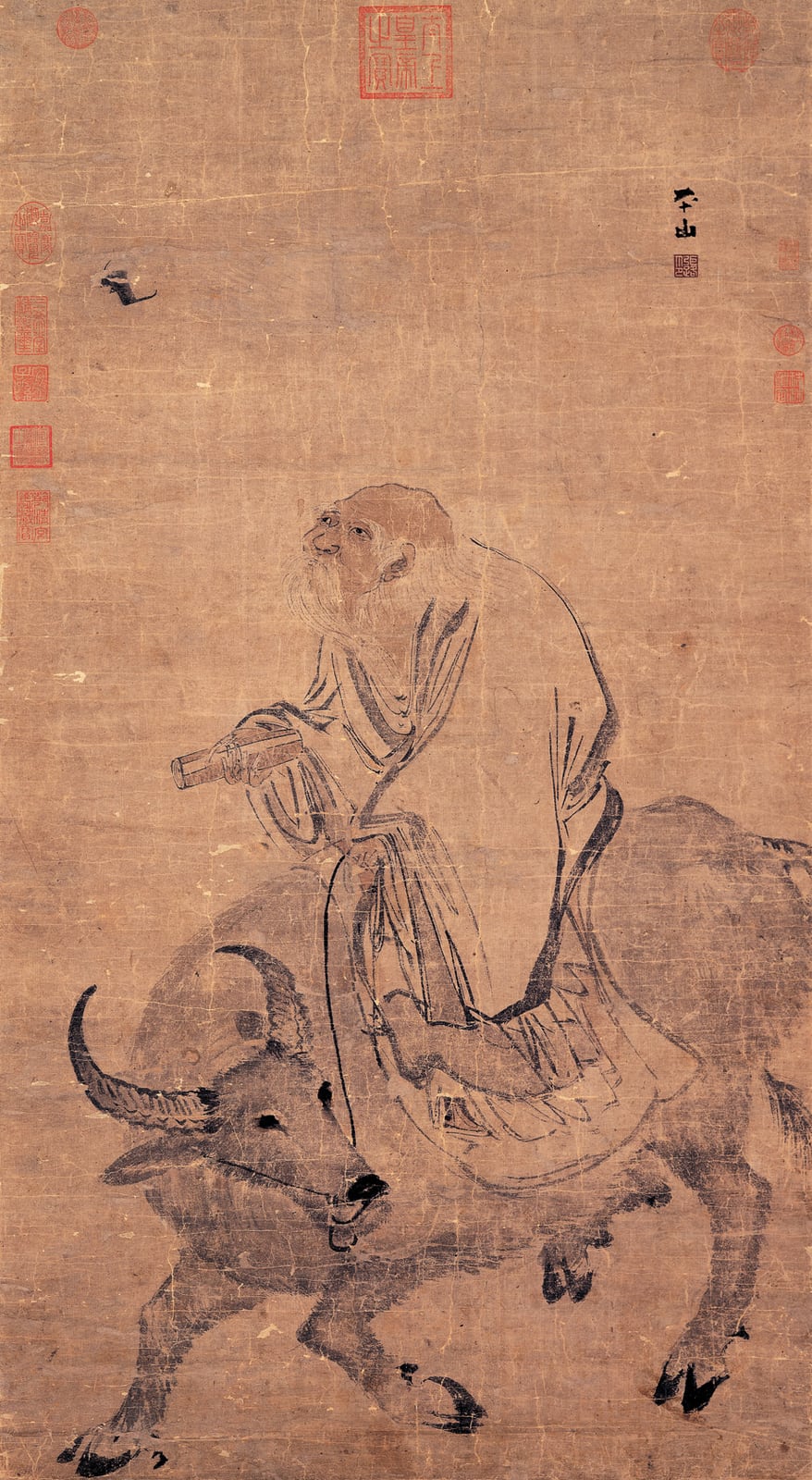
Laozi
Übereinstimmung bei: Was geschieht nach dem Tod? · Ist die Welt wirklich? · Sich von der Welt zurückziehen oder sie verwandeln?
Denkt anders als

Chaitanya Mahaprabhu
Widerspruch bei: Wer bin ich? Gibt es ein wahres Selbst? · Braucht es einen Lehrer?
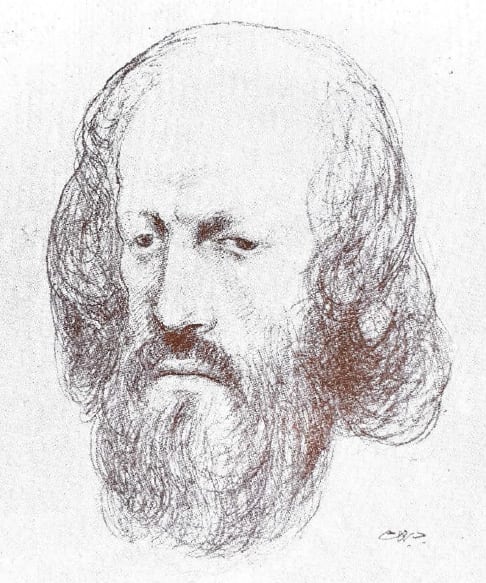
Al-Ghazali
Widerspruch bei: Wer bin ich? Gibt es ein wahres Selbst? · Braucht es einen Lehrer?

Dōgen
Widerspruch bei: Wer bin ich? Gibt es ein wahres Selbst? · Braucht es einen Lehrer?
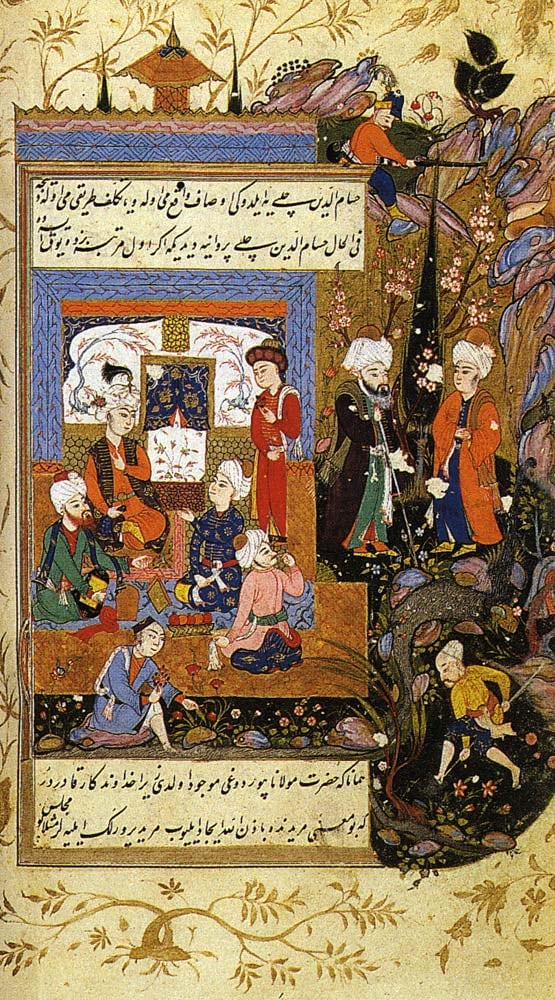
Rumi
Widerspruch bei: Wer bin ich? Gibt es ein wahres Selbst? · Braucht es einen Lehrer?
Anekdoten und Erzählungen
Anekdoten und Erzählungen
Zeugnisc. 500 a. C. (incierto)
"There are gods here too"
Herkunft der Erzählung: Aristotle, Parts of Animals I 5, 645a17–23, who introduces it with "it is said". It is the oldest testimony to an anecdote about Heraclitus and does not come from the late biographical tradition, though Aristotle writes a century and a half later.
Umstrittenc. 500 a. C.
The king who gave up the throne
Herkunft der Erzählung: Diogenes Laertius IX 6, quoting the Successions of Antisthenes of Rhodes (2nd century BCE). Strabo (XIV 1.3) confirms that the descendants of Androclus, founder of Ephesus, kept the royal title and its honours.
Nicht überprüfbarc. 490–480 a. C. (tradicional)
Knucklebones in the temple of Artemis
Herkunft der Erzählung: Diogenes Laertius IX 2–3 (3rd century CE), without a named source. Burnet (Early Greek Philosophy, § 63, n. 324) and Chitwood (Death by Philosophy, 2004) show how the biographical tradition derived these scenes from the fragments.
Nicht überprüfbars. V a. C. (tradicional)
The Delian diver
Herkunft der Erzählung: Diogenes Laertius II 22 (life of Socrates, quoting Ariston) and IX 11–12 (quoting Seleucus the grammarian and Croton). It is not found in Plato or Xenophon.
Umstrittenc. 475 a. C. (tradicional)
Death under the dung
Herkunft der Erzählung: Diogenes Laertius IX 3–5, with the versions of Hermippus, Neanthes, Ariston and Hippobotus. Ava Chitwood (Death by Philosophy, 2004), and Burnet before her, showed that the story is built from his fragments: water as the death of soul (B36), corpses more fit to be thrown out than dung (B96), contempt for doctors (B58). The versions contradict one another.
Quelle: Chitwood, Ava. Death by Philosophy: The Biographical Tradition in the Life and Death of the Archaic Philosophers Empedocles, Heraclitus, and Democritus. University of Michigan Press, Ann Arbor, 2004.
Nicht überprüfbartópico helenístico y romano
The weeping philosopher
Herkunft der Erzählung: Seneca, On Anger II 10.5 and On Tranquillity of Mind 15.2; Juvenal, Satires X 28–32; Lucian, Philosophies for Sale 13–14. The word "melancholy" comes from Theophrastus according to Diogenes Laertius IX 6. It is a literary commonplace, not a biographical fact.
Quelle: Séneca. De ira II 10.5 y De tranquillitate animi 15.2; Juvenal, Sátiras X 28–32; Luciano, Subasta de vidas 13–14 (el tópico de Heráclito que llora y Demócrito que ríe).
Umstrittenc. 500 a. C. (tradicional)
The book deposited in the temple
Herkunft der Erzählung: Diogenes Laertius IX 6; Theophrastus quoted in the same passage. Kahn (1979) and Burnet discuss the report without wholly rejecting it.
Lehren
Lehren
Die Begriffe, die das Denken gliedern, in ihrem Zusammenhang erklärt.
Logoslogos
The book's central concept, present in B1, B2, B45, B50, B72 and B115.
Quelle: Kahn, Charles H. The Art and Thought of Heraclitus: An Edition of the Fragments with Translation and Commentary. Cambridge University Press, Cambridge, 1979.
Unity of oppositesunidad-de-los-contrarios
A doctrine transmitted chiefly by Hippolytus (B51–B67), who links it to Noetus' theology.
Quelle: Kirk, G. S., Raven, J. E. y Schofield, M. The Presocratic Philosophers: A Critical History with a Selection of Texts, 2.ª ed. Cambridge University Press, Cambridge, 1983, cap. VI (Heraclitus of Ephesus). Trad. esp. de Jesús García Fernández, Los filósofos presocráticos, Gredos, Madrid, 1987.
Ever-living firefuego-siempre-vivo
The cosmology of fragments B30, B31, B64, B66, B90.
Quelle: Kirk, G. S. Heraclitus: The Cosmic Fragments. Cambridge University Press, Cambridge, 1954.
The river and fluxel-rio
Fragments B12, B49a and B91; testimonies of Plato (Cratylus 402a) and Aristotle (Metaphysics Γ 5, 1010a10–15).
Polemos: war and justicepolemos
Fragments B53, B80 and A22 (Aristotle, Eudemian Ethics VII 1, 1235a25).
Quelle: Kirk, G. S., Raven, J. E. y Schofield, M. The Presocratic Philosophers: A Critical History with a Selection of Texts, 2.ª ed. Cambridge University Press, Cambridge, 1983, cap. VI (Heraclitus of Ephesus). Trad. esp. de Jesús García Fernández, Los filósofos presocráticos, Gredos, Madrid, 1987.
The soul (psyche)psyche
Fragments B36, B45, B77, B85, B101, B115–B119.
Quelle: Kahn, Charles H. The Art and Thought of Heraclitus: An Edition of the Fragments with Translation and Commentary. Cambridge University Press, Cambridge, 1979.
Videos
Videos
Aufnahmen, Gespräche und Dokumentarfilme. Die Videos werden von YouTube wiedergegeben; sie werden nicht hier gespeichert.
Heraclitus: Pre-Socratic Philosophy
Vortrag· EN· 2022· 28 min
Philosophy Overdose
HoP 005 - Old Man River - Heraclitus
Vortrag· EN· 2020· 18 min
history of philosophy without any gapsOffizieller Kanal
2) The Pre-Socratics: Xenophanes and Heraclitus
Vortrag· EN· 2016· 74 min
Adam RosenfeldOffizieller Kanal
Prof. Richard Capobianco: Heidegger's Readings of Heraclitus: The Metaphysical and Spiritual Import
Vortrag· EN· 2023· 33 min
Stonehill CollegeOffizieller Kanal
Heraclitus of Ephesus | The Logos | Philosophy Core Concepts
Analyse· EN· 2020· 19 min
Gregory B. Sadler - That Philosophy GuyOffizieller Kanal
Heraclitus of Ephesus | Strife, Opposition, and Harmony | Philosophy Core Concepts
Analyse· EN· 2020· 20 min
Gregory B. Sadler - That Philosophy GuyOffizieller Kanal
Heráclito de Éfeso
Dokumentarfilm· ES· 2016· 22 min
UNEDOffizieller Kanal
Conferencia Teresa Oñate "Heráclito"
Vortrag· ES· 2018· 134 min
Hercritia-Cátedra de Hermenéutica CríticaOffizieller Kanal
Heráclito, Empédocles y Anaxágoras | Historia de la filosofía (7/61)
Vortrag· ES· 2017· 68 min
Ernesto CastroOffizieller Kanal
Filosofía más allá de la academia. Ciclo de filosofía antigua. Parménides y Heráclito
Vortrag· ES· 2022· 88 min
Universidad Nacional Abierta y a Distancia UNADOffizieller Kanal
Héraclite avec André Laks
Gespräch· FR· 2010· 56 min
Résonance[s]
Hans-Georg Gadamer über Heraklit/on Heraclitus (full, 1989)
Gespräch· DE· 1989· 50 min
PhilosophieKanal
Galerie
Galerie
Bilder mit geprüfter Lizenz. Jedes bewahrt seine Urheberschaft und seinen Herkunftsnachweis.
Handschriften
Handschriften
Handschriftliche Zeugen und alte Texte, mit ihrer verwahrenden Einrichtung und ihren Einsichtsbedingungen.
GRC · Minúscula griega · c. 222–235 d. C.; copia del s. XIV
Ἱππολύτου κατὰ πασῶν αἱρέσεων ἔλεγχος (Refutatio omnium haeresium), libros IV–X
- Erhaltener Textzeuge
- Códice en papel, único testigo de los libros IV–X; atribuido a Orígenes hasta mediados del s. XIX
- Verwahrende Einrichtung
- Bibliothèque nationale de France, París · Supplément grec 464
Beziehungen
Beziehungen
Einflüsse, Schülerschaften und Verwandtschaften. Die belegte Beziehung wird von der durch Analyse ermittelten Ähnlichkeit unterschieden.
Widersprach
He criticises him in B40 among the learned without understanding; B129, of disputed authenticity, accuses him of appropriating others' writings and calls his wisdom "artful knavery".
Belegte Beziehung
Widersprach
Jenófanes
He names him in B40 alongside Hesiod, Pythagoras and Hecataeus. Sotion made him Xenophanes' pupil, a report Burnet considers improbable.
Belegte Beziehung
Widersprach
Homero
B42 calls for him to be thrown out of the contests and flogged; B56 cites him as an example of how men are deceived about what is visible.
Belegte Beziehung
Widersprach
Hesíodo
"Teacher of most", he did not know that day and night are one (B57); he also appears in B40 and B106.
Belegte Beziehung
Zeitgenosse von
They were contemporaries. Many scholars read in Parmenides B6 ("two-headed mortals… for whom the path of all things turns back on itself") a polemical allusion to Heraclitus; others deny it.
Durch Analyse ermittelte Ähnlichkeit
Beeinflusste
Diogenes Laertius (II 22) tells that Euripides lent him Heraclitus' book and that he asked for "a Delian diver" to understand it; the anecdote has no contemporary confirmation.
Durch Analyse ermittelte Ähnlichkeit
Beeinflusste
According to Aristotle (Metaphysics A 6), he knew the Heraclitean Cratylus in his youth and kept the conviction that sensible things flow; he discusses the doctrine in the Cratylus and the Theaetetus.
Belegte Beziehung
Beeinflusste
He quotes and criticises him: he accuses him of denying the principle of non-contradiction (Metaphysics Γ 3), comments on the ambiguity of his prose (Rhetoric III 5) and transmits the anecdote of the oven.
Belegte Beziehung
Beeinflusste
The Stoics, from Zeno and Cleanthes—author of Explanations of Heraclitus—adopted fire as principle and logos as the reason of the cosmos.
Belegte Beziehung
Beeinflusste
The Meditations quote and paraphrase Heraclitus (IV 46, VI 42); fragments DK B71–B76 come from them.
Belegte Beziehung
Beeinflusste
He took from Heraclitus the term "enantiodromia"—the turning of something into its opposite—and defined it in Psychological Types (1921).
Belegte Beziehung
Verwandte Gedanken mit
Empedocles' Love and Strife extend, in another key, the Heraclitean tension between harmony and war.
Durch Analyse ermittelte Ähnlichkeit
Verwandte Gedanken mit
The complementarity of opposites, the praise of the hidden and water as an image of change bring the Daodejing close to Heraclitus' fragments; the comparison has been common since the nineteenth century, without historical contact.
Durch Analyse ermittelte Ähnlichkeit
Verwandte Gedanken mit
Siddhartha Gautama, the Buddha
Approximate contemporaries, both made continual change a key to reality, though the Buddha understood it as liberating impermanence and Heraclitus as ordering measure.
Durch Analyse ermittelte Ähnlichkeit
Von anderen Einträgen aus verknüpft
- Aristotle · Widersprach
- Uddalaka Aruni · Verwandte Gedanken mit
- Marcus Aurelius · Beeinflusst von
- Sri Aurobindo · Verwandte Gedanken mit
- Osho · Beeinflusst von
- Empedocles · Verwandte Gedanken mit
- Parmenides · Zeitgenosse von
- Pythagoras · Zeitgenosse von
- Plato · Beeinflusst von
- Zhuangzi · Verwandte Gedanken mit
Quellen
Quellen
Für diesen Eintrag herangezogene Bibliografie und Kataloge.
- Jung, Carl Gustav. Psychologische Typen. Rascher, Zúrich, 1921, cap. XI, «Definiciones», s. v. «Enantiodromie».
- Wikidata, entidad Q41155 «Heraclitus» (146 enlaces entre wikis; P31=Q5). Registra nacimiento en 535 a. C. y muerte en 470 a. C., ambos en Éfeso.
- Diógenes Laercio. Vidas y opiniones de los filósofos ilustres, libro IX, 1–17 (Heráclito), y II 22, VII 174, s. III d. C. Trad. inglesa de C. D. Yonge, Bohn, Londres, 1853 (Project Gutenberg n.º 57342); trad. inglesa de R. D. Hicks, Loeb Classical Library, 1925 (Wikisource).
- Diels, Hermann y Kranz, Walther. Die Fragmente der Vorsokratiker, 6.ª ed., 3 vols. Weidmann, Berlín, 1951–1952; cap. 22 (Heraklit), A (testimonios) y B (fragmentos 1–126, más los dudosos y espurios). Texto griego de los fragmentos B consultado en la transcripción de Wikisource en griego.
- Kirk, G. S., Raven, J. E. y Schofield, M. The Presocratic Philosophers: A Critical History with a Selection of Texts, 2.ª ed. Cambridge University Press, Cambridge, 1983, cap. VI (Heraclitus of Ephesus). Trad. esp. de Jesús García Fernández, Los filósofos presocráticos, Gredos, Madrid, 1987.
- Kahn, Charles H. The Art and Thought of Heraclitus: An Edition of the Fragments with Translation and Commentary. Cambridge University Press, Cambridge, 1979.
- Burnet, John. Early Greek Philosophy, 2.ª ed. Adam and Charles Black, Londres, 1908, cap. III (Herakleitos of Ephesos), §§ 63–80 (Project Gutenberg n.º 67097).
- Graham, Daniel W. «Heraclitus». The Stanford Encyclopedia of Philosophy, ed. Edward N. Zalta y Uri Nodelman; primera publicación el 8 de febrero de 2007, revisión sustancial del 8 de diciembre de 2023.
- Laks, André y Most, Glenn W. (eds. y trads.). Early Greek Philosophy, vol. III: Early Ionian Thinkers, Part 2. Loeb Classical Library 526, Harvard University Press, Cambridge (Mass.), 2016.
- Graham, Daniel W. (ed. y trad.). The Texts of Early Greek Philosophy: The Complete Fragments and Selected Testimonies of the Major Presocratics, 2 vols. Cambridge University Press, Cambridge, 2010.
- Eggers Lan, Conrado y Juliá, Victoria E. (introd., trad. y notas). Los filósofos presocráticos I. Biblioteca Clásica Gredos 12, Gredos, Madrid, 1978 (incluye Heráclito).
- Chitwood, Ava. Death by Philosophy: The Biographical Tradition in the Life and Death of the Archaic Philosophers Empedocles, Heraclitus, and Democritus. University of Michigan Press, Ann Arbor, 2004.
- Aristóteles. Partes de los animales I 5, 645a17–23 (la anécdota del horno); Metafísica A 6, 987a29–b1 (Platón y Crátilo) y Γ 3, 1005b23–25; Retórica III 5, 1407b11–18 (la puntuación de B1). Trad. inglesa de W. Ogle (1882) y W. D. Ross (1908), Internet Classics Archive (MIT).
- Platón. Crátilo 402a; Teeteto 152d–e y 160d; Sofista 242d–e; Banquete 187a. Trad. inglesa de Benjamin Jowett, The Dialogues of Plato, 3.ª ed., Clarendon Press, Oxford, 1892 (Project Gutenberg n.º 1616, Cratylus).
- Attridge, Harold W. First-Century Cynicism in the Epistles of Heraclitus. Harvard Theological Studies 29, Scholars Press, Missoula, 1976; y Malherbe, Abraham J. (ed.), The Cynic Epistles: A Study Edition, Scholars Press, Missoula, 1977.
- Séneca. De ira II 10.5 y De tranquillitate animi 15.2; Juvenal, Sátiras X 28–32; Luciano, Subasta de vidas 13–14 (el tópico de Heráclito que llora y Demócrito que ríe).
- Fairbanks, Arthur (ed. y trad.). The First Philosophers of Greece: An Edition and Translation of the Remaining Fragments of the Pre-Sokratic Philosophers. Kegan Paul, Trench, Trübner, Londres, 1898 (Project Gutenberg n.º 78670).
- Bywater, Ingram (ed.). Heracliti Ephesii reliquiae. Clarendon Press, Oxford, 1877; y Patrick, G. T. W., The Fragments of the Work of Heraclitus of Ephesus on Nature, translated from the Greek text of Bywater, N. Murray, Baltimore, 1889 (Internet Archive).
- «Heraclitus», Wikipedia en inglés, y «Heráclito», Wikipedia en español (consultadas para contrastar datos y bibliografía; texto propio).
- Open Library (Internet Archive): ediciones de los fragmentos de Heráclito y de las colecciones de presocráticos verificadas por ISBN.
- Bibliothèque nationale de France. Hippolyte, Réfutation de toutes les hérésies (notice de titre conventionnel), y manuscrito Supplément grec 464 (s. XIV), único testigo de los libros IV–X; ed. M. Marcovich, Hippolytus. Refutatio omnium haeresium, De Gruyter, Berlín, 1986.
- Mondolfo, Rodolfo. Heráclito. Textos y problemas de su interpretación. Siglo XXI, México, 1966 (reed. 2007).
- García Calvo, Agustín. Razón común. Edición crítica, ordenación, traducción y comentario de los restos del libro de Heraclito. Lucina, Madrid, 1985 (Lecturas presocráticas II).
- Marcovich, Miroslav. Heraclitus. Greek Text with a Short Commentary. Editio maior. Universidad de los Andes, Mérida (Venezuela), 1967.
- Kirk, G. S. Heraclitus: The Cosmic Fragments. Cambridge University Press, Cambridge, 1954.
- Marco Aurelio. Meditaciones IV 46 y V 16. Trad. inglesa de George Long, 1862 (Project Gutenberg n.º 2680).
- Rechteinhaber
- Textos antiguos en dominio público; cada traducción y edición crítica pertenece a su traductor o editorial
Bestätigung ausstehend
Was dieser Eintrag noch nicht klären konnte. Wir sagen es lieber, als es aufzufüllen.
- Fechas: se adopta c. 535–475 a. C. (Wikidata y uso común); Diógenes Laercio solo da la madurez en la 69.ª olimpiada (504–501) y la edad de sesenta años al morir (así traduce Hicks; la versión de Yonge dice «setenta», probablemente por error).
- Ediciones con ISBN no verificado en catálogo: Diels-Kranz (Weidmann; los ISBN de la reimpresión de 2005 no indican volumen), Marcovich (Mérida, 1967, sin ISBN) y Mouraviev (solo se ha verificado una parte).
- Traducción española de dominio público de los fragmentos: no localizada en línea con URL estable.
- Manuscrito BnF Supplément grec 464: no se ha localizado digitalización en Gallica; añadir el enlace si existe.
- Imagen de la moneda de Éfeso: licencia «Public domain» según Commons sin plantilla específica; revisar la ficha si se usa como principal.
- Programas de afiliación: ninguno verificado (Gredos, Alianza, Cambridge, Harvard). Lista vacía.
- Año de los vídeos: el de la grabación cuando la descripción lo indica y, si no, el de publicación en YouTube.
Recherchiert am 2026-10-25