Vorsokratische Philosophie
Empedocles
Ἐμπεδοκλῆς ὁ Ἀκραγαντῖνος
um 494 v. Chr. – um 434 v. Chr.Historisch belegte Person
Philosoph, Arzt und Politiker aus Akragas auf Sizilien (um 494–434 v. Chr.), Verfasser zweier Gedichte in Hexametern, „Über die Natur“ und „Reinigungen“, von denen rund fünfhundert Verse und der Straßburger Papyrus erhalten sind. Er lehrte, dass alles aus vier ewigen Wurzeln besteht, die die Liebe mischt und der Streit trennt, und dass die Seele, wegen vergossenen Blutes verbannt, durch alle lebendigen Gestalten wandert. Die Legende von seinem Sprung in den Ätna machte ihn zu einer literarischen Figur.
- Werke
- 11Werke
- Ausgaben
- 25Ausgaben
- Zitate
- 14Zitate
- Videos
- 10Videos
- Bilder
- 7Bilder
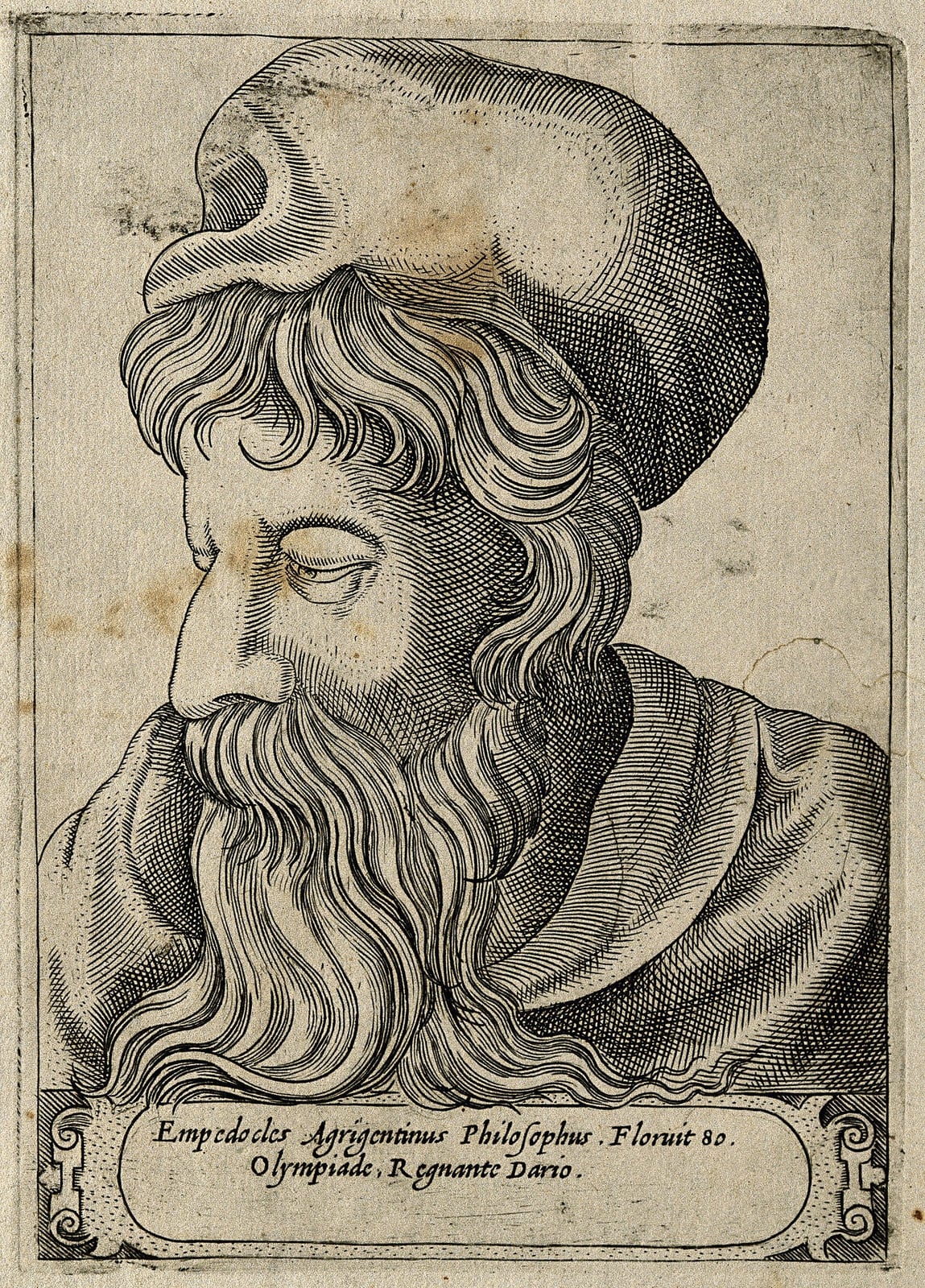
Empédocles, grabado de 1580 · CC BY 4.0
In eigenen Worten
«For straitened are the powers that are spread over their bodily parts.»DK 31 B2.1, en Sexto Empírico, Contra los matemáticos VII 123. Griego: texto de Fairbanks (1898), basado en la edición de Stein; numeración Diels-Kranz. Inglés: John Burnet, Early Greek Philosophy (1908). Español: traducción propia.

Der zentrale Gedanke
The four roots (rhizomata): Empedocles accepts with Parmenides that nothing comes from what is not or is annihilated, but he does not give up explaining change.
Im Zusammenhang sehen
Biografie
5 Min. Lesezeit
Unterstützte Übersetzung aus dem spanischen Original, Durchsicht durch einen muttersprachlichen Übersetzer ausstehend.
Der Philosoph, der sich einen Gott nannte
Von keinem Vorsokratiker sind so viele Verse erhalten wie von Empedokles: fast fünfhundert, zu denen der Straßburger Papyrus 1999 noch einige Dutzend hinzufügte. Er schrieb wie Parmenides in Hexametern und war zugleich Naturforscher, Arzt, Redner, demokratischer Politiker, Prophet der Reinheit und Wundertäter. Seine Lehre von den vier „Wurzeln“ – Feuer, Luft, Wasser und Erde –, bewegt von Liebe und Streit, beherrschte zwei Jahrtausende lang die europäische Wissenschaft; seine Verkündigung, er sei „ein unsterblicher Gott, nicht mehr ein Sterblicher“, und die Legende von seinem Sprung in den Ätna machten ihn zu einer der romanhaftesten Gestalten der Antike. Aristoteles nannte ihn den Erfinder der Rhetorik und warf ihm zugleich vor, mit einem Dichter nichts gemein zu haben als das Versmaß.
Akragas
Er wurde in Akragas geboren, dem heutigen Agrigent, der reichsten Stadt des griechischen Sizilien, deren dorische Tempel noch immer das Tal beherrschen. Sein Vater hieß Meton, und sein Großvater, ebenfalls Empedokles, siegte nach Aristoteles, den Eratosthenes zitiert, 496 v. Chr. im Pferderennen von Olympia. Apollodor setzte seine Blütezeit auf 444/443 v. Chr., das Gründungsjahr von Thurioi, das er laut Glaukos von Rhegion besuchte; Aristoteles zufolge starb er mit sechzig Jahren. Burnet hat zusammengefasst, was sich wissen lässt: Er war ein Kind unter dem Tyrannen Theron, nach 472 in Akragas tätig, als dessen Sohn Thrasydaios stürzte und die Stadt eine freie Verfassung zurückgewann, und er starb nach 444. Daher die üblichen Daten, um 494–434 v. Chr.
Der Demokrat
Der sizilische Historiker Timaios, der anderthalb Jahrhunderte später schrieb und dabei örtliche Überlieferungen sammelte, erzählte, seine politische Laufbahn habe bei einem Gastmahl begonnen: Ein Beamter benahm sich dort wie ein angehender Tyrann, und Empedokles brachte ihn am nächsten Tag vor Gericht und erwirkte seine Verurteilung zum Tod. Er widersetzte sich auch dem Vorhaben des Rates, dem Arzt Akron ein Grundstück für das Grabmal seines Vaters zu überlassen, und löste die Versammlung der Tausend auf, vielleicht eine oligarchische Vereinigung. Aristoteles fügte hinzu, er habe die Königswürde ausgeschlagen, als man sie ihm anbot. Nach Timaios verhinderten später die Nachkommen seiner Feinde seine Rückkehr, und Empedokles starb verbannt auf der Peloponnes.
Arzt, Redner und Magier
Galen stellte ihn, zusammen mit Philistion und Pausanias, an den Ursprung der italischen Ärzteschule, der Rivalin der Schulen von Kos und Knidos. Sein Schüler Gorgias von Leontinoi, der große Sophist, erzählte nach Satyros, er habe ihn Zauberei üben sehen; Herakleides Pontikos berichtete, wie er eine Frau ohne Atem und Puls dreißig Tage lang am Leben erhielt. Timaios nannte ihn den „Windbezwinger“, weil er Eselshäute aufgehängt habe, um die Etesien abzuhalten, und andere schrieben ihm die Trockenlegung der Sümpfe von Selinunt zu. Burnet bemerkte, dass sich fast alle diese Wunder aus seinen eigenen Versen ableiten lassen, in denen er seinem Schüler Pausanias Heilmittel gegen das Alter, Macht über Winde und Regen und sogar die Fähigkeit verspricht, einen Toten aus dem Hades zurückzuholen.
Zwei Gedichte
Diogenes Laertios schreibt seinen beiden großen Gedichten, „Über die Natur“ und den „Reinigungen“, rund fünftausend Verse zu. Das erste, Pausanias gewidmet, entwirft eine Physik: Nichts entsteht und nichts vergeht, es mischen und trennen sich nur vier ewige Wurzeln, denen er Götternamen gibt – Zeus, Hera, Aidoneus und Nestis –, unter der wechselnden Wirkung der Liebe, die vereint, und des Streits, der scheidet. So schwankt der Kosmos zwischen der vollkommenen Einheit des Sphairos und der völligen Zerstreuung, und in den Zwischenphasen entstehen die Lebewesen, zunächst als vereinzelte Glieder – Köpfe ohne Hals, Arme ohne Schultern –, die sich zufällig verbinden. Das zweite Gedicht, an seine Mitbürger in Akragas gerichtet, spricht von einem Daimon, der dreißigtausend Jahreszeiten lang verbannt ist, weil er Blut vergossen hat, und in alle sterblichen Gestalten eingeht; daher das Verbot, Fleisch zu essen und Tiere zu opfern.
Die moderne Forschung stritt ein Jahrhundert lang darüber, ob die beiden Gedichte miteinander vereinbar seien – ein mechanistischer Physiker und ein religiöser Prophet – oder ob sie in Wahrheit ein einziges bildeten. Brad Inwood und andere gingen so weit, ein einziges Werk anzunehmen; Catherine Osborne betonte die Kontinuität zwischen Physik und Religion.
Der Straßburger Papyrus
1904 erwarb die National- und Universitätsbibliothek Straßburg in Ägypten Papyrusfragmente aus Panopolis (Achmim), die neunzig Jahre lang unidentifiziert blieben. 1994 erkannte der Papyrologe Alain Martin darin Verse des Empedokles und veröffentlichte sie 1999 gemeinsam mit Oliver Primavesi. Ende des 1. Jahrhunderts n. Chr. abgeschrieben, enthalten sie Reste von etwa vierundsiebzig zum Teil unbekannten Versen aus dem ersten Buch der Physik, mit einem Zeichen, das den dreihundertsten Vers markiert. Der Fund zeigte, dass in diesem Buch der kosmische Zyklus neben Klagen über den „erbarmungslosen Tag“ stand, an dem Fleisch gegessen wurde – dass also Physik und Schuldlehre enger verflochten waren, als man angenommen hatte.
Der Ätna und die anderen Tode
Diogenes Laertios versammelt unvereinbare Fassungen seines Endes. Herakleides Pontikos erzählte, er sei nach einem Opfer in der Nacht verschwunden; ein Diener habe eine Stimme gehört, die ihn rief, und ein Licht am Himmel gesehen, und Pausanias habe angeordnet, ihn wie einen Gott zu ehren. Hippobotos fügte hinzu, er habe sich in den Krater des Ätna gestürzt, damit man ihn für unsterblich halte, doch der Vulkan habe eine seiner ehernen Sandalen wieder ausgespien. Timaios bestritt das: Empedokles sei auf die Peloponnes gegangen und nie zurückgekehrt. Neanthes sagte, er sei an einem Sturz von seinem Wagen gestorben, andere, er habe sich erhängt. Horaz legte die Ätna-Fassung für die Nachwelt fest. Ava Chitwood hat gezeigt, dass diese Tode, wie im Fall Heraklits, aus seinen Gedichten fabriziert wurden: Wer sich zum unsterblichen Gott erklärte und das Feuer zu einer Wurzel der Welt machte, musste vergöttlicht oder vom Feuer verschlungen sterben.
Nachwirkung
Aristoteles übernahm seine vier Elemente, denen er den Äther hinzufügte, und mit ihnen die Medizin der vier Säfte; Platon spielte auf die „sizilischen Musen“ an, und Lukrez pries ihn als den größten der Söhne Siziliens. In der Neuzeit schrieb Hölderlin die unvollendete Tragödie „Der Tod des Empedokles“ (1797–1800), Matthew Arnold das dramatische Gedicht „Empedocles on Etna“ (1852), und Freud erkannte in Liebe und Streit einen Vorläufer seines Gegensatzes von Eros und Todestrieb. Er bleibt das deutlichste Beispiel dafür, dass die griechische Philosophie in ihren Anfängen Wissenschaft, Dichtung und Heil nicht voneinander trennte.
Quellen: Diógenes Laercio. Vidas y opiniones de los filósofos ilustres VIII 51–77 (Empédocles), s. III d. C. Trad. inglesa de C. D. Yonge, Bohn, Londres, 1853 (Project Gutenberg n.º 57342); trad. inglesa de R. D. Hicks, Loeb, 1925 (Wikisource). · Diels, Hermann y Kranz, Walther. Die Fragmente der Vorsokratiker, 6.ª ed. Weidmann, Berlín, 1951–1952, cap. 31 (Empedokles), A (testimonios) y B 1–154. · Kirk, G. S., Raven, J. E. y Schofield, M. The Presocratic Philosophers, 2.ª ed. Cambridge University Press, 1983, cap. X (Empedocles of Acragas). Trad. esp. de Jesús García Fernández, Gredos, 1987. · Burnet, John. Early Greek Philosophy, 2.ª ed. A. and C. Black, Londres, 1908, cap. V (Empedokles of Akragas), §§ 98–105 y traducción de los fragmentos (Project Gutenberg n.º 67097). · Martin, Alain y Primavesi, Oliver. L'Empédocle de Strasbourg (P. Strasb. gr. Inv. 1665–1666): introduction, édition et commentaire. Walter de Gruyter / Bibliothèque Nationale et Universitaire de Strasbourg, Berlín, Nueva York y Estrasburgo, 1999.
Zeitleiste
Das Leben, Jahr für Jahr
Jeder Punkt ist ein belegtes Ereignis. Klicken Sie, um es mit Quelle und Grad der Gewissheit zu lesen.
496 v. Chr.Olimpia
His grandfather's Olympic victory
His grandfather Empedocles wins the horse race at the 71st Olympiad (496 BCE), according to Eratosthenes citing Aristotle (Diogenes Laertius VIII 51). Years BCE are expressed as negative numbers.
WahrscheinlichDiógenes Laercio. Vidas y opiniones de los filósofos ilustres VIII 51–77 (Empédocles), s. III d. C. Trad. inglesa de C. D. Yonge, Bohn, Londres, 1853 (Project Gutenberg n.º 57342); trad. inglesa de R. D. Hicks, Loeb, 1925 (Wikisource).
Nach dem Tod
- 427 v. Chr.Gorgias in Athens
- um 90 v. Chr.Copy of the Strasbourg papyrus
- um 55 v. Chr.Lucretius praises him
- um 1798Hölderlin's Death of Empedocles
- 1852Matthew Arnold's Empedocles on Etna
- 1994Identification of the papyrus
- 1999L'Empédocle de Strasbourg
496 v. Chr.
His grandfather's Olympic victory
His grandfather Empedocles wins the horse race at the 71st Olympiad (496 BCE), according to Eratosthenes citing Aristotle (Diogenes Laertius VIII 51). Years BCE are expressed as negative numbers.
Wahrscheinlich
um 494 v. Chr. · 0 Jahre
Birth
Born at Acragas, son of Meton, of a wealthy and distinguished family. The date is inferred from his death at sixty (Aristotle) and his activity after 472; Wikidata records 494, 492 and 490.
Wahrscheinlich
um 471 v. Chr. · 23 Jahre
Fall of Thrasydaeus and free government
After Theron's death (472 BCE), his son Thrasydaeus is defeated by Hieron of Syracuse and expelled; Acragas recovers a free government in which Empedocles will be a democratic leader.
Belegt
um 460 v. Chr.
Dissolution of the assembly of the Thousand
According to Timaeus (in Diogenes Laertius VIII 64–66), he prosecutes two magistrates with tyrannical airs, opposes Acron's funerary privilege and dissolves the assembly of the Thousand. He refuses the kingship offered to him (Aristotle). Dates unknown.
Überlieferung
um 450 v. Chr.
Composition of the poems
He composes On Nature, dedicated to Pausanias, and the Purifications, addressed to the people of Acragas. The date and order of composition are conjectural.
Umstritten
444 v. Chr.
Visit to Thurii
Glaucus of Rhegium relates that he came to Thurii shortly after its foundation (444–443 BCE); Apollodorus fixed his prime in that year.
Wahrscheinlich
um 440 v. Chr.
Exile
According to Timaeus, the descendants of his enemies oppose his return to Acragas and he withdraws to the Peloponnese. Date unknown.
Überlieferung
um 434 v. Chr. · 60 Jahre
Death
Dies at about sixty (Aristotle in Diogenes Laertius VIII 52 and 74). The versions of the manner and place—vanishing after a sacrifice, leaping into Etna, falling from his chariot, dying in the Peloponnese—are contradictory.
Umstritten
427 v. Chr.
Gorgias in Athens
His pupil Gorgias of Leontini comes to Athens as ambassador and dazzles with an artistic prose that, according to Diels, owed much to Empedocles' style.
Belegt
um 90 v. Chr.
Copy of the Strasbourg papyrus
A scribe copies the first book of Empedocles' physics on a roll; its remains, reused in a funerary ornament, are the only direct witness to the poem.
Belegt
um 55 v. Chr.
Lucretius praises him
In De rerum natura (I 716–733) Lucretius celebrates Empedocles as the most admirable man Sicily produced, though he criticises his theory of elements.
Belegt
um 1798
Hölderlin's Death of Empedocles
Friedrich Hölderlin writes three unfinished versions of the tragedy Der Tod des Empedokles (1797–1800).
Belegt
1852
Matthew Arnold's Empedocles on Etna
Matthew Arnold publishes the dramatic poem Empedocles on Etna, and Other Poems.
Belegt
1994
Identification of the papyrus
Alain Martin identifies as lines of Empedocles the fragments P. Strasb. gr. Inv. 1665–1666, acquired in 1904.
Belegt
1999
L'Empédocle de Strasbourg
Alain Martin and Oliver Primavesi publish the edition of the papyrus, adding some seventy-four lines, partly new, to the corpus.
Belegt
Werke
Grundlegende Werke
Die Werke, ohne die sich das Vermächtnis nicht verstehen lässt.
Schriftliches Werk · um 450 v. Chr.
On Nature
Περὶ φύσεως (Φυσικά)
A didactic poem in hexameters setting out Empedocles' physics. Nothing is born or perishes: four eternal roots—Zeus, Hera, Aidoneus and Nestis, that is, fire, air or earth, and water depending on the interpretation—are only mixed and separated under Love, which unites, and Strife, which separates. The cosmos alternates between the unity of the Sphere and dispersion, and in the intermediate phases living beings arise, first as loose limbs combining at random. It includes a theory of perception through effluences and pores, the comparison of breathing with the clepsydra and a physiology of the blood as the seat of thought.
12 Ausgaben · amazon.com

Schriftliches Werk · um 445 v. Chr.
Purifications
Καθαρμοί
A poem addressed to the "friends who dwell in the great city by yellow Acragas", to whom Empedocles presents himself as "an immortal god, no longer mortal", followed by crowds asking for oracles and cures. It sets out the oracle of Necessity: the daimon who stains his hands with blood is banished for thirty thousand seasons and reborn in every mortal form; the poet himself has been boy, girl, bush, bird and fish. Hence the condemnation of animal sacrifice and meat-eating—the father who kills his transformed son without recognising him—and the evocation of a golden age under Cypris when no altar was stained with bulls' blood. Favorinus relates that the rhapsode Cleomenes recited it at Olympia.
9 Ausgaben · amazon.com

Handschrift · um 90
Strasbourg papyrus (fragments of On Nature, book I)
P. Strasb. gr. Inv. 1665–1666
Remains of a papyrus roll from Panopolis (Akhmim, Egypt), acquired in 1904 by the Strasbourg library and reused in antiquity, according to its editors, for a funerary ornament. Its fragments—52, according to the editors—fall into several ensembles; the main one (a) contains lines 233–300 of the first book, identified by a stichometric mark (the letter gamma, 300), and connects with fragment B17. Besides new details of the cosmic cycle and zoogony, it includes first-person lines on the "pitiless day" on which the crime of eating flesh was committed, forcing a rethinking of the separation between the two poems.
4 Ausgaben · amazon.de
Das gesamte Werk (11)
Empedocles
The Crossing of Xerxes (lost)
The Conscious LibraryThe Crossing of Xerxes (lost)
Empedocles
Proem to Apollo (lost)
The Conscious LibraryProem to Apollo (lost)
Empedocles
Tragedies (disputed attribution)
The Conscious LibraryTragedies (disputed attribution)
Empedocles
Political writings (lost)
The Conscious LibraryPolitical writings (lost)
Empedocles
Medical Discourse (lost)
The Conscious LibraryMedical Discourse (lost)
Empedocles
Epigrams (doubtful attribution)
The Conscious LibraryEpigrams (doubtful attribution)
Empedocles
The Sphere (spurious)
The Conscious LibraryThe Sphere (spurious)
Empedocles
Book of the Five Substances and other Arabic texts (spurious)
The Conscious LibraryBook of the Five Substances and other Arabic texts (spurious)
Zitate
Zitate, die in einem bestimmten Werk nachgewiesen sind. Jedes trägt seine Herkunft und seinen Grad an Verlässlichkeit.
For straitened are the powers that are spread over their bodily parts.στεινωποὶ μὲν γὰρ παλάμαι κατὰ γυῖα κέχυνται.
GeprüftDK 31 B2.1, en Sexto Empírico, Contra los matemáticos VII 123. Griego: texto de Fairbanks (1898), basado en la edición de Stein; numeración Diels-Kranz. Inglés: John Burnet, Early Greek Philosophy (1908). Español: traducción propia.
Apokryphe Zitate oder Zitate umstrittener Zuschreibung (3)
«Everything is composed of four elements: earth, water, air and fire.»
The doctrine is his, but not the vocabulary: Empedocles speaks of "roots" (rhizomata) and names them after gods. The term "elements" (stoicheia) comes from Plato and Aristotle.
«The nature of God is a circle whose centre is everywhere and whose circumference is nowhere.»
Often ascribed to Empedocles, it comes from the Book of the Twenty-Four Philosophers (12th century), proposition II, and was spread by Alan of Lille, Meister Eckhart, Nicholas of Cusa and Pascal.
«The people of Acragas indulge in pleasure as if they were to die tomorrow, and build their houses as if they were to live for ever.»
Diogenes Laertius (VIII 63) puts it in Empedocles' mouth, but Aelian (Varia Historia XII 29) ascribes an almost identical saying to Plato. It is a wandering apophthegm with no secure source.
Letzte Worte
Es gibt keine überprüfbaren Aufzeichnungen der letzten Worte.
No record of his last words survives. The versions of his death collected by Diogenes Laertius (VIII 67–75) are contradictory and legendary; in Heraclides of Pontus' version the only thing heard is a voice calling him in the night.
Quelle: Diógenes Laercio. Vidas y opiniones de los filósofos ilustres VIII 51–77 (Empédocles), s. III d. C. Trad. inglesa de C. D. Yonge, Bohn, Londres, 1853 (Project Gutenberg n.º 57342); trad. inglesa de R. D. Hicks, Loeb, 1925 (Wikisource).
Fragen
Was das Werk beantwortet
Zwölf große Fragen der Menschheit und was sich aus den Texten darauf antworten lässt, mit Belegen. Wir legen niemandem Worte in den Mund.
Was ist das Absolute? Gibt es Gott?
A holy and ineffable mind, with neither head nor human limbs
Ein unpersönliches AbsolutesAusdrücklich gesagt
Empedocles fills his physics with divine names: the four roots are called Zeus, Hera, Aidoneus and Nestis, and the two forces that join and separate them are Love and Strife. When Love prevails, everything fuses in the Sphere, round and rejoicing in its solitude, which fragments B27–29 treat as a god. But in fragment B134 he explicitly rejects the anthropomorphic image: the divine has no human head upon its limbs, no arms or feet, but is only a holy and ineffable mind that darts through the whole cosmos with swift thoughts. The ultimate is thus divine and intelligent, yet faceless: a principle that thinks the world, not a lord who governs it from outside.
Diese Frage mit anderen Meistern vergleichenWer bin ich? Gibt es ein wahres Selbst?
A daimon exiled from the gods, wandering through many forms
Eine sich entwickelnde SeeleAusdrücklich gesagt
In the Purifications Empedocles speaks of himself as one of the long-lived daimons who, for having stained their hands with blood and trusted in Strife, have been exiled far from the blessed for thrice ten thousand seasons, being born in all kinds of mortal forms. He claims to have been already a boy and a girl, a bush, a bird and a mute fish of the sea, and describes the weeping of the newcomer to an unfamiliar place. The end of the journey is return: the best become seers, poets, physicians and leaders, and from there they spring up as gods, table companions of the immortals. The true self is that daimon passing through lives until it recovers its divine condition.
Diese Frage mit anderen Meistern vergleichenWarum leiden wir?
We suffer because Strife exiled us from the blessed
Die Trennung von GottAusdrücklich gesagt
In the Purifications suffering has a precise origin. Empedocles counts himself among the daimons who, for having shed blood and trusted in raging Strife, were cast far from the gods and condemned to be born in mortal forms. The world they reach is a joyless place of murder, wrath and disease, and he himself says he wept on seeing the unfamiliar place. The slaughter continues: humans sacrifice and eat animals without seeing that they devour one another, and a father slaughters among prayers his son changed in form. Pain is exile, and its causes are bloodshed and the dominion of Strife over Love.
Diese Frage mit anderen Meistern vergleichenWas geschieht nach dem Tod?
There is no birth or death, only mixture; the daimon transmigrates until it returns
Wiedergeburt nach dem KarmaAusdrücklich gesagt
Empedocles answers in two registers. In On Nature he denies that there is properly birth or death of mortal things: there is only mixture and exchange of what is mixed, and “birth” is a name humans give them. In the Purifications the exiled daimon passes for thrice ten thousand seasons through every kind of form — boy and girl, bush, bird and fish — and that is why eating meat is killing a kinsman. At the end of the cycle, the purified are born as seers, poets, physicians and leaders, and from there rise as gods, free of human pains and table companions of the immortals. Death is a step in the journey home.
Diese Frage mit anderen Meistern vergleichenWie erlangt man Befreiung oder Erlösung?
Abstain from blood, purify oneself and reach divine thoughts
Durch disziplinierte ÜbungAusdrücklich gesagt
The poem tradition calls the Purifications offers a way for the exiled daimon to return among the gods. Its core is an ethic of non-violence: to stop shedding blood, because the sacrificed animal may be a kinsman changed in form, and to abstain from certain foods, including beans and laurel. Knowledge is added to that discipline: blessed is he who has gained the wealth of divine thoughts, and wretched he who holds a dark opinion about the gods. The purified ascend through the highest callings — seers, poets, physicians, leaders — until they spring up as gods. It is a way of practice and sustained purification.
Diese Frage mit anderen Meistern vergleichenBraucht es einen Lehrer?
A sage who speaks as a god passes a guarded knowledge to his disciple
UnverzichtbarAus der Lehre abgeleitet
On Nature is addressed to a disciple, Pausanias, and Empedocles asks him to keep what he hears in his silent heart. He promises him knowledge of remedies against ills and old age, of stilling the winds and bringing a dead man back from Hades: a knowledge only he can impart. In the Purifications he presents himself to the citizens of Acragas as an immortal god, followed by crowds asking for oracles and cures. At the same time he acknowledges the limits of mortal knowledge and entreats the Muse. The figure that emerges is that of an inspired sage whose word is the necessary vehicle of truth, though the disciple must test it with all his senses.
Diese Frage mit anderen Meistern vergleichenIst die Welt wirklich?
Four roots that Love unites and Strife divides, in an endless cycle
Natürliche Ordnung im WandelAusdrücklich gesagt
Empedocles accepts from Parmenides that nothing comes from nothing nor is annihilated, but he saves the reality of the sensible world: what there is are four eternal roots — fire, air, earth and water — which mix and separate. Two forces move them: Love, which unites, and Strife, which divides. The account is double: sometimes everything comes together into one through Love, sometimes each thing is borne apart by the hatred of Strife, and this alternating change never ceases. Living beings, including the strange creatures of a primitive zoogony, arise from these combinations. The world is real and is a cyclical process of union and separation.
Diese Frage mit anderen Meistern vergleichenWas ist Liebe?
Love gathers what is separated until it fuses all in the Sphere
Sehnsucht und VereinigungAusdrücklich gesagt
In Empedocles Love (Philotes, also called Aphrodite or Cypris) is one of the two forces moving the cosmos. It unites the separated roots and, when it rules completely, everything gathers in the Sphere, a round god rejoicing in its solitude, in which there is no strife. Humans know that force in their own limbs, he says, when they think loving thoughts and perform works of concord, but they do not see that it is the same one that whirls in the universe. In the Purifications the reign of Cypris is the golden age when no blood was shed. Love is thus the cosmic force returning what is scattered to the original unity, the exiled soul included.
Diese Frage mit anderen Meistern vergleichenSind wir frei, oder ist alles vorherbestimmt?
A decree of Necessity punishes shed blood, but purification is possible
Karma und WahlAusdrücklich gesagt
Empedocles opens fragment B115 with an oracle of Necessity, an ancient decree of the gods, eternal and sealed with broad oaths: when one of the daimons stains his limbs with blood or swears falsely following Strife, he wanders far from the blessed for thrice ten thousand seasons. There is thus a cosmic law binding faults to their consequences over many lives. But that law does not cancel responsibility: Empedocles urges his hearers to leave off slaughter and abstain from the impure, and states that the purified ascend until they become gods. The past conditions; the present can change the course.
Diese Frage mit anderen Meistern vergleichenWozu meditieren oder beten?
A bloodless worship and a pure mind contemplating what it has learned
Ritual und SelbstkultivierungAusdrücklich gesagt
The Purifications propose a reform of worship. In the golden age, when Cypris reigned, humans honoured the goddess with painted images, perfumes, myrrh and incense, and the altar was not drenched with the blood of bulls, which was the greatest abomination. The religious practice Empedocles defends consists in abstaining from slaughter and certain foods, purifying oneself and leading a pure life. In On Nature he adds a form of contemplation: if you fix these teachings in your firm mind and contemplate them with goodwill and pure meditation, they will stay with you all your life and grow. Purified rite and attention to doctrine form a single practice.
Diese Frage mit anderen Meistern vergleichenKann die Vernunft das Letzte erkennen?
The means of knowing are narrow: the Muse helps the mortal mind
Glaube und Vernunft helfen einanderAusdrücklich gesagt
Empedocles opens On Nature with a warning about human limits: narrow are the means of knowing spread through the limbs, many the miseries that blunt thought, and humans, having seen a small part of life, think they have found the whole. He asks the gods to turn madness from his tongue and the Muse to grant him what is lawful for ephemeral beings to hear. And he advises the disciple not to trust one sense more than another, but to consider each thing by every way it becomes evident. Observation, reasoning and divine inspiration cooperate in a knowledge aware of its limits, though it promises divine thoughts.
Diese Frage mit anderen Meistern vergleichenSich von der Welt zurückziehen oder sie verwandeln?
Physician, orator and democrat who refused kingship and toured the cities
Sich in der Welt engagierenAus der Lehre abgeleitet
Empedocles lived in the midst of his city. According to Diogenes Laertius, drawing on Timaeus and Aristotle, he championed democracy in Acragas, helped dissolve an oligarchic assembly and refused the kingship offered to him; he was famed as a physician and Aristotle considered him the inventor of rhetoric. His own verses show him touring the cities, followed by thousands asking him the way to profit, oracles and remedies for disease. And the summit he promises the purified is not isolation but the callings that serve humans: seers, poets, physicians and leaders. Wisdom proves itself in service to the community.
Diese Frage mit anderen Meistern vergleichen
Affinitäten und Spannungen
Affinitäten und Spannungen
Frage für Frage aus den Positionen berechnet. Den Grund jeder Übereinstimmung und jedes Widerspruchs zeigt ein Klick.
Denkt ähnlich wie
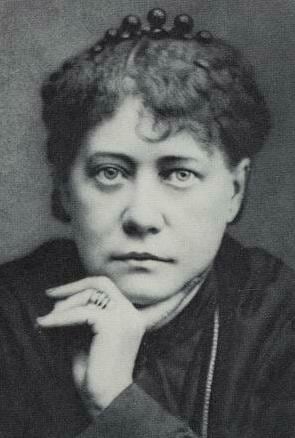
Helena Blavatsky
Übereinstimmung bei: Was ist das Absolute? Gibt es Gott? · Wer bin ich? Gibt es ein wahres Selbst? · Was geschieht nach dem Tod?
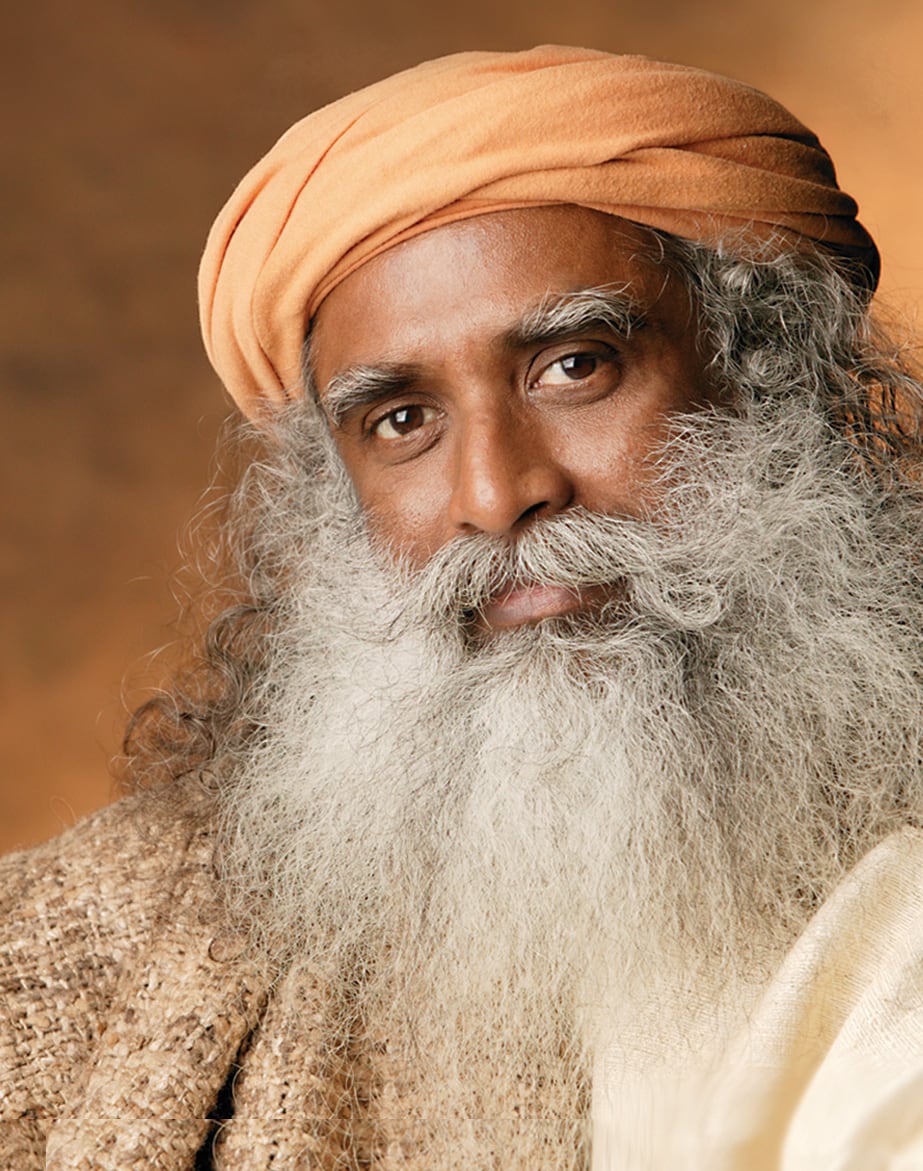
Sadhguru
Übereinstimmung bei: Was ist das Absolute? Gibt es Gott? · Was geschieht nach dem Tod? · Wie erlangt man Befreiung oder Erlösung?
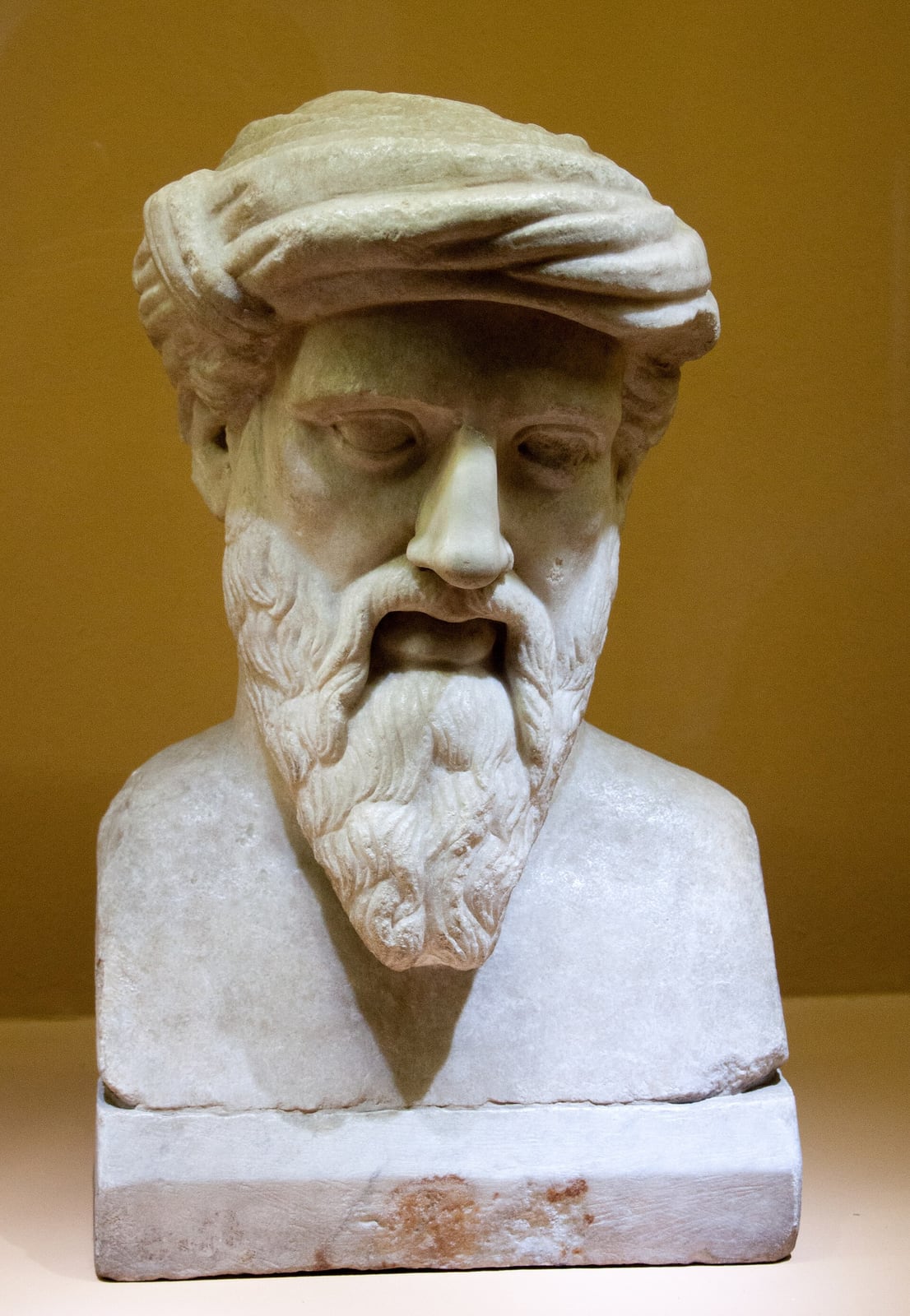
Pythagoras
Übereinstimmung bei: Was ist das Absolute? Gibt es Gott? · Wer bin ich? Gibt es ein wahres Selbst? · Was geschieht nach dem Tod?
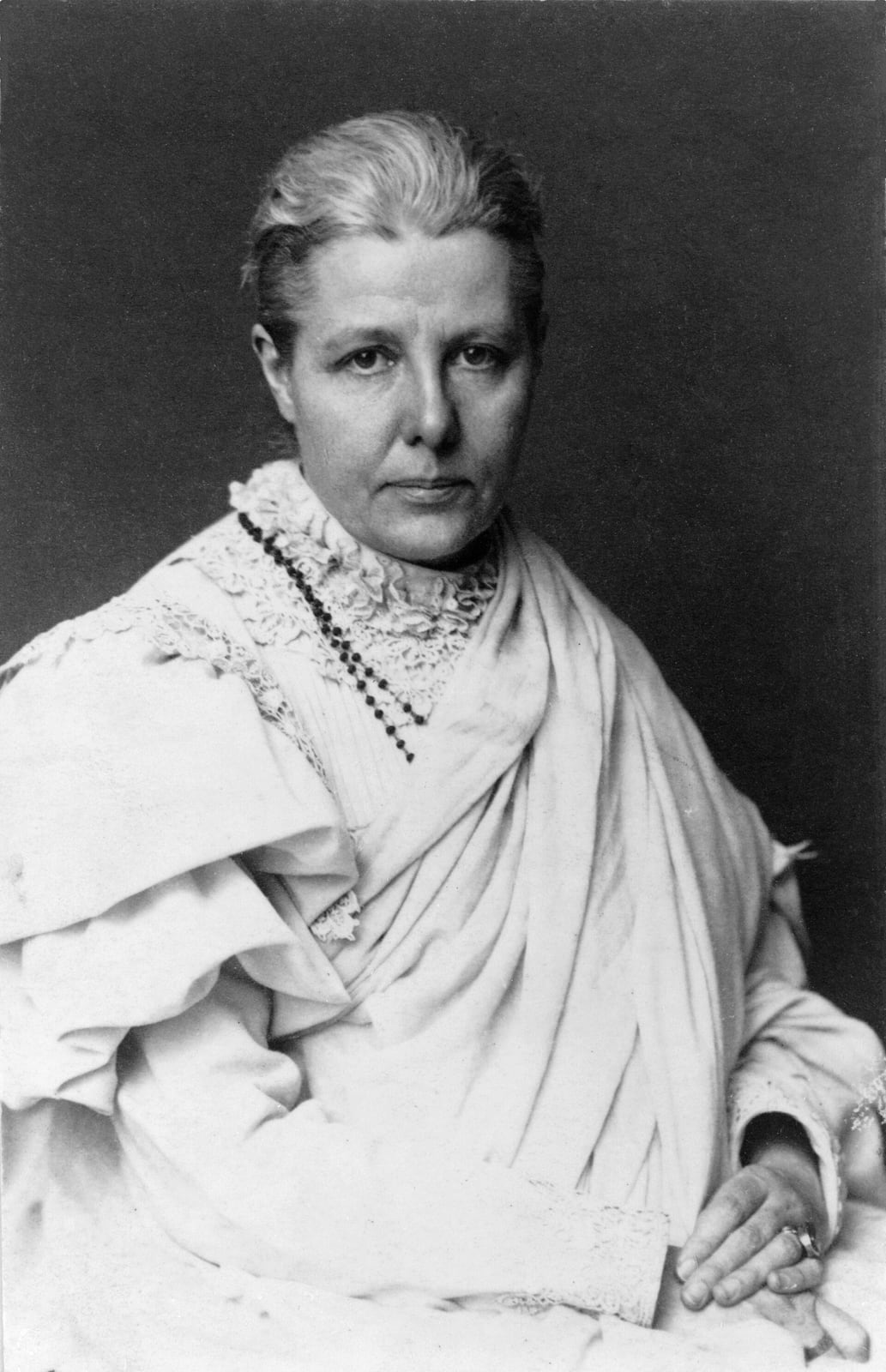
Annie Besant
Übereinstimmung bei: Wer bin ich? Gibt es ein wahres Selbst? · Was geschieht nach dem Tod? · Wie erlangt man Befreiung oder Erlösung?
Denkt anders als
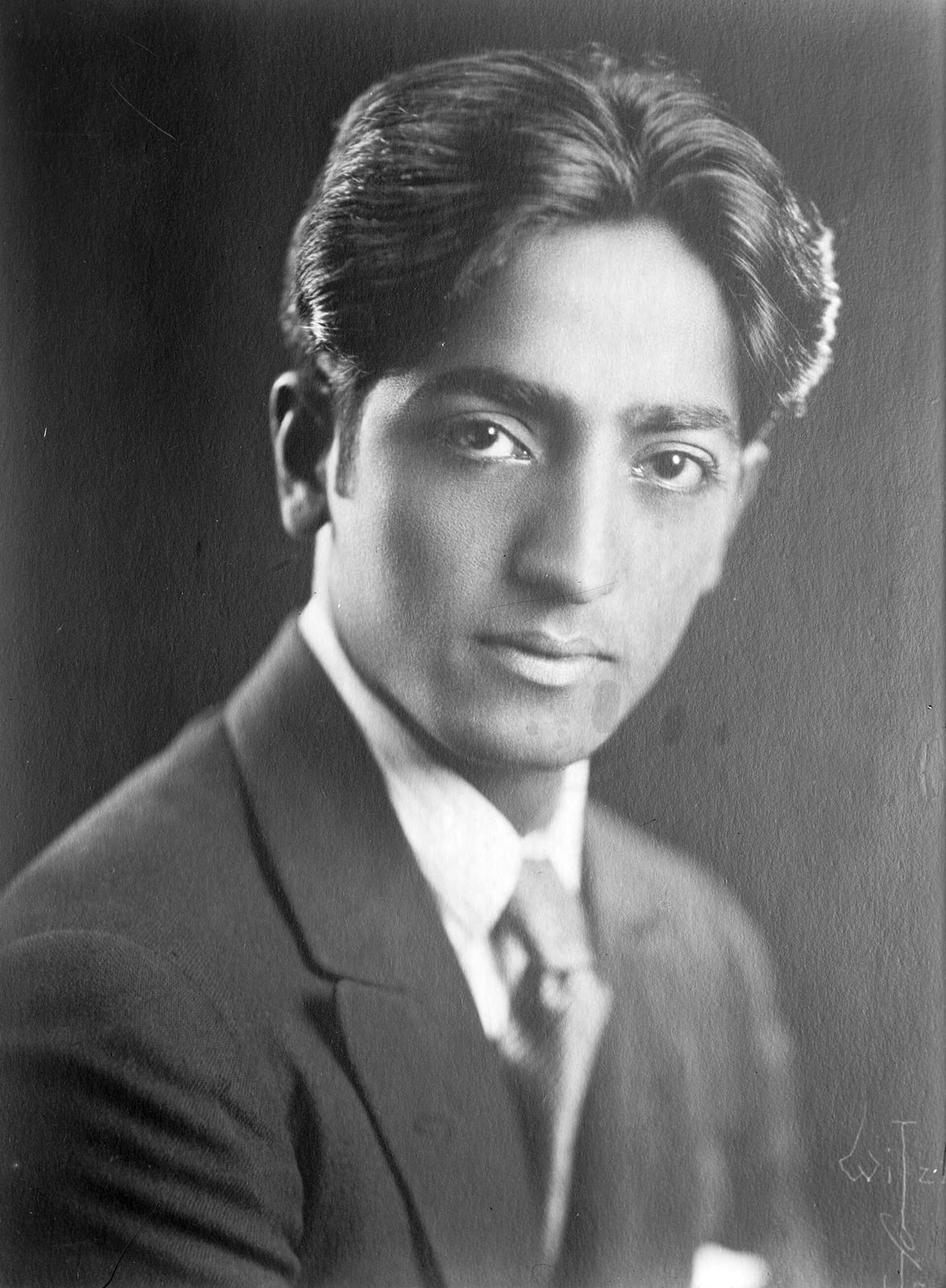
Jiddu Krishnamurti
Widerspruch bei: Wie erlangt man Befreiung oder Erlösung? · Braucht es einen Lehrer?

Nikolai Berdyaev
Widerspruch bei: Was geschieht nach dem Tod? · Braucht es einen Lehrer?
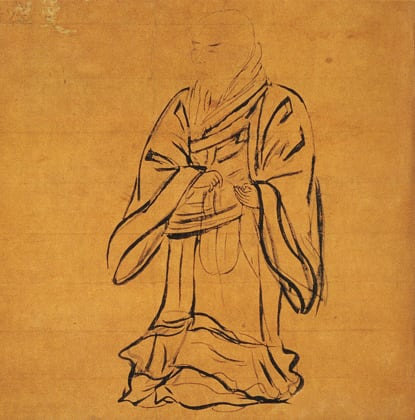
Shinran
Widerspruch bei: Was geschieht nach dem Tod?
Alan Watts
Widerspruch bei: Wie erlangt man Befreiung oder Erlösung? · Braucht es einen Lehrer?
Anekdoten und Erzählungen
Anekdoten und Erzählungen
Umstrittenc. 434 a. C. (tradicional)
The bronze sandal of Etna
Herkunft der Erzählung: Diogenes Laertius VIII 67–75, with the versions of Heraclides of Pontus, Hippobotus, Diodorus of Ephesus, Timaeus, Neanthes and Demetrius of Troezen. Horace (Ars poetica 463–466) fixed the Etna version. Ava Chitwood (2004) analyses how they derive from the poems.
Quelle: Chitwood, Ava. Death by Philosophy: The Biographical Tradition in the Life and Death of the Archaic Philosophers Empedocles, Heraclitus, and Democritus. University of Michigan Press, Ann Arbor, 2004.
Hagiographische Erzählungs. V a. C. (tradicional)
The breathless woman
Herkunft der Erzählung: Diogenes Laertius VIII 60–61 and 67–69 (Heraclides of Pontus, Hermippus). Heraclides' treatise, lost, was a literary work of a medico-philosophical kind, not a clinical record.
Nicht überprüfbars. V a. C. (tradicional)
The wind-stopper
Herkunft der Erzählung: Diogenes Laertius VIII 60 (Timaeus); Plutarch, Against Colotes 1126b and On Curiosity 515c. Burnet (Early Greek Philosophy, § 100) considers it deduced from B111.
Mündliche Überlieferungc. 470–460 a. C.
The magistrate's banquet
Herkunft der Erzählung: Diogenes Laertius VIII 64–66, quoting Timaeus of Tauromenium (4th–3rd century BCE). Burnet (§ 99) considers them genuine local traditions gathered a century and a half later, though confused in their details.
Zeugniss. V a. C.
The refused crown
Herkunft der Erzählung: Diogenes Laertius VIII 63 (Aristotle, probably in the Sophist; Xanthus) and VIII 73 (the attire). It is one of the few reports going back to Aristotle.
Umstrittens. V a. C. (tradicional)
The marshes of Selinus
Herkunft der Erzählung: Diogenes Laertius VIII 70 (Diodorus of Ephesus). The Selinus coins showing the drainage (Head's Historia Numorum) prove the event, not Empedocles' involvement.
Nicht überprüfbars. V a. C. (tradicional)
Expelled by the Pythagoreans
Herkunft der Erzählung: Diogenes Laertius VIII 54–55 (Timaeus, Neanthes). Fragment B129 is quoted by Porphyry (Life of Pythagoras 30) and Iamblichus (On the Pythagorean Life 67) as referring to Pythagoras.
Lehren
Lehren
Die Begriffe, die das Denken gliedern, in ihrem Zusammenhang erklärt.
The four roots (rhizomata)cuatro-raices
Fragments B6, B8, B12, B17, B21, B23; reception in Aristotle, Metaphysics A 3–4.
Quelle: Kirk, G. S., Raven, J. E. y Schofield, M. The Presocratic Philosophers, 2.ª ed. Cambridge University Press, 1983, cap. X (Empedocles of Acragas). Trad. esp. de Jesús García Fernández, Gredos, 1987.
Love (Philotes) and Strife (Neikos)amor-y-discordia
Fragments B17, B20, B22, B26, B35; Aristotle, Metaphysics A 4, 985a21–b4.
The cosmic cycle and the Sphereciclo-cosmico
Fragments B17, B26–B31, B35; Strasbourg papyrus, ensemble a.
Quelle: Martin, Alain y Primavesi, Oliver. L'Empédocle de Strasbourg (P. Strasb. gr. Inv. 1665–1666): introduction, édition et commentaire. Walter de Gruyter / Bibliothèque Nationale et Universitaire de Strasbourg, Berlín, Nueva York y Estrasburgo, 1999.
The exiled daimon and transmigrationdaimon-y-transmigracion
Fragments B112, B115, B117, B136–B137, B146–B147.
Quelle: Zuntz, Günther. Persephone: Three Essays on Religion and Thought in Magna Graecia. Clarendon Press, Oxford, 1971.
Effluences and pores: perception and thoughtefluvios-y-poros
Fragments B84, B89, B100, B105, B109; Plato, Meno 76c–d; Theophrastus, On the Senses 7–24.
Zoogony: wandering limbs and combinationszoogonia
Fragments B57–B62; Aristotle, Physics II 8, 198b29–32.
Videos
Videos
Aufnahmen, Gespräche und Dokumentarfilme. Die Videos werden von YouTube wiedergegeben; sie werden nicht hier gespeichert.
Empedocles – Autobiography of a Demon
Vortrag· EN· 2020· 19 min
Jackman Humanities InstituteOffizieller Kanal
HoP 011 - All You Need Is Love, and Five Other Things - Empedocles
Vortrag· EN· 2020· 17 min
history of philosophy without any gapsOffizieller Kanal
4) The Pluralists and The Sophists
Vortrag· EN· 2016· 74 min
Adam RosenfeldOffizieller Kanal
3-5 Empedocles
Vortrag· EN· 2026· 12 min
Nicholaos JonesOffizieller Kanal
Aristotle, Metaphysics (Empedocles, love, and final causes) - Introduction to Philosophy
Analyse· EN· 2013· 64 min
Gregory B. Sadler - That Philosophy GuyOffizieller Kanal
Empédocles de Agrigento
Dokumentarfilm· ES· 2018· 27 min
UNEDOffizieller Kanal
Conferencia David Hernández Castro "Empédocles"
Vortrag· ES· 2018· 88 min
Hercritia-Cátedra de Hermenéutica CríticaOffizieller Kanal
Heráclito, Empédocles y Anaxágoras | Historia de la filosofía (7/61)
Vortrag· ES· 2017· 68 min
Ernesto CastroOffizieller Kanal
EMPÉDOCLE – De l'un au multiple - Sur les traces du présocratique (France Culture, 1997)
Dokumentarfilm· FR· 1997· 85 min
ÉCLAIR BRUT
EMPÉDOCLE d'Agrigente – Un présocratique en terre arabe (France Culture, 2007)
Gespräch· FR· 2007· 46 min
ÉCLAIR BRUT
Galerie
Galerie
Bilder mit geprüfter Lizenz. Jedes bewahrt seine Urheberschaft und seinen Herkunftsnachweis.
Handschriften
Handschriften
Handschriftliche Zeugen und alte Texte, mit ihrer verwahrenden Einrichtung und ihren Einsichtsbedingungen.
GRC · Escritura libraria griega sobre papiro · Poema compuesto en el s. V a. C.; copia de finales del s. I d. C.
P. Strasb. gr. Inv. 1665–1666
- Erhaltener Textzeuge
- Fragmentos de un rollo de papiro (52 según los editores), con restos de unos 74 versos
- Verwahrende Einrichtung
- Bibliothèque nationale et universitaire de Strasbourg · P. Strasb. gr. Inv. 1665–1666
- Digitalisierung
- commons.wikimedia.org/wiki/File:Empedokles_fragm…
Beziehungen
Beziehungen
Einflüsse, Schülerschaften und Verwandtschaften. Die belegte Beziehung wird von der durch Analyse ermittelten Ähnlichkeit unterschieden.
Verwandte Gedanken mit
The alternation of Love and Strife extends, in another key, the Heraclitean tension between harmony and war.
Durch Analyse ermittelte Ähnlichkeit
Beeinflusst von
Theophrastus calls him an "emulator and imitator" of Parmenides (Diogenes Laertius VIII 55); he accepts that nothing comes to be or perishes and writes, like him, in hexameters.
Belegte Beziehung
Beeinflusst von
Timaeus and Neanthes make him a pupil of the Pythagoreans; Porphyry and Iamblichus refer the praise of B129 to Pythagoras. He shares with Pythagoreanism transmigration and abstinence from meat.
Belegte Beziehung
Beeinflusst von
Jenófanes
Hermippus, according to Diogenes Laertius (VIII 56), considered him an imitator of Xenophanes, with whom he supposedly lived; the report is isolated.
Durch Analyse ermittelte Ähnlichkeit
Zeitgenosse von
Anaxágoras
Aristotle (Metaphysics A 3, 984a11) says Anaxagoras was older than Empedocles but later in his works; both explain change as mixture.
Belegte Beziehung
Zeitgenosse von
Zenón de Elea
Alcidamas, according to Diogenes Laertius (VIII 56), made them fellow pupils of Parmenides.
Durch Analyse ermittelte Ähnlichkeit
Lehrer von
Gorgias de Leontinos
Satyrus, probably following Alcidamas, makes him Empedocles' pupil (Diogenes Laertius VIII 58); Plato ascribes to Gorgias the Empedoclean theory of effluences (Meno 76c).
Belegte Beziehung
Lehrer von
Pausanias de Gela
Physician, pupil and beloved of Empedocles, addressee of On Nature (B1).
Belegte Beziehung
Beeinflusste
He alludes to the "Sicilian muses" (Sophist 242d–243a), ascribes his theory of effluences to Gorgias (Meno 76c) and adopts the four elements in the Timaeus.
Belegte Beziehung
Beeinflusste
He adopts the four roots as elements, calls him the inventor of rhetoric and discusses his zoogony (Physics II 8) and his causes (Metaphysics A 4).
Belegte Beziehung
Beeinflusste
Lucrecio
In De rerum natura (I 716–733) he praises him as Sicily's most admirable man and takes from him the model of the physical poem.
Belegte Beziehung
Verwandte Gedanken mit
Approximate contemporaries: the doctrine of transmigration through all living forms and the refusal to kill animals bring the Purifications close to Jain ethics, without known historical contact.
Durch Analyse ermittelte Ähnlichkeit
Beeinflusste
Sigmund Freud
In Analysis Terminable and Interminable (1937) he recognises in Empedocles' Love and Strife a precedent of his theory of Eros and the death drive.
Belegte Beziehung
Quellen
Quellen
Für diesen Eintrag herangezogene Bibliografie und Kataloge.
- Wikidata, entidad Q83375 «Empedocles» (107 enlaces entre wikis; P31=Q5). Registra varios años de nacimiento (494, 492, 490 a. C.) y de muerte (444, 434, 432, 430 a. C.), Acragante como lugar de nacimiento y el Etna o el Peloponeso como lugar de muerte.
- Diógenes Laercio. Vidas y opiniones de los filósofos ilustres VIII 51–77 (Empédocles), s. III d. C. Trad. inglesa de C. D. Yonge, Bohn, Londres, 1853 (Project Gutenberg n.º 57342); trad. inglesa de R. D. Hicks, Loeb, 1925 (Wikisource).
- Diels, Hermann y Kranz, Walther. Die Fragmente der Vorsokratiker, 6.ª ed. Weidmann, Berlín, 1951–1952, cap. 31 (Empedokles), A (testimonios) y B 1–154.
- Kirk, G. S., Raven, J. E. y Schofield, M. The Presocratic Philosophers, 2.ª ed. Cambridge University Press, 1983, cap. X (Empedocles of Acragas). Trad. esp. de Jesús García Fernández, Gredos, 1987.
- Kingsley, K. Scarlett y Parry, Richard. «Empedocles». The Stanford Encyclopedia of Philosophy, ed. Edward N. Zalta y Uri Nodelman; primera publicación el 26 de septiembre de 2019, revisión sustancial del 25 de septiembre de 2024.
- Burnet, John. Early Greek Philosophy, 2.ª ed. A. and C. Black, Londres, 1908, cap. V (Empedokles of Akragas), §§ 98–105 y traducción de los fragmentos (Project Gutenberg n.º 67097).
- Martin, Alain y Primavesi, Oliver. L'Empédocle de Strasbourg (P. Strasb. gr. Inv. 1665–1666): introduction, édition et commentaire. Walter de Gruyter / Bibliothèque Nationale et Universitaire de Strasbourg, Berlín, Nueva York y Estrasburgo, 1999.
- Laks, André y Most, Glenn W. (eds. y trads.). Early Greek Philosophy, vol. V: Western Greek Thinkers, Part 2. Loeb Classical Library 528, Harvard University Press, 2016.
- Inwood, Brad. The Poem of Empedocles: A Text and Translation with an Introduction, ed. revisada. University of Toronto Press, Toronto, 2001 (1.ª ed. 1992).
- Wright, M. R. Empedocles: The Extant Fragments. Yale University Press, New Haven, 1981 (reed. Bristol Classical Press, 1995).
- Chitwood, Ava. Death by Philosophy: The Biographical Tradition in the Life and Death of the Archaic Philosophers Empedocles, Heraclitus, and Democritus. University of Michigan Press, Ann Arbor, 2004.
- Aristóteles. Metafísica A 3, 984a8–11, y A 4, 985a21–b4; Poética 1, 1447b17–20; Física II 8, 198b29–32; Sobre el alma I 2, 404b11–15; fragmentos del Sofista y de Sobre los poetas citados por Diógenes Laercio VIII 57 y 63. Trad. inglesa de W. D. Ross y otros (Internet Classics Archive, MIT).
- Kingsley, Peter. Ancient Philosophy, Mystery, and Magic: Empedocles and Pythagorean Tradition. Clarendon Press, Oxford, 1995.
- Zuntz, Günther. Persephone: Three Essays on Religion and Thought in Magna Graecia. Clarendon Press, Oxford, 1971.
- Lucrecio. De rerum natura I 716–733 (elogio de Empédocles), s. I a. C.
- Horacio. Arte poética 463–466 («deus immortalis haberi / dum cupit Empedocles, ardentem frigidus Aetnam / insiluit»).
- Hölderlin, Friedrich. Der Tod des Empedokles (tres versiones, 1797–1800); Arnold, Matthew, Empedocles on Etna, and Other Poems, B. Fellowes, Londres, 1852 (Internet Archive).
- Leonard, William Ellery (trad.). The Fragments of Empedocles, Translated into English Verse. Open Court, Chicago, 1908 (Internet Archive).
- Fairbanks, Arthur (ed. y trad.). The First Philosophers of Greece. Kegan Paul, Trench, Trübner, Londres, 1898, cap. X (Empedokles), texto griego según la edición de H. Stein (1852) (Project Gutenberg n.º 78670).
- «Empedocles», Wikipedia en inglés, y «Empédocles», Wikipedia en español (consultadas para contrastar datos y bibliografía; texto propio).
- Open Library (Internet Archive): ediciones de los fragmentos de Empédocles verificadas por ISBN.
- De Smet, Daniel. Empedocles Arabus. Une lecture néoplatonicienne tardive. Paleis der Academiën (Koninklijke Academie voor Wetenschappen, Letteren en Schone Kunsten van België), Bruselas, 1998.
- Eggers Lan, Conrado (dir.), Cordero, Néstor Luis, Olivieri, Francisco J., La Croce, Ernesto y Santa Cruz, María Isabel. Los filósofos presocráticos II. Biblioteca Clásica Gredos 24, Gredos, Madrid, 1979 (Empédocles, trad. de Ernesto La Croce).
- Bollack, Jean. Empédocle, 3 vols. (4 tomos). Éditions de Minuit, París, 1965–1969; reed. Gallimard (Tel), 1992.
- Platón. Menón 76c–d (efluvios y poros); Sofista 242d–243a (las «musas sicilianas»). Trad. inglesa de Benjamin Jowett, 1892 (Project Gutenberg n.º 1643, Meno).
- Galeno. De methodo medendi I 1 (X 5–6 Kühn): la escuela médica itálica de Filistión, Empédocles y Pausanias.
- Primavesi, Oliver. Empedokles Physika I: eine Rekonstruktion des zentralen Gedankengangs. Archiv für Papyrusforschung, Beiheft 22, Walter de Gruyter, Berlín, 2008.
- Osborne, Catherine. «Empedocles Recycled». The Classical Quarterly, 37 (1987), pp. 24–50; y Trépanier, Simon, Empedocles: An Interpretation, Routledge, Nueva York, 2004.
- Freud, Sigmund. «Die endliche und die unendliche Analyse». Internationale Zeitschrift für Psychoanalyse, 23 (1937), sección VI (Empédocles, el Amor y la Discordia).
- Rechteinhaber
- Textos antiguos en dominio público; cada traducción y edición crítica pertenece a su traductor o editorial
Bestätigung ausstehend
Was dieser Eintrag noch nicht klären konnte. Wir sagen es lieber, als es aufzufüllen.
- Fechas: se adopta c. 494–434 a. C. (muerte a los sesenta años según Aristóteles y actividad posterior al 472, Burnet); Apolodoro situaba la madurez en 444–443 y Wikidata registra varios años alternativos.
- Ediciones españolas específicas de Empédocles (aparte de Gredos, Kirk-Raven-Schofield y Bernabé): no verificadas en catálogo en esta sesión (la API de Google Books agotó su cuota).
- «La esfera» pseudoempedoclea: verificar la edición de 1898 (probablemente E. Maass, Commentariorum in Aratum reliquiae) antes de citarla con detalle.
- Papiro de Estrasburgo: comprobar si la BNU de Estrasburgo ofrece digitalización completa y sus condiciones; fecha exacta de adquisición (1904 o 1905).
- Texto griego de las citas tomado de Fairbanks (edición de Stein, 1852); cotejar con Diels-Kranz (diferencias menores señaladas en B6 y B117).
- Vídeos: diez verificados; faltan clases universitarias en español dedicadas monográficamente al papiro de Estrasburgo.
- Programas de afiliación: ninguno verificado. Lista vacía.
- Año de los vídeos: el de la grabación cuando la descripción lo indica y, si no, el de publicación en YouTube.
Recherchiert am 2026-10-25