Hinduismus · Buddhismus · Theosophie · Hermetik
Helena Blavatsky
Елена Петровна Блаватская
1831 – 1891Historisch belegte Person
Helena Petrowna Blavatsky (1831–1891), russische Schriftstellerin und Mitbegründerin der Theosophischen Gesellschaft in New York (1875), ist die zentrale Gestalt des modernen Okkultismus. Mit Isis entschleiert und Die Geheimlehre entwarf sie eine allen Religionen gemeinsame »uralte Weisheit«, überliefert von östlichen Meistern, und machte den Westen mit Begriffen wie Karma und Reinkarnation vertraut. Gleichermaßen bewundert und angeprangert – der Hodgson-Bericht von 1885 nannte sie eine Hochstaplerin –, reicht ihr Einfluss von der Anthroposophie bis zu den künstlerischen Avantgarden.
- Werke
- 29Werke
- Ausgaben
- 99Ausgaben
- Zitate
- 10Zitate
- Videos
- 15Videos
- Bilder
- 6Bilder
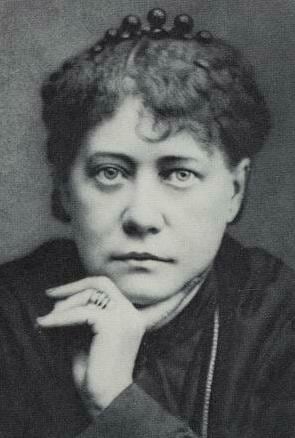
Helena Petrovna Blavatsky, 1877 · Public domain
In eigenen Worten
«There is no religion higher than truth.»The Key to Theosophy (1889), sección I, «El significado del nombre»; lema de la Sociedad Teosófica, también en la portada de La Doctrina Secreta (1888)

Der zentrale Gedanke
Wisdom-Religion: The guiding idea of all Blavatsky's work: there exists a primordial, single and universal wisdom of which the historical religions are fragments deformed by time, priesthood and dogma.
Im Zusammenhang sehen
Biografie
5 Min. Lesezeit
Unterstützte Übersetzung aus dem spanischen Original, Durchsicht durch einen muttersprachlichen Übersetzer ausstehend.
Ein Kind des Zarenreichs
Helena Petrowna von Hahn wurde am 12. August 1831 (31. Juli nach julianischem Kalender) in Jekaterinoslaw in der heutigen Ukraine geboren, in einer russischen Adelsfamilie deutscher Herkunft. Ihr Vater, Pjotr von Hahn, war Artillerieoffizier; ihre Mutter, Helena Andrejewna Fadejewa, war eine früh erfolgreiche Romanschriftstellerin, die Belinski mit George Sand verglich und die starb, als das Mädchen elf Jahre alt war. Helena wuchs zwischen Garnisonen und im Haus ihrer Großeltern mütterlicherseits in Saratow und Tiflis auf, wo ihre Großmutter, die Fürstin Jelena Dolgorukowa, Botanik betrieb und eine Bibliothek freimaurerischer und alchemistischer Werke des 18. Jahrhunderts besaß. Die Zeugnisse der Familie – gesammelt von ihrer Schwester Wera Schelichowskaja und von A. P. Sinnett in Incidents in the Life of Madame Blavatsky (1886) – beschreiben ein unbändiges Mädchen, mondsüchtig, gebannt vom Unsichtbaren und von den Legenden der Leibeigenen. Diese Berichte sind mit Vorsicht zu lesen: Sie wurden geschrieben, als sie bereits berühmt war, und in der Absicht, sie zu erklären.
Im Juli 1849 heiratete sie mit siebzehn Jahren Nikifor Blavatsky, den Vizegouverneur von Eriwan, einen mehr als zwanzig Jahre älteren Mann. Die Ehe hielt wenige Wochen. Helena floh, und damit beginnen die Jahre, die ihre Biographen »die verschleierten Jahre« nennen: zwei Jahrzehnte, für die es kaum unabhängige Dokumente gibt. Sie selbst behauptete, Ägypten, Europa, Amerika, Indien und zwischen 1868 und 1870 Tibet bereist zu haben, wo sie Unterweisung von den »Meistern« erhalten habe. Kein Forscher hat den Aufenthalt in Tibet bestätigen können; belegt sind dagegen ihr Aufenthalt in Kairo 1871, wo sie eine »Société Spirite« gründete, die im Skandal endete, und ihre Anwesenheit in Paris im Frühjahr 1873.
New York und die Geburt der Theosophischen Gesellschaft
Blavatsky kam im Juli 1873 in New York an. Im Oktober 1874 lernte sie auf der Farm der Brüder Eddy in Chittenden (Vermont) Colonel Henry Steel Olcott kennen, einen Anwalt und Journalisten, der für den New York Daily Graphic spiritistische Phänomene untersuchte. Diese Begegnung – von Olcott in People from the Other World und später in Old Diary Leaves geschildert – veränderte das Leben beider. Am 7. September 1875 beschloss in Blavatskys Wohnung am Irving Place eine Gruppe Interessierter, eine Gesellschaft zum Studium der »okkulten Gesetze der Natur« zu gründen; am 17. November hielt Olcott die Eröffnungsrede der Theosophischen Gesellschaft, deren Präsident er wurde, mit Blavatsky als korrespondierender Sekretärin und William Quan Judge als Rechtsberater.
Zwischen 1875 und 1877 schrieb sie in einem Englisch, das sie kaum beherrschte, Isis entschleiert, zwei Bände von mehr als zwölfhundert Seiten gegen den wissenschaftlichen Materialismus und den christlichen Dogmatismus und für eine ursprüngliche »Weisheitsreligion«, die in den antiken Mysterien bewahrt worden sei. Die erste Auflage von tausend Exemplaren war in zehn Tagen vergriffen. Olcott hinterließ ein berühmtes Zeugnis über ihre Arbeitsweise: Ihm zufolge schrieb die Autorin mit Stapeln von Zitaten, die sie in der Luft »sah«, und es gab Seiten in verschiedenen Handschriften. Der Kritiker William Emmette Coleman zählte später rund zweitausend Passagen, die ohne Quellenangabe aus etwa hundert Werken übernommen waren – bis heute das Hauptargument derer, die dem Buch jeden übernatürlichen Ursprung absprechen. Am 8. Juli 1878 erhielt Blavatsky die amerikanische Staatsbürgerschaft.
Indien, die Meister und der Skandal von Adyar
Im Dezember 1878 schifften sich die Gründer nach Indien ein. Im Februar 1879 kamen sie in Bombay an, und im Oktober brachten sie die Zeitschrift The Theosophist heraus. Die Reise fiel mit einer neuen Haltung zusammen: Die Gesellschaft ergriff Partei für die Religionen Indiens und Ceylons gegen die Missionare, und Olcott und Blavatsky nahmen im Mai 1880 in Galle öffentlich die buddhistischen Gebote an. In Simla wurde im Herbst desselben Jahres der Herausgeber des Pioneer, Alfred Percy Sinnett, Zeuge der Phänomene, die er in The Occult World (1881) schilderte, und begann Briefe zu empfangen, die den Mahatmas Koot Hoomi und Morya zugeschrieben werden und heute in der British Library liegen. Im Dezember 1882 wurde der Sitz nach Adyar bei Madras verlegt.
Dort bahnte sich die Krise an. 1884, während die Gründer in Europa weilten, übergab Emma Coulomb, eine alte Bekannte aus Kairo, die im Hauptquartier arbeitete, den schottischen Missionaren in Madras Briefe, die ihrer Aussage nach bewiesen, dass Blavatsky die Phänomene des »Schreins« von Adyar mit Paneelen und Falltüren inszenierte. Das Madras Christian College Magazine veröffentlichte sie im September. Die Londoner Society for Psychical Research, die bereits einen Ausschuss zur Theosophischen Gesellschaft eingesetzt hatte, schickte einen jungen Ermittler nach Indien, Richard Hodgson. Sein Bericht, im Dezember 1885 in den Proceedings veröffentlicht, kam zu dem Schluss, die Briefe der Mahatmas stammten von Blavatsky, und beschrieb sie als »eine der vollendetsten, geistreichsten und interessantesten Hochstaplerinnen der Geschichte«. Blavatsky, krank und ohne den Rückhalt der Gesellschaft für einen Prozess, verließ Indien am 31. März 1885 und kehrte nie zurück. Ein Jahrhundert später, 1986, veröffentlichte der Schriftsachverständige Vernon Harrison, selbst Mitglied der SPR, in deren Journal eine vernichtende Prüfung von Hodgsons Methoden; die SPR »rehabilitierte« Blavatsky nicht – die Gesellschaft fällt keine korporativen Urteile –, doch der Fall war wieder offen.
Die Londoner Jahre
Nach Aufenthalten in Würzburg und Ostende, wo sie mit der Niederschrift ihres Hauptwerks begann, ließ sie sich im Mai 1887 in London nieder. Sie gründete die Zeitschrift Lucifer, die Blavatsky Lodge und im Oktober 1888 die Esoterische Sektion, einen Kreis vertraulicher Unterweisung. Im selben Herbst erschien Die Geheimlehre, zwei Bände – »Kosmogenesis« und »Anthropogenesis« –, dargeboten als Kommentar zu den »Strophen des Dzyan«, einem Text, den nur sie gesehen haben wollte. 1889 veröffentlichte sie Der Schlüssel zur Theosophie, ihren Katechismus in Dialogform, und Die Stimme der Stille, ein kurzes Handbuch des spirituellen Weges, das der Buddhismus Sri Lankas und Japans mit Sympathie aufnehmen sollte. Im Frühjahr jenes Jahres besprach Annie Besant, bis dahin Freidenkerin und Sozialistin, Die Geheimlehre und wurde ihre engste Schülerin; W. B. Yeats, der sie damals besuchte, erinnerte sich an sie als »eine alte irische Bäuerin mit einem Anflug von Humor und kühner Macht«.
Sie starb am 8. Mai 1891 in Avenue Road Nr. 19 an Grippe, verschlimmert durch eine chronische Nierenentzündung. Sie wurde in Woking eingeäschert, und ihre Asche wurde zwischen Adyar, London und New York aufgeteilt. Die Theosophen begehen das Datum als Tag des Weißen Lotus.
Was bleibt
Belegt ist eine erstaunlich belesene Schriftstellerin, Mitbegründerin einer internationalen Organisation, die im Westen die Wörter Karma, Reinkarnation und Meister in Umlauf brachte, Verfechterin der Einheit der Religionen und – im Indien der 1880er Jahre – Verbündete eines kulturellen Stolzes, der den Nationalismus vorwegnahm. Was ihre Schüler überlieferten, ist etwas anderes: Phänomene, Reisen nach Tibet, »präzipitierte« Briefe. Zwischen beiden Schichten bewegten sich Rudolf Steiner, Alice Bailey, Kandinsky und Mondrian, Gandhi in seinen Londoner Jugendjahren und ein guter Teil der heutigen Spiritualität, die Blavatsky mehr verdankt, als sie gewöhnlich zugibt.
Quellen: Cranston, Sylvia. HPB: The Extraordinary Life and Influence of Helena Blavatsky, Founder of the Modern Theosophical Movement. Nueva York: Tarcher/Putnam, 1993. · Goodrick-Clarke, Nicholas. Helena Blavatsky (Western Esoteric Masters). Berkeley: North Atlantic Books, 2004. · Olcott, Henry Steel. Old Diary Leaves: The True Story of the Theosophical Society. First Series. Nueva York/Londres: Putnam / Theosophical Publishing Society, 1895. · Sinnett, A. P. Incidents in the Life of Madame Blavatsky. Londres: George Redway, 1886. · Harrison, Vernon. H. P. Blavatsky and the SPR: An Examination of the Hodgson Report of 1885. Pasadena: Theosophical University Press, 1997 (incluye «J'Accuse», Journal of the SPR, vol. 53, abril de 1986, pp. 286–310).
Zeitleiste
Das Leben, Jahr für Jahr
Jeder Punkt ist ein belegtes Ereignis. Klicken Sie, um es mit Quelle und Grad der Gewissheit zu lesen.
12. August 18310 JahreYekaterinoslav (hoy Dnipró)
Birth
Helena Petrovna von Hahn is born, daughter of the officer Pyotr von Hahn and the novelist Helena Fadeyeva. The date corresponds to 31 July in the Julian calendar.
BelegtCranston, Sylvia. HPB: The Extraordinary Life and Influence of Helena Blavatsky, Founder of the Modern Theosophical Movement. Nueva York: Tarcher/Putnam, 1993.
Nach dem Tod
- April 1986Harrison re-examines the Hodgson Report
12. August 1831 · 0 Jahre
Birth
Helena Petrovna von Hahn is born, daughter of the officer Pyotr von Hahn and the novelist Helena Fadeyeva. The date corresponds to 31 July in the Julian calendar.
Belegt
1842 · 11 Jahre
Death of her mother
Helena Andreyevna Fadeyeva dies. The child goes to live with her maternal grandparents, the Fadeyevs, in Saratov and later in Tiflis.
Belegt
7. Juli 1849 · 17 Jahre
Marriage to Nikifor Blavatsky
She marries Nikifor Blavatsky, vice-governor of Erivan, much older than herself. She leaves him within weeks and keeps the surname for life.
Belegt
1849 – 1873 · 18 Jahre
The 'veiled years'
Two decades of travel begin for which there is hardly any independent evidence. She claimed to have been in Egypt, America, India and Tibet (1868–1870), where she said the Masters instructed her. The Tibetan stay has never been confirmed.
Überlieferung
1871 · 40 Jahre
The 'Société Spirite'
In Cairo she founds a spiritualist society that dissolves amid accusations of fraud against the hired mediums. There she meets Emma Cutting, the future Emma Coulomb.
Belegt
7. Juli 1873 · 41 Jahre
Arrival in New York
She lands in New York, where she lives in straitened circumstances in a working women's boarding house and writes for the press.
Belegt
14. Oktober 1874 · 43 Jahre
Meeting Henry Steel Olcott
At the Eddy farm she meets Colonel Olcott, who was investigating the apparitions for the New York Daily Graphic. The partnership that will give rise to the Theosophical Society begins.
Belegt
17. November 1875 · 44 Jahre
Founding of the Theosophical Society
After the preliminary meeting of 7 September, Olcott delivers the inaugural address. Blavatsky is corresponding secretary; William Q. Judge, counsel.
Belegt
29. September 1877 · 46 Jahre
Publication of 'Isis Unveiled'
J. W. Bouton publishes the two volumes. The first run of a thousand copies sells out in ten days. The New York Herald calls it 'one of the remarkable productions of the century'.
Belegt
8. Juli 1878 · 46 Jahre
United States citizenship
She becomes a naturalised United States citizen, the first Russian woman to do so according to the press of the day.
Belegt
16. Februar 1879 · 47 Jahre
Arrival in India
The founders land in Bombay. In October the first issue of The Theosophist appears.
Belegt
25. Mai 1880 · 48 Jahre
Taking the Buddhist precepts
Blavatsky and Olcott publicly take pansil (the five precepts) at a temple in Galle, among the first Westerners to do so.
Belegt
Oktober 1880 · 49 Jahre
The Simla phenomena
At A. P. Sinnett's house the phenomena occur (the buried cup, the Koot Hoomi letters) that Sinnett will narrate in The Occult World (1881).
Belegt
Dezember 1882 · 51 Jahre
Headquarters at Adyar
The Society buys the Huddlestone Gardens estate by the Adyar river, which remains its international headquarters.
Belegt
September 1884 · 53 Jahre
The Coulomb affair
The Madras Christian College Magazine publishes letters handed over by Emma Coulomb which, according to the missionaries, prove that the Adyar phenomena were tricks. Blavatsky declares them forgeries.
Belegt
31. März 1885 · 53 Jahre
Final departure from India
Ill and without support to sue the Coulombs, she leaves India and settles in Europe (Naples, Würzburg, Ostend).
Belegt
Dezember 1885 · 54 Jahre
The Hodgson Report
The Society for Psychical Research publishes Richard Hodgson's report (Proceedings, vol. 3): it concludes that the Mahatma letters are Blavatsky's work and brands her an impostor. In 1986 Vernon Harrison, an SPR member, showed in its Journal that Hodgson's handwriting analysis was untenable.
Belegt
1. Mai 1887 · 55 Jahre
Settling in London
She settles at Maycot (Norwood) and then in Lansdowne Road. In September she founds the journal Lucifer and the Blavatsky Lodge.
Belegt
Oktober 1888 · 57 Jahre
'The Secret Doctrine' and the Esoteric Section
The two volumes of The Secret Doctrine appear. On 9 October the Esoteric Section of the Society is announced, under her sole direction.
Belegt
Mai 1889 · 57 Jahre
Annie Besant joins the Society
After reviewing The Secret Doctrine for the Pall Mall Gazette, Besant joins the Theosophical Society and becomes her closest disciple. That year The Key to Theosophy and The Voice of the Silence are published.
Belegt
8. Mai 1891 · 59 Jahre
Death
She dies of influenza, aggravated by chronic nephritis, at the Society's European headquarters. She is cremated at Woking on 11 May; Theosophists commemorate the date as White Lotus Day.
Belegt
April 1986
Harrison re-examines the Hodgson Report
Vernon Harrison publishes 'J'Accuse' in the Journal of the SPR: the 1885 report is 'badly flawed' and its handwriting conclusions do not stand. The SPR notes that it issues no corporate verdicts.
Belegt
Werke
Grundlegende Werke
Die Werke, ohne die sich das Vermächtnis nicht verstehen lässt.
Schriftliches Werk · 1877
Isis Unveiled
Isis Unveiled: A Master-Key to the Mysteries of Ancient and Modern Science and Theology
Blavatsky's first major work, in two volumes ('Science' and 'Theology'). It attacks both the materialism of Huxley and Tyndall and the dogmatism of the churches, arguing that a primordial 'Wisdom-Religion', guarded by the ancient mysteries, the Kabbalah, Hermeticism and the schools of India, underlies all religions as their fragments. It ranges over magic, spiritualism, Paracelsus, the Vedas and the Gospels with torrential and disorderly erudition. The doctrine of reincarnation does not yet appear clearly; the author would develop it later. It is, above all, the manifesto of an occultism that wants to be science.
10 Ausgaben · amazon.com

Schriftliches Werk · 1888
The Secret Doctrine
The Secret Doctrine: The Synthesis of Science, Religion, and Philosophy
Blavatsky's major work and the founding text of modern Theosophy. It is presented as a commentary on the 'Stanzas of Dzyan', a cosmogonic poem the author claimed to have translated from a secret language and which no one else has seen. Volume I, 'Cosmogenesis', sets out the three fundamental propositions (an absolute and unknowable Principle, the universal law of periodicity, and the identity of all souls with the Universal Over-Soul) and the cyclical emanation of the cosmos. Volume II, 'Anthropogenesis', describes human evolution through seven 'root races' on vanished continents such as Lemuria and Atlantis. A third part engages with the science and religious symbolism of her day. Its readers have included Steiner, Yeats, Kandinsky, Scriabin and Mondrian.
14 Ausgaben · amazon.com

Schriftliches Werk · 1889
The Key to Theosophy
A catechism of Theosophy written in questions and answers. It explains what the Theosophical Society is and is not, the difference between Theosophy and occultism, the sevenfold constitution of the human being, the post-mortem states (kama-loka and devachan), karma and reincarnation, and the movement's relations with spiritualism and the churches. It is Blavatsky's most accessible text and the one most used as an introduction; it contains the motto 'There is no religion higher than truth' and a long defence against the SPR's accusations.
8 Ausgaben · amazon.com

Schriftliches Werk · 1889
The Voice of the Silence
The Voice of the Silence, being Chosen Fragments from the «Book of the Golden Precepts»
A short prose poem on the spiritual path, in three fragments: 'The Voice of the Silence', 'The Two Paths' and 'The Seven Portals'. It teaches the stilling of the mind ('the mind is the great slayer of the real'), the passage through the three halls of ignorance, learning and wisdom, and the choice between the path of personal liberation and the path of renunciation, that of the bodhisattva who remains to help others. It is the devotional text of Theosophy par excellence and one of the first to bring the Mahayana ethic of compassion to a Western public; the 14th Dalai Lama wrote a foreword to a centenary edition.
8 Ausgaben · amazon.de
Das gesamte Werk (29)

The Theosophical Glossary
1892

From the Caves and Jungles of Hindostan
1879

Nightmare Tales
1892

Studies in Occultism
1895
Helena Blavatsky
A Modern Panarion
The Conscious LibraryA Modern Panarion
1895
Helena Blavatsky
Collected Writings
The Conscious LibraryCollected Writings
1950
Helena Blavatsky
Esoteric Instructions
The Conscious LibraryEsoteric Instructions
1889

Gems from the East
1890

Transactions of the Blavatsky Lodge
1890

The Letters of H. P. Blavatsky to A. P. Sinnett
1925

The Letters of H. P. Blavatsky, vol. 1
2003
Helena Blavatsky
The Durbar in Lahore
The Conscious LibraryThe Durbar in Lahore
1881

The Secret Doctrine, Volume III
1897

The People of the Blue Mountains
1883
Helena Blavatsky
Some Unpublished Letters of Helena Petrovna Blavatsky
The Conscious LibrarySome Unpublished Letters of Helena Petrovna Blavatsky
1929

Five Messages to the American Theosophists
1888

The Original Programme of the Theosophical Society
1931

Practical Occultism
1888

Raja-Yoga, or Occultism
1931
Helena Blavatsky
Dynamics of the Psychic World
The Conscious LibraryDynamics of the Psychic World
1972

Personal Memoirs of H. P. Blavatsky
1937

H. P. B. Speaks
1950
Helena Blavatsky
The Inner Group Teachings of H. P. Blavatsky
The Conscious LibraryThe Inner Group Teachings of H. P. Blavatsky
1985

The Esoteric Character of the Gospels
1887
Zitate
Zitate, die in einem bestimmten Werk nachgewiesen sind. Jedes trägt seine Herkunft und seinen Grad an Verlässlichkeit.
There is no religion higher than truth.GeprüftThe Key to Theosophy (1889), sección I, «El significado del nombre»; lema de la Sociedad Teosófica, también en la portada de La Doctrina Secreta (1888)
Apokryphe Zitate oder Zitate umstrittener Zuschreibung (1)
«'Occultism is not magic.'»
Often quoted as Blavatsky's. What she actually wrote, in 'Occultism versus the Occult Arts' (Lucifer, 1888), is an extended distinction between occultism as the science of the spirit and the 'occult arts' (magic, hypnotism), without that lapidary formulation.
Letzte Worte
Späterer Bericht von Zeugen
«Keep the link unbroken! Do not let my last incarnation be a failure.»Keep the link unbroken! Do not let my last incarnation be a failure.
A tradition handed down by the residents of 19 Avenue Road who nursed her in her last days (Laura Cooper, Claude Falls Wright, Walter Old and Isabel Cooper-Oakley). Laura M. Cooper's account, 'How She Left Us', appeared in Lucifer (June 1891) and underlies the versions gathered by Cranston (1993). The words are said to have been spoken the day before or on the morning of her death, not with her last breath; Cooper describes the end as silent, the patient's hand in hers. No independent record exists.
Quelle: Cooper, Laura M. «How She Left Us», en Lucifer, vol. VIII, n.º 46 (junio de 1891), número en memoria de H. P. B. Londres: Theosophical Publishing Society.
Fragen
Was das Werk beantwortet
Zwölf große Fragen der Menschheit und was sich aus den Texten darauf antworten lässt, mit Belegen. Wir legen niemandem Worte in den Mund.
Was ist das Absolute? Gibt es Gott?
An eternal, boundless Principle beyond speculation; no personal God
Ein unpersönliches AbsolutesAusdrücklich gesagt
Helena Blavatsky answers explicitly. The first of the three fundamental propositions in the Proem of The Secret Doctrine affirms an omnipresent, eternal, boundless and immutable Principle, on which all speculation is impossible because it transcends the power of human conception. That Principle is not a creator: universes emanate from it periodically according to the law of cycles, and gods and logoi are beings and powers within manifestation. In The Key to Theosophy, in the section on God and prayer, she rejects the idea of a personal, extra-cosmic and anthropomorphic God, which she regards as a gigantic shadow of man, and defends instead an impersonal divinity present in everything and in the human being. Prayer, accordingly, is not addressed to someone who grants favours; it is will and inner aspiration.
Diese Frage mit anderen Meistern vergleichenWer bin ich? Gibt es ein wahres Selbst?
An individuality that reincarnates beneath passing personalities
Eine sich entwickelnde SeeleAusdrücklich gesagt
Helena Blavatsky describes the human being as a compound of seven principles, from the physical body to spirit (atma), and carefully distinguishes personality from individuality. The personality is the transient set of body, vital energy, desires and lower mind that make up the individual of a given life, and it disintegrates after death. The individuality is the higher Ego, the spiritual mind (higher manas joined to buddhi), which reincarnates from life to life accumulating experience. In The Key to Theosophy she sets out this distinction in the sections on the nature of man and on reincarnation, and in The Secret Doctrine the third fundamental proposition establishes the obligatory pilgrimage of every soul through the cycle of incarnation. The true self therefore exists, but it is not the one we believe ourselves to be: it is an evolving soul.
Diese Frage mit anderen Meistern vergleichenWarum leiden wir?
Karma readjusts what we disturb; pain educates the reincarnating Ego
Karma und das Lernen der SeeleAusdrücklich gesagt
Helena Blavatsky explains suffering through karma, which she defines as a law of readjustment: every cause set in motion produces its effect, and the harmony disturbed by a selfish act is restored, in this life or another. In The Key to Theosophy, in the section on the mysteries of reincarnation, she rejects both the idea of a punishment imposed by a God and that of blind chance: each person is their own lawgiver and reaps what they sowed. She adds that karma is also collective, of families, nations and races, which explains sufferings that do not seem individually deserved. Pain, in this framework, has a pedagogical function: it forces the reincarnating Ego to learn, and forms part of the soul's evolution towards its source. The Voice of the Silence further insists on compassion for the pain of others.
Diese Frage mit anderen Meistern vergleichenWas geschieht nach dem Tod?
After kama-loka and devachan, the Ego reincarnates according to its karma
Wiedergeburt nach dem KarmaAusdrücklich gesagt
Blavatsky offers one of the most detailed maps of the beyond in modern esotericism. In The Key to Theosophy she explains that at death the human being sheds the lower principles: the body, the etheric double and the life energy dissolve; in kama-loka the envelope of desires falls away, and may persist for a time as a «shell» without consciousness of its own. The higher Ego then passes into devachan, a state of subjective bliss in which it assimilates the fruits of the life lived, and afterwards reincarnates in a new body in accordance with its karma. For her this is neither punishment nor arbitrary reward, but the obligatory pilgrimage of every soul through the cycle of incarnations, which The Secret Doctrine states as its third fundamental proposition, until it consciously rejoins the universal Over-Soul.
Diese Frage mit anderen Meistern vergleichenWie erlangt man Befreiung oder Erlösung?
Self-effort across lifetimes, without vicarious redemption, through the transcendent virtues
Durch disziplinierte ÜbungAusdrücklich gesagt
Helena Blavatsky denies that anyone can be saved by another: in The Key to Theosophy she criticises vicarious atonement and holds that each person reaps what they sow under the law of karma, across a cycle of reincarnations. Liberation is therefore the fruit of one's own effort sustained over many lives. The Voice of the Silence, which she presents as a translation of an Eastern text, describes that effort as passing through «seven portals», the transcendent virtues (paramitas) of charity, harmony, patience, dispassion, energy, meditation and wisdom. Its culmination is not individual rest in nirvana but renouncing it in order to help humanity, which the work presents as the highest path.
Diese Frage mit anderen Meistern vergleichenBraucht es einen Lehrer?
The occult path needs Masters; truth itself needs no dogmatic authority
UnverzichtbarAus der Lehre abgeleitet
Helena Blavatsky claimed that her teaching came from Masters or Mahatmas, living adepts of an occult brotherhood, and that she herself had been their disciple. In that system, progress on the occult path requires becoming a chela, an accepted disciple of a Master, a condition she wrote about in articles such as «Chelas and Lay Chelas». At the same time, The Key to Theosophy rejects any dogmatic authority for the public: the Theosophical Society imposes no beliefs, and the motto that there is no religion higher than truth invites people to examine for themselves. The position thus combines an initiatory hierarchy for those who enter the esoteric path with freedom of judgement for the ordinary student.
Diese Frage mit anderen Meistern vergleichenIst die Welt wirklich?
A periodic universe of seven planes emanating from an unknowable Principle
DaseinsebenenAusdrücklich gesagt
Helena Blavatsky's Secret Doctrine starts from three fundamental propositions, set out in the Proem: an omnipresent, eternal and immutable Principle about which no speculation is possible; the periodicity of the universe, which appears and disappears in cycles of manifestation and rest; and the identity of all souls with the universal Oversoul and their obligatory pilgrimage through the cycles of incarnation. The manifested universe is organised into seven planes of matter and consciousness, from the densest, the physical, to the subtlest. Relative to the Absolute, the world is maya, illusion, because it is temporary; but it is real for the beings who live in it and is the necessary field of their evolution.
Diese Frage mit anderen Meistern vergleichenWas ist Liebe?
Compassion is no attribute but the law of laws
Grenzenloses MitgefühlAusdrücklich gesagt
Blavatsky places love on the level of a cosmic law rather than a feeling. In The Voice of the Silence, inspired by the Mahayana tradition, she declares that compassion is no attribute but the law of laws: eternal harmony, the shoreless universal essence, the law of love eternal. From this she derives the ideal she proposes to the disciple: to renounce personal nirvana and remain in the world helping others, the «secret path» of the bodhisattva, which in fragment II she places above the «open path» leading to the bliss of nirvana. On the social plane, Theosophy is founded on universal brotherhood without distinction of race, creed, sex, caste or colour, the first object of the Theosophical Society. Blavatsky distrusts, on the other hand, personal and possessive love, which she considers a form of selfishness the disciple must transcend.
Diese Frage mit anderen Meistern vergleichenSind wir frei, oder ist alles vorherbestimmt?
Karma neither creates nor designs: it is the human being who sows the causes
Karma und WahlAusdrücklich gesagt
Blavatsky presents karma as a universal law of adjustment, not as blind fate. In *The Secret Doctrine* she insists that karma neither creates nor designs anything: it is man who plans and sets causes in motion, and the law merely restores the balance of their effects. In *The Key to Theosophy*, in the section on reincarnation, she defines it as the law of retribution that accompanies the ego through its lives. A real freedom within a cyclic frame follows: the soul's pilgrimage through the wheel of necessity is obligatory, but each incarnation inherits what was sown and sows again. Moral responsibility stays intact and, in her argument, becomes stricter than under the idea of forgiveness.
Diese Frage mit anderen Meistern vergleichenWozu meditieren oder beten?
Not praying to an outer god: will-prayer to the inner God
Zur Quelle des Ich zurückkehrenAusdrücklich gesagt
In section V of *The Key to Theosophy*, Blavatsky rejects prayer understood as petition to a personal, external god, which she sees as a source of selfishness and passivity. In its place she proposes what she calls «will-prayer»: an inner command addressed to the Father in secret, that is, to the divine principle in the human being. *The Voice of the Silence* develops the practice in a contemplative key: the disciple must still the mind, the great slayer of the real, and pass through the seven portals, among them that of meditation (*dhyāna*), until personal consciousness is united with the Higher Self. To meditate, for her, is to travel back to one's own divine source.
Diese Frage mit anderen Meistern vergleichenKann die Vernunft das Letzte erkennen?
An ancient hidden wisdom, divine science higher than any religion
Esoterisches WissenAusdrücklich gesagt
For Blavatsky there is a secret doctrine, the wisdom-religion of antiquity, preserved by a brotherhood of adepts and present in veiled form in every tradition. *The Key to Theosophy* defines theosophy as divine knowledge or science, and its motto states that there is no religion higher than truth. Her method combines comparative erudition, critique of scientific materialism and ecclesiastical dogma, and the claim of inner faculties able to verify that wisdom. In the proem of *The Secret Doctrine*, however, she sets a limit: the ultimate principle is omnipresent, eternal and immutable, and all speculation about it is impossible, for it transcends the power of human conception.
Diese Frage mit anderen Meistern vergleichenSich von der Welt zurückziehen oder sie verwandeln?
Renouncing one's own nirvana to stay and serve humanity
Sich in der Welt engagierenAusdrücklich gesagt
Blavatsky distrusts a spirituality that seeks only one's own liberation. In The Voice of the Silence she presents as the higher ideal that of the bodhisattva who, able to enter nirvana, renounces it out of compassion for a suffering world, and warns the disciple that inaction in the face of another's misfortune is a form of sin. In The Key to Theosophy she holds that practical Theosophy consists of duty, altruism and self-sacrifice for others, and that a Theosophist is recognised by what he does, not by what he believes. The Theosophical Society she founded in 1875 had as its first object to form a nucleus of universal brotherhood without distinction of race, creed, sex, caste or colour. Her own field of action was mainly intellectual and organisational: spreading a synthesis of religion, science and philosophy against materialism and dogmatism.
Diese Frage mit anderen Meistern vergleichen
Affinitäten und Spannungen
Affinitäten und Spannungen
Frage für Frage aus den Positionen berechnet. Den Grund jeder Übereinstimmung und jedes Widerspruchs zeigt ein Klick.
Denkt ähnlich wie
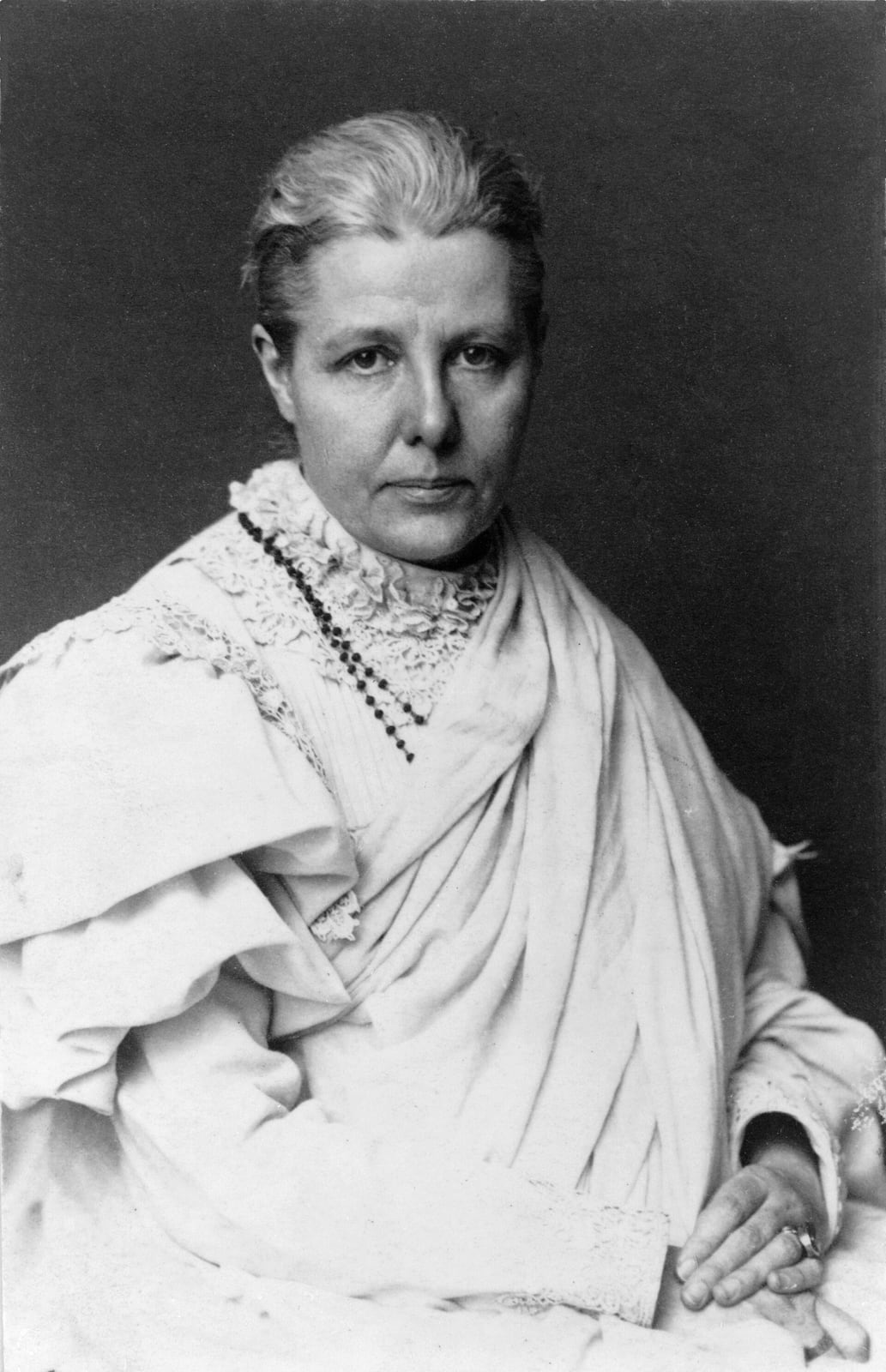
Annie Besant
Übereinstimmung bei: Ist die Welt wirklich? · Wer bin ich? Gibt es ein wahres Selbst? · Warum leiden wir?
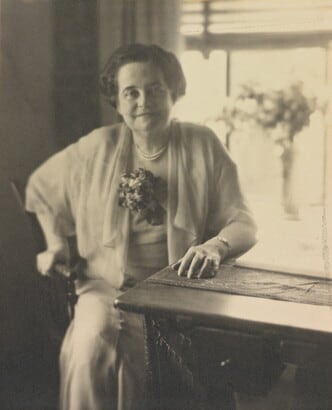
Alice A. Bailey
Übereinstimmung bei: Wer bin ich? Gibt es ein wahres Selbst? · Warum leiden wir? · Was geschieht nach dem Tod?
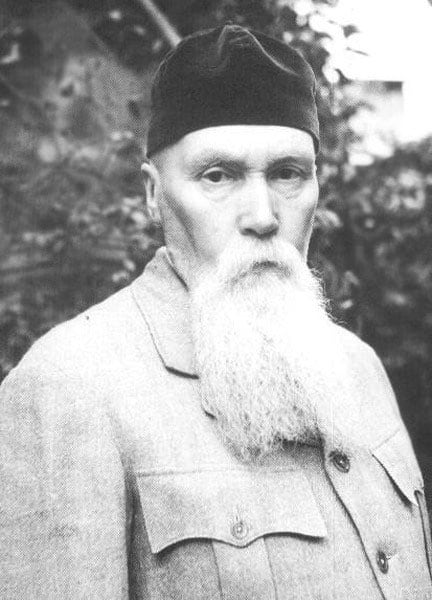
Nicholas Roerich
Übereinstimmung bei: Braucht es einen Lehrer? · Ist die Welt wirklich? · Kann die Vernunft das Letzte erkennen?
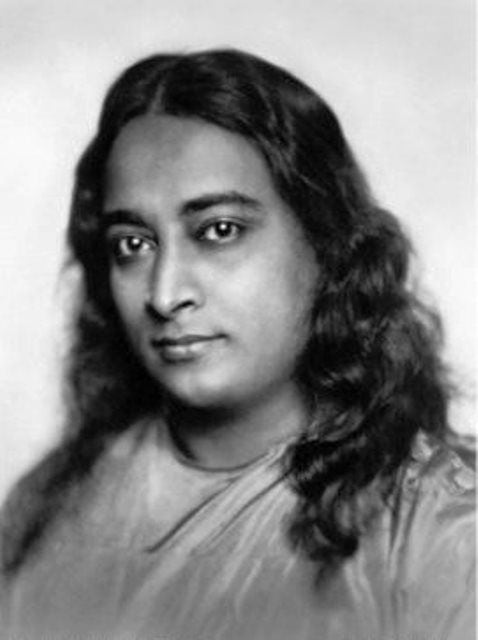
Paramahansa Yogananda
Übereinstimmung bei: Wer bin ich? Gibt es ein wahres Selbst? · Warum leiden wir? · Was geschieht nach dem Tod?
Denkt anders als

Nikolai Berdyaev
Widerspruch bei: Was geschieht nach dem Tod? · Braucht es einen Lehrer?
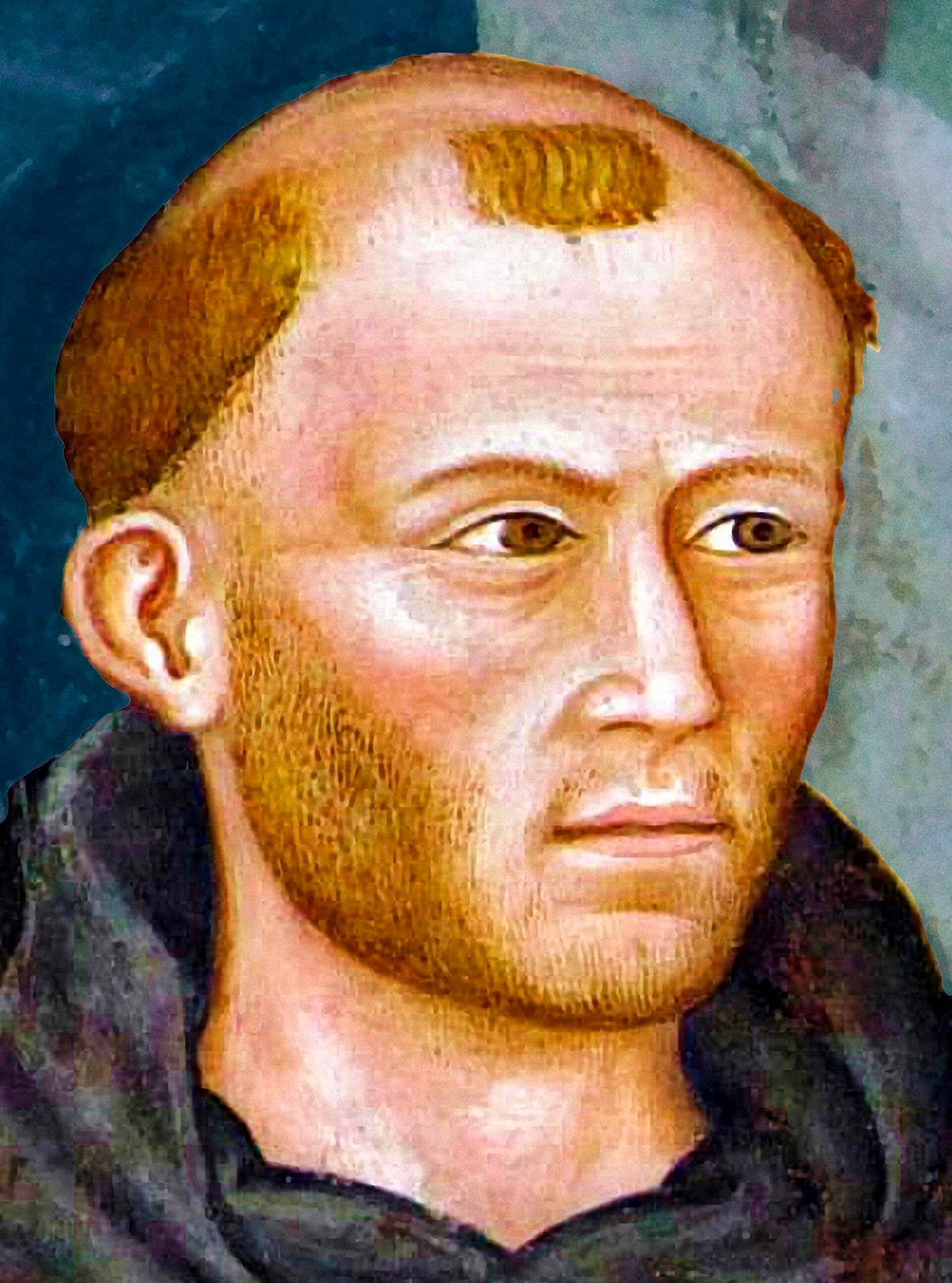
Meister Eckhart
Widerspruch bei: Was geschieht nach dem Tod? · Wie erlangt man Befreiung oder Erlösung?
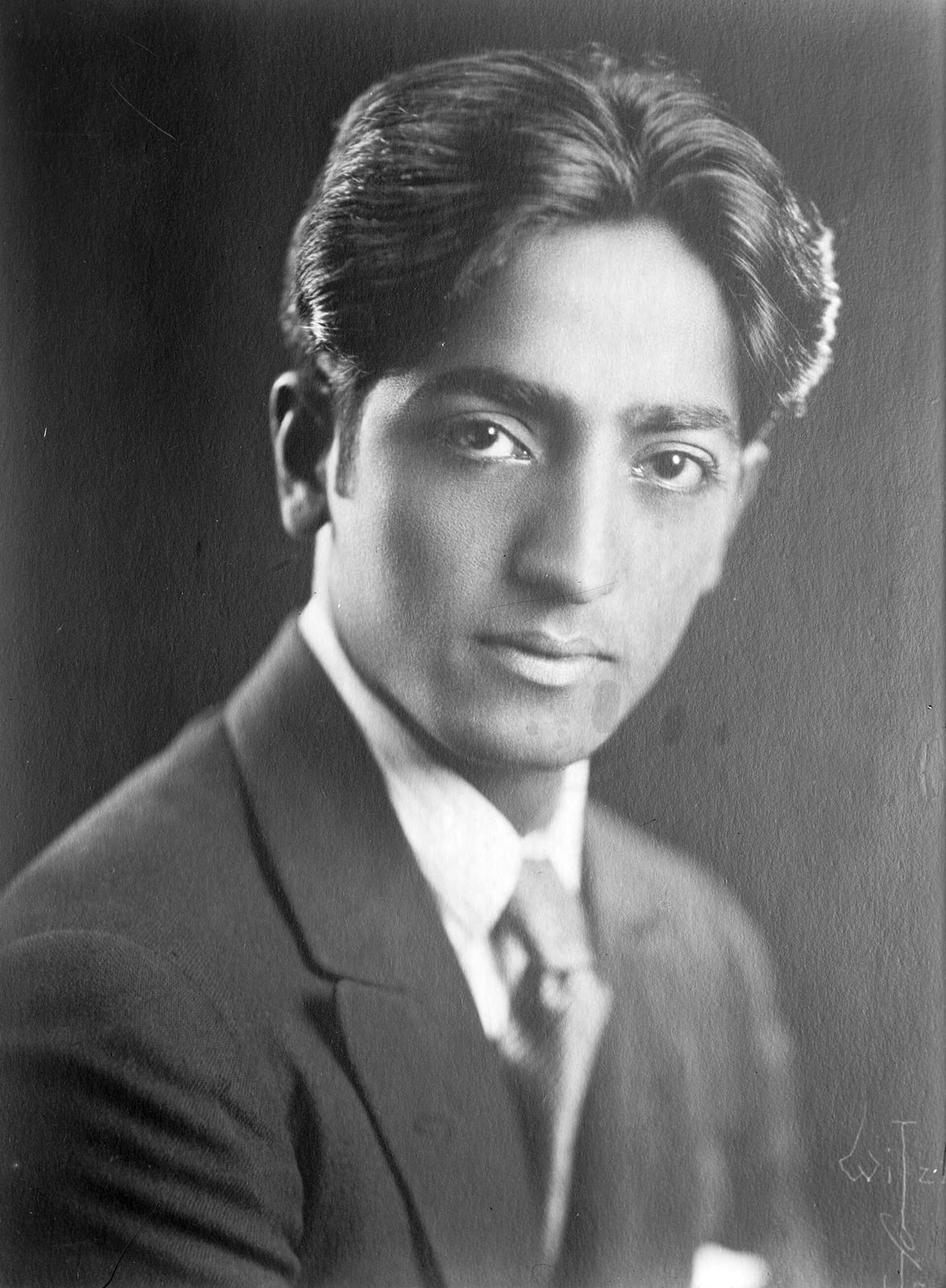
Jiddu Krishnamurti
Widerspruch bei: Wie erlangt man Befreiung oder Erlösung? · Braucht es einen Lehrer?

Rabia al-Adawiyya
Widerspruch bei: Was geschieht nach dem Tod?
Übereinstimmung bei
Helena Blavatsky · Annie Besant
A soul that learns from life to life: the founder and the systematiser of Theosophy
Warum: The affinity is one of direct descent. Besant, then a freethinker and activist, reviewed The Secret Doctrine in 1889, met Blavatsky that same year and became her disciple; after Blavatsky's death in 1891 she became a central figure of the movement and presided over the Theosophical Society from 1907. The theological difference is explained by trajectory and audience: Blavatsky polemicised against ecclesiastical Christianity and materialism; Besant, who came from militant atheism, later sought to build bridges with Christianity and with the devotional Hinduism of the India where she lived. She systematised what Blavatsky had left scattered.
Widerspruch beiGrundsätzliche Meinungsverschiedenheit
Helena Blavatsky · Teresa of Ávila
Praying to someone or commanding the inner god: grace versus self-effort
Warum: The contradiction is real and Blavatsky framed it as such: her Theosophy was born in polemic against the ecclesiastical Christianity of her day and against scientific materialism, and sought to offer a wisdom-religion without a personal God or redemption by another. Teresa writes within the Catholic faith, for which grace precedes and accompanies effort, and her language is that of a relationship between persons. There is, however, a point of contact that should not be forgotten: both seek the divine within the soul, at the centre of the castle or in the higher Self, and neither accepts a religion of formulas without transformation. They differ over whether that interior answers or simply is.
Widerspruch beiGrundsätzliche Meinungsverschiedenheit
Helena Blavatsky · Siddhartha Gautama, the Buddha
A Theosophist who took refuge in the Buddha, and an Ego that reincarnates
Warum: The relationship is documented: in 1880, in Ceylon, Blavatsky and Henry Olcott publicly took the Buddhist refuges and precepts, and Theosophy contributed to the island's Buddhist revival. Her Buddhism, however, was esoteric: Theosophists held that what the Buddha denies is the passing personality and not a higher individuality, a reading the Theravada tradition does not accept. The tension is real because no-self, in the canon, also extends to any entity that transmigrates. It is explained by Blavatsky's project, which sought a primordial wisdom common to all traditions and read each of them through her own scheme of principles and planes.
Übereinstimmung bei
Helena Blavatsky · Alice A. Bailey
Seven planes and a nameless Principle: Theosophical cosmology and its second generation
Warum: The affinity is one of direct inheritance: Bailey was formed in the Theosophical Society, where she worked in California until her break with its leadership around 1920, and she presented her work as a continuation of the line opened by The Secret Doctrine. She attributes most of her books to a Tibetan master, Djwhal Khul, a claim of hers that cannot be verified, just as the existence of Blavatsky's Mahatmas could not be verified. The differences are of emphasis and period: Blavatsky polemicises against the dogma and materialism of the nineteenth century; Bailey writes in the interwar years, with a strong emphasis on service, goodwill and the preparation of a new age.
Anekdoten und Erzählungen
Anekdoten und Erzählungen
Zeugnis1874
The Eddy farm
Herkunft der Erzählung: Olcott's account in People from the Other World (1875) and Old Diary Leaves, First Series, ch. I (1895). There is no independent witness to the meeting.
Zeugnis1876–1877
How 'Isis Unveiled' was written
Herkunft der Erzählung: Olcott, Old Diary Leaves, First Series, chs. XIII–XIV; Coleman, 'The Sources of Madame Blavatsky's Writings', appendix to V. S. Solovyoff, A Modern Priestess of Isis (1895).
Umstritten1880
The buried cup at Simla
Herkunft der Erzählung: Sinnett, The Occult World (1881), first-hand account; critical examination in the Hodgson Report (Proceedings SPR, vol. 3, 1885).
Quelle: Sinnett, A. P. The Occult World. Londres: Trübner & Co., 1881.
Umstritten1884–1885
The Adyar shrine and the Coulomb letters
Herkunft der Erzählung: Madras Christian College Magazine (Sept.–Oct. 1884); Hodgson, Proceedings SPR vol. 3 (1885); Harrison, JSPR 53 (1986).
Zeugnis1887–1890
Yeats and the Irish peasant woman
Herkunft der Erzählung: Yeats, Four Years: 1887–1891 (Cuala Press, 1921), later in Autobiographies. A direct testimony, written three decades later.
Quelle: Yeats, W. B. Four Years: 1887–1891. Dundrum: Cuala Press, 1921 (recogido en Autobiographies, 1926).
Zeugnis1889
Annie Besant and the report she flung aside
Herkunft der Erzählung: Annie Besant, An Autobiography (1893), ch. XIV 'Through Storm to Peace'. Besant's own autobiographical account.
Lehren
Lehren
Die Begriffe, die das Denken gliedern, in ihrem Zusammenhang erklärt.
Wisdom-Religionwisdom-religion
Foundation of the first and second of the Theosophical Society's three objects; crystallised in Isis Unveiled and systematised in The Key to Theosophy.
Quelle: Goodrick-Clarke, Nicholas. Helena Blavatsky (Western Esoteric Masters). Berkeley: North Atlantic Books, 2004.
The three fundamental propositionsthree-fundamental-propositions
Proem to The Secret Doctrine (1888), vol. I, pp. 14–17 of the first edition. The most frequently cited doctrinal synthesis of Theosophy.
The Masters or Mahatmasmahatmas
The original letters (The Mahatma Letters to A. P. Sinnett, ed. Barker, 1923) are kept in the British Library. The concept reappears in Steiner, Bailey and the New Age as 'ascended masters'.
Quelle: Goodrick-Clarke, Nicholas. Helena Blavatsky (Western Esoteric Masters). Berkeley: North Atlantic Books, 2004.
Karma and reincarnationkarma-and-reincarnation
Developed in The Key to Theosophy (sections VIII–XI) and in the third fundamental proposition of The Secret Doctrine; Annie Besant systematised it in Karma (1895) and Reincarnation (1892).
The sevenfold constitution of the human beingseven-principles
Set out in Sinnett's Esoteric Buddhism (1883) from the Masters' letters, and fixed by Blavatsky in The Key to Theosophy, section VI. Besant popularised it in The Seven Principles of Man (1892).
Root races and cyclic evolutionroot-races
Volume II of The Secret Doctrine (1888). On its later use and abuse see Goodrick-Clarke, The Occult Roots of Nazism (1985), which clearly distinguishes Blavatsky from Ariosophy.
Quelle: Goodrick-Clarke, Nicholas. Helena Blavatsky (Western Esoteric Masters). Berkeley: North Atlantic Books, 2004.
The Esoteric Sectionesoteric-section
Announced in Lucifer, October 1888; rules and instructions in Collected Writings XII. Besant and Judge directed it jointly after 1891 until the split of 1895.
Retreats
Retreats und Zentren
Orte und Begegnungen, die mit dieser Lehre verbunden sind. Wir stellen den Kontakt zu den Veranstaltern her.
Adyar, Chennai, Tamil Nadu · India
International headquarters of the Theosophical Society, Adyar
The Theosophical Society (Adyar)
The Adyar campus, on the river of the same name in Chennai, has been the international headquarters of the Theosophical Society since 1882, a few years after Helena Blavatsky and Henry Olcott founded it in New York in 1875. Annie Besant presided over it for more than a quarter of a century and died there in 1933. The grounds hold the headquarters building, the Adyar Library and Research Centre, the archives, gardens with shrines of different religions and a famous banyan tree. It hosts the International Convention around each new year and offers accommodation for visitors and members.
Wheaton, Illinois · Estados Unidos
Theosophical Society in America (Olcott, Wheaton)
The Theosophical Society in America
The Theosophical Society in America is the US section of the society founded in New York in 1875 by Helena Blavatsky and Henry Olcott. Its national centre in Wheaton, near Chicago, runs a weekly lecture series, spiritual workshops, meditation retreats, yoga classes and study groups, and keeps an extensive library devoted to the traditions of East and West, with particular attention to Theosophy. It also offers online webinars, a distance school of Theosophy and Quest magazine, making it possible to study Blavatsky and Besant without travelling to its campus.
Ramas en Madrid, Barcelona y otras ciudades · España
Spanish Theosophical Society: summer school and retreats
Sociedad Teosófica Española
The Spanish Theosophical Society is the Spanish section of the Theosophical Society headquartered at Adyar. Through its branches in Madrid, Barcelona and other cities it organises lectures, study groups and an annual summer school, as well as silent retreats reserved for members and joint gatherings with the Portuguese section. It marks the movement's own dates, such as White Lotus Day in memory of Helena Blavatsky, and keeps an online programme of talks and video meetings. It is the most accessible route in Spanish for studying the work of Blavatsky and Annie Besant in a group.
Adyar, Chennai, Tamil Nadu · India
School of the Wisdom, Adyar
The Theosophical Society (Adyar)
The School of the Wisdom is the intensive study programme the Theosophical Society runs at its international headquarters in Adyar. Its multi-day sessions are devoted to particular themes in Theosophy and its founding texts, those of Helena Blavatsky and Annie Besant among them, as well as to dialogue between religious and philosophical traditions. Classes are concentrated in the morning, leaving time for personal study in the library and gardens of the campus. It draws members and scholars from many countries who wish to go deeper into the movement's sources in the very place where its leading figures lived and worked.
Videos
Videos
Aufnahmen, Gespräche und Dokumentarfilme. Die Videos werden von YouTube wiedergegeben; sie werden nicht hier gespeichert.
H. P. Blavatsky — Biographical Documentary (Theosophy UK)
Dokumentarfilm· EN· 67 min
Theosophical Society in England & WalesOffizieller Kanal
Madame Blavatsky Rediscovered (Theosophy UK)
Dokumentarfilm· EN· 63 min
Theosophical Society in England & WalesOffizieller Kanal
Who Are You, Madame Blavatsky? (documental teosófico)
Dokumentarfilm· EN· 50 min
Balham Theosophy Group
Helena Petrovna Blavatsky — Documental biográfico
Dokumentarfilm· ES· 50 min
America Teosofica - FTI OficialOffizieller Kanal
How to Study The Secret Doctrine — Pablo Sender (parte 1)
Vortrag· EN· 52 min
Theosophical Society (in America)Offizieller Kanal
Fundamental Teachings in The Secret Doctrine, Part 1
Vortrag· EN· 2019· 70 min
Theosophical Society (in America)Offizieller Kanal
H.P. Blavatsky — Enlightened beings who stay in touch with humanity
Analyse· EN· 13 min
Theosophical Society (in America)Offizieller Kanal
The Voice of the Silence — audiolibro íntegro
Originalaufnahme· EN· 107 min
European School of Theosophy
H. P. Blavatsky y la Doctrina Secreta: 1.ª sesión — Àngels Torra
Vortrag· ES· 43 min
Sociedad Teosófica Española, Rama ArjunaOffizieller Kanal
La Doctrina Secreta: aspectos esotéricos
Vortrag· ES· 55 min
Sociedad Teosófica en ArgentinaOffizieller Kanal
Кто Вы, мадам Блаватская? (Центрнаучфильм, 1991)
Dokumentarfilm· RU· 1991· 49 min
Deodarvostok (copia; producción Tsentrnauchfilm)
Елена Петровна Блаватская — film de Oleg Martynov (Moscú, 2018)
Dokumentarfilm· RU· 2018· 89 min
Теософия в России — Theosophy in RussiaOffizieller Kanal
Dr. Peter Michel — Helena Blavatsky und die Theosophie (Teil 1)
Gespräch· DE· 10 min
MYSTICA Magazin
H.P. Blavatsky — Le mystère de l'Unité, l'origine de l'univers
Vortrag· FR· 69 min
Nouvelle Acropole France
ONE FIRE — The enduring legacy of Theosophy and Helena Blavatsky (documental completo)
Auf YouTube ansehen
Dieses Video lässt sich nicht einbetten; es wird auf YouTube geöffnet.
ONE FIRE — The enduring legacy of Theosophy and Helena Blavatsky (documental completo)
Dokumentarfilm· EN· 103 min
ONE FIRE - A Film on Theosophy and H.P.B.
Galerie
Galerie
Bilder mit geprüfter Lizenz. Jedes bewahrt seine Urheberschaft und seinen Herkunftsnachweis.
Handschriften
Handschriften
Handschriftliche Zeugen und alte Texte, mit ihrer verwahrenden Einrichtung und ihren Einsichtsbedingungen.
EN · Latin · 1880–1885
The Mahatma Letters to A. P. Sinnett (Mahatma Papers)
- Erhaltener Textzeuge
- Originales (cartas, telegramas, sobres) legados por A. P. Sinnett a A. T. Barker
- Verwahrende Einrichtung
- British Library, Londres · Add MS 45284–45286
Beziehungen
Beziehungen
Einflüsse, Schülerschaften und Verwandtschaften. Die belegte Beziehung wird von der durch Analyse ermittelten Ähnlichkeit unterschieden.
Lehrer von
Besant joined the Society in May 1889 after reviewing The Secret Doctrine; Blavatsky made her co-head of the Esoteric Section and lived in her house at Avenue Road until her death.
Belegte Beziehung
Beeinflusste
Steiner led the German Section of the Theosophical Society (1902–1912) and acknowledged his debt to The Secret Doctrine before founding Anthroposophy.
Belegte Beziehung
Beeinflusste
Bailey was trained in the Theosophical Society at Pacific Grove (1915) reading The Secret Doctrine and presented her own books as a continuation of Blavatsky's teaching.
Belegte Beziehung
Beeinflusste
Krishnamurti was raised by the Society she founded and, in rejecting the role of 'World Teacher' in 1929, broke with the doctrine of the Masters Blavatsky had introduced.
Belegte Beziehung
Widersprach
Vivekananda publicly denied any link with the Theosophical Society ('My Plan of Campaign', Madras, 1897) and criticised the Mahatma doctrine, while acknowledging that Theosophists had awakened interest in India.
Belegte Beziehung
Verwandte Gedanken mit
Both presented their teaching as coming from a hidden brotherhood in Central Asia and as a 'science' of human development; Ouspensky had passed through Theosophy before meeting Gurdjieff.
Durch Analyse ermittelte Ähnlichkeit
Verwandte Gedanken mit
The spiritual evolution of humanity through cycles and the unity of religions are common themes, although Aurobindo was critical of Theosophical occultism.
Durch Analyse ermittelte Ähnlichkeit
Von anderen Einträgen aus verknüpft
- Annie Besant · Schüler von
- P. D. Ouspensky · Beeinflusst von
- Nikolai Berdyaev · Widersprach
- Emanuel Swedenborg · Beeinflusste
- Jiddu Krishnamurti · Beeinflusst von
- Rudolf Steiner · Beeinflusst von
- G. I. Gurdjieff · Verwandte Gedanken mit
- Jakob Böhme · Beeinflusste
- Nicholas Roerich · Beeinflusst von
- Helena Roerich · Beeinflusst von
- Vladimir Solovyov · Widersprach
- Alice A. Bailey · Beeinflusst von
Quellen
Quellen
Für diesen Eintrag herangezogene Bibliografie und Kataloge.
- Cranston, Sylvia. HPB: The Extraordinary Life and Influence of Helena Blavatsky, Founder of the Modern Theosophical Movement. Nueva York: Tarcher/Putnam, 1993.
- Goodrick-Clarke, Nicholas. Helena Blavatsky (Western Esoteric Masters). Berkeley: North Atlantic Books, 2004.
- Olcott, Henry Steel. Old Diary Leaves: The True Story of the Theosophical Society. First Series. Nueva York/Londres: Putnam / Theosophical Publishing Society, 1895.
- Sinnett, A. P. Incidents in the Life of Madame Blavatsky. Londres: George Redway, 1886.
- Hodgson, Richard, et al. «Report of the Committee Appointed to Investigate Phenomena Connected with the Theosophical Society». Proceedings of the Society for Psychical Research, vol. 3 (1885), pp. 201–400.
- Harrison, Vernon. H. P. Blavatsky and the SPR: An Examination of the Hodgson Report of 1885. Pasadena: Theosophical University Press, 1997 (incluye «J'Accuse», Journal of the SPR, vol. 53, abril de 1986, pp. 286–310).
- Washington, Peter. Madame Blavatsky's Baboon: A History of the Mystics, Mediums, and Misfits Who Brought Spiritualism to America. Nueva York: Schocken, 1995 (1.ª ed. Londres: Secker & Warburg, 1993).
- Wikidata, entidad Q189454 («Helena Blavatsky»): fechas, lugares, identificadores de autoridad (VIAF 29530438, Open Library OL2889852A, Project Gutenberg 2154).
- Project Gutenberg, obras de H. P. Blavatsky (autor 2154): Isis Unveiled (#68705, #75871), The Secret Doctrine (#54824, #54488, #56880, #61626), The Key to Theosophy (#55618), Studies in Occultism (#17009), Nightmare Tales (#44559), From the Caves and Jungles of Hindostan (#6687).
- Sinnett, A. P. The Occult World. Londres: Trübner & Co., 1881.
- Cooper, Laura M. «How She Left Us», en Lucifer, vol. VIII, n.º 46 (junio de 1891), número en memoria de H. P. B. Londres: Theosophical Publishing Society.
- Yeats, W. B. Four Years: 1887–1891. Dundrum: Cuala Press, 1921 (recogido en Autobiographies, 1926).
- Lachman, Gary. Madame Blavatsky: The Mother of Modern Spirituality. Nueva York: Tarcher/Penguin, 2012.
- Open Library, autora H. P. Blavatsky (OL2889852A): registros de obras y ediciones con ISBN consultados el 2026-10-22.
- «The Collapse of Koot Hoomi». Madras Christian College Magazine, vol. II, septiembre–octubre de 1884.
- Blavatsky, H. P. Collected Writings, 15 vols. Ed. Boris de Zirkoff. Wheaton/Adyar: Theosophical Publishing House, 1950–1991.
- Blavatsky, H. P. The Voice of the Silence (1889), texto íntegro en línea (edición verbatim). Pasadena: Theosophical University Press.
- Algeo, John (ed.). The Letters of H. P. Blavatsky, Volume 1: 1861–1879. Wheaton: Quest Books, 2003.
- Besant, Annie. An Autobiography. Londres: T. Fisher Unwin, 1893 (cap. XIV, «Through Storm to Peace»).
- Santucci, James A. «Blavatsky, Helena Petrovna», en Wouter J. Hanegraaff (ed.), Dictionary of Gnosis & Western Esotericism. Leiden: Brill, 2006, pp. 177–185.
- Olcott, Henry Steel. People from the Other World. Hartford: American Publishing Company, 1875.
- Coleman, William Emmette. «The Sources of Madame Blavatsky's Writings», apéndice C en Vsevolod Sergyeevich Solovyoff, A Modern Priestess of Isis, trad. Walter Leaf. Londres: Longmans, Green & Co., 1895, pp. 353–366.
- Gandhi, M. K. An Autobiography, or The Story of My Experiments with Truth, trad. Mahadev Desai. Ahmedabad: Navajivan, 1927–1929, parte I, cap. XX («Acquaintance with Religions»).
- Rechteinhaber
- Dominio público (obras anteriores a 1891). Los Collected Writings (ed. Boris de Zirkoff) y las ediciones críticas modernas pertenecen a la Theosophical Publishing House (Adyar/Wheaton).
- Offizielle Website
- www.ts-adyar.org/
Bestätigung ausstehend
Was dieser Eintrag noch nicht klären konnte. Wir sagen es lieber, als es aufzufüllen.
- Confirmar en el ejemplar de Lucifer (junio de 1891) la redacción exacta de las últimas palabras según Laura Cooper: el OCR del volumen VIII en Internet Archive no permite localizar la frase «Keep the link unbroken».
- Verificar la signatura exacta de las Mahatma Letters en la British Library (Add MS 45284–45286 según la literatura teosófica; no comprobado en el catálogo en línea).
- Localizar ISBN de catálogo para ediciones italianas de editoriales establecidas (Edizioni Teosofiche Italiane): Open Library solo recoge autoediciones.
- Añadir ediciones en hindi y árabe si existen en catálogos: Open Library no devuelve ninguna.
- Obras completas (2026-10-25): no se registran como obras las antologías temáticas modernas (H.P.B. Teaches, Adyar; Foundations of Esoteric Philosophy, 1980; An Invitation to The Secret Doctrine, TUP 1988; The Vedanta Commentaries y The Veda Commentaries de H. J. Spierenburg, Point Loma 1992/1996), las recopilaciones españolas de artículos (Kier, Berbera: La cábala y los cabalistas, Misterios de los estados después de la muerte, La teosofía trascendental, Doctrinas y enseñanzas teosóficas) ni los centenares de folletos de Kessinger que extraen artículos sueltos: todo ello está dentro de los Collected Writings. Catálogo completo: Open Library OL2889852A (614 registros).
- Confirmar la fecha y la publicación rusa de la primera entrega de «Загадочные племена на «Голубых горах»» (se cita 1883–1884); en libro, Moscú 1893.
- Confirmar el año de la primera edición en folleto de los Five Messages (se cita la década de 1920; la primera fecha verificada en catálogo es la de TUP, 1979).
- Sala de lectura (2026-10-25): no se registran The Theosophical Glossary (archive.org/details/theosophicalglos00blav), A Modern Panarion (archive.org/details/modernpanarionco00blav) ni Transactions of the Blavatsky Lodge (archive.org/details/transactionsbla00lodggoog) porque su OCR tiene errores en términos sánscritos y hebreos; buscar transcripción limpia.
- Sala de lectura: no se ha localizado en línea ninguna traducción española de Blavatsky con traductor identificado y fallecido hace más de 80 años (las copias de Isis sin velo y La Doctrina Secreta en archive.org son ediciones modernas o sin traductor acreditado). Pendiente revisar las traducciones españolas de finales del siglo XIX y comienzos del XX y las fechas de muerte de sus traductores.
- Sala de lectura: la Theosophical University Press (theosociety.org) responde 406 a peticiones sin User-Agent; si el importador no lo envía, las seis entradas de ese sitio fallarán.
Recherchiert am 2026-10-22